Page 1 of 7
ISPE Good Practice Guide: Project Management for the Pharmaceutical Industry
11.1 Web Resources – Sample Checklists
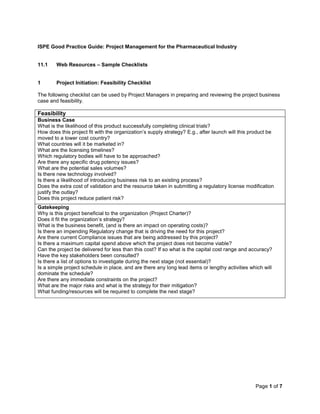
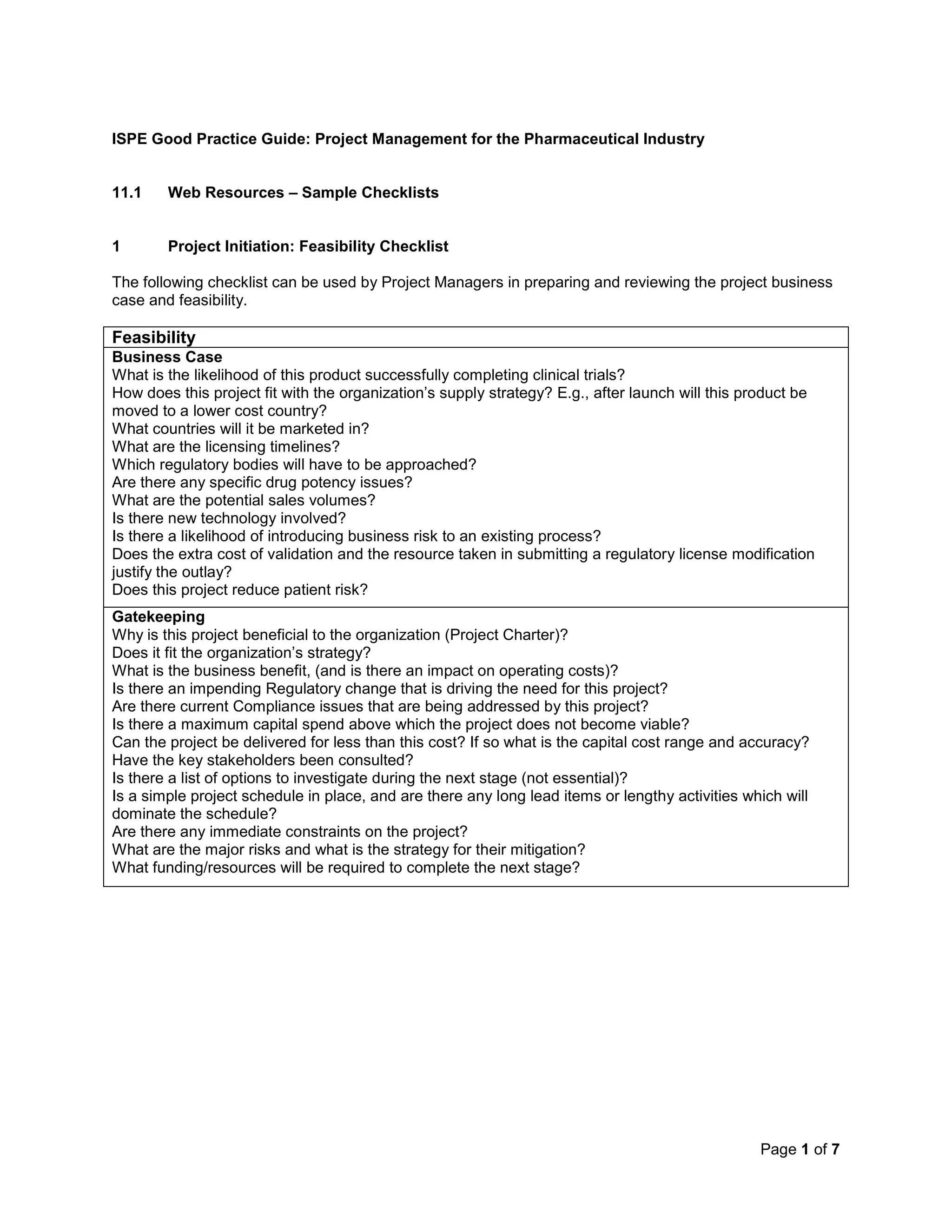
1 Project Initiation: Feasibility Checklist
The following checklist can be used by Project Managers in preparing and reviewing the project business
case and feasibility.
Feasibility
Business Case
What is the likelihood of this product successfully completing clinical trials?
How does this project fit with the organization’s supply strategy? E.g., after launch will this product be
moved to a lower cost country?
What countries will it be marketed in?
What are the licensing timelines?
Which regulatory bodies will have to be approached?
Are there any specific drug potency issues?
What are the potential sales volumes?
Is there new technology involved?
Is there a likelihood of introducing business risk to an existing process?
Does the extra cost of validation and the resource taken in submitting a regulatory license modification
justify the outlay?
Does this project reduce patient risk?
Gatekeeping
Why is this project beneficial to the organization (Project Charter)?
Does it fit the organization’s strategy?
What is the business benefit, (and is there an impact on operating costs)?
Is there an impending Regulatory change that is driving the need for this project?
Are there current Compliance issues that are being addressed by this project?
Is there a maximum capital spend above which the project does not become viable?
Can the project be delivered for less than this cost? If so what is the capital cost range and accuracy?
Have the key stakeholders been consulted?
Is there a list of options to investigate during the next stage (not essential)?
Is a simple project schedule in place, and are there any long lead items or lengthy activities which will
dominate the schedule?
Are there any immediate constraints on the project?
What are the major risks and what is the strategy for their mitigation?
What funding/resources will be required to complete the next stage?
Page 2 of 7
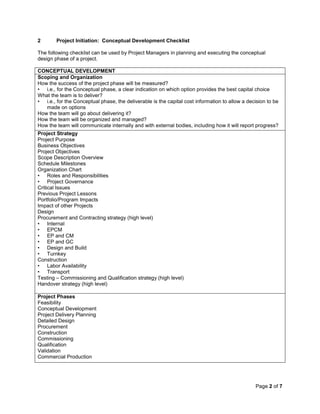
2 Project Initiation: Conceptual Development Checklist
The following checklist can be used by Project Managers in planning and executing the conceptual
design phase of a project.
CONCEPTUAL DEVELOPMENT
Scoping and Organization
How the success of the project phase will be measured?
• i.e., for the Conceptual phase, a clear indication on which option provides the best capital choice
What the team is to deliver?
• i.e., for the Conceptual phase, the deliverable is the capital cost information to allow a decision to be
made on options
How the team will go about delivering it?
How the team will be organized and managed?
How the team will communicate internally and with external bodies, including how it will report progress?
Project Strategy
Project Purpose
Business Objectives
Project Objectives
Scope Description Overview
Schedule Milestones
Organization Chart
• Roles and Responsibilities
• Project Governance
Critical Issues
Previous Project Lessons
Portfolio/Program Impacts
Impact of other Projects
Design
Procurement and Contracting strategy (high level)
• Internal
• EPCM
• EP and CM
• EP and GC
• Design and Build
• Turnkey
Construction
• Labor Availability
• Transport
Testing – Commissioning and Qualification strategy (high level)
Handover strategy (high level)
Project Phases
Feasibility
Conceptual Development
Project Delivery Planning
Detailed Design
Procurement
Construction
Commissioning
Qualification
Validation
Commercial Production
Page 3 of 7
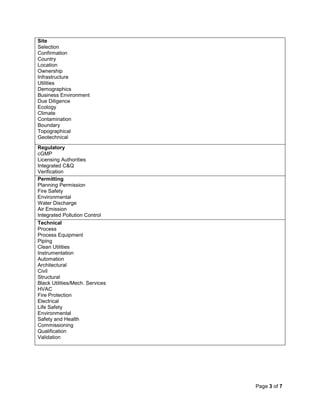
Site
Selection
Confirmation
Country
Location
Ownership
Infrastructure
Utilities
Demographics
Business Environment
Due Diligence
Ecology
Climate
Contamination
Boundary
Topographical
Geotechnical
Regulatory
cGMP
Licensing Authorities
Integrated C&Q
Verification
Permitting
Planning Permission
Fire Safety
Environmental
Water Discharge
Air Emission
Integrated Pollution Control
Technical
Process
Process Equipment
Piping
Clean Utilities
Instrumentation
Automation
Architectural
Civil
Structural
Black Utilities/Mech. Services
HVAC
Fire Protection
Electrical
Life Safety
Environmental
Safety and Health
Commissioning
Qualification
Validation
Page 4 of 7
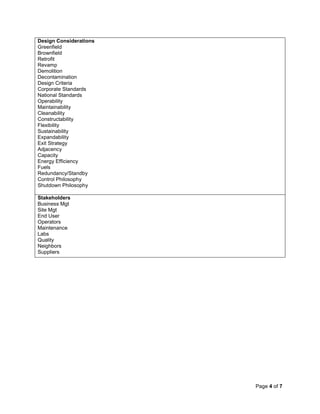
Design Considerations
Greenfield
Brownfield
Retrofit
Revamp
Demolition
Decontamination
Design Criteria
Corporate Standards
National Standards
Operability
Maintainability
Cleanability
Constructability
Flexibility
Sustainability
Expandability
Exit Strategy
Adjacency
Capacity
Energy Efficiency
Fuels
Redundancy/Standby
Control Philosophy
Shutdown Philosophy
Stakeholders
Business Mgt
Site Mgt
End User
Operators
Maintenance
Labs
Quality
Neighbors
Suppliers
Page 5 of 7
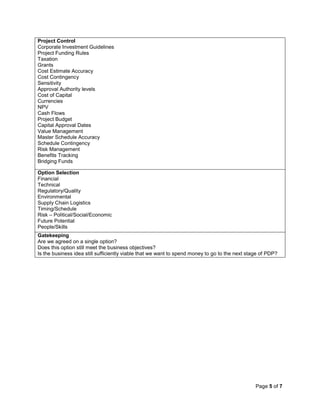
Project Control
Corporate Investment Guidelines
Project Funding Rules
Taxation
Grants
Cost Estimate Accuracy
Cost Contingency
Sensitivity
Approval Authority levels
Cost of Capital
Currencies
NPV
Cash Flows
Project Budget
Capital Approval Dates
Value Management
Master Schedule Accuracy
Schedule Contingency
Risk Management
Benefits Tracking
Bridging Funds
Option Selection
Financial
Technical
Regulatory/Quality
Environmental
Supply Chain Logistics
Timing/Schedule
Risk – Political/Social/Economic
Future Potential
People/Skills
Gatekeeping
Are we agreed on a single option?
Does this option still meet the business objectives?
Is the business idea still sufficiently viable that we want to spend money to go to the next stage of PDP?
Page 6 of 7
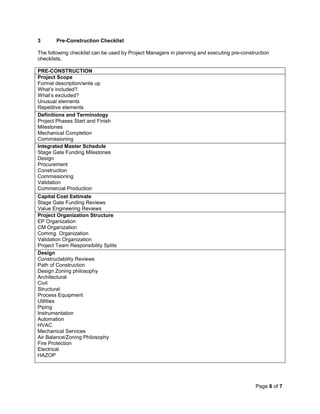
3 Pre-Construction Checklist
The following checklist can be used by Project Managers in planning and executing pre-construction
checklists.
PRE-CONSTRUCTION
Project Scope
Formal description/write up
What’s included?
What’s excluded?
Unusual elements
Repetitive elements
Definitions and Terminology
Project Phases Start and Finish
Milestones
Mechanical Completion
Commissioning
Integrated Master Schedule
Stage Gate Funding Milestones
Design
Procurement
Construction
Commissioning
Validation
Commercial Production
Capital Cost Estimate
Stage Gate Funding Reviews
Value Engineering Reviews
Project Organization Structure
EP Organization
CM Organization
Commg. Organization
Validation Organization
Project Team Responsibility Splits
Design
Constructability Reviews
Path of Construction
Design Zoning philosophy
Architectural
Civil
Structural
Process Equipment
Utilities
Piping
Instrumentation
Automation
HVAC
Mechanical Services
Air Balance/Zoning Philosophy
Fire Protection
Electrical
HAZOP
Page 7 of 7
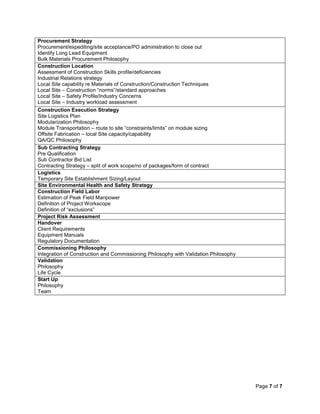
Procurement Strategy
Procurement/expediting/site acceptance/PO administration to close out
Identify Long Lead Equipment
Bulk Materials Procurement Philosophy
Construction Location
Assessment of Construction Skills profile/deficiencies
Industrial Relations strategy
Local Site capability re Materials of Construction/Construction Techniques
Local Site – Construction “norms”/standard approaches
Local Site – Safety Profile/Industry Concerns
Local Site – Industry workload assessment
Construction Execution Strategy
Site Logistics Plan
Modularization Philosophy
Module Transportation – route to site “constraints/limits” on module sizing
Offsite Fabrication – local Site capacity/capability
QA/QC Philosophy
Sub Contracting Strategy
Pre Qualification
Sub Contractor Bid List
Contracting Strategy – split of work scope/no of packages/form of contract
Logistics
Temporary Site Establishment Sizing/Layout
Site Environmental Health and Safety Strategy
Construction Field Labor
Estimation of Peak Field Manpower
Definition of Project Workscope
Definition of “exclusions”
Project Risk Assessment
Handover
Client Requirements
Equipment Manuals
Regulatory Documentation
Commissioning Philosophy
Integration of Construction and Commissioning Philosophy with Validation Philosophy
Validation
Philosophy
Life Cycle
Start Up
Philosophy
Team

Pharmaceutical Project Management Checklist

  • 1.
    Page 1 of7 ISPE Good Practice Guide: Project Management for the Pharmaceutical Industry 11.1 Web Resources – Sample Checklists 1 Project Initiation: Feasibility Checklist The following checklist can be used by Project Managers in preparing and reviewing the project business case and feasibility. Feasibility Business Case What is the likelihood of this product successfully completing clinical trials? How does this project fit with the organization’s supply strategy? E.g., after launch will this product be moved to a lower cost country? What countries will it be marketed in? What are the licensing timelines? Which regulatory bodies will have to be approached? Are there any specific drug potency issues? What are the potential sales volumes? Is there new technology involved? Is there a likelihood of introducing business risk to an existing process? Does the extra cost of validation and the resource taken in submitting a regulatory license modification justify the outlay? Does this project reduce patient risk? Gatekeeping Why is this project beneficial to the organization (Project Charter)? Does it fit the organization’s strategy? What is the business benefit, (and is there an impact on operating costs)? Is there an impending Regulatory change that is driving the need for this project? Are there current Compliance issues that are being addressed by this project? Is there a maximum capital spend above which the project does not become viable? Can the project be delivered for less than this cost? If so what is the capital cost range and accuracy? Have the key stakeholders been consulted? Is there a list of options to investigate during the next stage (not essential)? Is a simple project schedule in place, and are there any long lead items or lengthy activities which will dominate the schedule? Are there any immediate constraints on the project? What are the major risks and what is the strategy for their mitigation? What funding/resources will be required to complete the next stage?
  • 2.
    Page 2 of7 2 Project Initiation: Conceptual Development Checklist The following checklist can be used by Project Managers in planning and executing the conceptual design phase of a project. CONCEPTUAL DEVELOPMENT Scoping and Organization How the success of the project phase will be measured? • i.e., for the Conceptual phase, a clear indication on which option provides the best capital choice What the team is to deliver? • i.e., for the Conceptual phase, the deliverable is the capital cost information to allow a decision to be made on options How the team will go about delivering it? How the team will be organized and managed? How the team will communicate internally and with external bodies, including how it will report progress? Project Strategy Project Purpose Business Objectives Project Objectives Scope Description Overview Schedule Milestones Organization Chart • Roles and Responsibilities • Project Governance Critical Issues Previous Project Lessons Portfolio/Program Impacts Impact of other Projects Design Procurement and Contracting strategy (high level) • Internal • EPCM • EP and CM • EP and GC • Design and Build • Turnkey Construction • Labor Availability • Transport Testing – Commissioning and Qualification strategy (high level) Handover strategy (high level) Project Phases Feasibility Conceptual Development Project Delivery Planning Detailed Design Procurement Construction Commissioning Qualification Validation Commercial Production
  • 3.
    Page 3 of7 Site Selection Confirmation Country Location Ownership Infrastructure Utilities Demographics Business Environment Due Diligence Ecology Climate Contamination Boundary Topographical Geotechnical Regulatory cGMP Licensing Authorities Integrated C&Q Verification Permitting Planning Permission Fire Safety Environmental Water Discharge Air Emission Integrated Pollution Control Technical Process Process Equipment Piping Clean Utilities Instrumentation Automation Architectural Civil Structural Black Utilities/Mech. Services HVAC Fire Protection Electrical Life Safety Environmental Safety and Health Commissioning Qualification Validation
  • 4.
    Page 4 of7 Design Considerations Greenfield Brownfield Retrofit Revamp Demolition Decontamination Design Criteria Corporate Standards National Standards Operability Maintainability Cleanability Constructability Flexibility Sustainability Expandability Exit Strategy Adjacency Capacity Energy Efficiency Fuels Redundancy/Standby Control Philosophy Shutdown Philosophy Stakeholders Business Mgt Site Mgt End User Operators Maintenance Labs Quality Neighbors Suppliers
  • 5.
    Page 5 of7 Project Control Corporate Investment Guidelines Project Funding Rules Taxation Grants Cost Estimate Accuracy Cost Contingency Sensitivity Approval Authority levels Cost of Capital Currencies NPV Cash Flows Project Budget Capital Approval Dates Value Management Master Schedule Accuracy Schedule Contingency Risk Management Benefits Tracking Bridging Funds Option Selection Financial Technical Regulatory/Quality Environmental Supply Chain Logistics Timing/Schedule Risk – Political/Social/Economic Future Potential People/Skills Gatekeeping Are we agreed on a single option? Does this option still meet the business objectives? Is the business idea still sufficiently viable that we want to spend money to go to the next stage of PDP?
  • 6.
    Page 6 of7 3 Pre-Construction Checklist The following checklist can be used by Project Managers in planning and executing pre-construction checklists. PRE-CONSTRUCTION Project Scope Formal description/write up What’s included? What’s excluded? Unusual elements Repetitive elements Definitions and Terminology Project Phases Start and Finish Milestones Mechanical Completion Commissioning Integrated Master Schedule Stage Gate Funding Milestones Design Procurement Construction Commissioning Validation Commercial Production Capital Cost Estimate Stage Gate Funding Reviews Value Engineering Reviews Project Organization Structure EP Organization CM Organization Commg. Organization Validation Organization Project Team Responsibility Splits Design Constructability Reviews Path of Construction Design Zoning philosophy Architectural Civil Structural Process Equipment Utilities Piping Instrumentation Automation HVAC Mechanical Services Air Balance/Zoning Philosophy Fire Protection Electrical HAZOP
  • 7.
    Page 7 of7 Procurement Strategy Procurement/expediting/site acceptance/PO administration to close out Identify Long Lead Equipment Bulk Materials Procurement Philosophy Construction Location Assessment of Construction Skills profile/deficiencies Industrial Relations strategy Local Site capability re Materials of Construction/Construction Techniques Local Site – Construction “norms”/standard approaches Local Site – Safety Profile/Industry Concerns Local Site – Industry workload assessment Construction Execution Strategy Site Logistics Plan Modularization Philosophy Module Transportation – route to site “constraints/limits” on module sizing Offsite Fabrication – local Site capacity/capability QA/QC Philosophy Sub Contracting Strategy Pre Qualification Sub Contractor Bid List Contracting Strategy – split of work scope/no of packages/form of contract Logistics Temporary Site Establishment Sizing/Layout Site Environmental Health and Safety Strategy Construction Field Labor Estimation of Peak Field Manpower Definition of Project Workscope Definition of “exclusions” Project Risk Assessment Handover Client Requirements Equipment Manuals Regulatory Documentation Commissioning Philosophy Integration of Construction and Commissioning Philosophy with Validation Philosophy Validation Philosophy Life Cycle Start Up Philosophy Team