AKSON COLLEGE OF HEALTH
SCIENCES MIRPUR AJK 6-1
6-2
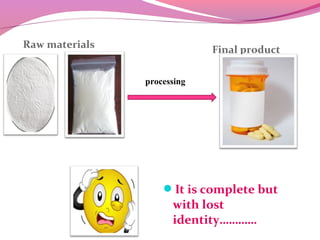
Raw materials Final product
It is complete but
with lost
identity…………
processing
Contents
 What is Label?
Need of a label
Types of a label
Manufacturer label
Legal requirements
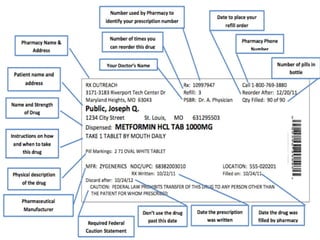
Dispensing label
6-6
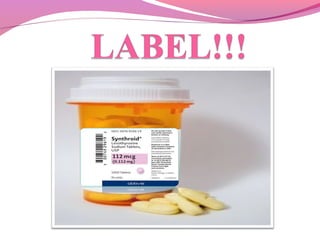
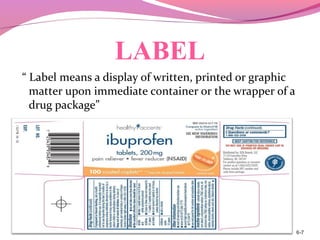
LABEL
“ Label means a display of written, printed or graphic
matter upon immediate container or the wrapper of a
drug package”
6-7
TYPES OF LABEL
Manufacturer label
Dispensing label
Manufacturer label
• A label which contain drug information for the use of
medical practitioners, pharmacists, or nurses
supplied by the manufacturer, packer, or distributor
of the drug
(FDA)
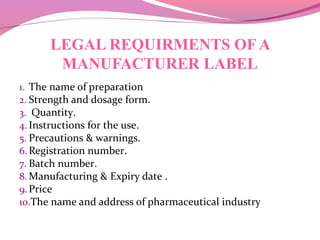
LEGAL REQUIRMENTS OF A
MANUFACTURER LABEL
1. The name of preparation
2. Strength and dosage form.
3. Quantity.
4. Instructions for the use.
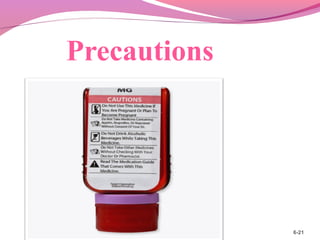
5. Precautions & warnings.
6.Registration number.
7. Batch number.
8. Manufacturing & Expiry date .
9.Price
10.The name and address of pharmaceutical industry
NAME OF THE PREPARATION
Generic name:
According to drug labelling and packaging rules 1986:
“ International non-proprietary name means the
name of a drug as recommended by WHO or may be
notified by the federal govt. in the official gazette”
6-12
Brand Name:
Brand name which is used to market the drug
Property of drug company
6-13
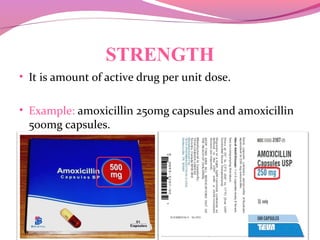
STRENGTH
• It is amount of active drug per unit dose.
• Example: amoxicillin 250mg capsules and amoxicillin
500mg capsules.
6-14
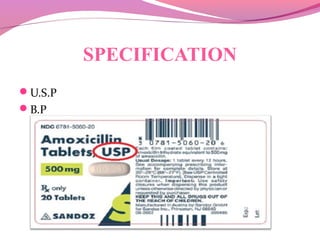
SPECIFICATION
U.S.P
B.P
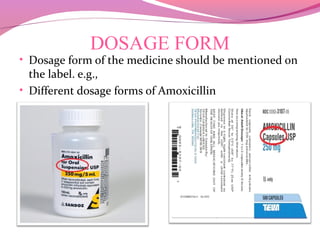
DOSAGE FORM
• Dosage form of the medicine should be mentioned on
the label. e.g.,
• Different dosage forms of Amoxicillin
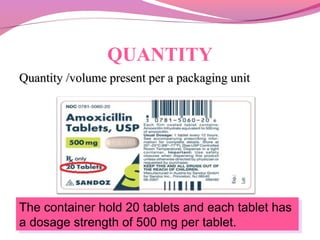
QUANTITY
Quantity /volume present per a packaging unitQuantity /volume present per a packaging unit
The container hold 20 tablets and each tablet has
a dosage strength of 500 mg per tablet.
The container hold 20 tablets and each tablet has
a dosage strength of 500 mg per tablet.
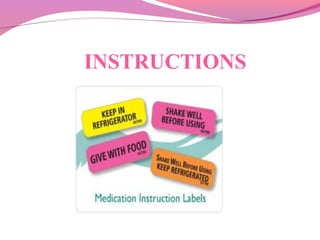
INSTRUCTIONS
Shake well before use:
Necessary on all disperse systems:
• Emusions
• Suspensions
e.g.,
Liniments
Lotions
Tinctures
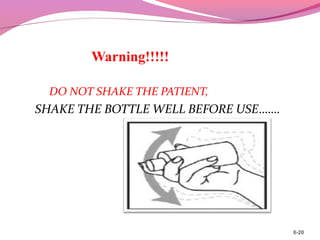
Warning!!!!!
DO NOT SHAKE THE PATIENT,
SHAKE THE BOTTLE WELL BEFORE USE…….
6-20
Precautions
6-21
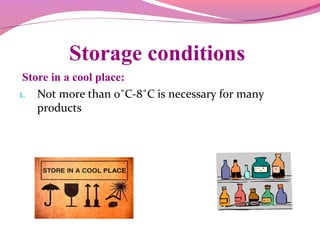
Storage conditions
Store in a cool place:
1. Not more than 0˚C-8˚C is necessary for many
products
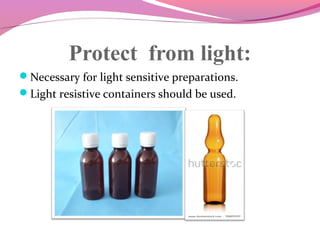
Protect from light:
Necessary for light sensitive preparations.
Light resistive containers should be used.
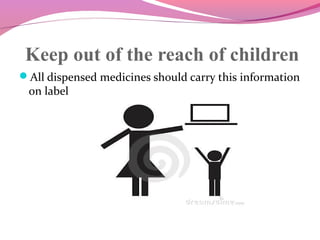
Keep out of the reach of children
All dispensed medicines should carry this information
on label
6-25
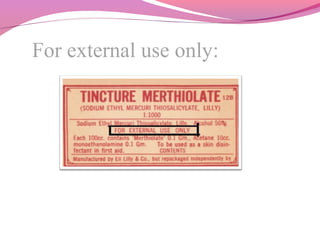
For external use only:
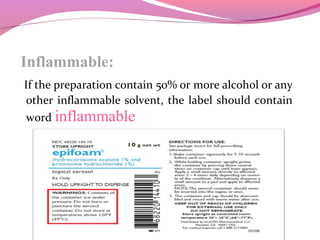
Inflammable:
If the preparation contain 50% or more alcohol or any
other inflammable solvent, the label should contain
word inflammable
Not to be taken:
 Liquid preparation that are not administered by mouth
 For nasal drops, enemas and nasal sprays
 Unit dosage forms e.g., pessaries and rectal suppositories
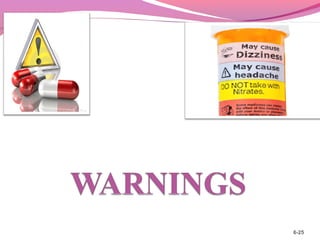
 Help to administer drugs safely
 Types of warnings
 If hypersenstivity to a drug
For controlled substances
About combining with other drugs or products
6-28
Registration number
“A number given to a specific drug when it is
registered according to specific rules by registration
board set up by federal government”
Batch number
Acc. to drug act 1976
“A designation printed on label of a drug that
identifies the batch and permits the production
history of the batch including all stages of
manufacturer and control to be traced and are
viewed”
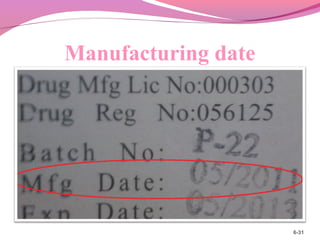
Manufacturing date
6-31
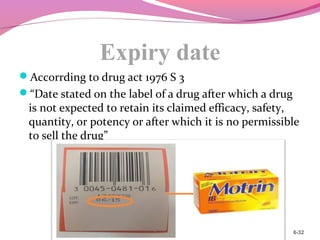
Expiry date
Accorrding to drug act 1976 S 3
“Date stated on the label of a drug after which a drug
is not expected to retain its claimed efficacy, safety,
quantity, or potency or after which it is no permissible
to sell the drug”
6-32
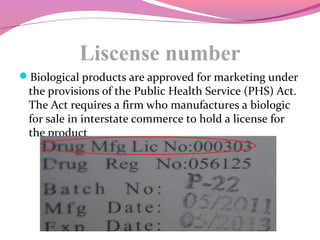
Liscense number
Biological products are approved for marketing under
the provisions of the Public Health Service (PHS) Act.
The Act requires a firm who manufactures a biologic
for sale in interstate commerce to hold a license for
the product
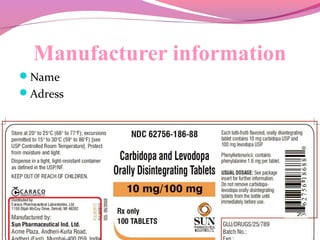
Manufacturer information
Name
Adress
6-34
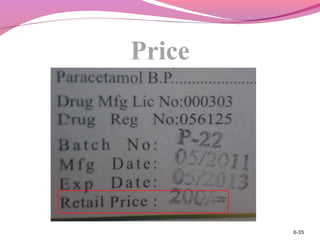
Price
6-35
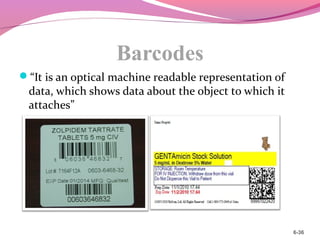
Barcodes
“It is an optical machine readable representation of
data, which shows data about the object to which it
attaches”
6-36
McGraw-Hill 6-37
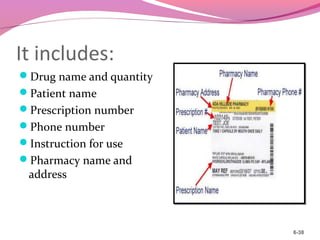
It includes:
Drug name and quantity
Patient name
Prescription number
Phone number
Instruction for use
Pharmacy name and
address
6-38
McGraw-Hill 6-40
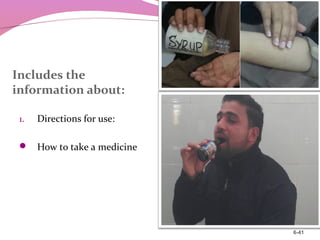
Includes the
information about:
1. Directions for use:
 How to take a medicine
6-41
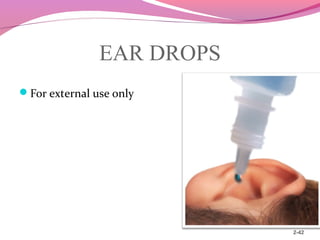
EAR DROPS
For external use only
2-42
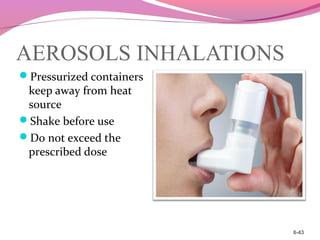
AEROSOLS INHALATIONS
Pressurized containers
keep away from heat
source
Shake before use
Do not exceed the
prescribed dose
6-43
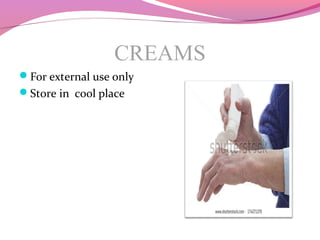
CREAMS
For external use only
Store in cool place
Interactions
• Certain drugs may have serious reactions if eat with
particular food or drugs,e.g:
a)Amine containing foods (tyrosine) with monoamine
oxidase inhibitors.(hypertension crises)
b)Tetracycline with milk
REFERENCES:
1. Mannual of drug laws 2014
2. Dispensing for pharmaceutical students pharmacy by S.J
Carter
6-46
Pharmaceutical labelling

Pharmaceutical labelling

  • 1.
    AKSON COLLEGE OFHEALTH SCIENCES MIRPUR AJK 6-1
  • 2.
  • 3.
    Raw materials Finalproduct It is complete but with lost identity………… processing
  • 6.
    Contents  What isLabel? Need of a label Types of a label Manufacturer label Legal requirements Dispensing label 6-6
  • 7.
    LABEL “ Label meansa display of written, printed or graphic matter upon immediate container or the wrapper of a drug package” 6-7
  • 9.
    TYPES OF LABEL Manufacturerlabel Dispensing label
  • 10.
    Manufacturer label • Alabel which contain drug information for the use of medical practitioners, pharmacists, or nurses supplied by the manufacturer, packer, or distributor of the drug (FDA)
  • 11.
    LEGAL REQUIRMENTS OFA MANUFACTURER LABEL 1. The name of preparation 2. Strength and dosage form. 3. Quantity. 4. Instructions for the use. 5. Precautions & warnings. 6.Registration number. 7. Batch number. 8. Manufacturing & Expiry date . 9.Price 10.The name and address of pharmaceutical industry
  • 12.
    NAME OF THEPREPARATION Generic name: According to drug labelling and packaging rules 1986: “ International non-proprietary name means the name of a drug as recommended by WHO or may be notified by the federal govt. in the official gazette” 6-12
  • 13.
    Brand Name: Brand namewhich is used to market the drug Property of drug company 6-13
  • 14.
    STRENGTH • It isamount of active drug per unit dose. • Example: amoxicillin 250mg capsules and amoxicillin 500mg capsules. 6-14
  • 15.
  • 16.
    DOSAGE FORM • Dosageform of the medicine should be mentioned on the label. e.g., • Different dosage forms of Amoxicillin
  • 17.
    QUANTITY Quantity /volume presentper a packaging unitQuantity /volume present per a packaging unit The container hold 20 tablets and each tablet has a dosage strength of 500 mg per tablet. The container hold 20 tablets and each tablet has a dosage strength of 500 mg per tablet.
  • 18.
  • 19.
    Shake well beforeuse: Necessary on all disperse systems: • Emusions • Suspensions e.g., Liniments Lotions Tinctures
  • 20.
    Warning!!!!! DO NOT SHAKETHE PATIENT, SHAKE THE BOTTLE WELL BEFORE USE……. 6-20
  • 21.
  • 22.
    Storage conditions Store ina cool place: 1. Not more than 0˚C-8˚C is necessary for many products
  • 23.
    Protect from light: Necessaryfor light sensitive preparations. Light resistive containers should be used.
  • 24.
    Keep out ofthe reach of children All dispensed medicines should carry this information on label
  • 25.
  • 26.
  • 27.
    Inflammable: If the preparationcontain 50% or more alcohol or any other inflammable solvent, the label should contain word inflammable
  • 28.
    Not to betaken:  Liquid preparation that are not administered by mouth  For nasal drops, enemas and nasal sprays  Unit dosage forms e.g., pessaries and rectal suppositories  Help to administer drugs safely  Types of warnings  If hypersenstivity to a drug For controlled substances About combining with other drugs or products 6-28
  • 29.
    Registration number “A numbergiven to a specific drug when it is registered according to specific rules by registration board set up by federal government”
  • 30.
    Batch number Acc. todrug act 1976 “A designation printed on label of a drug that identifies the batch and permits the production history of the batch including all stages of manufacturer and control to be traced and are viewed”
  • 31.
  • 32.
    Expiry date Accorrding todrug act 1976 S 3 “Date stated on the label of a drug after which a drug is not expected to retain its claimed efficacy, safety, quantity, or potency or after which it is no permissible to sell the drug” 6-32
  • 33.
    Liscense number Biological productsare approved for marketing under the provisions of the Public Health Service (PHS) Act. The Act requires a firm who manufactures a biologic for sale in interstate commerce to hold a license for the product
  • 34.
  • 35.
  • 36.
    Barcodes “It is anoptical machine readable representation of data, which shows data about the object to which it attaches” 6-36
  • 37.
  • 38.
    It includes: Drug nameand quantity Patient name Prescription number Phone number Instruction for use Pharmacy name and address 6-38
  • 40.
  • 41.
    Includes the information about: 1.Directions for use:  How to take a medicine 6-41
  • 42.
  • 43.
    AEROSOLS INHALATIONS Pressurized containers keepaway from heat source Shake before use Do not exceed the prescribed dose 6-43
  • 44.
    CREAMS For external useonly Store in cool place
  • 45.
    Interactions • Certain drugsmay have serious reactions if eat with particular food or drugs,e.g: a)Amine containing foods (tyrosine) with monoamine oxidase inhibitors.(hypertension crises) b)Tetracycline with milk
  • 46.
    REFERENCES: 1. Mannual ofdrug laws 2014 2. Dispensing for pharmaceutical students pharmacy by S.J Carter 6-46