PERSONALITY MAMTA MOHAN
Theories of Personality Freudian theory Unconscious needs or drives are at the heart of human motivation Neo-Freudian personality theory Social relationships are fundamental to the formation and development of personality Trait theory Quantitative approach to personality as a set of psychological traits
Product personality Consumer researchers using Freud’s personality theory see consumer purchases as a reflection and extension of the consumer’s own personality
Personality Traits and Consumer Innovators Innovativeness Dogmatism Social Character Need for uniqueness Optimum stimulation level Variety-novelty seeking
Consumer Innovativeness Consumer innovativeness  The degree to which consumers are receptive to new products, new services or new practices. Dogmatisicm A personality trait that reflects the degree of rigidity a person displays toward the unfamiliar and toward information that is contrary to his or her own established beliefs.
Consumers low in  dogmatism  ( open-minded ) are more likely to prefer innovative products to established or traditional alternatives Highly dogmatic consumers tend to be more receptive to ads for new products or services that contain an appeal from an authoritative figure
Social Character Inner-Directed Consumers who tend to rely on their own inner values More likely to be innovators Tend to prefer ads that stress product features and benefits Other-Directed Consumers who tend to look to others for direction Less likely to be innovators Tend to prefer ads that feature social acceptance Amity Business School
Optimum Stimulation Levels (OSL) A personality trait that measures the level or amount of novelty or complexity that individuals seek in their personal experiences.  High OSL consumers tend to accept risky and novel products more readily than low OSL consumers.
Cognitive Personality Factors Need for cognition A person’s craving for enjoyment of thinking Consumers  high  in NC  are more likely to respond to ads rich in product-related information  Consumers  low  in NC  are more likely to be attracted to background or peripheral aspects of an ad Visualizers versus verbalizers A person’s preference for information presented visually or verbally
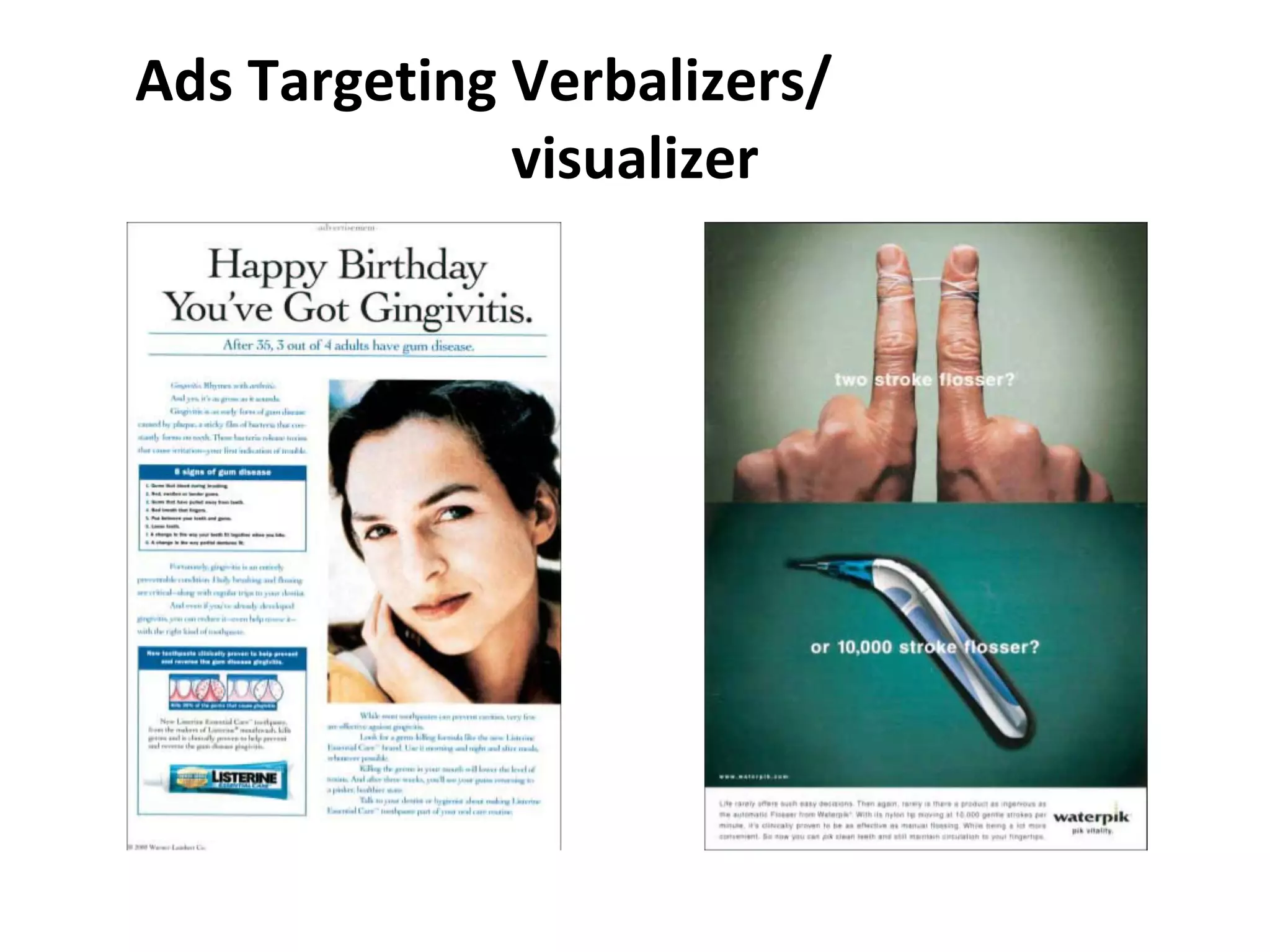
Ads Targeting Verbalizers/  visualizer
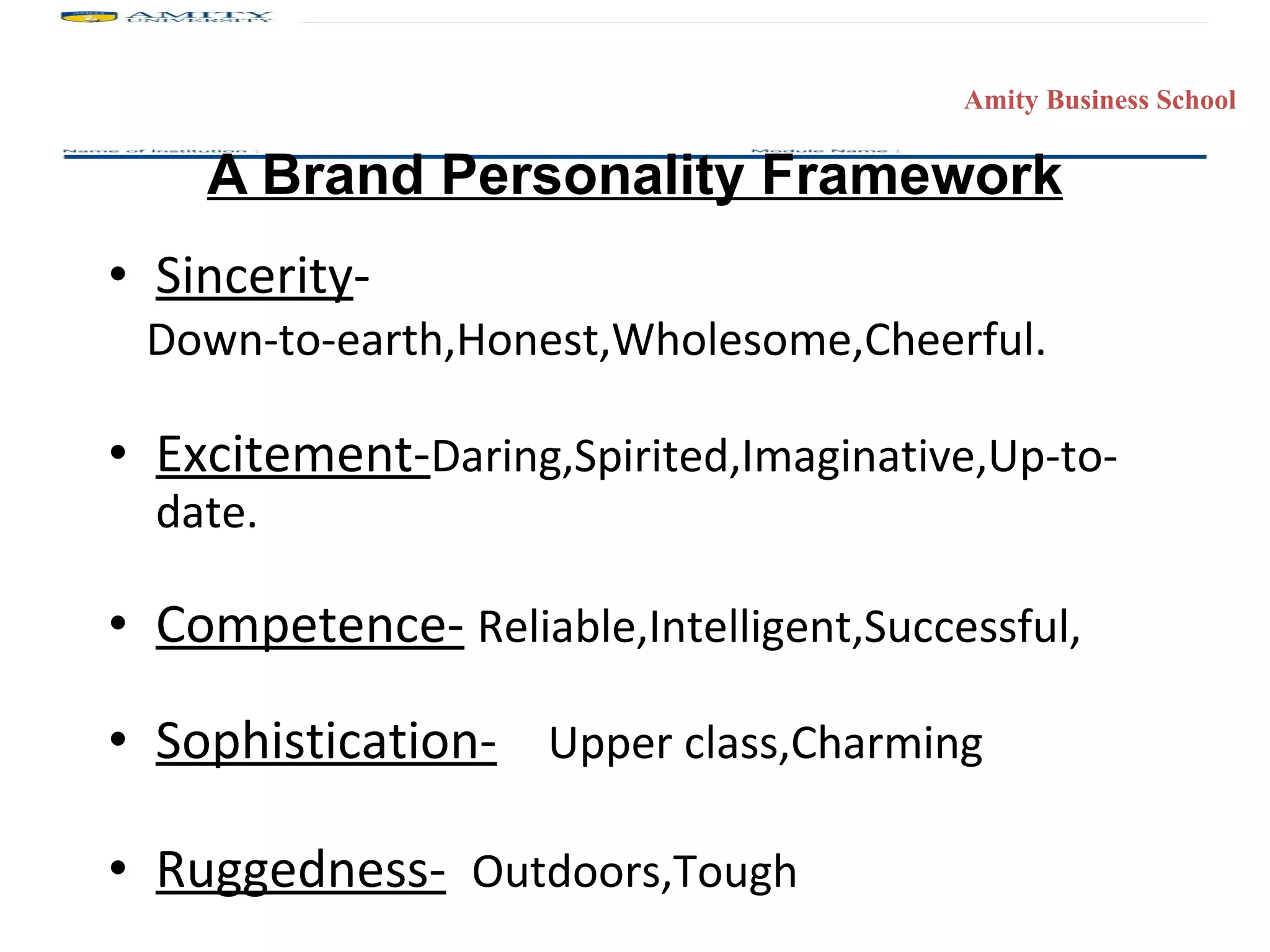
A Brand Personality Framework Sincerity - Down-to-earth,Honest,Wholesome,Cheerful. Excitement- Daring,Spirited,Imaginative,Up-to-date. Competence-   Reliable,Intelligent,Successful, Sophistication-   Upper class,Charming Ruggedness-   Outdoors,Tough
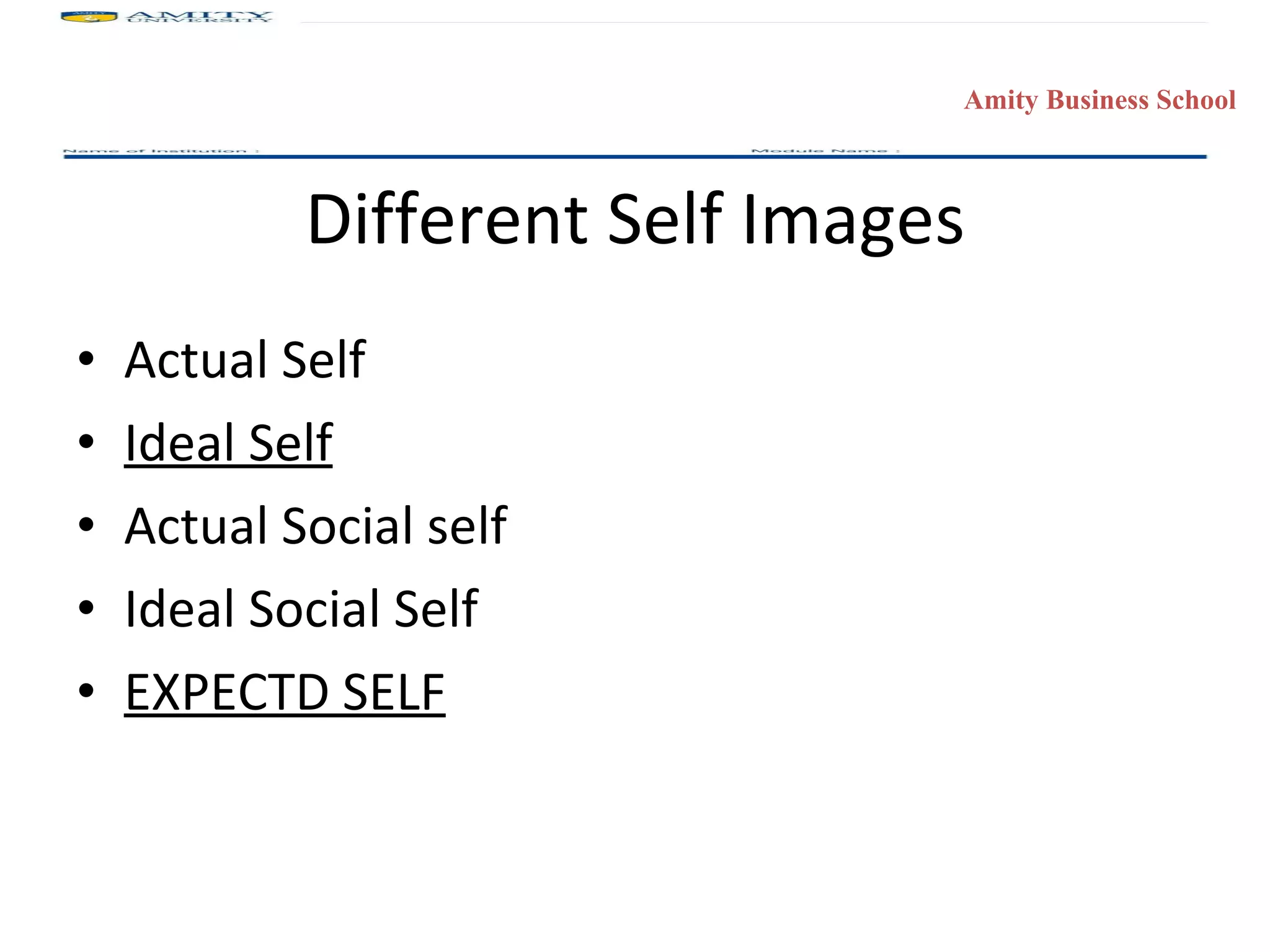
Different Self Images Actual Self Ideal Self Actual Social self Ideal Social Self EXPECTD SELF
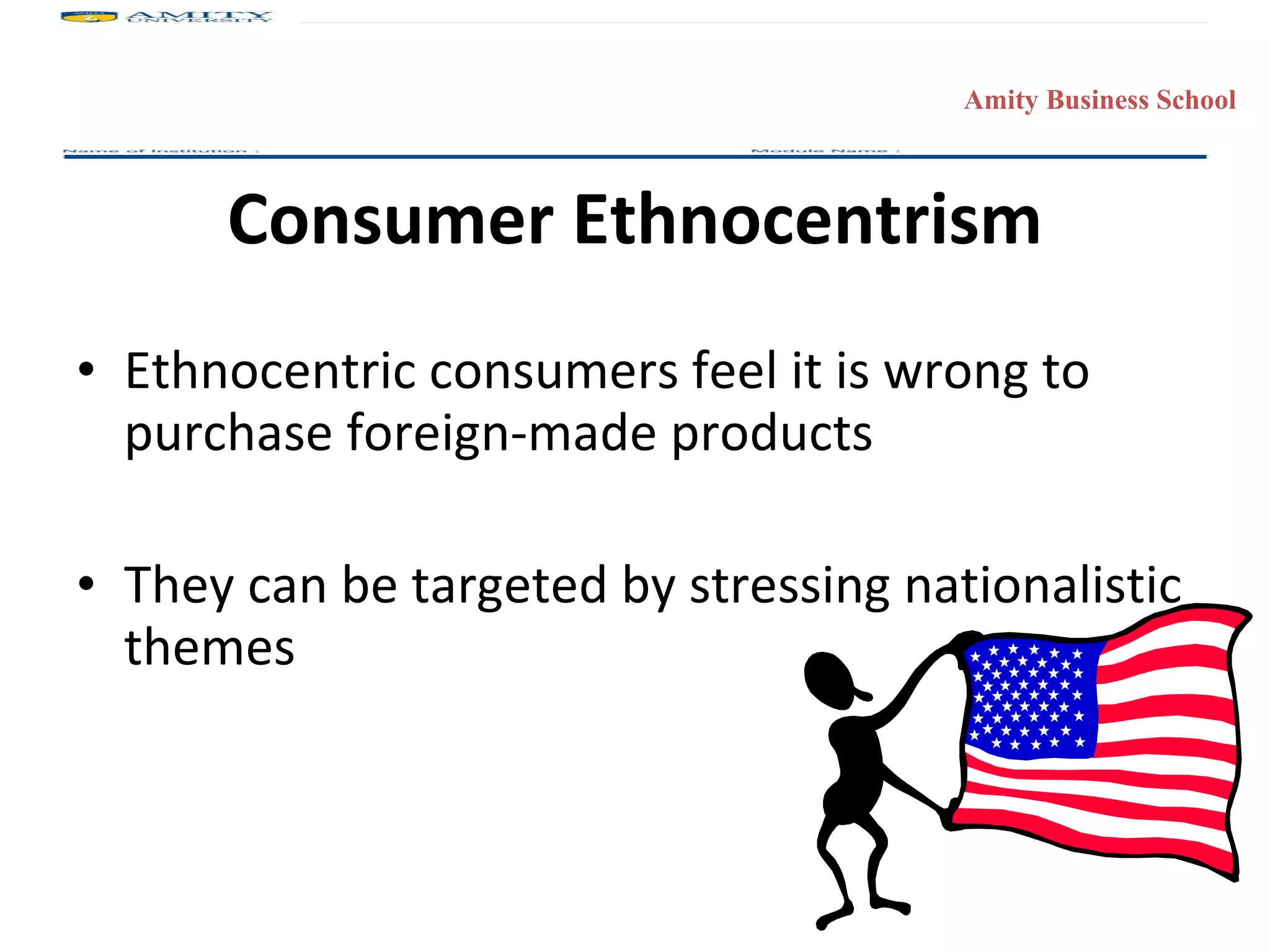
Consumer Ethnocentrism Ethnocentric consumers feel it is wrong to purchase foreign-made products They can be targeted by stressing nationalistic themes

Personality Edited Version

  • 1.
  • 2.
    Theories of PersonalityFreudian theory Unconscious needs or drives are at the heart of human motivation Neo-Freudian personality theory Social relationships are fundamental to the formation and development of personality Trait theory Quantitative approach to personality as a set of psychological traits
  • 3.
    Product personality Consumerresearchers using Freud’s personality theory see consumer purchases as a reflection and extension of the consumer’s own personality
  • 4.
    Personality Traits andConsumer Innovators Innovativeness Dogmatism Social Character Need for uniqueness Optimum stimulation level Variety-novelty seeking
  • 5.
    Consumer Innovativeness Consumerinnovativeness The degree to which consumers are receptive to new products, new services or new practices. Dogmatisicm A personality trait that reflects the degree of rigidity a person displays toward the unfamiliar and toward information that is contrary to his or her own established beliefs.
  • 6.
    Consumers low in dogmatism ( open-minded ) are more likely to prefer innovative products to established or traditional alternatives Highly dogmatic consumers tend to be more receptive to ads for new products or services that contain an appeal from an authoritative figure
  • 7.
    Social Character Inner-DirectedConsumers who tend to rely on their own inner values More likely to be innovators Tend to prefer ads that stress product features and benefits Other-Directed Consumers who tend to look to others for direction Less likely to be innovators Tend to prefer ads that feature social acceptance Amity Business School
  • 8.
    Optimum Stimulation Levels(OSL) A personality trait that measures the level or amount of novelty or complexity that individuals seek in their personal experiences. High OSL consumers tend to accept risky and novel products more readily than low OSL consumers.
  • 9.
    Cognitive Personality FactorsNeed for cognition A person’s craving for enjoyment of thinking Consumers high in NC are more likely to respond to ads rich in product-related information Consumers low in NC are more likely to be attracted to background or peripheral aspects of an ad Visualizers versus verbalizers A person’s preference for information presented visually or verbally
  • 10.
  • 11.
    A Brand PersonalityFramework Sincerity - Down-to-earth,Honest,Wholesome,Cheerful. Excitement- Daring,Spirited,Imaginative,Up-to-date. Competence- Reliable,Intelligent,Successful, Sophistication- Upper class,Charming Ruggedness- Outdoors,Tough
  • 12.
    Different Self ImagesActual Self Ideal Self Actual Social self Ideal Social Self EXPECTD SELF
  • 13.
    Consumer Ethnocentrism Ethnocentricconsumers feel it is wrong to purchase foreign-made products They can be targeted by stressing nationalistic themes