– Sitaram K. Sagare
MIS, Pune
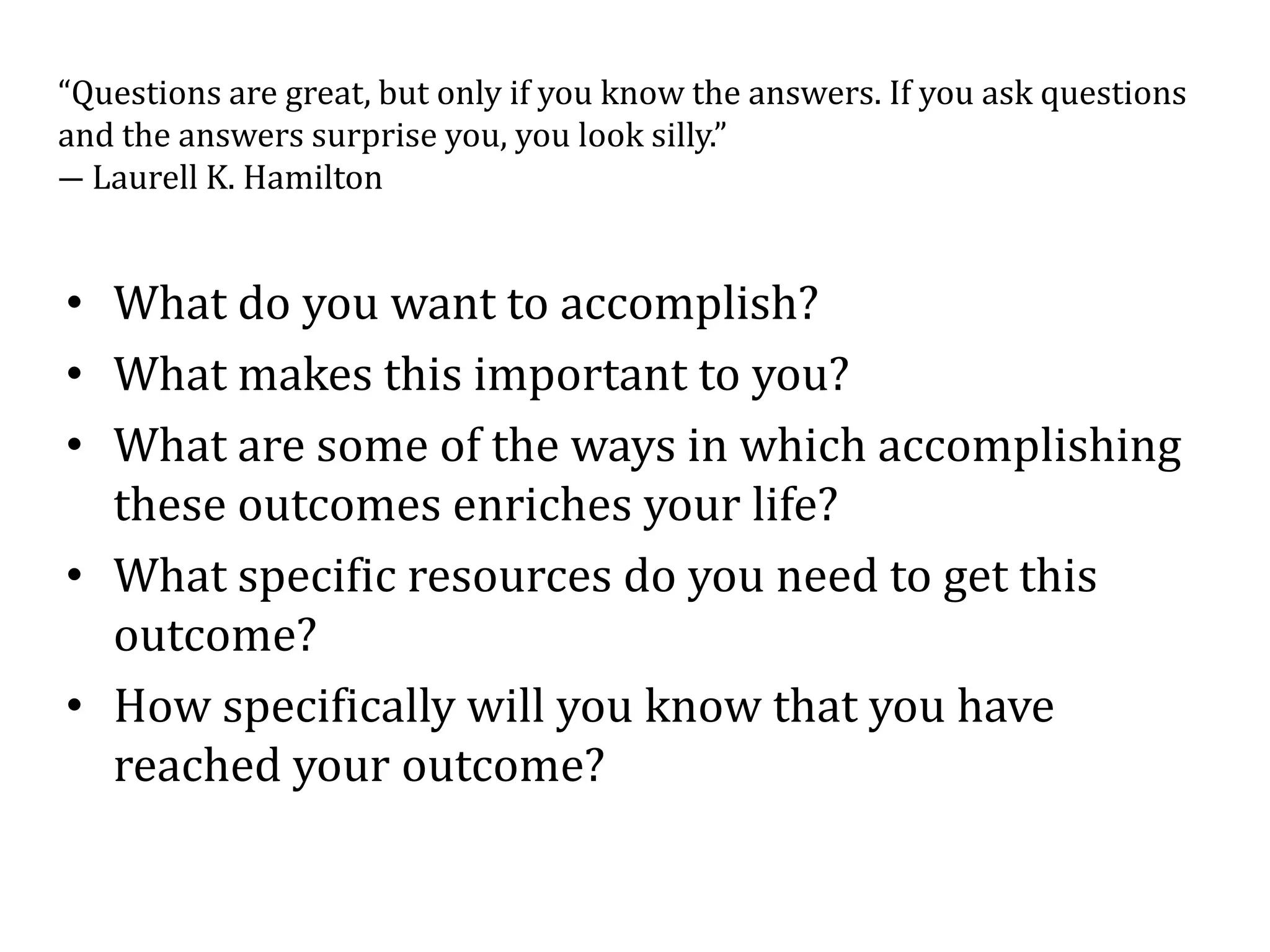
• What do you want to accomplish?
• What makes this important to you?
• What are some of the ways in which accomplishing
these outcomes enriches your life?
• What specific resources do you need to get this
outcome?
• How specifically will you know that you have
reached your outcome?
“Questions are great, but only if you know the answers. If you ask questions
and the answers surprise you, you look silly.”
― Laurell K. Hamilton
Keep Calm & Introduce yourself.
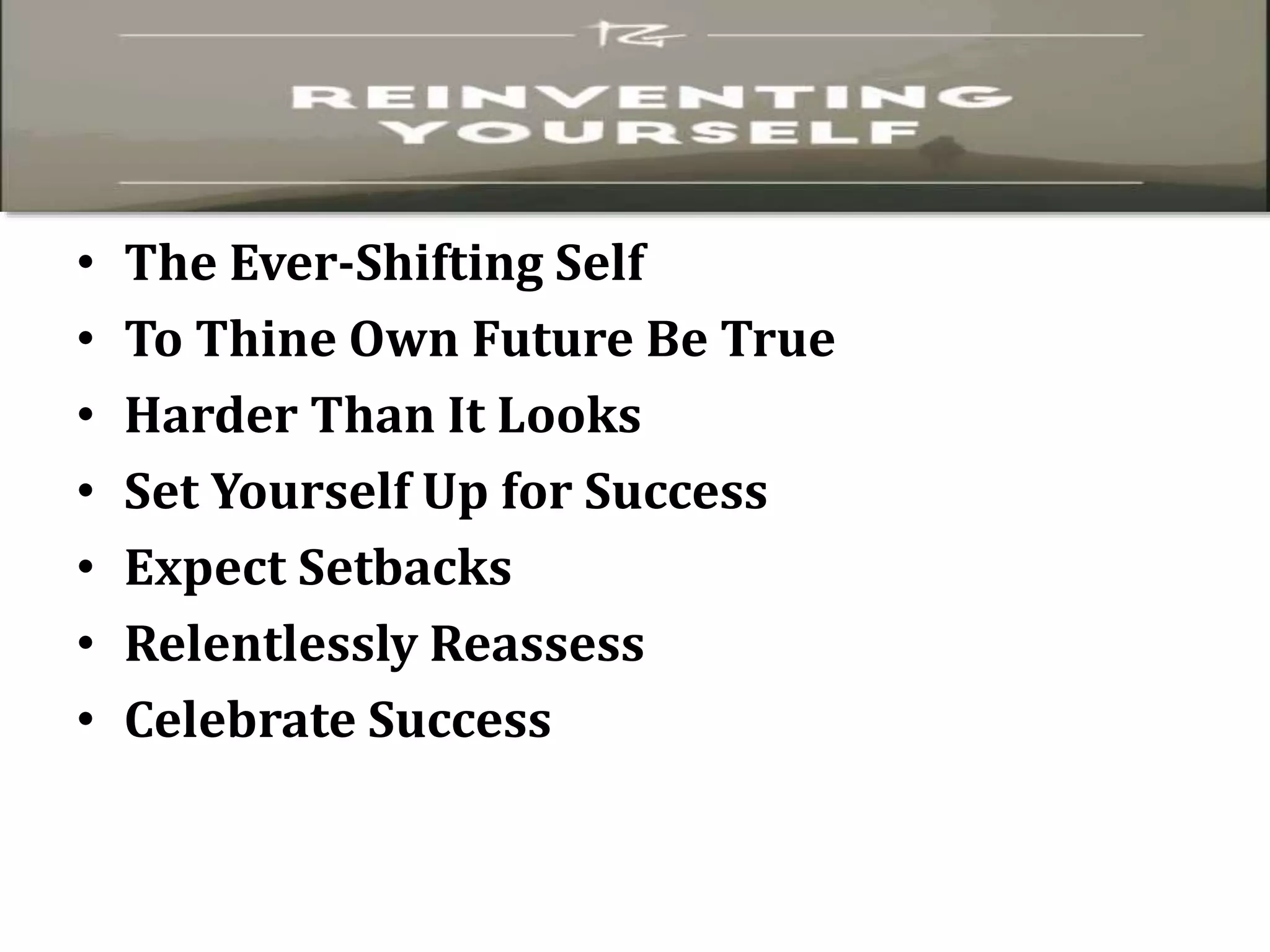
• The Ever-Shifting Self
• To Thine Own Future Be True
• Harder Than It Looks
• Set Yourself Up for Success
• Expect Setbacks
• Relentlessly Reassess
• Celebrate Success
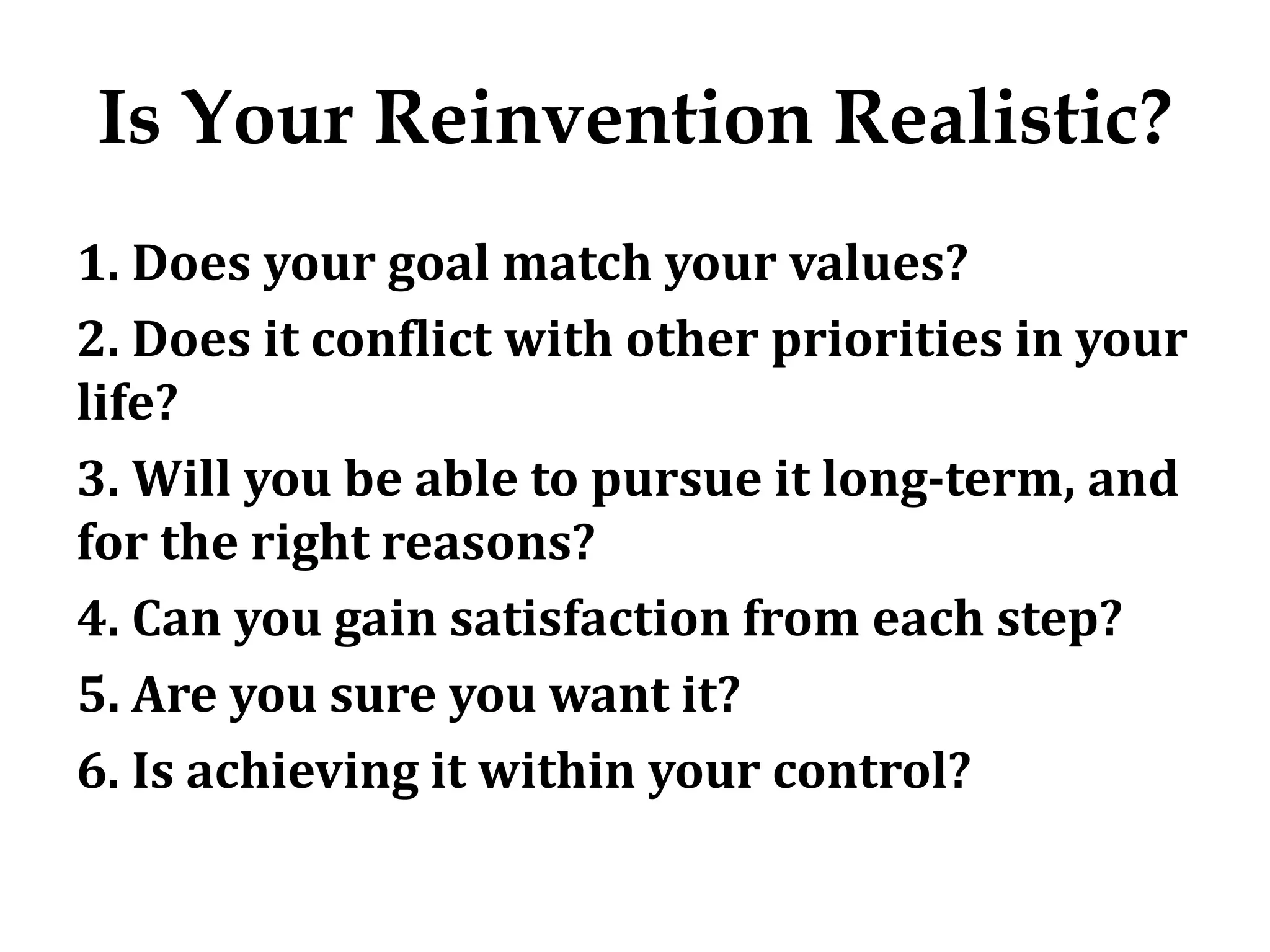
Is Your Reinvention Realistic?
1. Does your goal match your values?
2. Does it conflict with other priorities in your
life?
3. Will you be able to pursue it long-term, and
for the right reasons?
4. Can you gain satisfaction from each step?
5. Are you sure you want it?
6. Is achieving it within your control?
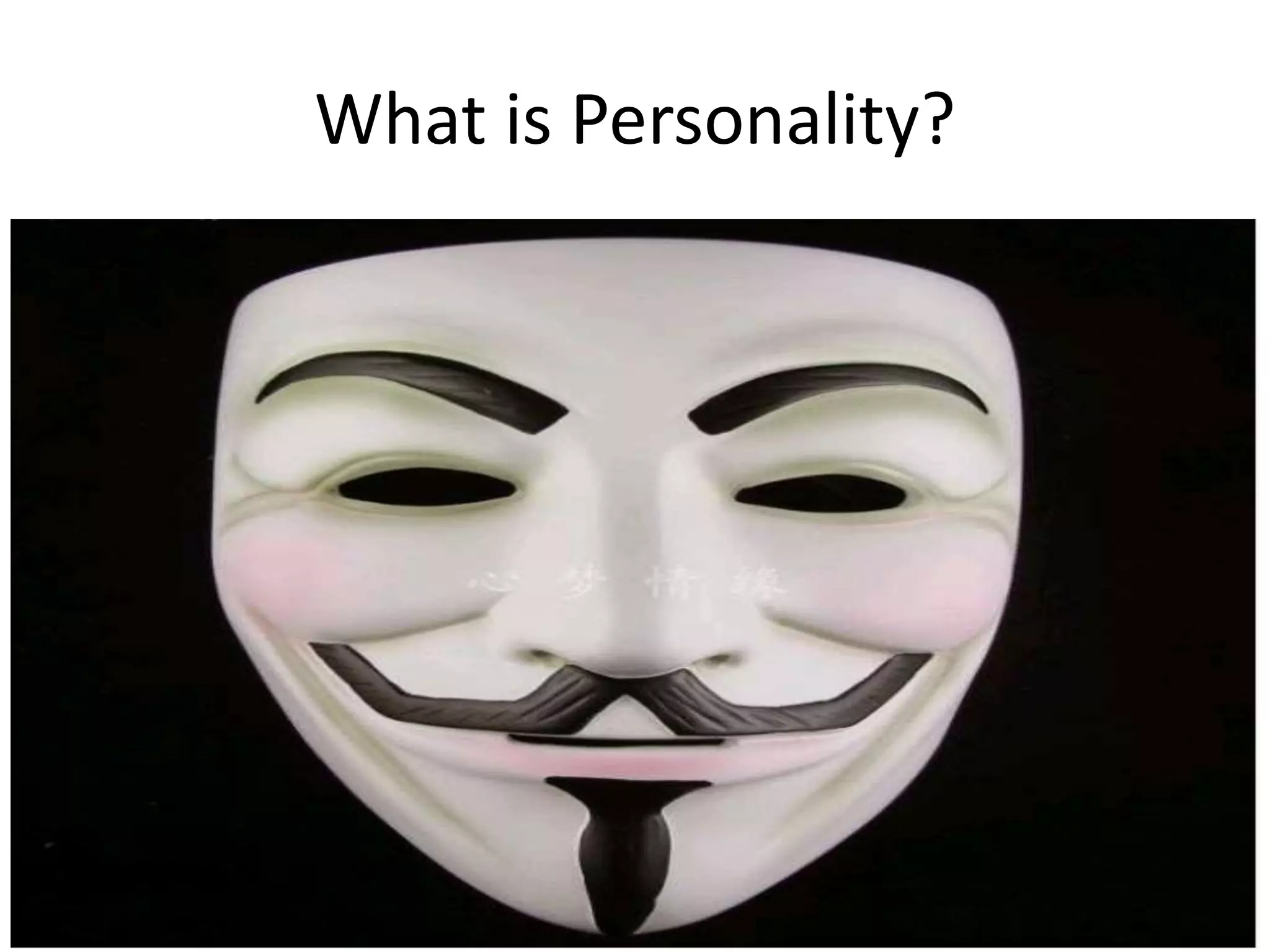
What is Personality?
Before communicating...
– Do they feel comfortable with our
conversation?
– Are my responses making them feel
understood?
– Is my intent being clearly defined?
– Will our connection be better after our
interaction?
• Give them the impression that you’re enthusiastic about talking to
them.
• Ask open-ended questions about their interests.
• Adapt to their body language and feelings.
• Show them approval: Tell them what you admire about them and why.
• Listen attentively to everything they say.
• Give them the right amount of eye contact.
• Reveal as much about yourself as possible.
• Give the impression that you are on the same team.
• Give them your best smile
• Appear to have a slightly higher energy level than the other person.
• Say their name in a way that is pleasing to their ears.
• Posture
• Take up space
• Lean
• Arms
• Hands
• Handshake.
• Eye contact.
• Affirmative movements.
• Taking notes.
• Slower.
• Checking the time.
• Looking at the ground.
• Touching your face.
• Picking at something.
• On the edge.
• Tapping.
• Objects.
• Too close.
• Fake smile.
• Over blinking.
Personality Development Day 1 session 1

Personality Development Day 1 session 1

  • 1.
    – Sitaram K.Sagare MIS, Pune
  • 2.
    • What doyou want to accomplish? • What makes this important to you? • What are some of the ways in which accomplishing these outcomes enriches your life? • What specific resources do you need to get this outcome? • How specifically will you know that you have reached your outcome? “Questions are great, but only if you know the answers. If you ask questions and the answers surprise you, you look silly.” ― Laurell K. Hamilton
  • 3.
    Keep Calm &Introduce yourself.
  • 4.
    • The Ever-ShiftingSelf • To Thine Own Future Be True • Harder Than It Looks • Set Yourself Up for Success • Expect Setbacks • Relentlessly Reassess • Celebrate Success
  • 5.
    Is Your ReinventionRealistic? 1. Does your goal match your values? 2. Does it conflict with other priorities in your life? 3. Will you be able to pursue it long-term, and for the right reasons? 4. Can you gain satisfaction from each step? 5. Are you sure you want it? 6. Is achieving it within your control?
  • 6.
  • 8.
    Before communicating... – Dothey feel comfortable with our conversation? – Are my responses making them feel understood? – Is my intent being clearly defined? – Will our connection be better after our interaction?
  • 9.
    • Give themthe impression that you’re enthusiastic about talking to them. • Ask open-ended questions about their interests. • Adapt to their body language and feelings. • Show them approval: Tell them what you admire about them and why. • Listen attentively to everything they say. • Give them the right amount of eye contact. • Reveal as much about yourself as possible. • Give the impression that you are on the same team. • Give them your best smile • Appear to have a slightly higher energy level than the other person. • Say their name in a way that is pleasing to their ears.
  • 10.
    • Posture • Takeup space • Lean • Arms • Hands • Handshake. • Eye contact. • Affirmative movements. • Taking notes. • Slower. • Checking the time. • Looking at the ground. • Touching your face. • Picking at something. • On the edge. • Tapping. • Objects. • Too close. • Fake smile. • Over blinking.

Editor's Notes

  • #4 Strength, Weakness, Short Term and Long Term Goals