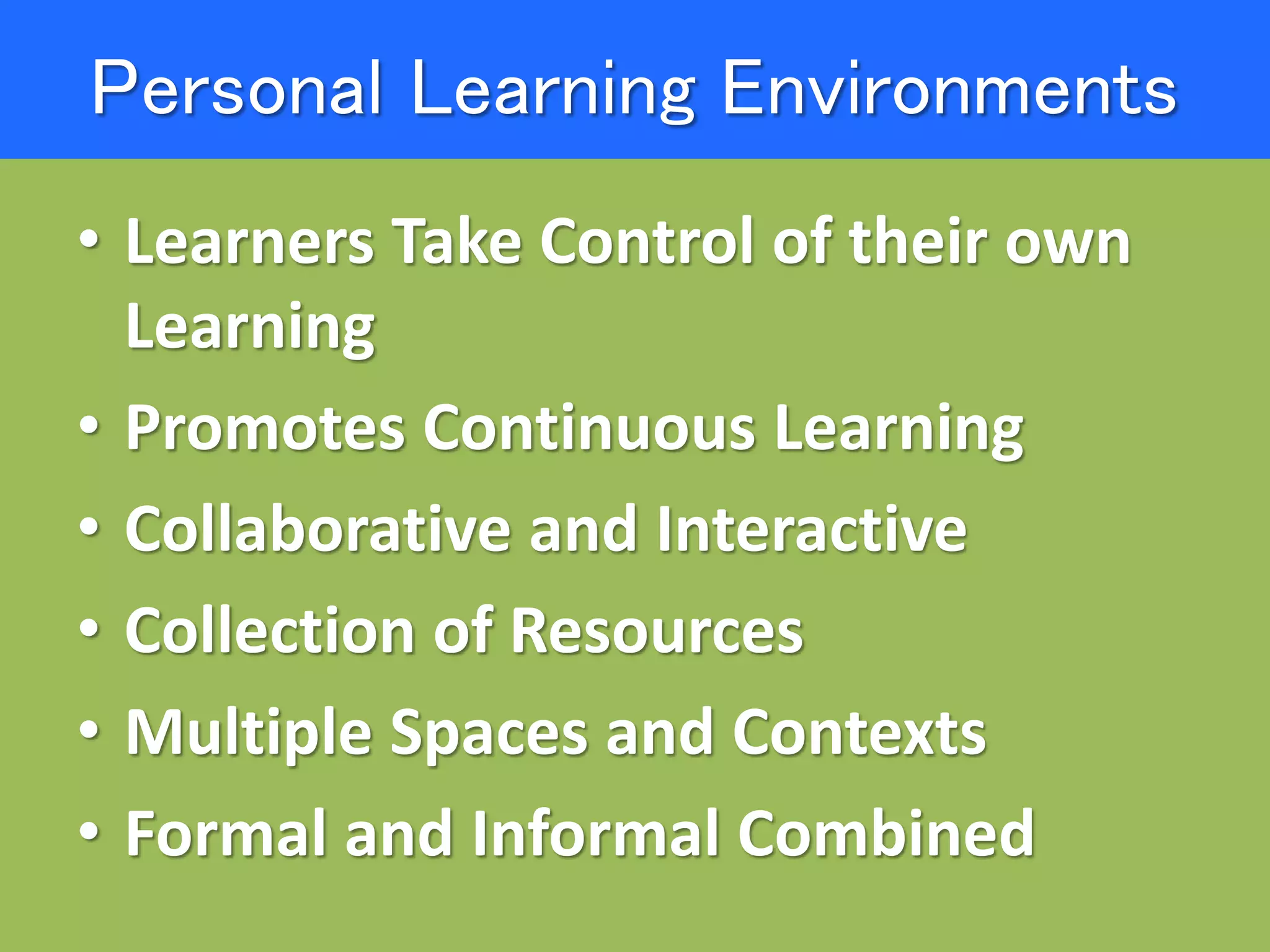
Personal Learning Environments
• Learners Take Control of their own
Learning
• Promotes Continuous Learning
• Collaborative and Interactive
• Collection of Resources
• Multiple Spaces and Contexts
• Formal and Informal Combined
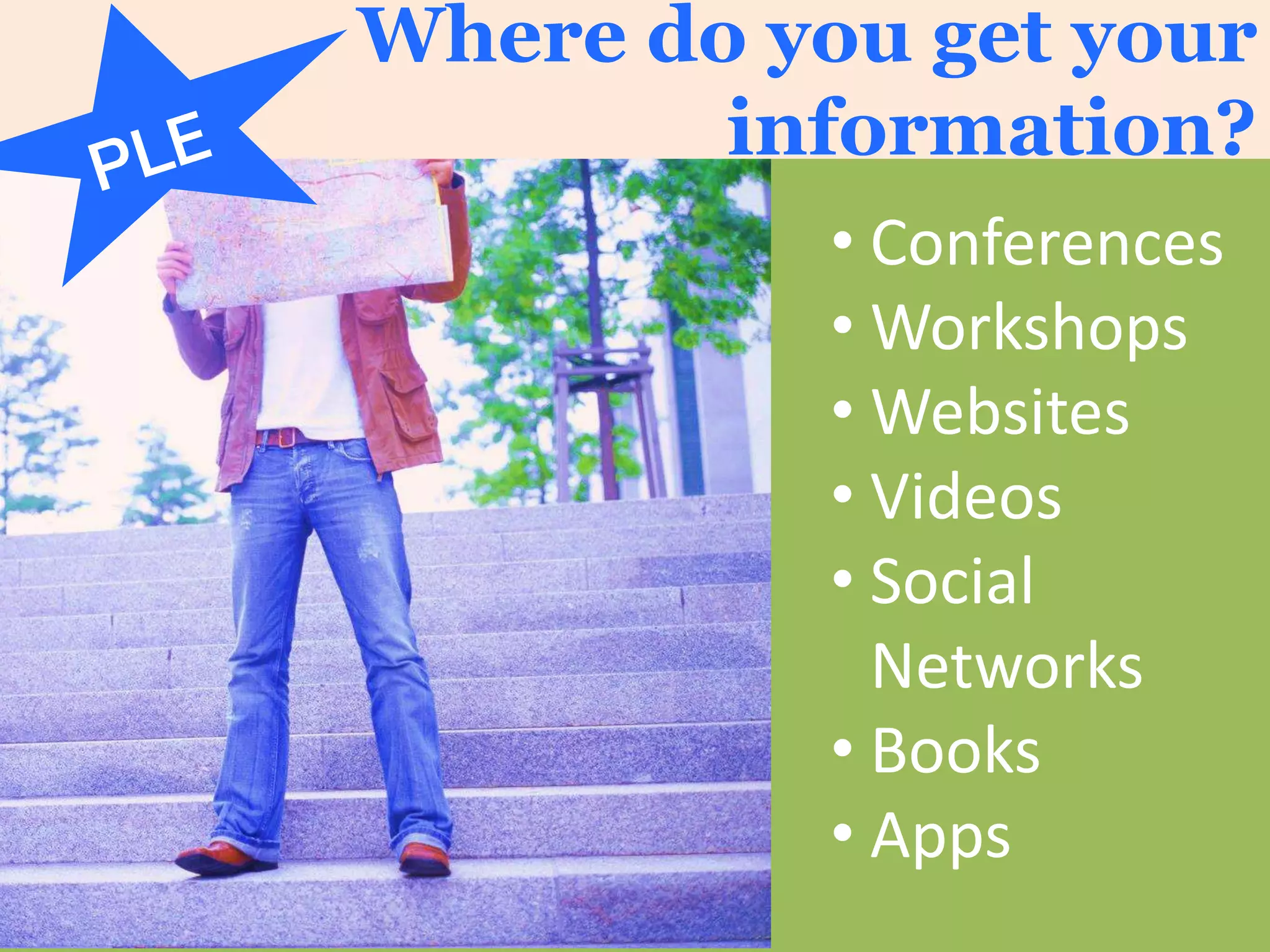
Where do you get your
information?
• Conferences
• Workshops
• Websites
• Videos
• Social
Networks
• Books
• Apps
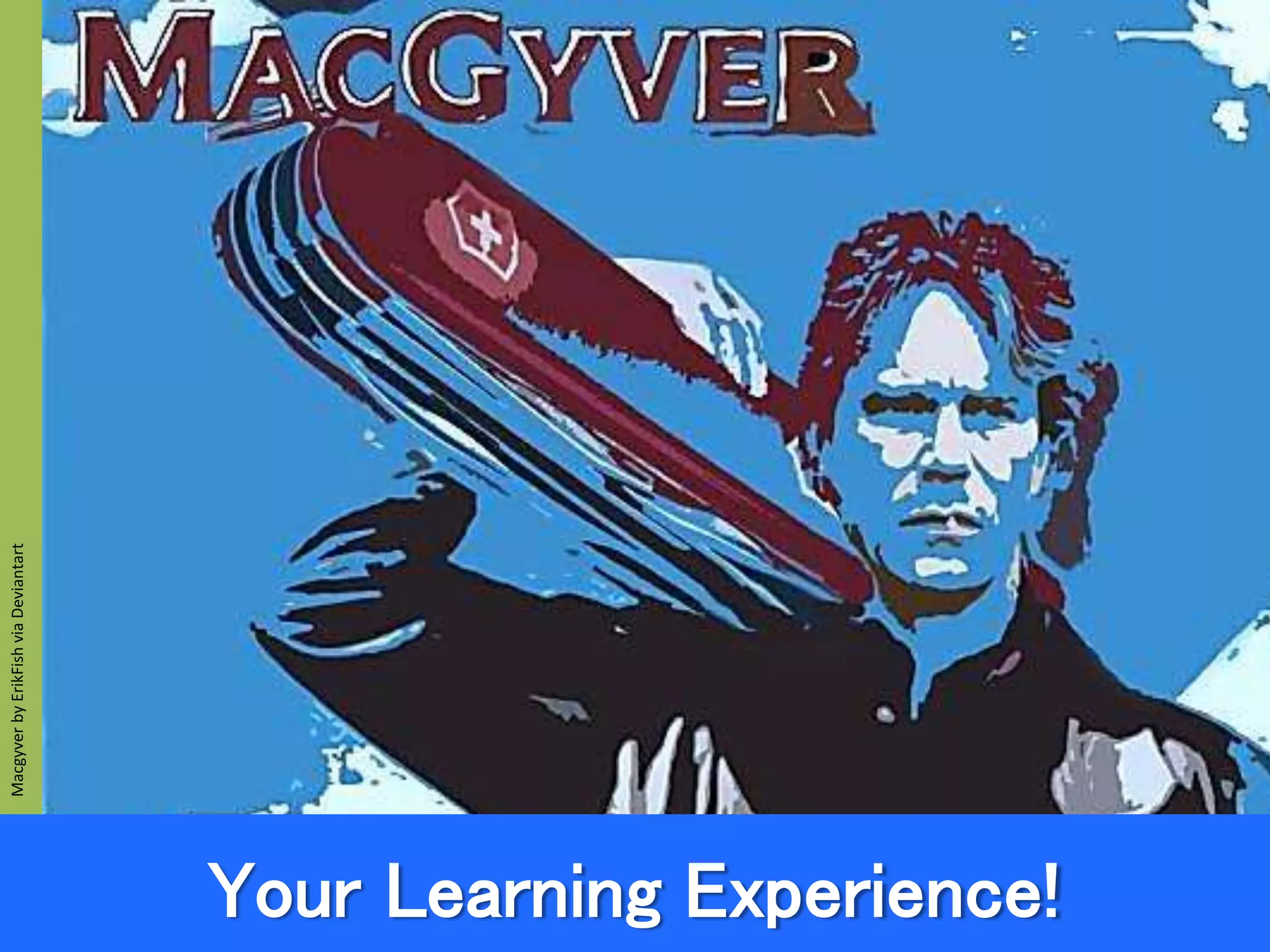
Your Learning Experience!
MacgyverbyErikFishviaDeviantart
No Cookie
Cutters
Here!
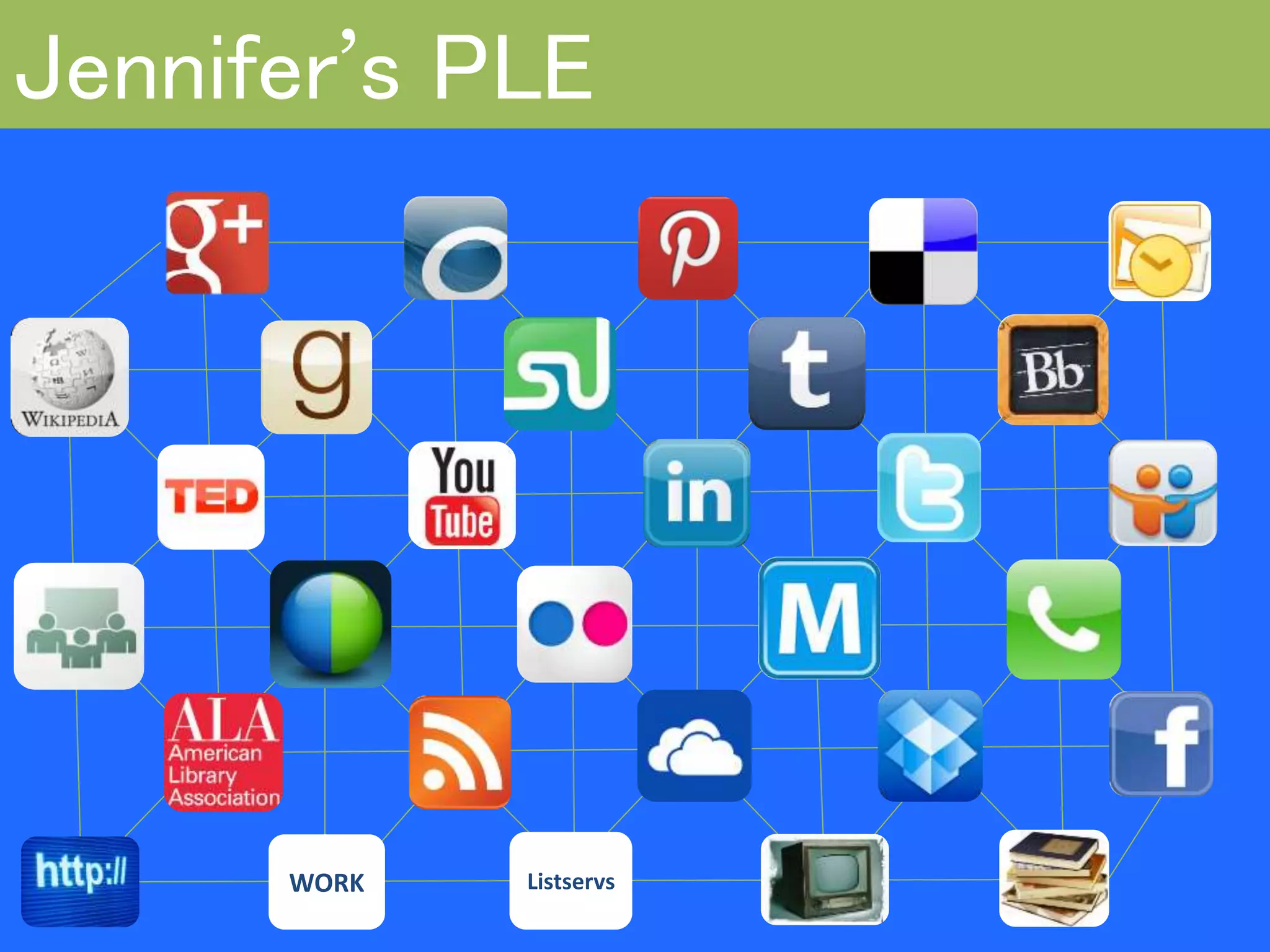
Jennifer’s PLE
WORK Listservs
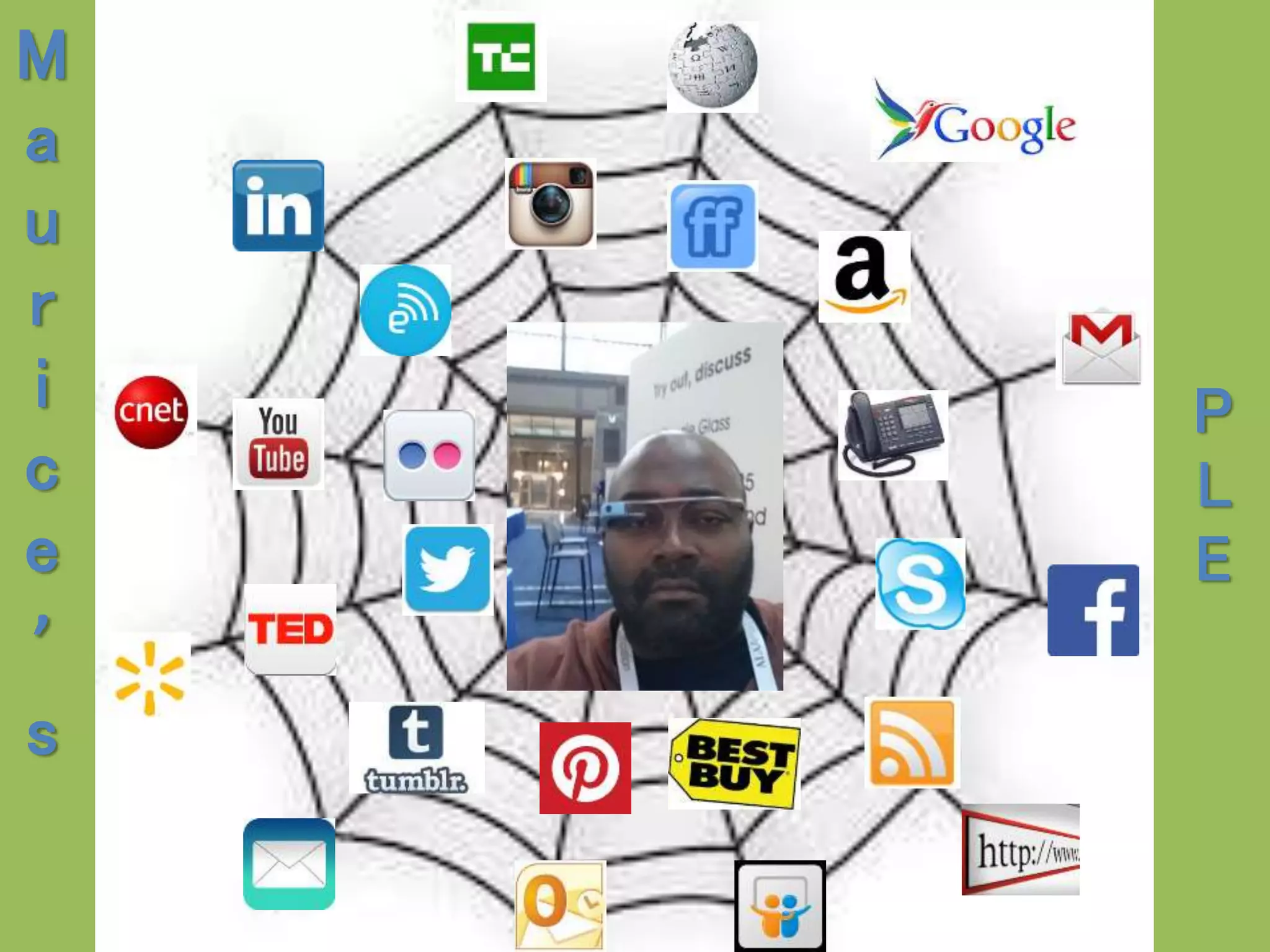
M
a
u
r
i
c
e
’
s
P
L
E
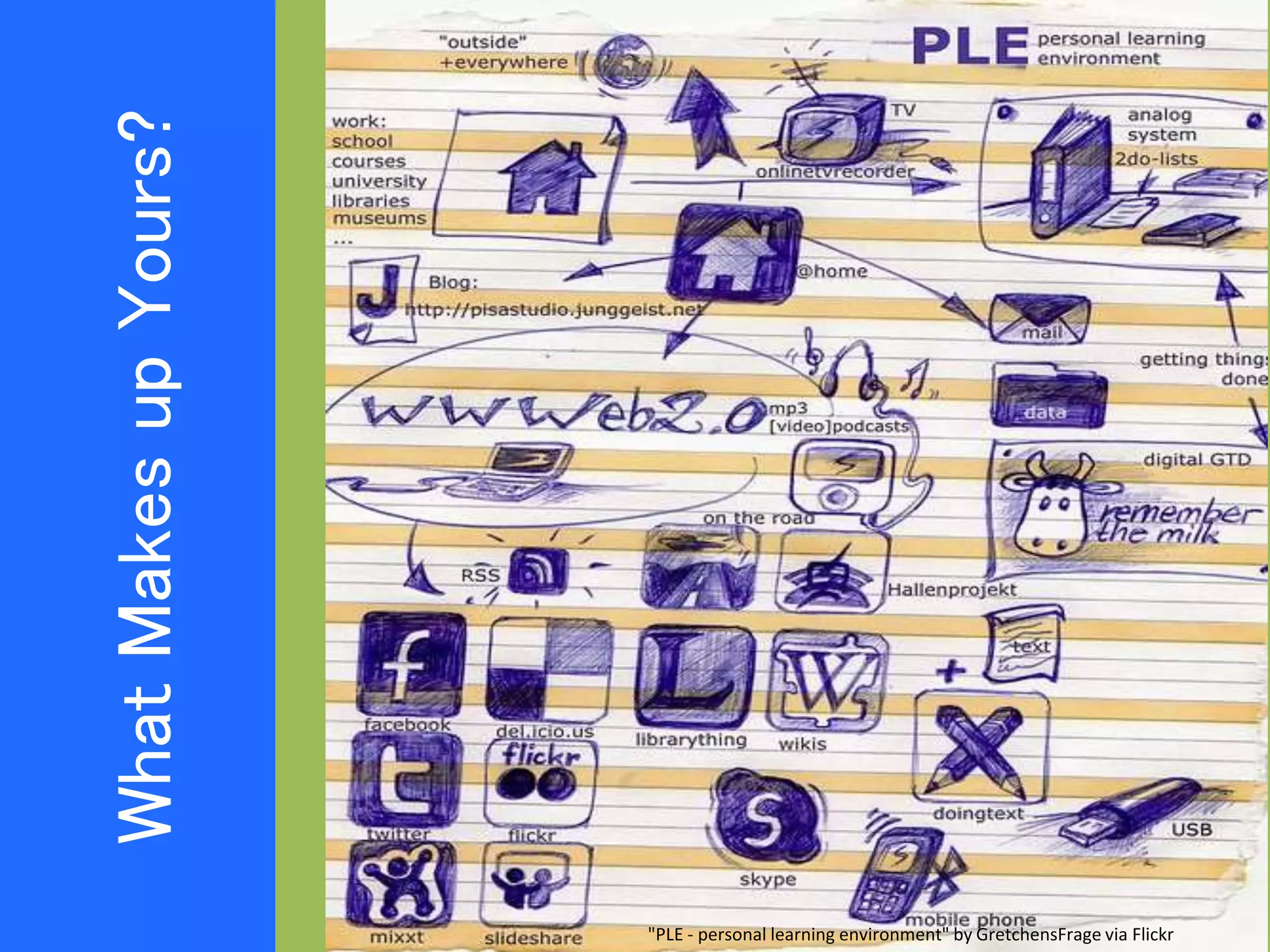
WhatMakesupYours?
"PLE - personal learning environment" by GretchensFrage via Flickr
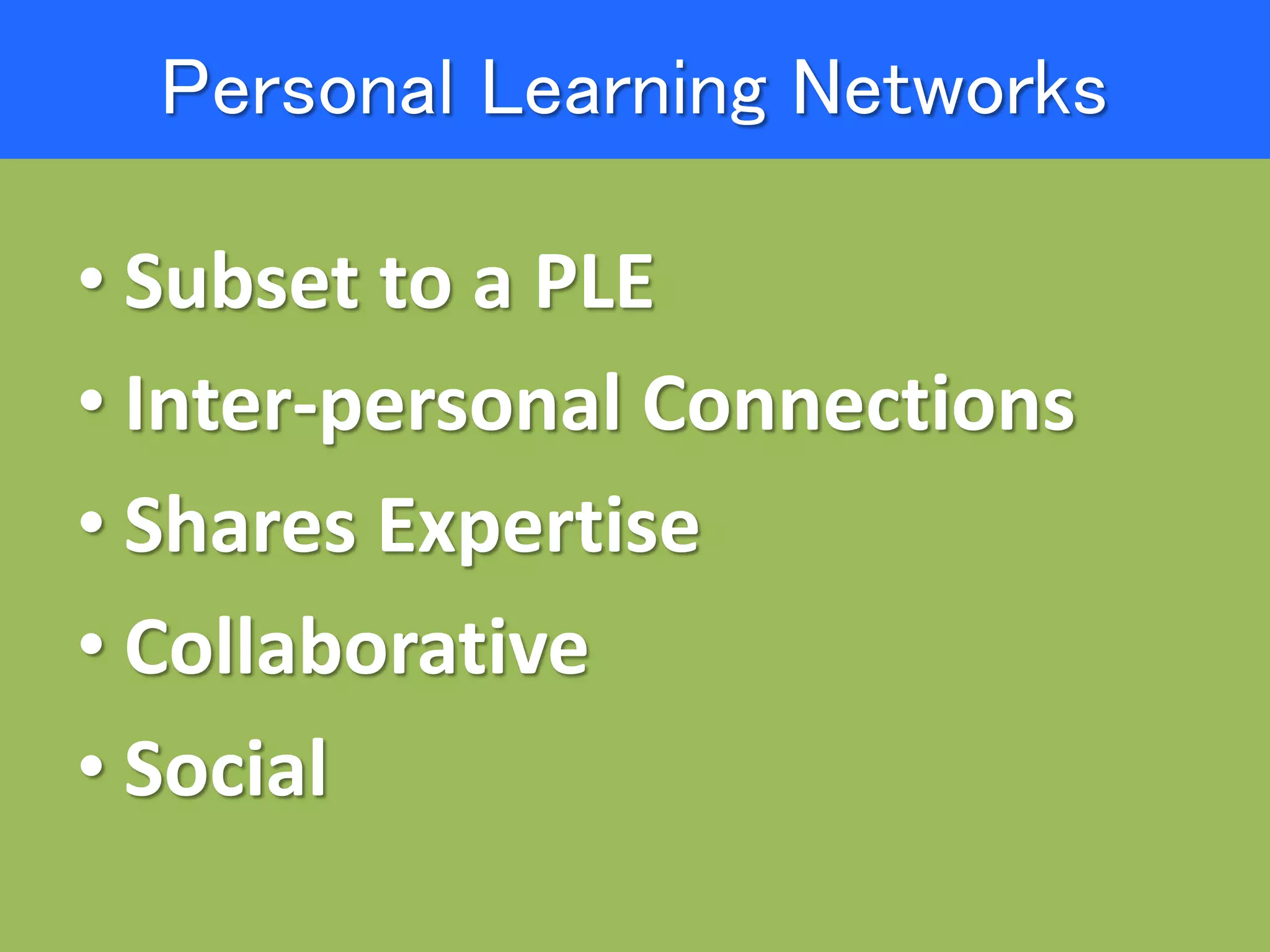
Personal Learning Networks
• Subset to a PLE
• Inter-personal Connections
• Shares Expertise
• Collaborative
• Social
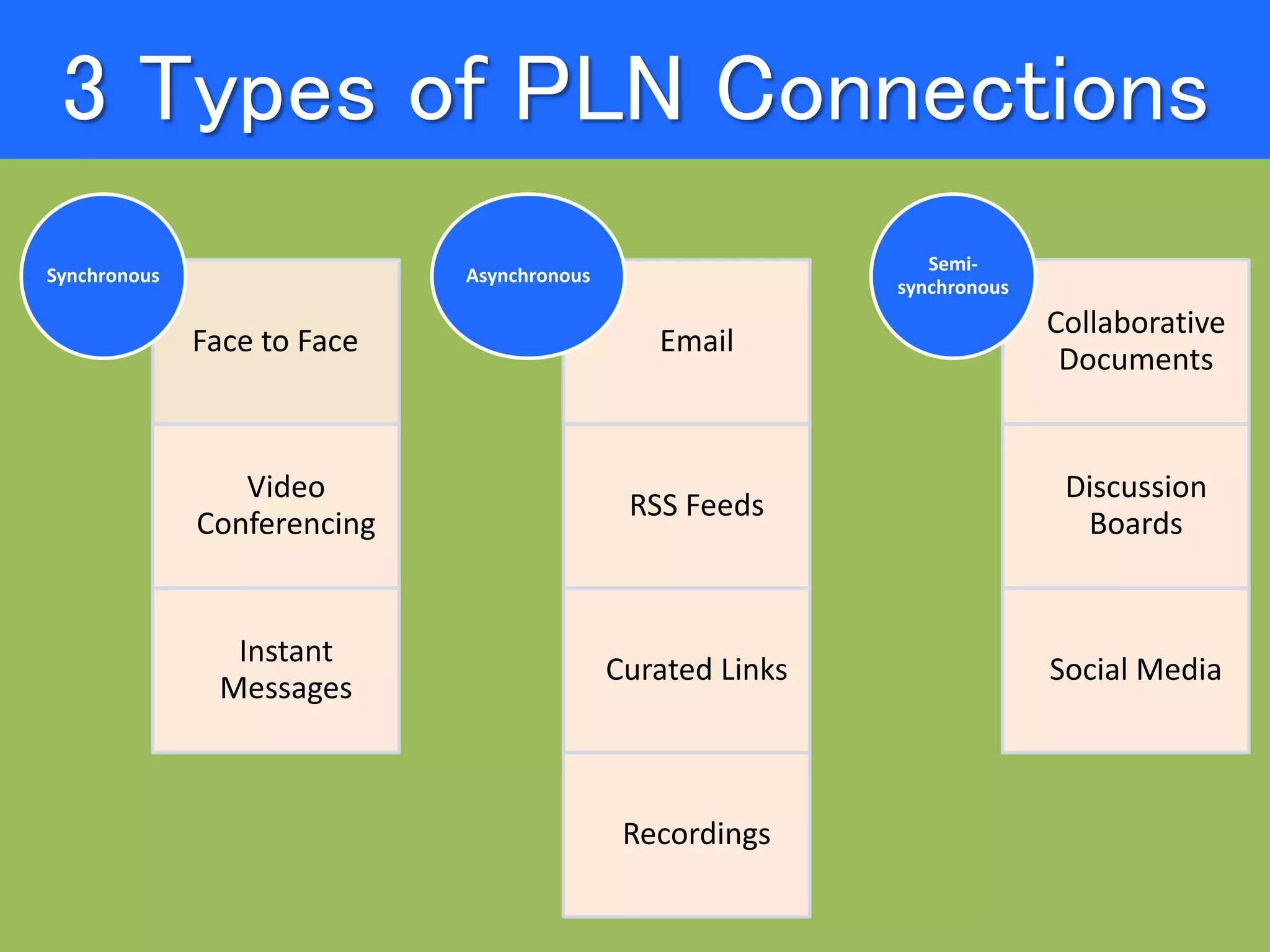
3 Types of PLN Connections
Face to Face
Video
Conferencing
Instant
Messages
Synchronous
Email
RSS Feeds
Curated Links
Recordings
Asynchronous
Collaborative
Documents
Discussion
Boards
Social Media
Semi-
synchronous
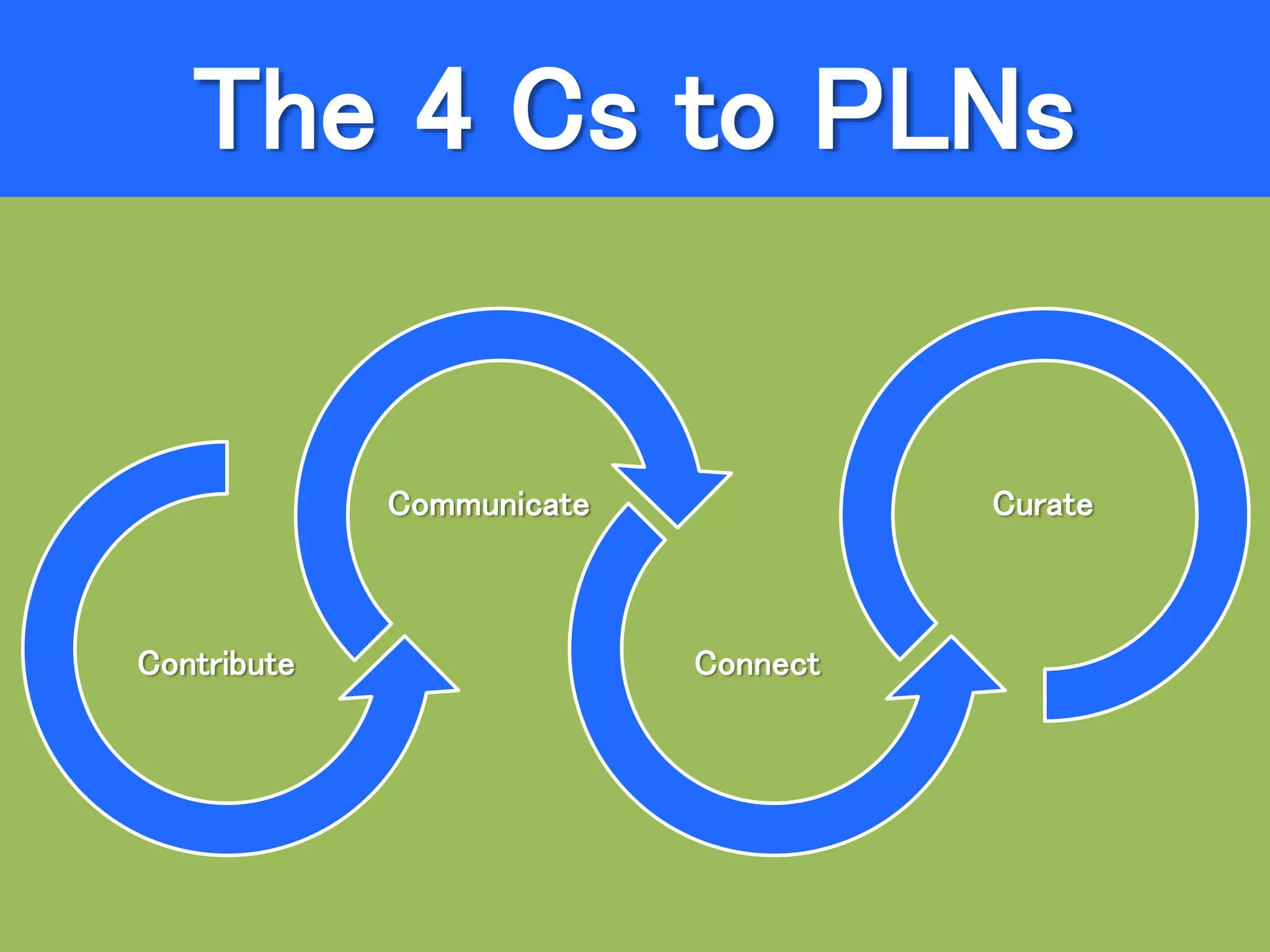
The 4 Cs to PLNs
Contribute
Communicate
Connect
Curate
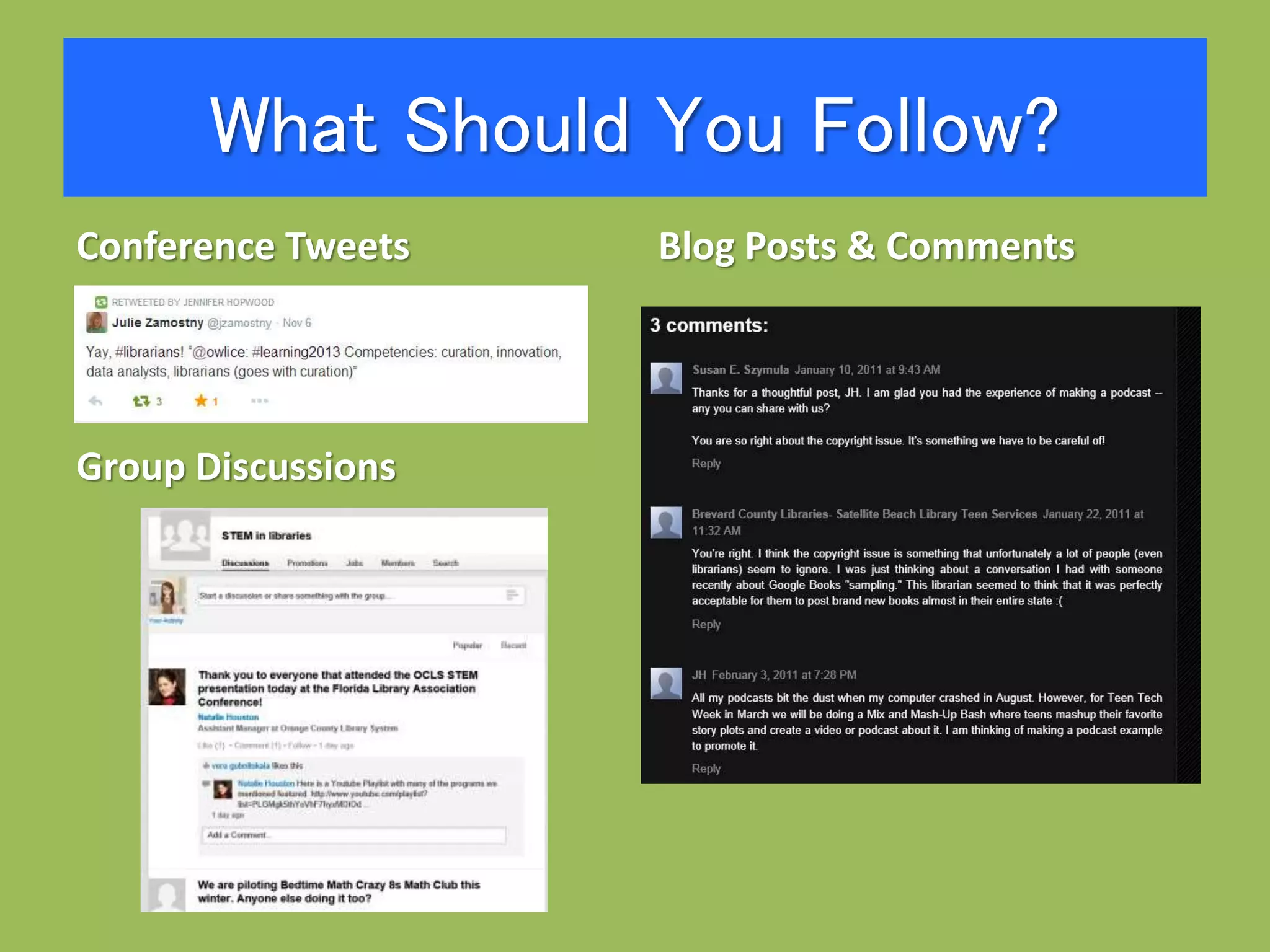
What Should You Follow?
Conference Tweets Blog Posts & Comments
Group Discussions
to be a Lurker!
Netiquette Tips
• The person on the other side is still human, be nice
• Be respectful of the other person’s opinion; do not
engage in a “flame war” –series of angry
communications
• Writing in all caps is the Internet equivalent to yelling
at someone
• Don’t do or say stuff in the virtual environment that
you wouldn’t in real life
However...
interaction is the key to success in an online learning environment.
Who do you get your
information From?
• Subject Matter
Experts
• Trainers
• Librarians
• Bloggers
• Coworkers
• Friends
• Family
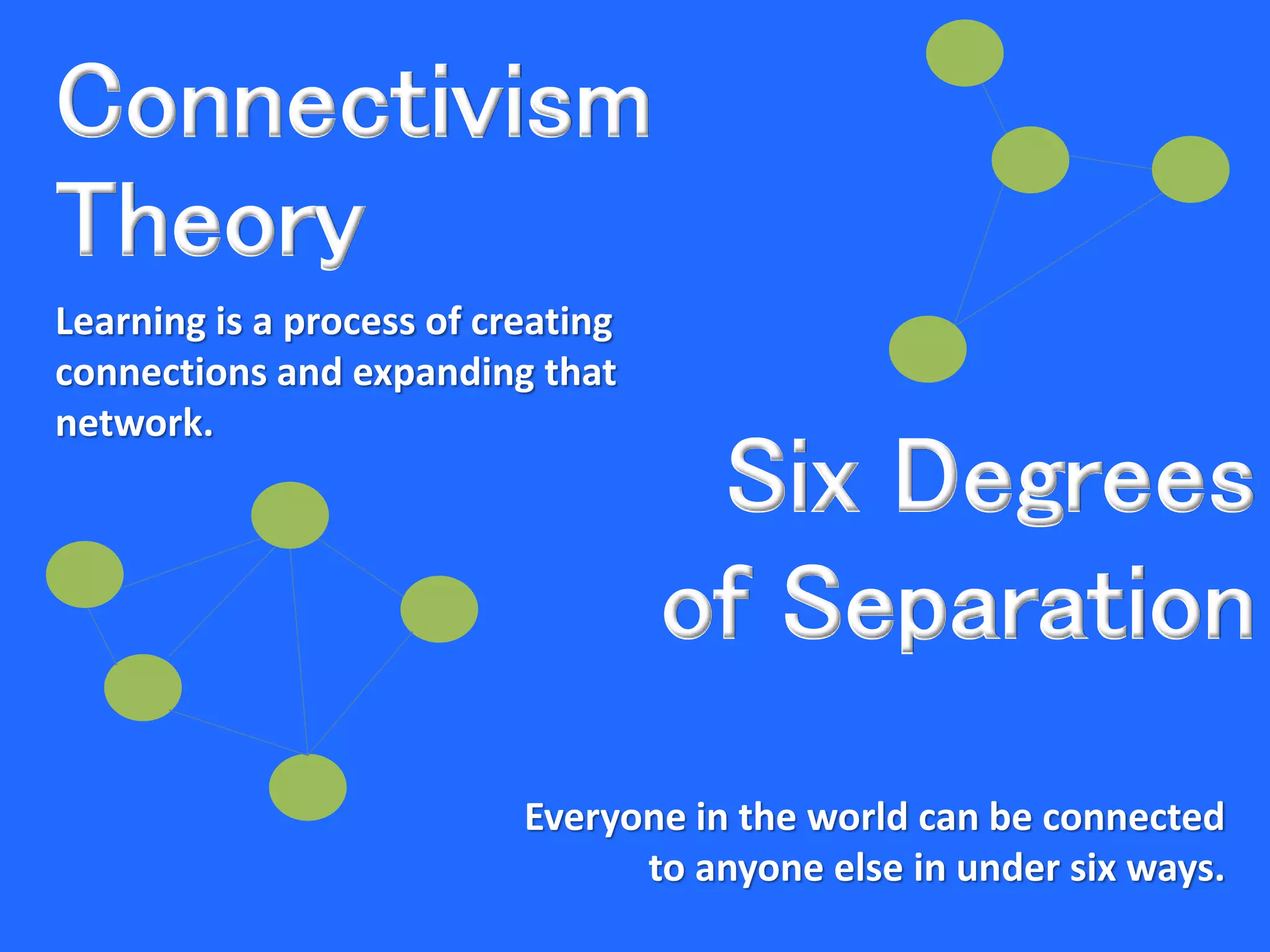
Connectivism
Theory
Learning is a process of creating
connections and expanding that
network.
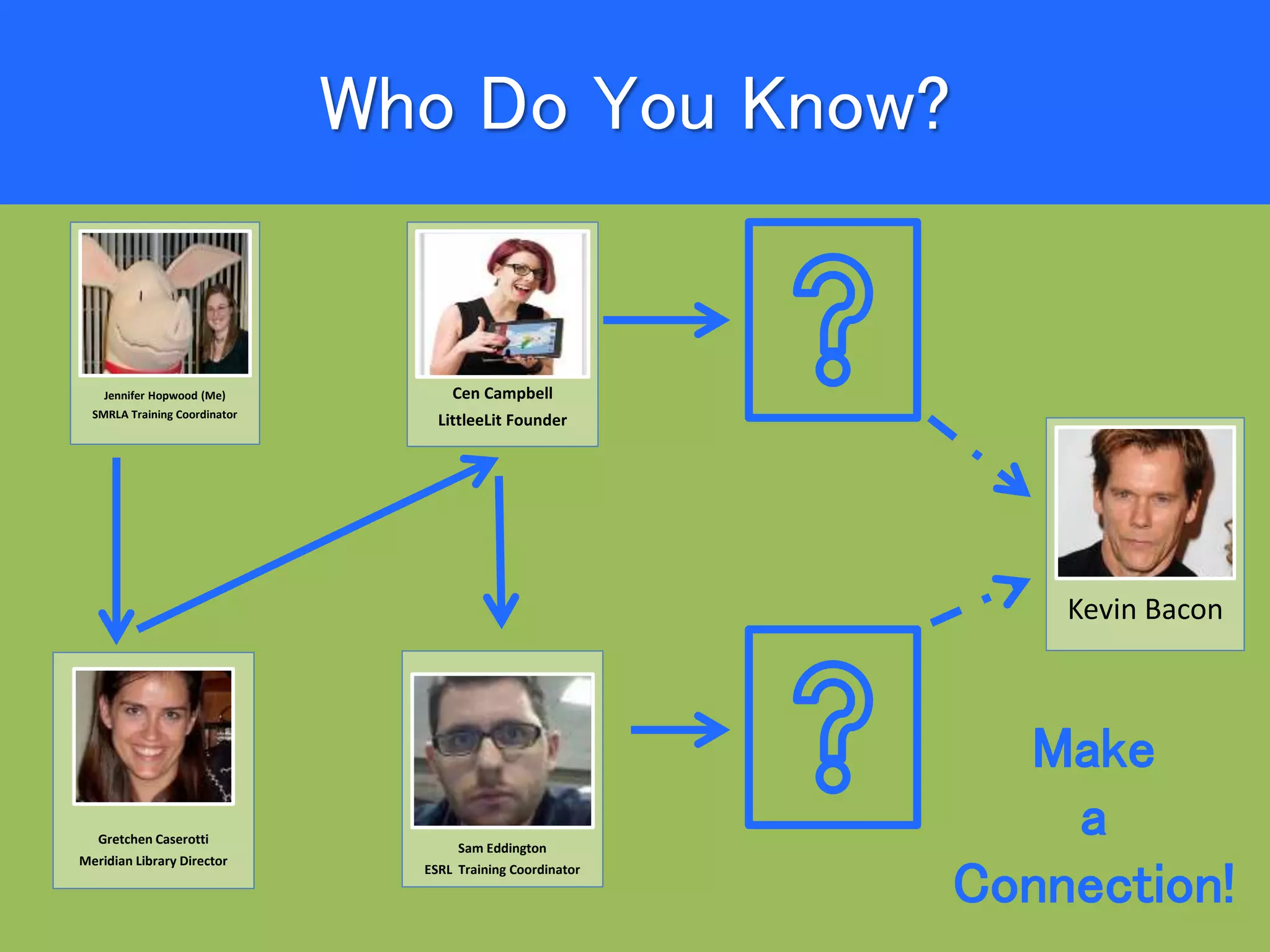
Six Degrees
of Separation
Everyone in the world can be connected
to anyone else in under six ways.
Who Do You Know?
Jennifer Hopwood (Me)
SMRLA Training Coordinator
Kevin Bacon
Gretchen Caserotti
Meridian Library Director
Cen Campbell
LittleeLit Founder
Sam Eddington
ESRL Training Coordinator
Make
a
Connection!
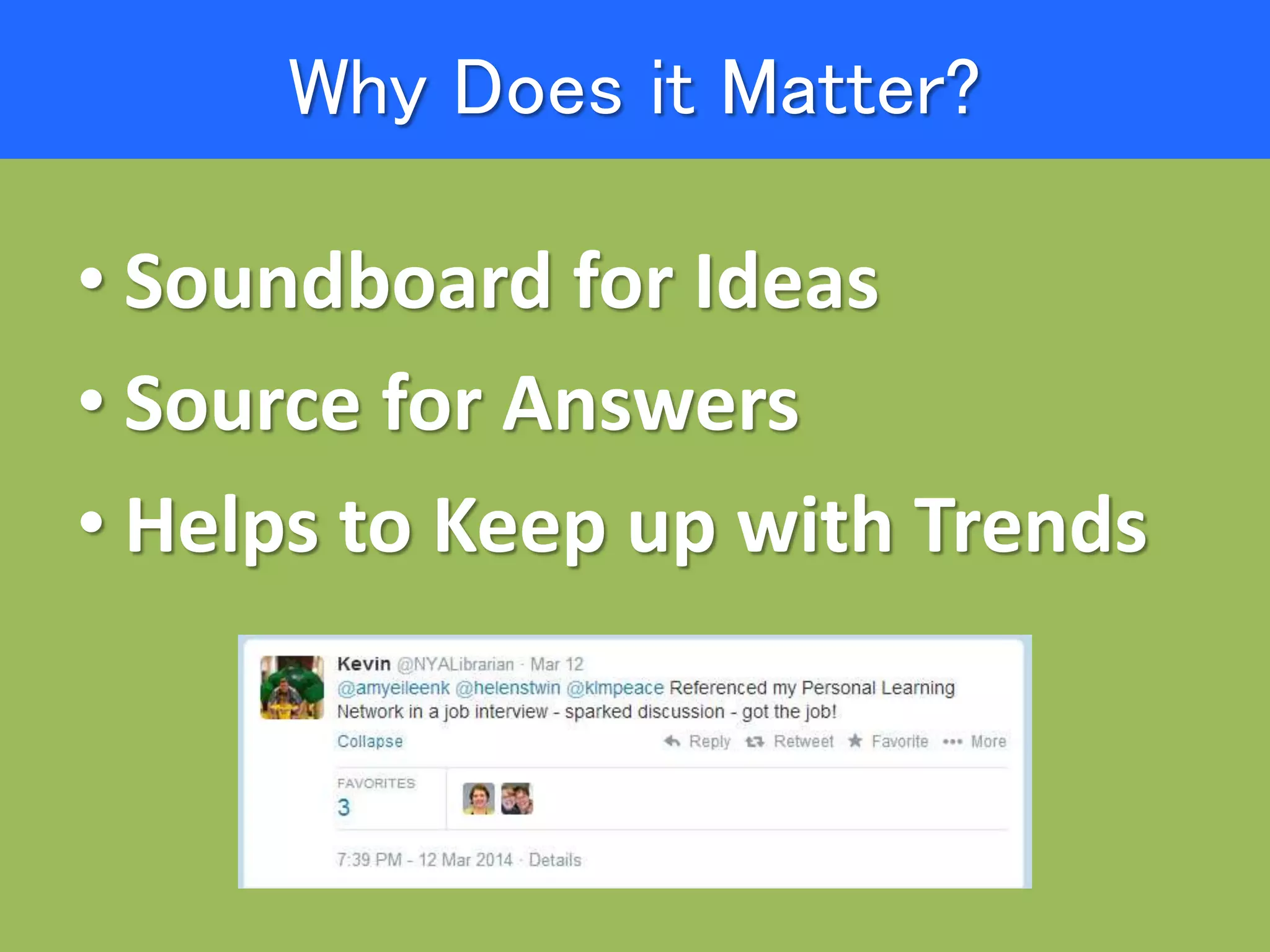
Why Does it Matter?
• Soundboard for Ideas
• Source for Answers
• Helps to Keep up with Trends
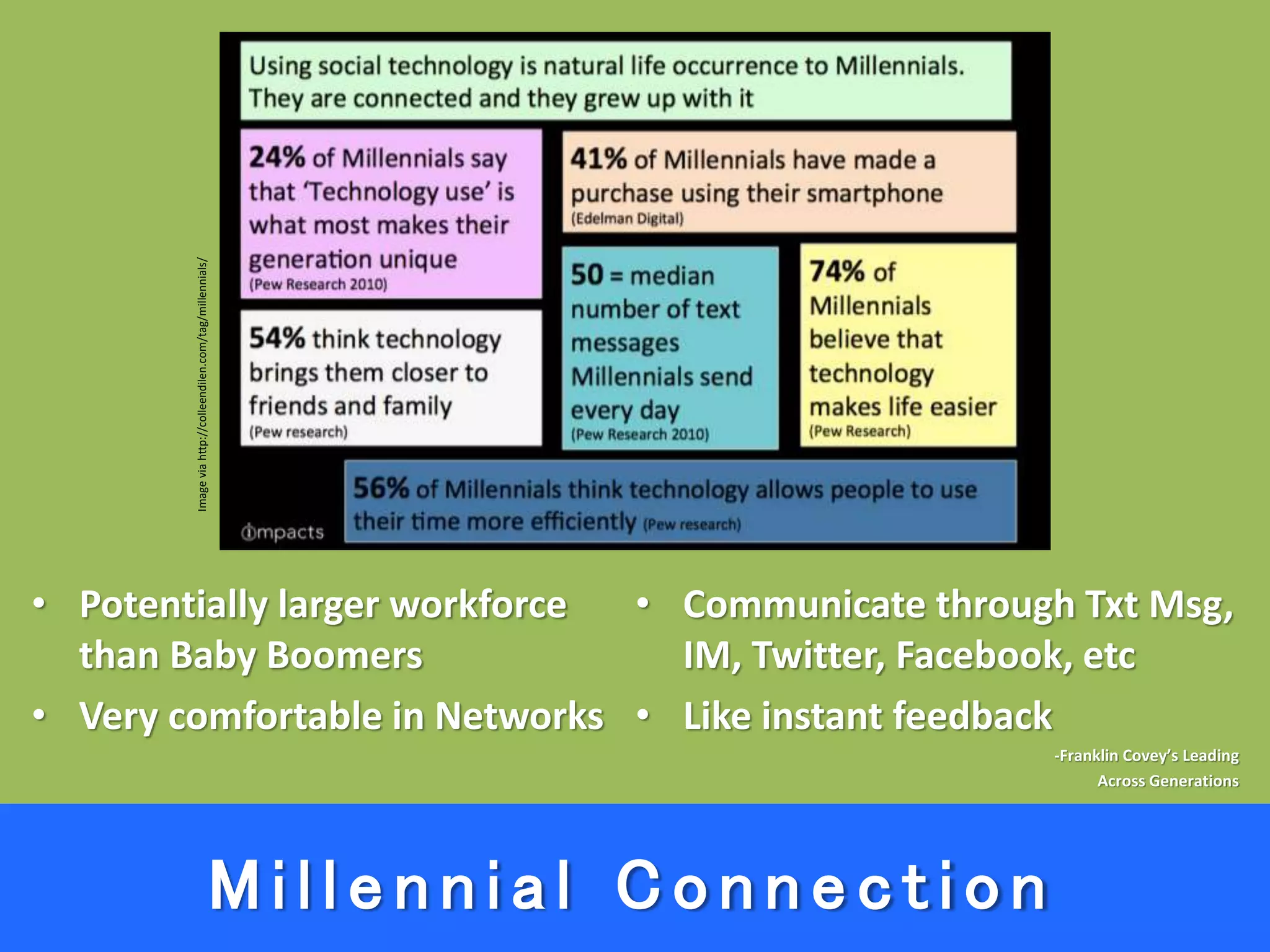
M i l l e n n i a l C o n n e c t i o n
• Potentially larger workforce
than Baby Boomers
• Very comfortable in Networks
• Communicate through Txt Msg,
IM, Twitter, Facebook, etc
• Like instant feedback
-Franklin Covey’s Leading
Across Generations
Imageviahttp://colleendilen.com/tag/millennials/
Connect with Us!
Jennifer Hopwood
@jhopwood80
pinterest.com/jhopwood80
Maurice Coleman
@baldgeekinmd
Tisfortraining.wordpress.com

Personal Learning Environments and Networks for Library Professionals

  • 2.
    Personal Learning Environments •Learners Take Control of their own Learning • Promotes Continuous Learning • Collaborative and Interactive • Collection of Resources • Multiple Spaces and Contexts • Formal and Informal Combined
  • 3.
    Where do youget your information? • Conferences • Workshops • Websites • Videos • Social Networks • Books • Apps
  • 4.
  • 5.
  • 6.
  • 7.
  • 8.
    WhatMakesupYours? "PLE - personallearning environment" by GretchensFrage via Flickr
  • 9.
    Personal Learning Networks •Subset to a PLE • Inter-personal Connections • Shares Expertise • Collaborative • Social
  • 10.
    3 Types ofPLN Connections Face to Face Video Conferencing Instant Messages Synchronous Email RSS Feeds Curated Links Recordings Asynchronous Collaborative Documents Discussion Boards Social Media Semi- synchronous
  • 11.
    The 4 Csto PLNs Contribute Communicate Connect Curate
  • 12.
    What Should YouFollow? Conference Tweets Blog Posts & Comments Group Discussions
  • 13.
    to be aLurker!
  • 14.
    Netiquette Tips • Theperson on the other side is still human, be nice • Be respectful of the other person’s opinion; do not engage in a “flame war” –series of angry communications • Writing in all caps is the Internet equivalent to yelling at someone • Don’t do or say stuff in the virtual environment that you wouldn’t in real life However... interaction is the key to success in an online learning environment.
  • 15.
    Who do youget your information From? • Subject Matter Experts • Trainers • Librarians • Bloggers • Coworkers • Friends • Family
  • 16.
    Connectivism Theory Learning is aprocess of creating connections and expanding that network. Six Degrees of Separation Everyone in the world can be connected to anyone else in under six ways.
  • 17.
    Who Do YouKnow? Jennifer Hopwood (Me) SMRLA Training Coordinator Kevin Bacon Gretchen Caserotti Meridian Library Director Cen Campbell LittleeLit Founder Sam Eddington ESRL Training Coordinator Make a Connection!
  • 18.
    Why Does itMatter? • Soundboard for Ideas • Source for Answers • Helps to Keep up with Trends
  • 19.
    M i ll e n n i a l C o n n e c t i o n • Potentially larger workforce than Baby Boomers • Very comfortable in Networks • Communicate through Txt Msg, IM, Twitter, Facebook, etc • Like instant feedback -Franklin Covey’s Leading Across Generations Imageviahttp://colleendilen.com/tag/millennials/
  • 20.
    Connect with Us! JenniferHopwood @jhopwood80 pinterest.com/jhopwood80 Maurice Coleman @baldgeekinmd Tisfortraining.wordpress.com