Observe Personal
Hygiene
and Good Grooming
Prepared by:
CARMELINE PRECY D. LLORCA-COLANDOG
•Hygiene is more than just being
clean. It is defined as one of the
practices that helps people stay
healthy.
•Practicing good personal hygiene is
smart for two reason.
•First, it helps prevent people from
catching and spreading illness and
disease.
•Second, it helps people feel good about
•Cleanliness is an important
issue; poor hygiene is seen as
unacceptable and unhealthy
lifestyle.
•Good hygiene includes thorough and regular
washing of one’s body (especially hands),
washing one’s hair, brushing and flossing
teeth, and caring for gums.
•These grooming habits will reduce the threat
of bacteria that constantly reside in the body.
Directions: Write TRUE if the statement is correct and FALSE if
the statement is wrong. Write your answer in your activity
• __________ 1. Food handlers should maintain a high
degree of personal cleanliness.
• __________ 2. People suffering from or a carrier of a
disease should not be allowed to enter any food handling
area.
• __________ 3. Washing of hands should be done after
preparation of food.
• __________ 4. Workers should be well-groomed, that is to
say, make up is a must for girls.
• __________ 5. Smoking or spitting anywhere is allowed
during food preparation.
• __________ 6. A mask should be worn to cover
the mouth during food preparation
• __________ 7. An apron or a laboratory gown
that is fitted, cleaned, and pressed must be worn.
• __________ 8. Medical examination of a food
handler should be carried out if clinically or
epidemiologically indicated.
• __________ 9. Hands should be washed only
after using the toilet.
• __________ 10. It is advisable to work or prepare
foods even with infected wounds or cuts.
• __________ 11. Coughing and sneezing can spread
bacteria, viruses, and parasites.
• __________ 12. Sweating causes the body to have
odor.
• __________ 13. Poor hygiene can cause diseases and
conditions like heart disease, strokes; and diabetes.
• __________ 14. Personal hygiene is not important to
keep up your appearance and self – esteem.
• __________ 15. Picking your nose does not cause
health problems.
Good Manufacturing Practices (GMP)
Requirements on Personal Hygiene
1.Health Status.
People known, or suspected, to be suffering from, or
to be a carrier of a disease should not be allowed to enter
any food handling area. It is a likely that they could
contaminate food. Any person so affected should
immediately report illness or symptoms of illness to the
management.
• Medical examination of a food handler should be
carried out, if clinically or epidemiologically indicated.
1.Illnesses and Injuries. The following conditions
should be reported to the management so that
any afflicted persons need to subject themselves
to medical examination and be excluded from
handling food.
• Diseases of the
respiratory tract, such
as common cold, sore
throat, pneumonia,
scarlet fever,
tuberculosis, and
trench mouth.
• Respiratory tract
infections spread
microorganisms such
as staphylococci, which
are indigenous to
portions of the
respiratory tract
• Intestinal disorders, such as
dysentery, typhoid fever and
infectious hepatitis. People
suffering from intestinal
disorders usually shed a lot of
intestinal bacteria such as
Shigella, Salmonella, etc.
which may be transmitted to
food by dirty hands.
• A person suffering from
salmonellosis for example,
may shed as many as 10 cells
per gram of feces, during
illness (ICMSF,1988).
• c. Skin disorders, such as sores,
abrasions, and lesions, infected ears, boil
scabies and severe rashes. The usual sites
for harboring staphylococci are cuts, burns,
abrasion, and pustular lesions.
• When infected persons handle food, the
hazard of passing staphylococci from skin
surfaces to food increases.
• Pre - employment physical examination is
usually required for every person
intending to work in a food plant in order
to establish freedom from above diseases.
•3. Personal Cleanliness. Food handlers
should maintain a high degree of
personal cleanliness.
•They should wear suitable protective
clothing, head covering, gloves, facial
masks, and footwear.
•Suitable waterproof dressing should
cover cuts and wounds, wherein
personnel are permitted to continue
working.
Proper personal hygiene is critical in
any food service premise.
• Personal hygiene includes:
1. Showering and bathing regularly
2. Keeping hair clean and covered or tied back
3. Keeping clean clothing and footwear that is used at
work
4. Handwashing regularly
5. Using clean utensils for tasting food
6. Using separate cloths for cleaning and wiping plates
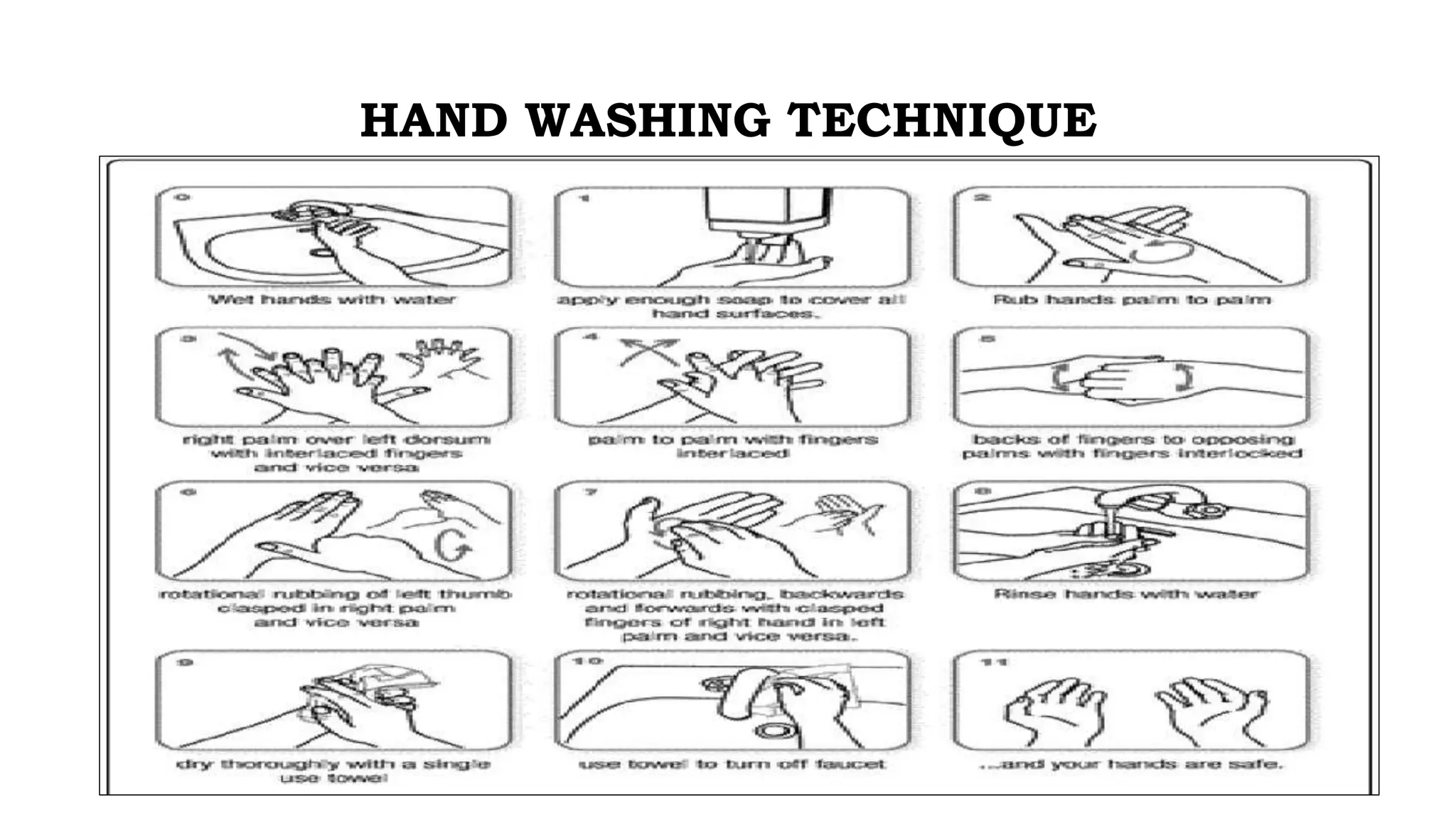
Hand Washing
• Personnel should always wash their hands when
personal cleanliness may affect food safety, as
shown in the following practices:
a.Sneezing, coughing, or touching your mouth or
nose
b.Smoking or using toothpicks
c.Cleaning and wiping tables, food preparation
surfaces, or equipment
d.Handling soiled object, garbage, or money
• a. At the start of food handling activities.
• b. Immediately after using the toilet
•c. After handling raw food or any
contaminated material, where this could
result in the contamination of other food
items. They should avoid handling ready to-
eat food when unsure of cleanliness in the
process of preparing it.
HAND WASHING TECHNIQUE
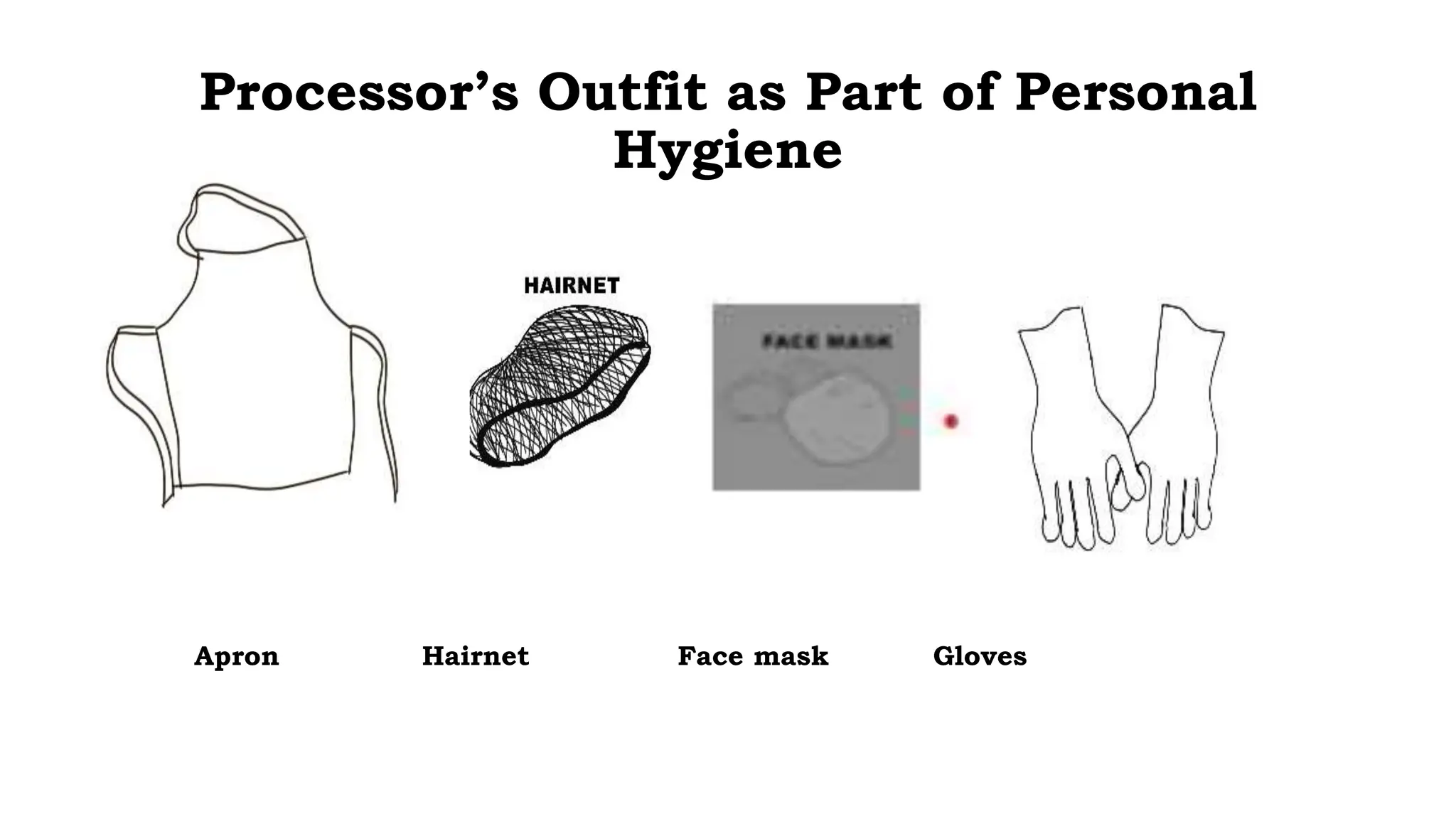
Processor’s Outfit as Part of Personal
Hygiene
Apron Hairnet Face mask Gloves
PERSONAL PROTECTIVE EQUIPMENT
(PPE) IN FOOD (FISH) PROCESSING
•Personal Protective Equipment (PPE)
•is a very important aspect in
ensuring safety in food
manufacturing plant.
Food handling safety tools provide
protection to the workers from possible
infections and food contamination.
Below are required laboratory outfits
during Food (Fish) Processing.
• 1. Hair Covering/hairnet prevents hair from falling into
the food products.
• 2. Face Mask serves as a barrier to airborne
contamination of food during sneezing, coughing and
talking.
• 3. Apron reduces the risk of contamination and helps
maintain cleanliness.
• 4. Glove reduces the risk of contamination from hands.
The processes of cleaning the Personal
Protective Equipment (PPE)
• The PPE should be washed and cleaned regularly
with a soft brush and soapy solution to remove any
dried debris and stains.
• Basin can be used to soak, rinse, sanitize, and
then rinse the PPE again.
• After washing, place the PPE in another bin with
clean water to rinse out any remaining soap and
sanitizer.
Directions: Choose the letter of the best answer. Write the
chosen letter in your activity PAPER.
• 1. It is an equipment that will protect
workers against work related hazards and
infections.
A.Apron
B.Gloves
C.Hairnet
D.Personal Protective Equipment (PPE)
• 2. Which of the following refers to the science of
good health that denotes
• cleanliness and freedom from the risk of
infectious diseases?
• A. Cleanliness
• B. Hazards
• C. Hygiene
• D. Sanitation
• 3. When is the proper time of handwashing
that should be observed by personnel to
ensure food safety?
• A. Before writing
• B. After brushing teeth
• C. While washing dishes
• D. Immediately after using the toilet
•4. It is a protective equipment worn to keep
clothes clean while doing something dirty such as
cooking and cleaning.
A.Apron
B.Face mask
C.Gloves
D.Hairnet
• 5. The following are Good Manufacturing Practices
(GMP) on personal hygiene except:
• A. Hazard analysis
• B. Health status
• C. Illness and injuries
• D. Personal cleanliness
• 6. It refers to a Personal Protective
Equipment (PPE) that prevents the worker’s
hand from getting dirty or injured.
A.Apron
B.Face mask
C.Gloves
D.Hairnet
7. Which of the following should be
considered a personal hygiene protocol?
•A. Drinking water
•B. Eating fruits
•C. Proper hand washing
• D. Sleeping
• 8. It is defined as one of the practices that helps
people stay healthy
• which includes thorough and regular washing of
one’s body.
• A. Grooming
• B. Hygiene
• C. Safety
• D. Sanitation
•9. It is a bacteria transmitted to food caused
by bare hands contact.
•A. Campylobacter
•B. Clostridium
•C. Listeria
•D. Salmonella
•10. The following are intestinal disorder
except:
•A. Dysentery
•B. infectious hepatitis
•C. Pneumonia
•D. Typhoid fever
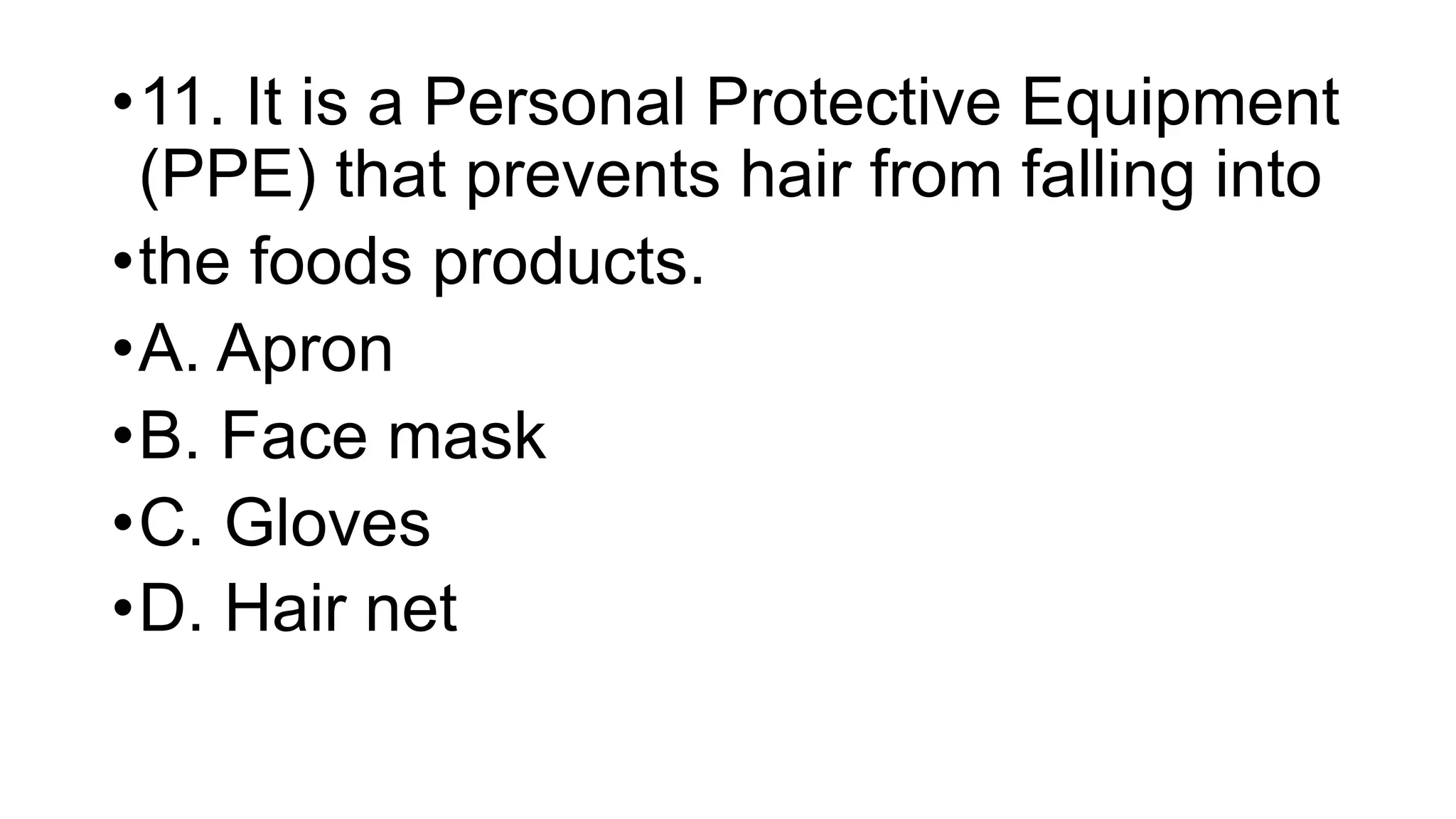
•11. It is a Personal Protective Equipment
(PPE) that prevents hair from falling into
•the foods products.
•A. Apron
•B. Face mask
•C. Gloves
•D. Hair net
•12. Which of the following
disease is associated to skin
infection?
•A. Dysentery
•B. Hepatitis
•C. Scabies
•D. Sore throat
•13. The following are personal hygiene
practices in food service premises except:
•A. Showering and bathing
•B. Hand washing regularly
•C. Using clean utensils for tasting
•D. Keeping the hair clean even not covered
or tied
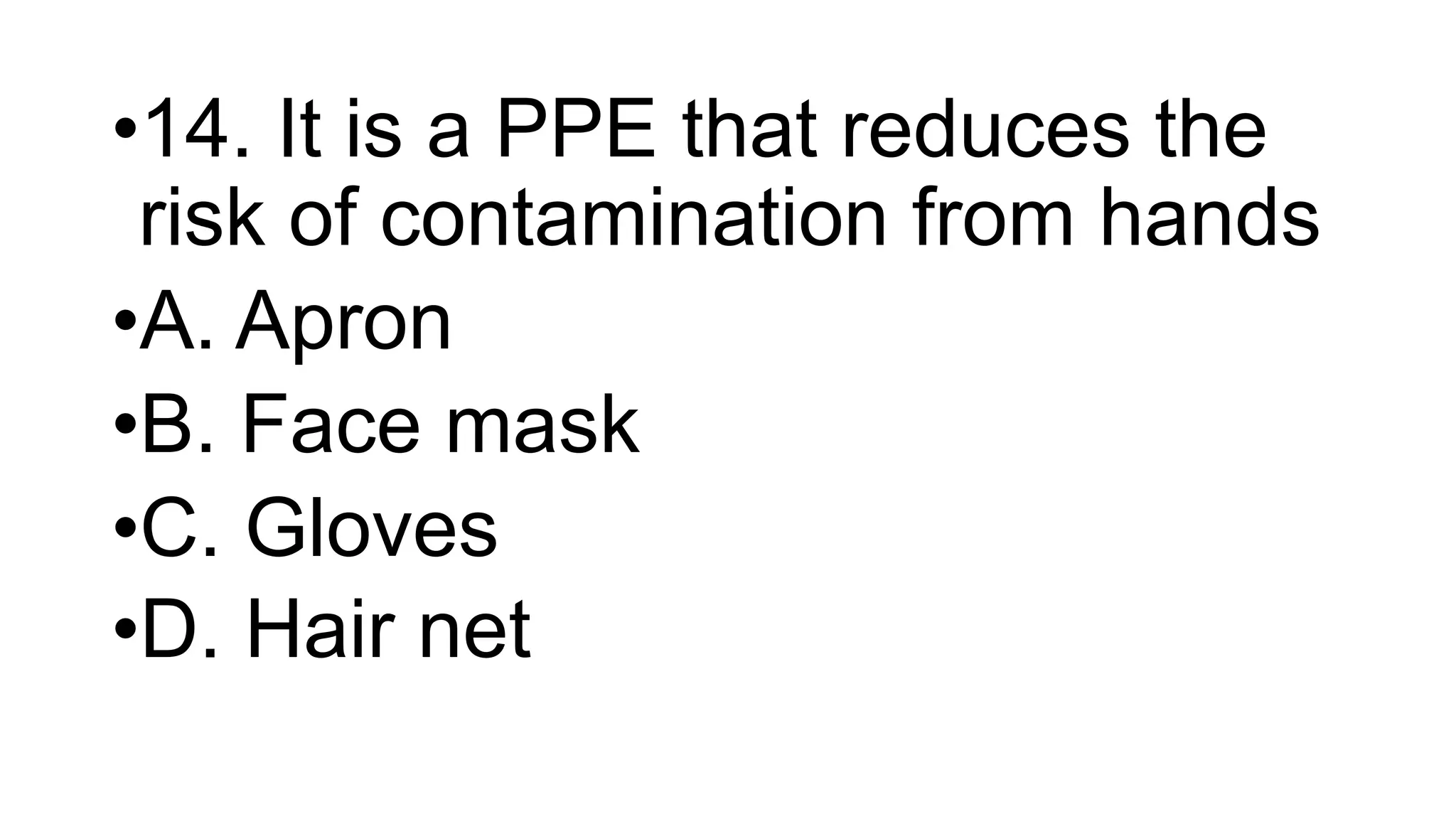
•14. It is a PPE that reduces the
risk of contamination from hands
•A. Apron
•B. Face mask
•C. Gloves
•D. Hair net
•15. The following are the hand
washing techniques except:
•A. Apply enough soap to cover all
hand surface
•B. Dry hand thoroughly to sunlight
•C. Rub hands palm to palm
•D. Wet hands with water
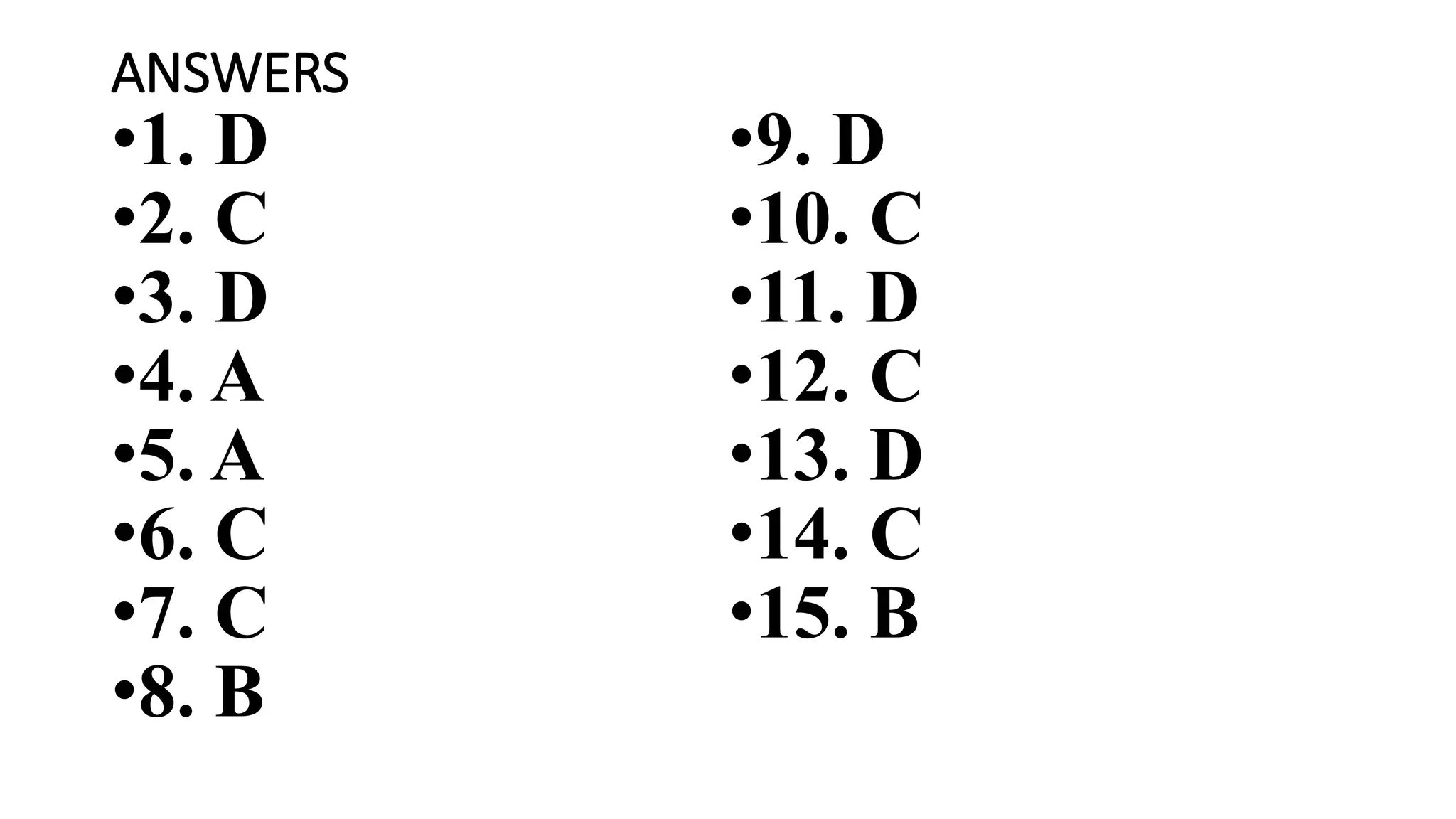
ANSWERS
•1. D
•2. C
•3. D
•4. A
•5. A
•6. C
•7. C
•8. B
•9. D
•10. C
•11. D
•12. C
•13. D
•14. C
•15. B
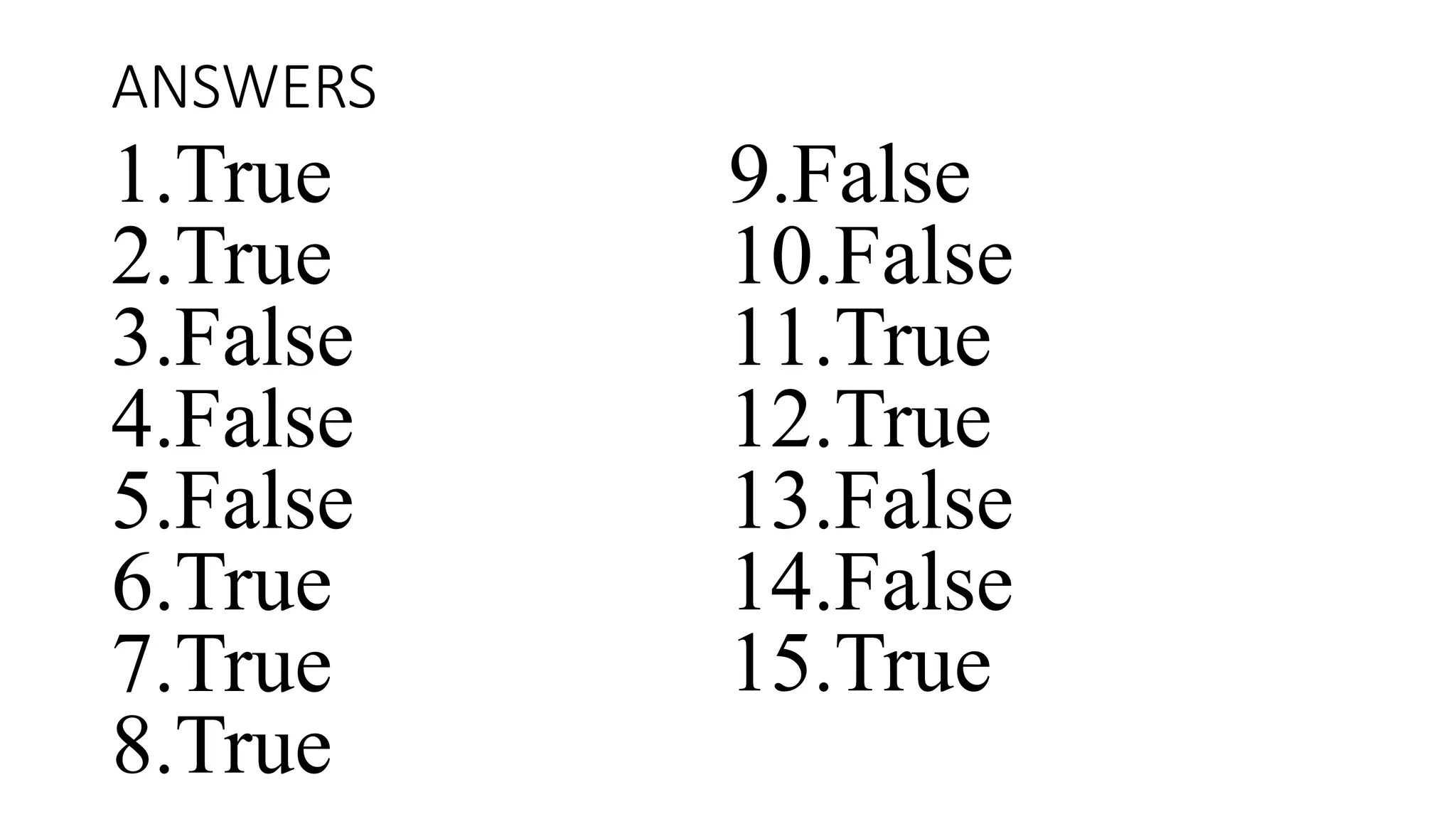
ANSWERS
1.True
2.True
3.False
4.False
5.False
6.True
7.True
8.True
9.False
10.False
11.True
12.True
13.False
14.False
15.True

Observe Personal Hygiene.pptx

  • 1.
    Observe Personal Hygiene and GoodGrooming Prepared by: CARMELINE PRECY D. LLORCA-COLANDOG
  • 2.
    •Hygiene is morethan just being clean. It is defined as one of the practices that helps people stay healthy. •Practicing good personal hygiene is smart for two reason. •First, it helps prevent people from catching and spreading illness and disease. •Second, it helps people feel good about
  • 3.
    •Cleanliness is animportant issue; poor hygiene is seen as unacceptable and unhealthy lifestyle.
  • 4.
    •Good hygiene includesthorough and regular washing of one’s body (especially hands), washing one’s hair, brushing and flossing teeth, and caring for gums. •These grooming habits will reduce the threat of bacteria that constantly reside in the body.
  • 5.
    Directions: Write TRUEif the statement is correct and FALSE if the statement is wrong. Write your answer in your activity • __________ 1. Food handlers should maintain a high degree of personal cleanliness. • __________ 2. People suffering from or a carrier of a disease should not be allowed to enter any food handling area. • __________ 3. Washing of hands should be done after preparation of food. • __________ 4. Workers should be well-groomed, that is to say, make up is a must for girls. • __________ 5. Smoking or spitting anywhere is allowed during food preparation.
  • 6.
    • __________ 6.A mask should be worn to cover the mouth during food preparation • __________ 7. An apron or a laboratory gown that is fitted, cleaned, and pressed must be worn. • __________ 8. Medical examination of a food handler should be carried out if clinically or epidemiologically indicated. • __________ 9. Hands should be washed only after using the toilet. • __________ 10. It is advisable to work or prepare foods even with infected wounds or cuts.
  • 7.
    • __________ 11.Coughing and sneezing can spread bacteria, viruses, and parasites. • __________ 12. Sweating causes the body to have odor. • __________ 13. Poor hygiene can cause diseases and conditions like heart disease, strokes; and diabetes. • __________ 14. Personal hygiene is not important to keep up your appearance and self – esteem. • __________ 15. Picking your nose does not cause health problems.
  • 8.
    Good Manufacturing Practices(GMP) Requirements on Personal Hygiene 1.Health Status. People known, or suspected, to be suffering from, or to be a carrier of a disease should not be allowed to enter any food handling area. It is a likely that they could contaminate food. Any person so affected should immediately report illness or symptoms of illness to the management. • Medical examination of a food handler should be carried out, if clinically or epidemiologically indicated.
  • 9.
    1.Illnesses and Injuries.The following conditions should be reported to the management so that any afflicted persons need to subject themselves to medical examination and be excluded from handling food.
  • 10.
    • Diseases ofthe respiratory tract, such as common cold, sore throat, pneumonia, scarlet fever, tuberculosis, and trench mouth. • Respiratory tract infections spread microorganisms such as staphylococci, which are indigenous to portions of the respiratory tract
  • 11.
    • Intestinal disorders,such as dysentery, typhoid fever and infectious hepatitis. People suffering from intestinal disorders usually shed a lot of intestinal bacteria such as Shigella, Salmonella, etc. which may be transmitted to food by dirty hands. • A person suffering from salmonellosis for example, may shed as many as 10 cells per gram of feces, during illness (ICMSF,1988).
  • 12.
    • c. Skindisorders, such as sores, abrasions, and lesions, infected ears, boil scabies and severe rashes. The usual sites for harboring staphylococci are cuts, burns, abrasion, and pustular lesions. • When infected persons handle food, the hazard of passing staphylococci from skin surfaces to food increases. • Pre - employment physical examination is usually required for every person intending to work in a food plant in order to establish freedom from above diseases.
  • 13.
    •3. Personal Cleanliness.Food handlers should maintain a high degree of personal cleanliness. •They should wear suitable protective clothing, head covering, gloves, facial masks, and footwear. •Suitable waterproof dressing should cover cuts and wounds, wherein personnel are permitted to continue working.
  • 14.
    Proper personal hygieneis critical in any food service premise. • Personal hygiene includes: 1. Showering and bathing regularly 2. Keeping hair clean and covered or tied back 3. Keeping clean clothing and footwear that is used at work 4. Handwashing regularly 5. Using clean utensils for tasting food 6. Using separate cloths for cleaning and wiping plates
  • 15.
    Hand Washing • Personnelshould always wash their hands when personal cleanliness may affect food safety, as shown in the following practices: a.Sneezing, coughing, or touching your mouth or nose b.Smoking or using toothpicks c.Cleaning and wiping tables, food preparation surfaces, or equipment d.Handling soiled object, garbage, or money
  • 16.
    • a. Atthe start of food handling activities. • b. Immediately after using the toilet •c. After handling raw food or any contaminated material, where this could result in the contamination of other food items. They should avoid handling ready to- eat food when unsure of cleanliness in the process of preparing it.
  • 17.
  • 18.
    Processor’s Outfit asPart of Personal Hygiene Apron Hairnet Face mask Gloves
  • 19.
    PERSONAL PROTECTIVE EQUIPMENT (PPE)IN FOOD (FISH) PROCESSING •Personal Protective Equipment (PPE) •is a very important aspect in ensuring safety in food manufacturing plant. Food handling safety tools provide protection to the workers from possible infections and food contamination.
  • 20.
    Below are requiredlaboratory outfits during Food (Fish) Processing. • 1. Hair Covering/hairnet prevents hair from falling into the food products. • 2. Face Mask serves as a barrier to airborne contamination of food during sneezing, coughing and talking. • 3. Apron reduces the risk of contamination and helps maintain cleanliness. • 4. Glove reduces the risk of contamination from hands.
  • 21.
    The processes ofcleaning the Personal Protective Equipment (PPE) • The PPE should be washed and cleaned regularly with a soft brush and soapy solution to remove any dried debris and stains. • Basin can be used to soak, rinse, sanitize, and then rinse the PPE again. • After washing, place the PPE in another bin with clean water to rinse out any remaining soap and sanitizer.
  • 22.
    Directions: Choose theletter of the best answer. Write the chosen letter in your activity PAPER. • 1. It is an equipment that will protect workers against work related hazards and infections. A.Apron B.Gloves C.Hairnet D.Personal Protective Equipment (PPE)
  • 23.
    • 2. Whichof the following refers to the science of good health that denotes • cleanliness and freedom from the risk of infectious diseases? • A. Cleanliness • B. Hazards • C. Hygiene • D. Sanitation
  • 24.
    • 3. Whenis the proper time of handwashing that should be observed by personnel to ensure food safety? • A. Before writing • B. After brushing teeth • C. While washing dishes • D. Immediately after using the toilet
  • 25.
    •4. It isa protective equipment worn to keep clothes clean while doing something dirty such as cooking and cleaning. A.Apron B.Face mask C.Gloves D.Hairnet
  • 26.
    • 5. Thefollowing are Good Manufacturing Practices (GMP) on personal hygiene except: • A. Hazard analysis • B. Health status • C. Illness and injuries • D. Personal cleanliness
  • 27.
    • 6. Itrefers to a Personal Protective Equipment (PPE) that prevents the worker’s hand from getting dirty or injured. A.Apron B.Face mask C.Gloves D.Hairnet
  • 28.
    7. Which ofthe following should be considered a personal hygiene protocol? •A. Drinking water •B. Eating fruits •C. Proper hand washing • D. Sleeping
  • 29.
    • 8. Itis defined as one of the practices that helps people stay healthy • which includes thorough and regular washing of one’s body. • A. Grooming • B. Hygiene • C. Safety • D. Sanitation
  • 30.
    •9. It isa bacteria transmitted to food caused by bare hands contact. •A. Campylobacter •B. Clostridium •C. Listeria •D. Salmonella
  • 31.
    •10. The followingare intestinal disorder except: •A. Dysentery •B. infectious hepatitis •C. Pneumonia •D. Typhoid fever
  • 32.
    •11. It isa Personal Protective Equipment (PPE) that prevents hair from falling into •the foods products. •A. Apron •B. Face mask •C. Gloves •D. Hair net
  • 33.
    •12. Which ofthe following disease is associated to skin infection? •A. Dysentery •B. Hepatitis •C. Scabies •D. Sore throat
  • 34.
    •13. The followingare personal hygiene practices in food service premises except: •A. Showering and bathing •B. Hand washing regularly •C. Using clean utensils for tasting •D. Keeping the hair clean even not covered or tied
  • 35.
    •14. It isa PPE that reduces the risk of contamination from hands •A. Apron •B. Face mask •C. Gloves •D. Hair net
  • 36.
    •15. The followingare the hand washing techniques except: •A. Apply enough soap to cover all hand surface •B. Dry hand thoroughly to sunlight •C. Rub hands palm to palm •D. Wet hands with water
  • 37.
    ANSWERS •1. D •2. C •3.D •4. A •5. A •6. C •7. C •8. B •9. D •10. C •11. D •12. C •13. D •14. C •15. B
  • 38.