



Nottingham Trent University

       Personal Branding
        12th March 2012
Personal Branding 10-1pm
1. What is personal branding?
2. What are other people saying about you?
3. Four-step personal brand planning process
4. Personal branding tools (offline and social
   media)
5. Personal branding and getting a job
6. Monitoring your personal brand
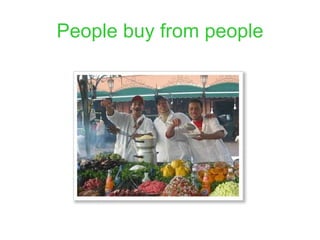
People buy from people
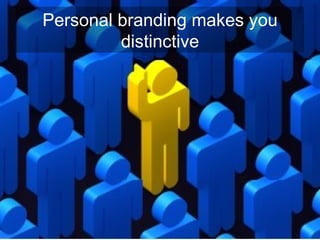
Personal branding makes you
         distinctive
Branding defines your choices
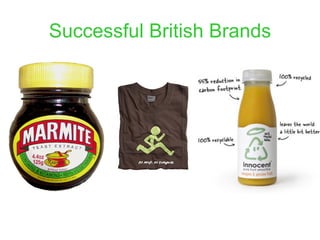
Successful British Brands
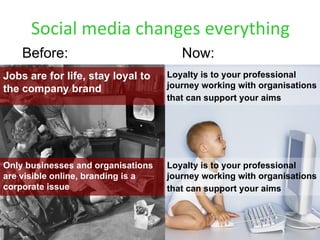
Social media changes everything
    Before:                            Now:
Jobs are for life, stay loyal to    Loyalty is to your professional
the company brand                   journey working with organisations
                                    that can support your aims


Only businesses and organisations   Loyalty is to your professional
are visible online, branding is a   journey working with organisations
corporate issue                     that can support your aims
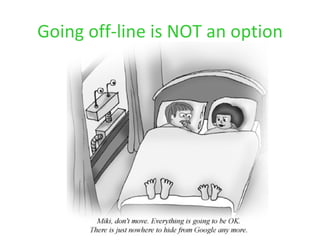
Going off-line is NOT an option
Personal Branding:
  True or False?
Personal branding is all about me
Personal branding is promoting key
    messages about yourself
Personal branding is about
  becoming a celebrity
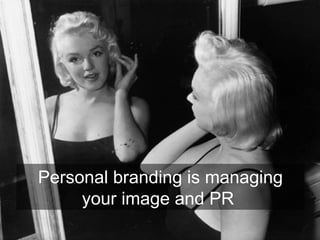
Personal branding is managing
     your image and PR
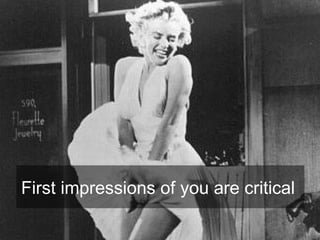
First impressions of you are critical
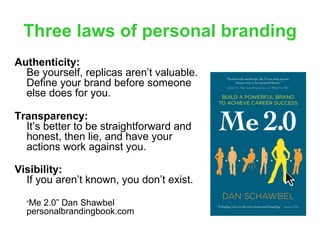
Three laws of personal branding
Authenticity:
  Be yourself, replicas aren’t valuable.
  Define your brand before someone
  else does for you.

Transparency:
  It’s better to be straightforward and
  honest, then lie, and have your
  actions work against you.

Visibility:
  If you aren’t known, you don’t exist.

  “Me 2.0” Dan Shawbel
  personalbrandingbook.com
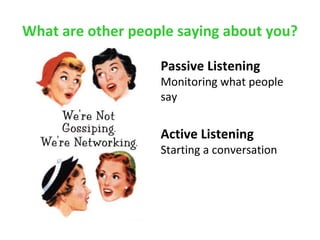
What are other people saying about you?

                   Passive Listening
                   Monitoring what people
                   say


                   Active Listening
                   Starting a conversation
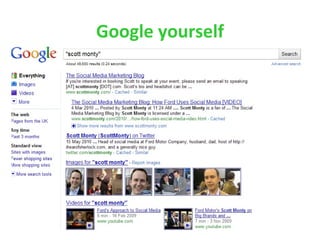
Google yourself
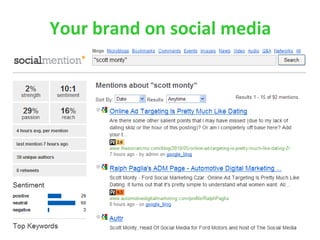
Your brand on social media
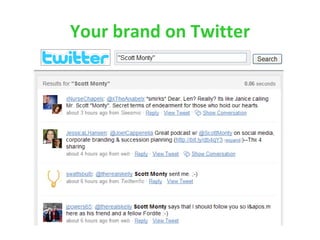
Your brand on Twitter
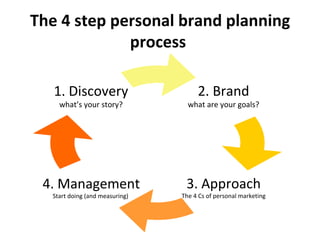
The 4 step personal brand planning
             process

   1. Discovery                      2. Brand
    what’s your story?            what are your goals?


 4. Management                   3. Approach
  Start doing (and measuring)   The 4 Cs of personal marketing
1.   Discovery – What’s your story?
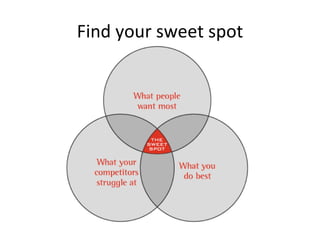
Find your sweet spot
Work less, earn more, love your job
Be a super hero (or heroine)
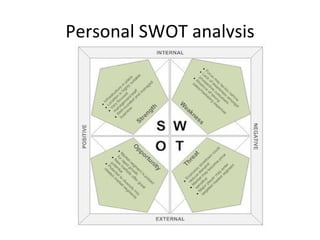
Personal SWOT analysis
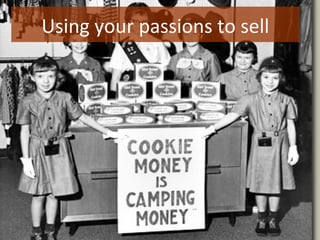
Using your passions to sell
Create your personal brand
        statement

 Your brand and your audience
 in one sentence
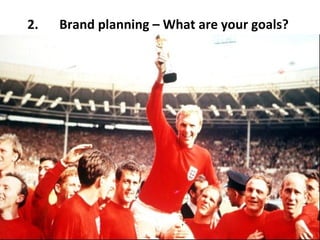
2.   Brand planning – What are your goals?
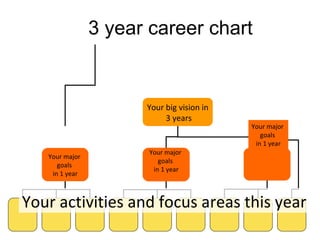
3 year career chart


                      Your big vision in
                           3 years
                                           Your major
                                              goals
                                            in 1 year
                       Your major
   Your major
                          goals
      goals
                        in 1 year
    in 1 year


Your activities and focus areas this year
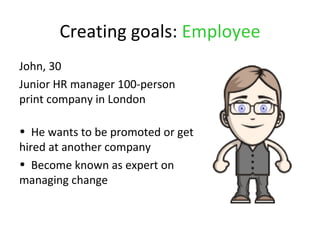
Creating goals: Employee
John, 30
Junior HR manager 100-person
print company in London

• He wants to be promoted or get
hired at another company
• Become known as expert on
managing change
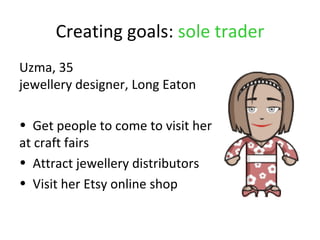
Creating goals: sole trader
Uzma, 35
jewellery designer, Long Eaton

• Get people to come to visit her
at craft fairs
• Attract jewellery distributors
• Visit her Etsy online shop
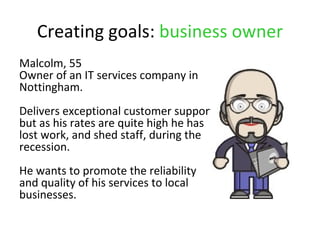
Creating goals: business owner
Malcolm, 55
Owner of an IT services company in
Nottingham.
Delivers exceptional customer support,
but as his rates are quite high he has
lost work, and shed staff, during the
recession.
He wants to promote the reliability
and quality of his services to local
businesses.
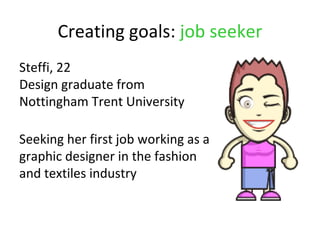
Creating goals: job seeker
Steffi, 22
Design graduate from
Nottingham Trent University

Seeking her first job working as a
graphic designer in the fashion
and textiles industry
Personal branding tools
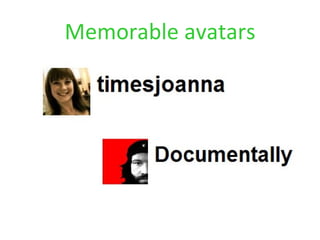
Memorable avatars
Twitter review
Tony Hsieh, CEO Zappos @zappos

Alexia Leachman, Personal Brand Coach:
Personal: @AlexiaL
      Brand:  @bbrands

Nick Hewitt, Digital Community expert: @nikhewitt
Action plan
Personal branding and getting a job
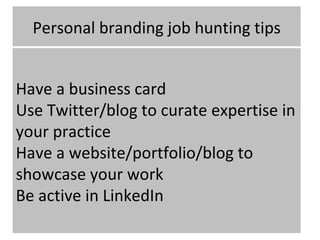
Personal branding job hunting tips


Have a business card
Use Twitter/blog to curate expertise in
your practice
Have a website/portfolio/blog to
showcase your work
Be active in LinkedIn
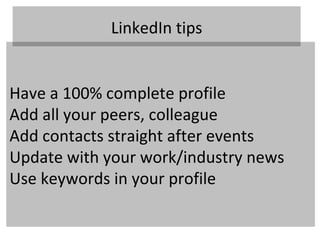
LinkedIn tips


Have a 100% complete profile
Add all your peers, colleague
Add contacts straight after events
Update with your work/industry news
Use keywords in your profile
Monitoring your personal brand
Thank you
Susi O’Neill, Digital Consultant
www.digitalconsultant.co.uk
Twitter @susioneill
LinkedIn/Facebook @susioneill

email: susi@digitalconsultant.co.uk

Tel: 07981 222799

Personal branding march 2012

  • 1.
    Nottingham Trent University Personal Branding 12th March 2012
  • 2.
    Personal Branding 10-1pm 1.What is personal branding? 2. What are other people saying about you? 3. Four-step personal brand planning process 4. Personal branding tools (offline and social media) 5. Personal branding and getting a job 6. Monitoring your personal brand
  • 3.
  • 4.
    Personal branding makesyou distinctive
  • 5.
  • 6.
  • 7.
    Social media changeseverything Before: Now: Jobs are for life, stay loyal to Loyalty is to your professional the company brand journey working with organisations that can support your aims Only businesses and organisations Loyalty is to your professional are visible online, branding is a journey working with organisations corporate issue that can support your aims
  • 8.
    Going off-line isNOT an option
  • 9.
    Personal Branding: True or False?
  • 10.
  • 11.
    Personal branding ispromoting key messages about yourself
  • 12.
    Personal branding isabout becoming a celebrity
  • 13.
    Personal branding ismanaging your image and PR
  • 14.
    First impressions ofyou are critical
  • 15.
    Three laws ofpersonal branding Authenticity: Be yourself, replicas aren’t valuable. Define your brand before someone else does for you. Transparency: It’s better to be straightforward and honest, then lie, and have your actions work against you. Visibility: If you aren’t known, you don’t exist. “Me 2.0” Dan Shawbel personalbrandingbook.com
  • 16.
    What are otherpeople saying about you? Passive Listening Monitoring what people say Active Listening Starting a conversation
  • 17.
  • 18.
    Your brand onsocial media
  • 19.
  • 21.
    The 4 steppersonal brand planning process 1. Discovery 2. Brand what’s your story? what are your goals? 4. Management 3. Approach Start doing (and measuring) The 4 Cs of personal marketing
  • 22.
    1. Discovery – What’s your story?
  • 23.
  • 24.
  • 25.
    Work less, earnmore, love your job
  • 26.
    Be a superhero (or heroine)
  • 27.
  • 28.
  • 29.
    Create your personalbrand statement Your brand and your audience in one sentence
  • 30.
    2. Brand planning – What are your goals?
  • 31.
    3 year careerchart Your big vision in 3 years Your major goals in 1 year Your major Your major goals goals in 1 year in 1 year Your activities and focus areas this year
  • 32.
    Creating goals: Employee John,30 Junior HR manager 100-person print company in London • He wants to be promoted or get hired at another company • Become known as expert on managing change
  • 33.
    Creating goals: soletrader Uzma, 35 jewellery designer, Long Eaton • Get people to come to visit her at craft fairs • Attract jewellery distributors • Visit her Etsy online shop
  • 34.
    Creating goals: businessowner Malcolm, 55 Owner of an IT services company in Nottingham. Delivers exceptional customer support, but as his rates are quite high he has lost work, and shed staff, during the recession. He wants to promote the reliability and quality of his services to local businesses.
  • 35.
    Creating goals: jobseeker Steffi, 22 Design graduate from Nottingham Trent University Seeking her first job working as a graphic designer in the fashion and textiles industry
  • 36.
  • 37.
  • 38.
    Twitter review Tony Hsieh,CEO Zappos @zappos Alexia Leachman, Personal Brand Coach: Personal: @AlexiaL Brand: @bbrands Nick Hewitt, Digital Community expert: @nikhewitt
  • 39.
  • 40.
    Personal branding andgetting a job
  • 41.
    Personal branding jobhunting tips Have a business card Use Twitter/blog to curate expertise in your practice Have a website/portfolio/blog to showcase your work Be active in LinkedIn
  • 42.
    LinkedIn tips Have a100% complete profile Add all your peers, colleague Add contacts straight after events Update with your work/industry news Use keywords in your profile
  • 43.
  • 44.
    Thank you Susi O’Neill,Digital Consultant www.digitalconsultant.co.uk Twitter @susioneill LinkedIn/Facebook @susioneill email: susi@digitalconsultant.co.uk Tel: 07981 222799

Editor's Notes

  • #2 Steve Pavilina: “I f you type an email, you’re branding yourself. If you have a conversation with a friend or family member, you’re branding yourself. How you dress, what you eat, and how you talk all contribute to your brand. Think of your brand as the summation of all the associations about you that are stored in people’s minds .” - Steve Pavlina, Personal development coach www.stevepavlina.com/blog/2008/02/personal-branding/ 1997 - Fast Company Magazine article “ The Brand Called You” by Tom Peters. Instead of relying on a company for career guidance, it’s up to you to become a ‘free agent’ to take ownership of the brand called you. The new ‘killer app’ at that time - email – would only be read and engaged with if you already had a strong, personal brand connection with that person.
  • #4 Marrakesh square market, distinquish yourself in a crowded marketplace
  • #6 Why you choose wine: label, design, description
  • #7 All have great content, great design and unified, consistent marketing messages Marmite – become a verb to describe extremity, from XFactor to Politicians. Innocent a byword for creativity to upsell. Howies, ethical clothing, selling lifestyle values (website has Last.fm channel, blog around leisure/lifestyle)
  • #9 Lose a competitive advantage – online world is a utility for marketing, communications, sales – social media becoming a utility
  • #17 Press reports Ask friends, families, colleagues
  • #21 EXERCISE
  • #25 The secret to a successful personal brand is knowing your strengths and who your audience is and why they would want to buy from you The digital economy benefits experts and those who can own their niche – by carving out a deep niche you can eradicate the competition. Your niche can be about: - Skills (provide specialist technical or service skills) - Service delivery (a unique methodology, a different way of purchasing or billing) - Values (your style of service delivery matches the values of your customers) To succeed in your niche you need to have: Differentiation (standing out from crowd) with Marketability (providing something others want and need)
  • #26 It sounds too good to be true, but by doing what you love work will be fun, you will be more motivated so you can earn more. Personal branding adds value to your job or enterprise and improves happiness - in and outside work.
  • #27 Focus on what you do well – be a super-hero (or heroine) within your strengths. Outsource your weaknesses.
  • #29 Enthusiasm is contagious – this makes it viral “But I’m not a salesman!” Personal branding is perfect for those who aren’t natural sales people – by planning your approach to your brand and sticking to it you are ‘soft selling’ your brand – what you do, your values and services – every day. Don’t cold call: let them come to you
  • #31 Stage 2 of brand planning process Define your audience: - Who is the audience for your products & services? (location, lifestyle, demographics, buying behaviours) - What are their values? - Create User Personas – archetypes to describe the types of customers you have and what they expect from your business Know your market: Competitors – Who are you losing work to currently? What can you learn (and steal) from them? Comparators – Who are your peers? Who can you share with them and learn from them? Key influencers – Who do you aspire to be? How and when could you connect with them? (Tip: social media is a great short cut to influence your influencers)
  • #33 Min 3 goals – action led
  • #37 traditional Business card: add your photo & preferred method of contact (Scott Monty: “Google Me”) Virtual business card send by text message: http://contxts.com PR – do newsworthy things, hire a PR expert Using social networks and online content to support your personal brand Promote expertise: - Your blog - Guest write for bigger blogs, industry magazines, newspaper by-lines - LinkedIn Answers, Yahoo! Answers Share knowledge: - Scan horizon in your subject area (Google Alerts, Twitter Search Feeds, industry journals) - Write and re-tweet relevant stories as status updates
  • #38 Have a memorable avatar: - A consistent image, your face smiling and looking up or a distinctive logo - Use your avatar consistently, or a consistent style of imagery Claim your name: - Register a name you can ‘own’ across all networks you may potentially want to later use (NameChk.com) Networks: Audit your followers – Who are they? Where do they live? What do they share? What percentage are friends/ associates/ strangers?
  • #39 Tips for Twitter: Once a day: A tip based on your experience Something personal Ask a question Re-tweet an expert Converse with a contact Converse with a key influencer Once a week: Your new or archive blog article Promote followers (follow Friday) Once a month: Build or promote a list Twitter management tools: HootSuite – www.hootsuite.com manages all major social networks and scheduling updates TweetDeck – www.TweetDeck.com Desktop and iPhone App to manage all major social networks
  • #40 Stage 4: Management and measuring
  • #41 Business brand pros: Gives you scale to grow as a business Puts reputation against business rather than your name Cons: Need to be less personal about your status updates (e.g. ‘we’ or ‘the company’ are doing instead of ‘I’) Person to person networks are more effective than business to person Managing two networks is nearly twice as time-consuming!
  • #42 Business brand pros: Gives you scale to grow as a business Puts reputation against business rather than your name Cons: Need to be less personal about your status updates (e.g. ‘we’ or ‘the company’ are doing instead of ‘I’) Person to person networks are more effective than business to person Managing two networks is nearly twice as time-consuming!
  • #43 Business brand pros: Gives you scale to grow as a business Puts reputation against business rather than your name Cons: Need to be less personal about your status updates (e.g. ‘we’ or ‘the company’ are doing instead of ‘I’) Person to person networks are more effective than business to person Managing two networks is nearly twice as time-consuming!
  • #44 Monitoring your digital footprint: Be aware of the ‘traces’ you leave: the internet is an evergreen cache, good and bad content takes a long time to disappear. Create new content to bury older content. Re-highlight great content (e.g. refreshing articles, linking to past achievements). Don’t say anything online you wouldn’t want repeated. Make sure you know and control the level of privacy on your networks. Capture and consistently measure your brand against your objectives: Google Alerts www.google.com/alerts – records new mentions of your name/brand Web Analytics – measures web traffic, particularly referral websites Social Mention - www.socialmention.com – your name/brand mention in social media Measure growth in users of your social networks, email list, customer database Capture and redistribute positive mentions, good PR and testimonials