By Dr Robin Thomas
Resident in Pediatrics
JJMMC, Davangere
 Defn :Disruption of normal perinatal to neonatal
circulatory transition-sustained elevation in
Pulmonary vascular resistance.
 Risk for chronic pulmonary disease &
neurodevelopmental disabilities.
 Incidence: 1-2 per 1000 live births.
 Perinatal risk factors: MSAF,
Maternal condn- fever, anemia, pulmonary d/s
Maternal D.M, U.T.I during pregnancy,
SSRIs, aspirin, NSAIDS & C.S
 Rapid fall in pulmonary vascular resistance
(PVR)-first breath & increase in systemic
vascular resistance (SVR) –clamping of
umbilical cord.
 Circulating biochemical mediators - increased
arterial O2 content & pH & lowered PaCO2 –
constriction of ductus- arteriosus &
vasorelaxation of pulmonary circulation.
 Physiological events raise SVR relative to PVR
–functional closure of foramen ovale.
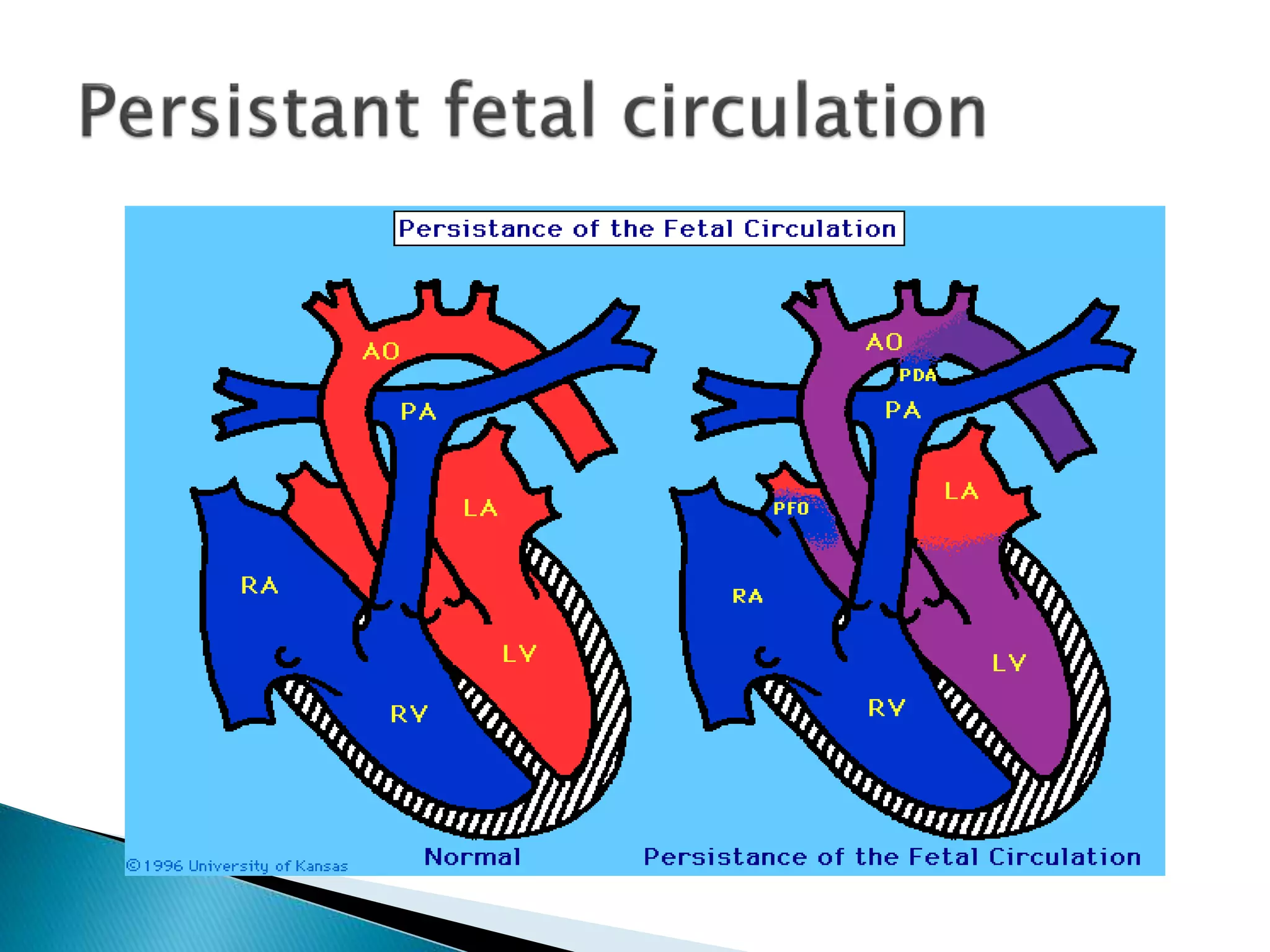
 Persistent fetal circulation-mimics fetal
circulation-PVR exceeds SVR & right to left
hemodynamic shunting occurs tru foramen
ovale or ductus arteriosus.
 Dimnished pulmonary perfusion & systemic
hypoxemia.
 1.Severe fetal hypoxemia (Birth asphyxia) –
common association
 Prolonged fetal stress & hypoxemia –
remodeling & abnormal muscularization of
pulmonary arterioles.
 Acute birth asphyxia-release of
vasoconstricting humoral factors &
suppression of pulmonary vasodilators-
pulmonary vasospasm.
 2.Pulmonary parenchymal diseases-surfactant
deficiency, pneumonia, MAS.
 Fetus with advanced gestational age.
 3.Abnormalities of pulmonary dvp. – PPHN
Congenital diaphragmatic hernia, Porter
syndrome, Pulmonary parenchymal hypoplasia -
pruning of vascular tree.
Alveolar capillary dysplasia-malalignment of
pulmonary veins & arteries.
 4.Myocardial dysfunction, myocarditis,
intrauterine constriction of ductus arteriosus,
severe congenital heart disease-PPHN.
 5.Pneumonia or sepsis of bacterial or viral
orgin -PPHN. Suppression of endogenous NO
production.
endotoxin mediated myocardial depression,
pulmonary vasoconstriction assoc. with
release of thromboxanes.
 6.Familial recurrence-uncommon , infants
with PPHN –low plasma levels of arginine &
NO metabolites & specific polymorphism at
1,405 position of carbamoyl phosphate -
synthetase gene.
 1.Pulmonary vascular remodelling-abnormal
muscularization of non muscular intra-acinar
arteries with increased medial thickness of
larger muscular arteries-decreased cross
sectional area of pulmonary vascular bed &
elevated PVR.
 Fetal hypoxemia-stimulus for pulmonary
vascular remodelling.
 Humoral growth factors released by hypoxia
damaged endothelial cells promote
vasoconstriction & overgrowth of pulmonary
vascular muscular media.
 Vascular changes –fetal exposure to NSAIDS-
cause constriction of fetal ductus arteriosus &
fetal pulmonary overcirculation.
 2.Pulmonary hypoplasia
Affects both alveolar & pulmonary arteriolar
dvp.-congenital diaphragmatic hernia,
oligohydramnios syndrome, Porter syndrome
(renal agenesis).
 3.Reversible pulmonary vasospasm
Infants with nonfatal PPHN. Hypoxia induces
pulmonary vasoconstriction –acidemia.
Neural & humoral vasoactive substances.
 Suppression of endogenous NO, prostacyclin
or bradykinin production & release of
thromboxanes (A2,B2) , leukotrienes(C4,D4)-
increased PVR –Sepsis & hypoxemia.
 4. Myocardial dysfunction with elevated PVR-
1.Right ventricular dysfunction-
Intrauterine constriction of ductus arteriosus-
post natal pulmonary hypertension,
RV failure, atrial R-L shunt.
 2.Left ventricular dysfunction-pulmonary
venous hypertension & secondary pulmonary
arterial hypertension-right to left shunting
through ductus arteriosus.
 5.Mechanical factors
Cardiac output & blood viscosity.
Low cardiac output-fewer pulmonary
arteriolar channels & raises PVR.
Hyperviscosity with polycythemia-reduces
pulmonary microvasculature perfusion.
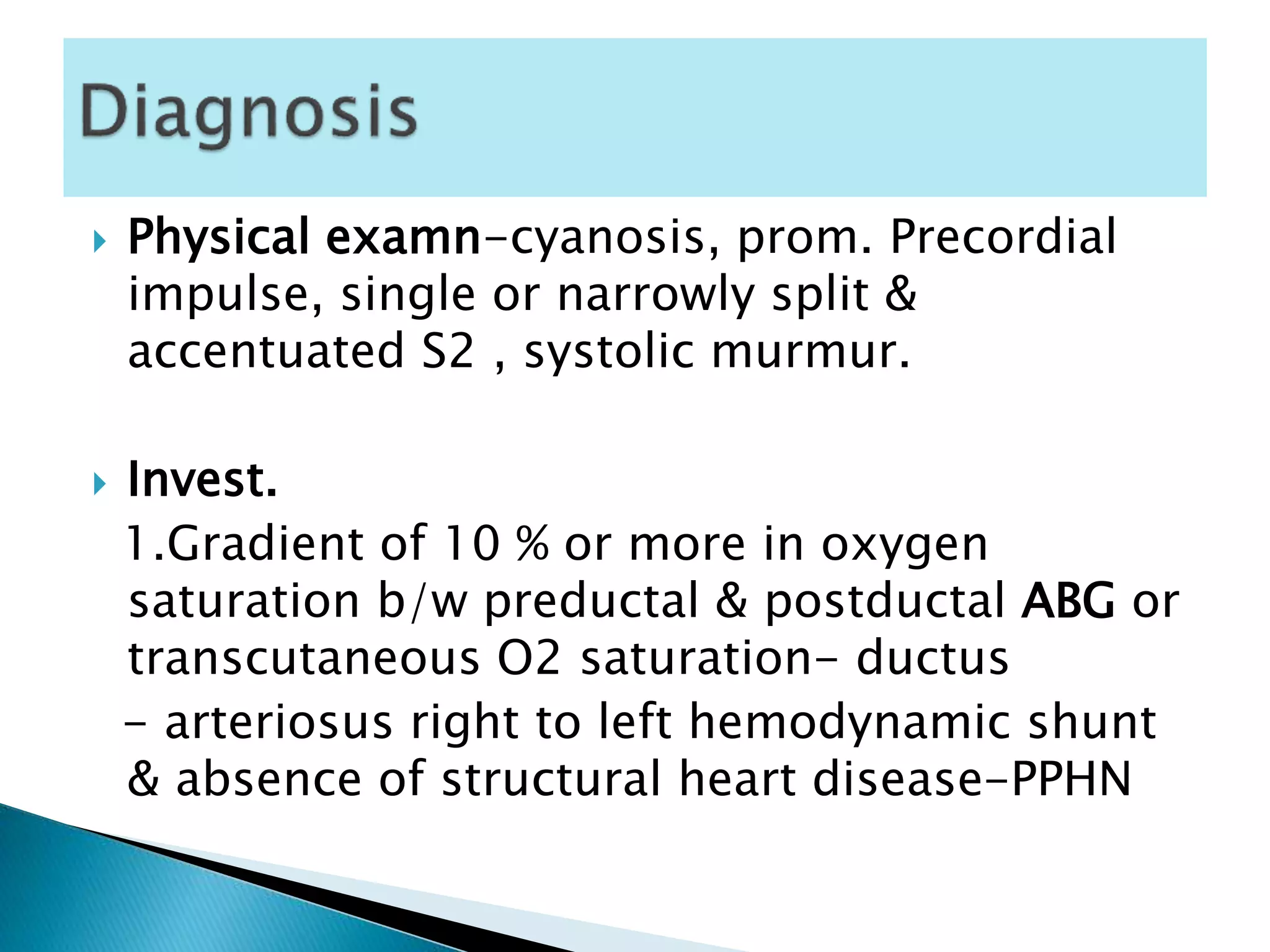
 Physical examn-cyanosis, prom. Precordial
impulse, single or narrowly split &
accentuated S2 , systolic murmur.
 Invest.
1.Gradient of 10 % or more in oxygen
saturation b/w preductal & postductal ABG or
transcutaneous O2 saturation- ductus
- arteriosus right to left hemodynamic shunt
& absence of structural heart disease-PPHN
 CXR-normal /assoc. pulmonary parenchymal
d/s.
 ECG-RV predominance-cons. normal for age.
 ECHO-hemodynamic shunting, evaluate
ventricular function, exclude congenital heart
disease.
TR or flattened ventricular septum in ECHO-
PPHN.
 Color doppler examn.-intracardiac or ductal
hemodynamic shunting.
 Continuous wave doppler sampling of
velocity of TR jet-estimate pulmonary artery
presures.
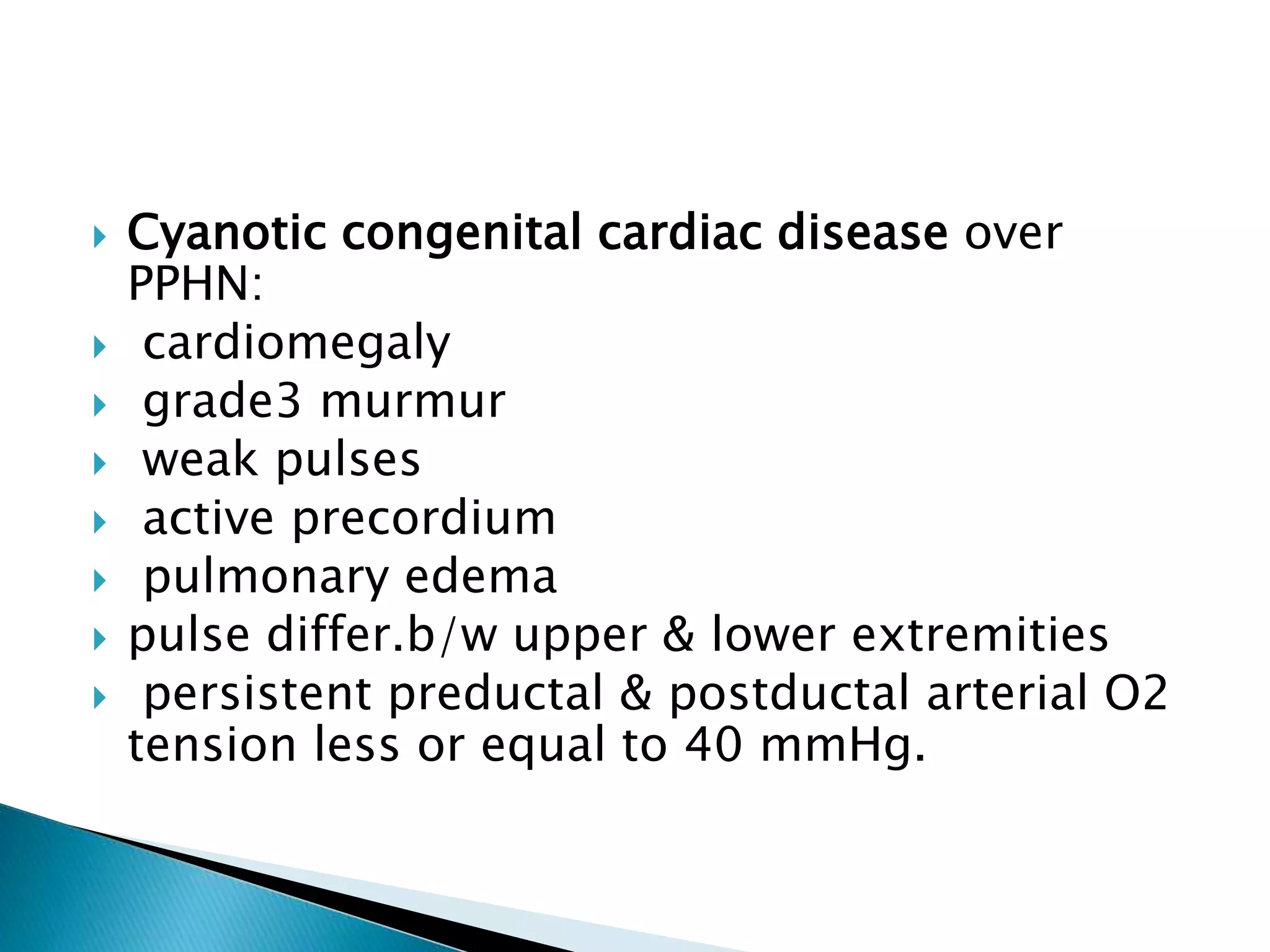
 Cyanotic congenital cardiac disease over
PPHN:
 cardiomegaly
 grade3 murmur
 weak pulses
 active precordium
 pulmonary edema
 pulse differ.b/w upper & lower extremities
 persistent preductal & postductal arterial O2
tension less or equal to 40 mmHg.
 Aim: reverse hypoxemia, improve pulmonary
& systemic perfusion, preserve end organ
function.
 Adequate respiratory support-normoxemia &
neutral to slightly alkalotic acid base balance
–facilitate normal perinatal circulatory
transition.
 1.Supplemental O2: Hypoxia-powerful
pulmonary vasoconstrictor
 Preductal & post ductal SaO2 should be
monitored.
Supplemental O2 –reduce abnormally elevated
PVR, minimize end organ underperfusion & lactic
acidemia.
 Maintain post ductal SaO2 >90%-ensure tissue
oxygenation & <98% to avoid hyperoxemia.
 2.Intubation & mechanical ventillation:
Hypoxemia persists despite maximal O2
admns. or respiratory failure-marked
hypercapnia & acidemia.
 Maintain PaO2 & PaCO2 values & avoid
hyperoxia & hyperventilation.
 Target goals: SaO2 90-98%, PaCO2 40-50
mmHg, pH 7.30-7.40
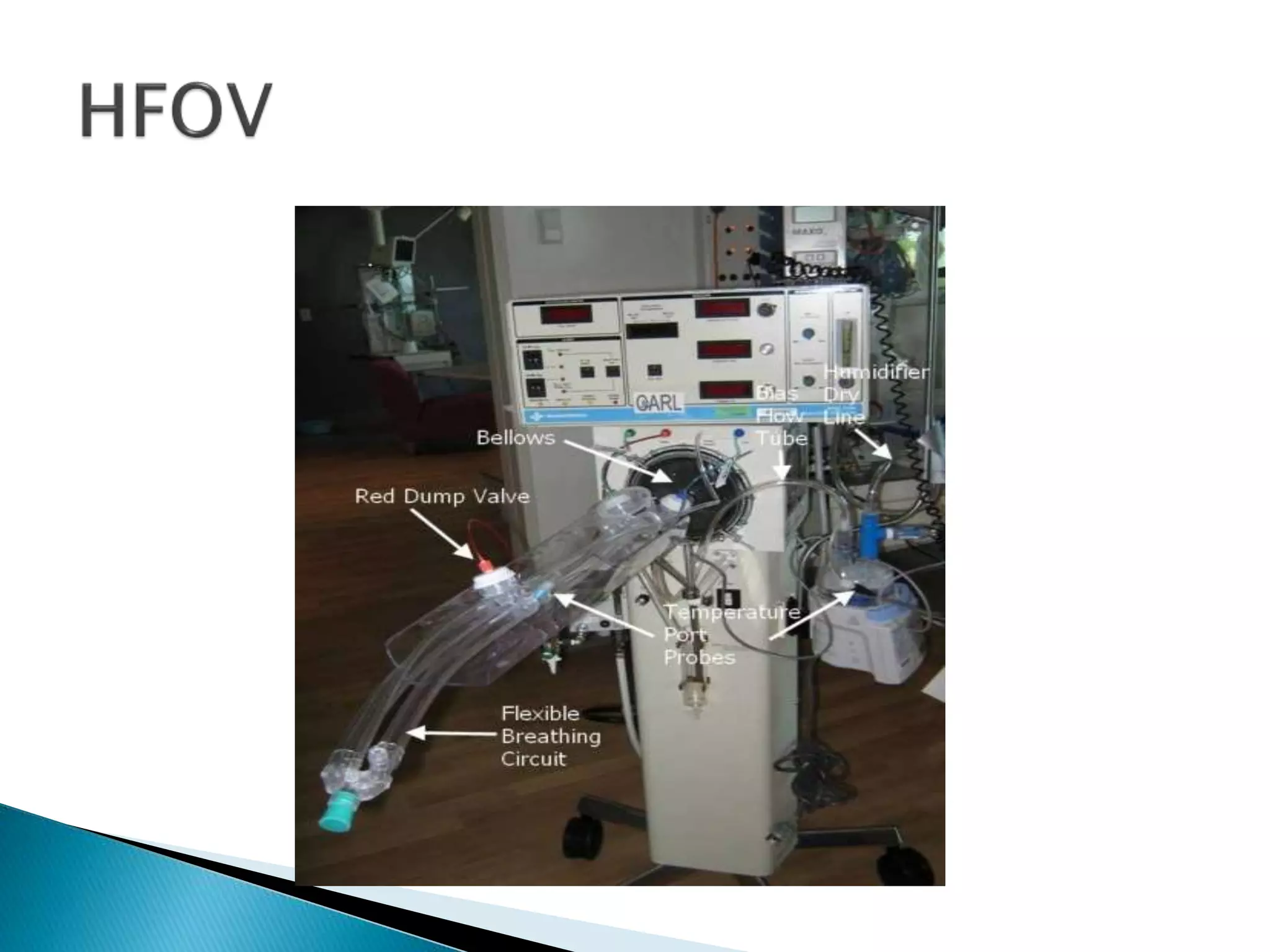
 a. PPHN with pulmonary parenchymal d/s-
HFOV high frequency oscillatory ventillation
or HFJV high frequency jet ventillation.
HFJV-useful for meconium aspiration
pneumonitis & air leak.
HFOV-deliver iNO.
 b.Absence of pulmonary disease-
High intrathoracic pressure impedes cardiac
output & elevates PVR.
 Strategy for mechanical ventillation-rapid,
low pressure, & short inspiratory time-
minimize elevated intrathoracic pressure.
 3.iNO –produced by endothelial cells.
diffuses into smooth muscle cells, increases
intracellular cGMP, relaxes vascular smooth
muscle & causes pulmonary vasodilation.
 iNO –HFOV-doses of 1-20 parts per million-
causes pulmonary vasodilation-not systemic-
vasodilation –decreases PVR.
 Methemoglobinemia-serious potential toxicity of
iNO Rx.
Measure metHb levels 24 hrs after start of Rx.
metHb levels>7% -reduce iNO
 Rebound hypoxemia-if iNO discontinued
abruptly.
 iNO should be tapered very gradually.
 Starting dose of iNO is 20ppm-delivered via
ventilator circuit.
 As baby improves & inspired O2 conc.<50%-iNO
is tapered by halving the dose.
eg: 20 to10 to 5 ppm over a 12-24 hr period -
gradually to 2 then 1 ppm.
 iNO –given in infants with PPHN & diffuse
pulmonary disease by concomitant use of HFOV
& surfactant treat.
 Sildenafil
 Phosphodiesterase-5 inhibitor
 Increases endogenous NO by inhibiting
metabolism-Rx for PPHN
 Randomized clinical trials awaited.
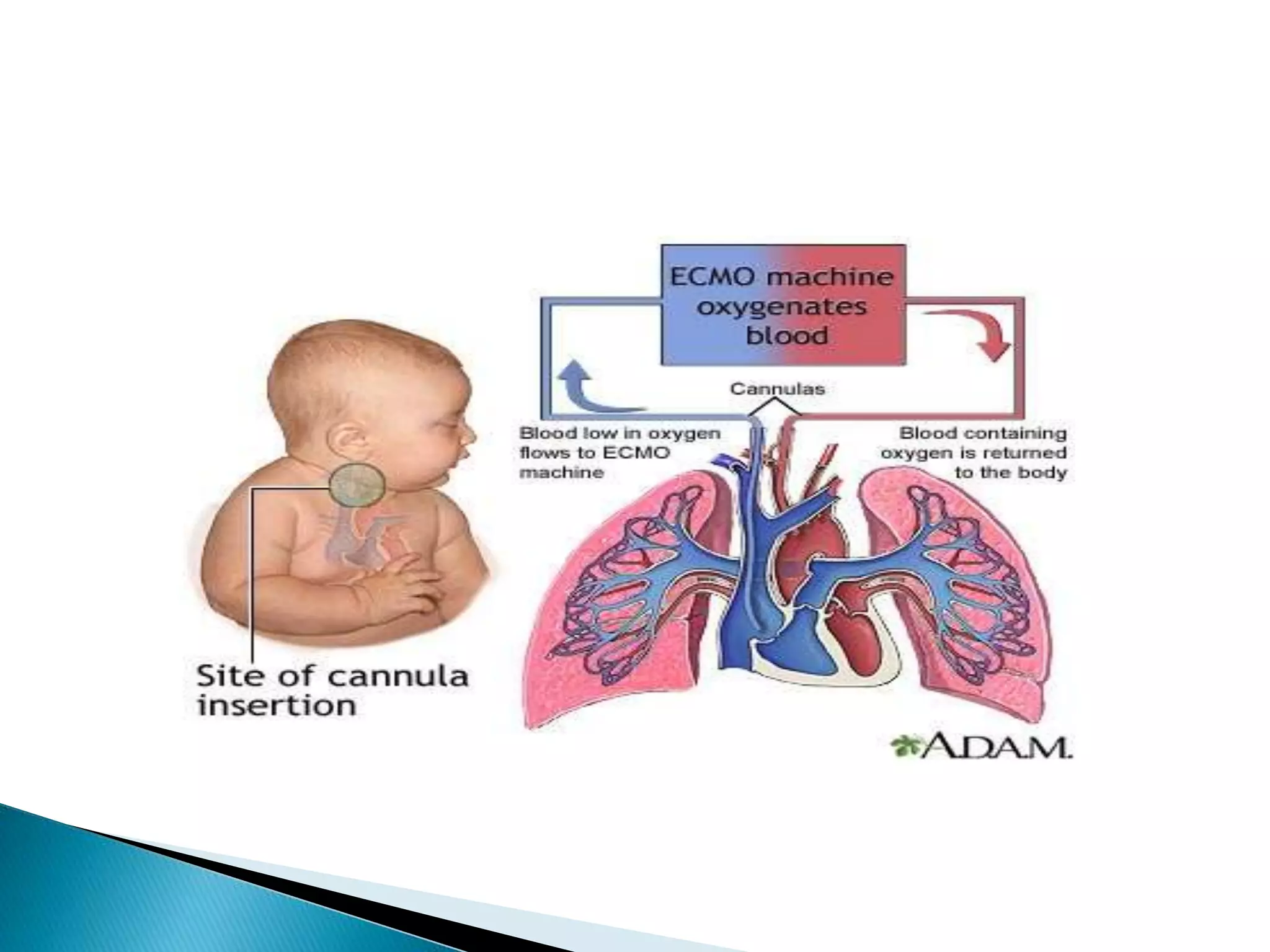
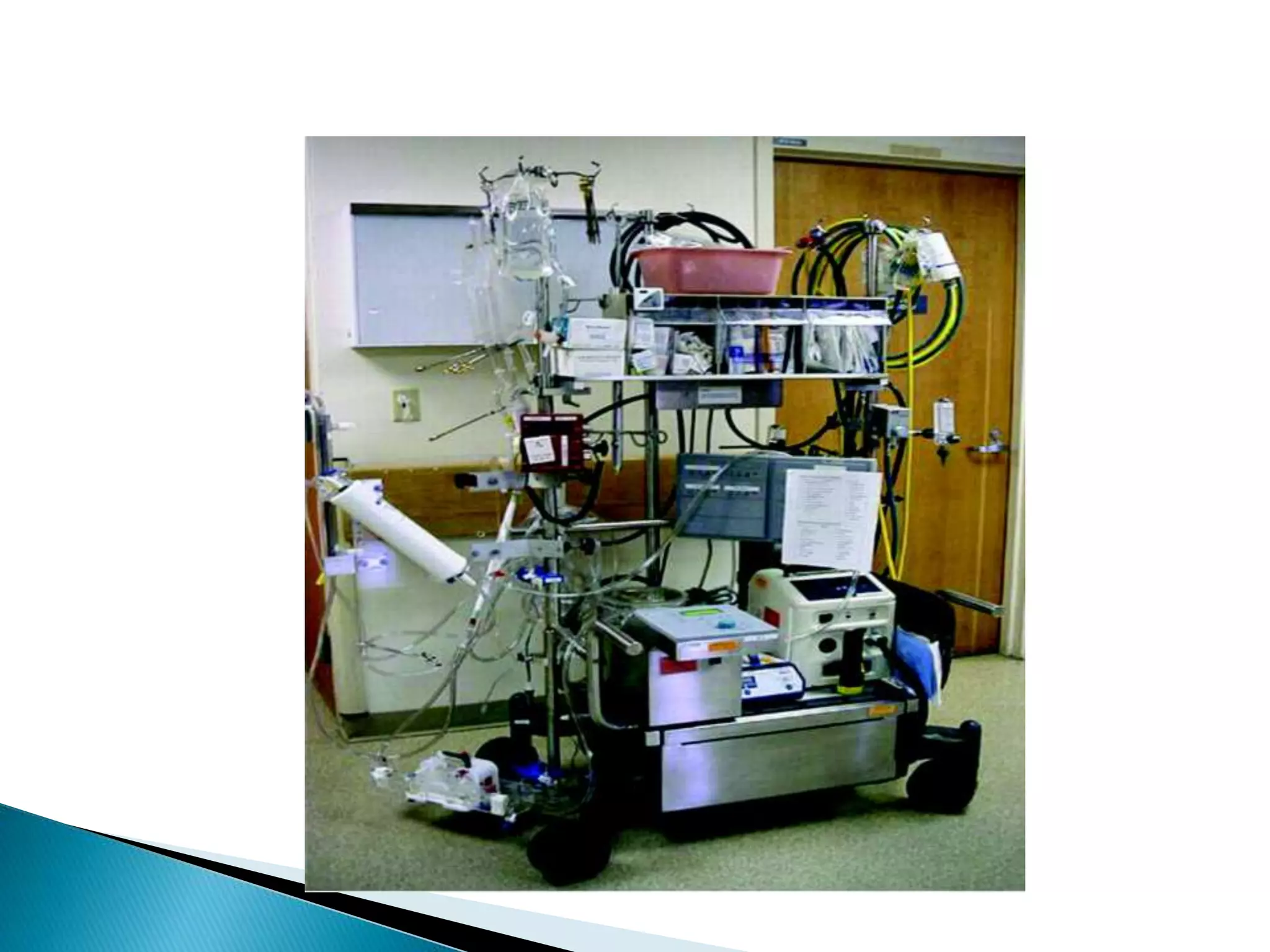
 4.ECMO
 Absence of pulmonary hypoplasia-ECMO-
life saving therapy for 75-85% infants with PPHN
who fail conventional management or iNO.
 ECMO criteria-
Alveolar arterial O2 difference (AaDO2)>600 or
Oxygenation index(OI)>30 on two ABGs >30 min
apart.
 Brief trial of HFOV or iNO instituted before ECMO.
 Technique of life support for neonates –cardiac
or respiratory failure-not responding to
conventional therapy.
 Indications: Respiratory failure-reversible,
Cardiac failure, E-CPR, Ex utero intra partum
treatment to ECHMO.
 Contra. Irreversible brain damage,
intraventricular & intraparenchymal hemorrhage,
wt<1.5kg, gestat. age<34wk, congenital abn.
severe coagulopathy, continuous CPR >1hr.
 5.Sedation & analgesia
 Fentanyl 1-4 micro gm/kg/hr infusion
 Morphine sulphate 0.05-0.1 mg/kg/hr
infusion-infant should not be hypotensive.
 6.Metabolic alkalosis
 Neutral to alkalotic pH-physiologic stimulus
that reduces PVR.
 Normalize pulmonary gas exchange &
conservative use of sodium bicarbonate.
7.Hemodynamic support
a.Volume expansion
 0.9 % NS 10ml/kg over 20-30 min-used in
hemorrhage or excessive capillary leak,
Packed red blood cells also used.
 Infants with marked capillary leak-avoid 5%
albumin-albumin also leaks from capillaries –
worsen intertitial edema.
b.Pharmacologic Rx
 1.Cardiotonic agents-Dobutamine
 2.Vasopressors-Dopamine, Epinephrine.
 Milrinone-cardiac function very poor & infant
unresponsive to dobutamine.
enhances cardiac output & lowers PVR.
 Dobutamine-beta1 adrenergic stimulation.
 Dopamine-alpha & beta adrenergic receptor stimulation.
Support of systemic BP & improved cardiac output.
High dose 6-20 micro gm/kg/min
Moderate dose 3-5 micro gm/kg/min
Low 1-2 micro gm/kg/min- enhances mesenteric & renal
blood flow.
 Dopamine may increase PVR-high infusion rates >10micro
gm/kg/min.
 Epinephrine 0.03-0.10 micro gm/kg/min-
stimulates alpha & beta adrenergic receptors.
 Raises systemic BP tru enhanced cardiac
output & peripheral vasoconstriction.
 Epinephrine infusion caution-alpha
adrenergic receptor stimulation results in
pulmonary vasoconstriction & elevated PVR &
end organ (renal & mesenteric) perfusion
reduced.
 8.Correction of metabolic abnormalities
 Biochemical abnorm.-right to left shunting by
imparing cardiac function.
 Correction of hypoglycemia & hypocalcemia –
proper myocardial function.
 9.Correction of Polycythemia
 Hyperviscosity assoc. with polycythemia –
increases PVR –release of vasoactive
substances tru platelet activation.
 Partial exchange transfusion -central
hematocrit exceeds 65%.
 10.Additional pharmacological agents
 Sildenafil, adenosine, magnesium suphate,
calcium channel blockers, inhaled
prostacyclin, inhaled ethyl nitrite, inhaled or
inravenous tolazoline.
 Data insufficient to support use of these
medications.
11.Treatment contraversies
 Interinstitutional variations in approach to
diagnosis & management of PPHN.
 Few centres report successful Rx without use
of mechanical ventillation, iNO, ECMO.
 PPHN results from disruption of normal
perinatal fetal to neonatal circulatory
transition.
 Incidence 1-2 per 1000 live births.
 Sustained elevation of PVR
 Persistent fetal circulation
 Contemporary ventilator management,iNO,
ECMO have improved survival among infants
with PPHN.
 Survivors of PPHN are at risk for chronic -
pulmonary disease , audiological,
neurodevelopmental or cognitive
impairments.
 1.Kliegman, Stanton, Geme ST, Schor, Behrman.
Nelson Textbook of Pediatrics 19th edition ,2012
:1529-1530.
 2.Cloherty PJ, Eichenwald CE, Hansen RA, Stark
RA. Manual of Neonatal Care 7th edition, 2012 :
435-442
 3.John FK, James EL, Donald CF. Nadas Text book
of Cardiology 2 nd edition 2006 :113-125
 4.Myung PK .Pediatric cardiology for Practitioners
2012, 5th edition:120-124
Persistent fetal circulation

Persistent fetal circulation

  • 1.
    By Dr RobinThomas Resident in Pediatrics JJMMC, Davangere
  • 2.
     Defn :Disruptionof normal perinatal to neonatal circulatory transition-sustained elevation in Pulmonary vascular resistance.  Risk for chronic pulmonary disease & neurodevelopmental disabilities.  Incidence: 1-2 per 1000 live births.  Perinatal risk factors: MSAF, Maternal condn- fever, anemia, pulmonary d/s Maternal D.M, U.T.I during pregnancy, SSRIs, aspirin, NSAIDS & C.S
  • 3.
     Rapid fallin pulmonary vascular resistance (PVR)-first breath & increase in systemic vascular resistance (SVR) –clamping of umbilical cord.  Circulating biochemical mediators - increased arterial O2 content & pH & lowered PaCO2 – constriction of ductus- arteriosus & vasorelaxation of pulmonary circulation.
  • 4.
     Physiological eventsraise SVR relative to PVR –functional closure of foramen ovale.  Persistent fetal circulation-mimics fetal circulation-PVR exceeds SVR & right to left hemodynamic shunting occurs tru foramen ovale or ductus arteriosus.  Dimnished pulmonary perfusion & systemic hypoxemia.
  • 6.
     1.Severe fetalhypoxemia (Birth asphyxia) – common association  Prolonged fetal stress & hypoxemia – remodeling & abnormal muscularization of pulmonary arterioles.  Acute birth asphyxia-release of vasoconstricting humoral factors & suppression of pulmonary vasodilators- pulmonary vasospasm.
  • 7.
     2.Pulmonary parenchymaldiseases-surfactant deficiency, pneumonia, MAS.  Fetus with advanced gestational age.  3.Abnormalities of pulmonary dvp. – PPHN Congenital diaphragmatic hernia, Porter syndrome, Pulmonary parenchymal hypoplasia - pruning of vascular tree. Alveolar capillary dysplasia-malalignment of pulmonary veins & arteries.
  • 8.
     4.Myocardial dysfunction,myocarditis, intrauterine constriction of ductus arteriosus, severe congenital heart disease-PPHN.  5.Pneumonia or sepsis of bacterial or viral orgin -PPHN. Suppression of endogenous NO production. endotoxin mediated myocardial depression, pulmonary vasoconstriction assoc. with release of thromboxanes.
  • 9.
     6.Familial recurrence-uncommon, infants with PPHN –low plasma levels of arginine & NO metabolites & specific polymorphism at 1,405 position of carbamoyl phosphate - synthetase gene.
  • 10.
     1.Pulmonary vascularremodelling-abnormal muscularization of non muscular intra-acinar arteries with increased medial thickness of larger muscular arteries-decreased cross sectional area of pulmonary vascular bed & elevated PVR.  Fetal hypoxemia-stimulus for pulmonary vascular remodelling.
  • 12.
     Humoral growthfactors released by hypoxia damaged endothelial cells promote vasoconstriction & overgrowth of pulmonary vascular muscular media.  Vascular changes –fetal exposure to NSAIDS- cause constriction of fetal ductus arteriosus & fetal pulmonary overcirculation.
  • 13.
     2.Pulmonary hypoplasia Affectsboth alveolar & pulmonary arteriolar dvp.-congenital diaphragmatic hernia, oligohydramnios syndrome, Porter syndrome (renal agenesis).  3.Reversible pulmonary vasospasm Infants with nonfatal PPHN. Hypoxia induces pulmonary vasoconstriction –acidemia. Neural & humoral vasoactive substances.
  • 14.
     Suppression ofendogenous NO, prostacyclin or bradykinin production & release of thromboxanes (A2,B2) , leukotrienes(C4,D4)- increased PVR –Sepsis & hypoxemia.  4. Myocardial dysfunction with elevated PVR- 1.Right ventricular dysfunction- Intrauterine constriction of ductus arteriosus- post natal pulmonary hypertension, RV failure, atrial R-L shunt.
  • 15.
     2.Left ventriculardysfunction-pulmonary venous hypertension & secondary pulmonary arterial hypertension-right to left shunting through ductus arteriosus.  5.Mechanical factors Cardiac output & blood viscosity. Low cardiac output-fewer pulmonary arteriolar channels & raises PVR. Hyperviscosity with polycythemia-reduces pulmonary microvasculature perfusion.
  • 16.
     Physical examn-cyanosis,prom. Precordial impulse, single or narrowly split & accentuated S2 , systolic murmur.  Invest. 1.Gradient of 10 % or more in oxygen saturation b/w preductal & postductal ABG or transcutaneous O2 saturation- ductus - arteriosus right to left hemodynamic shunt & absence of structural heart disease-PPHN
  • 17.
     CXR-normal /assoc.pulmonary parenchymal d/s.  ECG-RV predominance-cons. normal for age.  ECHO-hemodynamic shunting, evaluate ventricular function, exclude congenital heart disease. TR or flattened ventricular septum in ECHO- PPHN.
  • 18.
     Color dopplerexamn.-intracardiac or ductal hemodynamic shunting.  Continuous wave doppler sampling of velocity of TR jet-estimate pulmonary artery presures.
  • 19.
     Cyanotic congenitalcardiac disease over PPHN:  cardiomegaly  grade3 murmur  weak pulses  active precordium  pulmonary edema  pulse differ.b/w upper & lower extremities  persistent preductal & postductal arterial O2 tension less or equal to 40 mmHg.
  • 20.
     Aim: reversehypoxemia, improve pulmonary & systemic perfusion, preserve end organ function.  Adequate respiratory support-normoxemia & neutral to slightly alkalotic acid base balance –facilitate normal perinatal circulatory transition.
  • 21.
     1.Supplemental O2:Hypoxia-powerful pulmonary vasoconstrictor  Preductal & post ductal SaO2 should be monitored. Supplemental O2 –reduce abnormally elevated PVR, minimize end organ underperfusion & lactic acidemia.  Maintain post ductal SaO2 >90%-ensure tissue oxygenation & <98% to avoid hyperoxemia.
  • 22.
     2.Intubation &mechanical ventillation: Hypoxemia persists despite maximal O2 admns. or respiratory failure-marked hypercapnia & acidemia.  Maintain PaO2 & PaCO2 values & avoid hyperoxia & hyperventilation.  Target goals: SaO2 90-98%, PaCO2 40-50 mmHg, pH 7.30-7.40
  • 23.
     a. PPHNwith pulmonary parenchymal d/s- HFOV high frequency oscillatory ventillation or HFJV high frequency jet ventillation. HFJV-useful for meconium aspiration pneumonitis & air leak. HFOV-deliver iNO.  b.Absence of pulmonary disease- High intrathoracic pressure impedes cardiac output & elevates PVR.
  • 26.
     Strategy formechanical ventillation-rapid, low pressure, & short inspiratory time- minimize elevated intrathoracic pressure.  3.iNO –produced by endothelial cells. diffuses into smooth muscle cells, increases intracellular cGMP, relaxes vascular smooth muscle & causes pulmonary vasodilation.
  • 27.
     iNO –HFOV-dosesof 1-20 parts per million- causes pulmonary vasodilation-not systemic- vasodilation –decreases PVR.  Methemoglobinemia-serious potential toxicity of iNO Rx. Measure metHb levels 24 hrs after start of Rx. metHb levels>7% -reduce iNO  Rebound hypoxemia-if iNO discontinued abruptly.  iNO should be tapered very gradually.
  • 28.
     Starting doseof iNO is 20ppm-delivered via ventilator circuit.  As baby improves & inspired O2 conc.<50%-iNO is tapered by halving the dose. eg: 20 to10 to 5 ppm over a 12-24 hr period - gradually to 2 then 1 ppm.  iNO –given in infants with PPHN & diffuse pulmonary disease by concomitant use of HFOV & surfactant treat.
  • 29.
     Sildenafil  Phosphodiesterase-5inhibitor  Increases endogenous NO by inhibiting metabolism-Rx for PPHN  Randomized clinical trials awaited.
  • 30.
     4.ECMO  Absenceof pulmonary hypoplasia-ECMO- life saving therapy for 75-85% infants with PPHN who fail conventional management or iNO.  ECMO criteria- Alveolar arterial O2 difference (AaDO2)>600 or Oxygenation index(OI)>30 on two ABGs >30 min apart.  Brief trial of HFOV or iNO instituted before ECMO.
  • 31.
     Technique oflife support for neonates –cardiac or respiratory failure-not responding to conventional therapy.  Indications: Respiratory failure-reversible, Cardiac failure, E-CPR, Ex utero intra partum treatment to ECHMO.  Contra. Irreversible brain damage, intraventricular & intraparenchymal hemorrhage, wt<1.5kg, gestat. age<34wk, congenital abn. severe coagulopathy, continuous CPR >1hr.
  • 39.
     5.Sedation &analgesia  Fentanyl 1-4 micro gm/kg/hr infusion  Morphine sulphate 0.05-0.1 mg/kg/hr infusion-infant should not be hypotensive.  6.Metabolic alkalosis  Neutral to alkalotic pH-physiologic stimulus that reduces PVR.  Normalize pulmonary gas exchange & conservative use of sodium bicarbonate.
  • 40.
    7.Hemodynamic support a.Volume expansion 0.9 % NS 10ml/kg over 20-30 min-used in hemorrhage or excessive capillary leak, Packed red blood cells also used.  Infants with marked capillary leak-avoid 5% albumin-albumin also leaks from capillaries – worsen intertitial edema.
  • 41.
    b.Pharmacologic Rx  1.Cardiotonicagents-Dobutamine  2.Vasopressors-Dopamine, Epinephrine.  Milrinone-cardiac function very poor & infant unresponsive to dobutamine. enhances cardiac output & lowers PVR.
  • 42.
     Dobutamine-beta1 adrenergicstimulation.  Dopamine-alpha & beta adrenergic receptor stimulation. Support of systemic BP & improved cardiac output. High dose 6-20 micro gm/kg/min Moderate dose 3-5 micro gm/kg/min Low 1-2 micro gm/kg/min- enhances mesenteric & renal blood flow.  Dopamine may increase PVR-high infusion rates >10micro gm/kg/min.
  • 43.
     Epinephrine 0.03-0.10micro gm/kg/min- stimulates alpha & beta adrenergic receptors.  Raises systemic BP tru enhanced cardiac output & peripheral vasoconstriction.  Epinephrine infusion caution-alpha adrenergic receptor stimulation results in pulmonary vasoconstriction & elevated PVR & end organ (renal & mesenteric) perfusion reduced.
  • 44.
     8.Correction ofmetabolic abnormalities  Biochemical abnorm.-right to left shunting by imparing cardiac function.  Correction of hypoglycemia & hypocalcemia – proper myocardial function.  9.Correction of Polycythemia  Hyperviscosity assoc. with polycythemia – increases PVR –release of vasoactive substances tru platelet activation.
  • 45.
     Partial exchangetransfusion -central hematocrit exceeds 65%.  10.Additional pharmacological agents  Sildenafil, adenosine, magnesium suphate, calcium channel blockers, inhaled prostacyclin, inhaled ethyl nitrite, inhaled or inravenous tolazoline.  Data insufficient to support use of these medications.
  • 46.
    11.Treatment contraversies  Interinstitutionalvariations in approach to diagnosis & management of PPHN.  Few centres report successful Rx without use of mechanical ventillation, iNO, ECMO.
  • 47.
     PPHN resultsfrom disruption of normal perinatal fetal to neonatal circulatory transition.  Incidence 1-2 per 1000 live births.  Sustained elevation of PVR  Persistent fetal circulation  Contemporary ventilator management,iNO, ECMO have improved survival among infants with PPHN.
  • 48.
     Survivors ofPPHN are at risk for chronic - pulmonary disease , audiological, neurodevelopmental or cognitive impairments.
  • 49.
     1.Kliegman, Stanton,Geme ST, Schor, Behrman. Nelson Textbook of Pediatrics 19th edition ,2012 :1529-1530.  2.Cloherty PJ, Eichenwald CE, Hansen RA, Stark RA. Manual of Neonatal Care 7th edition, 2012 : 435-442  3.John FK, James EL, Donald CF. Nadas Text book of Cardiology 2 nd edition 2006 :113-125  4.Myung PK .Pediatric cardiology for Practitioners 2012, 5th edition:120-124