STROKES IN
CHILDREN
DR ROBIN THOMAS
RESIDENT IN PEDIATRICS
JJMMC, DAVANGERE
 Stroke-important cause of acquired brain injury in newborns and children.
 Relatively rare-children- Arterial or Venous stroke.
 Incidence of Arterial ischemic stroke (AIS) and cerebral sinovenous
thrombosis (CSVT)-5/100,000/yr and affects 1 in 2000 newborns.
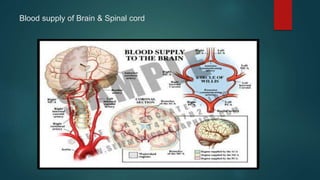
Blood supply of Brain & Spinal cord
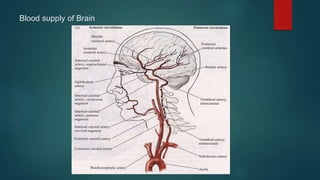
Blood supply of Brain
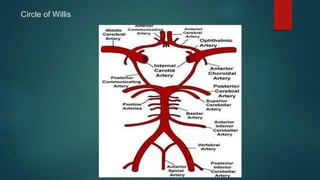
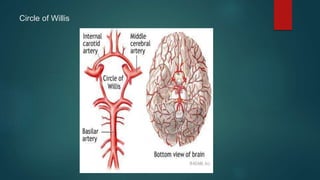
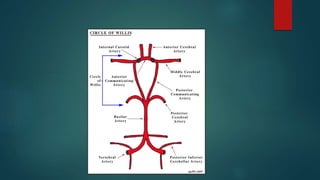
Circle of Willis
Circle of Willis
Blood supply of Brain
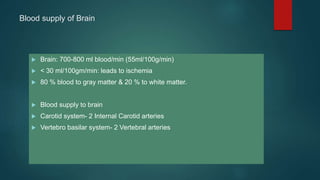
 Brain: 700-800 ml blood/min (55ml/100g/min)
 < 30 ml/100gm/min: leads to ischemia
 80 % blood to gray matter & 20 % to white matter.
 Blood supply to brain
 Carotid system- 2 Internal Carotid arteries
 Vertebro basilar system- 2 Vertebral arteries
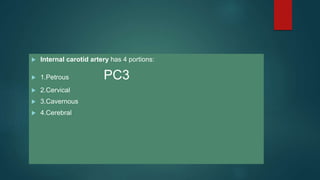
 Internal carotid artery has 4 portions:
 1.Petrous PC3
 2.Cervical
 3.Cavernous
 4.Cerebral
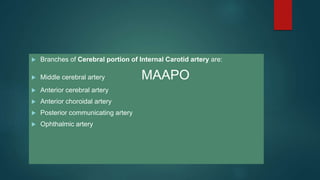
 Branches of Cerebral portion of Internal Carotid artery are:
 Middle cerebral artery MAAPO
 Anterior cerebral artery
 Anterior choroidal artery
 Posterior communicating artery
 Ophthalmic artery
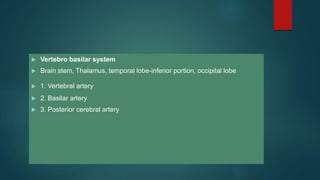
 Vertebro basilar system
 Brain stem, Thalamus, temporal lobe-inferior portion, occipital lobe
 1. Vertebral artery
 2. Basilar artery
 3. Posterior cerebral artery
Circle of Willis
 1. Middle cerebral artery (MCA)
 2. Anterior cerebral artery (ACA)
 3. Posterior cerebral artery (PCA)
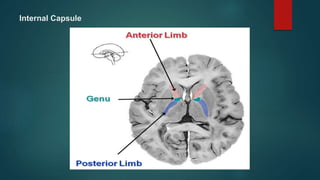
Internal Capsule
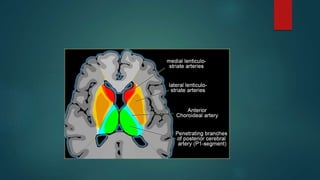
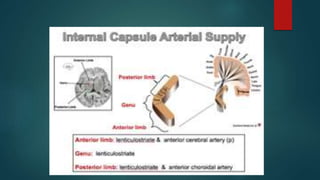
Blood Supply of Internal capsule
 Anterior limb : Superior half- Lenticulo-striate artery- MCA
Inferior half- ACA- Huebners artery
 Genu : Lenticulo-striate artery
 Posterior limb : Superior half- Lenticulo-striate artery- MCA
Inferior half- Posterior communicating artery,
Anterior choroidal artery.
Venous drainage of Brain
 Sinuses & Veins
 Paired Sinuses : Cavernous sinus
Superior & Inferior petrosal sinus
Transverse sinus
Sigmoid sinus
 Unpaired Sinuses : Superior & Inferior Sagital sinus
Straight sinus
Anterior & Posterior Intercavernous sinus
Pathophysiology
 Interruption of blood flow to the part of the brain
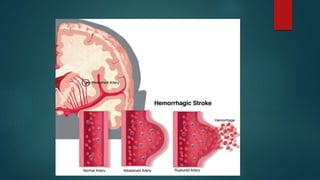
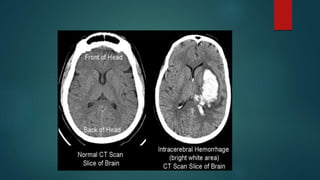
 Rupture of blood vessels with bleeding into cerebral parenchyma.
 Blood supply of brain- carotid & vertebro-basilar circulations
 Numerous anastomosis at the level of circle of willis & through smaller
vessels in leptomeninges.
 Diencephalon- supplied by end arteries- anastomosis not adequate-arterial
occlusions have devastating effect.
 Water shed zones- portion of cerebral cortex b/w 2 major arteries- less
affected by arterial occlusions –damage when cerebral perfusion pressure
is reduced.
Pathophysiology
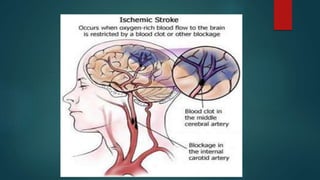
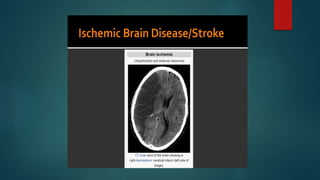
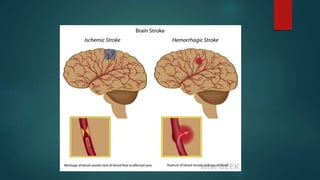
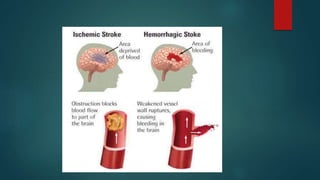
 Interruption of blood flow of arterial or thrombotic d/s- Ischemic stroke.
 Rupture of blood vessels with bleeding into cerebral parenchyma-
Hemorrhagic stroke.
 Trauma or intimal tears- ICA injury.
 Interruption of function – infections, inflammation of intima- severe meningitis,
post varicella angiopathy, mycoplasma pneumonia, borrelia, chlamydia, HIV,
Helicobactor, Hemolysing streptococci.
 Embolisation- Cardioembolism- CCHD, RHD, Prosthetic or Prolapsed
cardiac valves, Cardiomyopathy, Arrhythmias.
 Decreased cerebral blood flow- high cerebral metabolic rate & paucity of
energy stores in CNS.
 Cerebral metabolic rate for oxygen- 3.5 ml/100mg brain/min.
 Cerebral hypoxia- oxygen partial pressure < 40 torr.
 Glucose storage in brain- survival of cerebral tissue for 90 min.
 Preterm infants
 Sub ependymal germinal matrix- highly cellular well vascularized area
beneath the ependyma of lateral ventricles- major site of neurogenesis.
 Sub ependymal hemorrhage & Intraventricular hemorrhage- common form
of CVD in preterm infants.
 Bleeding in highly vascular sub ependymal germinal matrix & then rupture
into lateral ventricle.
 Hemorrhagic infarction of periventricular white matter-15% of infants with
intraventricular hemorrhage.
 Several factors- fluctuating cerebral blood flow, increase in cerebral
venous pressure, immature capillaries in germinal matrix, abnormal
platelet & coagulation function, low Apgar scores, low birth weight,
prolonged labour, apnea, bradycardia, large PDA, pneumothorax, group B
streptococcal sepsis, hypoxia, hypercapnia, acidosis.
 Bed side Ultrasonography- better understanding of subependymal
hemorrhage & intraventricular hemorrhage.
 Term infants
 Intra cranial hemorrhage- birth trauma- forceps & breech deliveries.
 Tears of falx cerebri & tentorium cerebelli.
 C/F- apathy, seizures, high pitched cry, irregular respirations.
 Tense fontanel, moro reflex abnormalities.
 Focal ischemic lesions can occur- DIC, placental infarcts, embolism,
trauma to blood vessels.
 Ultrasonography & CT scans- diagnosis.
 Neuronal injury & death in hypoxic states- release of excitatory
neurotransmitters: L-glutamate & L-aspartate.
 Increased post synaptic stimulation of N-methyl-D-aspartate receptors-
entry of sodium & calcium into neurons & cell death.
 Delayed cell death- calcium influx- mitochondrial dysfunction with
breakdown of cell components & free radical formation.
 Major factor controlling cerebral metabolic rate-degree of neuronal activity.
 Seizures- cerebral metabolic rate increases & reduced to low levels in
coma.
 Cerebral blood flow maintained at high levels- substrate for brain
metabolic activity.
 < 3 yrs- 30-60 ml/100 mg brain/min.
 3-10 yrs- 105 ml/100 mg brain/min.
 Adults- 50 ml/100 mg brain/min.
 Mature brain- phenomenon of Auto regulation.
 Blood flow increases with increased neuronal activity.
 Perfusion pressure, intracranial pressure & vascular resistance.
 Increasing conc. of CO2- increase of blood flow- dilatation of intracranial
blood vessels.
 High conc. of O2- reducing blood flow- causing vasoconstriction.
 Most cerebral vascular accidents in children- impairment of arterial blood
flow- result of thrombosis or embolism.
 Localized region of metabolic acidosis- dilatation of surrounding blood
vessels- increased vascularity- luxury perfusion.
 Damage to neurons & glia- destruction of blood brain barrier- localized
cerebral edema- compress capillaries.
 Occlusion of venous structures- increased venous pressure- tendency for
blood vessel to rupture- bleeding & raised intra cranial pressure.
 Hemorrhage- intra parenchymal or extra cerebral- acts as mass lesion-
rise in intra cranial pressure.
 Damage to blood-brain barrier- promotes cerebral edema.
 Blood & blood products of erythrocytes- produce vascular spasm-add to
preexisting damage- cause meningeal irritation- can cause hydrocephalus.
 Cerebral infarction pathologic changes- neuronal death & perivascular
hemorrhage- influx of polymorpho-nuclear leukocytes- mononuclear cells
& macrophages.
 Astrocytosis results in formation of glial scar.
 Preterm infant with sub ependymal germinal matrix hemorrhage-
destruction of white matter- periventricular leukomalacia.
 Ventricular dilatation – destruction & disappearance of periventricular white
matter, post hemorrhagic hydrocephalus.
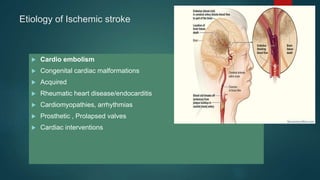
Etiology of Ischemic stroke
 Cardio embolism
 Congenital cardiac malformations
 Acquired
 Rheumatic heart disease/endocarditis
 Cardiomyopathies, arrhythmias
 Prosthetic , Prolapsed valves
 Cardiac interventions
 Vasculitis & Vasculopathies
 Infectious/ Immune/ Iatrogenic vasculitis
 Migraine
 Hypertensive encephalopathy
 Moya moya disease
 Hematologic & Hypercoagulable states
 Hemoglobinopathies- Sickle cell anemia
 Polycythemia
 Thrombocytosis
 Leukemia, Lympho-reticular malignancy
 Protein C, S deficiency
 Antithrombin III deficiency
 Nephrotic syndrome
 Metabolic & related disorders
 Homocystinuria
 Organic acidemia
 Leighs disease
 MELAS
 Neuroectodermatoses
 Trauma
 Blunt trauma- ICA.
 MELAS- Mitochondrial myopathy, encephalopathy, lactic acidosis, stroke
like episodes.
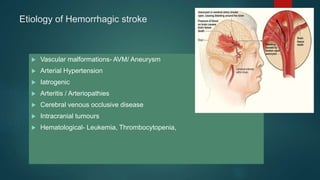
Etiology of Hemorrhagic stroke
 Vascular malformations- AVM/ Aneurysm
 Arterial Hypertension
 Iatrogenic
 Arteritis / Arteriopathies
 Cerebral venous occlusive disease
 Intracranial tumours
 Hematological- Leukemia, Thrombocytopenia,
Vascular disease in older children & infants
 Primary vascular diseases
 1. Acute infantile hemiplegia
 2. Moyamoya disease
 3. Takayasu arteritis
 4. Fibromuscular dysplasia
 5. Hemiplegic migraine
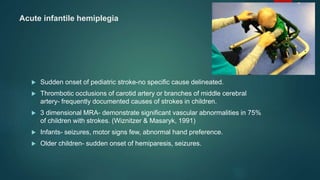
Acute infantile hemiplegia
 Sudden onset of pediatric stroke-no specific cause delineated.
 Thrombotic occlusions of carotid artery or branches of middle cerebral
artery- frequently documented causes of strokes in children.
 3 dimensional MRA- demonstrate significant vascular abnormalities in 75%
of children with strokes. (Wiznitzer & Masaryk, 1991)
 Infants- seizures, motor signs few, abnormal hand preference.
 Older children- sudden onset of hemiparesis, seizures.
 CT or MRI scan- mass lesion, intracranial hemorrhage or arteriovenous
malformation.
 Angiography or MRA- moyamoya disease & fibro-muscular dysplasia-
visualization of major blood vessels.
 Lumbar puncture- infectious etiological condn.
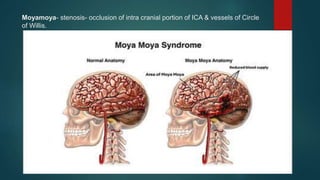
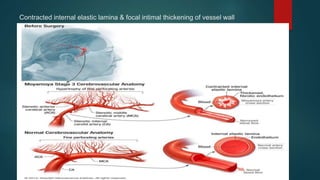
Moyamoya- stenosis- occlusion of intra cranial portion of ICA & vessels of Circle
of Willis.
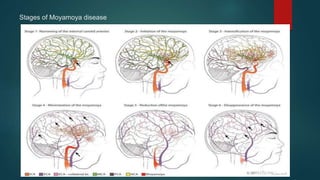
Stages of Moyamoya disease
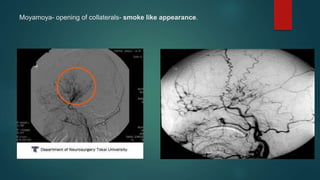
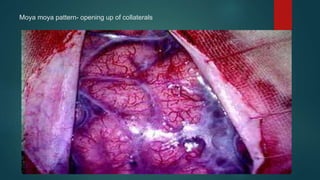
Moyamoya- opening of collaterals- smoke like appearance.
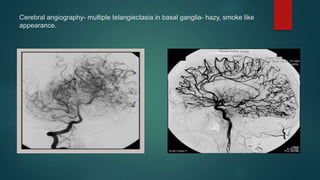
Cerebral angiography- multiple telangiectasia in basal ganglia- hazy, smoke like
appearance.
Contracted internal elastic lamina & focal intimal thickening of vessel wall
Moya moya pattern- opening up of collaterals
 Moyamoya disease
 Primary vascular disease- stenosis- occlusion of intracranial portion of
Internal carotid artery & other vessels of circle of Willis.
 Abnormalities of elastica & focal intimal thickening.
 Changes in pulmonary, renal, pancreatic arteries.
 Multiple telangiectasias in basal ganglia- hazy, smoke like appearance-
Japanese word moyamoya applied.
 Pattern represents opening of collateral channels.
 Symptoms in childhood- females frequent.
 Chronic inflammatory, occlusive intracranial vasculopathy affecting ACA,
MCA, PCA associated with extensive network of collaterals.
 Multiple transient ischemic attacks with permanent residua.
 Sudden hemiparesis & multiple transient ishemic attacks without
neurological signs.
 Seizures- 33 %- children <6yrs.
 Disease is progressive
 Poor prognostic factors- early age of onset, typical clinical pattern,
involvement of dominant hemisphere or both hemisphere, complete
occlusion of cerebral blood vessels.
 Differentiation from Simple arterial occlusion- recurrent transient
ischemic attacks, progressive mental deterioration, widespread areas of
infarction.
 Cerebral angiography- definitive diagnosis.
 Progressive vascular changes- occlusion of supra clinoid portion of
internal carotid artery, middle & anterior cerebral arteries & finally
posterior communicating & posterior cerebral arteries.
 Cortical atrophy, multiple areas of lucency in cortex & white matter,
ventricular dilatation.
 Moyamoya pattern- follow radiation of optic gliomas.
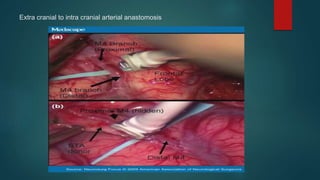
Extra cranial to intra cranial arterial anastomosis
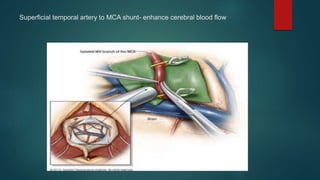
Superficial temporal artery to MCA shunt- enhance cerebral blood flow
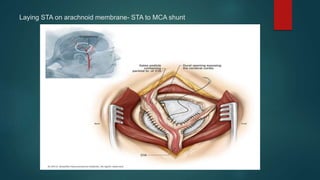
Laying STA on arachnoid membrane- STA to MCA shunt
 Surgical placement of extracranial to intracranial arterial anastomoses.
 Superficial artery to MCA shunt & laying Superficial temporal artery on
arachnoid membrane- enhance cerebral blood flow.
 No firm conclusions regarding usefulness of procedure.
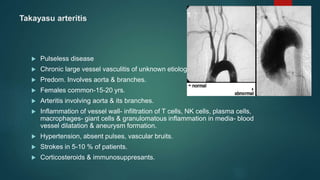
Takayasu arteritis
 Pulseless disease
 Chronic large vessel vasculitis of unknown etiology
 Predom. Involves aorta & branches.
 Females common-15-20 yrs.
 Arteritis involving aorta & its branches.
 Inflammation of vessel wall- infiltration of T cells, NK cells, plasma cells,
macrophages- giant cells & granulomatous inflammation in media- blood
vessel dilatation & aneurysm formation.
 Hypertension, absent pulses, vascular bruits.
 Strokes in 5-10 % of patients.
 Corticosteroids & immunosuppresants.
 C/F- Pre pulseless phase of disease- fever, malaise, headache,
hypertension, abdominal pain, arthralgia.
 Later- diminished pulses, asymmetric blood pressures, claudication,
Raynauds phenomenon, renal failure, symptoms of pulmonary & cardiac
ischemia.
 Classification criteria for TA
 Angiographic abnormalities
 Decreased peripheral artery pulse or claudication
 BP difference b/w arm & legs >10 mmHg
 Bruits over aorta
 Hypertension
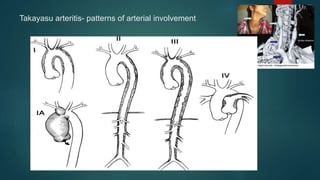
Takayasu arteritis- patterns of arterial involvement
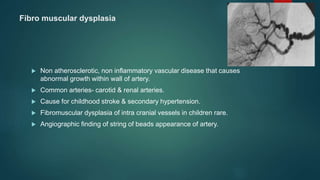
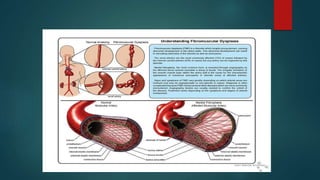
Fibro muscular dysplasia
 Non atherosclerotic, non inflammatory vascular disease that causes
abnormal growth within wall of artery.
 Common arteries- carotid & renal arteries.
 Cause for childhood stroke & secondary hypertension.
 Fibromuscular dysplasia of intra cranial vessels in children rare.
 Angiographic finding of string of beads appearance of artery.
Migraine
 Hemiplegic migraine- transient hemiparesis with severe headache.
 Familial forms & sporadic forms.
 Transient loss of vision in one eye- amaurosis fugax- adolescent
migraineurs.
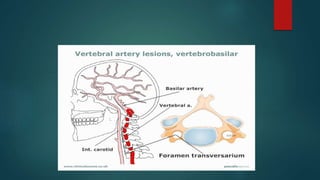
Vertebro basilar occlusion
 Decreased blood supply to posterior circulation of brain.
 Vertebral artery
 Basilar artery
 Posterior cerebral artery
 Blood supply: brain stem, thalamus, inferior portion of temporal lobe &
occipital lobe.
Vertebro basilar occlusion
 Sudden onset or stuttering progression
 Brain stem localization- corticospinal & cerebellar signs with oculomotor
abnormalities.
 Locked in syndrome- infarction at the level of Basilar artery. (Golden etal
1987)
 Child alert, quadriplegia, facial diplegia, absent horizontal eye movements.
 Child cannot speak, preserved vertical eye movements.
 Diagnosis considered in a child in coma after a vascular accident but has
spontaneous eye opening.
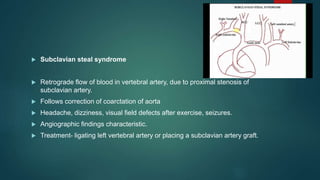
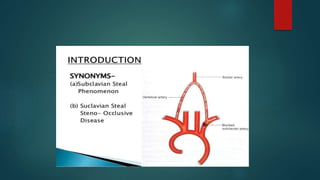
 Subclavian steal syndrome
 Retrograde flow of blood in vertebral artery, due to proximal stenosis of
subclavian artery.
 Follows correction of coarctation of aorta
 Headache, dizziness, visual field defects after exercise, seizures.
 Angiographic findings characteristic.
 Treatment- ligating left vertebral artery or placing a subclavian artery graft.
Cerebrovascular disease secondary to medical conditions
 Cardiac disease
 Clinical scenario
 9/12 old infant k/c/o TOF came with h/o Left sided hemiparesis, seizures,
depressed state of consciousness.
 MRI brain showed Right MCA infarct with cerebral edema.
 CVA- complication of cyanotic congenital heart disease.
 TOF, TGA- common.
 Mech : Arterial thrombosis, venous sinus thrombosis, or embolism.
 “Any child < 2 yrs with CHD , who has acute onset of neurological
signs- CVA should be considered as primary diagnosis ‘’
 After 2 yrs , Brain abscess most common.
 Embolic strokes- children with cyanotic congenital heart disease- R-L
shunt bypasses lungs, which normally filter small emboli.

 Bacterial endocarditis- congenital heart disease & Rheumatic heart
disease- potential sources of emboli.
 Thrombi can form on prosthetic cardiac valves- imp. cause of cerebral
emboli.
Hematologic & Neoplastic diseases
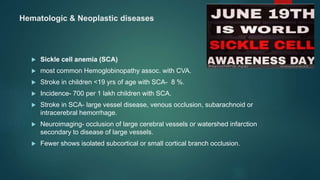
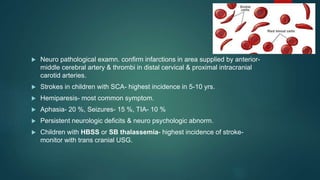
 Sickle cell anemia (SCA)
 most common Hemoglobinopathy assoc. with CVA.
 Stroke in children <19 yrs of age with SCA- 8 %.
 Incidence- 700 per 1 lakh children with SCA.
 Stroke in SCA- large vessel disease, venous occlusion, subarachnoid or
intracerebral hemorrhage.
 Neuroimaging- occlusion of large cerebral vessels or watershed infarction
secondary to disease of large vessels.
 Fewer shows isolated subcortical or small cortical branch occlusion.
 Neuro pathological examn. confirm infarctions in area supplied by anterior-
middle cerebral artery & thrombi in distal cervical & proximal intracranial
carotid arteries.
 Strokes in children with SCA- highest incidence in 5-10 yrs.
 Hemiparesis- most common symptom.
 Aphasia- 20 %, Seizures- 15 %, TIA- 10 %
 Persistent neurologic deficits & neuro psychologic abnorm.
 Children with HBSS or SB thalassemia- highest incidence of stroke-
monitor with trans cranial USG.
 Blood transfusion & exchange transfusion- standard mode of treatment of
acute stroke in SCA.
 Periodic blood transfusions- decrease productions of sickle cells- reduce
recurrence of strokes by 90 %.
 Intracranial hemorrhage- serious complication of any bleeding disorder.
 Intracerebral, subarachnoid, subdural, intra spinal hemorrhage.
 Symptoms- headache, seizures, depressed state of consciousness.
 Intra spinal hemorrhages- weakness, back pain.
Hemophilia
 Bleeding occurs in 25 %.
 Bleeding more common in factor IX deficiency.
 Intra cranial Hemorrhage common in children <18 yrs, esp. <3yrs.
 Serious permanent deficit- 50 %, mortality- 35 %.
 Complications of labour or delivery produce intracranial hemorrhage in
newborns with hemophilia.
 Treatment- replace deficient clotting factors- performed prophylactically
after h/o head trauma.
 Homozygous deficiency of Protein C in newborns- purpura fulminans &
venous thrombosis- thrombosis of cerebral veins.
 Strokes –significantly reduced levels of protein C.
 ITP- major intracranial hemorrhage can occur.
 Subdural, intra parenchymal, intra ventricular hemorrhage- infants b/w 2
weeks & 6/12- Vitamin K deficiency.
 Hemolytic uremic syndrome- seizures, depressed consciousness,
subarachnoid hemorrhage, hemiparesis, thrombotic strokes.
Leukemia
 Intracranial hemorrhage- 20%.
 Intracranial bleeding occurs in acute stage of leukemia with extremely
elevated high leukocyte count.
 Intracerebral or extra cerebral hemorrhage- results from increased blood
viscosity.
 Multiple small thrombi, damage to blood vessels.
 Children with high leukocyte count- develop dural sinus occlusion with
increased intracranial pressure & headache.
 CVA also occur after bone marrow transplantation.
Infectious diseases
 Acute bacterial meningitis- treatment delayed- infectious arteritis-
multiple areas of arterial narrowing & occlusion.
 Occlusion of veins or dural sinuses- complication of meningitis & follow
otitis media, mastoiditis, sinusitis & infection of scalp & face.
 Clinical picture- convulsions, coma, changing neurologic signs, nuchal
rigidity, signs of infection.
 Otitis media & mastoiditis- cause lateral sinus thrombosis associated
with abducens palsy & increased intracranial pressure.
 Facial skin & para nasal sinus infections- produce cavernous sinus
thrombosis with proptosis, conjunctival reddening, retinal hemorrhages &
extra ocular palsies.
 Retropharyngeal abscess- produces compression or thrombosis of
carotid artery.
 Post varicella angiopathy, mycoplasma pneumonia, borrelia-burgdorferi,
chlamydia pneumonia, HIV, helicobactor pylori, hemolysing streptococci-
predisposition for stroke.
 Cranial infections
 Stroke common sequel of Severe meningitis- H. Influenza, Pneumococcal,
Tuberculous meningitis.
 Purulent material around basal cisterns & orbito frontal area, circle of
Willis- envelops small arteries & veins- vasculitis & thrombus.
Collagen vascular disease & Vasculitis
 SLE- 40% of patients have neurologic abnormalities- psychiatric,
behavioral abnormalities & focal neurologic signs.
 HSP- headaches, mental status changes, seizures, focal neurologic
deficits, involvement of peripheral nerves.
 Kawasaki disease- aseptic meningitis, hemiparesis.
Metabolic disorders
 Infants with fever & dehydration- primary venous or sinus thrombosis.
 C/F- multiple seizures, changing neurological signs, convulsions, coma,
increased intracranial pressure.
 Hypernatremic dehydration- seizures, depressed state of
consciousness.
 Pathology- multiple hemorrhagic lesion in white matter.
 Juvenile onset Insulin dependent Diabetes mellitus- acute
hemiparesis.
 MELAS SYNDROME- epilepsia partialis continua or status epilepticus,
repeated strokes.
 MRI- multiple areas of hyper intense signal in cortex & subcortical white
matter, sparing deep white matter.
Trauma & physical agents
 Trauma to carotid artery- delayed onset of neurological signs-
thrombosis in vessel & extension into cerebral vessels.
 Severe cerebral edema- death.
 Permanent neurological residua- seizures & neuropsychological deficits.
 Children- falling on stick held in mouth, lolli pop injury .
 External trauma to carotid artery- hematoma on lateral portion of neck,
Horners syndrome, TIA followed by lucid interval –then sudden onset of
hemiplegia or hemiparesis.
 Bone abnormalities of upper cervical spine & odontoid, trauma to cervical
spine- sudden twisting or jerking of head- injure carotid or vertebral
arteries.
 Basilar skull fracture can cause laceration of carotid artery at foramen
magnum- severe bleeding from mouth & ipsilateral ear.
 Radiation & chemotherapy.
Vascular malformations
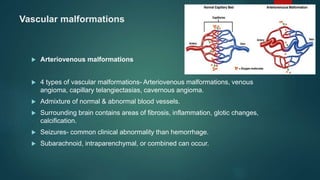
 Arteriovenous malformations
 4 types of vascular malformations- Arteriovenous malformations, venous
angioma, capillary telangiectasias, cavernous angioma.
 Admixture of normal & abnormal blood vessels.
 Surrounding brain contains areas of fibrosis, inflammation, glotic changes,
calcification.
 Seizures- common clinical abnormality than hemorrhage.
 Subarachnoid, intraparenchymal, or combined can occur.
 Intracerebral hematoma- focal neurological signs & increased intracranial
pressure.
 Subarachnoid hemorrhage- sudden onset of headache, meningeal signs.
 Vascular malformations may be located in cerebellum & brainstem.
 50 % of children with intracranial arteriovenous malformations have bruits
heard over head.
 “A cranial bruit heard in an infant younger than 4 months of age ,
even in the presence of loud cardiac murmur , is always assoc. with
intracranial arteriovenous malformation” (Cohen and Levin 1978)
 CT with contrast, MRI, Arteriography.
 RX- surgical accessibility of lesion.
 Total surgical excision is curative, but best approach to treatment ??
 Embolization of lesion may be effective.
 Stereotactic radiosurgery with linear accelerator – effective modality for
some patients.
Vein of Galen malformations
 Arteriovenous malformation of Vein of Galen- direct connection between
branches of carotid or vertebral circulation & Vein of Galen.
 Vein undergoes aneurysmal dilatation because of high pressure & arteries
divide forming a network of vessels adjacent to the vein.
 Development of malformation in infancy forms a hemodynamically
significant arteriovenous shunt.
 Neonatal period- signs & symptoms of high output congestive heart failure.
 Children- systolic heart murmur, cranial bruit, cardiomegaly, hepatomegaly,
tachycardia, respiratory distress, & pulmonary edema.
 Death – cardiac failure.
 Presentation in later infancy- Hydrocephalus, Subarachnoid hemorrhage.
 Dilated veins over scalp, intracranial bruits.
 Poor prognosis- death from hemorrhage, increased intracranial pressure or
cardiac failure.
 Presentation in later life- Headache, signs of intracranial hemorrhage-
convulsions & focal neurological signs.
 Signs of brain stem dysfunction & raised intracranial pressure.
 Calcification within malformation on CT scan.
 Arteriography- diagnostic.
 RX- difficult- location, surrounding network of blood vessels, poor
cardiovascular status of pt.
 Microsurgical techniques & staged surgical procedures.
 Embolization effective in some.
Aneurysms
 Uncommon in children less than 10 yrs.
 Located in either anterior or posterior circulation.
 Sudden onset of massive subarachnoid hemorrhage & depressed state of
consciousness.
 CN II, III or both.
 Commonly occur on anterior cerebral artery or internal carotid artery ,
distal portions of cerebral vasculature.
 Usually are >1cm – intracranial hemorrhage, seizures.
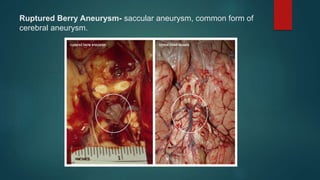
Ruptured Berry Aneurysm- saccular aneurysm, common form of
cerebral aneurysm.
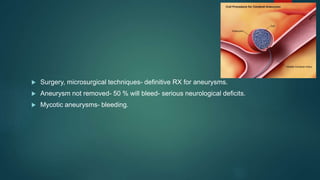
 Surgery, microsurgical techniques- definitive RX for aneurysms.
 Aneurysm not removed- 50 % will bleed- serious neurological deficits.
 Mycotic aneurysms- bleeding.
Neuro cutaneous syndromes
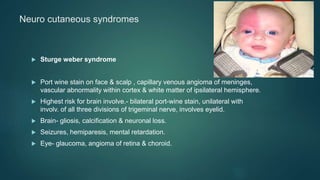
 Sturge weber syndrome
 Port wine stain on face & scalp , capillary venous angioma of meninges,
vascular abnormality within cortex & white matter of ipsilateral hemisphere.
 Highest risk for brain involve.- bilateral port-wine stain, unilateral with
involv. of all three divisions of trigeminal nerve, involves eyelid.
 Brain- gliosis, calcification & neuronal loss.
 Seizures, hemiparesis, mental retardation.
 Eye- glaucoma, angioma of retina & choroid.
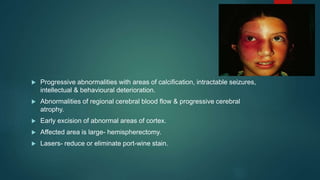
 Progressive abnormalities with areas of calcification, intractable seizures,
intellectual & behavioural deterioration.
 Abnormalities of regional cerebral blood flow & progressive cerebral
atrophy.
 Early excision of abnormal areas of cortex.
 Affected area is large- hemispherectomy.
 Lasers- reduce or eliminate port-wine stain.
 Dural venous sinus thrombosis
 Venous sinuses- major pathway for drainage of intracranial circulation.
 Significant proportion of CSF drains into sagittal sinus through pacchionian
granulations.
 Thrombosis of major venous sinuses causes increased intracranial
pressure by impeding venous outflow & interfering with resorption of CSF.
 Sagital sinus thrombosis
 Sagital sinus drains vast majority of cortical veins over brain convexity.
 Partial or complete.
 Occlusion of sagittal sinus causes stasis & thrombosis in connecting
cortical veins- assoc. hemorrhage over brain surface.
 Common in children under 3 yrs, often during first year of life.
 Thrombosis extends into cortical veins- rapidly increasing intracranial
pressure, changes in level of consciousness, seizures, focal motor
impairment.
 Septic venous sinus thrombosis- most common in neonates.
 Spinal fluid resorption impaired-compromise of spinal flow between
arachnoidal granulations & blood in sinus-communicating hydrocephalus.
 Venous stasis promotes vascular congestion of brain parenchyma-
increase in intracranial pressure.
 Sagital sinus thrombosis-distension of veins over scalp & superior
forehead.
 Occlusion of sagittal sinus in older children- syndrome of pseudo tumor
cerebri , headache, CN 6 palsy- false localizing sign, papilledema, visual
loss.
 Good prognosis.
 Predisposing factors leading to sagittal sinus thrombosis- dehydration,
malnutrition, debilitating d/s, febrile illness, congenital heart disease,
hypercoagulable states.
 Spinal fluid studies-normal in early course, later xanthochromic or flankly
blood with increased protein concn.
 CT scan- increased density within sinuses-diagnosis of venous sinus
thrombosis. Superficial hemorrhage & cerebral edema.
 Delta sign- CT scan with contrast shows enhancement around thrombotic
sinus.
 MRA- flow void- thrombosis in the area of sinus.
 Conventional angiogram- venous phase of study well documented.
 No role for anticoagulant therapy.
 Interventional thrombolytic therapy- useful in some.
 RX for raised intracranial tension.
 Lateral sinus thrombosis
 Clinical- seizures, increased intracranial tension, decreased level of
consciousness.
 Predisposing factors- otitis media, mastoiditis.
 Otitic hydrocephalus- when otitis media & mastoiditis led to lateral sinus
thrombosis & increased intracranial pressure.
 Vigorus RX for otitis media & mastoiditis, surgical intervention?
 Cavernous sinus thrombosis
 Cavernous sinus- CN 3, 4, 6, ophthalmic division of CN5, internal carotid
artery.
 Rupture of artery- massive arteriovenous shunt with proptosis, bruit,
involve. of CNs.
 Internal carotid artery becomes thrombosed in segment- cavernous sinus-
massive hemispherical infarction.
 Predisposing factors- infection of orbit, paranasal sinus, skin of periorbital
& malar areas.
 Clinical- conjunctival suffusion- peripheral conjunctival capillaries,
conjunctival edema, retinal edema.
 Ptosis- CN 3.
 External opthalmoplegia- CN3, 4, 6.
 Septic cavernous sinus thrombosis- medical emergency- vigorous
antibiotic therapy.
 No role for anticoagulant therapy.
Spinal cord vascular abnormalities
 Thrombotic & embolic d/s of spinal cord- rare.
 Arteriovenous malformation- back pain, gait abnormalities, bladder &
bowel dysfunction.
 Neurological examn.- long tract signs, asymmetric tendon reflexes.
 Angioma of skin of back- 20 % accentuated by Valsalva maneuver.
 Bruits over spine- rare.
 Subarachnoid hemorrhage, no localizing neurological abnorm.
 Spinal cord arteriovenous malformation- multiple episodes of subarachnoid
hemorrhage?
 High resolution CT or MRI scans- diagnosis.
 Selective spinal angiography- outline feeding vessels & extend of
malformation.
 Surgical excision possible in many.
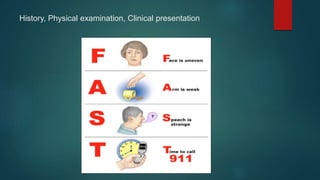
History, Physical examination, Clinical presentation
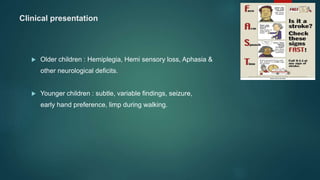
Clinical presentation
 Older children : Hemiplegia, Hemi sensory loss, Aphasia &
other neurological deficits.
 Younger children : subtle, variable findings, seizure,
early hand preference, limp during walking.
Conditions which mimic stroke
 Todds paralysis ( Transient post ictal hemiparesis )
 Hemiplegic migraine
 Syndrome of alternating hemiplegia
 ICSOL ( Intracranial space occupying lesion )
 Acute disseminated encephalomyelitis
History & Physical examination
 H/O ear, throat, mastoid infection.
 H/O intra oral or neck trauma.
 H/O cardiac d/s.
 H/O Hematological disorders.
 H/O multifocal seizures, raised intracranial pressure, vomiting- ? Superior
sagittal sinus thrombosis.
 H/O Hemiparesis & seizures in first two years of life- ?
Arterial occlusions.

Localization of Hemiplegia
 1. Hemispheric lesion
 a. Cortex - cortical features like seizures, dysplasia.
motor deficits are minimum.
Cortical type of sensory loss - Parietal lobe function-
( loss of tactile localization, 2 point discrimination,
stereognosis, graphaesthesia, sensory inattention ).
 b. Corona radiata - absence of cortical features
motor deficits- unequal weakness of limbs on
C/L side. Either UL>LL or LL>UL.
Dulling of Primary modalities of sensation- touch,
superficial pain, temperature.
 c. Internal capsule : C/L hemiplegia, uniform weakness of limbs on
C/L side, dulling of primary modalities of
sensation-touch, superficial pain, temperature.
Homonymous hemianopia
2. Brain stem : Crossed hemiplegia
I/L LMN cranial nerve palsy
C/L hemiplegia
 Brain stem
 a. Midbrain : Weber syndrome : I/L 3rd CN & 4th CN palsy,
C/L hemiplegia.
 b. Pons : Millard Gubler syndrome : I/L 6th CN & 7th CN palsy,
C/L hemiplegia.
 c. Medulla : C/L hemiplegia , I/L CN involv.
Diagnostic Approach
 Confirmation of presence of Cerebrovascular lesion.
 Exclude other causes of neurological dysfunction.
 Etiology of stroke
Evaluation of child with Stroke
 Standard Evaluation
 CT scan (plain)
 If CT scan is normal , MRI scan (plain)
Ischemic Stroke-Investg.
 ECG, CXR, Echocardiography
 Carotid Doppler studies
 Hematological studies
 CBC, Platelet count, ESR.
 Liver & Renal function test.
 Lumbar puncture.
 Imaging studies
 Magnetic resonance angiography (MRA).
 Digital subtraction angiography (DSA).
 Collagen vascular screen
 PT, APTT.
 Protein C, Protein S, Antithrombin 111.
 Others- VDRL, HIV, Urinalysis, Lactate/Pyruvate levels, Homocysteine
 Urinary & blood aminoacids/ organic acids
Hemorrhagic stroke
 CBC, Platelet count, clotting factors.
 LFT.
 Imaging studies.
Treatment
 Arterial Ischemic Stroke
 No randomized control trial on children with AIS.
 Treatment primary directed towards stabilizing systemic factors &
management of underlying causes.
 Supportive care
 Manage raised intracranial pressure, blood pressure & fluid balance.
 Blood glucose carefully monitored-Hyperglycemia exacerbate infarct size.
 Maintain normal body temperature.
 Aggressive antiepileptic treatment.
 Antithrombotic therapies
 Use of anticoagulant therapy increasing in pediatric AIS.
 Avoid anticoagulation in hemorrhage, hypertension, or bleeding diathesis.
 Heparin
 Use anticoagulation in children at high risk of recurrence/extension of
thromboembolic stroke & who are at minimum risk of secondary
hemorrhage.
 Loading dose of Heparin 75-100 U/kg iv over 10 min followed by initial
maintenance dose of 28 U/kg/hr in children>1yr & 18 U/kg/hr in
older children.
 Adjust Heparin dose to maintain APTT in range of 60-85 sec.
 Low molecular weight Heparin
 Greater safety & efficacy.
 Monitoring done-Antifactor Xa assay once weekly or monthly.
 SVT in infants- LMW Heparin for 7-14 days followed by Coumadin for 3/12.
 Antiplatelet agents
 Traditional role of aspirin in prevention of recurrence after TIA or ischemic
stroke.
 Adults-Aspirin reduces stroke by 25 %.
 Clopidogrel-no control trials, but may be good choice.
 Dose-3-5 mg/kg/day.
 Oral anticoagulation
 Warfarin used for secondary prevention of stroke if aspirin fails.
 Congenital or acquired heart disease
 Severe hypercoagulable states
 Arterial dissection
 Recurrent AIS or TIA while on aspirin.

 Thrombolytic agents
 Tissue plasminogen activator
 Urokinase
 Streptokinase
 Dissolve the existing thrombus & recanalise the occluded vessel.
 Non thrombotic therapies
 Transfusion therapy
 Neuroprotective agents
 Immunosuppressants
 Surgical evacuation of hematomas, insertion of ventricular or
lumboperitoneal shunts & rarely revascularization procedures.
 Revascularization procedures like Encephalo duroarterio synangiosis
(EDAS) or Pirl Synangiosis- important in treatment of moya moya
disease.
 Rehabilitation therapy
 Speech therapy
 Occupational therapy
 Physical & psychological therapy
Summary
 Stroke in children relatively rare.
 There are fundamental, etiologic & developmental differences in children
compared with adults .
 Multiple causes for stroke in children & many risk factors.
 Ischemic stroke-interruption of blood flow of arterial or thrombotic d/s.
 Hemorrhagic stroke-rupture of blood vessels with bleeding into cerebral
parenchyma.
 Hemorrhagic stroke higher mortality than ischemic stroke.
Bibliography
 1. Adam K, Gabrielle D. Pediatric stroke syndromes. Nelson textbook of
Pediatrics.19th edition;2080-2086.
 2. Gerald SG, Keeneth FS. Pediatric Neurology. Edition; 787-803.
 3. Veena K. Stroke in the children. 2nd edition;239-246.
 4. Gerald MF. Clinical Pediatric Neurology.6th edition; 249-265.
 5. Vishram S. Textbook of Clinical Neuro anatomy.3rd edition; 230-249.
 6. Amlie LC, Sebire G, Fullerton HJ. Recent developments in childhood
arterial ischemic stroke. Lancet Neurol 2010;7:425-435.
 7. Benseler SM, Silverman E, Aviv RI etal. Primary central nervous system
vasculitis in children. Arthritis Rheum 2011; 54:1291-1297.
 8. Birnbaum J, Hellmann DB. Primary angitis of the central nervous
system. Arch Neurol.2008;66:704-709.
 9. Danchaivijitr CT, Saunders DE etal. Evolution of cerebral arteriopathies
in childhood arterial ischemic stroke.2006;59:620-626.
 10. Chollet F, Tardy J etal. Fluoxitine for motor recovery after acute
ischemic stroke (FLAME): a randomized placebo controlled trial. Lancet
Neurol.2011;10:123-130.
Pediatric stroke syndromes

Pediatric stroke syndromes

  • 1.
    STROKES IN CHILDREN DR ROBINTHOMAS RESIDENT IN PEDIATRICS JJMMC, DAVANGERE
  • 2.
     Stroke-important causeof acquired brain injury in newborns and children.  Relatively rare-children- Arterial or Venous stroke.  Incidence of Arterial ischemic stroke (AIS) and cerebral sinovenous thrombosis (CSVT)-5/100,000/yr and affects 1 in 2000 newborns.
  • 3.
    Blood supply ofBrain & Spinal cord
  • 4.
  • 5.
  • 6.
  • 8.
    Blood supply ofBrain  Brain: 700-800 ml blood/min (55ml/100g/min)  < 30 ml/100gm/min: leads to ischemia  80 % blood to gray matter & 20 % to white matter.  Blood supply to brain  Carotid system- 2 Internal Carotid arteries  Vertebro basilar system- 2 Vertebral arteries
  • 9.
     Internal carotidartery has 4 portions:  1.Petrous PC3  2.Cervical  3.Cavernous  4.Cerebral
  • 10.
     Branches ofCerebral portion of Internal Carotid artery are:  Middle cerebral artery MAAPO  Anterior cerebral artery  Anterior choroidal artery  Posterior communicating artery  Ophthalmic artery
  • 11.
     Vertebro basilarsystem  Brain stem, Thalamus, temporal lobe-inferior portion, occipital lobe  1. Vertebral artery  2. Basilar artery  3. Posterior cerebral artery
  • 12.
    Circle of Willis 1. Middle cerebral artery (MCA)  2. Anterior cerebral artery (ACA)  3. Posterior cerebral artery (PCA)
  • 13.
  • 16.
    Blood Supply ofInternal capsule  Anterior limb : Superior half- Lenticulo-striate artery- MCA Inferior half- ACA- Huebners artery  Genu : Lenticulo-striate artery  Posterior limb : Superior half- Lenticulo-striate artery- MCA Inferior half- Posterior communicating artery, Anterior choroidal artery.
  • 17.
    Venous drainage ofBrain  Sinuses & Veins  Paired Sinuses : Cavernous sinus Superior & Inferior petrosal sinus Transverse sinus Sigmoid sinus  Unpaired Sinuses : Superior & Inferior Sagital sinus Straight sinus Anterior & Posterior Intercavernous sinus
  • 18.
    Pathophysiology  Interruption ofblood flow to the part of the brain  Rupture of blood vessels with bleeding into cerebral parenchyma.  Blood supply of brain- carotid & vertebro-basilar circulations  Numerous anastomosis at the level of circle of willis & through smaller vessels in leptomeninges.  Diencephalon- supplied by end arteries- anastomosis not adequate-arterial occlusions have devastating effect.  Water shed zones- portion of cerebral cortex b/w 2 major arteries- less affected by arterial occlusions –damage when cerebral perfusion pressure is reduced.
  • 19.
    Pathophysiology  Interruption ofblood flow of arterial or thrombotic d/s- Ischemic stroke.  Rupture of blood vessels with bleeding into cerebral parenchyma- Hemorrhagic stroke.  Trauma or intimal tears- ICA injury.  Interruption of function – infections, inflammation of intima- severe meningitis, post varicella angiopathy, mycoplasma pneumonia, borrelia, chlamydia, HIV, Helicobactor, Hemolysing streptococci.  Embolisation- Cardioembolism- CCHD, RHD, Prosthetic or Prolapsed cardiac valves, Cardiomyopathy, Arrhythmias.
  • 20.
     Decreased cerebralblood flow- high cerebral metabolic rate & paucity of energy stores in CNS.  Cerebral metabolic rate for oxygen- 3.5 ml/100mg brain/min.  Cerebral hypoxia- oxygen partial pressure < 40 torr.  Glucose storage in brain- survival of cerebral tissue for 90 min.
  • 21.
     Preterm infants Sub ependymal germinal matrix- highly cellular well vascularized area beneath the ependyma of lateral ventricles- major site of neurogenesis.  Sub ependymal hemorrhage & Intraventricular hemorrhage- common form of CVD in preterm infants.  Bleeding in highly vascular sub ependymal germinal matrix & then rupture into lateral ventricle.  Hemorrhagic infarction of periventricular white matter-15% of infants with intraventricular hemorrhage.
  • 22.
     Several factors-fluctuating cerebral blood flow, increase in cerebral venous pressure, immature capillaries in germinal matrix, abnormal platelet & coagulation function, low Apgar scores, low birth weight, prolonged labour, apnea, bradycardia, large PDA, pneumothorax, group B streptococcal sepsis, hypoxia, hypercapnia, acidosis.  Bed side Ultrasonography- better understanding of subependymal hemorrhage & intraventricular hemorrhage.
  • 23.
     Term infants Intra cranial hemorrhage- birth trauma- forceps & breech deliveries.  Tears of falx cerebri & tentorium cerebelli.  C/F- apathy, seizures, high pitched cry, irregular respirations.  Tense fontanel, moro reflex abnormalities.  Focal ischemic lesions can occur- DIC, placental infarcts, embolism, trauma to blood vessels.  Ultrasonography & CT scans- diagnosis.
  • 24.
     Neuronal injury& death in hypoxic states- release of excitatory neurotransmitters: L-glutamate & L-aspartate.  Increased post synaptic stimulation of N-methyl-D-aspartate receptors- entry of sodium & calcium into neurons & cell death.  Delayed cell death- calcium influx- mitochondrial dysfunction with breakdown of cell components & free radical formation.  Major factor controlling cerebral metabolic rate-degree of neuronal activity.  Seizures- cerebral metabolic rate increases & reduced to low levels in coma.
  • 25.
     Cerebral bloodflow maintained at high levels- substrate for brain metabolic activity.  < 3 yrs- 30-60 ml/100 mg brain/min.  3-10 yrs- 105 ml/100 mg brain/min.  Adults- 50 ml/100 mg brain/min.  Mature brain- phenomenon of Auto regulation.  Blood flow increases with increased neuronal activity.  Perfusion pressure, intracranial pressure & vascular resistance.
  • 26.
     Increasing conc.of CO2- increase of blood flow- dilatation of intracranial blood vessels.  High conc. of O2- reducing blood flow- causing vasoconstriction.  Most cerebral vascular accidents in children- impairment of arterial blood flow- result of thrombosis or embolism.  Localized region of metabolic acidosis- dilatation of surrounding blood vessels- increased vascularity- luxury perfusion.  Damage to neurons & glia- destruction of blood brain barrier- localized cerebral edema- compress capillaries.
  • 27.
     Occlusion ofvenous structures- increased venous pressure- tendency for blood vessel to rupture- bleeding & raised intra cranial pressure.  Hemorrhage- intra parenchymal or extra cerebral- acts as mass lesion- rise in intra cranial pressure.  Damage to blood-brain barrier- promotes cerebral edema.  Blood & blood products of erythrocytes- produce vascular spasm-add to preexisting damage- cause meningeal irritation- can cause hydrocephalus.
  • 28.
     Cerebral infarctionpathologic changes- neuronal death & perivascular hemorrhage- influx of polymorpho-nuclear leukocytes- mononuclear cells & macrophages.  Astrocytosis results in formation of glial scar.  Preterm infant with sub ependymal germinal matrix hemorrhage- destruction of white matter- periventricular leukomalacia.  Ventricular dilatation – destruction & disappearance of periventricular white matter, post hemorrhagic hydrocephalus.
  • 35.
    Etiology of Ischemicstroke  Cardio embolism  Congenital cardiac malformations  Acquired  Rheumatic heart disease/endocarditis  Cardiomyopathies, arrhythmias  Prosthetic , Prolapsed valves  Cardiac interventions
  • 36.
     Vasculitis &Vasculopathies  Infectious/ Immune/ Iatrogenic vasculitis  Migraine  Hypertensive encephalopathy  Moya moya disease  Hematologic & Hypercoagulable states  Hemoglobinopathies- Sickle cell anemia  Polycythemia  Thrombocytosis
  • 37.
     Leukemia, Lympho-reticularmalignancy  Protein C, S deficiency  Antithrombin III deficiency  Nephrotic syndrome  Metabolic & related disorders  Homocystinuria  Organic acidemia  Leighs disease  MELAS  Neuroectodermatoses
  • 38.
     Trauma  Blunttrauma- ICA.  MELAS- Mitochondrial myopathy, encephalopathy, lactic acidosis, stroke like episodes.
  • 39.
    Etiology of Hemorrhagicstroke  Vascular malformations- AVM/ Aneurysm  Arterial Hypertension  Iatrogenic  Arteritis / Arteriopathies  Cerebral venous occlusive disease  Intracranial tumours  Hematological- Leukemia, Thrombocytopenia,
  • 40.
    Vascular disease inolder children & infants  Primary vascular diseases  1. Acute infantile hemiplegia  2. Moyamoya disease  3. Takayasu arteritis  4. Fibromuscular dysplasia  5. Hemiplegic migraine
  • 41.
    Acute infantile hemiplegia Sudden onset of pediatric stroke-no specific cause delineated.  Thrombotic occlusions of carotid artery or branches of middle cerebral artery- frequently documented causes of strokes in children.  3 dimensional MRA- demonstrate significant vascular abnormalities in 75% of children with strokes. (Wiznitzer & Masaryk, 1991)  Infants- seizures, motor signs few, abnormal hand preference.  Older children- sudden onset of hemiparesis, seizures.
  • 42.
     CT orMRI scan- mass lesion, intracranial hemorrhage or arteriovenous malformation.  Angiography or MRA- moyamoya disease & fibro-muscular dysplasia- visualization of major blood vessels.  Lumbar puncture- infectious etiological condn.
  • 43.
    Moyamoya- stenosis- occlusionof intra cranial portion of ICA & vessels of Circle of Willis.
  • 44.
  • 45.
    Moyamoya- opening ofcollaterals- smoke like appearance.
  • 46.
    Cerebral angiography- multipletelangiectasia in basal ganglia- hazy, smoke like appearance.
  • 47.
    Contracted internal elasticlamina & focal intimal thickening of vessel wall
  • 48.
    Moya moya pattern-opening up of collaterals
  • 49.
     Moyamoya disease Primary vascular disease- stenosis- occlusion of intracranial portion of Internal carotid artery & other vessels of circle of Willis.  Abnormalities of elastica & focal intimal thickening.  Changes in pulmonary, renal, pancreatic arteries.  Multiple telangiectasias in basal ganglia- hazy, smoke like appearance- Japanese word moyamoya applied.  Pattern represents opening of collateral channels.  Symptoms in childhood- females frequent.
  • 50.
     Chronic inflammatory,occlusive intracranial vasculopathy affecting ACA, MCA, PCA associated with extensive network of collaterals.  Multiple transient ischemic attacks with permanent residua.  Sudden hemiparesis & multiple transient ishemic attacks without neurological signs.  Seizures- 33 %- children <6yrs.  Disease is progressive  Poor prognostic factors- early age of onset, typical clinical pattern, involvement of dominant hemisphere or both hemisphere, complete occlusion of cerebral blood vessels.
  • 51.
     Differentiation fromSimple arterial occlusion- recurrent transient ischemic attacks, progressive mental deterioration, widespread areas of infarction.  Cerebral angiography- definitive diagnosis.  Progressive vascular changes- occlusion of supra clinoid portion of internal carotid artery, middle & anterior cerebral arteries & finally posterior communicating & posterior cerebral arteries.  Cortical atrophy, multiple areas of lucency in cortex & white matter, ventricular dilatation.  Moyamoya pattern- follow radiation of optic gliomas.
  • 52.
    Extra cranial tointra cranial arterial anastomosis
  • 53.
    Superficial temporal arteryto MCA shunt- enhance cerebral blood flow
  • 54.
    Laying STA onarachnoid membrane- STA to MCA shunt
  • 55.
     Surgical placementof extracranial to intracranial arterial anastomoses.  Superficial artery to MCA shunt & laying Superficial temporal artery on arachnoid membrane- enhance cerebral blood flow.  No firm conclusions regarding usefulness of procedure.
  • 56.
    Takayasu arteritis  Pulselessdisease  Chronic large vessel vasculitis of unknown etiology  Predom. Involves aorta & branches.  Females common-15-20 yrs.  Arteritis involving aorta & its branches.  Inflammation of vessel wall- infiltration of T cells, NK cells, plasma cells, macrophages- giant cells & granulomatous inflammation in media- blood vessel dilatation & aneurysm formation.  Hypertension, absent pulses, vascular bruits.  Strokes in 5-10 % of patients.  Corticosteroids & immunosuppresants.
  • 57.
     C/F- Prepulseless phase of disease- fever, malaise, headache, hypertension, abdominal pain, arthralgia.  Later- diminished pulses, asymmetric blood pressures, claudication, Raynauds phenomenon, renal failure, symptoms of pulmonary & cardiac ischemia.  Classification criteria for TA  Angiographic abnormalities  Decreased peripheral artery pulse or claudication  BP difference b/w arm & legs >10 mmHg  Bruits over aorta  Hypertension
  • 58.
    Takayasu arteritis- patternsof arterial involvement
  • 59.
    Fibro muscular dysplasia Non atherosclerotic, non inflammatory vascular disease that causes abnormal growth within wall of artery.  Common arteries- carotid & renal arteries.  Cause for childhood stroke & secondary hypertension.  Fibromuscular dysplasia of intra cranial vessels in children rare.  Angiographic finding of string of beads appearance of artery.
  • 61.
    Migraine  Hemiplegic migraine-transient hemiparesis with severe headache.  Familial forms & sporadic forms.  Transient loss of vision in one eye- amaurosis fugax- adolescent migraineurs.
  • 62.
    Vertebro basilar occlusion Decreased blood supply to posterior circulation of brain.  Vertebral artery  Basilar artery  Posterior cerebral artery  Blood supply: brain stem, thalamus, inferior portion of temporal lobe & occipital lobe.
  • 64.
    Vertebro basilar occlusion Sudden onset or stuttering progression  Brain stem localization- corticospinal & cerebellar signs with oculomotor abnormalities.  Locked in syndrome- infarction at the level of Basilar artery. (Golden etal 1987)  Child alert, quadriplegia, facial diplegia, absent horizontal eye movements.  Child cannot speak, preserved vertical eye movements.  Diagnosis considered in a child in coma after a vascular accident but has spontaneous eye opening.
  • 65.
     Subclavian stealsyndrome  Retrograde flow of blood in vertebral artery, due to proximal stenosis of subclavian artery.  Follows correction of coarctation of aorta  Headache, dizziness, visual field defects after exercise, seizures.  Angiographic findings characteristic.  Treatment- ligating left vertebral artery or placing a subclavian artery graft.
  • 67.
    Cerebrovascular disease secondaryto medical conditions  Cardiac disease  Clinical scenario  9/12 old infant k/c/o TOF came with h/o Left sided hemiparesis, seizures, depressed state of consciousness.  MRI brain showed Right MCA infarct with cerebral edema.
  • 68.
     CVA- complicationof cyanotic congenital heart disease.  TOF, TGA- common.  Mech : Arterial thrombosis, venous sinus thrombosis, or embolism.  “Any child < 2 yrs with CHD , who has acute onset of neurological signs- CVA should be considered as primary diagnosis ‘’  After 2 yrs , Brain abscess most common.  Embolic strokes- children with cyanotic congenital heart disease- R-L shunt bypasses lungs, which normally filter small emboli. 
  • 69.
     Bacterial endocarditis-congenital heart disease & Rheumatic heart disease- potential sources of emboli.  Thrombi can form on prosthetic cardiac valves- imp. cause of cerebral emboli.
  • 70.
    Hematologic & Neoplasticdiseases  Sickle cell anemia (SCA)  most common Hemoglobinopathy assoc. with CVA.  Stroke in children <19 yrs of age with SCA- 8 %.  Incidence- 700 per 1 lakh children with SCA.  Stroke in SCA- large vessel disease, venous occlusion, subarachnoid or intracerebral hemorrhage.  Neuroimaging- occlusion of large cerebral vessels or watershed infarction secondary to disease of large vessels.  Fewer shows isolated subcortical or small cortical branch occlusion.
  • 71.
     Neuro pathologicalexamn. confirm infarctions in area supplied by anterior- middle cerebral artery & thrombi in distal cervical & proximal intracranial carotid arteries.  Strokes in children with SCA- highest incidence in 5-10 yrs.  Hemiparesis- most common symptom.  Aphasia- 20 %, Seizures- 15 %, TIA- 10 %  Persistent neurologic deficits & neuro psychologic abnorm.  Children with HBSS or SB thalassemia- highest incidence of stroke- monitor with trans cranial USG.
  • 72.
     Blood transfusion& exchange transfusion- standard mode of treatment of acute stroke in SCA.  Periodic blood transfusions- decrease productions of sickle cells- reduce recurrence of strokes by 90 %.  Intracranial hemorrhage- serious complication of any bleeding disorder.  Intracerebral, subarachnoid, subdural, intra spinal hemorrhage.  Symptoms- headache, seizures, depressed state of consciousness.  Intra spinal hemorrhages- weakness, back pain.
  • 73.
    Hemophilia  Bleeding occursin 25 %.  Bleeding more common in factor IX deficiency.  Intra cranial Hemorrhage common in children <18 yrs, esp. <3yrs.  Serious permanent deficit- 50 %, mortality- 35 %.  Complications of labour or delivery produce intracranial hemorrhage in newborns with hemophilia.  Treatment- replace deficient clotting factors- performed prophylactically after h/o head trauma.
  • 74.
     Homozygous deficiencyof Protein C in newborns- purpura fulminans & venous thrombosis- thrombosis of cerebral veins.  Strokes –significantly reduced levels of protein C.  ITP- major intracranial hemorrhage can occur.  Subdural, intra parenchymal, intra ventricular hemorrhage- infants b/w 2 weeks & 6/12- Vitamin K deficiency.  Hemolytic uremic syndrome- seizures, depressed consciousness, subarachnoid hemorrhage, hemiparesis, thrombotic strokes.
  • 75.
    Leukemia  Intracranial hemorrhage-20%.  Intracranial bleeding occurs in acute stage of leukemia with extremely elevated high leukocyte count.  Intracerebral or extra cerebral hemorrhage- results from increased blood viscosity.  Multiple small thrombi, damage to blood vessels.  Children with high leukocyte count- develop dural sinus occlusion with increased intracranial pressure & headache.  CVA also occur after bone marrow transplantation.
  • 76.
    Infectious diseases  Acutebacterial meningitis- treatment delayed- infectious arteritis- multiple areas of arterial narrowing & occlusion.  Occlusion of veins or dural sinuses- complication of meningitis & follow otitis media, mastoiditis, sinusitis & infection of scalp & face.  Clinical picture- convulsions, coma, changing neurologic signs, nuchal rigidity, signs of infection.  Otitis media & mastoiditis- cause lateral sinus thrombosis associated with abducens palsy & increased intracranial pressure.
  • 77.
     Facial skin& para nasal sinus infections- produce cavernous sinus thrombosis with proptosis, conjunctival reddening, retinal hemorrhages & extra ocular palsies.  Retropharyngeal abscess- produces compression or thrombosis of carotid artery.  Post varicella angiopathy, mycoplasma pneumonia, borrelia-burgdorferi, chlamydia pneumonia, HIV, helicobactor pylori, hemolysing streptococci- predisposition for stroke.
  • 78.
     Cranial infections Stroke common sequel of Severe meningitis- H. Influenza, Pneumococcal, Tuberculous meningitis.  Purulent material around basal cisterns & orbito frontal area, circle of Willis- envelops small arteries & veins- vasculitis & thrombus.
  • 79.
    Collagen vascular disease& Vasculitis  SLE- 40% of patients have neurologic abnormalities- psychiatric, behavioral abnormalities & focal neurologic signs.  HSP- headaches, mental status changes, seizures, focal neurologic deficits, involvement of peripheral nerves.  Kawasaki disease- aseptic meningitis, hemiparesis.
  • 80.
    Metabolic disorders  Infantswith fever & dehydration- primary venous or sinus thrombosis.  C/F- multiple seizures, changing neurological signs, convulsions, coma, increased intracranial pressure.  Hypernatremic dehydration- seizures, depressed state of consciousness.  Pathology- multiple hemorrhagic lesion in white matter.  Juvenile onset Insulin dependent Diabetes mellitus- acute hemiparesis.
  • 81.
     MELAS SYNDROME-epilepsia partialis continua or status epilepticus, repeated strokes.  MRI- multiple areas of hyper intense signal in cortex & subcortical white matter, sparing deep white matter.
  • 82.
    Trauma & physicalagents  Trauma to carotid artery- delayed onset of neurological signs- thrombosis in vessel & extension into cerebral vessels.  Severe cerebral edema- death.  Permanent neurological residua- seizures & neuropsychological deficits.  Children- falling on stick held in mouth, lolli pop injury .
  • 83.
     External traumato carotid artery- hematoma on lateral portion of neck, Horners syndrome, TIA followed by lucid interval –then sudden onset of hemiplegia or hemiparesis.  Bone abnormalities of upper cervical spine & odontoid, trauma to cervical spine- sudden twisting or jerking of head- injure carotid or vertebral arteries.  Basilar skull fracture can cause laceration of carotid artery at foramen magnum- severe bleeding from mouth & ipsilateral ear.  Radiation & chemotherapy.
  • 84.
    Vascular malformations  Arteriovenousmalformations  4 types of vascular malformations- Arteriovenous malformations, venous angioma, capillary telangiectasias, cavernous angioma.  Admixture of normal & abnormal blood vessels.  Surrounding brain contains areas of fibrosis, inflammation, glotic changes, calcification.  Seizures- common clinical abnormality than hemorrhage.  Subarachnoid, intraparenchymal, or combined can occur.
  • 85.
     Intracerebral hematoma-focal neurological signs & increased intracranial pressure.  Subarachnoid hemorrhage- sudden onset of headache, meningeal signs.  Vascular malformations may be located in cerebellum & brainstem.  50 % of children with intracranial arteriovenous malformations have bruits heard over head.  “A cranial bruit heard in an infant younger than 4 months of age , even in the presence of loud cardiac murmur , is always assoc. with intracranial arteriovenous malformation” (Cohen and Levin 1978)
  • 86.
     CT withcontrast, MRI, Arteriography.  RX- surgical accessibility of lesion.  Total surgical excision is curative, but best approach to treatment ??  Embolization of lesion may be effective.  Stereotactic radiosurgery with linear accelerator – effective modality for some patients.
  • 87.
    Vein of Galenmalformations  Arteriovenous malformation of Vein of Galen- direct connection between branches of carotid or vertebral circulation & Vein of Galen.  Vein undergoes aneurysmal dilatation because of high pressure & arteries divide forming a network of vessels adjacent to the vein.  Development of malformation in infancy forms a hemodynamically significant arteriovenous shunt.
  • 88.
     Neonatal period-signs & symptoms of high output congestive heart failure.  Children- systolic heart murmur, cranial bruit, cardiomegaly, hepatomegaly, tachycardia, respiratory distress, & pulmonary edema.  Death – cardiac failure.  Presentation in later infancy- Hydrocephalus, Subarachnoid hemorrhage.  Dilated veins over scalp, intracranial bruits.  Poor prognosis- death from hemorrhage, increased intracranial pressure or cardiac failure.
  • 89.
     Presentation inlater life- Headache, signs of intracranial hemorrhage- convulsions & focal neurological signs.  Signs of brain stem dysfunction & raised intracranial pressure.  Calcification within malformation on CT scan.  Arteriography- diagnostic.  RX- difficult- location, surrounding network of blood vessels, poor cardiovascular status of pt.  Microsurgical techniques & staged surgical procedures.  Embolization effective in some.
  • 90.
    Aneurysms  Uncommon inchildren less than 10 yrs.  Located in either anterior or posterior circulation.  Sudden onset of massive subarachnoid hemorrhage & depressed state of consciousness.  CN II, III or both.  Commonly occur on anterior cerebral artery or internal carotid artery , distal portions of cerebral vasculature.  Usually are >1cm – intracranial hemorrhage, seizures.
  • 91.
    Ruptured Berry Aneurysm-saccular aneurysm, common form of cerebral aneurysm.
  • 92.
     Surgery, microsurgicaltechniques- definitive RX for aneurysms.  Aneurysm not removed- 50 % will bleed- serious neurological deficits.  Mycotic aneurysms- bleeding.
  • 93.
    Neuro cutaneous syndromes Sturge weber syndrome  Port wine stain on face & scalp , capillary venous angioma of meninges, vascular abnormality within cortex & white matter of ipsilateral hemisphere.  Highest risk for brain involve.- bilateral port-wine stain, unilateral with involv. of all three divisions of trigeminal nerve, involves eyelid.  Brain- gliosis, calcification & neuronal loss.  Seizures, hemiparesis, mental retardation.  Eye- glaucoma, angioma of retina & choroid.
  • 94.
     Progressive abnormalitieswith areas of calcification, intractable seizures, intellectual & behavioural deterioration.  Abnormalities of regional cerebral blood flow & progressive cerebral atrophy.  Early excision of abnormal areas of cortex.  Affected area is large- hemispherectomy.  Lasers- reduce or eliminate port-wine stain.
  • 95.
     Dural venoussinus thrombosis  Venous sinuses- major pathway for drainage of intracranial circulation.  Significant proportion of CSF drains into sagittal sinus through pacchionian granulations.  Thrombosis of major venous sinuses causes increased intracranial pressure by impeding venous outflow & interfering with resorption of CSF.
  • 96.
     Sagital sinusthrombosis  Sagital sinus drains vast majority of cortical veins over brain convexity.  Partial or complete.  Occlusion of sagittal sinus causes stasis & thrombosis in connecting cortical veins- assoc. hemorrhage over brain surface.  Common in children under 3 yrs, often during first year of life.  Thrombosis extends into cortical veins- rapidly increasing intracranial pressure, changes in level of consciousness, seizures, focal motor impairment.
  • 97.
     Septic venoussinus thrombosis- most common in neonates.  Spinal fluid resorption impaired-compromise of spinal flow between arachnoidal granulations & blood in sinus-communicating hydrocephalus.  Venous stasis promotes vascular congestion of brain parenchyma- increase in intracranial pressure.  Sagital sinus thrombosis-distension of veins over scalp & superior forehead.
  • 98.
     Occlusion ofsagittal sinus in older children- syndrome of pseudo tumor cerebri , headache, CN 6 palsy- false localizing sign, papilledema, visual loss.  Good prognosis.  Predisposing factors leading to sagittal sinus thrombosis- dehydration, malnutrition, debilitating d/s, febrile illness, congenital heart disease, hypercoagulable states.  Spinal fluid studies-normal in early course, later xanthochromic or flankly blood with increased protein concn.
  • 99.
     CT scan-increased density within sinuses-diagnosis of venous sinus thrombosis. Superficial hemorrhage & cerebral edema.  Delta sign- CT scan with contrast shows enhancement around thrombotic sinus.  MRA- flow void- thrombosis in the area of sinus.  Conventional angiogram- venous phase of study well documented.  No role for anticoagulant therapy.  Interventional thrombolytic therapy- useful in some.  RX for raised intracranial tension.
  • 100.
     Lateral sinusthrombosis  Clinical- seizures, increased intracranial tension, decreased level of consciousness.  Predisposing factors- otitis media, mastoiditis.  Otitic hydrocephalus- when otitis media & mastoiditis led to lateral sinus thrombosis & increased intracranial pressure.  Vigorus RX for otitis media & mastoiditis, surgical intervention?
  • 101.
     Cavernous sinusthrombosis  Cavernous sinus- CN 3, 4, 6, ophthalmic division of CN5, internal carotid artery.  Rupture of artery- massive arteriovenous shunt with proptosis, bruit, involve. of CNs.  Internal carotid artery becomes thrombosed in segment- cavernous sinus- massive hemispherical infarction.  Predisposing factors- infection of orbit, paranasal sinus, skin of periorbital & malar areas.
  • 102.
     Clinical- conjunctivalsuffusion- peripheral conjunctival capillaries, conjunctival edema, retinal edema.  Ptosis- CN 3.  External opthalmoplegia- CN3, 4, 6.  Septic cavernous sinus thrombosis- medical emergency- vigorous antibiotic therapy.  No role for anticoagulant therapy.
  • 103.
    Spinal cord vascularabnormalities  Thrombotic & embolic d/s of spinal cord- rare.  Arteriovenous malformation- back pain, gait abnormalities, bladder & bowel dysfunction.  Neurological examn.- long tract signs, asymmetric tendon reflexes.  Angioma of skin of back- 20 % accentuated by Valsalva maneuver.  Bruits over spine- rare.  Subarachnoid hemorrhage, no localizing neurological abnorm.  Spinal cord arteriovenous malformation- multiple episodes of subarachnoid hemorrhage?
  • 104.
     High resolutionCT or MRI scans- diagnosis.  Selective spinal angiography- outline feeding vessels & extend of malformation.  Surgical excision possible in many.
  • 105.
    History, Physical examination,Clinical presentation
  • 106.
    Clinical presentation  Olderchildren : Hemiplegia, Hemi sensory loss, Aphasia & other neurological deficits.  Younger children : subtle, variable findings, seizure, early hand preference, limp during walking.
  • 107.
    Conditions which mimicstroke  Todds paralysis ( Transient post ictal hemiparesis )  Hemiplegic migraine  Syndrome of alternating hemiplegia  ICSOL ( Intracranial space occupying lesion )  Acute disseminated encephalomyelitis
  • 108.
    History & Physicalexamination  H/O ear, throat, mastoid infection.  H/O intra oral or neck trauma.  H/O cardiac d/s.  H/O Hematological disorders.  H/O multifocal seizures, raised intracranial pressure, vomiting- ? Superior sagittal sinus thrombosis.  H/O Hemiparesis & seizures in first two years of life- ? Arterial occlusions. 
  • 109.
    Localization of Hemiplegia 1. Hemispheric lesion  a. Cortex - cortical features like seizures, dysplasia. motor deficits are minimum. Cortical type of sensory loss - Parietal lobe function- ( loss of tactile localization, 2 point discrimination, stereognosis, graphaesthesia, sensory inattention ).  b. Corona radiata - absence of cortical features motor deficits- unequal weakness of limbs on C/L side. Either UL>LL or LL>UL. Dulling of Primary modalities of sensation- touch, superficial pain, temperature.
  • 110.
     c. Internalcapsule : C/L hemiplegia, uniform weakness of limbs on C/L side, dulling of primary modalities of sensation-touch, superficial pain, temperature. Homonymous hemianopia 2. Brain stem : Crossed hemiplegia I/L LMN cranial nerve palsy C/L hemiplegia
  • 111.
     Brain stem a. Midbrain : Weber syndrome : I/L 3rd CN & 4th CN palsy, C/L hemiplegia.  b. Pons : Millard Gubler syndrome : I/L 6th CN & 7th CN palsy, C/L hemiplegia.  c. Medulla : C/L hemiplegia , I/L CN involv.
  • 112.
    Diagnostic Approach  Confirmationof presence of Cerebrovascular lesion.  Exclude other causes of neurological dysfunction.  Etiology of stroke
  • 113.
    Evaluation of childwith Stroke  Standard Evaluation  CT scan (plain)  If CT scan is normal , MRI scan (plain)
  • 114.
    Ischemic Stroke-Investg.  ECG,CXR, Echocardiography  Carotid Doppler studies  Hematological studies  CBC, Platelet count, ESR.  Liver & Renal function test.  Lumbar puncture.
  • 115.
     Imaging studies Magnetic resonance angiography (MRA).  Digital subtraction angiography (DSA).  Collagen vascular screen  PT, APTT.  Protein C, Protein S, Antithrombin 111.  Others- VDRL, HIV, Urinalysis, Lactate/Pyruvate levels, Homocysteine  Urinary & blood aminoacids/ organic acids
  • 116.
    Hemorrhagic stroke  CBC,Platelet count, clotting factors.  LFT.  Imaging studies.
  • 117.
    Treatment  Arterial IschemicStroke  No randomized control trial on children with AIS.  Treatment primary directed towards stabilizing systemic factors & management of underlying causes.  Supportive care  Manage raised intracranial pressure, blood pressure & fluid balance.  Blood glucose carefully monitored-Hyperglycemia exacerbate infarct size.  Maintain normal body temperature.
  • 118.
     Aggressive antiepileptictreatment.  Antithrombotic therapies  Use of anticoagulant therapy increasing in pediatric AIS.  Avoid anticoagulation in hemorrhage, hypertension, or bleeding diathesis.  Heparin  Use anticoagulation in children at high risk of recurrence/extension of thromboembolic stroke & who are at minimum risk of secondary hemorrhage.
  • 119.
     Loading doseof Heparin 75-100 U/kg iv over 10 min followed by initial maintenance dose of 28 U/kg/hr in children>1yr & 18 U/kg/hr in older children.  Adjust Heparin dose to maintain APTT in range of 60-85 sec.  Low molecular weight Heparin  Greater safety & efficacy.  Monitoring done-Antifactor Xa assay once weekly or monthly.  SVT in infants- LMW Heparin for 7-14 days followed by Coumadin for 3/12.
  • 120.
     Antiplatelet agents Traditional role of aspirin in prevention of recurrence after TIA or ischemic stroke.  Adults-Aspirin reduces stroke by 25 %.  Clopidogrel-no control trials, but may be good choice.  Dose-3-5 mg/kg/day.
  • 121.
     Oral anticoagulation Warfarin used for secondary prevention of stroke if aspirin fails.  Congenital or acquired heart disease  Severe hypercoagulable states  Arterial dissection  Recurrent AIS or TIA while on aspirin. 
  • 122.
     Thrombolytic agents Tissue plasminogen activator  Urokinase  Streptokinase  Dissolve the existing thrombus & recanalise the occluded vessel.  Non thrombotic therapies  Transfusion therapy  Neuroprotective agents  Immunosuppressants
  • 123.
     Surgical evacuationof hematomas, insertion of ventricular or lumboperitoneal shunts & rarely revascularization procedures.  Revascularization procedures like Encephalo duroarterio synangiosis (EDAS) or Pirl Synangiosis- important in treatment of moya moya disease.  Rehabilitation therapy  Speech therapy  Occupational therapy  Physical & psychological therapy
  • 124.
    Summary  Stroke inchildren relatively rare.  There are fundamental, etiologic & developmental differences in children compared with adults .  Multiple causes for stroke in children & many risk factors.  Ischemic stroke-interruption of blood flow of arterial or thrombotic d/s.  Hemorrhagic stroke-rupture of blood vessels with bleeding into cerebral parenchyma.  Hemorrhagic stroke higher mortality than ischemic stroke.
  • 125.
    Bibliography  1. AdamK, Gabrielle D. Pediatric stroke syndromes. Nelson textbook of Pediatrics.19th edition;2080-2086.  2. Gerald SG, Keeneth FS. Pediatric Neurology. Edition; 787-803.  3. Veena K. Stroke in the children. 2nd edition;239-246.  4. Gerald MF. Clinical Pediatric Neurology.6th edition; 249-265.  5. Vishram S. Textbook of Clinical Neuro anatomy.3rd edition; 230-249.  6. Amlie LC, Sebire G, Fullerton HJ. Recent developments in childhood arterial ischemic stroke. Lancet Neurol 2010;7:425-435.  7. Benseler SM, Silverman E, Aviv RI etal. Primary central nervous system vasculitis in children. Arthritis Rheum 2011; 54:1291-1297.
  • 126.
     8. BirnbaumJ, Hellmann DB. Primary angitis of the central nervous system. Arch Neurol.2008;66:704-709.  9. Danchaivijitr CT, Saunders DE etal. Evolution of cerebral arteriopathies in childhood arterial ischemic stroke.2006;59:620-626.  10. Chollet F, Tardy J etal. Fluoxitine for motor recovery after acute ischemic stroke (FLAME): a randomized placebo controlled trial. Lancet Neurol.2011;10:123-130.