PERFORMANCE APPRAISAL
Meaning
 A performance appraisal (PA), also referred to
as a performance review, performance
evaluation,(career) development discussion ,
or employee appraisal[ is a method by which
the job performance of an employee is
documented and evaluated. Performance
appraisals are a part of career development and
consist of regular reviews of employee
performance within organizations.
Objectives
 Providing Feedback
 Facilitating Promotion Decisions
 Encouraging Performance Improvement.
 Motivating Superior Performance
 Setting and Measuring Goals.
 Counseling Poor Performers
 Encouraging Coaching and Mentoring.
 Improving Overall Organizational Performance.
 Determining Organizational Training and
Development Needs.
 Training Needed ,etc
Psychology Appraisal
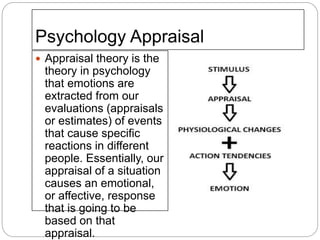
 Appraisal theory is the
theory in psychology
that emotions are
extracted from our
evaluations (appraisals
or estimates) of events
that cause specific
reactions in different
people. Essentially, our
appraisal of a situation
causes an emotional,
or affective, response
that is going to be
based on that
appraisal.
Advantages of Performance
Appraisal
 It is said that performance appraisal is an investment for the company which can
be justified by following advantages:
 Promotion: Performance Appraisal helps the supervisors to chalk out the
promotion programmes for efficient employees. In this regards, inefficient
workers can be dismissed or demoted in case.
 Compensation: Performance Appraisal helps in chalking out compensation
packages for employees. Merit rating is possible through performance appraisal.
Performance Appraisal tries to give worth to a performance. Compensation
packages which includes bonus, high salary rates, extra benefits, allowances and
pre-requisites are dependent on performance appraisal. The criteria should be
merit rather than seniority.
 Employees Development: The systematic procedure of performance appraisal
helps the supervisors to frame training policies and programmes. It helps to
analyse strengths and weaknesses of employees so that new jobs can be
designed for efficient employees. It also helps in framing future development
programmes.
 Selection Validation: Performance Appraisal helps the supervisors to understand
the validity and importance of the selection procedure. The supervisors come to
know the validity and thereby the strengths and weaknesses of selection
procedure. Future changes in selection methods can be made in this regard.
Advantages (conti…)
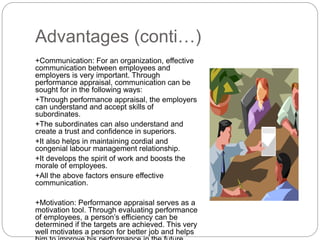
+Communication: For an organization, effective
communication between employees and
employers is very important. Through
performance appraisal, communication can be
sought for in the following ways:
+Through performance appraisal, the employers
can understand and accept skills of
subordinates.
+The subordinates can also understand and
create a trust and confidence in superiors.
+It also helps in maintaining cordial and
congenial labour management relationship.
+It develops the spirit of work and boosts the
morale of employees.
+All the above factors ensure effective
communication.
+Motivation: Performance appraisal serves as a
motivation tool. Through evaluating performance
of employees, a person’s efficiency can be
determined if the targets are achieved. This very
well motivates a person for better job and helps
Promotions
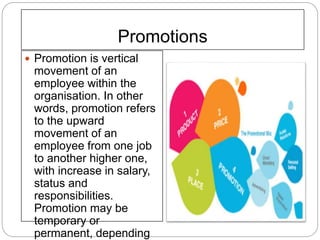
 Promotion is vertical
movement of an
employee within the
organisation. In other
words, promotion refers
to the upward
movement of an
employee from one job
to another higher one,
with increase in salary,
status and
responsibilities.
Promotion may be
temporary or
permanent, depending
Types of Promotion:
 1. Horizontal promotion:
 When an employee is shifted in the same category, it is called
‘horizontal promotion’. A junior clerk promoted to senior clerk is such an
example. It is important to note that such promotion may take place
when an employee shifts within the same department, from one
department to other or from one plant to another plant.
 2. Vertical Promotion:
 This is the kind of promotion when an employee is promoted from a
lower category to lower category involving increase in salary, status,
authority and responsibility. Generally, promotion means ‘vertical
promotion’.
 3. Dry Promotion:
 When promotion is made without increase in salary, it is called ‘dry
promotion’. For example, a lower level manager is promoted to senior
level manager without increase in salary or pay. Such promotion is
made either there is resource/fund crunch in the organisation or some
employees hanker more for status or authority than money.
Purposes:
 1. To recognize an employee’s skill and knowledge and utilize it
to improve the organisational effectiveness.
 2. To reward and motivate employees to higher productivity.
 3. To develop competitive spirit and inculcate the zeal in the
employees to acquire skill, knowledge etc.
 4. To promote employees satisfaction and boost their morale.
 5. To build loyalty among the employees toward organisation.
 6. To promote good human relations.
 7. To increase sense of belongingness
 8. To retain skilled and talented people.
 9. To attract trained, competent and hard working people.
 10. To impress the other employees that opportunities are
available to them too if they also perform well.

Performance appraisal

  • 1.
  • 2.
    Meaning  A performanceappraisal (PA), also referred to as a performance review, performance evaluation,(career) development discussion , or employee appraisal[ is a method by which the job performance of an employee is documented and evaluated. Performance appraisals are a part of career development and consist of regular reviews of employee performance within organizations.
  • 3.
    Objectives  Providing Feedback Facilitating Promotion Decisions  Encouraging Performance Improvement.  Motivating Superior Performance  Setting and Measuring Goals.  Counseling Poor Performers  Encouraging Coaching and Mentoring.  Improving Overall Organizational Performance.  Determining Organizational Training and Development Needs.  Training Needed ,etc
  • 4.
    Psychology Appraisal  Appraisaltheory is the theory in psychology that emotions are extracted from our evaluations (appraisals or estimates) of events that cause specific reactions in different people. Essentially, our appraisal of a situation causes an emotional, or affective, response that is going to be based on that appraisal.
  • 5.
    Advantages of Performance Appraisal It is said that performance appraisal is an investment for the company which can be justified by following advantages:  Promotion: Performance Appraisal helps the supervisors to chalk out the promotion programmes for efficient employees. In this regards, inefficient workers can be dismissed or demoted in case.  Compensation: Performance Appraisal helps in chalking out compensation packages for employees. Merit rating is possible through performance appraisal. Performance Appraisal tries to give worth to a performance. Compensation packages which includes bonus, high salary rates, extra benefits, allowances and pre-requisites are dependent on performance appraisal. The criteria should be merit rather than seniority.  Employees Development: The systematic procedure of performance appraisal helps the supervisors to frame training policies and programmes. It helps to analyse strengths and weaknesses of employees so that new jobs can be designed for efficient employees. It also helps in framing future development programmes.  Selection Validation: Performance Appraisal helps the supervisors to understand the validity and importance of the selection procedure. The supervisors come to know the validity and thereby the strengths and weaknesses of selection procedure. Future changes in selection methods can be made in this regard.
  • 6.
    Advantages (conti…) +Communication: Foran organization, effective communication between employees and employers is very important. Through performance appraisal, communication can be sought for in the following ways: +Through performance appraisal, the employers can understand and accept skills of subordinates. +The subordinates can also understand and create a trust and confidence in superiors. +It also helps in maintaining cordial and congenial labour management relationship. +It develops the spirit of work and boosts the morale of employees. +All the above factors ensure effective communication. +Motivation: Performance appraisal serves as a motivation tool. Through evaluating performance of employees, a person’s efficiency can be determined if the targets are achieved. This very well motivates a person for better job and helps
  • 7.
    Promotions  Promotion isvertical movement of an employee within the organisation. In other words, promotion refers to the upward movement of an employee from one job to another higher one, with increase in salary, status and responsibilities. Promotion may be temporary or permanent, depending
  • 8.
    Types of Promotion: 1. Horizontal promotion:  When an employee is shifted in the same category, it is called ‘horizontal promotion’. A junior clerk promoted to senior clerk is such an example. It is important to note that such promotion may take place when an employee shifts within the same department, from one department to other or from one plant to another plant.  2. Vertical Promotion:  This is the kind of promotion when an employee is promoted from a lower category to lower category involving increase in salary, status, authority and responsibility. Generally, promotion means ‘vertical promotion’.  3. Dry Promotion:  When promotion is made without increase in salary, it is called ‘dry promotion’. For example, a lower level manager is promoted to senior level manager without increase in salary or pay. Such promotion is made either there is resource/fund crunch in the organisation or some employees hanker more for status or authority than money.
  • 9.
    Purposes:  1. Torecognize an employee’s skill and knowledge and utilize it to improve the organisational effectiveness.  2. To reward and motivate employees to higher productivity.  3. To develop competitive spirit and inculcate the zeal in the employees to acquire skill, knowledge etc.  4. To promote employees satisfaction and boost their morale.  5. To build loyalty among the employees toward organisation.  6. To promote good human relations.  7. To increase sense of belongingness  8. To retain skilled and talented people.  9. To attract trained, competent and hard working people.  10. To impress the other employees that opportunities are available to them too if they also perform well.