STRATEGIC HR MANAGEMENT WITH IMPACT: 
FROM STRATEGY TO EXECUTION 
Marius Meyer, CEO: SABPP 
10 October 2014, Hararemarius@sabpp.co.za 
@MariusSABPP & @SABPP1
The need for Strategic HRM 
“If HR does not force its way into the heart of strategic planning in an organisation, it will default into a technical and transactional dead end.” 
Helen Drinan, Former CEO: SHRM
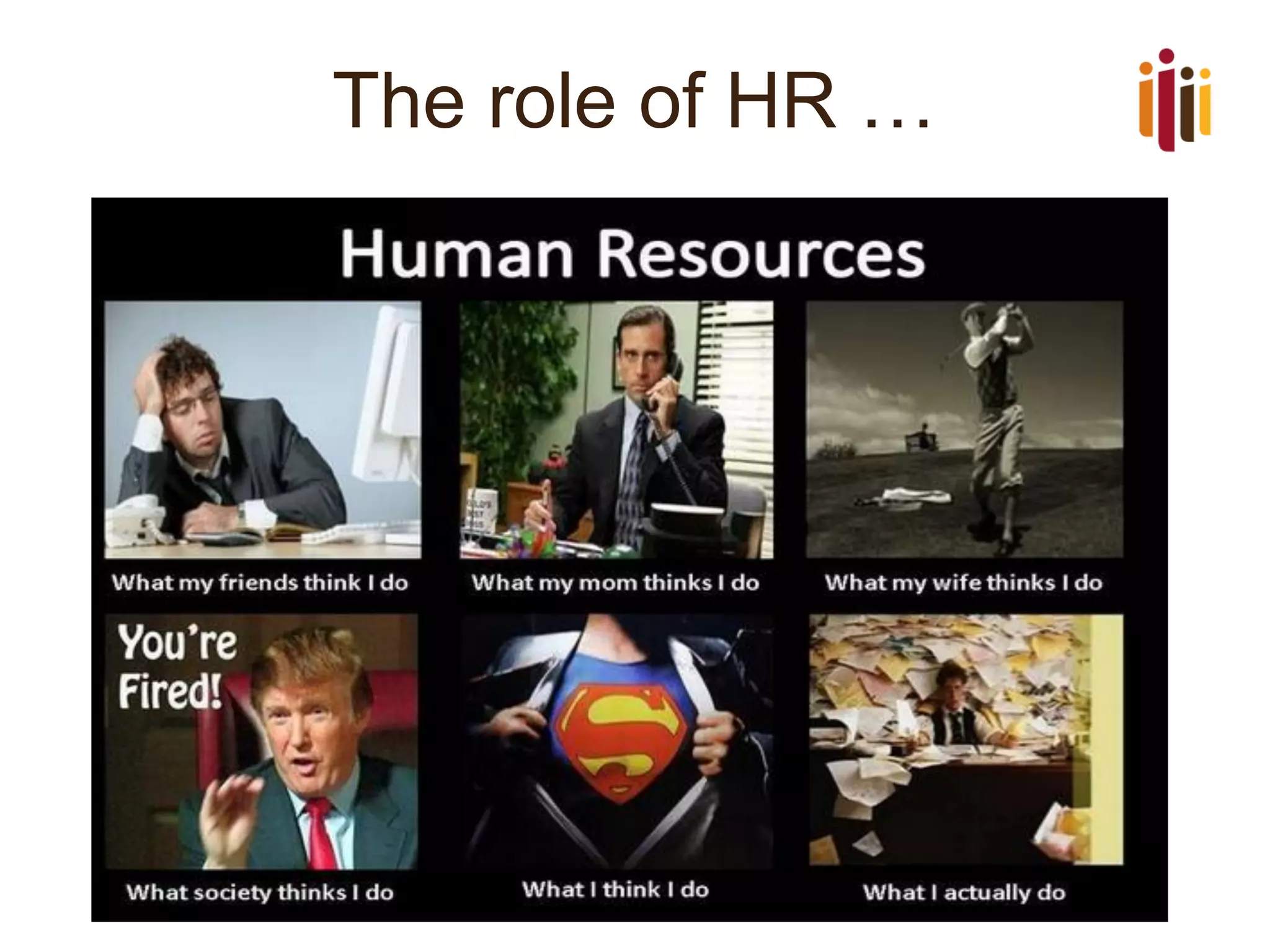
The role of HR …
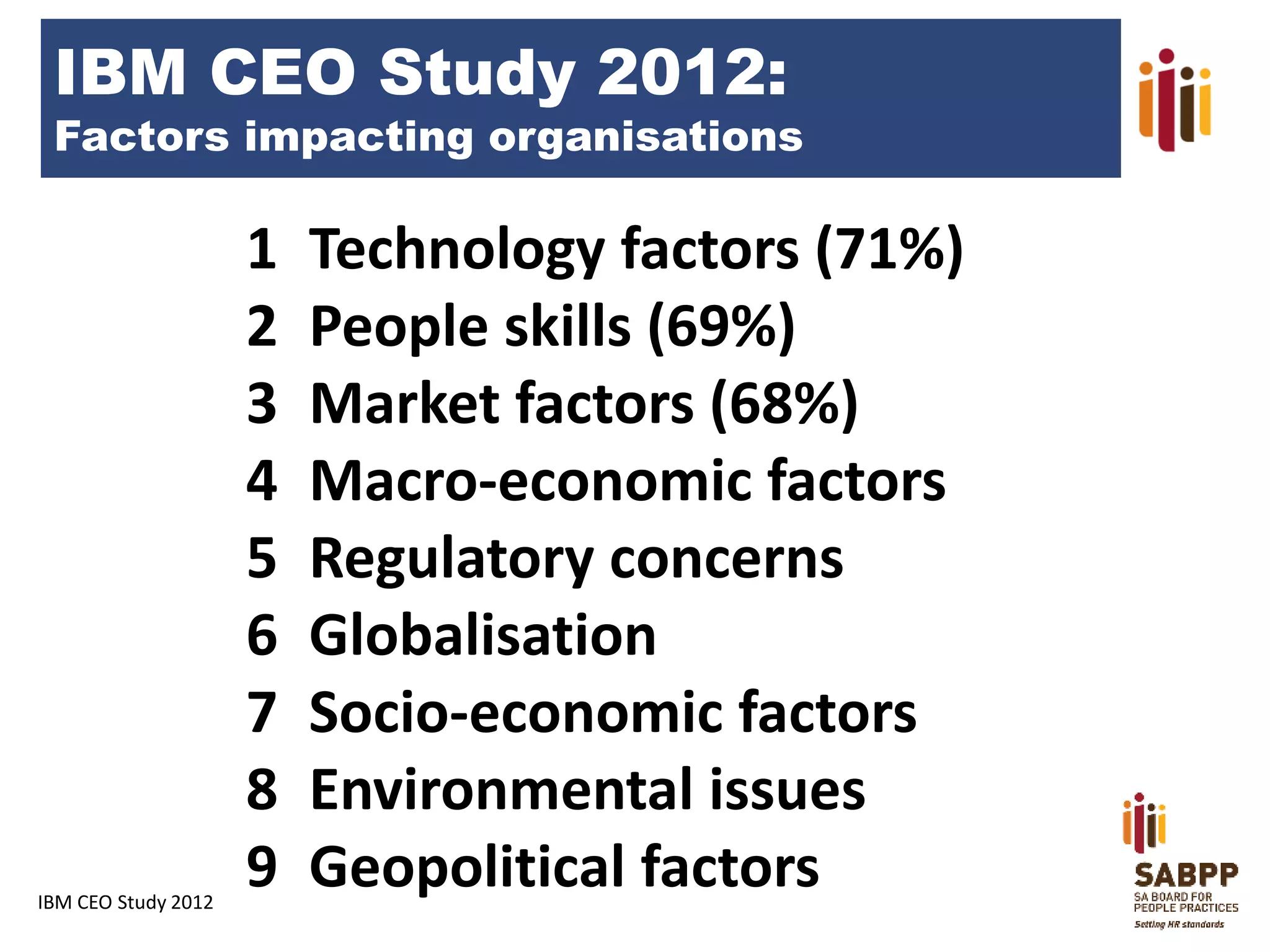
IBM CEO Study 2012: Factors impacting organisations 
1 
Technology factors (71%) 
2 
People skills (69%) 
3 
Market factors (68%) 
4 
Macro-economic factors 
5 
Regulatory concerns 
6 
Globalisation 
7 
Socio-economic factors 
8 
Environmental issues 
9 
Geopolitical factors 
IBM CEO Study 2012
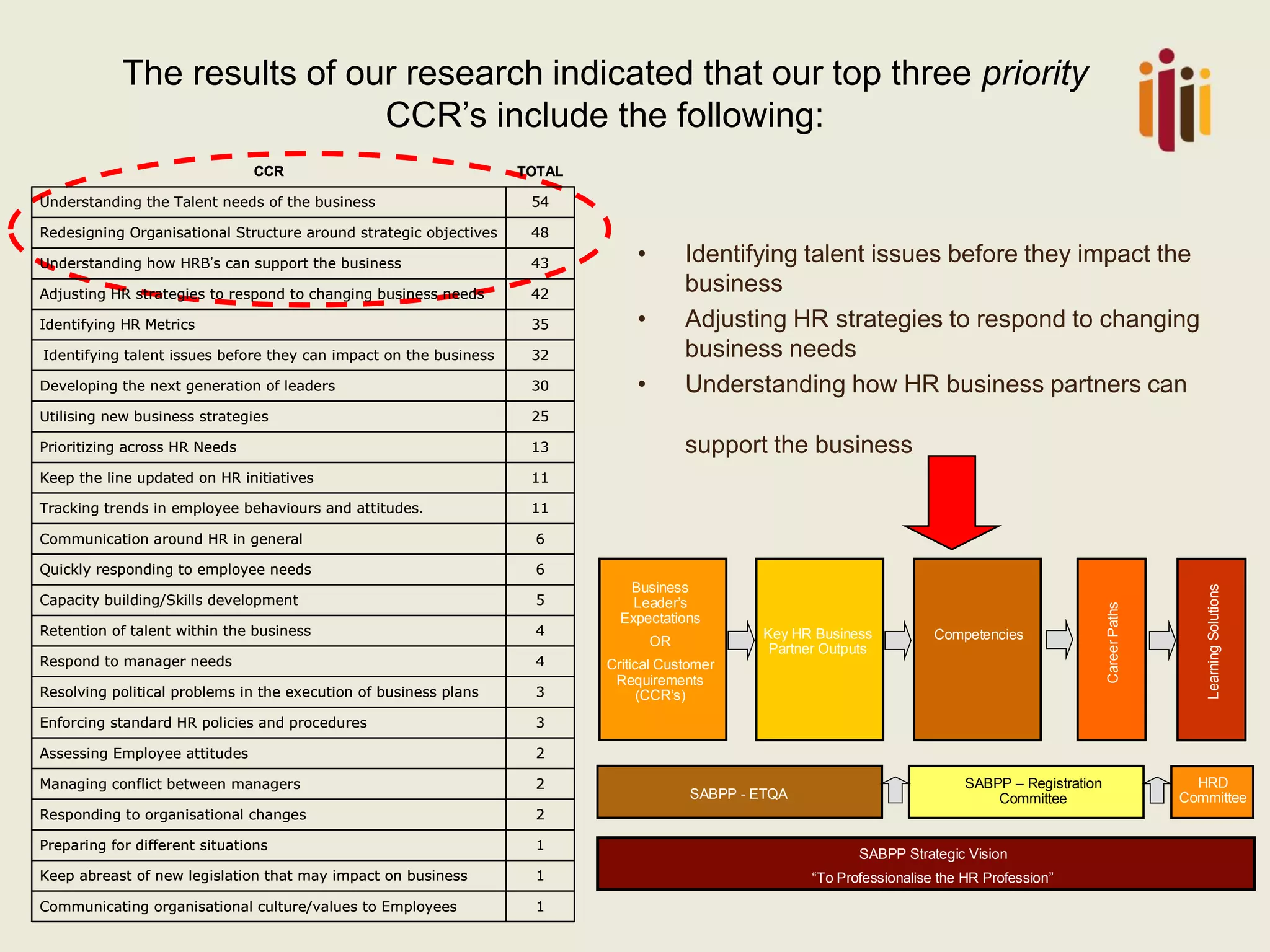
• Identifying talent issues before they impact the 
business 
• Adjusting HR strategies to respond to changing 
business needs 
• Understanding how HR business partners can 
support the business 
The results of our research indicated that our top three priority 
CCR’s include the following: 
SABPP Strategic Vision 
“To Professionalise the HR Profession” 
SABPP - ETQA 
SABPP – Registration 
Committee 
HRD 
Committee 
Business 
Leader’s 
Expectations 
OR 
Critical Customer 
Requirements 
(CCR’s) 
Key HR Business 
Partner Outputs 
Competencies 
Career Paths 
Learning Solutions 
Communicating organisational culture/values to Employees 1 
Keep abreast of new legislation that may impact on business 1 
Preparing for different situations 1 
Responding to organisational changes 2 
Managing conflict between managers 2 
Assessing Employee attitudes 2 
Enforcing standard HR policies and procedures 3 
Resolving political problems in the execution of business plans 3 
Respond to manager needs 4 
Retention of talent within the business 4 
Capacity building/Skills development 5 
Quickly responding to employee needs 6 
Communication around HR in general 6 
Tracking trends in employee behaviours and attitudes. 11 
Keep the line updated on HR initiatives 11 
Prioritizing across HR Needs 13 
Utilising new business strategies 25 
Developing the next generation of leaders 30 
Identifying talent issues before they can impact on the business 32 
Identifying HR Metrics 35 
Adjusting HR strategies to respond to changing business needs 42 
Understanding how HRB’s can support the business 43 
Redesigning Organisational Structure around strategic objectives 48 
Understanding the Talent needs of the business 54 
CCR TOTAL
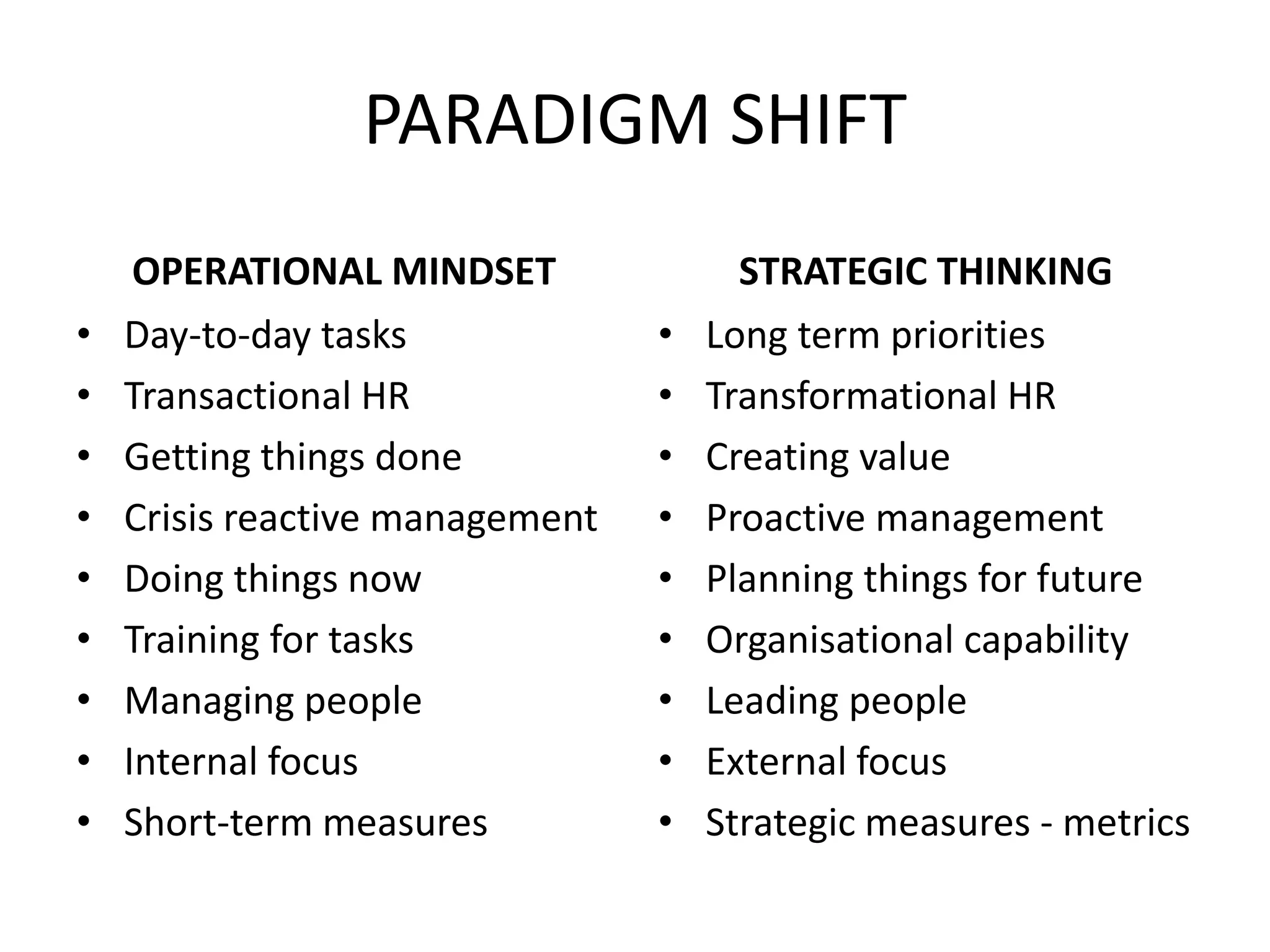
PARADIGM SHIFT 
OPERATIONAL MINDSET 
•Day-to-day tasks 
•Transactional HR 
•Getting things done 
•Crisis reactive management 
•Doing things now 
•Training for tasks 
•Managing people 
•Internal focus 
•Short-term measures 
STRATEGIC THINKING 
•Long term priorities 
•Transformational HR 
•Creating value 
•Proactive management 
•Planning things for future 
•Organisational capability 
•Leading people 
•External focus 
•Strategic measures -metrics
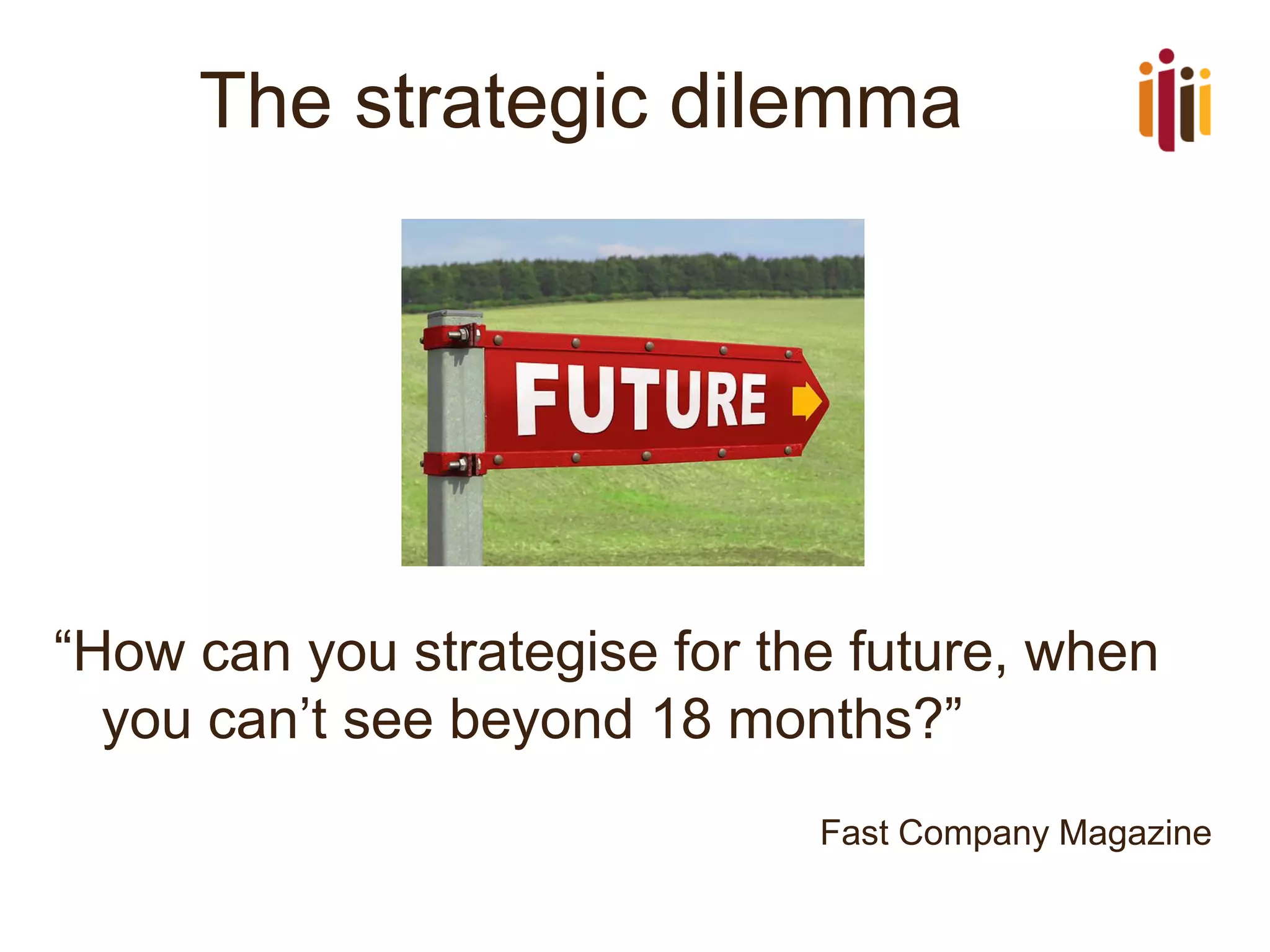
The strategic dilemma 
“How can you strategise for the future, when you can’t see beyond 18 months?” 
Fast Company Magazine
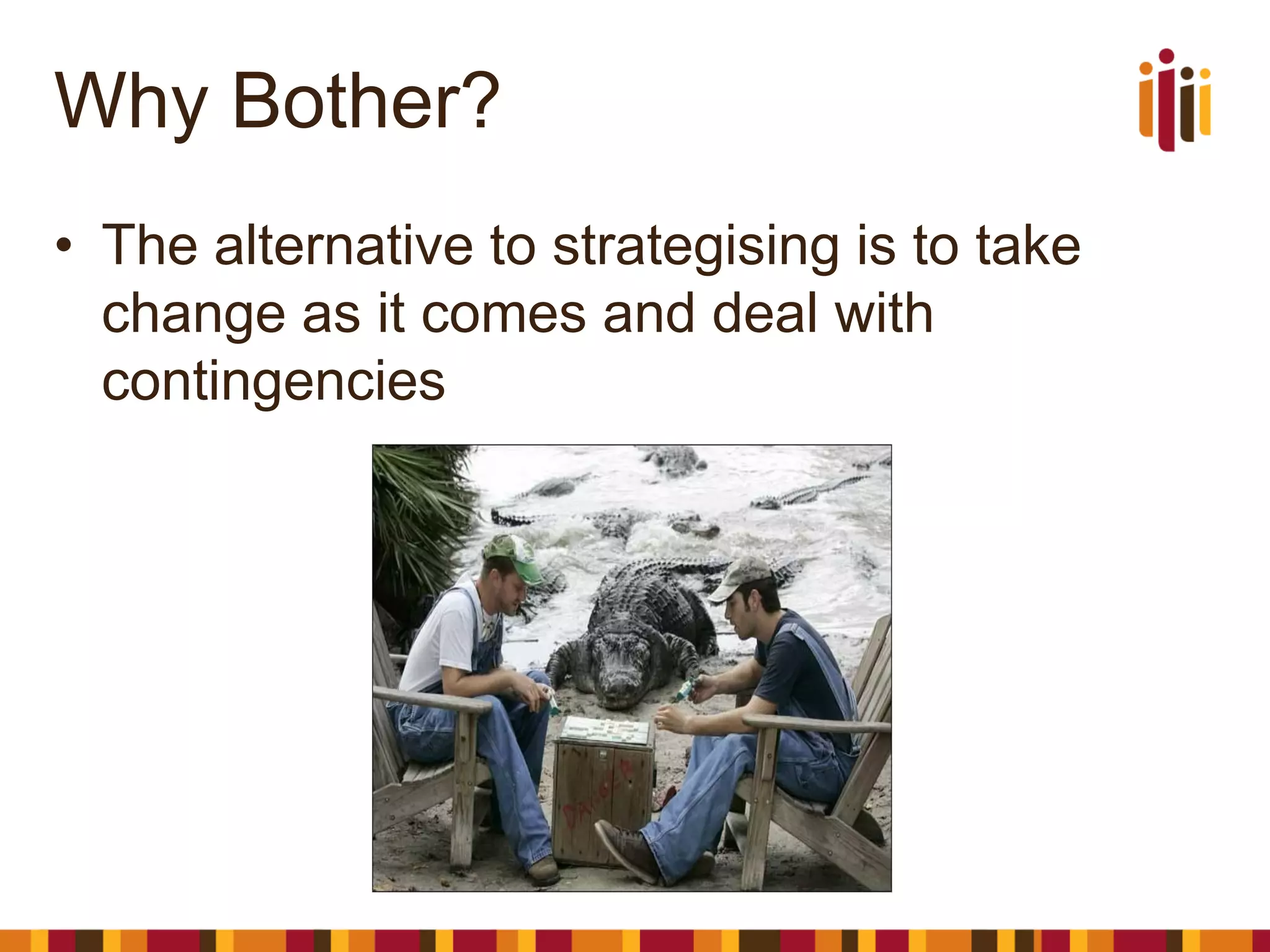
Why Bother? 
•The alternative to strategising is to take change as it comes and deal with contingencies
HR Trends 
•HR as Strategic Partner and Talent Management 
•HR Governance 
•HR Risk Management 
•New role to impact ethics in organisations 
•HR contribution to CSR and socio-economic situation -sustainability 
•HR Technology and Social Media 
•HR standards and metrics –integrated reporting 
•HR Competency models -professionalism
Biggest Opportunities for HR 
IBM: Working beyond Borders 
•Cultivating creative leaders 
•Mobilising for greater speed and flexibility 
•Capitalising on collective intelligence i.e. collaboration
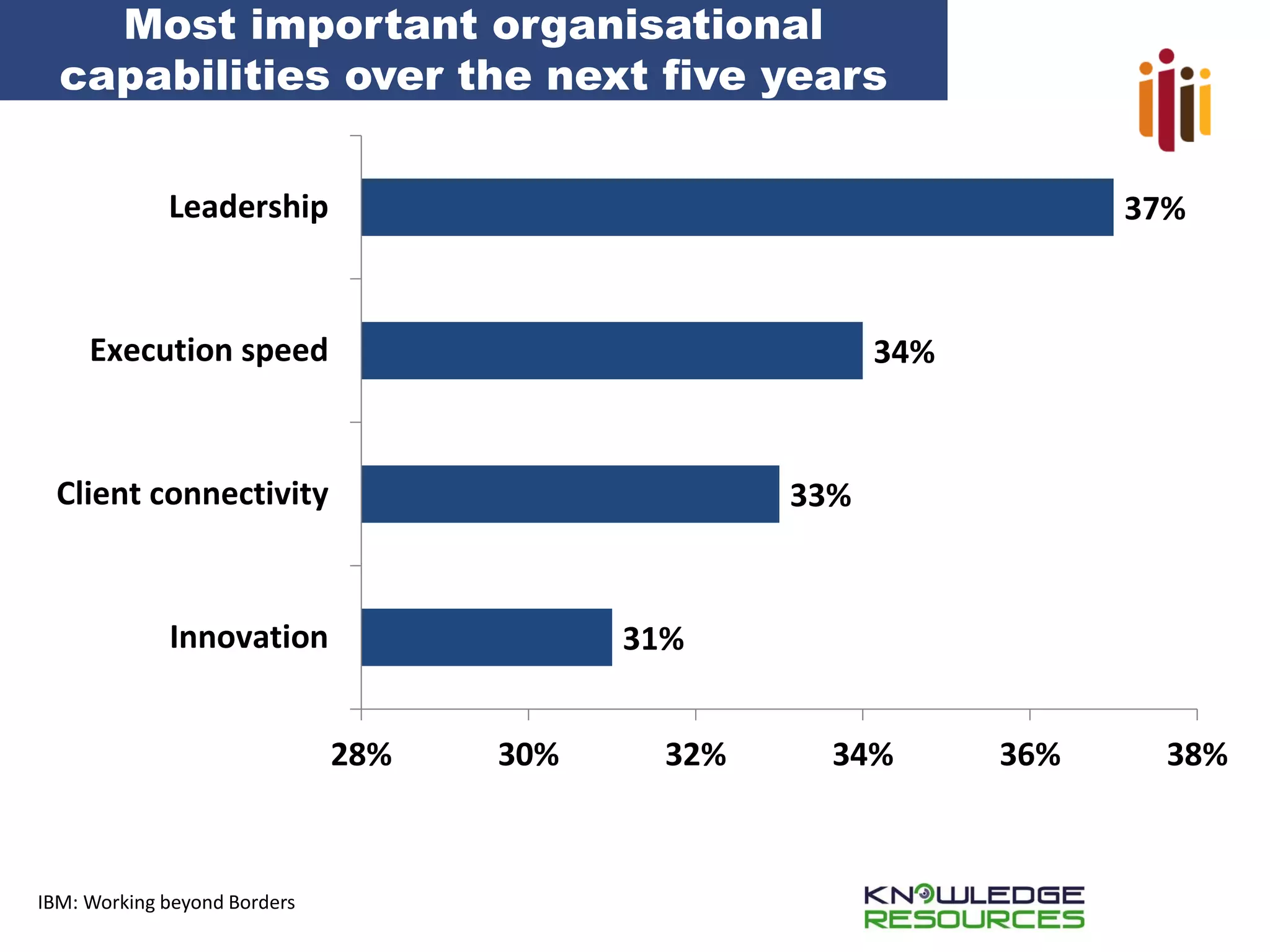
Most important organisational capabilities over the next five years 
IBM: Working beyond Borders 
31% 
33% 
34% 
37% 
28% 
30% 
32% 
34% 
36% 
38% 
Innovation 
Client connectivity 
Execution speed 
Leadership
Top facts about HR 
•Human Capital is the biggest concern for CEOs (PwC). 
•Only 18% of CEOs feel confident that they have the right people in place to execute strategy (CEB). 
•Human Capital is the biggest risk in business (HCI Africa). 
•Skills crisis is the top obstacle to economic growth. 
•Strikes cost SA R197 million per day.
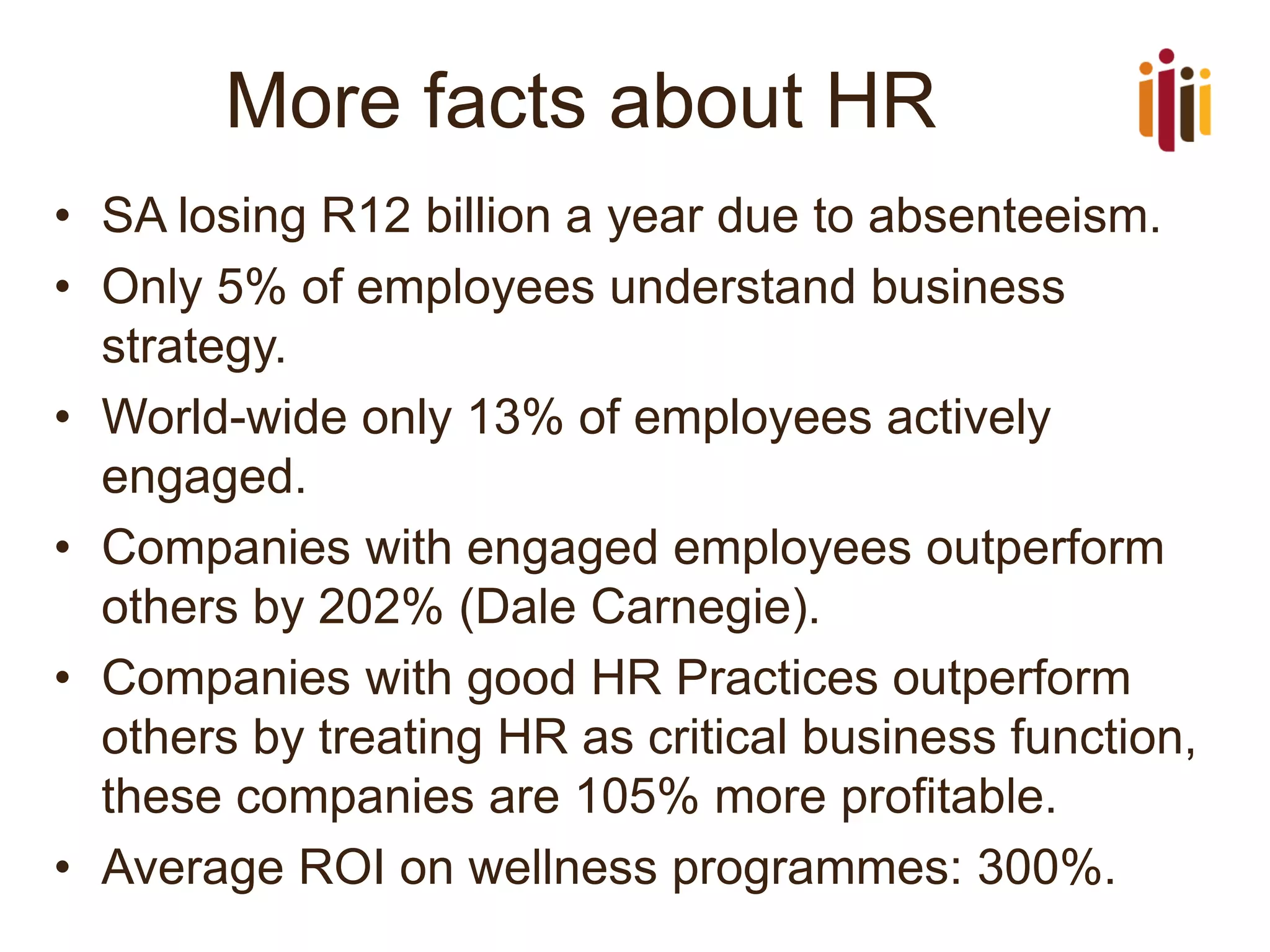
More facts about HR 
•SA losing R12 billion a year due to absenteeism. 
•Only 5% of employees understand business strategy. 
•World-wide only 13% of employees actively engaged. 
•Companies with engaged employees outperform others by 202% (Dale Carnegie). 
•Companies with good HR Practices outperform others by treating HR as critical business function, these companies are 105% more profitable. 
•Average ROI on wellness programmes: 300%.
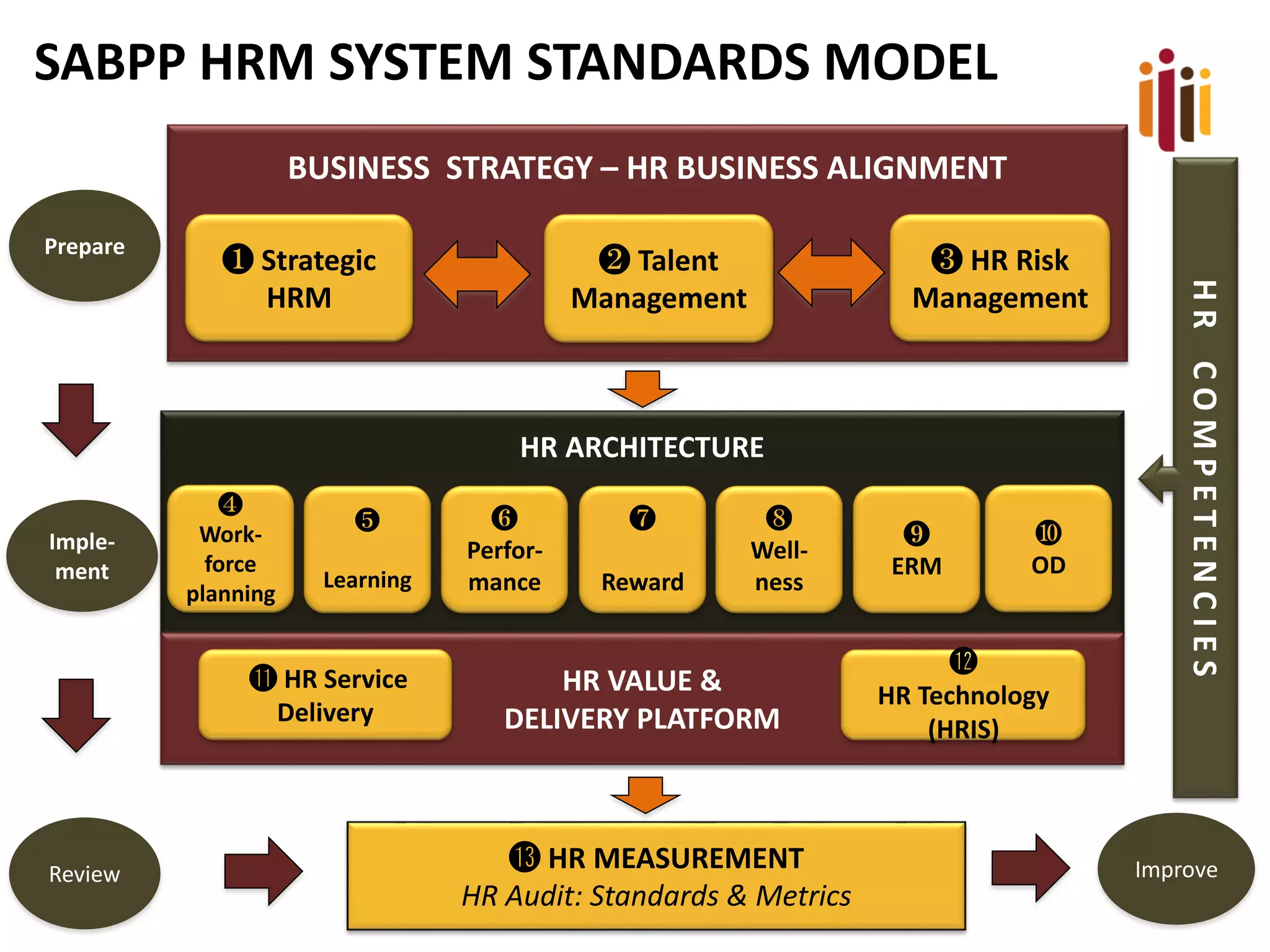
BUSINESS STRATEGY –HR BUSINESS ALIGNMENT 
❶Strategic 
HRM 
❷Talent 
Management 
❸HR Risk 
Management 
HR ARCHITECTURE 
HR VALUE & 
DELIVERY PLATFORM 
❹ Work- force 
planning 
❺ 
Learning 
❻ 
Perfor- mance 
❼ 
Reward 
❽ 
Well- ness 
❾ 
ERM 
❿ 
OD 
⓫HR Service Delivery 
⓬ 
HR Technology 
(HRIS) 
Prepare 
Imple- 
ment 
Review 
Improve 
⓭HR MEASUREMENT 
HR Audit: Standards & Metrics 
H R C O M P E T E N C I E S 
SABPP HRM SYSTEM STANDARDS MODEL
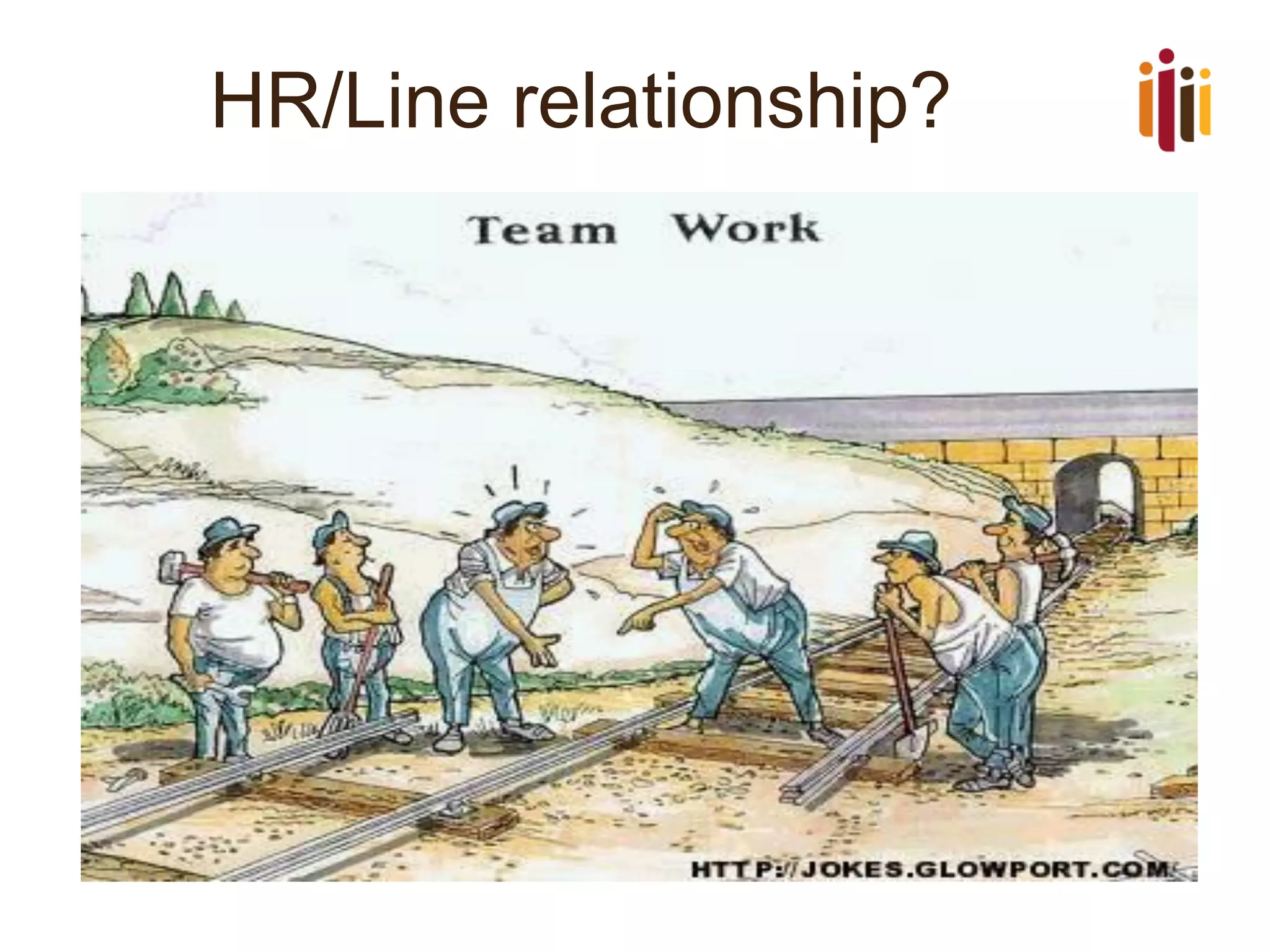
HR/Line relationship?
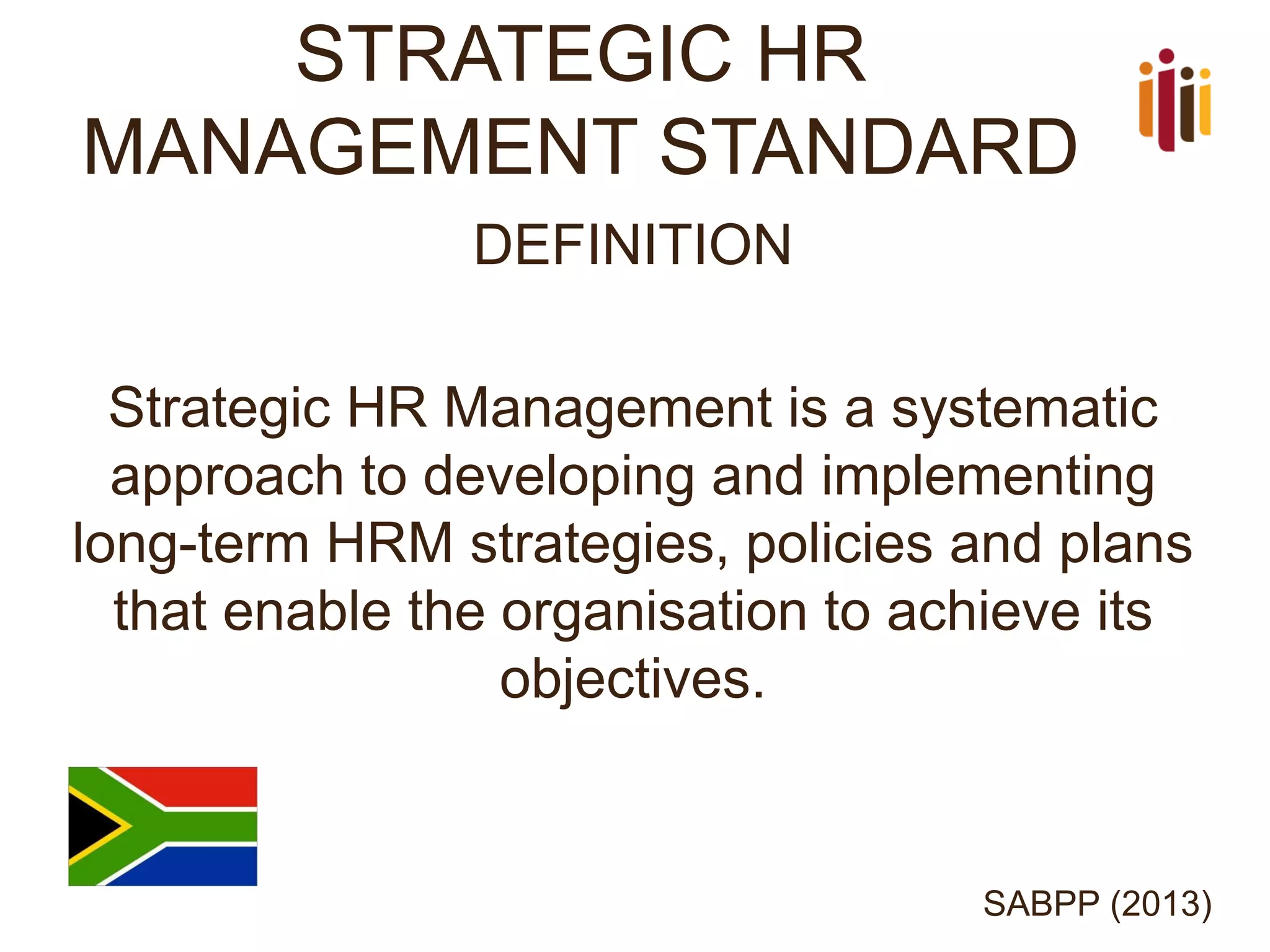
STRATEGIC HR MANAGEMENT STANDARD 
DEFINITION 
Strategic HR Management is a systematic approach to developing and implementing long-term HRM strategies, policies and plans that enable the organisation to achieve its objectives. 
SABPP (2013)
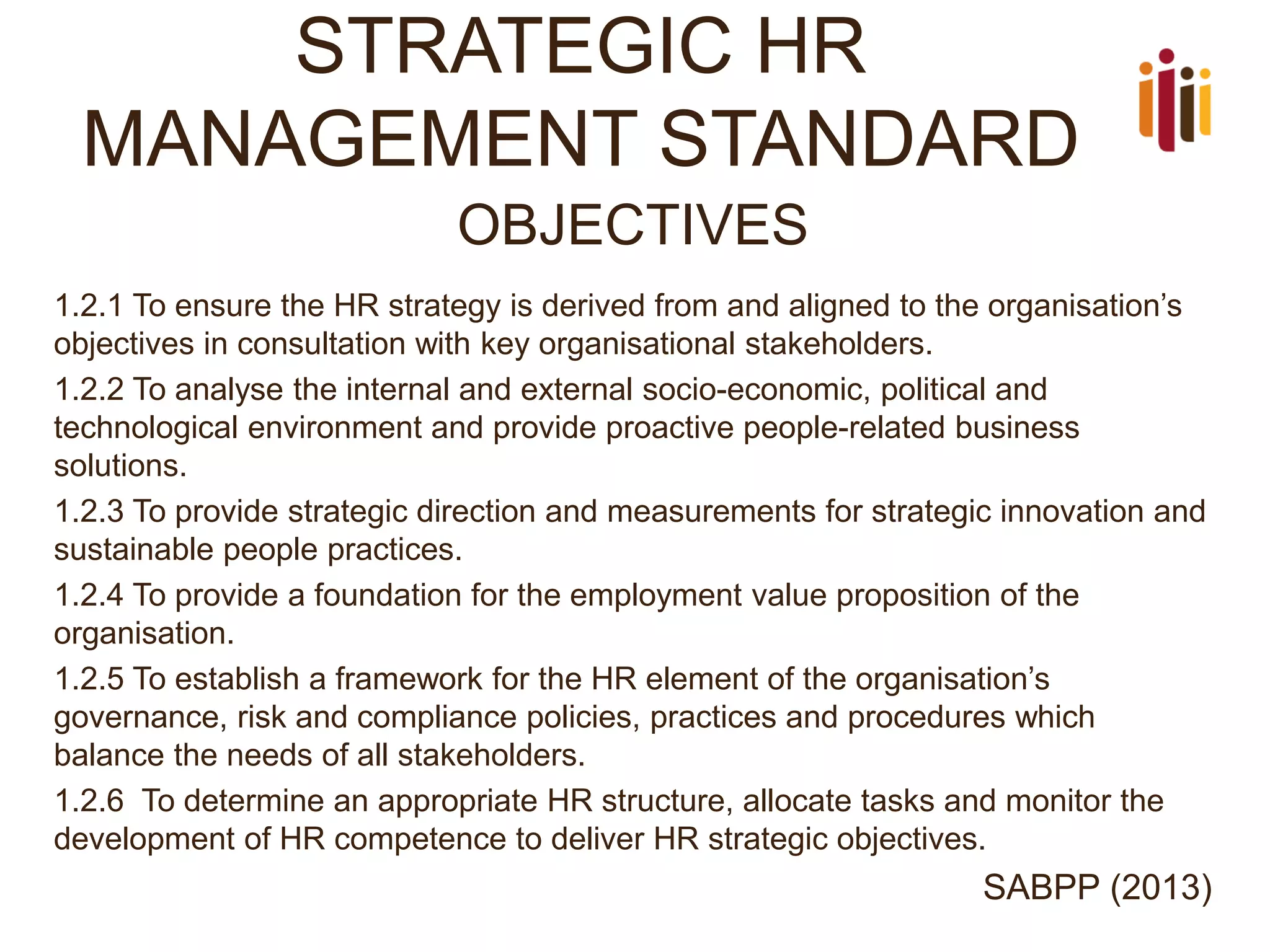
STRATEGIC HR MANAGEMENT STANDARD 
OBJECTIVES 
1.2.1 To ensure the HR strategy is derived from and aligned to the organisation’s objectives in consultation with key organisational stakeholders. 
1.2.2 To analyse the internal and external socio-economic, political and technological environment and provide proactive people-related business solutions. 
1.2.3 To provide strategic direction and measurements for strategic innovation and sustainable people practices. 
1.2.4 To provide a foundation for the employment value proposition of the organisation. 
1.2.5 To establish a framework for the HR element of the organisation’s governance, risk and compliance policies, practices and procedures which balance the needs of all stakeholders. 
1.2.6 To determine an appropriate HR structure, allocate tasks and monitor the development of HR competence to deliver HR strategic objectives. 
SABPP (2013)
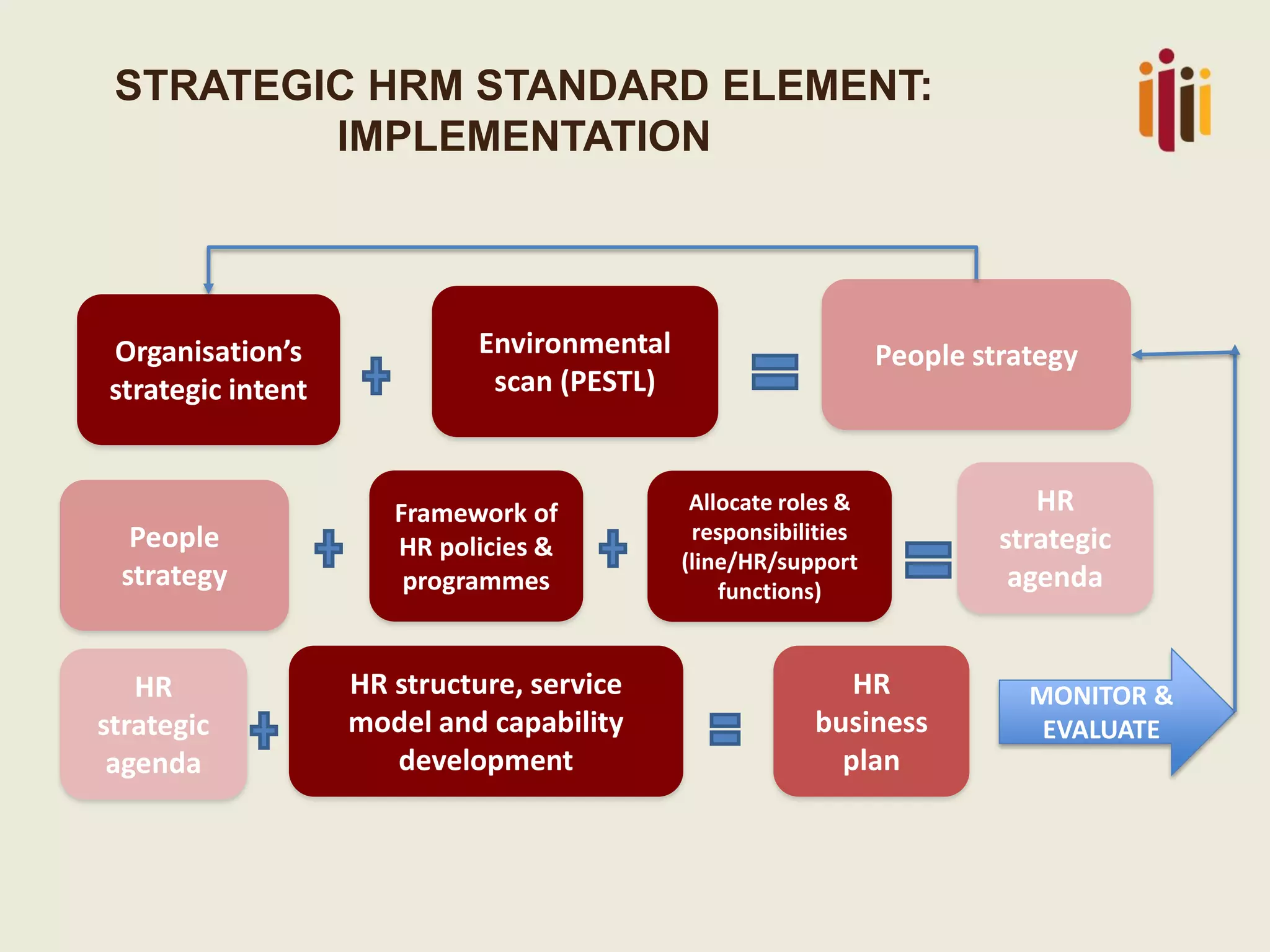
STRATEGIC HRM STANDARD ELEMENT: IMPLEMENTATION 
Framework of HR policies & programmes 
Environmental scan (PESTL) 
HR structure, service model and capability development 
People strategy 
HR strategic agenda 
Organisation’s strategic intent 
HR strategic agenda 
HR business plan 
People strategy 
Allocate roles & responsibilities (line/HR/support functions) 
MONITOR & EVALUATE
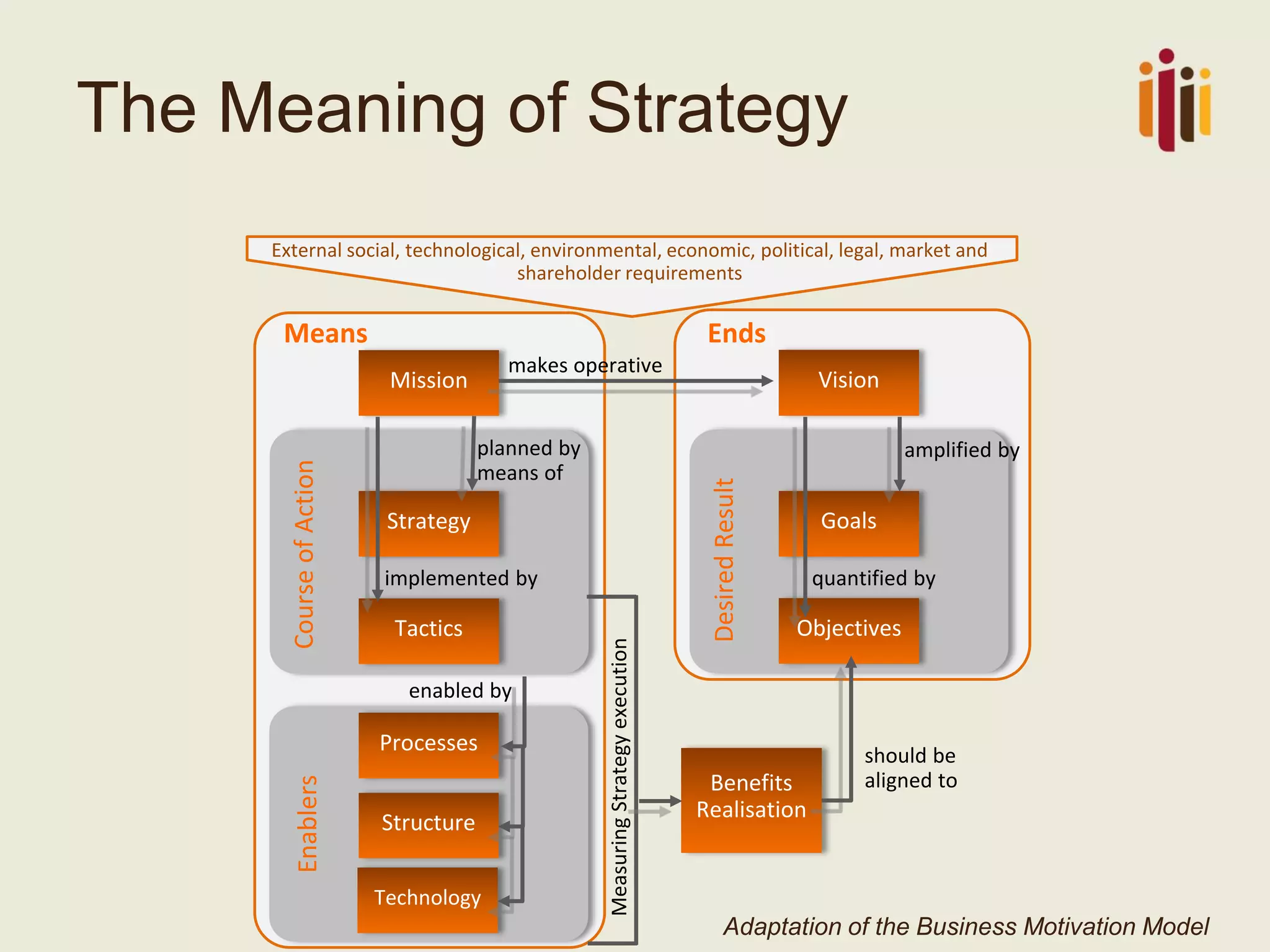
The Meaning of Strategy 
Adaptation of the Business Motivation Model 
Means 
Mission 
Strategy 
Tactics 
Course of Action 
Processes 
Structure 
Enablers 
Ends 
Vision 
Goals 
Objectives 
Desired Result 
makes operative 
amplified by 
quantified by 
planned by means of 
implemented by 
enabled by 
External social, technological, environmental, economic, political, legal, market and shareholder requirements 
Technology 
Benefits Realisation 
should be 
aligned to 
Measuring Strategy execution
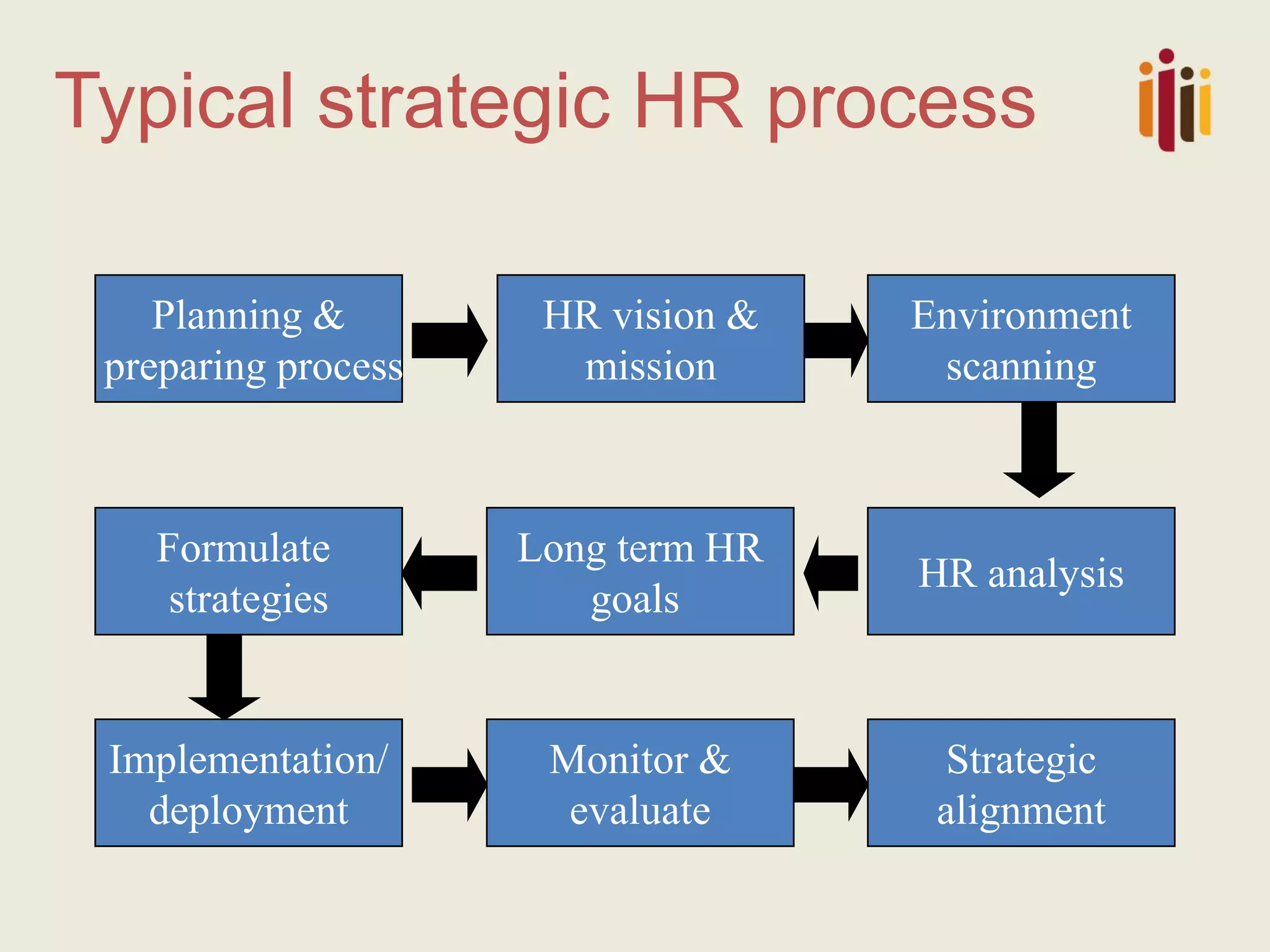
Typical strategic HR process 
Planning & 
preparing process 
HR vision & 
mission 
Formulate 
strategies 
Long term HR 
goals 
Environment 
scanning 
HR analysis 
Implementation/ 
deployment 
Monitor & 
evaluate 
Strategic 
alignment
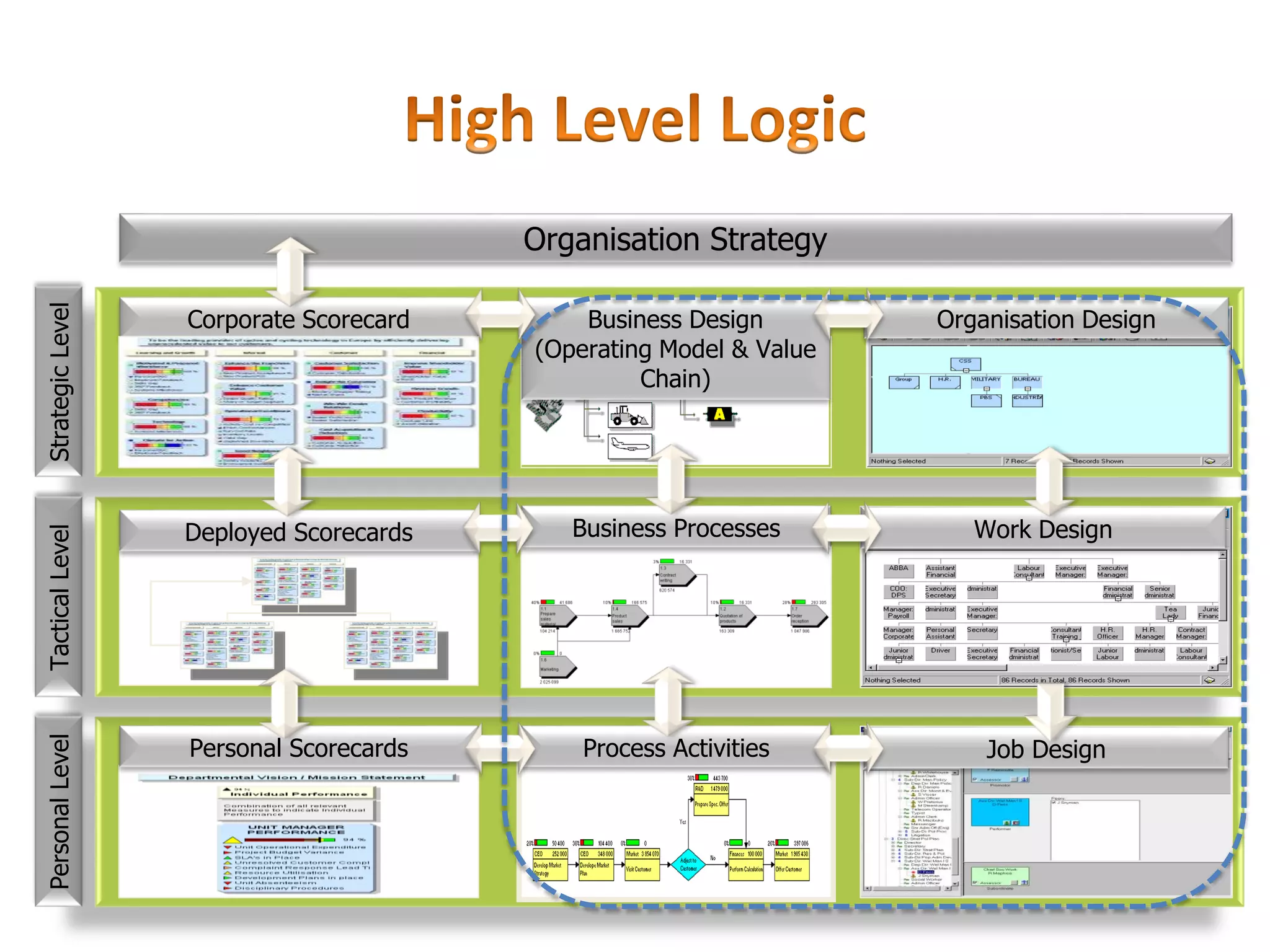
Organisation Strategy 
Corporate Scorecard Business Design 
(Operating Model & Value 
Chain) 
Organisation Design 
Business Processes Work Design 
Process Activities Job Design 
Deployed Scorecards 
Personal Scorecards 
Personal Level Tactical Level Strategic Level
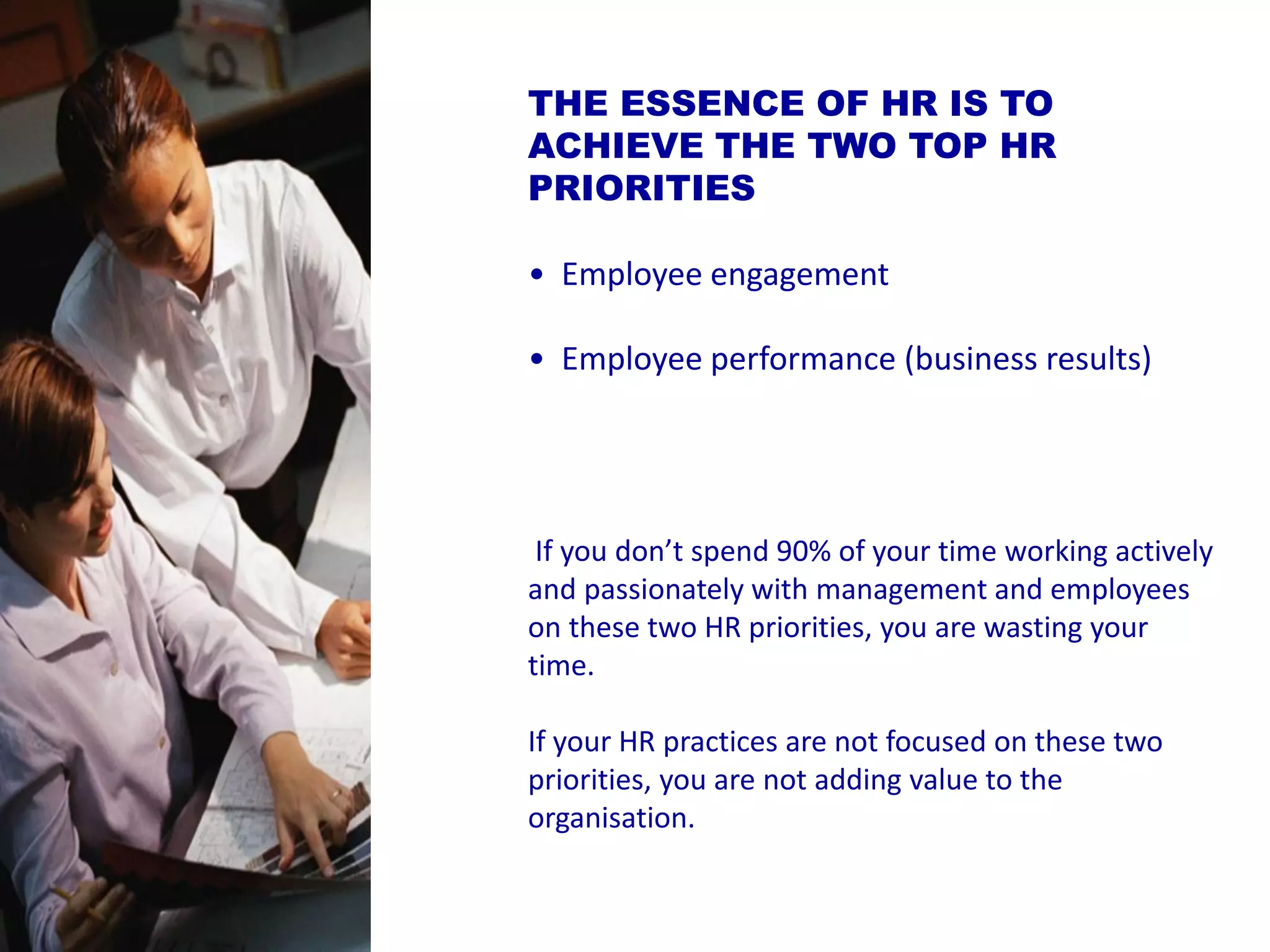
THE ESSENCE OF HR IS TO ACHIEVE THE TWO TOP HR PRIORITIES 
•Employee engagement 
•Employee performance (business results) 
If you don’t spend 90% of your time working actively and passionately with management and employees on these two HR priorities, you are wasting your time. 
If your HR practices are not focused on these two priorities, you are not adding value to the organisation.
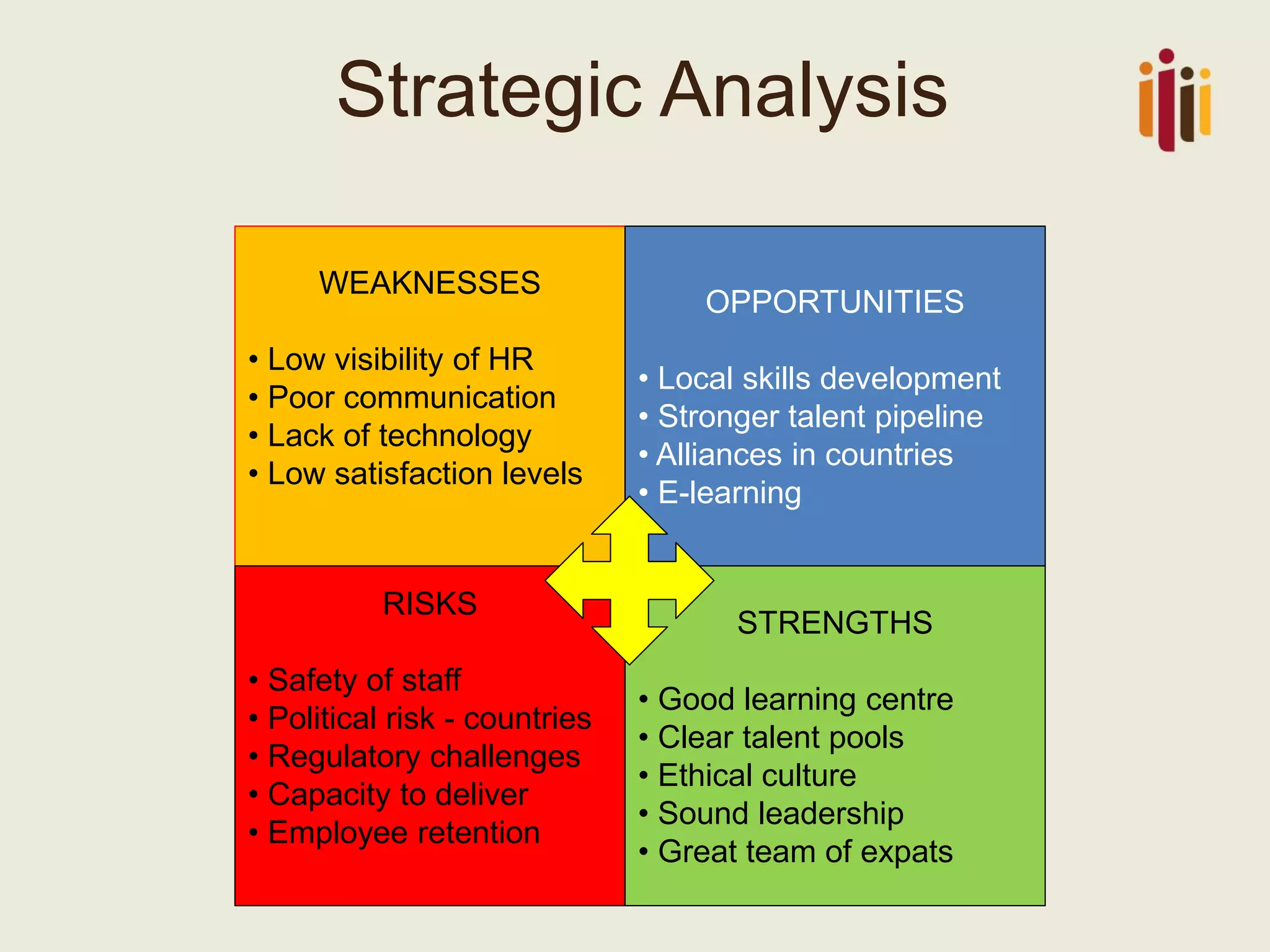
Strategic Analysis 
WEAKNESSES 
•Low visibility of HR 
•Poor communication 
•Lack of technology 
•Low satisfaction levels 
OPPORTUNITIES 
•Local skills development 
•Stronger talent pipeline 
•Alliances in countries 
•E-learning 
RISKS 
•Safety of staff 
•Political risk -countries 
•Regulatory challenges 
•Capacity to deliver 
•Employee retention 
STRENGTHS 
•Good learning centre 
•Clear talent pools 
•Ethical culture 
•Sound leadership 
•Great team of expats
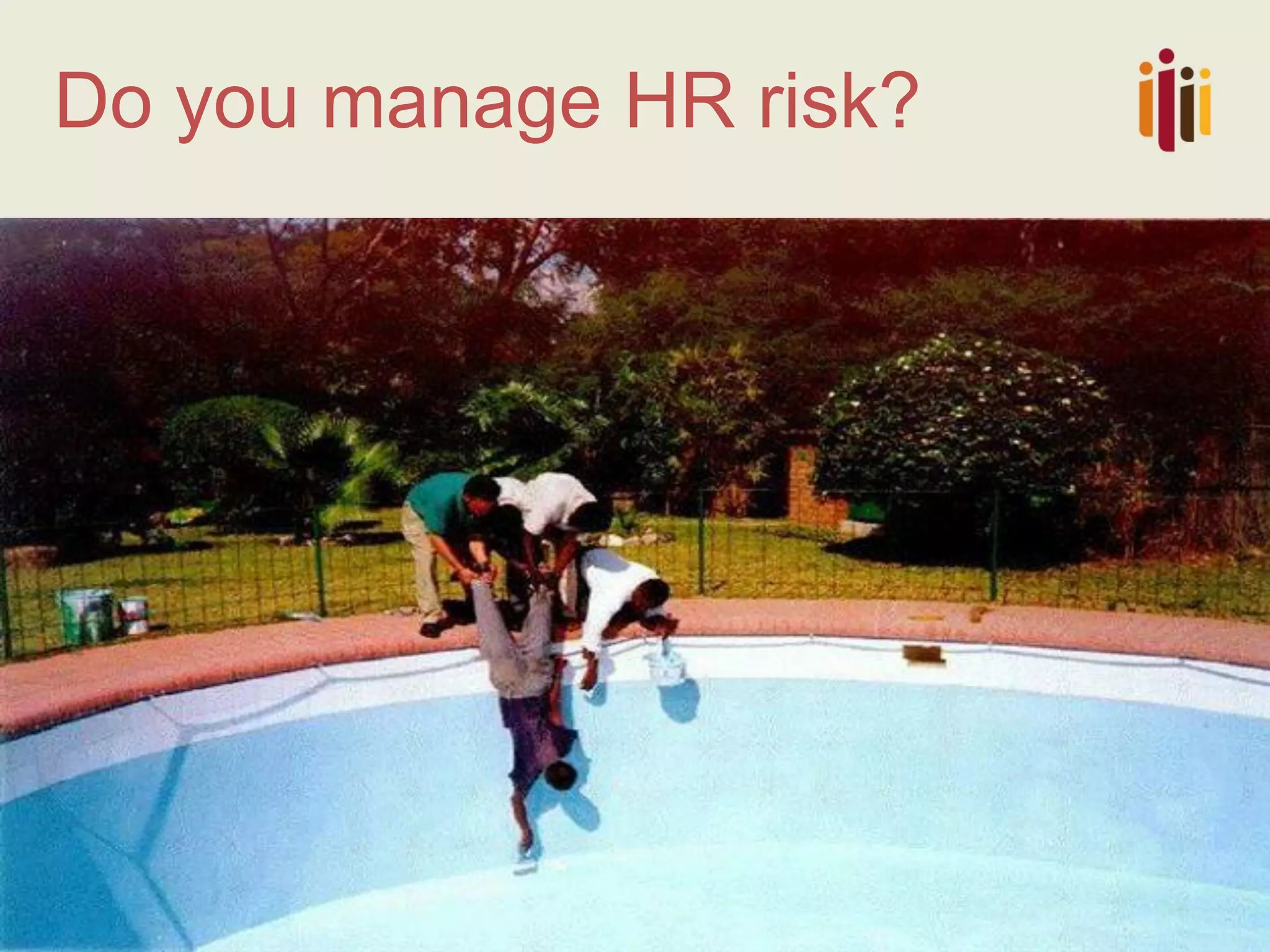
Do you manage HR risk?
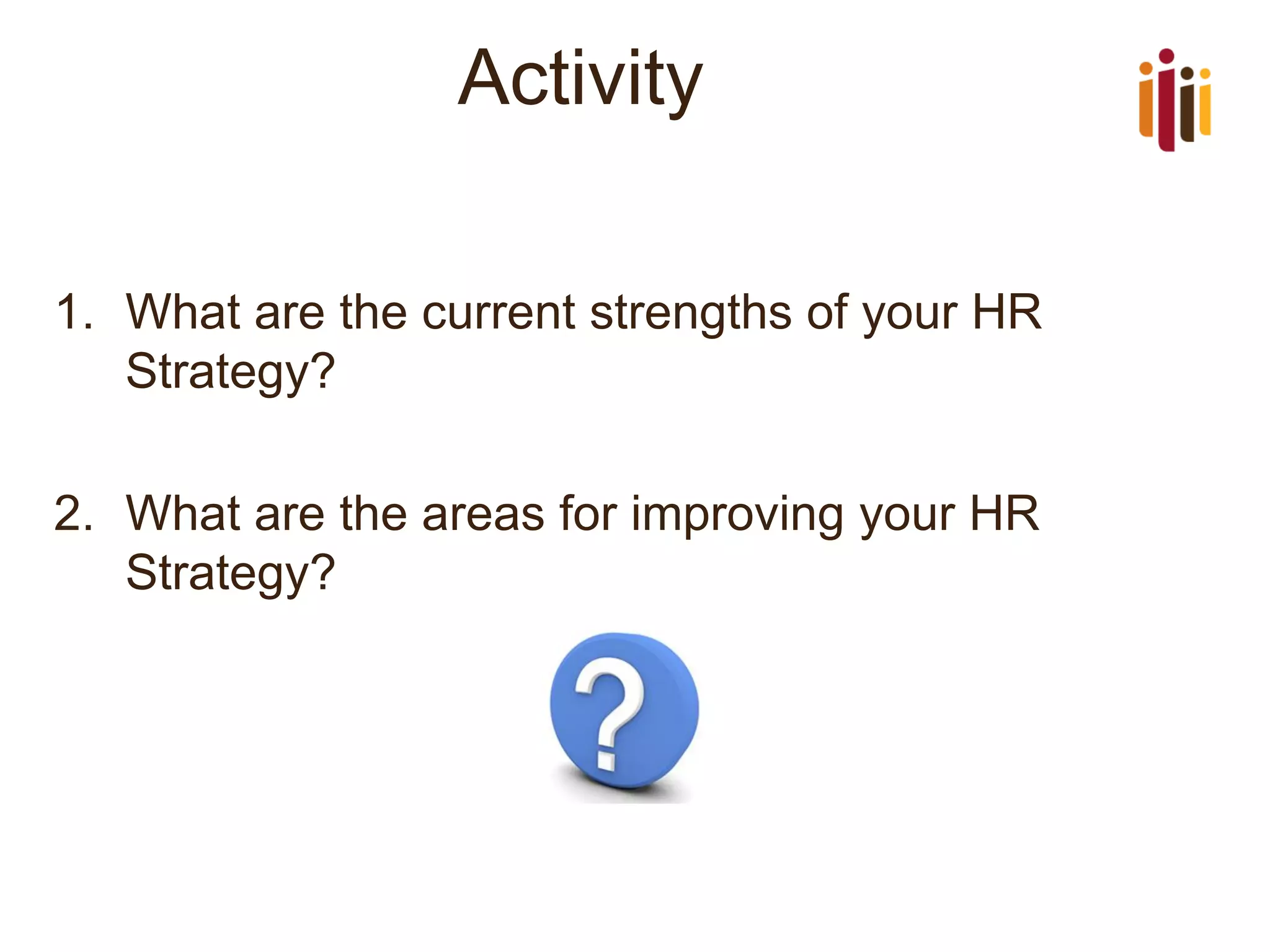
Activity 
1.What are the current strengths of your HR Strategy? 
2.What are the areas for improving your HR Strategy?
How to become a strategic thinker 
•Know the strategy of your business 
•Study the strategies of other businesses 
•Read more about strategy 
•Internalise the annual report of your company 
•Identify HR opportunities from the strategy 
•Put your strategy on one page 
•Develop an HR Risk Framework 
•Do proper HR analytics and metrics
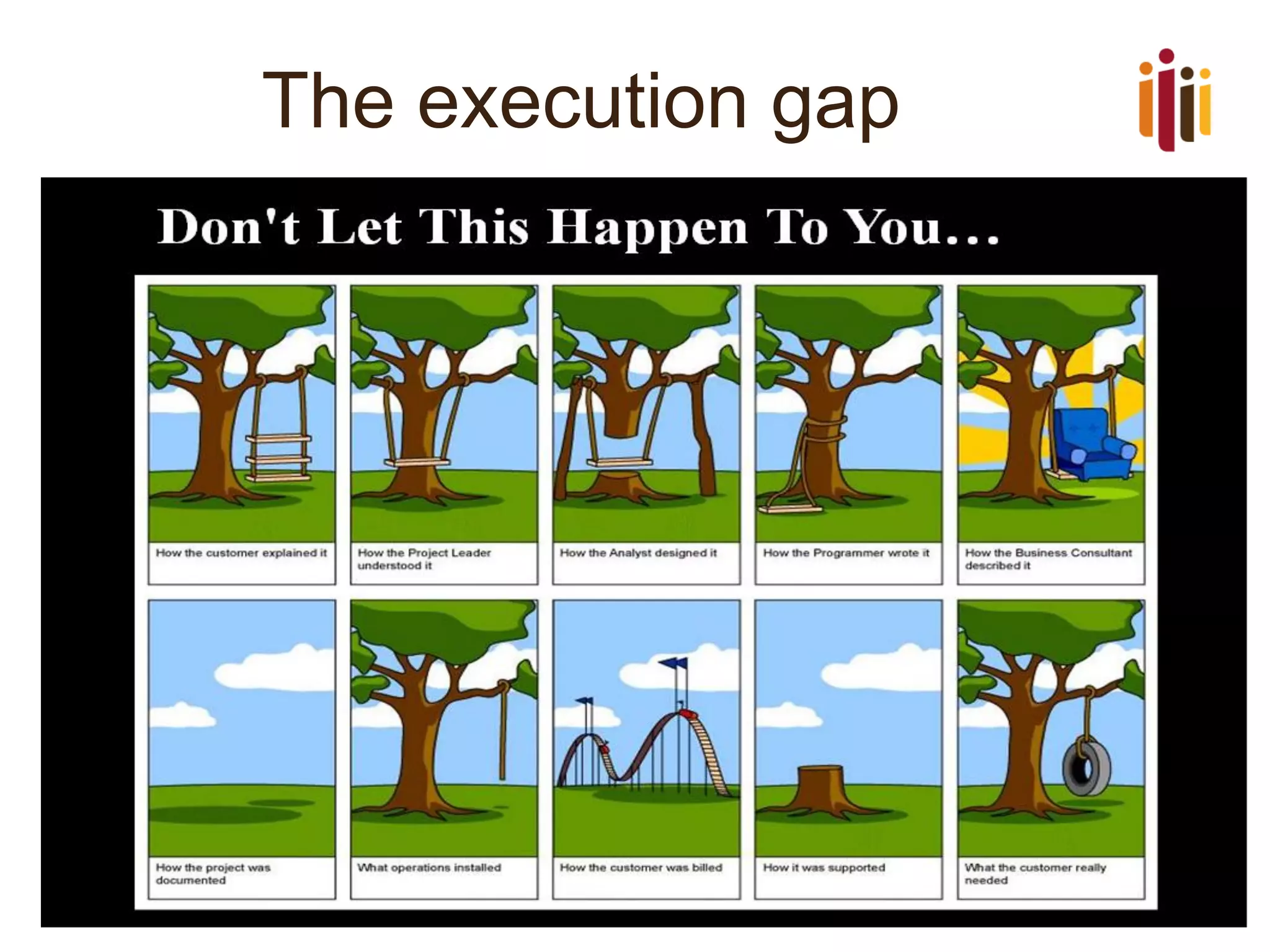
The execution gap
From strategy to execution 
•Make HR strategy visible. 
•Convert HR strategy to specific action plans to be executed –clear priorities. 
•Clear lines of responsibility and accountability. 
•Cascade overall strategic measures to team & individual performance management. 
•Build a high performance execution culture. 
•Review and monitor execution of strategy. 
•Identify and resolve problems as they arise.
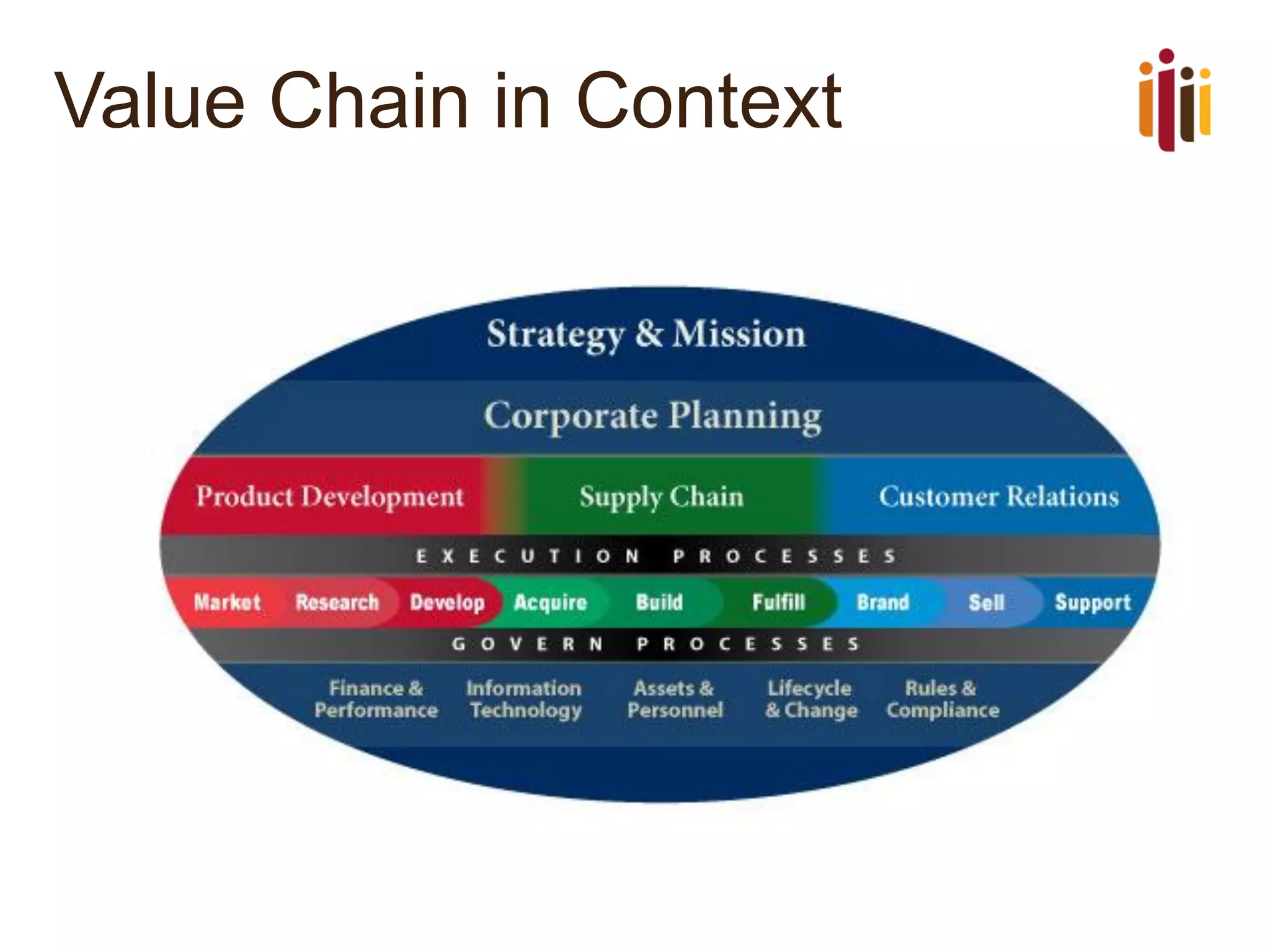
Value Chain in Context
Activity 
1.Identify current gaps between HR strategy & execution at your organisation. 
2.How can these gaps be filled?
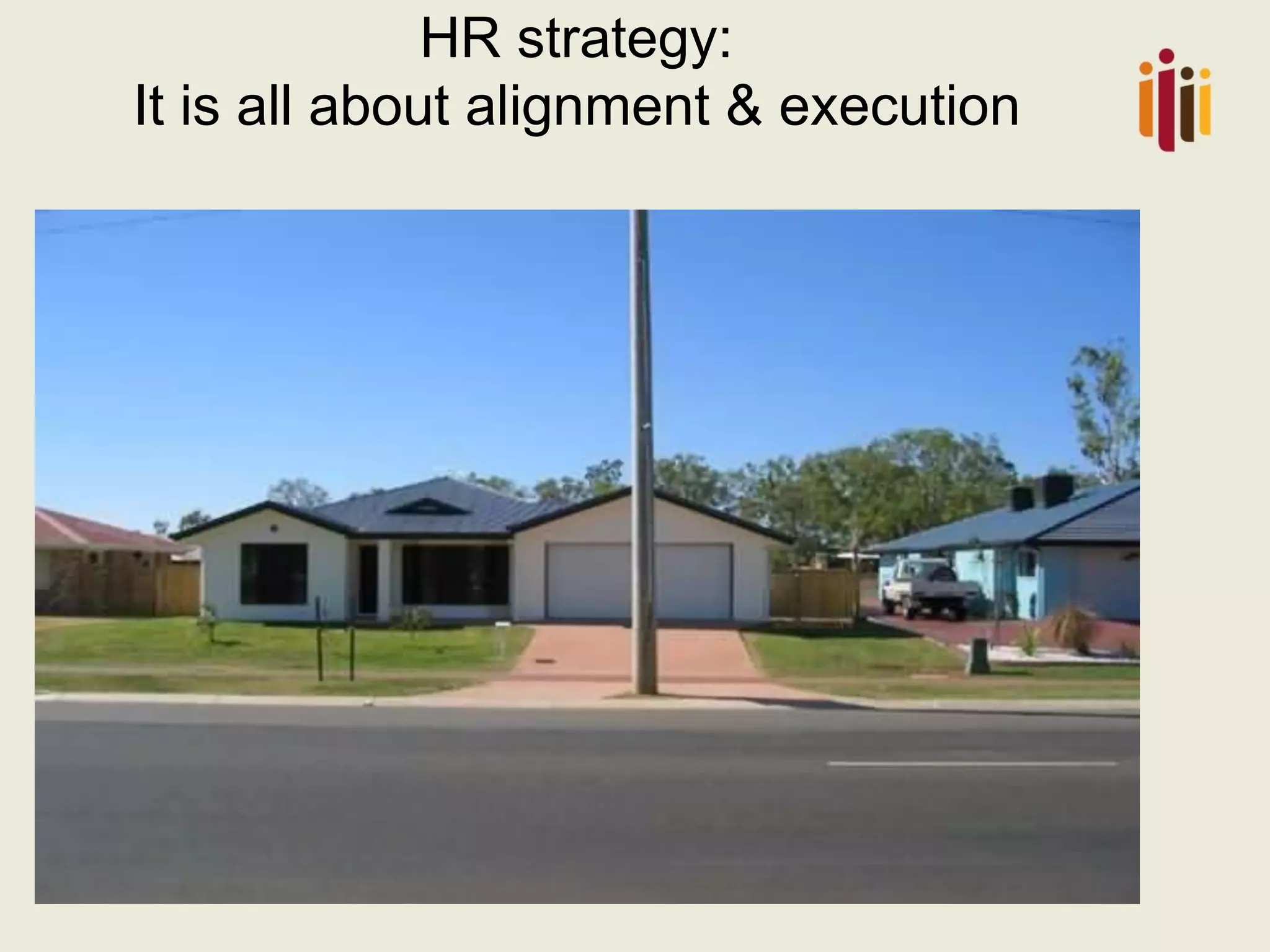
HR strategy: It is all about alignment & execution
Conclusion 
HR professionals need to move from an operational to a strategic mindset. But we need to ensure that our HR strategies are executed. Thank you for joining us on the journey towards high impact strategic HR thinking, plans and results.
Let us build our organisations with sound strategic HR Management! 
professional@sabpp.co.za(Professional Registration) 
xolani@sabpp.co.za(Operations) 
kenneth@sabpp.co.za(Stakeholder Relations) 
penny@sabpp.co.za(Research) 
naren@sabpp.co.za(Learning & Quality) 
marius@sabpp.co.za(Strategy inputs) 
voice@sabpp.co.za(Social media) 
Website : www.sabpp.co.za 
Office: 8 Sherborne Str, Parktown, South Africa 
Tel: +27 11 045 5400 Fax: +27 11 482-4830 
Cel: 082 859 3593 (Marius Meyer)

Strategic HRM with impact: From Strategy to Executio - Zimbabwe 2014

  • 1.
    STRATEGIC HR MANAGEMENTWITH IMPACT: FROM STRATEGY TO EXECUTION Marius Meyer, CEO: SABPP 10 October 2014, Hararemarius@sabpp.co.za @MariusSABPP & @SABPP1
  • 2.
    The need forStrategic HRM “If HR does not force its way into the heart of strategic planning in an organisation, it will default into a technical and transactional dead end.” Helen Drinan, Former CEO: SHRM
  • 3.
  • 4.
    IBM CEO Study2012: Factors impacting organisations 1 Technology factors (71%) 2 People skills (69%) 3 Market factors (68%) 4 Macro-economic factors 5 Regulatory concerns 6 Globalisation 7 Socio-economic factors 8 Environmental issues 9 Geopolitical factors IBM CEO Study 2012
  • 5.
    • Identifying talentissues before they impact the business • Adjusting HR strategies to respond to changing business needs • Understanding how HR business partners can support the business The results of our research indicated that our top three priority CCR’s include the following: SABPP Strategic Vision “To Professionalise the HR Profession” SABPP - ETQA SABPP – Registration Committee HRD Committee Business Leader’s Expectations OR Critical Customer Requirements (CCR’s) Key HR Business Partner Outputs Competencies Career Paths Learning Solutions Communicating organisational culture/values to Employees 1 Keep abreast of new legislation that may impact on business 1 Preparing for different situations 1 Responding to organisational changes 2 Managing conflict between managers 2 Assessing Employee attitudes 2 Enforcing standard HR policies and procedures 3 Resolving political problems in the execution of business plans 3 Respond to manager needs 4 Retention of talent within the business 4 Capacity building/Skills development 5 Quickly responding to employee needs 6 Communication around HR in general 6 Tracking trends in employee behaviours and attitudes. 11 Keep the line updated on HR initiatives 11 Prioritizing across HR Needs 13 Utilising new business strategies 25 Developing the next generation of leaders 30 Identifying talent issues before they can impact on the business 32 Identifying HR Metrics 35 Adjusting HR strategies to respond to changing business needs 42 Understanding how HRB’s can support the business 43 Redesigning Organisational Structure around strategic objectives 48 Understanding the Talent needs of the business 54 CCR TOTAL
  • 6.
    PARADIGM SHIFT OPERATIONALMINDSET •Day-to-day tasks •Transactional HR •Getting things done •Crisis reactive management •Doing things now •Training for tasks •Managing people •Internal focus •Short-term measures STRATEGIC THINKING •Long term priorities •Transformational HR •Creating value •Proactive management •Planning things for future •Organisational capability •Leading people •External focus •Strategic measures -metrics
  • 7.
    The strategic dilemma “How can you strategise for the future, when you can’t see beyond 18 months?” Fast Company Magazine
  • 8.
    Why Bother? •Thealternative to strategising is to take change as it comes and deal with contingencies
  • 9.
    HR Trends •HRas Strategic Partner and Talent Management •HR Governance •HR Risk Management •New role to impact ethics in organisations •HR contribution to CSR and socio-economic situation -sustainability •HR Technology and Social Media •HR standards and metrics –integrated reporting •HR Competency models -professionalism
  • 10.
    Biggest Opportunities forHR IBM: Working beyond Borders •Cultivating creative leaders •Mobilising for greater speed and flexibility •Capitalising on collective intelligence i.e. collaboration
  • 11.
    Most important organisationalcapabilities over the next five years IBM: Working beyond Borders 31% 33% 34% 37% 28% 30% 32% 34% 36% 38% Innovation Client connectivity Execution speed Leadership
  • 12.
    Top facts aboutHR •Human Capital is the biggest concern for CEOs (PwC). •Only 18% of CEOs feel confident that they have the right people in place to execute strategy (CEB). •Human Capital is the biggest risk in business (HCI Africa). •Skills crisis is the top obstacle to economic growth. •Strikes cost SA R197 million per day.
  • 13.
    More facts aboutHR •SA losing R12 billion a year due to absenteeism. •Only 5% of employees understand business strategy. •World-wide only 13% of employees actively engaged. •Companies with engaged employees outperform others by 202% (Dale Carnegie). •Companies with good HR Practices outperform others by treating HR as critical business function, these companies are 105% more profitable. •Average ROI on wellness programmes: 300%.
  • 14.
    BUSINESS STRATEGY –HRBUSINESS ALIGNMENT ❶Strategic HRM ❷Talent Management ❸HR Risk Management HR ARCHITECTURE HR VALUE & DELIVERY PLATFORM ❹ Work- force planning ❺ Learning ❻ Perfor- mance ❼ Reward ❽ Well- ness ❾ ERM ❿ OD ⓫HR Service Delivery ⓬ HR Technology (HRIS) Prepare Imple- ment Review Improve ⓭HR MEASUREMENT HR Audit: Standards & Metrics H R C O M P E T E N C I E S SABPP HRM SYSTEM STANDARDS MODEL
  • 15.
  • 16.
    STRATEGIC HR MANAGEMENTSTANDARD DEFINITION Strategic HR Management is a systematic approach to developing and implementing long-term HRM strategies, policies and plans that enable the organisation to achieve its objectives. SABPP (2013)
  • 17.
    STRATEGIC HR MANAGEMENTSTANDARD OBJECTIVES 1.2.1 To ensure the HR strategy is derived from and aligned to the organisation’s objectives in consultation with key organisational stakeholders. 1.2.2 To analyse the internal and external socio-economic, political and technological environment and provide proactive people-related business solutions. 1.2.3 To provide strategic direction and measurements for strategic innovation and sustainable people practices. 1.2.4 To provide a foundation for the employment value proposition of the organisation. 1.2.5 To establish a framework for the HR element of the organisation’s governance, risk and compliance policies, practices and procedures which balance the needs of all stakeholders. 1.2.6 To determine an appropriate HR structure, allocate tasks and monitor the development of HR competence to deliver HR strategic objectives. SABPP (2013)
  • 18.
    STRATEGIC HRM STANDARDELEMENT: IMPLEMENTATION Framework of HR policies & programmes Environmental scan (PESTL) HR structure, service model and capability development People strategy HR strategic agenda Organisation’s strategic intent HR strategic agenda HR business plan People strategy Allocate roles & responsibilities (line/HR/support functions) MONITOR & EVALUATE
  • 19.
    The Meaning ofStrategy Adaptation of the Business Motivation Model Means Mission Strategy Tactics Course of Action Processes Structure Enablers Ends Vision Goals Objectives Desired Result makes operative amplified by quantified by planned by means of implemented by enabled by External social, technological, environmental, economic, political, legal, market and shareholder requirements Technology Benefits Realisation should be aligned to Measuring Strategy execution
  • 20.
    Typical strategic HRprocess Planning & preparing process HR vision & mission Formulate strategies Long term HR goals Environment scanning HR analysis Implementation/ deployment Monitor & evaluate Strategic alignment
  • 21.
    Organisation Strategy CorporateScorecard Business Design (Operating Model & Value Chain) Organisation Design Business Processes Work Design Process Activities Job Design Deployed Scorecards Personal Scorecards Personal Level Tactical Level Strategic Level
  • 22.
    THE ESSENCE OFHR IS TO ACHIEVE THE TWO TOP HR PRIORITIES •Employee engagement •Employee performance (business results) If you don’t spend 90% of your time working actively and passionately with management and employees on these two HR priorities, you are wasting your time. If your HR practices are not focused on these two priorities, you are not adding value to the organisation.
  • 23.
    Strategic Analysis WEAKNESSES •Low visibility of HR •Poor communication •Lack of technology •Low satisfaction levels OPPORTUNITIES •Local skills development •Stronger talent pipeline •Alliances in countries •E-learning RISKS •Safety of staff •Political risk -countries •Regulatory challenges •Capacity to deliver •Employee retention STRENGTHS •Good learning centre •Clear talent pools •Ethical culture •Sound leadership •Great team of expats
  • 24.
    Do you manageHR risk?
  • 25.
    Activity 1.What arethe current strengths of your HR Strategy? 2.What are the areas for improving your HR Strategy?
  • 26.
    How to becomea strategic thinker •Know the strategy of your business •Study the strategies of other businesses •Read more about strategy •Internalise the annual report of your company •Identify HR opportunities from the strategy •Put your strategy on one page •Develop an HR Risk Framework •Do proper HR analytics and metrics
  • 27.
  • 28.
    From strategy toexecution •Make HR strategy visible. •Convert HR strategy to specific action plans to be executed –clear priorities. •Clear lines of responsibility and accountability. •Cascade overall strategic measures to team & individual performance management. •Build a high performance execution culture. •Review and monitor execution of strategy. •Identify and resolve problems as they arise.
  • 29.
  • 30.
    Activity 1.Identify currentgaps between HR strategy & execution at your organisation. 2.How can these gaps be filled?
  • 31.
    HR strategy: Itis all about alignment & execution
  • 32.
    Conclusion HR professionalsneed to move from an operational to a strategic mindset. But we need to ensure that our HR strategies are executed. Thank you for joining us on the journey towards high impact strategic HR thinking, plans and results.
  • 33.
    Let us buildour organisations with sound strategic HR Management! professional@sabpp.co.za(Professional Registration) xolani@sabpp.co.za(Operations) kenneth@sabpp.co.za(Stakeholder Relations) penny@sabpp.co.za(Research) naren@sabpp.co.za(Learning & Quality) marius@sabpp.co.za(Strategy inputs) voice@sabpp.co.za(Social media) Website : www.sabpp.co.za Office: 8 Sherborne Str, Parktown, South Africa Tel: +27 11 045 5400 Fax: +27 11 482-4830 Cel: 082 859 3593 (Marius Meyer)