1PMS
2PMS
Performance
Management
Techniques
3PMS
Performance Management
System
• Performance management is the
continuous process of identifying,
measuring and evaluating the
performance of the individuals and
teams and aligning their performance
with the organizational goals.
• A process that significantly affects
organizational success by having
managers and employees work together
to set expectations, review results andPMS 4
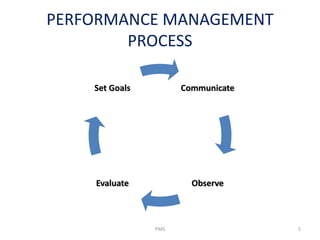
PERFORMANCE MANAGEMENT
PROCESS
PMS 5
Communicate
ObserveEvaluate
Set Goals
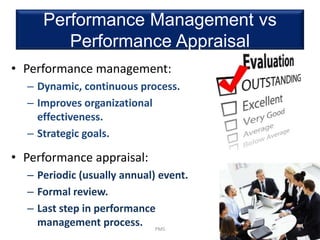
Performance Management vs
Performance Appraisal
• Performance management:
– Dynamic, continuous process.
– Improves organizational
effectiveness.
– Strategic goals.
• Performance appraisal:
– Periodic (usually annual) event.
– Formal review.
– Last step in performance
management process. 6PMS
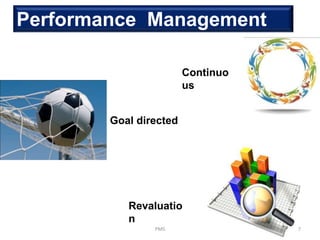
Performance Management
Continuo
us
Goal directed
Revaluatio
n
7PMS
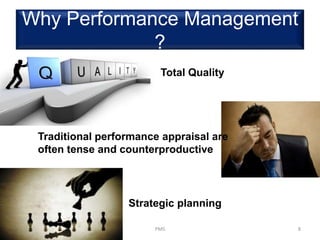
Why Performance Management
?
Total Quality
Traditional performance appraisal are
often tense and counterproductive
Strategic planning
8PMS
Why Nestle considers PMS
important?
• Nestlé India
recognizes that people
make the difference
• encourages and supports
its people to inculcate the
clearly laid down Nestlé India Leadership Principles
• Nestlé India will push you to broaden your horizon,
both nationally & internationally
• Nestlé India believes in giving as much responsibility as
possible to the individual
9PMS
Nestle grows talent & teams
• passion for building and sustaining an
environment where people have a sense of
personal commitment to their work
• Understands the importance of continuous
learning and improvement
• committed to giving and receiving honest,
accurate and timely feedback
• Believes in the importance of building diverse
teams, and promotes the advantages of gender
balance
10PMS
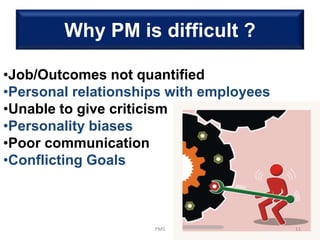
Why PM is difficult ?
•Job/Outcomes not quantified
•Personal relationships with employees
•Unable to give criticism
•Personality biases
•Poor communication
•Conflicting Goals
11PMS
Techniques of PM
• Essay (open-ended)
• Management by Objective
• Ranking
• Behaviorally Anchored Ratings (BARS)
• Critical Incidents
• Forced Distribution
12PMS
Performance Management
Techniques used by Nestle
Balanced Scorecard Linked
System
13PMS
• a strategic planning and management system
•originated by Dr. Robert Kaplan (Harvard
Business School) and David Norton as a
performance measurement framework
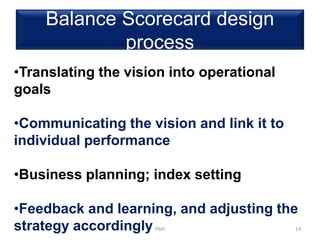
Balance Scorecard design
process
PMS 14
•Translating the vision into operational
goals
•Communicating the vision and link it to
individual performance
•Business planning; index setting
•Feedback and learning, and adjusting the
strategy accordingly
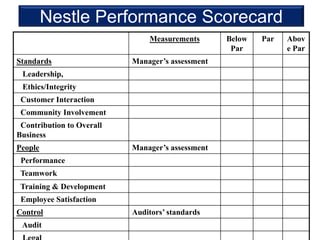
Nestle Performance Scorecard
Measurements Below
Par
Par Abov
e Par
Standards Manager’s assessment
Leadership,
Ethics/Integrity
Customer Interaction
Community Involvement
Contribution to Overall
Business
People Manager’s assessment
Performance
Teamwork
Training & Development
Employee Satisfaction
Control Auditors’ standards
Audit
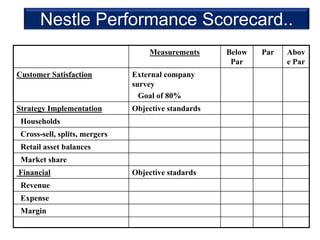
Nestle Performance Scorecard..
Measurements Below
Par
Par Abov
e Par
Customer Satisfaction External company
survey
Goal of 80%
Strategy Implementation Objective standards
Households
Cross-sell, splits, mergers
Retail asset balances
Market share
Financial Objective stadards
Revenue
Expense
Margin
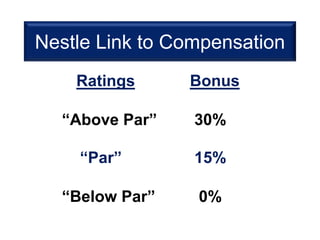
Nestle Link to Compensation
Ratings Bonus
“Above Par” 30%
“Par” 15%
“Below Par” 0%
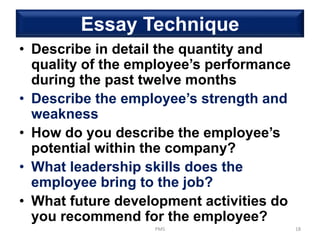
Essay Technique
• Describe in detail the quantity and
quality of the employee’s performance
during the past twelve months
• Describe the employee’s strength and
weakness
• How do you describe the employee’s
potential within the company?
• What leadership skills does the
employee bring to the job?
• What future development activities do
you recommend for the employee?
PMS 18
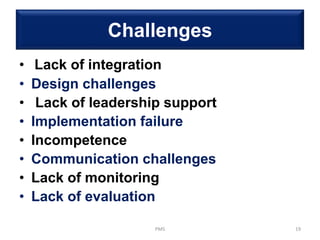
Challenges
• Lack of integration
• Design challenges
• Lack of leadership support
• Implementation failure
• Incompetence
• Communication challenges
• Lack of monitoring
• Lack of evaluation
PMS 19
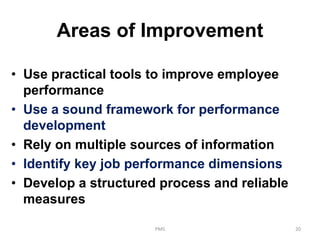
Areas of Improvement
• Use practical tools to improve employee
performance
• Use a sound framework for performance
development
• Rely on multiple sources of information
• Identify key job performance dimensions
• Develop a structured process and reliable
measures
PMS 20

Nestle performance management

  • 1.
  • 2.
  • 3.
  • 4.
    Performance Management System • Performancemanagement is the continuous process of identifying, measuring and evaluating the performance of the individuals and teams and aligning their performance with the organizational goals. • A process that significantly affects organizational success by having managers and employees work together to set expectations, review results andPMS 4
  • 5.
  • 6.
    Performance Management vs PerformanceAppraisal • Performance management: – Dynamic, continuous process. – Improves organizational effectiveness. – Strategic goals. • Performance appraisal: – Periodic (usually annual) event. – Formal review. – Last step in performance management process. 6PMS
  • 7.
  • 8.
    Why Performance Management ? TotalQuality Traditional performance appraisal are often tense and counterproductive Strategic planning 8PMS
  • 9.
    Why Nestle considersPMS important? • Nestlé India recognizes that people make the difference • encourages and supports its people to inculcate the clearly laid down Nestlé India Leadership Principles • Nestlé India will push you to broaden your horizon, both nationally & internationally • Nestlé India believes in giving as much responsibility as possible to the individual 9PMS
  • 10.
    Nestle grows talent& teams • passion for building and sustaining an environment where people have a sense of personal commitment to their work • Understands the importance of continuous learning and improvement • committed to giving and receiving honest, accurate and timely feedback • Believes in the importance of building diverse teams, and promotes the advantages of gender balance 10PMS
  • 11.
    Why PM isdifficult ? •Job/Outcomes not quantified •Personal relationships with employees •Unable to give criticism •Personality biases •Poor communication •Conflicting Goals 11PMS
  • 12.
    Techniques of PM •Essay (open-ended) • Management by Objective • Ranking • Behaviorally Anchored Ratings (BARS) • Critical Incidents • Forced Distribution 12PMS
  • 13.
    Performance Management Techniques usedby Nestle Balanced Scorecard Linked System 13PMS • a strategic planning and management system •originated by Dr. Robert Kaplan (Harvard Business School) and David Norton as a performance measurement framework
  • 14.
    Balance Scorecard design process PMS14 •Translating the vision into operational goals •Communicating the vision and link it to individual performance •Business planning; index setting •Feedback and learning, and adjusting the strategy accordingly
  • 15.
    Nestle Performance Scorecard MeasurementsBelow Par Par Abov e Par Standards Manager’s assessment Leadership, Ethics/Integrity Customer Interaction Community Involvement Contribution to Overall Business People Manager’s assessment Performance Teamwork Training & Development Employee Satisfaction Control Auditors’ standards Audit
  • 16.
    Nestle Performance Scorecard.. MeasurementsBelow Par Par Abov e Par Customer Satisfaction External company survey Goal of 80% Strategy Implementation Objective standards Households Cross-sell, splits, mergers Retail asset balances Market share Financial Objective stadards Revenue Expense Margin
  • 17.
    Nestle Link toCompensation Ratings Bonus “Above Par” 30% “Par” 15% “Below Par” 0%
  • 18.
    Essay Technique • Describein detail the quantity and quality of the employee’s performance during the past twelve months • Describe the employee’s strength and weakness • How do you describe the employee’s potential within the company? • What leadership skills does the employee bring to the job? • What future development activities do you recommend for the employee? PMS 18
  • 19.
    Challenges • Lack ofintegration • Design challenges • Lack of leadership support • Implementation failure • Incompetence • Communication challenges • Lack of monitoring • Lack of evaluation PMS 19
  • 20.
    Areas of Improvement •Use practical tools to improve employee performance • Use a sound framework for performance development • Rely on multiple sources of information • Identify key job performance dimensions • Develop a structured process and reliable measures PMS 20