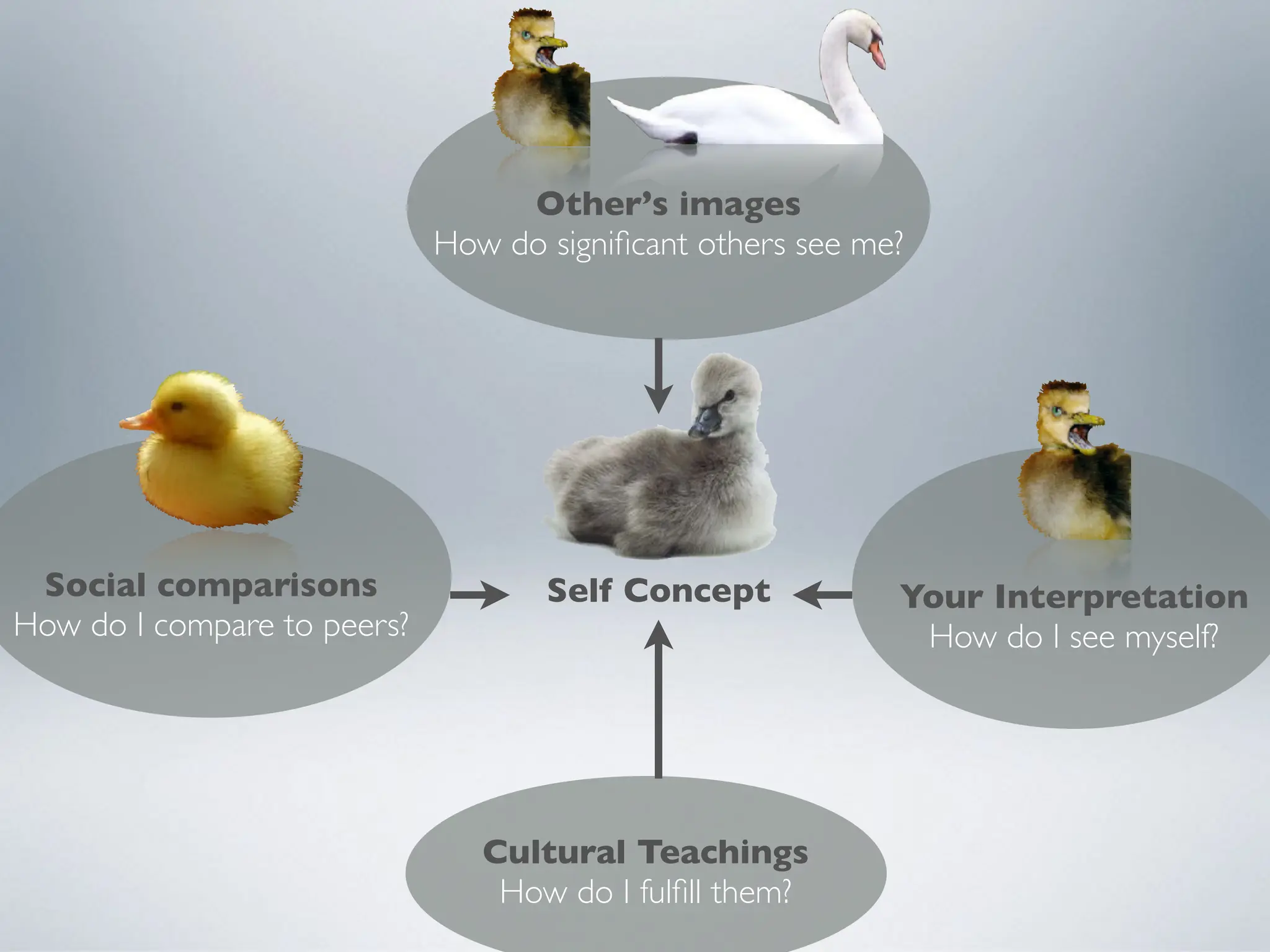
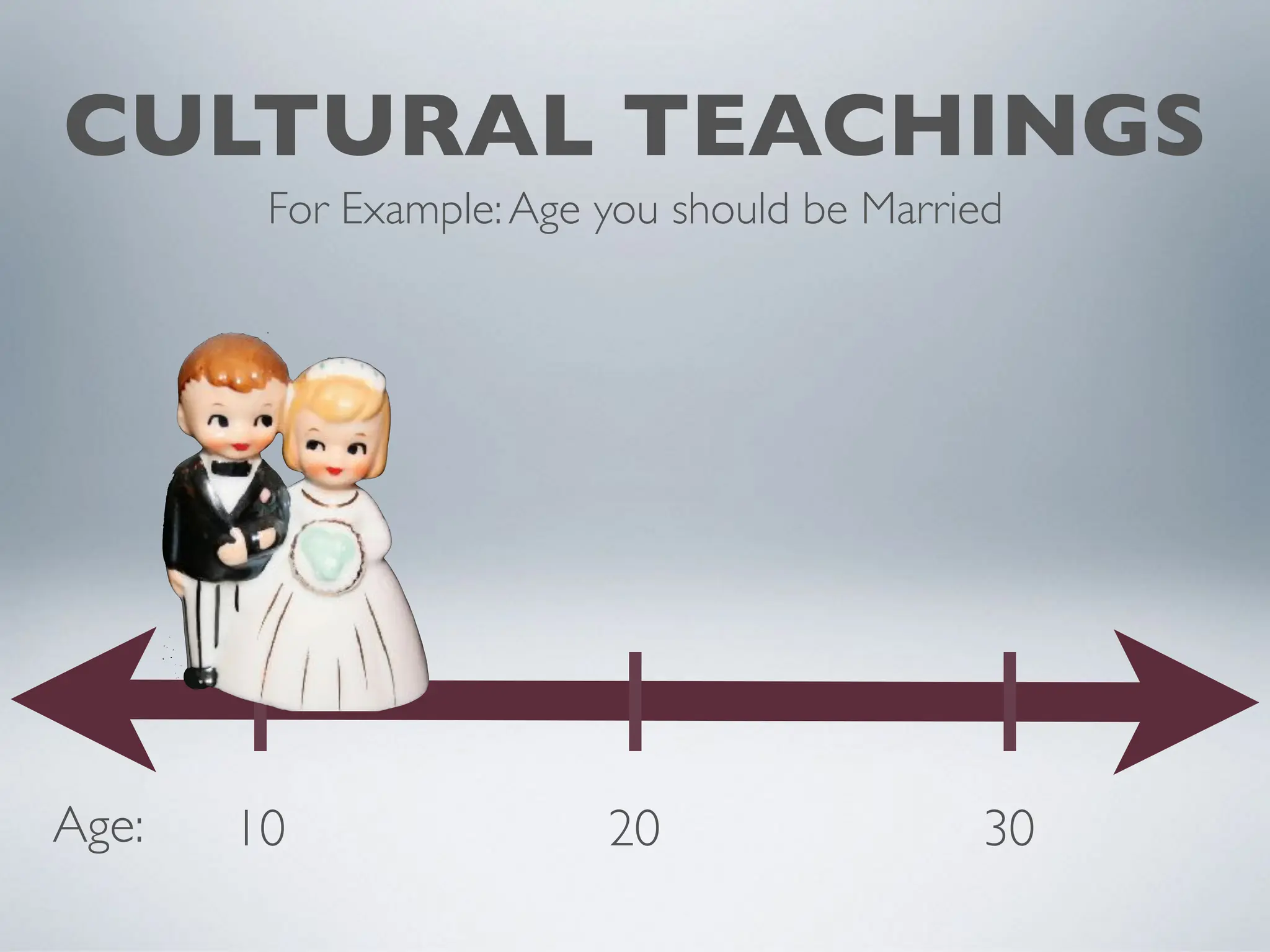
Cultural Teachings
How doI fulfill them?
Other’s images
How do significant others see me?
Your Interpretation
How do I see myself?
Social comparisons
How do I compare to peers?
Self Concept
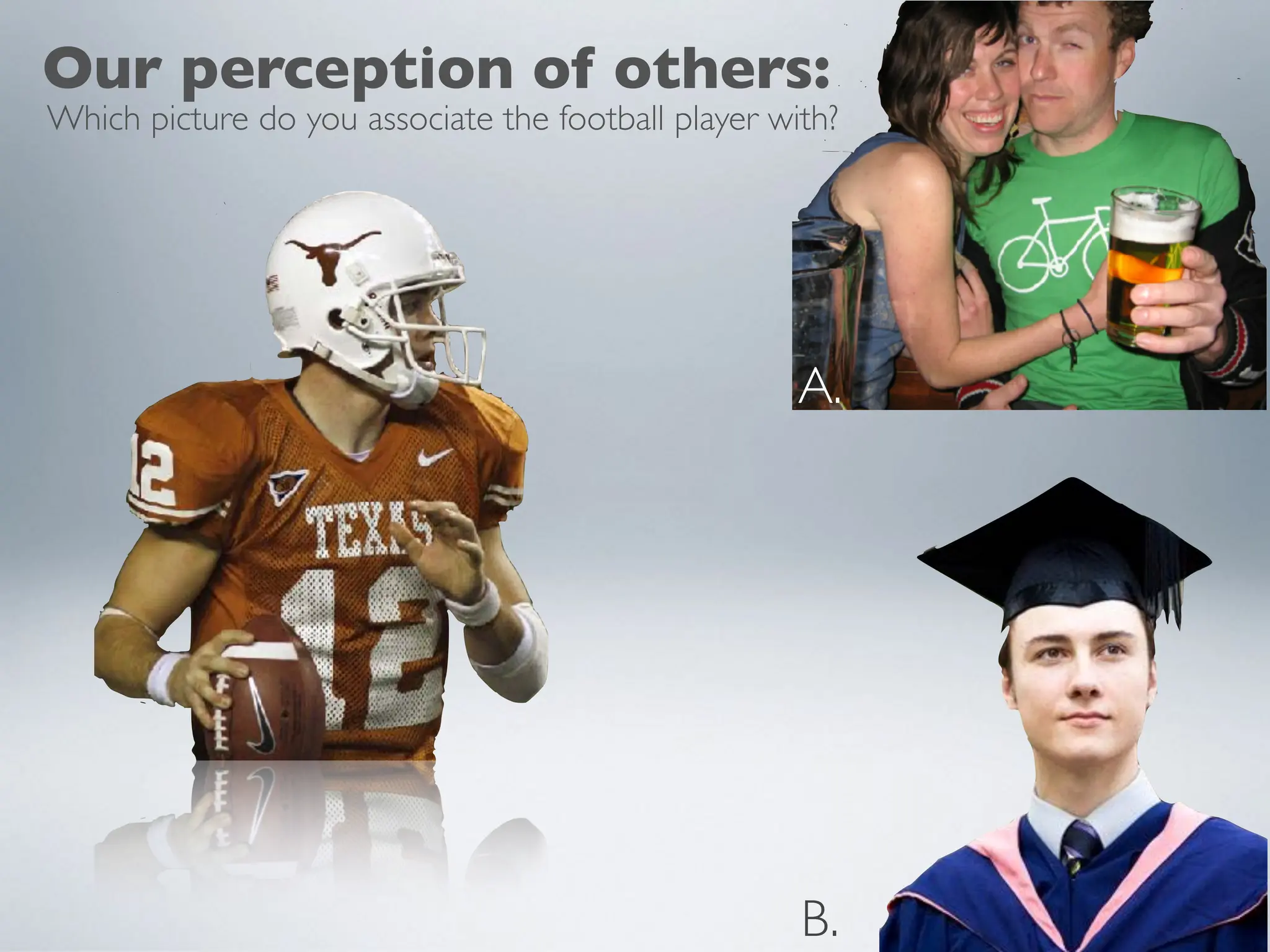
Our perception ofothers:
Which picture do you associate the football player with?
A.
B.
8.
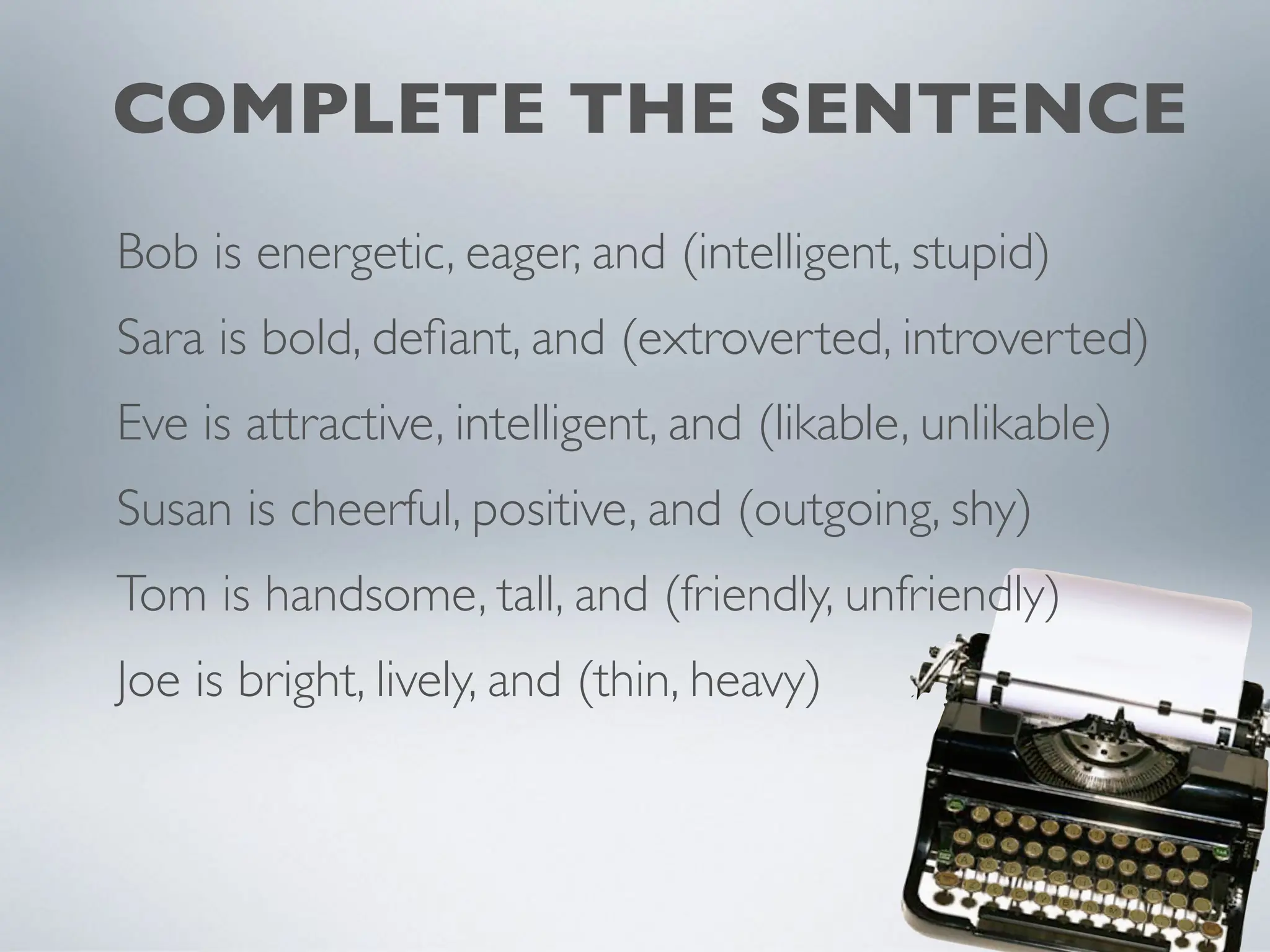
COMPLETE THE SENTENCE
Bobis energetic, eager, and (intelligent, stupid)
Sara is bold, defiant, and (extroverted, introverted)
Eve is attractive, intelligent, and (likable, unlikable)
Susan is cheerful, positive, and (outgoing, shy)
Tom is handsome, tall, and (friendly, unfriendly)
Joe is bright, lively, and (thin, heavy)
9.
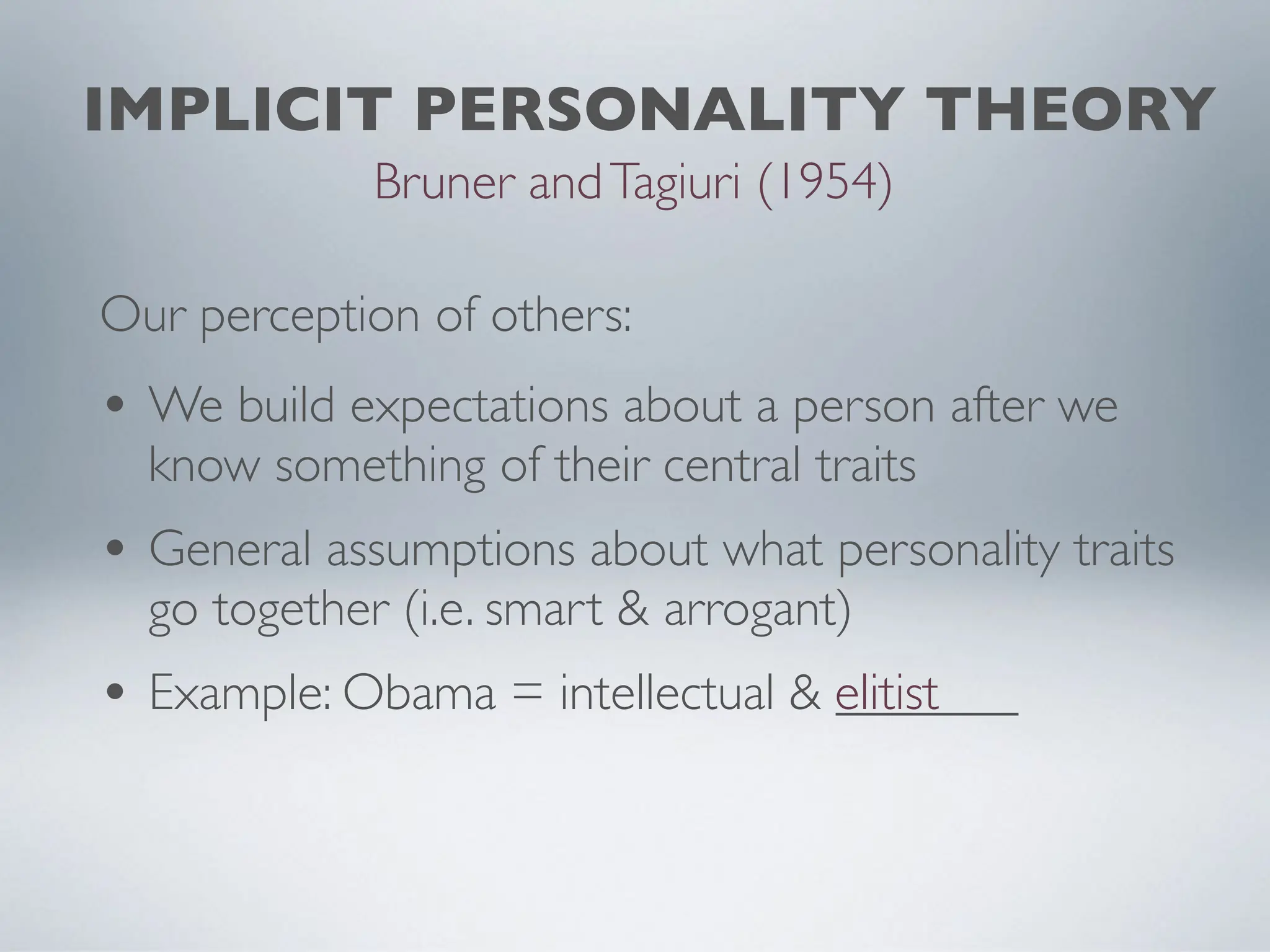
IMPLICIT PERSONALITY THEORY
BrunerandTagiuri (1954)
• We build expectations about a person after we
know something of their central traits
• General assumptions about what personality traits
go together (i.e. smart & arrogant)
• Example: Obama = intellectual & _______
elitist
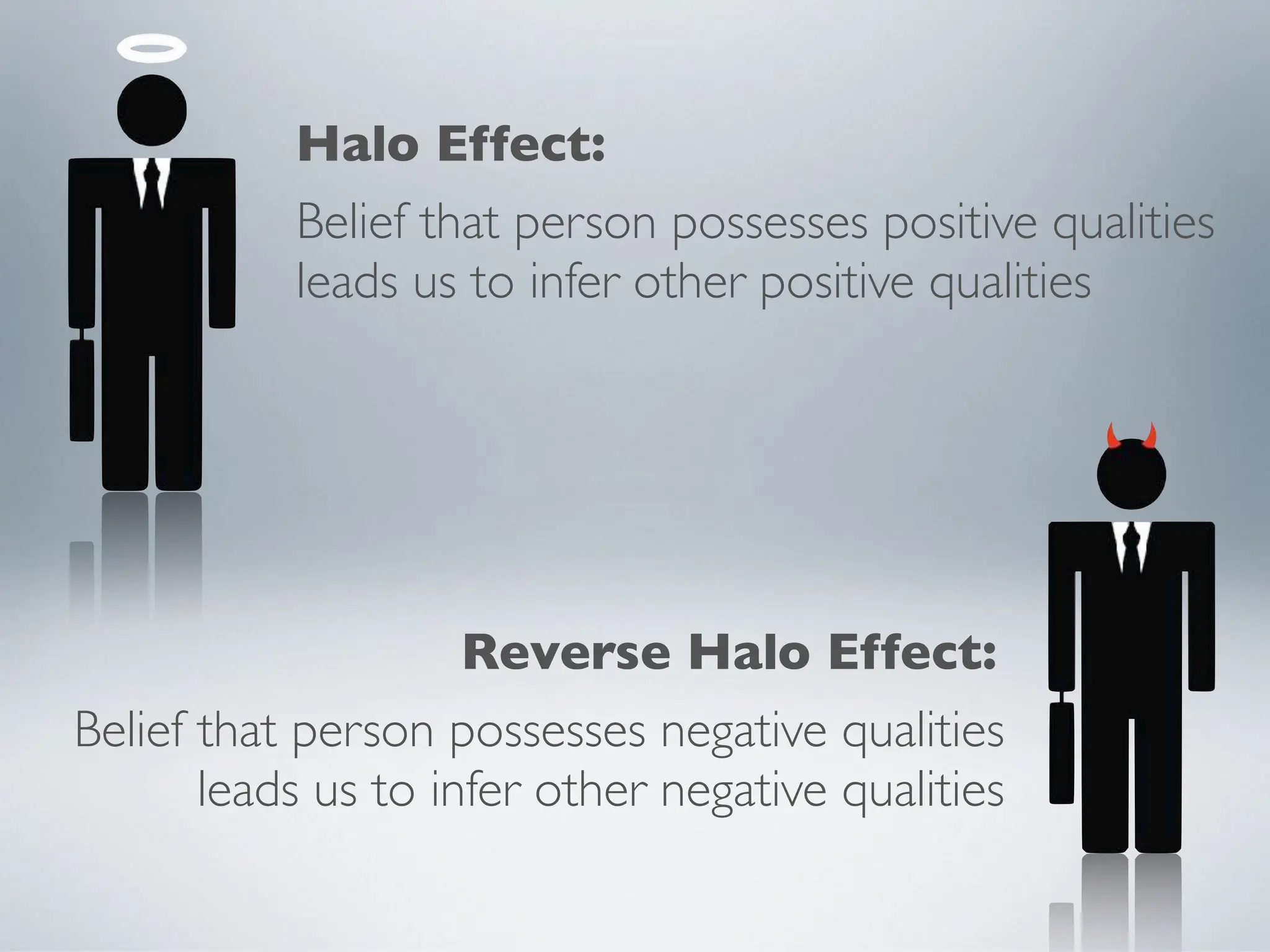
Our perception of others:
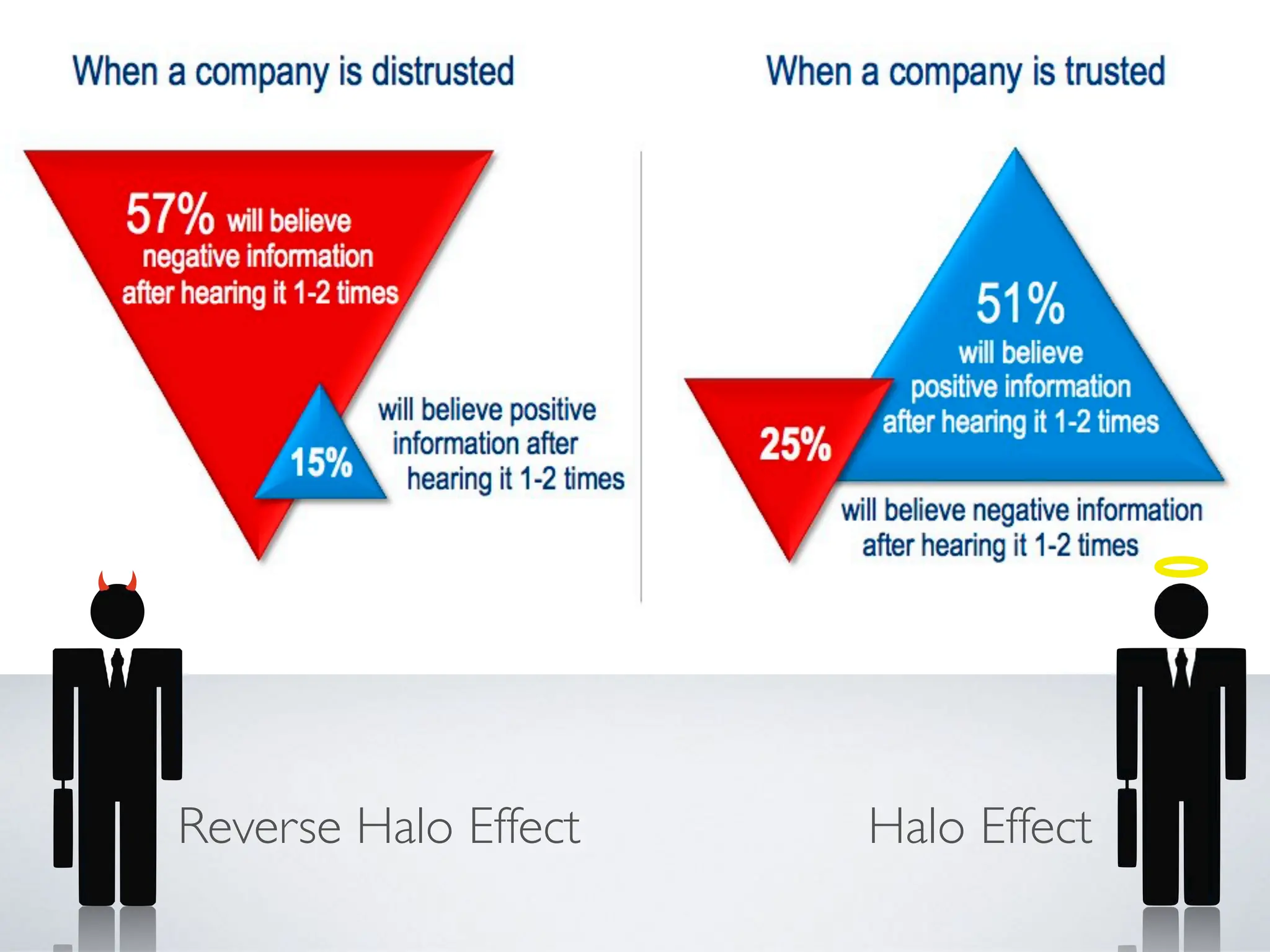
Halo Effect:
Reverse HaloEffect:
Belief that person possesses positive qualities
leads us to infer other positive qualities
Belief that person possesses negative qualities
leads us to infer other negative qualities
15.
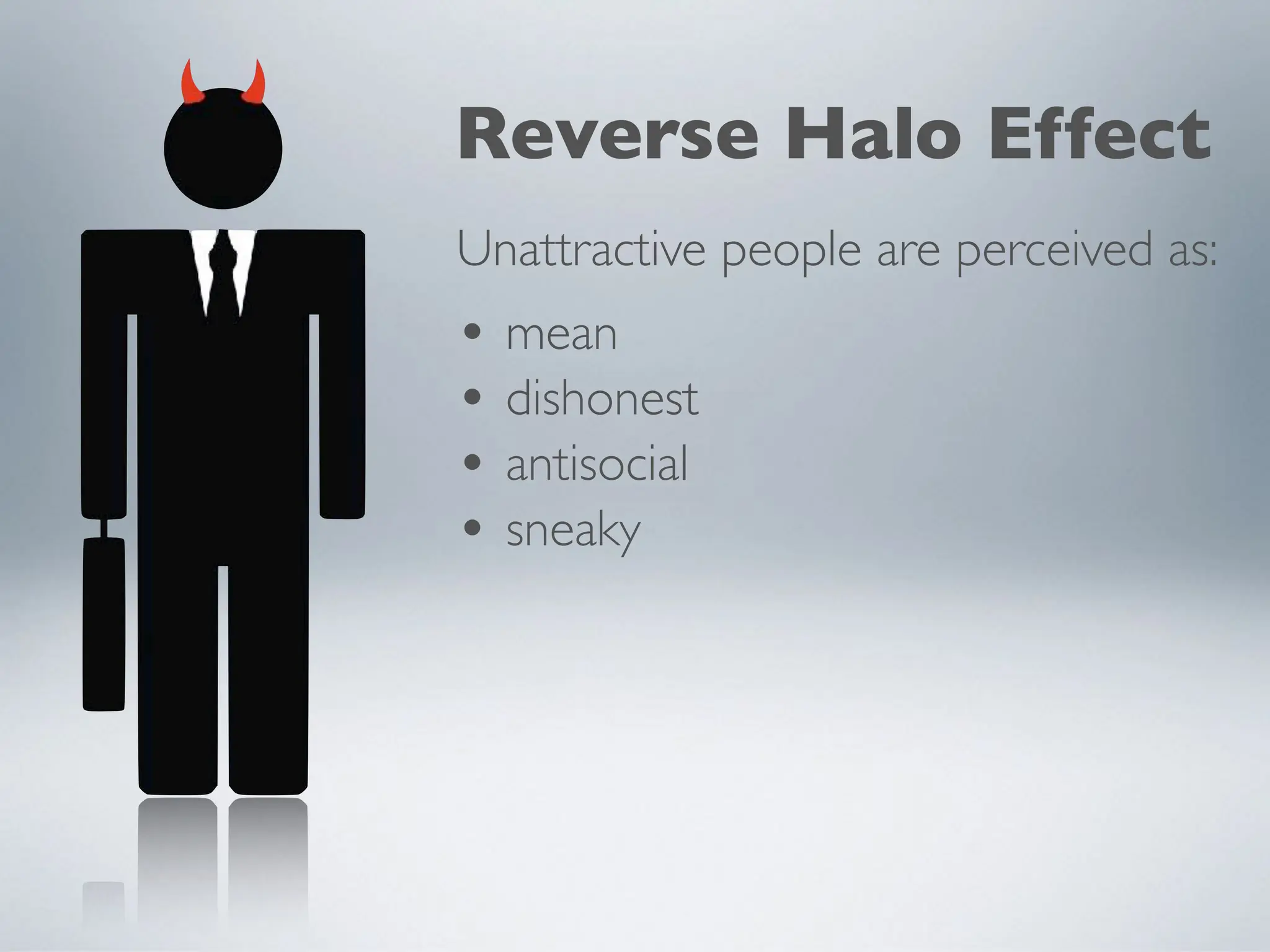
Reverse Halo Effect
•mean
• dishonest
• antisocial
• sneaky
Unattractive people are perceived as:
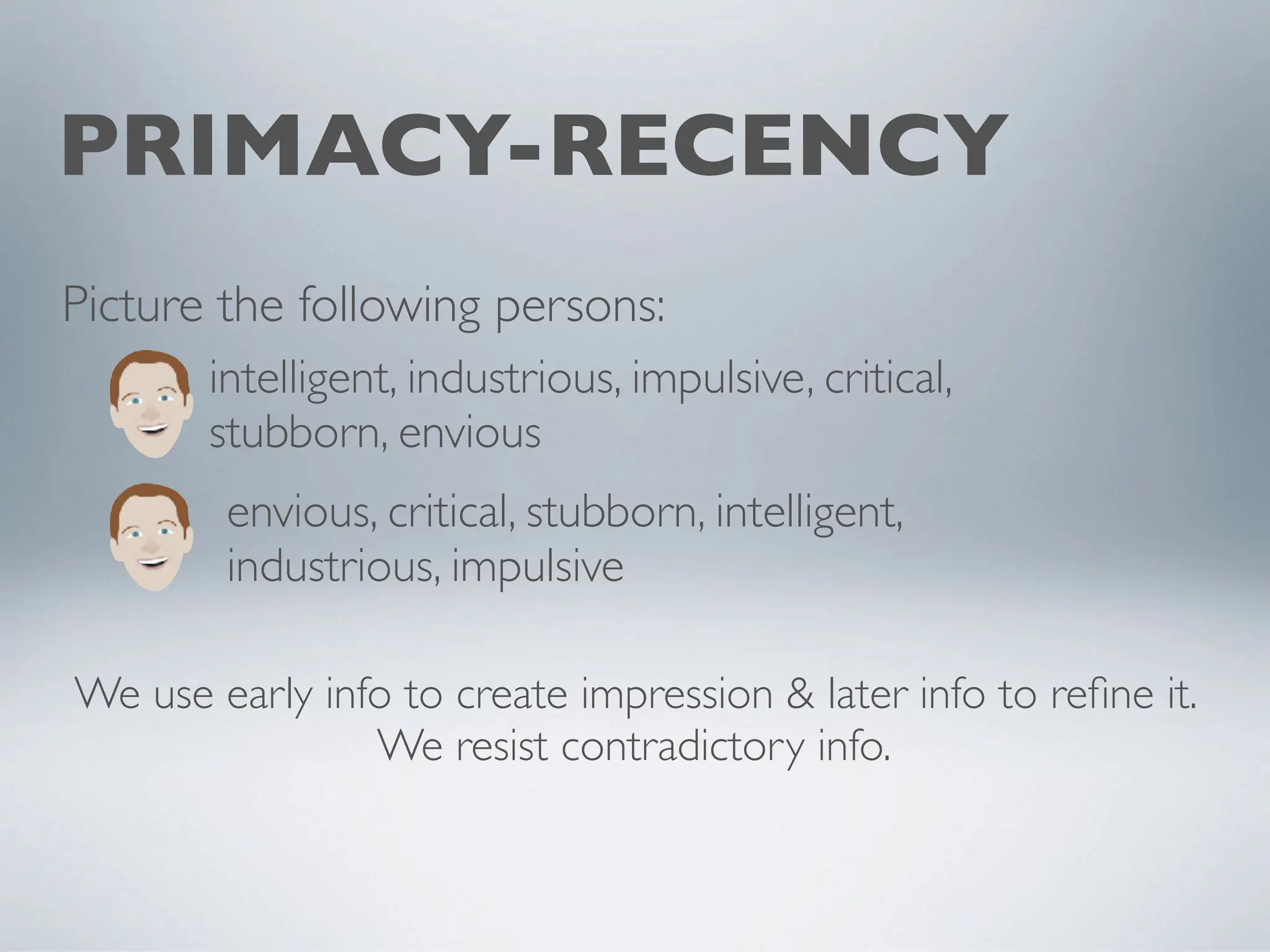
PRIMACY-RECENCY
intelligent, industrious, impulsive,critical,
stubborn, envious
envious, critical, stubborn, intelligent,
industrious, impulsive
Picture the following persons:
We use early info to create impression & later info to refine it.
We resist contradictory info.
18.
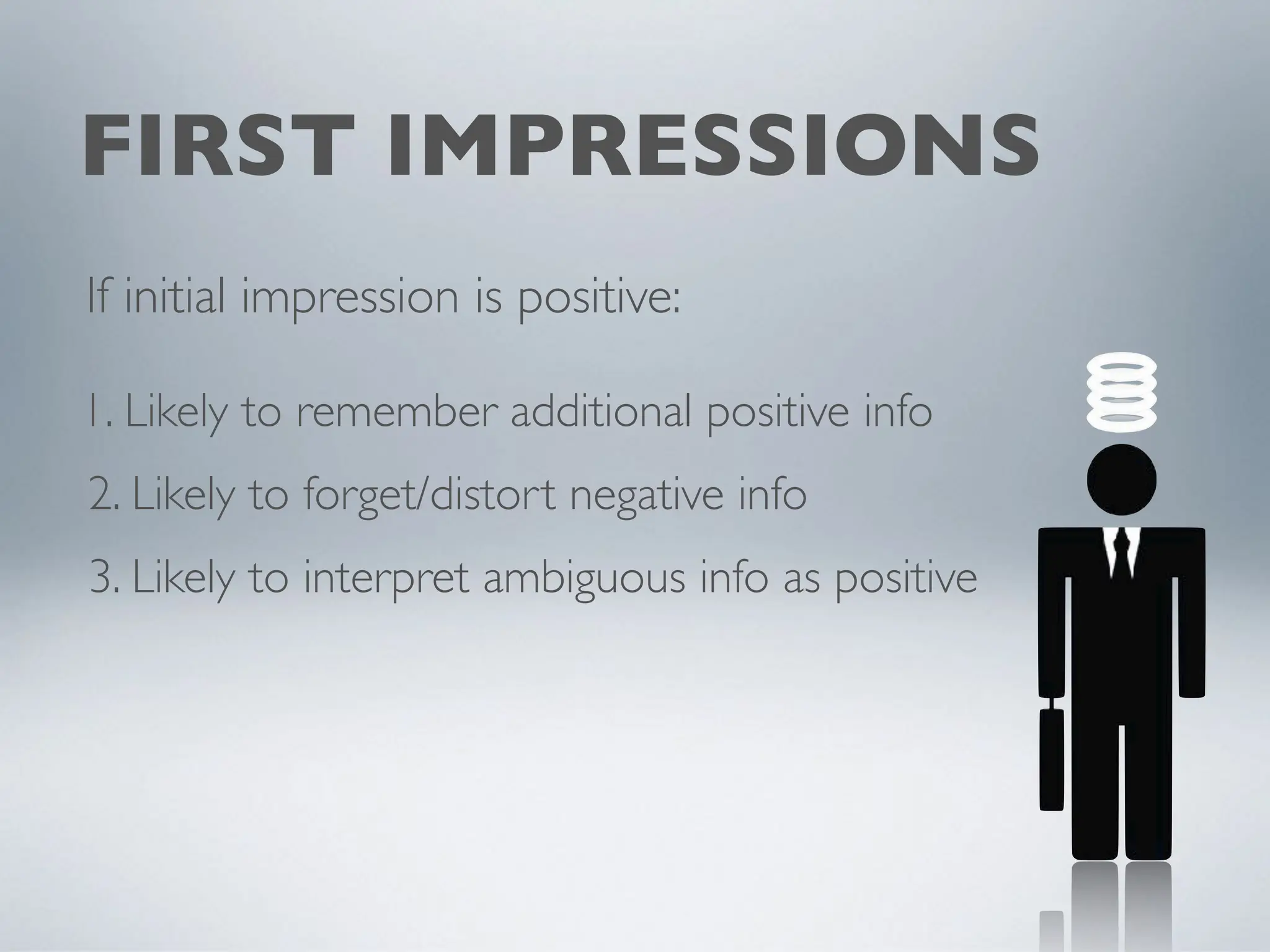
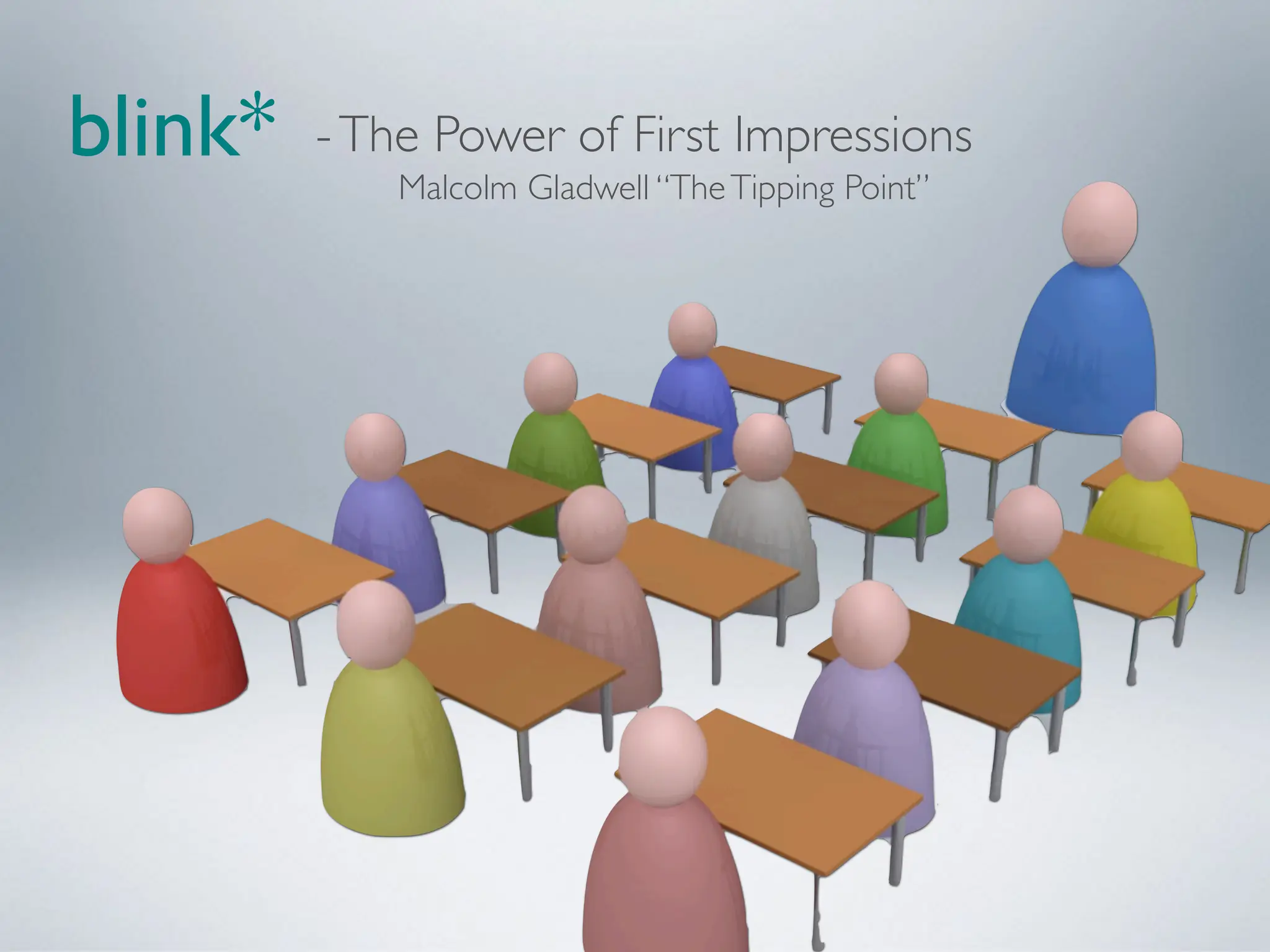
FIRST IMPRESSIONS
If initialimpression is positive:
1. Likely to remember additional positive info
2. Likely to forget/distort negative info
3. Likely to interpret ambiguous info as positive
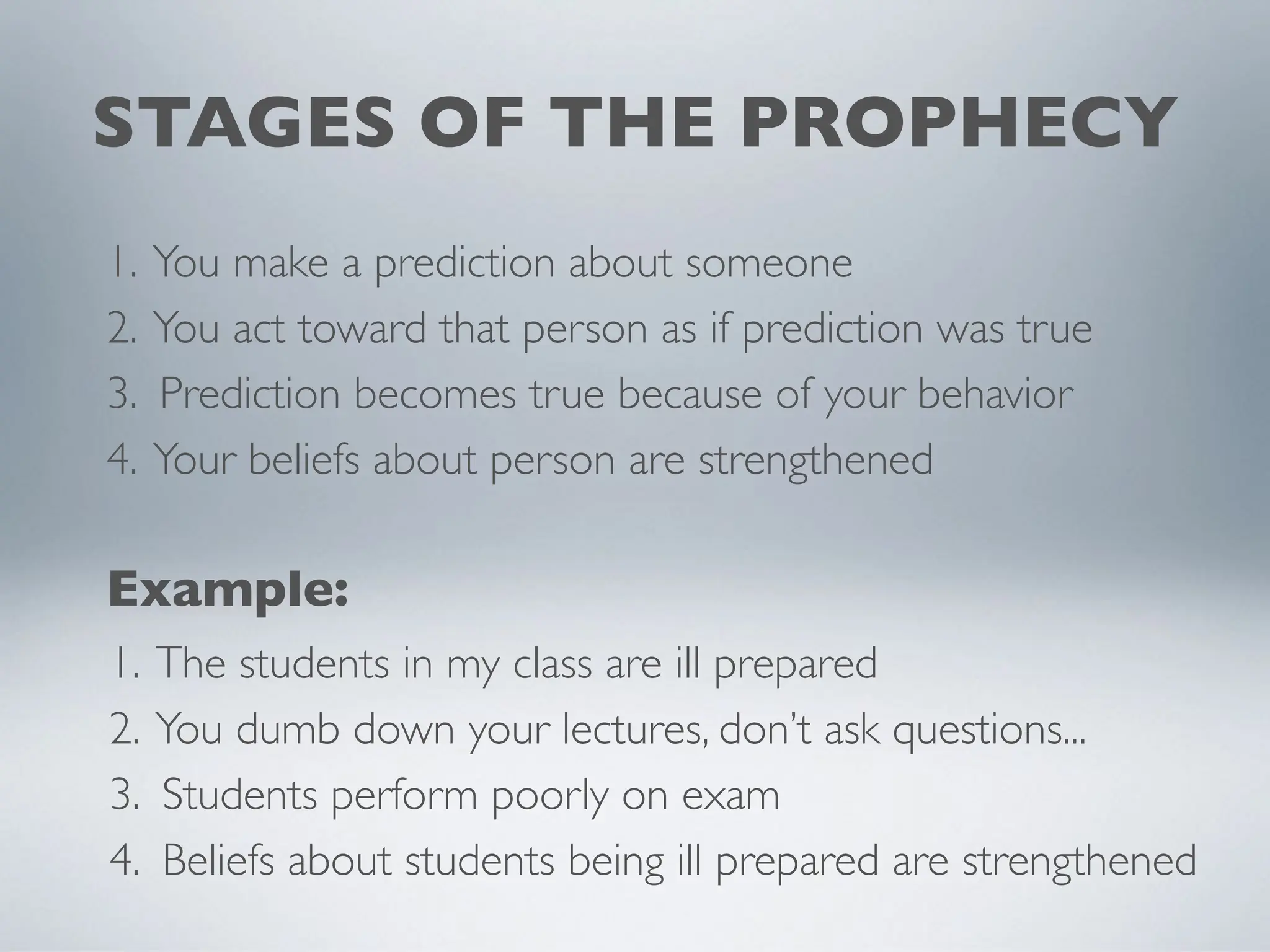
STAGES OF THEPROPHECY
1. You make a prediction about someone
2. You act toward that person as if prediction was true
3. Prediction becomes true because of your behavior
4. Your beliefs about person are strengthened
1. The students in my class are ill prepared
2. You dumb down your lectures, don’t ask questions...
3. Students perform poorly on exam
4. Beliefs about students being ill prepared are strengthened
Example:
23.
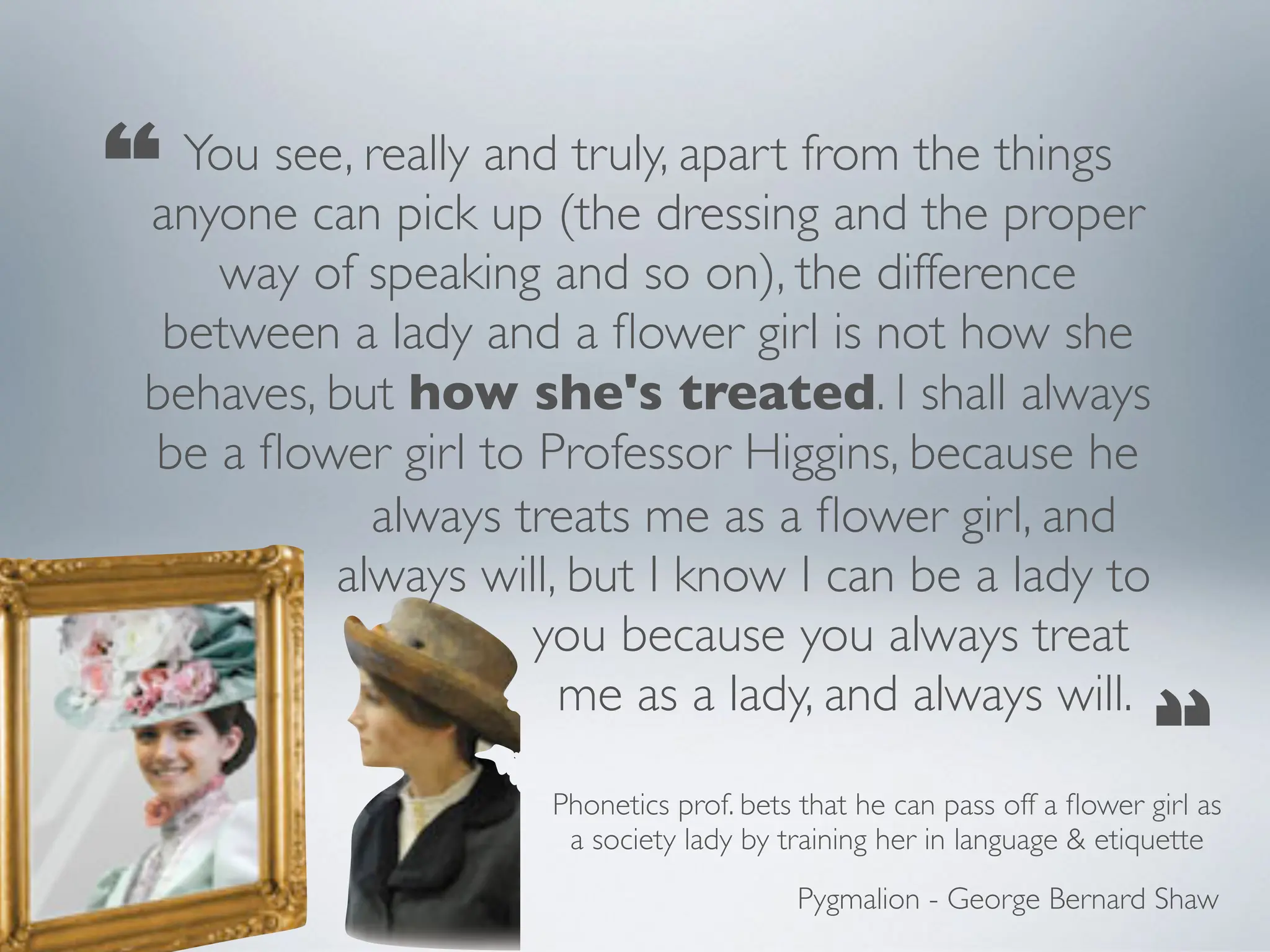
You see, reallyand truly, apart from the things
anyone can pick up (the dressing and the proper
way of speaking and so on), the difference
between a lady and a flower girl is not how she
behaves, but how she's treated. I shall always
be a flower girl to Professor Higgins, because he
always treats me as a flower girl, and
always will, but I know I can be a lady to
you because you always treat
me as a lady, and always will.
“
“
Pygmalion - George Bernard Shaw
Phonetics prof. bets that he can pass off a flower girl as
a society lady by training her in language & etiquette
24.
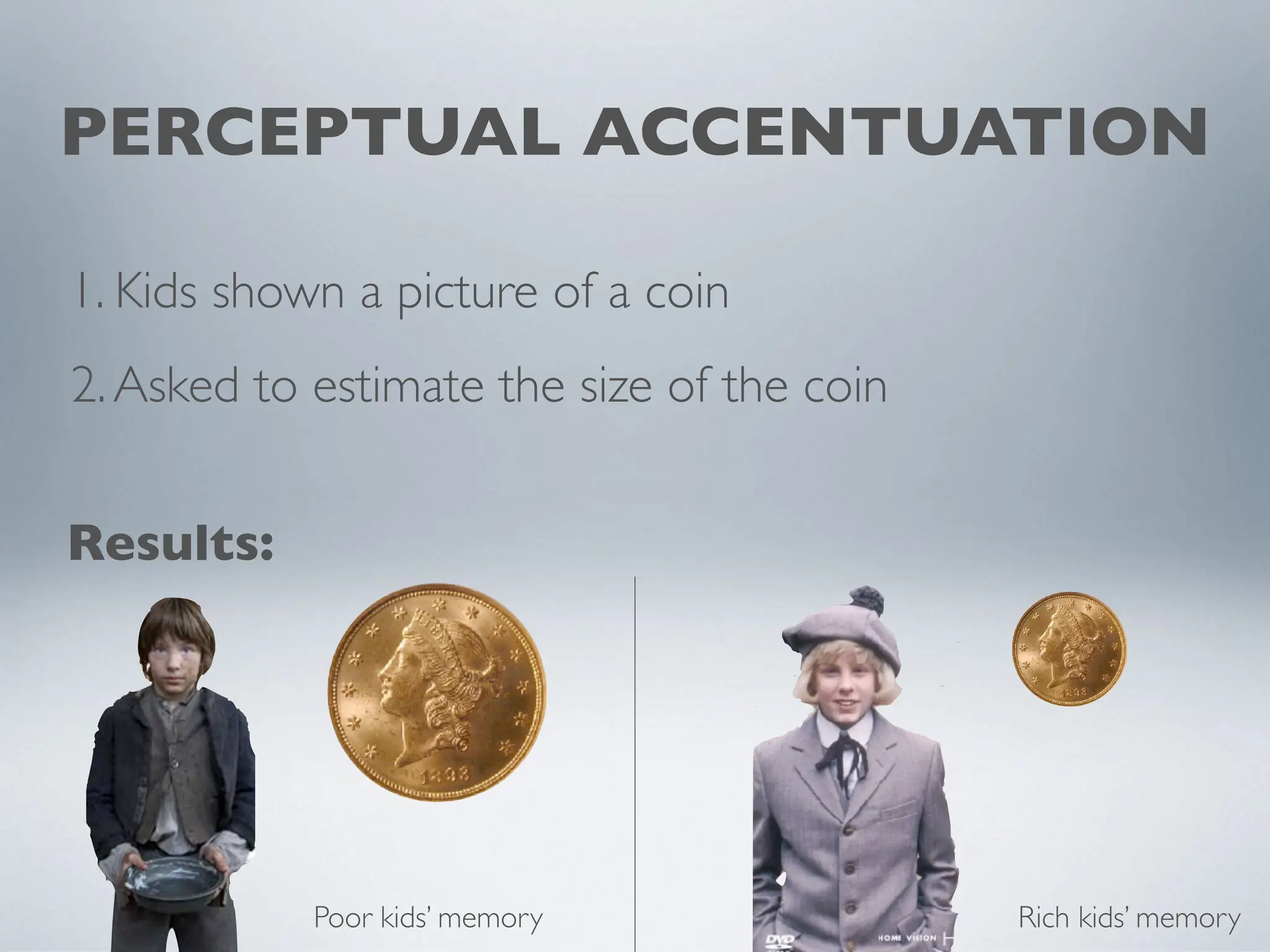
PERCEPTUAL ACCENTUATION
1. Kidsshown a picture of a coin
2.Asked to estimate the size of the coin
Results:
Poor kids’ memory Rich kids’ memory
25.
PERCEPTUAL ACCENTUATION
We seewhat we expect or want to see
• Fail to perceive what you don’t want to
(i.e. relational problems)
• Misinterpretation
(i.e. general politeness as sign of liking)
26.
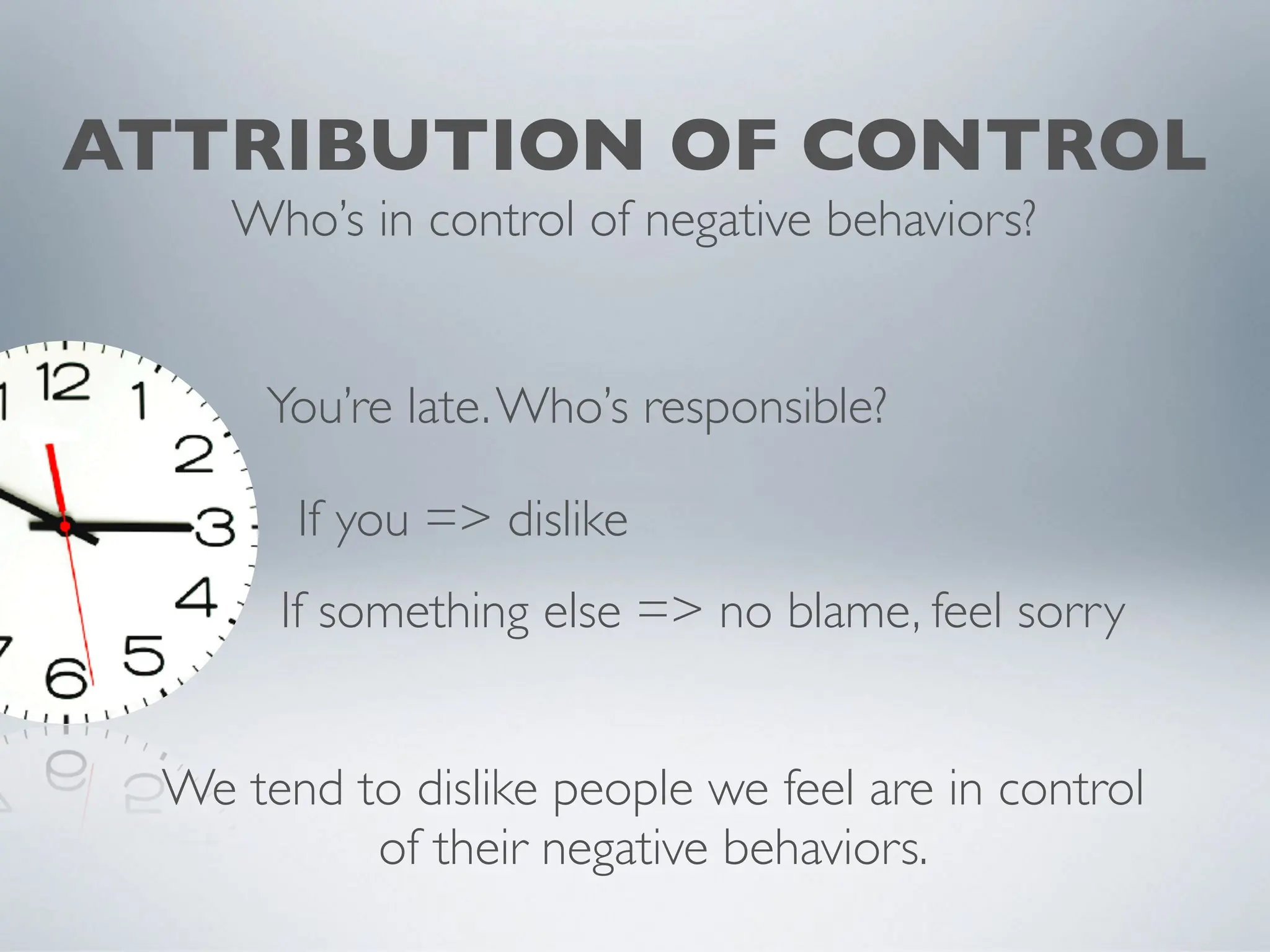
ATTRIBUTION OF CONTROL
Who’sin control of negative behaviors?
If you => dislike
If something else => no blame, feel sorry
You’re late.Who’s responsible?
We tend to dislike people we feel are in control
of their negative behaviors.
27.
ATTRIBUTION OF CONTROL
•Self-serving bias
Take credit for positive, deny responsibility for negative
• Overattribution
Attribute everything a person does to one or two
obvious characteristics
• Fundamental attribution error
Overvalue internal factors & undervalue external
ones - unemployed due to being lazy or due to
sluggish economy?
Need to analyze & check perceptions
• How do we avoid this pitfall?
28.
• Impressions basedsolely on pictures
• Employment study:
• ranking established within 5 seconds
• never changed after that
• 8 pieces of positive info to overcome
bad first impression
• Physical attractiveness:
• suitcase example & size
• Proxemics & violating personal space
• Telling who’s lying
• Look for surges of anxiety (emotion)
• Microexpression of fear in face
• Can’t produce expression intentionally
THE HUMAN
ZOO
29.
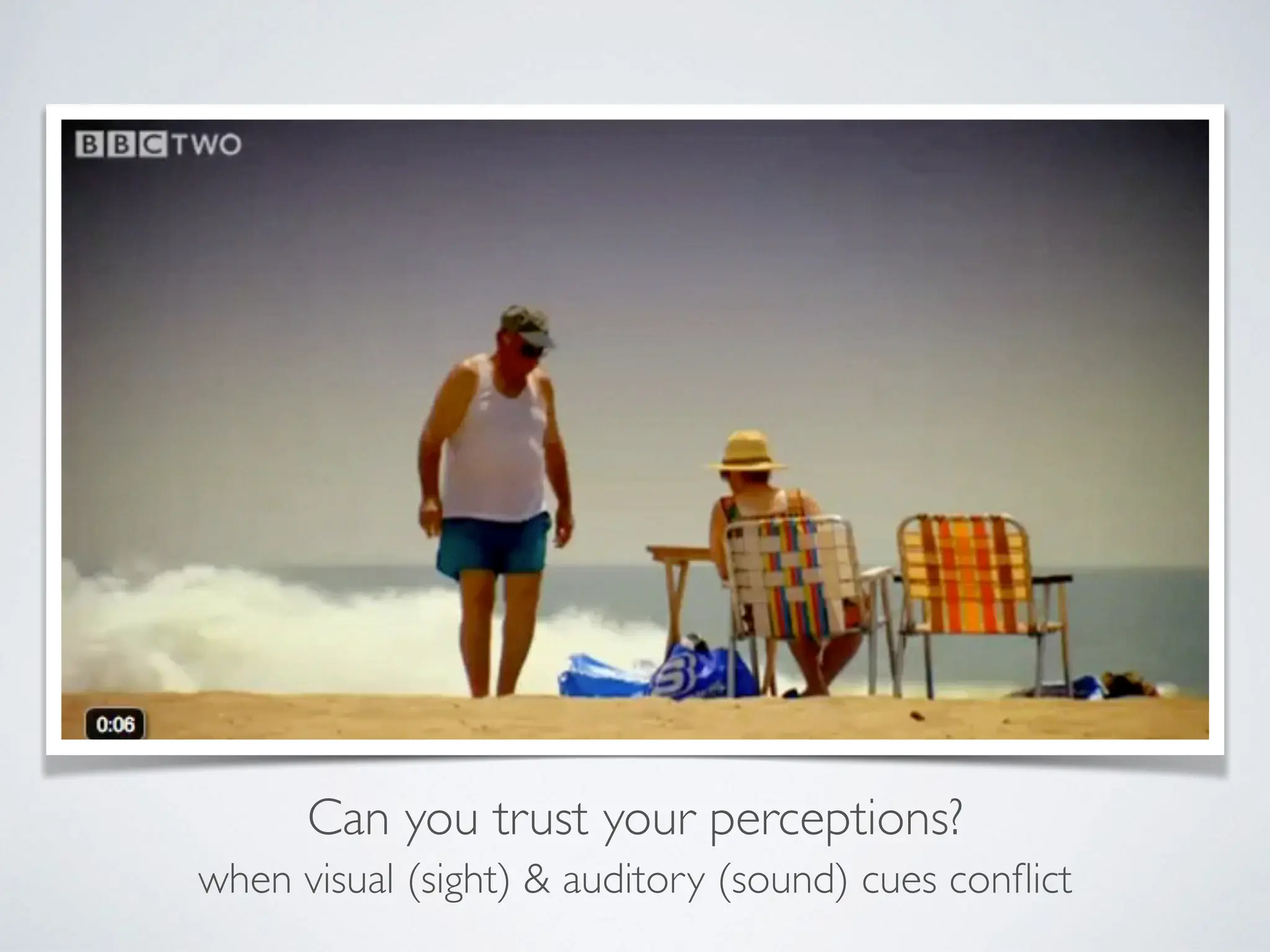
Can you trustyour perceptions?
when visual (sight) & auditory (sound) cues conflict