Feb,16 /2023
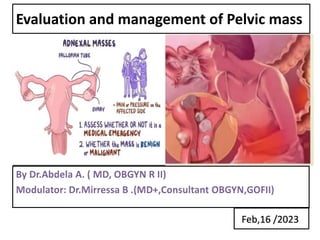
Evaluation and management of Pelvic mass
Outline of presentation
• Introduction
• Demographic factors
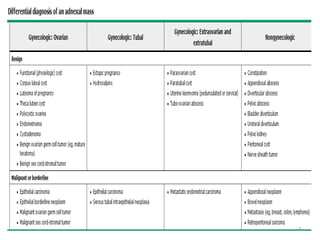
• Differential diagnosis
• General evaluation
• Management of some common adnexal mass
• Clinical consideration and recommendation
• Summary
• References
2
INTRODUCTION
• Pelvic masses are common and may involve reproductive
organs or non-gynecologic structures.
• Affected women can be symptom- free or may complain of
pain, pressure, dysmenorrhea, in fertility, or uterine bleeding.
• treatment varies with patient age and therapeutic goals.
3
DEMOGRAPHIC FACTORS
• Age has the greatest influence in evaluation of a pelvic mass.
– Pathology varies greatly with age, and neoplasms are more
prevalent in older women.
1. Pre-pubertal girls
• most gynecologic pelvic masses involve the ovary. Even before
puberty, ovaries are active, and masses are often functional cysts.
• Of neoplastic lesions, most are benign germ cell tumors,
especially mature cystic teratomas (dermoid cysts).
4
DEMOGRAPHIC FACTORS….
2. Adolescents
• Incidence and type of ovarian pathology in general mirrors
that of pre-pubertal girls.
• With the onset of reproductive function, pelvic masses in
adolescence may also include endometriomas and the
sequelae of PID and pregnancy.
3.Reproductive-Aged Women
• Uterine enlargement due to pregnancy, Functional ovarian
cysts, and leiomyoma are among the most common.
5
DEMOGRAPHIC FACTORS….
4. postmenopausal women
• with cessation of reproductive function, the causes of pelvic
mass also change.
• Simple ovarian cysts and leiomyoma's are still frequent.
• Importantly, malignancy is a more frequent cause in this
demographic group.
6
7
GENERAL EVALUATION
• The goal of the evaluation of a patient with an adnexal mass is
to determine the most likely etiology of the mass.
• The evaluation is guided in large part by the :-
o anatomic location of the mass
o age of the patient and
o reproductive status of the patient.
• This process is often challenging, since there are many types
of adnexal masses and a definitive diagnosis often requires
surgical evaluation.
8
Medical and Family History
 A personal medical history with a detailed gynecologic history and review
of symptoms are critical components of patient evaluation.
• Women who report acute or chronic dysmenorrhea or pain with
intercourse may have an endometrioma.
• The abrupt onset of severe pain in a woman with an adnexal mass may be
associated with
o adnexal torsion,
o rupture of an ovarian cyst, or
o a ruptured ectopic pregnancy.
• Patients with an adnexal mass and fever should be evaluated for a
o tubo-ovarian abscess.
o periappendiceal abscess or
o diverticular abscess
9
Physical examination
 should start with evaluation of vital signs and general physical
appearance.
• Cachectic - Carcinoma
• Pallor --- Ectopic pregnancy
• Rise in temperature ---TOA
• palpation of cervical, supraclavicular, axillary and groin lymph
nodes----metastasis
• pulmonary auscultation-----likely metastasis
10
Abdominal examination
• includes assessment for abdominal distention and ascites and/or an
abdominal mass.
• Characterization of mass (if present ) including location, size
,mobility, consistency ,tender or not.
• The absence of an adnexal mass on examination does not fully
exclude the presence of a pelvic mass.
• Small adnexal masses are difficult to palpate due to the deep
anatomic location of the ovary.
• Features of ascites >> ovarian tumor
11
pelvic examination
• including visual inspection of the perineum,
• Speculum examination
• bimanual palpation, cervical motion tenderness
• rectovaginal examination(allow palpation of the ovary
posteriorly).
12
Cont...
• Examination findings that are concerning for adnexal
malignancy include a mass that is
o irregular,
o firm, fixed,
o nodular,
o bilateral, or associated with ascites.
• Benign conditions that can produce these findings include
endometriosis, chronic pelvic infections, hemorrhagic corpus
luteum,tubo-ovarian abscess, and uterine leiomyoma's.
13
Imaging studies
• A finding of an adnexal mass on pelvic examination should be further
evaluated with pelvic imaging.
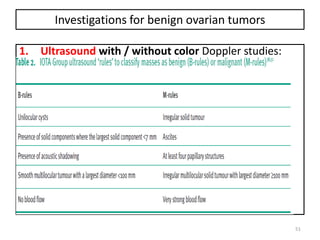
• Transvaginal ultrasonography is the most commonly used imaging
technique for the evaluation of adnexal masses.
• Spectral, color Doppler ultrasonography is useful to evaluate the vascular
characteristics of pelvic lesion.
• Abdominal ultrasonography is a useful when
o pelvic structures are distorted by previous surgery,
o masses extend beyond the pelvis, or
o if trans-vaginal ultrasonography cannot be performed.
14
Imaging studies…
• Computed tomography (CT), magnetic resonance imaging
(MRI), and positron emission tomography (PET) are not
recommended in the initial evaluation of adnexal masses.
• MRI often is helpful in differentiating the origin of pelvic
masses that are not clearly of ovarian origin, especially
leiomyoma's.
• Currently, the best use of CT imaging is not to detect and
characterize pelvic masses, but to evaluate the abdomen for
metastasis when cancer is suspected based on ultrasound
images, examination results, or serum markers.
15
Laboratory testing
 Laboratory testing may clarify the suspected etiology of pelvic
mass.
• Pregnancy testing --in reproductive-aged women, if
indicated.
• CBC & testing for gonorrhea and chlamydial infection ----If
an infectious etiology is suspected
• urinalysis, fecal blood testing or other assessment of intestinal
involvement
16
Serum Marker Testing
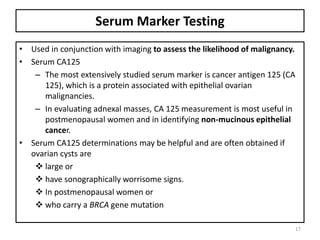
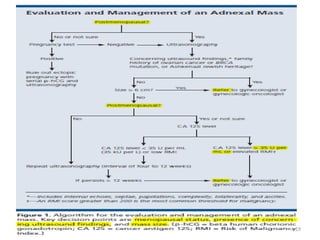
• Used in conjunction with imaging to assess the likelihood of malignancy.
• Serum CA125
– The most extensively studied serum marker is cancer antigen 125 (CA
125), which is a protein associated with epithelial ovarian
malignancies.
– In evaluating adnexal masses, CA 125 measurement is most useful in
postmenopausal women and in identifying non-mucinous epithelial
cancer.
• Serum CA125 determinations may be helpful and are often obtained if
ovarian cysts are
 large or
 have sonographically worrisome signs.
 In postmenopausal women or
 who carry a BRCA gene mutation
17
18
19
Ovarian masses
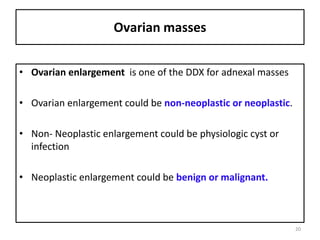
• Ovarian enlargement is one of the DDX for adnexal masses
• Ovarian enlargement could be non-neoplastic or neoplastic.
• Non- Neoplastic enlargement could be physiologic cyst or
infection
• Neoplastic enlargement could be benign or malignant.
20
Non-neoplastic causes
1. Follicular cysts
2. Corpus luteum cyst
3. Theca Leutin cysts
4. PCOS
5. Endometrioma
6. Infectious, TOA
21
FUNCTIONAL OVARIAN CYSTS
• These are common, originate from ovarian follicles, and are
created during follicle maturation and ovulation.
Characterized by
o Not exceeding 5cm
o Spontaneous regression
o Unilocular
o Content is clear fluid
o Lining epithelium is corresponding functional epithelium
22
Cont…
• based on both their pathogenesis and histologic qualities
they are categorized as
• follicular cysts ---->non-rupture of the dominant mature
follicle or failure of an immature follicle to undergo the
normal process of atresia.
• corpus lutem cysts----> corpus luteum fails to involute and
continues to enlarge after ovulation ,due to excessive
hemorrhage
• Thus, follicular and corpus luteum cysts differ in their genesis,
but symptoms and management are similar.
23
24
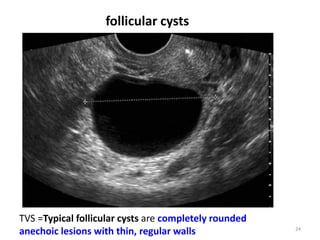
TVS =Typical follicular cysts are completely rounded
anechoic lesions with thin, regular walls
follicular cysts
OVARIAN CYSTS AS A GROUP
• functional ovarian cysts ,created by disruption of normal
ovulation, and
• ovarian cystic neoplasm, derived from neoplastic growth.
• Differentiation of these is not always clinically apparent using
either imaging or tumor markers.
• Thus, ovarian cysts are often managed as a single composite
clinical entity.
25
Management
A. Observation
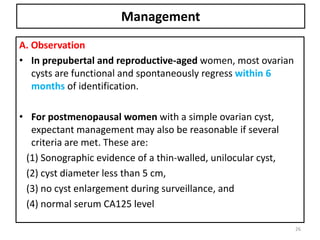
• In prepubertal and reproductive-aged women, most ovarian
cysts are functional and spontaneously regress within 6
months of identification.
• For postmenopausal women with a simple ovarian cyst,
expectant management may also be reasonable if several
criteria are met. These are:
(1) Sonographic evidence of a thin-walled, unilocular cyst,
(2) cyst diameter less than 5 cm,
(3) no cyst enlargement during surveillance, and
(4) normal serum CA125 level
26
Cont..
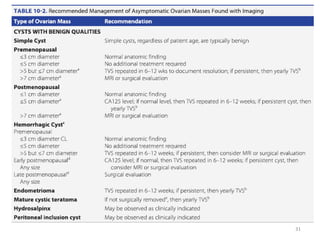
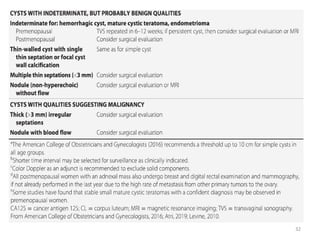
• The ACOG(2016) notes that simple cysts up to 10 cm in
diameter by sonographic evaluation may safely be followed
even in postmenopausal women.
• Consensus regarding an end point for observation is lacking.
• Some experts recommend
o 1 year of surveillance for patients with stable adnexal
masses without solid components and
o 2 years for those with stable masses with solid
components
27
Cont..
B. Surgery
• There is considerable morphologic similarity among cyst types
and between those that are malignant and benign.
• Accordingly, for many cases, excision of the cyst serves as the
definitive diagnostic tool.
• With suspected ovarian cancers, optimal surgical resection
and proper staging by a gynecologic oncologist during the
primary operation are major factors in long-term patient
survival.
28
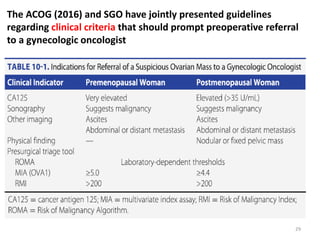
The ACOG (2016) and SGO have jointly presented guidelines
regarding clinical criteria that should prompt preoperative referral
to a gynecologic oncologist
29
Cont..
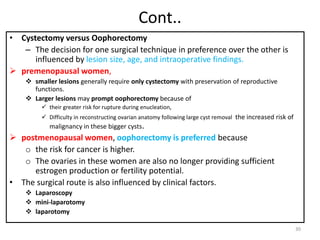
• Cystectomy versus Oophorectomy
– The decision for one surgical technique in preference over the other is
influenced by lesion size, age, and intraoperative findings.
 premenopausal women,
 smaller lesions generally require only cystectomy with preservation of reproductive
functions.
 Larger lesions may prompt oophorectomy because of
 their greater risk for rupture during enucleation,
 Difficulty in reconstructing ovarian anatomy following large cyst removal the increased risk of
malignancy in these bigger cysts.
 postmenopausal women, oophorectomy is preferred because
o the risk for cancer is higher.
o The ovaries in these women are also no longer providing sufficient
estrogen production or fertility potential.
• The surgical route is also influenced by clinical factors.
 Laparoscopy
 mini-laparotomy
 laparotomy
30
31
32
Ovarian neoplasms
• 75% of ovarian neoplasms are benign
• Classification is full of confusion
• Classification ovarian neoplasm is based on:-
1. Morphological characteristics(Cystic, Mixed and Solid)
2. Clinical behaviors(Benign, Borderline and Malignant)
3. Histological features
• Ovarian tissues are constantly in a dynamic state.
33
34
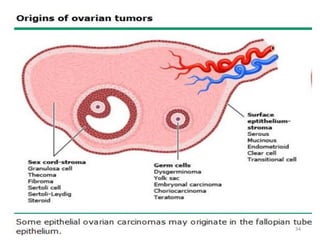
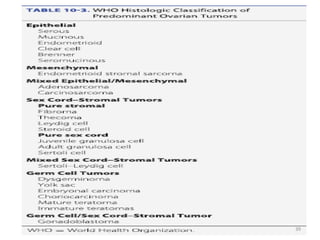
Based of histological features
1. Epithelial tumor (70%):
o Serous tumor
o Mucinous tumor
o Endometroid tumor
o Mesonephroid (clear cell)
o Brenner tumors
o Mixed epithelial tumors
o Undifferentiated carcinoma
o Unclassified epithelial tumors
35
Epithelial sub-classification
• Three levels of biologic potential
36
Cont..
2. Germ cell tumors of the ovary (20% of all primary
ovarian neoplasms)
o Dysgerminoma
o Endodermal sinus tumor
o Teratoma: mature, immature, monodermal
o Embryonal carcinoma
o Polyembroyoma
o Choriocarcinoma
o Mixed germ cell tumors
37
Cont…
3. Sex-cord stromal tumors (10%):
o Granulosa cell tumors
o Tumors of thecoma-fibroma group
o Androblastoma: Sertoli cell tumors
o Unclassified
4. Lipid cell tumor
5. Gonadoblastoma
6. Unclassified
7. Secondary
38
39
Benign Ovarian neoplasms
• Mucinous cyst adenoma
• Serous cyst adenoma
• Dermoid cyst
• Brenner tumor
• Endometrioid tumors
• Clear cell tumors
– Mucinous cystadenoma, serous cystadenoma & dermoid cyst
account for 80% of primary ovarian neoplasia
• All above three are also called as ovarian cysts as opposed to
cystic ovaries in functional ovarian enlargement.
40
Serous cyst adenoma
• Characterized by proliferation of epithelium resembling
that lining fallopian tube.
• typically thin-walled, unilocular cysts filled with serous
fluid.
• Account for 40% of ovarian tumors
• Bilateral in up to 20 percent of cases.
• Chance of malignancy is 40%
41
mucinous cyst adenoma
• lined by cells similar to those lining the fallopian tube.
• are typically thicker-walled.
• 20-25% of ovarian tumors
• 10-15% of all epithelial ovarian neoplasm
• Bilateral in 8-10%
• Chance of malignancy is 5-10%
• The more massive the tumor, the greater the possibility it is
mucinous.
42
Dermoid Cyst
• Accounts for 10-25% of ovarian tumors.
• 60 percent of all benign ovarian neoplasms.
• bilateral in approximately 10 percent of cases
• typically slow growing(<2 mm/year), and most measure
between 5 and 10 cm.
• Accounts for 20-40 % of ovarian tumors in pregnancy
• Torsion is most common complication (15-20%) & rupture is an
uncommon (1%) complication.
• Chance of malignancy is 1-2%
43
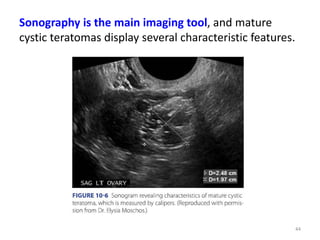
Sonography is the main imaging tool, and mature
cystic teratomas display several characteristic features.
44
Treatment
 Surgery
• For most women with mature cystic teratoma, surgical excision
provides a
– definitive diagnosis
– affords relief of symptoms
– prevents complications of torsion, rupture, and malignant
transformation.
 only surveillance, few studies support. Especially
o those desiring future fertility,
o premenopausal women with cysts measuring <6 cm and
o with a confident diagnosis are reasonable potential
candidates
45
Clinical features of benign ovarian tumors
o Commonly seen in late child bearing age
o Dermoid (90%) specially with mucinous cyst adenoma, is
common in the reproductive period.
o Most are asymptomatic
o Heaviness in the lower abdomen
o Gradually increasing mass in the lower abdomen, may also fill
the lower abdomen.
46
Clinical features
Signs:
– General condition remain unaffected
– However, the patient may be cachectic in huge mucinous
cyst adenoma due to protein loss.
– pitting edema in lower extremities may be present when a
huge tumor presses on the great veins.
– Abdominal mass either central or in one side
– Cystic/ tense cystic feel or solid/firm
47
Clinical feat…
• Mass freely mobile from side to side, too big a tumor or adhesions
make its mobility restricted.
• Upper and lateral borders are well-defined but the lower pole is
difficult to reach suggestive of pelvic origin.
• Surface over the tumor is smooth but often grooved in lobulated
tumor.
• It is usually not tender
• Dull at the center & resonant at the flanks
• A fluid thrill may be elicited when the walls are thin and the content
is watery.
48
Clinical feat…
• Bimanual examination reveals
o Mass felt separate from the uterus
o A groove is felt between the uterus and the mass.
o Movement of the mass per abdomen fails to move the cervix
• Meig’s Syndrome:-
– classically defined as triad of Ascites , right side hydrothorax and
benign ovarian fibroma.
– Key feature found in patients with Meig’s Syndrome is resolution of
symptoms after tumor resection.
– Rare condition that can only be diagnosed after ovarian carcinoma
ruled out.
• Pseudomeig’s syndrome:-
– Ascites and hydrothorax when present in conditions other than those
mentioned above.
49
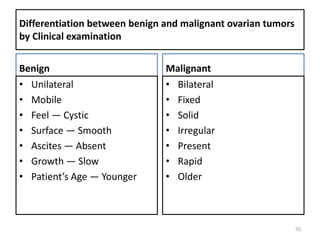
Differentiation between benign and malignant ovarian tumors
by Clinical examination
Benign
• Unilateral
• Mobile
• Feel — Cystic
• Surface — Smooth
• Ascites — Absent
• Growth — Slow
• Patient’s Age — Younger
Malignant
• Bilateral
• Fixed
• Solid
• Irregular
• Present
• Rapid
• Older
50
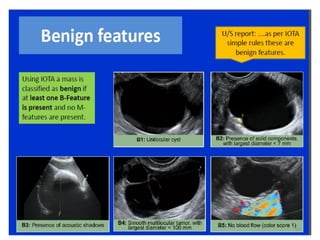
Investigations for benign ovarian tumors
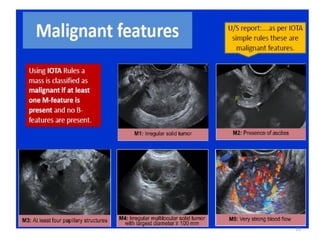
1. Ultrasound with / without color Doppler studies:
51
52
53
Complications
• Torsion of the pedicle
• Intracystic hemorrhage
• Rupture
• Infection
• Pseudomyxoma peritonei
• Malignancy
54
Ovarian torsion
• Common in tumors:
o Moderate size with round contour
o Moderate weight/ dermoid cyst
o Free mobility
o Long pedicle
o Masses between 6 -8 cm in diameter
• More common in dermoid & serous cystadenoma
55
• Causes:
o Trauma
o Intestinal peristalsis
o Violent physical movement
o Contraction with pregnant uterus
56
o rapid operative intervention is believed to improve the
likelihood of ovarian conservation.
o Salpingo-oophorectomy is reasonable in
postmenopausal women with ovarian torsion
57
Management
Ovarian tumors of low malignant potential
/LMP
• Borderline tumors are a heterogeneous group of lesions
defined histologically:
 Atypical epithelial proliferation without stromal invasion
• 10 -15% of ovarian epithelial tumors
• HISTOLOGIC TYPES
 Serous borderline tumors
 Mucinous borderline tumors
 Other — Endometrioid, clear-cell, and transitional cell (Brenner)
borderline tumors are rare.
 They are usually unilateral and confined to the ovary.
58
Conti…
• Histologically, LMP tumors are distinguished from benign cysts
by having at least two of the following features:
– Nuclear atypia,
– epithelial stratification,
– microscopic papillary projections,
– cellular pleomorphism, or
– mitotic activity.
• Unlike invasive carcinomas, LMP tumors lack stromal
invasion.
59
Clinical Features
• Ovarian LMP tumors present similar to other adnexal masses.
• Preoperatively, no sonographic findings are pathognomonic,
and serum CA125 levels are non-specific.
• Depending on the clinical setting, computed tomography (CT)
scanning may be indicated to exclude ascites or omental
caking, which would suggest a more typical ovarian cancer.
60
Cont..
Treatment:
• LMP tumors are primarily managed surgically.
• differentiating a benign adnexal mass, LMP tumor, or
invasive ovarian cancer is almost impossible until final
histologic slides have been reviewed. Accordingly,
– pre-menopausal women Unilateral oophorectomy
(fertility-sparing surgery).
– Postmenopausal women -->should undergo hysterectomy
and BSO.
• Risk of recurrence is low.
• The prognosis is excellent for patients with ovarian LMP
tumors
61
FALLOPIAN TUBE PATHOLOGY
 Hydrosalpinx
• Is a chronic cystic swelling of the fallopian tube that
forms following distal tubal obstruction.
• Causes include PID and endometriosis and rarely
fallopian tube cancer.
• Grossly, the fine fimbria and tubal Ostia are obliterated.
and replaced by a smooth, clubbed end.
• The tube is typically distended with a clear serous fluid.
62
Cont..
• In general, no laboratory test is helpful, and serum CA125
level testing results for presumed ovarian malignancy are
typically normal.
• Sonographic shows:-
 a thin-walled, cystic fusiform structure with incomplete
septa and anechoic contents.
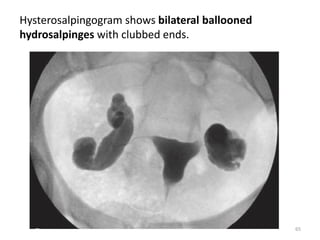
• Hysterosalpingography ,performed for fertility evaluation,
shows ballooned, clubbed fallopian tubes filled with contrast.
63
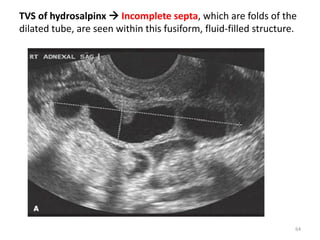
TVS of hydrosalpinx  Incomplete septa, which are folds of the
dilated tube, are seen within this fusiform, fluid-filled structure.
64
Hysterosalpingogram shows bilateral ballooned
hydrosalpinges with clubbed ends.
65
Management
• varies depending on
the conviction of diagnosis,
desire for future fertility, and
associated symptoms.
 In asymptomatic women who have completed childbearing, and in
whom the sonographic evidence supports the diagnosis of
hydrosalpinix,  expectant management is typical.
 In those with pelvic pain or infertility, or in whom the diagnosis is
uncertain, diagnostic laparoscopy is often chosen.
 For women not wishing to preserve fertility, laparoscopic
treatment may include lysis of adhesions and salpingectomy.
66
Cont…
 Women who desire fertility, surgical intervention depends on the degree
of tubal damage.
 mild tubal disease, laparoscopic neo-salpingostomy has resulted in 80%
pregnancy rates and is a reasonable approach.
 severe tubal disease, in vitro fertilization (IVF) may offer a greater chance at
conception.
 women undergoing IVF, women with hydrosalpinges have approximately
half the pregnancy rate of those without dilated tubes.
 The explanation is unclear, and theories include
 toxic hydrosalpinx fluid,
 Lowered growth factor concentrations, and
 mechanical flushing of embryos by excess fluid
• If hydrosalpinges are resected prior to IVF, subsequent rate of pregnancy,
implantation, and live births are improved.
• The ASRM (2015) recommends such surgery prior to IVF.
67
Clinical Considerations and Recommendations
68
1. What is the role of serum marker testing in the initial
evaluation of an adnexal mass?
• postmenopausal women
Specificity and positive predictive value of CA 125 levels are
consistently higher
The combination of an elevated CA 125 level and a pelvic mass
highly suspicious for malignancy.
• premenopausal women
less valuable in predicting cancer risk
normal or mildly elevated CA 125 levels usually have benign
diagnoses.
a markedly elevated CA 125 level raises greater concern for
malignancy.
69
2. What is sensitivity and specificity of CA-125 for
detection of ovarian CA?
 low sensitivity for the detection of ovarian cancer because:-
• The CA 125 level is elevated in 80% of patients with epithelial ovarian cancer but
in only 50% of patients with stage I disease.
 Low specificity occurs because the CA 125 level is elevated in many non-
malignant clinical conditions, including
• uterine leiomyoma's, endometriosis, PID,
• ascites of any etiology, and even inflammatory conditions such as SLE
and IBD
 The sensitivity and specificity of an elevated CA 125 for cancer diagnosis in
the setting of a pelvic mass is highest after menopause. Because
• most of non-malignant clinical conditions occur in premenopausal
women
• most cases of epithelial ovarian cancer occur in postmenopausal
women.
70
3. When is aspiration of an adnexal mass appropriate?
• Aspiration of cyst fluid for diagnosis is contraindicated when
there is a suspicion for cancer.
• Spillage and seeding of cancer cells into the peritoneal cavity,
which results in more-advanced-stage disease at diagnosis and
potentially adversely affecting prognosis.
• Even when a benign, simple cyst is aspirated, the procedure
often is not definitively therapeutic.
• the recurrence rate of cysts at 6 months was 44% for
premenopausal women and 25% for postmenopausal women.
71
Cont..
• may be appropriate
o tubo-ovarian abscess (although antibiotic therapy is first-
line treatment) and
o for the diagnosis of suspected advanced ovarian cancer for
which neo-adjuvant therapy is planned.
o women who have clinical and radiographic evidence of
advanced ovarian cancer and who are medically unfit to
undergo surgery.
• diagnostic cytology have mixed results in the detection of
malignancy, with sensitivity ranging from 50% to 74%.
72
4. What are the special considerations for the evaluation and
management of adnexal masses in adolescents?
• The evaluation of adolescents with an adnexal mass should include
menstrual history and a confidential inquiry regarding sexual activity.
• Trans-abdominal ultrasonography rather than TVS is recommended for
young, virginal, or pre-pubertal adolescents.
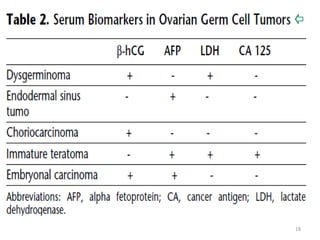
• AFP, β-hCG, and LDH are indicated for evaluation of suspected germ cell
tumors.
• Elevation of CA 125 levels can occur in adolescent and pediatric patients
with
 ovarian malignancies
 non-communicating uterine horns,
 ovarian fibromas, or
 torsed adnexa
Cont…
• Germ cell tumors are the most common ovarian malignancies in children
and adolescents.
• The operative management of benign masses varies from a simple
cystectomy to a unilateral salpingo-oophorectomy by laparoscopy or a
staging laparotomy based on risk stratification.
• Ovarian preservation has been increasingly prioritized in the
management of benign adnexal masses.
• Unilateral oophorectomy
– has not been shown to impair menstrual regularity or
– has not been shown to impair spontaneous pregnancy rates and,
– lower follicular response to controlled ovarian stimulation,
– pregnancy and live birth rates are not decreased.
5. How should adnexal masses be managed in pregnancy?
• Adnexal masses are diagnosed in approximately 1 to 4% of all pregnancies.
• Detection of adnexal masses in pregnancy has become increasingly
common. Because of
– an increasing number of obstetrical ultrasounds are being performed,
especially in the first trimester.
– ultrasound technology continues to improve, which will result in the
identification of smaller masses.
• The most commonly reported pathologic diagnoses are mature teratomas
and corpus luteum cysts.
• Ultrasound is an accurate and safe method for diagnosing the etiology of
an adnexal mass and distinguishing benign from malignant pathology.
75
Cont…
• MRI is the modality of choice if additional imaging is needed
because
– It has the ability to image deep soft tissue structures
– It is not operator dependent, and
– It does not use ionizing radiation
• Levels of CA 125 are elevated in pregnancy.
• They peak in the first trimester (range, 7–251 units/mL) and
decrease consistently thereafter.
• Typically, low-level elevations in pregnancy are not associated with
malignancy.
76
Cont…
• The management of an adnexal mass in pregnancy is
controversial.
A. Expectant Management
• asymptomatic adnexal masses and
• adnexal masses without features of malignancy.
– The risks associated with expectant management include a delayed diagnosis
of malignancy, torsion, cyst rupture, and obstruction of labor.
B. Surgical Management
• Ideally surgery is avoided in pregnancy because of the potential risks to
the mother and fetus.
• Studies have shown that surgery for adnexal masses during pregnancy is
associated with an increased risk of spontaneous abortion, preterm labor.
77
Summary
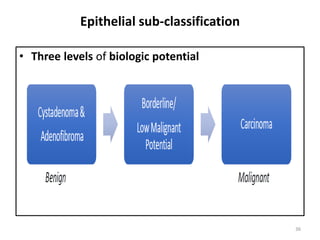
• Adnexal masses commonly are encountered by obstetrician–gynecologists
and often present diagnostic and management dilemmas.
• Most adnexal masses are discovered incidentally, and the management of
these benign masses is dictated by their presentation.
• Differential diagnosis narrowed depending on anatomic location of the
mass , age of the patient and reproductive status of the patient.
• Trans-vaginal ultrasonography is the recommended imaging modality for
a suspected or an incidentally identified pelvic mass.
78
Reference
• Williams gynecology 4th edition chapter 10 ,page 220.
• ACOG Practice Bulletin No. 174, November 2016.
• Update 2018
79
80

Pelvic mass Abde (2).pdf

  • 1.
    Feb,16 /2023 Evaluation andmanagement of Pelvic mass
  • 2.
    Outline of presentation •Introduction • Demographic factors • Differential diagnosis • General evaluation • Management of some common adnexal mass • Clinical consideration and recommendation • Summary • References 2
  • 3.
    INTRODUCTION • Pelvic massesare common and may involve reproductive organs or non-gynecologic structures. • Affected women can be symptom- free or may complain of pain, pressure, dysmenorrhea, in fertility, or uterine bleeding. • treatment varies with patient age and therapeutic goals. 3
  • 4.
    DEMOGRAPHIC FACTORS • Agehas the greatest influence in evaluation of a pelvic mass. – Pathology varies greatly with age, and neoplasms are more prevalent in older women. 1. Pre-pubertal girls • most gynecologic pelvic masses involve the ovary. Even before puberty, ovaries are active, and masses are often functional cysts. • Of neoplastic lesions, most are benign germ cell tumors, especially mature cystic teratomas (dermoid cysts). 4
  • 5.
    DEMOGRAPHIC FACTORS…. 2. Adolescents •Incidence and type of ovarian pathology in general mirrors that of pre-pubertal girls. • With the onset of reproductive function, pelvic masses in adolescence may also include endometriomas and the sequelae of PID and pregnancy. 3.Reproductive-Aged Women • Uterine enlargement due to pregnancy, Functional ovarian cysts, and leiomyoma are among the most common. 5
  • 6.
    DEMOGRAPHIC FACTORS…. 4. postmenopausalwomen • with cessation of reproductive function, the causes of pelvic mass also change. • Simple ovarian cysts and leiomyoma's are still frequent. • Importantly, malignancy is a more frequent cause in this demographic group. 6
  • 7.
  • 8.
    GENERAL EVALUATION • Thegoal of the evaluation of a patient with an adnexal mass is to determine the most likely etiology of the mass. • The evaluation is guided in large part by the :- o anatomic location of the mass o age of the patient and o reproductive status of the patient. • This process is often challenging, since there are many types of adnexal masses and a definitive diagnosis often requires surgical evaluation. 8
  • 9.
    Medical and FamilyHistory  A personal medical history with a detailed gynecologic history and review of symptoms are critical components of patient evaluation. • Women who report acute or chronic dysmenorrhea or pain with intercourse may have an endometrioma. • The abrupt onset of severe pain in a woman with an adnexal mass may be associated with o adnexal torsion, o rupture of an ovarian cyst, or o a ruptured ectopic pregnancy. • Patients with an adnexal mass and fever should be evaluated for a o tubo-ovarian abscess. o periappendiceal abscess or o diverticular abscess 9
  • 10.
    Physical examination  shouldstart with evaluation of vital signs and general physical appearance. • Cachectic - Carcinoma • Pallor --- Ectopic pregnancy • Rise in temperature ---TOA • palpation of cervical, supraclavicular, axillary and groin lymph nodes----metastasis • pulmonary auscultation-----likely metastasis 10
  • 11.
    Abdominal examination • includesassessment for abdominal distention and ascites and/or an abdominal mass. • Characterization of mass (if present ) including location, size ,mobility, consistency ,tender or not. • The absence of an adnexal mass on examination does not fully exclude the presence of a pelvic mass. • Small adnexal masses are difficult to palpate due to the deep anatomic location of the ovary. • Features of ascites >> ovarian tumor 11
  • 12.
    pelvic examination • includingvisual inspection of the perineum, • Speculum examination • bimanual palpation, cervical motion tenderness • rectovaginal examination(allow palpation of the ovary posteriorly). 12
  • 13.
    Cont... • Examination findingsthat are concerning for adnexal malignancy include a mass that is o irregular, o firm, fixed, o nodular, o bilateral, or associated with ascites. • Benign conditions that can produce these findings include endometriosis, chronic pelvic infections, hemorrhagic corpus luteum,tubo-ovarian abscess, and uterine leiomyoma's. 13
  • 14.
    Imaging studies • Afinding of an adnexal mass on pelvic examination should be further evaluated with pelvic imaging. • Transvaginal ultrasonography is the most commonly used imaging technique for the evaluation of adnexal masses. • Spectral, color Doppler ultrasonography is useful to evaluate the vascular characteristics of pelvic lesion. • Abdominal ultrasonography is a useful when o pelvic structures are distorted by previous surgery, o masses extend beyond the pelvis, or o if trans-vaginal ultrasonography cannot be performed. 14
  • 15.
    Imaging studies… • Computedtomography (CT), magnetic resonance imaging (MRI), and positron emission tomography (PET) are not recommended in the initial evaluation of adnexal masses. • MRI often is helpful in differentiating the origin of pelvic masses that are not clearly of ovarian origin, especially leiomyoma's. • Currently, the best use of CT imaging is not to detect and characterize pelvic masses, but to evaluate the abdomen for metastasis when cancer is suspected based on ultrasound images, examination results, or serum markers. 15
  • 16.
    Laboratory testing  Laboratorytesting may clarify the suspected etiology of pelvic mass. • Pregnancy testing --in reproductive-aged women, if indicated. • CBC & testing for gonorrhea and chlamydial infection ----If an infectious etiology is suspected • urinalysis, fecal blood testing or other assessment of intestinal involvement 16
  • 17.
    Serum Marker Testing •Used in conjunction with imaging to assess the likelihood of malignancy. • Serum CA125 – The most extensively studied serum marker is cancer antigen 125 (CA 125), which is a protein associated with epithelial ovarian malignancies. – In evaluating adnexal masses, CA 125 measurement is most useful in postmenopausal women and in identifying non-mucinous epithelial cancer. • Serum CA125 determinations may be helpful and are often obtained if ovarian cysts are  large or  have sonographically worrisome signs.  In postmenopausal women or  who carry a BRCA gene mutation 17
  • 18.
  • 19.
  • 20.
    Ovarian masses • Ovarianenlargement is one of the DDX for adnexal masses • Ovarian enlargement could be non-neoplastic or neoplastic. • Non- Neoplastic enlargement could be physiologic cyst or infection • Neoplastic enlargement could be benign or malignant. 20
  • 21.
    Non-neoplastic causes 1. Follicularcysts 2. Corpus luteum cyst 3. Theca Leutin cysts 4. PCOS 5. Endometrioma 6. Infectious, TOA 21
  • 22.
    FUNCTIONAL OVARIAN CYSTS •These are common, originate from ovarian follicles, and are created during follicle maturation and ovulation. Characterized by o Not exceeding 5cm o Spontaneous regression o Unilocular o Content is clear fluid o Lining epithelium is corresponding functional epithelium 22
  • 23.
    Cont… • based onboth their pathogenesis and histologic qualities they are categorized as • follicular cysts ---->non-rupture of the dominant mature follicle or failure of an immature follicle to undergo the normal process of atresia. • corpus lutem cysts----> corpus luteum fails to involute and continues to enlarge after ovulation ,due to excessive hemorrhage • Thus, follicular and corpus luteum cysts differ in their genesis, but symptoms and management are similar. 23
  • 24.
    24 TVS =Typical follicularcysts are completely rounded anechoic lesions with thin, regular walls follicular cysts
  • 25.
    OVARIAN CYSTS ASA GROUP • functional ovarian cysts ,created by disruption of normal ovulation, and • ovarian cystic neoplasm, derived from neoplastic growth. • Differentiation of these is not always clinically apparent using either imaging or tumor markers. • Thus, ovarian cysts are often managed as a single composite clinical entity. 25
  • 26.
    Management A. Observation • Inprepubertal and reproductive-aged women, most ovarian cysts are functional and spontaneously regress within 6 months of identification. • For postmenopausal women with a simple ovarian cyst, expectant management may also be reasonable if several criteria are met. These are: (1) Sonographic evidence of a thin-walled, unilocular cyst, (2) cyst diameter less than 5 cm, (3) no cyst enlargement during surveillance, and (4) normal serum CA125 level 26
  • 27.
    Cont.. • The ACOG(2016)notes that simple cysts up to 10 cm in diameter by sonographic evaluation may safely be followed even in postmenopausal women. • Consensus regarding an end point for observation is lacking. • Some experts recommend o 1 year of surveillance for patients with stable adnexal masses without solid components and o 2 years for those with stable masses with solid components 27
  • 28.
    Cont.. B. Surgery • Thereis considerable morphologic similarity among cyst types and between those that are malignant and benign. • Accordingly, for many cases, excision of the cyst serves as the definitive diagnostic tool. • With suspected ovarian cancers, optimal surgical resection and proper staging by a gynecologic oncologist during the primary operation are major factors in long-term patient survival. 28
  • 29.
    The ACOG (2016)and SGO have jointly presented guidelines regarding clinical criteria that should prompt preoperative referral to a gynecologic oncologist 29
  • 30.
    Cont.. • Cystectomy versusOophorectomy – The decision for one surgical technique in preference over the other is influenced by lesion size, age, and intraoperative findings.  premenopausal women,  smaller lesions generally require only cystectomy with preservation of reproductive functions.  Larger lesions may prompt oophorectomy because of  their greater risk for rupture during enucleation,  Difficulty in reconstructing ovarian anatomy following large cyst removal the increased risk of malignancy in these bigger cysts.  postmenopausal women, oophorectomy is preferred because o the risk for cancer is higher. o The ovaries in these women are also no longer providing sufficient estrogen production or fertility potential. • The surgical route is also influenced by clinical factors.  Laparoscopy  mini-laparotomy  laparotomy 30
  • 31.
  • 32.
  • 33.
    Ovarian neoplasms • 75%of ovarian neoplasms are benign • Classification is full of confusion • Classification ovarian neoplasm is based on:- 1. Morphological characteristics(Cystic, Mixed and Solid) 2. Clinical behaviors(Benign, Borderline and Malignant) 3. Histological features • Ovarian tissues are constantly in a dynamic state. 33
  • 34.
  • 35.
    Based of histologicalfeatures 1. Epithelial tumor (70%): o Serous tumor o Mucinous tumor o Endometroid tumor o Mesonephroid (clear cell) o Brenner tumors o Mixed epithelial tumors o Undifferentiated carcinoma o Unclassified epithelial tumors 35
  • 36.
    Epithelial sub-classification • Threelevels of biologic potential 36
  • 37.
    Cont.. 2. Germ celltumors of the ovary (20% of all primary ovarian neoplasms) o Dysgerminoma o Endodermal sinus tumor o Teratoma: mature, immature, monodermal o Embryonal carcinoma o Polyembroyoma o Choriocarcinoma o Mixed germ cell tumors 37
  • 38.
    Cont… 3. Sex-cord stromaltumors (10%): o Granulosa cell tumors o Tumors of thecoma-fibroma group o Androblastoma: Sertoli cell tumors o Unclassified 4. Lipid cell tumor 5. Gonadoblastoma 6. Unclassified 7. Secondary 38
  • 39.
  • 40.
    Benign Ovarian neoplasms •Mucinous cyst adenoma • Serous cyst adenoma • Dermoid cyst • Brenner tumor • Endometrioid tumors • Clear cell tumors – Mucinous cystadenoma, serous cystadenoma & dermoid cyst account for 80% of primary ovarian neoplasia • All above three are also called as ovarian cysts as opposed to cystic ovaries in functional ovarian enlargement. 40
  • 41.
    Serous cyst adenoma •Characterized by proliferation of epithelium resembling that lining fallopian tube. • typically thin-walled, unilocular cysts filled with serous fluid. • Account for 40% of ovarian tumors • Bilateral in up to 20 percent of cases. • Chance of malignancy is 40% 41
  • 42.
    mucinous cyst adenoma •lined by cells similar to those lining the fallopian tube. • are typically thicker-walled. • 20-25% of ovarian tumors • 10-15% of all epithelial ovarian neoplasm • Bilateral in 8-10% • Chance of malignancy is 5-10% • The more massive the tumor, the greater the possibility it is mucinous. 42
  • 43.
    Dermoid Cyst • Accountsfor 10-25% of ovarian tumors. • 60 percent of all benign ovarian neoplasms. • bilateral in approximately 10 percent of cases • typically slow growing(<2 mm/year), and most measure between 5 and 10 cm. • Accounts for 20-40 % of ovarian tumors in pregnancy • Torsion is most common complication (15-20%) & rupture is an uncommon (1%) complication. • Chance of malignancy is 1-2% 43
  • 44.
    Sonography is themain imaging tool, and mature cystic teratomas display several characteristic features. 44
  • 45.
    Treatment  Surgery • Formost women with mature cystic teratoma, surgical excision provides a – definitive diagnosis – affords relief of symptoms – prevents complications of torsion, rupture, and malignant transformation.  only surveillance, few studies support. Especially o those desiring future fertility, o premenopausal women with cysts measuring <6 cm and o with a confident diagnosis are reasonable potential candidates 45
  • 46.
    Clinical features ofbenign ovarian tumors o Commonly seen in late child bearing age o Dermoid (90%) specially with mucinous cyst adenoma, is common in the reproductive period. o Most are asymptomatic o Heaviness in the lower abdomen o Gradually increasing mass in the lower abdomen, may also fill the lower abdomen. 46
  • 47.
    Clinical features Signs: – Generalcondition remain unaffected – However, the patient may be cachectic in huge mucinous cyst adenoma due to protein loss. – pitting edema in lower extremities may be present when a huge tumor presses on the great veins. – Abdominal mass either central or in one side – Cystic/ tense cystic feel or solid/firm 47
  • 48.
    Clinical feat… • Massfreely mobile from side to side, too big a tumor or adhesions make its mobility restricted. • Upper and lateral borders are well-defined but the lower pole is difficult to reach suggestive of pelvic origin. • Surface over the tumor is smooth but often grooved in lobulated tumor. • It is usually not tender • Dull at the center & resonant at the flanks • A fluid thrill may be elicited when the walls are thin and the content is watery. 48
  • 49.
    Clinical feat… • Bimanualexamination reveals o Mass felt separate from the uterus o A groove is felt between the uterus and the mass. o Movement of the mass per abdomen fails to move the cervix • Meig’s Syndrome:- – classically defined as triad of Ascites , right side hydrothorax and benign ovarian fibroma. – Key feature found in patients with Meig’s Syndrome is resolution of symptoms after tumor resection. – Rare condition that can only be diagnosed after ovarian carcinoma ruled out. • Pseudomeig’s syndrome:- – Ascites and hydrothorax when present in conditions other than those mentioned above. 49
  • 50.
    Differentiation between benignand malignant ovarian tumors by Clinical examination Benign • Unilateral • Mobile • Feel — Cystic • Surface — Smooth • Ascites — Absent • Growth — Slow • Patient’s Age — Younger Malignant • Bilateral • Fixed • Solid • Irregular • Present • Rapid • Older 50
  • 51.
    Investigations for benignovarian tumors 1. Ultrasound with / without color Doppler studies: 51
  • 52.
  • 53.
  • 54.
    Complications • Torsion ofthe pedicle • Intracystic hemorrhage • Rupture • Infection • Pseudomyxoma peritonei • Malignancy 54
  • 55.
    Ovarian torsion • Commonin tumors: o Moderate size with round contour o Moderate weight/ dermoid cyst o Free mobility o Long pedicle o Masses between 6 -8 cm in diameter • More common in dermoid & serous cystadenoma 55
  • 56.
    • Causes: o Trauma oIntestinal peristalsis o Violent physical movement o Contraction with pregnant uterus 56
  • 57.
    o rapid operativeintervention is believed to improve the likelihood of ovarian conservation. o Salpingo-oophorectomy is reasonable in postmenopausal women with ovarian torsion 57 Management
  • 58.
    Ovarian tumors oflow malignant potential /LMP • Borderline tumors are a heterogeneous group of lesions defined histologically:  Atypical epithelial proliferation without stromal invasion • 10 -15% of ovarian epithelial tumors • HISTOLOGIC TYPES  Serous borderline tumors  Mucinous borderline tumors  Other — Endometrioid, clear-cell, and transitional cell (Brenner) borderline tumors are rare.  They are usually unilateral and confined to the ovary. 58
  • 59.
    Conti… • Histologically, LMPtumors are distinguished from benign cysts by having at least two of the following features: – Nuclear atypia, – epithelial stratification, – microscopic papillary projections, – cellular pleomorphism, or – mitotic activity. • Unlike invasive carcinomas, LMP tumors lack stromal invasion. 59
  • 60.
    Clinical Features • OvarianLMP tumors present similar to other adnexal masses. • Preoperatively, no sonographic findings are pathognomonic, and serum CA125 levels are non-specific. • Depending on the clinical setting, computed tomography (CT) scanning may be indicated to exclude ascites or omental caking, which would suggest a more typical ovarian cancer. 60
  • 61.
    Cont.. Treatment: • LMP tumorsare primarily managed surgically. • differentiating a benign adnexal mass, LMP tumor, or invasive ovarian cancer is almost impossible until final histologic slides have been reviewed. Accordingly, – pre-menopausal women Unilateral oophorectomy (fertility-sparing surgery). – Postmenopausal women -->should undergo hysterectomy and BSO. • Risk of recurrence is low. • The prognosis is excellent for patients with ovarian LMP tumors 61
  • 62.
    FALLOPIAN TUBE PATHOLOGY Hydrosalpinx • Is a chronic cystic swelling of the fallopian tube that forms following distal tubal obstruction. • Causes include PID and endometriosis and rarely fallopian tube cancer. • Grossly, the fine fimbria and tubal Ostia are obliterated. and replaced by a smooth, clubbed end. • The tube is typically distended with a clear serous fluid. 62
  • 63.
    Cont.. • In general,no laboratory test is helpful, and serum CA125 level testing results for presumed ovarian malignancy are typically normal. • Sonographic shows:-  a thin-walled, cystic fusiform structure with incomplete septa and anechoic contents. • Hysterosalpingography ,performed for fertility evaluation, shows ballooned, clubbed fallopian tubes filled with contrast. 63
  • 64.
    TVS of hydrosalpinx Incomplete septa, which are folds of the dilated tube, are seen within this fusiform, fluid-filled structure. 64
  • 65.
    Hysterosalpingogram shows bilateralballooned hydrosalpinges with clubbed ends. 65
  • 66.
    Management • varies dependingon the conviction of diagnosis, desire for future fertility, and associated symptoms.  In asymptomatic women who have completed childbearing, and in whom the sonographic evidence supports the diagnosis of hydrosalpinix,  expectant management is typical.  In those with pelvic pain or infertility, or in whom the diagnosis is uncertain, diagnostic laparoscopy is often chosen.  For women not wishing to preserve fertility, laparoscopic treatment may include lysis of adhesions and salpingectomy. 66
  • 67.
    Cont…  Women whodesire fertility, surgical intervention depends on the degree of tubal damage.  mild tubal disease, laparoscopic neo-salpingostomy has resulted in 80% pregnancy rates and is a reasonable approach.  severe tubal disease, in vitro fertilization (IVF) may offer a greater chance at conception.  women undergoing IVF, women with hydrosalpinges have approximately half the pregnancy rate of those without dilated tubes.  The explanation is unclear, and theories include  toxic hydrosalpinx fluid,  Lowered growth factor concentrations, and  mechanical flushing of embryos by excess fluid • If hydrosalpinges are resected prior to IVF, subsequent rate of pregnancy, implantation, and live births are improved. • The ASRM (2015) recommends such surgery prior to IVF. 67
  • 68.
    Clinical Considerations andRecommendations 68
  • 69.
    1. What isthe role of serum marker testing in the initial evaluation of an adnexal mass? • postmenopausal women Specificity and positive predictive value of CA 125 levels are consistently higher The combination of an elevated CA 125 level and a pelvic mass highly suspicious for malignancy. • premenopausal women less valuable in predicting cancer risk normal or mildly elevated CA 125 levels usually have benign diagnoses. a markedly elevated CA 125 level raises greater concern for malignancy. 69
  • 70.
    2. What issensitivity and specificity of CA-125 for detection of ovarian CA?  low sensitivity for the detection of ovarian cancer because:- • The CA 125 level is elevated in 80% of patients with epithelial ovarian cancer but in only 50% of patients with stage I disease.  Low specificity occurs because the CA 125 level is elevated in many non- malignant clinical conditions, including • uterine leiomyoma's, endometriosis, PID, • ascites of any etiology, and even inflammatory conditions such as SLE and IBD  The sensitivity and specificity of an elevated CA 125 for cancer diagnosis in the setting of a pelvic mass is highest after menopause. Because • most of non-malignant clinical conditions occur in premenopausal women • most cases of epithelial ovarian cancer occur in postmenopausal women. 70
  • 71.
    3. When isaspiration of an adnexal mass appropriate? • Aspiration of cyst fluid for diagnosis is contraindicated when there is a suspicion for cancer. • Spillage and seeding of cancer cells into the peritoneal cavity, which results in more-advanced-stage disease at diagnosis and potentially adversely affecting prognosis. • Even when a benign, simple cyst is aspirated, the procedure often is not definitively therapeutic. • the recurrence rate of cysts at 6 months was 44% for premenopausal women and 25% for postmenopausal women. 71
  • 72.
    Cont.. • may beappropriate o tubo-ovarian abscess (although antibiotic therapy is first- line treatment) and o for the diagnosis of suspected advanced ovarian cancer for which neo-adjuvant therapy is planned. o women who have clinical and radiographic evidence of advanced ovarian cancer and who are medically unfit to undergo surgery. • diagnostic cytology have mixed results in the detection of malignancy, with sensitivity ranging from 50% to 74%. 72
  • 73.
    4. What arethe special considerations for the evaluation and management of adnexal masses in adolescents? • The evaluation of adolescents with an adnexal mass should include menstrual history and a confidential inquiry regarding sexual activity. • Trans-abdominal ultrasonography rather than TVS is recommended for young, virginal, or pre-pubertal adolescents. • AFP, β-hCG, and LDH are indicated for evaluation of suspected germ cell tumors. • Elevation of CA 125 levels can occur in adolescent and pediatric patients with  ovarian malignancies  non-communicating uterine horns,  ovarian fibromas, or  torsed adnexa
  • 74.
    Cont… • Germ celltumors are the most common ovarian malignancies in children and adolescents. • The operative management of benign masses varies from a simple cystectomy to a unilateral salpingo-oophorectomy by laparoscopy or a staging laparotomy based on risk stratification. • Ovarian preservation has been increasingly prioritized in the management of benign adnexal masses. • Unilateral oophorectomy – has not been shown to impair menstrual regularity or – has not been shown to impair spontaneous pregnancy rates and, – lower follicular response to controlled ovarian stimulation, – pregnancy and live birth rates are not decreased.
  • 75.
    5. How shouldadnexal masses be managed in pregnancy? • Adnexal masses are diagnosed in approximately 1 to 4% of all pregnancies. • Detection of adnexal masses in pregnancy has become increasingly common. Because of – an increasing number of obstetrical ultrasounds are being performed, especially in the first trimester. – ultrasound technology continues to improve, which will result in the identification of smaller masses. • The most commonly reported pathologic diagnoses are mature teratomas and corpus luteum cysts. • Ultrasound is an accurate and safe method for diagnosing the etiology of an adnexal mass and distinguishing benign from malignant pathology. 75
  • 76.
    Cont… • MRI isthe modality of choice if additional imaging is needed because – It has the ability to image deep soft tissue structures – It is not operator dependent, and – It does not use ionizing radiation • Levels of CA 125 are elevated in pregnancy. • They peak in the first trimester (range, 7–251 units/mL) and decrease consistently thereafter. • Typically, low-level elevations in pregnancy are not associated with malignancy. 76
  • 77.
    Cont… • The managementof an adnexal mass in pregnancy is controversial. A. Expectant Management • asymptomatic adnexal masses and • adnexal masses without features of malignancy. – The risks associated with expectant management include a delayed diagnosis of malignancy, torsion, cyst rupture, and obstruction of labor. B. Surgical Management • Ideally surgery is avoided in pregnancy because of the potential risks to the mother and fetus. • Studies have shown that surgery for adnexal masses during pregnancy is associated with an increased risk of spontaneous abortion, preterm labor. 77
  • 78.
    Summary • Adnexal massescommonly are encountered by obstetrician–gynecologists and often present diagnostic and management dilemmas. • Most adnexal masses are discovered incidentally, and the management of these benign masses is dictated by their presentation. • Differential diagnosis narrowed depending on anatomic location of the mass , age of the patient and reproductive status of the patient. • Trans-vaginal ultrasonography is the recommended imaging modality for a suspected or an incidentally identified pelvic mass. 78
  • 79.
    Reference • Williams gynecology4th edition chapter 10 ,page 220. • ACOG Practice Bulletin No. 174, November 2016. • Update 2018 79
  • 80.