PEDIGREE
CHARTS
A family history of a genetic condition
What is a pedigree chart?
 Pedigree charts show a record of the family
of an individual
 They can be used to study the transmission
of a hereditary condition
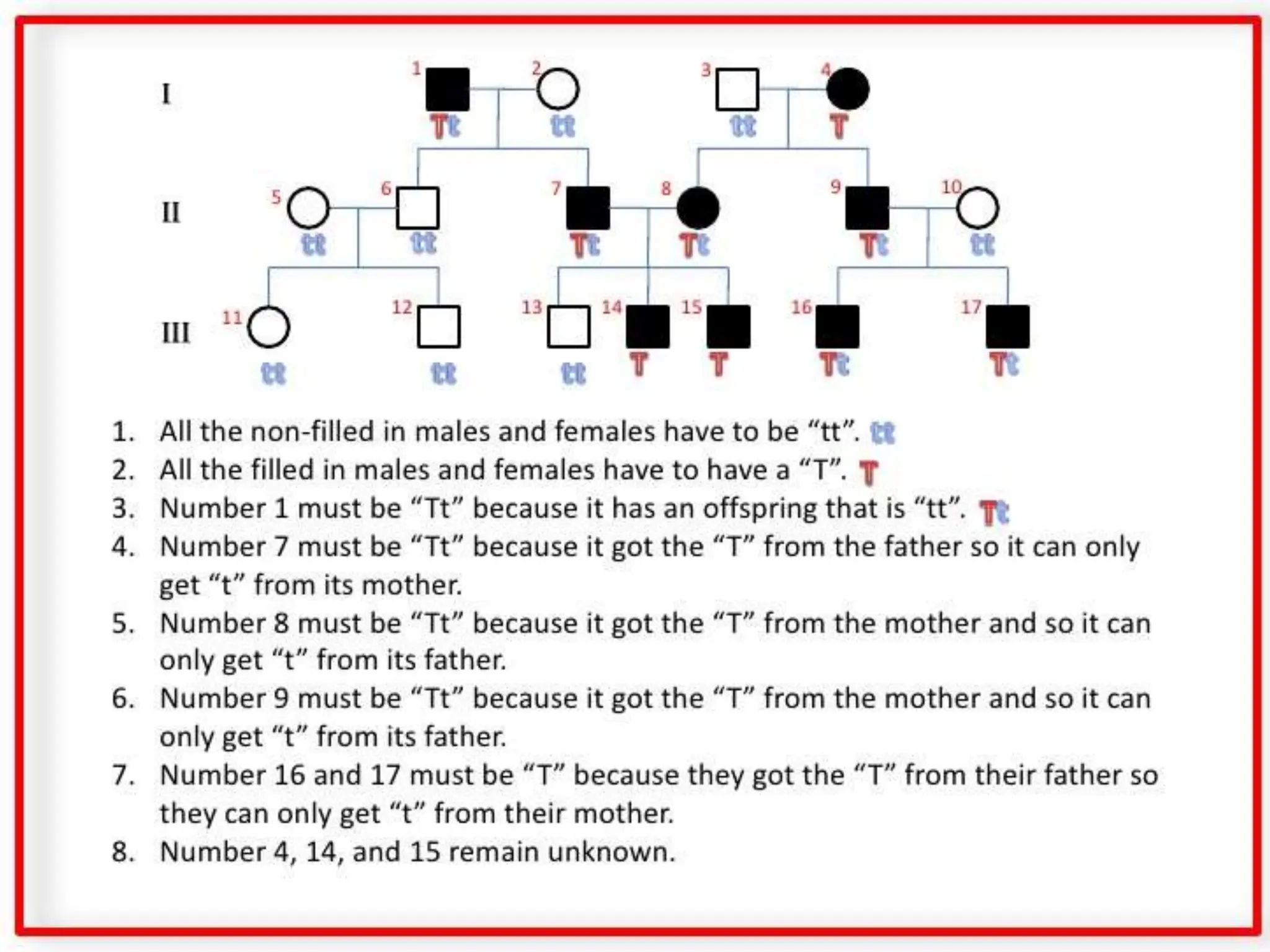
 To trace a genetic trait or disease over
several generations.
Why use pedigrees
 You cannot make humans of different
types breed together just to study the
possibilities of offspring genetics.
 So pedigree charts offer an ethical way of
studying human genetics.
 Today genetic engineering has new tools
to offer doctors studying genetic diseases
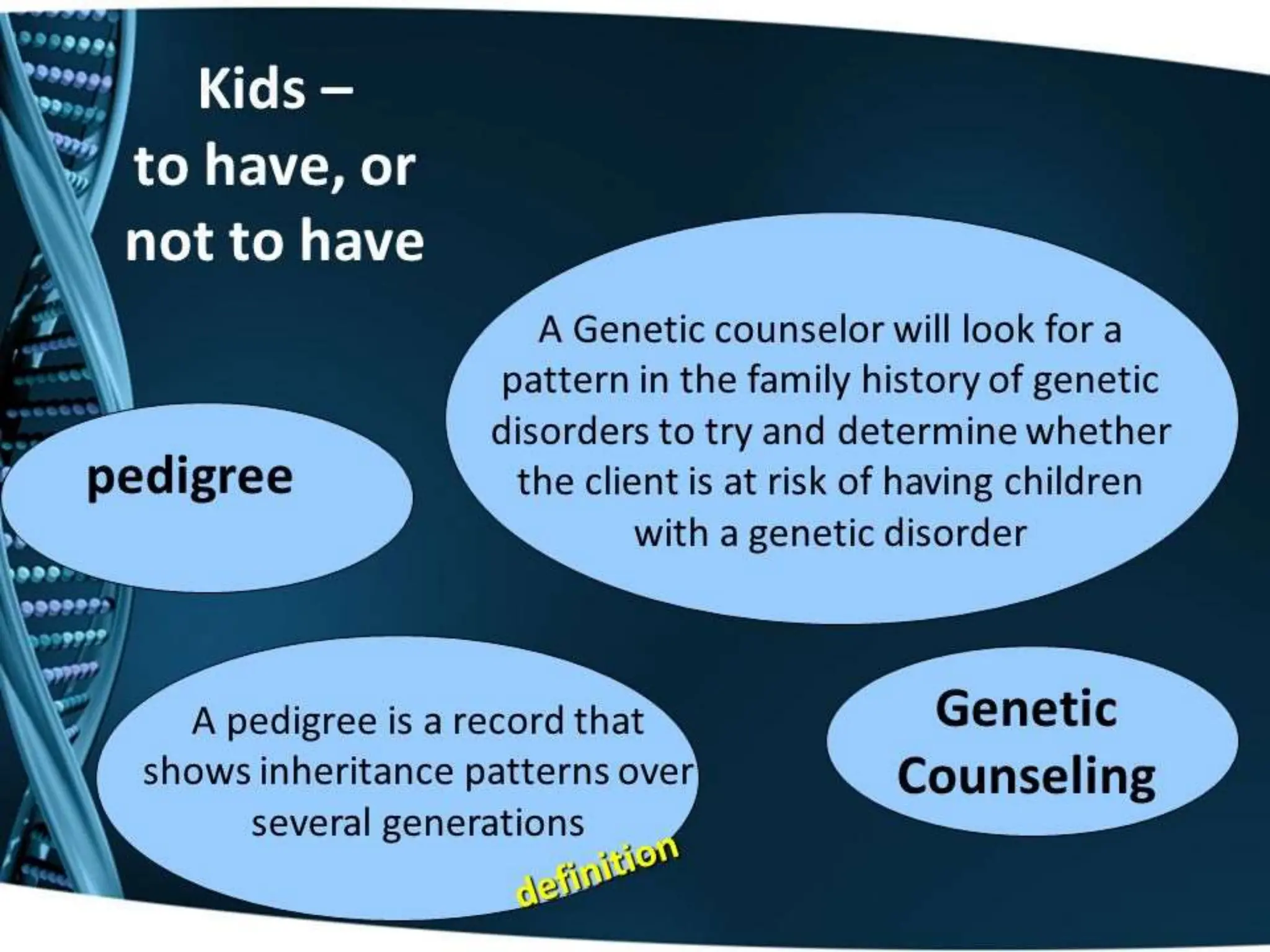
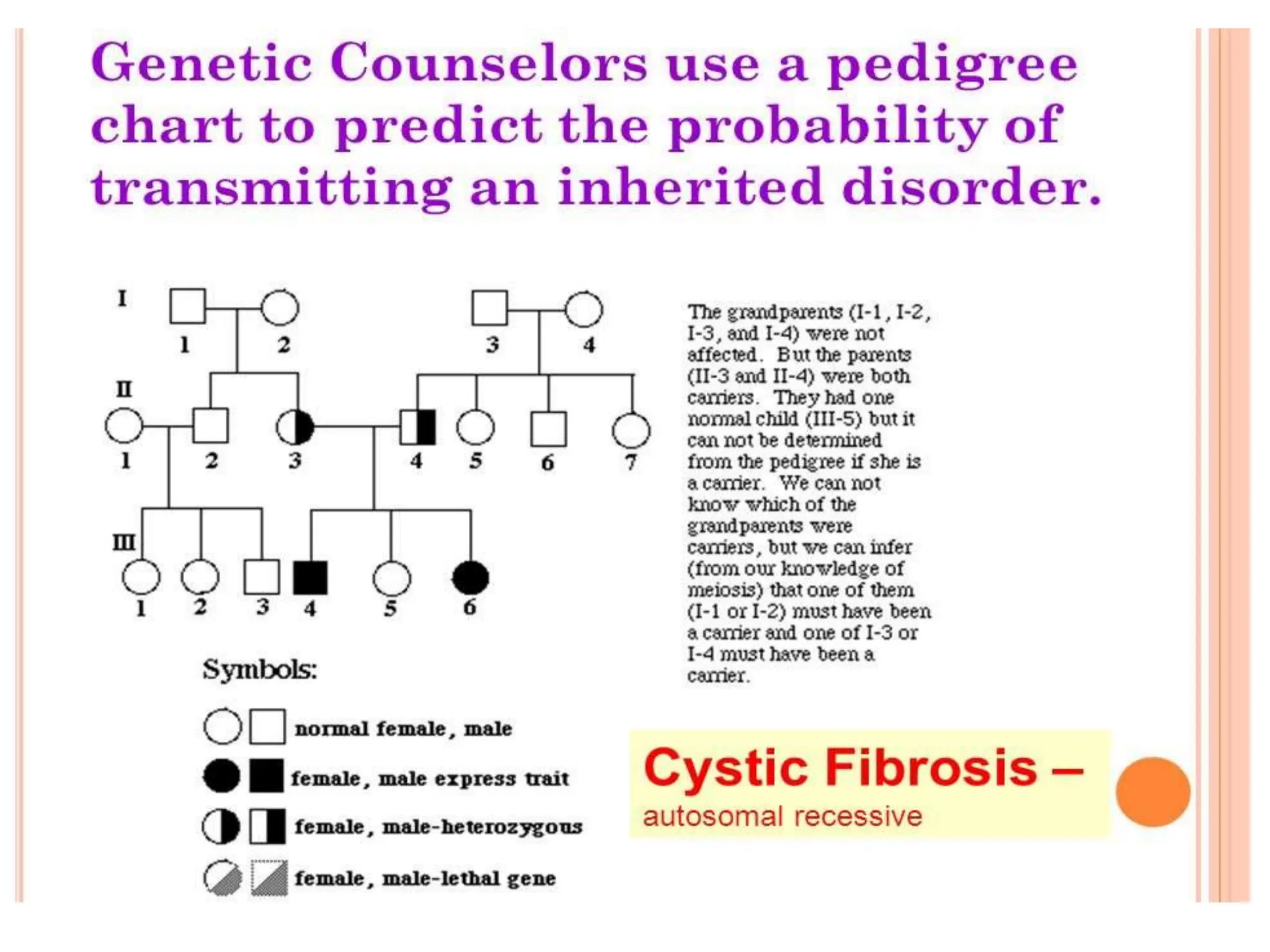
 A genetic counsellor can use pedigree
charts to help determine the distribution of
a disease in an affected family. This way
the family can decide whether to have
children.
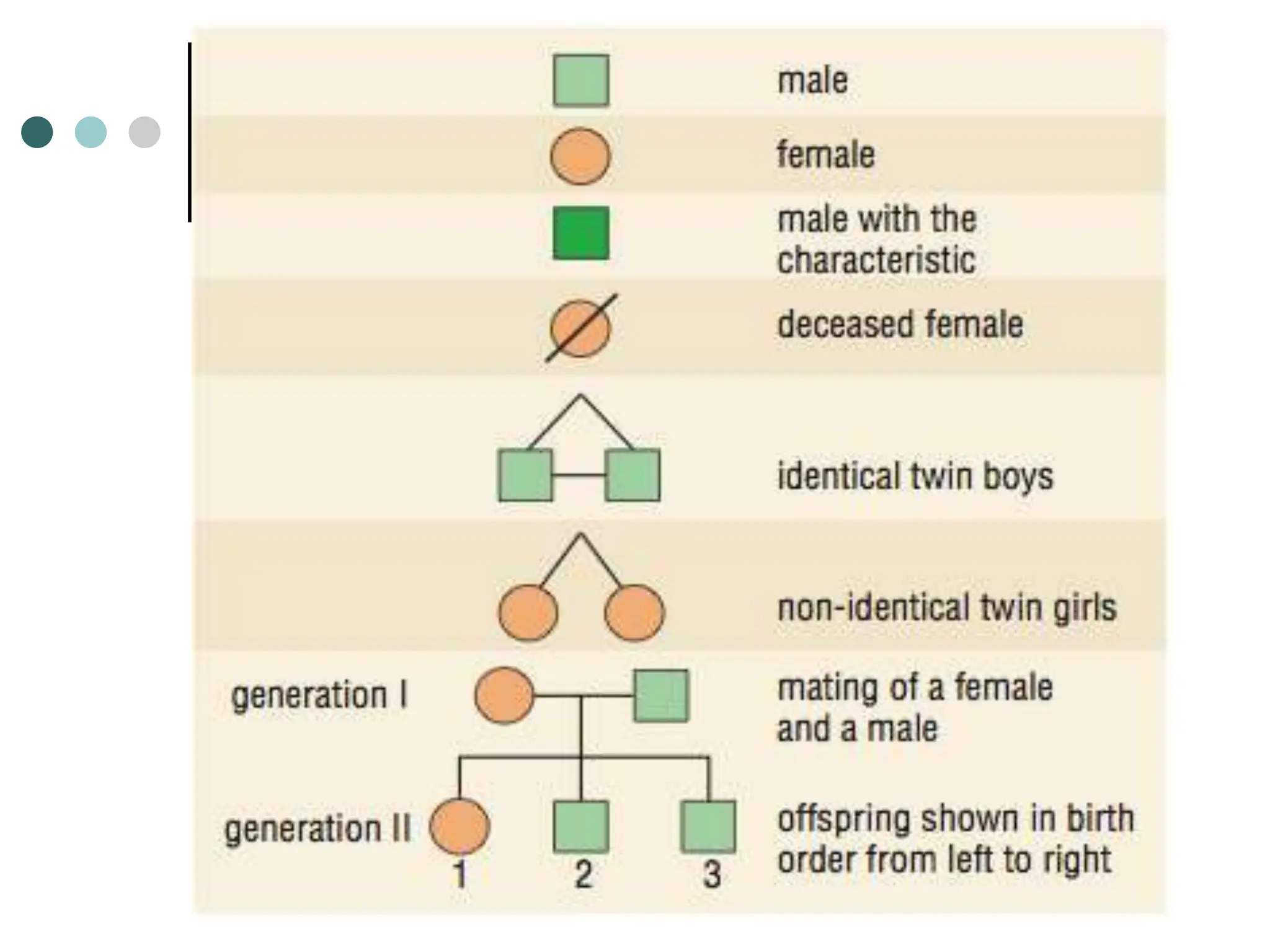
Symbols used in pedigree
charts
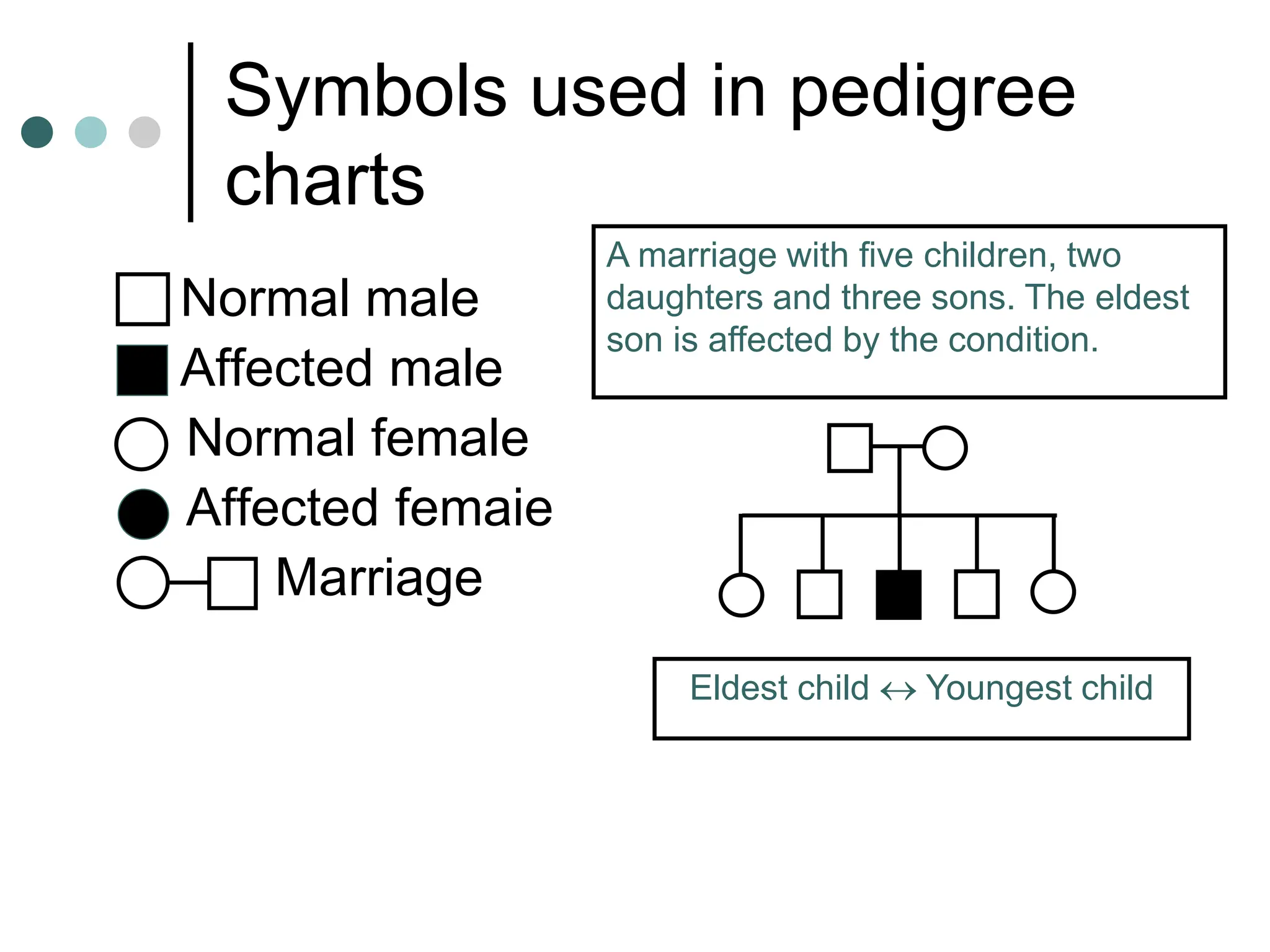
Normal male
Affected male
Normal female
Affected femaie
Marriage
A marriage with five children, two
daughters and three sons. The eldest
son is affected by the condition.
Eldest child  Youngest child
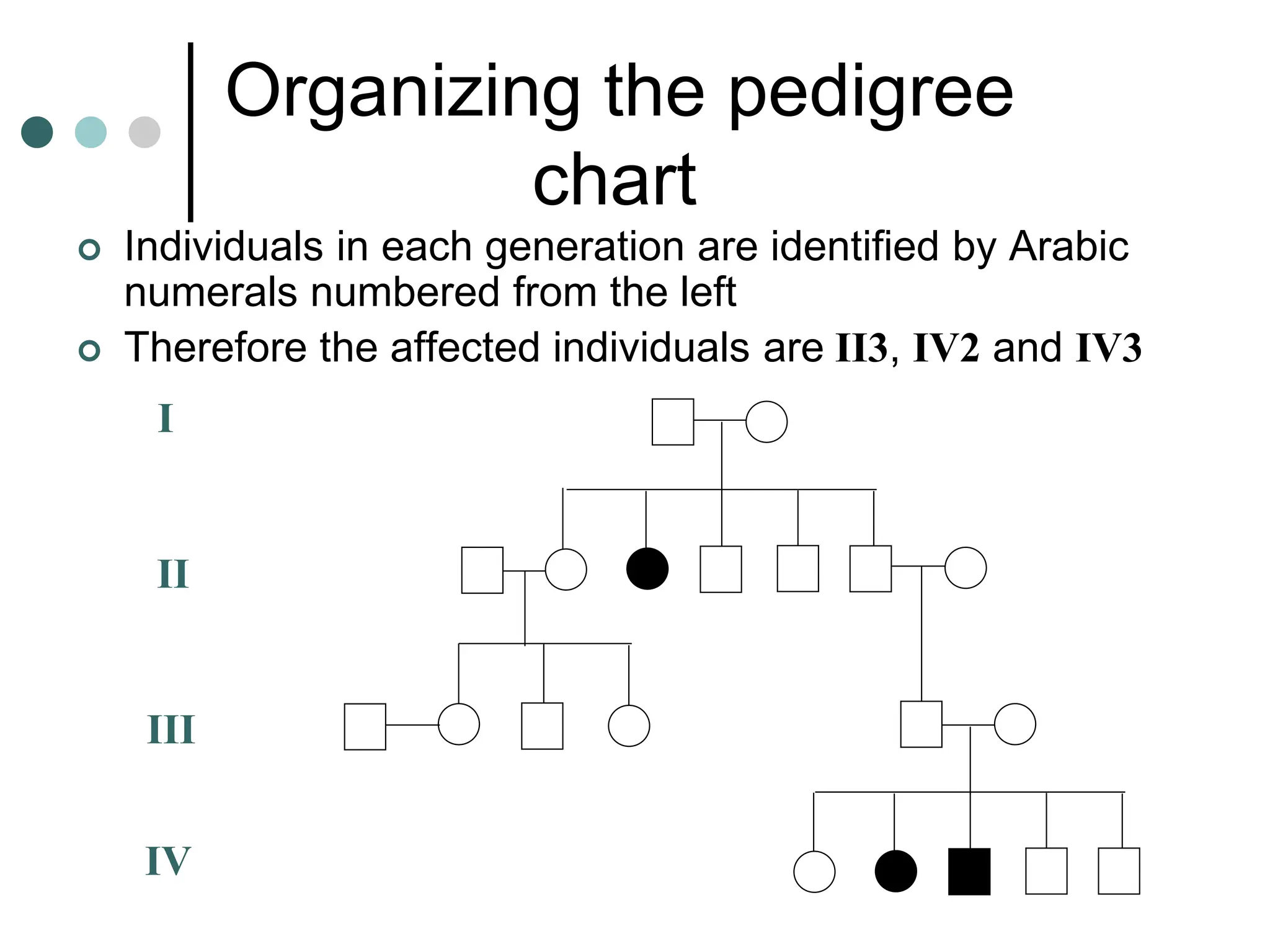
Organizing the pedigree
chart
 Individuals in each generation are identified by Arabic
numerals numbered from the left
 Therefore the affected individuals are II3, IV2 and IV3
I
II
III
IV
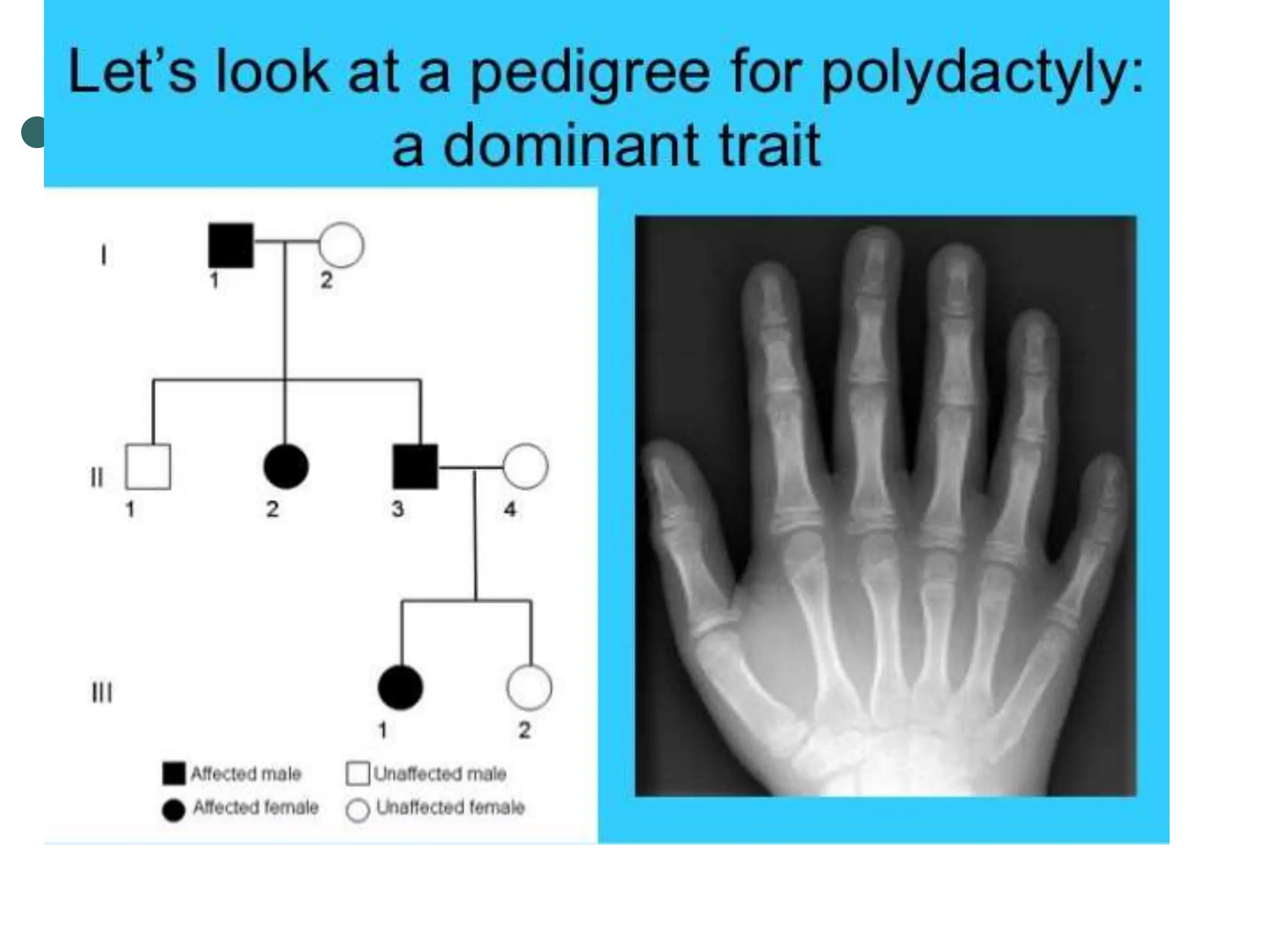
Questions about
Polydactyl Pedigree
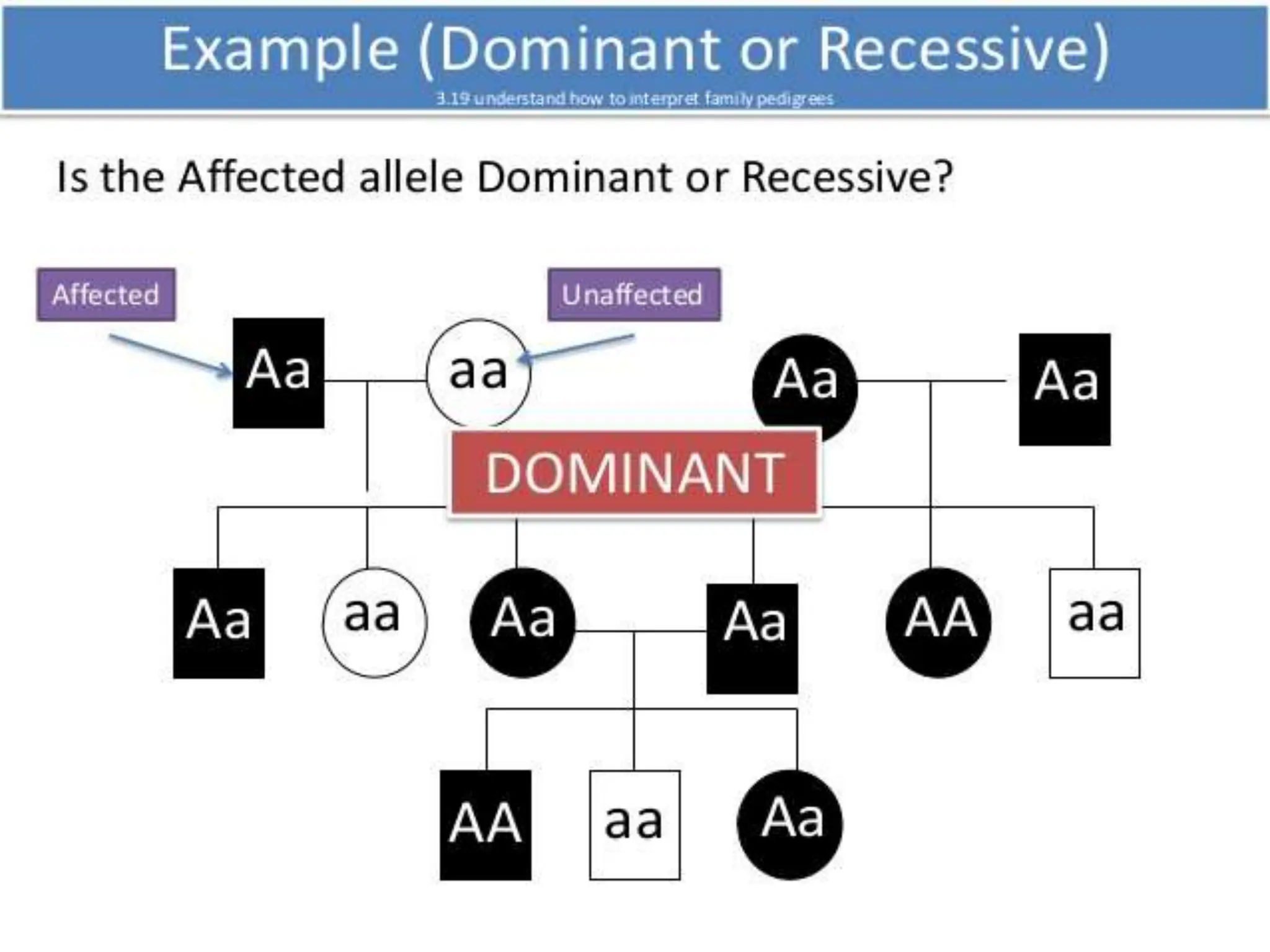
1. Based on the pedigree do you think
polydactyl is a recessive or dominant trait?
2. Cross a polydactyl affected male with a
non affected woman. Show all work P1,
F1, P2 and F2, genotypes and phenotypes.
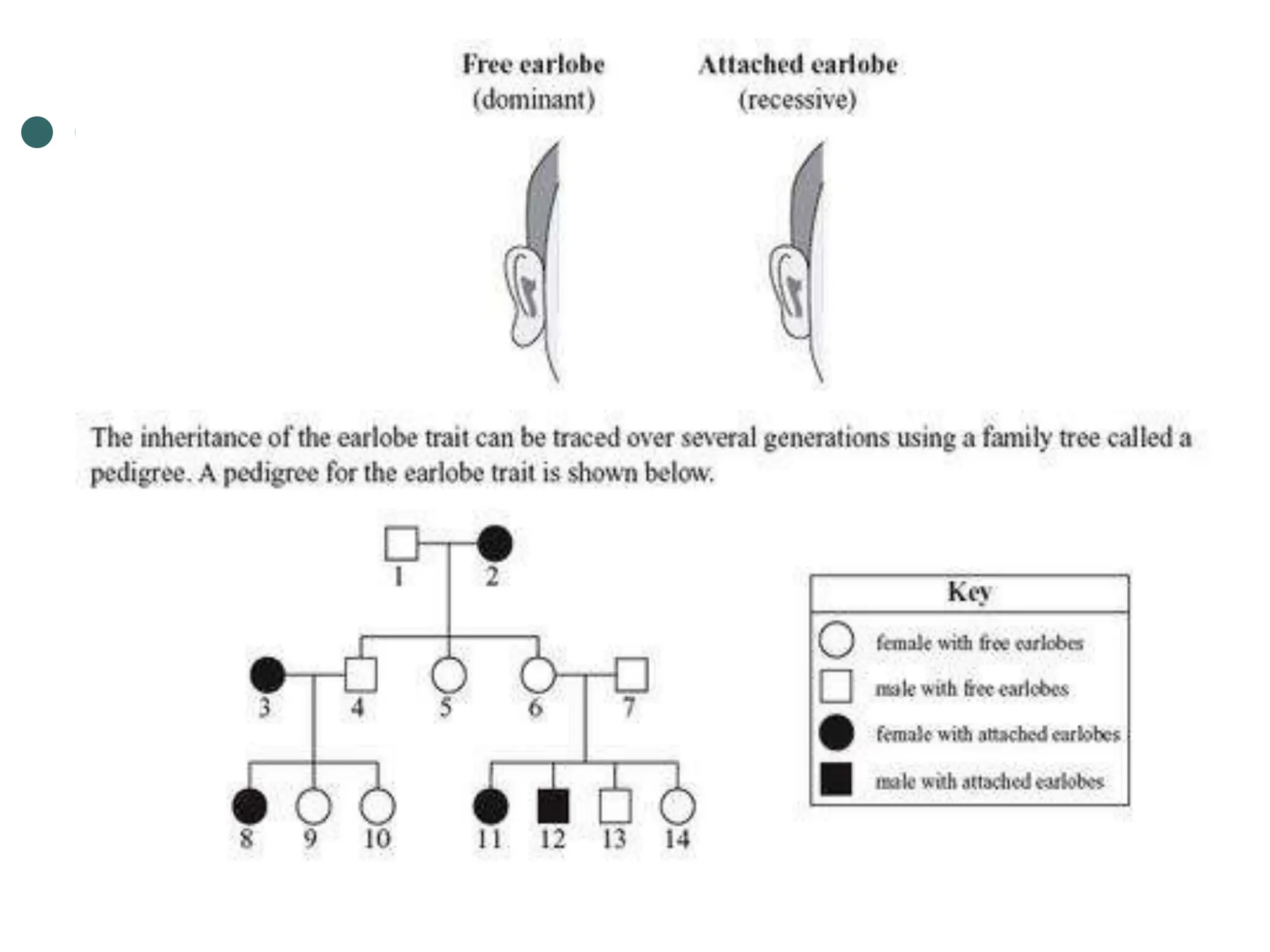
Questions concerning
earlobe pedigree
1. Are attached earlobes recessive or
dominant?
2. Check your earlobes to see if you are
carrying the dominant or recessive gene.
3. Cross a homozygous dominant male with a
a homozygous recessive female. What is
the probability that their offspring will have
free earlobes?
Pedigree Project
Homework
 You are to make a pedigree of your
family for at least 3 to 4 generations.
 You must trace one of the following traits:
F = free earlobe f = attached earlobe
T = tongue roller t = non tongue roller
F = freckles f = no freckles
C = curly hair c = straight hair
W = widows peak w = straight hairline
Pedigree Project
Homework continued -
 Gather all of your information (names of family
members, the trait they posses, and their
relationship to you.
 Draw pedigree, use correct symbols, and roman
numerals, shade all recessive traits. Indicate
yourself on the pedigree with diagonal arrow.
Number each square and circle on pedigree.
 Make a key with number of squares and circles
for each generation on pedigree and place first
name of family member
Pedigree Project –
homework continued
by number. (Do not write names of
family members on the actual pedigree).
 Place finished pedigree on poster paper with a
title. The key will list all names and beside
each name the generation and number in that
generation along with that persons genotype
and phenotype.
Example: Aunt Mary III-4, (Ff) freckles
 Have paper where you did all crosses (Punnett
squares to back up your pedigree).
Pedigree Project
 If you have special cases divorce, half
sibling or you don’t know the name of
someone, death of a child or baby, see me
for help. [Ask your folks for help if possible]
 Do both sides of your family if possible on
the Same pedigree. (Hint: draw it out on
paper first to work out all problems, once you
get it right, then put it on poster board).
 Did you have to do any test crosses to figure
out the genotype of a family member?
 Write the words test cross about the Punnett
squares you did on paper.
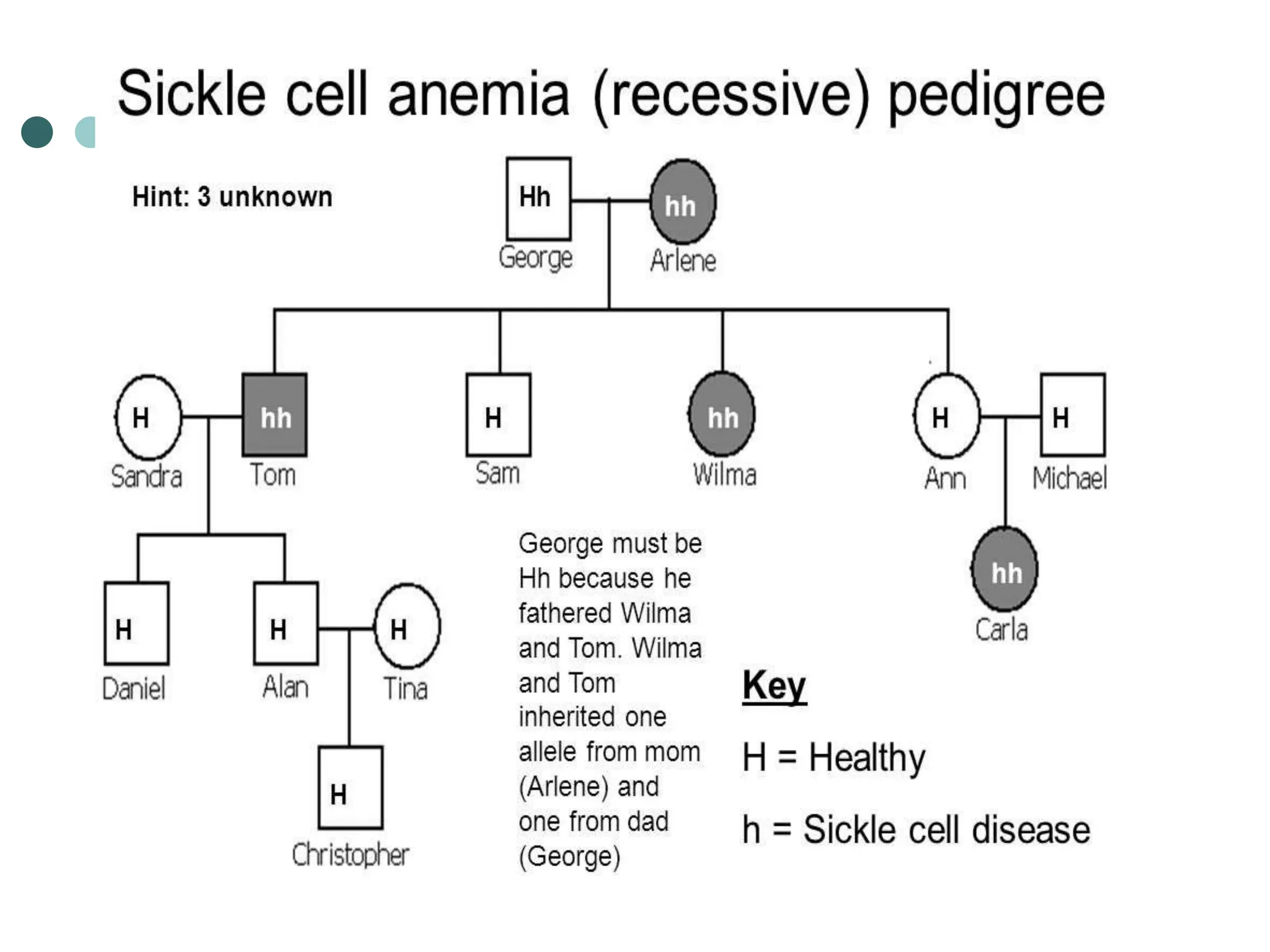
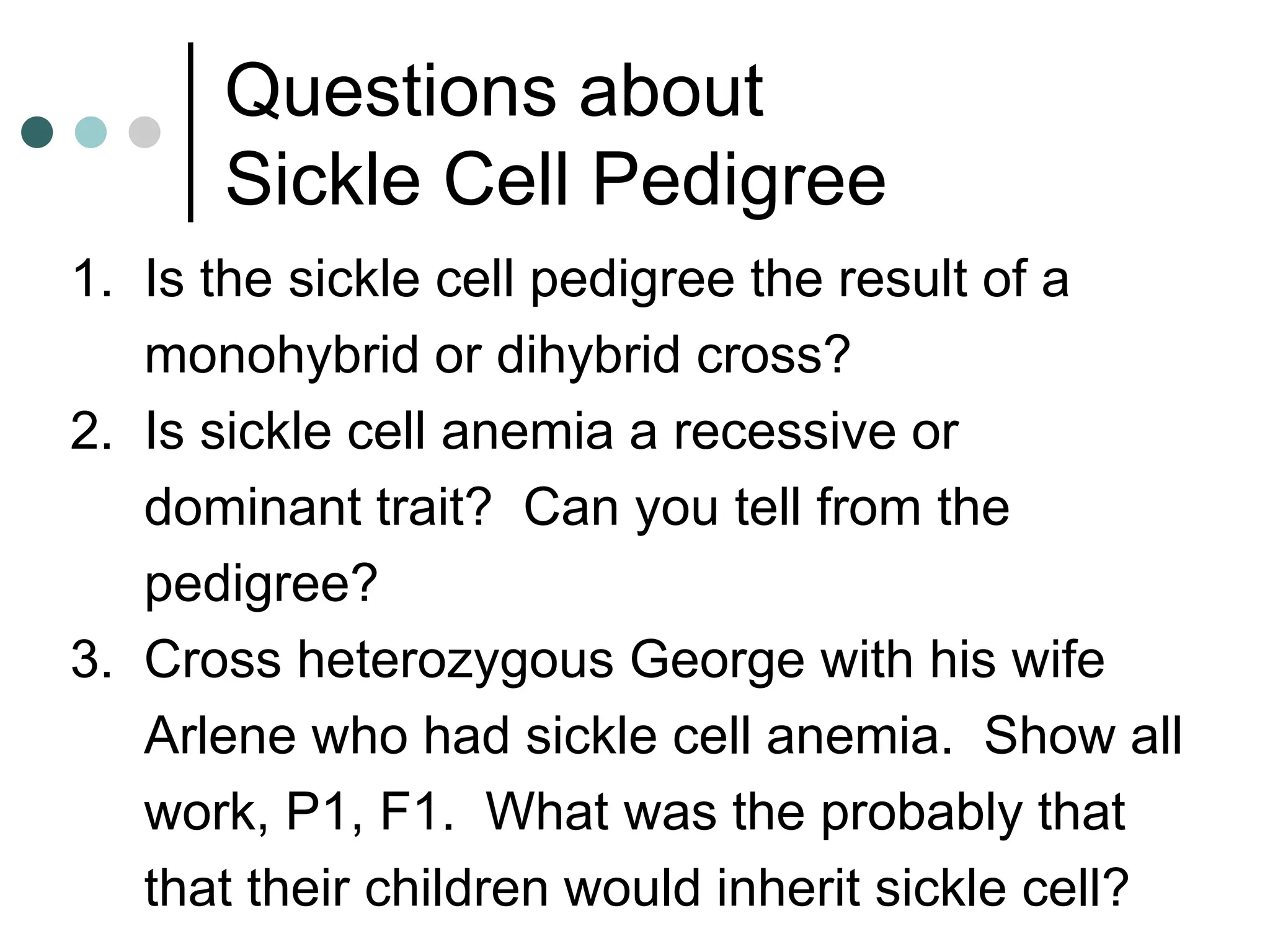
Questions about
Sickle Cell Pedigree
1. Is the sickle cell pedigree the result of a
monohybrid or dihybrid cross?
2. Is sickle cell anemia a recessive or
dominant trait? Can you tell from the
pedigree?
3. Cross heterozygous George with his wife
Arlene who had sickle cell anemia. Show all
work, P1, F1. What was the probably that
that their children would inherit sickle cell?
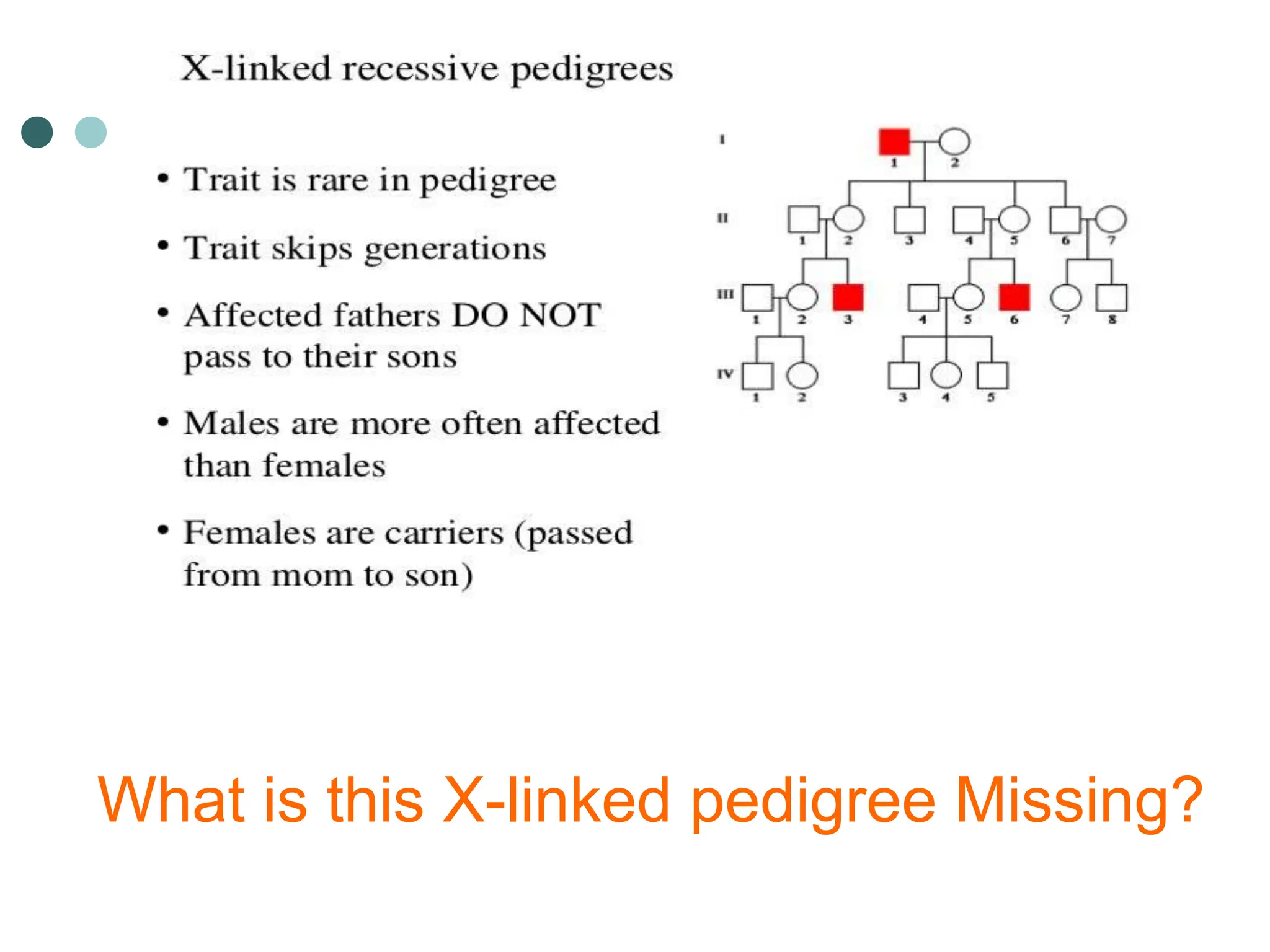
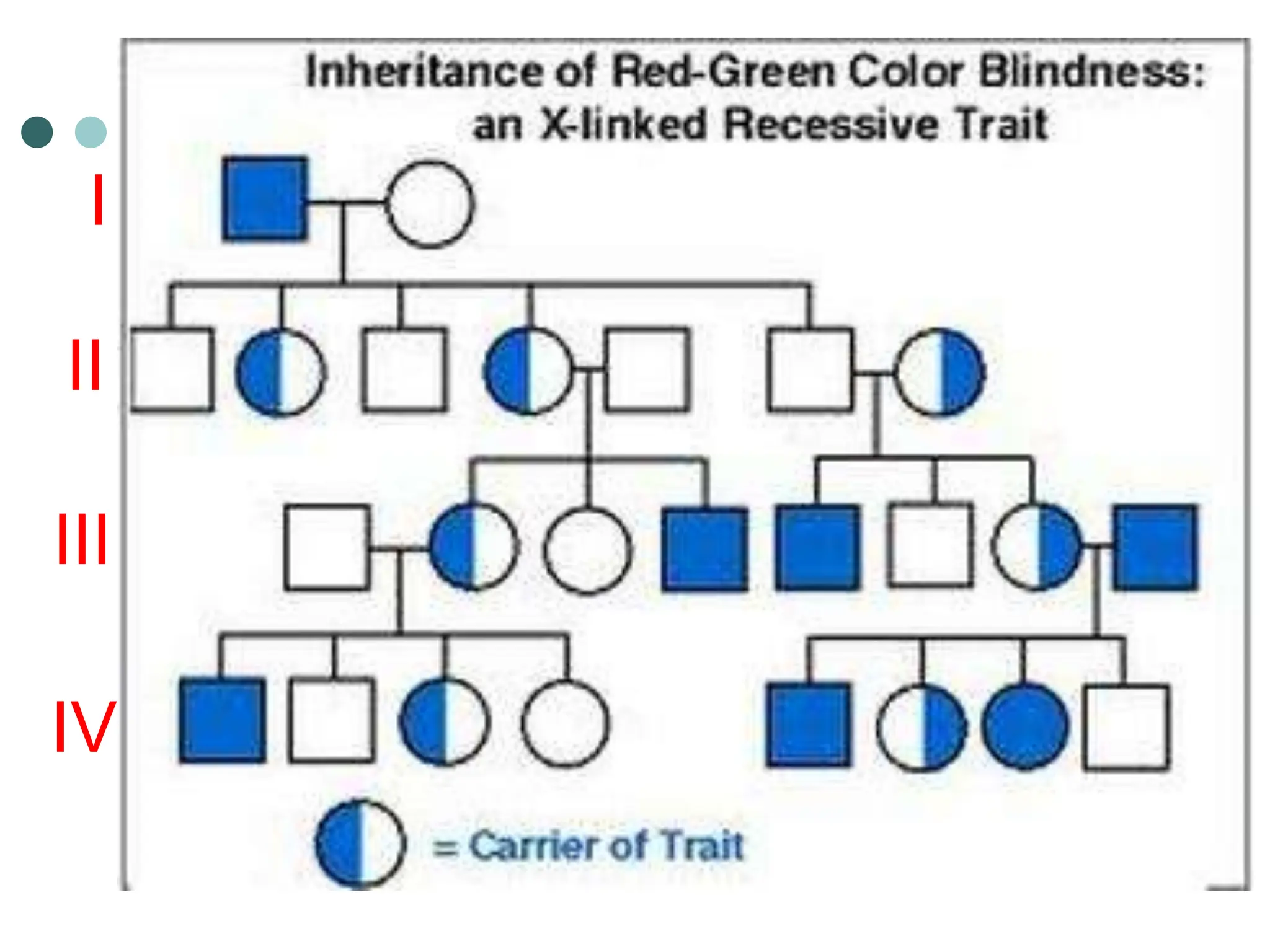
What is this X-linked pedigree Missing?
I
II
III
IV
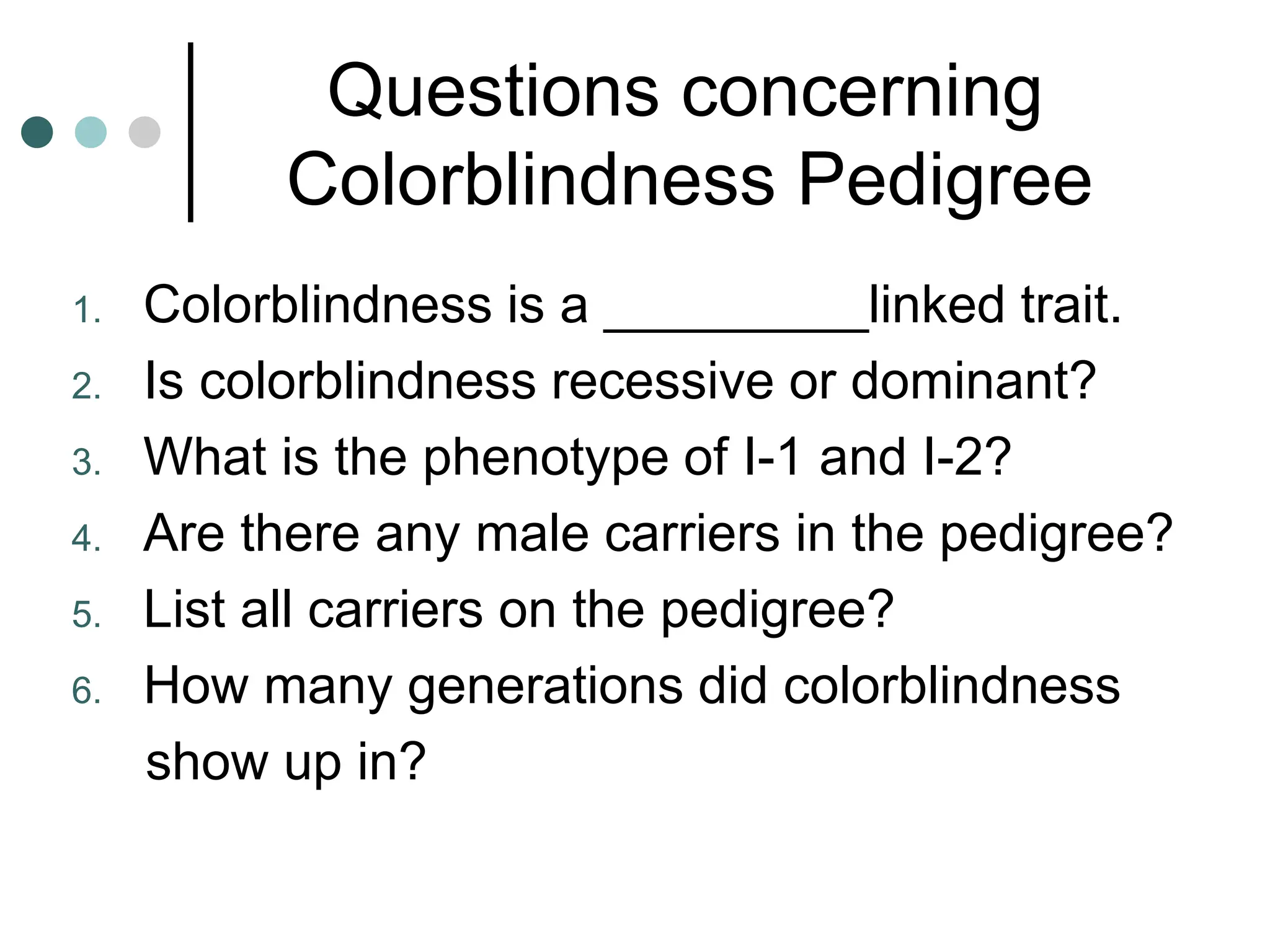
Questions concerning
Colorblindness Pedigree
1. Colorblindness is a _________linked trait.
2. Is colorblindness recessive or dominant?
3. What is the phenotype of I-1 and I-2?
4. Are there any male carriers in the pedigree?
5. List all carriers on the pedigree?
6. How many generations did colorblindness
show up in?
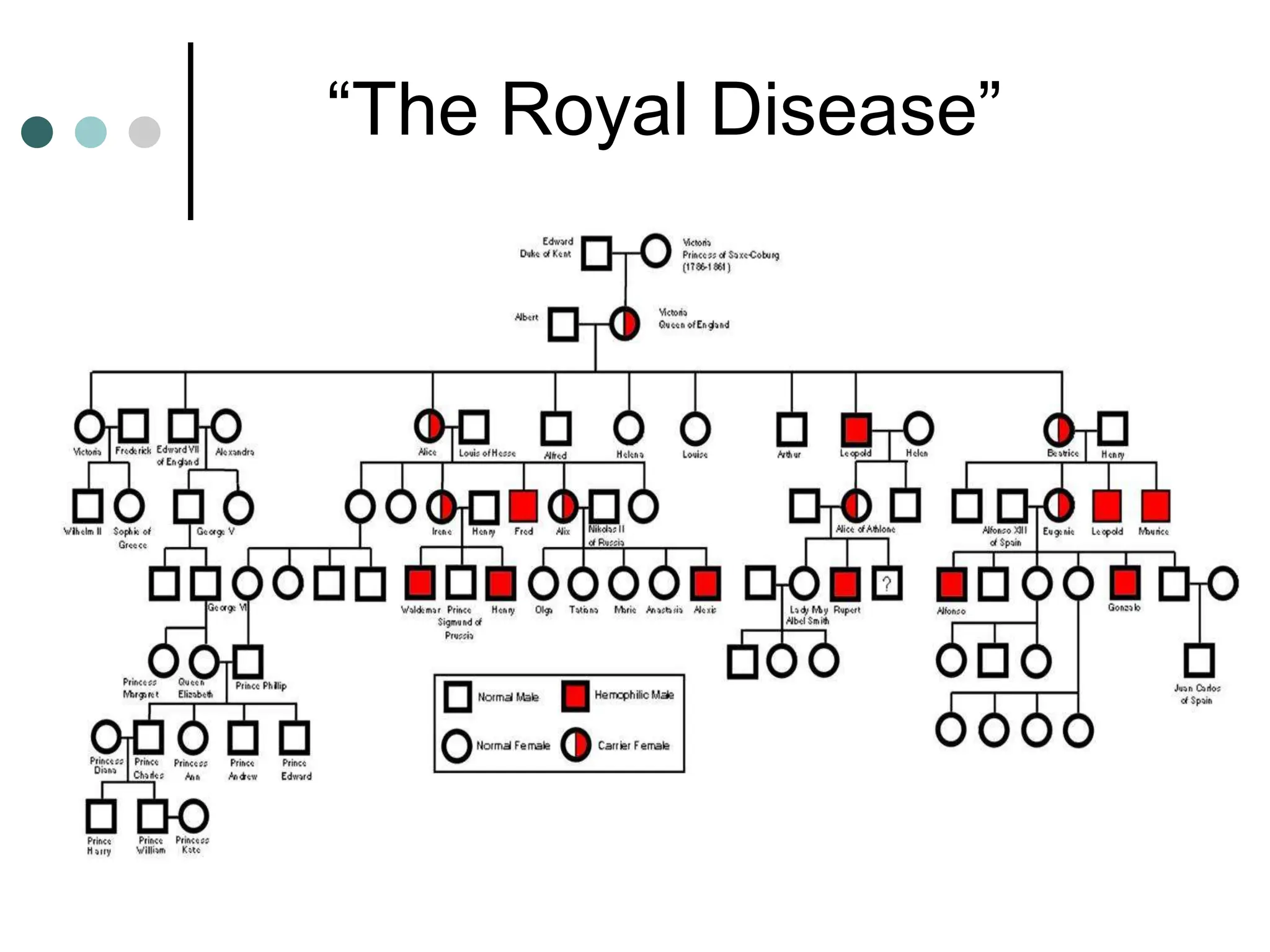
“The Royal Disease”
Genetic Counselor
PEDIGREE ppt..ppt
PEDIGREE ppt..ppt

PEDIGREE ppt..ppt

  • 1.
    PEDIGREE CHARTS A family historyof a genetic condition
  • 2.
    What is apedigree chart?  Pedigree charts show a record of the family of an individual  They can be used to study the transmission of a hereditary condition  To trace a genetic trait or disease over several generations.
  • 3.
    Why use pedigrees You cannot make humans of different types breed together just to study the possibilities of offspring genetics.  So pedigree charts offer an ethical way of studying human genetics.  Today genetic engineering has new tools to offer doctors studying genetic diseases  A genetic counsellor can use pedigree charts to help determine the distribution of a disease in an affected family. This way the family can decide whether to have children.
  • 4.
    Symbols used inpedigree charts Normal male Affected male Normal female Affected femaie Marriage A marriage with five children, two daughters and three sons. The eldest son is affected by the condition. Eldest child  Youngest child
  • 7.
    Organizing the pedigree chart Individuals in each generation are identified by Arabic numerals numbered from the left  Therefore the affected individuals are II3, IV2 and IV3 I II III IV
  • 10.
    Questions about Polydactyl Pedigree 1.Based on the pedigree do you think polydactyl is a recessive or dominant trait? 2. Cross a polydactyl affected male with a non affected woman. Show all work P1, F1, P2 and F2, genotypes and phenotypes.
  • 13.
    Questions concerning earlobe pedigree 1.Are attached earlobes recessive or dominant? 2. Check your earlobes to see if you are carrying the dominant or recessive gene. 3. Cross a homozygous dominant male with a a homozygous recessive female. What is the probability that their offspring will have free earlobes?
  • 14.
    Pedigree Project Homework  Youare to make a pedigree of your family for at least 3 to 4 generations.  You must trace one of the following traits: F = free earlobe f = attached earlobe T = tongue roller t = non tongue roller F = freckles f = no freckles C = curly hair c = straight hair W = widows peak w = straight hairline
  • 15.
    Pedigree Project Homework continued-  Gather all of your information (names of family members, the trait they posses, and their relationship to you.  Draw pedigree, use correct symbols, and roman numerals, shade all recessive traits. Indicate yourself on the pedigree with diagonal arrow. Number each square and circle on pedigree.  Make a key with number of squares and circles for each generation on pedigree and place first name of family member
  • 16.
    Pedigree Project – homeworkcontinued by number. (Do not write names of family members on the actual pedigree).  Place finished pedigree on poster paper with a title. The key will list all names and beside each name the generation and number in that generation along with that persons genotype and phenotype. Example: Aunt Mary III-4, (Ff) freckles  Have paper where you did all crosses (Punnett squares to back up your pedigree).
  • 17.
    Pedigree Project  Ifyou have special cases divorce, half sibling or you don’t know the name of someone, death of a child or baby, see me for help. [Ask your folks for help if possible]  Do both sides of your family if possible on the Same pedigree. (Hint: draw it out on paper first to work out all problems, once you get it right, then put it on poster board).  Did you have to do any test crosses to figure out the genotype of a family member?  Write the words test cross about the Punnett squares you did on paper.
  • 23.
    Questions about Sickle CellPedigree 1. Is the sickle cell pedigree the result of a monohybrid or dihybrid cross? 2. Is sickle cell anemia a recessive or dominant trait? Can you tell from the pedigree? 3. Cross heterozygous George with his wife Arlene who had sickle cell anemia. Show all work, P1, F1. What was the probably that that their children would inherit sickle cell?
  • 24.
    What is thisX-linked pedigree Missing?
  • 26.
  • 27.
    Questions concerning Colorblindness Pedigree 1.Colorblindness is a _________linked trait. 2. Is colorblindness recessive or dominant? 3. What is the phenotype of I-1 and I-2? 4. Are there any male carriers in the pedigree? 5. List all carriers on the pedigree? 6. How many generations did colorblindness show up in?
  • 29.
  • 31.