Sex-Influenced Traits
By : Faizan Ilyas
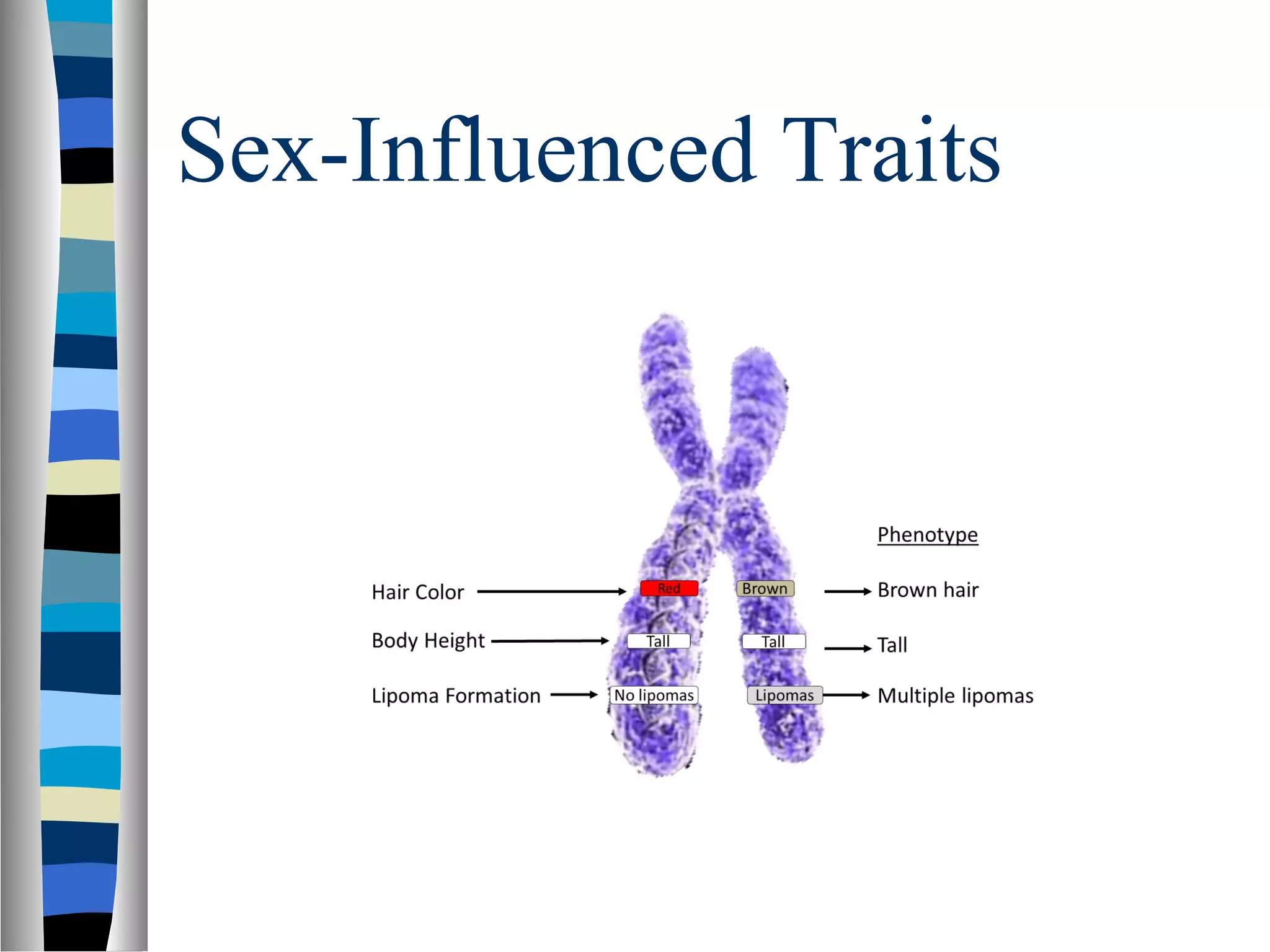
Sex-Influenced Traits
Basic Terminologies
Alleles : An allele or allel, is one of a
number of alternative forms of the same
gene.
Autosomal chromosomes : The
autosomal chromosomes do not
determine the sex of offspring. Rather,
they contain many genes that code for
the production of thousands of
proteins.
  Sex chromosomes : The sex
chromosomes determine the sex of
offspring. Sex chromosomes determine
whether the offspring are male or
female.
Lipoma : A lipoma is a benign tumor of
fat cells that can cause rubbery tumors
of varying size beneath the skin.
A benign tumor is a mass of cells that
lacks the ability to invade neighboring
tissue .
Heterozygous : The genetics term
heterozygous refers to a pair of genes
where one is dominant and one is
recessive.
Homozygous : The genetics term
homozygous refers to a pair of genes
where both genes are dominant or both
are recessive.
Testosterone : It is a steroid
hormone which is found in mammals,
reptiles, birds and other vertebrates. In
mammals, testosterone is secreted
primarily in the testicles of males and
the ovaries of females. It promotes
secondary sexual characteristics such
as increased muscle, bone mass, and
the growth of body hair.
Where we are heading….
Sex-linked traits are controlled by
alleles found on the sex-chromosomes.
Sex-influenced traits are controlled by
alleles on autosomal chromosomes.
What is a sex-influenced trait?
A sex-influenced trait is a trait controlled by a pair
of alleles found on the autosomal chromosomes
(pairs 1 through 22) but it’s phenotypic
expression is influenced by the presence of
certain hormones.
Sex-influenced traits can be seen in BOTH
sexes, but will vary in frequency between the
sexes, or in the degree of the phenotypic
expression.
Estrogen, Progesterone, Testosterone, etc.
Example of Sex-Influenced
Traits
Pattern Baldness
– Pattern Baldness can occur in both males
and females, however it is much more
common in males.
– Why is this?
Because the pattern baldness trait is
influenced by the hormone testosterone.
Pattern baldness in humans
(sometimes called “male pattern
baldness,” though the condition isn’t
restricted to males). This gene has two
alleles, “bald” and “non-bald.” The
behaviors of the products of these
genes are highly influenced by the
hormones in the individual, particularly
by the hormone testosterone.
. In the presence of high levels of
testosterone, the baldness allele has a
very powerful influence. In the presence
of low levels of testosterone, this allele
is quite ineffectual. All humans have
testosterone, but males have much
higher levels of this hormone than
females do. The result is that in males,
the baldness allele behaves like a
dominant allele, while in females it
behaves like a recessive allele.
Sex-Influenced Traits
Male and Female Pattern Baldness
Basic Symbols
Sex-Influenced Trait
Assume that the trait is
dominant in males but
recessive in females.
Assume all outsiders are
homozygotes.
Thus:
– DD is always affected
– dd is always normal
– Dd is affected in males, but
normal in females
Pattern Baldness
The combination of alleles for pattern
baldness will lead to different phenotypic
expressions depending on the sex of the
individual.
For example: Let B represent the non-bald allele
- BB genotype: non-bald in both sexes
- bb genotype: bald in both sexes
- Bb genotype: bald in men; non-bald in females
Pattern Baldness
The “B” allele acts as a dominant allele
in the heterozygous genotype in
females, but acts as a recessive allele
in the heterozygous genotype of the
male.
Pattern Baldness
What would this bald guy’s genotype
be?
Bb or bb
What about his balding mother?
bb
Try this out!
What is the probability that YOU will be
bald if your father is homozygous and
balding, and your mother is
homozygous and not balding?
Father’s genotype: bb X Mother’s genotype: BB
All offspring are Bb
If you are a male, you will be bald! If you are a
female, you will not demonstrate pattern baldness.
You can solve using Monohybrid
crosses
Complete the simple cross and then express
the phenotype based on whether we are
talking about males or females.
Ex. A heterozygous balding male reproduces
with a heterozygous normal female.
Do the cross and determine the phenotypic
rations for males and females
Let’s try a few problems involving
sex influenced traits…
A male homozygous for clubfoot reproduces
with a normal homozygous female. What are
the genotypes and phenotypes of their
children if testosterone alters the phenotypic
expression of the trait in the heterozygous
expression?
Let F represent normal feet
Let f represent clubfoot.
Let’s try a few problems…
Two heterozygous individuals get married
and have lots of children. The father suffers
with a painful condition called gout. What are
the parent’s genotypes? What are the
genotypes and phenotypes of the children?
Let G represent no gout, and g represent
gout.
How about this one:
Rheumatoid arthritis occurs more
often in females than males due to
the presence of estrogen. A
heterozygous woman marries a
heterozygous male. RR would cause
the condition in both sexes. A
homozygous recessive, rr, genotype
would prevent the disorder in both
sexes

Sex influenced Traits

  • 1.
  • 2.
  • 3.
    Basic Terminologies Alleles :An allele or allel, is one of a number of alternative forms of the same gene. Autosomal chromosomes : The autosomal chromosomes do not determine the sex of offspring. Rather, they contain many genes that code for the production of thousands of proteins.
  • 4.
      Sex chromosomes: The sex chromosomes determine the sex of offspring. Sex chromosomes determine whether the offspring are male or female. Lipoma : A lipoma is a benign tumor of fat cells that can cause rubbery tumors of varying size beneath the skin. A benign tumor is a mass of cells that lacks the ability to invade neighboring tissue .
  • 5.
    Heterozygous : Thegenetics term heterozygous refers to a pair of genes where one is dominant and one is recessive.
  • 6.
    Homozygous : Thegenetics term homozygous refers to a pair of genes where both genes are dominant or both are recessive.
  • 7.
    Testosterone : Itis a steroid hormone which is found in mammals, reptiles, birds and other vertebrates. In mammals, testosterone is secreted primarily in the testicles of males and the ovaries of females. It promotes secondary sexual characteristics such as increased muscle, bone mass, and the growth of body hair.
  • 8.
    Where we areheading…. Sex-linked traits are controlled by alleles found on the sex-chromosomes. Sex-influenced traits are controlled by alleles on autosomal chromosomes.
  • 9.
    What is asex-influenced trait? A sex-influenced trait is a trait controlled by a pair of alleles found on the autosomal chromosomes (pairs 1 through 22) but it’s phenotypic expression is influenced by the presence of certain hormones. Sex-influenced traits can be seen in BOTH sexes, but will vary in frequency between the sexes, or in the degree of the phenotypic expression. Estrogen, Progesterone, Testosterone, etc.
  • 10.
    Example of Sex-Influenced Traits PatternBaldness – Pattern Baldness can occur in both males and females, however it is much more common in males. – Why is this? Because the pattern baldness trait is influenced by the hormone testosterone.
  • 11.
    Pattern baldness inhumans (sometimes called “male pattern baldness,” though the condition isn’t restricted to males). This gene has two alleles, “bald” and “non-bald.” The behaviors of the products of these genes are highly influenced by the hormones in the individual, particularly by the hormone testosterone.
  • 12.
    . In thepresence of high levels of testosterone, the baldness allele has a very powerful influence. In the presence of low levels of testosterone, this allele is quite ineffectual. All humans have testosterone, but males have much higher levels of this hormone than females do. The result is that in males, the baldness allele behaves like a dominant allele, while in females it behaves like a recessive allele.
  • 13.
    Sex-Influenced Traits Male andFemale Pattern Baldness
  • 14.
  • 15.
    Sex-Influenced Trait Assume thatthe trait is dominant in males but recessive in females. Assume all outsiders are homozygotes. Thus: – DD is always affected – dd is always normal – Dd is affected in males, but normal in females
  • 16.
    Pattern Baldness The combinationof alleles for pattern baldness will lead to different phenotypic expressions depending on the sex of the individual. For example: Let B represent the non-bald allele - BB genotype: non-bald in both sexes - bb genotype: bald in both sexes - Bb genotype: bald in men; non-bald in females
  • 17.
    Pattern Baldness The “B”allele acts as a dominant allele in the heterozygous genotype in females, but acts as a recessive allele in the heterozygous genotype of the male.
  • 18.
    Pattern Baldness What wouldthis bald guy’s genotype be? Bb or bb What about his balding mother? bb
  • 19.
    Try this out! Whatis the probability that YOU will be bald if your father is homozygous and balding, and your mother is homozygous and not balding? Father’s genotype: bb X Mother’s genotype: BB All offspring are Bb If you are a male, you will be bald! If you are a female, you will not demonstrate pattern baldness.
  • 20.
    You can solveusing Monohybrid crosses Complete the simple cross and then express the phenotype based on whether we are talking about males or females. Ex. A heterozygous balding male reproduces with a heterozygous normal female. Do the cross and determine the phenotypic rations for males and females
  • 21.
    Let’s try afew problems involving sex influenced traits… A male homozygous for clubfoot reproduces with a normal homozygous female. What are the genotypes and phenotypes of their children if testosterone alters the phenotypic expression of the trait in the heterozygous expression? Let F represent normal feet Let f represent clubfoot.
  • 22.
    Let’s try afew problems… Two heterozygous individuals get married and have lots of children. The father suffers with a painful condition called gout. What are the parent’s genotypes? What are the genotypes and phenotypes of the children? Let G represent no gout, and g represent gout.
  • 23.
    How about thisone: Rheumatoid arthritis occurs more often in females than males due to the presence of estrogen. A heterozygous woman marries a heterozygous male. RR would cause the condition in both sexes. A homozygous recessive, rr, genotype would prevent the disorder in both sexes