PEDIATRIC FEEDING DISORDER
Olaf Kraus de Camargo
@DevPeds
With slides from Dr. Jaime Phalen,
Presented at the 6th International
Pediatric Feeding Disorder Conference,
2019 in Phoenix,Arizona
https://www.feedingmatters.org
Introduction
§Pediatric feeding disorder lacked a universally
accepted definition
§Previous diagnostic paradigms defined feeding disorder
from the perspective of a single discipline
§Commonly dichotomous division in organic vs
behavioural
Introduction
§A unifying diagnostic term, “Pediatric Feeding
Disorder”, using the framework of the World Health
Organization’s International Classification of
Functioning, Disability, and Health (ICF)
§PFD unifies the medical, nutritional, feeding skill, and/or
psychosocial concerns associated with feeding disorders
§The proposed diagnostic criteria should promote the use
of common, precise, terminology necessary to
advance clinical practice, research, and health-
care policy
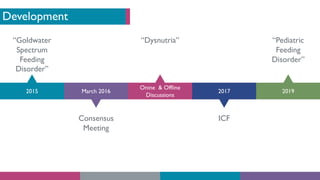
2017March 20162015
Onine & Offline
Discussions
2019
“Goldwater
Spectrum
Feeding
Disorder”
“Dysnutria” “Pediatric
Feeding
Disorder”
Consensus
Meeting
ICF
Development
Development
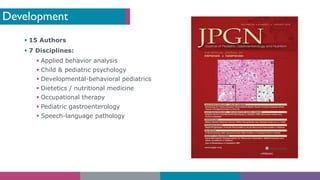
§ 15 Authors
§ 7 Disciplines:
§ Applied behavior analysis
§ Child & pediatric psychology
§ Developmental-behavioral pediatrics
§ Dietetics / nutritional medicine
§ Occupational therapy
§ Pediatric gastroenterology
§ Speech-language pathology
Normal Feeding
§Coordination of multiple body systems
§Developmental progression of food selectivity
§Children self-regulate and may vary their oral intake
up to 30% daily with no effect on growth
§Feeding plays a central role in the caregiver-child
relationship
Phalen, J.A. (2013). Managing Feeding Problems and Feeding
Disorders. Pediatrics in Review, 34(12), 549–557.
https://doi.org/10.1542/pir.34-12-549
Normal feeding depends on the
successful interaction of a
child’s health, development,
temperament, experience, and
environment. Disrupting any of
these systems places child at
risk for pediatric feeding
disorder.
NORMAL FEEDING
Feeding Problems
Between 25% and 50% of neurotypical children and up
to 80% of those with developmental disabilities have
feeding problems
Diagnostic Terms
§ AMERICAN SPEECH-LANGUAGE HEARING
ASSOCIATION
ØPediatric dysphagia: impaired oral, pharyngeal,
and/or esophageal phases of swallowing (ASHA 2014)
Diagnostic Terms
§ WORLD HEALTH ORGANIZATION - ICD
ØF98.2. Feeding disorder of infancy and childhood:
“varying manifestations usually specific to infancy and
early childhood. It generally involves food refusal
and extreme faddiness in the presence of an
adequate food supply, a reasonably competent
caregiver, and the absence of organic disease”
Diagnostic Terms
§AMERICAN PSYCHOLOGICAL ASSOCIATION
ØAvoidant/Restrictive Food Intake Disorder - ARFID
ØEating or feeding disturbance with persistent failure to
meet appropriate nutritional &/or energy needs (with ≥ 1
of the following):
§ Significant weight loss (or poor weight gain or faltering growth in children)
§ Significant nutritional deficiency (or related health impact)
§ Dependence on enteral feeding or oral nutritional supplements
§ Marked interference with psychosocial functioning
Diagnostic Terms
§AMERICAN PSYCHOLOGICAL ASSOCIATION
ØAvoidant/Restrictive Food Intake Disorder - ARFID
ØNot better explained by lack of available food or culturally
sanctioned practice (e.g., religious fasting, normal dieting) or
developmentally normal behaviors (e.g., picky eating in
toddlers, reduced intake in older adults)
ØNot exclusively during the course of anorexia nervosa or
bulimia nervosa
ØNot attributable to concurrent medical condition & not better
explained by another mental disorder; severity must exceed
that routinely associated with the condition or disorder and
warrants additional clinical attention
Diagnostic Terms
§AMERICAN PSYCHOLOGICAL ASSOCIATION
ØAvoidant/Restrictive Food Intake Disorder – ARFID
Ø May be based on sensory characteristics of food qualities (e.g., appearance, color,
smell, texture, temperature, taste)
§ May manifest as refusal to eat particular brands of foods or to tolerate the smell
of food being eaten by others
§ Individuals who have autism spectrum disorder may show similar behaviors
Ø May represent a conditioned negative response associated with an aversive
experience (e.g., choking, esophagoscopy, repeated vomiting)
Diagnostic Terms
§AMERICAN PSYCHOLOGICAL ASSOCIATION
ØAvoidant/Restrictive Food Intake Disorder – ARFID
Ø Associated Features Supporting Diagnosis:
§ Lack of interest in eating or food
§ Young infants too sleepy, distressed, or agitated to feed
§ Infants & young children may not:
§ engage with primary caregiver during feeding
§ communicate hunger in favor of other activities
Ø In older children & adolescents, may be associated with:
§ Generalized emotional difficulties
PROBLEMS WITH ARFID
§Specifically excludes children whose primary challenge
is a skill deficit
§Severity of eating disturbance must exceed that
associated with comorbidity
§No limitations re: age of onset
§Non-specific: 29% teens at eating d/o clinic
de Vries 2014, Fisher 2014, Kurz 2015, Mussatto 2014
PEDIATRIC FEEDING
DISORDER
Impaired oral intake that is not age-appropriate, and
is associated with medical, nutritional, feeding skill,
and/or psychosocial dysfunction.
Pediatric Feeding Disorder
§ PFD results in disability as defined by the World Health Organization (WHO)
International Classification of Functioning, Disability, and Health (ICF)
§ Impairment: a problem in body function or structure, or
§ Activity limitation: difficulty executing a task or action, or
§ Participation restriction: problem with life situations
PFD – Diagnostic Criteria
A.A disturbance in oral intake of nutrients, inappropriate for age, lasting at
least 2 weeks and associated with 1 or more of the following:
1.Medical dysfunction, as evidenced by any of the following:
a.Cardiorespiratory compromise during oral feeding
b.Aspiration or recurrent aspiration pneumonitis
2.Nutritional dysfunction, as evidenced by any of the following:
a.Malnutrition
b.Specific nutrient deficiency or significantly restricted intake of one or more nutrients
resulting from decreased dietary diversity
c. Reliance on enteral feeds or oral supplements to sustain nutrition and/or hydration
PFD – Diagnostic Criteria
A. A disturbance in oral intake of nutrients, inappropriate for age,
lasting at least 2 weeks and associated with 1 or more of the
following:
3. Feeding skill dysfunction, as evidenced by any of the following:
a. Need for texture modification of liquid or food
b. Use of modified feeding position or equipment
c. Use of modified feeding strategies
4. Psychosocial dysfunction, as evidenced by any of the
following:
a. Active or passive avoidance behaviors by child when feeding or being fed
b. Inappropriate caregiver management of child’s feeding and/or nutrition needs
c. Disruption of social functioning within a feeding context
d. Disruption of caregiver-child relationship associated with feeding
PFD – Diagnostic Criteria
B. Absence of the cognitive processes consistent with eating
disorders (e.g. Anorexia) and pattern of oral intake is not due to a
lack of food or congruent with cultural norms.
Medical Factors
§Prematurity
§Cardiopulmonary disease
§Genetic/chromosomal anomalies
§Craniofacial anomalies
§Neurodevelopmental disorders
§Gastrointestinal disorders
de Vries 2014, Mussatto 2014
Medical Factors
§NEURODEVELOPMENTAL DISORDERS
§Autism Spectrum Disorder
§Global Developmental Delay/Intellectual Disability
§Cerebral Palsy
§Down Syndrome
Benfer 2013, Sharp 2013, Shmaya 2015
Medical Factors
§GASTROINTESTINAL DISORDERS
§Gastroesophageal Reflux Disease (GERD)
§Chronic Constipation +/- overflow incontinence/Encopresis
§Eosinophilic Esophagitis
Benfer 2013, Sharp 2013, Shmaya 2015
Nutritional Factors
§Restricted quality, quantity, variety
§Inadequate energy intake = risk for weight faltering
§Excluding entire food groups = risk for micronutrient
deficiency
§Excessive energy intake +/- reduced energy
requirement = risk for obesity
Nutritional Factors
§SMALL FOR GESTATIONAL AGE
§Definition: birth weight < 3rd vs. < 10th percentile for
gestational age
§Etiology:
§Fetal (intrauterine) growth restriction
§Constitutional (i.e., maternal height, weight, ethnicity, and
parity)
§Up to 15% of infants born SGA fail to catch up by age 2
years
Nutritional Factors
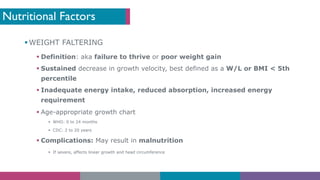
§ WEIGHT FALTERING
§ Definition: aka failure to thrive or poor weight gain
§ Sustained decrease in growth velocity, best defined as a W/L or BMI < 5th
percentile
§ Inadequate energy intake, reduced absorption, increased energy
requirement
§ Age-appropriate growth chart
§ WHO: 0 to 24 months
§ CDC: 2 to 20 years
§ Complications: May result in malnutrition
§ If severe, affects linear growth and head circumference
Feeding Skill Factors
§Illness, injury, or developmental delay
§Impaired oropharyngeal or sensory-motor function
§Altered oral experiences
Benfer 2013, Dodrill 2014, de Vries 2014
Feeding Skill Factors
§ORAL MOTOR DELAY
§ Oral motor hypotonia
§ Underdeveloped suck-swallow-breathe pattern
§ Poor lip closure: drooling after age 12 months
§ Lack of tongue lateralization
§ Loss of food from the mouth
Benfer 2013, Phalen 2013, Dodrill 2014
Feeding Skill Factors
§OROPHARYNGEAL DYSPHAGIA
§ Pathological difficulty swallowing
§ Due to underlying neurologic or structural abnormalities
§ Symptoms: gagging, choking, coughing, vomiting, apnea, cyanosis during
feeds
§ Complications: aspiration, pneumonitis
Phalen 2013, Dodrill 2014
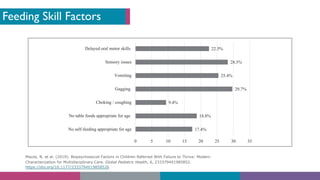
Feeding Skill Factors
Mazze, N. et al. (2019). Biopsychosocial Factors in Children Referred With Failure to Thrive: Modern
Characterization for Multidisciplinary Care. Global Pediatric Health, 6, 2333794X1985852.
https://doi.org/10.1177/2333794X19858526
Psychosocial Factors
§ Active or passive avoidance behaviors by child when
feeding or being fed
§ Inappropriate caregiver management of child’s feeding
and/or nutrition needs
§ Disruption of social functioning within a feeding context
§ Disruption of caregiver-child relationship associated with
feeding
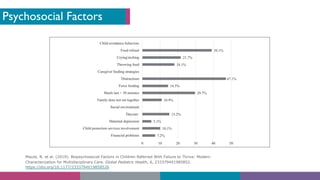
Psychosocial Factors
Mazze, N. et al. (2019). Biopsychosocial Factors in Children Referred With Failure to Thrive: Modern
Characterization for Multidisciplinary Care. Global Pediatric Health, 6, 2333794X1985852.
https://doi.org/10.1177/2333794X19858526
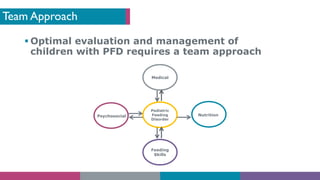
Team Approach
§ Optimal evaluation and management of
children with PFD requires a team approach
Pediatric
Feeding
Disorder
Feeding
Skills
Medical
NutritionPsychosocial
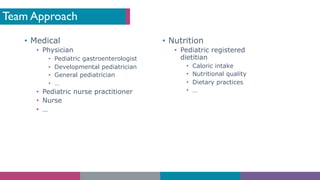
Team Approach
• Medical
• Physician
• Pediatric gastroenterologist
• Developmental pediatrician
• General pediatrician
• …
• Pediatric nurse practitioner
• Nurse
• …
• Nutrition
• Pediatric registered
dietitian
• Caloric intake
• Nutritional quality
• Dietary practices
• …
Team Approach
• Skill
• Speech language pathologist
or occupational therapist
• Oral sensory-motor
assessment
• Video fluoroscopic swallow
study
• …
• Psychosocial
• Child psychologist
• Social worker
• …
Team Approach
• Transdisciplinarity:
§ ‘The collaborative aspect ensures that team members make
use of their own expertise and specialised skills while
assimilating the knowledge and expertise of other
team members. In this way teams are most likely to create
flexible, functional and developmentally appropriate
treatment goals that are responsive to the changing needs of
children and their families.’
Allen et al., 1997 cited in: Bell, A., Corfield, M., Davies, J., & Richardson, N. (2010). Collaborative transdisciplinary intervention
in early years - putting theory into practice. Child: Care, Health and Development, 36(1), 142–148.
https://doi.org/10.1111/j.1365-2214.2009.01027.x
EFCT at RJCHC
§ Eating and Feeding Consult Team
§ Outpatients with various developmental delays.
§ Prevalence of complex feeding difficulties reviewed varied 20% to 100% from each service.
§ The children feeding committee formed in Spring 2008 with representation from the various
teams that see the pediatric neurodevelopmental population at Chedoke/Ron Joyce
Children’s Health Centre
§ Children with “mechanical” difficulties are seen through the Feeding and SwallowingTeam and
receive videofluoroscopy and pH probes etc.
§ It was found that there was a gap in service for the children who had behavioural or sensory
feeding difficulties.
EFCT
• Several themes emerged from the committee related to
the gaps in service:
• Multi-disciplinary approach needed
• Expertise needed to address both the behavioural and
sensory components of the feeding issues
• Large variability in the types of cases seen
• Physician support needed
EFCT
• Due to the need the Eating and Feeding Consult Team (EFCT) was formed in
January 2010
• Pilot would run for 1 year (now ongoing)
• Team meets once a month for 1.5 hours
• Referring clinician meets with the team and recommendations are provided
• Up to 2 cases are discussed, with the opportunity to return in the future to
review recommendations and discuss any changes
• Since 2016 the team also provides consults to patients, accompanied by their
clinicians
The SOS Approach
• Sensory Oral Sequential Feeding technique
• OTs and S-LPs at CDRP had been trained in this
technique
• Using a sequential approach in advancing the steps
• Food chaining (colors, shapes, textures, taste) also
used to expand the repertoire of food tolerated
References
§ “Feeding and Eating Disorders” in American Psychiatric Association. Diagnostic and Statistical Manual of Mental
Disorders, Fifth Edition. Washington, DC: American Psychiatric Association; 2013, pp329-354.
§ American Speech-Language-Hearing Association (ASHA). Pediatric Dysphagia. Available at
https://www.asha.org/Practice-Portal/Clinical-Topics/Pediatric-Dysphagia/ Accessed 12/16/2018.
§ Benfer, K. A., Weir, K. A., Bell, K. L., Ware, R. S., Davies, P. S. W., & Boyd, R. N. (2013). Oropharyngeal Dysphagia
and Gross Motor Skills in Children With Cerebral Palsy. Pediatrics, 131(5), e1553–e1562.
https://doi.org/10.1542/peds.2012-3093
§ de Vries, I. A. C., Breugem, C. C., van der Heul, A. M. B., Eijkemans, M. J. C., Kon, M., & van der Molen, A. B. M.
(2014). Prevalence of feeding disorders in children with cleft palate only: A retrospective study. Clinical Oral
Investigations, 18(5), 1507–1515. https://doi.org/10.1007/s00784-013-1117-x
§ Dodrill, P. (2014). Feeding problems and oropharyngeal dysphagia in children normal feeding development during
infancy. Children. Journal of Gastroenterology and Hepatology Research, 3(5), 1055–1060.
https://doi.org/10.6051/j.issn.2224-3992.2014.03.408-5
§ Dodrill, P., & Gosa, M. M. (2015). Pediatric dysphagia: Physiology, assessment, and management. Annals of Nutrition
and Metabolism, 66(suppl 5), 24–31. https://doi.org/10.1159/000381372
§ Fisher, M. M., Rosen, D. S., Ornstein, R. M., Mammel, K. A., Katzman, D. K., Rome, E. S., … Walsh, B. T. (2014).
Characteristics of avoidant/restrictive food intake disorder in children and adolescents: A “new Disorder” in DSM-5.
Journal of Adolescent Health, 55(1), 49–52. https://doi.org/10.1016/j.jadohealth.2013.11.013
§ Goday, P., Huh, S. Y., Silverman, A., Lukens, C. T., Dodrill, P., Cohen, S. S., … Phalen, J. A. (2019). Pediatric Feeding
Disorder—Consensus Definition and Conceptual Framework. Journal of Pediatric Gastroenterology and Nutrition,
68(1), 124–129. https://doi.org/10.1097/MPG.0000000000002188
References
§ Kurz, S., Vandyck, Z., Dremmel, D., Munsch, S., & Hilbert, A. (2015). Early-onset restrictive eating disturbances in
primary school boys and girls. European Child and Adolescent Psychiatry, 24(7), 779–785.
https://doi.org/10.1007/s00787-014-0622-z
§ Mazze, N., Cory, E., Gardner, J., Alexanian-Farr, M., Mutch, C., Marcus, S., … van den Heuvel, M. (2019).
Biopsychosocial Factors in Children Referred With Failure to Thrive: Modern Characterization for Multidisciplinary Care.
Global Pediatric Health, 6, 2333794X1985852. https://doi.org/10.1177/2333794X19858526
§ Mussatto, K. A., Hoffmann, R. G., Hoffman, G. M., Tweddell, J. S., Bear, L., Cao, Y., & Brosig, C. (2014). Risk and
prevalence of developmental delay in young children with congenital heart disease. Pediatrics, 133(3), e570-7.
https://doi.org/10.1542/peds.2013-2309
§ Phalen, J. A. (2013). Managing Feeding Problems and Feeding Disorders. Pediatrics in Review, 34(12), 549–557.
https://doi.org/10.1542/pir.34-12-549
§ Poppert, K. M., Patton, S. R., Borner, K. B., Davis, A. M., & Dreyer Gillette, M. L. (2014). Systematic Review: Mealtime
Behavior Measures Used in Pediatric Chronic Illness Populations. Journal of Pediatric Psychology, 40(5), 475–486.
https://doi.org/10.1093/jpepsy/jsu117
§ Sharp, W. G., Berry, R. C., McCracken, C., Nuhu, N. N., Marvel, E., Saulnier, C. A., … Jaquess, D. L. (2013). Feeding
problems and nutrient intake in children with autism spectrum disorders: a meta-analysis and comprehensive review
of the literature. J Autism Dev Disord, 43(9), 2159–2173. https://doi.org/10.1007/s10803-013-1771-5
§ Shmaya, Y., Eilat-Adar, S., Leitner, Y., Reif, S., & Gabis, L. (2015). Nutritional deficiencies and overweight prevalence
among children with autism spectrum disorder. Research in Developmental Disabilities, 38, 1–6.
https://doi.org/10.1016/j.ridd.2014.11.020
Q & A Session
Q A&
ThankYou!

PEDIATRIC FEEDING DISORDER

  • 1.
    PEDIATRIC FEEDING DISORDER OlafKraus de Camargo @DevPeds With slides from Dr. Jaime Phalen, Presented at the 6th International Pediatric Feeding Disorder Conference, 2019 in Phoenix,Arizona https://www.feedingmatters.org
  • 2.
    Introduction §Pediatric feeding disorderlacked a universally accepted definition §Previous diagnostic paradigms defined feeding disorder from the perspective of a single discipline §Commonly dichotomous division in organic vs behavioural
  • 3.
    Introduction §A unifying diagnosticterm, “Pediatric Feeding Disorder”, using the framework of the World Health Organization’s International Classification of Functioning, Disability, and Health (ICF) §PFD unifies the medical, nutritional, feeding skill, and/or psychosocial concerns associated with feeding disorders §The proposed diagnostic criteria should promote the use of common, precise, terminology necessary to advance clinical practice, research, and health- care policy
  • 4.
    2017March 20162015 Onine &Offline Discussions 2019 “Goldwater Spectrum Feeding Disorder” “Dysnutria” “Pediatric Feeding Disorder” Consensus Meeting ICF Development
  • 5.
    Development § 15 Authors §7 Disciplines: § Applied behavior analysis § Child & pediatric psychology § Developmental-behavioral pediatrics § Dietetics / nutritional medicine § Occupational therapy § Pediatric gastroenterology § Speech-language pathology
  • 6.
    Normal Feeding §Coordination ofmultiple body systems §Developmental progression of food selectivity §Children self-regulate and may vary their oral intake up to 30% daily with no effect on growth §Feeding plays a central role in the caregiver-child relationship Phalen, J.A. (2013). Managing Feeding Problems and Feeding Disorders. Pediatrics in Review, 34(12), 549–557. https://doi.org/10.1542/pir.34-12-549
  • 7.
    Normal feeding dependson the successful interaction of a child’s health, development, temperament, experience, and environment. Disrupting any of these systems places child at risk for pediatric feeding disorder. NORMAL FEEDING
  • 10.
    Feeding Problems Between 25%and 50% of neurotypical children and up to 80% of those with developmental disabilities have feeding problems
  • 11.
    Diagnostic Terms § AMERICANSPEECH-LANGUAGE HEARING ASSOCIATION ØPediatric dysphagia: impaired oral, pharyngeal, and/or esophageal phases of swallowing (ASHA 2014)
  • 12.
    Diagnostic Terms § WORLDHEALTH ORGANIZATION - ICD ØF98.2. Feeding disorder of infancy and childhood: “varying manifestations usually specific to infancy and early childhood. It generally involves food refusal and extreme faddiness in the presence of an adequate food supply, a reasonably competent caregiver, and the absence of organic disease”
  • 13.
    Diagnostic Terms §AMERICAN PSYCHOLOGICALASSOCIATION ØAvoidant/Restrictive Food Intake Disorder - ARFID ØEating or feeding disturbance with persistent failure to meet appropriate nutritional &/or energy needs (with ≥ 1 of the following): § Significant weight loss (or poor weight gain or faltering growth in children) § Significant nutritional deficiency (or related health impact) § Dependence on enteral feeding or oral nutritional supplements § Marked interference with psychosocial functioning
  • 14.
    Diagnostic Terms §AMERICAN PSYCHOLOGICALASSOCIATION ØAvoidant/Restrictive Food Intake Disorder - ARFID ØNot better explained by lack of available food or culturally sanctioned practice (e.g., religious fasting, normal dieting) or developmentally normal behaviors (e.g., picky eating in toddlers, reduced intake in older adults) ØNot exclusively during the course of anorexia nervosa or bulimia nervosa ØNot attributable to concurrent medical condition & not better explained by another mental disorder; severity must exceed that routinely associated with the condition or disorder and warrants additional clinical attention
  • 15.
    Diagnostic Terms §AMERICAN PSYCHOLOGICALASSOCIATION ØAvoidant/Restrictive Food Intake Disorder – ARFID Ø May be based on sensory characteristics of food qualities (e.g., appearance, color, smell, texture, temperature, taste) § May manifest as refusal to eat particular brands of foods or to tolerate the smell of food being eaten by others § Individuals who have autism spectrum disorder may show similar behaviors Ø May represent a conditioned negative response associated with an aversive experience (e.g., choking, esophagoscopy, repeated vomiting)
  • 16.
    Diagnostic Terms §AMERICAN PSYCHOLOGICALASSOCIATION ØAvoidant/Restrictive Food Intake Disorder – ARFID Ø Associated Features Supporting Diagnosis: § Lack of interest in eating or food § Young infants too sleepy, distressed, or agitated to feed § Infants & young children may not: § engage with primary caregiver during feeding § communicate hunger in favor of other activities Ø In older children & adolescents, may be associated with: § Generalized emotional difficulties
  • 17.
    PROBLEMS WITH ARFID §Specificallyexcludes children whose primary challenge is a skill deficit §Severity of eating disturbance must exceed that associated with comorbidity §No limitations re: age of onset §Non-specific: 29% teens at eating d/o clinic de Vries 2014, Fisher 2014, Kurz 2015, Mussatto 2014
  • 18.
    PEDIATRIC FEEDING DISORDER Impaired oralintake that is not age-appropriate, and is associated with medical, nutritional, feeding skill, and/or psychosocial dysfunction.
  • 19.
    Pediatric Feeding Disorder §PFD results in disability as defined by the World Health Organization (WHO) International Classification of Functioning, Disability, and Health (ICF) § Impairment: a problem in body function or structure, or § Activity limitation: difficulty executing a task or action, or § Participation restriction: problem with life situations
  • 20.
    PFD – DiagnosticCriteria A.A disturbance in oral intake of nutrients, inappropriate for age, lasting at least 2 weeks and associated with 1 or more of the following: 1.Medical dysfunction, as evidenced by any of the following: a.Cardiorespiratory compromise during oral feeding b.Aspiration or recurrent aspiration pneumonitis 2.Nutritional dysfunction, as evidenced by any of the following: a.Malnutrition b.Specific nutrient deficiency or significantly restricted intake of one or more nutrients resulting from decreased dietary diversity c. Reliance on enteral feeds or oral supplements to sustain nutrition and/or hydration
  • 21.
    PFD – DiagnosticCriteria A. A disturbance in oral intake of nutrients, inappropriate for age, lasting at least 2 weeks and associated with 1 or more of the following: 3. Feeding skill dysfunction, as evidenced by any of the following: a. Need for texture modification of liquid or food b. Use of modified feeding position or equipment c. Use of modified feeding strategies 4. Psychosocial dysfunction, as evidenced by any of the following: a. Active or passive avoidance behaviors by child when feeding or being fed b. Inappropriate caregiver management of child’s feeding and/or nutrition needs c. Disruption of social functioning within a feeding context d. Disruption of caregiver-child relationship associated with feeding
  • 22.
    PFD – DiagnosticCriteria B. Absence of the cognitive processes consistent with eating disorders (e.g. Anorexia) and pattern of oral intake is not due to a lack of food or congruent with cultural norms.
  • 23.
    Medical Factors §Prematurity §Cardiopulmonary disease §Genetic/chromosomalanomalies §Craniofacial anomalies §Neurodevelopmental disorders §Gastrointestinal disorders de Vries 2014, Mussatto 2014
  • 24.
    Medical Factors §NEURODEVELOPMENTAL DISORDERS §AutismSpectrum Disorder §Global Developmental Delay/Intellectual Disability §Cerebral Palsy §Down Syndrome Benfer 2013, Sharp 2013, Shmaya 2015
  • 25.
    Medical Factors §GASTROINTESTINAL DISORDERS §GastroesophagealReflux Disease (GERD) §Chronic Constipation +/- overflow incontinence/Encopresis §Eosinophilic Esophagitis Benfer 2013, Sharp 2013, Shmaya 2015
  • 26.
    Nutritional Factors §Restricted quality,quantity, variety §Inadequate energy intake = risk for weight faltering §Excluding entire food groups = risk for micronutrient deficiency §Excessive energy intake +/- reduced energy requirement = risk for obesity
  • 27.
    Nutritional Factors §SMALL FORGESTATIONAL AGE §Definition: birth weight < 3rd vs. < 10th percentile for gestational age §Etiology: §Fetal (intrauterine) growth restriction §Constitutional (i.e., maternal height, weight, ethnicity, and parity) §Up to 15% of infants born SGA fail to catch up by age 2 years
  • 28.
    Nutritional Factors § WEIGHTFALTERING § Definition: aka failure to thrive or poor weight gain § Sustained decrease in growth velocity, best defined as a W/L or BMI < 5th percentile § Inadequate energy intake, reduced absorption, increased energy requirement § Age-appropriate growth chart § WHO: 0 to 24 months § CDC: 2 to 20 years § Complications: May result in malnutrition § If severe, affects linear growth and head circumference
  • 29.
    Feeding Skill Factors §Illness,injury, or developmental delay §Impaired oropharyngeal or sensory-motor function §Altered oral experiences Benfer 2013, Dodrill 2014, de Vries 2014
  • 30.
    Feeding Skill Factors §ORALMOTOR DELAY § Oral motor hypotonia § Underdeveloped suck-swallow-breathe pattern § Poor lip closure: drooling after age 12 months § Lack of tongue lateralization § Loss of food from the mouth Benfer 2013, Phalen 2013, Dodrill 2014
  • 31.
    Feeding Skill Factors §OROPHARYNGEALDYSPHAGIA § Pathological difficulty swallowing § Due to underlying neurologic or structural abnormalities § Symptoms: gagging, choking, coughing, vomiting, apnea, cyanosis during feeds § Complications: aspiration, pneumonitis Phalen 2013, Dodrill 2014
  • 32.
    Feeding Skill Factors Mazze,N. et al. (2019). Biopsychosocial Factors in Children Referred With Failure to Thrive: Modern Characterization for Multidisciplinary Care. Global Pediatric Health, 6, 2333794X1985852. https://doi.org/10.1177/2333794X19858526
  • 33.
    Psychosocial Factors § Activeor passive avoidance behaviors by child when feeding or being fed § Inappropriate caregiver management of child’s feeding and/or nutrition needs § Disruption of social functioning within a feeding context § Disruption of caregiver-child relationship associated with feeding
  • 34.
    Psychosocial Factors Mazze, N.et al. (2019). Biopsychosocial Factors in Children Referred With Failure to Thrive: Modern Characterization for Multidisciplinary Care. Global Pediatric Health, 6, 2333794X1985852. https://doi.org/10.1177/2333794X19858526
  • 35.
    Team Approach § Optimalevaluation and management of children with PFD requires a team approach Pediatric Feeding Disorder Feeding Skills Medical NutritionPsychosocial
  • 36.
    Team Approach • Medical •Physician • Pediatric gastroenterologist • Developmental pediatrician • General pediatrician • … • Pediatric nurse practitioner • Nurse • … • Nutrition • Pediatric registered dietitian • Caloric intake • Nutritional quality • Dietary practices • …
  • 37.
    Team Approach • Skill •Speech language pathologist or occupational therapist • Oral sensory-motor assessment • Video fluoroscopic swallow study • … • Psychosocial • Child psychologist • Social worker • …
  • 38.
    Team Approach • Transdisciplinarity: §‘The collaborative aspect ensures that team members make use of their own expertise and specialised skills while assimilating the knowledge and expertise of other team members. In this way teams are most likely to create flexible, functional and developmentally appropriate treatment goals that are responsive to the changing needs of children and their families.’ Allen et al., 1997 cited in: Bell, A., Corfield, M., Davies, J., & Richardson, N. (2010). Collaborative transdisciplinary intervention in early years - putting theory into practice. Child: Care, Health and Development, 36(1), 142–148. https://doi.org/10.1111/j.1365-2214.2009.01027.x
  • 39.
    EFCT at RJCHC §Eating and Feeding Consult Team § Outpatients with various developmental delays. § Prevalence of complex feeding difficulties reviewed varied 20% to 100% from each service. § The children feeding committee formed in Spring 2008 with representation from the various teams that see the pediatric neurodevelopmental population at Chedoke/Ron Joyce Children’s Health Centre § Children with “mechanical” difficulties are seen through the Feeding and SwallowingTeam and receive videofluoroscopy and pH probes etc. § It was found that there was a gap in service for the children who had behavioural or sensory feeding difficulties.
  • 40.
    EFCT • Several themesemerged from the committee related to the gaps in service: • Multi-disciplinary approach needed • Expertise needed to address both the behavioural and sensory components of the feeding issues • Large variability in the types of cases seen • Physician support needed
  • 41.
    EFCT • Due tothe need the Eating and Feeding Consult Team (EFCT) was formed in January 2010 • Pilot would run for 1 year (now ongoing) • Team meets once a month for 1.5 hours • Referring clinician meets with the team and recommendations are provided • Up to 2 cases are discussed, with the opportunity to return in the future to review recommendations and discuss any changes • Since 2016 the team also provides consults to patients, accompanied by their clinicians
  • 42.
    The SOS Approach •Sensory Oral Sequential Feeding technique • OTs and S-LPs at CDRP had been trained in this technique • Using a sequential approach in advancing the steps • Food chaining (colors, shapes, textures, taste) also used to expand the repertoire of food tolerated
  • 43.
    References § “Feeding andEating Disorders” in American Psychiatric Association. Diagnostic and Statistical Manual of Mental Disorders, Fifth Edition. Washington, DC: American Psychiatric Association; 2013, pp329-354. § American Speech-Language-Hearing Association (ASHA). Pediatric Dysphagia. Available at https://www.asha.org/Practice-Portal/Clinical-Topics/Pediatric-Dysphagia/ Accessed 12/16/2018. § Benfer, K. A., Weir, K. A., Bell, K. L., Ware, R. S., Davies, P. S. W., & Boyd, R. N. (2013). Oropharyngeal Dysphagia and Gross Motor Skills in Children With Cerebral Palsy. Pediatrics, 131(5), e1553–e1562. https://doi.org/10.1542/peds.2012-3093 § de Vries, I. A. C., Breugem, C. C., van der Heul, A. M. B., Eijkemans, M. J. C., Kon, M., & van der Molen, A. B. M. (2014). Prevalence of feeding disorders in children with cleft palate only: A retrospective study. Clinical Oral Investigations, 18(5), 1507–1515. https://doi.org/10.1007/s00784-013-1117-x § Dodrill, P. (2014). Feeding problems and oropharyngeal dysphagia in children normal feeding development during infancy. Children. Journal of Gastroenterology and Hepatology Research, 3(5), 1055–1060. https://doi.org/10.6051/j.issn.2224-3992.2014.03.408-5 § Dodrill, P., & Gosa, M. M. (2015). Pediatric dysphagia: Physiology, assessment, and management. Annals of Nutrition and Metabolism, 66(suppl 5), 24–31. https://doi.org/10.1159/000381372 § Fisher, M. M., Rosen, D. S., Ornstein, R. M., Mammel, K. A., Katzman, D. K., Rome, E. S., … Walsh, B. T. (2014). Characteristics of avoidant/restrictive food intake disorder in children and adolescents: A “new Disorder” in DSM-5. Journal of Adolescent Health, 55(1), 49–52. https://doi.org/10.1016/j.jadohealth.2013.11.013 § Goday, P., Huh, S. Y., Silverman, A., Lukens, C. T., Dodrill, P., Cohen, S. S., … Phalen, J. A. (2019). Pediatric Feeding Disorder—Consensus Definition and Conceptual Framework. Journal of Pediatric Gastroenterology and Nutrition, 68(1), 124–129. https://doi.org/10.1097/MPG.0000000000002188
  • 44.
    References § Kurz, S.,Vandyck, Z., Dremmel, D., Munsch, S., & Hilbert, A. (2015). Early-onset restrictive eating disturbances in primary school boys and girls. European Child and Adolescent Psychiatry, 24(7), 779–785. https://doi.org/10.1007/s00787-014-0622-z § Mazze, N., Cory, E., Gardner, J., Alexanian-Farr, M., Mutch, C., Marcus, S., … van den Heuvel, M. (2019). Biopsychosocial Factors in Children Referred With Failure to Thrive: Modern Characterization for Multidisciplinary Care. Global Pediatric Health, 6, 2333794X1985852. https://doi.org/10.1177/2333794X19858526 § Mussatto, K. A., Hoffmann, R. G., Hoffman, G. M., Tweddell, J. S., Bear, L., Cao, Y., & Brosig, C. (2014). Risk and prevalence of developmental delay in young children with congenital heart disease. Pediatrics, 133(3), e570-7. https://doi.org/10.1542/peds.2013-2309 § Phalen, J. A. (2013). Managing Feeding Problems and Feeding Disorders. Pediatrics in Review, 34(12), 549–557. https://doi.org/10.1542/pir.34-12-549 § Poppert, K. M., Patton, S. R., Borner, K. B., Davis, A. M., & Dreyer Gillette, M. L. (2014). Systematic Review: Mealtime Behavior Measures Used in Pediatric Chronic Illness Populations. Journal of Pediatric Psychology, 40(5), 475–486. https://doi.org/10.1093/jpepsy/jsu117 § Sharp, W. G., Berry, R. C., McCracken, C., Nuhu, N. N., Marvel, E., Saulnier, C. A., … Jaquess, D. L. (2013). Feeding problems and nutrient intake in children with autism spectrum disorders: a meta-analysis and comprehensive review of the literature. J Autism Dev Disord, 43(9), 2159–2173. https://doi.org/10.1007/s10803-013-1771-5 § Shmaya, Y., Eilat-Adar, S., Leitner, Y., Reif, S., & Gabis, L. (2015). Nutritional deficiencies and overweight prevalence among children with autism spectrum disorder. Research in Developmental Disabilities, 38, 1–6. https://doi.org/10.1016/j.ridd.2014.11.020
  • 45.
    Q & ASession Q A& ThankYou!