NEONATAL HYPOTHERMIA
Prepared by:
Shraddha Dahal
Roll no: 25
B.Sc. Nursing 4th year
General Objective
At the end of this session, all the B.Sc. Nursing
3rd year students will be able to explain about
neonatal hypothermia.
Specific Objectives
At the end of this session, all the B.Sc.
Nursing 3rd year students will be able to:
• define neonatal hypothermia .
• list out the factors responsible for neonatal
hypothermia.
• discuss the ways of heat loss in newborn
baby.
• identify the methods of grading neonatal
hypothermia.
• describe the process of thermoregulation.
• describe the consequences of neonatal
hypothermia.
• list out the clinical features of neonatal
hypothermia.
• explain the management of neonatal
hypothermia.
• describe the preventive measures of neonatal
hypothermia.
Neonatal Hypothermia
• Neonatal hypothermia is a common alteration
of thermoregulatory state of neonates which
occurs when axillary temperature falls below
36.50C (WHO,1997).
• In Nepal a study done on 500 newborns
showed that 85% of neonates were
hypothermic( body temperature < 360C) 2
hours after delivery.
…contd
• In Nepal, primarily during the winter
months, over 80% of the infants born
became hypothermic after birth and 50%
remained hypothermic at 24 hours.
• It is estimated that 15% of the newborn
babies develop hypothermia at birth in
developing countries.
Factors Responsible For Neonatal
Hypothermia
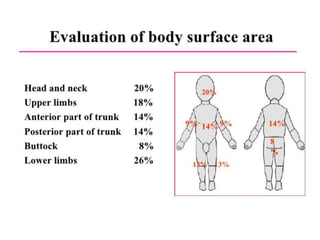
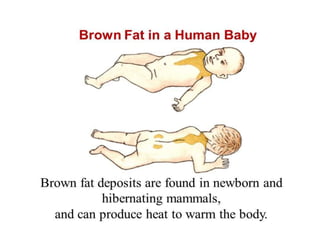
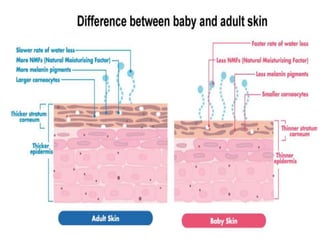
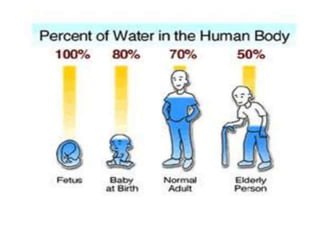
1. Large surface area per unit body weight
….contd
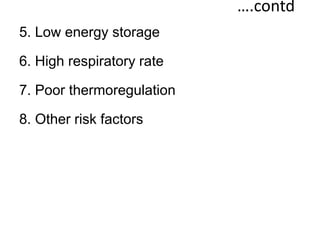
5. Low energy storage
6. High respiratory rate
7. Poor thermoregulation
8. Other risk factors
Ways of Heat Loss
Process of Thermoregulation
• Nonshivering thermogenesis (NST)
• Metabolic processes
• Voluntary muscle activity
• Peripheral vasoconstriction
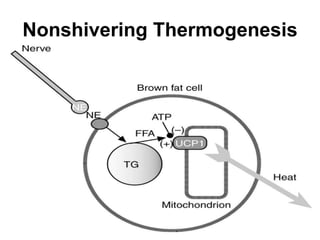
Nonshivering Thermogenesis
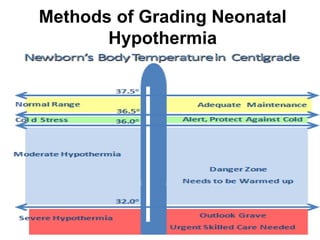
Methods of Grading Neonatal
Hypothermia
….contd
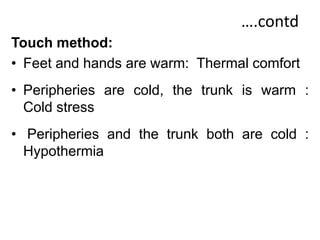
Touch method:
• Feet and hands are warm: Thermal comfort
• Peripheries are cold, the trunk is warm :
Cold stress
• Peripheries and the trunk both are cold :
Hypothermia
Consequences of Neonatal
Hypothermia
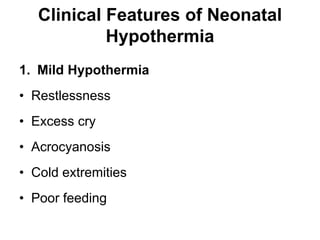
Clinical Features of Neonatal
Hypothermia
1. Mild Hypothermia
• Restlessness
• Excess cry
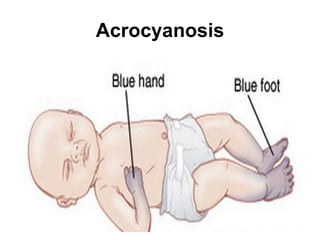
• Acrocyanosis
• Cold extremities
• Poor feeding
Acrocyanosis
…contd
2. Moderate Hypothermia
• Difficult breathing
• Bradycardia
• Poor or no feeding
• Lethargy, poor reflexes
• Cold to touch
….contd
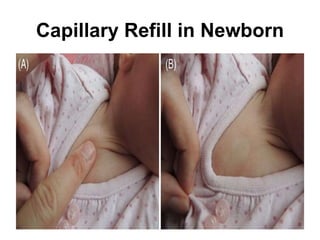
• Delay capillary refill time
• Oliguria
Capillary Refill in Newborn
….contd
3. Severe Hypothermia
• Breathing difficulty
• Poor or no feeding, Hypoglycemia
• Lethargy
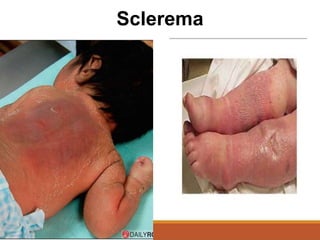
• Sclerema
• Slow, shallow and irregular respiration with
bradycardia
• Cold to touch
Sclerema
Management of Neonatal Hypothermia
A. Mild Hypothermia (cold stress)
• Remove the baby from the source that may
be causing hypothermia.
• Cover the baby adequately with warm
clothes.
• Ensure skin to skin contact with mother, if not
possible, kept next to mother after fully
covering the baby.
• Warm the environments including room / bed
(28-32 C).
….contd
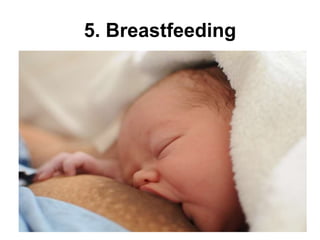
• Immediately breastfeed the baby.
• Monitor axillary temperature every ½
hourly till it reaches 36.5°, then hourly for
next 4 hours, 2 hourly for 12 hour
thereafter.
• If the temperature of baby is not rising,
check if adequate amount of heat being
provided. Sepsis should be suspected
unresponsive hypothermia.
• Watch for apnea and hypoglycemia.
• Follow up
B.Moderate to Severe Hypothermia
• Remove wet clothes and rapid rewarming by
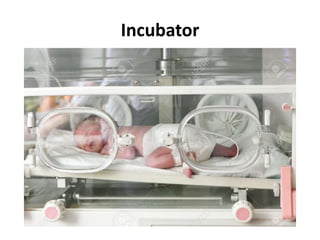
incubator, preheated radiant warmer or
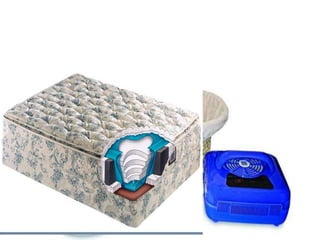
thermostatically controlled heated mattress.
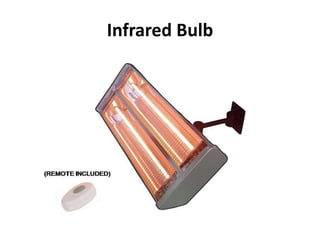
• Room heater or 200 W bulb or infrared bulb
can also be used.
• Rapid rewarming is done up to 34°C, then
slow rewarming to 36.5°C.
Incubator
Infrared Bulb
…contd
• Set skin temperature at 370C in skin servo
mode in radiant warmer or 1-1.50C higher
than the body temperature in an incubator
and should be adjusted as the newborn's
temperature increases.
• In the absence of radiant warmer or
incubator- heating lamp, home based
heating methods may be used under
supervision.
….contd
• Where radiant warmer or incubator is not
available, KMC may be the only option.
• Monitor temperature every ½ hourly till it
reaches 36.50 . If rise of temperature has
been by 0.5°C per hour then heating is
considered adequate, and temperature
measurement is continued every hourly for
next 4 hours and 2 hourly for next 12 hour
thereafter.
• If rise of temperature is not adequate, one
should check the heating technique.
…contd
• If temperature doesn’t improve provide
additional heat. Sepsis should be
suspected unresponsive hypothermia.
• Encourage mother to breast feed the baby
more frequently. If baby cannot breast fed,
give expressed breast milk using an
alternative feeding method.
• Assess the baby: Look for emergency
signs
..contd
• Parental support
If the feeding is well, temperature remains
within the normal range and there are no
other problems requiring hospitalization,
discharge the baby.
Advise the mother how to keep the baby
warm at home.
C. Supportive Measures
• Prompt detection and management of
hypoxia, hypoperfusion and hypoglycemia.
• Measure blood glucose. If the blood
glucose is less than 45 mg/dl ( 2.6 mmol),
treat for low glucose.
• If perfusion is poor , give 20ml/kg of RL or
NS over 5 minutes.
• Provide oxygen if moderate to severe
hypothermia.
…..contd
• Watch for apnea, hypoxia and
hypoglycemia during rewarming.
• IV vitamin K 1 mg IM in term and 0.5mg in
preterm babies , if not given earlier.
• If hypothermia is associated with infection,
start appropriate antibiotics.
Prevention of Neonatal Hypothermia
The "warm chain " is a set of interlinked
procedures to be performed at birth and during
the next few hours and days after birth in order
to minimize heat loss in all newborns
(WHO,1997).
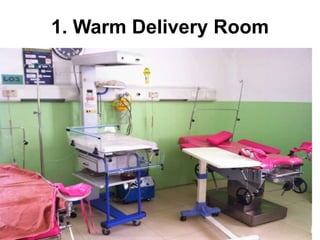
1. Warm Delivery Room
2. Warm Resuscitation
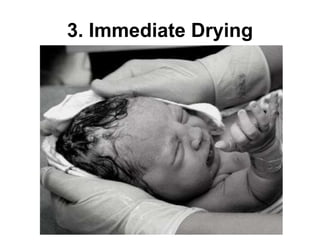
3. Immediate Drying
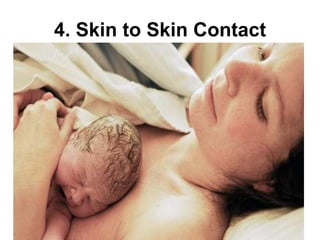
4. Skin to Skin Contact
• While the newborn is being dried, place on
the mother’s chest or abdomen (skin to-
skin contact) to prevent heat loss.
If mother is unable, the cold newborn may
go skin-to-skin with the partner
• Cover the newborn with a second towel
and put a cap on the head to prevent heat
loss from convection.
• Leave the newborn skin-to-skin on the
mother and keep covered.
….contd
• Newborns should be uncovered as little as
possible during assessments and
interventions.
• Newborns can be maintained in skin-to-
skin contact with the mother:
while she is being attended to (placenta
delivery, suturing) .
during transfer to the postnatal unit,
recovery room
….contd
during assessments and initial
interventions.
for the first hours after birth.
5. Breastfeeding
6. Postpone Weighing and Bathing
• Weighing can be done following the period
of uninterrupted skin-to-skin contact and
the first feed. Place a warm blanket on the
scale.
• Bathing the newborn soon after birth
causes a drop in the body temperature and
may propagate hypothermia and
hypoglycemia.
• Don't bath the baby immediately after birth.
Wait for at least 24 hours to bath the baby.
….contd
• Bathing could be done when baby's
temperature is stable or when cord fall off
or when baby's weight is 2.5 kg in warm,
sunny room with warm water. Wait longer
if body temperature is below 360C ,LBW
baby or baby is unwell.
• For preterm baby, bathing should be
postponed until the baby's weight reach up
to 2.5 kg. At that time sponging is
adequate.
….contd
• If a hypothermic newborn thick wet hair,
consider drying the hair thoroughly and
then place a cap on the head.
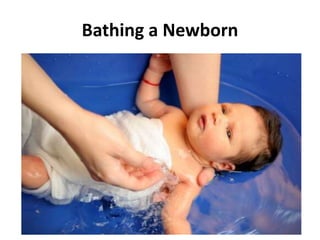
• Bathing should be done quickly in a warm
room, using warm water. Tub bathing is
the preferred method of bathing.
• Note: Newborns with an umbilical catheter
should not be tub bathed.
Bathing a Newborn
…contd
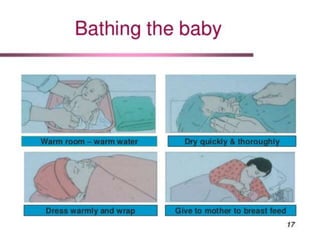
• Immediately after the bath dry thoroughly
from head to toe, immediately diaper and
apply dry cap on baby's head and place
skin-to skin.
• If skin-to-skin is not possible double wrap
the newborn with warm blankets ensuring
the head is covered.
• After skin-to-skin, dress and wrap the baby
in dry warm blankets.
7. Appropriate Clothing/ Blanket
• Dress newborn in loose clothing and
blanket.
• Cover baby's head with cap or cloth.
• The baby should not be wrapped too
tightly and too loosely , it is better to have
2-3 layers of clothes rather than one single
thick layer.
• When the clothing or the diaper is soiled ,
it should be changed immediately.
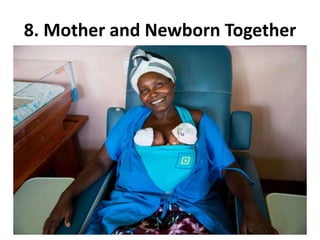
8. Mother and Newborn Together
9. Warm Transportation
• Always stabilize the baby's temperature
before transport.
• Record temperature before transport and
take remedial measures. If temperature
cannot be documented, use touch to judge
temperature. Hands and feet should be as
warm as abdomen.
• Carry the baby close to the chest of
mother, if possible in kangaroo position.
….contd
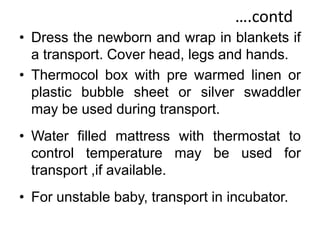
• Dress the newborn and wrap in blankets if
a transport. Cover head, legs and hands.
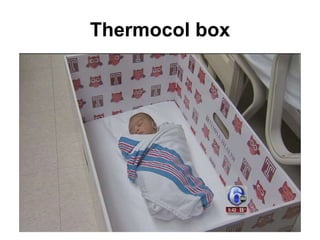
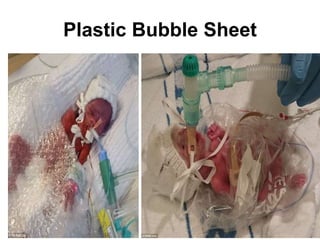
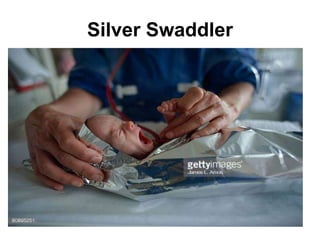
• Thermocol box with pre warmed linen or
plastic bubble sheet or silver swaddler
may be used during transport.
• Water filled mattress with thermostat to
control temperature may be used for
transport ,if available.
• For unstable baby, transport in incubator.
Thermocol box
Plastic Bubble Sheet
Silver Swaddler
10. Training and Raising Awareness
Complications
• Pulmonary hemorrhage
• Hypovolemia
• Coagulopathy
• Acidaemia
• Scleroderma
….contd
• Jaundice and hypoglycemia
• Cardiac arrhythmia
• Even death may occur
References
• Subedi, D.,& Gautam ,S.(2017) .Midwifery nursing
part III ( 3rd ed.). Medhavi Publication ,Baneshwor,
Kathmandu,Nepal (pp:164-171).
• Uprety,K. (2017).Essential of child health nursing(1st
ed.).Akshav Publication , kathmandu,Nepal (pp: 98-
99).
• Shrestha,T.(2016). Essential child health nursing(2nd
ed.).Medhavi Publication, Jamal,Kathmandu,
Nepal(pp:95-99).
• Adhikari,T.(2015). Essentials of Pediatric Nursing (2nd
ed.).Vidhyarthi Pustak Bhandar, Kathmandu, Nepal
(pp:59-62).
• Dutta,P.(2014).Pediatric Nursing (3rd ed.).Jaypee Brothers
Medical Publisher, New Delhi, India (pp: 83-85).
• Koner,H.(Eds.).(2013).DC Dutta's textbook of obstetrics(8th
ed.).Jaypee Brothers Medical Publishers,New
Delhi,India(pp:518).
• Paul,V.K & Bagga.A.(2013).Ghai essential paediatrics(8th
ed.).CBS Publishers and Distributors, New Delhi, India(pp:
143-146).
• Sharma,R. (2013). Essential Paediatrics for Nurses( 2nd ed.).
Jyapee Brothers Medical Publisher , New Delhi,India( pp:212-
217).
• Thakur, L .(2012).Advanced child health nursing (3rd
ed.).Ultimate Marketing ,Lazimpat ,Kathmandu,Nepal (pp: 59-
62).
Neonatal hypothermia

Neonatal hypothermia

  • 1.
    NEONATAL HYPOTHERMIA Prepared by: ShraddhaDahal Roll no: 25 B.Sc. Nursing 4th year
  • 2.
    General Objective At theend of this session, all the B.Sc. Nursing 3rd year students will be able to explain about neonatal hypothermia.
  • 3.
    Specific Objectives At theend of this session, all the B.Sc. Nursing 3rd year students will be able to: • define neonatal hypothermia . • list out the factors responsible for neonatal hypothermia. • discuss the ways of heat loss in newborn baby. • identify the methods of grading neonatal hypothermia.
  • 4.
    • describe theprocess of thermoregulation. • describe the consequences of neonatal hypothermia. • list out the clinical features of neonatal hypothermia. • explain the management of neonatal hypothermia. • describe the preventive measures of neonatal hypothermia.
  • 5.
    Neonatal Hypothermia • Neonatalhypothermia is a common alteration of thermoregulatory state of neonates which occurs when axillary temperature falls below 36.50C (WHO,1997). • In Nepal a study done on 500 newborns showed that 85% of neonates were hypothermic( body temperature < 360C) 2 hours after delivery.
  • 6.
    …contd • In Nepal,primarily during the winter months, over 80% of the infants born became hypothermic after birth and 50% remained hypothermic at 24 hours. • It is estimated that 15% of the newborn babies develop hypothermia at birth in developing countries.
  • 7.
    Factors Responsible ForNeonatal Hypothermia 1. Large surface area per unit body weight
  • 12.
    ….contd 5. Low energystorage 6. High respiratory rate 7. Poor thermoregulation 8. Other risk factors
  • 13.
  • 14.
    Process of Thermoregulation •Nonshivering thermogenesis (NST) • Metabolic processes • Voluntary muscle activity • Peripheral vasoconstriction
  • 15.
  • 16.
    Methods of GradingNeonatal Hypothermia
  • 17.
    ….contd Touch method: • Feetand hands are warm: Thermal comfort • Peripheries are cold, the trunk is warm : Cold stress • Peripheries and the trunk both are cold : Hypothermia
  • 18.
  • 19.
    Clinical Features ofNeonatal Hypothermia 1. Mild Hypothermia • Restlessness • Excess cry • Acrocyanosis • Cold extremities • Poor feeding
  • 20.
  • 21.
    …contd 2. Moderate Hypothermia •Difficult breathing • Bradycardia • Poor or no feeding • Lethargy, poor reflexes • Cold to touch
  • 22.
    ….contd • Delay capillaryrefill time • Oliguria
  • 23.
  • 24.
    ….contd 3. Severe Hypothermia •Breathing difficulty • Poor or no feeding, Hypoglycemia • Lethargy • Sclerema • Slow, shallow and irregular respiration with bradycardia • Cold to touch
  • 25.
  • 26.
    Management of NeonatalHypothermia A. Mild Hypothermia (cold stress) • Remove the baby from the source that may be causing hypothermia. • Cover the baby adequately with warm clothes. • Ensure skin to skin contact with mother, if not possible, kept next to mother after fully covering the baby. • Warm the environments including room / bed (28-32 C).
  • 27.
    ….contd • Immediately breastfeedthe baby. • Monitor axillary temperature every ½ hourly till it reaches 36.5°, then hourly for next 4 hours, 2 hourly for 12 hour thereafter. • If the temperature of baby is not rising, check if adequate amount of heat being provided. Sepsis should be suspected unresponsive hypothermia. • Watch for apnea and hypoglycemia. • Follow up
  • 28.
    B.Moderate to SevereHypothermia • Remove wet clothes and rapid rewarming by incubator, preheated radiant warmer or thermostatically controlled heated mattress. • Room heater or 200 W bulb or infrared bulb can also be used. • Rapid rewarming is done up to 34°C, then slow rewarming to 36.5°C.
  • 29.
  • 30.
  • 31.
    …contd • Set skintemperature at 370C in skin servo mode in radiant warmer or 1-1.50C higher than the body temperature in an incubator and should be adjusted as the newborn's temperature increases. • In the absence of radiant warmer or incubator- heating lamp, home based heating methods may be used under supervision.
  • 32.
    ….contd • Where radiantwarmer or incubator is not available, KMC may be the only option. • Monitor temperature every ½ hourly till it reaches 36.50 . If rise of temperature has been by 0.5°C per hour then heating is considered adequate, and temperature measurement is continued every hourly for next 4 hours and 2 hourly for next 12 hour thereafter. • If rise of temperature is not adequate, one should check the heating technique.
  • 33.
    …contd • If temperaturedoesn’t improve provide additional heat. Sepsis should be suspected unresponsive hypothermia. • Encourage mother to breast feed the baby more frequently. If baby cannot breast fed, give expressed breast milk using an alternative feeding method. • Assess the baby: Look for emergency signs
  • 34.
    ..contd • Parental support Ifthe feeding is well, temperature remains within the normal range and there are no other problems requiring hospitalization, discharge the baby. Advise the mother how to keep the baby warm at home.
  • 35.
    C. Supportive Measures •Prompt detection and management of hypoxia, hypoperfusion and hypoglycemia. • Measure blood glucose. If the blood glucose is less than 45 mg/dl ( 2.6 mmol), treat for low glucose. • If perfusion is poor , give 20ml/kg of RL or NS over 5 minutes. • Provide oxygen if moderate to severe hypothermia.
  • 36.
    …..contd • Watch forapnea, hypoxia and hypoglycemia during rewarming. • IV vitamin K 1 mg IM in term and 0.5mg in preterm babies , if not given earlier. • If hypothermia is associated with infection, start appropriate antibiotics.
  • 37.
    Prevention of NeonatalHypothermia The "warm chain " is a set of interlinked procedures to be performed at birth and during the next few hours and days after birth in order to minimize heat loss in all newborns (WHO,1997).
  • 38.
  • 39.
  • 40.
  • 41.
    4. Skin toSkin Contact
  • 42.
    4. Skin toSkin Contact • While the newborn is being dried, place on the mother’s chest or abdomen (skin to- skin contact) to prevent heat loss. If mother is unable, the cold newborn may go skin-to-skin with the partner • Cover the newborn with a second towel and put a cap on the head to prevent heat loss from convection. • Leave the newborn skin-to-skin on the mother and keep covered.
  • 43.
    ….contd • Newborns shouldbe uncovered as little as possible during assessments and interventions. • Newborns can be maintained in skin-to- skin contact with the mother: while she is being attended to (placenta delivery, suturing) . during transfer to the postnatal unit, recovery room
  • 44.
    ….contd during assessments andinitial interventions. for the first hours after birth.
  • 45.
  • 46.
    6. Postpone Weighingand Bathing • Weighing can be done following the period of uninterrupted skin-to-skin contact and the first feed. Place a warm blanket on the scale. • Bathing the newborn soon after birth causes a drop in the body temperature and may propagate hypothermia and hypoglycemia. • Don't bath the baby immediately after birth. Wait for at least 24 hours to bath the baby.
  • 47.
    ….contd • Bathing couldbe done when baby's temperature is stable or when cord fall off or when baby's weight is 2.5 kg in warm, sunny room with warm water. Wait longer if body temperature is below 360C ,LBW baby or baby is unwell. • For preterm baby, bathing should be postponed until the baby's weight reach up to 2.5 kg. At that time sponging is adequate.
  • 48.
    ….contd • If ahypothermic newborn thick wet hair, consider drying the hair thoroughly and then place a cap on the head. • Bathing should be done quickly in a warm room, using warm water. Tub bathing is the preferred method of bathing. • Note: Newborns with an umbilical catheter should not be tub bathed.
  • 49.
  • 51.
    …contd • Immediately afterthe bath dry thoroughly from head to toe, immediately diaper and apply dry cap on baby's head and place skin-to skin. • If skin-to-skin is not possible double wrap the newborn with warm blankets ensuring the head is covered. • After skin-to-skin, dress and wrap the baby in dry warm blankets.
  • 52.
    7. Appropriate Clothing/Blanket • Dress newborn in loose clothing and blanket. • Cover baby's head with cap or cloth. • The baby should not be wrapped too tightly and too loosely , it is better to have 2-3 layers of clothes rather than one single thick layer. • When the clothing or the diaper is soiled , it should be changed immediately.
  • 53.
    8. Mother andNewborn Together
  • 54.
    9. Warm Transportation •Always stabilize the baby's temperature before transport. • Record temperature before transport and take remedial measures. If temperature cannot be documented, use touch to judge temperature. Hands and feet should be as warm as abdomen. • Carry the baby close to the chest of mother, if possible in kangaroo position.
  • 55.
    ….contd • Dress thenewborn and wrap in blankets if a transport. Cover head, legs and hands. • Thermocol box with pre warmed linen or plastic bubble sheet or silver swaddler may be used during transport. • Water filled mattress with thermostat to control temperature may be used for transport ,if available. • For unstable baby, transport in incubator.
  • 56.
  • 57.
  • 58.
  • 60.
    10. Training andRaising Awareness
  • 61.
    Complications • Pulmonary hemorrhage •Hypovolemia • Coagulopathy • Acidaemia • Scleroderma
  • 62.
    ….contd • Jaundice andhypoglycemia • Cardiac arrhythmia • Even death may occur
  • 64.
    References • Subedi, D.,&Gautam ,S.(2017) .Midwifery nursing part III ( 3rd ed.). Medhavi Publication ,Baneshwor, Kathmandu,Nepal (pp:164-171). • Uprety,K. (2017).Essential of child health nursing(1st ed.).Akshav Publication , kathmandu,Nepal (pp: 98- 99). • Shrestha,T.(2016). Essential child health nursing(2nd ed.).Medhavi Publication, Jamal,Kathmandu, Nepal(pp:95-99). • Adhikari,T.(2015). Essentials of Pediatric Nursing (2nd ed.).Vidhyarthi Pustak Bhandar, Kathmandu, Nepal (pp:59-62).
  • 65.
    • Dutta,P.(2014).Pediatric Nursing(3rd ed.).Jaypee Brothers Medical Publisher, New Delhi, India (pp: 83-85). • Koner,H.(Eds.).(2013).DC Dutta's textbook of obstetrics(8th ed.).Jaypee Brothers Medical Publishers,New Delhi,India(pp:518). • Paul,V.K & Bagga.A.(2013).Ghai essential paediatrics(8th ed.).CBS Publishers and Distributors, New Delhi, India(pp: 143-146). • Sharma,R. (2013). Essential Paediatrics for Nurses( 2nd ed.). Jyapee Brothers Medical Publisher , New Delhi,India( pp:212- 217). • Thakur, L .(2012).Advanced child health nursing (3rd ed.).Ultimate Marketing ,Lazimpat ,Kathmandu,Nepal (pp: 59- 62).