Impact of ICF on collaboration
and communication
Olaf Kraus de Camargo
IDPA Conference, December 1st, 2023 – Johannesburg, South Africa
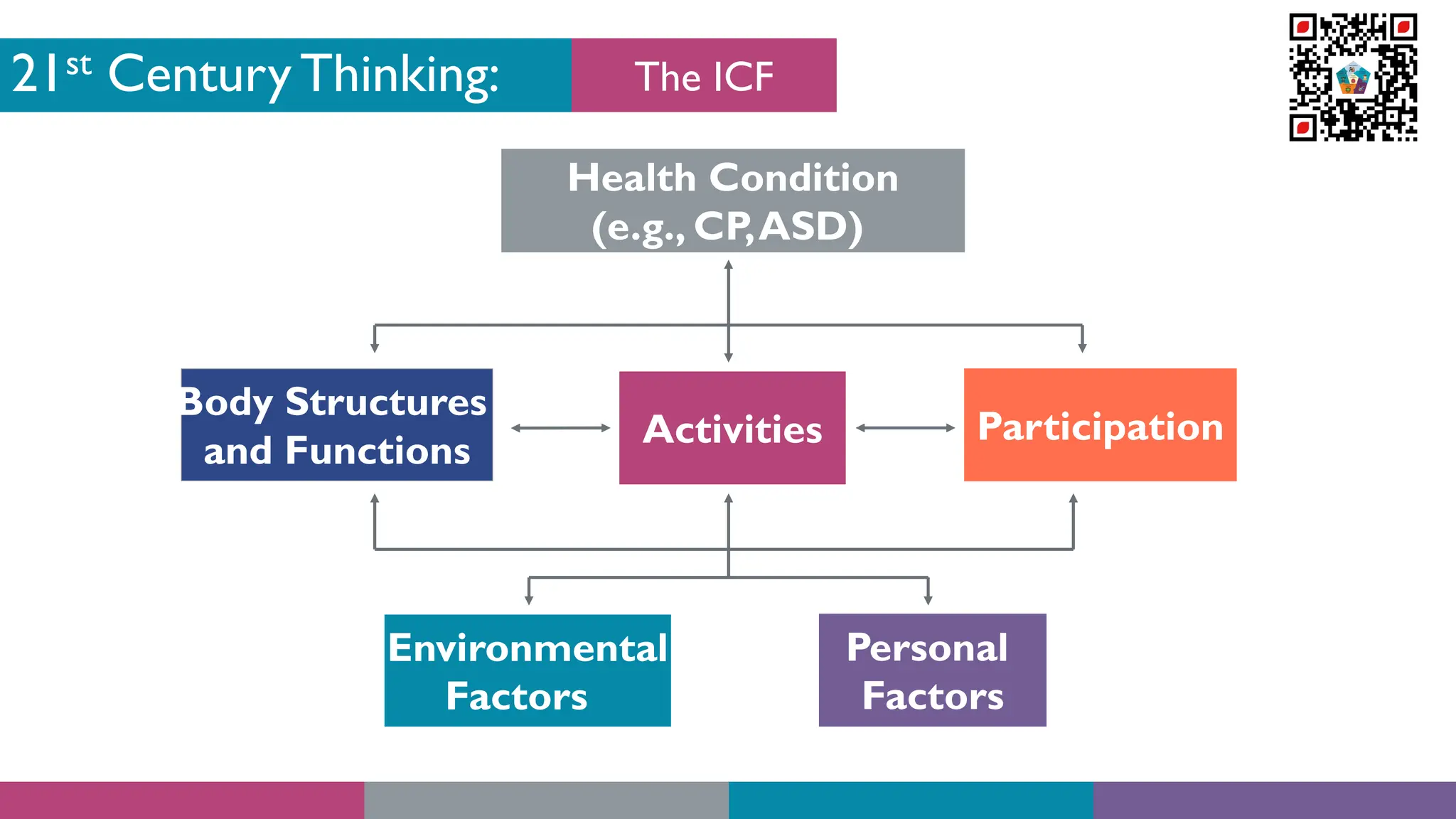
21st Century Thinking:
Health Condition
(e.g., CP,ASD)
Body Structures
and Functions
Activities Participation
Environmental
Factors
Personal
Factors
The ICF
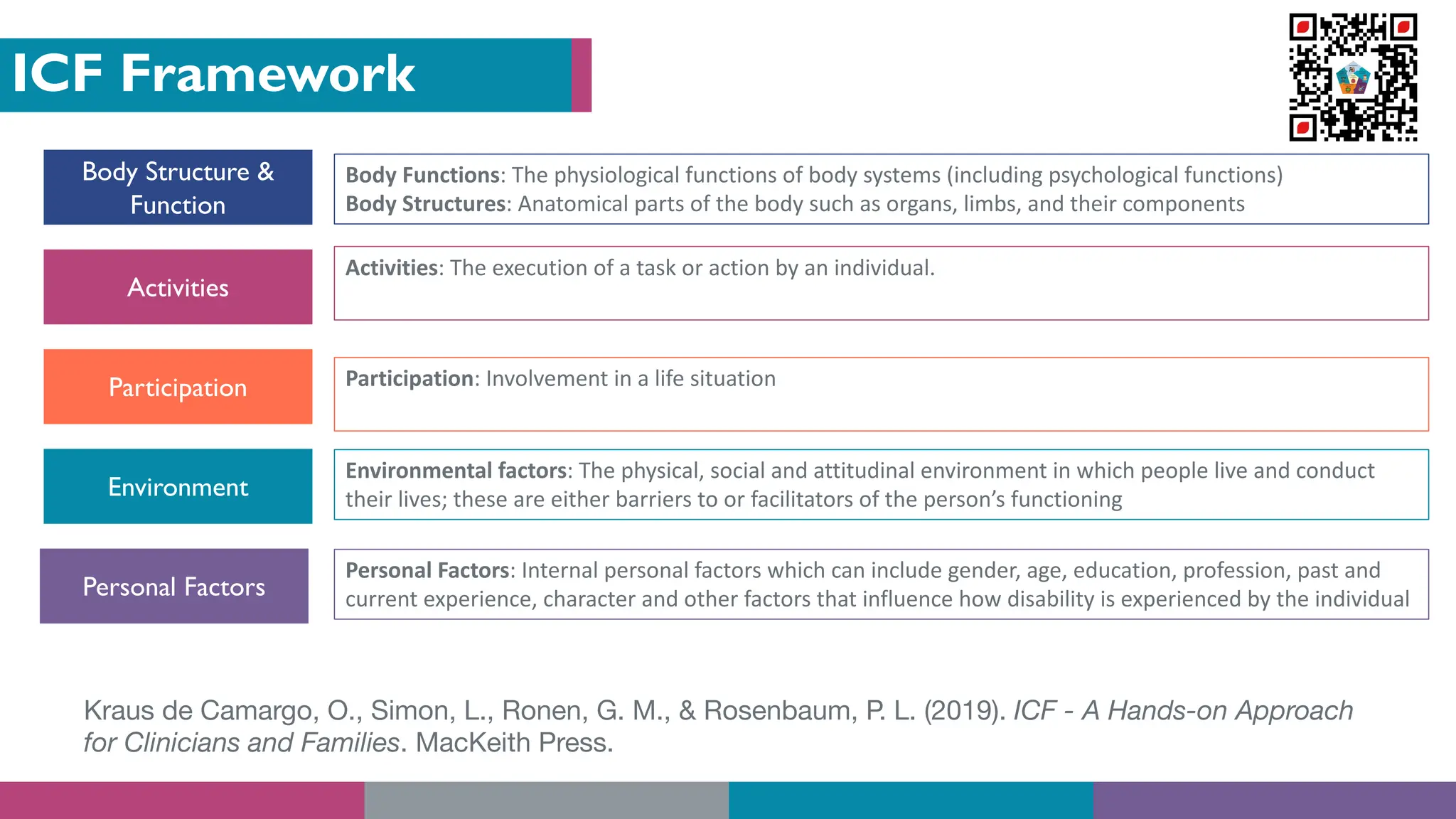
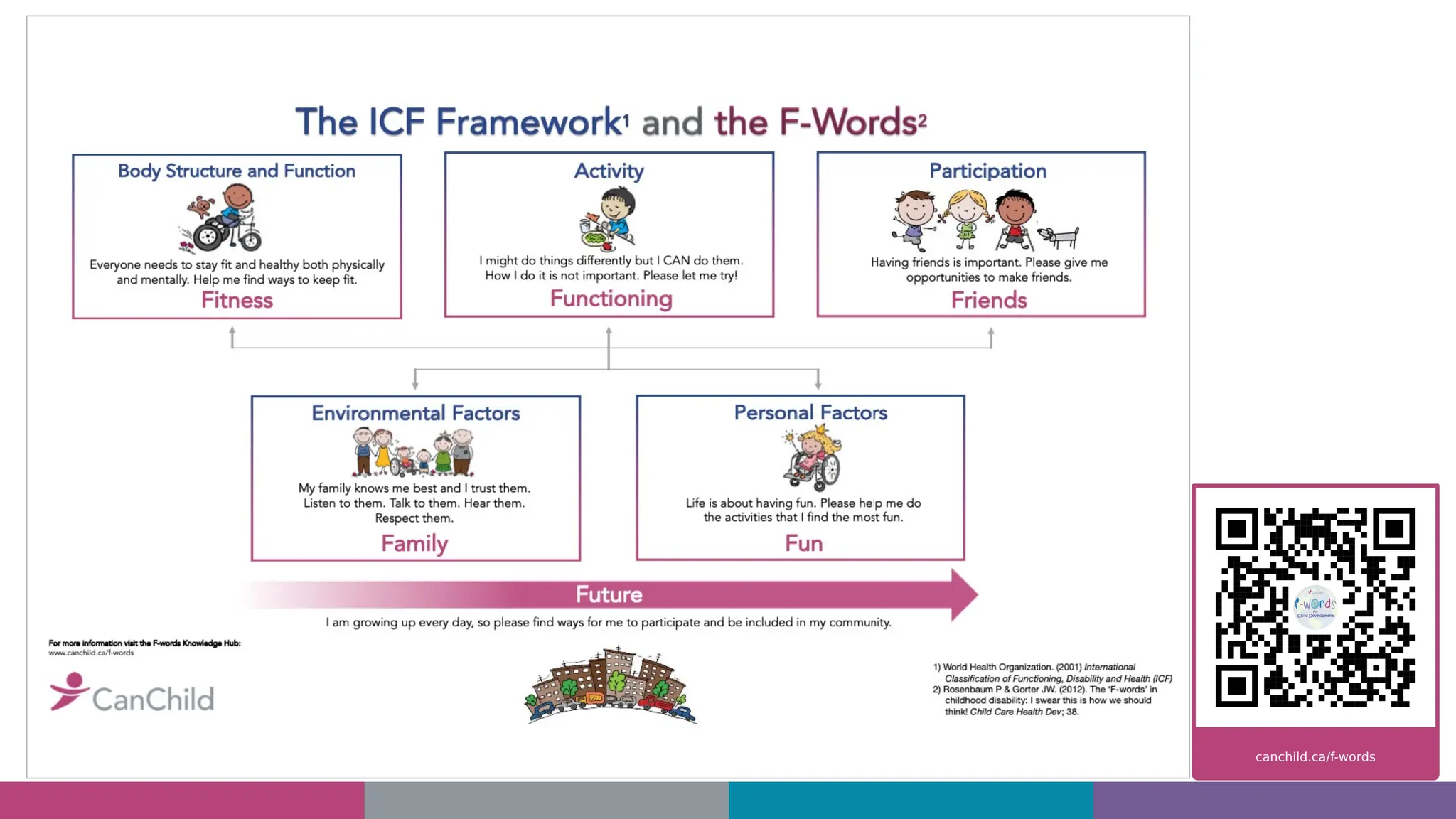
ICF Framework
Body Structure &
Function
Activities
Participation
Environment
Personal Factors
Body Functions: The physiological functions of body systems (including psychological functions)
Body Structures: Anatomical parts of the body such as organs, limbs, and their components
Activities: The execution of a task or action by an individual.
Participation: Involvement in a life situation
Environmental factors: The physical, social and attitudinal environment in which people live and conduct
their lives; these are either barriers to or facilitators of the person’s functioning
Personal Factors: Internal personal factors which can include gender, age, education, profession, past and
current experience, character and other factors that influence how disability is experienced by the individual
Kraus de Camargo, O., Simon, L., Ronen, G. M., & Rosenbaum, P. L. (2019). ICF - A Hands-on Approach
for Clinicians and Families. MacKeith Press.
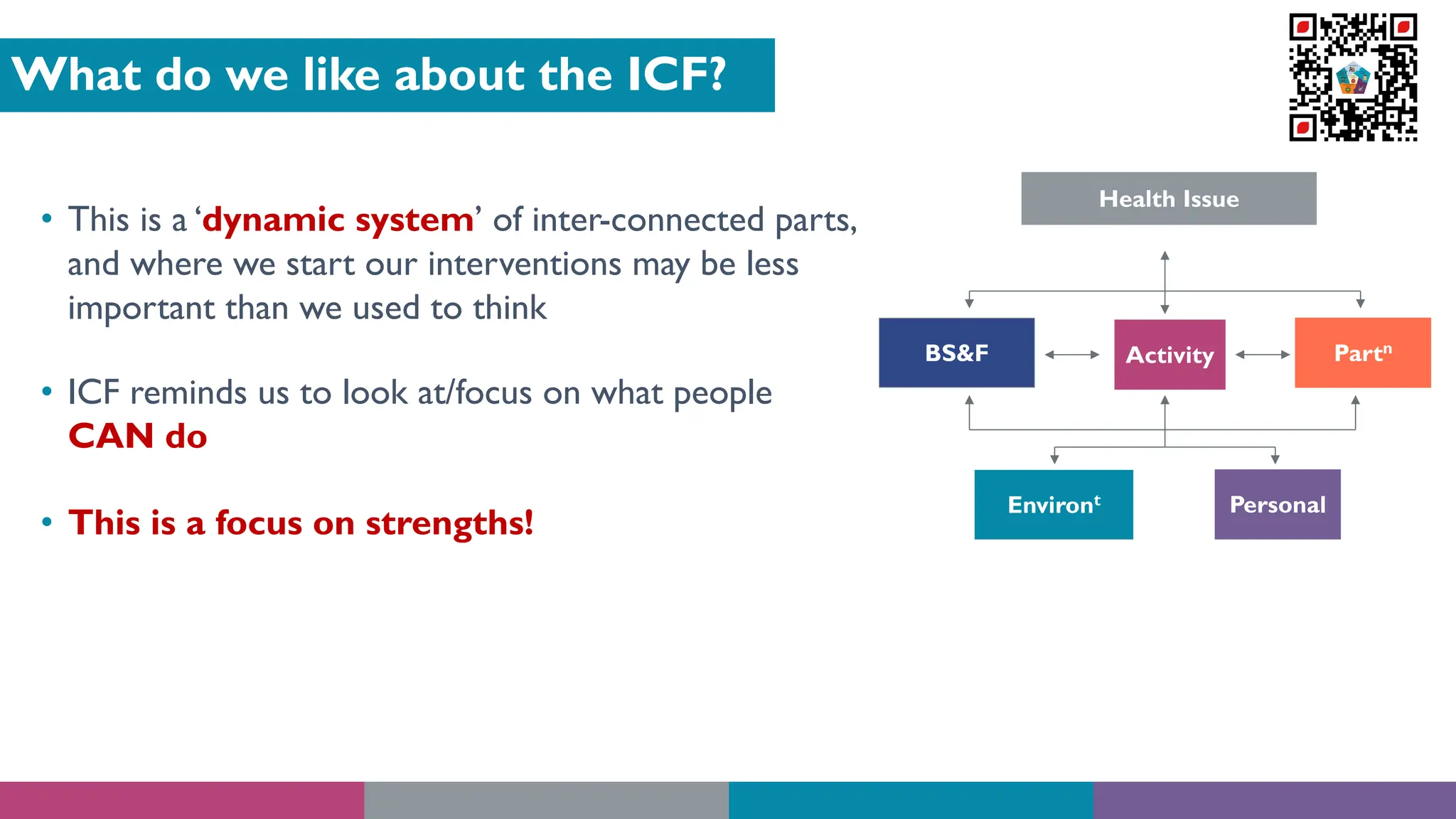
What do we like about the ICF?
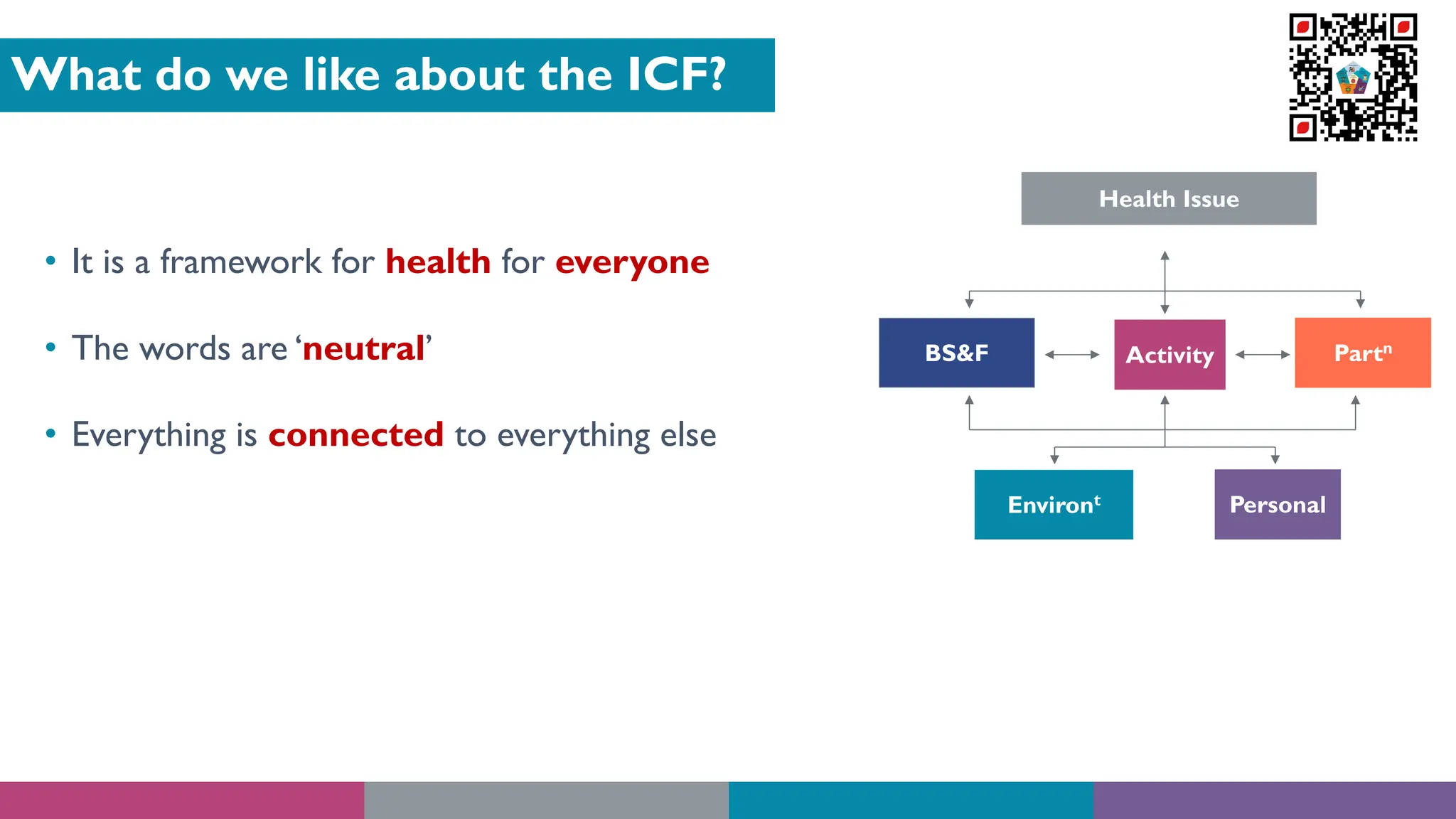
Health Issue
BS&F Activity Partn
Environt Personal
• This is a ‘dynamic system’ of inter-connected parts,
and where we start our interventions may be less
important than we used to think
• ICF reminds us to look at/focus on what people
CAN do
• This is a focus on strengths!
• It is a framework for health for everyone
• The words are ‘neutral’
• Everything is connected to everything else
Health Issue
BS&F Activity Partn
Environt Personal
What do we like about the ICF?
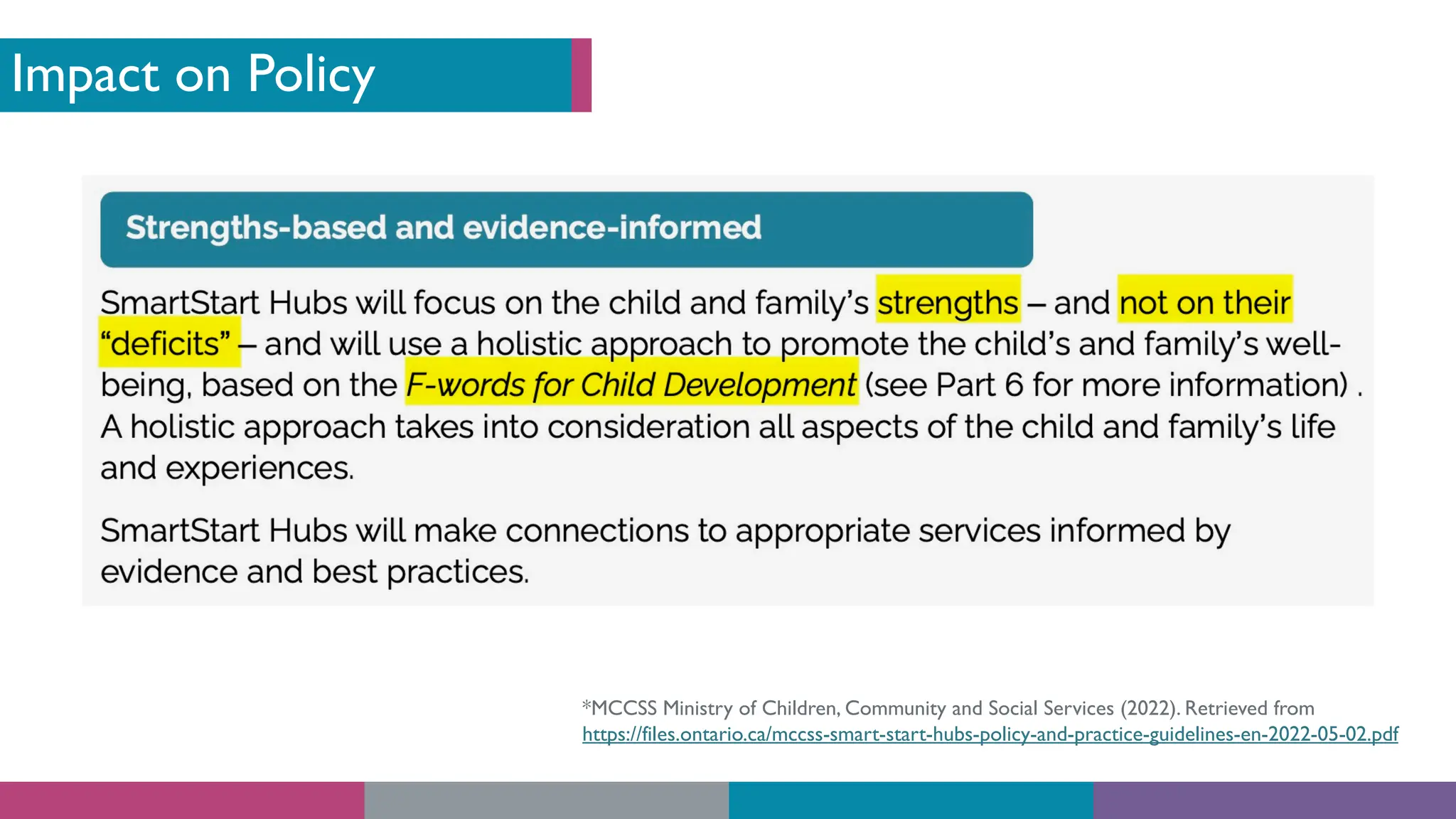
Impact on Policy
*MCCSS Ministry of Children, Community and Social Services (2022). Retrieved from
https://files.ontario.ca/mccss-smart-start-hubs-policy-and-practice-guidelines-en-2022-05-02.pdf
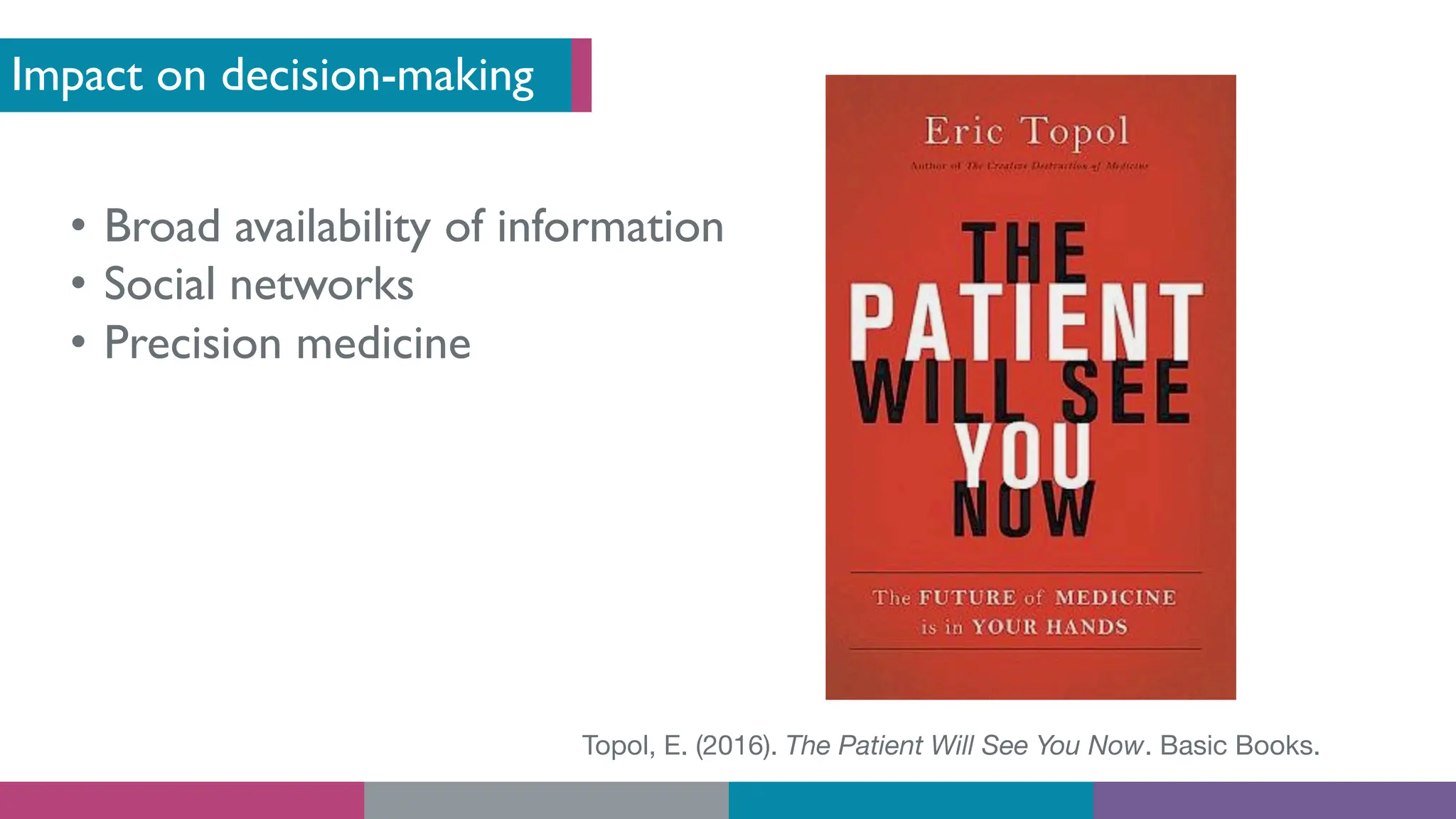
Impact on decision-making
• Broad availability of information
• Social networks
• Precision medicine
Topol, E. (2016). The Patient Will See You Now. Basic Books.
The patient will see you now!
Acute Care
Developmental Care
Strategy Patients Physician/Clinician
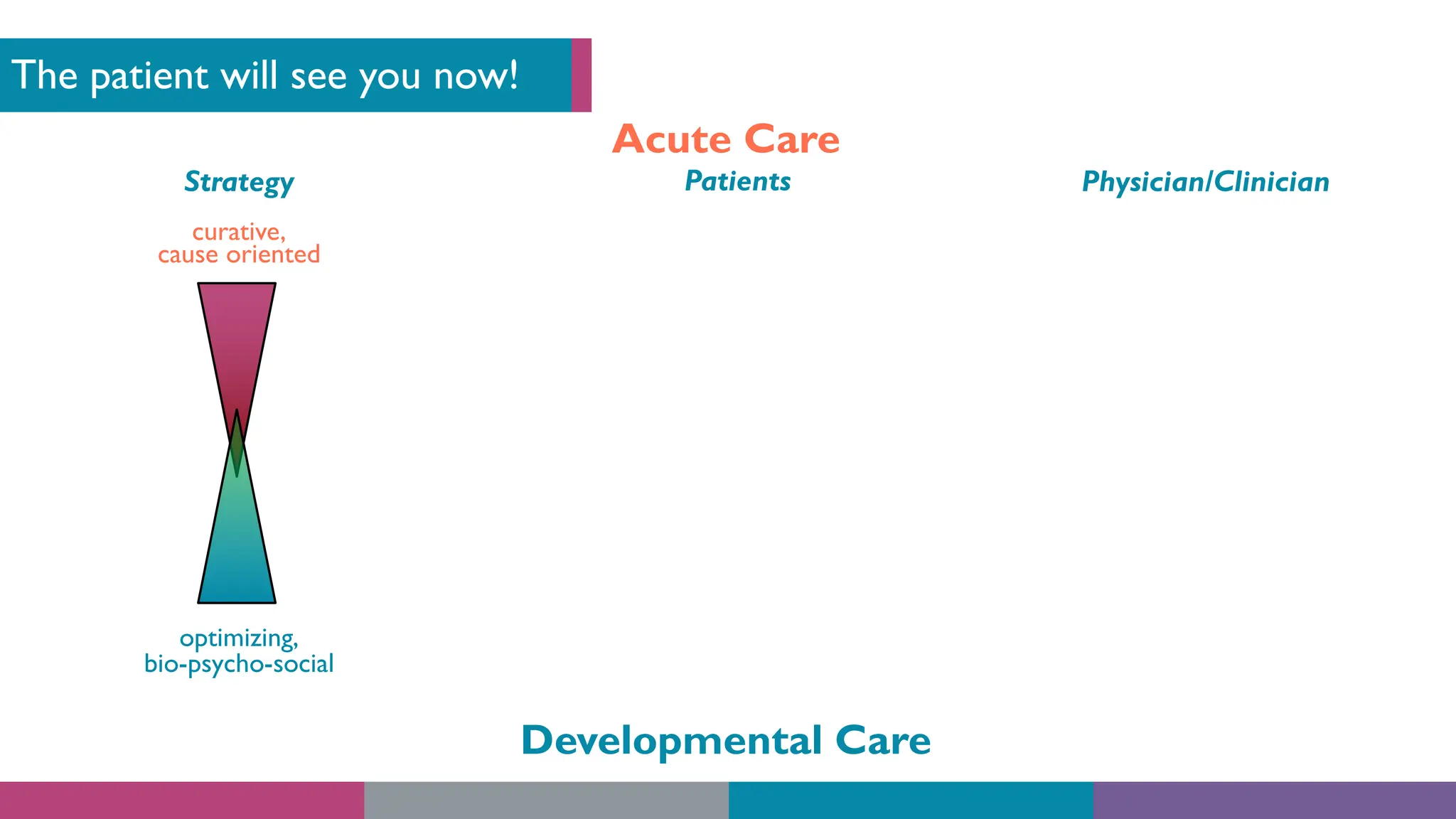
The patient will see you now!
Acute Care
Developmental Care
Strategy
curative,
cause oriented
optimizing,
bio-psycho-social
Patients Physician/Clinician
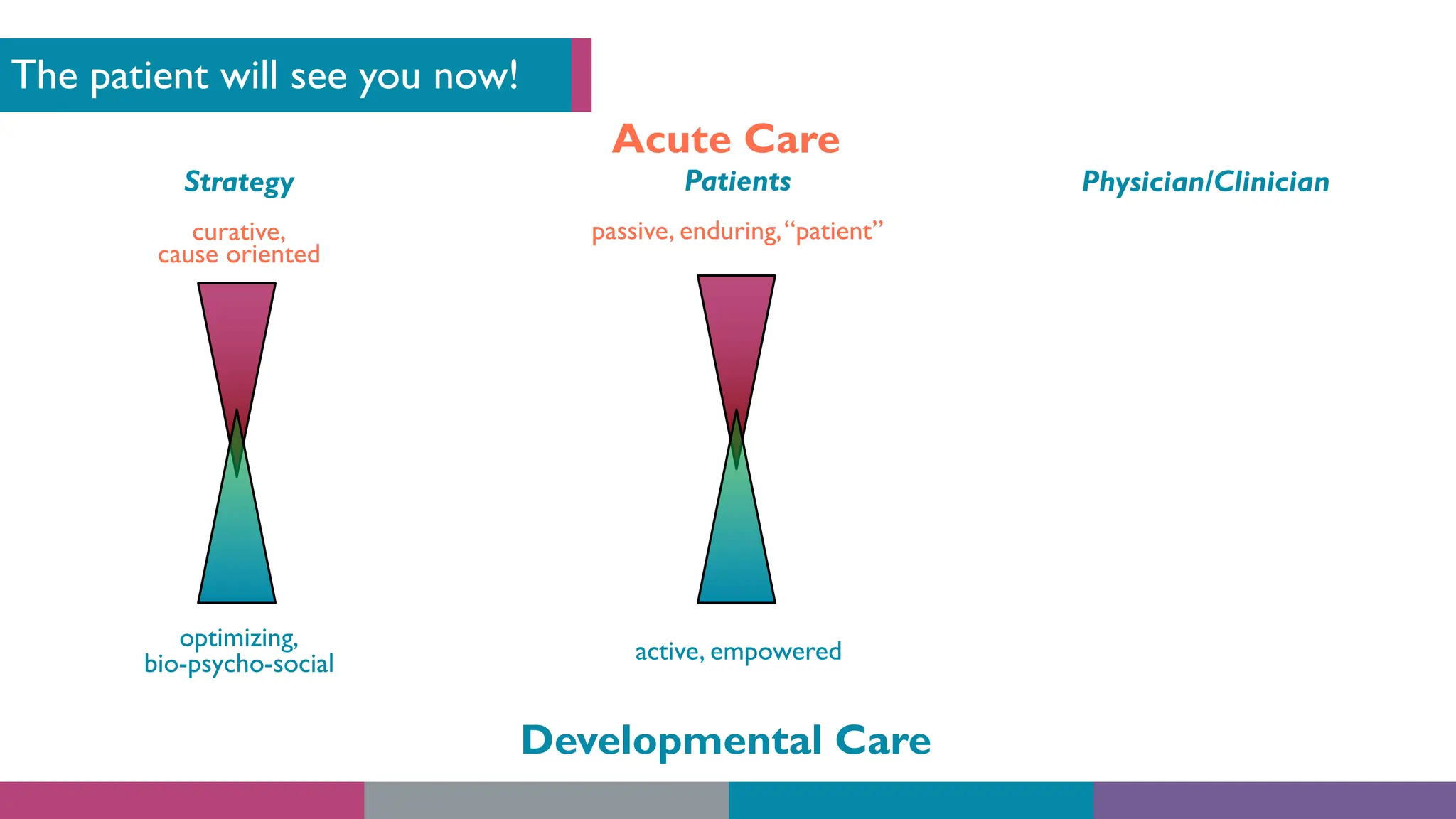
The patient will see you now!
Acute Care
Developmental Care
Strategy
curative,
cause oriented
optimizing,
bio-psycho-social
Patients
passive, enduring,“patient”
active, empowered
Physician/Clinician
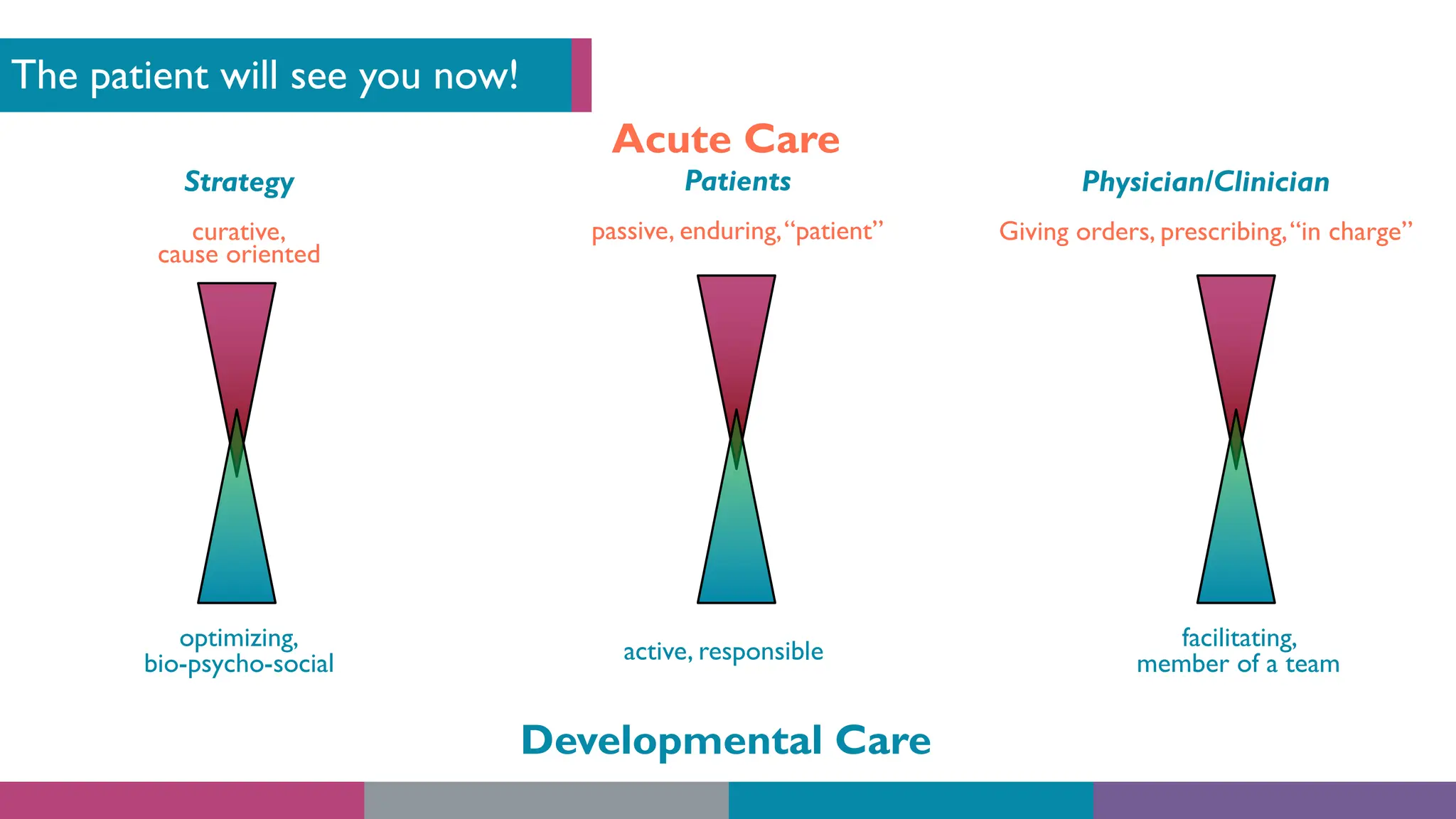
The patient will see you now!
Acute Care
Developmental Care
Strategy
curative,
cause oriented
optimizing,
bio-psycho-social
Patients
passive, enduring,“patient”
active, responsible
Physician/Clinician
Giving orders, prescribing,“in charge”
facilitating,
member of a team
The voices of children
§ United Nations' Convention on the Rights of Persons with Disabilities
(2006): “Children with disabilities have the right to express their views
freely on all matters affecting them.” (Art. 7)
§ Strategy for Patient Oriented Research:“Patients need to be involved in all
aspects of research to ensure questions and results are relevant”
§ World Health Organization:“ICF respects the rights of every person and
actively avoids labelling, stigmatisation and discrimination.”
§ United Nations Convention on the Rights of the Child: “…the right to
have their views given due weight in all matters affecting them.” (Art 12)
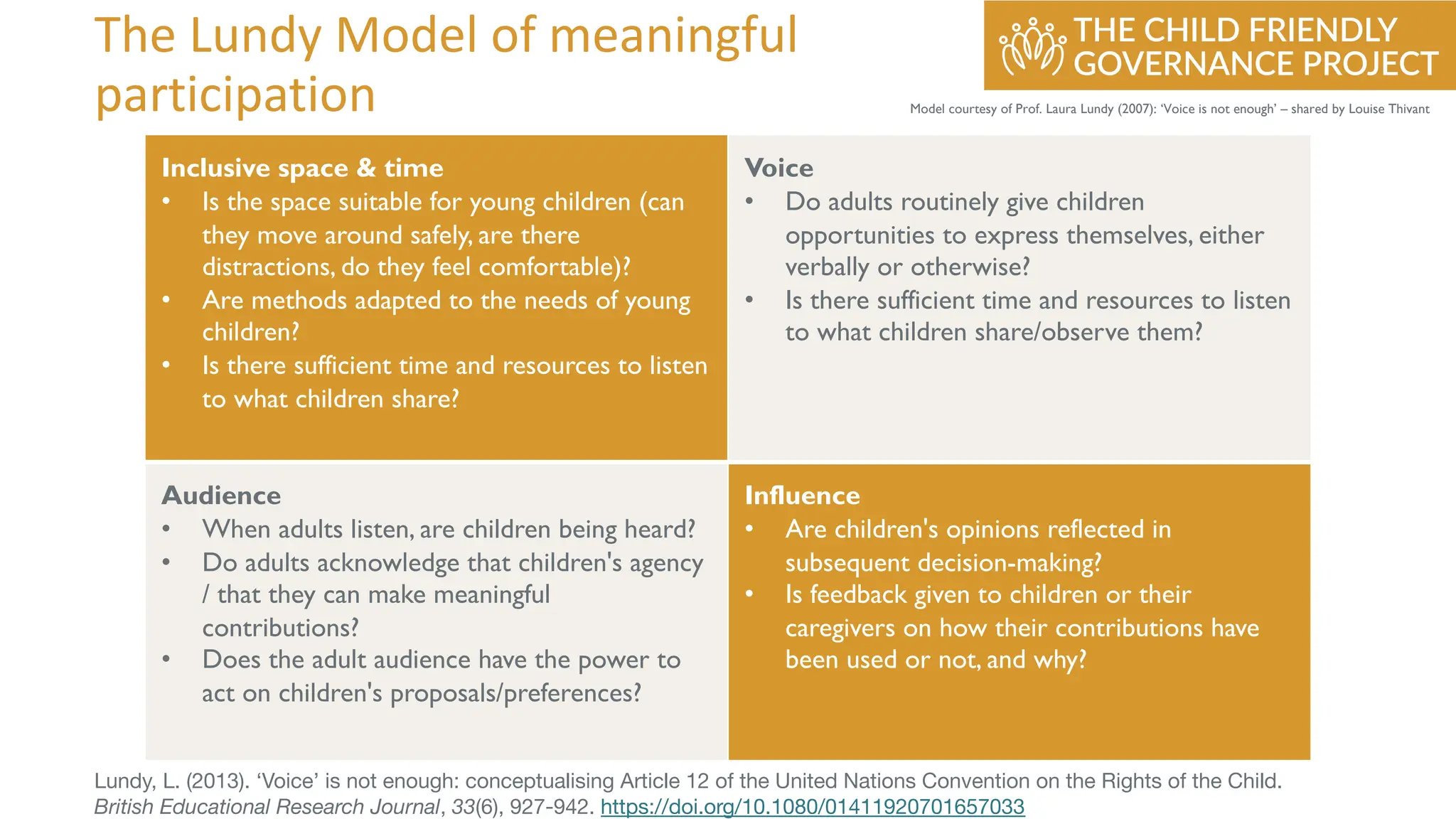
The Lundy Model of meaningful
participation Model courtesy of Prof. Laura Lundy (2007): ‘Voice is not enough’ – shared by Louise Thivant
Inclusive space & time
• Is the space suitable for young children (can
they move around safely, are there
distractions, do they feel comfortable)?
• Are methods adapted to the needs of young
children?
• Is there sufficient time and resources to listen
to what children share?
Voice
• Do adults routinely give children
opportunities to express themselves, either
verbally or otherwise?
• Is there sufficient time and resources to listen
to what children share/observe them?
Audience
• When adults listen, are children being heard?
• Do adults acknowledge that children's agency
/ that they can make meaningful
contributions?
• Does the adult audience have the power to
act on children's proposals/preferences?
Influence
• Are children's opinions reflected in
subsequent decision-making?
• Is feedback given to children or their
caregivers on how their contributions have
been used or not, and why?
Lundy, L. (2013). ‘Voice’ is not enough: conceptualising Article 12 of the United Nations Convention on the Rights of the Child.
British Educational Research Journal, 33(6), 927-942. https://doi.org/10.1080/01411920701657033
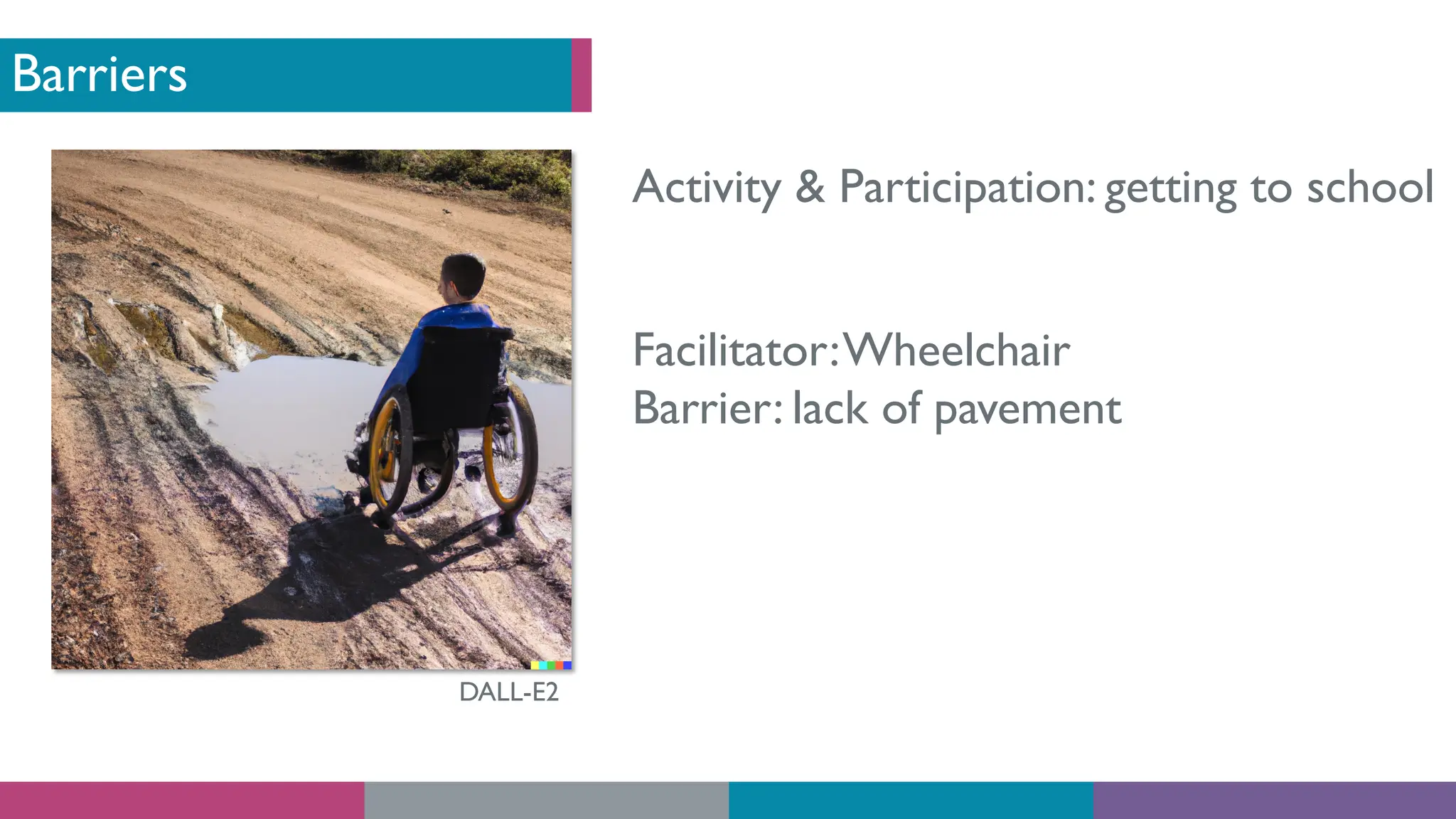
Barriers
Facilitator:Wheelchair
Barrier: lack of pavement
Activity & Participation: getting to school
DALL-E2
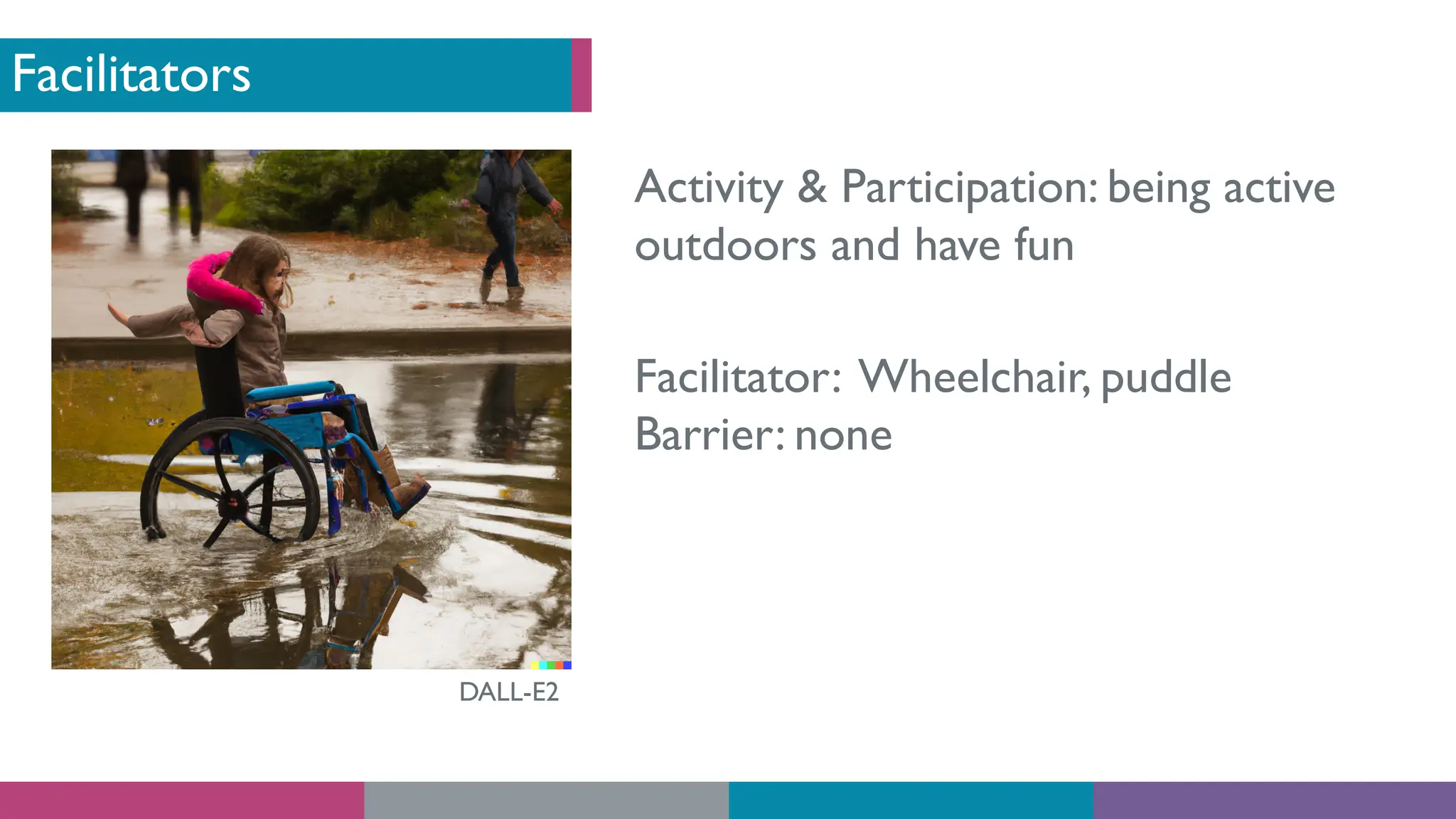
Facilitators
Facilitator: Wheelchair, puddle
Barrier: none
Activity & Participation: being active
outdoors and have fun
DALL-E2
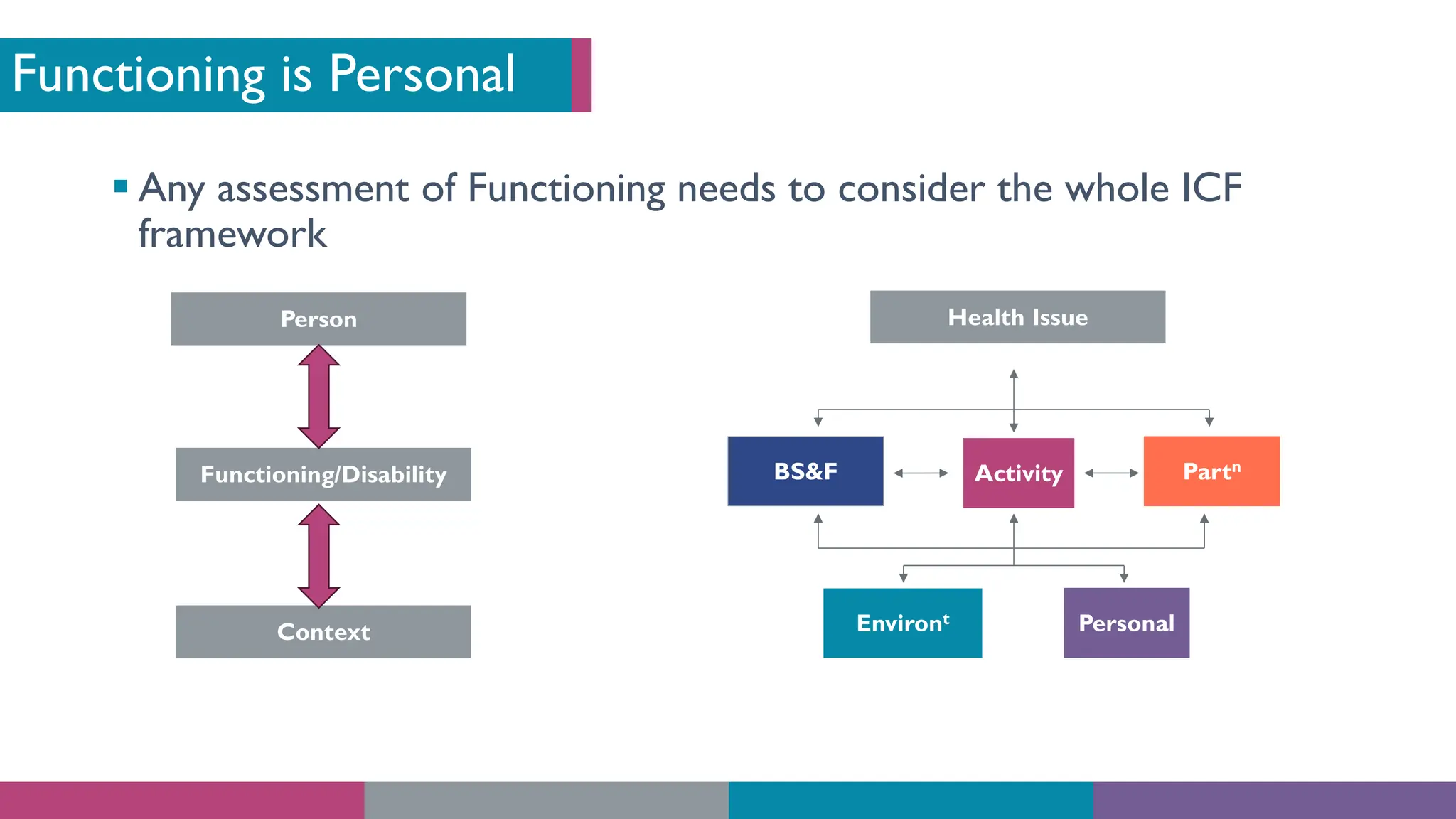
Functioning is Personal
§ Any assessment of Functioning needs to consider the whole ICF
framework
Health Issue
BS&F Activity Partn
Environt Personal
Person
Context
Functioning/Disability
Ethical considerations
§ Functioning assessment
§ Collaborative Child rights-based framework (UNCRPD)
§ Time and Context specific changeable
§ Documentation & Statistics
§ Patients/caregivers need access to update their health record
§ Electronic health records need to be interoperable across providers and
services (currently in Ontario exist over 300 EMR providers according to
www.getapp.ca)
§ Health Statistics need to include data about Functioning
Contact Us
canchild.ca
@canchild_ca
905.525.9140 x27850
facebook.com/canchild.ca
canchild@mcmaster.ca
Institute for Applied Health
Sciences, McMaster University
1400 Main Street W., Room 408
Hamilton, ON, Canada

Impact of ICF on collaboration and communication

  • 1.
    Impact of ICFon collaboration and communication Olaf Kraus de Camargo IDPA Conference, December 1st, 2023 – Johannesburg, South Africa
  • 2.
    21st Century Thinking: HealthCondition (e.g., CP,ASD) Body Structures and Functions Activities Participation Environmental Factors Personal Factors The ICF
  • 3.
    ICF Framework Body Structure& Function Activities Participation Environment Personal Factors Body Functions: The physiological functions of body systems (including psychological functions) Body Structures: Anatomical parts of the body such as organs, limbs, and their components Activities: The execution of a task or action by an individual. Participation: Involvement in a life situation Environmental factors: The physical, social and attitudinal environment in which people live and conduct their lives; these are either barriers to or facilitators of the person’s functioning Personal Factors: Internal personal factors which can include gender, age, education, profession, past and current experience, character and other factors that influence how disability is experienced by the individual Kraus de Camargo, O., Simon, L., Ronen, G. M., & Rosenbaum, P. L. (2019). ICF - A Hands-on Approach for Clinicians and Families. MacKeith Press.
  • 4.
    What do welike about the ICF? Health Issue BS&F Activity Partn Environt Personal • This is a ‘dynamic system’ of inter-connected parts, and where we start our interventions may be less important than we used to think • ICF reminds us to look at/focus on what people CAN do • This is a focus on strengths!
  • 5.
    • It isa framework for health for everyone • The words are ‘neutral’ • Everything is connected to everything else Health Issue BS&F Activity Partn Environt Personal What do we like about the ICF?
  • 7.
    Impact on Policy *MCCSSMinistry of Children, Community and Social Services (2022). Retrieved from https://files.ontario.ca/mccss-smart-start-hubs-policy-and-practice-guidelines-en-2022-05-02.pdf
  • 8.
    Impact on decision-making •Broad availability of information • Social networks • Precision medicine Topol, E. (2016). The Patient Will See You Now. Basic Books.
  • 9.
    The patient willsee you now! Acute Care Developmental Care Strategy Patients Physician/Clinician
  • 10.
    The patient willsee you now! Acute Care Developmental Care Strategy curative, cause oriented optimizing, bio-psycho-social Patients Physician/Clinician
  • 11.
    The patient willsee you now! Acute Care Developmental Care Strategy curative, cause oriented optimizing, bio-psycho-social Patients passive, enduring,“patient” active, empowered Physician/Clinician
  • 12.
    The patient willsee you now! Acute Care Developmental Care Strategy curative, cause oriented optimizing, bio-psycho-social Patients passive, enduring,“patient” active, responsible Physician/Clinician Giving orders, prescribing,“in charge” facilitating, member of a team
  • 13.
    The voices ofchildren § United Nations' Convention on the Rights of Persons with Disabilities (2006): “Children with disabilities have the right to express their views freely on all matters affecting them.” (Art. 7) § Strategy for Patient Oriented Research:“Patients need to be involved in all aspects of research to ensure questions and results are relevant” § World Health Organization:“ICF respects the rights of every person and actively avoids labelling, stigmatisation and discrimination.” § United Nations Convention on the Rights of the Child: “…the right to have their views given due weight in all matters affecting them.” (Art 12)
  • 14.
    The Lundy Modelof meaningful participation Model courtesy of Prof. Laura Lundy (2007): ‘Voice is not enough’ – shared by Louise Thivant Inclusive space & time • Is the space suitable for young children (can they move around safely, are there distractions, do they feel comfortable)? • Are methods adapted to the needs of young children? • Is there sufficient time and resources to listen to what children share? Voice • Do adults routinely give children opportunities to express themselves, either verbally or otherwise? • Is there sufficient time and resources to listen to what children share/observe them? Audience • When adults listen, are children being heard? • Do adults acknowledge that children's agency / that they can make meaningful contributions? • Does the adult audience have the power to act on children's proposals/preferences? Influence • Are children's opinions reflected in subsequent decision-making? • Is feedback given to children or their caregivers on how their contributions have been used or not, and why? Lundy, L. (2013). ‘Voice’ is not enough: conceptualising Article 12 of the United Nations Convention on the Rights of the Child. British Educational Research Journal, 33(6), 927-942. https://doi.org/10.1080/01411920701657033
  • 15.
    Barriers Facilitator:Wheelchair Barrier: lack ofpavement Activity & Participation: getting to school DALL-E2
  • 16.
    Facilitators Facilitator: Wheelchair, puddle Barrier:none Activity & Participation: being active outdoors and have fun DALL-E2
  • 17.
    Functioning is Personal §Any assessment of Functioning needs to consider the whole ICF framework Health Issue BS&F Activity Partn Environt Personal Person Context Functioning/Disability
  • 18.
    Ethical considerations § Functioningassessment § Collaborative Child rights-based framework (UNCRPD) § Time and Context specific changeable § Documentation & Statistics § Patients/caregivers need access to update their health record § Electronic health records need to be interoperable across providers and services (currently in Ontario exist over 300 EMR providers according to www.getapp.ca) § Health Statistics need to include data about Functioning
  • 19.
    Contact Us canchild.ca @canchild_ca 905.525.9140 x27850 facebook.com/canchild.ca canchild@mcmaster.ca Institutefor Applied Health Sciences, McMaster University 1400 Main Street W., Room 408 Hamilton, ON, Canada