https://www.nationaleatingdisorders.org/learn/by-eating-
disorder/arfid
AVOIDANT RESTRICTIVE FOOD INTAKE DISORDER
(ARFID)
Avoidant Restrictive Food Intake Disorder (ARFID) is a new
diagnosis in the DSM-5, and was previously referred to as
“Selective Eating Disorder.” ARFID is similar to anorexia in
that both disorders involve limitations in the amount and/or
types of food consumed, but unlike anorexia, ARFID does not
involve any distress about body shape or size, or fears of
fatness.
Although many children go through phases of picky or selective
eating, a person with ARFID does not consume enough calories
to grow and develop properly and, in adults, to maintain basic
body function. In children, this results in stalled weight gain
and vertical growth; in adults, this results in weight loss.
ARFID can also result in problems at school or work, due to
difficulties eating with others and extended times needed to eat.
DIAGNOSTIC CRITERIA
According to the DSM-5, ARFID is diagnosed when:
· An eating or feeding disturbance (e.g., apparent lack of
interest in eating or food; avoidance based on the sensory
characteristics of food; concern about aversive consequences of
eating) as manifested by persistent failure to meet appropriate

nutritional and/or energy needs associated with one (or more) of

the following:
· Significant weight loss (or failure to achieve expected weight
gain or faltering growth in children).
· Significant nutritional deficiency.
· Dependence on enteral feeding or oral nutritional supplements.
· Marked interference with psychosocial functioning.
· The disturbance is not better explained by lack of available
food or by an associated culturally sanctioned practice.
· The eating disturbance does not occur exclusively during the
course of anorexia nervosa or bulimia nervosa, and there is no
evidence of a disturbance in the way in which one’s body
weight or shape is experienced.
· The eating disturbance is not attributable to a concurrent
medical condition or not better explained by another mental
disorder. When the eating disturbance occurs in the context of
another condition or disorder, the severity of the eating
disturbance exceeds that routinely associated with the condition
or disorder and warrants additional clinical attention.
RISK FACTORS
As with all eating disorders, the risk factors for ARFID involve
a range of biological, psychological, and sociocultural issues.
These factors may interact differently in different people, which
means two people with the same eating disorder can have very
diverse perspectives, experiences, and symptoms. Researchers
know much less about what puts someone at risk of developing
ARFID, but here’s what they do know:
· People with autism spectrum conditions are much more likely
to develop ARFID, as are those with ADHD and intellectual
disabilities.
· Children who don’t outgrow normal picky eating, or in whom
picky eating is severe, appear to be more likely to develop
ARFID.
· Many children with ARFID also have a co-occurring anxiety
disorder, and they are also at high risk for other psychiatric
disorders.
WARNING SIGNS & SYMPTOMS OF ARFID
Behavioral and psychological
· Dramatic weight loss
· Dresses in layers to hide weight loss or stay warm
· Reports constipation, abdominal pain, cold intolerance,
lethargy, and/or excess energy
· Reports consistent, vague gastrointestinal issues (“upset
stomach”, feels full, etc.) around mealtimes that have no known
cause
· Dramatic restriction in types or amount of food eaten
· Will only eat certain textures of food
· Fears of choking or vomiting
· Lack of appetite or interest in food
· Limited range of preferred foods that becomes narrower over
time (i.e., picky eating that progressively worsens).
· No body image disturbance or fear of weight gain
Physical
Because both anorexia and ARFID involve an inability to meet
nutritional needs, both disorders have similar physical signs and
medical consequences.
· Stomach cramps, other non-specific gastrointestinal
complaints (constipation, acid reflux, etc.)
· Menstrual irregularities—missing periods or only having a
period while on hormonal contraceptives (this is not considered
a “true” period)
· Difficulties concentrating
· Abnormal laboratory findings (anemia, low thyroid and
hormone levels, low potassium, low blood cell counts, slow
heart rate)
· Postpuberty female loses menstrual period
· Dizziness
· Fainting/syncope
· Feeling cold all the time
· Sleep problems
· Dry skin
· Dry and brittle nails
· Fine hair on body (lanugo)
· Thinning of hair on head, dry and brittle hair
· Muscle weakness
· Cold, mottled hands and feet or swelling of feet
· Poor wound healing
· Impaired immune functioning
HEALTH CONSEQUENCES OF ARFID
In ARFID, the body is denied the essential nutrients it needs to
function normally. Thus, the body is forced to slow down all of
its processes to conserve energy, resulting in serious medical
consequences. The body is generally resilient at coping with the
stress of eating disordered behaviors, and laboratory tests can
generally appear perfect even as someone is at high risk of
death. Electrolyte imbalances can kill without warning; so can
cardiac arrest. Therefore, it’s incredibly important to understand
the many ways that eating disorders affect the body.
Cognitive-Behavioral Treatment of Avoidant/Restrictive Food
Intake Disorder
Jennifer J. Thomas, Ph.D.1,2, Olivia Wons, B.S.3, and Kamryn
Eddy, Ph.D.1,2
1Eating Disorders Clinical and Research Program,
Massachusetts General Hospital
2Department of Psychiatry, Harvard Medical School
3Neuroendocrine Unit, Massachusetts General Hospital
Abstract
Purpose of review: Avoidant/restrictive food intake disorder
(ARFID) was added to the
psychiatric nomenclature in 2013, but little is known about its
optimal treatment. The purpose of
this paper is to review the recent literature on ARFID treatment
and highlight a novel cognitive-
behavioral approach presently under study.
Recent findings: The current evidence base for ARFID
treatment relies primarily on case
reports, case series, and retrospective chart reviews, with only a
handful of randomized controlled
trials in young children. Studies in adults are lacking. ARFID
treatments recently described in the
literature include family-based treatment and parent training;
cognitive-behavioral approaches;
hospital-based re-feeding including tube feeding; and adjunctive
pharmacotherapy. A novel form
of outpatient cognitive-behavioral therapy for ARFID (CBT-
AR) is one treatment currently under
study. CBT-AR is appropriate for children, adolescents, and
adults ages 10 and up; proceeds
through four stages across 20–30 sessions; and is available in
both individual and family-
supported versions.
Summary: There is no evidence-based psychological treatment
suitable for all forms of ARFID
at this time. Several groups are currently evaluating the efficacy
of new psychological treatments
for ARFID—particularly family-based and cognitive-behavioral
approaches—but results have not
yet been published.
Keywords
Avoidant/restrictive food intake disorder; ARFID; family-based
treatment; cognitive-behavioral
therapy; tube feeding
Correspondence to: Jennifer J. Thomas, Ph.D., Eating Disorders
Clinical and Research Program, Massachusetts General
Hospital, 2
Longfellow Place, Suite 200, Boston, MA 02114.
[email protected] Phone: (617) 643-6306.
Conflicts of interest. Drs. Thomas and Eddy will receive
royalties from Cambridge University Press for the sale of their
book
Cognitive-Behavioral Therapy for Avoidant/Restrictive Food
Intake Disorder: Children, Adolescents, and Adults, scheduled
to be
published in late 2018.
HHS Public Access
Author manuscript
Curr Opin Psychiatry. Author manuscript; available in PMC
2019 November 01.
Published in final edited form as:
Curr Opin Psychiatry. 2018 November ; 31(6): 425–430.
doi:10.1097/YCO.0000000000000454.
A
u
th
o
r M
a
n
u
scrip
t
A
u
th
o
r M
a
n
u
scrip
t
A
u
th
o
r M
a
n
u
scrip
t
A
u
th
o
r M
a
n
u
scrip
t
Introduction
Avoidant/restrictive food intake disorder (ARFID) made its
diagnostic debut in 2013 with
the publication on DSM-5 [1]. ARFID is a reformulation and
expansion of the former DSM-
IV diagnosis of feeding disorder of infancy and early childhood,
and can occur across the
lifespan. The hallmark feature of ARIFD is food avoidance or
restriction, motivated by
sensitivity to the sensory characteristics of food, fear of
aversive consequences of eating, or
lack of interest in eating or food. To meet criteria for ARFID,
the food restriction or
avoidance must lead to one or more consequences such as
weight loss or faltering growth,
nutritional deficiency, dependence on oral nutritional
supplements or tube feeding, or
psychosocial impairment. DSM-5 describes three example
presentations of ARFID. In the
first, individuals eat a very limited range of foods due to an
inability to tolerate certain tastes
and textures. In the second, individuals avoid specific foods or
categories of food, or may
stop eating altogether, for fear of aversive consequences of
eating, such as choking,
vomiting, anaphylaxis, or gastrointestinal distress. In the third,
individuals exhibit a lack of
interest in food or eating. It is important to note that these three
presentations are not
mutually exclusive and can co-occur within the same individual
[2].
In addition to the heterogeneity of clinical presentation, ARFID
is also quite diverse in terms
of age, demographics, and comorbidities, highlighting the
difficulty in identifying a
universally applicable treatment approach. For example, ARFID
has been reported in very
young children [3 **], adolescents [4 *], and adults [5], and
several studies have highlighted
that both males and females present with the disorder [6,7].
Other investigations have
underscored numerous potential psychiatric and medical
comorbidities, including autism
spectrum disorder [8] and gastrointestinal disorders [6], which
may further individualize
treatment needs.
Available data on the treatment of ARFID
Because ARFID is so new, there is currently no evidence-based
treatment suitable for all
forms of the disorder. A robust literature that pre-dates DSM-5
supports the efficacy of
behavioral interventions for young children with pediatric
feeding disorders [9,10].
However, the generalizability of these approaches to individuals
with ARFID—especially
adolescents and adults—remains unclear. Below we summarize
studies published since the
2013 advent of DSM-5 that describe the treatment of ARFID
specifically. ARFID treatments
recently described in the literature include family-based
treatment and parent training;
cognitive-behavioral approaches; hospital-based re-feeding
including tube feeding; and
adjunctive pharmacotherapy.
Family-based treatment and parent training
Several recently published case reports have described the use
of family-based treatment
(FBT) for children and adolescents with ARFID [11,12,13].
Such approaches are similar to
FBT for anorexia nervosa (AN) in that parents are charged with
the task of feeding, but
differ from FBT for AN in that parents are asked to support
their children in increasing not
only dietary volume, but also dietary variety through repeated
exposure to novel foods. At
least two clinical trials of FBT for ARFID are currently
underway [14,15]. Another case
Thomas et al. Page 2
Curr Opin Psychiatry. Author manuscript; available in PMC
2019 November 01.
A
u
th
o
r M
a
n
u
scrip
t
A
u
th
o
r M
a
n
u
scrip
t
A
u
th
o
r M
a
n
u
scrip
t
A
u
th
o
r M
a
n
u
scrip
t
report described the use of a behavioral parent-training
intervention comprising differential
reinforcement, gradual exposure to novel foods, and
contingency management, resulting in
the acceptance of 30 novel foods in a six-year-old with limited
dietary variety [16].
Cognitive-behavioral approaches
Multiple published case reports and case series have described
the use of various forms of
cognitive-behavioral therapy (CBT) for children [13,17,18] and
adults [19,5] with ARFID.
Common elements across CBT interventions for ARFID include
regular eating [5,13], self-
monitoring of food intake [5], exposure and response prevention
[13,16], relaxation training
[17,16, and behavioral experiments [5]. In one case study, a 16-
year-old boy was able to
significantly increase his consumption of proteins, fruits, and
vegetables, and significantly
decrease his eating-related distress after 11 sessions of CBT
supplemented with in-home
meal interventions in which his mother reinforced the
consumption of novel foods [16].
Hospital-based re-feeding including tube feeding
Several hospital-based re-feeding programs have reported
positive outcomes on eating and
weight for children and adolescents with low-weight ARFID.
One randomized controlled
study prospectively evaluated the efficacy, among 20 boys and
girls (ages 13–72 months)
with ARFID, of a five-day manualized behavioral treatment
comprising structured
mealtimes, escape extinction, and reinforcement procedures in a
day hospital setting.
Patients randomized to the study treatment exhibited
significantly greater bite acceptance,
grams of food consumed at mealtime, and fewer mealtime
disruptions post-treatment
compared to those in the wait list control condition 3 **].
Another study described treatment
response among 32 children and adolescents with ARFID
treated in an eating disorders
partial hospitalization program, reporting significant increases
in weight and significant
decreases in eating pathology and anxiety from pre- to post-
treatment after an average of
seven weeks [4 *]. Treatment gains were maintained for at least
12 months in the subset of
20 patients who completed a follow-up assessment [20].
Several case studies have described the use of tube feeding to
support inpatient nutritional
rehabilitation among low-weight children and adolescents (ages
5–17 years old) with
ARFID [21,22,23]. Of note, at least two studies have reported
that patients with ARFID
were significantly more likely than those with other eating
disorders to require tube feeding
during inpatient hospitalization [24,25 *]. Although tube
feeding can be a life-saving
measure in some cases of acute food refusal, a recent review
described potentially iatrogenic
effects of tube feeding, including long-term tube dependence
and decreased oral intake [26],
highlighting the urgent need for future research on effective
tube weaning protocols for
individuals who require tube feeding.
Adjunctive pharmacotherapy
Three groups have recently published studies on
pharmacotherapy as an adjunct to hospital-
based treatment to facilitate meal consumption and/or weight
gain in low-weight children
and adolescents with ARFID. In one retrospective chart review,
14 children and adolescents
demonstrated a significantly faster rate of weight gain after
(versus before) being prescribed
mirtazapine [27 *]. In another retrospective chart review, nine
youth who took olanzapine
Thomas et al. Page 3
Curr Opin Psychiatry. Author manuscript; available in PMC
2019 November 01.
A
u
th
o
r M
a
n
u
scrip
t
A
u
th
o
r M
a
n
u
scrip
t
A
u
th
o
r M
a
n
u
scrip
t
A
u
th
o
r M
a
n
u
scrip
t
showed significant increases in weight from pre- to post-
treatment [28 *]. The only double-
blind randomized placebo-controlled trial of medication for
ARFID evaluated the efficacy of
D-cycloserine (DCS) augmentation of a five-day behavioral
intervention for chronic and
severe food refusal in 15 children (ages 20–58 months). Those
randomized to the DCS
condition showed a significantly greater percentage of bites
rapidly swallowed, and
significantly fewer mealtime disruptions, compared to those
receiving placebo [29 **].
Summary of available data
Available data on the treatment of ARFID are sparse, and
limited to child and adolescent
populations. Studies are limited to case reports, case series, and
retrospective chart reviews,
with a handful of randomized controlled trials in very young
children treated in day hospital
settings. Findings in adults are limited to case reports, with no
larger-scale studies on
patients over the age of 18. Several groups are currently
evaluating the efficacy of new
psychological treatments for ARFID [14,15,30], but results have
not yet been published.
Case reports and case series have highlighted the promise of
family-based treatment,
cognitive-behavioral therapy, and hospital-based re-feeding,
with pharmacotherapy as an
adjunctive rather than a stand-alone treatment. Prospective
randomized controlled trials are
needed, particularly for adolescents and adults.
The cognitive-behavioral formulation of ARFID
To fill the need for manualized treatments suitable for testing in
randomized controlled
trials, our team at Massachusetts General Hospital has
developed a novel form of cognitive-
behavioral therapy for ARFID that is currently being tested in
an open trial in which 20
participants ages 10–22 are receiving either individual of
family-based versions of the
treatment [30,31 **]. The goal of CBT-AR is to help patients
achieve a healthy weight,
resolve nutrition deficiencies, increase variety to include
multiple foods from each of the
five basic food groups, eliminate dependence on nutritional
supplements, and reduce
psychosocial impairment. CBT-AR is based on our cognitive-
behavioral conceptualization
of the disorder (Figure 1), which posits that some individuals
have a biological
predisposition to sensory sensitivity, fear of aversive
consequences, and/or lack of interest in
food or eating [2]. Specifically, those with sensory sensitivity
may have heightened response
to unfamiliar tastes and smells, those with fear of aversive
consequences may have high trait
anxiety, and those with lack of interest in eating or food may
have lower homeostatic or
hedonic appetites.
The CBT model posits that individuals with such
predispositions will be vulnerable to
developing negative feelings and predictions about eating. For
example, the patient with
sensory sensitivity might feel disgust about novel foods and
predict, “Every time I have
tasted a vegetable, I have gagged, so I will probably hate any
other vegetable.” These
negative feelings and predictions would logically lead the
patient to begin restricting food
intake. Unfortunately, this food avoidance has both
physiological and psychological
consequences that reinforce negative feelings and predictions.
Physiologically, the patient
may experience nutritional compromise, such as weight loss or
nutrition deficiencies. Under
these auspices the patient may experience the predictable
consequences of starvation such as
Thomas et al. Page 4
Curr Opin Psychiatry. Author manuscript; available in PMC
2019 November 01.
A
u
th
o
r M
a
n
u
scrip
t
A
u
th
o
r M
a
n
u
scrip
t
A
u
th
o
r M
a
n
u
scrip
t
A
u
th
o
r M
a
n
u
scrip
t
becoming satisfied on smaller portions of food, and
experiencing altered taste perception
from nutrition deficiencies, thus reinforcing the cycle of
restricting volume. Psychologically,
the more the patient relies on the same foods again and again,
the greater the just noticeable
difference will become between the patient’s preferred foods
and novel foods, thus
reinforcing the cycle of restricting variety.
Cognitive-behavioral therapy for ARFID (CBT-AR)
Based on our cognitive-behavioral model of ARFID, CBT-AR is
designed reduce nutritional
compromise and increase opportunities for exposure to novel
foods to reduce negative
feelings and predictions about eating. CBT-AR is appropriate
for the outpatient treatment of
children, adolescents, and adults with ARFID (ages 10 and up).
CBT-AR is a flexible,
modular treatment designed to last approximately 20 (for
patients who are not underweight)
to 30 (for patients who have significant weight to gain) sessions
over six to 12 months. CBT-
AR is appropriate for individuals with ARFID who are
medically stable, currently accepting
at least some food by mouth, and not receiving tube feeding.
Patients who are under the age
of 16 and/or older adolescents and young adult patients who
have significant weight to gain
can be offered a family-supported version of CBT-AR, whereas
patients ages 16 years and
up without significant weight to gain can be treated with an
individual version.
CBT-AR proceeds through four broad stages (Table 1) [31 **].
In Stage 1, the therapist
provides psychoeducation about ARFID and CBT-AR. In
addition, the therapist encourages
the patient to establish a pattern of regular eating and self-
monitoring by relying primarily
on preferred foods, but also encourages early change by asking
the patient who is not
underweight to begin introducing minor variations in the
presentation of preferred foods
and/or reintroducing previously dropped foods. In contrast, the
therapist encourages early
change for patients who are underweight by asking them (often
with family support) to
increase their intake by at least 500 calories per day to support
a weight gain of
approximately 1–2 lbs per week.
In Stage 2, the therapist provides psychoeducation about
nutrition deficiencies and supports
the patient in selecting novel fruits, vegetables, proteins, dairy,
and grains to learn about in
Stage 3 that will support resolution of these deficiencies,
encourage further weight gain,
and/or ameliorate psychosocial impairment.
In Stage 3—the heart of the treatment—the therapist selects the
module(s) most appropriate
to the patient’s ARFID maintaining mechanisms(s) including
sensory sensitivity, fear of
aversive consequences, and/or lack of interest in food or eating.
For patients with multiple
maintaining mechanisms, the therapist starts with the module
addressing the primary or most
impairing mechanism. Although Stage 3 interventions differ
based on the specific module,
the common element across all modules is exposure. For
patients with sensory sensitivity,
the therapist invites the patient (or family) to bring five novel
foods to each session and asks
the patient to non-judgmentally describe each food’s
appearance, feel, smell, taste, and
texture. The patient then selects foods to practice tasting
throughout the week to facilitate
habituation, and later works to incorporate larger portions of
these novel foods into his or
her day-to-day diet. For patients with fear of aversive
consequences, the therapist works with
Thomas et al. Page 5
Curr Opin Psychiatry. Author manuscript; available in PMC
2019 November 01.
A
u
th
o
r M
a
n
u
scrip
t
A
u
th
o
r M
a
n
u
scrip
t
A
u
th
o
r M
a
n
u
scrip
t
A
u
th
o
r M
a
n
u
scrip
t
the patient (or family) to create a fear and avoidance hierarchy
of foods and eating-related
situations that the patient fears will lead to negative outcomes.
The therapist then conducts
in-session exposures to these foods and situations, and asks the
patient to repeat these
exposures for homework, to test the patient’s predictions that
the feared outcome will
actually occur. Lastly, for patients with lack of interest in
eating, the therapist introduces a
series of interoceptive exposures (e.g., pushing one’s belly out,
gulping water, and spinning
in a chair) to help the patient habituate to sensations associated
with eating and fullness. The
therapist also helps the patient remember what he or she enjoys
about his or her preferred
foods by describing their appearance, feel, smell, taste, and
texture.
Lastly, in Stage 4, the therapist supports the patient in
evaluating progress, co-creating a
relapse prevention plan, and setting goals for the future.
Conclusion and future directions
The addition of ARFID to DSM-5 has drawn attention to the
urgent need for research into its
optimal treatment. Available data are limited to case reports,
case series, and randomized
controlled trials in specialized populations of children and
adolescents; treatment studies in
adults are lacking. New psychological therapies are currently
being tested. One such
approach is a novel form of cognitive-behavioral therapy for
children, adolescents, and
adults that can be offered over 20–30 sessions in an individual
or family-supported format.
Given the heterogeneity of ARFID, it is likely that different
presentations will require
different interventions, and that once clinical trials have been
completed, patients can be
matched to the treatment that is the best fit for their unique
clinical needs.
Acknowledgments
Disclosure of funding. The authors would like to gratefully
acknowledge funding for the work described in this
paper from the National Institute of Mental Health
(1R01MH108595), Hilda and Preston Davis Foundation, and
American Psychological Foundation.
References and Recommended Reading
Papers of particular interest, published within the annual period
of review, have been
highlighted as:
* of special interest
** of outstanding interest
1. American Psychiatric Association. Diagnostic and statistical
manual of mental disorders (DSM-5).
American Psychiatric Pub; 2013.
2. Thomas JJ, Lawson EA, Micali N et al. Avoidant/restrictive
food intake disorder: a three-
dimensional model of neurobiology with implications for
etiology and treatment. Current psychiatry
reports. 2017; 19:54. [PubMed: 28714048]
3 **. Sharp WG, Stubbs KH, Adams H et al. Intensive, manual-
based intervention for pediatric feeding
disorders: results from a randomized pilot trial. Journal of
pediatric gastroenterology and
nutrition. 2016; 62:658–63.
This randomized wait list controlled trial describes an intensive
five-day manualized behavioral
intervention for young children with ARFID.
Thomas et al. Page 6
Curr Opin Psychiatry. Author manuscript; available in PMC
2019 November 01.
A
u
th
o
r M
a
n
u
scrip
t
A
u
th
o
r M
a
n
u
scrip
t
A
u
th
o
r M
a
n
u
scrip
t
A
u
th
o
r M
a
n
u
scrip
t
[PubMed: 26628445]
4 *. Ornstein RM, Essayli JH, Nicely TA et al. Treatment of
avoidant/restrictive food intake disorder in
a cohort of young patients in a partial hospitalization program
for eating disorders. International
Journal of Eating Disorders. 2017; 50:1067–74.
This retrospective chart review describes outcomes for children
and adolescents with ARFID treated in
a partial hospitalization program for eating disorders, which
utilizes techniques from family-
based treatment and cognitive-behavioral therapy.
[PubMed: 28644568]
5. Steen E, Wade TD. Treatment of co‐occurring food avoidance
and alcohol use disorder in an adult:
possible avoidant restrictive food intake disorder?. International
Journal of Eating Disorders. 2018;
51:373–377. [PubMed: 29394459]
6. Eddy KT, Thomas JJ, Hastings E et al. Prevalence of DSM‐5
avoidant/restrictive food intake
disorder in a pediatric gastroenterology healthcare network.
International Journal of Eating
Disorders. 2015; 48:464–70. [PubMed: 25142784]
7. Forman SF, McKenzie N, Hehn R et al. Predictors of outcome
at 1 year in adolescents with DSM-5
restrictive eating disorders: report of the national eating
disorders quality improvement
collaborative. Journal of Adolescent Health. 2014; 55:750–6.
[PubMed: 25200345]
8. Lucarelli J, Pappas D, Welchons L, Augustyn M. Autism
spectrum disorder and avoidant/restrictive
food intake disorder. Journal of Developmental & Behavioral
Pediatrics. 2017; 38:79–80. [PubMed:
27824638]
9. Lukens CT, Silverman AH. Systematic review of
psychological interventions for pediatric feeding
problems. Journal of pediatric psychology. 2014 6
13;39(8):903–17. [PubMed: 24934248]
10. Sharp WG, Volkert VM, Scahill L et al. A systematic review
and meta-analysis of intensive
multidisciplinary intervention for pediatric feeding disorders:
how standard is the standard of
care?. The Journal of pediatrics. 2017; 181:116–24. [PubMed:
27843007]
11. Fitzpatrick KK, Forsberg SE, Colborn. Family-based
therapy for avoidant restrictive food intake
disorder: Families Facing Food Neophobias In: Family Therapy
for Adolescent Eating and Weight
Disorders. 1 Loeb K. (Ed.), Le Grange D. (Ed.), Lock J. (Ed.).
New York: Routledge; 2015 pp.
276–296
12. Norris ML, Spettigue WJ, Katzman DK. Update on eating
disorders: current perspectives on
avoidant/restrictive food intake disorder in children and youth.
Neuropsychiatric disease and
treatment. 2016; 12:213–218. [PubMed: 26855577]
13. Thomas JJ, Brigham KS, Sally ST et al. Case 18–2017—an
11-year-old girl with difficulty eating
after a choking incident. New England journal of medicine.
2017; 376:2377–86. [PubMed:
28614676]
14. Lesser J, Eckhardt S, Ehrenreich-May J, et al. Integrating
family based treatment with the unified
protocol for the transdiagnostic treatment of emotional 351
disorders: a novel treatment for
avoidant restrictive food intake disorder. Clinical Teaching Day
presentation at the International
Conference on Eating Disorders; 2017; Prague, Czech Republic.
15. Sadeh-Sharvit S, Robinson A, Lock J. FBT-ARFID for
younger patients: lessons from a
randomized controlled trial. Workshop presented at the
International Conference on Eating
Disorders; 2018; Chicago, Illinois.
16. Murphy J, Zlomke KR. A behavioral parent-training
intervention for a child with avoidant/
restrictive food intake disorder. Clinical Practice in Pediatric
Psychology. 2016; 4:23–34.
17. Fischer AJ, Luiselli JK, Dove MB. Effects of clinic and in-
home treatment on consumption and
feeding-associated anxiety in an adolescent with
avoidant/restrictive food intake disorder. Clinical
Practice in Pediatric Psychology. 2015; 3:154–166.
18. Bryant Waugh R Avoidant restrictive food intake disorder:
an illustrative case example.
International Journal of Eating Disorders. 2013; 46:420–3.
[PubMed: 23658083]
19. King LA, Urbach JR, Stewart KE. Illness anxiety and
avoidant/restrictive food intake disorder:
cognitive-behavioral conceptualization and treatment. Eating
behaviors. 2015; 19:106–9.
[PubMed: 26276708]
Thomas et al. Page 7
Curr Opin Psychiatry. Author manuscript; available in PMC
2019 November 01.
A
u
th
o
r M
a
n
u
scrip
t
A
u
th
o
r M
a
n
u
scrip
t
A
u
th
o
r M
a
n
u
scrip
t
A
u
th
o
r M
a
n
u
scrip
t
20. Bryson AE, Scipioni AM, Essayli JH et al. Outcomes of
low‐weight patients with avoidant/
restrictive food intake disorder and anorexia nervosa at
long‐term follow‐up after treatment in a
partial hospitalization program for eating disorders.
International Journal of Eating Disorders.
2018; 51:470–474. [PubMed: 29493804]
21. Guvenek-Cokol PE, Gallagher K, Samsel C. Medical
traumatic stress: a multidisciplinary approach
for iatrogenic acute food refusal in the inpatient setting.
Hospital pediatrics. 2016; 6:693–8.
[PubMed: 27803075]
22. Pitt PD, Middleman AB. A focus on behavior management
of avoidant/restrictive food intake
disorder (ARFID): a case series. Clinical pediatrics. 2018;
57:478–80. [PubMed: 28719985]
23. Schermbrucker J, Kimber M, Johnson N et al.
Avoidant/restrictive food intake disorder in an 11-
year old south American boy: medical and cultural challenges.
Journal of the Canadian Academy
of Child and Adolescent Psychiatry. 2017; 26:110–113.
[PubMed: 28747934]
24. Strandjord SE, Sieke EH, Richmond M, Rome ES.
Avoidant/restrictive food intake disorder: illness
and hospital course in patients hospitalized for nutritional
insufficiency. Journal of Adolescent
Health. 2015; 57:673–8. [PubMed: 26422290]
25 *. Peebles R, Lesser A, Park CC et al. Outcomes of an
inpatient medical nutritional rehabilitation
protocol in children and adolescents with eating disorders.
Journal of eating disorders. 2017; 5:1–
14.
This paper describes the Children’s Hospital of Philadelphia
(CHOP) Malnutrition Protocol for the
inpatient re-feeding of children and adolescents with restrictive
eating disorders, including
ARFID.
[PubMed: 28053702]
26. Dovey TM, Wilken M, Martin CI, Meyer C. Definitions and
clinical guidance on the enteral
dependence component of the avoidant/restrictive food intake
disorder diagnostic criteria in
children. Journal of Parenteral and Enteral Nutrition. 2018;
42:499–507.
27 *. Gray E, Chen T, Menzel J et al. Mirtazapine and weight
gain in avoidant and restrictive food
intake disorder. Journal of the American Academy of Child &
Adolescent Psychiatry. 2018;
57:288–9.
This retrospective chart review describes adjuctive
pharmacotherapy with mirtazipine for children and
adolescents with ARFID.
[PubMed: 29588055]
28 *. Brewerton TD, D’Agostino M. Adjunctive use of
olanzapine in the treatment of avoidant
restrictive food intake disorder in children and adolescents in an
eating disorders program.
Journal of child and adolescent psychopharmacology. 2017;
27:920–2.
This retrospective chart review describes adjunctive
pharmacotherapy with olanazapine for children
and adolescents with ARFID.
[PubMed: 29068721]
29 **. Sharp WG, Allen AG, Stubbs KH et al. Successful
pharmacotherapy for the treatment of severe
feeding aversion with mechanistic insights from cross-species
neuronal remodeling. Translational
psychiatry. 2017; 7:1–9.
This double blind randomized placebo controlled trial describes
adjunctive pharmacotherapy with D-
cycloserine for young children with chronic and severe food
refusal.
30. Thomas JJ, Becker KR, Wons O et al. Cognitive behavioral
therapy for avoidant/restrictive food
intake disorder (CBT-AR): A pilot study demonstrating
feasibility, efficacy, and acceptability.
Submitted to the XXIVth Annual Meeting of the Eating
Disorders Research Society 2018.
31 **. Thomas JJ, Eddy KT. Cognitive-behavioral therapy for
avoidant/restrictive food intake disorder:
children, adolescents, and adults. Cambridge, UK: Cambridge
University Press; in press.
This book describes a novel cognitive-behavioral model of the
maintenance of ARFID and is the first
treatment manual to describe the implementation of cognitive-
behavioral therapy for the disorder.
Thomas et al. Page 8
Curr Opin Psychiatry. Author manuscript; available in PMC
2019 November 01.
A
u
th
o
r M
a
n
u
scrip
t
A
u
th
o
r M
a
n
u
scrip
t
A
u
th
o
r M
a
n
u
scrip
t
A
u
th
o
r M
a
n
u
scrip
t
Key points
• There are no evidence-based psychological treatments suitable
for all forms
of avoidant/restrictive food intake disorder at this time.
• The current evidence base for ARFID treatment relies
primarily on case
reports, case series, retrospective chart reviews, and a handful
of randomized
controlled trials in very young children. Treatment studies in
adults are
lacking.
• ARFID interventions recently described in the literature
include family-based
treatment and parent training; cognitive-behavioral approaches;
hospital-
based re-feeding including tube feeding; and adjunctive
pharmacotherapy.
• New psychological treatments are currently being tested,
including a novel
form of cognitive-behavioral therapy for children, adolescents,
and adults that
can be offered over 20–30 sessions in an individual or family-
supported
format.
Thomas et al. Page 9
Curr Opin Psychiatry. Author manuscript; available in PMC
2019 November 01.
A
u
th
o
r M
a
n
u
scrip
t
A
u
th
o
r M
a
n
u
scrip
t
A
u
th
o
r M
a
n
u
scrip
t
A
u
th
o
r M
a
n
u
scrip
t
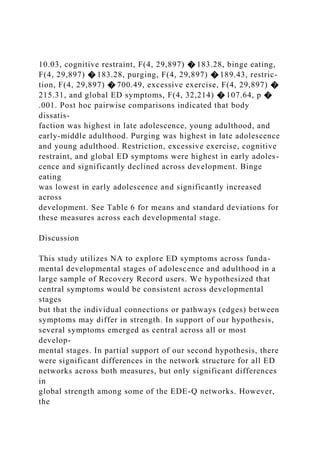
Figure 1.
Cognitive-behavioral model of avoidant/restrictive food intake
disorder
Thomas et al. Page 10
Curr Opin Psychiatry. Author manuscript; available in PMC
2019 November 01.
A
u
th
o
r M
a
n
u
scrip
t
A
u
th
o
r M
a
n
u
scrip
t
A
u
th
o
r M
a
n
u
scrip
t
A
u
th
o
r M
a
n
u
scrip
t
A
u
th
o
r M
a
n
u
scrip
t
A
u
th
o
r M
a
n
u
scrip
t
A
u
th
o
r M
a
n
u
scrip
t
A
u
th
o
r M
a
n
u
scrip
t
Thomas et al. Page 11
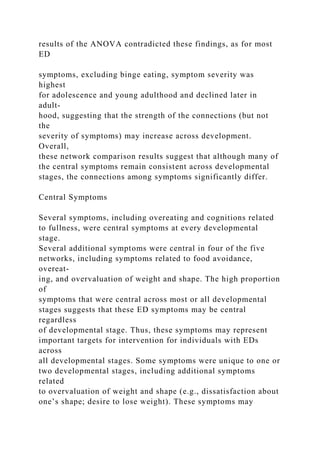
Table 1.
Four stages of cognitive-behavioral therapy for
avoidant/restrictive food intake disorder (CBT-AR)
Stage Primary interventions
1. Psychoeducation and
early change
(2–4 sessions)
• Psychoeducation on ARFID and its treatment
• Self- or parent-monitoring of food intake
• Establishing a pattern of regular eating to normalize hunger
cues
• Increasing volume of preferred foods (for patients who are
underweight) and variety (for all patients)
• Individualized formulation of mechanisms that maintain
avoidant/restrictive eating (i.e., sensory sensitivity,
fear of aversive consequences, lack of interest in eating or food)
2. Treatment planning (2
sessions)
• Continue increasing volume and/or variety
• Reviewing intake from Primary Food Group Building Blocks
and selecting foods to learn about in Stage 3
3. Maintaining mechanisms
in order of priority (14–22
sessions)
• Sensory sensitivity: Systematic desensitization to novel foods
by repeated in-session exploration of sight,
smell, texture, taste, chew; specific, detailed plans for out-of-
session practice with tasting and incorporation
• Fear of aversive consequences: Psychoeducation about how
avoidance maintains anxiety, development of
fear/avoidance hierarchy, graded exposure to feared foods and
situations in which choking, vomiting, or other
feared consequence may occur
• Apparent lack of interest in eating or food: Interoceptive
exposure to bloating, fullness, and/or nausea; in-
session exposure to highly-preferred foods
4. Relapse prevention(2
sessions)
• Evaluating whether treatment goals have been met, identifying
treatment strategies to continue at home, and
developing a plan for maintaining weight gain (if needed)
continuing to learn about novel foods
Curr Opin Psychiatry. Author manuscript; available in PMC
2019 November 01.
AbstractIntroductionAvailable data on the treatment of
ARFIDFamily-based treatment and parent trainingCognitive-
behavioral approachesHospital-based re-feeding including tube
feedingAdjunctive pharmacotherapySummary of available
dataThe cognitive-behavioral formulation of ARFIDCognitive-
behavioral therapy for ARFID (CBT-AR)Conclusion and future
directionsReferencesFigure 1.Table 1.
Eating Disorder Core Symptoms and Symptom Pathways Across
Developmental Stages: A Network Analysis
Caroline Christian
University of Louisville
Victoria L. Perko
University of Kansas
Irina A. Vanzhula
University of Louisville
Jenna P. Tregarthen
Recovery Record, Inc., San Francisco, California
Kelsie T. Forbush
University of Kansas
Cheri A. Levinson
University of Louisville
Eating disorders (EDs) often develop during adolescence and
early adulthood but may persist, arise, or
reemerge across the life span. Research and treatment efforts
primarily focus on adolescent and young
adult populations, leaving large knowledge gaps regarding ED
symptoms across the entire developmental
spectrum. The current study uses network analysis to compare
central symptoms (i.e., symptoms that are
highly connected to other symptoms) and symptom pathways
(i.e., relations among symptoms) across
five developmental stages (early adolescence, late adolescence,
young adulthood, early-middle adult-
hood, middle-late adulthood) in a large sample of individuals
with EDs (N � 29,902; N � 32,219) in two
network models. Several symptoms related to overeating, food
avoidance, feeling full, and overvaluation
of weight and shape emerged as central in most or all
developmental stages, suggesting that some core
symptoms remain central across development. Despite
similarities in central symptoms, significant
differences in network structure (i.e., how symptom pathways
are connected) emerged across age groups.
These differences suggest that symptom interconnectivity (but
not symptom severity) might increase
across development. Future research should continue to
investigate developmental symptom differences
in order to inform treatment for individuals with EDs of all
ages.
General Scientific Summary
Connections between eating disorder symptoms vary across
stages of development. Consistent with
Habit Formation Theory, symptoms were more tightly connected
in older individuals, who have on
average a longer duration of illness. In contrast, eating disorder
central symptoms (symptoms related
to overeating, food avoidance, fullness, and overvaluation of
weight and shape) were relatively
consistent across age groups.
Keywords: eating disorder symptoms, development, age,
network analysis, eating disorders
Supplemental materials:
http://dx.doi.org/10.1037/abn0000477.supp
This article was published Online First November 11, 2019.
X Caroline Christian, Department of Psychological and Brain
Sciences,
University of Louisville; Victoria L. Perko, Department of
Psychology,
University of Kansas; Irina A. Vanzhula, Department of
Psychological and
Brain Sciences, University of Louisville; Jenna P. Tregarthen,
Recovery
Record, Inc., San Francisco, California; Kelsie T. Forbush,
Department of
Psychology, University of Kansas; Cheri A. Levinson,
Department of
Psychological and Brain Sciences, University of Louisville.
The present study is a new analysis of previously analyzed data.
This
study is the investigation of developmental differences in eating
disorder
symptoms using network analysis using this dataset. No other
papers have
addressed similar questions as those addressed in this article.
All study
procedures were approved by the University of Kansas
Institutional Re-
view Board (Study IRB STUDY00003260). Authors complied
with APA
ethical standards in the treatment of their participants. The
manuscript has
not been and is not posted on a website. Jenna P. Tregarthen is a
co-founder
and shareholder of Recovery Record, Inc. Jenna P. Tregarthen
made a
substantial contribution as part of data collection and curation
and ap-
proved the final manuscript, but she did not participate in the
analysis,
interpretation, or drafting of the manuscript. Kelsie T. Forbush
received an
industry-sponsored grant from Recovery Record, Inc. No other
authors
have conflicts of interest to disclose.
Correspondence concerning this article should be addressed to
Cheri A.
Levinson, Department of Psychological and Brain Sciences,
University of
Louisville, Life Sciences Building 317, Louisville, KY 40292.
E-mail:
[email protected]
T
hi
s
do
cu
m
en
t
is
co
py
ri
gh
te
d
by
th
e
A
m
er
ic
an
P
sy
ch
ol
og
ic
al
A
ss
oc
ia
ti
on
or
on
e
of
it
s
al
li
ed
pu
bl
is
he
rs
.
T
hi
s
ar
ti
cl
e
is
in
te
nd
ed
so
le
ly
fo
r
th
e
pe
rs
on
al
us
e
of
th
e
in
di
vi
du
al
us
er
an
d
is
no
t
to
be
di
ss
em
in
at
ed
br
oa
dl
y.
Journal of Abnormal Psychology
© 2019 American Psychological Association 2020, Vol. 129,
No. 2, 177–190
ISSN: 0021-843X http://dx.doi.org/10.1037/abn0000477
177
https://orcid.org/0000-0001-7741-1498
mailto:[email protected]
http://dx.doi.org/10.1037/abn0000477
Eating disorders (EDs) are serious mental illnesses associated
with negative health consequences, significant impairment, and
high mortality (Crow et al., 2009; Rome & Ammerman, 2003;
Stice, Marti, & Rohde, 2013). Peak age of ED onset is during
adolescence, between 16 and 20 years of age (Stice et al.,
2013).
Although EDs most commonly develop during this period, evi-
dence suggests that eating pathology may persist, return, or de-
velop throughout an individual’s life (Fulton, 2016; Patrick &
Stahl, 2009). Indeed, studies indicate that ED symptoms occur
across all developmental stages, with approximately 11% of
adults
aged 42–55 and 4% of adults aged 60 –70 engaging in ED
behav-
iors, such as binge eating, laxative/diuretic misuse, or self-
induced
vomiting (Mangweth-Matzek et al., 2006; Marcus, Bromberger,
Wei, Brown, & Kravitz, 2007). The presence of disordered
eating
among middle and older adults suggests that it is important to
examine EDs across the full developmental spectrum; however,
to
date, research has primarily focused on EDs in adolescence and
early adulthood.
Past research suggests that ED symptoms may change across
development. However, the nature of these differences remains
unclear. In terms of diagnoses, older individuals are more likely
to
be diagnosed with binge eating disorder, as compared to
younger
individuals with EDs (Jenkins & Price, 2018). Additionally,
diag-
nostic migration is extremely common in EDs, which suggests
that
symptomatology may shift as the person and illness develop
(Cas-
tellini et al., 2011; Fichter & Quadflieg, 2007). In terms of
sever-
ity, some research suggests that disordered eating behaviors,
body
dissatisfaction, and distorted cognitions surrounding food
decline
with age (Gadalla, 2008; Forman & Davis, 2005; Tiggemann &
McCourt, 2013). Reduction of ED cognitions may be related to
the
changing social environment over the life span. In one study,
the
association between negative commentary about one’s weight
and
shape and bulimic symptoms diminished with older age
(Tzoneva,
Forney, & Keel, 2015).
However, other studies indicated body dissatisfaction and diet-
ing behaviors remain prevalent and may strengthen with age
(e.g.,
Fulton, 2016). Indeed, research supports that overvaluation of
weight and shape is pervasive among middle age and older
adults
(Forman & Davis, 2005; Patrick & Stahl, 2009; Mangweth-
Matzek
et al., 2006). The Habit Formation Theory of EDs suggests that
maladaptive eating behaviors may begin as goal-driven (e.g., di-
eting to lose weight), but with repetition, these behaviors (e.g.,
restriction), coupled with the reward (e.g., praise from others on
losing weight), develop into a deeply engrained habit (Walsh,
2013). Similarly, binge eating and purging behaviors may begin
impulsively to cope with negative emotions but can develop into
compulsive rituals with repetition (Pearson, Wonderlich, &
Smith,
2015). Thus, Habit Formation Theory posits that maladaptive
eating behaviors and cognitions will become more deeply en-
grained and habitual in later developmental stages. Indeed,
studies
indicate that older age of onset and longer duration-of-illness
are
associated with poor treatment outcomes (Noordenbos, Olden-
have, Muschter, & Terpstra, 2002; Norring & Sohlberg, 1993),
highlighting the clinical importance of researching eating
pathol-
ogy across development.
Overall, the current state of eating disorder research provides an
incomplete picture of cognitions and behaviors across the life
span.
Thus, additional research examining the differences in eating
dis-
order symptoms across developmental stages is urgently needed.
Specifically, it is unknown how specific symptoms and
symptom
relationships might change across developmental periods to
main-
tain ED psychopathology.
One novel way to conceptualize EDs is network theory. Net-
work analysis (NA) is a statistical methodology based on
network
theory, which conceptualizes psychopathology as a web of
inter-
connecting nodes (symptoms) and edges (associations between
symptoms) that are theorized to maintain a specific illness state
(Borsboom, 2017). NA allows researchers to identify specific
relationships among many symptoms at once and provides
oppor-
tunities to visualize illness pathways (relationships among
individ-
ual symptoms) and identify central symptoms (symptoms that
are
highly connected with other symptoms in the network). NA can
also identify if two networks are significantly different from
each
other in structure (i.e., if two symptoms are similarly associated
in
both networks) and global strength (how strongly symptoms are
associated with each other; van Borkulo et al., 2015). This tech-
nique allows researchers to investigate if (and how) two popula-
tions or subgroups of a population differ in symptom connected-
ness.
Several studies have used NA to understand ED psychopathol-
ogy. These studies found body checking (Forbush, Siew, &
Vite-
vitch, 2016), fear of weight gain (Elliott, Jones, & Schmidt,
2018;
Forrest, Jones, Ortiz, & Smith, 2018; Levinson et al., 2017), and
other symptoms related to overvaluation of weight and shape
(DuBois, Rodgers, Franko, Eddy, & Thomas, 2017; Elliott et
al.,
2018; Forrest et al., 2018; Goldschmidt et al., 2018; Wang,
Jones,
Dreier, Elliott, & Grilo, 2018) to be central, maintaining symp-
toms, consistent with the cognitive– behavioral theory of EDs
(Cooper & Shafran, 2008; Fairburn, 2008). A few additional
studies have identified additional important symptoms, such as
dietary restraint (Goldschmidt et al., 2018; Solmi et al., 2018),
interoceptive awareness, (Olatunji, Levinson, & Calebs, 2018;
Solmi et al., 2018), and ineffectiveness (Olatunji et al., 2018;
Solmi et al., 2018; Solmi, Collantoni, Meneguzzo, Tenconi, &
Favaro, 2019), and the relationships among depression, anxiety,
and ED symptoms (Solmi et al., 2018, 2019).
Although NA has been applied to increase the broad understand-
ing of eating pathology, no research has examined differences
in
network models of ED symptoms across developmental stages.
Past research suggests that there may be unique differences in
ED
presentations across the life span, including diagnostic
differences,
physical changes, and differences in treatment outcomes (Cas-
tellini et al., 2011; Forman & Davis, 2005; Hudson & Pope,
2018;
Jenkins & Price, 2018; Peat, Peyerl, & Muehlenkamp, 2008).
Thus, it seems likely that ED symptom relationships may also
differ across developmental stages. Better understanding of the
differences in central ED symptoms across developmental
stages
could help determine if alternative treatments would be more
beneficial for different age groups.
The current study utilizes NA to examine ED symptoms in five
distinct developmental stages: early adolescence (11–14), late
ad-
olescence (15–18), young adulthood (19 –25), early-middle
adult-
hood (26 – 45), and middle-late adulthood (46�). These age
ranges
represent unique developmental stages in several aspects,
includ-
ing social environment, physiological and neurological develop-
ment, maturity, and autonomy (Blonigen, Carlson, Hicks,
Krueger,
& Iacono, 2008; Steinberg, 2005; Williams & Currie, 2000). We
examine symptom relationships across two widely used ED
mea-
T
hi
s
do
cu
m
en
t
is
co
py
ri
gh
te
d
by
th
e
A
m
er
ic
an
P
sy
ch
ol
og
ic
al
A
ss
oc
ia
ti
on
or
on
e
of
it
s
al
li
ed
pu
bl
is
he
rs
.
T
hi
s
ar
ti
cl
e
is
in
te
nd
ed
so
le
ly
fo
r
th
e
pe
rs
on
al
us
e
of
th
e
in
di
vi
du
al
us
er
an
d
is
no
t
to
be
di
ss
em
in
at
ed
br
oa
dl
y.
178 CHRISTIAN ET AL.
sures: the Eating Pathology Symptoms Inventory (EPSI;
Forbush
et al., 2013) and Eating Disorder Examination Questionnaire
(EDE-Q; Fairburn & Beglin, 1994). Both questionnaires are
con-
sidered “gold-standard” measures of ED symptoms and are fre-
quently used for network investigations (DuBois et al., 2017;
Forbush et al., 2016; Forrest et al., 2018), yet they assess
slightly
different aspects of ED symptoms, such that the EDE-Q is based
on the cognitive– behavioral model of EDs and the EPSI is de-
signed to be a multidimensional assessment of ED symptoms.
Thus, we include both measures to allow for a more comprehen-
sive overview of ED symptoms and to gain insight into the
replicability of networks.
We hypothesized that symptoms that were central in past studies
using NA (e.g., overvaluation of weight and shape; Levinson,
Vanzhula, Brosof, & Forbush, 2018) would remain central
regard-
less of age, as suggested by the literature (Forman & Davis,
2005;
Patrick & Stahl, 2009; Mangweth-Matzek et al., 2006). Further,
we
hypothesized that there would be a significant difference in net-
work structure across networks. Despite some common threads
across EDs, specific connections between symptoms are likely
to
differ across developmental stages, given what the literature has
described in terms of differences in symptom severity and treat-
ment effectiveness (Hudson & Pope, 2018; Jenkins & Price,
2018;
Peat et al., 2008; Forman & Davis, 2005). For example,
although
fear of weight gain may remain central across diverse ED
presen-
tations, the connection between fear of weight gain and binge
eating may become stronger over time, consistent with the Habit
Formation Theory (Walsh, 2013). This change would result in
differences in network structure, which has implications for im-
plementing effective treatments across age groups.
Additionally,
we predict that the global strength would increase for networks
with older participants compared to younger participants,
reflec-
tive of Habit Formation Theory, indicating increased severity
across developmental stages.
Method
Participants
Participants were Recovery Record users (N � 29,902; N �
32,219), a smartphone application that is based on cognitive–
behavioral treatment for EDs (Tregarthen, Lock, & Darcy,
2015).
Participants provided consent for data to be used for research
purposes when they agreed to the “Terms and Conditions” in the
initial application setup. Participants who completed the EPSI
(n �
29,902) were 11 to 85 years old (M � 26.23, SD � 10.46), and
94.0% identified as female. These participants reported their av-
erage length of ED was 9.71 years (SD � 9.72, range � 0 – 65
years). Recovery Record allows users to connect their account
with
a clinician in order to share information and inform treatment
planning. In our sample, 34.5% of participants had accounts
con-
nected with a treatment provider and had an official diagnosis
of
an ED based on clinician-report.
Participants who completed the EDE-Q (n � 32,219) were 11 to
79 years old (M � 23.43, SD � 8.89), and 96.5% identified as
female. Average length of ED was 7.60 years (SD � 8.23, range
�
0 – 60 years). In the present sample, 8.8% of participants had
accounts connected with a treatment provider and had an
official
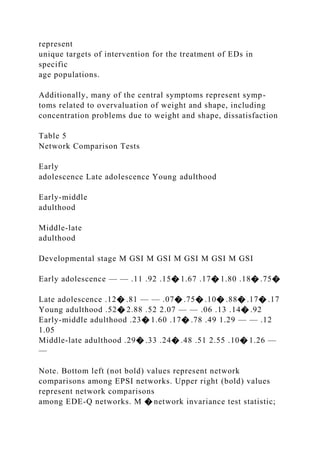
diagnosis of an ED based on clinician-report. See Table 1 for
Table 1
Demographic Breakdown
Demographic
characteristic
Early adolescence
n (%)
Late adolescence
n (%)
Young adult
n (%)
Early-middle adult
n (%)
Middle-late adult
n (%)
EDE-Q 1523 (100) 9838 (100) 11709 (100) 7955 (100) 1194
(100)
Gender
Female 1468 (96.4) 9498 (96.5) 11310 (96.6) 7671 (96.4) 1131
(94.7)
Male 42 (2.8) 248 (2.5) 288 (2.9) 228 (2.9) 56 (4.7)
Missing 13 (.9) 92 (.9) 111 (.7) 56 (.7) 7 (.6)
Diagnosis
AN 13 (.9) 85 (.9) 159 (1.4) 133 (1.7) 19 (1.6)
BN 2 (.1) 37 (.4) 99 (.8) 104 (1.3) 12 (1.0)
BED 4 (.3) 12 (.1) 49 (.4) 104 (1.3) 55 (4.6)
Other 3 (.2) 42 (.4) 93 (.8) 102 (1.3) 18 (1.5)
Missing 1501 (98.6) 9662 (98.2) 11309 (96.6) 7522 (94.6) 1090
(91.3)
Duration of illness (M[SD]) 1.71 (1.71) 2.92 (2.27) 5.82 (3.96)
13.86 (8.37) 29.00 (14.60)
EPSI 1028 (100) 6171 (100) 10701 (100) 9929 (100) 2073 (100)
Gender
Female 959 (93.3) 5786 (93.8) 10108 (94.5) 9412 (94.8) 1857
(89.6)
Male 46 (4.5) 228 (3.7) 381 (3.6) 438 (4.4) 201 (9.7)
Missing 23 (2.2) 157 (2.5) 212 (2.0) 79 (.8) 15 (.7)
Diagnosis
AN 152 (14.8) 796 (12.9) 1456 (13.6) 995 (10.0) 172 (8.3)
BN 30 (2.9) 307 (5.0) 870 (8.1) 825 (8.3) 81 (3.9)
BED 31 (3.0) 165 (2.7) 514 (4.8) 1144 (11.5) 527 (25.4)
Other 62 (6.0) 354 (5.7) 795 (7.4) 830 (8.4) 222 (10.7)
Missing 753 (73.2) 4549 (73.7) 7066 (66.0) 6134 (61.8) 1071
(51.7)
Duration of illness (M[SD]) 2.06 (2.11) 3.19 (2.44) 6.05 (4.12)
14.54 (8.58) 29.12 (15.20)
Note. EDE-Q � Eating Disorder Examination Questionnaire;
EPSI � Eating Pathology Symptoms Inventory; AN � anorexia
nervosa; BN � bulimia
nervosa; BED � binge eating disorder.
T
hi
s
do
cu
m
en
t
is
co
py
ri
gh
te
d
by
th
e
A
m
er
ic
an
P
sy
ch
ol
og
ic
al
A
ss
oc
ia
ti
on
or
on
e
of
it
s
al
li
ed
pu
bl
is
he
rs
.
T
hi
s
ar
ti
cl
e
is
in
te
nd
ed
so
le
ly
fo
r
th
e
pe
rs
on
al
us
e
of
th
e
in
di
vi
du
al
us
er
an
d
is
no
t
to
be
di
ss
em
in
at
ed
br
oa
dl
y.
179EATING DISORDER AGE NETWORKS
participants’ gender, ED diagnoses, and duration of illness
across
developmental categories.
Measures
EPSI. The EPSI is a 45-item multidimensional measure de-
signed to assess ED symptoms. The EPSI has eight scales corre-
sponding to unique facets of eating pathology: Body
Dissatisfac-
tion (i.e., satisfaction with body shape and body parts; e.g.,
hips,
thighs), Binge Eating (i.e., tendency to overeat or eat
mindlessly),
Cognitive Restraint (i.e., attempting to restrict eating, whether
successful or not), Excessive Exercise (i.e., intense or
compulsive
exercise), Restricting (i.e., efforts to avoid or reduce eating),
Purging (i.e., self-induced vomiting and laxative/diuretic use),
Muscle Building (i.e., cognitions and behaviors [supplement
use]
related to increasing muscularity), and Negative Attitudes
Toward
Obesity (i.e., negative judgment of individuals who are over-
weight/obese). Between 32.6% and 73.6% of our sample scored
above EPSI subscale means in an ED treatment sample (Forbush
et
al., 2013). Two scales of the EPSI, Negative Attitudes Toward
Obesity and Muscle Building, were not included in the
Recovery
Record app; thus, these items were not included in the network.
The EPSI has excellent convergent and discriminant validity, as
well as excellent test-retest reliability (Forbush et al., 2013).
The
internal consistency of all items included in the EPSI network
was
adequate for the current sample (� � .73).
EDE-Q. The EDE-Q version 6.0 is a 28-item self-report ques-
tionnaire designed to assess ED behaviors and thoughts. This
version of the EDE-Q has four scales: Eating Concern (i.e.,
inter-
fering thoughts about food, eating, or calories), Shape Concern
(i.e., interfering thoughts about shape), Weight Concern (i.e.,
in-
terfering thoughts about weight), and Restraint (i.e., attempts to
reduce food intake; e.g., skipping meals, food rules). The mean
EDEQ global score in our sample is 4.17 (SD � 1.10), and
63.3%
(n � 20,390) of our sample scored above the recommended
clinical cutoff (a score of 4.0 or higher) for EDs (Fairburn,
Wilson,
& Schleimer, 1993). One EDE-Q item (15) was excluded
because
it measures the same symptom (binge eating) as the previous
question. Networks should not include two questions targeting
the
same symptom because it may artificially inflate centrality,
poten-
tially leading to false interpretation of that symptom as central
(Fried & Cramer, 2017). The EDE-Q has demonstrated excellent
test-retest reliability and internal consistency (Luce &
Crowther,
1999) and good criterion and concurrent validity (Mond, Hay,
Rodgers, Owen, & Beumont, 2004). The internal consistency of
all
items included in the EDE-Q network was good for the current
sample (� � .86).
Procedure
Participants used the Recovery Record application to self-
monitor ED cognitions and behaviors. The application
encourages
monthly completion of the EDE-Q and the EPSI. The present
study
used data from the initial completion of EDE-Q and EPSI by
participants using the mobile application.
Participant data were categorized into five developmental stag-
es: early adolescence (11–14), late adolescence (15–18), young
adulthood (19 –25), early-middle adulthood (26 – 45), and
middle-
late adulthood (46�). Our ranges may not fully distinguish be-
tween all stages of development because we had few
participants
above the age of 45 (n � 1,194 for EPSI, n � 2,073 for EDE-Q)
relative to the entire sample, so we used 45 as a cutoff for
middle-late adulthood in order to ensure a large sample size for
the
networks. Using younger age ranges is not uncommon for
clinical
studies on EDs due to difficulty recruiting older adults with
EDs
(Forman & Davis, 2005; Jenkins & Price, 2018).
Glasso networks using the EDE-Q and EPSI were estimated at
each developmental stage using the “estimateNetwork” function
in
the bootnet package in R (Epskamp, Maris, Waldorp, & Bors-
boom, 2018). The Glasso function estimates partial correlations
between nodes, meaning each correlation is unique, accounting
for
all other symptoms in the network while minimizing spurious
relationships. We first created networks using the default
setting
(cor_auto), which uses polychoric correlations. However,
because
some networks did not have adequate stability, we estimated the
networks again using Spearman correlations to obtain stable
net-
works, as suggested by Epskamp and Fried (2018). Stability
esti-
mates were calculated using the bootnet package in R (Epskamp
et
al., 2018).
Three indices of centrality were calculated using the “centrali-
typlot” function in the qgraph package in R: strength (i.e., the
sum
of the absolute value of all of a node’s edges), closeness (i.e.,
degree of direct connections to other nodes), and betweenness
(i.e.,
degree to which a node falls on the path between other nodes;
Epskamp, Cramer, Waldorp, Schmittmann, & Borsboom, 2012).
We interpret only strength centrality because it was the most
stable, as has been done in prior NA investigations (e.g.,
DuBois
et al., 2017; Epskamp et al., 2012). Centrality difference tests
were
conducted using the bootnet package in R (Epskamp et al.,
2018)
to determine if central symptoms were significantly more
central
than other symptoms. We included three to six central
symptoms
for each network based on the network centrality difference
test.
The number of symptoms included per network is based on
sharp
observable decreases in centrality differences among top symp-
toms that were used as cutoffs for inclusion. We did not use a
standard cutoff value across networks due to internetwork vari-
ability.
Differences between networks across developmental stages
were identified using the NetworkComparisonTest package in R
(van Borkulo et al., 2015). Three metrics were utilized to
analyze
network differences: network invariance test (M; i.e.,
significant
differences in the maximum edge strength in the networks),
edge
invariance test (E; i.e., significant differences between specific
edges in the networks), and global strength invariance test (GSI;
i.e., significant differences in the sum of the edge strengths; van
Borkulo et al., 2015). Edge invariance was calculated for
networks
with significant network invariance in order to quantify the
nature
of these structural differences. Global strength is a particularly
useful measure, as it may be related to symptom severity (van
Borkulo et al., 2015).
A one-way ANOVA was conducted across developmental
stages for both the EDE-Q and EPSI to investigate whether sig-
nificant differences in symptom severity across groups were re-
lated to global strength across networks, as has been theorized
(van
Borkulo et al., 2015). We conducted these analyses using the
EDE-Q global score, as factor validity is strongest for the
global
index rather than the four subscales (Aardoom, Dingemans,
Sloft
Op’t Landt, & Van Furth, 2012) and six EPSI subscales, as the
T
hi
s
do
cu
m
en
t
is
co
py
ri
gh
te
d
by
th
e
A
m
er
ic
an
P
sy
ch
ol
og
ic
al
A
ss
oc
ia
ti
on
or
on
e
of
it
s
al
li
ed
pu
bl
is
he
rs
.
T
hi
s
ar
ti
cl
e
is
in
te
nd
ed
so
le
ly
fo
r
th
e
pe
rs
on
al
us
e
of
th
e
in
di
vi
du
al
us
er
an
d
is
no
t
to
be
di
ss
em
in
at
ed
br
oa
dl
y.
180 CHRISTIAN ET AL.
EPSI was designed as a multidimensional measure of eating pa-
thology, rather than a global subscale of severity (Forbush et
al.,
2013). A post hoc Bonferroni correction was used for multiple
comparisons. The cutoff value after this correction is p � .007.
Results
Networks and Stability
See Figure 1 for EPSI networks and Figure 2 for EDE-Q
networks. Table 2 includes descriptions of each of the EPSI and
EDE-Q items. Stability for strength was excellent (strength �
.75)
for all the EPSI and EDE-Q networks (Epskamp, Borsboom, &
Fried, 2018).
Central Symptoms
EPSI. See Figure 3 for the strength centrality of all symptoms
in the EPSI networks. All central symptoms were significantly
more central than other symptoms in the network at p � .05.
Overeating and feeling full after eating a small amount of food
emerged as central symptoms across every developmental stage.
Avoiding high calorie foods and planning days around exercise
are
central symptoms in late adolescence, young adulthood, early-
middle adulthood, and middle-late adulthood. Fasting is a
central
symptom in early adolescence, late adolescence, young
adulthood,
and early-middle adulthood. Stuffing oneself to the point of
feeling
sick is a central symptom in young adulthood, early-middle
adult-
hood, and middle-late adulthood. The most central symptoms in
the EPSI networks are described in Table 3.
EDE-Q. See Figure 4 for the strength centrality of all symp-
toms in the EDE-Q networks. All central symptoms were signif-
icantly more central than other symptoms in the network at
p � .05. Desire for an empty stomach emerged as a central
symptom across every developmental stage. Concentration prob-
lems due to weight and shape is a central symptom in early
adolescence, late adolescence, young adulthood, and early-
middle
A. Early Adolescence
B. Late Adolescence C. Young Adulthood
D. Early-middle Adulthood E. Middle-late Adulthood
clothesfit
unhealthyfood
nothungry
eatlittle
exercisedaily
supriseeat
exercisehard
snacking
fulleasy thinkdiuretics
outfits
thinklaxatives
dietteas
dietpills
dislikebody
full
countcals
planexercise
butt thighs
shapediff
vomit
noticeate
strenexercise
fullsmall
hips
eatmore
resist
stuffed
avoidhighcal
exerciseexhaust
diureticsuse
fast
autopilot
overeat
clothesfit
unhealthyfood
nothungry
eatlittle
exercisedaily
supriseeat
exercisehard
snacking
fulleasy
thinkdiuretics
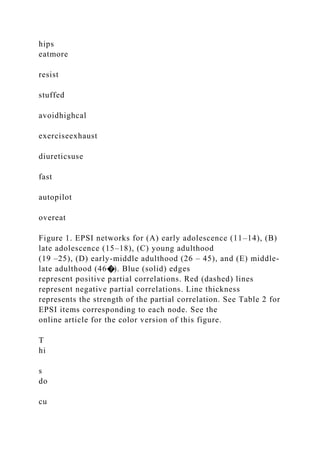
outfits
thinklaxatives
dietteas
dietpills
dislikebody
full
countcals
planexercise
butt
thighs
shapediff
vomit
noticeate
strenexercise
fullsmall
hips
eatmore
resist
stuffed
avoidhighcal
exerciseexhaust
diureticsuse
fast
autopilot
overeat
clothesfit
unhealthyfood
nothungry
eatlittle
exercisedaily
supriseeat
exercisehard
snacking
fulleasy
thinkdiuretics
outfits
thinklaxatives
dietteas
dietpills
dislikebody
full
countcals
planexercise
butt
thighs
shapediff
vomit
noticeate
strenexercise
fullsmall
hips
eatmore
resist
stuffed
avoidhighcal
exerciseexhaust
diureticsuse
fast
autopilot
overeat
clothesfit
unhealthyfood
nothungry
eatlittle
exercisedaily
supriseeat
exercisehard
snacking
fulleasy
thinkdiuretics
outfits
thinklaxatives
dietteas
dietpills
dislikebody
full
countcals
planexercise
butt
thighs
shapediff
vomit
noticeate
strenexercise
fullsmall
hips
eatmore
resist
stuffed
avoidhighcal
exerciseexhaust
diureticsuse
fast
autopilot
overeat
clothesfit
unhealthyfood
nothungry
eatlittle
exercisedaily
supriseeat
exercisehard
snacking
fulleasy
thinkdiuretics
outfits
thinklaxatives
dietteas
dietpills
dislikebody
full
countcals
planexercise
butt
thighs
shapediff
vomit
noticeate
strenexercise
fullsmall
hips
eatmore
resist
stuffed
avoidhighcal
exerciseexhaust
diureticsuse
fast
autopilot
overeat
Figure 1. EPSI networks for (A) early adolescence (11–14), (B)
late adolescence (15–18), (C) young adulthood
(19 –25), (D) early-middle adulthood (26 – 45), and (E) middle-
late adulthood (46�). Blue (solid) edges
represent positive partial correlations. Red (dashed) lines
represent negative partial correlations. Line thickness
represents the strength of the partial correlation. See Table 2 for
EPSI items corresponding to each node. See the
online article for the color version of this figure.
T
hi
s
do
cu
m
en
t
is
co
py
ri
gh
te
d
by
th
e
A
m
er
ic
an
P
sy
ch
ol
og
ic
al
A
ss
oc
ia
ti
on
or
on
e
of
it
s
al
li
ed
pu
bl
is
he
rs
.
T
hi
s
ar
ti
cl
e
is
in
te
nd
ed
so
le
ly
fo
r
th
e
pe
rs
on
al
us
e
of
th
e
in
di
vi
du
al
us
er
an
d
is
no
t
to
be
di
ss
em
in
at
ed
br
oa
dl
y.
181EATING DISORDER AGE NETWORKS
adulthood. Feeling dissatisfied about one’s weight is a central
symptom in early adolescence, young adulthood, early-middle
adult-
hood, and middle-late adulthood. Overeating is a central
symptom in
late adolescence, young adulthood, early-middle adulthood, and
middle-late adulthood. Desire to lose weight is a central
symptom in
early and late adolescence. Judgment of self due to shape is a
central
symptom in early adolescence. Binge eating is a central
symptom in
young adulthood. Dissatisfaction about one’s shape is a central
symp-
tom in middle-late adulthood. The most central symptoms in the
EDE-Q networks are described in Table 4.
EPSI networks. The network invariance test indicated that the
early adolescence network was significantly different than late
ado-
lescence (M � 0.12, p � .05), young adulthood (M � 0.52, p �
.05),
early-middle adulthood (M � 0.23, p � .001), and middle-late
adult-
hood (M � 0.29, p � .001). The late adolescence network was
significantly different from early-middle adulthood (M � 0.17,
p �
.001) and middle-late adulthood (M � 0.24, p � .001), but not
young
adulthood (p � .05). The young adulthood network was not
signifi-
cantly different from early-middle adulthood or middle-late
adulthood
(p � .05). The early-middle adulthood network was
significantly
different than middle-late adulthood (M � 0.10, p � .02).
The edge invariance test indicated that two edges were
significantly
different (p � .05) between early adolescence and late
adolescence,
one edge significantly differed between early adolescence and
young
adulthood, 16 edges significantly differed between early
adolescence
and early-middle adulthood, 13 edges significantly differed
between
early adolescence and middle-late adulthood, 20 edges
significantly
differed between late adolescence and early-middle adulthood,
19
edges significantly differed between late adolescence and
middle-late
adulthood, and two edges significantly differed between early-
middle
adulthood and middle-late adulthood. See online supplemental
mate-
rials for all significantly different edges and corresponding E-
values.
The Global Strength Invariance test indicated that there were no
significant differences in global strength among the EPSI
networks of
different developmental stages (p � .05).
EDE-Q. The structure of the early adolescence network was
significantly different than young adulthood (M � 0.15, p �
.001),
early-middle adulthood (M � 0.17, p � .001), and middle-late
adult-
A. Early Adolescence B. Late Adolescence C. Young Adulthood
D. Early-middle Adulthood E. Middle-late Adult Adulthood
restrict
fast
excludefood
foodrules
emptystomach
flatstomach
foodconc
wsconc
losecontrolfeargain
feelfat
desirelose
overeat
binge
vomit
laxativescompex
eatsecret
guilty
otherseeeat
weightjudge
shapejudge
weighself
weighdiss
shapediss
seeself
otherseebody
restrict
fast
excludefood
foodrules
emptystomach
flatstomach
foodconc
wsconc
losecontrol
feargain
feelfat
desirelose
overeat
binge
vomit
laxatives
compex
eatsecret
guilty
otherseeeat
weightjudge
shapejudge
weighself
weighdiss
shapediss
seeself
otherseebody
restrict
fast
excludefood
foodrules
emptystomach
flatstomach
foodconc
wsconc
losecontrol
feargain
feelfat
desirelose
overeat
binge
vomit
laxatives
compex
eatsecret
guilty
otherseeeat
weightjudge shapejudge
weighself
weighdiss
shapediss seeself
otherseebody
restrict
fast
excludefood
foodrules
emptystomach
flatstomach
foodconcwsconc
losecontrol
feargain
feelfat
desirelose
overeat
binge
vomit
laxatives
compex
eatsecret
guilty
otherseeeat
weightjudge
shapejudge
weighself
weighdiss
shapediss
seeself
otherseebody
restrict
fast
excludefood
foodrules
emptystomach
flatstomach
foodconc
wsconc
losecontrol
feargain
feelfat
desirelose
overeat
binge
vomit
laxatives
compex
eatsecret
guilty
otherseeeat
weightjudge
shapejudge
weighself
weighdiss
shapediss
seeself
otherseebody
Figure 2. EDE-Q networks for (A) early adolescence (11–14),
(B) late adolescence (15–18), (C) young
adulthood (19 –25), (D) early-middle adulthood (26 – 45), and
(E) middle-late adulthood (46�). Blue (solid)
edges represent positive partial correlations. Red (dashed) lines
represent negative partial correlations. Line
thickness represents the strength of the partial correlation. See
Table 2 for EDE-Q items corresponding to each
node. See the online article for the color version of this figure.
T
hi
s
do
cu
m
en
t
is
co
py
ri
gh
te
d
by
th
e
A
m
er
ic
an
P
sy
ch
ol
og
ic
al
A
ss
oc
ia
ti
on
or
on
e
of
it
s
al
li
ed
pu
bl
is
he
rs
.
T
hi
s
ar
ti
cl
e
is
in
te
nd
ed
so
le
ly
fo
r
th
e
pe
rs
on
al
us
e
of
th
e
in
di
vi
du
al
us
er
an
d
is
no
t
to
be
di
ss
em
in
at
ed
br
oa
dl
y.
182 CHRISTIAN ET AL.
http://dx.doi.org/10.1037/abn0000477.supp
Table 2
Network Node (i.e., Symptom) Abbreviations
EPSI
clothesfit Dislike how clothes fit
unhealthyfoods Attempt to exclude “unhealthy” foods
nothungry Ate when not hungry
eatlittle Told that I do not eat much
exercisedaily Felt the need to exercise nearly daily
supriseeat People would be surprised by how little I ate
exercisehard Push myself hard when exercising
snacking Snacked without realizing
fulleasy Got full easily
thinkdiuretics Considered taking diuretics
outfits Tried on different outfits because of how I looked
thinklaxatives Thought laxatives are good to lose weight
dietteas Used diet teas or cleansing teas
dietpills Used diet pills
dislikebody Dislike how my body looked
full Ate until uncomfortably full
countcals Counted calories
planexercise Planned days around exercising
butt Thought butt was too big
thighs Dislike size of thighs
shapediff Wished shape of body was different
vomit Vomited to lose weight
noticeate Did not notice how much I ate until after
strenexercise Engaged in strenuous exercise at least 5 days per
week
fullsmall Got full after eating a small amount of food
hips Dissatisfied with the size of hips
eatmore Others encouraged to eat more
resist Felt I could not resist eating food offered
stuffed Stuffed myself with food
avoidhighcal Tried to avoid foods with high calories
exerciseexhaust Exercised to exhaustion
diureticsuse Used diuretics to lose weight
fast Skipped two meals in a row
autopilot Ate on autopilot
overeat Ate a large amount of food in a short period of time
EDE-Q
restrict Tried to limit the amount of food eaten for shape or
weight concerns
fast Gone for long periods of time without eating for shape or
weight concerns
excludefood Tried to exclude foods that you like for shape or
weight concerns
foodrules Tried to follow food rules for shape or weight
concerns
emptystomac Definite desire to have an empty stomach
flatstomach Definite desire to have a flat stomach
foodconc Thinking about food, eating, or calories made it
difficult to concentrate
wsconc Thinking about shape or weight made it difficult to
concentrate
losecontrol Definite fear of losing control overeating
feargain Fear that you might gain weight
feelfat Felt fat
desirelose Strong desire to lose weight
overeat Ate an unusually large amount of food
binge Had a sense of losing control over your eating and ate an
unusually large amount of food
vomit Made yourself sick (vomit) for shape or weight concerns
laxatives Taken laxatives for shape or weight concerns
compex Exercised in a “driven” or “compulsive” way for shape
or weight concerns
eatsecret Ate in secret
guilty Felt guilty for eating due to shape or weight concerns
otherseeeat Concerned about other people seeing you eat
weightjudge Weight influenced self-judgment
shapejudge Shape influenced self-judgment
weighself Upset if had to weigh once a week
weightdiss Dissatisfied with weight
shapediss Dissatisfied with shape
seeself Discomfort seeing your own body
otherseebody Discomfort with others seeing your body
T
hi
s
do
cu
m
en
t
is
co
py
ri
gh
te
d
by
th
e
A
m
er
ic
an
P
sy
ch
ol
og
ic
al
A
ss
oc
ia
ti
on
or
on
e
of
it
s
al
li
ed
pu
bl
is
he
rs
.
T
hi
s
ar
ti
cl
e
is
in
te
nd
ed
so
le
ly
fo
r
th
e
pe
rs
on
al
us
e
of
th
e
in
di
vi
du
al
us
er
an
d
is
no
t
to
be
di
ss
em
in
at
ed
br
oa
dl
y.
183EATING DISORDER AGE NETWORKS
hood (M � 0.17, p � .01), but not late adolescence. The late
adolescence network was significantly different from young
adult-
hood (M � 0.07, p � .05), early-middle adulthood (M � 0.10, p
�
.001), and middle-late adulthood (M � 0.16, p � .001). The
young
adulthood network was significantly different than middle-late
adult-
hood (M � 0.14, p � .05), but not early-middle adulthood. The
early-middle adulthood network was not significantly different
than
middle-late adulthood.
Eight edges were significantly different (p � .05) between early
adolescence and young adulthood, 20 edges significantly
differed
between early adolescence and early-middle adulthood, 23
edges
significantly differed between early adolescence and middle-
late
adulthood, 12 edges significantly differed between late adoles-
cence and young adulthood, 13 edges significantly differed be-
tween late adolescence and early-middle adulthood, 19 edges
significantly differed between late adolescence and middle-late
adulthood, and seven edges significantly differed between
young
adulthood and middle-late adulthood. See online supplemental
materials for all significantly different edges and corresponding
E-values.
Figure 3. Centrality of EPSI symptoms for the (A) early
adolescence, (B) late adolescence, (C) young
adulthood, (D) early-middle adulthood, and (E) middle-late
adulthood networks. Red (large) dots denote most
central symptoms. See Table 2 for EPSI items corresponding to
each node abbreviation. See the online article
for the color version of this figure.
Table 3
EPSI Central Symptoms
Early adolescence Late adolescence Young adulthood Early-
middle adulthood Middle-late adulthood
Overeat (1.88) Overeat (1.68) Overeat (1.72) Overeat (1.58)
Overeat (1.98)
Fullsmall (2.35) Fullsmall (1.45) Fullsmall (1.88) Fullsmall
(1.92) Fullsmall (1.82)
Avoidhighcal (1.54) Avoidhighcal (1.44) Avoidhighcal (1.72)
Avoidhighcal (1.47)
Planexercise (1.29) Planexercise (1.57) Planexercise (1.69)
Planexercise (1.30)
Fast (1.75) Fast (2.53) Fast (2.19) Fast (1.27)
Stuffed (1.44) Stuffed (1.89) Stuffed (1.87)
Note. Standardized strength centrality coefficients included in
parentheses. All symptoms in the table were significantly more
central than over 75% of
other symptoms in the network. See Table 2 for EPSI items
corresponding to each node abbreviation.
T
hi
s
do
cu
m
en
t
is
co
py
ri
gh
te
d
by
th
e
A
m
er
ic
an
P
sy
ch
ol
og
ic
al
A
ss
oc
ia
ti
on
or
on
e
of
it
s
al
li
ed
pu
bl
is
he
rs
.
T
hi
s
ar
ti
cl
e
is
in
te
nd
ed
so
le
ly
fo
r
th
e
pe
rs
on
al
us
e
of
th
e
in
di
vi
du
al
us
er
an
d
is
no
t
to
be
di
ss
em
in
at
ed
br
oa
dl
y.
184 CHRISTIAN ET AL.
http://dx.doi.org/10.1037/abn0000477.supp
The early adolescence network (global strength � 11.82) had
significantly lower global strength than middle-late adulthood
(global
strength � 12.56; GSI � 0.74, p � .05). Late adolescence
(global
strength � 12.73) had significantly lower strength than young
adult-
hood (global strength � 13.48; GSI � 0.75, p � .01) and early-
middle adulthood (global strength � 13.61; GSI � 0.89, p �
.05).
There were no other significant differences in global strength
among
the EDE-Q networks (p � .05). See Table 5 for an overview of
network differences across developmental stages.
ANOVA Across Developmental Stages
The results of the one-way ANOVAs indicated a significant
main effect of group for body dissatisfaction, F(4, 29,897) �
Figure 4. Centrality of EDE-Q symptoms for the (A) early
adolescence, (B) late adolescence, (C) young
adulthood, (D) early-middle adulthood, and (E) middle-late
adulthood networks. Red (large) dots denote most
central symptoms. See Table 2 for EDE-Q items corresponding
to each abbreviation. See the online article for
the color version of this figure.
Table 4
EDE-Q Central Symptoms
Early adolescence Late adolescence Young adulthood Early-
middle adulthood Middle-late adulthood
Emptystomach� (.98) Emptystomach�� (1.11)
Emptystomach�� (1.30) Emptystomach�� (1.72)
Emptystomach�� (1.73)
Wsconc�� (1.48) Wsconc�� (1.13) Wsconc� (1.07)
Wsconc�� (1.13)
Overeat� (1.32) Overeat�� (1.43) Overeat�� (1.56) Overeat�
(1.11)
Weightdiss� (.98) Weightdiss�� (1.13) Weightdiss�� (1.41)
Weightdiss� (1.09)
Desirelose� (.95) Desirelose� (1.05)
Shapejudge� (1.30)
Binge� (.99)
Shapediss� (1.11)
Note. Standardized strength centrality coefficients included in
parentheses.
� Symptom is significantly more central than over 50% of other
symptoms in the network. �� Symptom is significantly more
central than over 75% of
other symptoms in the network. See Table 2 for EDE-Q items
corresponding to each node abbreviation.
T
hi
s
do
cu
m
en
t
is
co
py
ri
gh
te
d
by
th
e
A
m
er
ic
an
P
sy
ch
ol
og
ic
al
A
ss
oc
ia
ti
on
or
on
e
of
it
s
al
li
ed
pu
bl
is
he
rs
.
T
hi
s
ar
ti
cl
e
is
in
te
nd
ed
so
le
ly
fo
r
th
e
pe
rs
on
al
us
e
of
th
e
in
di
vi
du
al
us
er
an
d
is
no
t
to
be
di
ss
em
in
at
ed
br
oa
dl
y.
185EATING DISORDER AGE NETWORKS
10.03, cognitive restraint, F(4, 29,897) � 183.28, binge eating,
F(4, 29,897) � 183.28, purging, F(4, 29,897) � 189.43, restric-
tion, F(4, 29,897) � 700.49, excessive exercise, F(4, 29,897) �
215.31, and global ED symptoms, F(4, 32,214) � 107.64, p �
.001. Post hoc pairwise comparisons indicated that body
dissatis-
faction was highest in late adolescence, young adulthood, and
early-middle adulthood. Purging was highest in late adolescence
and young adulthood. Restriction, excessive exercise, cognitive
restraint, and global ED symptoms were highest in early adoles-
cence and significantly declined across development. Binge
eating
was lowest in early adolescence and significantly increased
across
development. See Table 6 for means and standard deviations for
these measures across each developmental stage.
Discussion
This study utilizes NA to explore ED symptoms across funda-
mental developmental stages of adolescence and adulthood in a
large sample of Recovery Record users. We hypothesized that
central symptoms would be consistent across developmental
stages
but that the individual connections or pathways (edges) between
symptoms may differ in strength. In support of our hypothesis,
several symptoms emerged as central across all or most
develop-
mental stages. In partial support of our second hypothesis, there
were significant differences in the network structure for all ED
networks across both measures, but only significant differences
in
global strength among some of the EDE-Q networks. However,
the
results of the ANOVA contradicted these findings, as for most
ED
symptoms, excluding binge eating, symptom severity was
highest
for adolescence and young adulthood and declined later in
adult-
hood, suggesting that the strength of the connections (but not
the
severity of symptoms) may increase across development.
Overall,
these network comparison results suggest that although many of
the central symptoms remain consistent across developmental
stages, the connections among symptoms significantly differ.
Central Symptoms
Several symptoms, including overeating and cognitions related
to fullness, were central symptoms at every developmental
stage.
Several additional symptoms were central in four of the five
networks, including symptoms related to food avoidance,
overeat-
ing, and overvaluation of weight and shape. The high proportion
of
symptoms that were central across most or all developmental
stages suggests that these ED symptoms may be central
regardless
of developmental stage. Thus, these symptoms may represent
important targets for intervention for individuals with EDs
across
all developmental stages. Some symptoms were unique to one or
two developmental stages, including additional symptoms
related
to overvaluation of weight and shape (e.g., dissatisfaction about
one’s shape; desire to lose weight). These symptoms may
represent
unique targets of intervention for the treatment of EDs in
specific
age populations.
Additionally, many of the central symptoms represent symp-
toms related to overvaluation of weight and shape, including
concentration problems due to weight and shape, dissatisfaction
Table 5
Network Comparison Tests
Early
adolescence Late adolescence Young adulthood
Early-middle
adulthood
Middle-late
adulthood
Developmental stage M GSI M GSI M GSI M GSI M GSI
Early adolescence — — .11 .92 .15� 1.67 .17� 1.80 .18� .75�
Late adolescence .12� .81 — — .07� .75� .10� .88� .17� .17
Young adulthood .52� 2.88 .52 2.07 — — .06 .13 .14� .92
Early-middle adulthood .23� 1.60 .17� .78 .49 1.29 — — .12
1.05
Middle-late adulthood .29� .33 .24� .48 .51 2.55 .10� 1.26 —
—
Note. Bottom left (not bold) values represent network
comparisons among EPSI networks. Upper right (bold) values
represent network comparisons
among EDE-Q networks. M � network invariance test statistic;
GSI � global strength invariance test statistic.
� p � .05.
Table 6
Means and Standard Deviations of Study Measures Across
Developmental Stages
Outcome
Early
adolescence
Late
adolescence
Young
adulthood
Early-middle
adulthood
Middle-late
adulthood
EDE-Q global 4.32 (1.07) 4.29 (1.07) 4.18 (1.11) 4.05 (1.10)
3.73 (1.14)
EPSI body dissatisfaction 20.70 (6.29) 21.36 (5.67) 21.19 (5.88)
21.36 (6.05) 20.59 (6.40)
EPSI cognitive restraint 8.26 (3.30) 8.11 (3.14) 7.84 (3.09) 7.20
(3.12) 6.44 (2.90)
EPSI binge eating 12.39 (9.04) 15.62 (9.37) 16.71 (9.37) 17.95
(9.02) 17.58 (8.16)
EPSI purging 5.63 (5.94) 6.58 (5.92) 6.10 (5.88) 5.08 (5.49)
3.08 (4.34)
EPSI restriction 13.98 (6.25) 12.62 (6.37) 10.75 (6.49) 8.22
(6.49) 6.91 (5.69)
EPSI excessive exercise 9.71 (5.81) 9.08 (5.65) 8.63 (5.82) 7.44
(5.67) 5.71 (4.82)
Note. Values reported as M (SD). Italicized values were not
significantly different (p � .007) than at least one
other developmental stage. Bolded values denote stages
significantly different than three or more other
developmental stages.
T
hi
s
do
cu
m
en
t
is
co
py
ri
gh
te
d
by
th
e
A
m
er
ic
an
P
sy
ch
ol
og
ic
al
A
ss
oc
ia
ti
on
or
on
e
of
it
s
al
li
ed
pu
bl
is
he
rs
.
T
hi
s
ar
ti
cl
e
is
in
te
nd
ed
so
le
ly
fo
r
th
e
pe
rs
on
al
us
e
of
th
e
in
di
vi
du
al
us
er
an
d
is
no
t
to
be
di
ss
em
in
at
ed
br
oa
dl
y.
186 CHRISTIAN ET AL.
about one’s weight, dissatisfaction about one’s shape, judgment
about one’s shape, and desire to lose weight. This finding is
consistent with past conceptualizations of eating pathology
using
NA (DuBois et al., 2017; Forrest et al., 2018; Levinson et al.,
2017; Wang et al., 2018) and supports the theory that overvalu-
ation of weight and shape are core ED symptoms (Fairburn,
2008).
A few symptoms that were highly central, including overeating
and food avoidance, had not previously emerged as central in
past
studies. Thus, more research should test if these results
replicate in
other samples.
Differences Across Development
Despite the number of central symptoms that remained similar
across developmental stages, the network comparison tests re-
vealed significant differences in how symptoms were related
across networks. The adolescent networks for both the EDE-Q
and
EPSI were significantly different from all the adulthood
networks,
suggesting that symptom relationships during adolescence
signif-
icantly vary from adulthood. Additionally, the networks
represent-
ing stages of adulthood were significantly different from each
other for both measures, indicating that symptom relationships
also
are highly variable across the developmental stages of
adulthood.
The edge invariance tests supported these findings, as there
were
many significantly different edges across networks. All signifi-
cantly different edges are included in online supplemental mate-
rials, as these edges represent pathways that may be differently
important across developmental stages and provide insight into
the
clinical significance of network structure differences.
Overall, these findings suggest that important illness pathways
may change across development, indicating that clinicians
should
expect fluctuations in the relationships among ED symptoms
that
occur with time and life experiences and that these changes may
alter intervention targets. For example, fear of weight gain may
be
a common driving symptom across stages of development, but it
may manifest differently over time (e.g., restriction may be
more
prevalent early on, but later shifts to judgment fears and
isolation).
Therefore, interventions may need to be tailored to address such
changes.
In terms of global strength, only the EDE-Q networks exhibited
significant differences, with trends indicating global strength
in-
creases for networks with older participants compared to
younger
participants. Higher global strength is theorized to be
representa-
tive of greater severity (Pe et al., 2015; van Borkulo et al.,
2015).
However, comparisons in EDE-Q global scores and EPSI
subscale
scores across stages of development indicated that symptoms
(based on total symptom scores) were more severe (i.e., higher)
in
the adolescent and young adult groups for all symptoms except
binge eating. Bos et al. (2018) also found increased network
connectivity corresponding with decreased severity, contrary to
findings by van Borkulo et al. and Pe et al. As such, global
strength
may not necessarily correspond to greater overall severity of
symptoms, but instead tighter connections between symptoms.
The
high interconnectivity of symptoms in the later developmental
stages may be attributed to the longer average duration of
illness of
older individuals with EDs in our sample, which would likely
indicate stronger, more reinforced pathways among symptoms,
as
suggested by Habit Formation Theory (Walsh, 2013).
Contrary to this finding, no significant differences in the global
strength emerged across EPSI networks. This result was surpris-
ing, as the network comparison test detects even small
differences.
However, group comparisons indicated that some symptoms
(e.g.,
binge eating) were stronger for older ages and other symptoms
(e.g., restriction) were stronger in younger ages, so these
opposing
trends potentially “cancelled” each other out in the summation
of
strength across networks. It is also possible that this is an
artifact
of different measurement techniques that should be investigated
in
future research. Given the conflicting findings in the literature,
future research should investigate how symptom
interconnectivity
(vs. symptom severity) may contribute to course of illness and
outcomes.
Limitations
This study examines ED symptoms across developmental stages
in the largest clinical ED sample used for NA to date, providing
important insight into how ED symptomology may change
across
development. However, this study has limitations. One
limitation
is the missing diagnostic information in the data sets, which
prevented us from using diagnosis-matched samples for each de-
velopmental stage. Recovery record only provides participant
di-
agnostic information when the application is connected with a
clinician, which was only applicable for 27.0 –48.7% of the
EPSI
participants and 1.4 –9.7% of the EDE-Q participants. Among
the
participants that did have ED diagnoses, there were significant
differences in diagnoses across developmental stages. For exam-
ple, in the EPSI network, the early adolescence group was
primar-
ily comprised of anorexia nervosa (55.3% of individuals with a
clinician-provided diagnosis), and the middle-late adulthood
group
was primarily comprised of binge eating disorder (52.6% of
indi-
viduals with a clinician-provided diagnosis). Due to these
differ-
ences, it is possible that some of the network differences we
found
may be attributed to diagnostic differences as opposed to devel-
opmental stage. Future research should use diagnosis-matched
samples to test if our findings replicate. However, despite
differ-
ences in diagnoses across networks, many symptoms remained
central across all networks. This finding supports the idea that
despite differential diagnoses, EDs are transdiagnostic
phenomena
(Cooper & Dalle Grave, 2017; Lampard, Tasca, Balfour, & Bis-
sada, 2013). Additionally, the ubiquity of core symptoms across
diagnoses could contribute to the high diagnostic crossover in
EDs
(Castellini et al., 2011; Fichter & Quadflieg, 2007).
Further, because of the low prevalence of individuals above 46
that used the Recovery Record application, the middle-late
adults
network spans several decades (46 –79 years of age). Thus, this
study is unable to contribute to parsing out ED symptom differ-
ences across this large developmental category. Additional re-
search should be conducted in middle and older adults, focused
on
identifying developmental differences in ED symptoms. Further,
given that this is the first investigation of EDs across
development
from early adolescence to late adulthood, there are no
established
guidelines for distinct developmental periods in this population.
Our categories are based on non-ED-specific developmental the-
ories. Future research may refine these periods to ensure they
reflect distinct stages of development for this population. Addi-
tionally, data were self-reported from the Recovery Record app
and limited by self-awareness and self-report biases. Two sub-
T
hi
s
do
cu
m
en
t
is
co
py
ri
gh
te
d
by
th
e
A
m
er
ic
an
P
sy
ch
ol
og
ic
al
A
ss
oc
ia
ti
on
or
on
e
of
it
s
al
li
ed
pu
bl
is
he
rs
.
T
hi
s
ar
ti
cl
e
is
in
te
nd
ed
so
le
ly
fo
r
th
e
pe
rs
on
al
us
e
of
th
e
in
di
vi
du
al
us
er
an
d
is
no
t
to
be
di
ss
em
in
at
ed
br
oa
dl
y.
187EATING DISORDER AGE NETWORKS
http://dx.doi.org/10.1037/abn0000477.supp
scales of the EPSI, Muscle Building and Negative Attitudes To-
ward Obesity, were not measured in the Recovery Record app,
so
it is unknown how these constructs might vary across develop-
mental stages.
One primary concern with NA is that there is currently no
empirical method for selecting items for inclusion. As depicted
by
differences in central symptoms and connections across the
EPSI
and EDE-Q, item inclusion can critically impact interpretation
of
the network. For example, the EPSI, comprised of more
behavioral
ED symptoms, had more behavioral symptoms emerge as
central,
as compared to the EDE-Q. Future research should develop and
validate empirical methods of selecting items for a network and
developing measures designed to perform well in NA.
Researchers
have also expressed concerns with sole reliance on centrality
indices to determine central symptoms (see Bringmann &
Eronen,
2018; Hallquist, Wright, & Molenaar, 2019). However, in
general,
many researchers have suggested that central symptoms may
serve
as useful targets for future interventions (McNally, 2016; Rode-
baugh et al., 2018), and growing empirical data shows that
central
symptoms predict important outcomes, specifically in EDs
(Elliott
et al., 2018; Olatunji et al., 2018). Finally, these networks were
conducted at the group level, so findings indicate trends across
developmental stages and may not be representative of symptom
relationships for an individual over time.
Implications and Future Research
This study examines ED symptoms across developmental stages
in a large clinical ED sample, which has broad implications for
future research and treatment development for individuals with
EDs. Significant network differences across stages suggest that
ED
research should be inclusive of individuals from all ages, espe-
cially older populations, who are typically left out of studies on
treatment development (Forman & Davis, 2005). Additionally,
differences across stages of development may impact treatment
needs for subpopulations of EDs. For example, as symptom con-
nections change in older populations, treatments may need to be
adapted to focus on the strongest connections in order to disrupt
the most salient illness pathways. Treatments for older
individuals
with EDs must also take into consideration the increased
connec-
tivity of symptoms, which may be contributing to the worse
treatment outcomes for this population (Noordenbos et al.,
2002;
Norring & Sohlberg, 1993).
In addition, symptoms that are central to eating pathology
across
developmental stages, including items related to overeating,
feel-
ings of fullness, food avoidance, and overvaluation of weight
and
shape, are hypothesized to be good targets for intervention for
individuals of all ages with EDs. Interventions that target these
symptoms, including cognitive– behavioral and dialectical–
behavior therapy interventions, such as thought challenging, ex-
posure therapy, distress tolerance, and behavior chaining, are
widely used and are among the most effective and empirically
supported treatments for EDs (Fairburn, 2008; Linehan & Chen,
2005). Feelings of fullness can also be addressed using
interocep-
tive exposures, which little research has investigated in EDs
(Boettcher, Brake, & Barlow, 2016). Central symptoms that are
unique to specific developmental stages may also be suggested
targets for treatment for individuals with EDs that fall within
that
stage. However, it should be noted that group-level trends
across
development might not be reflective of the most important treat-
ment targets for an individual. We hope that future research will
explore similar questions within-persons. Overall, this study
uti-
lizes an emerging statistical approach to explore ED symptom
differences across the life span, which future research will need
to
continue to address in order to develop more effective interven-
tions for individuals of all ages who struggle with an ED.
References
Aardoom, J. J., Dingemans, A. E., Slof Op’t Landt, M. C., &
Van Furth,
E. F. (2012). Norms and discriminative validity of the Eating
Disorder
Examination Questionnaire (EDE-Q). Eating Behaviors, 13,
305–309.
http://dx.doi.org/10.1016/j.eatbeh.2012.09.002
Blonigen, D. M., Carlson, M. D., Hicks, B. M., Krueger, R. F.,
& Iacono,
W. G. (2008). Stability and change in personality traits from
late
adolescence to early adulthood: A longitudinal twin study.
Journal of
Personality, 76, 229 –266. http://dx.doi.org/10.1111/j.1467-
6494.2007
.00485.x
Boettcher, H., Brake, C. A., & Barlow, D. H. (2016). Origins
and outlook
of interoceptive exposure. Journal of Behavior Therapy and
Experimen-
tal Psychiatry, 53, 41–51.
http://dx.doi.org/10.1016/j.jbtep.2015.10.009
Borsboom, D. (2017). A network theory of mental disorders.
World Psy-
chiatry, 16, 5–13. http://dx.doi.org/10.1002/wps.20375
Bos, F. M., Fried, E. I., Hollon, S. D., Bringmann, L. F.,
Dimidjian, S.,
DeRubeis, R. J., & Bockting, C. L. H. (2018). Cross-sectional
networks
of depressive symptoms before and after antidepressant
medication
treatment. Social Psychiatry and Psychiatric Epidemiology, 53,
617–
627. http://dx.doi.org/10.1007/s00127-018-1506-1
Bringmann, L. F., & Eronen, M. I. (2018). Don’t blame the
model:
Reconsidering the network approach to psychopathology.
Psychological
Review, 125, 606 – 615. http://dx.doi.org/10.1037/rev0000108
Castellini, G., Lo Sauro, C., Mannucci, E., Ravaldi, C., Rotella,
C. M.,
Faravelli, C., & Ricca, V. (2011). Diagnostic crossover and
outcome
predictors in eating disorders according to DSM–IV and DSM-V
pro-
posed criteria: A 6-year follow-up study. Psychosomatic
Medicine, 73,
270 –279. http://dx.doi.org/10.1097/PSY.0b013e31820a1838
Cooper, Z., & Dalle Grave, R. (2017). Eating disorders:
Transdiagnostic
theory and treatment. In S. G. Hofmann & G. J. G. Asmundson
(Eds.),
The Science of Cognitive Behavioral Therapy (pp. 337–357).
http://dx
.doi.org/10.1016/B978-0-12-803457-6.00014-3
Cooper, Z., & Shafran, R. (2008). Cognitive behaviour therapy
for eating
disorders. Behavioural and Cognitive Psychotherapy, 36, 713–
722.
http://dx.doi.org/10.1017/S1352465808004736
Crow, S. J., Peterson, C. B., Swanson, S. A., Raymond, N. C.,
Specker, S.,
Eckert, E. D., & Mitchell, J. E. (2009). Increased mortality in
bulimia
nervosa and other eating disorders. The American Journal of
Psychiatry,
166, 1342–1346.
http://dx.doi.org/10.1176/appi.ajp.2009.09020247
DuBois, R. H., Rodgers, R. F., Franko, D. L., Eddy, K. T., &
Thomas, J. J.
(2017). A network analysis investigation of the cognitive-
behavioral
theory of eating disorders. Behaviour Research and Therapy, 97,
213–
221. http://dx.doi.org/10.1016/j.brat.2017.08.004
Elliott, H., Jones, P. J., & Schmidt, U. (2018). Central
symptoms predict
post-treatment outcomes and clinical impairment in anorexia
nervosa: A
network analysis in a randomized-controlled trial.
http://dx.doi.org/10
.31234/OSF.IO/HW2DZ
Epskamp, S., Borsboom, D., & Fried, E. I. (2018). Estimating
psycholog-
ical networks and their accuracy: A tutorial paper. Behavior
Research
Methods, 50, 195–212. http://dx.doi.org/10.3758/s13428-017-
0862-1
Epskamp, S., Cramer, A. O., Waldorp, L. J., Schmittmann, V.
D., &
Borsboom, D. (2012). qgraph: Network visualizations of
relationships in
psychometric data. Journal of Statistical Software, 48, 1–18.
T
hi
s
do
cu
m
en
t
is
co
py
ri
gh
te
d
by
th
e
A
m
er
ic
an
P
sy
ch
ol
og
ic
al
A
ss
oc
ia
ti
on
or
on
e
of
it
s
al
li
ed
pu
bl
is
he
rs
.
T
hi
s
ar
ti
cl
e
is
in
te
nd
ed
so
le
ly
fo
r
th
e
pe
rs
on
al
us
e
of
th
e
in
di
vi
du
al
us
er
an
d
is
no
t
to
be
di
ss
em
in
at
ed
br
oa
dl
y.
188 CHRISTIAN ET AL.
http://dx.doi.org/10.1016/j.eatbeh.2012.09.002
http://dx.doi.org/10.1111/j.1467-6494.2007.00485.x
http://dx.doi.org/10.1016/j.jbtep.2015.10.009
http://dx.doi.org/10.1002/wps.20375
http://dx.doi.org/10.1007/s00127-018-1506-1
http://dx.doi.org/10.1037/rev0000108
http://dx.doi.org/10.1097/PSY.0b013e31820a1838
http://dx.doi.org/10.1016/B978-0-12-803457-6.00014-3
http://dx.doi.org/10.1017/S1352465808004736
http://dx.doi.org/10.1176/appi.ajp.2009.09020247
http://dx.doi.org/10.1016/j.brat.2017.08.004
http://dx.doi.org/10.31234/OSF.IO/HW2DZ
http://dx.doi.org/10.3758/s13428-017-0862-1
Epskamp, S., & Fried, E. I. (2018). A tutorial on regularized
partial
correlation networks. Psychological Methods, 23, 617– 634.
http://dx.doi
.org/10.1037/met0000167
Epskamp, S., Maris, G., Waldorp, L. J., & Borsboom, D. (2018).
Network
Psychometrics. In P. Irwing, T. Booth, & D. J. Hughes (Eds.),
The Wiley
handbook of psychometric testing (pp. 953–986).
http://dx.doi.org/10
.1002/9781118489772.ch30
Fairburn, C. G. (2008). Cognitive behavior therapy and eating
disorders.
New York, NY: Guilford Press.
Fairburn, C. G., & Beglin, S. J. (1994). Assessment of eating
disorders:
Interview or self-report questionnaire? International Journal of
Eating
Disorders, 16, 363–370.
Fairburn, C. G., Wilson, G. T., & Schleimer, K. (1993). Binge
eating:
Nature, assessment, and treatment. New York, NY: Guilford
Press.
Fichter, M. M., & Quadflieg, N. (2007). Long-term stability of
eating
disorder diagnoses. International Journal of Eating Disorders,
40, S61–
S66. http://dx.doi.org/10.1002/eat.20443
Forbush, K. T., Siew, C. S. Q., & Vitevitch, M. S. (2016).
Application of
network analysis to identify interactive systems of eating
disorder psy-
chopathology. Psychological Medicine, 46, 2667–2677.
http://dx.doi
.org/10.1017/S003329171600012X
Forbush, K. T., Wildes, J. E., Pollack, L. O., Dunbar, D., Luo,
J., Patterson,
K., . . . Watson, D. (2013). Development and validation of the
Eating
Pathology Symptoms Inventory (EPSI). Psychological
Assessment, 25,
859 – 878. http://dx.doi.org/10.1037/a0032639
Forman, M., & Davis, W. N. (2005). Characteristics of middle-
aged
women in inpatient treatment for eating disorders. Eating
Disorders: The
Journal of Treatment & Prevention, 13, 231–243.
http://dx.doi.org/10
.1080/10640260590932841
Forrest, L. N., Jones, P. J., Ortiz, S. N., & Smith, A. R. (2018).
Core
psychopathology in anorexia nervosa and bulimia nervosa: A
network
analysis. International Journal of Eating Disorders, 51, 668 –
679. http://
dx.doi.org/10.1002/eat.22871
Fried, E. I., & Cramer, A. O. J. (2017). Moving forward:
Challenges and
directions for psychopathological network theory and
methodology.
Perspectives on Psychological Science, 12, 999 –1020.
http://dx.doi.org/
10.1177/1745691617705892
Fulton, C. L. (2016). Disordered eating across the lifespan of
women
[PDF]. Retrieved from https://www.counseling.org/docs/default-
source/
vistas/disordered-eating.pdf?sfvrsn�769e4a2c_4
Gadalla, T. M. (2008). Eating disorders and associated
psychiatric comor-
bidity in elderly Canadian women. Archives of Women’s Mental
Health,
11, 357–362. http://dx.doi.org/10.1007/s00737-008-0031-8
Goldschmidt, A. B., Crosby, R. D., Cao, L., Moessner, M.,
Forbush, K. T.,
Accurso, E. C., & Le Grange, D. (2018). Network analysis of
pediatric
eating disorder symptoms in a treatment-seeking,
transdiagnostic sam-
ple. Journal of Abnormal Psychology, 127, 251–264.
http://dx.doi.org/
10.1037/abn0000327
Hallquist, M., Wright, A. G. C., & Molenaar, P. C. M. (2019).
Problems
with centrality measures in psychopathology symptom
networks: Why
network psychometrics cannot escape psychometric theory.
Multivariate
Behavioral Research. Advance online publication.
http://dx.doi.org/10
.1080/00273171.2019.1640103
Hudson, J. I., & Pope, H. G., Jr. (2018). Evolving perspectives
on the
public health burden of eating disorders. Biological Psychiatry,
84,
318 –319. http://dx.doi.org/10.1016/j.biopsych.2018.06.011
Jenkins, P. E., & Price, T. (2018). Eating pathology in midlife
women:
Similar or different to younger counterparts? International
Journal of
Eating Disorders, 51, 3–9. http://dx.doi.org/10.1002/eat.22810
Lampard, A. M., Tasca, G. A., Balfour, L., & Bissada, H.
(2013). An
evaluation of the transdiagnostic cognitive-behavioural model
of eating
disorders. European Eating Disorders Review, 21, 99 –107.
http://dx.doi
.org/10.1002/erv.2214
Levinson, C. A., Vanzhula, I. A., Brosof, L. C., & Forbush, K.
(2018).
Network analysis as an alternative approach to conceptualizing
eating
disorders: Implications for research and treatment. Current
Psychiatry
Reports, 20, 67– 82. http://dx.doi.org/10.1007/s11920-018-
0930-y
Levinson, C. A., Zerwas, S., Calebs, B., Forbush, K., Kordy, H.,
Watson,
H., . . . Bulik, C. M. (2017). The core symptoms of bulimia
nervosa,
anxiety, and depression: A network analysis. Journal of
Abnormal
Psychology, 126, 340 –354.
http://dx.doi.org/10.1037/abn0000254
Linehan, M. M., & Chen, E. Y. (2005). Dialectical behavior
therapy for
eating disorders. In A. Freeman, S. H. Felgoise, C. M. Nezu, A.
M.
Nezu, M. A. Reinecke (Eds.), Encyclopedia of Cognitive
Behavior
Therapy (pp. 168 –171). http://dx.doi.org/10.1007/0-306-48581-
8_50
Luce, K. H., & Crowther, J. H. (1999). The reliability of the
Eating
Disorder Examination—Self-Report Questionnaire version
(EDE-Q).
International Journal of Eating Disorders, 25, 349 –351.
http://dx.doi
.org/10.1002/(SICI)1098-108X(199904)25:3�349::AID-
EAT15�3.0
.CO;2-M
Mangweth-Matzek, B., Rupp, C. I., Hausmann, A., Assmayr, K.,
Mari-
acher, E., Kemmler, G., . . . Biebl, W. (2006). Never too old for
eating
disorders or body dissatisfaction: A community study of elderly
women.
International Journal of Eating Disorders, 39, 583–586.
http://dx.doi
.org/10.1002/eat.20327
Marcus, M. D., Bromberger, J. T., Wei, H.-L., Brown, C., &
Kravitz, H. M.
(2007). Prevalence and selected correlates of eating disorder
symptoms
among a multiethnic community sample of midlife women.
Annals of
Behavioral Medicine: A Publication of the Society of
Behavioral Med-
icine, 33, 269 –277. http://dx.doi.org/10.1007/BF02879909
McNally, R. J. (2016). Can network analysis transform
psychopathology?
Behaviour Research and Therapy, 86, 95–104.
http://dx.doi.org/10
.1016/j.brat.2016.06.006
Mond, J. M., Hay, P. J., Rodgers, B., Owen, C., & Beumont, P.
J. (2004).
Validity of the Eating Disorder Examination Questionnaire
(EDE-Q) in
screening for eating disorders in community samples. Behaviour
Re-
search and Therapy, 42, 551–567.
http://dx.doi.org/10.1016/S0005-
7967(03)00161-X
Noordenbos, G., Oldenhave, A., Muschter, J., & Terpstra, N.
(2002).
Characteristics and treatment of patients with chronic eating
disorders.
Eating Disorders: The Journal of Treatment & Prevention, 10,
15–29.
http://dx.doi.org/10.1080/106402602753573531
Norring, C. E. A., & Sohlberg, S. S. (1993). Outcome, recovery,
relapse
and mortality across six years in patients with clinical eating
disorders.
Acta Psychiatrica Scandinavica, 87, 437– 444.
http://dx.doi.org/10
.1111/j.1600-0447.1993.tb03401.x
Olatunji, B. O., Levinson, C., & Calebs, B. (2018). A network
analysis of
eating disorder symptoms and characteristics in an inpatient
sample.
Psychiatry Research, 262, 270 –281. http://dx.doi.org/10.1016/j
.psychres.2018.02.027
Patrick, J. H., & Stahl, S. T. (2009). Understanding disordered
eating at
midlife and late life. The Journal of General Psychology, 136,
5–20.
http://dx.doi.org/10.3200/GENP.136.1.5-20
Pe, M. L., Kircanski, K., Thompson, R. J., Bringmann, L. F.,
Tuerlinckx,
F., Mestdagh, M., . . . Gotlib, I. H. (2015). Emotion-network
density in
major depressive disorder. Clinical Psychological Science, 3,
292–300.
http://dx.doi.org/10.1177/2167702614540645
Pearson, C. M., Wonderlich, S. A., & Smith, G. T. (2015). A
risk and
maintenance model for bulimia nervosa: From impulsive action
to
compulsive behavior. Psychological Review, 122, 516 –535.
http://dx
.doi.org/10.1037/a0039268
Peat, C. M., Peyerl, N. L., & Muehlenkamp, J. J. (2008). Body
image and
eating disorders in older adults: A review. The Journal of
General
Psychology, 135, 343–358.
http://dx.doi.org/10.3200/GENP.135.4.343-
358
Rodebaugh, T. L., Tonge, N. A., Piccirillo, M. L., Fried, E.,
Horenstein, A.,
Morrison, A. S., . . . Heimberg, R. G. (2018). Does centrality in
a
T
hi
s
do
cu
m
en
t
is
co
py
ri
gh
te
d
by
th
e
A
m
er
ic
an
P
sy
ch
ol
og
ic
al
A
ss
oc
ia
ti
on
or
on
e
of
it
s
al
li
ed
pu
bl
is
he
rs
.
T
hi
s
ar
ti
cl
e
is
in
te
nd
ed
so
le
ly
fo
r
th
e
pe
rs
on
al
us
e
of
th
e
in
di
vi
du
al
us
er
an
d
is
no
t
to
be
di
ss
em
in
at
ed
br
oa
dl
y.
189EATING DISORDER AGE NETWORKS
http://dx.doi.org/10.1037/met0000167
http://dx.doi.org/10.1002/9781118489772.ch30
http://dx.doi.org/10.1002/eat.20443
http://dx.doi.org/10.1017/S003329171600012X
http://dx.doi.org/10.1037/a0032639
http://dx.doi.org/10.1080/10640260590932841
http://dx.doi.org/10.1002/eat.22871
http://dx.doi.org/10.1177/1745691617705892
https://www.counseling.org/docs/default-
source/vistas/disordered-eating.pdf?sfvrsn=769e4a2c_4
https://www.counseling.org/docs/default-
source/vistas/disordered-eating.pdf?sfvrsn=769e4a2c_4
http://dx.doi.org/10.1007/s00737-008-0031-8
http://dx.doi.org/10.1037/abn0000327
http://dx.doi.org/10.1080/00273171.2019.1640103
http://dx.doi.org/10.1016/j.biopsych.2018.06.011
http://dx.doi.org/10.1002/eat.22810
http://dx.doi.org/10.1002/erv.2214
http://dx.doi.org/10.1007/s11920-018-0930-y
http://dx.doi.org/10.1037/abn0000254
http://dx.doi.org/10.1007/0-306-48581-8_50
http://dx.doi.org/10.1002/%28SICI%291098-
108X%28199904%2925:3%3C349::AID-EAT15%3E3.0.CO;2-M
http://dx.doi.org/10.1002/%28SICI%291098-
108X%28199904%2925:3%3C349::AID-EAT15%3E3.0.CO;2-M
http://dx.doi.org/10.1002/%28SICI%291098-
108X%28199904%2925:3%3C349::AID-EAT15%3E3.0.CO;2-M
http://dx.doi.org/10.1002/eat.20327
http://dx.doi.org/10.1007/BF02879909
http://dx.doi.org/10.1016/j.brat.2016.06.006
http://dx.doi.org/10.1016/S0005-7967%2803%2900161-X
http://dx.doi.org/10.1080/106402602753573531
http://dx.doi.org/10.1111/j.1600-0447.1993.tb03401.x
http://dx.doi.org/10.1016/j.psychres.2018.02.027
http://dx.doi.org/10.3200/GENP.136.1.5-20
http://dx.doi.org/10.1177/2167702614540645
http://dx.doi.org/10.1037/a0039268
http://dx.doi.org/10.3200/GENP.135.4.343-358
cross-sectional network suggest intervention targets for social
anxiety
disorder? Journal of Consulting and Clinical Psychology, 86,
831– 844.
http://dx.doi.org/10.1037/ccp0000336
Rome, E. S., & Ammerman, S. (2003). Medical complications of
eating
disorders: An update. Journal of Adolescent Health, 33, 418 –
426.
http://dx.doi.org/10.1016/S1054-139X(03)00265-9
Solmi, M., Collantoni, E., Meneguzzo, P., Degortes, D.,
Tenconi, E., &
Favaro, A. (2018). Network analysis of specific
psychopathology and
psychiatric symptoms in patients with eating disorders.
International
Journal of Eating Disorders, 51, 680 – 692.
http://dx.doi.org/10.1002/eat
.22884
Solmi, M., Collantoni, E., Meneguzzo, P., Tenconi, E., &
Favaro, A.
(2019). Network analysis of specific psychopathology and
psychiatric
symptoms in patients with anorexia nervosa. European Eating
Disorders
Review, 27, 24 –33. http://dx.doi.org/10.1002/erv.2633
Steinberg, L. (2005). Cognitive and affective development in
adolescence.
Trends in Cognitive Sciences, 9, 69 –74.
http://dx.doi.org/10.1016/j.tics
.2004.12.005
Stice, E., Marti, C. N., & Rohde, P. (2013). Prevalence,
incidence, impair-
ment, and course of the proposed DSM–5 eating disorder
diagnoses in an
8-year prospective community study of young women. Journal
of Ab-
normal Psychology, 122, 445– 457.
http://dx.doi.org/10.1037/a0030679
Tiggemann, M., & McCourt, A. (2013). Body appreciation in
adult wom-
en: Relationships with age and body satisfaction. Body Image,
10,
624 – 627. http://dx.doi.org/10.1016/j.bodyim.2013.07.003
Tregarthen, J. P., Lock, J., & Darcy, A. M. (2015).
Development of a
smartphone application for eating disorder self-monitoring.
Interna-
tional Journal of Eating Disorders, 48, 972–982.
http://dx.doi.org/10
.1002/eat.22386
Tzoneva, M., Forney, K. J., & Keel, P. K. (2015). The influence
of gender
and age on the association between “fat-talk” and disordered
eating: An
examination in men and women from their 20s to their 50s.
Eating
Disorders: The Journal of Treatment & Prevention, 23, 439 –
454.
http://dx.doi.org/10.1080/10640266.2015.1013396
van Borkulo, C., Boschloo, L., Borsboom, D., Penninx, B. W. J.
H.,
Waldorp, L. J., & Schoevers, R. A. (2015). Association of
symptom
network structure with the course of depression. Journal of the
American
Medical Association Psychiatry, 72, 1219 –1226.
http://dx.doi.org/10
.1001/jamapsychiatry.2015.2079
Walsh, B. T. (2013). The enigmatic persistence of anorexia
nervosa. The
American Journal of Psychiatry, 170, 477– 484.
http://dx.doi.org/10
.1176/appi.ajp.2012.12081074
Wang, S. B., Jones, P. J., Dreier, M., Elliott, H., & Grilo, C. M.
(2018).
Core psychopathology of treatment-seeking patients with binge-
eating
disorder: A network analysis investigation. Psychological
Medicine, 49,
1923–1928. http://dx.doi.org/10.1017/S0033291718002702
Williams, J. M., & Currie, C. (2000). Self-Esteem and Physical
Develop-
ment in Early Adolescence. The Journal of Early Adolescence,
20,
129 –149. http://dx.doi.org/10.1177/0272431600020002002
Received February 11, 2019
Revision received August 16, 2019
Accepted August 19, 2019 �
E-Mail Notification of Your Latest Issue Online!
Would you like to know when the next issue of your favorite
APA journal will be available
online? This service is now available to you. Sign up at
https://my.apa.org/portal/alerts/ and you will
be notified by e-mail when issues of interest to you become
available!
T
hi
s
do
cu
m
en
t
is
co
py
ri
gh
te
d
by
th
e
A
m
er
ic
an
P
sy
ch
ol
og
ic
al
A
ss
oc
ia
ti
on
or
on
e
of
it
s
al
li
ed
pu
bl
is
he
rs
.
T
hi
s
ar
ti
cl
e
is
in
te
nd
ed
so
le
ly
fo
r
th
e
pe
rs
on
al
us
e
of
th
e
in
di
vi
du
al
us
er
an
d
is
no
t
to
be
di
ss
em
in
at
ed
br
oa
dl
y.
190 CHRISTIAN ET AL.
http://dx.doi.org/10.1037/ccp0000336
http://dx.doi.org/10.1016/S1054-139X%2803%2900265-9
http://dx.doi.org/10.1002/eat.22884
http://dx.doi.org/10.1002/erv.2633
http://dx.doi.org/10.1016/j.tics.2004.12.005
http://dx.doi.org/10.1037/a0030679
http://dx.doi.org/10.1016/j.bodyim.2013.07.003
http://dx.doi.org/10.1002/eat.22386
http://dx.doi.org/10.1080/10640266.2015.1013396
http://dx.doi.org/10.1001/jamapsychiatry.2015.2079
http://dx.doi.org/10.1176/appi.ajp.2012.12081074
http://dx.doi.org/10.1017/S0033291718002702
http://dx.doi.org/10.1177/0272431600020002002Eating
Disorder Core Symptoms and Symptom Pathways Across
Developmental Stages: A Network
AnalysisMethodParticipantsMeasuresEPSIEDE-
QProcedureResultsNetworks and StabilityCentral
SymptomsEPSIEDE-QEPSI networksEDE-QANOVA Across
Developmental StagesDiscussionCentral SymptomsDifferences
Across DevelopmentLimitationsImplications and Future
ResearchReferences
© 2016 Norris et al. This work is published and licensed by
Dove Medical Press Limited. The full terms of this license are
available at https://www.dovepress.com/terms.php
and incorporate the Creative Commons Attribution – Non
Commercial (unported, v3.0) License
(http://creativecommons.org/licenses/by-nc/3.0/). By accessing
the work you
hereby accept the Terms. Non-commercial uses of the work are
permitted without any further permission from Dove Medical
Press Limited, provided the work is properly attributed. For
permission
for commercial use of this work, please see paragraphs 4.2 and
5 of our Terms (https://www.dovepress.com/terms.php).
Neuropsychiatric Disease and Treatment 2016:12 213–218
Neuropsychiatric Disease and Treatment Dovepress
submit your manuscript | www.dovepress.com
Dovepress
213
R e v i e w
open access to scientific and medical research
Open Access Full Text Article
http://dx.doi.org/10.2147/NDT.S82538
Update on eating disorders: current perspectives
on avoidant/restrictive food intake disorder in
children and youth
Mark L Norris1
wendy J Spettigue2
Debra K Katzman3
1Division of Adolescent Medicine,
Department of Pediatrics, Children’s
Hospital of eastern Ontario,
University of Ottawa, Ottawa, ON,
Canada; 2Department of Psychiatry,
Children’s Hospital of eastern
Ontario, University of Ottawa,
Ottawa, ON, Canada; 3Division of
Adolescent Medicine, Department of
Pediatrics, Hospital for Sick Children,
University of Toronto, Toronto, ON,
Canada
Abstract: Avoidant/restrictive food intake disorder (ARFID) is a
new eating disorder diagnosis
that was introduced in the Diagnostic and Statistical Manual of
Mental Disorders (DSM) fifth
edition. The fourth edition of the DSM had failed to adequately
capture a cohort of children,
adolescents, and adults who are unable to meet appropriate
nutritional and/or energy needs,
for reasons other than drive for thinness, leading to significant
medical and/or psychological
sequelae. With the introduction of ARFID, researchers are now
starting to better understand
the presentation, clinical characteristics, and complexities of
this disorder. This article outlines
the diagnostic criteria for ARFID with specific focus on
children and youth. A case example of
a patient with ARFID, factors that differentiate ARFID from
picky eating, and the estimated
prevalence in pediatric populations are discussed, as well as
clinical and treatment challenges
that impact health care providers providing treatment for
patients.
Keywords: avoidant/restrictive food intake disorder, ARFID,
eating disorder, picky eating,
prevalence, treatment
Introduction
Avoidant/restrictive food intake disorder, or ARFID, was
introduced in the Feeding
and Eating Disorders (EDs) section of the Diagnostic and
Statistical Manual of Mental
Disorders (DSM) fifth edition (DSM-5).1 The body of evidence
on the characteristics,
course, and outcome of children with “feeding disorders of
infancy or early childhood”
as defined in the fourth edition of the DSM (DSM-IV) is
limited. This DSM-IV diagnosis
relied on the presence of weight loss or failure to gain weight,
and failed to account for
circumstances that might allow a patient to stay adequately
nourished as a result of the
use of enteral feedings or oral nutritional supplements.2
Further, this diagnostic category
was restricted to children less than 6 years, and put a substantial
emphasis on negative or
maladaptive interactions between the child and caregiver. In the
years leading up to the
DSM-5, it became apparent that there was a group of children,
adolescents, and young
adults who displayed feeding issues that did not fit into the
diagnostic categories of
anorexia nervosa (AN) or bulimia nervosa (BN). These patients
were often given varying
diagnoses including the residual diagnosis of ED not otherwise
specified. Further, this
patient population often required the expertise of a
multidisciplinary treatment team to
provide nutritional rehabilitation, medical management, and
psychological treatment.
The DSM-5 Eating Disorder Working Group recognized that
this subset of individu-
als included children, adolescents, and adults and presented
with histories of weight
loss in the context of substantial restriction and often
pronounced physiological and/or
psy chosocial distress. These patients were distinct from those
with AN as they lacked
Correspondence: Mark L Norris
Division of Adolescent Medicine,
Department of Pediatrics, Children’s
Hospital of eastern Ontario, University
of Ottawa, 401 Smyth Road, Ottawa,
ON K1H 8L1, Canada
Tel +1 613 737 7600
Fax +1 613 738 4878
email [email protected]
Journal name: Neuropsychiatric Disease and Treatment
Article Designation: Review
Year: 2016
Volume: 12
Running head verso: Norris et al
Running head recto: Update on eating disorders: ARFID
DOI: http://dx.doi.org/10.2147/NDT.S82538
http://www.dovepress.com/permissions.php
https://www.dovepress.com/terms.php
http://creativecommons.org/licenses/by-nc/3.0/
https://www.dovepress.com/terms.php
www.dovepress.com
www.dovepress.com
www.dovepress.com
http://dx.doi.org/10.2147/NDT.S82538
mailto:[email protected]
Neuropsychiatric Disease and Treatment 2016:12submit your
manuscript | www.dovepress.com
Dovepress
Dovepress
214
Norris et al
body image preoccupation, fear of weight gain, or drive for
thinness. Field studies were conducted to better describe this
group. As such, the Working Group rearticulated the diagnosis
of “EDs of infancy and early childhood” and named this new
ED ARFID. At present, the body of literature that examines
rates and presentation of ARFID in adult patients is extremely
limited. As such, this article focuses on identification and
management of pediatric patients.
What is ARFID?
ARFID was introduced in an attempt to capture a cohort of
patients who struggle with impaired and distressing eating
behaviors and symptoms and who lack weight and body
image-related concerns associated with AN and BN. The
diagnostic criteria of ARFID are outlined in the DSM-5.1
In summary, ARFID occurs in cases where patients exhibit
restrictive or avoidant eating behaviors that result in
significant weight loss, growth compromise, a reliance on
nutritional supplements to meet daily energy requirements,
nutritional deficiency (like iron deficiency anemia) or marked
interference with the patient’s psychosocial functioning.
Patients with ARFID do not fear weight gain, are not dis-
satisfied with their body weight, shape, or size and lack
any cognitions typically associated with anorexia nervosa.
ARFID cannot be diagnosed in cases where the presence of a
concurrent medical or mental health disorder can account for
the behavior observed, but may be diagnosed if the severity
of the eating disturbance exceeds that typically associated
with the medical or psychiatric condition in question.1
Research that investigates the clinical utility and applica-
bility of these diagnostic criteria is ongoing and will likely
further inform future revisions of the DSM.
Illustrative case example
Susan (the patient’s name has been changed to protect
confidentiality) is a 10-year-old girl described by parents
as always being an anxious child. Her past medical history
was notable for a history of frequent stomach pains (without
medical cause) and school refusal. Six months before being
admitted to hospital, the patient developed recurrent viral
gastroenteritis separated by 1 week’s duration. The patient
believed that the recurrence of symptoms was triggered by the
resumption of eating, and complained of increased nausea,
vomiting, and abdominal cramps whenever she ate. As a
result, over the next few months she progressively ate less
and lost weight. She was assessed and tested for a variety
of medical illnesses (ie, food allergy, celiac disease, thyroid
dysfunction, etc), but no pathology was identified. She lacked
body image preoccupation, fear of weight gain, or drive for
thinness. Her parents began to progressively eliminate foods
that could potentially exacerbate her symptoms (ie, foods
with gluten, dairy products) but with limited effect. She was
eventually admitted to a local tertiary-care hospital where
she underwent a gastroenterology assessment, including
endoscopy, abdominal ultrasound, extensive blood work, and
a dietitian consult. All medical testing was unremarkable and
she was subsequently discharged. The patient continued to
lose weight and was readmitted weeks later having lost 33%
of her pre-morbid body weight.
She was hospitalized under the medical team but failed to
gain weight. The hospital’s multidisciplinary ED team was
consulted and diagnosed Susan with ARFID. The diagnosis
was made based upon the fact that the patient had demon-
strated persistent failure to meet appropriate nutritional and/
or energy needs and had lost a significant amount of weight
in the preceding months. The illness was causing significant
impairment in multiple aspects of her life and could not be
explained by culturally sanctioned practices, the presence of
body image or weight concerns, or a concomitant medical
condition. The patient was started on a treatment plan that
consisted of regular family therapy, individual therapy tar-
geting her anxiety, and olanzapine at bedtime; once weight
improved, her anxiety was also treated with a selective
serotonin reuptake inhibitor (fluoxetine).
The family therapist worked to raise parents’ anxiety
about the seriousness of the illness, and used this to mobi-
lize parents to take control of Susan’s nutritional intake.
Early in treatment, the patient was noted to have regular
temper tantrums, and to sob frequently during meals,
complaining of severe abdominal pain. Susan’s parents
were empowered to stay firm and compassionate and
help their daughter to eat what was expected. Slowly, the
patient began to increase the amount of food eaten, which
led to weight gain and eventually fewer temper tantrums.
Parents were able to consistently increase food intake
whenever weight gain slowed, targeting at least 1 kg of
weight gain per week. Parents were empowered to spend
as much time as possible out of hospital on passes with
Susan and to help her take nutrition at home. Two months
after starting family therapy, the patient was discharged
and at this point in treatment was consuming almost 3,000
calories per day. One month later she reached her expected
weight, at which point her nutrition was slowly tapered
to prevent further weight gain. She was far less anxious,
less labile, and no longer having temper tantrums. Her
only medication was fluoxetine for anxiety. She gained
insight and was able to identify that anxiety made her
stomach hurt. Through individual therapy, she also learned
www.dovepress.com
www.dovepress.com
www.dovepress.com
Neuropsychiatric Disease and Treatment 2016:12 submit your
manuscript | www.dovepress.com
Dovepress
Dovepress
215
Update on eating disorders: ARFiD
some relaxation techniques. Parents were empowered to
set goals of normalizing eating, including helping Susan
to eat a variety of foods and to eat at restaurants. By the
end of therapy Susan was normal weight (having gained
11 kg), back to eating an appropriate amount of nutrition
for her age, and was much calmer and more mature with
better coping skills. She continued to be home schooled
and participated in community-based sports.
More than picky eating
As ED experts sought to better understand the clinical
characteristics associated with patients with ARFID, early
media reports stated that the DSM-5 had moved to patholo-
gize picky eating as a psychiatric condition.3 However, the
ARFID diagnosis was meant to identify only those patients
with clinically significant restrictive eating problems that
resulted in persistent failure to meet an individual’s nutri-
tional and/or energy needs, thus eliminating many patients
who are labeled as picky or fussy eaters. Part of the chal-
lenge is that there is no standardized definition for “picky
eating”. Picky eating is generally defined as occurring in
children who are normal weight but consume an inadequate
variety of foods through rejection of foods that may either
be familiar or unfamiliar to them.4 Common characteristics
include limitations in the variety of foods eaten, unwilling-
ness to try new foods (food neophobia), and aberrant eating
behaviors.4 Picky or fussy eating may include rejection of
foods of a particular texture, consistency, color, or smell.
Such food “neophobia” generally peaks between the 2nd and
6th year of life, with gradual reduction over time such that
few are affected beyond their early adult years.5–7 One of the
challenges regarding studies on picky eating relates to the
manner by which patients are identified, which in turn affects
the degree of compromise and impairment reported from
food-related behaviors. Studies have at times reported con-
flicting results depending on the specific population being
studied. This has resulted in a very heterogeneous cohort
that on one side of the spectrum has eating behaviors that
are within the expected developmental trajectory for many
normal children, and on the other side includes children
who exhibit extreme behaviors and severe impairment, more
in keeping with what would now be described as ARFID.
Given these and other challenges related to epidemiological
research, studies of picky eating have reported wide inci-
dence and prevalence ranges, depending on the specific
methodology employed. Prevalence rates for picky eating
ranges from 14% to 50% in preschool children and 7%–27%
in older children.8–13 Cardona Cano et al’s recent population
study on picky eating in children utilized two questions on
the Children’s Behaviour Checklist to establish a diagnosis
of picky eating.13 It was assumed that this would capture all
patients with picky eating, ranging from those who have a
developmentally normative course to those left with sig-
nificant impairment (and therefore possibly ARFID). At the
age of 14 months, infants identified as being picky eaters ate
less, had less variability in the amount of foods consumed,
and had lower caloric intake than non-picky eaters.13 By
the age of 4 years, picky eaters were rated as more fussy,
with higher satiety responses, greater desires to drink fluids,
less pleasure associated with eating, and overall lower food
responsiveness compared to the matched controls.13 Of all
the children sampled, 54.5% were classified as never picky
eaters, 32.3% remitting picky eaters, 4.0% late-onset picky
eaters, and 4.2% persistent picky eaters.13 Risk factors noted
among the persistent picky eater group included male sex,
low birth weight, non-Western maternal ethnicity, and lower
parental income.13 It will be interesting to compare these
results to epidemiological studies of children with ARFID.
However, in the future it will be important that researchers
undertaking nutritional and feeding studies in infants and
children use standardized methodologies and definitions to
ensure that results have applicability and can be compared
ideally across populations.
How common is ARFID?
At present, few population studies in EDs have focused or
reported on rates of ARFID; this is not surprising given that
the DSM-5 was released in 2013. As with all epidemiological
studies of EDs, there will be a number of challenges inherent
to answering this question effectively, including challenges
related to the types of studies and populations being studied
(eg, population-based studies, case registries, profiles of
patients attending clinics), the processes that are undertaken
to make diagnoses (eg, clinical interviews, survey questions),
and who develops the research questions (eg, ED experts,
psychiatrists, developmental pediatricians, dietitians). It will
also be important to better understand how eating problems
present in different age groups. There has been very little
research on rates of EDs in very young children. All of these
factors make it difficult to know just how prevalent ARFID
is in children and adolescents.
A British national surveillance study (2005–2006)
documented the incidence of early-onset EDs using modi-
fied DSM-IV criteria as 3.01 cases per 100,000 of which
19% (0.57 cases per 100,000) of those diagnosed lacked
body image issues or fear of weight gain.14 A Canadian
national surveillance study (2003–2005) suggested that
the incidence of early-onset EDs in 5- to 12-year olds was
www.dovepress.com
www.dovepress.com
www.dovepress.com
Neuropsychiatric Disease and Treatment 2016:12submit your
manuscript | www.dovepress.com
Dovepress
Dovepress
216
Norris et al
2.6 cases per 100,000 person-years.15 In this sample, 26.7%
of cases diagnosed with EDs failed to endorse fears of get-
ting fat or gaining weight, suggesting the possibility of an
ARFID diagnosis (0.69 cases per 100,000).15 Although a
lower overall incidence of EDs was observed in those aged
5–9 years as compared to those aged 10–12 years, rates
of age-specific ED behaviors were not provided. To date,
there is only one community-based study of ARFID, which
documented a point prevalence of 3.2% in a Swiss school-
based sample of 1,444 children aged 8–13 years using a
self-report measure.16
The rates of ARFID have ranged from 5% to 14% among
pediatric inpatient ED programs and as high as 22.5% in a
pediatric ED day treatment program.17–21 Studies have con-
sistently demonstrated that, compared to those with AN or
BN, ARFID patients are younger, have higher proportion of
males, and are commonly diagnosed with comorbid psychi-
atric and/or medical symptoms.17–20
Two non-ED clinical studies have also reported on
rates and characteristics of ARFID patients. In the first,
authors described clinical findings drawn from a case series
of 29 patients presenting with pediatric acute-onset neu-
ropsychiatric syndrome and discussed how features over-
lapped those outlined for ARFID. These patients showed
some similarities to those drawn from ED samples in that
affected children were young, had a high proportion of male
patients (in fact, male to female ratio was 2:1), and also
exhibited comorbid psychiatric symptoms.22 In the second
study, researchers conducted a retrospective chart review of
2,231 consecutive new referrals to gastrointestinal specialty
clinics in an attempt to understand how commonly patients
with ARFID presented. They identified ARFID in 1.5% of
all patients assessed, but noted that some features of the
diagnosis were present in an additional 2.4%, suggesting that
the criteria do not lead to over-inclusion of cases.23 In this
setting, patients were again more likely to be male (67%).23
Although each of these studies adds a different piece to
the puzzle, in combination they only offer us a very crude
guess as to the prevalence rate of ARFID; well-designed
prospective surveillance and population studies are required
to provide a better understanding of the whole picture. The
epidemiology of ARFID in the general non-clinical popula-
tion remains unknown.
Clinical and treatment challenges
Patients with ARFID present with complicated and varied
histories and risk factors that include varied medical and psy-
chiatric factors affecting nutritional intake but with no body
image concerns, making referrals to the most appropriate
health care professional or facility challenging. Patients may
be fearful and stressed, reacting to stress or trauma; reacting
to messages about “dangerous” foods or chemicals (such as
fat, sugar, or chemical additives); restricting to avoid pain,
nausea, or risk of choking or vomiting; restricting to avoid
adverse tastes or textures; or reacting to stressful emotions
at meal times. This results in a variety of case presenta-
tions. Few hospitals have dedicated feeding programs that
span the entire pediatric age group and so patients are often
referred to a myriad of clinics depending on the age and
presenting features.18 According to the authors’ experience,
many patients’ first point of contact is usually with a family
physician or general pediatrician. Other children may be
referred to an occupational therapist, dietitian, developmental
pediatrician, gastroenterologist, psychologist, psychiatrist, or
adolescent health physician. The unpredictable referral and
treatment patterns for these cases increase the likelihood that
patients will be left with a vague diagnosis and disjointed
care plan that lacks the kind of specialized coordinated care
that is required to optimize successful outcomes. Clearly,
given the potential heterogeneity of the clinical presentation
of this population, it is critical for health care providers to
have an understanding of the varied presentations of children
and adolescents with ARFID, so they can best diagnose and
develop appropriate treatment recommendations. At present
there are no evidence-based treatment recommendations for
ARFID; however, clinical experience suggests that patients’
needs might differ depending on what factors are thought
to be driving the distress and eating disturbances. As an
example, patients who present with pronounced food restric-
tion and weight loss that has occurred as a result of a fear
of choking may respond best to cognitive strategies to help
address these underlying fears. On the other hand, young
children who present with longstanding histories of poor
growth as a consequence of severe selectivity may utilize
strategies that involve a combination of psychological and
behavioral approaches.
Given the lack of empirical data on the treatment strate-
gies of ARFID, best practice treatment guidelines have not
yet been developed, which potentially increases the risk of
prolonged resource-intensive hospital stays for complex
cases. Interestingly, a recent review examined multisite ED
outcome trajectories and demonstrated that patients with
ARFID were less likely to be followed for 1-year duration,
despite the fact that ARFID patients fared no better with
weight recovery than the other ED groups. The authors sug-
gested that one possible reason for this difference may be
www.dovepress.com
www.dovepress.com
www.dovepress.com
Neuropsychiatric Disease and Treatment 2016:12 submit your
manuscript | www.dovepress.com
Dovepress
Dovepress
217
Update on eating disorders: ARFiD
related to the fact that patients with ARFID were referred into
different therapy modalities outside that offered by the ED
team.21 Further, because the study population was younger,
it is also possible that patients were followed by providers
outside of traditional adolescent medicine clinics. Another
recently published retrospective review revealed that ARFID
patients were more likely than those with AN to be admitted
at lower weights relative to estimated healthy weight, struggle
more with weight gain in hospital, rely on enteral nutrition
during inpatient hospitalizations, have longer hospital stays,
and require rates of readmission within 1 year that mirrored
those with AN.24 Further, patients with ARFID recovered
at a rate similar to patients with AN, although 38% of the
sample continued to struggle in some meaningful way 1 year
after initial diagnosis.24
Future directions
Now that ARFID has been identified and defined, research-
ers need to focus on determining prevalence rates, outlining
risk factors, describing patient demographics and case
presentations, comparing different treatments, studying
the effectiveness of medications, and describing the course
of illness and factors that affect outcomes in this patient
population. Studies are required that better define how this
illness presents across the entire life span. Given the real-
ity that many patients with ARFID have complex presen-
tations that often require specialized treatment, it will be
important that clinicians be educated about ARFID, have
knowledge of the diagnostic characteristics of the illness,
and have an understanding of how a patient’s needs should
be managed. Currently, there are no prospective studies that
have reported outcomes on interventions that have targeted
patients with ARFID. As these evidence-based treatments
become available, it will be important to apply treatments
that optimize outcomes in hopes of minimizing morbidity
associated with the illness.
Disclosure
The authors report no conflicts of interest in this work.
References
1. American Psychiatric Association. Diagnostic and Statistical
Manual of
Mental Disorders. 5th ed. Arlington, VA: American Psychiatric
Publishing;
2013.
2. Bryant-Waugh R, Markham L, Kreipe RE, Walsh BT. Feeding
and eat-
ing disorders in childhood. Int J Eat Disord. 2010;43(2):98–111.
3. Nationalpost.com. Picky eaters could join ranks of mentally
ill. Available
from: http://news.nationalpost.com/news/canada/picky-eaters-
could-
join-ranks-of-mentally-ill. Accessed September 15, 2015.
4. Dovey TM, Staples PA, Gibson EL, Halford JC. Food
neophobia
and ‘picky/fussy’ eating in children: a review. Appetite.
2008;50:
181–193.
5. Addessi E, Galloway AT, Visalberghi E, Birch LL. Specific
social
influences on the acceptance of novel foods in 2–5-yearold
children.
Appetite. 2005;45:264–271.
6. Cashdan E. A sensitive period for learning about food.
Human Nature.
1994;5:279–291.
7. McFarlane T, Pliner P. Increased willingness to taste novel
foods: effects
of nutrition and taste information. Appetite. 1997;28:227–238.
8. Marchi M, Cohen P. Early childhood eating behaviors and
adolescent
eating disorders. J Am Acad Child Adolesc Psychiatry. 1990;29:
112–117.
9. Mascola AJ, Bryson SW, Agras WS. Picky eating during
childhood:
a longitudinal study to age 11 years. Eat Behav. 2010;11:253–
257.
10. Dubois L, Farmer A, Girard M, Peterson K, Tatone-Tokuda
F. Problem
eating behaviors related to social factors and body weight in
preschool
children: a longitudinal study. Int J Behav Nutr Phys Act.
2007;4:9.
11. Carruth BR, Ziegler PJ, Gordon A, Barr SI. Prevalence of
picky eaters
among infants and toddlers and their caregivers’ decisions about
offer-
ing a new food. J Am Diet Assoc. 2004;104:s57–s64.
12. Micali N, Simonoff E, Elberling H, Rask CU, Olsen EM,
Skovgaard AM.
Eating patterns in a population-based sample of children aged 5
to
7 years: association with psychopathology and parentally
perceived
impairment. J Dev Behav Pediatr. 2011;32:572–580.
13. Cardona Cano S, Tiemeier H, Van Hoeken D, et al.
Trajectories of picky
eating during childhood: a general population study. Int J Eat
Disord.
2015;48(6):570–579.
14. Nicholls DE, Lynn R, Viner RM. Childhood eating
disorders: British
national surveillance study. Br J Psychiatry. 2011;198(4):295–
301.
15. Pinhas L, Morris A, Crosby RD, et al. Incidence and age-
specific presen-
tation of restrictive eating disorders in children: a Canadian
Paediatric
Surveillance Program study. Arch Pediatr Adolesc Med.
2011;165(10):
895–899.
16. Kurz S, van Dyck Z, Dremmel D, Munsch S, Hilbert A.
Early-
onset restrictive eating disturbances in primary school boys and
girls.
Eur Child Adolesc Psychiatry. 2015;24(7):779–785.
17. Norris ML, Robinson A, Obeid N, Harrison M, Spettigue
W,
Henderson K. Exploring avoidant/restrictive food intake
disorder in
eating disordered patients: a descriptive study. Int J Eat Disord.
2014;
47(5):495–499.
18. Fisher MM, Rosen DS, Ornstein RM, et al. Characteristics
of avoidant/
restrictive food intake disorder in children and adolescents: a
“new
disorder” in DSM-5. J Adolesc Health. 2014;55(1):49–52.
19. Ornstein RM, Rosen DS, Mammel KA, et al. Distribution of
eating
disorders in children and adolescents using the proposed DSM-5
cri-
teria for feeding and eating disorders. J Adolesc Health.
2013;53(2):
303–305.
20. Nicely TA, Lane-Loney S, Masciulli E, Hollenbeak CS,
Ornstein RM.
Prevalence and characteristics of avoidant/restrictive food
intake disor-
der in a cohort of young patients in day treatment for eating
disorders.
Int J Eat Disord. 2014;2(1):21.
21. Forman SF, McKenzie N, Hehn R, et al. Predictors of
outcome at 1 year
in adolescents with DSM-5 restrictive eating disorders: report
of the
national eating disorders quality improvement collaborative. J
Adolesc
Health. 2014;55(6):750–756.
22. Toufexis MD, Hommer R, Gerardi DM, et al. Disordered
eating and
food restrictions in children with PANDAS/PANS. J Child
Adolesc
Psychopharmacol. 2015;25(1):48–56.
doi:10.1089/cap.2014.0063.
23. Eddy KT, Thomas JJ, Hastings E, et al. Prevalence of
DSM-5 avoidant/
restrictive food intake disorder in a pediatric gastroenterology
healthcare
network. Int J Eat Disord. 2015;48(5):464–470.
doi:10.1002/eat.22350.
24. Strandjord SE, Sieke EH, Richmond M, Rome ES.
Avoidant/
Restrictive Food Intake Disorder: Illness and Hospital Course in
Patients Hospitalized for Nutritional Insufficiency. J Adolesc
Health.
2015;57(6):673–678.
www.dovepress.com
www.dovepress.com
www.dovepress.com
http://news.nationalpost.com/news/canada/picky-eaters-could-
join-ranks-of-mentally-ill
http://news.nationalpost.com/news/canada/picky-eaters-could-
join-ranks-of-mentally-ill
Neuropsychiatric Disease and Treatment
Publish your work in this journal
Submit your manuscript here:
http://www.dovepress.com/neuropsychiatric-disease-and-
treatment-journal
Neuropsychiatric Disease and Treatment is an international,
peer-
reviewed journal of clinical therapeutics and pharmacology
focusing
on concise rapid reporting of clinical or pre-clinical studies on a
range of neuropsychiatric and neurological disorders. This
journal
is indexed on PubMed Central, the ‘PsycINFO’ database and
CAS,
and is the official journal of The International Neuropsychiatric
Association (INA). The manuscript management system is
completely
online and includes a very quick and fair peer-review system,
which
is all easy to use. Visit
http://www.dovepress.com/testimonials.php to
read real quotes from published authors.
Neuropsychiatric Disease and Treatment 2016:12submit your
manuscript | www.dovepress.com
Dovepress
Dovepress
Dovepress
218
Norris et al
http://www.dovepress.com/neuropsychiatric-disease-and-
treatment-journal
http://www.dovepress.com/testimonials.php
www.dovepress.com
www.dovepress.com
www.dovepress.com
www.dovepress.com
Publication Info 4: Nimber of times reviewed 2:
Evaluation and Treatment of Avoidant/Restrictive Food Intake
Disorder (ARFID) in Adolescents
Kathryn S. Brigham, MD1,2, Laurie D. Manzo, RD1,3, Kamryn
T. Eddy, Ph.D#3,4, and Jennifer
J. Thomas, Ph.D#3,4
1Division of Adolescent and Young Adult Medicine,
Massachusetts General Hospital
2Department of Pediatrics, Harvard Medical School
3Eating Disorders Clinical and Research Program,
Massachusetts General Hospital
4Department of Psychiatry, Harvard Medical School
# These authors contributed equally to this work.
Abstract
Purpose of review: Avoidant/restrictive food intake disorder
(ARFID) was added to the
psychiatric nomenclature in 2013. However, youth with ARFID
often present first to medical—
rather than psychiatric—settings, making its evaluation and
treatment relevant to pediatricians.
Recent findings: ARFID is defined by limited volume or variety
of food intake motivated by
sensory sensitivity, fear of aversive consequences, or lack of
interest in food or eating, and
associated with medical, nutritional, and/or psychosocial
impairment. It appears to be as common
as anorexia nervosa and bulimia nervosa and can occur in
individuals of all ages. ARFID is
heterogeneous in presentation and may require both medical and
psychological management.
Summary: Pediatricians should be aware of the diagnostic
criteria for ARFID and the possibility
that these patients may require medical intervention and referral
for psychological treatment. The
neurobiology underlying ARFID is unknown, and novel
treatments are currently being tested.
Keywords
Avoidant/restrictive food intake disorder; ARFID; eating
disorder; nutrition deficiencies;
cognitive-behavioral therapy; CBT-AR
Introduction
The Diagnostic and Statistical Manual of Mental Disorders 5th
Edition (DSM-5) introduced
avoidant/restrictive food intake disorder (ARFID)(1) as a
reformulation of DSM-IV feeding
disorder of infancy and early childhood (2). According to DSM-
5 criteria, to be diagnosed
with ARFID, an individual must have problematic eating habits,
which may be due to an
inability to tolerate certain sensory properties of food (e.g.,
texture, taste, appearance); a fear
Corresponding author:Kathryn S. Brigham, MD, Division of
Adolescent and Young Adult Medicine, Massachusetts General
Hospital. 55 Fruit St- Yawkey 6D, Boston, MA 02114,
[email protected]
HHS Public Access
Author manuscript
Curr Pediatr Rep. Author manuscript; available in PMC 2019
June 01.
Published in final edited form as:
Curr Pediatr Rep. 2018 June ; 6(2): 107–113.
doi:10.1007/s40124-018-0162-y.
A
u
th
o
r M
a
n
u
scrip
t
A
u
th
o
r M
a
n
u
scrip
t
A
u
th
o
r M
a
n
u
scrip
t
A
u
th
o
r M
a
n
u
scrip
t
of potential adverse consequences of eating (e.g., choking,
vomiting); and/or an overall lack
of interest in food or eating. These alterations must be
significant enough to cause either
weight loss or failure to gain appropriate weight in growing
children; nutritional
deficiencies; dependence on nutritional supplements (e.g.,
energy-dense drinks or tube-
feeding); or psychosocial dysfunction. However, these
behaviors cannot be due to food
insecurity or culturally accepted practices; are not motivated by
fear of weight gain or
weight/shape overvaluation as in anorexia nervosa (AN) or
bulimia nervosa (BN); and are
not better explained by another medical or psychological
disorder. If there is another medical
or psychiatric disorder present, food avoidance or restriction
must be more extreme than
what would typically be expected for the co-occurring
condition. ARFID can be diagnosed
in individuals of all ages. This new diagnosis provides a
framework to categorize, evaluate,
and treat individuals who are nutritionally deficient but did not
meet criteria for previously
defined eating or feeding disorders.
What is known about ARFID?
Clinical presentation.
ARFID is a heterogeneous psychiatric disorder in which
individuals present with avoidance
of certain foods or categories of food resulting in a diet that is
limited in variety, and/or
restriction of overall intake resulting in a diet that is limited in
volume. One of the most
common rationales for avoidance and restriction in ARFID is a
heightened sensitivity to the
sensory properties of food (e.g., taste, texture, appearance,
smell). Individuals with sensory
sensitivity may experience vegetables or fruits as intensely
bitter, for example, and therefore
avoid these foods and be fearful of or disgusted by the prospect
of trying novel foods. In
turn, these individuals frequently rely on highly processed
energy-dense foods and may have
significant deficiencies in vitamins and minerals. For
individuals with sensory sensitivity,
food avoidance is often longstanding, having developed in early
childhood.
Individuals with ARFID may also exhibit food avoidance or
restriction due to a fear of
aversive consequences, such as a fear of choking, vomiting, or
gastrointestinal pain. Often
these individuals have experienced a food-related trauma and
subsequently begin avoiding
the index food to guard against another negative experience.
While the avoidance reduces
anxiety momentarily, it reinforces anxiety over time by
preventing the opportunity for new
corrective learning to occur. In our clinical experience, these
individuals often have an
anxious predisposition and their food avoidance generalizes
beyond the index food to similar
foods, then to entire food groups, and in some of the most
severe cases, to avoidance of all
solid foods. When fear of aversive consequences is primary, the
onset is often acute.
A lack of interest in food or eating is also common in
individuals with ARFID and can be
maintained by a diet that is limited in volume. Individuals with
lack of interest describe
eating as a chore and present with low homeostatic and hedonic
appetites. Due to their low-
volume intake, they often present to treatment with low weight
or a failure to thrive, and
their lack of interest is often longstanding.
In ARFID, an individual can present with one, two, or even
three of these rationales for food
avoidance or restriction, resulting in a heterogeneous diagnostic
category. Rather than
Brigham et al. Page 2
Curr Pediatr Rep. Author manuscript; available in PMC 2019
June 01.
A
u
th
o
r M
a
n
u
scrip
t
A
u
th
o
r M
a
n
u
scrip
t
A
u
th
o
r M
a
n
u
scrip
t
A
u
th
o
r M
a
n
u
scrip
t
existing as diagnostic subtypes, our clinical impression is that
these rationales for restriction
represent dimensions on which any given patient can be high or
low (3).
Epidemiology.
In pediatric, adolescent medicine, and eating disorder clinics,
preliminary studies suggest
that, compared to patients with AN or BN, cohorts of patients
with ARFID tend to be
younger (4,5), include a greater proportion of males (4,6),
experience a longer duration of
illness before treatment presentation (4), and are more likely to
be diagnosed with a co-
occurring medical condition (5). One retrospective case control
study showed that patients
with ARFID were more likely to have an anxiety disorder but
less likely to have a mood
disorder than patients with AN or BN (4). Since ARFID is a
relatively new diagnosis, there
have only been two population-based prevalence studies. An
Australian interview-based
study of males and females ages 15 and older reported a 3-
month point prevalence of
ARFID of 0.3% in 2013 and in 2014 (7). A study of
schoolchildren ages 8–13 in
Switzerland reported a point prevalence of 3.2% measured via
self-report questionnaire (8).
These emerging data suggest that ARFID may be as common as
AN and BN. Further,
studies from North America have shown that 5–12% of patients
presenting for eating
disorder care at outpatient clinics (9–11) and 22.5–24.6% of
patients presenting to an
outpatient day program for younger adolescents with eating
disorders (12,13) meet DSM-5
criteria for ARFID.
Contributing factors.
Because ARFID is so new, its etiology is unknown. Similar to
other eating and feeding
disorders, it is probable that both biological and environmental
factors—and their interplay
—contribute to pathogenesis. We hypothesize that there may be
biological bases that
underlie sensory sensitivity, trait anxiety, and both homeostatic
and hedonic appetites, which
may increase vulnerability to ARFID (3). Environmental factors
such as family meal milieu,
availability of fruits and vegetables in the local environment,
and exposure to models of
healthy eating and/or diverse foods may also play a role.
Evaluation
Medical evaluation.
In the initial medical evaluation, the pediatrician should obtain
a careful history of the
patient’s eating habits. Patients with ARFID can have a variety
of altered eating habits,
which can include apathy, dislike, or fear of specific foods, or
of eating in general. Some
patients may present with a lifelong history of picky eating and
avoidance of particular
textures, colors, tastes, or smells and unwillingness to eat news
foods; others may have had a
more recent change in eating habits secondary to
gastrointestinal discomfort or an acute
episode of choking or vomiting experienced as traumatic (4,5).
It is crucial to query the
patient’s attitudes towards weight and body image, in order to
rule out AN, BN, or a related
eating disorder.
Patients may report symptoms attributable to acute malnutrition,
including fatigue,
dizziness, and syncope and/or more long-standing malnutrition,
such as abdominal pain,
Brigham et al. Page 3
Curr Pediatr Rep. Author manuscript; available in PMC 2019
June 01.
A
u
th
o
r M
a
n
u
scrip
t
A
u
th
o
r M
a
n
u
scrip
t
A
u
th
o
r M
a
n
u
scrip
t
A
u
th
o
r M
a
n
u
scrip
t
constipation, cold intolerance, amenorrhea, dry skin, and hair
loss (14). On exam, signs of
malnutrition can include cachexia, hypothermia, bradycardia,
orthostatic tachycardia and
hypotension, scaphoid abdomen, lanugo, and pallor (14). The
wide variety of presentations
of ARFID can lead to a wide variety of sequelae, from specific
micronutrient deficiencies
(see Table 1) to more global malnutrition, weight loss, and/or
failure to appropriately gain
weight and height as the patient progresses through childhood
and adolescence. Pre-
menarchal females may experience primary amenorrhea while
post-menarchal females may
experience secondary amenorrhea due to weight loss and
chronic malnutrition. It is
important to consider other etiologies of these presenting signs
and symptoms, including
malignancies, chronic gastrointestinal disorders (e.g. celiac
disease, inflammatory bowel
disease), endocrine disorders (e.g. hyperthyroidism, Addison’s
disease, type 1 diabetes),
infectious diseases (e.g. tuberculosis or human
immunodeficiency virus), or conditions that
hinder chewing or swallowing of boluses of food (e.g. tonsillar
hypertrophy, oromotor
dysfunction, achalasia) (15).
Most patients should have screening blood work including
complete metabolic panel,
magnesium, phosphorus, complete blood count with differential,
thyroid stimulating
hormone, erythrocyte sedimentation rate, and c-reactive protein,
as well as a urinalysis. It is
worth considering screening for celiac disease with a total
immunoglobulin A (IgA) and
tissue transglutaminase IgA, as there is a high rate of co-
occurrence of celiac disease and
AN (16). Patients with bradycardia or hemodynamic instability
should have an
electrocardiogram. A human chorionic gonadotropin (HCG)
should be checked in post-
menarchal females who present with amenorrhea; bone density
can be assessed using dual-
energy X-ray absorptiometry (DXA) in patients who have
menstruated fewer than 6 times in
the past year (17). While blood tests are useful for determining
micronutrient deficiencies,
diet history as well as family reports of intake are often just as
or more important to identify
potential deficiencies (18).
Part of the initial evaluation should include determination of a
target weight for patients who
are underweight. Target weight and body mass index (BMI) is
typically determined for
patients with restrictive eating disorders by looking at the
patient’s BMI growth charts and
trying to return the patient to his or her pre-illness trajectory
(19). Target weights can be
more difficult to determine in patients presenting with lifelong
malnutrition due to ARFID,
as these patients may have been chronically underweight. In
these situations, the pediatrician
should set a target weight that is high enough to enable the
patient to progress through
puberty appropriately and gain the height at the expected rate
for age, sex, and genetic
potential; this is assessed by looking closely at the patient’s
growth charts throughout
treatment. For those under the age of 20, the goal weight will
increase with time, given
increases in height and expected increases in BMI. Often, the
physician will need to make
the case for the importance of frank weight gain in ARFID,
rather than weight restoration
(as in other eating disorders such as AN), with the patient and
parents.
Psychological evaluation.
A clinical interview with a mental health clinician is critical to
confer diagnosis. Ideally, the
psychological evaluation would include both the patient and his
or her caregivers (e.g.,
Brigham et al. Page 4
Curr Pediatr Rep. Author manuscript; available in PMC 2019
June 01.
A
u
th
o
r M
a
n
u
scrip
t
A
u
th
o
r M
a
n
u
scrip
t
A
u
th
o
r M
a
n
u
scrip
t
A
u
th
o
r M
a
n
u
scrip
t
parents). Clinical assessment comprises review of ARFID
diagnostic criteria, recall of a
typical day of eating, assessment of foods regularly accepted
across the five basic food
groups (fruits, vegetables, protein, dairy, and grains) vs. those
that are avoided,
determination of the impact of the patient’s eating on health or
psychosocial functioning,
and evaluation of the degree of caregiver accommodation
currently in place. As the
diagnosis is new, formal diagnostic assessment tools are still
under development. The Pica
ARFID and Rumination Disorder Interview (PARDI) (20) is a
comprehensive structured
clinical interview designed to confer diagnosis and to measure
global severity and severity
across rationales for restriction. In addition, patient responses
to brief self-report screening
tools, such as the Eating Disorders in Youth Questionnaire
(EDY-Q) (21) or the Nine-Item
ARFID Screen (NIAS) (22), may provide clues to appropriate
follow-up questions at the
clinical interview.
Ascertaining the ARFID diagnosis requires differential
diagnosis from the other eating and
feeding disorders, as well as from other psychiatric diagnoses.
While ARFID is
characterized by restricted intake, which can overlap with AN,
in ARFID the restriction is
not due to fear of fatness or efforts to control weight or body
shape. ARFID is also
differentiated from garden variety picky eating, which often
develops in preschoolers but
ultimately remits without treatment. By contrast, ARFID is
more persistent, severe, and
associated with medical and psychosocial sequelae. Rather than
improving with age, the
selective eating associated with ARFID typically escalates,
becoming more entrenched
during childhood and adolescence if left untreated.
Psychiatric comorbidities including anxiety and mood disorders,
obsessive-compulsive
disorder, autism spectrum disorder, and attention deficit
hyperactivity disorder are
commonly seen in individuals with ARFID. When food
avoidance or restriction is primary
and associated with significant medical, nutritional, and/or
psychosocial compromise it
generally requires clinical attention outside of what would be
warranted in treating these
comorbid conditions alone, which can guide in determining the
threshold for an ARFID
diagnosis when comorbidity is present.
Treatment
Medical.
Treatment can range from an outpatient multidisciplinary team
treatment to inpatient
medical hospitalization (14). Because ARFID is such a new
diagnosis, there is little evidence
supporting treatment strategies and consensus guidelines have
not yet been developed (5).
Depending on the needs of the patient, an outpatient medical
team should comprise, at
minimum, a medical provider and mental health clinician, and
potentially other specialty
providers as needed, such as a dietitian, pediatric
gastroenterologist, occupational therapist,
and/or speech pathologist. Until there is further evidence to
guide practitioners, it seems
reasonable that treatment goals for ARFID be similar to goals
for other restrictive eating
disorders, including weight restoration and resumption of
menses in amenorrhoeic females
(19).
Brigham et al. Page 5
Curr Pediatr Rep. Author manuscript; available in PMC 2019
June 01.
A
u
th
o
r M
a
n
u
scrip
t
A
u
th
o
r M
a
n
u
scrip
t
A
u
th
o
r M
a
n
u
scrip
t
A
u
th
o
r M
a
n
u
scrip
t
Some patients with ARFID can become medically compromised
and require medical
hospitalization for monitoring and nutritional rehabilitation.
The Society for Adolescent
Health and Medicine has published guidelines for when an
individual with a restrictive
eating disorder should be medically hospitalized (19). In our
experience, many patients with
ARFID have been underweight for such an extended period that
they have developed a level
of homeostasis so they do not present with the same degree of
bradycardia and hypotension
as is seen in patients with AN who are actively losing weight. In
such cases, the physician
can use the patient’s weight as a guide to determine the need for
hospitalization: A medical
admission may still be necessary if the patient’s current BMI is
less than 75% of the median
BMI for sex and age. If a patient with ARFID is medically
hospitalized, he or she may
benefit from being placed on a structured refeeding protocol to
promote weight gain and
monitor for the electrolyte shifts that can be a harbinger of
refeeding syndrome. However,
given that patients with ARFID may have difficulty with both
variety and volume, it may be
necessary to rely on preferred foods to facilitate the initial
increase in volume that will be
necessary to support weight gain. One retrospective chart
review of patients medically
hospitalized showed that patients with ARFID experienced
electrolyte shifts similar to
patients with AN; compared to patients with AN, patients with
ARFID had a longer length
of stay, thought to be due to increased reliance on enteral
feeding and lower starting calorie
goals early in the admission (23).
Some of these patients require oral nutritional supplements,
nasogastric tube feedings, or
gastrostomy tube feedings to maintain adequate nutrition (1).
One study of patients
medically hospitalized for eating disorders showed that patients
with ARFID are more likely
to rely on enteral nutrition than patients with AN (23). The
patient’s current intake,
motivation for treatment, and diet limitations should be
considered when deciding whether
to use supplements or food alone. In our experience, patients
with ARFID are more likely
than those with other eating disorders (e.g., AN) to present for
initial evaluation relying on
long-term enteral feedings in an ambulatory setting, whereas
patients with other eating
disorders generally receive short-term enteral feedings in the
inpatient setting. We
hypothesize that the greater reliance on tube feeding in the
ARFID group is due to many of
these patients presenting to medical providers (e.g., pediatric
gastroenterologists) rather than
mental health clinicians, prior to the advent of ARFID as a
psychiatric diagnosis. Tube
feeding can be a life-saving treatment strategy in the setting of
acute malnutrition, but, in
most cases, should be considered a temporary measure to
support the ultimate treatment goal
of obtaining adequate nutrition through oral intake. Once
patients have gained to a healthy
weight and can take in at least some nutrition by mouth,
weaning off tube feeds is typically
done under close supervision in an inpatient (24) or day
treatment (25) setting.
For patients who are not medically compromised, the physician
should consider whether
outpatient psychotherapy is sufficient or whether referral to day
treatment or intensive
outpatient treatment eating disorder program is warranted. For
example, day treatment can
serve as a valuable source of structure and support to both
improve weight and increase
variety in eating habits. It is worth considering a higher level of
care with an eating disorder
program in patients who either have been unable to make
progress with an outpatient team
or are losing weight and may end up medically hospitalized if
changes are not made
relatively rapidly. In some patients, it can be difficult to
ascertain in a single evaluation
Brigham et al. Page 6
Curr Pediatr Rep. Author manuscript; available in PMC 2019
June 01.
A
u
th
o
r M
a
n
u
scrip
t
A
u
th
o
r M
a
n
u
scrip
t
A
u
th
o
r M
a
n
u
scrip
t
A
u
th
o
r M
a
n
u
scrip
t
whether the patient has ARFID or AN, and the close observation
of an eating disorder
program can provide diagnostic clarification. One study
demonstrated that patients with
ARFID could be successfully treated at eating disorder day
treatment programs,
demonstrating weight gain, decreased food restriction, and
decreased anxiety symptoms
(13).
There are limited studies that look at the prevalence of
nutritional deficiencies in eating
disorders and specifically in ARFID. The types and severity of
deficiencies this population
can vary greatly. Since decreased intake and elimination or
avoidance of food groups often
occur over an extended period of time, conservation and
adaptation mechanisms of
metabolism can result in laboratory values appearing normal
despite prolonged inadequate
intake (18). Supplementation or repletion of specific vitamins
and minerals should be
considered if labs or symptoms are clinically significant or if
diet remains limited. A prompt
repletion is required to avoid the negative effects that
deficiencies of B12, zinc, iron, vitamin
C and folate may have on appetite, taste, mood and energy
levels, which may in turn affect a
patient’s ability to fully participate in treatment. Most nutrients
require initial high doses that
would be difficult to achieve with food alone and may require
prolonged courses of
supplementation to reverse the deficiency effectively. Patients
should be encouraged to
include foods high in the deficient nutrients regardless of
supplementation because
continued intake of these nutrients is necessary to maintain
repletion and health.
Some low-weight individuals with the lack of interest
presentation of ARFID may benefit
from off-label use of cyproheptadine, a medication with
antihistaminergic and
antiserotingeric properties; a study in children ages 7 months to
6 years with a variety of
feeding difficulties showed that patients receiving
cyproheptadine had greater improvements
in weight gain and positive changes in mealtime and feeding
behaviors as compared to those
not taking cyproheptadine (26). In our experience, some but not
all patients benefit from
cyproheptadine promoting increased appetite and gastric
accommodation. It is important to
be aware that patients can develop tachyphylaxis to
cyproheptadine, so if the efficacy wanes
with time, it may be worth having the patient take a one week
medication holiday on a
monthly basis.
Psychological treatment.
Psychological treatments for ARFID are emerging. At
Massachusetts General Hospital, our
Eating Disorders Clinical and Research Program team has
developed a cognitive-behavioral
therapy for ARFID (CBT-AR) to treat individuals ages 10 and
older with all presentations of
ARFID who are medically stable and not reliant on enteral
feeding (27). This structured
time-limited outpatient intervention can be delivered in an
individual or family-supported
format depending on the patient’s age, and lasts between 20 to
30 sessions depending on the
degree of nutritional compromise. The treatment operates using
the principle of volume
before variety to support nutritional rehabilitation (i.e., weight
restoration, correction of
deficiencies). Specifically, patients who are underweight are
encouraged to eat larger
volumes of preferred food in the early stages of treatment,
before increasing dietary variety
in later stages. The key intervention is structured in-session
exposure to systematically
address the maintaining mechanisms most relevant for the
patient, including sensory
Brigham et al. Page 7
Curr Pediatr Rep. Author manuscript; available in PMC 2019
June 01.
A
u
th
o
r M
a
n
u
scrip
t
A
u
th
o
r M
a
n
u
scrip
t
A
u
th
o
r M
a
n
u
scrip
t
A
u
th
o
r M
a
n
u
scrip
t
sensitivity, fear of aversive consequences, and lack of interest
in food and eating. CBT-AR is
currently being tested in an open trial at Massachusetts General
Hospital, so efficacy data are
not yet available. However, preliminary results are promising in
terms of weight gain,
resolution of nutrition deficiencies, and modest expansion of
dietary variety, as illustrated in
a published case report utilizing the approach (15).
Psychiatric medications.
There is currently no psychotropic medication for treatment of
ARFID approved by the U.S.
Food and Drug Administration. However, case reports and small
case series have described
the use of mirtazapine (15) or lorazepam (28) to decrease
anxiety related to eating; and
olanzapine (29) to reduce cognitive rigidity in beliefs about
food and to promote weight
gain. Future randomized placebo-controlled trials are needed to
evaluate the efficacy of these
medications for the resolution of ARFID symptoms.
Conclusions
ARFID is a relatively new psychiatric diagnosis, which captures
a clinically significant and
prevalent restrictive eating problem that occurs in individuals of
all ages and across genders.
Emerging data suggest that ARFID is as common as the
classical eating disorders and can be
associated with important medical and psychological
consequences. Moreover, data from
pediatric and adolescent medicine clinics nationwide highlight
the prevalence of this
problem in medical settings, underscoring the need for
pediatricians to be familiar with the
evaluation and clinical management of this diagnosis.
References
(1). American Psychiatric Association, American Psychiatric
Association DSM-5 Task Force.
Diagnostic and statistical manual of mental disorders : DSM-5.
5th ed. ed. Arlington, VA; 2013.
(2). American Psychiatric Association, American Psychiatric
Association Task Force on DSM.
Diagnostic and statistical manual of mental disorders : DSM-IV.
4th ed. ed. Washington, DC;
1994.
(3). Thomas JJ, Lawson EA, Micali N, Misra M, Deckersbach T,
Eddy KT. Avoidant/Restrictive Food
Intake Disorder: a Three-Dimensional Model of Neurobiology
with Implications for Etiology and
Treatment. Curr Psychiatry Rep 2017 8;19(8):54–017–0795–5.
[PubMed: 28714048]
(4). Fisher MM, Rosen DS, Ornstein RM, Mammel KA,
Katzman DK, Rome ES, et al. Characteristics
of avoidant/restrictive food intake disorder in children and
adolescents: a “new disorder” in
DSM-5. J Adolesc Health 2014 7;55(1):49–52. [PubMed:
24506978]
(5). Norris ML, Spettigue WJ, Katzman DK. Update on eating
disorders: current perspectives on
avoidant/restrictive food intake disorder in children and youth.
Neuropsychiatr Dis Treat 2016 1
19;12:213–218. [PubMed: 26855577]
(6). Eddy KT, Thomas JJ, Hastings E, Edkins K, Lamont E,
Nevins CM, et al. Prevalence of DSM-5
avoidant/restrictive food intake disorder in a pediatric
gastroenterology healthcare network. Int J
Eat Disord 2015 7;48(5):464–470. [PubMed: 25142784]
(7). Hay P, Mitchison D, Collado AEL, Gonzalez-Chica DA,
Stocks N, Touyz S. Burden and health-
related quality of life of eating disorders, including
Avoidant/Restrictive Food Intake Disorder
(ARFID), in the Australian population. J Eat Disord 2017 7
3;5:21-017-0149-z. eCollection
2017.
(8). Kurz S, van Dyck Z, Dremmel D, Munsch S, Hilbert A.
Early-onset restrictive eating disturbances
in primary school boys and girls. Eur Child Adolesc Psychiatry
2015 7;24(7):779–785. [PubMed:
25296563]
Brigham et al. Page 8
Curr Pediatr Rep. Author manuscript; available in PMC 2019
June 01.
A
u
th
o
r M
a
n
u
scrip
t
A
u
th
o
r M
a
n
u
scrip
t
A
u
th
o
r M
a
n
u
scrip
t
A
u
th
o
r M
a
n
u
scrip
t
(9). Forman SF, McKenzie N, Hehn R, Monge MC, Kapphahn
CJ, Mammel KA, et al. Predictors of
outcome at 1 year in adolescents with DSM-5 restrictive eating
disorders: report of the national
eating disorders quality improvement collaborative. J Adolesc
Health 2014 12;55(6):750–756.
[PubMed: 25200345]
(10). Norris ML, Robinson A, Obeid N, Harrison M, Spettigue
W, Henderson K. Exploring avoidant/
restrictive food intake disorder in eating disordered patients: a
descriptive study. Int J Eat Disord
2014 ;47(5):495–499. [PubMed: 24343807]
(11). Ornstein RM, Rosen DS, Mammel KA, Callahan ST,
Forman S, Jay MS, et al. Distribution of
eating disorders in children and adolescents using the proposed
DSM-5 criteria for feeding and
eating disorders. J Adolesc Health 2013 ;53(2):303–305.
[PubMed: 23684215]
(12). Nicely TA, Lane-Loney S, Masciulli E, Hollenbeak CS,
Ornstein RM. Prevalence and
characteristics of avoidant/restrictive food intake disorder in a
cohort of young patients in day
treatment for eating disorders. J Eat Disord 2014 8 2;2(1):21-
014-0021-3. eCollection 2014.
(13). Ornstein RM, Essayli JH, Nicely TA, Masciulli E, Lane-
Loney S. Treatment of avoidant/
restrictive food intake disorder in a cohort of young patients in
a partial hospitalization program
for eating disorders. Int J Eat Disord 2017 9;50(9):1067–1074.
[PubMed: 28644568]
(14). Mammel KA, Ornstein RM. Avoidant/restrictive food
intake disorder: a new eating disorder
diagnosis in the diagnostic and statistical manual 5. Curr Opin
Pediatr 2017 8;29(4):407–413.
[PubMed: 28537947]
(15). Thomas JJ, Brigham KS, Sally ST, Hazen EP, Eddy KT.
Case 18-2017 - An 11-Year-Old Girl
with Difficulty Eating after a Choking Incident. N Engl J Med
2017 6 15;376(24):2377–2386.
[PubMed: 28614676]
(16). Marild K, Stordal K, Bulik CM, Rewers M, Ekbom A, Liu
E, et al. Celiac Disease and Anorexia
Nervosa: A Nationwide Study. Pediatrics 2017
5;139(5):10.1542/peds.2016-4367. Epub 2017
Apr 3.
(17). De Souza MJ, Nattiv A, Joy E, Misra M, Williams NI,
Mallinson RJ, et al. 2014 Female Athlete
Triad Coalition Consensus Statement on Treatment and Return
to Play of the Female Athlete
Triad: 1st International Conference held in San Francisco,
California, May 2012 and 2nd
International Conference held in Indianapolis, Indiana, May
2013. Br J Sports Med 2014 2;48(4):
289-2013-093218.
(18). Setnick J Micronutrient deficiencies and supplementation
in anorexia and bulimia nervosa: a
review of literature. Nutr Clin Pract 2010 ;25(2):137–142.
[PubMed: 20413694]
(19). Society for Adolescent Health and Medicine, Golden NH,
Katzman DK, Sawyer SM, Ornstein
RM, Rome ES, et al. Position Paper of the Society for
Adolescent Health and Medicine: medical
management of restrictive eating disorders in adolescents and
young adults. J Adolesc Health
2015 1;56(1):121–125. [PubMed: 25530605]
(20). Bryant-Waugh R, Micali N, Cooke L, et al. The Pica,
ARFID, and Rumination Disorder
Interview: Development of a multi-informant, semi-structured
interview of feeding disorders
across the lifespan. In preparation
(21). Hilbert A, van Dyck Z. Eating Disorders in Youth-
Questionnaire. English version . 2016 6 21;
Available at: http://nbn-resolving.de/urn:nbn:de:bsz:15-qucosa-
197246. Accessed Feb 28, 2018.
(22). Zickgraf HF, Ellis JM. Initial validation of the Nine Item
Avoidant/Restrictive Food Intake
disorder screen (NIAS): A measure of three restrictive eating
patterns. Appetite 2018 4 1;123:32–
42. [PubMed: 29208483]
(23). Strandjord SE, Sieke EH, Richmond M, Rome ES.
Avoidant/Restrictive Food Intake Disorder:
Illness and Hospital Course in Patients Hospitalized for
Nutritional Insufficiency. J Adolesc
Health 2015 12;57(6):673–678. [PubMed: 26422290]
(24). Brown J, Kim C, Lim A, Brown S, Desai H, Volker L, et
al. Successful gastrostomy tube weaning
program using an intensive multidisciplinary team approach. J
Pediatr Gastroenterol Nutr 2014
6;58(6):743–749. [PubMed: 24509305]
(25). Sharp WG, Stubbs KH, Adams H, Wells BM, Lesack RS,
Criado KK, et al. Intensive, Manual-
based Intervention for Pediatric Feeding Disorders: Results
From a Randomized Pilot Trial. J
Pediatr Gastroenterol Nutr 2016 4;62(4):658–663. [PubMed:
26628445]
Brigham et al. Page 9
Curr Pediatr Rep. Author manuscript; available in PMC 2019
June 01.
A
u
th
o
r M
a
n
u
scrip
t
A
u
th
o
r M
a
n
u
scrip
t
A
u
th
o
r M
a
n
u
scrip
t
A
u
th
o
r M
a
n
u
scrip
t
http://nbn-resolving.de/urn:nbn:de:bsz:15-qucosa-197246
(26). Sant’Anna AM, Hammes PS, Porporino M, Martel C,
Zygmuntowicz C, Ramsay M. Use of
cyproheptadine in young children with feeding difficulties and
poor growth in a pediatric feeding
program. J Pediatr Gastroenterol Nutr 2014 11;59(5):674–678.
[PubMed: 24941960]
(27). Thomas J, Eddy K. Cognitive-behavioral therapy for
avoidant/restrictive food intake disorder:
Children, adolescents, and adults Cambridge, UK: Cambridge
University Press; In press 2018.
(28). Kardas M, Cermik BB, Ekmekci S, Uzuner S, Gokce S.
Lorazepam in the treatment of
posttraumatic feeding disorder. J Child Adolesc
Psychopharmacol 2014 6;24(5):296–297.
[PubMed: 24813692]
(29). Brewerton TD, D’Agostino M. Adjunctive Use of
Olanzapine in the Treatment of Avoidant
Restrictive Food Intake Disorder in Children and Adolescents in
an Eating Disorders Program. J
Child Adolesc Psychopharmacol 2017 12;27(10):920–922.
[PubMed: 29068721]
(30). Mueller C editor. The ASPEN Adult Nutrition Support
Core Curriculum 3rd ed. Silver Spring,
MD: American Society for Parenteral and Enteral Nutrition;
2017.
(31). Office of Dietary Supplements, National Institutes of
Health (US). Folate 2016 4 20; Available at:
https://ods.od.nih.gov/factsheets/Folate-HealthProfessional/.
Accessed Feb 6, 2018.
(32). Office of Dietary Supplements, National Institutes of
Health (US). Calcium 2016 11 17;
Available at: https://ods.od.nih.gov/factsheets/Calcium-
HealthProfessional. Accessed Feb 6,
2018.
(33). Office of Dietary Supplements, National Institutes of
Health (US). Iron 2016 2 11; Available at:
https://ods.od.nih.gov/factsheets/Iron-HealthProfessional/.
Accessed Feb 6, 2018.
(34). Office of Dietary Supplements, National Institutes of
Health (US). Vitamin A 2016 8 31;
Available at: https://ods.od.nih.gov/factsheets/VitaminA-
HealthProfessional/. Accessed Feb 6,
2018.
(35). Office of Dietary Supplements, National Institutes of
Health (US). Vitamin B12 2016 2 11;
Available at: https://ods.od.nih.gov/factsheets/VitaminB12-
HealthProfessional/. Accessed Feb 6,
2018.
(36). Office of Dietary Supplements, National Institutes of
Health (US). Vitamin C 2016 2 11;
Available at: https://ods.od.nih.gov/factsheets/VitaminC-
HealthProfessional/. Accessed Feb 6,
2018.
(37). Office of Dietary Supplements, National Institutes of
Health (US). Vitamin D 2016 2 11;
Available at: https://ods.od.nih.gov/factsheets/VitaminD-
HealthProfessional/. Accessed Feb 6,
2018.
(38). Office of Dietary Supplements, National Institutes of
Health (US). Vitamin K 2016 2 11;
Available at: https://ods.od.nih.gov/factsheets/VitaminK-
HealthProfessional/. Accessed Feb 6,
2018.
(39). Office of Dietary Supplements, National Institutes of
Health (US). Zinc 2016 2 11; Available at:
https://ods.od.nih.gov/factsheets/Zinc-HealthProfessional/.
Accessed Feb 6, 2018.
(40). Office of Dietary Supplements, National Institutes of
Health (US). Riboflavin 2016 2 11;
Available at: https://ods.od.nih.gov/factsheets/Riboflavin-
HealthProfessional/. Accessed Mar 1,
2018.
Brigham et al. Page 10
Curr Pediatr Rep. Author manuscript; available in PMC 2019
June 01.
A
u
th
o
r M
a
n
u
scrip
t
A
u
th
o
r M
a
n
u
scrip
t
A
u
th
o
r M
a
n
u
scrip
t
A
u
th
o
r M
a
n
u
scrip
t
https://ods.od.nih.gov/factsheets/Folate-HealthProfessional/
https://ods.od.nih.gov/factsheets/Calcium-HealthProfessional
https://ods.od.nih.gov/factsheets/Iron-HealthProfessional/
https://ods.od.nih.gov/factsheets/VitaminA-HealthProfessional/
https://ods.od.nih.gov/factsheets/VitaminB12-
HealthProfessional/
https://ods.od.nih.gov/factsheets/VitaminC-HealthProfessional/
https://ods.od.nih.gov/factsheets/VitaminD-HealthProfessional/
https://ods.od.nih.gov/factsheets/VitaminK-HealthProfessional/
https://ods.od.nih.gov/factsheets/Zinc-HealthProfessional/
https://ods.od.nih.gov/factsheets/Riboflavin-HealthProfessional/
A
u
th
o
r M
a
n
u
scrip
t
A
u
th
o
r M
a
n
u
scrip
t
A
u
th
o
r M
a
n
u
scrip
t
A
u
th
o
r M
a
n
u
scrip
t
Brigham et al. Page 11
Table 1:
Signs and symptoms of specific vitamin and mineral
deficiencies due to dietary restrictions.
Foods
avoided
Potential
vitamin &
mineral
deficiencies
Potential signs & symptoms
Meat and
animal
products
Vitamin B12 Megaloblastic or Macrocytic anemia, low energy,
weakness,
numbness or tingling in hands or feet, trouble walking or
unsteadiness, constipation, anorexia, confusion and poor
memory, mood changes, psychosis, mouth/tongue discomfort
Zinc Poor growth and development, anorexia, weakened immune
system, impaired night vision, taste and smell changes, hair
loss, diarrhea, poor wound healing
Iron Microcytic anemia, pallor, weakness, fatigue or sleepiness,
irritability, poor concentration, learning and cognitive
difficulties, mood changes, decreased exercise endurance,
headaches, temperature intolerance, weakened immune system
Animal
products
and/or dairy
Riboflavin/
Vitamin B2
Low energy, poor growth, dry skin /skin problems, hair loss,
dry cracked lips or cracks at the corners of mouth, swollen
magenta-colored tongue, itchy and/ or red eyes, sore throat,
anemia and cataracts
Dairy Calcium A deficiency is rarely detected by lab values.
The body
closely regulates serum levels despite intake. Food history is
the best way to assess for a deficiency. Prolonged inadequate
intake can result in decreased bone mineral density,
osteopenia, weak or broken bones and osteoporosis.
Vitamin D Low bone mineral density, hypocalcemia, accelerated
bone
loss, bone pain, osteomalacia, rickets
Fruits and
vegetables
Vitamin C Petechiae and easy bruising, bleeding and swollen
gums,
anorexia, anemia, feeling unwell, muscle and joint pain,
corkscrew hair, perifollicular hemorrhage, impaired wound
healing, hyperkeratosis, weakness, mood disturbances
Fruits,
vegetables
and/ or
overall low
quality diet
Folate Megaloblastic or Macrocytic anemia, persistent fatigue,
pallor,
palpitations, shortness of breath, headaches, oral ulcerations,
increased risk of birth defects, poor concentration, increased
irritability, weight loss
Very low fat
or protein
diet
Vitamin A Poor night vision/ night blindness, weakened
immune system,
follicular hyperkeratosis, impaired wound healing
Vitamin K Bruising and easy bleeding, increased prothrombin
time
Protein Loss of lean body mass, decreased energy
Fat Weight loss, amenorrhea
Sources: (30–40)
Curr Pediatr Rep. Author manuscript; available in PMC 2019
June 01.
AbstractIntroductionWhat is known about ARFID?Clinical
presentation.Epidemiology.Contributing
factors.EvaluationMedical evaluation.Psychological
evaluation.TreatmentMedical.Psychological
treatment.Psychiatric medications.ConclusionsReferencesTable
1:
CASE REPORT Open Access
An ARFID case report combining family-
based treatment with the unified protocol
for Transdiagnostic treatment of emotional
disorders in children
Sarah Eckhardt1* , Carolyn Martell1, Kristina Duncombe
Lowe1, Daniel Le Grange2,3 and Jill Ehrenreich-May4
Abstract
Background: This case report discusses the presentation and
treatment of a nine-year-old female with a history of
significant weight loss and food refusal using a combined
approach of Family-Based Treatment (FBT) and the Unified
Protocol for Transdiagnostic Treatment of Emotional Disorders
in Children (UP-C).
Case presentation: The patient was diagnosed with
avoidant/restrictive food intake disorder (ARFID), separation
anxiety
disorder, and a specific phobia of choking, and subsequently
treated with a modified version of FBT, in conjunction with
the UP-C. At the end of treatment, improvements were seen in
the patient’s weight and willingness to eat a full range of
foods. Decreases in anxiety regarding eating/choking, fears of
food being contaminated with gluten, and fears of eating
while being away from parents were also observed.
Conclusions: These findings highlight promising results from
this combined treatment approach, referred to as FBT +
UP for ARFID. Further research is needed to evaluate the use of
this treatment in patients presenting with a variety of
ARFID symptoms.
Keywords: Avoidant/restrictive food intake disorder, Emotional
disorders, Family-based treatment, Unified protocol,
Transdiagnostic
Background
Avoidant/Restrictive Food Intake Disorder (ARFID), a com-
plex and heterogeneous diagnosis, has been hypothesized
along a dimensional model with presentations including
sensory sensitivity, fear of aversive consequences, and lack
of interest in eating [1, 2]. Significant literature exists on
the treatment of pediatric feeding disorders supporting the
use of behavioral feeding interventions among young chil-
dren [3]. Recently, individual case reports/series have sug-
gested other promising approaches for older children,
adolescents, and adults with ARFID, using as a base either
family-based treatment (FBT) [4–7];, cognitive behavioral
therapy (CBT) [8–10];, or other novel approaches [11].
Despite these new approaches being studied, no published,
randomized controlled trials have yet to evaluate their effi-
cacy for the treatment of ARFID [2]. What appears to be
lacking in the current treatment models is the ability to
concurrently address the high rates of comorbid mood
and anxiety disorders in patients with ARFID [12, 13],
while also remaining focused on the medical complica-
tions associated with those patients who present under-
weight or exhibit significant nutritional deficiencies as
part of this diagnosis. Consequently, this case presentation
proposes a novel treatment approach that attempts to ad-
dress both the psychological and emotional comorbidities
associated in children and adolescents with ARFID, as well
as the hallmark food avoidance features that appear across
a heterogeneous array of presentations.
This case study describes the treatment of a patient
with ARFID, using a combined approach of FBT [14]
and the Unified Protocol for Transdiagnostic Treatment
of Emotional Disorders in Children (UP-C) [15]. FBT +
© The Author(s). 2019 Open Access This article is distributed
under the terms of the Creative Commons Attribution 4.0
International License
(http://creativecommons.org/licenses/by/4.0/), which permits
unrestricted use, distribution, and
reproduction in any medium, provided you give appropriate
credit to the original author(s) and the source, provide a link to
the Creative Commons license, and indicate if changes were
made. The Creative Commons Public Domain Dedication waiver
(http://creativecommons.org/publicdomain/zero/1.0/) applies to
the data made available in this article, unless otherwise stated.
* Correspondence: [email protected]
1Center for the Treatment of Eating Disorders, Children’s
Minnesota,
Minneapolis, MN, USA
Full list of author information is available at the end of the
article
Eckhardt et al. Journal of Eating Disorders (2019) 7:34
https://doi.org/10.1186/s40337-019-0267-x
http://crossmark.crossref.org/dialog/?doi=10.1186/s40337-019-
0267-x&domain=pdf
http://orcid.org/0000-0003-0824-4328
http://creativecommons.org/licenses/by/4.0/
http://creativecommons.org/publicdomain/zero/1.0/
mailto:[email protected]
UP for ARFID was developed through a 3 year case
consultation process with treatment developers of both
FBT and the UP-C. Treatment focuses on a combination
of techniques aimed at addressing both weight gain/
normalization of eating and additional symptoms includ-
ing fear, disgust, and worry or obsessive thoughts, as
well as varying forms of functionally-related avoidance
behavior and potential concomitant reinforcement of
avoidance by parents/caregivers. A major advantage of
this combined approach is that it allows the clinician to
personalize treatment based on the patient’s specific
presentation using a core set of evidence-based strategies
and assessment tools (e.g., Top Problems [16];). The
UP-C is transdiagnostic by definition, and contains
evidence-based strategies that are flexible enough to
address many of the maintaining symptoms that are
unique to ARFID. There is also an adolescent version of
the UP-C, which when combined with FBT makes this
treatment model acceptable for a wide range of patients
(named the Unified Protocol for Transdiagnostic Treat-
ment of Emotional Disorders in Adolescents; UP-A).
The UP for adults has previously been adapted for use
with other eating disorder populations (anorexia nervosa,
bulimia nervosa, and binge-eating disorder), with early
results indicating improvments in anxiety sensitivity, ex-
periential avoidance, and mindfulness [17].
While flexible, FBT + UP for ARFID always begins with
sessions focused on FBT principles, including collabora-
tive weighing, psychoeducation (specific to ARFID pa-
tients and their eating problems), family engagement,
separating the eating problem from the child, charging
parents with taking control of their child’s eating (includ-
ing increasing volume and variety of foods), promoting
weight gain as needed, and a family meal. The UP-C or
UP-A is then added to build skills that empower the
patient to cope with difficult emotions, address avoidance,
and increase tolerance of emotions or disgust responses.
The Unified Protocol for Transdiagnostic Treatment of
Emotional Disorders (UP) [18] is an emotion-focused,
evidence-based treatment that targets the core dysfunction
of neuroticism in adults [19]. It has subsequently been
adapted to address emotional disorders in youth with the
development of the Unified Protocols for Transdiagnostic
Treatment of Emotional Disorders in Children and Ado-
lescents (UP-C and UP-A respectively [15];). These proto-
cols bring together cognitive-behavioral techniques, such
as cognitive reappraisal, problem-solving and opposite
action strategies, including a variety of exposure para-
digms and behavioral activation, as well as mindfulness
techniques into a single treatment. The UP-C and UP-A
present the same skills as the UP; however, the skills have
been adapted to be developmentally sensitive in their
presentation, as well as in their delivery. Furthermore, the
UP-C and UP-A also target core emotional parenting
behaviors that are common across emotional disorders in
youth (i.e. high levels of criticism, over-control/over
protection, inconsistency, and modeling of avoidance
[15]). Research has provided support for the efficacy and
feasibility of the UP, UP-A and UP-C for individuals with
mood, anxiety, and other emotional disorders. The UP,
in particular, has been shown to lead to significant
improvements at post-treatment [20], as well as main-
tenance of gains at follow-up time points [21] . The
UP-C was originally designed as a group version of the
UP-A, with concurrent child and parent group content.
However, the UP-C may be delivered in an individual
therapy model and explicit directions for doing so are
presented in the therapist guide. Preliminary evidence
suggests the UP-C may be similarly effective to leading
CBT approaches for childhood anxiety, with potential
benefits for those youth with higher levels of parent-
reported sadness, dysregulation or depressive symptoms
[22, 23]. The UP-A has also been shown to improve
symptoms of emotional disorders in adolescents. Re-
sults from multiple baseline, open-trial and initial wait-
list controlled trial studies showed that adolescents
evidenced significant improvement in their symptoms
after receiving 16 sessions of treatment using the UP-A
and gains were maintained at follow-up time points
[24–26]. While results of initial patient outcomes for
this combined FBT + UP for ARFID approach are not
yet available (given this treatment is currently being
studied as part of a larger, clinic-wide effectiveness
study), feedback from individual patients and practi-
tioners who have been trained in the model through a
clinical teaching day at the Academy of Eating Disor-
ders International Conference has been positive [27].
Consent to share the following case was provided by
the family and patient. Changes in identifying informa-
tion were made to protect patient privacy.
Case presentation
“Laura” is a nine-year-old female, who presented with 38
lbs. of weight loss, poor oral intake, and medical instability
in the context of fears about eating/choking secondary to
a recent diagnosis of gluten intolerance. Ten months be-
fore she presented for treatment, Laura felt unwell after
eating at a restaurant with her family. Following this ex-
perience, she became more anxious with eating, reporting
frequent stomach aches and headaches. Laura’s family
tried a variety of elimination diets, including stopping all
dairy and gluten. Laura was seen multiple times by her
pediatrician, who ultimately recommended allergy and
celiac testing. Over the course of this time Laura lost 29%
of her overall body weight. Laura’s symptoms continued
to worsen, and she was eating little due to anxiety and a
sensation of choking when eating. Parents noticed that
her hair was falling out, her eyes appeared sunken, and
Eckhardt et al. Journal of Eating Disorders (2019) 7:34
Page 2 of 7
she felt tired every day. She became increasingly afraid of
separating from her parents, and her mother began getting
calls from Laura’s school (3–4 times per day) due to fre-
quent stomach aches or requests to see her mother.
Prior to presentation, Laura’s medical work-up showed
focal chronic-type peptic duodenitis and reflux esopha-
gitis. She was diagnosed with significant gluten sensitivity/
intolerance, with a likely diagnosis of celiac disease. Laura
had also been participating in weekly, individual play-
based therapy for approximately 4 months to address her
separation and other anxiety symptoms, without improve-
ment. Her therapist did not have any expertise or experi-
ence in treating ARFID, therefore she was not focusing on
weight regain or fears about eating. Laura was started on
20 mg of sertraline (liquid concentrate) 3 months prior to
presentation at our service, though family had not seen
any notable gains. Upon initial presentation to our team,
Laura required hospitalization for 12 days for medical
stabilization due to: symptomatic orthostasis, bradycardia,
and severe malnutrition. During her hospital stay, Laura
was diagnosed with ARFID, her sertraline was increased
to 50 mg, and she was started on hydroxyzine, 5 mg TID
to target pre-meal anxiety, nausea, and fullness. Following
medical stabilization, Laura then began weekly outpatient
treatment with her family to address the need for contin-
ued weight regain, anxiety/fears with eating, and separ-
ation anxiety. Given Laura had previously trended at or
above the 85th percentile for BMI, the goal was to return
her weight back to her personal healthy weight range.
The underlying assumption of FBT + UP for ARFID is
that patients diagnosed with ARFID need a combination
of treatment techniques that focus on both weight gain
and/or normalizing eating while also addressing add-
itional emotional disorder symptoms (i.e. anxiety, de-
pression, obsessive-compulsive symptoms, emotional/
situational avoidance). Patients and their parents begin
with traditional FBT for several sessions (see Table 1 for
content). Once progress with weight gain/regular eating
are underway, the UP-C or UP-A modules are intro-
duced. The UP-C has a flexible approach with core
evidence-based principles and concurrent parenting
content for emotional disorders that can be individual-
ized for specific ARFID presentations [15]. Once the
UP-C is added, the session breakdown continues as
follows: 5 min weigh-in and update from patient on how
eating is progressing, 30–40 min of individual therapy
with the patient focused on the UP-C content, and 10–
15 min with the patient and family to review session
content, discuss how eating/weight gain are progressing,
brainstorm challenges related to eating, and review
homework/exposure practice. For younger patients,
parents may be present for more/all of the session.
As illustrated in Table 2, over the course of treatment
Laura’s weight increased from 36.7 kg to 44.7 kg (percent
goal weight from 81.4 to 91.4%), with family noting
significant improvements in energy level and ability to
participate in school and other physical activities. During
initial FBT sessions, the focus was on weight gain using
foods that Laura felt were safe and could allow her to re-
gain weight efficiently. In session two, a family meal was
completed, where the therapist worked to separate the
illness from Laura and decrease blame (see FBT manual
[14]), as well as discuss rewards that could be utilized to
encourage Laura to challenge herself with eating. After
two sessions of FBT (and with Laura’s weight increas-
ing), the UP-C was added to sessions, though the focus
of each subsequent session also remained on weight
regain and parental support/empowerment. Of note,
Laura’s family took to the principles of FBT quickly, but
continued to benefit from each session’s focus on graph-
ing the patient’s weight, problem solving any challenges
during weeks where weight was stable or down, and
empowering parents to work closely together on how to
best refeed their daughter.
The patient and family identified three Top Problems
(an ideographic assessment tool by Weisz et al. [16]
modified for use in the UP-C and UP-A by Ehrenreich-
May et al. [15]) they wanted to address in treatment
including: 1) decrease fears of choking/eating feared
foods, 2) be away from/eat away from mother, and 3)
patient sleeping in her own bed again. Additionally, the
therapist reinforced an overarching goal of Laura return-
ing to a healthy weight range as crucial for her recovery.
All subsequent treatment sessions involved reviewing
Laura’s weight/eating, teaching content from the UP-C
modules, and discussing home learning assignments.
As treatment progressed and the patient learned skills
to better manage her emotions, she became more willing
to try foods that she was avoiding. With the help of the
treating clinician, Laura created an exposure hierarchy
with numerous feared foods and situations (e.g. meats,
pasta, nuts, eating with adults other than her mother,
eating at restaurants, being away from her mother, and
sleeping in her own bed). Because Laura’s fears of eating
most foods were greatly impacting her overall functioning,
the therapist chose to move up exposure work after intro-
ducing the three parts of the emotional experience,
discussing the cycle of avoidance, and describing true/false
alarms. During the exposure work, Laura created a ladder
to break down the steps of each exposure, beginning with
simply describing the food in a non-judgmental way and
later touching, licking, taking a tiny bite, and eventually
taking larger bites of these foods. Each of these skills were
taught to Laura using specific content from the UP-C.
Laura and her parents were encouraged by her success
and began implementing exposures outside of sessions.
Laura continued to add more new foods at home and
was able to attempt other types of foods in session. Once
Eckhardt et al. Journal of Eating Disorders (2019) 7:34
Page 3 of 7
in-session exposures became easier for Laura, the therapist
had her add interoceptive exposures (e.g. running in place),
while also eating feared foods to attempt to evoke in-
creased feelings of anxiety and simulate a more naturalistic
experience of distress. As therapy progressed, Laura began
eating at restaurants again, as well as in more situations
away from her mother (e.g., church, school cafeteria). She
was able to stop the use of hydroxyzine, but continued on
her sertraline. Treatment ended when Laura returned to
eating nearly all foods, in numerous settings (school lunch-
room, other’s homes) away from her mother, and family
felt able to manage remaining avoidance (e.g. working on
eating at a greater variety of restaurants while away from
their hometown). Laura had also regained weight to the
Table 1 FBT + UP-C for ARFID session content
Session Content
FBT Session 1 Collaborative weighing, psychoeducation
(specific to ARFID patients), separating the
eating problem from the child, charging parents with taking
control of their child’s
eating, and beginning the discussion of utilizing rewards.
FBT Session 2 Engage family in family meal to further assess
patient’s eating, address any mealtime
behaviors that are getting in the way of success, and work to
empower parents to
begin helping their child make changes to their eating.
FBT Sessions 3+ For very underweight patients, additional FBT
sessions focus on building the parental
alliance and discussing ways to improve the parent’s ability to
work together on the
task of weight gain and related symptoms (food avoidance,
anxieties around eating,
etc). For patients who are not underweight or are gaining weight
appropriately, the
UP session content may begin to be added.
FBT + UP-C Module 1: Introduction to the Unified Protocol for
the Treatment of Emotional Disorders in Children
Introduces child/parents to the treatment model/structure and
describes the CLUES
skills (Consider how I feel, Look at my thoughts, Use detective
thinking and problem
solving, Experience my feelings, Stay healthy and happy),
discusses the purpose of
emotions and begins to build emotional awareness, and
identifies top problems and
treatment goals. Top problems may focus on ARFID related
goals or be more wide-
range to address other emotional avoidance or related
diagnoses.
FBT + UP-C Module 2: Getting to Know Your Emotions Learn
to identify and rate intensity of different emotions, normalizes
emotional
experiences, discusses the three parts of the emotional
experience and the cycle of
avoidance, explains true/false alarms, and identifies rewards for
new behaviors.
FBT + UP-C Module 3: Using Science Experiments to Change
our
Emotions and Behavior
Learn about the concept of “acting opposite” and using science
experiments to help
with acting opposite/emotional behaviors, explains the
connection between activity
and emotion and assigns emotion and activity tracking as an
experiment.
FBT + UP-C Module 4: Our Body Clues Describe the concept of
body clues and their relation to strong emotions, learn to
identify body clues for different emotions, teach the skill of
body scanning to develop
awareness of body clues, help child practice experiencing body
clues without using
avoidance/distraction through interoceptive exposures.
FBT + UP-C Module 5: Look at my Thoughts Introduce the
concept of flexible thinking and teach children to recognize
common
“thinking traps.”
FBT + UP-C Module 6: Use Detective Thinking Introduce and
apply detective thinking.
FBT + UP-C Module 7: Problem Solving and Conflict
Management
Introduce and apply problem solving, discuss use of problem
solving for interpersonal
conflicts or challenges related to eating.
FBT + UP-C Module 8: Awareness of Emotional Experiences
Teach children about present moment awareness, introduce non-
judgmental aware-
ness- especially with relation to strong disgust responses.
FBT + UP-C Module 9: Introduction to Emotion Exposure
Review skills learned to date in the UP-C, review the concepts
of emotional behaviors
and “acting opposite” in preparation for a new type of science
experiment called “ex-
posure,” complete a demonstration of an exposure using a toy or
other object, work
together with child and parents to begin developing plans for
upcoming exposures.
FBT + UP-C Module 10: Facing Our Feelings – Part 1 Review
the concept of using science experiments to face strong
emotions, introduce
the idea of safety behaviors and subtle avoidance behaviors
(e.g., distraction), practice
a science experiment to face strong emotions (sample
situational emotion exposure),
make plans for future science experiments for facing strong
emotions (individualized
situational emotion exposures).
FBT + UP-C Module 11: Facing Our Feelings – Part 2 Plan and
execute initial situational emotion exposure in session, plan and
execute
additional situational emotion exposure activities in future
sessions and at home.
FBT + UP-C Module 12: Wrap Up and Relapse Prevention
Review Emotion Detective skills learned in the UP-C program,
plan for facing strong
emotions in the future, celebrate progress made in treatment
program, create a plan
for sustaining and furthering progress after treatment,
distinguish lapses from relapses
and help family recognize warning signs of relapse.
Eckhardt et al. Journal of Eating Disorders (2019) 7:34
Page 4 of 7
71st percentile for BMI (91.4% of her previously healthy
weight range), and her parents felt fully equipped in their
ability to continue helping her restore weight. Laura com-
pleted 29 sessions over the course of 10 months of weekly
or biweekly therapy.
Discussion and conclusions
This case study illustrates that the FBT + UP for ARFID
therapy model, which combines and modifies previously
developed evidence-based treatments, was feasible and
helpful in allowing this patient to gain weight, return to
eating a diverse range of foods in a variety of settings,
and decrease anxiety about eating/being away from her
mother. Notably, when this family returned for a follow-
up 5 months after completing treatment, the patient’s
weight had continued to increase (50.4 kg/81st percentile
for BMI/97.1% of goal weight), she had started menstru-
ating, and she was able to separate and eat apart from
her mother without significant difficulty. The patient
and parents also rated her fears of choking and eating
previously feared foods as 1 and 2’s on an 8-point likert
scale (see Table 2).
This patient was a good treatment candidate for FBT +
UP for ARFID given she endorsed significant anxiety prior
to treatment and also met criteria for several concurrent
anxiety disorder diagnoses. Another major benefit of the
treatment is the ability to flexibly offer the various modules
that may benefit each patient based on their specific needs
and ARFID presentations. For example, this patient bene-
fited from exposure work, learning non-judgmental aware-
ness, and improving awareness of physical sensations,
while other patients may need more focus on cognitive
reappraisal, problem-solving, and other types of opposite
action [15]. Additionally, given Laura had lost a significant
amount of weight she required a treatment that also
focused on weight restoration as one of its core principles.
A major advantage of this combined treatment approach is
the ability for clinicians to tailor each session to the specific
needs of their individual patient, including returning to
solely FBT sessions if weight gain or nutritional dificiencies
are not progressing appropriately.
While several novel approaches for the treatment of
ARFID have been suggested [7, 10, 11], randomized con-
trol trials have yet to be presented regarding their effi-
cacy. Even with some intervention research aiming to
address the heterogeneous symptoms of ARFID, no
treatment to date has proposed a model that addresses
both the varied presentations of ARFID, as well as its full
range of common comorbid disorders, in one cohesive
approach that is flexible and adaptable to the individual.
While the development of symptom specific treatment
approaches to ARFID is logical, it does not address the
heterogeneous nature of this disorder and can impede
dissemination [28]. With so many different presentations
of ARFID and high rates of comorbid disorders, one
clear treatment that can be used flexibly to adapt to the
range of ARFID presentations and co-occurring disorders
would provide an efficient and cohesive approach to treat-
ing youth with ARFID. Further examination of FBT + UP
for a wide-range of ARFID presentations among youth
continues. A study to establish an ideal combination of
FBT and UP strategies for youth with ARFID between the
ages of 6–18 years, and the preliminary efficacy of this ap-
proach, is a next logical step in this research.
Finally, some limitations with this case study should
be noted. First, it was not possible to ascertain whether
FBT in isolation would have worked as effectively for
this patient as this combined FBT + UP-C approach.
While anxiety reduction has been shown in nutritional-
based therapies, such as FBT, it is unclear if patients
with profound phobic and other concurrent anxiety
would benefit as greatly without specific skills and expos-
ure work inherent in the UP-C. Additional limitations of
this case study include the absence of objective assessment
of psychological outcomes. That said, this young person
made significant improvements in terms of weight, both at
completion of treatment and at follow-up. Moreover, Top
Problems rating by both the patient and parents also
appear to indicate meaningful improvements in a variety of
behavioral domains. However, without objective measures
it is difficult to ascertain whether anxiety reduction allowed
for behavioral change, or whether behavioral change
caused anxiety reduction over the course of the UP-C. Fu-
ture studies should attempt to parce out when and for
whom this combined treatment approach is most effective.
Table 2 Top problems and weight
Baseline End of
treatment
5 months
post
treatment
Top Problems (Parent)
Fear of choking/eating fear foods 8 3 2
Being away from mother/eating
away from mother
8 2 2
Sleeping alone 7 2 0–1
Top Problems (Child)
Fear of choking/eating fear foods 8 3 1
Being away from mother/eating
away from mother
8 2 2–3
Sleeping alone 8 0 0
Weight Presentation
Kilograms 36.7 44.7 50.4
BMI %ile 41.3 70.7 81.2
% Goal Weight 81.4 91.4 97.1
Top Problems were rated 0–8, with 0 being not a problem and 8
being very
much a problem. BMI %ile = Body Mass Index Percentile. %
Goal Weight =
Percentage of treatment goal weight utilizing the 85th percentile
for Body
Mass Index
Eckhardt et al. Journal of Eating Disorders (2019) 7:34
Page 5 of 7
Abbreviations
ARFID: Avoidant/Restrictive Food Intake Disorder; FBT:
Family Based
Treatment; FBT+UP: Family Based Treatment with the Unified
Protocol;
Kg: Kilograms; TID: Three times a day; UP: Unified Protocol
for
Transdiagnostic Treatment of Emotional Disorders; UP-A:
Unified Protocol for
Transdiagnostic Treatment of Emotional Disorders in
Adolescents; UP-
C: Unified Protocol for Transdiagnostic Treatment of Emotional
Disorders in
Children
Acknowledgements
We acknowledge the generous financial support from the Goven
Family
Foundation. We would also like to thank Dr. Julie Lesser for her
contributions
in the initial conceptualization of this treatment model.
Authors’ contributions
SE took primary responsibility for the manuscript, including
reviewing
relevant literature and drafting the paper for publication. CM
and KDL
assisted with literature review and editing of the manuscript.
DLG and JEM
contributed to treatment protocol development and critical
review of the
manuscript. All authors read and approved the final manuscript.
Funding
A philanthropic grant from the Goven Family Foundation was
provided to
Children’s MN and supported the first author’s time (SE) in
writing this case
report.
Availability of data and materials
All authors had access to the relevant material in the generation
and review
of this manuscript. Due to ethical concerns, supporting data
cannot be
made openly available.
Ethics approval and consent to participate
Due to the nature of this case report, ethics approval was not
required by
the institution.
Consent for publication
Informed written consent was obtained from both the patient
and parents
for use of clinical history and publication of this case report. A
copy of the
written consent is available for review by the Editor-in-Chief of
this journal.
Competing interests
Dr. Le Grange receives royalties from Guilford Press as well as
Routledge. He
is Co-Director of the Training Institute for Child and
Adolescent Eating Disor-
ders, LLC. Dr. Jill Ehrenreich-May receives royalties from the
sales of the ther-
apist guide and workbooks for the Unified Protocols for
Transdiagnostic
Treatment of Emotional Disorders in Children and Adolescents
(UP-C and
UP-A) from Oxford University Press. She also receives
payments for UP-C and
UP-A clinical trainings, consultation and implementation
support services.
Author details
1Center for the Treatment of Eating Disorders, Children’s
Minnesota,
Minneapolis, MN, USA. 2Department of Psychiatry, University
of California,
San Francisco, CA, USA. 3Department of Psychiatry and
Behavioral
Neuroscience, The University of Chicago, Chicago, IL, USA.
4Department of
Psychology, University of Miami, Coral Gables, FL, USA.
Received: 21 June 2019 Accepted: 2 October 2019
References
1. American Psychiatric Association. Diagnostic and statistical
manual of
mental disorders: DSM-5: American Psychiatric Association.
Arlington:
DSM; 2013.
2. Thomas JJ, Lawson EA, Micali N, Misra M, Deckersbach T,
Eddy KT. Avoidant/
restrictive food intake disorder: a three-dimensional model of
neurobiology
with implications for etiology and treatment. Curr Psychiatry
Rep. 2017;
19(8):54.
3. Sharp WG, Jaquess DL, Morton JF, Herzinger CV. Pediatric
feeding disorders:
a quantitative synthesis of treatment outcomes. Clin Child Fam
Psychol Rev.
2010;13(4):348–65.
4. Bryant-Waugh R. Avoidant restrictive food intake disorder:
an illustrative
case example. Int J Eat Disord. 2013;46(5):420–3.
5. Fitzpatrick KK, Forsberg SE, Colborn D. Family-based
therapy for avoidant
restrictive food intake disorder: families facing food
neophobias. In: Loeb K,
Le Grange D, Lock J, editors. Family therapy for adolescent
eating and
weight disorders. New York: Routledge; 2015. p. 276–96.
6. Loeb K, Le Grange D, Lock J. Family therapy for adolescent
eating and
weight disorders: new applications. New York: Routledge;
2015.
7. Lock J, Robinson A, Sadeh-Sharvit S, Rosania K, Osipov L,
Kirz N,
Derenne J, Utzinger L. Applying family-based treatment (FBT)
to three
clinical presentations of avoidant/restrictive food intake
disorder:
similarities and differences from FBT for anorexia nervosa. Int
J Eat
Disord. 2019;52(4):439–46.
8. Mammel KA, Ornstein RM. Avoidant/restrictive food intake
disorder: a new
eating disorder diagnosis in the diagnostic and statistical
manual 5. Curr
Opin Pediatr. 2017;29(4):407–13.
9. Dumont E, Jansen A, Kroes D, de Haan E, Mulkens S. A new
cognitive
behavior therapy for adolescents with avoidant/restrictive food
intake
disorder in a day treatment setting: a clinical case series. Int J
Eat Disord.
2019;52(4):447–58.
10. Thomas JJ, Eddy KT. Cognitive-behavioral therapy for
avoidant/restrictive
food intake disorder: children, adolescents, and adults.
Cambridge:
Cambridge University Press; 2018.
11. Zucker NL, LaVia MC, Craske MG, Foukal M, Harris AA,
Datta N, Savereide E,
Maslow GR. Feeling and body investigators (FBI): ARFID
division—an
acceptance-based interoceptive exposure treatment for children
with
ARFID. Int J Eat Disord. 2019;52(4):466–72.
12. Nicely TA, Lane-Loney S, Masciulli E, Hollenbeak CS,
Ornstein RM.
Prevalence and characteristics of avoidant/restrictive food
intake
disorder in a cohort of young patients in day treatment for
eating
disorders. J Eat Disord. 2014;2(1):21.
13. Duncombe Lowe K, Barnes TL, Martell C, Keery H,
Eckhardt S, Peterson CB,
Lesser J, Le Grange D. Youth with avoidant/restrictive food
intake disorder:
examining differences by age, weight status, and symptom
duration.
Nutrients. 2019;11(8):1955.
14. Lock J, Le Grange D. Treatment manual for anorexia
nervosa: a family-based
approach. 2nd ed. New York: Guilford Press; 2012.
15. Ehrenreich-May J, Kennedy SM, Sherman JA, Bilek EL,
Buzzella BA, Bennett
SM, Barlow DH. Unified protocols for transdiagnostic treatment
of
emotional disorders in children and adolescents: therapist guide.
New York:
Oxford University Press; 2018.
16. Weisz JR, Chorpita BF, Frye A, Ng MY, Lau N, Bearman
SK, Ugueto AM,
Langer DA, Hoagwood KE. Youth top problems: using
idiographic,
consumer-guided assessment to identify treatment needs and to
track
change during psychotherapy. J Consult Clin Psychol.
2011;79(3):369.
17. Thompson-Brenner H, Boswell JF, Espel-Huynh H, Brooks
G, Lowe MR.
Implementation of transdiagnostic treatment for emotional
disorders in
residential eating disorder programs: a preliminary pre-post
evaluation.
Psychother Res. 2019;29(8):1045-61.
18. Barlow DH, Ellard KK, Fairholme CP, Farchione TJ,
Boisseau CI, Allen LB,
Ehrenreich-May JT. Unified protocol for transdiagnostic
treatment of
emotional disorders: therapist guide. 2nd ed. New York: Oxford
University
Press; 2018.
19. Marchette LK, Weisz JR. Practitioner review: empirical
evolution of youth
psychotherapy toward transdiagnostic approaches. J Child
Psychol
Psychiatry. 2017;58(9):970–84.
20. Farchione TJ, Fairholme CP, Ellard KK, Boisseau CL,
Thompson-Hollands J,
Carl JR, Gallagher MW, Barlow DH. Unified protocol for
transdiagnostic
treatment of emotional disorders: a randomized controlled trial.
Behav Ther.
2012;43(3):666–78.
21. Bullis JR, Fortune MR, Farchione TJ, Barlow DH. A
preliminary investigation
of the long-term outcome of the unified protocol for
Transdiagnostic
treatment of emotional disorders. Compr Psychiatry.
2014;55(8):1920–7.
22. Kennedy SM, Bilek EL, Ehrenreich-May J. A randomized
controlled pilot trial
of the unified protocol for transdiagnostic treatment of
emotional disorders
in children. Behav Modif. 2019;43(3):330–60.
23. Kennedy SM, Tonarely NA, Sherman JA, Ehrenreich-May J.
Predictors of
treatment outcome for the unified protocol for transdiagnostic
treatment of
emotional disorders in children (UP-C). J Anxiety Disord.
2018;57:66–75.
24. Ehrenreich-May J, Rosenfield D, Queen AH, Kennedy SM,
Remmes CS,
Barlow DH. An initial waitlist-controlled trial of the unified
protocol for
Eckhardt et al. Journal of Eating Disorders (2019) 7:34
Page 6 of 7
the treatment of emotional disorders in adolescents. J Anxiety
Disord.
2017;46:46–55.
25. Ehrenreich JT, Goldstein CR, Wright LR, Barlow DH.
Development of a
unified protocol for the treatment of emotional disorders in
youth. Child
Family Behav Ther. 2009;31(1):20–37.
26. Queen AH, Barlow DH, Ehrenreich-May J. The trajectories
of adolescent
anxiety and depressive symptoms over the course of a
transdiagnostic
treatment. J Anxiety Disord. 2014;28(6):511–21.
27. Lesser JK, Eckhardt S, Le Grange D, Ehrenreich-May J.
Integrating family
based treatment with the unified protocol for the transdiagnostic
treatment
of emotional disorders: A novel treatment for avoidant
restrictive food
intake disorder. Prague: Academy of Eating Disorders
International
Conference; 2017. [Clinical teaching day]
28. McHugh RK, Barlow DH. The dissemination and
implementation of
evidence-based psychological treatments: a review of current
efforts. Am
Psychol. 2010;65(2):73.
Publisher’s Note
Springer Nature remains neutral with regard to jurisdictional
claims in
published maps and institutional affiliations.
Eckhardt et al. Journal of Eating Disorders (2019) 7:34
Page 7 of 7
AbstractBackgroundCase
presentationConclusionsBackgroundCase
presentationDiscussion and
conclusionsAbbreviationsAcknowledgementsAuthors’
contributionsFundingAvailability of data and materialsEthics
approval and consent to participateConsent for
publicationCompeting interestsAuthor
detailsReferencesPublisher’s Note

httpswww.nationaleatingdisorders.orglearnby-eating-disordera.docx

  • 1.
    https://www.nationaleatingdisorders.org/learn/by-eating- disorder/arfid AVOIDANT RESTRICTIVE FOODINTAKE DISORDER (ARFID) Avoidant Restrictive Food Intake Disorder (ARFID) is a new diagnosis in the DSM-5, and was previously referred to as “Selective Eating Disorder.” ARFID is similar to anorexia in that both disorders involve limitations in the amount and/or types of food consumed, but unlike anorexia, ARFID does not involve any distress about body shape or size, or fears of fatness. Although many children go through phases of picky or selective eating, a person with ARFID does not consume enough calories to grow and develop properly and, in adults, to maintain basic body function. In children, this results in stalled weight gain and vertical growth; in adults, this results in weight loss. ARFID can also result in problems at school or work, due to difficulties eating with others and extended times needed to eat. DIAGNOSTIC CRITERIA According to the DSM-5, ARFID is diagnosed when: · An eating or feeding disturbance (e.g., apparent lack of interest in eating or food; avoidance based on the sensory characteristics of food; concern about aversive consequences of eating) as manifested by persistent failure to meet appropriate nutritional and/or energy needs associated with one (or more) of the following: · Significant weight loss (or failure to achieve expected weight gain or faltering growth in children). · Significant nutritional deficiency. · Dependence on enteral feeding or oral nutritional supplements. · Marked interference with psychosocial functioning. · The disturbance is not better explained by lack of available food or by an associated culturally sanctioned practice. · The eating disturbance does not occur exclusively during the
  • 2.
    course of anorexianervosa or bulimia nervosa, and there is no evidence of a disturbance in the way in which one’s body weight or shape is experienced. · The eating disturbance is not attributable to a concurrent medical condition or not better explained by another mental disorder. When the eating disturbance occurs in the context of another condition or disorder, the severity of the eating disturbance exceeds that routinely associated with the condition or disorder and warrants additional clinical attention. RISK FACTORS As with all eating disorders, the risk factors for ARFID involve a range of biological, psychological, and sociocultural issues. These factors may interact differently in different people, which means two people with the same eating disorder can have very diverse perspectives, experiences, and symptoms. Researchers know much less about what puts someone at risk of developing ARFID, but here’s what they do know: · People with autism spectrum conditions are much more likely to develop ARFID, as are those with ADHD and intellectual disabilities. · Children who don’t outgrow normal picky eating, or in whom picky eating is severe, appear to be more likely to develop ARFID. · Many children with ARFID also have a co-occurring anxiety disorder, and they are also at high risk for other psychiatric disorders. WARNING SIGNS & SYMPTOMS OF ARFID Behavioral and psychological · Dramatic weight loss · Dresses in layers to hide weight loss or stay warm · Reports constipation, abdominal pain, cold intolerance, lethargy, and/or excess energy · Reports consistent, vague gastrointestinal issues (“upset stomach”, feels full, etc.) around mealtimes that have no known cause · Dramatic restriction in types or amount of food eaten
  • 3.
    · Will onlyeat certain textures of food · Fears of choking or vomiting · Lack of appetite or interest in food · Limited range of preferred foods that becomes narrower over time (i.e., picky eating that progressively worsens). · No body image disturbance or fear of weight gain Physical Because both anorexia and ARFID involve an inability to meet nutritional needs, both disorders have similar physical signs and medical consequences. · Stomach cramps, other non-specific gastrointestinal complaints (constipation, acid reflux, etc.) · Menstrual irregularities—missing periods or only having a period while on hormonal contraceptives (this is not considered a “true” period) · Difficulties concentrating · Abnormal laboratory findings (anemia, low thyroid and hormone levels, low potassium, low blood cell counts, slow heart rate) · Postpuberty female loses menstrual period · Dizziness · Fainting/syncope · Feeling cold all the time · Sleep problems · Dry skin · Dry and brittle nails · Fine hair on body (lanugo) · Thinning of hair on head, dry and brittle hair · Muscle weakness · Cold, mottled hands and feet or swelling of feet · Poor wound healing · Impaired immune functioning HEALTH CONSEQUENCES OF ARFID In ARFID, the body is denied the essential nutrients it needs to function normally. Thus, the body is forced to slow down all of its processes to conserve energy, resulting in serious medical
  • 4.
    consequences. The bodyis generally resilient at coping with the stress of eating disordered behaviors, and laboratory tests can generally appear perfect even as someone is at high risk of death. Electrolyte imbalances can kill without warning; so can cardiac arrest. Therefore, it’s incredibly important to understand the many ways that eating disorders affect the body. Cognitive-Behavioral Treatment of Avoidant/Restrictive Food Intake Disorder Jennifer J. Thomas, Ph.D.1,2, Olivia Wons, B.S.3, and Kamryn Eddy, Ph.D.1,2 1Eating Disorders Clinical and Research Program, Massachusetts General Hospital 2Department of Psychiatry, Harvard Medical School 3Neuroendocrine Unit, Massachusetts General Hospital Abstract Purpose of review: Avoidant/restrictive food intake disorder (ARFID) was added to the psychiatric nomenclature in 2013, but little is known about its optimal treatment. The purpose of this paper is to review the recent literature on ARFID treatment and highlight a novel cognitive- behavioral approach presently under study. Recent findings: The current evidence base for ARFID
  • 5.
    treatment relies primarilyon case reports, case series, and retrospective chart reviews, with only a handful of randomized controlled trials in young children. Studies in adults are lacking. ARFID treatments recently described in the literature include family-based treatment and parent training; cognitive-behavioral approaches; hospital-based re-feeding including tube feeding; and adjunctive pharmacotherapy. A novel form of outpatient cognitive-behavioral therapy for ARFID (CBT- AR) is one treatment currently under study. CBT-AR is appropriate for children, adolescents, and adults ages 10 and up; proceeds through four stages across 20–30 sessions; and is available in both individual and family- supported versions. Summary: There is no evidence-based psychological treatment suitable for all forms of ARFID at this time. Several groups are currently evaluating the efficacy of new psychological treatments for ARFID—particularly family-based and cognitive-behavioral approaches—but results have not yet been published. Keywords
  • 6.
    Avoidant/restrictive food intakedisorder; ARFID; family-based treatment; cognitive-behavioral therapy; tube feeding Correspondence to: Jennifer J. Thomas, Ph.D., Eating Disorders Clinical and Research Program, Massachusetts General Hospital, 2 Longfellow Place, Suite 200, Boston, MA 02114. [email protected] Phone: (617) 643-6306. Conflicts of interest. Drs. Thomas and Eddy will receive royalties from Cambridge University Press for the sale of their book Cognitive-Behavioral Therapy for Avoidant/Restrictive Food Intake Disorder: Children, Adolescents, and Adults, scheduled to be published in late 2018. HHS Public Access Author manuscript Curr Opin Psychiatry. Author manuscript; available in PMC 2019 November 01. Published in final edited form as: Curr Opin Psychiatry. 2018 November ; 31(6): 425–430. doi:10.1097/YCO.0000000000000454. A u th o r M a n
  • 7.
  • 8.
    o r M a n u scrip t Introduction Avoidant/restrictive foodintake disorder (ARFID) made its diagnostic debut in 2013 with the publication on DSM-5 [1]. ARFID is a reformulation and expansion of the former DSM- IV diagnosis of feeding disorder of infancy and early childhood, and can occur across the lifespan. The hallmark feature of ARIFD is food avoidance or restriction, motivated by sensitivity to the sensory characteristics of food, fear of aversive consequences of eating, or lack of interest in eating or food. To meet criteria for ARFID, the food restriction or avoidance must lead to one or more consequences such as weight loss or faltering growth, nutritional deficiency, dependence on oral nutritional supplements or tube feeding, or
  • 9.
    psychosocial impairment. DSM-5describes three example presentations of ARFID. In the first, individuals eat a very limited range of foods due to an inability to tolerate certain tastes and textures. In the second, individuals avoid specific foods or categories of food, or may stop eating altogether, for fear of aversive consequences of eating, such as choking, vomiting, anaphylaxis, or gastrointestinal distress. In the third, individuals exhibit a lack of interest in food or eating. It is important to note that these three presentations are not mutually exclusive and can co-occur within the same individual [2]. In addition to the heterogeneity of clinical presentation, ARFID is also quite diverse in terms of age, demographics, and comorbidities, highlighting the difficulty in identifying a universally applicable treatment approach. For example, ARFID has been reported in very young children [3 **], adolescents [4 *], and adults [5], and several studies have highlighted that both males and females present with the disorder [6,7]. Other investigations have
  • 10.
    underscored numerous potentialpsychiatric and medical comorbidities, including autism spectrum disorder [8] and gastrointestinal disorders [6], which may further individualize treatment needs. Available data on the treatment of ARFID Because ARFID is so new, there is currently no evidence-based treatment suitable for all forms of the disorder. A robust literature that pre-dates DSM-5 supports the efficacy of behavioral interventions for young children with pediatric feeding disorders [9,10]. However, the generalizability of these approaches to individuals with ARFID—especially adolescents and adults—remains unclear. Below we summarize studies published since the 2013 advent of DSM-5 that describe the treatment of ARFID specifically. ARFID treatments recently described in the literature include family-based treatment and parent training; cognitive-behavioral approaches; hospital-based re-feeding including tube feeding; and adjunctive pharmacotherapy. Family-based treatment and parent training
  • 11.
    Several recently publishedcase reports have described the use of family-based treatment (FBT) for children and adolescents with ARFID [11,12,13]. Such approaches are similar to FBT for anorexia nervosa (AN) in that parents are charged with the task of feeding, but differ from FBT for AN in that parents are asked to support their children in increasing not only dietary volume, but also dietary variety through repeated exposure to novel foods. At least two clinical trials of FBT for ARFID are currently underway [14,15]. Another case Thomas et al. Page 2 Curr Opin Psychiatry. Author manuscript; available in PMC 2019 November 01. A u th o r M a n u scrip t
  • 12.
  • 13.
    a n u scrip t report described theuse of a behavioral parent-training intervention comprising differential reinforcement, gradual exposure to novel foods, and contingency management, resulting in the acceptance of 30 novel foods in a six-year-old with limited dietary variety [16]. Cognitive-behavioral approaches Multiple published case reports and case series have described the use of various forms of cognitive-behavioral therapy (CBT) for children [13,17,18] and adults [19,5] with ARFID. Common elements across CBT interventions for ARFID include regular eating [5,13], self- monitoring of food intake [5], exposure and response prevention [13,16], relaxation training [17,16, and behavioral experiments [5]. In one case study, a 16- year-old boy was able to significantly increase his consumption of proteins, fruits, and
  • 14.
    vegetables, and significantly decreasehis eating-related distress after 11 sessions of CBT supplemented with in-home meal interventions in which his mother reinforced the consumption of novel foods [16]. Hospital-based re-feeding including tube feeding Several hospital-based re-feeding programs have reported positive outcomes on eating and weight for children and adolescents with low-weight ARFID. One randomized controlled study prospectively evaluated the efficacy, among 20 boys and girls (ages 13–72 months) with ARFID, of a five-day manualized behavioral treatment comprising structured mealtimes, escape extinction, and reinforcement procedures in a day hospital setting. Patients randomized to the study treatment exhibited significantly greater bite acceptance, grams of food consumed at mealtime, and fewer mealtime disruptions post-treatment compared to those in the wait list control condition 3 **]. Another study described treatment response among 32 children and adolescents with ARFID treated in an eating disorders
  • 15.
    partial hospitalization program,reporting significant increases in weight and significant decreases in eating pathology and anxiety from pre- to post- treatment after an average of seven weeks [4 *]. Treatment gains were maintained for at least 12 months in the subset of 20 patients who completed a follow-up assessment [20]. Several case studies have described the use of tube feeding to support inpatient nutritional rehabilitation among low-weight children and adolescents (ages 5–17 years old) with ARFID [21,22,23]. Of note, at least two studies have reported that patients with ARFID were significantly more likely than those with other eating disorders to require tube feeding during inpatient hospitalization [24,25 *]. Although tube feeding can be a life-saving measure in some cases of acute food refusal, a recent review described potentially iatrogenic effects of tube feeding, including long-term tube dependence and decreased oral intake [26], highlighting the urgent need for future research on effective tube weaning protocols for
  • 16.
    individuals who requiretube feeding. Adjunctive pharmacotherapy Three groups have recently published studies on pharmacotherapy as an adjunct to hospital- based treatment to facilitate meal consumption and/or weight gain in low-weight children and adolescents with ARFID. In one retrospective chart review, 14 children and adolescents demonstrated a significantly faster rate of weight gain after (versus before) being prescribed mirtazapine [27 *]. In another retrospective chart review, nine youth who took olanzapine Thomas et al. Page 3 Curr Opin Psychiatry. Author manuscript; available in PMC 2019 November 01. A u th o r M a n u scrip
  • 17.
  • 18.
    a n u scrip t showed significant increasesin weight from pre- to post- treatment [28 *]. The only double- blind randomized placebo-controlled trial of medication for ARFID evaluated the efficacy of D-cycloserine (DCS) augmentation of a five-day behavioral intervention for chronic and severe food refusal in 15 children (ages 20–58 months). Those randomized to the DCS condition showed a significantly greater percentage of bites rapidly swallowed, and significantly fewer mealtime disruptions, compared to those receiving placebo [29 **]. Summary of available data Available data on the treatment of ARFID are sparse, and limited to child and adolescent populations. Studies are limited to case reports, case series, and retrospective chart reviews,
  • 19.
    with a handfulof randomized controlled trials in very young children treated in day hospital settings. Findings in adults are limited to case reports, with no larger-scale studies on patients over the age of 18. Several groups are currently evaluating the efficacy of new psychological treatments for ARFID [14,15,30], but results have not yet been published. Case reports and case series have highlighted the promise of family-based treatment, cognitive-behavioral therapy, and hospital-based re-feeding, with pharmacotherapy as an adjunctive rather than a stand-alone treatment. Prospective randomized controlled trials are needed, particularly for adolescents and adults. The cognitive-behavioral formulation of ARFID To fill the need for manualized treatments suitable for testing in randomized controlled trials, our team at Massachusetts General Hospital has developed a novel form of cognitive- behavioral therapy for ARFID that is currently being tested in an open trial in which 20 participants ages 10–22 are receiving either individual of family-based versions of the
  • 20.
    treatment [30,31 **].The goal of CBT-AR is to help patients achieve a healthy weight, resolve nutrition deficiencies, increase variety to include multiple foods from each of the five basic food groups, eliminate dependence on nutritional supplements, and reduce psychosocial impairment. CBT-AR is based on our cognitive- behavioral conceptualization of the disorder (Figure 1), which posits that some individuals have a biological predisposition to sensory sensitivity, fear of aversive consequences, and/or lack of interest in food or eating [2]. Specifically, those with sensory sensitivity may have heightened response to unfamiliar tastes and smells, those with fear of aversive consequences may have high trait anxiety, and those with lack of interest in eating or food may have lower homeostatic or hedonic appetites. The CBT model posits that individuals with such predispositions will be vulnerable to developing negative feelings and predictions about eating. For example, the patient with
  • 21.
    sensory sensitivity mightfeel disgust about novel foods and predict, “Every time I have tasted a vegetable, I have gagged, so I will probably hate any other vegetable.” These negative feelings and predictions would logically lead the patient to begin restricting food intake. Unfortunately, this food avoidance has both physiological and psychological consequences that reinforce negative feelings and predictions. Physiologically, the patient may experience nutritional compromise, such as weight loss or nutrition deficiencies. Under these auspices the patient may experience the predictable consequences of starvation such as Thomas et al. Page 4 Curr Opin Psychiatry. Author manuscript; available in PMC 2019 November 01. A u th o r M a n u
  • 22.
  • 23.
    o r M a n u scrip t becoming satisfiedon smaller portions of food, and experiencing altered taste perception from nutrition deficiencies, thus reinforcing the cycle of restricting volume. Psychologically, the more the patient relies on the same foods again and again, the greater the just noticeable difference will become between the patient’s preferred foods and novel foods, thus reinforcing the cycle of restricting variety. Cognitive-behavioral therapy for ARFID (CBT-AR) Based on our cognitive-behavioral model of ARFID, CBT-AR is designed reduce nutritional compromise and increase opportunities for exposure to novel foods to reduce negative feelings and predictions about eating. CBT-AR is appropriate for the outpatient treatment of
  • 24.
    children, adolescents, andadults with ARFID (ages 10 and up). CBT-AR is a flexible, modular treatment designed to last approximately 20 (for patients who are not underweight) to 30 (for patients who have significant weight to gain) sessions over six to 12 months. CBT- AR is appropriate for individuals with ARFID who are medically stable, currently accepting at least some food by mouth, and not receiving tube feeding. Patients who are under the age of 16 and/or older adolescents and young adult patients who have significant weight to gain can be offered a family-supported version of CBT-AR, whereas patients ages 16 years and up without significant weight to gain can be treated with an individual version. CBT-AR proceeds through four broad stages (Table 1) [31 **]. In Stage 1, the therapist provides psychoeducation about ARFID and CBT-AR. In addition, the therapist encourages the patient to establish a pattern of regular eating and self- monitoring by relying primarily on preferred foods, but also encourages early change by asking the patient who is not
  • 25.
    underweight to beginintroducing minor variations in the presentation of preferred foods and/or reintroducing previously dropped foods. In contrast, the therapist encourages early change for patients who are underweight by asking them (often with family support) to increase their intake by at least 500 calories per day to support a weight gain of approximately 1–2 lbs per week. In Stage 2, the therapist provides psychoeducation about nutrition deficiencies and supports the patient in selecting novel fruits, vegetables, proteins, dairy, and grains to learn about in Stage 3 that will support resolution of these deficiencies, encourage further weight gain, and/or ameliorate psychosocial impairment. In Stage 3—the heart of the treatment—the therapist selects the module(s) most appropriate to the patient’s ARFID maintaining mechanisms(s) including sensory sensitivity, fear of aversive consequences, and/or lack of interest in food or eating. For patients with multiple maintaining mechanisms, the therapist starts with the module
  • 26.
    addressing the primaryor most impairing mechanism. Although Stage 3 interventions differ based on the specific module, the common element across all modules is exposure. For patients with sensory sensitivity, the therapist invites the patient (or family) to bring five novel foods to each session and asks the patient to non-judgmentally describe each food’s appearance, feel, smell, taste, and texture. The patient then selects foods to practice tasting throughout the week to facilitate habituation, and later works to incorporate larger portions of these novel foods into his or her day-to-day diet. For patients with fear of aversive consequences, the therapist works with Thomas et al. Page 5 Curr Opin Psychiatry. Author manuscript; available in PMC 2019 November 01. A u th o r M a
  • 27.
  • 28.
    th o r M a n u scrip t the patient(or family) to create a fear and avoidance hierarchy of foods and eating-related situations that the patient fears will lead to negative outcomes. The therapist then conducts in-session exposures to these foods and situations, and asks the patient to repeat these exposures for homework, to test the patient’s predictions that the feared outcome will actually occur. Lastly, for patients with lack of interest in eating, the therapist introduces a series of interoceptive exposures (e.g., pushing one’s belly out, gulping water, and spinning in a chair) to help the patient habituate to sensations associated with eating and fullness. The therapist also helps the patient remember what he or she enjoys
  • 29.
    about his orher preferred foods by describing their appearance, feel, smell, taste, and texture. Lastly, in Stage 4, the therapist supports the patient in evaluating progress, co-creating a relapse prevention plan, and setting goals for the future. Conclusion and future directions The addition of ARFID to DSM-5 has drawn attention to the urgent need for research into its optimal treatment. Available data are limited to case reports, case series, and randomized controlled trials in specialized populations of children and adolescents; treatment studies in adults are lacking. New psychological therapies are currently being tested. One such approach is a novel form of cognitive-behavioral therapy for children, adolescents, and adults that can be offered over 20–30 sessions in an individual or family-supported format. Given the heterogeneity of ARFID, it is likely that different presentations will require different interventions, and that once clinical trials have been completed, patients can be matched to the treatment that is the best fit for their unique
  • 30.
    clinical needs. Acknowledgments Disclosure offunding. The authors would like to gratefully acknowledge funding for the work described in this paper from the National Institute of Mental Health (1R01MH108595), Hilda and Preston Davis Foundation, and American Psychological Foundation. References and Recommended Reading Papers of particular interest, published within the annual period of review, have been highlighted as: * of special interest ** of outstanding interest 1. American Psychiatric Association. Diagnostic and statistical manual of mental disorders (DSM-5). American Psychiatric Pub; 2013. 2. Thomas JJ, Lawson EA, Micali N et al. Avoidant/restrictive food intake disorder: a three- dimensional model of neurobiology with implications for etiology and treatment. Current psychiatry reports. 2017; 19:54. [PubMed: 28714048] 3 **. Sharp WG, Stubbs KH, Adams H et al. Intensive, manual- based intervention for pediatric feeding disorders: results from a randomized pilot trial. Journal of pediatric gastroenterology and nutrition. 2016; 62:658–63.
  • 31.
    This randomized waitlist controlled trial describes an intensive five-day manualized behavioral intervention for young children with ARFID. Thomas et al. Page 6 Curr Opin Psychiatry. Author manuscript; available in PMC 2019 November 01. A u th o r M a n u scrip t A u th o r M a n u scrip
  • 32.
    t A u th o r M a n u scrip t A u th o r M a n u scrip t [PubMed:26628445] 4 *. Ornstein RM, Essayli JH, Nicely TA et al. Treatment of avoidant/restrictive food intake disorder in
  • 33.
    a cohort ofyoung patients in a partial hospitalization program for eating disorders. International Journal of Eating Disorders. 2017; 50:1067–74. This retrospective chart review describes outcomes for children and adolescents with ARFID treated in a partial hospitalization program for eating disorders, which utilizes techniques from family- based treatment and cognitive-behavioral therapy. [PubMed: 28644568] 5. Steen E, Wade TD. Treatment of co‐occurring food avoidance and alcohol use disorder in an adult: possible avoidant restrictive food intake disorder?. International Journal of Eating Disorders. 2018; 51:373–377. [PubMed: 29394459] 6. Eddy KT, Thomas JJ, Hastings E et al. Prevalence of DSM‐5 avoidant/restrictive food intake disorder in a pediatric gastroenterology healthcare network. International Journal of Eating Disorders. 2015; 48:464–70. [PubMed: 25142784] 7. Forman SF, McKenzie N, Hehn R et al. Predictors of outcome at 1 year in adolescents with DSM-5 restrictive eating disorders: report of the national eating disorders quality improvement collaborative. Journal of Adolescent Health. 2014; 55:750–6. [PubMed: 25200345] 8. Lucarelli J, Pappas D, Welchons L, Augustyn M. Autism spectrum disorder and avoidant/restrictive food intake disorder. Journal of Developmental & Behavioral
  • 34.
    Pediatrics. 2017; 38:79–80.[PubMed: 27824638] 9. Lukens CT, Silverman AH. Systematic review of psychological interventions for pediatric feeding problems. Journal of pediatric psychology. 2014 6 13;39(8):903–17. [PubMed: 24934248] 10. Sharp WG, Volkert VM, Scahill L et al. A systematic review and meta-analysis of intensive multidisciplinary intervention for pediatric feeding disorders: how standard is the standard of care?. The Journal of pediatrics. 2017; 181:116–24. [PubMed: 27843007] 11. Fitzpatrick KK, Forsberg SE, Colborn. Family-based therapy for avoidant restrictive food intake disorder: Families Facing Food Neophobias In: Family Therapy for Adolescent Eating and Weight Disorders. 1 Loeb K. (Ed.), Le Grange D. (Ed.), Lock J. (Ed.). New York: Routledge; 2015 pp. 276–296 12. Norris ML, Spettigue WJ, Katzman DK. Update on eating disorders: current perspectives on avoidant/restrictive food intake disorder in children and youth. Neuropsychiatric disease and treatment. 2016; 12:213–218. [PubMed: 26855577] 13. Thomas JJ, Brigham KS, Sally ST et al. Case 18–2017—an 11-year-old girl with difficulty eating after a choking incident. New England journal of medicine. 2017; 376:2377–86. [PubMed: 28614676] 14. Lesser J, Eckhardt S, Ehrenreich-May J, et al. Integrating
  • 35.
    family based treatmentwith the unified protocol for the transdiagnostic treatment of emotional 351 disorders: a novel treatment for avoidant restrictive food intake disorder. Clinical Teaching Day presentation at the International Conference on Eating Disorders; 2017; Prague, Czech Republic. 15. Sadeh-Sharvit S, Robinson A, Lock J. FBT-ARFID for younger patients: lessons from a randomized controlled trial. Workshop presented at the International Conference on Eating Disorders; 2018; Chicago, Illinois. 16. Murphy J, Zlomke KR. A behavioral parent-training intervention for a child with avoidant/ restrictive food intake disorder. Clinical Practice in Pediatric Psychology. 2016; 4:23–34. 17. Fischer AJ, Luiselli JK, Dove MB. Effects of clinic and in- home treatment on consumption and feeding-associated anxiety in an adolescent with avoidant/restrictive food intake disorder. Clinical Practice in Pediatric Psychology. 2015; 3:154–166. 18. Bryant Waugh R Avoidant restrictive food intake disorder: an illustrative case example. International Journal of Eating Disorders. 2013; 46:420–3. [PubMed: 23658083] 19. King LA, Urbach JR, Stewart KE. Illness anxiety and avoidant/restrictive food intake disorder: cognitive-behavioral conceptualization and treatment. Eating behaviors. 2015; 19:106–9. [PubMed: 26276708] Thomas et al. Page 7
  • 36.
    Curr Opin Psychiatry.Author manuscript; available in PMC 2019 November 01. A u th o r M a n u scrip t A u th o r M a n u scrip t A u th
  • 37.
    o r M a n u scrip t A u th o r M a n u scrip t 20.Bryson AE, Scipioni AM, Essayli JH et al. Outcomes of low‐weight patients with avoidant/ restrictive food intake disorder and anorexia nervosa at long‐term follow‐up after treatment in a partial hospitalization program for eating disorders. International Journal of Eating Disorders. 2018; 51:470–474. [PubMed: 29493804] 21. Guvenek-Cokol PE, Gallagher K, Samsel C. Medical traumatic stress: a multidisciplinary approach
  • 38.
    for iatrogenic acutefood refusal in the inpatient setting. Hospital pediatrics. 2016; 6:693–8. [PubMed: 27803075] 22. Pitt PD, Middleman AB. A focus on behavior management of avoidant/restrictive food intake disorder (ARFID): a case series. Clinical pediatrics. 2018; 57:478–80. [PubMed: 28719985] 23. Schermbrucker J, Kimber M, Johnson N et al. Avoidant/restrictive food intake disorder in an 11- year old south American boy: medical and cultural challenges. Journal of the Canadian Academy of Child and Adolescent Psychiatry. 2017; 26:110–113. [PubMed: 28747934] 24. Strandjord SE, Sieke EH, Richmond M, Rome ES. Avoidant/restrictive food intake disorder: illness and hospital course in patients hospitalized for nutritional insufficiency. Journal of Adolescent Health. 2015; 57:673–8. [PubMed: 26422290] 25 *. Peebles R, Lesser A, Park CC et al. Outcomes of an inpatient medical nutritional rehabilitation protocol in children and adolescents with eating disorders. Journal of eating disorders. 2017; 5:1– 14. This paper describes the Children’s Hospital of Philadelphia (CHOP) Malnutrition Protocol for the inpatient re-feeding of children and adolescents with restrictive eating disorders, including ARFID.
  • 39.
    [PubMed: 28053702] 26. DoveyTM, Wilken M, Martin CI, Meyer C. Definitions and clinical guidance on the enteral dependence component of the avoidant/restrictive food intake disorder diagnostic criteria in children. Journal of Parenteral and Enteral Nutrition. 2018; 42:499–507. 27 *. Gray E, Chen T, Menzel J et al. Mirtazapine and weight gain in avoidant and restrictive food intake disorder. Journal of the American Academy of Child & Adolescent Psychiatry. 2018; 57:288–9. This retrospective chart review describes adjuctive pharmacotherapy with mirtazipine for children and adolescents with ARFID. [PubMed: 29588055] 28 *. Brewerton TD, D’Agostino M. Adjunctive use of olanzapine in the treatment of avoidant restrictive food intake disorder in children and adolescents in an eating disorders program. Journal of child and adolescent psychopharmacology. 2017; 27:920–2. This retrospective chart review describes adjunctive pharmacotherapy with olanazapine for children and adolescents with ARFID. [PubMed: 29068721]
  • 40.
    29 **. SharpWG, Allen AG, Stubbs KH et al. Successful pharmacotherapy for the treatment of severe feeding aversion with mechanistic insights from cross-species neuronal remodeling. Translational psychiatry. 2017; 7:1–9. This double blind randomized placebo controlled trial describes adjunctive pharmacotherapy with D- cycloserine for young children with chronic and severe food refusal. 30. Thomas JJ, Becker KR, Wons O et al. Cognitive behavioral therapy for avoidant/restrictive food intake disorder (CBT-AR): A pilot study demonstrating feasibility, efficacy, and acceptability. Submitted to the XXIVth Annual Meeting of the Eating Disorders Research Society 2018. 31 **. Thomas JJ, Eddy KT. Cognitive-behavioral therapy for avoidant/restrictive food intake disorder: children, adolescents, and adults. Cambridge, UK: Cambridge University Press; in press. This book describes a novel cognitive-behavioral model of the maintenance of ARFID and is the first treatment manual to describe the implementation of cognitive- behavioral therapy for the disorder. Thomas et al. Page 8 Curr Opin Psychiatry. Author manuscript; available in PMC 2019 November 01. A
  • 41.
  • 42.
    u scrip t A u th o r M a n u scrip t Key points •There are no evidence-based psychological treatments suitable for all forms of avoidant/restrictive food intake disorder at this time. • The current evidence base for ARFID treatment relies primarily on case reports, case series, retrospective chart reviews, and a handful of randomized controlled trials in very young children. Treatment studies in adults are lacking.
  • 43.
    • ARFID interventionsrecently described in the literature include family-based treatment and parent training; cognitive-behavioral approaches; hospital- based re-feeding including tube feeding; and adjunctive pharmacotherapy. • New psychological treatments are currently being tested, including a novel form of cognitive-behavioral therapy for children, adolescents, and adults that can be offered over 20–30 sessions in an individual or family- supported format. Thomas et al. Page 9 Curr Opin Psychiatry. Author manuscript; available in PMC 2019 November 01. A u th o r M a n u scrip
  • 44.
  • 45.
    a n u scrip t Figure 1. Cognitive-behavioral modelof avoidant/restrictive food intake disorder Thomas et al. Page 10 Curr Opin Psychiatry. Author manuscript; available in PMC 2019 November 01. A u th o r M a n u scrip t A u th
  • 46.
  • 47.
  • 48.
    o r M a n u scrip t A u th o r M a n u scrip t Thomaset al. Page 11 Table 1. Four stages of cognitive-behavioral therapy for avoidant/restrictive food intake disorder (CBT-AR) Stage Primary interventions 1. Psychoeducation and early change
  • 49.
    (2–4 sessions) • Psychoeducationon ARFID and its treatment • Self- or parent-monitoring of food intake • Establishing a pattern of regular eating to normalize hunger cues • Increasing volume of preferred foods (for patients who are underweight) and variety (for all patients) • Individualized formulation of mechanisms that maintain avoidant/restrictive eating (i.e., sensory sensitivity, fear of aversive consequences, lack of interest in eating or food) 2. Treatment planning (2 sessions) • Continue increasing volume and/or variety • Reviewing intake from Primary Food Group Building Blocks and selecting foods to learn about in Stage 3 3. Maintaining mechanisms in order of priority (14–22 sessions) • Sensory sensitivity: Systematic desensitization to novel foods by repeated in-session exploration of sight, smell, texture, taste, chew; specific, detailed plans for out-of- session practice with tasting and incorporation • Fear of aversive consequences: Psychoeducation about how avoidance maintains anxiety, development of fear/avoidance hierarchy, graded exposure to feared foods and situations in which choking, vomiting, or other feared consequence may occur • Apparent lack of interest in eating or food: Interoceptive exposure to bloating, fullness, and/or nausea; in- session exposure to highly-preferred foods
  • 50.
    4. Relapse prevention(2 sessions) •Evaluating whether treatment goals have been met, identifying treatment strategies to continue at home, and developing a plan for maintaining weight gain (if needed) continuing to learn about novel foods Curr Opin Psychiatry. Author manuscript; available in PMC 2019 November 01. AbstractIntroductionAvailable data on the treatment of ARFIDFamily-based treatment and parent trainingCognitive- behavioral approachesHospital-based re-feeding including tube feedingAdjunctive pharmacotherapySummary of available dataThe cognitive-behavioral formulation of ARFIDCognitive- behavioral therapy for ARFID (CBT-AR)Conclusion and future directionsReferencesFigure 1.Table 1. Eating Disorder Core Symptoms and Symptom Pathways Across Developmental Stages: A Network Analysis Caroline Christian University of Louisville Victoria L. Perko University of Kansas Irina A. Vanzhula University of Louisville Jenna P. Tregarthen Recovery Record, Inc., San Francisco, California Kelsie T. Forbush
  • 51.
    University of Kansas CheriA. Levinson University of Louisville Eating disorders (EDs) often develop during adolescence and early adulthood but may persist, arise, or reemerge across the life span. Research and treatment efforts primarily focus on adolescent and young adult populations, leaving large knowledge gaps regarding ED symptoms across the entire developmental spectrum. The current study uses network analysis to compare central symptoms (i.e., symptoms that are highly connected to other symptoms) and symptom pathways (i.e., relations among symptoms) across five developmental stages (early adolescence, late adolescence, young adulthood, early-middle adult- hood, middle-late adulthood) in a large sample of individuals with EDs (N � 29,902; N � 32,219) in two network models. Several symptoms related to overeating, food avoidance, feeling full, and overvaluation of weight and shape emerged as central in most or all developmental stages, suggesting that some core symptoms remain central across development. Despite similarities in central symptoms, significant differences in network structure (i.e., how symptom pathways are connected) emerged across age groups. These differences suggest that symptom interconnectivity (but not symptom severity) might increase across development. Future research should continue to investigate developmental symptom differences in order to inform treatment for individuals with EDs of all ages. General Scientific Summary Connections between eating disorder symptoms vary across
  • 52.
    stages of development.Consistent with Habit Formation Theory, symptoms were more tightly connected in older individuals, who have on average a longer duration of illness. In contrast, eating disorder central symptoms (symptoms related to overeating, food avoidance, fullness, and overvaluation of weight and shape) were relatively consistent across age groups. Keywords: eating disorder symptoms, development, age, network analysis, eating disorders Supplemental materials: http://dx.doi.org/10.1037/abn0000477.supp This article was published Online First November 11, 2019. X Caroline Christian, Department of Psychological and Brain Sciences, University of Louisville; Victoria L. Perko, Department of Psychology, University of Kansas; Irina A. Vanzhula, Department of Psychological and Brain Sciences, University of Louisville; Jenna P. Tregarthen, Recovery Record, Inc., San Francisco, California; Kelsie T. Forbush, Department of Psychology, University of Kansas; Cheri A. Levinson, Department of Psychological and Brain Sciences, University of Louisville. The present study is a new analysis of previously analyzed data. This study is the investigation of developmental differences in eating disorder symptoms using network analysis using this dataset. No other
  • 53.
    papers have addressed similarquestions as those addressed in this article. All study procedures were approved by the University of Kansas Institutional Re- view Board (Study IRB STUDY00003260). Authors complied with APA ethical standards in the treatment of their participants. The manuscript has not been and is not posted on a website. Jenna P. Tregarthen is a co-founder and shareholder of Recovery Record, Inc. Jenna P. Tregarthen made a substantial contribution as part of data collection and curation and ap- proved the final manuscript, but she did not participate in the analysis, interpretation, or drafting of the manuscript. Kelsie T. Forbush received an industry-sponsored grant from Recovery Record, Inc. No other authors have conflicts of interest to disclose. Correspondence concerning this article should be addressed to Cheri A. Levinson, Department of Psychological and Brain Sciences, University of Louisville, Life Sciences Building 317, Louisville, KY 40292. E-mail: [email protected] T hi s do
  • 54.
  • 55.
  • 56.
  • 57.
  • 58.
    oa dl y. Journal of AbnormalPsychology © 2019 American Psychological Association 2020, Vol. 129, No. 2, 177–190 ISSN: 0021-843X http://dx.doi.org/10.1037/abn0000477 177 https://orcid.org/0000-0001-7741-1498 mailto:[email protected] http://dx.doi.org/10.1037/abn0000477 Eating disorders (EDs) are serious mental illnesses associated with negative health consequences, significant impairment, and high mortality (Crow et al., 2009; Rome & Ammerman, 2003; Stice, Marti, & Rohde, 2013). Peak age of ED onset is during adolescence, between 16 and 20 years of age (Stice et al., 2013). Although EDs most commonly develop during this period, evi- dence suggests that eating pathology may persist, return, or de- velop throughout an individual’s life (Fulton, 2016; Patrick & Stahl, 2009). Indeed, studies indicate that ED symptoms occur across all developmental stages, with approximately 11% of adults aged 42–55 and 4% of adults aged 60 –70 engaging in ED behav- iors, such as binge eating, laxative/diuretic misuse, or self- induced vomiting (Mangweth-Matzek et al., 2006; Marcus, Bromberger, Wei, Brown, & Kravitz, 2007). The presence of disordered
  • 59.
    eating among middle andolder adults suggests that it is important to examine EDs across the full developmental spectrum; however, to date, research has primarily focused on EDs in adolescence and early adulthood. Past research suggests that ED symptoms may change across development. However, the nature of these differences remains unclear. In terms of diagnoses, older individuals are more likely to be diagnosed with binge eating disorder, as compared to younger individuals with EDs (Jenkins & Price, 2018). Additionally, diag- nostic migration is extremely common in EDs, which suggests that symptomatology may shift as the person and illness develop (Cas- tellini et al., 2011; Fichter & Quadflieg, 2007). In terms of sever- ity, some research suggests that disordered eating behaviors, body dissatisfaction, and distorted cognitions surrounding food decline with age (Gadalla, 2008; Forman & Davis, 2005; Tiggemann & McCourt, 2013). Reduction of ED cognitions may be related to the changing social environment over the life span. In one study, the association between negative commentary about one’s weight and shape and bulimic symptoms diminished with older age (Tzoneva, Forney, & Keel, 2015).
  • 60.
    However, other studiesindicated body dissatisfaction and diet- ing behaviors remain prevalent and may strengthen with age (e.g., Fulton, 2016). Indeed, research supports that overvaluation of weight and shape is pervasive among middle age and older adults (Forman & Davis, 2005; Patrick & Stahl, 2009; Mangweth- Matzek et al., 2006). The Habit Formation Theory of EDs suggests that maladaptive eating behaviors may begin as goal-driven (e.g., di- eting to lose weight), but with repetition, these behaviors (e.g., restriction), coupled with the reward (e.g., praise from others on losing weight), develop into a deeply engrained habit (Walsh, 2013). Similarly, binge eating and purging behaviors may begin impulsively to cope with negative emotions but can develop into compulsive rituals with repetition (Pearson, Wonderlich, & Smith, 2015). Thus, Habit Formation Theory posits that maladaptive eating behaviors and cognitions will become more deeply en- grained and habitual in later developmental stages. Indeed, studies indicate that older age of onset and longer duration-of-illness are associated with poor treatment outcomes (Noordenbos, Olden- have, Muschter, & Terpstra, 2002; Norring & Sohlberg, 1993), highlighting the clinical importance of researching eating pathol- ogy across development. Overall, the current state of eating disorder research provides an incomplete picture of cognitions and behaviors across the life span. Thus, additional research examining the differences in eating dis- order symptoms across developmental stages is urgently needed.
  • 61.
    Specifically, it isunknown how specific symptoms and symptom relationships might change across developmental periods to main- tain ED psychopathology. One novel way to conceptualize EDs is network theory. Net- work analysis (NA) is a statistical methodology based on network theory, which conceptualizes psychopathology as a web of inter- connecting nodes (symptoms) and edges (associations between symptoms) that are theorized to maintain a specific illness state (Borsboom, 2017). NA allows researchers to identify specific relationships among many symptoms at once and provides oppor- tunities to visualize illness pathways (relationships among individ- ual symptoms) and identify central symptoms (symptoms that are highly connected with other symptoms in the network). NA can also identify if two networks are significantly different from each other in structure (i.e., if two symptoms are similarly associated in both networks) and global strength (how strongly symptoms are associated with each other; van Borkulo et al., 2015). This tech- nique allows researchers to investigate if (and how) two popula- tions or subgroups of a population differ in symptom connected- ness. Several studies have used NA to understand ED psychopathol- ogy. These studies found body checking (Forbush, Siew, & Vite- vitch, 2016), fear of weight gain (Elliott, Jones, & Schmidt, 2018;
  • 62.
    Forrest, Jones, Ortiz,& Smith, 2018; Levinson et al., 2017), and other symptoms related to overvaluation of weight and shape (DuBois, Rodgers, Franko, Eddy, & Thomas, 2017; Elliott et al., 2018; Forrest et al., 2018; Goldschmidt et al., 2018; Wang, Jones, Dreier, Elliott, & Grilo, 2018) to be central, maintaining symp- toms, consistent with the cognitive– behavioral theory of EDs (Cooper & Shafran, 2008; Fairburn, 2008). A few additional studies have identified additional important symptoms, such as dietary restraint (Goldschmidt et al., 2018; Solmi et al., 2018), interoceptive awareness, (Olatunji, Levinson, & Calebs, 2018; Solmi et al., 2018), and ineffectiveness (Olatunji et al., 2018; Solmi et al., 2018; Solmi, Collantoni, Meneguzzo, Tenconi, & Favaro, 2019), and the relationships among depression, anxiety, and ED symptoms (Solmi et al., 2018, 2019). Although NA has been applied to increase the broad understand- ing of eating pathology, no research has examined differences in network models of ED symptoms across developmental stages. Past research suggests that there may be unique differences in ED presentations across the life span, including diagnostic differences, physical changes, and differences in treatment outcomes (Cas- tellini et al., 2011; Forman & Davis, 2005; Hudson & Pope, 2018; Jenkins & Price, 2018; Peat, Peyerl, & Muehlenkamp, 2008). Thus, it seems likely that ED symptom relationships may also differ across developmental stages. Better understanding of the differences in central ED symptoms across developmental stages could help determine if alternative treatments would be more beneficial for different age groups.
  • 63.
    The current studyutilizes NA to examine ED symptoms in five distinct developmental stages: early adolescence (11–14), late ad- olescence (15–18), young adulthood (19 –25), early-middle adult- hood (26 – 45), and middle-late adulthood (46�). These age ranges represent unique developmental stages in several aspects, includ- ing social environment, physiological and neurological develop- ment, maturity, and autonomy (Blonigen, Carlson, Hicks, Krueger, & Iacono, 2008; Steinberg, 2005; Williams & Currie, 2000). We examine symptom relationships across two widely used ED mea- T hi s do cu m en t is co py ri gh te
  • 64.
  • 65.
  • 66.
  • 67.
    an d is no t to be di ss em in at ed br oa dl y. 178 CHRISTIAN ETAL. sures: the Eating Pathology Symptoms Inventory (EPSI; Forbush et al., 2013) and Eating Disorder Examination Questionnaire (EDE-Q; Fairburn & Beglin, 1994). Both questionnaires are con-
  • 68.
    sidered “gold-standard” measuresof ED symptoms and are fre- quently used for network investigations (DuBois et al., 2017; Forbush et al., 2016; Forrest et al., 2018), yet they assess slightly different aspects of ED symptoms, such that the EDE-Q is based on the cognitive– behavioral model of EDs and the EPSI is de- signed to be a multidimensional assessment of ED symptoms. Thus, we include both measures to allow for a more comprehen- sive overview of ED symptoms and to gain insight into the replicability of networks. We hypothesized that symptoms that were central in past studies using NA (e.g., overvaluation of weight and shape; Levinson, Vanzhula, Brosof, & Forbush, 2018) would remain central regard- less of age, as suggested by the literature (Forman & Davis, 2005; Patrick & Stahl, 2009; Mangweth-Matzek et al., 2006). Further, we hypothesized that there would be a significant difference in net- work structure across networks. Despite some common threads across EDs, specific connections between symptoms are likely to differ across developmental stages, given what the literature has described in terms of differences in symptom severity and treat- ment effectiveness (Hudson & Pope, 2018; Jenkins & Price, 2018; Peat et al., 2008; Forman & Davis, 2005). For example, although fear of weight gain may remain central across diverse ED presen- tations, the connection between fear of weight gain and binge eating may become stronger over time, consistent with the Habit Formation Theory (Walsh, 2013). This change would result in differences in network structure, which has implications for im- plementing effective treatments across age groups.
  • 69.
    Additionally, we predict thatthe global strength would increase for networks with older participants compared to younger participants, reflec- tive of Habit Formation Theory, indicating increased severity across developmental stages. Method Participants Participants were Recovery Record users (N � 29,902; N � 32,219), a smartphone application that is based on cognitive– behavioral treatment for EDs (Tregarthen, Lock, & Darcy, 2015). Participants provided consent for data to be used for research purposes when they agreed to the “Terms and Conditions” in the initial application setup. Participants who completed the EPSI (n � 29,902) were 11 to 85 years old (M � 26.23, SD � 10.46), and 94.0% identified as female. These participants reported their av- erage length of ED was 9.71 years (SD � 9.72, range � 0 – 65 years). Recovery Record allows users to connect their account with a clinician in order to share information and inform treatment planning. In our sample, 34.5% of participants had accounts con- nected with a treatment provider and had an official diagnosis of an ED based on clinician-report. Participants who completed the EDE-Q (n � 32,219) were 11 to 79 years old (M � 23.43, SD � 8.89), and 96.5% identified as female. Average length of ED was 7.60 years (SD � 8.23, range �
  • 70.
    0 – 60years). In the present sample, 8.8% of participants had accounts connected with a treatment provider and had an official diagnosis of an ED based on clinician-report. See Table 1 for Table 1 Demographic Breakdown Demographic characteristic Early adolescence n (%) Late adolescence n (%) Young adult n (%) Early-middle adult n (%) Middle-late adult n (%) EDE-Q 1523 (100) 9838 (100) 11709 (100) 7955 (100) 1194 (100) Gender Female 1468 (96.4) 9498 (96.5) 11310 (96.6) 7671 (96.4) 1131 (94.7) Male 42 (2.8) 248 (2.5) 288 (2.9) 228 (2.9) 56 (4.7) Missing 13 (.9) 92 (.9) 111 (.7) 56 (.7) 7 (.6) Diagnosis
  • 71.
    AN 13 (.9)85 (.9) 159 (1.4) 133 (1.7) 19 (1.6) BN 2 (.1) 37 (.4) 99 (.8) 104 (1.3) 12 (1.0) BED 4 (.3) 12 (.1) 49 (.4) 104 (1.3) 55 (4.6) Other 3 (.2) 42 (.4) 93 (.8) 102 (1.3) 18 (1.5) Missing 1501 (98.6) 9662 (98.2) 11309 (96.6) 7522 (94.6) 1090 (91.3) Duration of illness (M[SD]) 1.71 (1.71) 2.92 (2.27) 5.82 (3.96) 13.86 (8.37) 29.00 (14.60) EPSI 1028 (100) 6171 (100) 10701 (100) 9929 (100) 2073 (100) Gender Female 959 (93.3) 5786 (93.8) 10108 (94.5) 9412 (94.8) 1857 (89.6) Male 46 (4.5) 228 (3.7) 381 (3.6) 438 (4.4) 201 (9.7) Missing 23 (2.2) 157 (2.5) 212 (2.0) 79 (.8) 15 (.7) Diagnosis AN 152 (14.8) 796 (12.9) 1456 (13.6) 995 (10.0) 172 (8.3) BN 30 (2.9) 307 (5.0) 870 (8.1) 825 (8.3) 81 (3.9) BED 31 (3.0) 165 (2.7) 514 (4.8) 1144 (11.5) 527 (25.4) Other 62 (6.0) 354 (5.7) 795 (7.4) 830 (8.4) 222 (10.7) Missing 753 (73.2) 4549 (73.7) 7066 (66.0) 6134 (61.8) 1071 (51.7) Duration of illness (M[SD]) 2.06 (2.11) 3.19 (2.44) 6.05 (4.12) 14.54 (8.58) 29.12 (15.20) Note. EDE-Q � Eating Disorder Examination Questionnaire; EPSI � Eating Pathology Symptoms Inventory; AN � anorexia nervosa; BN � bulimia nervosa; BED � binge eating disorder. T hi
  • 72.
  • 73.
  • 74.
  • 75.
  • 76.
    ed br oa dl y. 179EATING DISORDER AGENETWORKS participants’ gender, ED diagnoses, and duration of illness across developmental categories. Measures EPSI. The EPSI is a 45-item multidimensional measure de- signed to assess ED symptoms. The EPSI has eight scales corre- sponding to unique facets of eating pathology: Body Dissatisfac- tion (i.e., satisfaction with body shape and body parts; e.g., hips, thighs), Binge Eating (i.e., tendency to overeat or eat mindlessly), Cognitive Restraint (i.e., attempting to restrict eating, whether successful or not), Excessive Exercise (i.e., intense or compulsive exercise), Restricting (i.e., efforts to avoid or reduce eating), Purging (i.e., self-induced vomiting and laxative/diuretic use), Muscle Building (i.e., cognitions and behaviors [supplement use] related to increasing muscularity), and Negative Attitudes Toward Obesity (i.e., negative judgment of individuals who are over-
  • 77.
    weight/obese). Between 32.6%and 73.6% of our sample scored above EPSI subscale means in an ED treatment sample (Forbush et al., 2013). Two scales of the EPSI, Negative Attitudes Toward Obesity and Muscle Building, were not included in the Recovery Record app; thus, these items were not included in the network. The EPSI has excellent convergent and discriminant validity, as well as excellent test-retest reliability (Forbush et al., 2013). The internal consistency of all items included in the EPSI network was adequate for the current sample (� � .73). EDE-Q. The EDE-Q version 6.0 is a 28-item self-report ques- tionnaire designed to assess ED behaviors and thoughts. This version of the EDE-Q has four scales: Eating Concern (i.e., inter- fering thoughts about food, eating, or calories), Shape Concern (i.e., interfering thoughts about shape), Weight Concern (i.e., in- terfering thoughts about weight), and Restraint (i.e., attempts to reduce food intake; e.g., skipping meals, food rules). The mean EDEQ global score in our sample is 4.17 (SD � 1.10), and 63.3% (n � 20,390) of our sample scored above the recommended clinical cutoff (a score of 4.0 or higher) for EDs (Fairburn, Wilson, & Schleimer, 1993). One EDE-Q item (15) was excluded because it measures the same symptom (binge eating) as the previous question. Networks should not include two questions targeting the same symptom because it may artificially inflate centrality, poten- tially leading to false interpretation of that symptom as central
  • 78.
    (Fried & Cramer,2017). The EDE-Q has demonstrated excellent test-retest reliability and internal consistency (Luce & Crowther, 1999) and good criterion and concurrent validity (Mond, Hay, Rodgers, Owen, & Beumont, 2004). The internal consistency of all items included in the EDE-Q network was good for the current sample (� � .86). Procedure Participants used the Recovery Record application to self- monitor ED cognitions and behaviors. The application encourages monthly completion of the EDE-Q and the EPSI. The present study used data from the initial completion of EDE-Q and EPSI by participants using the mobile application. Participant data were categorized into five developmental stag- es: early adolescence (11–14), late adolescence (15–18), young adulthood (19 –25), early-middle adulthood (26 – 45), and middle- late adulthood (46�). Our ranges may not fully distinguish be- tween all stages of development because we had few participants above the age of 45 (n � 1,194 for EPSI, n � 2,073 for EDE-Q) relative to the entire sample, so we used 45 as a cutoff for middle-late adulthood in order to ensure a large sample size for the networks. Using younger age ranges is not uncommon for clinical studies on EDs due to difficulty recruiting older adults with EDs (Forman & Davis, 2005; Jenkins & Price, 2018).
  • 79.
    Glasso networks usingthe EDE-Q and EPSI were estimated at each developmental stage using the “estimateNetwork” function in the bootnet package in R (Epskamp, Maris, Waldorp, & Bors- boom, 2018). The Glasso function estimates partial correlations between nodes, meaning each correlation is unique, accounting for all other symptoms in the network while minimizing spurious relationships. We first created networks using the default setting (cor_auto), which uses polychoric correlations. However, because some networks did not have adequate stability, we estimated the networks again using Spearman correlations to obtain stable net- works, as suggested by Epskamp and Fried (2018). Stability esti- mates were calculated using the bootnet package in R (Epskamp et al., 2018). Three indices of centrality were calculated using the “centrali- typlot” function in the qgraph package in R: strength (i.e., the sum of the absolute value of all of a node’s edges), closeness (i.e., degree of direct connections to other nodes), and betweenness (i.e., degree to which a node falls on the path between other nodes; Epskamp, Cramer, Waldorp, Schmittmann, & Borsboom, 2012). We interpret only strength centrality because it was the most stable, as has been done in prior NA investigations (e.g., DuBois et al., 2017; Epskamp et al., 2012). Centrality difference tests were conducted using the bootnet package in R (Epskamp et al.,
  • 80.
    2018) to determine ifcentral symptoms were significantly more central than other symptoms. We included three to six central symptoms for each network based on the network centrality difference test. The number of symptoms included per network is based on sharp observable decreases in centrality differences among top symp- toms that were used as cutoffs for inclusion. We did not use a standard cutoff value across networks due to internetwork vari- ability. Differences between networks across developmental stages were identified using the NetworkComparisonTest package in R (van Borkulo et al., 2015). Three metrics were utilized to analyze network differences: network invariance test (M; i.e., significant differences in the maximum edge strength in the networks), edge invariance test (E; i.e., significant differences between specific edges in the networks), and global strength invariance test (GSI; i.e., significant differences in the sum of the edge strengths; van Borkulo et al., 2015). Edge invariance was calculated for networks with significant network invariance in order to quantify the nature of these structural differences. Global strength is a particularly useful measure, as it may be related to symptom severity (van Borkulo et al., 2015). A one-way ANOVA was conducted across developmental stages for both the EDE-Q and EPSI to investigate whether sig- nificant differences in symptom severity across groups were re-
  • 81.
    lated to globalstrength across networks, as has been theorized (van Borkulo et al., 2015). We conducted these analyses using the EDE-Q global score, as factor validity is strongest for the global index rather than the four subscales (Aardoom, Dingemans, Sloft Op’t Landt, & Van Furth, 2012) and six EPSI subscales, as the T hi s do cu m en t is co py ri gh te d by th e
  • 82.
  • 83.
  • 84.
  • 85.
    t to be di ss em in at ed br oa dl y. 180 CHRISTIAN ETAL. EPSI was designed as a multidimensional measure of eating pa- thology, rather than a global subscale of severity (Forbush et al., 2013). A post hoc Bonferroni correction was used for multiple comparisons. The cutoff value after this correction is p � .007. Results Networks and Stability See Figure 1 for EPSI networks and Figure 2 for EDE-Q networks. Table 2 includes descriptions of each of the EPSI and
  • 86.
    EDE-Q items. Stabilityfor strength was excellent (strength � .75) for all the EPSI and EDE-Q networks (Epskamp, Borsboom, & Fried, 2018). Central Symptoms EPSI. See Figure 3 for the strength centrality of all symptoms in the EPSI networks. All central symptoms were significantly more central than other symptoms in the network at p � .05. Overeating and feeling full after eating a small amount of food emerged as central symptoms across every developmental stage. Avoiding high calorie foods and planning days around exercise are central symptoms in late adolescence, young adulthood, early- middle adulthood, and middle-late adulthood. Fasting is a central symptom in early adolescence, late adolescence, young adulthood, and early-middle adulthood. Stuffing oneself to the point of feeling sick is a central symptom in young adulthood, early-middle adult- hood, and middle-late adulthood. The most central symptoms in the EPSI networks are described in Table 3. EDE-Q. See Figure 4 for the strength centrality of all symp- toms in the EDE-Q networks. All central symptoms were signif- icantly more central than other symptoms in the network at p � .05. Desire for an empty stomach emerged as a central symptom across every developmental stage. Concentration prob- lems due to weight and shape is a central symptom in early adolescence, late adolescence, young adulthood, and early- middle
  • 87.
    A. Early Adolescence B.Late Adolescence C. Young Adulthood D. Early-middle Adulthood E. Middle-late Adulthood clothesfit unhealthyfood nothungry eatlittle exercisedaily supriseeat exercisehard snacking fulleasy thinkdiuretics outfits thinklaxatives dietteas dietpills dislikebody full countcals
  • 88.
  • 89.
  • 90.
  • 91.
  • 92.
  • 93.
  • 94.
  • 95.
  • 96.
    hips eatmore resist stuffed avoidhighcal exerciseexhaust diureticsuse fast autopilot overeat Figure 1. EPSInetworks for (A) early adolescence (11–14), (B) late adolescence (15–18), (C) young adulthood (19 –25), (D) early-middle adulthood (26 – 45), and (E) middle- late adulthood (46�). Blue (solid) edges represent positive partial correlations. Red (dashed) lines represent negative partial correlations. Line thickness represents the strength of the partial correlation. See Table 2 for EPSI items corresponding to each node. See the online article for the color version of this figure. T hi s do cu
  • 97.
  • 98.
  • 99.
  • 100.
  • 101.
    dl y. 181EATING DISORDER AGENETWORKS adulthood. Feeling dissatisfied about one’s weight is a central symptom in early adolescence, young adulthood, early-middle adult- hood, and middle-late adulthood. Overeating is a central symptom in late adolescence, young adulthood, early-middle adulthood, and middle-late adulthood. Desire to lose weight is a central symptom in early and late adolescence. Judgment of self due to shape is a central symptom in early adolescence. Binge eating is a central symptom in young adulthood. Dissatisfaction about one’s shape is a central symp- tom in middle-late adulthood. The most central symptoms in the EDE-Q networks are described in Table 4. EPSI networks. The network invariance test indicated that the early adolescence network was significantly different than late ado- lescence (M � 0.12, p � .05), young adulthood (M � 0.52, p � .05), early-middle adulthood (M � 0.23, p � .001), and middle-late adult- hood (M � 0.29, p � .001). The late adolescence network was significantly different from early-middle adulthood (M � 0.17, p � .001) and middle-late adulthood (M � 0.24, p � .001), but not
  • 102.
    young adulthood (p �.05). The young adulthood network was not signifi- cantly different from early-middle adulthood or middle-late adulthood (p � .05). The early-middle adulthood network was significantly different than middle-late adulthood (M � 0.10, p � .02). The edge invariance test indicated that two edges were significantly different (p � .05) between early adolescence and late adolescence, one edge significantly differed between early adolescence and young adulthood, 16 edges significantly differed between early adolescence and early-middle adulthood, 13 edges significantly differed between early adolescence and middle-late adulthood, 20 edges significantly differed between late adolescence and early-middle adulthood, 19 edges significantly differed between late adolescence and middle-late adulthood, and two edges significantly differed between early- middle adulthood and middle-late adulthood. See online supplemental mate- rials for all significantly different edges and corresponding E- values. The Global Strength Invariance test indicated that there were no significant differences in global strength among the EPSI networks of different developmental stages (p � .05).
  • 103.
    EDE-Q. The structureof the early adolescence network was significantly different than young adulthood (M � 0.15, p � .001), early-middle adulthood (M � 0.17, p � .001), and middle-late adult- A. Early Adolescence B. Late Adolescence C. Young Adulthood D. Early-middle Adulthood E. Middle-late Adult Adulthood restrict fast excludefood foodrules emptystomach flatstomach foodconc wsconc losecontrolfeargain feelfat desirelose overeat binge
  • 104.
  • 105.
  • 106.
  • 107.
  • 108.
  • 109.
  • 110.
    shapejudge weighself weighdiss shapediss seeself otherseebody Figure 2. EDE-Qnetworks for (A) early adolescence (11–14), (B) late adolescence (15–18), (C) young adulthood (19 –25), (D) early-middle adulthood (26 – 45), and (E) middle-late adulthood (46�). Blue (solid) edges represent positive partial correlations. Red (dashed) lines represent negative partial correlations. Line thickness represents the strength of the partial correlation. See Table 2 for EDE-Q items corresponding to each node. See the online article for the color version of this figure. T hi s do cu m en t is co
  • 111.
  • 112.
  • 113.
  • 114.
  • 115.
    http://dx.doi.org/10.1037/abn0000477.supp Table 2 Network Node(i.e., Symptom) Abbreviations EPSI clothesfit Dislike how clothes fit unhealthyfoods Attempt to exclude “unhealthy” foods nothungry Ate when not hungry eatlittle Told that I do not eat much exercisedaily Felt the need to exercise nearly daily supriseeat People would be surprised by how little I ate exercisehard Push myself hard when exercising snacking Snacked without realizing fulleasy Got full easily thinkdiuretics Considered taking diuretics outfits Tried on different outfits because of how I looked thinklaxatives Thought laxatives are good to lose weight dietteas Used diet teas or cleansing teas dietpills Used diet pills dislikebody Dislike how my body looked full Ate until uncomfortably full countcals Counted calories planexercise Planned days around exercising butt Thought butt was too big thighs Dislike size of thighs shapediff Wished shape of body was different vomit Vomited to lose weight noticeate Did not notice how much I ate until after strenexercise Engaged in strenuous exercise at least 5 days per week fullsmall Got full after eating a small amount of food hips Dissatisfied with the size of hips eatmore Others encouraged to eat more
  • 116.
    resist Felt Icould not resist eating food offered stuffed Stuffed myself with food avoidhighcal Tried to avoid foods with high calories exerciseexhaust Exercised to exhaustion diureticsuse Used diuretics to lose weight fast Skipped two meals in a row autopilot Ate on autopilot overeat Ate a large amount of food in a short period of time EDE-Q restrict Tried to limit the amount of food eaten for shape or weight concerns fast Gone for long periods of time without eating for shape or weight concerns excludefood Tried to exclude foods that you like for shape or weight concerns foodrules Tried to follow food rules for shape or weight concerns emptystomac Definite desire to have an empty stomach flatstomach Definite desire to have a flat stomach foodconc Thinking about food, eating, or calories made it difficult to concentrate wsconc Thinking about shape or weight made it difficult to concentrate losecontrol Definite fear of losing control overeating feargain Fear that you might gain weight feelfat Felt fat desirelose Strong desire to lose weight overeat Ate an unusually large amount of food binge Had a sense of losing control over your eating and ate an unusually large amount of food vomit Made yourself sick (vomit) for shape or weight concerns laxatives Taken laxatives for shape or weight concerns compex Exercised in a “driven” or “compulsive” way for shape or weight concerns
  • 117.
    eatsecret Ate insecret guilty Felt guilty for eating due to shape or weight concerns otherseeeat Concerned about other people seeing you eat weightjudge Weight influenced self-judgment shapejudge Shape influenced self-judgment weighself Upset if had to weigh once a week weightdiss Dissatisfied with weight shapediss Dissatisfied with shape seeself Discomfort seeing your own body otherseebody Discomfort with others seeing your body T hi s do cu m en t is co py ri gh te d by th
  • 118.
  • 119.
  • 120.
  • 121.
    no t to be di ss em in at ed br oa dl y. 183EATING DISORDER AGENETWORKS hood (M � 0.17, p � .01), but not late adolescence. The late adolescence network was significantly different from young adult- hood (M � 0.07, p � .05), early-middle adulthood (M � 0.10, p � .001), and middle-late adulthood (M � 0.16, p � .001). The young adulthood network was significantly different than middle-late adult- hood (M � 0.14, p � .05), but not early-middle adulthood. The
  • 122.
    early-middle adulthood networkwas not significantly different than middle-late adulthood. Eight edges were significantly different (p � .05) between early adolescence and young adulthood, 20 edges significantly differed between early adolescence and early-middle adulthood, 23 edges significantly differed between early adolescence and middle- late adulthood, 12 edges significantly differed between late adoles- cence and young adulthood, 13 edges significantly differed be- tween late adolescence and early-middle adulthood, 19 edges significantly differed between late adolescence and middle-late adulthood, and seven edges significantly differed between young adulthood and middle-late adulthood. See online supplemental materials for all significantly different edges and corresponding E-values. Figure 3. Centrality of EPSI symptoms for the (A) early adolescence, (B) late adolescence, (C) young adulthood, (D) early-middle adulthood, and (E) middle-late adulthood networks. Red (large) dots denote most central symptoms. See Table 2 for EPSI items corresponding to each node abbreviation. See the online article for the color version of this figure. Table 3 EPSI Central Symptoms Early adolescence Late adolescence Young adulthood Early- middle adulthood Middle-late adulthood
  • 123.
    Overeat (1.88) Overeat(1.68) Overeat (1.72) Overeat (1.58) Overeat (1.98) Fullsmall (2.35) Fullsmall (1.45) Fullsmall (1.88) Fullsmall (1.92) Fullsmall (1.82) Avoidhighcal (1.54) Avoidhighcal (1.44) Avoidhighcal (1.72) Avoidhighcal (1.47) Planexercise (1.29) Planexercise (1.57) Planexercise (1.69) Planexercise (1.30) Fast (1.75) Fast (2.53) Fast (2.19) Fast (1.27) Stuffed (1.44) Stuffed (1.89) Stuffed (1.87) Note. Standardized strength centrality coefficients included in parentheses. All symptoms in the table were significantly more central than over 75% of other symptoms in the network. See Table 2 for EPSI items corresponding to each node abbreviation. T hi s do cu m en t is co py ri
  • 124.
  • 125.
  • 126.
  • 127.
    us er an d is no t to be di ss em in at ed br oa dl y. 184 CHRISTIAN ETAL. http://dx.doi.org/10.1037/abn0000477.supp http://dx.doi.org/10.1037/abn0000477.supp
  • 128.
    The early adolescencenetwork (global strength � 11.82) had significantly lower global strength than middle-late adulthood (global strength � 12.56; GSI � 0.74, p � .05). Late adolescence (global strength � 12.73) had significantly lower strength than young adult- hood (global strength � 13.48; GSI � 0.75, p � .01) and early- middle adulthood (global strength � 13.61; GSI � 0.89, p � .05). There were no other significant differences in global strength among the EDE-Q networks (p � .05). See Table 5 for an overview of network differences across developmental stages. ANOVA Across Developmental Stages The results of the one-way ANOVAs indicated a significant main effect of group for body dissatisfaction, F(4, 29,897) � Figure 4. Centrality of EDE-Q symptoms for the (A) early adolescence, (B) late adolescence, (C) young adulthood, (D) early-middle adulthood, and (E) middle-late adulthood networks. Red (large) dots denote most central symptoms. See Table 2 for EDE-Q items corresponding to each abbreviation. See the online article for the color version of this figure. Table 4 EDE-Q Central Symptoms Early adolescence Late adolescence Young adulthood Early- middle adulthood Middle-late adulthood Emptystomach� (.98) Emptystomach�� (1.11)
  • 129.
    Emptystomach�� (1.30) Emptystomach��(1.72) Emptystomach�� (1.73) Wsconc�� (1.48) Wsconc�� (1.13) Wsconc� (1.07) Wsconc�� (1.13) Overeat� (1.32) Overeat�� (1.43) Overeat�� (1.56) Overeat� (1.11) Weightdiss� (.98) Weightdiss�� (1.13) Weightdiss�� (1.41) Weightdiss� (1.09) Desirelose� (.95) Desirelose� (1.05) Shapejudge� (1.30) Binge� (.99) Shapediss� (1.11) Note. Standardized strength centrality coefficients included in parentheses. � Symptom is significantly more central than over 50% of other symptoms in the network. �� Symptom is significantly more central than over 75% of other symptoms in the network. See Table 2 for EDE-Q items corresponding to each node abbreviation. T hi s do cu m en t is
  • 130.
  • 131.
  • 132.
  • 133.
  • 134.
    10.03, cognitive restraint,F(4, 29,897) � 183.28, binge eating, F(4, 29,897) � 183.28, purging, F(4, 29,897) � 189.43, restric- tion, F(4, 29,897) � 700.49, excessive exercise, F(4, 29,897) � 215.31, and global ED symptoms, F(4, 32,214) � 107.64, p � .001. Post hoc pairwise comparisons indicated that body dissatis- faction was highest in late adolescence, young adulthood, and early-middle adulthood. Purging was highest in late adolescence and young adulthood. Restriction, excessive exercise, cognitive restraint, and global ED symptoms were highest in early adoles- cence and significantly declined across development. Binge eating was lowest in early adolescence and significantly increased across development. See Table 6 for means and standard deviations for these measures across each developmental stage. Discussion This study utilizes NA to explore ED symptoms across funda- mental developmental stages of adolescence and adulthood in a large sample of Recovery Record users. We hypothesized that central symptoms would be consistent across developmental stages but that the individual connections or pathways (edges) between symptoms may differ in strength. In support of our hypothesis, several symptoms emerged as central across all or most develop- mental stages. In partial support of our second hypothesis, there were significant differences in the network structure for all ED networks across both measures, but only significant differences in global strength among some of the EDE-Q networks. However, the
  • 135.
    results of theANOVA contradicted these findings, as for most ED symptoms, excluding binge eating, symptom severity was highest for adolescence and young adulthood and declined later in adult- hood, suggesting that the strength of the connections (but not the severity of symptoms) may increase across development. Overall, these network comparison results suggest that although many of the central symptoms remain consistent across developmental stages, the connections among symptoms significantly differ. Central Symptoms Several symptoms, including overeating and cognitions related to fullness, were central symptoms at every developmental stage. Several additional symptoms were central in four of the five networks, including symptoms related to food avoidance, overeat- ing, and overvaluation of weight and shape. The high proportion of symptoms that were central across most or all developmental stages suggests that these ED symptoms may be central regardless of developmental stage. Thus, these symptoms may represent important targets for intervention for individuals with EDs across all developmental stages. Some symptoms were unique to one or two developmental stages, including additional symptoms related to overvaluation of weight and shape (e.g., dissatisfaction about one’s shape; desire to lose weight). These symptoms may
  • 136.
    represent unique targets ofintervention for the treatment of EDs in specific age populations. Additionally, many of the central symptoms represent symp- toms related to overvaluation of weight and shape, including concentration problems due to weight and shape, dissatisfaction Table 5 Network Comparison Tests Early adolescence Late adolescence Young adulthood Early-middle adulthood Middle-late adulthood Developmental stage M GSI M GSI M GSI M GSI M GSI Early adolescence — — .11 .92 .15� 1.67 .17� 1.80 .18� .75� Late adolescence .12� .81 — — .07� .75� .10� .88� .17� .17 Young adulthood .52� 2.88 .52 2.07 — — .06 .13 .14� .92 Early-middle adulthood .23� 1.60 .17� .78 .49 1.29 — — .12 1.05 Middle-late adulthood .29� .33 .24� .48 .51 2.55 .10� 1.26 — — Note. Bottom left (not bold) values represent network comparisons among EPSI networks. Upper right (bold) values represent network comparisons among EDE-Q networks. M � network invariance test statistic;
  • 137.
    GSI � globalstrength invariance test statistic. � p � .05. Table 6 Means and Standard Deviations of Study Measures Across Developmental Stages Outcome Early adolescence Late adolescence Young adulthood Early-middle adulthood Middle-late adulthood EDE-Q global 4.32 (1.07) 4.29 (1.07) 4.18 (1.11) 4.05 (1.10) 3.73 (1.14) EPSI body dissatisfaction 20.70 (6.29) 21.36 (5.67) 21.19 (5.88) 21.36 (6.05) 20.59 (6.40) EPSI cognitive restraint 8.26 (3.30) 8.11 (3.14) 7.84 (3.09) 7.20 (3.12) 6.44 (2.90) EPSI binge eating 12.39 (9.04) 15.62 (9.37) 16.71 (9.37) 17.95 (9.02) 17.58 (8.16) EPSI purging 5.63 (5.94) 6.58 (5.92) 6.10 (5.88) 5.08 (5.49) 3.08 (4.34) EPSI restriction 13.98 (6.25) 12.62 (6.37) 10.75 (6.49) 8.22 (6.49) 6.91 (5.69) EPSI excessive exercise 9.71 (5.81) 9.08 (5.65) 8.63 (5.82) 7.44
  • 138.
    (5.67) 5.71 (4.82) Note.Values reported as M (SD). Italicized values were not significantly different (p � .007) than at least one other developmental stage. Bolded values denote stages significantly different than three or more other developmental stages. T hi s do cu m en t is co py ri gh te d by th e A
  • 139.
  • 140.
  • 141.
  • 142.
    to be di ss em in at ed br oa dl y. 186 CHRISTIAN ETAL. about one’s weight, dissatisfaction about one’s shape, judgment about one’s shape, and desire to lose weight. This finding is consistent with past conceptualizations of eating pathology using NA (DuBois et al., 2017; Forrest et al., 2018; Levinson et al., 2017; Wang et al., 2018) and supports the theory that overvalu- ation of weight and shape are core ED symptoms (Fairburn, 2008). A few symptoms that were highly central, including overeating and food avoidance, had not previously emerged as central in past studies. Thus, more research should test if these results replicate in
  • 143.
    other samples. Differences AcrossDevelopment Despite the number of central symptoms that remained similar across developmental stages, the network comparison tests re- vealed significant differences in how symptoms were related across networks. The adolescent networks for both the EDE-Q and EPSI were significantly different from all the adulthood networks, suggesting that symptom relationships during adolescence signif- icantly vary from adulthood. Additionally, the networks represent- ing stages of adulthood were significantly different from each other for both measures, indicating that symptom relationships also are highly variable across the developmental stages of adulthood. The edge invariance tests supported these findings, as there were many significantly different edges across networks. All signifi- cantly different edges are included in online supplemental mate- rials, as these edges represent pathways that may be differently important across developmental stages and provide insight into the clinical significance of network structure differences. Overall, these findings suggest that important illness pathways may change across development, indicating that clinicians should expect fluctuations in the relationships among ED symptoms that occur with time and life experiences and that these changes may alter intervention targets. For example, fear of weight gain may
  • 144.
    be a common drivingsymptom across stages of development, but it may manifest differently over time (e.g., restriction may be more prevalent early on, but later shifts to judgment fears and isolation). Therefore, interventions may need to be tailored to address such changes. In terms of global strength, only the EDE-Q networks exhibited significant differences, with trends indicating global strength in- creases for networks with older participants compared to younger participants. Higher global strength is theorized to be representa- tive of greater severity (Pe et al., 2015; van Borkulo et al., 2015). However, comparisons in EDE-Q global scores and EPSI subscale scores across stages of development indicated that symptoms (based on total symptom scores) were more severe (i.e., higher) in the adolescent and young adult groups for all symptoms except binge eating. Bos et al. (2018) also found increased network connectivity corresponding with decreased severity, contrary to findings by van Borkulo et al. and Pe et al. As such, global strength may not necessarily correspond to greater overall severity of symptoms, but instead tighter connections between symptoms. The high interconnectivity of symptoms in the later developmental stages may be attributed to the longer average duration of illness of older individuals with EDs in our sample, which would likely indicate stronger, more reinforced pathways among symptoms,
  • 145.
    as suggested by HabitFormation Theory (Walsh, 2013). Contrary to this finding, no significant differences in the global strength emerged across EPSI networks. This result was surpris- ing, as the network comparison test detects even small differences. However, group comparisons indicated that some symptoms (e.g., binge eating) were stronger for older ages and other symptoms (e.g., restriction) were stronger in younger ages, so these opposing trends potentially “cancelled” each other out in the summation of strength across networks. It is also possible that this is an artifact of different measurement techniques that should be investigated in future research. Given the conflicting findings in the literature, future research should investigate how symptom interconnectivity (vs. symptom severity) may contribute to course of illness and outcomes. Limitations This study examines ED symptoms across developmental stages in the largest clinical ED sample used for NA to date, providing important insight into how ED symptomology may change across development. However, this study has limitations. One limitation is the missing diagnostic information in the data sets, which prevented us from using diagnosis-matched samples for each de- velopmental stage. Recovery record only provides participant di-
  • 146.
    agnostic information whenthe application is connected with a clinician, which was only applicable for 27.0 –48.7% of the EPSI participants and 1.4 –9.7% of the EDE-Q participants. Among the participants that did have ED diagnoses, there were significant differences in diagnoses across developmental stages. For exam- ple, in the EPSI network, the early adolescence group was primar- ily comprised of anorexia nervosa (55.3% of individuals with a clinician-provided diagnosis), and the middle-late adulthood group was primarily comprised of binge eating disorder (52.6% of indi- viduals with a clinician-provided diagnosis). Due to these differ- ences, it is possible that some of the network differences we found may be attributed to diagnostic differences as opposed to devel- opmental stage. Future research should use diagnosis-matched samples to test if our findings replicate. However, despite differ- ences in diagnoses across networks, many symptoms remained central across all networks. This finding supports the idea that despite differential diagnoses, EDs are transdiagnostic phenomena (Cooper & Dalle Grave, 2017; Lampard, Tasca, Balfour, & Bis- sada, 2013). Additionally, the ubiquity of core symptoms across diagnoses could contribute to the high diagnostic crossover in EDs (Castellini et al., 2011; Fichter & Quadflieg, 2007). Further, because of the low prevalence of individuals above 46 that used the Recovery Record application, the middle-late adults network spans several decades (46 –79 years of age). Thus, this
  • 147.
    study is unableto contribute to parsing out ED symptom differ- ences across this large developmental category. Additional re- search should be conducted in middle and older adults, focused on identifying developmental differences in ED symptoms. Further, given that this is the first investigation of EDs across development from early adolescence to late adulthood, there are no established guidelines for distinct developmental periods in this population. Our categories are based on non-ED-specific developmental the- ories. Future research may refine these periods to ensure they reflect distinct stages of development for this population. Addi- tionally, data were self-reported from the Recovery Record app and limited by self-awareness and self-report biases. Two sub- T hi s do cu m en t is co py ri gh te
  • 148.
  • 149.
  • 150.
  • 151.
    an d is no t to be di ss em in at ed br oa dl y. 187EATING DISORDER AGENETWORKS http://dx.doi.org/10.1037/abn0000477.supp http://dx.doi.org/10.1037/abn0000477.supp scales of the EPSI, Muscle Building and Negative Attitudes To- ward Obesity, were not measured in the Recovery Record app, so
  • 152.
    it is unknownhow these constructs might vary across develop- mental stages. One primary concern with NA is that there is currently no empirical method for selecting items for inclusion. As depicted by differences in central symptoms and connections across the EPSI and EDE-Q, item inclusion can critically impact interpretation of the network. For example, the EPSI, comprised of more behavioral ED symptoms, had more behavioral symptoms emerge as central, as compared to the EDE-Q. Future research should develop and validate empirical methods of selecting items for a network and developing measures designed to perform well in NA. Researchers have also expressed concerns with sole reliance on centrality indices to determine central symptoms (see Bringmann & Eronen, 2018; Hallquist, Wright, & Molenaar, 2019). However, in general, many researchers have suggested that central symptoms may serve as useful targets for future interventions (McNally, 2016; Rode- baugh et al., 2018), and growing empirical data shows that central symptoms predict important outcomes, specifically in EDs (Elliott et al., 2018; Olatunji et al., 2018). Finally, these networks were conducted at the group level, so findings indicate trends across developmental stages and may not be representative of symptom relationships for an individual over time. Implications and Future Research
  • 153.
    This study examinesED symptoms across developmental stages in a large clinical ED sample, which has broad implications for future research and treatment development for individuals with EDs. Significant network differences across stages suggest that ED research should be inclusive of individuals from all ages, espe- cially older populations, who are typically left out of studies on treatment development (Forman & Davis, 2005). Additionally, differences across stages of development may impact treatment needs for subpopulations of EDs. For example, as symptom con- nections change in older populations, treatments may need to be adapted to focus on the strongest connections in order to disrupt the most salient illness pathways. Treatments for older individuals with EDs must also take into consideration the increased connec- tivity of symptoms, which may be contributing to the worse treatment outcomes for this population (Noordenbos et al., 2002; Norring & Sohlberg, 1993). In addition, symptoms that are central to eating pathology across developmental stages, including items related to overeating, feel- ings of fullness, food avoidance, and overvaluation of weight and shape, are hypothesized to be good targets for intervention for individuals of all ages with EDs. Interventions that target these symptoms, including cognitive– behavioral and dialectical– behavior therapy interventions, such as thought challenging, ex- posure therapy, distress tolerance, and behavior chaining, are widely used and are among the most effective and empirically supported treatments for EDs (Fairburn, 2008; Linehan & Chen, 2005). Feelings of fullness can also be addressed using
  • 154.
    interocep- tive exposures, whichlittle research has investigated in EDs (Boettcher, Brake, & Barlow, 2016). Central symptoms that are unique to specific developmental stages may also be suggested targets for treatment for individuals with EDs that fall within that stage. However, it should be noted that group-level trends across development might not be reflective of the most important treat- ment targets for an individual. We hope that future research will explore similar questions within-persons. Overall, this study uti- lizes an emerging statistical approach to explore ED symptom differences across the life span, which future research will need to continue to address in order to develop more effective interven- tions for individuals of all ages who struggle with an ED. References Aardoom, J. J., Dingemans, A. E., Slof Op’t Landt, M. C., & Van Furth, E. F. (2012). Norms and discriminative validity of the Eating Disorder Examination Questionnaire (EDE-Q). Eating Behaviors, 13, 305–309. http://dx.doi.org/10.1016/j.eatbeh.2012.09.002 Blonigen, D. M., Carlson, M. D., Hicks, B. M., Krueger, R. F., & Iacono, W. G. (2008). Stability and change in personality traits from late adolescence to early adulthood: A longitudinal twin study. Journal of Personality, 76, 229 –266. http://dx.doi.org/10.1111/j.1467-
  • 155.
    6494.2007 .00485.x Boettcher, H., Brake,C. A., & Barlow, D. H. (2016). Origins and outlook of interoceptive exposure. Journal of Behavior Therapy and Experimen- tal Psychiatry, 53, 41–51. http://dx.doi.org/10.1016/j.jbtep.2015.10.009 Borsboom, D. (2017). A network theory of mental disorders. World Psy- chiatry, 16, 5–13. http://dx.doi.org/10.1002/wps.20375 Bos, F. M., Fried, E. I., Hollon, S. D., Bringmann, L. F., Dimidjian, S., DeRubeis, R. J., & Bockting, C. L. H. (2018). Cross-sectional networks of depressive symptoms before and after antidepressant medication treatment. Social Psychiatry and Psychiatric Epidemiology, 53, 617– 627. http://dx.doi.org/10.1007/s00127-018-1506-1 Bringmann, L. F., & Eronen, M. I. (2018). Don’t blame the model: Reconsidering the network approach to psychopathology. Psychological Review, 125, 606 – 615. http://dx.doi.org/10.1037/rev0000108 Castellini, G., Lo Sauro, C., Mannucci, E., Ravaldi, C., Rotella, C. M., Faravelli, C., & Ricca, V. (2011). Diagnostic crossover and outcome predictors in eating disorders according to DSM–IV and DSM-V pro-
  • 156.
    posed criteria: A6-year follow-up study. Psychosomatic Medicine, 73, 270 –279. http://dx.doi.org/10.1097/PSY.0b013e31820a1838 Cooper, Z., & Dalle Grave, R. (2017). Eating disorders: Transdiagnostic theory and treatment. In S. G. Hofmann & G. J. G. Asmundson (Eds.), The Science of Cognitive Behavioral Therapy (pp. 337–357). http://dx .doi.org/10.1016/B978-0-12-803457-6.00014-3 Cooper, Z., & Shafran, R. (2008). Cognitive behaviour therapy for eating disorders. Behavioural and Cognitive Psychotherapy, 36, 713– 722. http://dx.doi.org/10.1017/S1352465808004736 Crow, S. J., Peterson, C. B., Swanson, S. A., Raymond, N. C., Specker, S., Eckert, E. D., & Mitchell, J. E. (2009). Increased mortality in bulimia nervosa and other eating disorders. The American Journal of Psychiatry, 166, 1342–1346. http://dx.doi.org/10.1176/appi.ajp.2009.09020247 DuBois, R. H., Rodgers, R. F., Franko, D. L., Eddy, K. T., & Thomas, J. J. (2017). A network analysis investigation of the cognitive- behavioral theory of eating disorders. Behaviour Research and Therapy, 97, 213– 221. http://dx.doi.org/10.1016/j.brat.2017.08.004 Elliott, H., Jones, P. J., & Schmidt, U. (2018). Central
  • 157.
    symptoms predict post-treatment outcomesand clinical impairment in anorexia nervosa: A network analysis in a randomized-controlled trial. http://dx.doi.org/10 .31234/OSF.IO/HW2DZ Epskamp, S., Borsboom, D., & Fried, E. I. (2018). Estimating psycholog- ical networks and their accuracy: A tutorial paper. Behavior Research Methods, 50, 195–212. http://dx.doi.org/10.3758/s13428-017- 0862-1 Epskamp, S., Cramer, A. O., Waldorp, L. J., Schmittmann, V. D., & Borsboom, D. (2012). qgraph: Network visualizations of relationships in psychometric data. Journal of Statistical Software, 48, 1–18. T hi s do cu m en t is co py
  • 158.
  • 159.
  • 160.
  • 161.
    al us er an d is no t to be di ss em in at ed br oa dl y. 188 CHRISTIAN ETAL. http://dx.doi.org/10.1016/j.eatbeh.2012.09.002 http://dx.doi.org/10.1111/j.1467-6494.2007.00485.x http://dx.doi.org/10.1111/j.1467-6494.2007.00485.x
  • 162.
    http://dx.doi.org/10.1016/j.jbtep.2015.10.009 http://dx.doi.org/10.1002/wps.20375 http://dx.doi.org/10.1007/s00127-018-1506-1 http://dx.doi.org/10.1037/rev0000108 http://dx.doi.org/10.1097/PSY.0b013e31820a1838 http://dx.doi.org/10.1016/B978-0-12-803457-6.00014-3 http://dx.doi.org/10.1016/B978-0-12-803457-6.00014-3 http://dx.doi.org/10.1017/S1352465808004736 http://dx.doi.org/10.1176/appi.ajp.2009.09020247 http://dx.doi.org/10.1016/j.brat.2017.08.004 http://dx.doi.org/10.31234/OSF.IO/HW2DZ http://dx.doi.org/10.31234/OSF.IO/HW2DZ http://dx.doi.org/10.3758/s13428-017-0862-1 Epskamp, S., &Fried, E. I. (2018). A tutorial on regularized partial correlation networks. Psychological Methods, 23, 617– 634. http://dx.doi .org/10.1037/met0000167 Epskamp, S., Maris, G., Waldorp, L. J., & Borsboom, D. (2018). Network Psychometrics. In P. Irwing, T. Booth, & D. J. Hughes (Eds.), The Wiley handbook of psychometric testing (pp. 953–986). http://dx.doi.org/10 .1002/9781118489772.ch30 Fairburn, C. G. (2008). Cognitive behavior therapy and eating disorders. New York, NY: Guilford Press. Fairburn, C. G., & Beglin, S. J. (1994). Assessment of eating disorders: Interview or self-report questionnaire? International Journal of
  • 163.
    Eating Disorders, 16, 363–370. Fairburn,C. G., Wilson, G. T., & Schleimer, K. (1993). Binge eating: Nature, assessment, and treatment. New York, NY: Guilford Press. Fichter, M. M., & Quadflieg, N. (2007). Long-term stability of eating disorder diagnoses. International Journal of Eating Disorders, 40, S61– S66. http://dx.doi.org/10.1002/eat.20443 Forbush, K. T., Siew, C. S. Q., & Vitevitch, M. S. (2016). Application of network analysis to identify interactive systems of eating disorder psy- chopathology. Psychological Medicine, 46, 2667–2677. http://dx.doi .org/10.1017/S003329171600012X Forbush, K. T., Wildes, J. E., Pollack, L. O., Dunbar, D., Luo, J., Patterson, K., . . . Watson, D. (2013). Development and validation of the Eating Pathology Symptoms Inventory (EPSI). Psychological Assessment, 25, 859 – 878. http://dx.doi.org/10.1037/a0032639 Forman, M., & Davis, W. N. (2005). Characteristics of middle- aged women in inpatient treatment for eating disorders. Eating Disorders: The Journal of Treatment & Prevention, 13, 231–243. http://dx.doi.org/10
  • 164.
    .1080/10640260590932841 Forrest, L. N.,Jones, P. J., Ortiz, S. N., & Smith, A. R. (2018). Core psychopathology in anorexia nervosa and bulimia nervosa: A network analysis. International Journal of Eating Disorders, 51, 668 – 679. http:// dx.doi.org/10.1002/eat.22871 Fried, E. I., & Cramer, A. O. J. (2017). Moving forward: Challenges and directions for psychopathological network theory and methodology. Perspectives on Psychological Science, 12, 999 –1020. http://dx.doi.org/ 10.1177/1745691617705892 Fulton, C. L. (2016). Disordered eating across the lifespan of women [PDF]. Retrieved from https://www.counseling.org/docs/default- source/ vistas/disordered-eating.pdf?sfvrsn�769e4a2c_4 Gadalla, T. M. (2008). Eating disorders and associated psychiatric comor- bidity in elderly Canadian women. Archives of Women’s Mental Health, 11, 357–362. http://dx.doi.org/10.1007/s00737-008-0031-8 Goldschmidt, A. B., Crosby, R. D., Cao, L., Moessner, M., Forbush, K. T., Accurso, E. C., & Le Grange, D. (2018). Network analysis of pediatric eating disorder symptoms in a treatment-seeking, transdiagnostic sam-
  • 165.
    ple. Journal ofAbnormal Psychology, 127, 251–264. http://dx.doi.org/ 10.1037/abn0000327 Hallquist, M., Wright, A. G. C., & Molenaar, P. C. M. (2019). Problems with centrality measures in psychopathology symptom networks: Why network psychometrics cannot escape psychometric theory. Multivariate Behavioral Research. Advance online publication. http://dx.doi.org/10 .1080/00273171.2019.1640103 Hudson, J. I., & Pope, H. G., Jr. (2018). Evolving perspectives on the public health burden of eating disorders. Biological Psychiatry, 84, 318 –319. http://dx.doi.org/10.1016/j.biopsych.2018.06.011 Jenkins, P. E., & Price, T. (2018). Eating pathology in midlife women: Similar or different to younger counterparts? International Journal of Eating Disorders, 51, 3–9. http://dx.doi.org/10.1002/eat.22810 Lampard, A. M., Tasca, G. A., Balfour, L., & Bissada, H. (2013). An evaluation of the transdiagnostic cognitive-behavioural model of eating disorders. European Eating Disorders Review, 21, 99 –107. http://dx.doi .org/10.1002/erv.2214 Levinson, C. A., Vanzhula, I. A., Brosof, L. C., & Forbush, K. (2018).
  • 166.
    Network analysis asan alternative approach to conceptualizing eating disorders: Implications for research and treatment. Current Psychiatry Reports, 20, 67– 82. http://dx.doi.org/10.1007/s11920-018- 0930-y Levinson, C. A., Zerwas, S., Calebs, B., Forbush, K., Kordy, H., Watson, H., . . . Bulik, C. M. (2017). The core symptoms of bulimia nervosa, anxiety, and depression: A network analysis. Journal of Abnormal Psychology, 126, 340 –354. http://dx.doi.org/10.1037/abn0000254 Linehan, M. M., & Chen, E. Y. (2005). Dialectical behavior therapy for eating disorders. In A. Freeman, S. H. Felgoise, C. M. Nezu, A. M. Nezu, M. A. Reinecke (Eds.), Encyclopedia of Cognitive Behavior Therapy (pp. 168 –171). http://dx.doi.org/10.1007/0-306-48581- 8_50 Luce, K. H., & Crowther, J. H. (1999). The reliability of the Eating Disorder Examination—Self-Report Questionnaire version (EDE-Q). International Journal of Eating Disorders, 25, 349 –351. http://dx.doi .org/10.1002/(SICI)1098-108X(199904)25:3�349::AID- EAT15�3.0 .CO;2-M Mangweth-Matzek, B., Rupp, C. I., Hausmann, A., Assmayr, K.,
  • 167.
    Mari- acher, E., Kemmler,G., . . . Biebl, W. (2006). Never too old for eating disorders or body dissatisfaction: A community study of elderly women. International Journal of Eating Disorders, 39, 583–586. http://dx.doi .org/10.1002/eat.20327 Marcus, M. D., Bromberger, J. T., Wei, H.-L., Brown, C., & Kravitz, H. M. (2007). Prevalence and selected correlates of eating disorder symptoms among a multiethnic community sample of midlife women. Annals of Behavioral Medicine: A Publication of the Society of Behavioral Med- icine, 33, 269 –277. http://dx.doi.org/10.1007/BF02879909 McNally, R. J. (2016). Can network analysis transform psychopathology? Behaviour Research and Therapy, 86, 95–104. http://dx.doi.org/10 .1016/j.brat.2016.06.006 Mond, J. M., Hay, P. J., Rodgers, B., Owen, C., & Beumont, P. J. (2004). Validity of the Eating Disorder Examination Questionnaire (EDE-Q) in screening for eating disorders in community samples. Behaviour Re- search and Therapy, 42, 551–567. http://dx.doi.org/10.1016/S0005- 7967(03)00161-X Noordenbos, G., Oldenhave, A., Muschter, J., & Terpstra, N.
  • 168.
    (2002). Characteristics and treatmentof patients with chronic eating disorders. Eating Disorders: The Journal of Treatment & Prevention, 10, 15–29. http://dx.doi.org/10.1080/106402602753573531 Norring, C. E. A., & Sohlberg, S. S. (1993). Outcome, recovery, relapse and mortality across six years in patients with clinical eating disorders. Acta Psychiatrica Scandinavica, 87, 437– 444. http://dx.doi.org/10 .1111/j.1600-0447.1993.tb03401.x Olatunji, B. O., Levinson, C., & Calebs, B. (2018). A network analysis of eating disorder symptoms and characteristics in an inpatient sample. Psychiatry Research, 262, 270 –281. http://dx.doi.org/10.1016/j .psychres.2018.02.027 Patrick, J. H., & Stahl, S. T. (2009). Understanding disordered eating at midlife and late life. The Journal of General Psychology, 136, 5–20. http://dx.doi.org/10.3200/GENP.136.1.5-20 Pe, M. L., Kircanski, K., Thompson, R. J., Bringmann, L. F., Tuerlinckx, F., Mestdagh, M., . . . Gotlib, I. H. (2015). Emotion-network density in major depressive disorder. Clinical Psychological Science, 3, 292–300. http://dx.doi.org/10.1177/2167702614540645
  • 169.
    Pearson, C. M.,Wonderlich, S. A., & Smith, G. T. (2015). A risk and maintenance model for bulimia nervosa: From impulsive action to compulsive behavior. Psychological Review, 122, 516 –535. http://dx .doi.org/10.1037/a0039268 Peat, C. M., Peyerl, N. L., & Muehlenkamp, J. J. (2008). Body image and eating disorders in older adults: A review. The Journal of General Psychology, 135, 343–358. http://dx.doi.org/10.3200/GENP.135.4.343- 358 Rodebaugh, T. L., Tonge, N. A., Piccirillo, M. L., Fried, E., Horenstein, A., Morrison, A. S., . . . Heimberg, R. G. (2018). Does centrality in a T hi s do cu m en t is co
  • 170.
  • 171.
  • 172.
  • 173.
    du al us er an d is no t to be di ss em in at ed br oa dl y. 189EATING DISORDER AGENETWORKS http://dx.doi.org/10.1037/met0000167 http://dx.doi.org/10.1037/met0000167
  • 174.
    http://dx.doi.org/10.1002/9781118489772.ch30 http://dx.doi.org/10.1002/9781118489772.ch30 http://dx.doi.org/10.1002/eat.20443 http://dx.doi.org/10.1017/S003329171600012X http://dx.doi.org/10.1017/S003329171600012X http://dx.doi.org/10.1037/a0032639 http://dx.doi.org/10.1080/10640260590932841 http://dx.doi.org/10.1080/10640260590932841 http://dx.doi.org/10.1002/eat.22871 http://dx.doi.org/10.1002/eat.22871 http://dx.doi.org/10.1177/1745691617705892 http://dx.doi.org/10.1177/1745691617705892 https://www.counseling.org/docs/default- source/vistas/disordered-eating.pdf?sfvrsn=769e4a2c_4 https://www.counseling.org/docs/default- source/vistas/disordered-eating.pdf?sfvrsn=769e4a2c_4 http://dx.doi.org/10.1007/s00737-008-0031-8 http://dx.doi.org/10.1037/abn0000327 http://dx.doi.org/10.1037/abn0000327 http://dx.doi.org/10.1080/00273171.2019.1640103 http://dx.doi.org/10.1080/00273171.2019.1640103 http://dx.doi.org/10.1016/j.biopsych.2018.06.011 http://dx.doi.org/10.1002/eat.22810 http://dx.doi.org/10.1002/erv.2214 http://dx.doi.org/10.1002/erv.2214 http://dx.doi.org/10.1007/s11920-018-0930-y http://dx.doi.org/10.1037/abn0000254 http://dx.doi.org/10.1007/0-306-48581-8_50 http://dx.doi.org/10.1002/%28SICI%291098- 108X%28199904%2925:3%3C349::AID-EAT15%3E3.0.CO;2-M http://dx.doi.org/10.1002/%28SICI%291098- 108X%28199904%2925:3%3C349::AID-EAT15%3E3.0.CO;2-M http://dx.doi.org/10.1002/%28SICI%291098- 108X%28199904%2925:3%3C349::AID-EAT15%3E3.0.CO;2-M http://dx.doi.org/10.1002/eat.20327 http://dx.doi.org/10.1002/eat.20327
  • 175.
    http://dx.doi.org/10.1007/BF02879909 http://dx.doi.org/10.1016/j.brat.2016.06.006 http://dx.doi.org/10.1016/j.brat.2016.06.006 http://dx.doi.org/10.1016/S0005-7967%2803%2900161-X http://dx.doi.org/10.1016/S0005-7967%2803%2900161-X http://dx.doi.org/10.1080/106402602753573531 http://dx.doi.org/10.1111/j.1600-0447.1993.tb03401.x http://dx.doi.org/10.1111/j.1600-0447.1993.tb03401.x http://dx.doi.org/10.1016/j.psychres.2018.02.027 http://dx.doi.org/10.1016/j.psychres.2018.02.027 http://dx.doi.org/10.3200/GENP.136.1.5-20 http://dx.doi.org/10.1177/2167702614540645 http://dx.doi.org/10.1037/a0039268 http://dx.doi.org/10.1037/a0039268 http://dx.doi.org/10.3200/GENP.135.4.343-358 http://dx.doi.org/10.3200/GENP.135.4.343-358 cross-sectional network suggestintervention targets for social anxiety disorder? Journal of Consulting and Clinical Psychology, 86, 831– 844. http://dx.doi.org/10.1037/ccp0000336 Rome, E. S., & Ammerman, S. (2003). Medical complications of eating disorders: An update. Journal of Adolescent Health, 33, 418 – 426. http://dx.doi.org/10.1016/S1054-139X(03)00265-9 Solmi, M., Collantoni, E., Meneguzzo, P., Degortes, D., Tenconi, E., & Favaro, A. (2018). Network analysis of specific psychopathology and psychiatric symptoms in patients with eating disorders. International
  • 176.
    Journal of EatingDisorders, 51, 680 – 692. http://dx.doi.org/10.1002/eat .22884 Solmi, M., Collantoni, E., Meneguzzo, P., Tenconi, E., & Favaro, A. (2019). Network analysis of specific psychopathology and psychiatric symptoms in patients with anorexia nervosa. European Eating Disorders Review, 27, 24 –33. http://dx.doi.org/10.1002/erv.2633 Steinberg, L. (2005). Cognitive and affective development in adolescence. Trends in Cognitive Sciences, 9, 69 –74. http://dx.doi.org/10.1016/j.tics .2004.12.005 Stice, E., Marti, C. N., & Rohde, P. (2013). Prevalence, incidence, impair- ment, and course of the proposed DSM–5 eating disorder diagnoses in an 8-year prospective community study of young women. Journal of Ab- normal Psychology, 122, 445– 457. http://dx.doi.org/10.1037/a0030679 Tiggemann, M., & McCourt, A. (2013). Body appreciation in adult wom- en: Relationships with age and body satisfaction. Body Image, 10, 624 – 627. http://dx.doi.org/10.1016/j.bodyim.2013.07.003 Tregarthen, J. P., Lock, J., & Darcy, A. M. (2015). Development of a smartphone application for eating disorder self-monitoring.
  • 177.
    Interna- tional Journal ofEating Disorders, 48, 972–982. http://dx.doi.org/10 .1002/eat.22386 Tzoneva, M., Forney, K. J., & Keel, P. K. (2015). The influence of gender and age on the association between “fat-talk” and disordered eating: An examination in men and women from their 20s to their 50s. Eating Disorders: The Journal of Treatment & Prevention, 23, 439 – 454. http://dx.doi.org/10.1080/10640266.2015.1013396 van Borkulo, C., Boschloo, L., Borsboom, D., Penninx, B. W. J. H., Waldorp, L. J., & Schoevers, R. A. (2015). Association of symptom network structure with the course of depression. Journal of the American Medical Association Psychiatry, 72, 1219 –1226. http://dx.doi.org/10 .1001/jamapsychiatry.2015.2079 Walsh, B. T. (2013). The enigmatic persistence of anorexia nervosa. The American Journal of Psychiatry, 170, 477– 484. http://dx.doi.org/10 .1176/appi.ajp.2012.12081074 Wang, S. B., Jones, P. J., Dreier, M., Elliott, H., & Grilo, C. M. (2018). Core psychopathology of treatment-seeking patients with binge- eating
  • 178.
    disorder: A networkanalysis investigation. Psychological Medicine, 49, 1923–1928. http://dx.doi.org/10.1017/S0033291718002702 Williams, J. M., & Currie, C. (2000). Self-Esteem and Physical Develop- ment in Early Adolescence. The Journal of Early Adolescence, 20, 129 –149. http://dx.doi.org/10.1177/0272431600020002002 Received February 11, 2019 Revision received August 16, 2019 Accepted August 19, 2019 � E-Mail Notification of Your Latest Issue Online! Would you like to know when the next issue of your favorite APA journal will be available online? This service is now available to you. Sign up at https://my.apa.org/portal/alerts/ and you will be notified by e-mail when issues of interest to you become available! T hi s do cu m en t
  • 179.
  • 180.
  • 181.
  • 182.
  • 183.
    http://dx.doi.org/10.1037/ccp0000336 http://dx.doi.org/10.1016/S1054-139X%2803%2900265-9 http://dx.doi.org/10.1002/eat.22884 http://dx.doi.org/10.1002/eat.22884 http://dx.doi.org/10.1002/erv.2633 http://dx.doi.org/10.1016/j.tics.2004.12.005 http://dx.doi.org/10.1016/j.tics.2004.12.005 http://dx.doi.org/10.1037/a0030679 http://dx.doi.org/10.1016/j.bodyim.2013.07.003 http://dx.doi.org/10.1002/eat.22386 http://dx.doi.org/10.1002/eat.22386 http://dx.doi.org/10.1080/10640266.2015.1013396 http://dx.doi.org/10.1001/jamapsychiatry.2015.2079 http://dx.doi.org/10.1001/jamapsychiatry.2015.2079 http://dx.doi.org/10.1176/appi.ajp.2012.12081074 http://dx.doi.org/10.1176/appi.ajp.2012.12081074 http://dx.doi.org/10.1017/S0033291718002702 http://dx.doi.org/10.1177/0272431600020002002Eating Disorder Core Symptomsand Symptom Pathways Across Developmental Stages: A Network AnalysisMethodParticipantsMeasuresEPSIEDE- QProcedureResultsNetworks and StabilityCentral SymptomsEPSIEDE-QEPSI networksEDE-QANOVA Across Developmental StagesDiscussionCentral SymptomsDifferences Across DevelopmentLimitationsImplications and Future ResearchReferences © 2016 Norris et al. This work is published and licensed by Dove Medical Press Limited. The full terms of this license are available at https://www.dovepress.com/terms.php and incorporate the Creative Commons Attribution – Non Commercial (unported, v3.0) License (http://creativecommons.org/licenses/by-nc/3.0/). By accessing
  • 184.
    the work you herebyaccept the Terms. Non-commercial uses of the work are permitted without any further permission from Dove Medical Press Limited, provided the work is properly attributed. For permission for commercial use of this work, please see paragraphs 4.2 and 5 of our Terms (https://www.dovepress.com/terms.php). Neuropsychiatric Disease and Treatment 2016:12 213–218 Neuropsychiatric Disease and Treatment Dovepress submit your manuscript | www.dovepress.com Dovepress 213 R e v i e w open access to scientific and medical research Open Access Full Text Article http://dx.doi.org/10.2147/NDT.S82538 Update on eating disorders: current perspectives on avoidant/restrictive food intake disorder in children and youth Mark L Norris1 wendy J Spettigue2 Debra K Katzman3
  • 185.
    1Division of AdolescentMedicine, Department of Pediatrics, Children’s Hospital of eastern Ontario, University of Ottawa, Ottawa, ON, Canada; 2Department of Psychiatry, Children’s Hospital of eastern Ontario, University of Ottawa, Ottawa, ON, Canada; 3Division of Adolescent Medicine, Department of Pediatrics, Hospital for Sick Children, University of Toronto, Toronto, ON, Canada Abstract: Avoidant/restrictive food intake disorder (ARFID) is a new eating disorder diagnosis that was introduced in the Diagnostic and Statistical Manual of Mental Disorders (DSM) fifth edition. The fourth edition of the DSM had failed to adequately capture a cohort of children, adolescents, and adults who are unable to meet appropriate nutritional and/or energy needs, for reasons other than drive for thinness, leading to significant medical and/or psychological sequelae. With the introduction of ARFID, researchers are now starting to better understand the presentation, clinical characteristics, and complexities of this disorder. This article outlines the diagnostic criteria for ARFID with specific focus on children and youth. A case example of
  • 186.
    a patient withARFID, factors that differentiate ARFID from picky eating, and the estimated prevalence in pediatric populations are discussed, as well as clinical and treatment challenges that impact health care providers providing treatment for patients. Keywords: avoidant/restrictive food intake disorder, ARFID, eating disorder, picky eating, prevalence, treatment Introduction Avoidant/restrictive food intake disorder, or ARFID, was introduced in the Feeding and Eating Disorders (EDs) section of the Diagnostic and Statistical Manual of Mental Disorders (DSM) fifth edition (DSM-5).1 The body of evidence on the characteristics, course, and outcome of children with “feeding disorders of infancy or early childhood” as defined in the fourth edition of the DSM (DSM-IV) is limited. This DSM-IV diagnosis relied on the presence of weight loss or failure to gain weight, and failed to account for circumstances that might allow a patient to stay adequately nourished as a result of the use of enteral feedings or oral nutritional supplements.2
  • 187.
    Further, this diagnosticcategory was restricted to children less than 6 years, and put a substantial emphasis on negative or maladaptive interactions between the child and caregiver. In the years leading up to the DSM-5, it became apparent that there was a group of children, adolescents, and young adults who displayed feeding issues that did not fit into the diagnostic categories of anorexia nervosa (AN) or bulimia nervosa (BN). These patients were often given varying diagnoses including the residual diagnosis of ED not otherwise specified. Further, this patient population often required the expertise of a multidisciplinary treatment team to provide nutritional rehabilitation, medical management, and psychological treatment. The DSM-5 Eating Disorder Working Group recognized that this subset of individu- als included children, adolescents, and adults and presented with histories of weight loss in the context of substantial restriction and often pronounced physiological and/or psy chosocial distress. These patients were distinct from those
  • 188.
    with AN asthey lacked Correspondence: Mark L Norris Division of Adolescent Medicine, Department of Pediatrics, Children’s Hospital of eastern Ontario, University of Ottawa, 401 Smyth Road, Ottawa, ON K1H 8L1, Canada Tel +1 613 737 7600 Fax +1 613 738 4878 email [email protected] Journal name: Neuropsychiatric Disease and Treatment Article Designation: Review Year: 2016 Volume: 12 Running head verso: Norris et al Running head recto: Update on eating disorders: ARFID DOI: http://dx.doi.org/10.2147/NDT.S82538 http://www.dovepress.com/permissions.php https://www.dovepress.com/terms.php http://creativecommons.org/licenses/by-nc/3.0/ https://www.dovepress.com/terms.php www.dovepress.com www.dovepress.com www.dovepress.com http://dx.doi.org/10.2147/NDT.S82538 mailto:[email protected] Neuropsychiatric Disease and Treatment 2016:12submit your manuscript | www.dovepress.com Dovepress Dovepress
  • 189.
    214 Norris et al bodyimage preoccupation, fear of weight gain, or drive for thinness. Field studies were conducted to better describe this group. As such, the Working Group rearticulated the diagnosis of “EDs of infancy and early childhood” and named this new ED ARFID. At present, the body of literature that examines rates and presentation of ARFID in adult patients is extremely limited. As such, this article focuses on identification and management of pediatric patients. What is ARFID? ARFID was introduced in an attempt to capture a cohort of patients who struggle with impaired and distressing eating behaviors and symptoms and who lack weight and body image-related concerns associated with AN and BN. The diagnostic criteria of ARFID are outlined in the DSM-5.1 In summary, ARFID occurs in cases where patients exhibit restrictive or avoidant eating behaviors that result in significant weight loss, growth compromise, a reliance on
  • 190.
    nutritional supplements tomeet daily energy requirements, nutritional deficiency (like iron deficiency anemia) or marked interference with the patient’s psychosocial functioning. Patients with ARFID do not fear weight gain, are not dis- satisfied with their body weight, shape, or size and lack any cognitions typically associated with anorexia nervosa. ARFID cannot be diagnosed in cases where the presence of a concurrent medical or mental health disorder can account for the behavior observed, but may be diagnosed if the severity of the eating disturbance exceeds that typically associated with the medical or psychiatric condition in question.1 Research that investigates the clinical utility and applica- bility of these diagnostic criteria is ongoing and will likely further inform future revisions of the DSM. Illustrative case example Susan (the patient’s name has been changed to protect confidentiality) is a 10-year-old girl described by parents as always being an anxious child. Her past medical history
  • 191.
    was notable fora history of frequent stomach pains (without medical cause) and school refusal. Six months before being admitted to hospital, the patient developed recurrent viral gastroenteritis separated by 1 week’s duration. The patient believed that the recurrence of symptoms was triggered by the resumption of eating, and complained of increased nausea, vomiting, and abdominal cramps whenever she ate. As a result, over the next few months she progressively ate less and lost weight. She was assessed and tested for a variety of medical illnesses (ie, food allergy, celiac disease, thyroid dysfunction, etc), but no pathology was identified. She lacked body image preoccupation, fear of weight gain, or drive for thinness. Her parents began to progressively eliminate foods that could potentially exacerbate her symptoms (ie, foods with gluten, dairy products) but with limited effect. She was eventually admitted to a local tertiary-care hospital where she underwent a gastroenterology assessment, including endoscopy, abdominal ultrasound, extensive blood work, and
  • 192.
    a dietitian consult.All medical testing was unremarkable and she was subsequently discharged. The patient continued to lose weight and was readmitted weeks later having lost 33% of her pre-morbid body weight. She was hospitalized under the medical team but failed to gain weight. The hospital’s multidisciplinary ED team was consulted and diagnosed Susan with ARFID. The diagnosis was made based upon the fact that the patient had demon- strated persistent failure to meet appropriate nutritional and/ or energy needs and had lost a significant amount of weight in the preceding months. The illness was causing significant impairment in multiple aspects of her life and could not be explained by culturally sanctioned practices, the presence of body image or weight concerns, or a concomitant medical condition. The patient was started on a treatment plan that consisted of regular family therapy, individual therapy tar- geting her anxiety, and olanzapine at bedtime; once weight improved, her anxiety was also treated with a selective
  • 193.
    serotonin reuptake inhibitor(fluoxetine). The family therapist worked to raise parents’ anxiety about the seriousness of the illness, and used this to mobi- lize parents to take control of Susan’s nutritional intake. Early in treatment, the patient was noted to have regular temper tantrums, and to sob frequently during meals, complaining of severe abdominal pain. Susan’s parents were empowered to stay firm and compassionate and help their daughter to eat what was expected. Slowly, the patient began to increase the amount of food eaten, which led to weight gain and eventually fewer temper tantrums. Parents were able to consistently increase food intake whenever weight gain slowed, targeting at least 1 kg of weight gain per week. Parents were empowered to spend as much time as possible out of hospital on passes with Susan and to help her take nutrition at home. Two months after starting family therapy, the patient was discharged and at this point in treatment was consuming almost 3,000
  • 194.
    calories per day.One month later she reached her expected weight, at which point her nutrition was slowly tapered to prevent further weight gain. She was far less anxious, less labile, and no longer having temper tantrums. Her only medication was fluoxetine for anxiety. She gained insight and was able to identify that anxiety made her stomach hurt. Through individual therapy, she also learned www.dovepress.com www.dovepress.com www.dovepress.com Neuropsychiatric Disease and Treatment 2016:12 submit your manuscript | www.dovepress.com Dovepress Dovepress 215 Update on eating disorders: ARFiD some relaxation techniques. Parents were empowered to set goals of normalizing eating, including helping Susan to eat a variety of foods and to eat at restaurants. By the end of therapy Susan was normal weight (having gained
  • 195.
    11 kg), backto eating an appropriate amount of nutrition for her age, and was much calmer and more mature with better coping skills. She continued to be home schooled and participated in community-based sports. More than picky eating As ED experts sought to better understand the clinical characteristics associated with patients with ARFID, early media reports stated that the DSM-5 had moved to patholo- gize picky eating as a psychiatric condition.3 However, the ARFID diagnosis was meant to identify only those patients with clinically significant restrictive eating problems that resulted in persistent failure to meet an individual’s nutri- tional and/or energy needs, thus eliminating many patients who are labeled as picky or fussy eaters. Part of the chal- lenge is that there is no standardized definition for “picky eating”. Picky eating is generally defined as occurring in children who are normal weight but consume an inadequate variety of foods through rejection of foods that may either
  • 196.
    be familiar orunfamiliar to them.4 Common characteristics include limitations in the variety of foods eaten, unwilling- ness to try new foods (food neophobia), and aberrant eating behaviors.4 Picky or fussy eating may include rejection of foods of a particular texture, consistency, color, or smell. Such food “neophobia” generally peaks between the 2nd and 6th year of life, with gradual reduction over time such that few are affected beyond their early adult years.5–7 One of the challenges regarding studies on picky eating relates to the manner by which patients are identified, which in turn affects the degree of compromise and impairment reported from food-related behaviors. Studies have at times reported con- flicting results depending on the specific population being studied. This has resulted in a very heterogeneous cohort that on one side of the spectrum has eating behaviors that are within the expected developmental trajectory for many normal children, and on the other side includes children who exhibit extreme behaviors and severe impairment, more
  • 197.
    in keeping withwhat would now be described as ARFID. Given these and other challenges related to epidemiological research, studies of picky eating have reported wide inci- dence and prevalence ranges, depending on the specific methodology employed. Prevalence rates for picky eating ranges from 14% to 50% in preschool children and 7%–27% in older children.8–13 Cardona Cano et al’s recent population study on picky eating in children utilized two questions on the Children’s Behaviour Checklist to establish a diagnosis of picky eating.13 It was assumed that this would capture all patients with picky eating, ranging from those who have a developmentally normative course to those left with sig- nificant impairment (and therefore possibly ARFID). At the age of 14 months, infants identified as being picky eaters ate less, had less variability in the amount of foods consumed, and had lower caloric intake than non-picky eaters.13 By the age of 4 years, picky eaters were rated as more fussy, with higher satiety responses, greater desires to drink fluids,
  • 198.
    less pleasure associatedwith eating, and overall lower food responsiveness compared to the matched controls.13 Of all the children sampled, 54.5% were classified as never picky eaters, 32.3% remitting picky eaters, 4.0% late-onset picky eaters, and 4.2% persistent picky eaters.13 Risk factors noted among the persistent picky eater group included male sex, low birth weight, non-Western maternal ethnicity, and lower parental income.13 It will be interesting to compare these results to epidemiological studies of children with ARFID. However, in the future it will be important that researchers undertaking nutritional and feeding studies in infants and children use standardized methodologies and definitions to ensure that results have applicability and can be compared ideally across populations. How common is ARFID? At present, few population studies in EDs have focused or reported on rates of ARFID; this is not surprising given that the DSM-5 was released in 2013. As with all epidemiological studies of EDs, there will be a number of challenges inherent
  • 199.
    to answering thisquestion effectively, including challenges related to the types of studies and populations being studied (eg, population-based studies, case registries, profiles of patients attending clinics), the processes that are undertaken to make diagnoses (eg, clinical interviews, survey questions), and who develops the research questions (eg, ED experts, psychiatrists, developmental pediatricians, dietitians). It will also be important to better understand how eating problems present in different age groups. There has been very little research on rates of EDs in very young children. All of these factors make it difficult to know just how prevalent ARFID is in children and adolescents. A British national surveillance study (2005–2006) documented the incidence of early-onset EDs using modi- fied DSM-IV criteria as 3.01 cases per 100,000 of which 19% (0.57 cases per 100,000) of those diagnosed lacked body image issues or fear of weight gain.14 A Canadian national surveillance study (2003–2005) suggested that
  • 200.
    the incidence ofearly-onset EDs in 5- to 12-year olds was www.dovepress.com www.dovepress.com www.dovepress.com Neuropsychiatric Disease and Treatment 2016:12submit your manuscript | www.dovepress.com Dovepress Dovepress 216 Norris et al 2.6 cases per 100,000 person-years.15 In this sample, 26.7% of cases diagnosed with EDs failed to endorse fears of get- ting fat or gaining weight, suggesting the possibility of an ARFID diagnosis (0.69 cases per 100,000).15 Although a lower overall incidence of EDs was observed in those aged 5–9 years as compared to those aged 10–12 years, rates of age-specific ED behaviors were not provided. To date, there is only one community-based study of ARFID, which documented a point prevalence of 3.2% in a Swiss school-
  • 201.
    based sample of1,444 children aged 8–13 years using a self-report measure.16 The rates of ARFID have ranged from 5% to 14% among pediatric inpatient ED programs and as high as 22.5% in a pediatric ED day treatment program.17–21 Studies have con- sistently demonstrated that, compared to those with AN or BN, ARFID patients are younger, have higher proportion of males, and are commonly diagnosed with comorbid psychi- atric and/or medical symptoms.17–20 Two non-ED clinical studies have also reported on rates and characteristics of ARFID patients. In the first, authors described clinical findings drawn from a case series of 29 patients presenting with pediatric acute-onset neu- ropsychiatric syndrome and discussed how features over- lapped those outlined for ARFID. These patients showed some similarities to those drawn from ED samples in that affected children were young, had a high proportion of male patients (in fact, male to female ratio was 2:1), and also
  • 202.
    exhibited comorbid psychiatricsymptoms.22 In the second study, researchers conducted a retrospective chart review of 2,231 consecutive new referrals to gastrointestinal specialty clinics in an attempt to understand how commonly patients with ARFID presented. They identified ARFID in 1.5% of all patients assessed, but noted that some features of the diagnosis were present in an additional 2.4%, suggesting that the criteria do not lead to over-inclusion of cases.23 In this setting, patients were again more likely to be male (67%).23 Although each of these studies adds a different piece to the puzzle, in combination they only offer us a very crude guess as to the prevalence rate of ARFID; well-designed prospective surveillance and population studies are required to provide a better understanding of the whole picture. The epidemiology of ARFID in the general non-clinical popula- tion remains unknown. Clinical and treatment challenges Patients with ARFID present with complicated and varied histories and risk factors that include varied medical and psy-
  • 203.
    chiatric factors affectingnutritional intake but with no body image concerns, making referrals to the most appropriate health care professional or facility challenging. Patients may be fearful and stressed, reacting to stress or trauma; reacting to messages about “dangerous” foods or chemicals (such as fat, sugar, or chemical additives); restricting to avoid pain, nausea, or risk of choking or vomiting; restricting to avoid adverse tastes or textures; or reacting to stressful emotions at meal times. This results in a variety of case presenta- tions. Few hospitals have dedicated feeding programs that span the entire pediatric age group and so patients are often referred to a myriad of clinics depending on the age and presenting features.18 According to the authors’ experience, many patients’ first point of contact is usually with a family physician or general pediatrician. Other children may be referred to an occupational therapist, dietitian, developmental pediatrician, gastroenterologist, psychologist, psychiatrist, or adolescent health physician. The unpredictable referral and
  • 204.
    treatment patterns forthese cases increase the likelihood that patients will be left with a vague diagnosis and disjointed care plan that lacks the kind of specialized coordinated care that is required to optimize successful outcomes. Clearly, given the potential heterogeneity of the clinical presentation of this population, it is critical for health care providers to have an understanding of the varied presentations of children and adolescents with ARFID, so they can best diagnose and develop appropriate treatment recommendations. At present there are no evidence-based treatment recommendations for ARFID; however, clinical experience suggests that patients’ needs might differ depending on what factors are thought to be driving the distress and eating disturbances. As an example, patients who present with pronounced food restric- tion and weight loss that has occurred as a result of a fear of choking may respond best to cognitive strategies to help address these underlying fears. On the other hand, young children who present with longstanding histories of poor
  • 205.
    growth as aconsequence of severe selectivity may utilize strategies that involve a combination of psychological and behavioral approaches. Given the lack of empirical data on the treatment strate- gies of ARFID, best practice treatment guidelines have not yet been developed, which potentially increases the risk of prolonged resource-intensive hospital stays for complex cases. Interestingly, a recent review examined multisite ED outcome trajectories and demonstrated that patients with ARFID were less likely to be followed for 1-year duration, despite the fact that ARFID patients fared no better with weight recovery than the other ED groups. The authors sug- gested that one possible reason for this difference may be www.dovepress.com www.dovepress.com www.dovepress.com Neuropsychiatric Disease and Treatment 2016:12 submit your manuscript | www.dovepress.com Dovepress
  • 206.
    Dovepress 217 Update on eatingdisorders: ARFiD related to the fact that patients with ARFID were referred into different therapy modalities outside that offered by the ED team.21 Further, because the study population was younger, it is also possible that patients were followed by providers outside of traditional adolescent medicine clinics. Another recently published retrospective review revealed that ARFID patients were more likely than those with AN to be admitted at lower weights relative to estimated healthy weight, struggle more with weight gain in hospital, rely on enteral nutrition during inpatient hospitalizations, have longer hospital stays, and require rates of readmission within 1 year that mirrored those with AN.24 Further, patients with ARFID recovered at a rate similar to patients with AN, although 38% of the sample continued to struggle in some meaningful way 1 year after initial diagnosis.24
  • 207.
    Future directions Now thatARFID has been identified and defined, research- ers need to focus on determining prevalence rates, outlining risk factors, describing patient demographics and case presentations, comparing different treatments, studying the effectiveness of medications, and describing the course of illness and factors that affect outcomes in this patient population. Studies are required that better define how this illness presents across the entire life span. Given the real- ity that many patients with ARFID have complex presen- tations that often require specialized treatment, it will be important that clinicians be educated about ARFID, have knowledge of the diagnostic characteristics of the illness, and have an understanding of how a patient’s needs should be managed. Currently, there are no prospective studies that have reported outcomes on interventions that have targeted patients with ARFID. As these evidence-based treatments become available, it will be important to apply treatments that optimize outcomes in hopes of minimizing morbidity
  • 208.
    associated with theillness. Disclosure The authors report no conflicts of interest in this work. References 1. American Psychiatric Association. Diagnostic and Statistical Manual of Mental Disorders. 5th ed. Arlington, VA: American Psychiatric Publishing; 2013. 2. Bryant-Waugh R, Markham L, Kreipe RE, Walsh BT. Feeding and eat- ing disorders in childhood. Int J Eat Disord. 2010;43(2):98–111. 3. Nationalpost.com. Picky eaters could join ranks of mentally ill. Available from: http://news.nationalpost.com/news/canada/picky-eaters- could- join-ranks-of-mentally-ill. Accessed September 15, 2015. 4. Dovey TM, Staples PA, Gibson EL, Halford JC. Food neophobia and ‘picky/fussy’ eating in children: a review. Appetite. 2008;50: 181–193. 5. Addessi E, Galloway AT, Visalberghi E, Birch LL. Specific social influences on the acceptance of novel foods in 2–5-yearold children. Appetite. 2005;45:264–271.
  • 209.
    6. Cashdan E.A sensitive period for learning about food. Human Nature. 1994;5:279–291. 7. McFarlane T, Pliner P. Increased willingness to taste novel foods: effects of nutrition and taste information. Appetite. 1997;28:227–238. 8. Marchi M, Cohen P. Early childhood eating behaviors and adolescent eating disorders. J Am Acad Child Adolesc Psychiatry. 1990;29: 112–117. 9. Mascola AJ, Bryson SW, Agras WS. Picky eating during childhood: a longitudinal study to age 11 years. Eat Behav. 2010;11:253– 257. 10. Dubois L, Farmer A, Girard M, Peterson K, Tatone-Tokuda F. Problem eating behaviors related to social factors and body weight in preschool children: a longitudinal study. Int J Behav Nutr Phys Act. 2007;4:9. 11. Carruth BR, Ziegler PJ, Gordon A, Barr SI. Prevalence of picky eaters among infants and toddlers and their caregivers’ decisions about offer- ing a new food. J Am Diet Assoc. 2004;104:s57–s64. 12. Micali N, Simonoff E, Elberling H, Rask CU, Olsen EM, Skovgaard AM. Eating patterns in a population-based sample of children aged 5 to 7 years: association with psychopathology and parentally
  • 210.
    perceived impairment. J DevBehav Pediatr. 2011;32:572–580. 13. Cardona Cano S, Tiemeier H, Van Hoeken D, et al. Trajectories of picky eating during childhood: a general population study. Int J Eat Disord. 2015;48(6):570–579. 14. Nicholls DE, Lynn R, Viner RM. Childhood eating disorders: British national surveillance study. Br J Psychiatry. 2011;198(4):295– 301. 15. Pinhas L, Morris A, Crosby RD, et al. Incidence and age- specific presen- tation of restrictive eating disorders in children: a Canadian Paediatric Surveillance Program study. Arch Pediatr Adolesc Med. 2011;165(10): 895–899. 16. Kurz S, van Dyck Z, Dremmel D, Munsch S, Hilbert A. Early- onset restrictive eating disturbances in primary school boys and girls. Eur Child Adolesc Psychiatry. 2015;24(7):779–785. 17. Norris ML, Robinson A, Obeid N, Harrison M, Spettigue W, Henderson K. Exploring avoidant/restrictive food intake disorder in eating disordered patients: a descriptive study. Int J Eat Disord. 2014; 47(5):495–499.
  • 211.
    18. Fisher MM,Rosen DS, Ornstein RM, et al. Characteristics of avoidant/ restrictive food intake disorder in children and adolescents: a “new disorder” in DSM-5. J Adolesc Health. 2014;55(1):49–52. 19. Ornstein RM, Rosen DS, Mammel KA, et al. Distribution of eating disorders in children and adolescents using the proposed DSM-5 cri- teria for feeding and eating disorders. J Adolesc Health. 2013;53(2): 303–305. 20. Nicely TA, Lane-Loney S, Masciulli E, Hollenbeak CS, Ornstein RM. Prevalence and characteristics of avoidant/restrictive food intake disor- der in a cohort of young patients in day treatment for eating disorders. Int J Eat Disord. 2014;2(1):21. 21. Forman SF, McKenzie N, Hehn R, et al. Predictors of outcome at 1 year in adolescents with DSM-5 restrictive eating disorders: report of the national eating disorders quality improvement collaborative. J Adolesc Health. 2014;55(6):750–756. 22. Toufexis MD, Hommer R, Gerardi DM, et al. Disordered eating and food restrictions in children with PANDAS/PANS. J Child Adolesc Psychopharmacol. 2015;25(1):48–56. doi:10.1089/cap.2014.0063.
  • 212.
    23. Eddy KT,Thomas JJ, Hastings E, et al. Prevalence of DSM-5 avoidant/ restrictive food intake disorder in a pediatric gastroenterology healthcare network. Int J Eat Disord. 2015;48(5):464–470. doi:10.1002/eat.22350. 24. Strandjord SE, Sieke EH, Richmond M, Rome ES. Avoidant/ Restrictive Food Intake Disorder: Illness and Hospital Course in Patients Hospitalized for Nutritional Insufficiency. J Adolesc Health. 2015;57(6):673–678. www.dovepress.com www.dovepress.com www.dovepress.com http://news.nationalpost.com/news/canada/picky-eaters-could- join-ranks-of-mentally-ill http://news.nationalpost.com/news/canada/picky-eaters-could- join-ranks-of-mentally-ill Neuropsychiatric Disease and Treatment Publish your work in this journal Submit your manuscript here: http://www.dovepress.com/neuropsychiatric-disease-and- treatment-journal Neuropsychiatric Disease and Treatment is an international, peer- reviewed journal of clinical therapeutics and pharmacology focusing
  • 213.
    on concise rapidreporting of clinical or pre-clinical studies on a range of neuropsychiatric and neurological disorders. This journal is indexed on PubMed Central, the ‘PsycINFO’ database and CAS, and is the official journal of The International Neuropsychiatric Association (INA). The manuscript management system is completely online and includes a very quick and fair peer-review system, which is all easy to use. Visit http://www.dovepress.com/testimonials.php to read real quotes from published authors. Neuropsychiatric Disease and Treatment 2016:12submit your manuscript | www.dovepress.com Dovepress Dovepress Dovepress 218 Norris et al http://www.dovepress.com/neuropsychiatric-disease-and- treatment-journal http://www.dovepress.com/testimonials.php www.dovepress.com www.dovepress.com www.dovepress.com www.dovepress.com Publication Info 4: Nimber of times reviewed 2:
  • 214.
    Evaluation and Treatmentof Avoidant/Restrictive Food Intake Disorder (ARFID) in Adolescents Kathryn S. Brigham, MD1,2, Laurie D. Manzo, RD1,3, Kamryn T. Eddy, Ph.D#3,4, and Jennifer J. Thomas, Ph.D#3,4 1Division of Adolescent and Young Adult Medicine, Massachusetts General Hospital 2Department of Pediatrics, Harvard Medical School 3Eating Disorders Clinical and Research Program, Massachusetts General Hospital 4Department of Psychiatry, Harvard Medical School # These authors contributed equally to this work. Abstract Purpose of review: Avoidant/restrictive food intake disorder (ARFID) was added to the psychiatric nomenclature in 2013. However, youth with ARFID often present first to medical— rather than psychiatric—settings, making its evaluation and treatment relevant to pediatricians. Recent findings: ARFID is defined by limited volume or variety of food intake motivated by sensory sensitivity, fear of aversive consequences, or lack of interest in food or eating, and
  • 215.
    associated with medical,nutritional, and/or psychosocial impairment. It appears to be as common as anorexia nervosa and bulimia nervosa and can occur in individuals of all ages. ARFID is heterogeneous in presentation and may require both medical and psychological management. Summary: Pediatricians should be aware of the diagnostic criteria for ARFID and the possibility that these patients may require medical intervention and referral for psychological treatment. The neurobiology underlying ARFID is unknown, and novel treatments are currently being tested. Keywords Avoidant/restrictive food intake disorder; ARFID; eating disorder; nutrition deficiencies; cognitive-behavioral therapy; CBT-AR Introduction The Diagnostic and Statistical Manual of Mental Disorders 5th Edition (DSM-5) introduced avoidant/restrictive food intake disorder (ARFID)(1) as a reformulation of DSM-IV feeding disorder of infancy and early childhood (2). According to DSM- 5 criteria, to be diagnosed with ARFID, an individual must have problematic eating habits, which may be due to an inability to tolerate certain sensory properties of food (e.g.,
  • 216.
    texture, taste, appearance);a fear Corresponding author:Kathryn S. Brigham, MD, Division of Adolescent and Young Adult Medicine, Massachusetts General Hospital. 55 Fruit St- Yawkey 6D, Boston, MA 02114, [email protected] HHS Public Access Author manuscript Curr Pediatr Rep. Author manuscript; available in PMC 2019 June 01. Published in final edited form as: Curr Pediatr Rep. 2018 June ; 6(2): 107–113. doi:10.1007/s40124-018-0162-y. A u th o r M a n u scrip t A u th o r M
  • 217.
  • 218.
    of potential adverseconsequences of eating (e.g., choking, vomiting); and/or an overall lack of interest in food or eating. These alterations must be significant enough to cause either weight loss or failure to gain appropriate weight in growing children; nutritional deficiencies; dependence on nutritional supplements (e.g., energy-dense drinks or tube- feeding); or psychosocial dysfunction. However, these behaviors cannot be due to food insecurity or culturally accepted practices; are not motivated by fear of weight gain or weight/shape overvaluation as in anorexia nervosa (AN) or bulimia nervosa (BN); and are not better explained by another medical or psychological disorder. If there is another medical or psychiatric disorder present, food avoidance or restriction must be more extreme than what would typically be expected for the co-occurring condition. ARFID can be diagnosed in individuals of all ages. This new diagnosis provides a framework to categorize, evaluate, and treat individuals who are nutritionally deficient but did not meet criteria for previously
  • 219.
    defined eating orfeeding disorders. What is known about ARFID? Clinical presentation. ARFID is a heterogeneous psychiatric disorder in which individuals present with avoidance of certain foods or categories of food resulting in a diet that is limited in variety, and/or restriction of overall intake resulting in a diet that is limited in volume. One of the most common rationales for avoidance and restriction in ARFID is a heightened sensitivity to the sensory properties of food (e.g., taste, texture, appearance, smell). Individuals with sensory sensitivity may experience vegetables or fruits as intensely bitter, for example, and therefore avoid these foods and be fearful of or disgusted by the prospect of trying novel foods. In turn, these individuals frequently rely on highly processed energy-dense foods and may have significant deficiencies in vitamins and minerals. For individuals with sensory sensitivity, food avoidance is often longstanding, having developed in early childhood. Individuals with ARFID may also exhibit food avoidance or
  • 220.
    restriction due toa fear of aversive consequences, such as a fear of choking, vomiting, or gastrointestinal pain. Often these individuals have experienced a food-related trauma and subsequently begin avoiding the index food to guard against another negative experience. While the avoidance reduces anxiety momentarily, it reinforces anxiety over time by preventing the opportunity for new corrective learning to occur. In our clinical experience, these individuals often have an anxious predisposition and their food avoidance generalizes beyond the index food to similar foods, then to entire food groups, and in some of the most severe cases, to avoidance of all solid foods. When fear of aversive consequences is primary, the onset is often acute. A lack of interest in food or eating is also common in individuals with ARFID and can be maintained by a diet that is limited in volume. Individuals with lack of interest describe eating as a chore and present with low homeostatic and hedonic appetites. Due to their low- volume intake, they often present to treatment with low weight
  • 221.
    or a failureto thrive, and their lack of interest is often longstanding. In ARFID, an individual can present with one, two, or even three of these rationales for food avoidance or restriction, resulting in a heterogeneous diagnostic category. Rather than Brigham et al. Page 2 Curr Pediatr Rep. Author manuscript; available in PMC 2019 June 01. A u th o r M a n u scrip t A u th o r M
  • 222.
  • 223.
    existing as diagnosticsubtypes, our clinical impression is that these rationales for restriction represent dimensions on which any given patient can be high or low (3). Epidemiology. In pediatric, adolescent medicine, and eating disorder clinics, preliminary studies suggest that, compared to patients with AN or BN, cohorts of patients with ARFID tend to be younger (4,5), include a greater proportion of males (4,6), experience a longer duration of illness before treatment presentation (4), and are more likely to be diagnosed with a co- occurring medical condition (5). One retrospective case control study showed that patients with ARFID were more likely to have an anxiety disorder but less likely to have a mood disorder than patients with AN or BN (4). Since ARFID is a relatively new diagnosis, there have only been two population-based prevalence studies. An Australian interview-based study of males and females ages 15 and older reported a 3- month point prevalence of
  • 224.
    ARFID of 0.3%in 2013 and in 2014 (7). A study of schoolchildren ages 8–13 in Switzerland reported a point prevalence of 3.2% measured via self-report questionnaire (8). These emerging data suggest that ARFID may be as common as AN and BN. Further, studies from North America have shown that 5–12% of patients presenting for eating disorder care at outpatient clinics (9–11) and 22.5–24.6% of patients presenting to an outpatient day program for younger adolescents with eating disorders (12,13) meet DSM-5 criteria for ARFID. Contributing factors. Because ARFID is so new, its etiology is unknown. Similar to other eating and feeding disorders, it is probable that both biological and environmental factors—and their interplay —contribute to pathogenesis. We hypothesize that there may be biological bases that underlie sensory sensitivity, trait anxiety, and both homeostatic and hedonic appetites, which may increase vulnerability to ARFID (3). Environmental factors such as family meal milieu,
  • 225.
    availability of fruitsand vegetables in the local environment, and exposure to models of healthy eating and/or diverse foods may also play a role. Evaluation Medical evaluation. In the initial medical evaluation, the pediatrician should obtain a careful history of the patient’s eating habits. Patients with ARFID can have a variety of altered eating habits, which can include apathy, dislike, or fear of specific foods, or of eating in general. Some patients may present with a lifelong history of picky eating and avoidance of particular textures, colors, tastes, or smells and unwillingness to eat news foods; others may have had a more recent change in eating habits secondary to gastrointestinal discomfort or an acute episode of choking or vomiting experienced as traumatic (4,5). It is crucial to query the patient’s attitudes towards weight and body image, in order to rule out AN, BN, or a related eating disorder. Patients may report symptoms attributable to acute malnutrition,
  • 226.
    including fatigue, dizziness, andsyncope and/or more long-standing malnutrition, such as abdominal pain, Brigham et al. Page 3 Curr Pediatr Rep. Author manuscript; available in PMC 2019 June 01. A u th o r M a n u scrip t A u th o r M a n u scrip
  • 227.
    t A u th o r M a n u scrip t A u th o r M a n u scrip t constipation,cold intolerance, amenorrhea, dry skin, and hair loss (14). On exam, signs of malnutrition can include cachexia, hypothermia, bradycardia,
  • 228.
    orthostatic tachycardia and hypotension,scaphoid abdomen, lanugo, and pallor (14). The wide variety of presentations of ARFID can lead to a wide variety of sequelae, from specific micronutrient deficiencies (see Table 1) to more global malnutrition, weight loss, and/or failure to appropriately gain weight and height as the patient progresses through childhood and adolescence. Pre- menarchal females may experience primary amenorrhea while post-menarchal females may experience secondary amenorrhea due to weight loss and chronic malnutrition. It is important to consider other etiologies of these presenting signs and symptoms, including malignancies, chronic gastrointestinal disorders (e.g. celiac disease, inflammatory bowel disease), endocrine disorders (e.g. hyperthyroidism, Addison’s disease, type 1 diabetes), infectious diseases (e.g. tuberculosis or human immunodeficiency virus), or conditions that hinder chewing or swallowing of boluses of food (e.g. tonsillar hypertrophy, oromotor dysfunction, achalasia) (15).
  • 229.
    Most patients shouldhave screening blood work including complete metabolic panel, magnesium, phosphorus, complete blood count with differential, thyroid stimulating hormone, erythrocyte sedimentation rate, and c-reactive protein, as well as a urinalysis. It is worth considering screening for celiac disease with a total immunoglobulin A (IgA) and tissue transglutaminase IgA, as there is a high rate of co- occurrence of celiac disease and AN (16). Patients with bradycardia or hemodynamic instability should have an electrocardiogram. A human chorionic gonadotropin (HCG) should be checked in post- menarchal females who present with amenorrhea; bone density can be assessed using dual- energy X-ray absorptiometry (DXA) in patients who have menstruated fewer than 6 times in the past year (17). While blood tests are useful for determining micronutrient deficiencies, diet history as well as family reports of intake are often just as or more important to identify potential deficiencies (18).
  • 230.
    Part of theinitial evaluation should include determination of a target weight for patients who are underweight. Target weight and body mass index (BMI) is typically determined for patients with restrictive eating disorders by looking at the patient’s BMI growth charts and trying to return the patient to his or her pre-illness trajectory (19). Target weights can be more difficult to determine in patients presenting with lifelong malnutrition due to ARFID, as these patients may have been chronically underweight. In these situations, the pediatrician should set a target weight that is high enough to enable the patient to progress through puberty appropriately and gain the height at the expected rate for age, sex, and genetic potential; this is assessed by looking closely at the patient’s growth charts throughout treatment. For those under the age of 20, the goal weight will increase with time, given increases in height and expected increases in BMI. Often, the physician will need to make the case for the importance of frank weight gain in ARFID, rather than weight restoration
  • 231.
    (as in othereating disorders such as AN), with the patient and parents. Psychological evaluation. A clinical interview with a mental health clinician is critical to confer diagnosis. Ideally, the psychological evaluation would include both the patient and his or her caregivers (e.g., Brigham et al. Page 4 Curr Pediatr Rep. Author manuscript; available in PMC 2019 June 01. A u th o r M a n u scrip t A u th o r M
  • 232.
  • 233.
    parents). Clinical assessmentcomprises review of ARFID diagnostic criteria, recall of a typical day of eating, assessment of foods regularly accepted across the five basic food groups (fruits, vegetables, protein, dairy, and grains) vs. those that are avoided, determination of the impact of the patient’s eating on health or psychosocial functioning, and evaluation of the degree of caregiver accommodation currently in place. As the diagnosis is new, formal diagnostic assessment tools are still under development. The Pica ARFID and Rumination Disorder Interview (PARDI) (20) is a comprehensive structured clinical interview designed to confer diagnosis and to measure global severity and severity across rationales for restriction. In addition, patient responses to brief self-report screening tools, such as the Eating Disorders in Youth Questionnaire (EDY-Q) (21) or the Nine-Item ARFID Screen (NIAS) (22), may provide clues to appropriate follow-up questions at the clinical interview.
  • 234.
    Ascertaining the ARFIDdiagnosis requires differential diagnosis from the other eating and feeding disorders, as well as from other psychiatric diagnoses. While ARFID is characterized by restricted intake, which can overlap with AN, in ARFID the restriction is not due to fear of fatness or efforts to control weight or body shape. ARFID is also differentiated from garden variety picky eating, which often develops in preschoolers but ultimately remits without treatment. By contrast, ARFID is more persistent, severe, and associated with medical and psychosocial sequelae. Rather than improving with age, the selective eating associated with ARFID typically escalates, becoming more entrenched during childhood and adolescence if left untreated. Psychiatric comorbidities including anxiety and mood disorders, obsessive-compulsive disorder, autism spectrum disorder, and attention deficit hyperactivity disorder are commonly seen in individuals with ARFID. When food avoidance or restriction is primary
  • 235.
    and associated withsignificant medical, nutritional, and/or psychosocial compromise it generally requires clinical attention outside of what would be warranted in treating these comorbid conditions alone, which can guide in determining the threshold for an ARFID diagnosis when comorbidity is present. Treatment Medical. Treatment can range from an outpatient multidisciplinary team treatment to inpatient medical hospitalization (14). Because ARFID is such a new diagnosis, there is little evidence supporting treatment strategies and consensus guidelines have not yet been developed (5). Depending on the needs of the patient, an outpatient medical team should comprise, at minimum, a medical provider and mental health clinician, and potentially other specialty providers as needed, such as a dietitian, pediatric gastroenterologist, occupational therapist, and/or speech pathologist. Until there is further evidence to guide practitioners, it seems
  • 236.
    reasonable that treatmentgoals for ARFID be similar to goals for other restrictive eating disorders, including weight restoration and resumption of menses in amenorrhoeic females (19). Brigham et al. Page 5 Curr Pediatr Rep. Author manuscript; available in PMC 2019 June 01. A u th o r M a n u scrip t A u th o r M a n
  • 237.
    u scrip t A u th o r M a n u scrip t A u th o r M a n u scrip t Somepatients with ARFID can become medically compromised
  • 238.
    and require medical hospitalizationfor monitoring and nutritional rehabilitation. The Society for Adolescent Health and Medicine has published guidelines for when an individual with a restrictive eating disorder should be medically hospitalized (19). In our experience, many patients with ARFID have been underweight for such an extended period that they have developed a level of homeostasis so they do not present with the same degree of bradycardia and hypotension as is seen in patients with AN who are actively losing weight. In such cases, the physician can use the patient’s weight as a guide to determine the need for hospitalization: A medical admission may still be necessary if the patient’s current BMI is less than 75% of the median BMI for sex and age. If a patient with ARFID is medically hospitalized, he or she may benefit from being placed on a structured refeeding protocol to promote weight gain and monitor for the electrolyte shifts that can be a harbinger of refeeding syndrome. However, given that patients with ARFID may have difficulty with both
  • 239.
    variety and volume,it may be necessary to rely on preferred foods to facilitate the initial increase in volume that will be necessary to support weight gain. One retrospective chart review of patients medically hospitalized showed that patients with ARFID experienced electrolyte shifts similar to patients with AN; compared to patients with AN, patients with ARFID had a longer length of stay, thought to be due to increased reliance on enteral feeding and lower starting calorie goals early in the admission (23). Some of these patients require oral nutritional supplements, nasogastric tube feedings, or gastrostomy tube feedings to maintain adequate nutrition (1). One study of patients medically hospitalized for eating disorders showed that patients with ARFID are more likely to rely on enteral nutrition than patients with AN (23). The patient’s current intake, motivation for treatment, and diet limitations should be considered when deciding whether to use supplements or food alone. In our experience, patients with ARFID are more likely
  • 240.
    than those withother eating disorders (e.g., AN) to present for initial evaluation relying on long-term enteral feedings in an ambulatory setting, whereas patients with other eating disorders generally receive short-term enteral feedings in the inpatient setting. We hypothesize that the greater reliance on tube feeding in the ARFID group is due to many of these patients presenting to medical providers (e.g., pediatric gastroenterologists) rather than mental health clinicians, prior to the advent of ARFID as a psychiatric diagnosis. Tube feeding can be a life-saving treatment strategy in the setting of acute malnutrition, but, in most cases, should be considered a temporary measure to support the ultimate treatment goal of obtaining adequate nutrition through oral intake. Once patients have gained to a healthy weight and can take in at least some nutrition by mouth, weaning off tube feeds is typically done under close supervision in an inpatient (24) or day treatment (25) setting. For patients who are not medically compromised, the physician should consider whether
  • 241.
    outpatient psychotherapy issufficient or whether referral to day treatment or intensive outpatient treatment eating disorder program is warranted. For example, day treatment can serve as a valuable source of structure and support to both improve weight and increase variety in eating habits. It is worth considering a higher level of care with an eating disorder program in patients who either have been unable to make progress with an outpatient team or are losing weight and may end up medically hospitalized if changes are not made relatively rapidly. In some patients, it can be difficult to ascertain in a single evaluation Brigham et al. Page 6 Curr Pediatr Rep. Author manuscript; available in PMC 2019 June 01. A u th o r M a n
  • 242.
  • 243.
    o r M a n u scrip t whether thepatient has ARFID or AN, and the close observation of an eating disorder program can provide diagnostic clarification. One study demonstrated that patients with ARFID could be successfully treated at eating disorder day treatment programs, demonstrating weight gain, decreased food restriction, and decreased anxiety symptoms (13). There are limited studies that look at the prevalence of nutritional deficiencies in eating disorders and specifically in ARFID. The types and severity of deficiencies this population can vary greatly. Since decreased intake and elimination or avoidance of food groups often
  • 244.
    occur over anextended period of time, conservation and adaptation mechanisms of metabolism can result in laboratory values appearing normal despite prolonged inadequate intake (18). Supplementation or repletion of specific vitamins and minerals should be considered if labs or symptoms are clinically significant or if diet remains limited. A prompt repletion is required to avoid the negative effects that deficiencies of B12, zinc, iron, vitamin C and folate may have on appetite, taste, mood and energy levels, which may in turn affect a patient’s ability to fully participate in treatment. Most nutrients require initial high doses that would be difficult to achieve with food alone and may require prolonged courses of supplementation to reverse the deficiency effectively. Patients should be encouraged to include foods high in the deficient nutrients regardless of supplementation because continued intake of these nutrients is necessary to maintain repletion and health. Some low-weight individuals with the lack of interest presentation of ARFID may benefit
  • 245.
    from off-label useof cyproheptadine, a medication with antihistaminergic and antiserotingeric properties; a study in children ages 7 months to 6 years with a variety of feeding difficulties showed that patients receiving cyproheptadine had greater improvements in weight gain and positive changes in mealtime and feeding behaviors as compared to those not taking cyproheptadine (26). In our experience, some but not all patients benefit from cyproheptadine promoting increased appetite and gastric accommodation. It is important to be aware that patients can develop tachyphylaxis to cyproheptadine, so if the efficacy wanes with time, it may be worth having the patient take a one week medication holiday on a monthly basis. Psychological treatment. Psychological treatments for ARFID are emerging. At Massachusetts General Hospital, our Eating Disorders Clinical and Research Program team has developed a cognitive-behavioral therapy for ARFID (CBT-AR) to treat individuals ages 10 and older with all presentations of
  • 246.
    ARFID who aremedically stable and not reliant on enteral feeding (27). This structured time-limited outpatient intervention can be delivered in an individual or family-supported format depending on the patient’s age, and lasts between 20 to 30 sessions depending on the degree of nutritional compromise. The treatment operates using the principle of volume before variety to support nutritional rehabilitation (i.e., weight restoration, correction of deficiencies). Specifically, patients who are underweight are encouraged to eat larger volumes of preferred food in the early stages of treatment, before increasing dietary variety in later stages. The key intervention is structured in-session exposure to systematically address the maintaining mechanisms most relevant for the patient, including sensory Brigham et al. Page 7 Curr Pediatr Rep. Author manuscript; available in PMC 2019 June 01. A u th o
  • 247.
  • 248.
    A u th o r M a n u scrip t sensitivity, fearof aversive consequences, and lack of interest in food and eating. CBT-AR is currently being tested in an open trial at Massachusetts General Hospital, so efficacy data are not yet available. However, preliminary results are promising in terms of weight gain, resolution of nutrition deficiencies, and modest expansion of dietary variety, as illustrated in a published case report utilizing the approach (15). Psychiatric medications. There is currently no psychotropic medication for treatment of ARFID approved by the U.S.
  • 249.
    Food and DrugAdministration. However, case reports and small case series have described the use of mirtazapine (15) or lorazepam (28) to decrease anxiety related to eating; and olanzapine (29) to reduce cognitive rigidity in beliefs about food and to promote weight gain. Future randomized placebo-controlled trials are needed to evaluate the efficacy of these medications for the resolution of ARFID symptoms. Conclusions ARFID is a relatively new psychiatric diagnosis, which captures a clinically significant and prevalent restrictive eating problem that occurs in individuals of all ages and across genders. Emerging data suggest that ARFID is as common as the classical eating disorders and can be associated with important medical and psychological consequences. Moreover, data from pediatric and adolescent medicine clinics nationwide highlight the prevalence of this problem in medical settings, underscoring the need for pediatricians to be familiar with the evaluation and clinical management of this diagnosis.
  • 250.
    References (1). American PsychiatricAssociation, American Psychiatric Association DSM-5 Task Force. Diagnostic and statistical manual of mental disorders : DSM-5. 5th ed. ed. Arlington, VA; 2013. (2). American Psychiatric Association, American Psychiatric Association Task Force on DSM. Diagnostic and statistical manual of mental disorders : DSM-IV. 4th ed. ed. Washington, DC; 1994. (3). Thomas JJ, Lawson EA, Micali N, Misra M, Deckersbach T, Eddy KT. Avoidant/Restrictive Food Intake Disorder: a Three-Dimensional Model of Neurobiology with Implications for Etiology and Treatment. Curr Psychiatry Rep 2017 8;19(8):54–017–0795–5. [PubMed: 28714048] (4). Fisher MM, Rosen DS, Ornstein RM, Mammel KA, Katzman DK, Rome ES, et al. Characteristics of avoidant/restrictive food intake disorder in children and adolescents: a “new disorder” in DSM-5. J Adolesc Health 2014 7;55(1):49–52. [PubMed: 24506978] (5). Norris ML, Spettigue WJ, Katzman DK. Update on eating disorders: current perspectives on avoidant/restrictive food intake disorder in children and youth. Neuropsychiatr Dis Treat 2016 1 19;12:213–218. [PubMed: 26855577] (6). Eddy KT, Thomas JJ, Hastings E, Edkins K, Lamont E, Nevins CM, et al. Prevalence of DSM-5 avoidant/restrictive food intake disorder in a pediatric
  • 251.
    gastroenterology healthcare network.Int J Eat Disord 2015 7;48(5):464–470. [PubMed: 25142784] (7). Hay P, Mitchison D, Collado AEL, Gonzalez-Chica DA, Stocks N, Touyz S. Burden and health- related quality of life of eating disorders, including Avoidant/Restrictive Food Intake Disorder (ARFID), in the Australian population. J Eat Disord 2017 7 3;5:21-017-0149-z. eCollection 2017. (8). Kurz S, van Dyck Z, Dremmel D, Munsch S, Hilbert A. Early-onset restrictive eating disturbances in primary school boys and girls. Eur Child Adolesc Psychiatry 2015 7;24(7):779–785. [PubMed: 25296563] Brigham et al. Page 8 Curr Pediatr Rep. Author manuscript; available in PMC 2019 June 01. A u th o r M a n u scrip t A
  • 252.
  • 253.
    n u scrip t (9). Forman SF,McKenzie N, Hehn R, Monge MC, Kapphahn CJ, Mammel KA, et al. Predictors of outcome at 1 year in adolescents with DSM-5 restrictive eating disorders: report of the national eating disorders quality improvement collaborative. J Adolesc Health 2014 12;55(6):750–756. [PubMed: 25200345] (10). Norris ML, Robinson A, Obeid N, Harrison M, Spettigue W, Henderson K. Exploring avoidant/ restrictive food intake disorder in eating disordered patients: a descriptive study. Int J Eat Disord 2014 ;47(5):495–499. [PubMed: 24343807] (11). Ornstein RM, Rosen DS, Mammel KA, Callahan ST, Forman S, Jay MS, et al. Distribution of eating disorders in children and adolescents using the proposed DSM-5 criteria for feeding and eating disorders. J Adolesc Health 2013 ;53(2):303–305. [PubMed: 23684215] (12). Nicely TA, Lane-Loney S, Masciulli E, Hollenbeak CS, Ornstein RM. Prevalence and characteristics of avoidant/restrictive food intake disorder in a cohort of young patients in day treatment for eating disorders. J Eat Disord 2014 8 2;2(1):21- 014-0021-3. eCollection 2014.
  • 254.
    (13). Ornstein RM,Essayli JH, Nicely TA, Masciulli E, Lane- Loney S. Treatment of avoidant/ restrictive food intake disorder in a cohort of young patients in a partial hospitalization program for eating disorders. Int J Eat Disord 2017 9;50(9):1067–1074. [PubMed: 28644568] (14). Mammel KA, Ornstein RM. Avoidant/restrictive food intake disorder: a new eating disorder diagnosis in the diagnostic and statistical manual 5. Curr Opin Pediatr 2017 8;29(4):407–413. [PubMed: 28537947] (15). Thomas JJ, Brigham KS, Sally ST, Hazen EP, Eddy KT. Case 18-2017 - An 11-Year-Old Girl with Difficulty Eating after a Choking Incident. N Engl J Med 2017 6 15;376(24):2377–2386. [PubMed: 28614676] (16). Marild K, Stordal K, Bulik CM, Rewers M, Ekbom A, Liu E, et al. Celiac Disease and Anorexia Nervosa: A Nationwide Study. Pediatrics 2017 5;139(5):10.1542/peds.2016-4367. Epub 2017 Apr 3. (17). De Souza MJ, Nattiv A, Joy E, Misra M, Williams NI, Mallinson RJ, et al. 2014 Female Athlete Triad Coalition Consensus Statement on Treatment and Return to Play of the Female Athlete Triad: 1st International Conference held in San Francisco, California, May 2012 and 2nd International Conference held in Indianapolis, Indiana, May 2013. Br J Sports Med 2014 2;48(4): 289-2013-093218. (18). Setnick J Micronutrient deficiencies and supplementation
  • 255.
    in anorexia andbulimia nervosa: a review of literature. Nutr Clin Pract 2010 ;25(2):137–142. [PubMed: 20413694] (19). Society for Adolescent Health and Medicine, Golden NH, Katzman DK, Sawyer SM, Ornstein RM, Rome ES, et al. Position Paper of the Society for Adolescent Health and Medicine: medical management of restrictive eating disorders in adolescents and young adults. J Adolesc Health 2015 1;56(1):121–125. [PubMed: 25530605] (20). Bryant-Waugh R, Micali N, Cooke L, et al. The Pica, ARFID, and Rumination Disorder Interview: Development of a multi-informant, semi-structured interview of feeding disorders across the lifespan. In preparation (21). Hilbert A, van Dyck Z. Eating Disorders in Youth- Questionnaire. English version . 2016 6 21; Available at: http://nbn-resolving.de/urn:nbn:de:bsz:15-qucosa- 197246. Accessed Feb 28, 2018. (22). Zickgraf HF, Ellis JM. Initial validation of the Nine Item Avoidant/Restrictive Food Intake disorder screen (NIAS): A measure of three restrictive eating patterns. Appetite 2018 4 1;123:32– 42. [PubMed: 29208483] (23). Strandjord SE, Sieke EH, Richmond M, Rome ES. Avoidant/Restrictive Food Intake Disorder: Illness and Hospital Course in Patients Hospitalized for Nutritional Insufficiency. J Adolesc Health 2015 12;57(6):673–678. [PubMed: 26422290] (24). Brown J, Kim C, Lim A, Brown S, Desai H, Volker L, et
  • 256.
    al. Successful gastrostomytube weaning program using an intensive multidisciplinary team approach. J Pediatr Gastroenterol Nutr 2014 6;58(6):743–749. [PubMed: 24509305] (25). Sharp WG, Stubbs KH, Adams H, Wells BM, Lesack RS, Criado KK, et al. Intensive, Manual- based Intervention for Pediatric Feeding Disorders: Results From a Randomized Pilot Trial. J Pediatr Gastroenterol Nutr 2016 4;62(4):658–663. [PubMed: 26628445] Brigham et al. Page 9 Curr Pediatr Rep. Author manuscript; available in PMC 2019 June 01. A u th o r M a n u scrip t A u th o
  • 257.
  • 258.
    http://nbn-resolving.de/urn:nbn:de:bsz:15-qucosa-197246 (26). Sant’Anna AM,Hammes PS, Porporino M, Martel C, Zygmuntowicz C, Ramsay M. Use of cyproheptadine in young children with feeding difficulties and poor growth in a pediatric feeding program. J Pediatr Gastroenterol Nutr 2014 11;59(5):674–678. [PubMed: 24941960] (27). Thomas J, Eddy K. Cognitive-behavioral therapy for avoidant/restrictive food intake disorder: Children, adolescents, and adults Cambridge, UK: Cambridge University Press; In press 2018. (28). Kardas M, Cermik BB, Ekmekci S, Uzuner S, Gokce S. Lorazepam in the treatment of posttraumatic feeding disorder. J Child Adolesc Psychopharmacol 2014 6;24(5):296–297. [PubMed: 24813692] (29). Brewerton TD, D’Agostino M. Adjunctive Use of Olanzapine in the Treatment of Avoidant Restrictive Food Intake Disorder in Children and Adolescents in an Eating Disorders Program. J Child Adolesc Psychopharmacol 2017 12;27(10):920–922. [PubMed: 29068721] (30). Mueller C editor. The ASPEN Adult Nutrition Support Core Curriculum 3rd ed. Silver Spring, MD: American Society for Parenteral and Enteral Nutrition; 2017. (31). Office of Dietary Supplements, National Institutes of Health (US). Folate 2016 4 20; Available at:
  • 259.
    https://ods.od.nih.gov/factsheets/Folate-HealthProfessional/. Accessed Feb 6,2018. (32). Office of Dietary Supplements, National Institutes of Health (US). Calcium 2016 11 17; Available at: https://ods.od.nih.gov/factsheets/Calcium- HealthProfessional. Accessed Feb 6, 2018. (33). Office of Dietary Supplements, National Institutes of Health (US). Iron 2016 2 11; Available at: https://ods.od.nih.gov/factsheets/Iron-HealthProfessional/. Accessed Feb 6, 2018. (34). Office of Dietary Supplements, National Institutes of Health (US). Vitamin A 2016 8 31; Available at: https://ods.od.nih.gov/factsheets/VitaminA- HealthProfessional/. Accessed Feb 6, 2018. (35). Office of Dietary Supplements, National Institutes of Health (US). Vitamin B12 2016 2 11; Available at: https://ods.od.nih.gov/factsheets/VitaminB12- HealthProfessional/. Accessed Feb 6, 2018. (36). Office of Dietary Supplements, National Institutes of Health (US). Vitamin C 2016 2 11; Available at: https://ods.od.nih.gov/factsheets/VitaminC- HealthProfessional/. Accessed Feb 6, 2018. (37). Office of Dietary Supplements, National Institutes of Health (US). Vitamin D 2016 2 11; Available at: https://ods.od.nih.gov/factsheets/VitaminD- HealthProfessional/. Accessed Feb 6,
  • 260.
    2018. (38). Office ofDietary Supplements, National Institutes of Health (US). Vitamin K 2016 2 11; Available at: https://ods.od.nih.gov/factsheets/VitaminK- HealthProfessional/. Accessed Feb 6, 2018. (39). Office of Dietary Supplements, National Institutes of Health (US). Zinc 2016 2 11; Available at: https://ods.od.nih.gov/factsheets/Zinc-HealthProfessional/. Accessed Feb 6, 2018. (40). Office of Dietary Supplements, National Institutes of Health (US). Riboflavin 2016 2 11; Available at: https://ods.od.nih.gov/factsheets/Riboflavin- HealthProfessional/. Accessed Mar 1, 2018. Brigham et al. Page 10 Curr Pediatr Rep. Author manuscript; available in PMC 2019 June 01. A u th o r M a n u scrip
  • 261.
  • 262.
  • 263.
  • 264.
    u scrip t Brigham et al.Page 11 Table 1: Signs and symptoms of specific vitamin and mineral deficiencies due to dietary restrictions. Foods avoided Potential vitamin & mineral deficiencies Potential signs & symptoms Meat and animal products Vitamin B12 Megaloblastic or Macrocytic anemia, low energy, weakness, numbness or tingling in hands or feet, trouble walking or unsteadiness, constipation, anorexia, confusion and poor memory, mood changes, psychosis, mouth/tongue discomfort Zinc Poor growth and development, anorexia, weakened immune system, impaired night vision, taste and smell changes, hair loss, diarrhea, poor wound healing
  • 265.
    Iron Microcytic anemia,pallor, weakness, fatigue or sleepiness, irritability, poor concentration, learning and cognitive difficulties, mood changes, decreased exercise endurance, headaches, temperature intolerance, weakened immune system Animal products and/or dairy Riboflavin/ Vitamin B2 Low energy, poor growth, dry skin /skin problems, hair loss, dry cracked lips or cracks at the corners of mouth, swollen magenta-colored tongue, itchy and/ or red eyes, sore throat, anemia and cataracts Dairy Calcium A deficiency is rarely detected by lab values. The body closely regulates serum levels despite intake. Food history is the best way to assess for a deficiency. Prolonged inadequate intake can result in decreased bone mineral density, osteopenia, weak or broken bones and osteoporosis. Vitamin D Low bone mineral density, hypocalcemia, accelerated bone loss, bone pain, osteomalacia, rickets Fruits and vegetables Vitamin C Petechiae and easy bruising, bleeding and swollen gums, anorexia, anemia, feeling unwell, muscle and joint pain, corkscrew hair, perifollicular hemorrhage, impaired wound healing, hyperkeratosis, weakness, mood disturbances
  • 266.
    Fruits, vegetables and/ or overall low qualitydiet Folate Megaloblastic or Macrocytic anemia, persistent fatigue, pallor, palpitations, shortness of breath, headaches, oral ulcerations, increased risk of birth defects, poor concentration, increased irritability, weight loss Very low fat or protein diet Vitamin A Poor night vision/ night blindness, weakened immune system, follicular hyperkeratosis, impaired wound healing Vitamin K Bruising and easy bleeding, increased prothrombin time Protein Loss of lean body mass, decreased energy Fat Weight loss, amenorrhea Sources: (30–40) Curr Pediatr Rep. Author manuscript; available in PMC 2019 June 01. AbstractIntroductionWhat is known about ARFID?Clinical presentation.Epidemiology.Contributing factors.EvaluationMedical evaluation.Psychological evaluation.TreatmentMedical.Psychological
  • 267.
    treatment.Psychiatric medications.ConclusionsReferencesTable 1: CASE REPORTOpen Access An ARFID case report combining family- based treatment with the unified protocol for Transdiagnostic treatment of emotional disorders in children Sarah Eckhardt1* , Carolyn Martell1, Kristina Duncombe Lowe1, Daniel Le Grange2,3 and Jill Ehrenreich-May4 Abstract Background: This case report discusses the presentation and treatment of a nine-year-old female with a history of significant weight loss and food refusal using a combined approach of Family-Based Treatment (FBT) and the Unified Protocol for Transdiagnostic Treatment of Emotional Disorders in Children (UP-C). Case presentation: The patient was diagnosed with avoidant/restrictive food intake disorder (ARFID), separation anxiety disorder, and a specific phobia of choking, and subsequently treated with a modified version of FBT, in conjunction with the UP-C. At the end of treatment, improvements were seen in the patient’s weight and willingness to eat a full range of foods. Decreases in anxiety regarding eating/choking, fears of food being contaminated with gluten, and fears of eating while being away from parents were also observed. Conclusions: These findings highlight promising results from this combined treatment approach, referred to as FBT +
  • 268.
    UP for ARFID.Further research is needed to evaluate the use of this treatment in patients presenting with a variety of ARFID symptoms. Keywords: Avoidant/restrictive food intake disorder, Emotional disorders, Family-based treatment, Unified protocol, Transdiagnostic Background Avoidant/Restrictive Food Intake Disorder (ARFID), a com- plex and heterogeneous diagnosis, has been hypothesized along a dimensional model with presentations including sensory sensitivity, fear of aversive consequences, and lack of interest in eating [1, 2]. Significant literature exists on the treatment of pediatric feeding disorders supporting the use of behavioral feeding interventions among young chil- dren [3]. Recently, individual case reports/series have sug- gested other promising approaches for older children, adolescents, and adults with ARFID, using as a base either family-based treatment (FBT) [4–7];, cognitive behavioral therapy (CBT) [8–10];, or other novel approaches [11]. Despite these new approaches being studied, no published, randomized controlled trials have yet to evaluate their effi- cacy for the treatment of ARFID [2]. What appears to be lacking in the current treatment models is the ability to concurrently address the high rates of comorbid mood and anxiety disorders in patients with ARFID [12, 13], while also remaining focused on the medical complica- tions associated with those patients who present under- weight or exhibit significant nutritional deficiencies as part of this diagnosis. Consequently, this case presentation proposes a novel treatment approach that attempts to ad- dress both the psychological and emotional comorbidities associated in children and adolescents with ARFID, as well as the hallmark food avoidance features that appear across
  • 269.
    a heterogeneous arrayof presentations. This case study describes the treatment of a patient with ARFID, using a combined approach of FBT [14] and the Unified Protocol for Transdiagnostic Treatment of Emotional Disorders in Children (UP-C) [15]. FBT + © The Author(s). 2019 Open Access This article is distributed under the terms of the Creative Commons Attribution 4.0 International License (http://creativecommons.org/licenses/by/4.0/), which permits unrestricted use, distribution, and reproduction in any medium, provided you give appropriate credit to the original author(s) and the source, provide a link to the Creative Commons license, and indicate if changes were made. The Creative Commons Public Domain Dedication waiver (http://creativecommons.org/publicdomain/zero/1.0/) applies to the data made available in this article, unless otherwise stated. * Correspondence: [email protected] 1Center for the Treatment of Eating Disorders, Children’s Minnesota, Minneapolis, MN, USA Full list of author information is available at the end of the article Eckhardt et al. Journal of Eating Disorders (2019) 7:34 https://doi.org/10.1186/s40337-019-0267-x http://crossmark.crossref.org/dialog/?doi=10.1186/s40337-019- 0267-x&domain=pdf http://orcid.org/0000-0003-0824-4328 http://creativecommons.org/licenses/by/4.0/ http://creativecommons.org/publicdomain/zero/1.0/ mailto:[email protected]
  • 270.
    UP for ARFIDwas developed through a 3 year case consultation process with treatment developers of both FBT and the UP-C. Treatment focuses on a combination of techniques aimed at addressing both weight gain/ normalization of eating and additional symptoms includ- ing fear, disgust, and worry or obsessive thoughts, as well as varying forms of functionally-related avoidance behavior and potential concomitant reinforcement of avoidance by parents/caregivers. A major advantage of this combined approach is that it allows the clinician to personalize treatment based on the patient’s specific presentation using a core set of evidence-based strategies and assessment tools (e.g., Top Problems [16];). The UP-C is transdiagnostic by definition, and contains evidence-based strategies that are flexible enough to address many of the maintaining symptoms that are unique to ARFID. There is also an adolescent version of the UP-C, which when combined with FBT makes this treatment model acceptable for a wide range of patients (named the Unified Protocol for Transdiagnostic Treat- ment of Emotional Disorders in Adolescents; UP-A). The UP for adults has previously been adapted for use with other eating disorder populations (anorexia nervosa, bulimia nervosa, and binge-eating disorder), with early results indicating improvments in anxiety sensitivity, ex- periential avoidance, and mindfulness [17]. While flexible, FBT + UP for ARFID always begins with sessions focused on FBT principles, including collabora- tive weighing, psychoeducation (specific to ARFID pa- tients and their eating problems), family engagement, separating the eating problem from the child, charging parents with taking control of their child’s eating (includ- ing increasing volume and variety of foods), promoting weight gain as needed, and a family meal. The UP-C or
  • 271.
    UP-A is thenadded to build skills that empower the patient to cope with difficult emotions, address avoidance, and increase tolerance of emotions or disgust responses. The Unified Protocol for Transdiagnostic Treatment of Emotional Disorders (UP) [18] is an emotion-focused, evidence-based treatment that targets the core dysfunction of neuroticism in adults [19]. It has subsequently been adapted to address emotional disorders in youth with the development of the Unified Protocols for Transdiagnostic Treatment of Emotional Disorders in Children and Ado- lescents (UP-C and UP-A respectively [15];). These proto- cols bring together cognitive-behavioral techniques, such as cognitive reappraisal, problem-solving and opposite action strategies, including a variety of exposure para- digms and behavioral activation, as well as mindfulness techniques into a single treatment. The UP-C and UP-A present the same skills as the UP; however, the skills have been adapted to be developmentally sensitive in their presentation, as well as in their delivery. Furthermore, the UP-C and UP-A also target core emotional parenting behaviors that are common across emotional disorders in youth (i.e. high levels of criticism, over-control/over protection, inconsistency, and modeling of avoidance [15]). Research has provided support for the efficacy and feasibility of the UP, UP-A and UP-C for individuals with mood, anxiety, and other emotional disorders. The UP, in particular, has been shown to lead to significant improvements at post-treatment [20], as well as main- tenance of gains at follow-up time points [21] . The UP-C was originally designed as a group version of the UP-A, with concurrent child and parent group content. However, the UP-C may be delivered in an individual therapy model and explicit directions for doing so are presented in the therapist guide. Preliminary evidence suggests the UP-C may be similarly effective to leading
  • 272.
    CBT approaches forchildhood anxiety, with potential benefits for those youth with higher levels of parent- reported sadness, dysregulation or depressive symptoms [22, 23]. The UP-A has also been shown to improve symptoms of emotional disorders in adolescents. Re- sults from multiple baseline, open-trial and initial wait- list controlled trial studies showed that adolescents evidenced significant improvement in their symptoms after receiving 16 sessions of treatment using the UP-A and gains were maintained at follow-up time points [24–26]. While results of initial patient outcomes for this combined FBT + UP for ARFID approach are not yet available (given this treatment is currently being studied as part of a larger, clinic-wide effectiveness study), feedback from individual patients and practi- tioners who have been trained in the model through a clinical teaching day at the Academy of Eating Disor- ders International Conference has been positive [27]. Consent to share the following case was provided by the family and patient. Changes in identifying informa- tion were made to protect patient privacy. Case presentation “Laura” is a nine-year-old female, who presented with 38 lbs. of weight loss, poor oral intake, and medical instability in the context of fears about eating/choking secondary to a recent diagnosis of gluten intolerance. Ten months be- fore she presented for treatment, Laura felt unwell after eating at a restaurant with her family. Following this ex- perience, she became more anxious with eating, reporting frequent stomach aches and headaches. Laura’s family tried a variety of elimination diets, including stopping all dairy and gluten. Laura was seen multiple times by her pediatrician, who ultimately recommended allergy and celiac testing. Over the course of this time Laura lost 29% of her overall body weight. Laura’s symptoms continued
  • 273.
    to worsen, andshe was eating little due to anxiety and a sensation of choking when eating. Parents noticed that her hair was falling out, her eyes appeared sunken, and Eckhardt et al. Journal of Eating Disorders (2019) 7:34 Page 2 of 7 she felt tired every day. She became increasingly afraid of separating from her parents, and her mother began getting calls from Laura’s school (3–4 times per day) due to fre- quent stomach aches or requests to see her mother. Prior to presentation, Laura’s medical work-up showed focal chronic-type peptic duodenitis and reflux esopha- gitis. She was diagnosed with significant gluten sensitivity/ intolerance, with a likely diagnosis of celiac disease. Laura had also been participating in weekly, individual play- based therapy for approximately 4 months to address her separation and other anxiety symptoms, without improve- ment. Her therapist did not have any expertise or experi- ence in treating ARFID, therefore she was not focusing on weight regain or fears about eating. Laura was started on 20 mg of sertraline (liquid concentrate) 3 months prior to presentation at our service, though family had not seen any notable gains. Upon initial presentation to our team, Laura required hospitalization for 12 days for medical stabilization due to: symptomatic orthostasis, bradycardia, and severe malnutrition. During her hospital stay, Laura was diagnosed with ARFID, her sertraline was increased to 50 mg, and she was started on hydroxyzine, 5 mg TID to target pre-meal anxiety, nausea, and fullness. Following medical stabilization, Laura then began weekly outpatient treatment with her family to address the need for contin- ued weight regain, anxiety/fears with eating, and separ-
  • 274.
    ation anxiety. GivenLaura had previously trended at or above the 85th percentile for BMI, the goal was to return her weight back to her personal healthy weight range. The underlying assumption of FBT + UP for ARFID is that patients diagnosed with ARFID need a combination of treatment techniques that focus on both weight gain and/or normalizing eating while also addressing add- itional emotional disorder symptoms (i.e. anxiety, de- pression, obsessive-compulsive symptoms, emotional/ situational avoidance). Patients and their parents begin with traditional FBT for several sessions (see Table 1 for content). Once progress with weight gain/regular eating are underway, the UP-C or UP-A modules are intro- duced. The UP-C has a flexible approach with core evidence-based principles and concurrent parenting content for emotional disorders that can be individual- ized for specific ARFID presentations [15]. Once the UP-C is added, the session breakdown continues as follows: 5 min weigh-in and update from patient on how eating is progressing, 30–40 min of individual therapy with the patient focused on the UP-C content, and 10– 15 min with the patient and family to review session content, discuss how eating/weight gain are progressing, brainstorm challenges related to eating, and review homework/exposure practice. For younger patients, parents may be present for more/all of the session. As illustrated in Table 2, over the course of treatment Laura’s weight increased from 36.7 kg to 44.7 kg (percent goal weight from 81.4 to 91.4%), with family noting significant improvements in energy level and ability to participate in school and other physical activities. During initial FBT sessions, the focus was on weight gain using foods that Laura felt were safe and could allow her to re-
  • 275.
    gain weight efficiently.In session two, a family meal was completed, where the therapist worked to separate the illness from Laura and decrease blame (see FBT manual [14]), as well as discuss rewards that could be utilized to encourage Laura to challenge herself with eating. After two sessions of FBT (and with Laura’s weight increas- ing), the UP-C was added to sessions, though the focus of each subsequent session also remained on weight regain and parental support/empowerment. Of note, Laura’s family took to the principles of FBT quickly, but continued to benefit from each session’s focus on graph- ing the patient’s weight, problem solving any challenges during weeks where weight was stable or down, and empowering parents to work closely together on how to best refeed their daughter. The patient and family identified three Top Problems (an ideographic assessment tool by Weisz et al. [16] modified for use in the UP-C and UP-A by Ehrenreich- May et al. [15]) they wanted to address in treatment including: 1) decrease fears of choking/eating feared foods, 2) be away from/eat away from mother, and 3) patient sleeping in her own bed again. Additionally, the therapist reinforced an overarching goal of Laura return- ing to a healthy weight range as crucial for her recovery. All subsequent treatment sessions involved reviewing Laura’s weight/eating, teaching content from the UP-C modules, and discussing home learning assignments. As treatment progressed and the patient learned skills to better manage her emotions, she became more willing to try foods that she was avoiding. With the help of the treating clinician, Laura created an exposure hierarchy with numerous feared foods and situations (e.g. meats, pasta, nuts, eating with adults other than her mother, eating at restaurants, being away from her mother, and
  • 276.
    sleeping in herown bed). Because Laura’s fears of eating most foods were greatly impacting her overall functioning, the therapist chose to move up exposure work after intro- ducing the three parts of the emotional experience, discussing the cycle of avoidance, and describing true/false alarms. During the exposure work, Laura created a ladder to break down the steps of each exposure, beginning with simply describing the food in a non-judgmental way and later touching, licking, taking a tiny bite, and eventually taking larger bites of these foods. Each of these skills were taught to Laura using specific content from the UP-C. Laura and her parents were encouraged by her success and began implementing exposures outside of sessions. Laura continued to add more new foods at home and was able to attempt other types of foods in session. Once Eckhardt et al. Journal of Eating Disorders (2019) 7:34 Page 3 of 7 in-session exposures became easier for Laura, the therapist had her add interoceptive exposures (e.g. running in place), while also eating feared foods to attempt to evoke in- creased feelings of anxiety and simulate a more naturalistic experience of distress. As therapy progressed, Laura began eating at restaurants again, as well as in more situations away from her mother (e.g., church, school cafeteria). She was able to stop the use of hydroxyzine, but continued on her sertraline. Treatment ended when Laura returned to eating nearly all foods, in numerous settings (school lunch- room, other’s homes) away from her mother, and family felt able to manage remaining avoidance (e.g. working on eating at a greater variety of restaurants while away from
  • 277.
    their hometown). Laurahad also regained weight to the Table 1 FBT + UP-C for ARFID session content Session Content FBT Session 1 Collaborative weighing, psychoeducation (specific to ARFID patients), separating the eating problem from the child, charging parents with taking control of their child’s eating, and beginning the discussion of utilizing rewards. FBT Session 2 Engage family in family meal to further assess patient’s eating, address any mealtime behaviors that are getting in the way of success, and work to empower parents to begin helping their child make changes to their eating. FBT Sessions 3+ For very underweight patients, additional FBT sessions focus on building the parental alliance and discussing ways to improve the parent’s ability to work together on the task of weight gain and related symptoms (food avoidance, anxieties around eating, etc). For patients who are not underweight or are gaining weight appropriately, the UP session content may begin to be added. FBT + UP-C Module 1: Introduction to the Unified Protocol for the Treatment of Emotional Disorders in Children Introduces child/parents to the treatment model/structure and describes the CLUES skills (Consider how I feel, Look at my thoughts, Use detective thinking and problem solving, Experience my feelings, Stay healthy and happy),
  • 278.
    discusses the purposeof emotions and begins to build emotional awareness, and identifies top problems and treatment goals. Top problems may focus on ARFID related goals or be more wide- range to address other emotional avoidance or related diagnoses. FBT + UP-C Module 2: Getting to Know Your Emotions Learn to identify and rate intensity of different emotions, normalizes emotional experiences, discusses the three parts of the emotional experience and the cycle of avoidance, explains true/false alarms, and identifies rewards for new behaviors. FBT + UP-C Module 3: Using Science Experiments to Change our Emotions and Behavior Learn about the concept of “acting opposite” and using science experiments to help with acting opposite/emotional behaviors, explains the connection between activity and emotion and assigns emotion and activity tracking as an experiment. FBT + UP-C Module 4: Our Body Clues Describe the concept of body clues and their relation to strong emotions, learn to identify body clues for different emotions, teach the skill of body scanning to develop awareness of body clues, help child practice experiencing body clues without using avoidance/distraction through interoceptive exposures. FBT + UP-C Module 5: Look at my Thoughts Introduce the
  • 279.
    concept of flexiblethinking and teach children to recognize common “thinking traps.” FBT + UP-C Module 6: Use Detective Thinking Introduce and apply detective thinking. FBT + UP-C Module 7: Problem Solving and Conflict Management Introduce and apply problem solving, discuss use of problem solving for interpersonal conflicts or challenges related to eating. FBT + UP-C Module 8: Awareness of Emotional Experiences Teach children about present moment awareness, introduce non- judgmental aware- ness- especially with relation to strong disgust responses. FBT + UP-C Module 9: Introduction to Emotion Exposure Review skills learned to date in the UP-C, review the concepts of emotional behaviors and “acting opposite” in preparation for a new type of science experiment called “ex- posure,” complete a demonstration of an exposure using a toy or other object, work together with child and parents to begin developing plans for upcoming exposures. FBT + UP-C Module 10: Facing Our Feelings – Part 1 Review the concept of using science experiments to face strong emotions, introduce the idea of safety behaviors and subtle avoidance behaviors (e.g., distraction), practice a science experiment to face strong emotions (sample situational emotion exposure),
  • 280.
    make plans forfuture science experiments for facing strong emotions (individualized situational emotion exposures). FBT + UP-C Module 11: Facing Our Feelings – Part 2 Plan and execute initial situational emotion exposure in session, plan and execute additional situational emotion exposure activities in future sessions and at home. FBT + UP-C Module 12: Wrap Up and Relapse Prevention Review Emotion Detective skills learned in the UP-C program, plan for facing strong emotions in the future, celebrate progress made in treatment program, create a plan for sustaining and furthering progress after treatment, distinguish lapses from relapses and help family recognize warning signs of relapse. Eckhardt et al. Journal of Eating Disorders (2019) 7:34 Page 4 of 7 71st percentile for BMI (91.4% of her previously healthy weight range), and her parents felt fully equipped in their ability to continue helping her restore weight. Laura com- pleted 29 sessions over the course of 10 months of weekly or biweekly therapy. Discussion and conclusions This case study illustrates that the FBT + UP for ARFID therapy model, which combines and modifies previously developed evidence-based treatments, was feasible and helpful in allowing this patient to gain weight, return to eating a diverse range of foods in a variety of settings,
  • 281.
    and decrease anxietyabout eating/being away from her mother. Notably, when this family returned for a follow- up 5 months after completing treatment, the patient’s weight had continued to increase (50.4 kg/81st percentile for BMI/97.1% of goal weight), she had started menstru- ating, and she was able to separate and eat apart from her mother without significant difficulty. The patient and parents also rated her fears of choking and eating previously feared foods as 1 and 2’s on an 8-point likert scale (see Table 2). This patient was a good treatment candidate for FBT + UP for ARFID given she endorsed significant anxiety prior to treatment and also met criteria for several concurrent anxiety disorder diagnoses. Another major benefit of the treatment is the ability to flexibly offer the various modules that may benefit each patient based on their specific needs and ARFID presentations. For example, this patient bene- fited from exposure work, learning non-judgmental aware- ness, and improving awareness of physical sensations, while other patients may need more focus on cognitive reappraisal, problem-solving, and other types of opposite action [15]. Additionally, given Laura had lost a significant amount of weight she required a treatment that also focused on weight restoration as one of its core principles. A major advantage of this combined treatment approach is the ability for clinicians to tailor each session to the specific needs of their individual patient, including returning to solely FBT sessions if weight gain or nutritional dificiencies are not progressing appropriately. While several novel approaches for the treatment of ARFID have been suggested [7, 10, 11], randomized con- trol trials have yet to be presented regarding their effi- cacy. Even with some intervention research aiming to
  • 282.
    address the heterogeneoussymptoms of ARFID, no treatment to date has proposed a model that addresses both the varied presentations of ARFID, as well as its full range of common comorbid disorders, in one cohesive approach that is flexible and adaptable to the individual. While the development of symptom specific treatment approaches to ARFID is logical, it does not address the heterogeneous nature of this disorder and can impede dissemination [28]. With so many different presentations of ARFID and high rates of comorbid disorders, one clear treatment that can be used flexibly to adapt to the range of ARFID presentations and co-occurring disorders would provide an efficient and cohesive approach to treat- ing youth with ARFID. Further examination of FBT + UP for a wide-range of ARFID presentations among youth continues. A study to establish an ideal combination of FBT and UP strategies for youth with ARFID between the ages of 6–18 years, and the preliminary efficacy of this ap- proach, is a next logical step in this research. Finally, some limitations with this case study should be noted. First, it was not possible to ascertain whether FBT in isolation would have worked as effectively for this patient as this combined FBT + UP-C approach. While anxiety reduction has been shown in nutritional- based therapies, such as FBT, it is unclear if patients with profound phobic and other concurrent anxiety would benefit as greatly without specific skills and expos- ure work inherent in the UP-C. Additional limitations of this case study include the absence of objective assessment of psychological outcomes. That said, this young person made significant improvements in terms of weight, both at completion of treatment and at follow-up. Moreover, Top Problems rating by both the patient and parents also appear to indicate meaningful improvements in a variety of behavioral domains. However, without objective measures
  • 283.
    it is difficultto ascertain whether anxiety reduction allowed for behavioral change, or whether behavioral change caused anxiety reduction over the course of the UP-C. Fu- ture studies should attempt to parce out when and for whom this combined treatment approach is most effective. Table 2 Top problems and weight Baseline End of treatment 5 months post treatment Top Problems (Parent) Fear of choking/eating fear foods 8 3 2 Being away from mother/eating away from mother 8 2 2 Sleeping alone 7 2 0–1 Top Problems (Child) Fear of choking/eating fear foods 8 3 1 Being away from mother/eating away from mother 8 2 2–3 Sleeping alone 8 0 0
  • 284.
    Weight Presentation Kilograms 36.744.7 50.4 BMI %ile 41.3 70.7 81.2 % Goal Weight 81.4 91.4 97.1 Top Problems were rated 0–8, with 0 being not a problem and 8 being very much a problem. BMI %ile = Body Mass Index Percentile. % Goal Weight = Percentage of treatment goal weight utilizing the 85th percentile for Body Mass Index Eckhardt et al. Journal of Eating Disorders (2019) 7:34 Page 5 of 7 Abbreviations ARFID: Avoidant/Restrictive Food Intake Disorder; FBT: Family Based Treatment; FBT+UP: Family Based Treatment with the Unified Protocol; Kg: Kilograms; TID: Three times a day; UP: Unified Protocol for Transdiagnostic Treatment of Emotional Disorders; UP-A: Unified Protocol for Transdiagnostic Treatment of Emotional Disorders in Adolescents; UP- C: Unified Protocol for Transdiagnostic Treatment of Emotional Disorders in Children
  • 285.
    Acknowledgements We acknowledge thegenerous financial support from the Goven Family Foundation. We would also like to thank Dr. Julie Lesser for her contributions in the initial conceptualization of this treatment model. Authors’ contributions SE took primary responsibility for the manuscript, including reviewing relevant literature and drafting the paper for publication. CM and KDL assisted with literature review and editing of the manuscript. DLG and JEM contributed to treatment protocol development and critical review of the manuscript. All authors read and approved the final manuscript. Funding A philanthropic grant from the Goven Family Foundation was provided to Children’s MN and supported the first author’s time (SE) in writing this case report. Availability of data and materials All authors had access to the relevant material in the generation and review of this manuscript. Due to ethical concerns, supporting data cannot be made openly available. Ethics approval and consent to participate Due to the nature of this case report, ethics approval was not required by
  • 286.
    the institution. Consent forpublication Informed written consent was obtained from both the patient and parents for use of clinical history and publication of this case report. A copy of the written consent is available for review by the Editor-in-Chief of this journal. Competing interests Dr. Le Grange receives royalties from Guilford Press as well as Routledge. He is Co-Director of the Training Institute for Child and Adolescent Eating Disor- ders, LLC. Dr. Jill Ehrenreich-May receives royalties from the sales of the ther- apist guide and workbooks for the Unified Protocols for Transdiagnostic Treatment of Emotional Disorders in Children and Adolescents (UP-C and UP-A) from Oxford University Press. She also receives payments for UP-C and UP-A clinical trainings, consultation and implementation support services. Author details 1Center for the Treatment of Eating Disorders, Children’s Minnesota, Minneapolis, MN, USA. 2Department of Psychiatry, University of California, San Francisco, CA, USA. 3Department of Psychiatry and Behavioral Neuroscience, The University of Chicago, Chicago, IL, USA. 4Department of Psychology, University of Miami, Coral Gables, FL, USA.
  • 287.
    Received: 21 June2019 Accepted: 2 October 2019 References 1. American Psychiatric Association. Diagnostic and statistical manual of mental disorders: DSM-5: American Psychiatric Association. Arlington: DSM; 2013. 2. Thomas JJ, Lawson EA, Micali N, Misra M, Deckersbach T, Eddy KT. Avoidant/ restrictive food intake disorder: a three-dimensional model of neurobiology with implications for etiology and treatment. Curr Psychiatry Rep. 2017; 19(8):54. 3. Sharp WG, Jaquess DL, Morton JF, Herzinger CV. Pediatric feeding disorders: a quantitative synthesis of treatment outcomes. Clin Child Fam Psychol Rev. 2010;13(4):348–65. 4. Bryant-Waugh R. Avoidant restrictive food intake disorder: an illustrative case example. Int J Eat Disord. 2013;46(5):420–3. 5. Fitzpatrick KK, Forsberg SE, Colborn D. Family-based therapy for avoidant restrictive food intake disorder: families facing food neophobias. In: Loeb K, Le Grange D, Lock J, editors. Family therapy for adolescent eating and weight disorders. New York: Routledge; 2015. p. 276–96.
  • 288.
    6. Loeb K,Le Grange D, Lock J. Family therapy for adolescent eating and weight disorders: new applications. New York: Routledge; 2015. 7. Lock J, Robinson A, Sadeh-Sharvit S, Rosania K, Osipov L, Kirz N, Derenne J, Utzinger L. Applying family-based treatment (FBT) to three clinical presentations of avoidant/restrictive food intake disorder: similarities and differences from FBT for anorexia nervosa. Int J Eat Disord. 2019;52(4):439–46. 8. Mammel KA, Ornstein RM. Avoidant/restrictive food intake disorder: a new eating disorder diagnosis in the diagnostic and statistical manual 5. Curr Opin Pediatr. 2017;29(4):407–13. 9. Dumont E, Jansen A, Kroes D, de Haan E, Mulkens S. A new cognitive behavior therapy for adolescents with avoidant/restrictive food intake disorder in a day treatment setting: a clinical case series. Int J Eat Disord. 2019;52(4):447–58. 10. Thomas JJ, Eddy KT. Cognitive-behavioral therapy for avoidant/restrictive food intake disorder: children, adolescents, and adults. Cambridge: Cambridge University Press; 2018.
  • 289.
    11. Zucker NL,LaVia MC, Craske MG, Foukal M, Harris AA, Datta N, Savereide E, Maslow GR. Feeling and body investigators (FBI): ARFID division—an acceptance-based interoceptive exposure treatment for children with ARFID. Int J Eat Disord. 2019;52(4):466–72. 12. Nicely TA, Lane-Loney S, Masciulli E, Hollenbeak CS, Ornstein RM. Prevalence and characteristics of avoidant/restrictive food intake disorder in a cohort of young patients in day treatment for eating disorders. J Eat Disord. 2014;2(1):21. 13. Duncombe Lowe K, Barnes TL, Martell C, Keery H, Eckhardt S, Peterson CB, Lesser J, Le Grange D. Youth with avoidant/restrictive food intake disorder: examining differences by age, weight status, and symptom duration. Nutrients. 2019;11(8):1955. 14. Lock J, Le Grange D. Treatment manual for anorexia nervosa: a family-based approach. 2nd ed. New York: Guilford Press; 2012. 15. Ehrenreich-May J, Kennedy SM, Sherman JA, Bilek EL, Buzzella BA, Bennett SM, Barlow DH. Unified protocols for transdiagnostic treatment of emotional disorders in children and adolescents: therapist guide. New York: Oxford University Press; 2018.
  • 290.
    16. Weisz JR,Chorpita BF, Frye A, Ng MY, Lau N, Bearman SK, Ugueto AM, Langer DA, Hoagwood KE. Youth top problems: using idiographic, consumer-guided assessment to identify treatment needs and to track change during psychotherapy. J Consult Clin Psychol. 2011;79(3):369. 17. Thompson-Brenner H, Boswell JF, Espel-Huynh H, Brooks G, Lowe MR. Implementation of transdiagnostic treatment for emotional disorders in residential eating disorder programs: a preliminary pre-post evaluation. Psychother Res. 2019;29(8):1045-61. 18. Barlow DH, Ellard KK, Fairholme CP, Farchione TJ, Boisseau CI, Allen LB, Ehrenreich-May JT. Unified protocol for transdiagnostic treatment of emotional disorders: therapist guide. 2nd ed. New York: Oxford University Press; 2018. 19. Marchette LK, Weisz JR. Practitioner review: empirical evolution of youth psychotherapy toward transdiagnostic approaches. J Child Psychol Psychiatry. 2017;58(9):970–84. 20. Farchione TJ, Fairholme CP, Ellard KK, Boisseau CL, Thompson-Hollands J, Carl JR, Gallagher MW, Barlow DH. Unified protocol for transdiagnostic treatment of emotional disorders: a randomized controlled trial.
  • 291.
    Behav Ther. 2012;43(3):666–78. 21. BullisJR, Fortune MR, Farchione TJ, Barlow DH. A preliminary investigation of the long-term outcome of the unified protocol for Transdiagnostic treatment of emotional disorders. Compr Psychiatry. 2014;55(8):1920–7. 22. Kennedy SM, Bilek EL, Ehrenreich-May J. A randomized controlled pilot trial of the unified protocol for transdiagnostic treatment of emotional disorders in children. Behav Modif. 2019;43(3):330–60. 23. Kennedy SM, Tonarely NA, Sherman JA, Ehrenreich-May J. Predictors of treatment outcome for the unified protocol for transdiagnostic treatment of emotional disorders in children (UP-C). J Anxiety Disord. 2018;57:66–75. 24. Ehrenreich-May J, Rosenfield D, Queen AH, Kennedy SM, Remmes CS, Barlow DH. An initial waitlist-controlled trial of the unified protocol for Eckhardt et al. Journal of Eating Disorders (2019) 7:34 Page 6 of 7 the treatment of emotional disorders in adolescents. J Anxiety Disord. 2017;46:46–55.
  • 292.
    25. Ehrenreich JT,Goldstein CR, Wright LR, Barlow DH. Development of a unified protocol for the treatment of emotional disorders in youth. Child Family Behav Ther. 2009;31(1):20–37. 26. Queen AH, Barlow DH, Ehrenreich-May J. The trajectories of adolescent anxiety and depressive symptoms over the course of a transdiagnostic treatment. J Anxiety Disord. 2014;28(6):511–21. 27. Lesser JK, Eckhardt S, Le Grange D, Ehrenreich-May J. Integrating family based treatment with the unified protocol for the transdiagnostic treatment of emotional disorders: A novel treatment for avoidant restrictive food intake disorder. Prague: Academy of Eating Disorders International Conference; 2017. [Clinical teaching day] 28. McHugh RK, Barlow DH. The dissemination and implementation of evidence-based psychological treatments: a review of current efforts. Am Psychol. 2010;65(2):73. Publisher’s Note Springer Nature remains neutral with regard to jurisdictional claims in published maps and institutional affiliations. Eckhardt et al. Journal of Eating Disorders (2019) 7:34 Page 7 of 7
  • 293.
    AbstractBackgroundCase presentationConclusionsBackgroundCase presentationDiscussion and conclusionsAbbreviationsAcknowledgementsAuthors’ contributionsFundingAvailability ofdata and materialsEthics approval and consent to participateConsent for publicationCompeting interestsAuthor detailsReferencesPublisher’s Note