Pediatric uveitis
Diagnosis and management
Marwa Abo Elmaaty Besar
Lecturer Of Internal Medicine
(Rheumatology Immunology Unit)
(Pediatric rheumatology)
Mansoura University
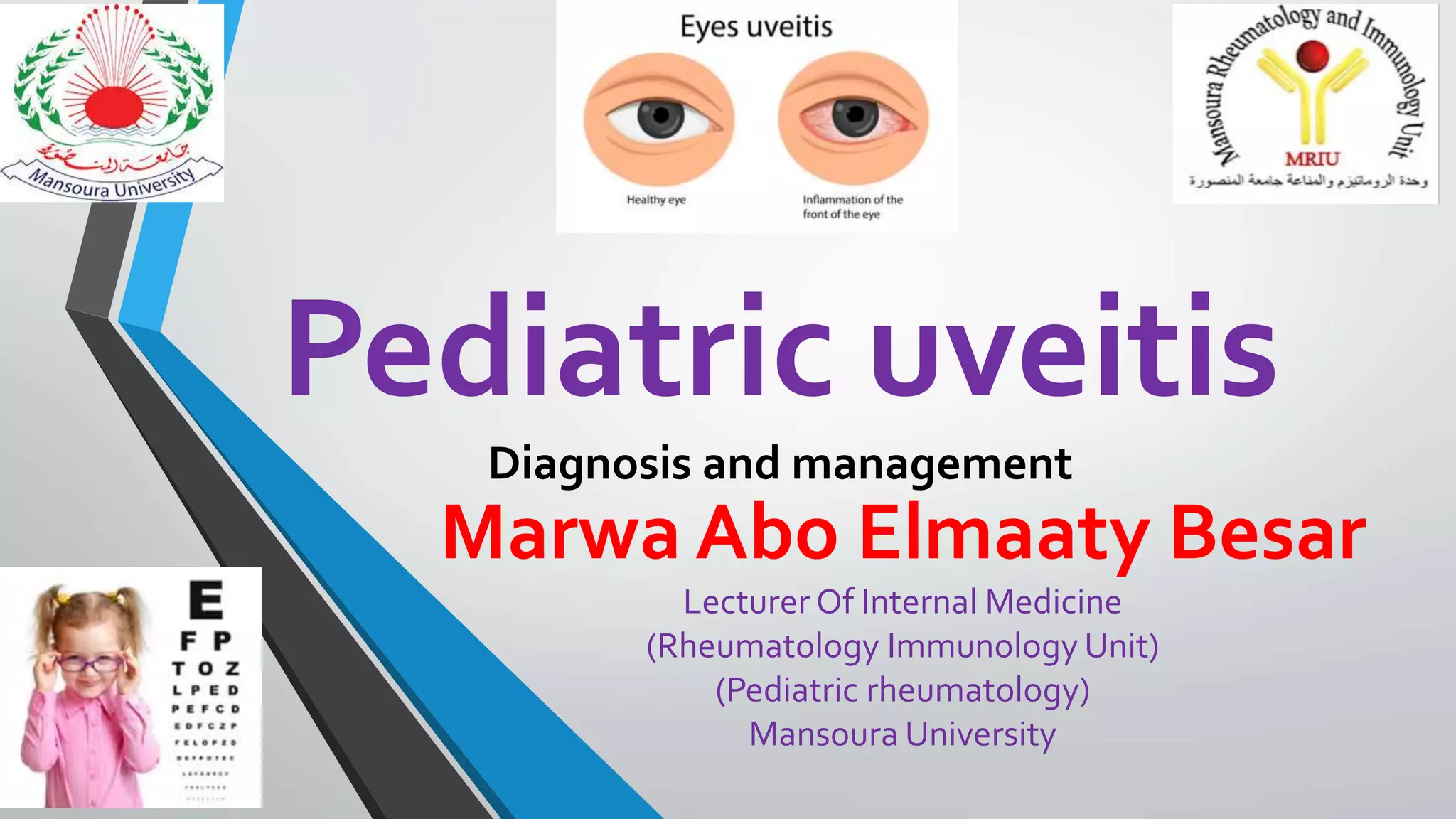
Pediatric uveitis
Pediatric uveitis
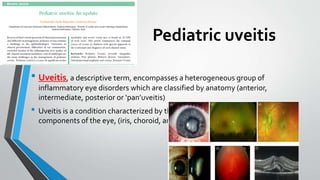
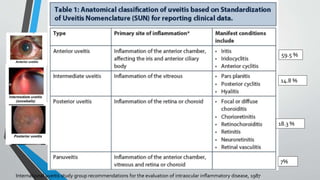
• Uveitis, a descriptive term, encompasses a heterogeneous group of
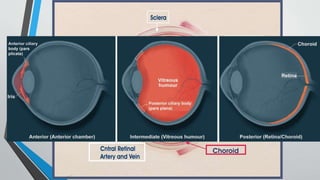
inflammatory eye disorders which are classified by anatomy (anterior,
intermediate, posterior or ‘pan’uveitis)
• Uveitis is a condition characterized by the inflammation of the uveal
components of the eye, (iris, choroid, and retina)
International uveitis study group recommendations for the evaluation of intraocular inflammatory disease, 1987
7%
59.5 %
18.3 %
14.8 %
Is the disease in children different from the
disease in adults?
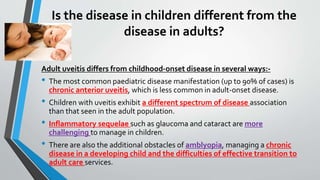
Adult uveitis differs from childhood-onset disease in several ways:-
• The most common paediatric disease manifestation (up to 90% of cases) is
chronic anterior uveitis, which is less common in adult-onset disease.
• Children with uveitis exhibit a different spectrum of disease association
than that seen in the adult population.
• Inflammatory sequelae such as glaucoma and cataract are more
challenging to manage in children.
• There are also the additional obstacles of amblyopia, managing a chronic
disease in a developing child and the difficulties of effective transition to
adult care services.
Epidemiology of pediatric uveitis
• Uveitis in the paediatric population; 2 to 14% of all patients with uveitis.
• Although the incidence of uveitis is known to be lower in children than in
adults, the former experience more severe ocular comorbidities that affect
their quality of life
• Childhood onset of uveitis is uncommon and typically chronic, relapsing
or recurrent, with prolonged disease activity resulting in irreversible
ocular structural damage.
BenEzra D,2005 Edelsten C,2003
Pathogenesis pediatric uveitis
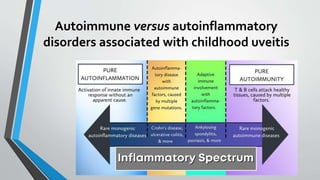
Autoimmune versus autoinflammatory
disorders associated with childhood uveitis
Front. Immunol., 14 May 2021 | https://doi.org/10.3389/fimmu.2021.676046
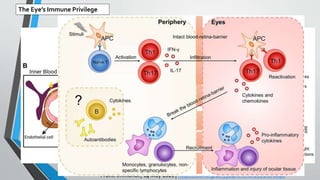
The Eye’s Immune Privilege
Autoimmune versus autoinflammatory
disorders associated with childhood uveitis
Ophthalmic Manifestations of Paediatric Systemic Diseases,journals.sagepub.com/home/oed
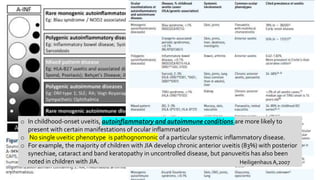
o In childhood-onset uveitis, autoinflammatory and autoimmune conditions are more likely to
present with certain manifestations of ocular inflammation
o No single uveitic phenotype is pathognomonic of a particular systemic inflammatory disease.
o For example, the majority of children with JIA develop chronic anterior uveitis (83%) with posterior
synechiae, cataract and band keratopathy in uncontrolled disease, but panuveitis has also been
noted in children with JIA. Heiligenhaus A,2007
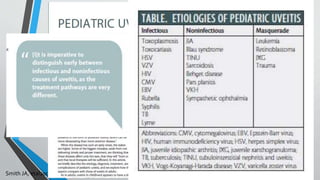
Smith JA, etal2009
The Epidemiology Of Paediatric Uveitis and the
Associated Systemic Inflammatory Diseases
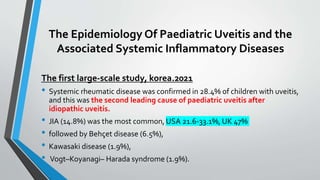
The first large-scale study, korea.2021
• Systemic rheumatic disease was confirmed in 28.4% of children with uveitis,
and this was the second leading cause of paediatric uveitis after
idiopathic uveitis.
• JIA (14.8%) was the most common, USA 21.6-33.1%, UK 47%
• followed by Behçet disease (6.5%),
• Kawasaki disease (1.9%),
• Vogt–Koyanagi– Harada syndrome (1.9%).
Specific disorders associated with uveitis
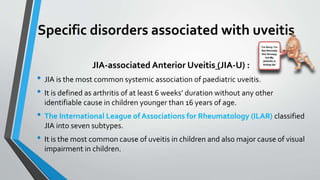
JIA-associated Anterior Uveitis (JIA-U) :
• JIA is the most common systemic association of paediatric uveitis.
• It is defined as arthritis of at least 6 weeks’ duration without any other
identifiable cause in children younger than 16 years of age.
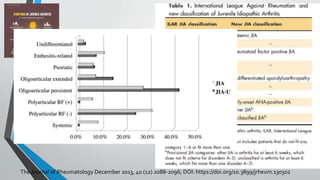
• The International League of Associations for Rheumatology (ILAR) classified
JIA into seven subtypes.
• It is the most common cause of uveitis in children and also major cause of visual
impairment in children.
The Journal of Rheumatology December 2013, 40 (12) 2088-2096; DOI: https://doi.org/10.3899/jrheum.130302
JIA-associated anterior uveitis (JIA-U): :
• JIA is the most common systemic disorder seen in paediatric uveitis clinics, affecting
between 30% and 80% of children with uveitis.
• Risk factors for ocular involvement in patients with JIA include
o Female sex, (F:M=3:2)
o Oligoarticular arthritis,
o Young age at onset of arthritis,
o Antinuclear antibody (ANA) seropositivity
o RF sero-negativity.
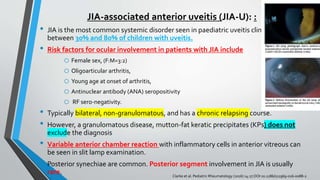
• Typically bilateral, non-granulomatous, and has a chronic relapsing course.
• However, a granulomatous disease, mutton-fat keratic precipitates (KPs) does not
exclude the diagnosis
• Variable anterior chamber reaction with inflammatory cells in anterior vitreous can
be seen in slit lamp examination.
• Posterior synechiae are common. Posterior segment involvement in JIA is usually
rare. Clarke et al. Pediatric Rheumatology (2016) 14:27 DOI 10.1186/s12969-016-0088-2
JIA-associated anterior uveitis (JIA-U):
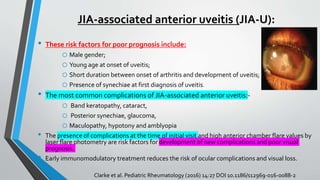
• These risk factors for poor prognosis include:
o Male gender;
o Young age at onset of uveitis;
o Short duration between onset of arthritis and development of uveitis;
o Presence of synechiae at first diagnosis of uveitis.
• The most common complications of JIA-associated anterior uveitis:-
o Band keratopathy, cataract,
o Posterior synechiae, glaucoma,
o Maculopathy, hypotony and amblyopia
• The presence of complications at the time of initial visit and high anterior chamber flare values by
laser flare photometry are risk factors for development of new complications and poor visual
prognosis.
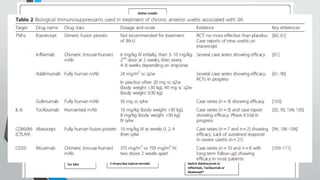
• Early immunomodulatory treatment reduces the risk of ocular complications and visual loss.
Clarke et al. Pediatric Rheumatology (2016) 14:27 DOI 10.1186/s12969-016-0088-2
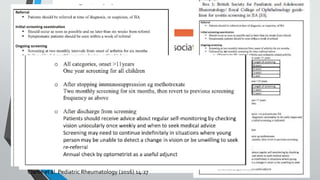
Clarke et al. Pediatric Rheumatology (2016) 14:27
Idiopathic Intermediate Uveitis
Pars planitis
According to the anatomic classification of uveitis by the Standardization of
Uveitis Nomenclature (SUN) Working Group,
• “intermediate uveitis” defines a subset of uveitis where the vitreous is the primary site of
inflammation.
• This disease typically affects children and adolescents.
• ??????The association with a systemic disease is very rare in children.
• HLA-DR2 and HLA-DR15 have been reported suggesting an immunogenetic
predisposition.
• A strong association of multiple sclerosis, suggests a common genetic background.
• Usually asymptomatic and diagnosed during a routine ophthalmologic examination.
• Some children are diagnosed only after significant visual impairment or the development
of complications
Idiopathic Intermediate Uveitis
Pars planitis
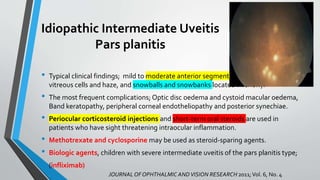
• Typical clinical findings; mild to moderate anterior segment inflammation, diffuse
vitreous cells and haze, and snowballs and snowbanks located inferiorly.
• The most frequent complications; Optic disc oedema and cystoid macular oedema,
Band keratopathy, peripheral corneal endotheliopathy and posterior synechiae.
• Periocular corticosteroid injections and short-term oral steroids are used in
patients who have sight threatening intraocular inflammation.
• Methotrexate and cyclosporine may be used as steroid-sparing agents.
• Biologic agents, children with severe intermediate uveitis of the pars planitis type;
• (infliximab)
JOURNAL OF OPHTHALMIC ANDVISION RESEARCH 2011;Vol. 6, No. 4
Paediatric Bechet's Uveitis
• Bechet's disease is a multisystem inflammatory disease of unknown aetiology.
• The peak age of onset for Behçet disease is in the third or fourth decade of life.
• Although the onset of recurrent oral ulcers in childhood is not uncommon, patients
typically fulfil the diagnostic criteria after the age of 16 years.
• There are no internationally accepted diagnostic criteria for childhood-onset Behçet
disease.
• Juvenile-onset BD (JO-BD), the Pediatric Behçet Disease (PEDBD) consensus,2015
• In a recent international registry of patients suspected of paediatric Behçet disease,
the presenting symptom was isolated recurrent oral ulcers in 83%, and the
diagnosis was confirmed by an expert committee in 62% of registered cases.
JOURNALOF OPHTHALMICANDVISION RESEARCH 2011;Vol. 6, No. 4
Paediatric Bechet's Uveitis
• Paediatric Behçet uveitis is defined as onset of uveitis at 16 years of age or
younger irrespective of the age for fulfilling the diagnostic criteria.
• There may be variations in the prevalence of pediatric Behçet disease in
different ethnic groups or geographic regions.
• More than half of the children with Behçet uveitis were from Middle Eastern
countries (2.4% from East/South Asia, in contrast 19.2% of adults)
• Mean age at onset is in late childhood (10-15 years), male predominance
similar to adult-onset Behçet uveitis.
• A positive family history has been reported in 20-47% of pediatric cases.
• The clinical picture in children is not different from adults.
• The majority of patients have bilateral involvement and recurrent panuveitis
with retinal vasculitis.
Kone-Paut I,etal2011
Sungur GK, etal2009
Paediatric Bechet's Uveitis
• The most common complications;
o Cataract, intraocular pressure elevation,
o Macular edema or maculopathy
o optic atrophy.
• While visual prognosis has been reported to be better than adults in
some series, individual variability of the disease course, response to
treatment and visual outcome has been reported by others.
Paediatric Bechet's Uveitis
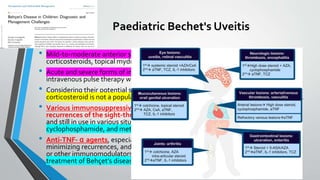
• Mild-to-moderate anterior segment inflammation is usually treated with topical
corticosteroids, topical mydriatics, and periocular corticosteroids.
• Acute and severe forms of inflammation require treatment with oral corticosteroid or
intravenous pulse therapy with methylprednisolone.
• Considering their potential side-effects and requirement of long-term therapy,
corticosteroid is not a popular choice for the treatment of paediatric Behçet’s disease.
• Various immunosuppressive had been the keystone therapy to control and the
recurrences of the sight-threatening intraocular inflammation of Behçet’s disease
and still in use in various situations, cyclosporine, azathioprine, chlorambucil,
cyclophosphamide, and methotrexate .
• Anti-TNF- α agents, especially infliximab, are very useful in controlling symptoms,
minimizing recurrences, and significantly decreasing the daily dose of corticosteroids
or other immunomodulators and are considered as preferred first line agent for
treatment of Behçet’s disease.
Paediatric Sarcoidosis
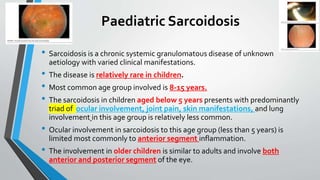
• Sarcoidosis is a chronic systemic granulomatous disease of unknown
aetiology with varied clinical manifestations.
• The disease is relatively rare in children.
• Most common age group involved is 8-15 years.
• The sarcoidosis in children aged below 5 years presents with predominantly
triad of ocular involvement, joint pain, skin manifestations, and lung
involvement in this age group is relatively less common.
• Ocular involvement in sarcoidosis to this age group (less than 5 years) is
limited most commonly to anterior segment inflammation.
• The involvement in older children is similar to adults and involve both
anterior and posterior segment of the eye.
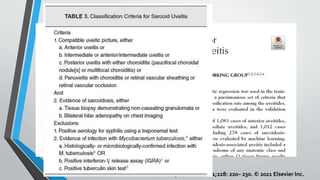
Am J Ophthalmol 2021;228: 220– 230. © 2021 Elsevier Inc.
Paediatric Sarcoidosis
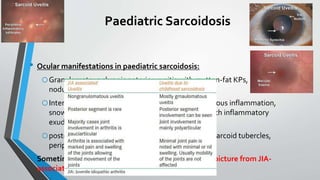
• Ocular manifestations in paediatric sarcoidosis:
oGranulomatous chronic anterior uveitis with mutton-fat KPs, iris
nodules.
oIntermediate uveitis with moderate-to-severe vitreous inflammation,
snowball and snow banking of pars plana region with inflammatory
exudates can be seen.
oposterior uveitis; Multiple choroidal granuloma or sarcoid tubercles,
periphlebitis with candle wax drippings
• Sometimes it is difficult to differentiate this clinical picture from JIA-
associated uveitis.
Paediatric Sarcoidosis
• Serum angiotensin converting enzyme (ACE) and serum lysozyme are often
used routinely in laboratory diagnosis of sarcoidosis.
• Raised serum ACE levels are commonly seen in children, the reason for which it cannot be
used for the diagnosis of sarcoidosis in children.
• serum lysozyme in diagnosis of sarcoidosis are better than raised serum ACE levels.
• Hypercalcemia and hypercalciuria occur in some patients with sarcoidosis.
• The diagnosis of definite ocular sarcoidosis can be made by solid-tissue biopsy
showing classic noncaseating granulomas, and preferably at more than one site.
• Corticosteroids in the form of topical, periocular or systemic steroids, depending
on the site and severity of the intraocular inflammation are the primary mode of
management.
• Immunosuppressive like methotrexate; azathioprine can be used in the
management of recalcitrant cases or in patients with chronic, long standing
inflammations.
Blau syndrome
• Familial juvenile systemic granulomatosis, autosomal dominant mode of
inheritance.
• The genetic mutation involve the CARD15/NOD2 gene on chromosome 16q12,
• Is characterized by granulomatous polyarthritis, skin rash and acute
granulomatous anterior uveitis resembling sarcoidosis in young children.
• Since Blau syndrome is clinically indistinguishable from early-onset sarcoidosis,
family history is an essential component in the assessment of children who
present with these manifestations.
PaediatricVogt–Koyanagi–Harada syndrome
(VKH)
• VKH; a bilateral granulomatous pan-uveitis associated with various systemic
manifestations involving central nervous, auditory, and integumentary systems.
• The condition has slight female preponderance, most commonly 20 and 50 years of age.
• Paediatric VKH is relatively uncommon.
• VKH syndrome consists of four phases:-
• The prodromal phase, initiation of the inflammatory processes, is characterized by
neurologic and auditory manifestations in the form of malaise, nausea, fever,
headache, and signs and symptoms of meningeal irritation.
• The common findings of acute uveitic phase include bilateral granulomatous
anterior uveitis with mild-to-moderate vitritis, exudative retinal detachment or
pockets of sub-retinal fluids, optic nerve edema.
Mochizuki M etal2010
PaediatricVKH
• The convalescent stage is characterized by depigmentation of the
choroid and skin and common findings observed in this stages are
depigmented (sunset glow) fundus , Dalen-Fuchs like depigmented
nodules in fundus and perilimbal vitiligo (Sugiura’s sign).
• Chronic recurrent phase carries the risk of most vision-threatening
complications, which occurs in this disease process.
• Recurrent and prolonged inflammation is common in children .
• PaediatricVKH complications like
o subretinal fibrosis,
o choroidal neovascularization,
o posterior synechiae,
o cataract, and glaucoma. Kaza H etal2022
PaediatricVKH
• Intravenous methyleprednisolone is advocated in the treatment of acute
attack of visually threatening intraocular inflammation in children followed
by oral steroid in tapering schedule.
• In cases of chronic, longstanding inflammation, where long-term
immunosuppression is required or in refractory cases, immunomodulatory
therapy is required (cyclosporine, Methotrexate).
• Biological therapy: recalcitrant cases of patients with corticosteroid-related
complications and challenging paediatric cases (infliximab, Adalimumab).
• The role of surgery is limited to treating the complications of the disease,
such as cataract extraction, surgical therapy to lower the IOP or the
treatment of subsequent macular holes
Herbort CP etal2009
Paediatric Inflammatory bowel disease
• Ulcerative colitis (UC) and CD are chronic granulomatous GI diseases with
extraintestinal manifestations such as arthritis and uveitis,
• IBD associated uveitis can occur many years before the onset of GI disease.
• There is a lower prevalence of ocular involvement in children (0.6–1.8%) than
in adults (2–6%).
• Affected children can develop uveitis, which is usually a painful bilateral
anterior uveitis,
• Children can also develop retinal vasculitis, and vascular occlusion, retrobulbar
neuritis and keratopathy.
• Children with CD are much more likely to present with uveitis than those with
UC.
Ottaviano G, etal 2018
Uveitis in the paediatric vasculitides
• Vasculitis can be a coexisting disease seen with, or as part of, an
autoinflammatory disorder.
• Retinal vasculitis may be a common end result of a number of inflammatory
events.
• Uveitis is a recognized feature of antineutrophil cytoplasmic antibody (ANCA)-
associated vasculitis (e.g. granulomatosis with polyangiitis),
• Vasculitis within connective tissue disease (e.g. systemic lupus erythematosus or
scleroderma)
• Small or medium vessel vasculitis [e.g. IgA vasculitis/ Henoch–Schönlein purpura
and Kawasaki disease (KD)].
• In KD, a mild, bilateral uveitis in a child with red eyes and a nonspecific fever can be
one of the earliest signs of disease, and early diagnosis of KD is of particular value
as late diagnosis can result in secondary chronic coronary artery disease.
Tubulo-intestinal nephritis and uveitis
(TINU)
• A rare, mostly idiopathic, and under-diagnosed cause of childhood uveitis.
• Median age of onset is 15 years with female preponderance.
• The cause of the immune-mediated disease process remains largely unclear.
• The common presenting symptoms are malaise, fever, flank tenderness, anorexia,
and weight loss.
• Most common ocular symptoms :-
o Bilateral and recurrence of ocular inflammation is common.
o Redness, pain, photophobia, and diminution of vision.
o Anterior segment examination; anterior uveitis of non-granulomatous variety.
o Posterior segment involvement is in the form of vitritis, papilitis, cystoid macular edema,
choroioretinitis, and multifocal choroiditis.
Mandeville JT,etal2001
Tubulo-intestinal nephritis and uveitis
(TINU)
• Urinalysis may show presence of glycosuria, proteinuria, aminoaciduria, and
microscopic hematuria.
• Renal biopsy; Necrosis of renal tubule epithelium, interstitial edema, and
lymphocytic infiltrates.
• The tubulo-intestinal nephritis usually resolves spontaneously, Chronic nephropathy
occurs in 11% of cases.
• Oral steroids are often indicated to prevent structural damage to the renal tissue.
• Topical, periocular, and oral steroids are used and inflammation usually responds
well to steroids.
• Rarely immunosuppressive like mycophenolate moefetil are required to treat
chronic uveitis cases.
Mandeville JT,etal2001
Sympathetic ophthalmia
• Is a rare cause of bilateral granulomatous uveitis in children.
• Reported incidence ranges from 0.2% to 0.5% following injury and 0.01%
following intraocular surgery.
• Ocular surgical intervention is the most common cause of sympathetic
ophthalmia, usually 1 year after, but can occur up to 10 days to 66 years.
• The cause of this entity is not completely understood.
• Though rare, sympathetic ophthalmia is a dreaded cause of visual morbidity.
• Proper and rapid treatment, if not started early can lead to irreversible loss of
vision.
• Affect one-third patients of sympathetic ophthalmia.
Marak GE Jr.etal1979
Sympathetic ophthalmia
• Sympathetic ophthalmia classically presents as bilateral pan-uveitis.
• Common findings are
• Bilateral anterior granulomatous uveitis associated with mutton-fat kps,
moderate-to-severe vitritis, exudative retinal detachment, papilitis, and
choroiditis.
• Sub-RPE yellowish white nodules mainly seen in peripheral retina are known as
Dalen-Fuchs nodules.
• Corticosteroids remain the mainstay of treatment in such cases.
• Immunosuppressants like azathioprine and chlorambucil have been used
in fulminant and recalcitrant cases.
• The role of Enucleation, within 2 weeks of injury, is controversial.
Masquerade syndromes
• Masquerade syndromes should always be considered in children with uveitis,
especially in conditions non-responsiveness to standard anti-inflammatory
therapies.
• Rare, require aggressive approach to diagnosis and management because of
the potentially life-threatening nature of these underlying entities.
• The most common cause in children include malignancies like
retinoblastoma, leukemia, medulloepithelioma, and juvenile
xanthogranuloma; inherited retinal degenerations like retinitis pigmentosa;
congenital eye disorders like Coat’s disease, etc.,
• Leukaemia, the most common malignancy of childhood, can often present
with the signs of posterior uveitis.
Gordon KB, etal 2001
Masquerade syndromes
• Common signs of posterior segment involvement in leukaemia include vascular
sheathing, perivascular exudates, retinal haemorrhages, cotton-wool spots, and
hard exudates.
• Retinal infarction, though rare, can occur.
• Anterior chamber inflammation is relatively uncommon and rarely children.
• Slit lamp examination help in examination.
Juvenile xanthogranuloma
• Is a disorder of unknown etiology,
• Characterized by abnormal proliferation of non-langerhans histiocytes.
• Very rarely, juvenile xanthogranuloma can masquerade as uveitis in childhood in
the absence of skin lesions.
Zamir E,etal 2001
Take-Home message
 Remember to consider a wide differential diagnosis when evaluating a
child who presents with uveitis-like symptoms.
 Most patients do well when managed in a multidisciplinary team (by
ophthalmology and rheumatology) and if treated early and appropriately.
 JIA is the most common chronic rheumatic disease of childhood,
 Treatment options for chronic uveitis include topical corticosteroids, oral/sc
methotrexate and other Disease Modifying Anti-Rheumatic Drugs
(DMARDs), and biologics.
 Continued uveitis screening of children with JIA is incredibly important to
prevent and minimize the long-term complications of chronic uveitis.
 Remember that uveitis can be idiopathic,These cases are still often treated the
same way, with involvement of both ophthalmology and rheumatology.
Reference
• Smith JA, Mackensen F, Sen HN, et al. Epidemiology and course of disease in childhood uveitis. Ophthalmology.
2009;116(8):1544-1551.
• BenEzra D, Cohen E, Maftzir G. Uveitis in children and adolescents. Br J Ophthalmol. 2005;89(4):444–8.
https://doi.org/10.1136/bjo.2004.050609.
• Edelsten C, Reddy MA, Stanford MR, Graham EM.Visual loss associated with pediatric uveitis in english primary
and referral centers. Am J Ophthalmol. 2003;135(5):676–80. https://doi.org/10.1016/s0002-9394(02)02148-7.
• HeiligenhausA, Niewerth M, Ganser G, et al. Prevalence and complications of uveitis in juvenile idiopathic arthritis
in a populationbased nation-wide study in Germany: suggested modification of the current screening guidelines.
Rheumatology 2007; 46: 1015–1019.
• Tugal-Tutkun I, Ayranci O, Kasapcopur O, Kir N. Retrospective analysis of children with uveitis treated with
infliximab. J AAPOS 2008;12:611-613.
• Kone-Paut I, Darce-Bello M, Shahram F, Gattorno M, Cimaz R, Ozen S, et al. Registries in rheumatological and
musculoskeletal conditions. Paediatric Behçet’s disease: an international cohort study of 110 patients. One-year
follow-up data. Rheumatology (Oxford) 2011;50:184-188.
• SungurGK, Hazirolan D,Yalvac I, Ozer PA,Yuksel D,Vural ET, et al. Clinical and demographic
• evaluation of Behçet disease among different paediatric age groups. BrJ Ophthalmol 2009;93:83-87.
• Herbort CP, Mochizuki M.Vogt-Koyanagi-Harada disease: inquiry into the genesis of a disease name in the
historical context of Switzerland and Japan. Int Ophthalmol. 2007Apr-Jun;27(2-3):67-79.
Pediatric autoimmune uveitis.pptx

Pediatric autoimmune uveitis.pptx

  • 1.
    Pediatric uveitis Diagnosis andmanagement Marwa Abo Elmaaty Besar Lecturer Of Internal Medicine (Rheumatology Immunology Unit) (Pediatric rheumatology) Mansoura University
  • 2.
  • 3.
    Pediatric uveitis • Uveitis,a descriptive term, encompasses a heterogeneous group of inflammatory eye disorders which are classified by anatomy (anterior, intermediate, posterior or ‘pan’uveitis) • Uveitis is a condition characterized by the inflammation of the uveal components of the eye, (iris, choroid, and retina)
  • 5.
    International uveitis studygroup recommendations for the evaluation of intraocular inflammatory disease, 1987 7% 59.5 % 18.3 % 14.8 %
  • 6.
    Is the diseasein children different from the disease in adults? Adult uveitis differs from childhood-onset disease in several ways:- • The most common paediatric disease manifestation (up to 90% of cases) is chronic anterior uveitis, which is less common in adult-onset disease. • Children with uveitis exhibit a different spectrum of disease association than that seen in the adult population. • Inflammatory sequelae such as glaucoma and cataract are more challenging to manage in children. • There are also the additional obstacles of amblyopia, managing a chronic disease in a developing child and the difficulties of effective transition to adult care services.
  • 7.
    Epidemiology of pediatricuveitis • Uveitis in the paediatric population; 2 to 14% of all patients with uveitis. • Although the incidence of uveitis is known to be lower in children than in adults, the former experience more severe ocular comorbidities that affect their quality of life • Childhood onset of uveitis is uncommon and typically chronic, relapsing or recurrent, with prolonged disease activity resulting in irreversible ocular structural damage. BenEzra D,2005 Edelsten C,2003
  • 8.
    Pathogenesis pediatric uveitis Autoimmuneversus autoinflammatory disorders associated with childhood uveitis
  • 9.
    Front. Immunol., 14May 2021 | https://doi.org/10.3389/fimmu.2021.676046 The Eye’s Immune Privilege
  • 10.
    Autoimmune versus autoinflammatory disordersassociated with childhood uveitis
  • 11.
    Ophthalmic Manifestations ofPaediatric Systemic Diseases,journals.sagepub.com/home/oed o In childhood-onset uveitis, autoinflammatory and autoimmune conditions are more likely to present with certain manifestations of ocular inflammation o No single uveitic phenotype is pathognomonic of a particular systemic inflammatory disease. o For example, the majority of children with JIA develop chronic anterior uveitis (83%) with posterior synechiae, cataract and band keratopathy in uncontrolled disease, but panuveitis has also been noted in children with JIA. Heiligenhaus A,2007
  • 12.
  • 13.
    The Epidemiology OfPaediatric Uveitis and the Associated Systemic Inflammatory Diseases The first large-scale study, korea.2021 • Systemic rheumatic disease was confirmed in 28.4% of children with uveitis, and this was the second leading cause of paediatric uveitis after idiopathic uveitis. • JIA (14.8%) was the most common, USA 21.6-33.1%, UK 47% • followed by Behçet disease (6.5%), • Kawasaki disease (1.9%), • Vogt–Koyanagi– Harada syndrome (1.9%).
  • 14.
    Specific disorders associatedwith uveitis JIA-associated Anterior Uveitis (JIA-U) : • JIA is the most common systemic association of paediatric uveitis. • It is defined as arthritis of at least 6 weeks’ duration without any other identifiable cause in children younger than 16 years of age. • The International League of Associations for Rheumatology (ILAR) classified JIA into seven subtypes. • It is the most common cause of uveitis in children and also major cause of visual impairment in children.
  • 15.
    The Journal ofRheumatology December 2013, 40 (12) 2088-2096; DOI: https://doi.org/10.3899/jrheum.130302
  • 16.
    JIA-associated anterior uveitis(JIA-U): : • JIA is the most common systemic disorder seen in paediatric uveitis clinics, affecting between 30% and 80% of children with uveitis. • Risk factors for ocular involvement in patients with JIA include o Female sex, (F:M=3:2) o Oligoarticular arthritis, o Young age at onset of arthritis, o Antinuclear antibody (ANA) seropositivity o RF sero-negativity. • Typically bilateral, non-granulomatous, and has a chronic relapsing course. • However, a granulomatous disease, mutton-fat keratic precipitates (KPs) does not exclude the diagnosis • Variable anterior chamber reaction with inflammatory cells in anterior vitreous can be seen in slit lamp examination. • Posterior synechiae are common. Posterior segment involvement in JIA is usually rare. Clarke et al. Pediatric Rheumatology (2016) 14:27 DOI 10.1186/s12969-016-0088-2
  • 17.
    JIA-associated anterior uveitis(JIA-U): • These risk factors for poor prognosis include: o Male gender; o Young age at onset of uveitis; o Short duration between onset of arthritis and development of uveitis; o Presence of synechiae at first diagnosis of uveitis. • The most common complications of JIA-associated anterior uveitis:- o Band keratopathy, cataract, o Posterior synechiae, glaucoma, o Maculopathy, hypotony and amblyopia • The presence of complications at the time of initial visit and high anterior chamber flare values by laser flare photometry are risk factors for development of new complications and poor visual prognosis. • Early immunomodulatory treatment reduces the risk of ocular complications and visual loss. Clarke et al. Pediatric Rheumatology (2016) 14:27 DOI 10.1186/s12969-016-0088-2
  • 18.
    Clarke et al.Pediatric Rheumatology (2016) 14:27
  • 20.
    Idiopathic Intermediate Uveitis Parsplanitis According to the anatomic classification of uveitis by the Standardization of Uveitis Nomenclature (SUN) Working Group, • “intermediate uveitis” defines a subset of uveitis where the vitreous is the primary site of inflammation. • This disease typically affects children and adolescents. • ??????The association with a systemic disease is very rare in children. • HLA-DR2 and HLA-DR15 have been reported suggesting an immunogenetic predisposition. • A strong association of multiple sclerosis, suggests a common genetic background. • Usually asymptomatic and diagnosed during a routine ophthalmologic examination. • Some children are diagnosed only after significant visual impairment or the development of complications
  • 21.
    Idiopathic Intermediate Uveitis Parsplanitis • Typical clinical findings; mild to moderate anterior segment inflammation, diffuse vitreous cells and haze, and snowballs and snowbanks located inferiorly. • The most frequent complications; Optic disc oedema and cystoid macular oedema, Band keratopathy, peripheral corneal endotheliopathy and posterior synechiae. • Periocular corticosteroid injections and short-term oral steroids are used in patients who have sight threatening intraocular inflammation. • Methotrexate and cyclosporine may be used as steroid-sparing agents. • Biologic agents, children with severe intermediate uveitis of the pars planitis type; • (infliximab) JOURNAL OF OPHTHALMIC ANDVISION RESEARCH 2011;Vol. 6, No. 4
  • 22.
    Paediatric Bechet's Uveitis •Bechet's disease is a multisystem inflammatory disease of unknown aetiology. • The peak age of onset for Behçet disease is in the third or fourth decade of life. • Although the onset of recurrent oral ulcers in childhood is not uncommon, patients typically fulfil the diagnostic criteria after the age of 16 years. • There are no internationally accepted diagnostic criteria for childhood-onset Behçet disease. • Juvenile-onset BD (JO-BD), the Pediatric Behçet Disease (PEDBD) consensus,2015 • In a recent international registry of patients suspected of paediatric Behçet disease, the presenting symptom was isolated recurrent oral ulcers in 83%, and the diagnosis was confirmed by an expert committee in 62% of registered cases. JOURNALOF OPHTHALMICANDVISION RESEARCH 2011;Vol. 6, No. 4
  • 23.
    Paediatric Bechet's Uveitis •Paediatric Behçet uveitis is defined as onset of uveitis at 16 years of age or younger irrespective of the age for fulfilling the diagnostic criteria. • There may be variations in the prevalence of pediatric Behçet disease in different ethnic groups or geographic regions. • More than half of the children with Behçet uveitis were from Middle Eastern countries (2.4% from East/South Asia, in contrast 19.2% of adults) • Mean age at onset is in late childhood (10-15 years), male predominance similar to adult-onset Behçet uveitis. • A positive family history has been reported in 20-47% of pediatric cases. • The clinical picture in children is not different from adults. • The majority of patients have bilateral involvement and recurrent panuveitis with retinal vasculitis. Kone-Paut I,etal2011 Sungur GK, etal2009
  • 24.
    Paediatric Bechet's Uveitis •The most common complications; o Cataract, intraocular pressure elevation, o Macular edema or maculopathy o optic atrophy. • While visual prognosis has been reported to be better than adults in some series, individual variability of the disease course, response to treatment and visual outcome has been reported by others.
  • 25.
    Paediatric Bechet's Uveitis •Mild-to-moderate anterior segment inflammation is usually treated with topical corticosteroids, topical mydriatics, and periocular corticosteroids. • Acute and severe forms of inflammation require treatment with oral corticosteroid or intravenous pulse therapy with methylprednisolone. • Considering their potential side-effects and requirement of long-term therapy, corticosteroid is not a popular choice for the treatment of paediatric Behçet’s disease. • Various immunosuppressive had been the keystone therapy to control and the recurrences of the sight-threatening intraocular inflammation of Behçet’s disease and still in use in various situations, cyclosporine, azathioprine, chlorambucil, cyclophosphamide, and methotrexate . • Anti-TNF- α agents, especially infliximab, are very useful in controlling symptoms, minimizing recurrences, and significantly decreasing the daily dose of corticosteroids or other immunomodulators and are considered as preferred first line agent for treatment of Behçet’s disease.
  • 26.
    Paediatric Sarcoidosis • Sarcoidosisis a chronic systemic granulomatous disease of unknown aetiology with varied clinical manifestations. • The disease is relatively rare in children. • Most common age group involved is 8-15 years. • The sarcoidosis in children aged below 5 years presents with predominantly triad of ocular involvement, joint pain, skin manifestations, and lung involvement in this age group is relatively less common. • Ocular involvement in sarcoidosis to this age group (less than 5 years) is limited most commonly to anterior segment inflammation. • The involvement in older children is similar to adults and involve both anterior and posterior segment of the eye.
  • 27.
    Am J Ophthalmol2021;228: 220– 230. © 2021 Elsevier Inc.
  • 28.
    Paediatric Sarcoidosis • Ocularmanifestations in paediatric sarcoidosis: oGranulomatous chronic anterior uveitis with mutton-fat KPs, iris nodules. oIntermediate uveitis with moderate-to-severe vitreous inflammation, snowball and snow banking of pars plana region with inflammatory exudates can be seen. oposterior uveitis; Multiple choroidal granuloma or sarcoid tubercles, periphlebitis with candle wax drippings • Sometimes it is difficult to differentiate this clinical picture from JIA- associated uveitis.
  • 29.
    Paediatric Sarcoidosis • Serumangiotensin converting enzyme (ACE) and serum lysozyme are often used routinely in laboratory diagnosis of sarcoidosis. • Raised serum ACE levels are commonly seen in children, the reason for which it cannot be used for the diagnosis of sarcoidosis in children. • serum lysozyme in diagnosis of sarcoidosis are better than raised serum ACE levels. • Hypercalcemia and hypercalciuria occur in some patients with sarcoidosis. • The diagnosis of definite ocular sarcoidosis can be made by solid-tissue biopsy showing classic noncaseating granulomas, and preferably at more than one site. • Corticosteroids in the form of topical, periocular or systemic steroids, depending on the site and severity of the intraocular inflammation are the primary mode of management. • Immunosuppressive like methotrexate; azathioprine can be used in the management of recalcitrant cases or in patients with chronic, long standing inflammations.
  • 30.
    Blau syndrome • Familialjuvenile systemic granulomatosis, autosomal dominant mode of inheritance. • The genetic mutation involve the CARD15/NOD2 gene on chromosome 16q12, • Is characterized by granulomatous polyarthritis, skin rash and acute granulomatous anterior uveitis resembling sarcoidosis in young children. • Since Blau syndrome is clinically indistinguishable from early-onset sarcoidosis, family history is an essential component in the assessment of children who present with these manifestations.
  • 31.
    PaediatricVogt–Koyanagi–Harada syndrome (VKH) • VKH;a bilateral granulomatous pan-uveitis associated with various systemic manifestations involving central nervous, auditory, and integumentary systems. • The condition has slight female preponderance, most commonly 20 and 50 years of age. • Paediatric VKH is relatively uncommon. • VKH syndrome consists of four phases:- • The prodromal phase, initiation of the inflammatory processes, is characterized by neurologic and auditory manifestations in the form of malaise, nausea, fever, headache, and signs and symptoms of meningeal irritation. • The common findings of acute uveitic phase include bilateral granulomatous anterior uveitis with mild-to-moderate vitritis, exudative retinal detachment or pockets of sub-retinal fluids, optic nerve edema. Mochizuki M etal2010
  • 32.
    PaediatricVKH • The convalescentstage is characterized by depigmentation of the choroid and skin and common findings observed in this stages are depigmented (sunset glow) fundus , Dalen-Fuchs like depigmented nodules in fundus and perilimbal vitiligo (Sugiura’s sign). • Chronic recurrent phase carries the risk of most vision-threatening complications, which occurs in this disease process. • Recurrent and prolonged inflammation is common in children . • PaediatricVKH complications like o subretinal fibrosis, o choroidal neovascularization, o posterior synechiae, o cataract, and glaucoma. Kaza H etal2022
  • 33.
    PaediatricVKH • Intravenous methyleprednisoloneis advocated in the treatment of acute attack of visually threatening intraocular inflammation in children followed by oral steroid in tapering schedule. • In cases of chronic, longstanding inflammation, where long-term immunosuppression is required or in refractory cases, immunomodulatory therapy is required (cyclosporine, Methotrexate). • Biological therapy: recalcitrant cases of patients with corticosteroid-related complications and challenging paediatric cases (infliximab, Adalimumab). • The role of surgery is limited to treating the complications of the disease, such as cataract extraction, surgical therapy to lower the IOP or the treatment of subsequent macular holes Herbort CP etal2009
  • 34.
    Paediatric Inflammatory boweldisease • Ulcerative colitis (UC) and CD are chronic granulomatous GI diseases with extraintestinal manifestations such as arthritis and uveitis, • IBD associated uveitis can occur many years before the onset of GI disease. • There is a lower prevalence of ocular involvement in children (0.6–1.8%) than in adults (2–6%). • Affected children can develop uveitis, which is usually a painful bilateral anterior uveitis, • Children can also develop retinal vasculitis, and vascular occlusion, retrobulbar neuritis and keratopathy. • Children with CD are much more likely to present with uveitis than those with UC. Ottaviano G, etal 2018
  • 35.
    Uveitis in thepaediatric vasculitides • Vasculitis can be a coexisting disease seen with, or as part of, an autoinflammatory disorder. • Retinal vasculitis may be a common end result of a number of inflammatory events. • Uveitis is a recognized feature of antineutrophil cytoplasmic antibody (ANCA)- associated vasculitis (e.g. granulomatosis with polyangiitis), • Vasculitis within connective tissue disease (e.g. systemic lupus erythematosus or scleroderma) • Small or medium vessel vasculitis [e.g. IgA vasculitis/ Henoch–Schönlein purpura and Kawasaki disease (KD)]. • In KD, a mild, bilateral uveitis in a child with red eyes and a nonspecific fever can be one of the earliest signs of disease, and early diagnosis of KD is of particular value as late diagnosis can result in secondary chronic coronary artery disease.
  • 36.
    Tubulo-intestinal nephritis anduveitis (TINU) • A rare, mostly idiopathic, and under-diagnosed cause of childhood uveitis. • Median age of onset is 15 years with female preponderance. • The cause of the immune-mediated disease process remains largely unclear. • The common presenting symptoms are malaise, fever, flank tenderness, anorexia, and weight loss. • Most common ocular symptoms :- o Bilateral and recurrence of ocular inflammation is common. o Redness, pain, photophobia, and diminution of vision. o Anterior segment examination; anterior uveitis of non-granulomatous variety. o Posterior segment involvement is in the form of vitritis, papilitis, cystoid macular edema, choroioretinitis, and multifocal choroiditis. Mandeville JT,etal2001
  • 37.
    Tubulo-intestinal nephritis anduveitis (TINU) • Urinalysis may show presence of glycosuria, proteinuria, aminoaciduria, and microscopic hematuria. • Renal biopsy; Necrosis of renal tubule epithelium, interstitial edema, and lymphocytic infiltrates. • The tubulo-intestinal nephritis usually resolves spontaneously, Chronic nephropathy occurs in 11% of cases. • Oral steroids are often indicated to prevent structural damage to the renal tissue. • Topical, periocular, and oral steroids are used and inflammation usually responds well to steroids. • Rarely immunosuppressive like mycophenolate moefetil are required to treat chronic uveitis cases. Mandeville JT,etal2001
  • 38.
    Sympathetic ophthalmia • Isa rare cause of bilateral granulomatous uveitis in children. • Reported incidence ranges from 0.2% to 0.5% following injury and 0.01% following intraocular surgery. • Ocular surgical intervention is the most common cause of sympathetic ophthalmia, usually 1 year after, but can occur up to 10 days to 66 years. • The cause of this entity is not completely understood. • Though rare, sympathetic ophthalmia is a dreaded cause of visual morbidity. • Proper and rapid treatment, if not started early can lead to irreversible loss of vision. • Affect one-third patients of sympathetic ophthalmia. Marak GE Jr.etal1979
  • 39.
    Sympathetic ophthalmia • Sympatheticophthalmia classically presents as bilateral pan-uveitis. • Common findings are • Bilateral anterior granulomatous uveitis associated with mutton-fat kps, moderate-to-severe vitritis, exudative retinal detachment, papilitis, and choroiditis. • Sub-RPE yellowish white nodules mainly seen in peripheral retina are known as Dalen-Fuchs nodules. • Corticosteroids remain the mainstay of treatment in such cases. • Immunosuppressants like azathioprine and chlorambucil have been used in fulminant and recalcitrant cases. • The role of Enucleation, within 2 weeks of injury, is controversial.
  • 40.
    Masquerade syndromes • Masqueradesyndromes should always be considered in children with uveitis, especially in conditions non-responsiveness to standard anti-inflammatory therapies. • Rare, require aggressive approach to diagnosis and management because of the potentially life-threatening nature of these underlying entities. • The most common cause in children include malignancies like retinoblastoma, leukemia, medulloepithelioma, and juvenile xanthogranuloma; inherited retinal degenerations like retinitis pigmentosa; congenital eye disorders like Coat’s disease, etc., • Leukaemia, the most common malignancy of childhood, can often present with the signs of posterior uveitis. Gordon KB, etal 2001
  • 41.
    Masquerade syndromes • Commonsigns of posterior segment involvement in leukaemia include vascular sheathing, perivascular exudates, retinal haemorrhages, cotton-wool spots, and hard exudates. • Retinal infarction, though rare, can occur. • Anterior chamber inflammation is relatively uncommon and rarely children. • Slit lamp examination help in examination. Juvenile xanthogranuloma • Is a disorder of unknown etiology, • Characterized by abnormal proliferation of non-langerhans histiocytes. • Very rarely, juvenile xanthogranuloma can masquerade as uveitis in childhood in the absence of skin lesions. Zamir E,etal 2001
  • 42.
    Take-Home message  Rememberto consider a wide differential diagnosis when evaluating a child who presents with uveitis-like symptoms.  Most patients do well when managed in a multidisciplinary team (by ophthalmology and rheumatology) and if treated early and appropriately.  JIA is the most common chronic rheumatic disease of childhood,  Treatment options for chronic uveitis include topical corticosteroids, oral/sc methotrexate and other Disease Modifying Anti-Rheumatic Drugs (DMARDs), and biologics.  Continued uveitis screening of children with JIA is incredibly important to prevent and minimize the long-term complications of chronic uveitis.  Remember that uveitis can be idiopathic,These cases are still often treated the same way, with involvement of both ophthalmology and rheumatology.
  • 43.
    Reference • Smith JA,Mackensen F, Sen HN, et al. Epidemiology and course of disease in childhood uveitis. Ophthalmology. 2009;116(8):1544-1551. • BenEzra D, Cohen E, Maftzir G. Uveitis in children and adolescents. Br J Ophthalmol. 2005;89(4):444–8. https://doi.org/10.1136/bjo.2004.050609. • Edelsten C, Reddy MA, Stanford MR, Graham EM.Visual loss associated with pediatric uveitis in english primary and referral centers. Am J Ophthalmol. 2003;135(5):676–80. https://doi.org/10.1016/s0002-9394(02)02148-7. • HeiligenhausA, Niewerth M, Ganser G, et al. Prevalence and complications of uveitis in juvenile idiopathic arthritis in a populationbased nation-wide study in Germany: suggested modification of the current screening guidelines. Rheumatology 2007; 46: 1015–1019. • Tugal-Tutkun I, Ayranci O, Kasapcopur O, Kir N. Retrospective analysis of children with uveitis treated with infliximab. J AAPOS 2008;12:611-613. • Kone-Paut I, Darce-Bello M, Shahram F, Gattorno M, Cimaz R, Ozen S, et al. Registries in rheumatological and musculoskeletal conditions. Paediatric Behçet’s disease: an international cohort study of 110 patients. One-year follow-up data. Rheumatology (Oxford) 2011;50:184-188. • SungurGK, Hazirolan D,Yalvac I, Ozer PA,Yuksel D,Vural ET, et al. Clinical and demographic • evaluation of Behçet disease among different paediatric age groups. BrJ Ophthalmol 2009;93:83-87. • Herbort CP, Mochizuki M.Vogt-Koyanagi-Harada disease: inquiry into the genesis of a disease name in the historical context of Switzerland and Japan. Int Ophthalmol. 2007Apr-Jun;27(2-3):67-79.