Qatar Airways HIA
PATROLLING
SECURITY AND SAFETY
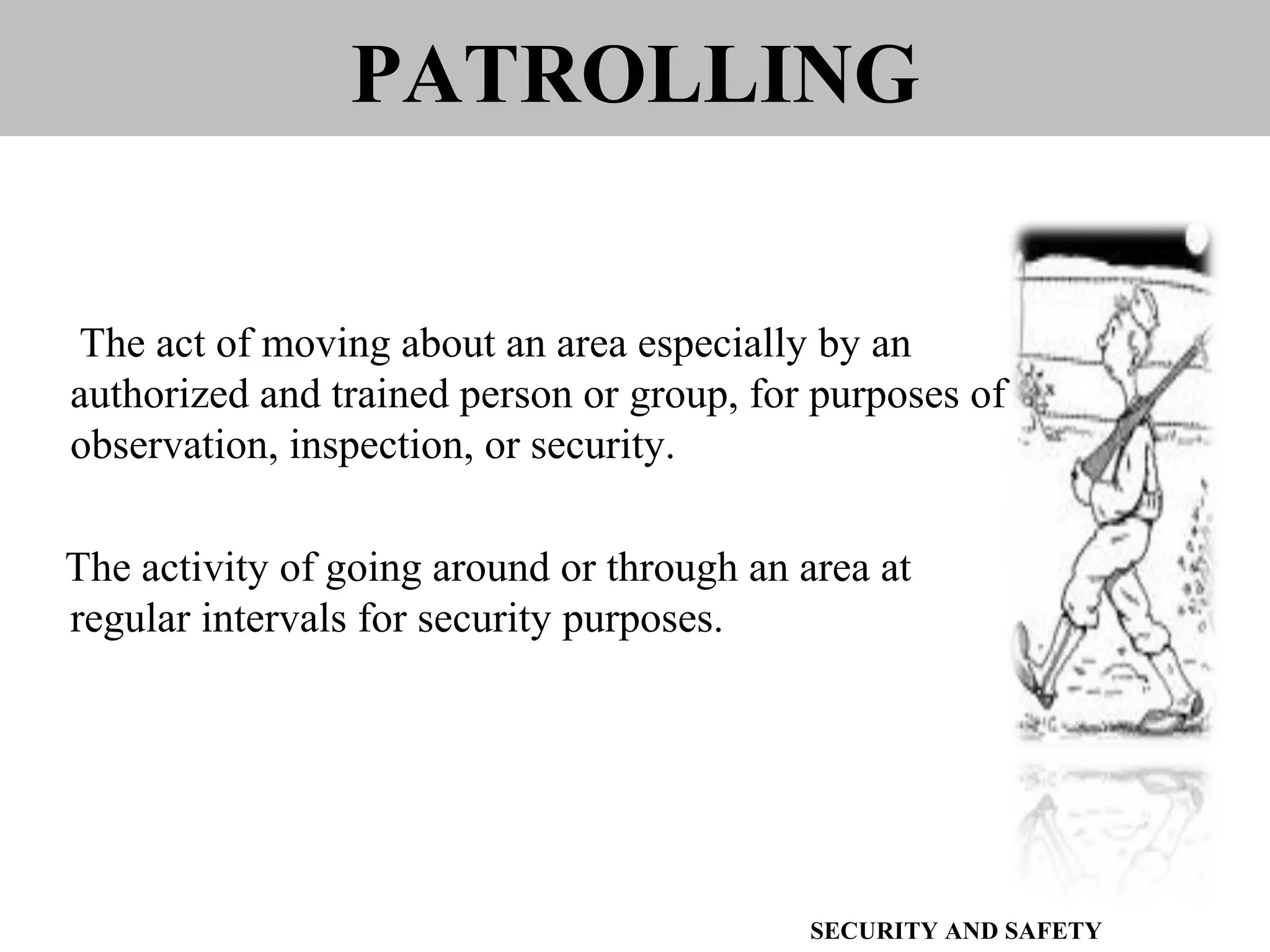
The act of moving about an area especially by an
authorized and trained person or group, for purposes of
observation, inspection, or security.
The activity of going around or through an area at
regular intervals for security purposes.
PATROLLING
SECURITY AND SAFETY
 Protect people
 Protect property
 Protect information
 To prevent and discourage crime through high visibility patrols.
Be conspicuous. The mere sight of a security person may
discourage and deter a potential violator from breaking a law.
 To report suspicious activity and criminal activity.
PATROLLING
PURPOSE OF PATROL:
SECURITY AND SAFETY
PATROLLING
FIVE SENSES:
SECURITY AND SAFETY
SIGHT:-
 Be observant
 Check for unusual conditions.
HEARING:-
 Check for unusual sounds and investigate
their source
 Examples include running water, smashing
glass, malfunctioning equipment..
PATROLLING
USES OF SENSES ON PATROL:
SECURITY AND SAFETY
SMELL:-
 Examples include smoke, gas,
overheated machinery.
TOUCH:-
 Air currents
 Temperature changes.
TASTE:-
 Use with caution!
PATROLLING
USES OF SENSES ON PATROL:
SECURITY AND SAFETY
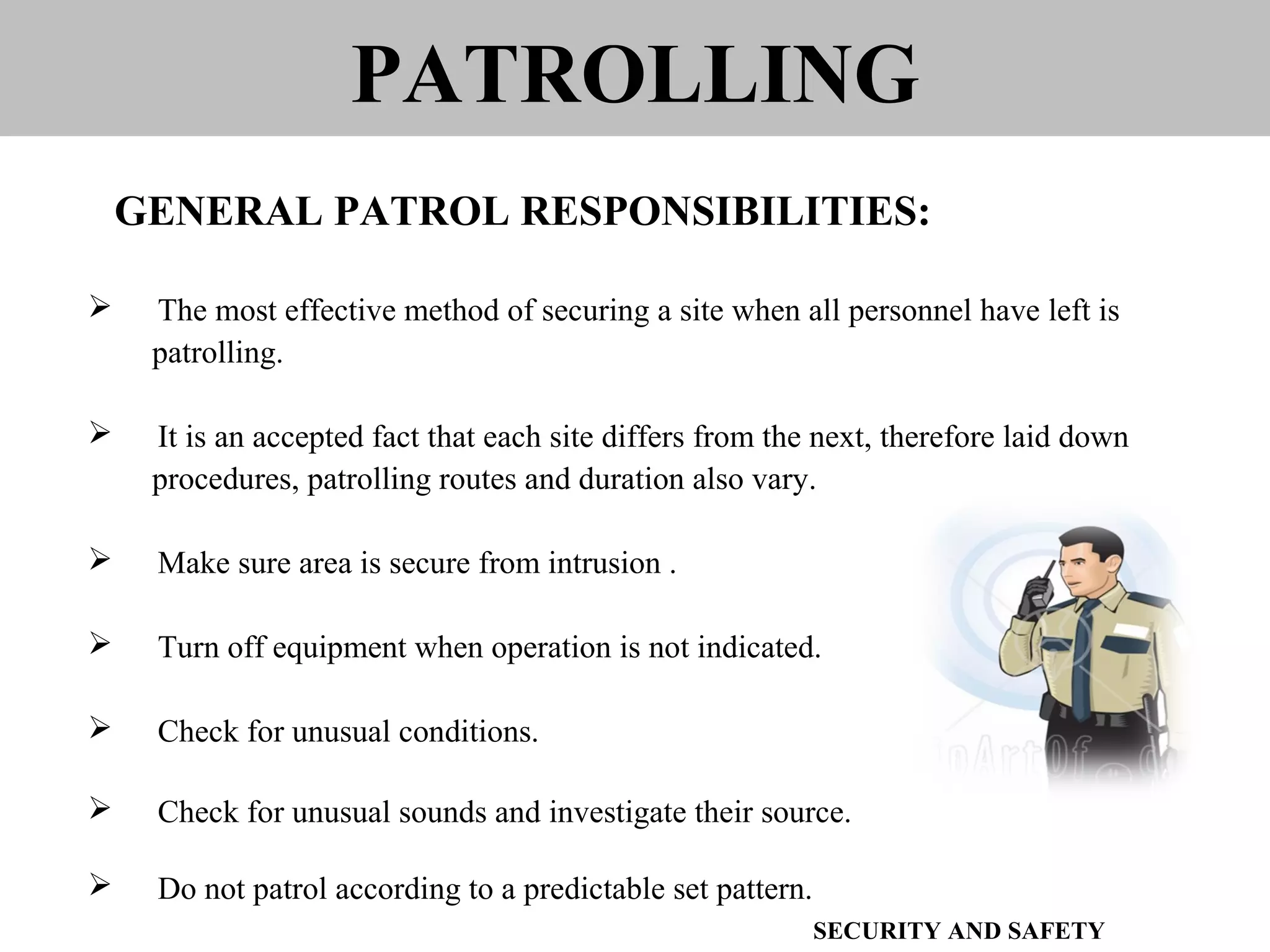
 The most effective method of securing a site when all personnel have left is
patrolling.
 It is an accepted fact that each site differs from the next, therefore laid down
procedures, patrolling routes and duration also vary.
 Make sure area is secure from intrusion .
 Turn off equipment when operation is not indicated.
 Check for unusual conditions.
 Check for unusual sounds and investigate their source.
 Do not patrol according to a predictable set pattern.
PATROLLING
GENERAL PATROL RESPONSIBILITIES:
SECURITY AND SAFETY
 Violators should not be able to predict where you may be at a given date or time.
 If they learn your routine they will adapt their criminal actions accordingly
 Check for unusual odors.
 Check for damage.
 Check for running water.
 Check all security processes.
 Check storage of flammable substances.
 Report/record.
PATROLLING
GENERAL PATROL RESPONSIBILITIES:
SECURITY AND SAFETY
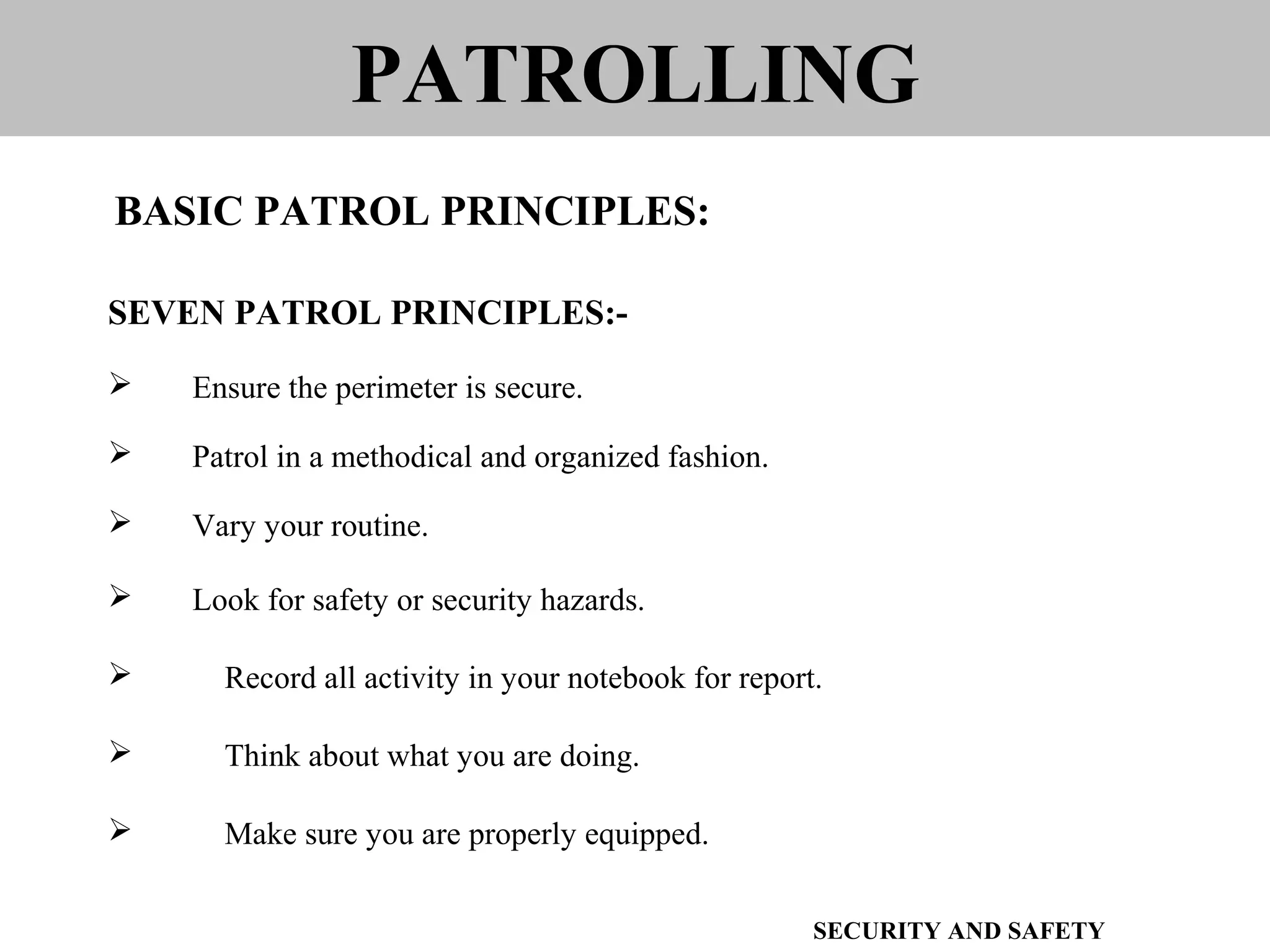
SEVEN PATROL PRINCIPLES:-
 Ensure the perimeter is secure.
 Patrol in a methodical and organized fashion.
 Vary your routine.
 Look for safety or security hazards.
 Record all activity in your notebook for report.
 Think about what you are doing.
 Make sure you are properly equipped.
PATROLLING
BASIC PATROL PRINCIPLES:
SECURITY AND SAFETY
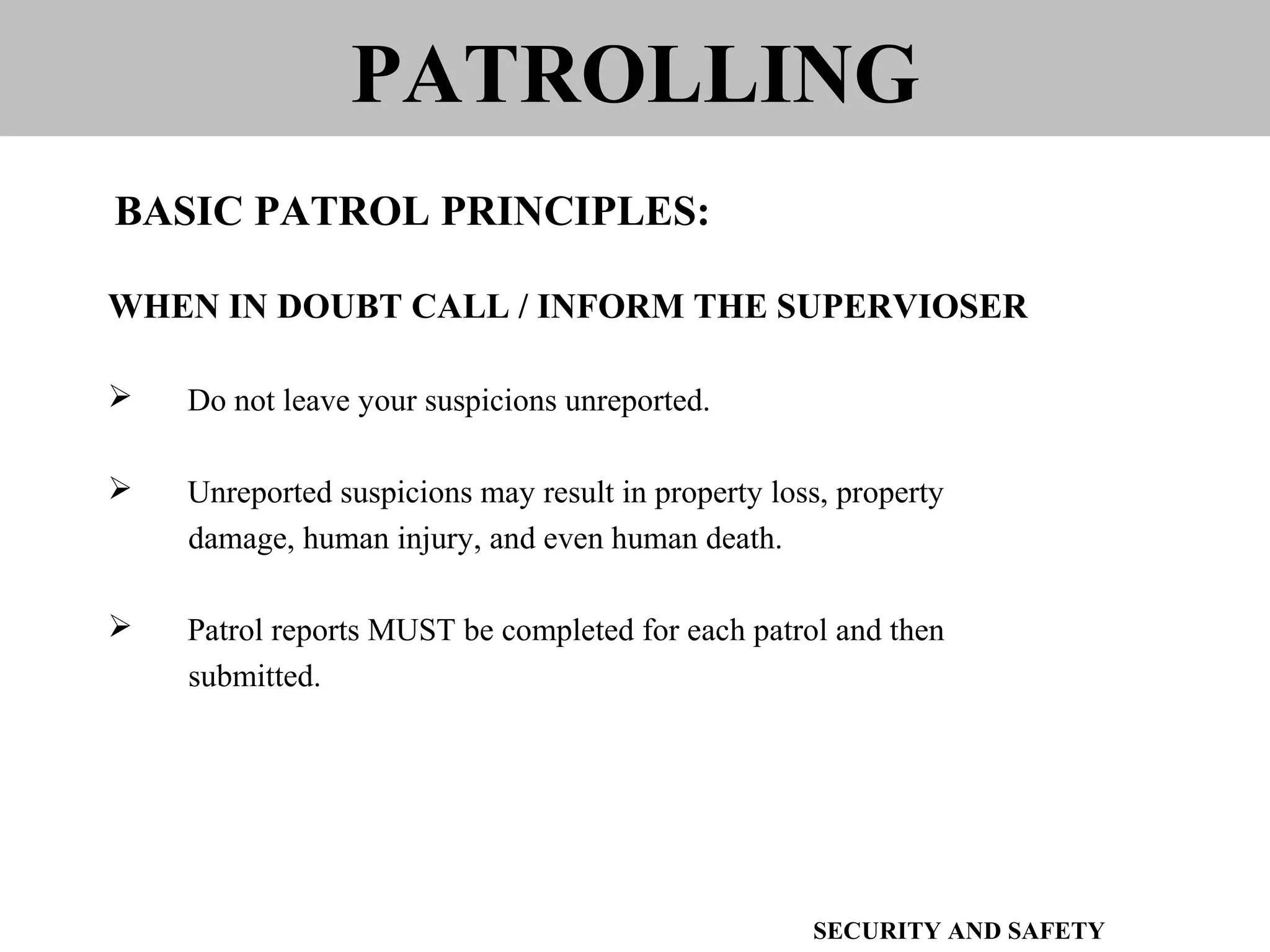
WHEN IN DOUBT CALL / INFORM THE SUPERVIOSER
 Do not leave your suspicions unreported.
 Unreported suspicions may result in property loss, property
damage, human injury, and even human death.
 Patrol reports MUST be completed for each patrol and then
submitted.
PATROLLING
BASIC PATROL PRINCIPLES:
SECURITY AND SAFETY
FOUR COMMON TYPES OF PATROL:-
 Foot Patrol.
 Bicycle.
 Vehicle.
 Visual.
THE MAIN PATROLLING TYPES / METHODS ARE:-
 Air
 Land
 Water
PATROLLING
METHODS OF PATROL:
SECURITY AND SAFETY
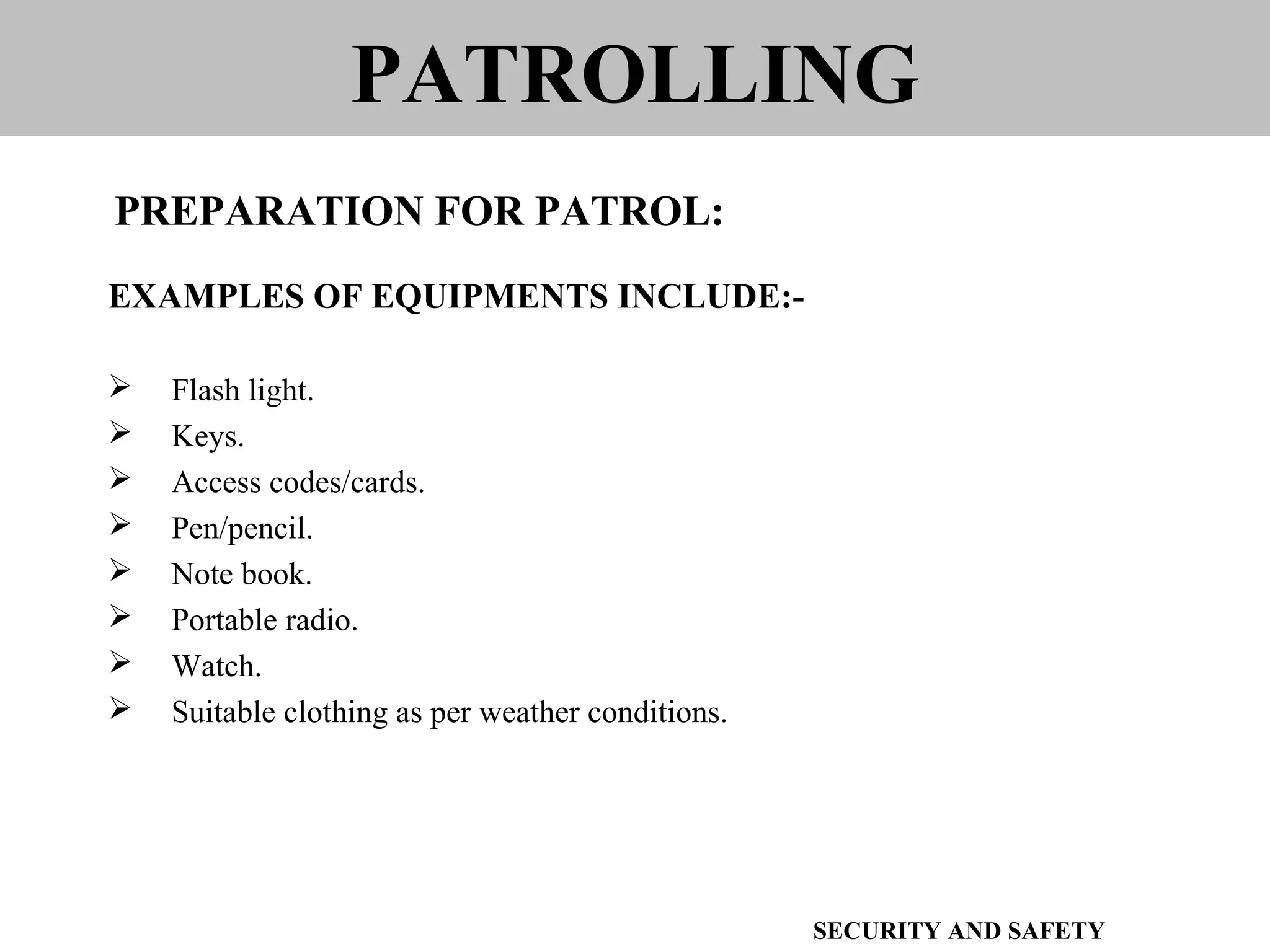
EXAMPLES OF EQUIPMENTS INCLUDE:-
 Flash light.
 Keys.
 Access codes/cards.
 Pen/pencil.
 Note book.
 Portable radio.
 Watch.
 Suitable clothing as per weather conditions.
PATROLLING
PREPARATION FOR PATROL:
SECURITY AND SAFETY
EXAMPLES OF HAZARDS:-
 Chemicals.
 Exposed wires
 Wet floors
 Broken glass or equipment
 Cluttered hallways
 Chipped tiles (ceramic, flagstone)
WHAT TO DO WHEN YOU LOCATE A HAZARD:-
 Report hazards to supervisor & (or) emergency services.
 Record all unusual observations in your notebook.
PATROLLING
HAZARDS:
SECURITY AND SAFETY
DURING PATROL:-
 Be aware of your surroundings.
 Respond immediately to emergencies.
 Be vigilant.
 Know your patrol area.
 Be aware of hazards.
 Know company policy and procedures.
PATROLLING
CONCLUSION:
SECURITY AND SAFETY

PATROLLING

  • 1.
  • 2.
    The act ofmoving about an area especially by an authorized and trained person or group, for purposes of observation, inspection, or security. The activity of going around or through an area at regular intervals for security purposes. PATROLLING SECURITY AND SAFETY
  • 3.
     Protect people Protect property  Protect information  To prevent and discourage crime through high visibility patrols. Be conspicuous. The mere sight of a security person may discourage and deter a potential violator from breaking a law.  To report suspicious activity and criminal activity. PATROLLING PURPOSE OF PATROL: SECURITY AND SAFETY
  • 4.
  • 5.
    SIGHT:-  Be observant Check for unusual conditions. HEARING:-  Check for unusual sounds and investigate their source  Examples include running water, smashing glass, malfunctioning equipment.. PATROLLING USES OF SENSES ON PATROL: SECURITY AND SAFETY
  • 6.
    SMELL:-  Examples includesmoke, gas, overheated machinery. TOUCH:-  Air currents  Temperature changes. TASTE:-  Use with caution! PATROLLING USES OF SENSES ON PATROL: SECURITY AND SAFETY
  • 7.
     The mosteffective method of securing a site when all personnel have left is patrolling.  It is an accepted fact that each site differs from the next, therefore laid down procedures, patrolling routes and duration also vary.  Make sure area is secure from intrusion .  Turn off equipment when operation is not indicated.  Check for unusual conditions.  Check for unusual sounds and investigate their source.  Do not patrol according to a predictable set pattern. PATROLLING GENERAL PATROL RESPONSIBILITIES: SECURITY AND SAFETY
  • 8.
     Violators shouldnot be able to predict where you may be at a given date or time.  If they learn your routine they will adapt their criminal actions accordingly  Check for unusual odors.  Check for damage.  Check for running water.  Check all security processes.  Check storage of flammable substances.  Report/record. PATROLLING GENERAL PATROL RESPONSIBILITIES: SECURITY AND SAFETY
  • 9.
    SEVEN PATROL PRINCIPLES:- Ensure the perimeter is secure.  Patrol in a methodical and organized fashion.  Vary your routine.  Look for safety or security hazards.  Record all activity in your notebook for report.  Think about what you are doing.  Make sure you are properly equipped. PATROLLING BASIC PATROL PRINCIPLES: SECURITY AND SAFETY
  • 10.
    WHEN IN DOUBTCALL / INFORM THE SUPERVIOSER  Do not leave your suspicions unreported.  Unreported suspicions may result in property loss, property damage, human injury, and even human death.  Patrol reports MUST be completed for each patrol and then submitted. PATROLLING BASIC PATROL PRINCIPLES: SECURITY AND SAFETY
  • 11.
    FOUR COMMON TYPESOF PATROL:-  Foot Patrol.  Bicycle.  Vehicle.  Visual. THE MAIN PATROLLING TYPES / METHODS ARE:-  Air  Land  Water PATROLLING METHODS OF PATROL: SECURITY AND SAFETY
  • 12.
    EXAMPLES OF EQUIPMENTSINCLUDE:-  Flash light.  Keys.  Access codes/cards.  Pen/pencil.  Note book.  Portable radio.  Watch.  Suitable clothing as per weather conditions. PATROLLING PREPARATION FOR PATROL: SECURITY AND SAFETY
  • 13.
    EXAMPLES OF HAZARDS:- Chemicals.  Exposed wires  Wet floors  Broken glass or equipment  Cluttered hallways  Chipped tiles (ceramic, flagstone) WHAT TO DO WHEN YOU LOCATE A HAZARD:-  Report hazards to supervisor & (or) emergency services.  Record all unusual observations in your notebook. PATROLLING HAZARDS: SECURITY AND SAFETY
  • 14.
    DURING PATROL:-  Beaware of your surroundings.  Respond immediately to emergencies.  Be vigilant.  Know your patrol area.  Be aware of hazards.  Know company policy and procedures. PATROLLING CONCLUSION: SECURITY AND SAFETY