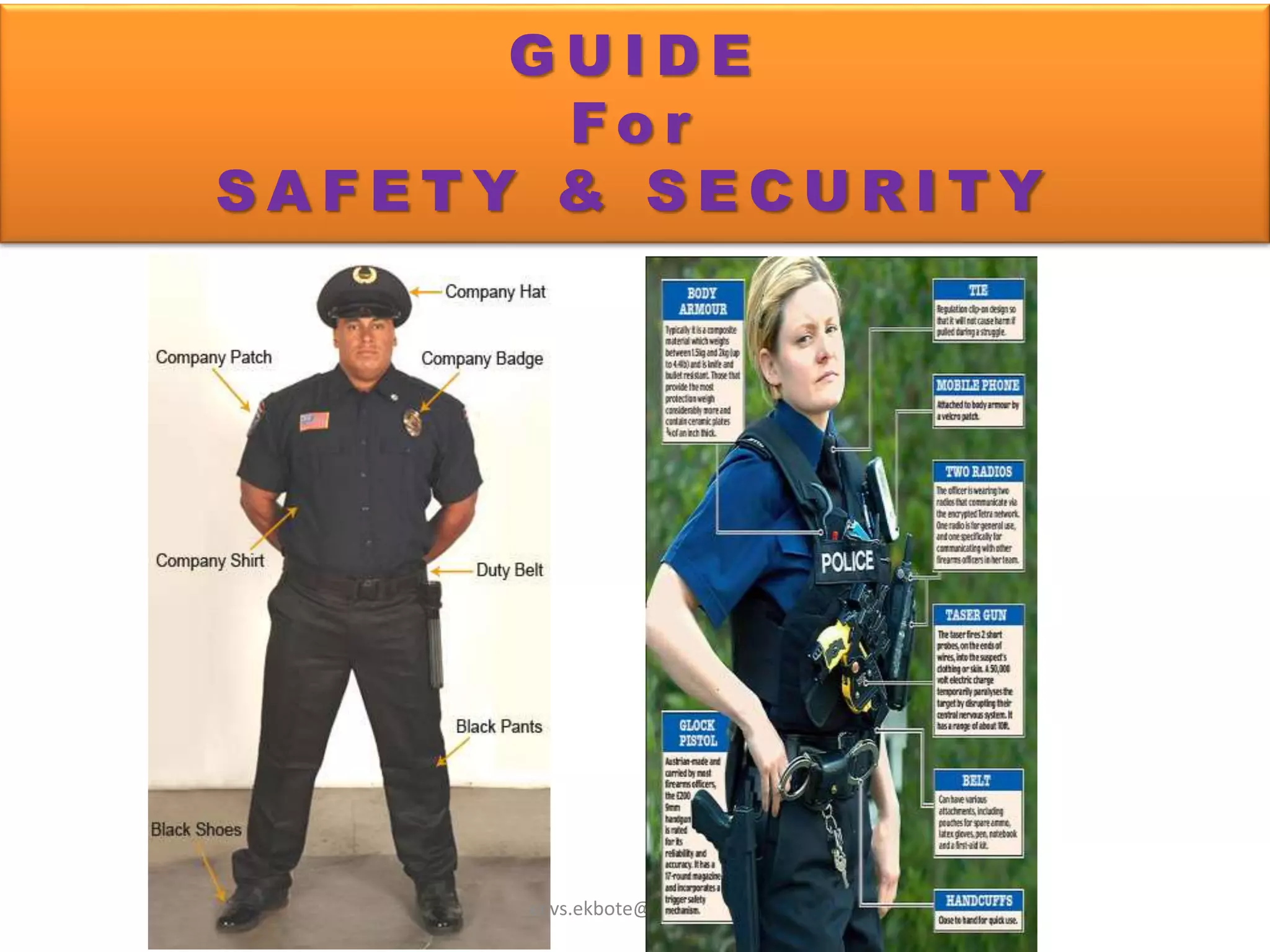
G U I D E
F o r
S A F E T Y & S E C U R I T Y
er.vs.ekbote@gmail.com
SECURITY Means
• Ensuring “SAFETY”
• Monitoring of “Safety”
• Ensuring Free from “Danger or Injury”
• Be Preparedness for any “Un foreseen”
er.vs.ekbote@gmail.com
Acronym for Security
• S-Strong Body & Mind
• E-Effective Approach
• C-Clarity in Command
• U-Understanding Situation
• R-Respective behavior
• I-Identify Changes (Awareness)
• T-Task oriented
• Y-Young and enthusiastic
er.vs.ekbote@gmail.com
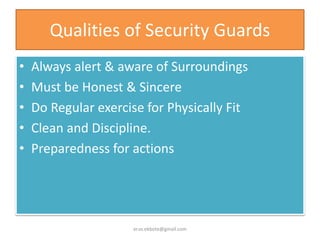
Qualities of Security Guards
• Always alert & aware of Surroundings
• Must be Honest & Sincere
• Do Regular exercise for Physically Fit
• Clean and Discipline.
• Preparedness for actions
er.vs.ekbote@gmail.com
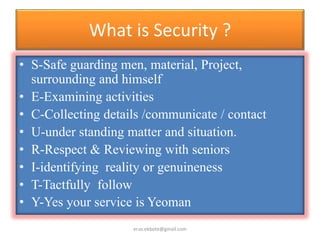
What is Security ?
• S-Safe guarding men, material, Project,
surrounding and himself
• E-Examining activities
• C-Collecting details /communicate / contact
• U-under standing matter and situation.
• R-Respect & Reviewing with seniors
• I-identifying reality or genuineness
• T-Tactfully follow
• Y-Yes your service is Yeoman
er.vs.ekbote@gmail.com
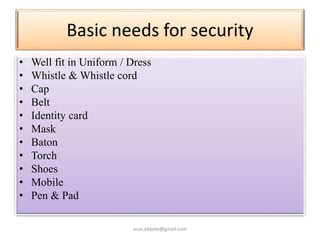
Basic needs for security
• Well fit in Uniform / Dress
• Whistle & Whistle cord
• Cap
• Belt
• Identity card
• Mask
• Baton
• Torch
• Shoes
• Mobile
• Pen & Pad
er.vs.ekbote@gmail.com
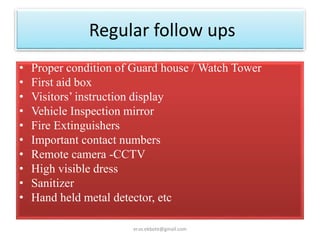
Regular follow ups
• Proper condition of Guard house / Watch Tower
• First aid box
• Visitors’ instruction display
• Vehicle Inspection mirror
• Fire Extinguishers
• Important contact numbers
• Remote camera -CCTV
• High visible dress
• Sanitizer
• Hand held metal detector, etc
er.vs.ekbote@gmail.com
Special things required for
Jungle Area duty
• Fire torch / Match box
• Crackers / sound making machine / drums
• Pepper spray / Safety Spray
• Water & water filter
• Blankets / plastic covers
• Gumshoes / hand gloves
• Rain coat / umbrella
• Axe / sickle
• Hard head gear
• Any other as desired
er.vs.ekbote@gmail.com
Security Duties & Responsibility
• Ensuring nature of visitors / clients / suppliers / leaders, etc
• Visitors dress / disciplines
• Follow of instructions, maintain safety kit .
• Inspection and record of vehicle and carrying items
• Inspection of vehicle documents
• Watch and ward of men , material and animals etc
• On look of surrounding activities / incidents
• On look of Union Activities
• Report of if any - Accidents / Incidents
• Report of theft / stolen / missing / dangerous situation
• Monitoring the visitors attendance or movements
• Emergency preparedness etc
er.vs.ekbote@gmail.com
Duties of Security in case of Emergency :
• Alert the occupants through Public address System
• Alert the general public through siren
• Inform Fire control station / Emergency Team.
• Guide / rescue the occupants for safe evacuation or
direct to assembly point.
• Guide the fire force
• Barricade the hazard area
• Call Ambulance in case of casualty
• Inform the Project Head
er.vs.ekbote@gmail.com
Awareness remote safety / outskirts
• Know Safety from Honey bees
• Know Safety from Snakes
• Know Safety from Dogs
• Know Safety from Bear
• Know Safety from wild animals
• Know Safety from Wild Elephants, etc.
er.vs.ekbote@gmail.com
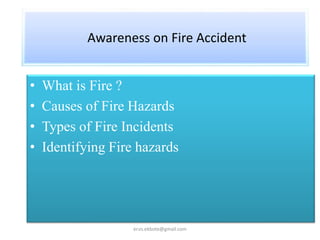
Awareness on Fire Accident
• What is Fire ?
• Causes of Fire Hazards
• Types of Fire Incidents
• Identifying Fire hazards
er.vs.ekbote@gmail.com
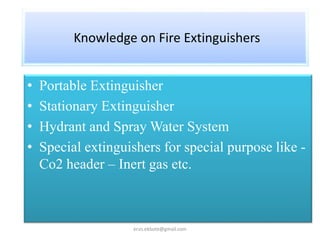
Knowledge on Fire Extinguishers
• Portable Extinguisher
• Stationary Extinguisher
• Hydrant and Spray Water System
• Special extinguishers for special purpose like -
Co2 header – Inert gas etc.
er.vs.ekbote@gmail.com
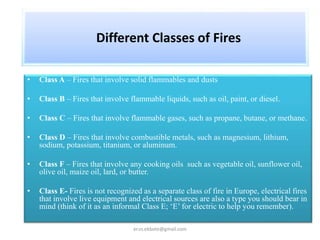
Different Classes of Fires
• Class A – Fires that involve solid flammables and dusts
• Class B – Fires that involve flammable liquids, such as oil, paint, or diesel.
• Class C – Fires that involve flammable gases, such as propane, butane, or methane.
• Class D – Fires that involve combustible metals, such as magnesium, lithium,
sodium, potassium, titanium, or aluminum.
• Class F – Fires that involve any cooking oils such as vegetable oil, sunflower oil,
olive oil, maize oil, lard, or butter.
• Class E- Fires is not recognized as a separate class of fire in Europe, electrical fires
that involve live equipment and electrical sources are also a type you should bear in
mind (think of it as an informal Class E; ‘E’ for electric to help you remember).
er.vs.ekbote@gmail.com
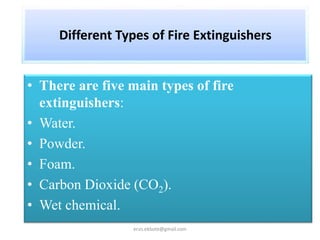
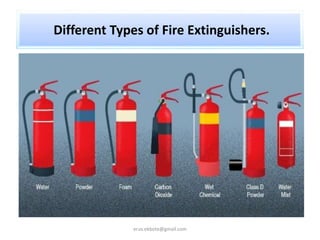
Different Types of Fire Extinguishers
• There are five main types of fire
extinguishers:
• Water.
• Powder.
• Foam.
• Carbon Dioxide (CO2).
• Wet chemical.
er.vs.ekbote@gmail.com
Different Types of Fire Extinguishers.
er.vs.ekbote@gmail.com
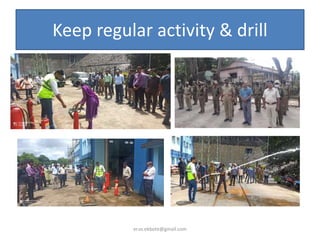
Keep regular activity & drill
er.vs.ekbote@gmail.com

security Guards - Duties & Discipline

  • 1.
    G U ID E F o r S A F E T Y & S E C U R I T Y er.vs.ekbote@gmail.com
  • 2.
    SECURITY Means • Ensuring“SAFETY” • Monitoring of “Safety” • Ensuring Free from “Danger or Injury” • Be Preparedness for any “Un foreseen” er.vs.ekbote@gmail.com
  • 3.
    Acronym for Security •S-Strong Body & Mind • E-Effective Approach • C-Clarity in Command • U-Understanding Situation • R-Respective behavior • I-Identify Changes (Awareness) • T-Task oriented • Y-Young and enthusiastic er.vs.ekbote@gmail.com
  • 4.
    Qualities of SecurityGuards • Always alert & aware of Surroundings • Must be Honest & Sincere • Do Regular exercise for Physically Fit • Clean and Discipline. • Preparedness for actions er.vs.ekbote@gmail.com
  • 5.
    What is Security? • S-Safe guarding men, material, Project, surrounding and himself • E-Examining activities • C-Collecting details /communicate / contact • U-under standing matter and situation. • R-Respect & Reviewing with seniors • I-identifying reality or genuineness • T-Tactfully follow • Y-Yes your service is Yeoman er.vs.ekbote@gmail.com
  • 6.
    Basic needs forsecurity • Well fit in Uniform / Dress • Whistle & Whistle cord • Cap • Belt • Identity card • Mask • Baton • Torch • Shoes • Mobile • Pen & Pad er.vs.ekbote@gmail.com
  • 7.
    Regular follow ups •Proper condition of Guard house / Watch Tower • First aid box • Visitors’ instruction display • Vehicle Inspection mirror • Fire Extinguishers • Important contact numbers • Remote camera -CCTV • High visible dress • Sanitizer • Hand held metal detector, etc er.vs.ekbote@gmail.com
  • 8.
    Special things requiredfor Jungle Area duty • Fire torch / Match box • Crackers / sound making machine / drums • Pepper spray / Safety Spray • Water & water filter • Blankets / plastic covers • Gumshoes / hand gloves • Rain coat / umbrella • Axe / sickle • Hard head gear • Any other as desired er.vs.ekbote@gmail.com
  • 9.
    Security Duties &Responsibility • Ensuring nature of visitors / clients / suppliers / leaders, etc • Visitors dress / disciplines • Follow of instructions, maintain safety kit . • Inspection and record of vehicle and carrying items • Inspection of vehicle documents • Watch and ward of men , material and animals etc • On look of surrounding activities / incidents • On look of Union Activities • Report of if any - Accidents / Incidents • Report of theft / stolen / missing / dangerous situation • Monitoring the visitors attendance or movements • Emergency preparedness etc er.vs.ekbote@gmail.com
  • 10.
    Duties of Securityin case of Emergency : • Alert the occupants through Public address System • Alert the general public through siren • Inform Fire control station / Emergency Team. • Guide / rescue the occupants for safe evacuation or direct to assembly point. • Guide the fire force • Barricade the hazard area • Call Ambulance in case of casualty • Inform the Project Head er.vs.ekbote@gmail.com
  • 11.
    Awareness remote safety/ outskirts • Know Safety from Honey bees • Know Safety from Snakes • Know Safety from Dogs • Know Safety from Bear • Know Safety from wild animals • Know Safety from Wild Elephants, etc. er.vs.ekbote@gmail.com
  • 12.
    Awareness on FireAccident • What is Fire ? • Causes of Fire Hazards • Types of Fire Incidents • Identifying Fire hazards er.vs.ekbote@gmail.com
  • 13.
    Knowledge on FireExtinguishers • Portable Extinguisher • Stationary Extinguisher • Hydrant and Spray Water System • Special extinguishers for special purpose like - Co2 header – Inert gas etc. er.vs.ekbote@gmail.com
  • 14.
    Different Classes ofFires • Class A – Fires that involve solid flammables and dusts • Class B – Fires that involve flammable liquids, such as oil, paint, or diesel. • Class C – Fires that involve flammable gases, such as propane, butane, or methane. • Class D – Fires that involve combustible metals, such as magnesium, lithium, sodium, potassium, titanium, or aluminum. • Class F – Fires that involve any cooking oils such as vegetable oil, sunflower oil, olive oil, maize oil, lard, or butter. • Class E- Fires is not recognized as a separate class of fire in Europe, electrical fires that involve live equipment and electrical sources are also a type you should bear in mind (think of it as an informal Class E; ‘E’ for electric to help you remember). er.vs.ekbote@gmail.com
  • 15.
    Different Types ofFire Extinguishers • There are five main types of fire extinguishers: • Water. • Powder. • Foam. • Carbon Dioxide (CO2). • Wet chemical. er.vs.ekbote@gmail.com
  • 16.
    Different Types ofFire Extinguishers. er.vs.ekbote@gmail.com
  • 17.
  • 18.
    Keep regular activity& drill er.vs.ekbote@gmail.com
  • 19.