GLOBAL LUKEWARMING
The New Climate Science that Changes Everything
Patrick J. Michaels
Director,
Center for the Study of Science,
Cato Institute
******
CEQLS, Bratislava
June 20, 2016
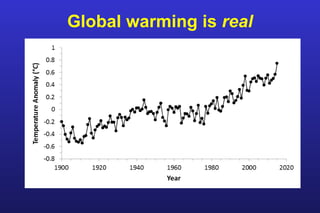
Global warming is real
IT’S NOT THE HEAT…
…IT’S THE SENSITIVITY
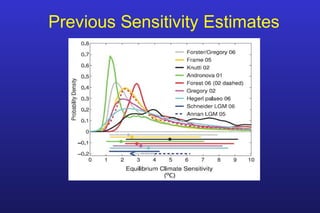
Previous Sensitivity Estimates
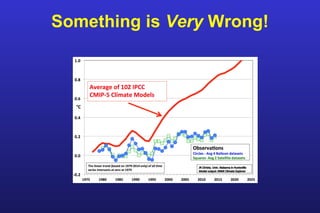
Something is Very Wrong!
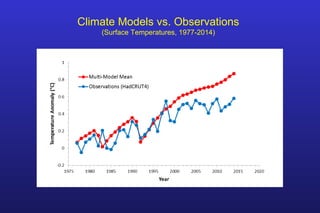
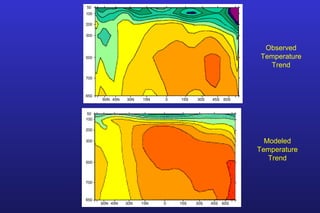
Climate Models vs. Observations
(Surface Temperatures, 1977-2014)
It’s not new
When increases in greenhouse gases only are taken
into account…most GCMs produce a greater mean
warming than has been observed, unless a lower
climate sensitivity is used…There is growing evidence
that increases in sulfate aerosols are partially
counteracting the [warming] due to increases in
greenhouse gases.
--Intergovernmental Panel on Climate Change, 1995
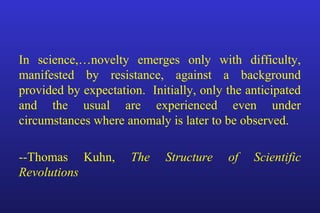
In science,…novelty emerges only with difficulty,
manifested by resistance, against a background
provided by expectation. Initially, only the anticipated
and the usual are experienced even under
circumstances where anomaly is later to be observed.
--Thomas Kuhn, The Structure of Scientific
Revolutions
Modeled
Temperature
Trend
Observed
Temperature
Trend
60N 45N 30N 15N 0 15S 30S 45S 60S
850
700
500
300
200
100
50
850
700
500
300
200
100
50
60N 45N 30N 15N 0 15S 30S 45S 60S
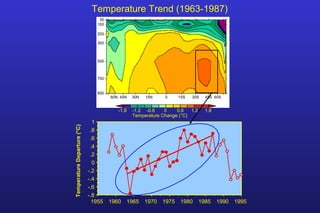
Temperature Change (°C)
0 0.6 1.2 1.8-0.6-1.2-1.8
60N 45N 30N 15N 0 15S 30S 45S 60S
850
700
500
300
200
100
50
1
-.8
-.6
-.4
-.2
0
.2
.4
.6
.8
1955 1960 1965 1970 1975 1980 1985 1990 1995
TemperatureDeparture(°C)
Temperature Trend (1963-1987)
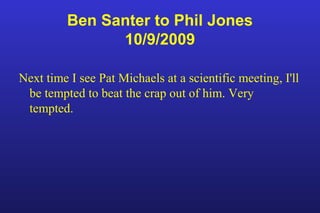
Ben Santer to Phil Jones
10/9/2009
Next time I see Pat Michaels at a scientific meeting, I'll
be tempted to beat the crap out of him. Very
tempted.
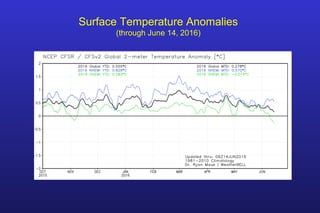
Surface Temperature Anomalies
(through June 14, 2016)
SOME BASIC GLOBAL WARMING SCIENCE
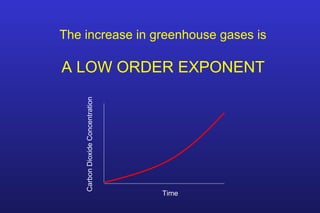
The increase in greenhouse gases is
A LOW ORDER EXPONENT
CarbonDioxideConcentration
Time
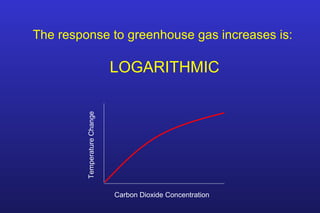
The response to greenhouse gas increases is:
LOGARITHMIC
Carbon Dioxide Concentration
TemperatureChange
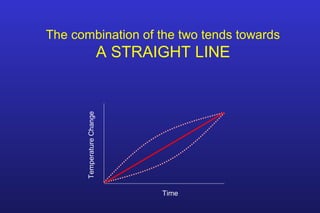
The combination of the two tends towards
A STRAIGHT LINE
Time
TemperatureChange
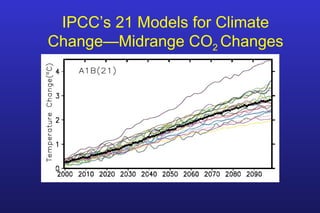
IPCC’s 21 Models for Climate
Change—Midrange CO2 Changes
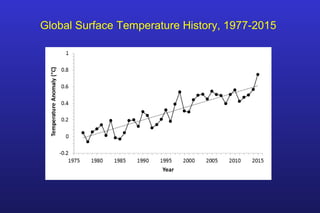
Global Surface Temperature History, 1977-2015
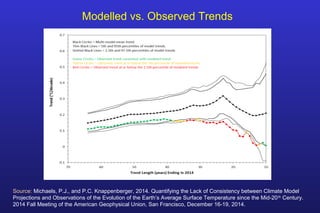
Modelled vs. Observed Trends
Source: Michaels, P.J., and P.C. Knappenberger, 2014. Quantifying the Lack of Consistency between Climate Model
Projections and Observations of the Evolution of the Earth’s Average Surface Temperature since the Mid-20th
Century.
2014 Fall Meeting of the American Geophysical Union, San Francisco, December 16-19, 2014.
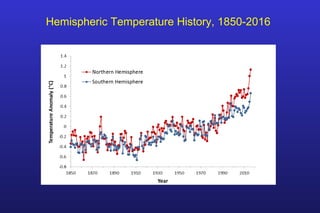
Hemispheric Temperature History, 1850-2016
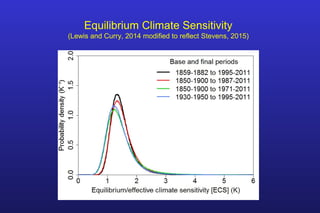
Equilibrium Climate Sensitivity
(Lewis and Curry, 2014 modified to reflect Stevens, 2015)
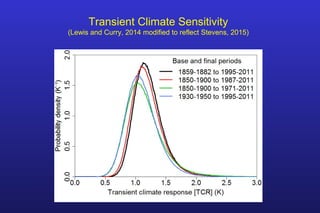
Transient Climate Sensitivity
(Lewis and Curry, 2014 modified to reflect Stevens, 2015)
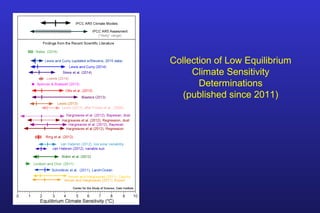
Collection of Low Equilibrium
Climate Sensitivity
Determinations
(published since 2011)
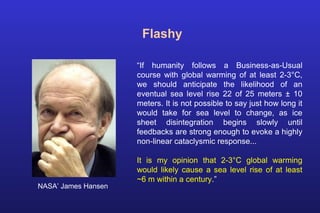
Flashy
“If humanity follows a Business-as-Usual
course with global warming of at least 2-3°C,
we should anticipate the likelihood of an
eventual sea level rise 22 of 25 meters ± 10
meters. It is not possible to say just how long it
would take for sea level to change, as ice
sheet disintegration begins slowly until
feedbacks are strong enough to evoke a highly
non-linear cataclysmic response...
It is my opinion that 2-3°C global warming
would likely cause a sea level rise of at least
~6 m within a century.”
NASA’ James Hansen
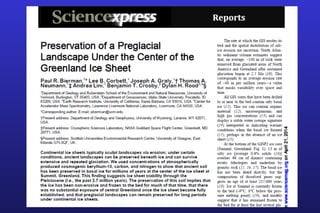
THE GREENLAND SCENARIO
--Ice flow from Greenland enhanced by meltwater
--Instead of two inches of sea-level rise from Greenland by
2100 we get 20 feet.
--Is warming there be unprecedented?
“Considering these different lines of evidence, a picture
begins to evolve suggesting that Arctic sea ice cover
was strongly reduced during most of the early
Holocene; there appears even to have been periods of
ice free summers in large parts of the central Arctic
Ocean.”
Ice-free Arctic Ocean in the current interglacial
Jakobsson et al., Quaternary Science Reviews, 2010.
“Recent mapping of a number of raised beach ridges
on the north coast of Greenland suggests that the ice
cover in the Arctic Ocean was greatly reduced some
6000-7000 years ago. The Arctic Ocean may have
been periodically ice free.”
Ice-free Arctic Ocean in the current interglacial
-Geological Survey of Norway, Press Release, 2008
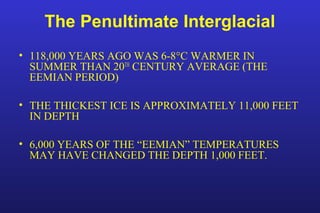
The Penultimate Interglacial
• 118,000 YEARS AGO WAS 6-8°C WARMER IN
SUMMER THAN 20TH
CENTURY AVERAGE (THE
EEMIAN PERIOD)
• THE THICKEST ICE IS APPROXIMATELY 11,000 FEET
IN DEPTH
• 6,000 YEARS OF THE “EEMIAN” TEMPERATURES
MAY HAVE CHANGED THE DEPTH 1,000 FEET.
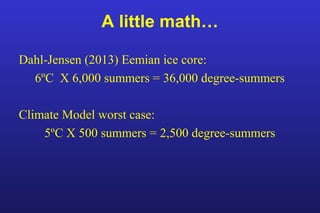
A little math…
Dahl-Jensen (2013) Eemian ice core:
6ºC X 6,000 summers = 36,000 degree-summers
Climate Model worst case:
5ºC X 500 summers = 2,500 degree-summers
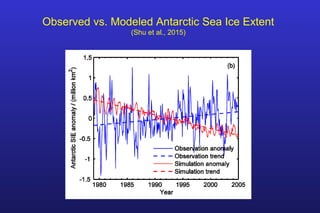
Observed vs. Modeled Antarctic Sea Ice Extent
(Shu et al., 2015)
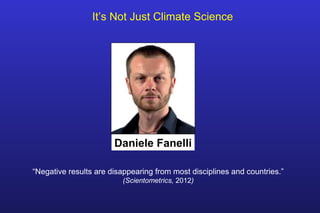
Daniele Fanelli
It’s Not Just Climate Science
“Negative results are disappearing from most disciplines and countries.”
(Scientometrics, 2012)
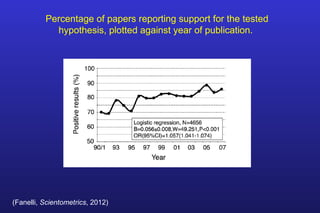
(Fanelli, Scientometrics, 2012)
Percentage of papers reporting support for the tested
hypothesis, plotted against year of publication.
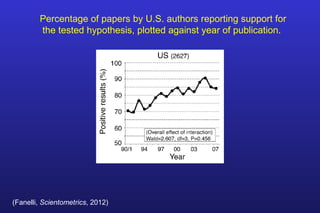
(Fanelli, Scientometrics, 2012)
Percentage of papers by U.S. authors reporting support for
the tested hypothesis, plotted against year of publication.
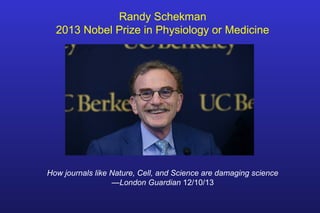
Randy Schekman
2013 Nobel Prize in Physiology or Medicine
How journals like Nature, Cell, and Science are damaging science
—London Guardian 12/10/13
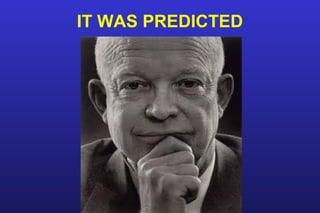
IT WAS PREDICTED
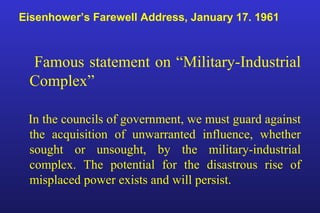
Eisenhower’s Farewell Address, January 17. 1961
Famous statement on “Military-Industrial
Complex”
In the councils of government, we must guard against
the acquisition of unwarranted influence, whether
sought or unsought, by the military-industrial
complex. The potential for the disastrous rise of
misplaced power exists and will persist.
Un-noticed next section:
The free university, historically the fountainhead of free
ideas and scientific discovery, has experienced a
revolution in the conduct of research. Partly because of
the huge costs involved, a government contract becomes
virtually a substitute for intellectual curiosity…
Yet, in holding scientific research and discovery in
respect, as we should, we must also be alert to the equal
and opposite danger that public policy could itself
become the captive of a scientific-technological elite.
The prospect of domination of the nation's scholars by
Federal employment, project allocations, and the power
of money is ever present – and is gravely to be regarded.
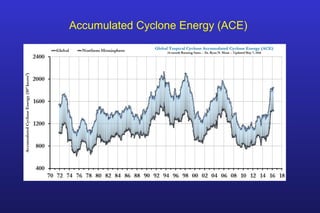
Accumulated Cyclone Energy (ACE)

Patrick Michaels: Lukewarming The New Climate Science that Changes Everything

  • 2.
    GLOBAL LUKEWARMING The NewClimate Science that Changes Everything Patrick J. Michaels Director, Center for the Study of Science, Cato Institute ****** CEQLS, Bratislava June 20, 2016
  • 3.
  • 4.
    IT’S NOT THEHEAT… …IT’S THE SENSITIVITY
  • 5.
  • 6.
  • 7.
    Climate Models vs.Observations (Surface Temperatures, 1977-2014)
  • 8.
    It’s not new Whenincreases in greenhouse gases only are taken into account…most GCMs produce a greater mean warming than has been observed, unless a lower climate sensitivity is used…There is growing evidence that increases in sulfate aerosols are partially counteracting the [warming] due to increases in greenhouse gases. --Intergovernmental Panel on Climate Change, 1995
  • 9.
    In science,…novelty emergesonly with difficulty, manifested by resistance, against a background provided by expectation. Initially, only the anticipated and the usual are experienced even under circumstances where anomaly is later to be observed. --Thomas Kuhn, The Structure of Scientific Revolutions
  • 11.
    Modeled Temperature Trend Observed Temperature Trend 60N 45N 30N15N 0 15S 30S 45S 60S 850 700 500 300 200 100 50 850 700 500 300 200 100 50 60N 45N 30N 15N 0 15S 30S 45S 60S
  • 12.
    Temperature Change (°C) 00.6 1.2 1.8-0.6-1.2-1.8 60N 45N 30N 15N 0 15S 30S 45S 60S 850 700 500 300 200 100 50 1 -.8 -.6 -.4 -.2 0 .2 .4 .6 .8 1955 1960 1965 1970 1975 1980 1985 1990 1995 TemperatureDeparture(°C) Temperature Trend (1963-1987)
  • 13.
    Ben Santer toPhil Jones 10/9/2009 Next time I see Pat Michaels at a scientific meeting, I'll be tempted to beat the crap out of him. Very tempted.
  • 16.
  • 18.
    SOME BASIC GLOBALWARMING SCIENCE
  • 19.
    The increase ingreenhouse gases is A LOW ORDER EXPONENT CarbonDioxideConcentration Time
  • 20.
    The response togreenhouse gas increases is: LOGARITHMIC Carbon Dioxide Concentration TemperatureChange
  • 21.
    The combination ofthe two tends towards A STRAIGHT LINE Time TemperatureChange
  • 22.
    IPCC’s 21 Modelsfor Climate Change—Midrange CO2 Changes
  • 23.
    Global Surface TemperatureHistory, 1977-2015
  • 26.
    Modelled vs. ObservedTrends Source: Michaels, P.J., and P.C. Knappenberger, 2014. Quantifying the Lack of Consistency between Climate Model Projections and Observations of the Evolution of the Earth’s Average Surface Temperature since the Mid-20th Century. 2014 Fall Meeting of the American Geophysical Union, San Francisco, December 16-19, 2014.
  • 27.
  • 28.
    Equilibrium Climate Sensitivity (Lewisand Curry, 2014 modified to reflect Stevens, 2015)
  • 29.
    Transient Climate Sensitivity (Lewisand Curry, 2014 modified to reflect Stevens, 2015)
  • 30.
    Collection of LowEquilibrium Climate Sensitivity Determinations (published since 2011)
  • 31.
    Flashy “If humanity followsa Business-as-Usual course with global warming of at least 2-3°C, we should anticipate the likelihood of an eventual sea level rise 22 of 25 meters ± 10 meters. It is not possible to say just how long it would take for sea level to change, as ice sheet disintegration begins slowly until feedbacks are strong enough to evoke a highly non-linear cataclysmic response... It is my opinion that 2-3°C global warming would likely cause a sea level rise of at least ~6 m within a century.” NASA’ James Hansen
  • 32.
    THE GREENLAND SCENARIO --Iceflow from Greenland enhanced by meltwater --Instead of two inches of sea-level rise from Greenland by 2100 we get 20 feet. --Is warming there be unprecedented?
  • 33.
    “Considering these differentlines of evidence, a picture begins to evolve suggesting that Arctic sea ice cover was strongly reduced during most of the early Holocene; there appears even to have been periods of ice free summers in large parts of the central Arctic Ocean.” Ice-free Arctic Ocean in the current interglacial Jakobsson et al., Quaternary Science Reviews, 2010.
  • 34.
    “Recent mapping ofa number of raised beach ridges on the north coast of Greenland suggests that the ice cover in the Arctic Ocean was greatly reduced some 6000-7000 years ago. The Arctic Ocean may have been periodically ice free.” Ice-free Arctic Ocean in the current interglacial -Geological Survey of Norway, Press Release, 2008
  • 35.
    The Penultimate Interglacial •118,000 YEARS AGO WAS 6-8°C WARMER IN SUMMER THAN 20TH CENTURY AVERAGE (THE EEMIAN PERIOD) • THE THICKEST ICE IS APPROXIMATELY 11,000 FEET IN DEPTH • 6,000 YEARS OF THE “EEMIAN” TEMPERATURES MAY HAVE CHANGED THE DEPTH 1,000 FEET.
  • 36.
    A little math… Dahl-Jensen(2013) Eemian ice core: 6ºC X 6,000 summers = 36,000 degree-summers Climate Model worst case: 5ºC X 500 summers = 2,500 degree-summers
  • 40.
    Observed vs. ModeledAntarctic Sea Ice Extent (Shu et al., 2015)
  • 41.
    Daniele Fanelli It’s NotJust Climate Science “Negative results are disappearing from most disciplines and countries.” (Scientometrics, 2012)
  • 42.
    (Fanelli, Scientometrics, 2012) Percentageof papers reporting support for the tested hypothesis, plotted against year of publication.
  • 43.
    (Fanelli, Scientometrics, 2012) Percentageof papers by U.S. authors reporting support for the tested hypothesis, plotted against year of publication.
  • 44.
    Randy Schekman 2013 NobelPrize in Physiology or Medicine How journals like Nature, Cell, and Science are damaging science —London Guardian 12/10/13
  • 45.
  • 46.
    Eisenhower’s Farewell Address,January 17. 1961 Famous statement on “Military-Industrial Complex” In the councils of government, we must guard against the acquisition of unwarranted influence, whether sought or unsought, by the military-industrial complex. The potential for the disastrous rise of misplaced power exists and will persist.
  • 47.
    Un-noticed next section: Thefree university, historically the fountainhead of free ideas and scientific discovery, has experienced a revolution in the conduct of research. Partly because of the huge costs involved, a government contract becomes virtually a substitute for intellectual curiosity… Yet, in holding scientific research and discovery in respect, as we should, we must also be alert to the equal and opposite danger that public policy could itself become the captive of a scientific-technological elite. The prospect of domination of the nation's scholars by Federal employment, project allocations, and the power of money is ever present – and is gravely to be regarded.
  • 48.