Climate Change in a Nutshell
-
Padraig Fagan
1
Table of Contents
Section Page
Introduction 2
The (new?) Science of Climate Change 4
Consensus – Living on the Edge 6
Denial – Welcome to the Madhouse 10
What Can We Do? 12
References 14
Further Study 16
2
Introduction
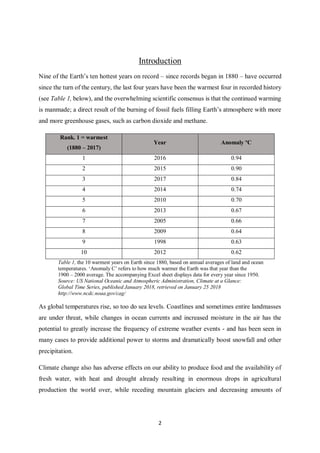
Nine of the Earth’s ten hottest years on record – since records began in 1880 – have occurred
since the turn of the century, the last four years have been the warmest four in recorded history
(see Table 1, below), and the overwhelming scientific consensus is that the continued warming
is manmade; a direct result of the burning of fossil fuels filling Earth’s atmosphere with more
and more greenhouse gases, such as carbon dioxide and methane.
Rank. 1 = warmest
(1880 – 2017)
Year Anomaly ºC
1 2016 0.94
2 2015 0.90
3 2017 0.84
4 2014 0.74
5 2010 0.70
6 2013 0.67
7 2005 0.66
8 2009 0.64
9 1998 0.63
10 2012 0.62
Table 1, the 10 warmest years on Earth since 1880, based on annual averages of land and ocean
temperatures. ‘Anomaly C’ refers to how much warmer the Earth was that year than the
1900 – 2000 average. The accompanying Excel sheet displays data for every year since 1950.
Source: US National Oceanic and Atmospheric Administration, Climate at a Glance:
Global Time Series, published January 2018, retrieved on January 25 2018
http://www.ncdc.noaa.gov/cag/
As global temperatures rise, so too do sea levels. Coastlines and sometimes entire landmasses
are under threat, while changes in ocean currents and increased moisture in the air has the
potential to greatly increase the frequency of extreme weather events - and has been seen in
many cases to provide additional power to storms and dramatically boost snowfall and other
precipitation.
Climate change also has adverse effects on our ability to produce food and the availability of
fresh water, with heat and drought already resulting in enormous drops in agricultural
production the world over, while receding mountain glaciers and decreasing amounts of
3
snowpack in arid regions are leaving much of the developing world without steady sources of
freshwater.
Yet despite the ever-increasing effects of climate change and the widespread agreement among
scientists that human influences are the primary driver of the phenomenon, denial of the facts
can seem more prevalent than ever, while some governments appear to be either lethargic in
the face of adversity or dead set on ignoring reality in favour of profitable relationships with
the fossil fuel industry.
In the face of such opposition, the challenges presented by climate change can seem difficult
to meet, but many people are committed to rising to those challenges. Key to the various goals
on the road ahead are public awareness of the facts, an ability to effectively challenge denial,
knowledge of how to affect positive change, and a willingness to do so.
4
The (new?) Science of Climate Change
The history of climate science is a longer one than you might expect. Today every schoolchild
– with the exception of some who go on to be the favoured politicians of the fossil fuel industry
– learns the basic link between the burning of fossil fuels and the resultant carbon dioxide
building up in Earth’s atmosphere and trapping heat energy from the sun. Other heat-trapping
gases such as methane have a similar effect; the higher the quantity of these greenhouse gases
in the atmosphere, the more steadily the average temperature of the Earth continues to rise.
The greenhouse effect is not a recent discovery; it’s as old as Michael Faraday’s electric
generators, and precedes Charles Darwin’s publication of On the Origin of Species by nearly
half a century. It was first described by Joseph Fourier (see Fig. 1(a), below) in the 1820s and
expanded upon by Svante Arrhenius (see Fig. 1(b), below) towards the end of the century -
though neither ever actually used the term ‘greenhouse effect’, which appears to have been
coined by meteorologist Nils Ekrom in 1901[1]. Fourier gave us the first description of the effect
itself, and Arrhenius was the first scientist to attempt to link the rise or fall of carbon in the
atmosphere to long-term changes in global temperatures; he created the first global climate
model, predicting a rise of 5 to 6 degrees Celsius in the average temperature of the Earth with
a doubling of atmospheric carbon. This prediction is impressively close to those of between
roughly 2 and 4.5 degrees given by modern models[2].
Fig 1(a), Joseph Fourier (1768-1830), and Fig 1(b), Svante Arrhenius (1859-1927)
5
In the almost two centuries since Fourier, our understanding of climate systems has come a
long way. More accurate methods and tools for measuring atmospheric greenhouse gases and
the temperatures of our air and oceans are being developed all the time, as are more
sophisticated models of future global climate change based on a much broader and deeper
understanding of the physical and chemical principles underlying the work of Fourier and
Arrhenius, allowing scientists to make predictions that are largely borne out – or found to be
too conservative – as time goes by[3].
6
Consensus – Living on the Edge
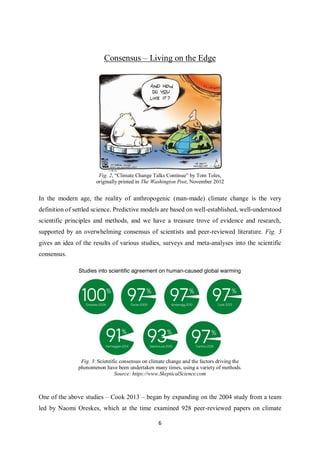
Fig. 2, “Climate Change Talks Continue” by Tom Toles,
originally printed in The Washington Post, November 2012
In the modern age, the reality of anthropogenic (man-made) climate change is the very
definition of settled science. Predictive models are based on well-established, well-understood
scientific principles and methods, and we have a treasure trove of evidence and research,
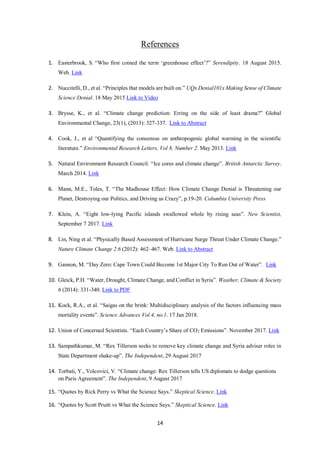
supported by an overwhelming consensus of scientists and peer-reviewed literature. Fig. 3
gives an idea of the results of various studies, surveys and meta-analyses into the scientific
consensus.
Fig. 3: Scientific consensus on climate change and the factors driving the
phenomenon have been undertaken many times, using a variety of methods.
Source: https://www.SkepticalScience.com
One of the above studies – Cook 2013 – began by expanding on the 2004 study from a team
led by Naomi Oreskes, which at the time examined 928 peer-reviewed papers on climate
7
change and found not a single one disagreeing with the consensus of human causes as a primary
driver. The Cook study examined over 12,000 papers published between 1991 and 2011, and
brought the number down to 11,944 once they’d eliminated those that weren’t peer reviewed,
weren’t climate-related, or didn’t contain an abstract. It was the abstracts the Cook team
focused on, and where any mention of anthropogenic climate change came up, they found that
97.2% of papers endorsed the consensus[4].
There are many such examples of surveys and studies showing the consilience of evidence and
agreement of scientists that climate change is real, primarily human-driven, and a serious
problem for humanity, but how much carbon have we actually added to Earth’s atmosphere,
and how much warming have we experienced to date as a result? What effects are we seeing?
And how does the future look on our current course?
Atmospheric carbon is measured in parts per million of atmosphere (ppm). In the mid-18th
century, prior to the Industrial Revolution, atmospheric carbon was at about 280 ppm, as
indicated by ice core samples[5]. NOAA – the US National Oceanic and Atmospheric
Administration – puts the current count at 404 ppm. This has resulted in an average global
temperature increase of around 1ºC since pre-industrial times. This doesn’t sound like much,
but the effects have already been profound, and become more dramatic all the time.
Let’s start with water and ice. As a liquid warms, even by a single degree, it expands. This is
what’s happened and continues to happen to seawater the world over. Coupled with melting
land ice falling into the oceans, we’ve already seen a rise in sea levels of roughly 25
centimetres, with anything from an additional 1 to 1.8 meters predicted by the end of the
century[6]. This rise has wreaked havoc on coastal cities around the globe, and last year a study
found that eight low-lying Pacific Islands had been completely swallowed by the sea since the
mid-20th
century[7]. Tom Toles’ cartoon in Fig. 4, below, might have been taken by some as
hyperbolic or alarmist when it was printed in 2007. Those who understand and accept the
science of climate change, however, didn’t need the future study to know Toles was simply
drawing an increasingly common reality.
8
Fig. 4, “Survivor: Global Warming” by Tom Toles, originally
printed in The Washington Post, March 2007
The rising seas and warmer – and therefore moister – air combine to drastically alter long-term
weather patterns, influencing prevailing winds as well as increasing precipitation and the
frequency and power of extreme weather events. In recent months, and not for the first time in
recent years, many areas of the US have seen record snowfalls, and once-in-a-century storms
in the same vein as Superstorm Sandy are now expected to hit New York every 3-20 years[8].
Have a nice day!
While some regions are progressing to a new normal of cold, wet, and “Where did my house
go?”, others are experiencing record heat, drought and crop failures. California is barely
emerging from a five-year drought that has ravaged an agriculture industry counted on by a
third of the US for fresh produce[6]. Many other crop yields around the world are down, and in
another new record we didn’t want to break, following three rainy seasons that were anything
but rainy, Cape Town is set to become the first major city to run out of water - this April[9].
There will be more.
The increasing scarcity of farmable land and fresh water alone is enough to change the world
in terrifying ways. Every day we have more and more people competing for less and less, and
mankind has a long history of warring over resources. This competition is expected to
exacerbate ongoing conflicts and create new ones, and has been pointed to by many as a
contributing factor in the war in Syria and resulting mass migrations[10]. The US Department
of Defense refers to climate change as a ‘threat multiplier’, and in 2014, when they released
their Climate Change Adaptation Roadmap, Secretary of Defense Chuck Hagel had this to say:
9
"Among the future trends that will impact our national security is climate change.
Rising global temperatures, changing precipitation patterns, climbing sea levels,
and more extreme weather events will intensify the challenges of global instability,
hunger, poverty, and conflict. By taking a proactive, flexible approach to
assessment, analysis, and adaptation, the defense department will keep pace with a
changing climate, minimize its impacts on our missions, and continue to protect
our national security."
This is only the beginning of the myriad ways climate change will affect the Earth and every
species living on it. We also need to worry about ocean acidification destroying sea life and
greatly reducing another food source, while rising temperatures and filthy air ravages our health
and the health of other animals. Changes in atmospheric conditions will bring tropical diseases
to regions that have never had such worries, and previously harmless bacteria may suddenly
become lethally virulent, as a new study indicates happened in the case of 200,000 saiga
antelope that dropped dead over a period of three weeks in 2015 in Kazakhstan[11].
Climate change is real. It’s our doing. The effects are already with us, and they will only get
worse.
This is our mess. So how do we clean it up?
10
Denial – Welcome to the Madhouse
Unfortunately, it’s not going to be that simple. The road forward, already littered with hazards
and blind turns, is also full of stumbling, fumbling, blindfolded, and unfortunately powerful
people, who cheerfully tied that blindfold themselves after buying it with money given to them
by the fossil fuel industry. One government in particular – which also happens to be the second-
biggest contributor to atmospheric carbon – is happily, shamelessly married to the fossil fuel
industry[12].
Himself a long-time climate science denier (see Fig. 6, below), since ascending to the
superpower’s top government office last year, US President Donald Trump has appointed an
army of like-minded people to some of his government’s most important and potentially
dangerous positions.
Fig. 5, a 2012 tweet by Donald Trump.
For Secretary of State Trump hired then ExxonMobil CEO Rex Tillerson, a man who during
his long career in the fossil fuel industry has cultivated business relationships with many oil
rich nations such as Saudi Arabia, Qatar, and Russia, and who since taking up his new position
has abolished key climate change roles within the government and reportedly instructed US
diplomats to evade questions on climate change and the US stance on the Paris Climate
Agreement[13,14].
Trump’s Secretary of Energy and Administrator of The Environmental Protection Agency are
Rick Perry and Scott Pruitt respectively, both of whom spout so much nonsense on the subject
of climate change that they each have a dedicated page on climate news and information
11
website Skeptical Science, which is headed by John Cook, chief author of the 2013 consensus
study mentioned earlier. Both have firmly denied, on multiple occasions, that there is any
consensus among scientists on the causes of climate change, and just as adamantly refuse to
acknowledge the link between CO2 and rising temperatures[15,16]. Pruitt, who sued the EPA 14
times – all but once in partnership with key industry figures – now runs that agency, and has
gutted science panels, removed all mention of climate change from the official website, and
played important roles in abolishing previous regulations and in the US decision to pull out of
the Paris Climate Agreement.
At every turn the current U.S administration has not only been a body of gleeful, smirking
science deniers – during the recent snowfalls, Trump was mockingly tweeting about how they
could use a bit of global warming – they have also refused to engage in any meaningful talk of
emissions control, and have even thrown down deliberate roadblocks to the renewables
industry, such as the new tariff on imported solar panels – a move that not only puts people off
switching to renewable energy but is set to kill countless jobs in what was until this move the
fastest-growing industry in America[17].
Fig. 6, “Walled off from Reality”, by Tom Toles,
originally printed in The Washington Post
12
What Can We Do?
Thankfully, it isn’t all bad news. In the face of a superpower gone rogue, some more
conscientious countries have proudly announced their renewed or increased commitment to
reducing fossil fuel emissions and finding new ways forward. China, the biggest CO2 emitter
on the planet, is now leading the way in solar energy, responsible for 40% of a recent surge in
renewables, and is turning its back on coal in a big way[18]. French President Emmanuel Macron
invited disillusioned American scientists to France with a promise of large grants for their work
– an offer some have happily taken him up on – and has been a prominent voice in rallying
support for countries to meet their climate goals.
Even in the U.S., some states and other municipalities are flying in the face of the
administration, such as California, which is set to reach a goal of 50% renewable energy a
decade earlier than expected[20].
Efforts to combat denialism, fatalism and lethargy will require involvement at every level, on
a global scale. There are changes almost everyone can make, from changing habits to changing
lifestyles. Office workers can encourage their colleagues to completely power down their
workstations at the end of the workday, saving energy otherwise wasted by power-saving or
standby modes, and petition their employers to make other changes, like cutting down on paper
consumption and unnecessary printing.
Walking, cycling, carpooling and using public transport wherever possible can help to cut your
personal carbon output, as can switching to an electric car and a renewable energy source for
your home if possible – and the more people start using renewable energy, the more competitive
the price gets, no matter how much the Trumps of the world try to bend over backwards for oil
and coal barons.
Does your nation or state have a clearly stated emissions reduction goal? If not, contact your
representatives – and friends, neighbours and colleagues – about instituting one. Ask your
representatives to push access to renewable energy. And there’s always some local research
you might do to help turn up new options, or point you to ones you didn’t know you already
had.
13
Stay up to date on climate-related news, and share it on social media. Learn how to effectively
combat climate science denial (see the Further Study section).
Finally, don’t lose hope. The threat of climate change is real, and if it isn’t already impacting
your life, it will. Those impacts may be painful, or even dangerous. However, human beings
have come a long way in a relatively short time on Earth. The Industrial Revolution that set us
on this dangerous path also led us down roads which, again and again, showcased the triumphs
made possible by ingenuity and education, and past environmental endeavours have shown that
we are capable of cleaning up after ourselves[21]. What counts now is cleaning as we go on a
global scale, and making sure not to create more messes along the way.
“This is our home. It’s time to start acting like it.” – Michael Mann & Tom Toles,
The Madhouse Effect
14
References
1. Easterbrook, S. “Who first coined the term ‘greenhouse effect’?” Serendipity. 18 August 2015.
Web. Link
2. Nuccitelli, D., et al. “Principles that models are built on.” UQx Denial101x Making Sense of Climate
Science Denial. 18 May 2015 Link to Video
3. Brysse, K., et al. “Climate change prediction: Erring on the side of least drama?” Global
Environmental Change, 23(1), (2013): 327-337. Link to Abstract
4. Cook, J., et al “Quantifying the consensus on anthropogenic global warming in the scientific
literature.” Environmental Research Letters, Vol 8, Number 2. May 2013. Link
5. Natural Environment Research Council. “Ice cores and climate change”. British Antarctic Survey.
March 2014. Link
6. Mann, M.E., Toles, T. “The Madhouse Effect: How Climate Change Denial is Threatening our
Planet, Destroying our Politics, and Driving us Crazy”, p.19-20. Columbia University Press
7. Klein, A. “Eight low-lying Pacific islands swallowed whole by rising seas”. New Scientist,
September 7 2017. Link
8. Lin, Ning et al. “Physically Based Assessment of Hurricane Surge Threat Under Climate Change.”
Nature Climate Change 2.6 (2012): 462–467. Web. Link to Abstract
9. Gannon, M. “Day Zero: Cape Town Could Become 1st Major City To Run Out of Water”. Link
10. Gleick, P.H. “Water, Drought, Climate Change, and Conflict in Syria”. Weather, Climate & Society
6 (2014): 331-340. Link to PDF
11. Kock, R.A., et al. “Saigas on the brink: Multidisciplinary analysis of the factors influencing mass
mortality events”. Science Advances Vol.4, no.1. 17 Jan 2018.
12. Union of Concerned Scientists. “Each Country’s Share of CO2 Emissions”. November 2017. Link
13. Sampathkumar, M. “Rex Tillerson seeks to remove key climate change and Syria adviser roles in
State Department shake-up”. The Independent, 29 August 2017
14. Torbati, Y., Volcovici, V. “Climate change: Rex Tillerson tells US diplomats to dodge questions
on Paris Agreement”. The Independent, 9 August 2017
15. “Quotes by Rick Perry vs What the Science Says.” Skeptical Science. Link
16. “Quotes by Scott Pruitt vs What the Science Says.” Skeptical Science. Link
15
17. Romm, J. “Trump’s solar tariff backfires: It hits red states and U.S. taxpayers harder than China”.
ThinkProgress, Jan 23 2018. Link
18. Dockrill, P. “The End of Coal Is Near: China Just Scrapped 103 Power Plants”. Science Alert, 19
Jan 2017. Link
19. Pain, E. “French president’s climate talent search nabs 18 foreign scientists”. Science, 11
December 2017. Link
20. Mogensen, J.F. “California Will Get Half its Electricity From Renewables by 2020”. Mother Jones,
14 November 2017. Link
21. Howard, B.C. “46 Environmental Victories Since the First Earth Day”. National Geographic, 22
April 2016. Link
16
Further Study
If you want to get involved in combating climate change but feel you could stand to know a
little more on the topic, two easily understood and enjoyable books are The Madhouse Effect,
by top climate scientist Michael E. Mann and Pulitzer-prize winning cartoonist Tom Toles, and
Unstoppable, by Bill Nye, well-known to American audiences as ‘Bill Nye the Science Guy’.
For more in-depth study, both in climate science itself and in dealing with denialism, I’d highly
recommend Denial101x: Making Sense of Climate Science Denial, a MOOC (Massive Open
Online Course) offered by the University of Queensland free of charge on edX.org. Link. The
course is the brainchild of John Cook, mentioned more than once in the above piece, who in
addition to being a U of Q lecturer and a research assistant professor at George Mason
University, runs the Skeptical Science website, another recommended resource. Check out their
Fact, Myth, Fallacy for help in debunking common climate myths. Link.
For climate news, there are many excellent resources you can connect to through social media
for daily articles; Michael E. Mann frequently posts links to important stories on Facebook and
Twitter, and there are pages such as Years of Living Dangerously, 350.org, Climate Progress
and Inside Climate News, as well as general science sources such as Science and Nature.

Climate Change in a Nutshell

  • 1.
    Climate Change ina Nutshell - Padraig Fagan
  • 2.
    1 Table of Contents SectionPage Introduction 2 The (new?) Science of Climate Change 4 Consensus – Living on the Edge 6 Denial – Welcome to the Madhouse 10 What Can We Do? 12 References 14 Further Study 16
  • 3.
    2 Introduction Nine of theEarth’s ten hottest years on record – since records began in 1880 – have occurred since the turn of the century, the last four years have been the warmest four in recorded history (see Table 1, below), and the overwhelming scientific consensus is that the continued warming is manmade; a direct result of the burning of fossil fuels filling Earth’s atmosphere with more and more greenhouse gases, such as carbon dioxide and methane. Rank. 1 = warmest (1880 – 2017) Year Anomaly ºC 1 2016 0.94 2 2015 0.90 3 2017 0.84 4 2014 0.74 5 2010 0.70 6 2013 0.67 7 2005 0.66 8 2009 0.64 9 1998 0.63 10 2012 0.62 Table 1, the 10 warmest years on Earth since 1880, based on annual averages of land and ocean temperatures. ‘Anomaly C’ refers to how much warmer the Earth was that year than the 1900 – 2000 average. The accompanying Excel sheet displays data for every year since 1950. Source: US National Oceanic and Atmospheric Administration, Climate at a Glance: Global Time Series, published January 2018, retrieved on January 25 2018 http://www.ncdc.noaa.gov/cag/ As global temperatures rise, so too do sea levels. Coastlines and sometimes entire landmasses are under threat, while changes in ocean currents and increased moisture in the air has the potential to greatly increase the frequency of extreme weather events - and has been seen in many cases to provide additional power to storms and dramatically boost snowfall and other precipitation. Climate change also has adverse effects on our ability to produce food and the availability of fresh water, with heat and drought already resulting in enormous drops in agricultural production the world over, while receding mountain glaciers and decreasing amounts of
  • 4.
    3 snowpack in aridregions are leaving much of the developing world without steady sources of freshwater. Yet despite the ever-increasing effects of climate change and the widespread agreement among scientists that human influences are the primary driver of the phenomenon, denial of the facts can seem more prevalent than ever, while some governments appear to be either lethargic in the face of adversity or dead set on ignoring reality in favour of profitable relationships with the fossil fuel industry. In the face of such opposition, the challenges presented by climate change can seem difficult to meet, but many people are committed to rising to those challenges. Key to the various goals on the road ahead are public awareness of the facts, an ability to effectively challenge denial, knowledge of how to affect positive change, and a willingness to do so.
  • 5.
    4 The (new?) Scienceof Climate Change The history of climate science is a longer one than you might expect. Today every schoolchild – with the exception of some who go on to be the favoured politicians of the fossil fuel industry – learns the basic link between the burning of fossil fuels and the resultant carbon dioxide building up in Earth’s atmosphere and trapping heat energy from the sun. Other heat-trapping gases such as methane have a similar effect; the higher the quantity of these greenhouse gases in the atmosphere, the more steadily the average temperature of the Earth continues to rise. The greenhouse effect is not a recent discovery; it’s as old as Michael Faraday’s electric generators, and precedes Charles Darwin’s publication of On the Origin of Species by nearly half a century. It was first described by Joseph Fourier (see Fig. 1(a), below) in the 1820s and expanded upon by Svante Arrhenius (see Fig. 1(b), below) towards the end of the century - though neither ever actually used the term ‘greenhouse effect’, which appears to have been coined by meteorologist Nils Ekrom in 1901[1]. Fourier gave us the first description of the effect itself, and Arrhenius was the first scientist to attempt to link the rise or fall of carbon in the atmosphere to long-term changes in global temperatures; he created the first global climate model, predicting a rise of 5 to 6 degrees Celsius in the average temperature of the Earth with a doubling of atmospheric carbon. This prediction is impressively close to those of between roughly 2 and 4.5 degrees given by modern models[2]. Fig 1(a), Joseph Fourier (1768-1830), and Fig 1(b), Svante Arrhenius (1859-1927)
  • 6.
    5 In the almosttwo centuries since Fourier, our understanding of climate systems has come a long way. More accurate methods and tools for measuring atmospheric greenhouse gases and the temperatures of our air and oceans are being developed all the time, as are more sophisticated models of future global climate change based on a much broader and deeper understanding of the physical and chemical principles underlying the work of Fourier and Arrhenius, allowing scientists to make predictions that are largely borne out – or found to be too conservative – as time goes by[3].
  • 7.
    6 Consensus – Livingon the Edge Fig. 2, “Climate Change Talks Continue” by Tom Toles, originally printed in The Washington Post, November 2012 In the modern age, the reality of anthropogenic (man-made) climate change is the very definition of settled science. Predictive models are based on well-established, well-understood scientific principles and methods, and we have a treasure trove of evidence and research, supported by an overwhelming consensus of scientists and peer-reviewed literature. Fig. 3 gives an idea of the results of various studies, surveys and meta-analyses into the scientific consensus. Fig. 3: Scientific consensus on climate change and the factors driving the phenomenon have been undertaken many times, using a variety of methods. Source: https://www.SkepticalScience.com One of the above studies – Cook 2013 – began by expanding on the 2004 study from a team led by Naomi Oreskes, which at the time examined 928 peer-reviewed papers on climate
  • 8.
    7 change and foundnot a single one disagreeing with the consensus of human causes as a primary driver. The Cook study examined over 12,000 papers published between 1991 and 2011, and brought the number down to 11,944 once they’d eliminated those that weren’t peer reviewed, weren’t climate-related, or didn’t contain an abstract. It was the abstracts the Cook team focused on, and where any mention of anthropogenic climate change came up, they found that 97.2% of papers endorsed the consensus[4]. There are many such examples of surveys and studies showing the consilience of evidence and agreement of scientists that climate change is real, primarily human-driven, and a serious problem for humanity, but how much carbon have we actually added to Earth’s atmosphere, and how much warming have we experienced to date as a result? What effects are we seeing? And how does the future look on our current course? Atmospheric carbon is measured in parts per million of atmosphere (ppm). In the mid-18th century, prior to the Industrial Revolution, atmospheric carbon was at about 280 ppm, as indicated by ice core samples[5]. NOAA – the US National Oceanic and Atmospheric Administration – puts the current count at 404 ppm. This has resulted in an average global temperature increase of around 1ºC since pre-industrial times. This doesn’t sound like much, but the effects have already been profound, and become more dramatic all the time. Let’s start with water and ice. As a liquid warms, even by a single degree, it expands. This is what’s happened and continues to happen to seawater the world over. Coupled with melting land ice falling into the oceans, we’ve already seen a rise in sea levels of roughly 25 centimetres, with anything from an additional 1 to 1.8 meters predicted by the end of the century[6]. This rise has wreaked havoc on coastal cities around the globe, and last year a study found that eight low-lying Pacific Islands had been completely swallowed by the sea since the mid-20th century[7]. Tom Toles’ cartoon in Fig. 4, below, might have been taken by some as hyperbolic or alarmist when it was printed in 2007. Those who understand and accept the science of climate change, however, didn’t need the future study to know Toles was simply drawing an increasingly common reality.
  • 9.
    8 Fig. 4, “Survivor:Global Warming” by Tom Toles, originally printed in The Washington Post, March 2007 The rising seas and warmer – and therefore moister – air combine to drastically alter long-term weather patterns, influencing prevailing winds as well as increasing precipitation and the frequency and power of extreme weather events. In recent months, and not for the first time in recent years, many areas of the US have seen record snowfalls, and once-in-a-century storms in the same vein as Superstorm Sandy are now expected to hit New York every 3-20 years[8]. Have a nice day! While some regions are progressing to a new normal of cold, wet, and “Where did my house go?”, others are experiencing record heat, drought and crop failures. California is barely emerging from a five-year drought that has ravaged an agriculture industry counted on by a third of the US for fresh produce[6]. Many other crop yields around the world are down, and in another new record we didn’t want to break, following three rainy seasons that were anything but rainy, Cape Town is set to become the first major city to run out of water - this April[9]. There will be more. The increasing scarcity of farmable land and fresh water alone is enough to change the world in terrifying ways. Every day we have more and more people competing for less and less, and mankind has a long history of warring over resources. This competition is expected to exacerbate ongoing conflicts and create new ones, and has been pointed to by many as a contributing factor in the war in Syria and resulting mass migrations[10]. The US Department of Defense refers to climate change as a ‘threat multiplier’, and in 2014, when they released their Climate Change Adaptation Roadmap, Secretary of Defense Chuck Hagel had this to say:
  • 10.
    9 "Among the futuretrends that will impact our national security is climate change. Rising global temperatures, changing precipitation patterns, climbing sea levels, and more extreme weather events will intensify the challenges of global instability, hunger, poverty, and conflict. By taking a proactive, flexible approach to assessment, analysis, and adaptation, the defense department will keep pace with a changing climate, minimize its impacts on our missions, and continue to protect our national security." This is only the beginning of the myriad ways climate change will affect the Earth and every species living on it. We also need to worry about ocean acidification destroying sea life and greatly reducing another food source, while rising temperatures and filthy air ravages our health and the health of other animals. Changes in atmospheric conditions will bring tropical diseases to regions that have never had such worries, and previously harmless bacteria may suddenly become lethally virulent, as a new study indicates happened in the case of 200,000 saiga antelope that dropped dead over a period of three weeks in 2015 in Kazakhstan[11]. Climate change is real. It’s our doing. The effects are already with us, and they will only get worse. This is our mess. So how do we clean it up?
  • 11.
    10 Denial – Welcometo the Madhouse Unfortunately, it’s not going to be that simple. The road forward, already littered with hazards and blind turns, is also full of stumbling, fumbling, blindfolded, and unfortunately powerful people, who cheerfully tied that blindfold themselves after buying it with money given to them by the fossil fuel industry. One government in particular – which also happens to be the second- biggest contributor to atmospheric carbon – is happily, shamelessly married to the fossil fuel industry[12]. Himself a long-time climate science denier (see Fig. 6, below), since ascending to the superpower’s top government office last year, US President Donald Trump has appointed an army of like-minded people to some of his government’s most important and potentially dangerous positions. Fig. 5, a 2012 tweet by Donald Trump. For Secretary of State Trump hired then ExxonMobil CEO Rex Tillerson, a man who during his long career in the fossil fuel industry has cultivated business relationships with many oil rich nations such as Saudi Arabia, Qatar, and Russia, and who since taking up his new position has abolished key climate change roles within the government and reportedly instructed US diplomats to evade questions on climate change and the US stance on the Paris Climate Agreement[13,14]. Trump’s Secretary of Energy and Administrator of The Environmental Protection Agency are Rick Perry and Scott Pruitt respectively, both of whom spout so much nonsense on the subject of climate change that they each have a dedicated page on climate news and information
  • 12.
    11 website Skeptical Science,which is headed by John Cook, chief author of the 2013 consensus study mentioned earlier. Both have firmly denied, on multiple occasions, that there is any consensus among scientists on the causes of climate change, and just as adamantly refuse to acknowledge the link between CO2 and rising temperatures[15,16]. Pruitt, who sued the EPA 14 times – all but once in partnership with key industry figures – now runs that agency, and has gutted science panels, removed all mention of climate change from the official website, and played important roles in abolishing previous regulations and in the US decision to pull out of the Paris Climate Agreement. At every turn the current U.S administration has not only been a body of gleeful, smirking science deniers – during the recent snowfalls, Trump was mockingly tweeting about how they could use a bit of global warming – they have also refused to engage in any meaningful talk of emissions control, and have even thrown down deliberate roadblocks to the renewables industry, such as the new tariff on imported solar panels – a move that not only puts people off switching to renewable energy but is set to kill countless jobs in what was until this move the fastest-growing industry in America[17]. Fig. 6, “Walled off from Reality”, by Tom Toles, originally printed in The Washington Post
  • 13.
    12 What Can WeDo? Thankfully, it isn’t all bad news. In the face of a superpower gone rogue, some more conscientious countries have proudly announced their renewed or increased commitment to reducing fossil fuel emissions and finding new ways forward. China, the biggest CO2 emitter on the planet, is now leading the way in solar energy, responsible for 40% of a recent surge in renewables, and is turning its back on coal in a big way[18]. French President Emmanuel Macron invited disillusioned American scientists to France with a promise of large grants for their work – an offer some have happily taken him up on – and has been a prominent voice in rallying support for countries to meet their climate goals. Even in the U.S., some states and other municipalities are flying in the face of the administration, such as California, which is set to reach a goal of 50% renewable energy a decade earlier than expected[20]. Efforts to combat denialism, fatalism and lethargy will require involvement at every level, on a global scale. There are changes almost everyone can make, from changing habits to changing lifestyles. Office workers can encourage their colleagues to completely power down their workstations at the end of the workday, saving energy otherwise wasted by power-saving or standby modes, and petition their employers to make other changes, like cutting down on paper consumption and unnecessary printing. Walking, cycling, carpooling and using public transport wherever possible can help to cut your personal carbon output, as can switching to an electric car and a renewable energy source for your home if possible – and the more people start using renewable energy, the more competitive the price gets, no matter how much the Trumps of the world try to bend over backwards for oil and coal barons. Does your nation or state have a clearly stated emissions reduction goal? If not, contact your representatives – and friends, neighbours and colleagues – about instituting one. Ask your representatives to push access to renewable energy. And there’s always some local research you might do to help turn up new options, or point you to ones you didn’t know you already had.
  • 14.
    13 Stay up todate on climate-related news, and share it on social media. Learn how to effectively combat climate science denial (see the Further Study section). Finally, don’t lose hope. The threat of climate change is real, and if it isn’t already impacting your life, it will. Those impacts may be painful, or even dangerous. However, human beings have come a long way in a relatively short time on Earth. The Industrial Revolution that set us on this dangerous path also led us down roads which, again and again, showcased the triumphs made possible by ingenuity and education, and past environmental endeavours have shown that we are capable of cleaning up after ourselves[21]. What counts now is cleaning as we go on a global scale, and making sure not to create more messes along the way. “This is our home. It’s time to start acting like it.” – Michael Mann & Tom Toles, The Madhouse Effect
  • 15.
    14 References 1. Easterbrook, S.“Who first coined the term ‘greenhouse effect’?” Serendipity. 18 August 2015. Web. Link 2. Nuccitelli, D., et al. “Principles that models are built on.” UQx Denial101x Making Sense of Climate Science Denial. 18 May 2015 Link to Video 3. Brysse, K., et al. “Climate change prediction: Erring on the side of least drama?” Global Environmental Change, 23(1), (2013): 327-337. Link to Abstract 4. Cook, J., et al “Quantifying the consensus on anthropogenic global warming in the scientific literature.” Environmental Research Letters, Vol 8, Number 2. May 2013. Link 5. Natural Environment Research Council. “Ice cores and climate change”. British Antarctic Survey. March 2014. Link 6. Mann, M.E., Toles, T. “The Madhouse Effect: How Climate Change Denial is Threatening our Planet, Destroying our Politics, and Driving us Crazy”, p.19-20. Columbia University Press 7. Klein, A. “Eight low-lying Pacific islands swallowed whole by rising seas”. New Scientist, September 7 2017. Link 8. Lin, Ning et al. “Physically Based Assessment of Hurricane Surge Threat Under Climate Change.” Nature Climate Change 2.6 (2012): 462–467. Web. Link to Abstract 9. Gannon, M. “Day Zero: Cape Town Could Become 1st Major City To Run Out of Water”. Link 10. Gleick, P.H. “Water, Drought, Climate Change, and Conflict in Syria”. Weather, Climate & Society 6 (2014): 331-340. Link to PDF 11. Kock, R.A., et al. “Saigas on the brink: Multidisciplinary analysis of the factors influencing mass mortality events”. Science Advances Vol.4, no.1. 17 Jan 2018. 12. Union of Concerned Scientists. “Each Country’s Share of CO2 Emissions”. November 2017. Link 13. Sampathkumar, M. “Rex Tillerson seeks to remove key climate change and Syria adviser roles in State Department shake-up”. The Independent, 29 August 2017 14. Torbati, Y., Volcovici, V. “Climate change: Rex Tillerson tells US diplomats to dodge questions on Paris Agreement”. The Independent, 9 August 2017 15. “Quotes by Rick Perry vs What the Science Says.” Skeptical Science. Link 16. “Quotes by Scott Pruitt vs What the Science Says.” Skeptical Science. Link
  • 16.
    15 17. Romm, J.“Trump’s solar tariff backfires: It hits red states and U.S. taxpayers harder than China”. ThinkProgress, Jan 23 2018. Link 18. Dockrill, P. “The End of Coal Is Near: China Just Scrapped 103 Power Plants”. Science Alert, 19 Jan 2017. Link 19. Pain, E. “French president’s climate talent search nabs 18 foreign scientists”. Science, 11 December 2017. Link 20. Mogensen, J.F. “California Will Get Half its Electricity From Renewables by 2020”. Mother Jones, 14 November 2017. Link 21. Howard, B.C. “46 Environmental Victories Since the First Earth Day”. National Geographic, 22 April 2016. Link
  • 17.
    16 Further Study If youwant to get involved in combating climate change but feel you could stand to know a little more on the topic, two easily understood and enjoyable books are The Madhouse Effect, by top climate scientist Michael E. Mann and Pulitzer-prize winning cartoonist Tom Toles, and Unstoppable, by Bill Nye, well-known to American audiences as ‘Bill Nye the Science Guy’. For more in-depth study, both in climate science itself and in dealing with denialism, I’d highly recommend Denial101x: Making Sense of Climate Science Denial, a MOOC (Massive Open Online Course) offered by the University of Queensland free of charge on edX.org. Link. The course is the brainchild of John Cook, mentioned more than once in the above piece, who in addition to being a U of Q lecturer and a research assistant professor at George Mason University, runs the Skeptical Science website, another recommended resource. Check out their Fact, Myth, Fallacy for help in debunking common climate myths. Link. For climate news, there are many excellent resources you can connect to through social media for daily articles; Michael E. Mann frequently posts links to important stories on Facebook and Twitter, and there are pages such as Years of Living Dangerously, 350.org, Climate Progress and Inside Climate News, as well as general science sources such as Science and Nature.