Pathways to 
Collaboration 
Developing an Online Community 
of Practice 
Justine Hughes 
The Innovative E
● Teacher 
● Education Consultant 
● Masters’ - final year 
● Global Education Conference - 
International Advisory Board member 
● Social Media Manager 
● Online Community Builder and 
Facilitator
How Did I Become Intrigued... 
● Previous professional learning 
experiences 
● Looking for ways to sustain learning, 
continue to create learning 
● Have applied this to several age groups 
now - from younger students through to 
adults
What are Communities of Practice? 
"A group of people who share a passion for 
what they do, something they know how to 
do and who interact regularly to learn how to 
do it better." 
Etienne Wenger
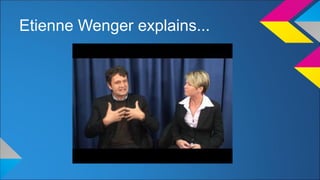
Etienne Wenger explains...
“Members of a community are informally bound by what 
they do together…” 
Defined by 3 dimensions: 
“What it is about…” 
“How it functions…” 
“What capability it has produced…” 
“...learning partnerships…” 
Wenger 1998
How do they differ from a traditional Professional 
Learning Community? (PLC or PLN) 
● Can be solely online or a blend of online and 
face-to-face in real time 
● Not reliant on a specific meeting time 
● Anytime, anywhere learning, communication 
and support 
● No one is an expert - everyone has expertise 
● No definitive completion date - ongoing
Online Communities of Practice 
● A blend of online and face-to-face 
communication works best 
● Designed to evolve 
● All perspectives and experience valued 
● Public and private discussion spaces 
● Trust is key
● Focused on value for learning 
● Familiarity and excitement of new and 
potential learning 
● Rhythm for the community - activities, 
meetings, virtual conferences and 
discussion, Internet activity - a mixture of 
formal and informal activity
The Vital Role of Social Media 
● Keep it simple and easy to access 
● Decide on your platforms
Benefits 
● Motivation 
● Connection 
● Engagement 
● Support and encouragement 
● Collaboration 
● Shared learning 
● Co-construction of knowledge
The Te@chThought Journey 
● February 2014: 13k members on the FB page 
● Goals: Create an online community of practice using 
Etienne Wenger’s model 
: Increase the community to 15k by the end of 
2014 (Currently standing at 19.5k) 
: Create a community where members are 
comfortable asking questions and sharing 
ideas 
and collaborate to share and create knowledge
Challenges 
● Taking a FB page and attempting to 
create a community 
● Global challenges - language, time 
zones, areas of interest / need
Initiatives to Date... 
● Twitter Chat #ttchat 
● Facebook - changing focus 
● Te@chThought Online Community Wiki - 
includes a discussion forum 
● Blogging Challenge
Coming up / Next phase.. 
● October - Connected Educator Month 
● Google Hangouts 
● Skype 
● Online Workshops
Getting Started 
● Know your target group and their common needs 
● Be clear regarding your purpose 
● Identify someone who is keen to be involved in running 
the community - preferably a student 
● Allow for, and encourage, legitimate peripheral 
participation 
● Create a safe, trusting learning environment to 
encourage participation 
● ‘Any and all ideas count’
● Focus on the learning 
● Build collaboration - look for your participants with 
expertise, passion and get them involved 
● Create leadership opportunities within the community 
● Developing ownership of the community by its members 
is key to its success 
● Identity development is vital
Maintaining Momentum 
● Find ways to encourage participation 
without being overly prescriptive 
● Relevancy is important 
● Informal rather than formal 
● Opportunities for face-to-face meetings 
where possible
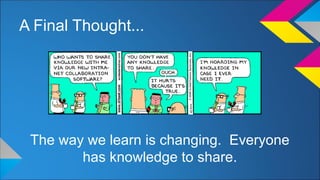
A Final Thought... 
The way we learn is changing. Everyone 
has knowledge to share.
Thank you! 
Web: www.theinnovativee.com 
Email: justine.hughes29@gmail.com 
Blog: http://k12motivation.blogspot.co.nz/ 
Facebook: https://www.facebook.com/elearningbuzz14 
Google+: google.com/+JustineHughes 
Twitter: @cossie29 
DDI: (09)236 6790 
Mob: 0276 369559

Pathways to collaboration

  • 1.
    Pathways to Collaboration Developing an Online Community of Practice Justine Hughes The Innovative E
  • 2.
    ● Teacher ●Education Consultant ● Masters’ - final year ● Global Education Conference - International Advisory Board member ● Social Media Manager ● Online Community Builder and Facilitator
  • 3.
    How Did IBecome Intrigued... ● Previous professional learning experiences ● Looking for ways to sustain learning, continue to create learning ● Have applied this to several age groups now - from younger students through to adults
  • 4.
    What are Communitiesof Practice? "A group of people who share a passion for what they do, something they know how to do and who interact regularly to learn how to do it better." Etienne Wenger
  • 5.
  • 6.
    “Members of acommunity are informally bound by what they do together…” Defined by 3 dimensions: “What it is about…” “How it functions…” “What capability it has produced…” “...learning partnerships…” Wenger 1998
  • 7.
    How do theydiffer from a traditional Professional Learning Community? (PLC or PLN) ● Can be solely online or a blend of online and face-to-face in real time ● Not reliant on a specific meeting time ● Anytime, anywhere learning, communication and support ● No one is an expert - everyone has expertise ● No definitive completion date - ongoing
  • 8.
    Online Communities ofPractice ● A blend of online and face-to-face communication works best ● Designed to evolve ● All perspectives and experience valued ● Public and private discussion spaces ● Trust is key
  • 9.
    ● Focused onvalue for learning ● Familiarity and excitement of new and potential learning ● Rhythm for the community - activities, meetings, virtual conferences and discussion, Internet activity - a mixture of formal and informal activity
  • 10.
    The Vital Roleof Social Media ● Keep it simple and easy to access ● Decide on your platforms
  • 11.
    Benefits ● Motivation ● Connection ● Engagement ● Support and encouragement ● Collaboration ● Shared learning ● Co-construction of knowledge
  • 12.
    The Te@chThought Journey ● February 2014: 13k members on the FB page ● Goals: Create an online community of practice using Etienne Wenger’s model : Increase the community to 15k by the end of 2014 (Currently standing at 19.5k) : Create a community where members are comfortable asking questions and sharing ideas and collaborate to share and create knowledge
  • 13.
    Challenges ● Takinga FB page and attempting to create a community ● Global challenges - language, time zones, areas of interest / need
  • 14.
    Initiatives to Date... ● Twitter Chat #ttchat ● Facebook - changing focus ● Te@chThought Online Community Wiki - includes a discussion forum ● Blogging Challenge
  • 15.
    Coming up /Next phase.. ● October - Connected Educator Month ● Google Hangouts ● Skype ● Online Workshops
  • 16.
    Getting Started ●Know your target group and their common needs ● Be clear regarding your purpose ● Identify someone who is keen to be involved in running the community - preferably a student ● Allow for, and encourage, legitimate peripheral participation ● Create a safe, trusting learning environment to encourage participation ● ‘Any and all ideas count’
  • 17.
    ● Focus onthe learning ● Build collaboration - look for your participants with expertise, passion and get them involved ● Create leadership opportunities within the community ● Developing ownership of the community by its members is key to its success ● Identity development is vital
  • 18.
    Maintaining Momentum ●Find ways to encourage participation without being overly prescriptive ● Relevancy is important ● Informal rather than formal ● Opportunities for face-to-face meetings where possible
  • 19.
    A Final Thought... The way we learn is changing. Everyone has knowledge to share.
  • 20.
    Thank you! Web:www.theinnovativee.com Email: justine.hughes29@gmail.com Blog: http://k12motivation.blogspot.co.nz/ Facebook: https://www.facebook.com/elearningbuzz14 Google+: google.com/+JustineHughes Twitter: @cossie29 DDI: (09)236 6790 Mob: 0276 369559

Editor's Notes

  • #4 Talk about cluster, LPDP, School experience with disengaged students, adults - talk about the big initiative at TeachThought shortly
  • #5 Learning focus but an important social aspect
  • #6 Wenger
  • #7 Old format of teacher and student being separate with one holding the knowledge is changing.
  • #8 Discuss previous learning communities / professional development Tutorials, etc. Now no one needs to miss discussions. Time to think, ponder. Sustainability of learning and creation of new learning together. Student engagement in the learning is higher because they are part of the process - it doesn’t work without them.
  • #9 Evolution - changes according to needs and new learning. Key is learning from each other no matter what level of experience
  • #11 Talk about example in a minute
  • #14 Challenges to date. Needed to find something to spark interest..
  • #15 FB page changes from solely sharing posts from the TT website
  • #17 Importance of trust. Boundaries and guidelines. Lurkers are fine. Assumption we made that not many were involved in the #ttchat
  • #18 Beth’s involvement here
  • #19 My experience with online learning and the requirements for posting, contributing
  • #20 Be careful of our assumptions. Need to build confidence and knowledge that everyone has something to share.