
JASMINE PLANT:
 Jasmine is a genus of shrubs and vines in the olive
family (Oleaceae).
 It contains around 200 species native to tropical and
warm temperate regions of Europe, Asia, and Africa.
 Jasmines are widely cultivated for the characteristic
fragrance of their flowers.
 This easy-to-grow climber produces beautiful clusters
of starry flowers you can smell from feet away.
 Most jasmines bloom in late winter or early spring, but
some such as Arabian jasmine will flower throughout
the year.
JASMINE PLANT:
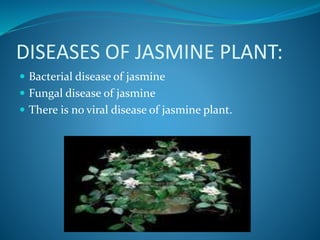
DISEASES OF JASMINE PLANT:
 Bacterial disease of jasmine
 Fungal disease of jasmine
 There is no viral disease of jasmine plant.
Bacterial disease of Jasmine:
 BACTERIAL BLIGHT:
 CAUSATIVE AGENT:
Pseudomonas syringae
Pseudomonas syringae is a rod-shaped, Gram-negative
bacterium with polar flagella.
It can infect a wide range of species.
P. syringae is a member of the Pseudomonas genus.
P. syringae also produces Ina proteins which cause water to
freeze at fairly high temperatures, resulting in injury to
plants.
SCIENTIFIC CLASSIFICATION:
 Kingdom: Bacteria
 Phylum: Proteobacteria
 Class: Gamma Proteobacteria
 Order: Pseudomonadales
 Family: Pseudomonadaceae
 Genus: Pseudomonas
 Species: P. syringae
CULTURE OF Pseudomonas syringae:
HOSTS:
 Pseudomonas syringae is responsible for a number of
economically important diseases in the Pacific
Northwest.
 This bacterium can infect a wide variety of fruits,
vegetables, and ornamental plants.
SYMPTOMS:
 A variety of symptoms are associated with woody
plants infected by Pseudomonas syringae.
 Flower blast: flowers and/or flower buds turn brown to
black.
 Dead dormant buds, common on cherries and
apricots.
 Necrotic leaf spots (entire clusters of younger,
expanding leaves may be killed on filbert trees).
 Discolored and or blackened leaf veins and petioles
resulting from systemic invasion and infection.
CONT…..
 Shoot-tip dieback, which appears as dead, blackened
twig tissue extending down some distance from the
tip.
SOURCES OF BACTERIA:
 On or in bud and twig tissue
 In cankers formed the previous season
 In or on grasses and herbaceous weeds
TRANSMISSION:
 Pseudomonas syringae can be moved from place to
place by wind, rain, insects, infested bud wood, and
transportation of infested nursery stock.
 Mechanical equipment and pruning tools also may be
a frequently overlooked means of dispersal or of
generating aerosols containing the bacteria.
CONTROL:
 Do not use infected plants as stock or sources of bud
wood.
 Avoid planting susceptible species in frost-prone areas.
 Avoid fertilization practices that result in very
succulent growth in the early spring or in the fall.
 Prune in the winter or very early spring.
 Disinfect pruning shears between plants.
FUNGAL DISEASE:
1-Southern Blight:
This is soil-borne fungal infection is also called
mustard-seed fungus, Southern wilt or stem rot.
Tiny, hardened masses of fungal spores (sclerotia)
that resemble mustard seeds may be found in the
soil around the jasmine plant, and white, threadlike
structures appear above the soil line.
CAUSITIVE AGENT
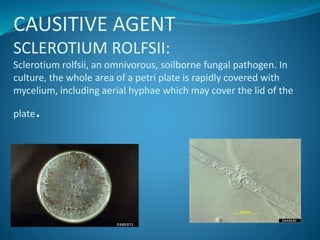
SCLEROTIUM ROLFSII:
Sclerotium rolfsii, an omnivorous, soilborne fungal pathogen. In
culture, the whole area of a petri plate is rapidly covered with
mycelium, including aerial hyphae which may cover the lid of the
plate.
SYMPTOMS:
1) The first symptom you see will be yellowed,
wilting lower leaves, even though the fungus .
2) White thready mycelium spread in stem and
roots.
CONTROL:
Southern blight is difficult to control. Prevention is the
best course of action in the garden.
1)Check new plants for mycelium threads before planting.
2)Remove mulch from around the plant, since the fungus can
overwinter in this material.
3)Sanitize garden tools before pruning away blighted areas of the
jasmine, and destroy cuttings away from the garden.
4) No fungicides are available to control southern
blight. If the jasmine is severely infected, remove
and destroy it.
5) Plant resistant ornamental plants in the
jasmine's place
Pythium and Rhizoctonia:
Also called damping-off, Pythium primarily attacks the
jasmine's roots, while Rhizoctonia can infect all parts of the plant.
CAUSITIVE AGENT:
Pythium and Rhizoctonia
SYMPTOMS:
1)Infected roots soften and darken, and new shoots on the plant
may grow in distorted or turn brown and lifeless.
2) Plants experience slow growth, decline and may eventually die.
TRANSMITION:
Poor soil drainage, limited air circulation, heavy rainfall or
overhead irrigation may all contribute to spread of this disease.
PREVENTION:
Prevention is the best course of action in the garden.
1) Check new plants for mycelium threads before planting.
2)Remove mulch from around the plant, since the fungus can
overwinter in this material.
3)Sanitize garden tools before pruning .
4) No fungicides are available to control southern blight. If the
jasmine is severely infected, remove and destroy it.

Pathology jasmine

  • 2.
    JASMINE PLANT:  Jasmineis a genus of shrubs and vines in the olive family (Oleaceae).  It contains around 200 species native to tropical and warm temperate regions of Europe, Asia, and Africa.  Jasmines are widely cultivated for the characteristic fragrance of their flowers.  This easy-to-grow climber produces beautiful clusters of starry flowers you can smell from feet away.  Most jasmines bloom in late winter or early spring, but some such as Arabian jasmine will flower throughout the year.
  • 3.
  • 4.
    DISEASES OF JASMINEPLANT:  Bacterial disease of jasmine  Fungal disease of jasmine  There is no viral disease of jasmine plant.
  • 5.
    Bacterial disease ofJasmine:  BACTERIAL BLIGHT:  CAUSATIVE AGENT: Pseudomonas syringae Pseudomonas syringae is a rod-shaped, Gram-negative bacterium with polar flagella. It can infect a wide range of species. P. syringae is a member of the Pseudomonas genus. P. syringae also produces Ina proteins which cause water to freeze at fairly high temperatures, resulting in injury to plants.
  • 6.
    SCIENTIFIC CLASSIFICATION:  Kingdom:Bacteria  Phylum: Proteobacteria  Class: Gamma Proteobacteria  Order: Pseudomonadales  Family: Pseudomonadaceae  Genus: Pseudomonas  Species: P. syringae
  • 7.
  • 8.
    HOSTS:  Pseudomonas syringaeis responsible for a number of economically important diseases in the Pacific Northwest.  This bacterium can infect a wide variety of fruits, vegetables, and ornamental plants.
  • 9.
    SYMPTOMS:  A varietyof symptoms are associated with woody plants infected by Pseudomonas syringae.  Flower blast: flowers and/or flower buds turn brown to black.  Dead dormant buds, common on cherries and apricots.  Necrotic leaf spots (entire clusters of younger, expanding leaves may be killed on filbert trees).  Discolored and or blackened leaf veins and petioles resulting from systemic invasion and infection.
  • 10.
    CONT…..  Shoot-tip dieback,which appears as dead, blackened twig tissue extending down some distance from the tip.
  • 11.
    SOURCES OF BACTERIA: On or in bud and twig tissue  In cankers formed the previous season  In or on grasses and herbaceous weeds
  • 12.
    TRANSMISSION:  Pseudomonas syringaecan be moved from place to place by wind, rain, insects, infested bud wood, and transportation of infested nursery stock.  Mechanical equipment and pruning tools also may be a frequently overlooked means of dispersal or of generating aerosols containing the bacteria.
  • 13.
    CONTROL:  Do notuse infected plants as stock or sources of bud wood.  Avoid planting susceptible species in frost-prone areas.  Avoid fertilization practices that result in very succulent growth in the early spring or in the fall.  Prune in the winter or very early spring.  Disinfect pruning shears between plants.
  • 14.
    FUNGAL DISEASE: 1-Southern Blight: Thisis soil-borne fungal infection is also called mustard-seed fungus, Southern wilt or stem rot. Tiny, hardened masses of fungal spores (sclerotia) that resemble mustard seeds may be found in the soil around the jasmine plant, and white, threadlike structures appear above the soil line.
  • 15.
    CAUSITIVE AGENT SCLEROTIUM ROLFSII: Sclerotiumrolfsii, an omnivorous, soilborne fungal pathogen. In culture, the whole area of a petri plate is rapidly covered with mycelium, including aerial hyphae which may cover the lid of the plate.
  • 16.
    SYMPTOMS: 1) The firstsymptom you see will be yellowed, wilting lower leaves, even though the fungus . 2) White thready mycelium spread in stem and roots.
  • 17.
    CONTROL: Southern blight isdifficult to control. Prevention is the best course of action in the garden. 1)Check new plants for mycelium threads before planting. 2)Remove mulch from around the plant, since the fungus can overwinter in this material. 3)Sanitize garden tools before pruning away blighted areas of the jasmine, and destroy cuttings away from the garden.
  • 18.
    4) No fungicidesare available to control southern blight. If the jasmine is severely infected, remove and destroy it. 5) Plant resistant ornamental plants in the jasmine's place
  • 19.
    Pythium and Rhizoctonia: Alsocalled damping-off, Pythium primarily attacks the jasmine's roots, while Rhizoctonia can infect all parts of the plant.
  • 20.
  • 21.
    SYMPTOMS: 1)Infected roots softenand darken, and new shoots on the plant may grow in distorted or turn brown and lifeless. 2) Plants experience slow growth, decline and may eventually die. TRANSMITION: Poor soil drainage, limited air circulation, heavy rainfall or overhead irrigation may all contribute to spread of this disease.
  • 22.
    PREVENTION: Prevention is thebest course of action in the garden. 1) Check new plants for mycelium threads before planting. 2)Remove mulch from around the plant, since the fungus can overwinter in this material. 3)Sanitize garden tools before pruning . 4) No fungicides are available to control southern blight. If the jasmine is severely infected, remove and destroy it.