PLANT DISEASES
MUhammad Imran Tipu
imran.tipu@iub.edu.pk
BLACK SPOT
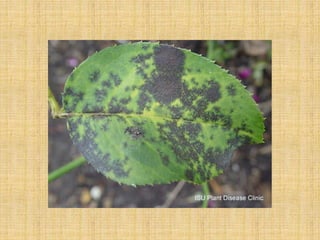
• Black spot of rose, also known as leaf blotch, and leaf spot, is
a disease caused by a fungus called Diplocarpon rosae. The
optimal conditions for disease development are 75-85° F and
high relative humidity. Infection may be greatest on leaves
that remain wet for six hours or longer. Leaves and canes can
become infected.
CHLOROSIS
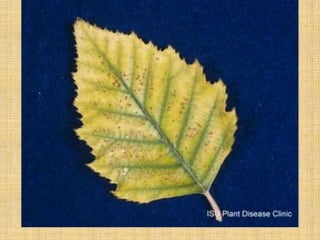
• Chlorosis is a yellowing of leaf tissue due to a
lack of chlorophyll. Possible causes of chlorosis
include poor drainage, damaged roots,
compacted roots, high alkalinity, and nutrient
deficiencies in the plant.
DAMPING OFF
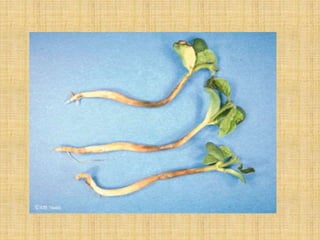
• Damping-off is a common disease that kills seedlings in the
greenhouse. Damping-off can kill both germinating seeds and
young seedlings. Several fungi can cause this disease,
including Rhizoctonia solani, Pythium spp., Phytophthora spp.,
Sclerotinia spp., and Botrytis spp. Most of these fungi can also
cause cuttings to rot. These fungi are found in practically all
soils and pose a large threat to plant propagation. Practically
all species of plants can be affected.
FIRE BLIGHT
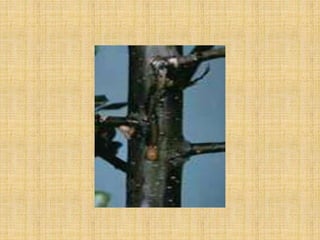
• Fire blight is the enemy of rosebushes and apple and pear
trees. It is caused by a bacteria (erwinia amylovora) which
attacks starting generally from the blossoms or flowers and
moving up to the twigs and then the branches. Fire blight gets
its name from the burnt appearance of affected blossoms and
twigs.
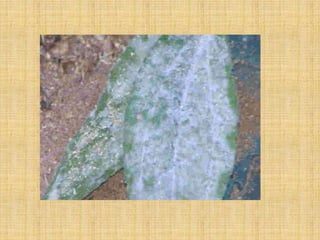
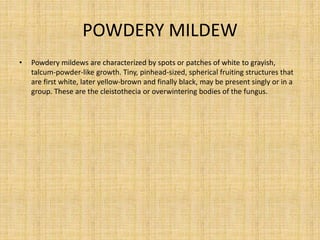
POWDERY MILDEW
• Powdery mildews are characterized by spots or patches of white to grayish,
talcum-powder-like growth. Tiny, pinhead-sized, spherical fruiting structures that
are first white, later yellow-brown and finally black, may be present singly or in a
group. These are the cleistothecia or overwintering bodies of the fungus.
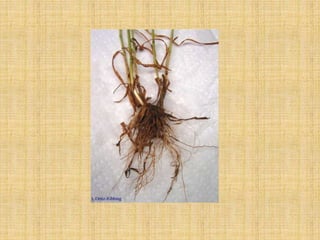
ROOT ROT
• Root rot is a condition found in both indoor and outdoor plants, although more
common in indoor plants with poor drainage. As the name states, the roots of the plant
rot. Usually, this is a result of overwatering. In houseplants, it is a very common
problem, and is slightly less common in outdoor plants. In both indoor and outdoor
plants, it is usually lethal and there is no effective treatment. The excess water makes it
very difficult for the roots to get the air that they need, causing them to decay. To avoid
root rot, it is best to only water plants when the soil becomes dry, and to put the plant
in a well-drained pot. Using a heavy soil, such as one dug up from outdoors can also
cause root rot.
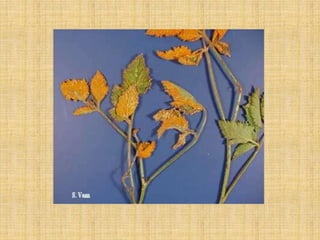
RUST
• Plant rust is a general term that refers to a rather large family of fungi that
attack plants. Frequently, when a plant is affected by rust fungi, many
gardeners feel at a loss as to what to do. Rust treatment as a plant disease
is startling but can be treated.

Plant diseases, symptoms.ppt

  • 1.
    PLANT DISEASES MUhammad ImranTipu imran.tipu@iub.edu.pk
  • 3.
    BLACK SPOT • Blackspot of rose, also known as leaf blotch, and leaf spot, is a disease caused by a fungus called Diplocarpon rosae. The optimal conditions for disease development are 75-85° F and high relative humidity. Infection may be greatest on leaves that remain wet for six hours or longer. Leaves and canes can become infected.
  • 5.
    CHLOROSIS • Chlorosis isa yellowing of leaf tissue due to a lack of chlorophyll. Possible causes of chlorosis include poor drainage, damaged roots, compacted roots, high alkalinity, and nutrient deficiencies in the plant.
  • 7.
    DAMPING OFF • Damping-offis a common disease that kills seedlings in the greenhouse. Damping-off can kill both germinating seeds and young seedlings. Several fungi can cause this disease, including Rhizoctonia solani, Pythium spp., Phytophthora spp., Sclerotinia spp., and Botrytis spp. Most of these fungi can also cause cuttings to rot. These fungi are found in practically all soils and pose a large threat to plant propagation. Practically all species of plants can be affected.
  • 9.
    FIRE BLIGHT • Fireblight is the enemy of rosebushes and apple and pear trees. It is caused by a bacteria (erwinia amylovora) which attacks starting generally from the blossoms or flowers and moving up to the twigs and then the branches. Fire blight gets its name from the burnt appearance of affected blossoms and twigs.
  • 11.
    POWDERY MILDEW • Powderymildews are characterized by spots or patches of white to grayish, talcum-powder-like growth. Tiny, pinhead-sized, spherical fruiting structures that are first white, later yellow-brown and finally black, may be present singly or in a group. These are the cleistothecia or overwintering bodies of the fungus.
  • 13.
    ROOT ROT • Rootrot is a condition found in both indoor and outdoor plants, although more common in indoor plants with poor drainage. As the name states, the roots of the plant rot. Usually, this is a result of overwatering. In houseplants, it is a very common problem, and is slightly less common in outdoor plants. In both indoor and outdoor plants, it is usually lethal and there is no effective treatment. The excess water makes it very difficult for the roots to get the air that they need, causing them to decay. To avoid root rot, it is best to only water plants when the soil becomes dry, and to put the plant in a well-drained pot. Using a heavy soil, such as one dug up from outdoors can also cause root rot.
  • 15.
    RUST • Plant rustis a general term that refers to a rather large family of fungi that attack plants. Frequently, when a plant is affected by rust fungi, many gardeners feel at a loss as to what to do. Rust treatment as a plant disease is startling but can be treated.