MAIZE LEAF SPOTS
Prepared by,
Bidarshi Maji,Roll-09
5th sem,PPC-311
Pests and disease are destroying about one fifth of all crop production around the world and
at least 10% of the global food production is lost through plant disease alone (FAO, 2000)
mainly in West Africa and South Asia. Maize (Zea mays L.) crop suffers from various biotic
and abiotic constraints resulting in considerable yield loss. Among these,
gray leaf spot is one of the most destructive and yield-limiting foliar disease in the world
(Tehon and Daniels, 1925). The disease has been getting agricultural importance in
tropical, subtropical and temperate maize growing areas worldwide in the last 30 years
(Pingali and Pandey, 2002).
Leaf spots of maize are caused by several bacteria and fungi and they develop their
respective symptoms on leaves of maize plants. Leaf spots of various sizes are by different
pathogens.
The following bacteria cause leaf spot symptoms on maize plants.
Bacterial leaf spot caused by Xanthomonas campestris pv. Holicola;
Choclate spot caused by Pseudomonas syringae pv. Coronafeciens ; and
holocus spot caused by P. Syringae pv. Syringae
LEAF SPOTS OF MAIZE
INTRODUCTION
The following fungi causing spots or lesions on leaves are-
 Brown spot caused by Physoderma maydis
Curvularia leafspot caused by Curvularia lunata
Zonate caused by Gloeocercospora sorghi
Grey leaf spot caused by Cercospora zeae-maydis
Didymella leaf spot caused by Didymella exitails
Phaeosphaeria leafspot caused by Phaeosphaeria maydis
LEAF SPOTS OF MAIZE
GREY LEAF SPOT
INTRODUCTION
 Grey leaf spot is caused by cercospora zea-maydis and cercospora zeina.
 Grey leaf spot is a serious foliar disease of maize in many temperate and tropical highland
regions of the world.
 Gray leaf spot was first described in the U.S.A. in 1925 on corn in Alexander County, IL.
 The disease is now recognised as one of the most significant yield-limiting disease of
maize world wide.
 Not only it is threat to commercial maize production,but also a threat to small-scale
farmers.
PATHOGEN FACTS
Gray leaf spot (GLS) is a common fungal disease in
the United States caused by the pathogen Cercospora
zeae-maydis in corn.
Disease development is favored by warm
temperatures, 80°F or 27 °C; and high humidity,
relative humidity of 90% or higher for 12 hours or
more.Cercospora zeae-maydis overwinters in corn
residue, allowing inoculum to build up from year to
year in fields.
Cropping systems with reduced- or no-till and/or
continuous corn are at higher risk for gray leaf spot
outbreaks.
Conducive weather conditions encourage the rapid
spread of disease near the end of summer and early fall,
when corn plants allocate more resources to grainfill.
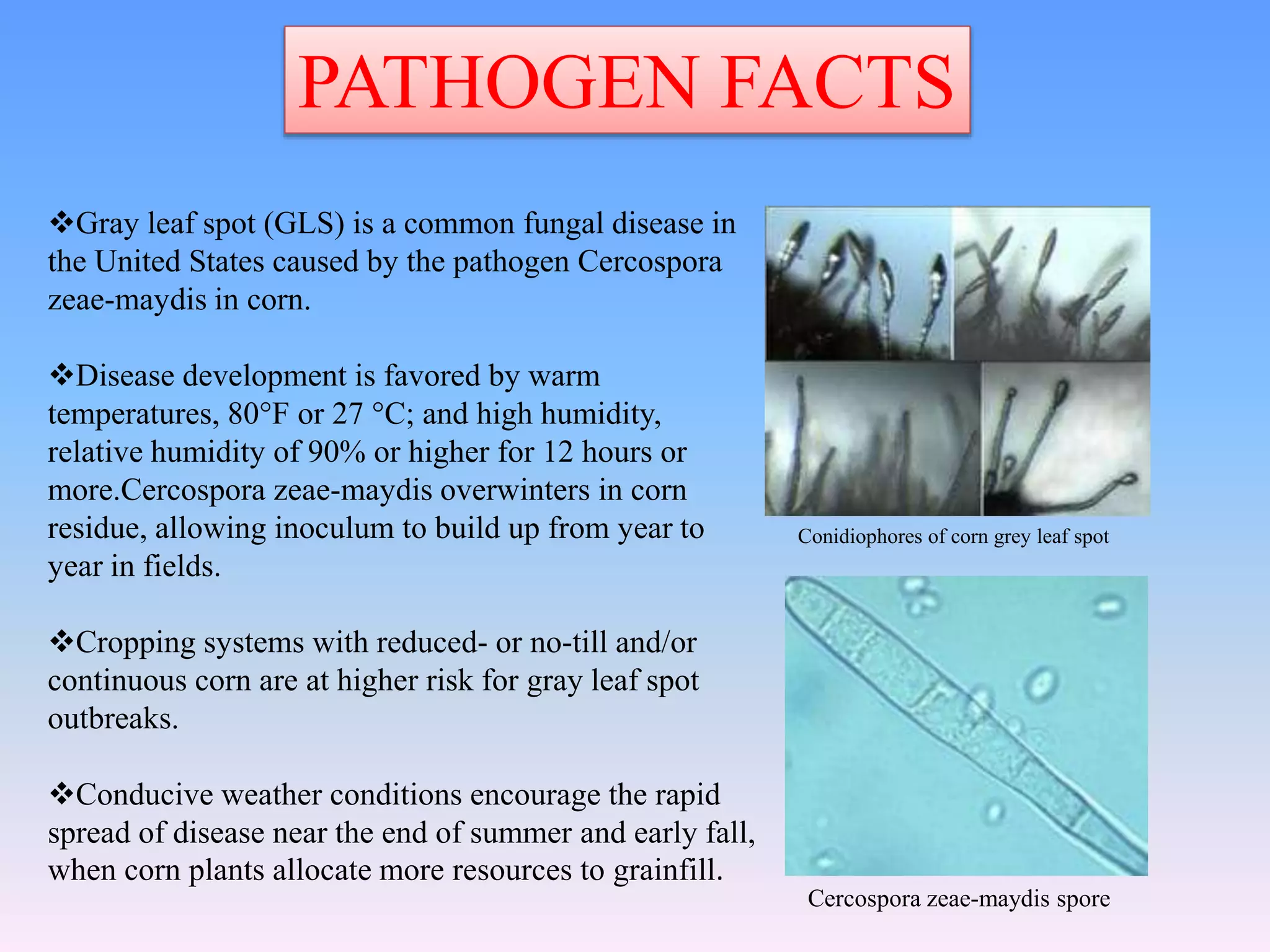
Cercospora zeae-maydis spore
Conidiophores of corn grey leaf spot
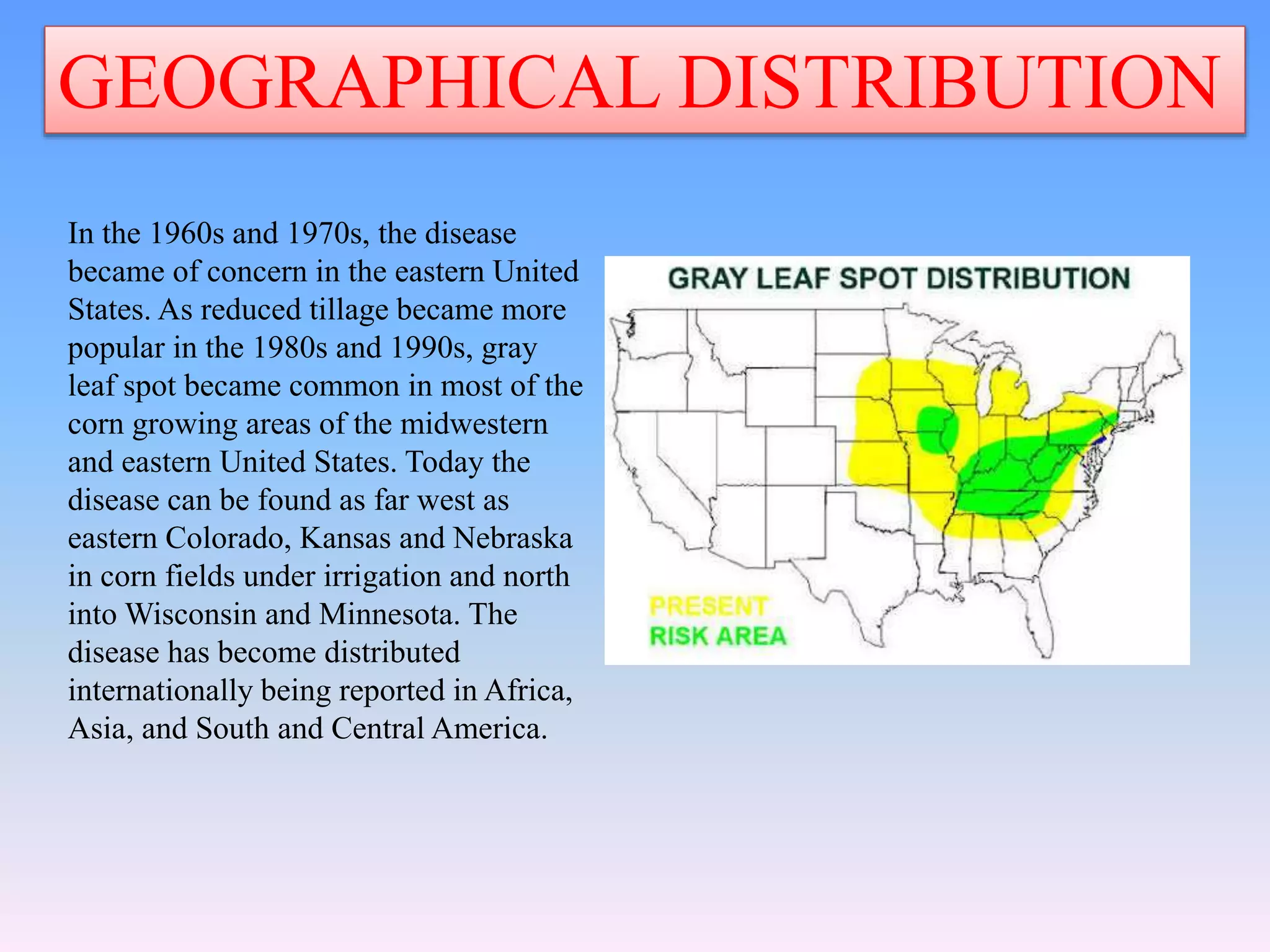
GEOGRAPHICAL DISTRIBUTION
In the 1960s and 1970s, the disease
became of concern in the eastern United
States. As reduced tillage became more
popular in the 1980s and 1990s, gray
leaf spot became common in most of the
corn growing areas of the midwestern
and eastern United States. Today the
disease can be found as far west as
eastern Colorado, Kansas and Nebraska
in corn fields under irrigation and north
into Wisconsin and Minnesota. The
disease has become distributed
internationally being reported in Africa,
Asia, and South and Central America.
EPIDEMIOLOGY
An understanding of the epidemiology of gray
leaf spot is helpful in explaining why the
disease has increased in intensity, severity and
distribution. C. zeae-maydis overwinters in the
debris of previously diseased corn plants
remaining on the soil surface. In spring,
conidia (spores) are produced and disseminated
to corn plants by wind and rain splashing. They
require several days of high relative humidity
to successfully germinate and infect corn
leaves. Several weeks may be needed for the
development of mature lesions on leaves.
Conidia for secondary spread are produced
from two to four weeks after initial leaf
infection. Tillage systems that leave sufficient
previously diseased crop residue on the soil
surface provide sufficient primary inoculum to
produce severe levels of gray leaf spot.
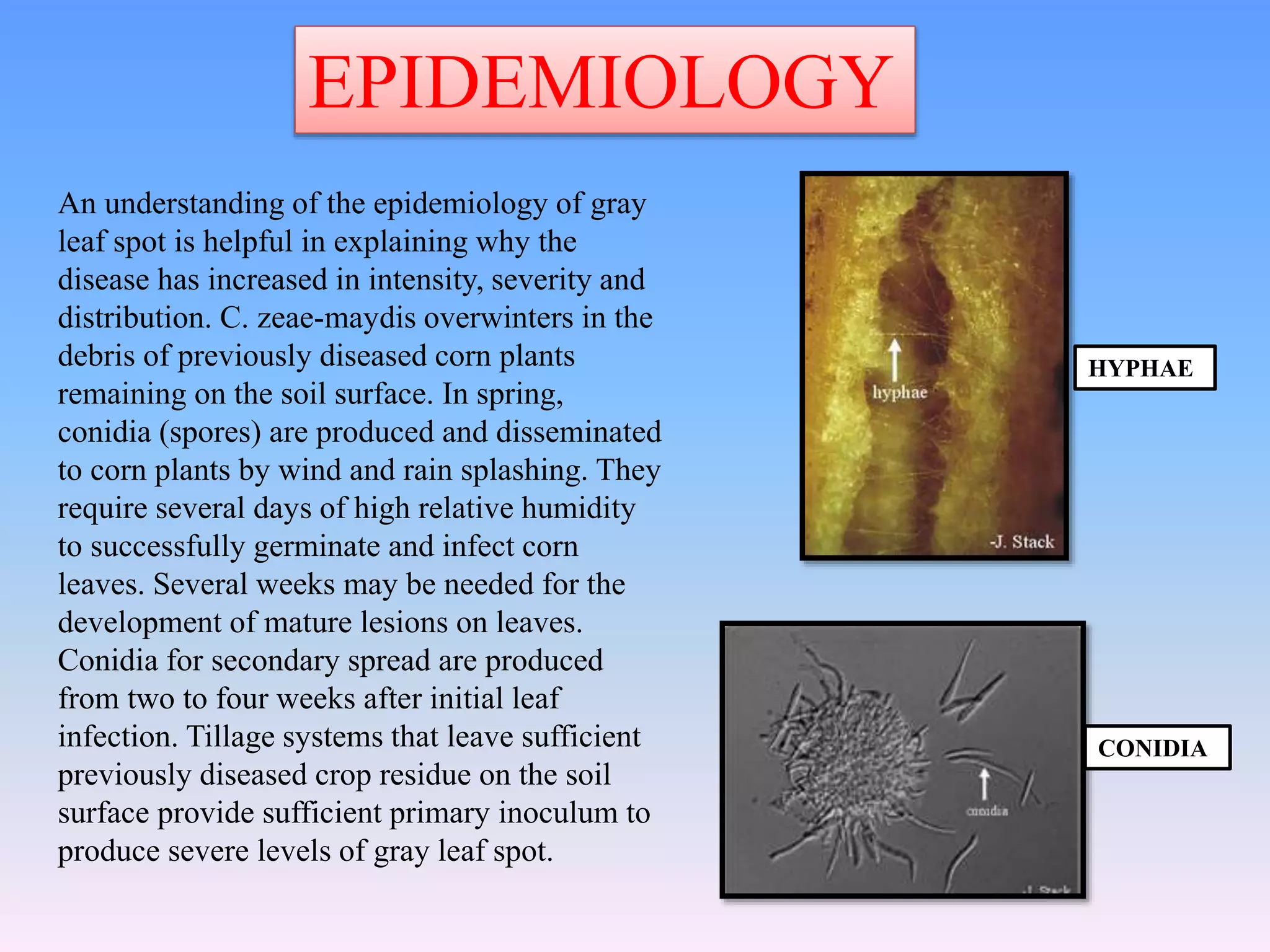
HYPHAE
CONIDIA
SYMPTOMPS
All corn hybrids and inbreds are susceptible to Gray Leaf Spot (GLS). In minimum tillage
fields with a history of GLS, symptoms can occur on the lower leaves prior to tasseling.
Immature GLS lesions can be easily confused with lesions caused by other pathogens; e.g.,
eyespot (Kabatiella), anthracnose (Colletrichum). Mature lesions on leaves are rectangular in
shape and restricted by leaf veins; reverse lighting reveals a yellow halo on most hybrids.
Mature lesions are diagnostic and easily distinguishable from other diseases. As lesions
expand they coalesce resulting in a blighting of large portions of the leaf. When the source of
primary innoculum is within the field, symptoms originate on the lower leaves and progress
up the plant as infection cycles occur. When severe, the entire plant may be blighted. Stalk
infections have been reported and can result in lodging if severe. Lesions on sheath or husk
tissues may be be oval to ellipsoidal in shape and are not usually diagnostic. Severely
affected fields can appear to be experiencing early dry-down. The time from infection to the
production of more innoculum can be 14-21 days on a susceptible hybrid and 21-28 days on
a tolerant hybrid.
Immature lescions Mature lescions
Sheath and husk
Enitire plant
Blighting
GREY LEAF
SPOT
DISEASE CYCLE
Lesions resulting from the initial infection
produce spores that are wind- or rain-splashed to
the upper leaves. Under unfavourable conditions
(hot, dry weather), the fungus can remain
dormant and then resume rapid development as
soon as favourable weather conditions return .In
mid- to late-season plantings and under
favourable conditions, lesions may first appear
on the mid- to upper-canopy as a result of wind-
blown spores from adjacent infected maize. Such
late season infections may be serious because it is
the upper canopy that contributes 75 to 90% of
the photosynthate for grain fill. The occurrence
of fewer and/or shorter periods of high humidity
early in the growing season may account for the
slower rate of early-season disease development
(during the months of November and December).
In contrast, good early season rains and more
periods of high humidity (in November and
December) have led to a higher frequency of
early-season lesions (and more severe disease).
YIELD LOSS
Gray leaf spot must damage leaves at or just after silking growth stage to
cause severe yield reduction. Early blighting of the leaves above the ear leaf
leads to severe yield losses exceeding 50%. Blighting that does not occur
until well into the grain fill period probably results in very little yield loss.
Research has shown that there is not a direct relationship between the level of
disease and yield loss. Several factors may contribute to this response,
including yield potential of the hybrid, and the ability of leaf blighting to
predispose hybrids to stalk rots. Premature stalk death and lodging is
enhanced by severe leaf blighting.
MANAGEMENT
Rotate maize with legumes such as beans, cowpeas and groundnuts, or cereals other
than maize.
You may also rotate maize with a deep-rooted crop such as sunflower and cotton
which will also improve the soil.
Use grey leaf spot resistant maize varieties available from various seed companies.
Read brochures of seed suppliers to know if the variety is resistant or not.Plant on time,
preferably at the onset of rains, because the disease will attack later. Planting on time
will mean the disease will have little effect on yield.
You may also consider spraying fungicides when the disease is seen on the leaves. You
may use Flusilazole/ Carbendazim -products or Tebuconazole-products in a 16 litre
sprayer. Before spraying, observe the weather to ensure that it will not rain until at least
6 hours after spraying.
BACTERIAL LEAF SPOT
Bacterial leaf streak, caused by Xanthomonas vasicola pv. vasculorum (synonym
X. campestris pv. zeae).
It was confirmed for the first time in the United States in Nebraska in 2016 and
has now been confirmed in Colorado, Illinois, Iowa, and Kansas.
The disease had only been reported on corn previously in South Africa, although
the pathogen has caused gumming disease, a serious disease on sugarcane in several
other countries.
The disease has been confirmed in corn across many Nebraska counties.
GEOGRAPHICAL DISTRIBUTION
Bacterial leaf streak has a wide geographical distribution .In North America, it has been
reported in the United States, Canada and Mexico. In South America, it occurs in
Argentina, Bolivia, parts of Brazil, Paraguay, Peru and Uruguay.The disease is known on
wheat in China,Pakistan and Iran, and on triticale in India (Richardson and Waller, 1974).
In the Near and Middle East, it affects durum (T. turgidum var. durum L.) and bread
wheat in irrigated areas of Syria ,Israel ,Turkey and Yemen .The disease currently seems
to be absent from Western Europe, probably due to unfavourable environmental
conditions, particularly low temperatures. In Africa, BLS has been found in Kenya,
Ethiopia ,South Africa,Tanzania, Libya and Madagascar , Morocco,and Zambia,In
Australia, BLS has been recorded on wheat and rye in New South Wales.
SYMPTOMPS
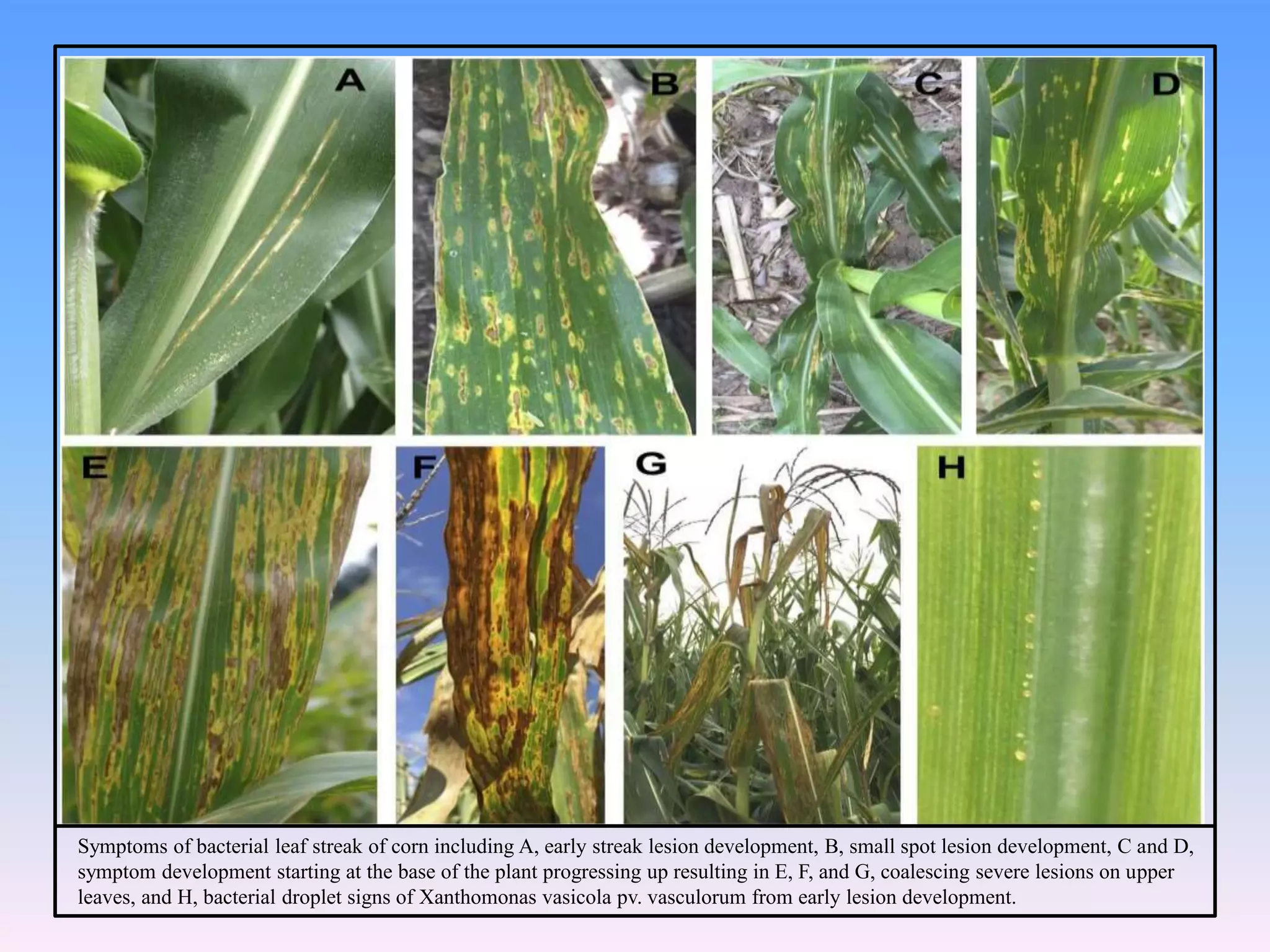
BLS starts as narrow long (varies from ½ an inch to several inches) tannish-
orange brown lesions between the leaf veins. As symptoms advance, the lesions
expand and become wavy at the edges of the lesion. They may coalesce to form
larger lesions. When the symptomatic leaf is held against light, the lesions
appear transparent. The typical sign for the BLS pathogen is bacterial
streaming when the symptomatic leaf is cut and put in water (streaming is seen
under a microscope). The main distinguishing symptom of BLS from other
diseases with close symptoms such as gray leaf spot is the wavy margins. The
symptoms can develop as early as V7 growth stage.
EPIDEMIOLOGY
Bacterial leaf streak has been observed on field (dent) corn, seed corn, popcorn,
and sweet corn in Nebraska. The pathogen biology and disease epidemiology
have not been studied enough to be well understood. Its potential impact on
yield is not known in commercially available hybrids. The pathogen survives in
infected corn debris from previous seasons and is thought to infect the plant
through natural openings in the leaves. Irrigation and wind-driven rain, as well
as warm temperatures, are thought to exacerbate the disease.
Symptoms of bacterial leaf streak of corn including A, early streak lesion development, B, small spot lesion development, C and D,
symptom development starting at the base of the plant progressing up resulting in E, F, and G, coalescing severe lesions on upper
leaves, and H, bacterial droplet signs of Xanthomonas vasicola pv. vasculorum from early lesion development.
DISEASE CYCLE
MANAGEMENT
Current observations to date suggest that severe infestations of this disease can have
an impact on yield but exactly how much is yet to be determined. Yield losses appear
to be minimal if extensive symptoms are not present before or during grain fill. This
disease can also contribute to more losses in yield when it appears alongside other
foliar diseases such as GLS and Northern Corn Leaf Blight (NCLB) (Exserohilum
turcicum). Fungicides are not effective against this disease as the pathogen is a
bacterium. Current (mostly) copper-based bactericides are contact products and are
readily washed away by rainfall or irrigation water. This means that multiple
applications would be required to control it effectively. The best method of control at
this stage is agronomic practices, targeting inoculum pressure, such as tillage, rotation
to a non-host crop, good weed management (which can act as alternate hosts) and
limiting the spread of residue from field to field. To date, there are no commercially
available maize hybrids that are resistant to this disease, however there are variations
among different cultivars.
DIFFERENCE GLS AND BLS
Symptoms of Bacterial Leaf Streak can
easily be confused with that of such as
Grey Leaf Spot (GLS) (Cercospora zeae-
maydis). The differences are simple;
lesions caused by GLS are much more
rectangular and sharper, while those of
BLS are often slightly jagged and wavy
upon closer inspection. Also, under
humid conditions, the bacteria
sometimes exude yellow and sticky
droplets whereas GLS can have dark
fungal structures appearing on the
surface. Differences between GLS (left) and BLS(right)
BROWN LEAF SPOT
Physoderma brown spot is caused by the chytridiomycete fungus, Physoderma
maydis (syn. P. zeae-maydis), which is closely related to the oomycete or water mold
fungi, such as the downy mildews.
This disease is normally an infrequent, minor disease in corn that we observe during
most years to a low degree.
However, during some summers when weather conditions are more conducive for
disease development, the disease can develop and greater incidence and cause alarm
because its symptoms are similar to some other more serious diseases.
Physoderma brown spot is more prevalent in wet growing seasons. Infection requires a
combination of light, free water, and warm temperatures (75-85°F). Leaf infection
occurs in the whorl when water is present for an extended time.
SYMPTOMPS
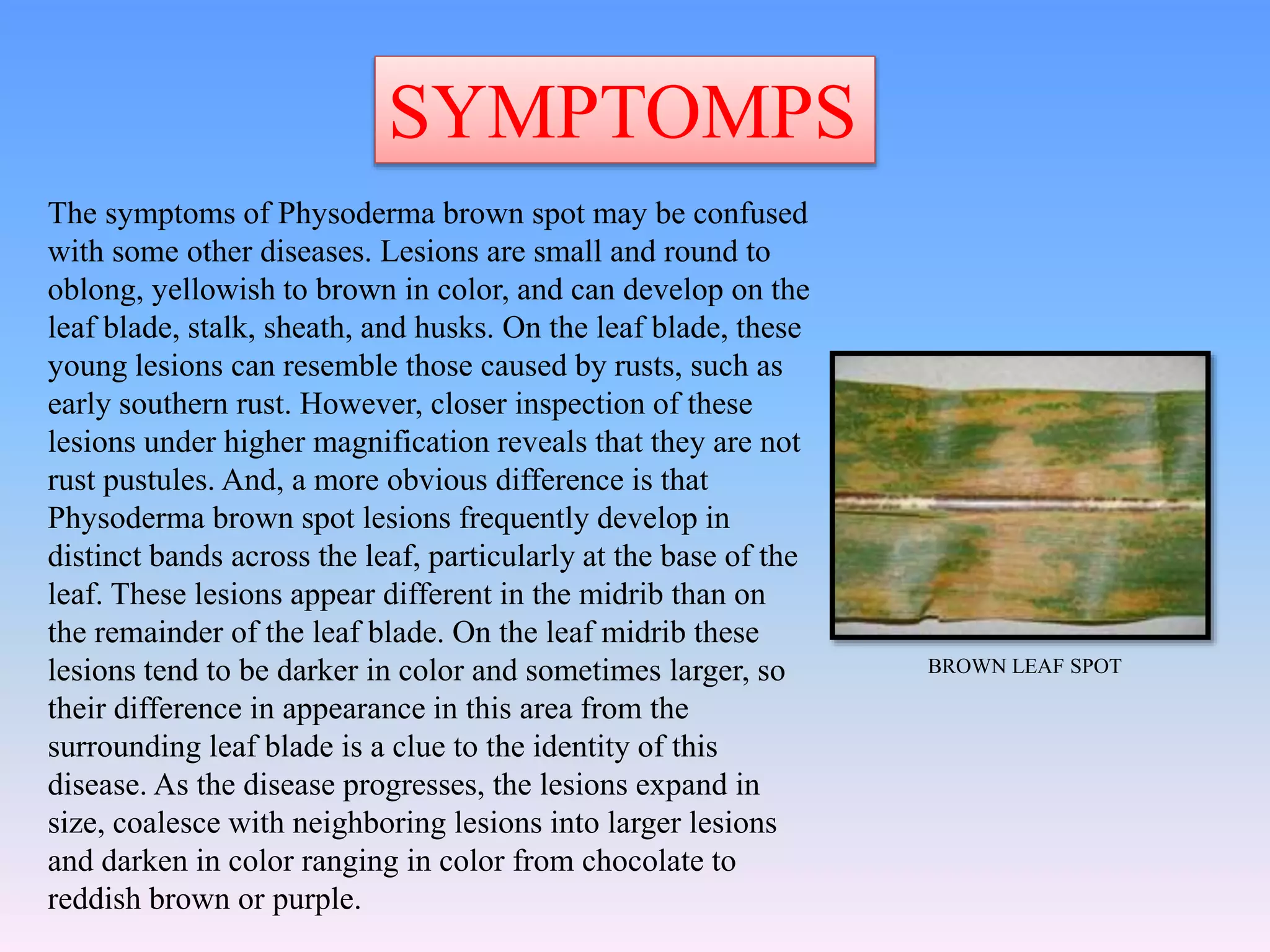
The symptoms of Physoderma brown spot may be confused
with some other diseases. Lesions are small and round to
oblong, yellowish to brown in color, and can develop on the
leaf blade, stalk, sheath, and husks. On the leaf blade, these
young lesions can resemble those caused by rusts, such as
early southern rust. However, closer inspection of these
lesions under higher magnification reveals that they are not
rust pustules. And, a more obvious difference is that
Physoderma brown spot lesions frequently develop in
distinct bands across the leaf, particularly at the base of the
leaf. These lesions appear different in the midrib than on
the remainder of the leaf blade. On the leaf midrib these
lesions tend to be darker in color and sometimes larger, so
their difference in appearance in this area from the
surrounding leaf blade is a clue to the identity of this
disease. As the disease progresses, the lesions expand in
size, coalesce with neighboring lesions into larger lesions
and darken in color ranging in color from chocolate to
reddish brown or purple.
BROWN LEAF SPOT
EPIDEMIOLOGY
The causal agent of this disease produces brown
sporangia that are packed inside infected cells
(pictured). Each sporangium releases up to 50 motile
zoospores that require both light and water to
germinate and infect the plant. Infection most
commonly occurs in the whorl where water tends to
accumulate during periods of rain and irrigation
which is why lesions tend to develop in bands across
the leaf. This pathogen, like several others in
Nebraska, survives in crop debris and may be more
common in continuous corn and fields with
abundant residue, such as where reduced tillage
practices are employed.
PHYSODERMAAFFECTED CELL
MANAGEMENT
Although disease resistant germplasm is available in areas where the
disease is a more consistent and serious problem, this disease is
considered of minor importance in the Midwest and seed companies do
not promote resistance to it in their hybrids in this region. There are some
fungicides labeled for management of Physoderma brown spot, but this
disease is rarely a threat to yield and shouldn't normally require treatment.
Accurate identification of this disease is important, though, to avoid
unnecessary treatment due to a disease misdiagnoses.
HOLCUS LEAF SPOT
The pathogen is a bacterium called Pseudomonas syringae pv. syringae. It
overwinters in crop debris. The pathogen has a wide host range including many grasses
and dicots. It can have ice nucleating activity that may enhance frost injury to corn
leaves.
Holcus leaf spot usually does not cause major losses.
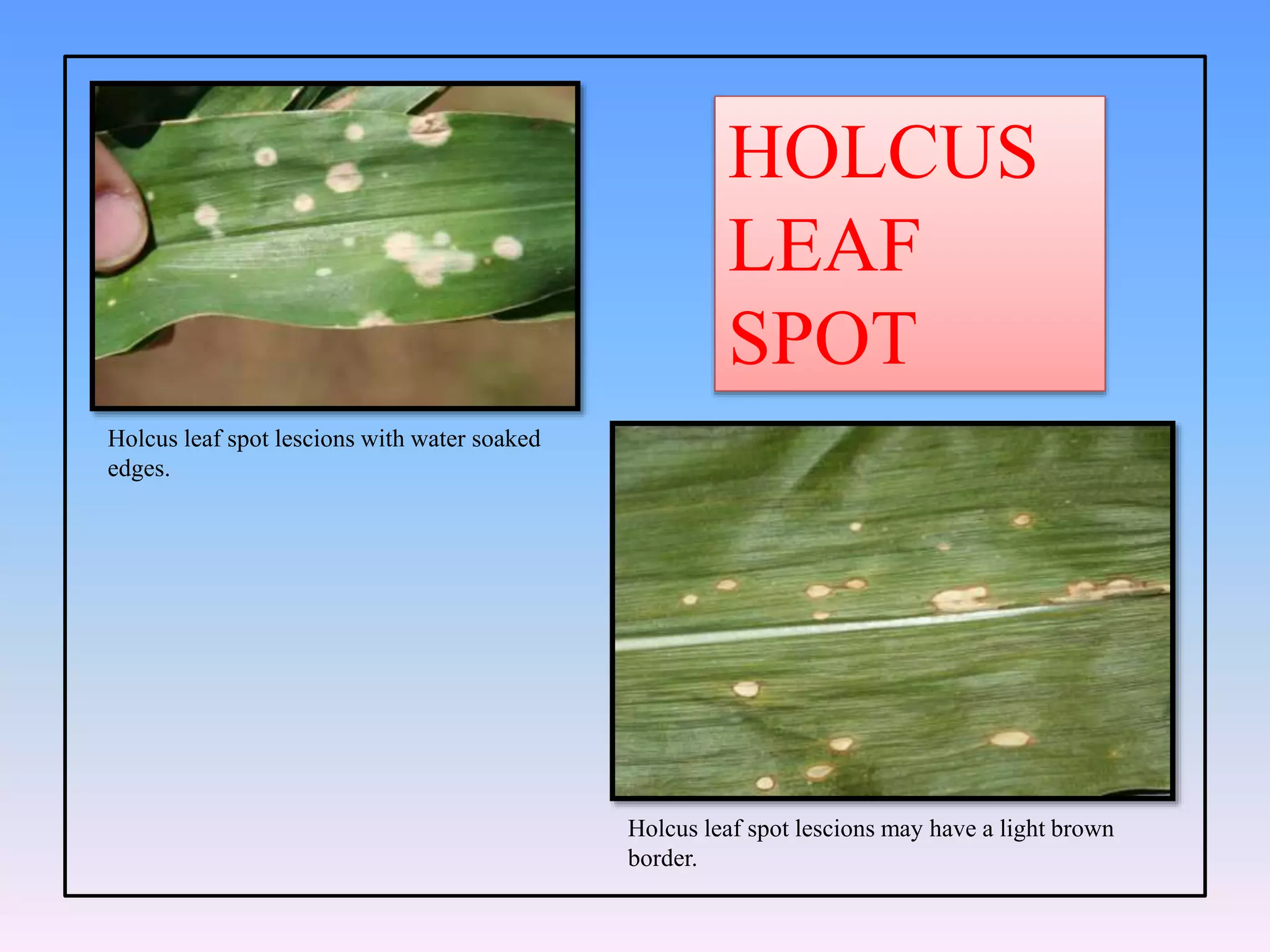
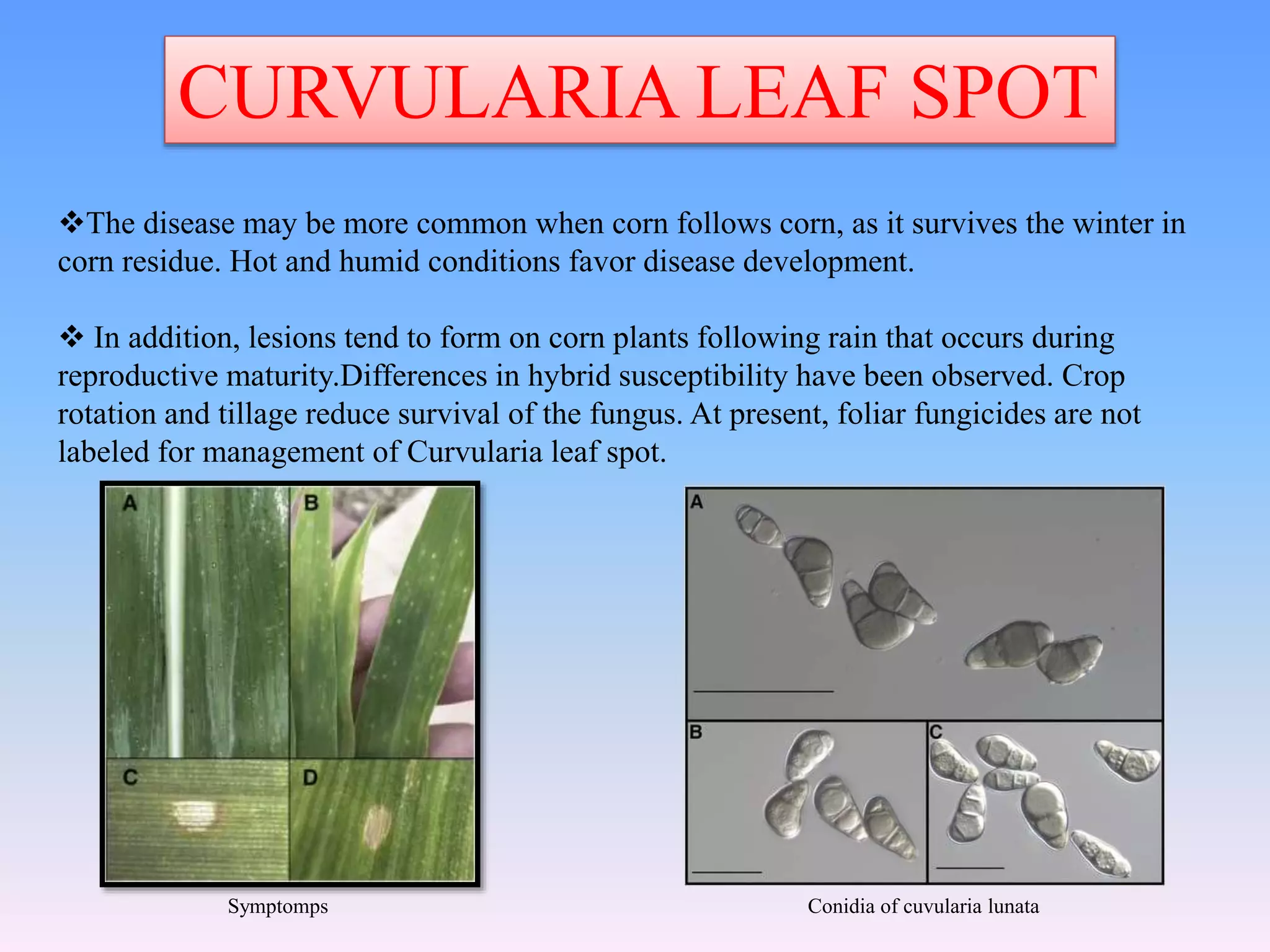
Leaf spots are initially oval to irregular, dark green, water-soaked at the margins, and
may have a light brown border. Later, lesions dry out and turn light tan, usually without
a border. The dry lesions have a papery texture.
Holcus leaf spot often follows warm (77-86°F), rainy weather early in the season.
SYMPTOMPS
Symptoms of Holcus leaf spot begin as dark green lesions with water-soaked margins
near the tips of lower corn leaves, and progress into round or ovalshaped light brown to
white spots around 1/8- to 1/4-inch in diameter. Reddish brown margins can form around
the lesions, surrounded by yellow halos. Lesions can expand and merge with streaks of
necrotic tissue, eventually drying out and having a papery texture.
Careful identification is important as Holcus leaf spot can be mistaken as paraquat drift
damage due to similar symptomology on both the corn crop and several species of
surrounding weed hosts.3 Holcus leaf spot may also be mistaken for a fungal disease like
eyespot, which also has round spots with a brown border and yellow halo (Figure 2).2
However, eyespot lesions are considerably smaller and more numerous than those of
Holcus leaf spot as shown when comparing Figures 1 and 2. Misdiagnosing a bacterial
disease as a fungal disease can lead to unnecessary fungicide application.
HOLCUS
LEAF
SPOT
Holcus leaf spot lescions with water soaked
edges.
Holcus leaf spot lescions may have a light brown
border.
MANAGEMENT
Holcus leaf spot is generally superficial, and does not negatively impact
corn yield potential. Management of weedy hosts and tillage may help
reduce overwintering of the pathogen in crop residue, but only when it is
practical to do so.There are no in-season management options for Holcus
leaf spot. It is important to carefully distinguish between Holcus leaf spot,
which does not require treatment, and a possible fungal disease which may
benefit from a fungicide application.
CURVULARIA LEAF SPOT
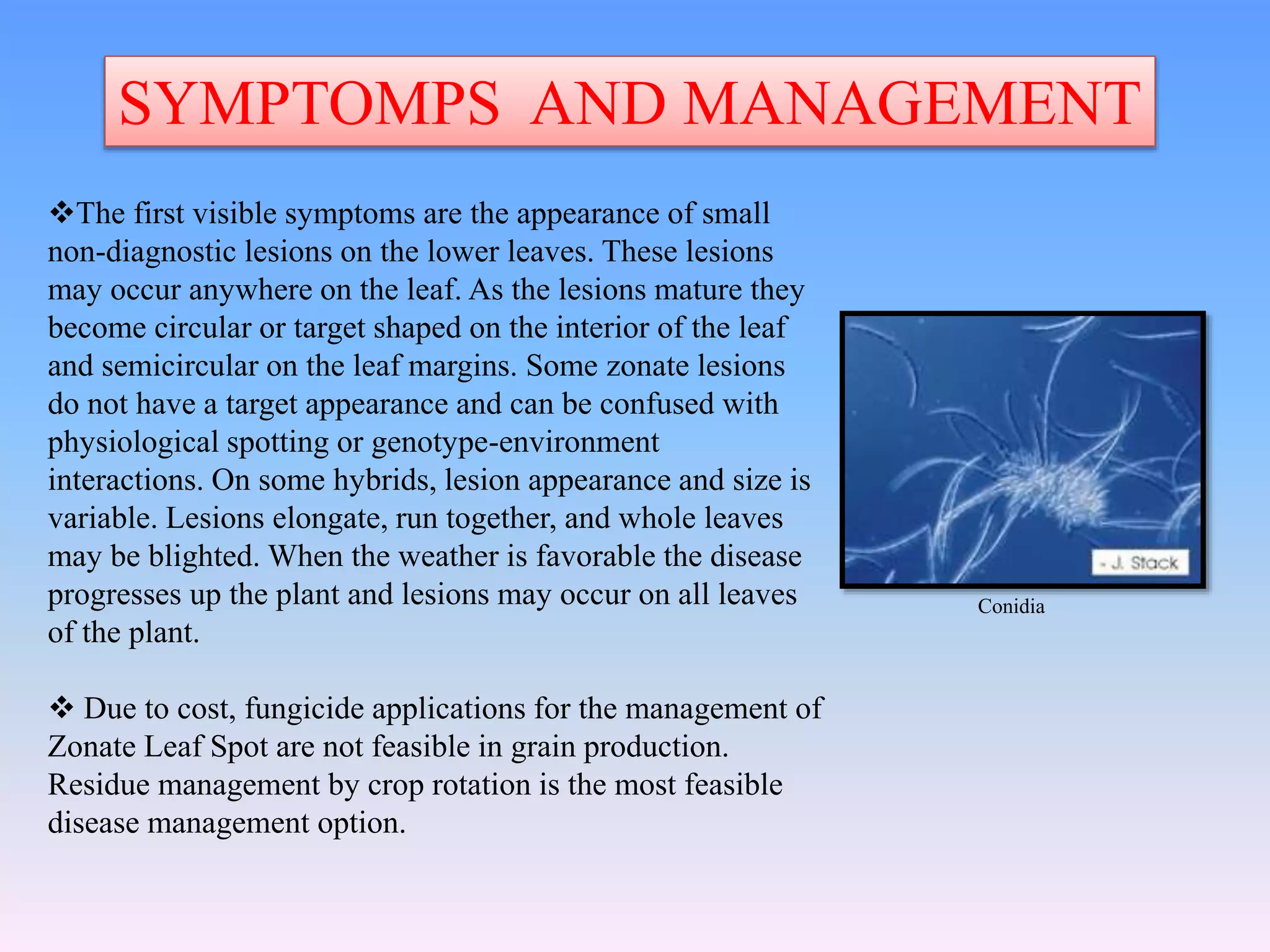
Curvularia leaf spot is caused by the fungus Curvularia lunata.
The disease was officially reported in the U.S. for the first time in 2017 and has been
observed in multiple states.
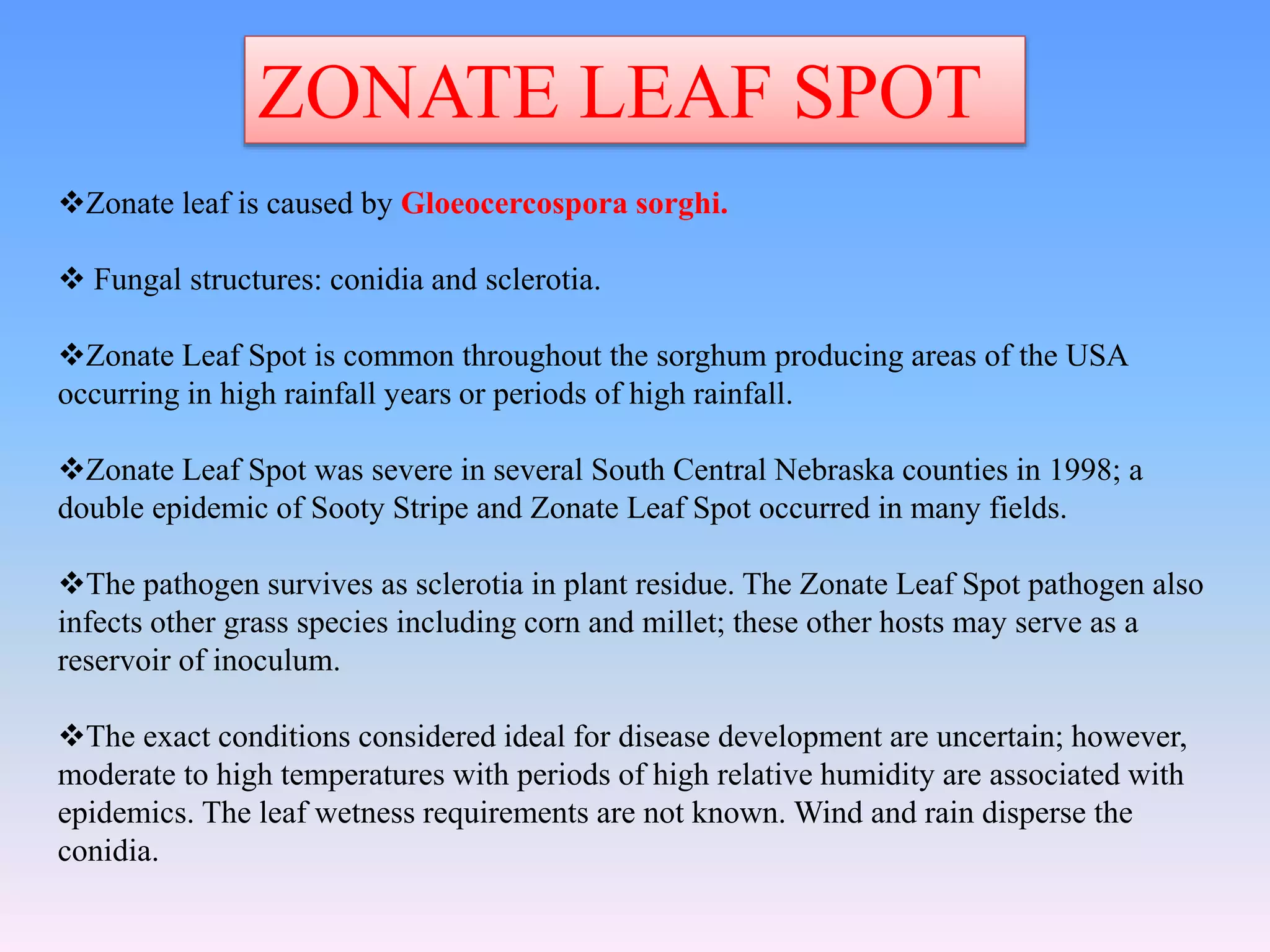
Symptoms include small, tan-colored lesions with brown margins that may be
surrounded by a yellowish halo. Lesions can be scattered across the leaf or in dense
groups and can join together into larger necrotic areas.
 Lesions are often observed on leaves in the mid to upper corn canopy, but can
appear at any growth stage. Symptoms of Curvularia leaf spot can look similar to those
of eyespot.
In general, Curvularia leaf spot has been considered to be more of an aesthetic issue
than a yield-limiting disease in the United States.
CURVULARIA LEAF SPOT
The disease may be more common when corn follows corn, as it survives the winter in
corn residue. Hot and humid conditions favor disease development.
 In addition, lesions tend to form on corn plants following rain that occurs during
reproductive maturity.Differences in hybrid susceptibility have been observed. Crop
rotation and tillage reduce survival of the fungus. At present, foliar fungicides are not
labeled for management of Curvularia leaf spot.
Symptomps Conidia of cuvularia lunata
ZONATE LEAF SPOT
Zonate leaf is caused by Gloeocercospora sorghi.
 Fungal structures: conidia and sclerotia.
Zonate Leaf Spot is common throughout the sorghum producing areas of the USA
occurring in high rainfall years or periods of high rainfall.
Zonate Leaf Spot was severe in several South Central Nebraska counties in 1998; a
double epidemic of Sooty Stripe and Zonate Leaf Spot occurred in many fields.
The pathogen survives as sclerotia in plant residue. The Zonate Leaf Spot pathogen also
infects other grass species including corn and millet; these other hosts may serve as a
reservoir of inoculum.
The exact conditions considered ideal for disease development are uncertain; however,
moderate to high temperatures with periods of high relative humidity are associated with
epidemics. The leaf wetness requirements are not known. Wind and rain disperse the
conidia.
SYMPTOMPS AND MANAGEMENT
The first visible symptoms are the appearance of small
non-diagnostic lesions on the lower leaves. These lesions
may occur anywhere on the leaf. As the lesions mature they
become circular or target shaped on the interior of the leaf
and semicircular on the leaf margins. Some zonate lesions
do not have a target appearance and can be confused with
physiological spotting or genotype-environment
interactions. On some hybrids, lesion appearance and size is
variable. Lesions elongate, run together, and whole leaves
may be blighted. When the weather is favorable the disease
progresses up the plant and lesions may occur on all leaves
of the plant.
 Due to cost, fungicide applications for the management of
Zonate Leaf Spot are not feasible in grain production.
Residue management by crop rotation is the most feasible
disease management option.
Conidia
Lescion appearance Zonate lescions
blighted
Disease progress
ZONATE LEAF SPOT
PHAEOSPHAERIA LEAF SPOT
Phaeosphaeria leaf spot is caused by Phaeosphaeria maydis
Phaeosphaeria leaf spot (PLS) is increasingly being considered a major disease of
maize in parts of South Africa, especially in KwaZulu-Natal in the mist belt,Winterton
and Bergville areas and is considered a potential threat to maize production in regions
where high humidity and low night time temperatures are prevalent during the growing
season.
Yield losses can be most severe when upper leaves are severely blighted by PLS
during the early reproductive growth stages of the maize plant. In many maize growing
regions however, conditions favourable for PLS exist only towards the end of the
growing season and hence yield loss is minimal. In Brazil, PLS is considered a
particularly important disease of maize where yield losses as high as 60% have been
recorded.
However, PLS remains a late season disease and is considered of minor importance in
most maize growing regions
PHAEOSPHAERIA LEAF SPOT
P. maydis overwinters on crop debris.
 During subsequent growing seasons, in response to favourable climatic conditions
(high rainfall and moderate temperatures),spores are rain splash and wind disseminated
to freshly planted maize where they germinate on foliar tissue.
Spores produced in disease lesions initiate secondary cycles of infection during the
season.
 Humidity levels above 70% and night time temperatures above 14°C strenathen
disease severity.
SYMPTOMPS
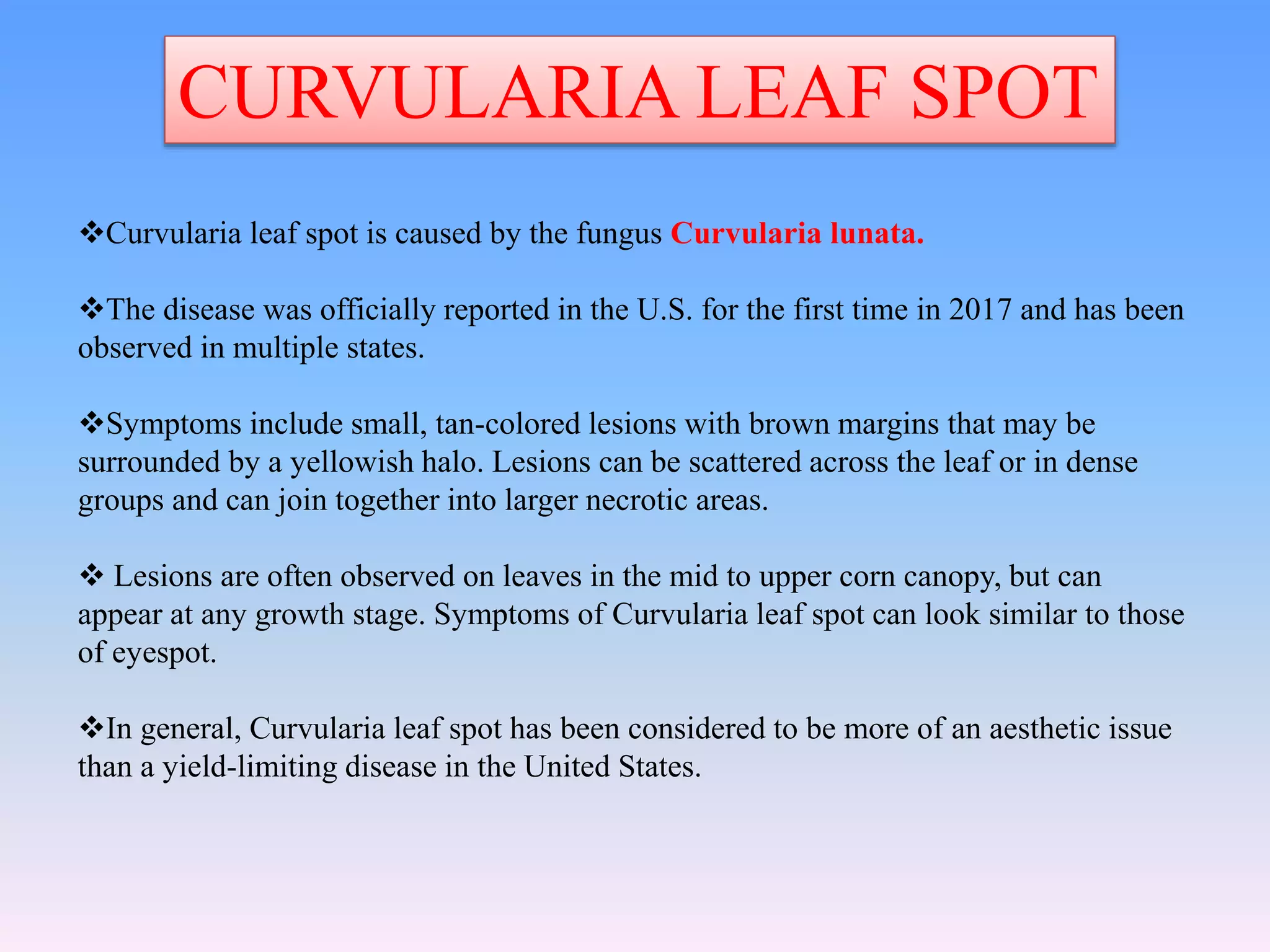
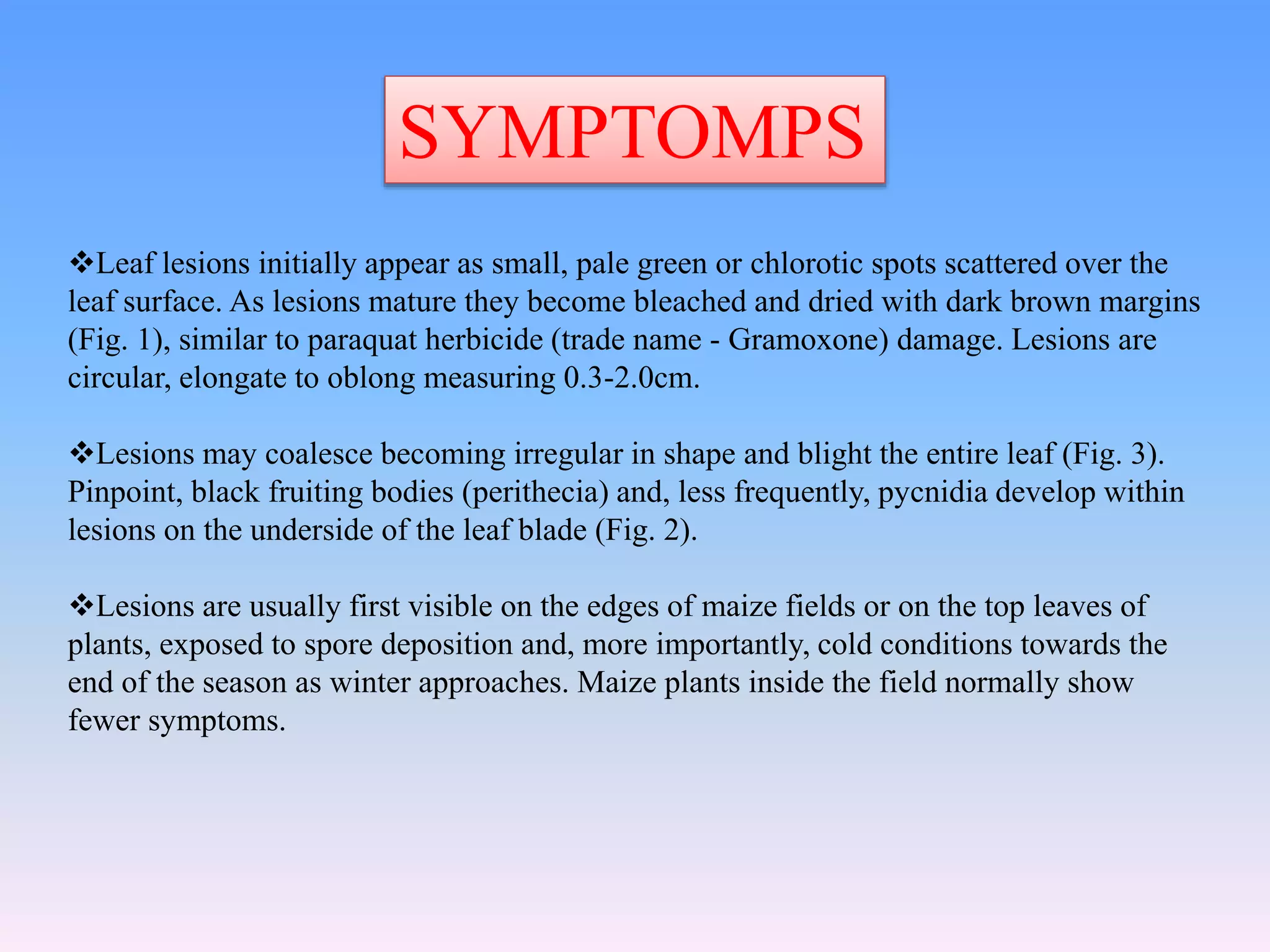
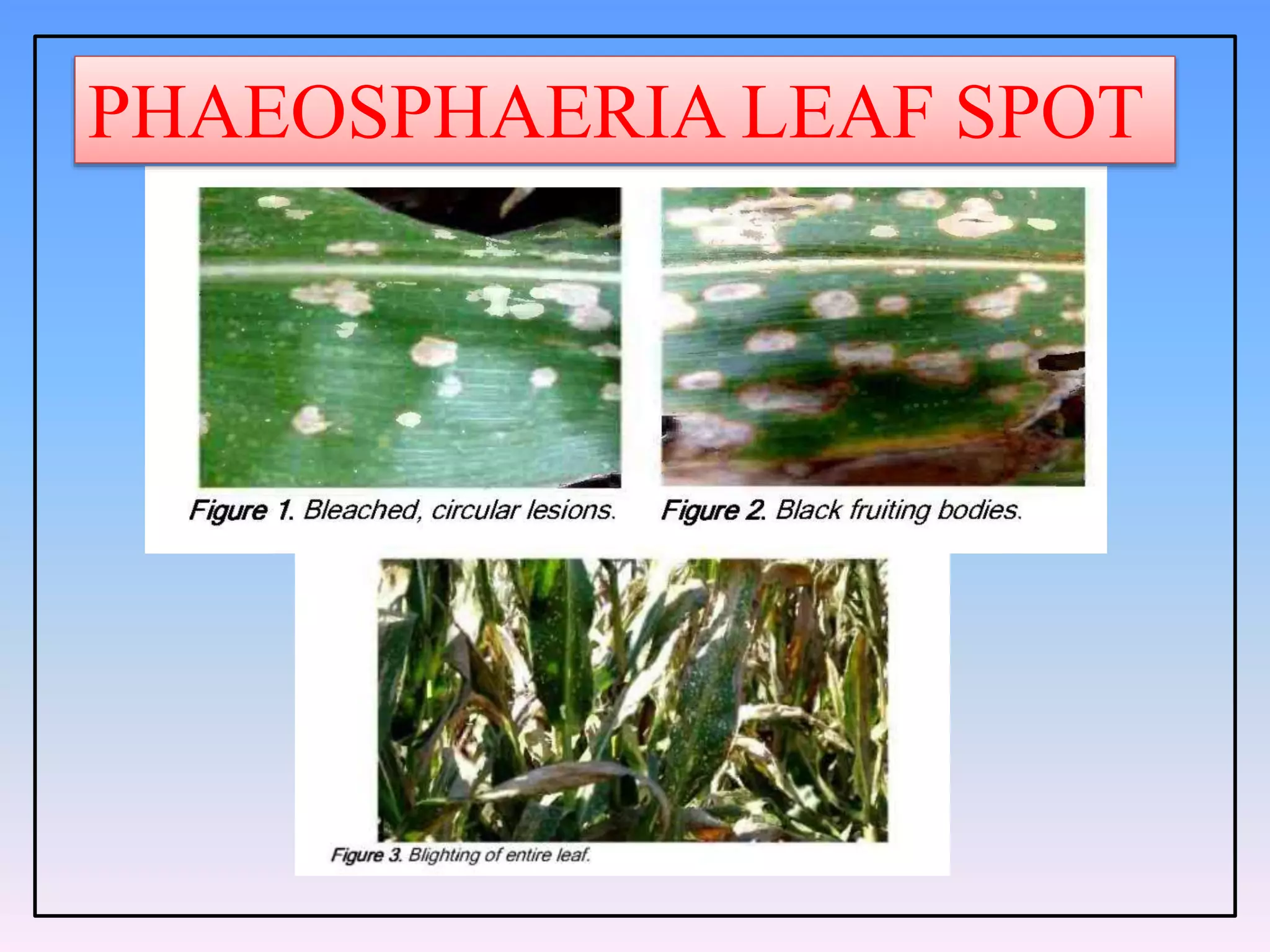
Leaf lesions initially appear as small, pale green or chlorotic spots scattered over the
leaf surface. As lesions mature they become bleached and dried with dark brown margins
(Fig. 1), similar to paraquat herbicide (trade name - Gramoxone) damage. Lesions are
circular, elongate to oblong measuring 0.3-2.0cm.
Lesions may coalesce becoming irregular in shape and blight the entire leaf (Fig. 3).
Pinpoint, black fruiting bodies (perithecia) and, less frequently, pycnidia develop within
lesions on the underside of the leaf blade (Fig. 2).
Lesions are usually first visible on the edges of maize fields or on the top leaves of
plants, exposed to spore deposition and, more importantly, cold conditions towards the
end of the season as winter approaches. Maize plants inside the field normally show
fewer symptoms.
PHAEOSPHAERIA LEAF SPOT
MANAGEMENT
Cultural control:
In regions where PLS is a serious foliar disease, the use of resistant hybrids is the most
cost-effective and practical means of disease management.
Management of infected crop residue will reduce disease inoculum at the onset of the
subsequent growing season.
Cultivation of maize during periods that are unfavourable for disease development can
also reduce crop damage.
Chemical control:
In South Africa, fungicides currently used and registered to control Common rust,
Grey leaf spot and Northern corn leaf blight in spray programmes does not seem to
provide adequate control against PLS. New combinations and timing of applications are
currently being investigated.
-THANK YOU-

Maize leaf spots

  • 1.
    MAIZE LEAF SPOTS Preparedby, Bidarshi Maji,Roll-09 5th sem,PPC-311
  • 2.
    Pests and diseaseare destroying about one fifth of all crop production around the world and at least 10% of the global food production is lost through plant disease alone (FAO, 2000) mainly in West Africa and South Asia. Maize (Zea mays L.) crop suffers from various biotic and abiotic constraints resulting in considerable yield loss. Among these, gray leaf spot is one of the most destructive and yield-limiting foliar disease in the world (Tehon and Daniels, 1925). The disease has been getting agricultural importance in tropical, subtropical and temperate maize growing areas worldwide in the last 30 years (Pingali and Pandey, 2002). Leaf spots of maize are caused by several bacteria and fungi and they develop their respective symptoms on leaves of maize plants. Leaf spots of various sizes are by different pathogens. The following bacteria cause leaf spot symptoms on maize plants. Bacterial leaf spot caused by Xanthomonas campestris pv. Holicola; Choclate spot caused by Pseudomonas syringae pv. Coronafeciens ; and holocus spot caused by P. Syringae pv. Syringae LEAF SPOTS OF MAIZE INTRODUCTION
  • 3.
    The following fungicausing spots or lesions on leaves are-  Brown spot caused by Physoderma maydis Curvularia leafspot caused by Curvularia lunata Zonate caused by Gloeocercospora sorghi Grey leaf spot caused by Cercospora zeae-maydis Didymella leaf spot caused by Didymella exitails Phaeosphaeria leafspot caused by Phaeosphaeria maydis LEAF SPOTS OF MAIZE
  • 4.
    GREY LEAF SPOT INTRODUCTION Grey leaf spot is caused by cercospora zea-maydis and cercospora zeina.  Grey leaf spot is a serious foliar disease of maize in many temperate and tropical highland regions of the world.  Gray leaf spot was first described in the U.S.A. in 1925 on corn in Alexander County, IL.  The disease is now recognised as one of the most significant yield-limiting disease of maize world wide.  Not only it is threat to commercial maize production,but also a threat to small-scale farmers.
  • 5.
    PATHOGEN FACTS Gray leafspot (GLS) is a common fungal disease in the United States caused by the pathogen Cercospora zeae-maydis in corn. Disease development is favored by warm temperatures, 80°F or 27 °C; and high humidity, relative humidity of 90% or higher for 12 hours or more.Cercospora zeae-maydis overwinters in corn residue, allowing inoculum to build up from year to year in fields. Cropping systems with reduced- or no-till and/or continuous corn are at higher risk for gray leaf spot outbreaks. Conducive weather conditions encourage the rapid spread of disease near the end of summer and early fall, when corn plants allocate more resources to grainfill. Cercospora zeae-maydis spore Conidiophores of corn grey leaf spot
  • 6.
    GEOGRAPHICAL DISTRIBUTION In the1960s and 1970s, the disease became of concern in the eastern United States. As reduced tillage became more popular in the 1980s and 1990s, gray leaf spot became common in most of the corn growing areas of the midwestern and eastern United States. Today the disease can be found as far west as eastern Colorado, Kansas and Nebraska in corn fields under irrigation and north into Wisconsin and Minnesota. The disease has become distributed internationally being reported in Africa, Asia, and South and Central America.
  • 7.
    EPIDEMIOLOGY An understanding ofthe epidemiology of gray leaf spot is helpful in explaining why the disease has increased in intensity, severity and distribution. C. zeae-maydis overwinters in the debris of previously diseased corn plants remaining on the soil surface. In spring, conidia (spores) are produced and disseminated to corn plants by wind and rain splashing. They require several days of high relative humidity to successfully germinate and infect corn leaves. Several weeks may be needed for the development of mature lesions on leaves. Conidia for secondary spread are produced from two to four weeks after initial leaf infection. Tillage systems that leave sufficient previously diseased crop residue on the soil surface provide sufficient primary inoculum to produce severe levels of gray leaf spot. HYPHAE CONIDIA
  • 8.
    SYMPTOMPS All corn hybridsand inbreds are susceptible to Gray Leaf Spot (GLS). In minimum tillage fields with a history of GLS, symptoms can occur on the lower leaves prior to tasseling. Immature GLS lesions can be easily confused with lesions caused by other pathogens; e.g., eyespot (Kabatiella), anthracnose (Colletrichum). Mature lesions on leaves are rectangular in shape and restricted by leaf veins; reverse lighting reveals a yellow halo on most hybrids. Mature lesions are diagnostic and easily distinguishable from other diseases. As lesions expand they coalesce resulting in a blighting of large portions of the leaf. When the source of primary innoculum is within the field, symptoms originate on the lower leaves and progress up the plant as infection cycles occur. When severe, the entire plant may be blighted. Stalk infections have been reported and can result in lodging if severe. Lesions on sheath or husk tissues may be be oval to ellipsoidal in shape and are not usually diagnostic. Severely affected fields can appear to be experiencing early dry-down. The time from infection to the production of more innoculum can be 14-21 days on a susceptible hybrid and 21-28 days on a tolerant hybrid.
  • 9.
    Immature lescions Maturelescions Sheath and husk Enitire plant Blighting GREY LEAF SPOT
  • 10.
    DISEASE CYCLE Lesions resultingfrom the initial infection produce spores that are wind- or rain-splashed to the upper leaves. Under unfavourable conditions (hot, dry weather), the fungus can remain dormant and then resume rapid development as soon as favourable weather conditions return .In mid- to late-season plantings and under favourable conditions, lesions may first appear on the mid- to upper-canopy as a result of wind- blown spores from adjacent infected maize. Such late season infections may be serious because it is the upper canopy that contributes 75 to 90% of the photosynthate for grain fill. The occurrence of fewer and/or shorter periods of high humidity early in the growing season may account for the slower rate of early-season disease development (during the months of November and December). In contrast, good early season rains and more periods of high humidity (in November and December) have led to a higher frequency of early-season lesions (and more severe disease).
  • 11.
    YIELD LOSS Gray leafspot must damage leaves at or just after silking growth stage to cause severe yield reduction. Early blighting of the leaves above the ear leaf leads to severe yield losses exceeding 50%. Blighting that does not occur until well into the grain fill period probably results in very little yield loss. Research has shown that there is not a direct relationship between the level of disease and yield loss. Several factors may contribute to this response, including yield potential of the hybrid, and the ability of leaf blighting to predispose hybrids to stalk rots. Premature stalk death and lodging is enhanced by severe leaf blighting.
  • 12.
    MANAGEMENT Rotate maize withlegumes such as beans, cowpeas and groundnuts, or cereals other than maize. You may also rotate maize with a deep-rooted crop such as sunflower and cotton which will also improve the soil. Use grey leaf spot resistant maize varieties available from various seed companies. Read brochures of seed suppliers to know if the variety is resistant or not.Plant on time, preferably at the onset of rains, because the disease will attack later. Planting on time will mean the disease will have little effect on yield. You may also consider spraying fungicides when the disease is seen on the leaves. You may use Flusilazole/ Carbendazim -products or Tebuconazole-products in a 16 litre sprayer. Before spraying, observe the weather to ensure that it will not rain until at least 6 hours after spraying.
  • 13.
    BACTERIAL LEAF SPOT Bacterialleaf streak, caused by Xanthomonas vasicola pv. vasculorum (synonym X. campestris pv. zeae). It was confirmed for the first time in the United States in Nebraska in 2016 and has now been confirmed in Colorado, Illinois, Iowa, and Kansas. The disease had only been reported on corn previously in South Africa, although the pathogen has caused gumming disease, a serious disease on sugarcane in several other countries. The disease has been confirmed in corn across many Nebraska counties.
  • 14.
    GEOGRAPHICAL DISTRIBUTION Bacterial leafstreak has a wide geographical distribution .In North America, it has been reported in the United States, Canada and Mexico. In South America, it occurs in Argentina, Bolivia, parts of Brazil, Paraguay, Peru and Uruguay.The disease is known on wheat in China,Pakistan and Iran, and on triticale in India (Richardson and Waller, 1974). In the Near and Middle East, it affects durum (T. turgidum var. durum L.) and bread wheat in irrigated areas of Syria ,Israel ,Turkey and Yemen .The disease currently seems to be absent from Western Europe, probably due to unfavourable environmental conditions, particularly low temperatures. In Africa, BLS has been found in Kenya, Ethiopia ,South Africa,Tanzania, Libya and Madagascar , Morocco,and Zambia,In Australia, BLS has been recorded on wheat and rye in New South Wales.
  • 15.
    SYMPTOMPS BLS starts asnarrow long (varies from ½ an inch to several inches) tannish- orange brown lesions between the leaf veins. As symptoms advance, the lesions expand and become wavy at the edges of the lesion. They may coalesce to form larger lesions. When the symptomatic leaf is held against light, the lesions appear transparent. The typical sign for the BLS pathogen is bacterial streaming when the symptomatic leaf is cut and put in water (streaming is seen under a microscope). The main distinguishing symptom of BLS from other diseases with close symptoms such as gray leaf spot is the wavy margins. The symptoms can develop as early as V7 growth stage.
  • 16.
    EPIDEMIOLOGY Bacterial leaf streakhas been observed on field (dent) corn, seed corn, popcorn, and sweet corn in Nebraska. The pathogen biology and disease epidemiology have not been studied enough to be well understood. Its potential impact on yield is not known in commercially available hybrids. The pathogen survives in infected corn debris from previous seasons and is thought to infect the plant through natural openings in the leaves. Irrigation and wind-driven rain, as well as warm temperatures, are thought to exacerbate the disease.
  • 17.
    Symptoms of bacterialleaf streak of corn including A, early streak lesion development, B, small spot lesion development, C and D, symptom development starting at the base of the plant progressing up resulting in E, F, and G, coalescing severe lesions on upper leaves, and H, bacterial droplet signs of Xanthomonas vasicola pv. vasculorum from early lesion development.
  • 18.
  • 19.
    MANAGEMENT Current observations todate suggest that severe infestations of this disease can have an impact on yield but exactly how much is yet to be determined. Yield losses appear to be minimal if extensive symptoms are not present before or during grain fill. This disease can also contribute to more losses in yield when it appears alongside other foliar diseases such as GLS and Northern Corn Leaf Blight (NCLB) (Exserohilum turcicum). Fungicides are not effective against this disease as the pathogen is a bacterium. Current (mostly) copper-based bactericides are contact products and are readily washed away by rainfall or irrigation water. This means that multiple applications would be required to control it effectively. The best method of control at this stage is agronomic practices, targeting inoculum pressure, such as tillage, rotation to a non-host crop, good weed management (which can act as alternate hosts) and limiting the spread of residue from field to field. To date, there are no commercially available maize hybrids that are resistant to this disease, however there are variations among different cultivars.
  • 20.
    DIFFERENCE GLS ANDBLS Symptoms of Bacterial Leaf Streak can easily be confused with that of such as Grey Leaf Spot (GLS) (Cercospora zeae- maydis). The differences are simple; lesions caused by GLS are much more rectangular and sharper, while those of BLS are often slightly jagged and wavy upon closer inspection. Also, under humid conditions, the bacteria sometimes exude yellow and sticky droplets whereas GLS can have dark fungal structures appearing on the surface. Differences between GLS (left) and BLS(right)
  • 21.
    BROWN LEAF SPOT Physodermabrown spot is caused by the chytridiomycete fungus, Physoderma maydis (syn. P. zeae-maydis), which is closely related to the oomycete or water mold fungi, such as the downy mildews. This disease is normally an infrequent, minor disease in corn that we observe during most years to a low degree. However, during some summers when weather conditions are more conducive for disease development, the disease can develop and greater incidence and cause alarm because its symptoms are similar to some other more serious diseases. Physoderma brown spot is more prevalent in wet growing seasons. Infection requires a combination of light, free water, and warm temperatures (75-85°F). Leaf infection occurs in the whorl when water is present for an extended time.
  • 22.
    SYMPTOMPS The symptoms ofPhysoderma brown spot may be confused with some other diseases. Lesions are small and round to oblong, yellowish to brown in color, and can develop on the leaf blade, stalk, sheath, and husks. On the leaf blade, these young lesions can resemble those caused by rusts, such as early southern rust. However, closer inspection of these lesions under higher magnification reveals that they are not rust pustules. And, a more obvious difference is that Physoderma brown spot lesions frequently develop in distinct bands across the leaf, particularly at the base of the leaf. These lesions appear different in the midrib than on the remainder of the leaf blade. On the leaf midrib these lesions tend to be darker in color and sometimes larger, so their difference in appearance in this area from the surrounding leaf blade is a clue to the identity of this disease. As the disease progresses, the lesions expand in size, coalesce with neighboring lesions into larger lesions and darken in color ranging in color from chocolate to reddish brown or purple. BROWN LEAF SPOT
  • 23.
    EPIDEMIOLOGY The causal agentof this disease produces brown sporangia that are packed inside infected cells (pictured). Each sporangium releases up to 50 motile zoospores that require both light and water to germinate and infect the plant. Infection most commonly occurs in the whorl where water tends to accumulate during periods of rain and irrigation which is why lesions tend to develop in bands across the leaf. This pathogen, like several others in Nebraska, survives in crop debris and may be more common in continuous corn and fields with abundant residue, such as where reduced tillage practices are employed. PHYSODERMAAFFECTED CELL
  • 24.
    MANAGEMENT Although disease resistantgermplasm is available in areas where the disease is a more consistent and serious problem, this disease is considered of minor importance in the Midwest and seed companies do not promote resistance to it in their hybrids in this region. There are some fungicides labeled for management of Physoderma brown spot, but this disease is rarely a threat to yield and shouldn't normally require treatment. Accurate identification of this disease is important, though, to avoid unnecessary treatment due to a disease misdiagnoses.
  • 25.
    HOLCUS LEAF SPOT Thepathogen is a bacterium called Pseudomonas syringae pv. syringae. It overwinters in crop debris. The pathogen has a wide host range including many grasses and dicots. It can have ice nucleating activity that may enhance frost injury to corn leaves. Holcus leaf spot usually does not cause major losses. Leaf spots are initially oval to irregular, dark green, water-soaked at the margins, and may have a light brown border. Later, lesions dry out and turn light tan, usually without a border. The dry lesions have a papery texture. Holcus leaf spot often follows warm (77-86°F), rainy weather early in the season.
  • 26.
    SYMPTOMPS Symptoms of Holcusleaf spot begin as dark green lesions with water-soaked margins near the tips of lower corn leaves, and progress into round or ovalshaped light brown to white spots around 1/8- to 1/4-inch in diameter. Reddish brown margins can form around the lesions, surrounded by yellow halos. Lesions can expand and merge with streaks of necrotic tissue, eventually drying out and having a papery texture. Careful identification is important as Holcus leaf spot can be mistaken as paraquat drift damage due to similar symptomology on both the corn crop and several species of surrounding weed hosts.3 Holcus leaf spot may also be mistaken for a fungal disease like eyespot, which also has round spots with a brown border and yellow halo (Figure 2).2 However, eyespot lesions are considerably smaller and more numerous than those of Holcus leaf spot as shown when comparing Figures 1 and 2. Misdiagnosing a bacterial disease as a fungal disease can lead to unnecessary fungicide application.
  • 27.
    HOLCUS LEAF SPOT Holcus leaf spotlescions with water soaked edges. Holcus leaf spot lescions may have a light brown border.
  • 28.
    MANAGEMENT Holcus leaf spotis generally superficial, and does not negatively impact corn yield potential. Management of weedy hosts and tillage may help reduce overwintering of the pathogen in crop residue, but only when it is practical to do so.There are no in-season management options for Holcus leaf spot. It is important to carefully distinguish between Holcus leaf spot, which does not require treatment, and a possible fungal disease which may benefit from a fungicide application.
  • 29.
    CURVULARIA LEAF SPOT Curvularialeaf spot is caused by the fungus Curvularia lunata. The disease was officially reported in the U.S. for the first time in 2017 and has been observed in multiple states. Symptoms include small, tan-colored lesions with brown margins that may be surrounded by a yellowish halo. Lesions can be scattered across the leaf or in dense groups and can join together into larger necrotic areas.  Lesions are often observed on leaves in the mid to upper corn canopy, but can appear at any growth stage. Symptoms of Curvularia leaf spot can look similar to those of eyespot. In general, Curvularia leaf spot has been considered to be more of an aesthetic issue than a yield-limiting disease in the United States.
  • 30.
    CURVULARIA LEAF SPOT Thedisease may be more common when corn follows corn, as it survives the winter in corn residue. Hot and humid conditions favor disease development.  In addition, lesions tend to form on corn plants following rain that occurs during reproductive maturity.Differences in hybrid susceptibility have been observed. Crop rotation and tillage reduce survival of the fungus. At present, foliar fungicides are not labeled for management of Curvularia leaf spot. Symptomps Conidia of cuvularia lunata
  • 31.
    ZONATE LEAF SPOT Zonateleaf is caused by Gloeocercospora sorghi.  Fungal structures: conidia and sclerotia. Zonate Leaf Spot is common throughout the sorghum producing areas of the USA occurring in high rainfall years or periods of high rainfall. Zonate Leaf Spot was severe in several South Central Nebraska counties in 1998; a double epidemic of Sooty Stripe and Zonate Leaf Spot occurred in many fields. The pathogen survives as sclerotia in plant residue. The Zonate Leaf Spot pathogen also infects other grass species including corn and millet; these other hosts may serve as a reservoir of inoculum. The exact conditions considered ideal for disease development are uncertain; however, moderate to high temperatures with periods of high relative humidity are associated with epidemics. The leaf wetness requirements are not known. Wind and rain disperse the conidia.
  • 32.
    SYMPTOMPS AND MANAGEMENT Thefirst visible symptoms are the appearance of small non-diagnostic lesions on the lower leaves. These lesions may occur anywhere on the leaf. As the lesions mature they become circular or target shaped on the interior of the leaf and semicircular on the leaf margins. Some zonate lesions do not have a target appearance and can be confused with physiological spotting or genotype-environment interactions. On some hybrids, lesion appearance and size is variable. Lesions elongate, run together, and whole leaves may be blighted. When the weather is favorable the disease progresses up the plant and lesions may occur on all leaves of the plant.  Due to cost, fungicide applications for the management of Zonate Leaf Spot are not feasible in grain production. Residue management by crop rotation is the most feasible disease management option. Conidia
  • 33.
    Lescion appearance Zonatelescions blighted Disease progress ZONATE LEAF SPOT
  • 34.
    PHAEOSPHAERIA LEAF SPOT Phaeosphaerialeaf spot is caused by Phaeosphaeria maydis Phaeosphaeria leaf spot (PLS) is increasingly being considered a major disease of maize in parts of South Africa, especially in KwaZulu-Natal in the mist belt,Winterton and Bergville areas and is considered a potential threat to maize production in regions where high humidity and low night time temperatures are prevalent during the growing season. Yield losses can be most severe when upper leaves are severely blighted by PLS during the early reproductive growth stages of the maize plant. In many maize growing regions however, conditions favourable for PLS exist only towards the end of the growing season and hence yield loss is minimal. In Brazil, PLS is considered a particularly important disease of maize where yield losses as high as 60% have been recorded. However, PLS remains a late season disease and is considered of minor importance in most maize growing regions
  • 35.
    PHAEOSPHAERIA LEAF SPOT P.maydis overwinters on crop debris.  During subsequent growing seasons, in response to favourable climatic conditions (high rainfall and moderate temperatures),spores are rain splash and wind disseminated to freshly planted maize where they germinate on foliar tissue. Spores produced in disease lesions initiate secondary cycles of infection during the season.  Humidity levels above 70% and night time temperatures above 14°C strenathen disease severity.
  • 36.
    SYMPTOMPS Leaf lesions initiallyappear as small, pale green or chlorotic spots scattered over the leaf surface. As lesions mature they become bleached and dried with dark brown margins (Fig. 1), similar to paraquat herbicide (trade name - Gramoxone) damage. Lesions are circular, elongate to oblong measuring 0.3-2.0cm. Lesions may coalesce becoming irregular in shape and blight the entire leaf (Fig. 3). Pinpoint, black fruiting bodies (perithecia) and, less frequently, pycnidia develop within lesions on the underside of the leaf blade (Fig. 2). Lesions are usually first visible on the edges of maize fields or on the top leaves of plants, exposed to spore deposition and, more importantly, cold conditions towards the end of the season as winter approaches. Maize plants inside the field normally show fewer symptoms.
  • 37.
  • 38.
    MANAGEMENT Cultural control: In regionswhere PLS is a serious foliar disease, the use of resistant hybrids is the most cost-effective and practical means of disease management. Management of infected crop residue will reduce disease inoculum at the onset of the subsequent growing season. Cultivation of maize during periods that are unfavourable for disease development can also reduce crop damage. Chemical control: In South Africa, fungicides currently used and registered to control Common rust, Grey leaf spot and Northern corn leaf blight in spray programmes does not seem to provide adequate control against PLS. New combinations and timing of applications are currently being investigated.
  • 39.