Reporters:
Group 1
Members: Abarca, Aguilar, Almeda, Apole, Armenion, Bernales,
Canceller and Daluz
Contents/ Topics:
Global Physical Activity
Breathing and Bracing Technique
Self Fitness Testing
Bracing Simulation
Global Physical Activity
What is Physical Activity?
Physical activity as any bodily movement produced by skeletal
muscles that requires energy expenditure(WHO)
It refers to all movement including during leisure time, for
transport to get to and from places, or as part of a person’s work.
Both moderate- and vigorous-intensity physical activity
improve health. It include walking, cycling, wheeling, sports, active
recreation and play, and can be done at any level of skill and for
enjoyment by everybody.
How much of Physical Activity is recommended?
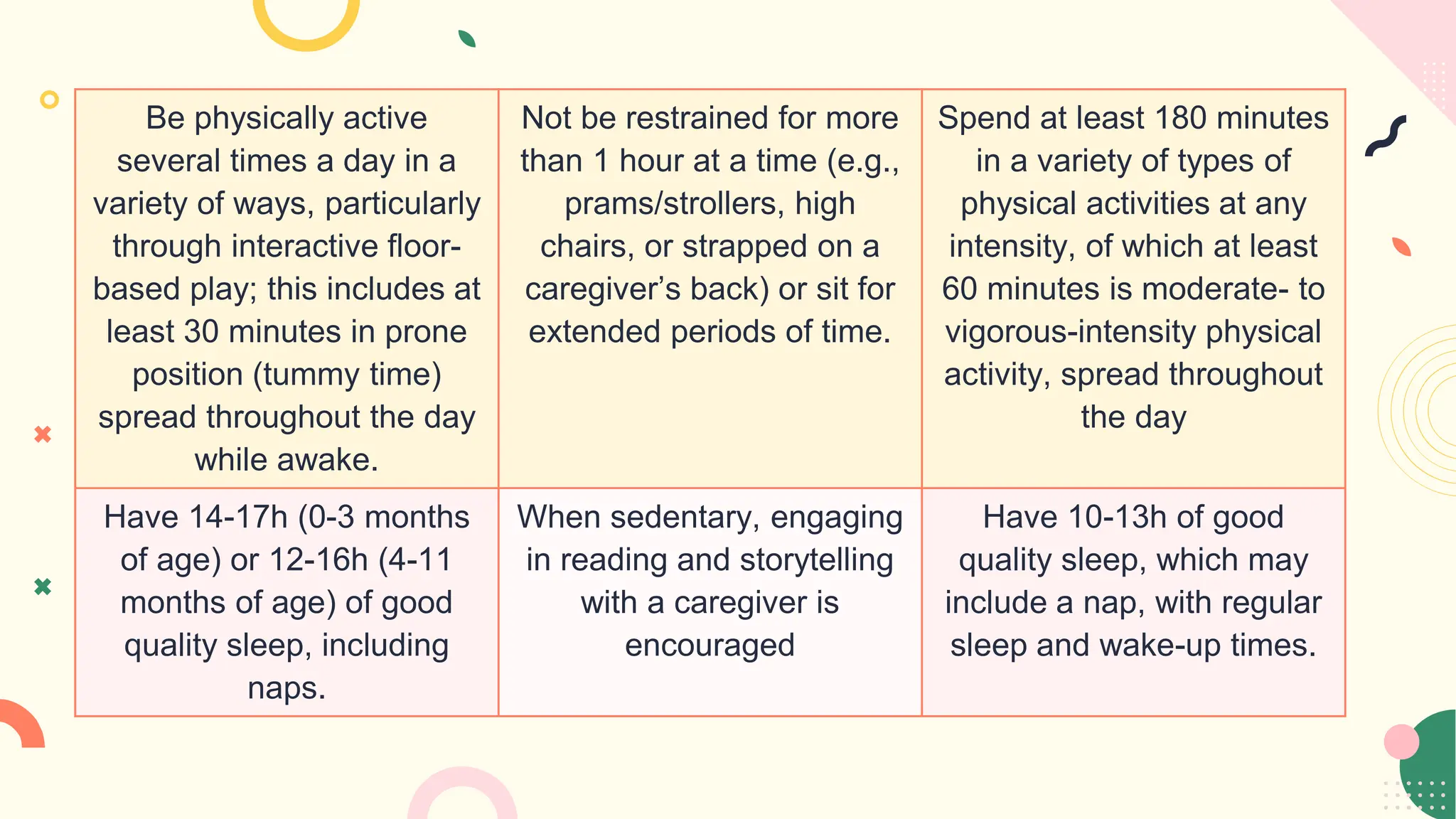
Below is a table with the guidelines and recommendations on how much physical activity
is needed for different age groups and specific population groups. (WHO)
In a 24-hour day, infants (less
than 1 year) should:
In a 24-hour day, children 1-2 years
of age should:
In a 24-hour day, children 3-4
years of age should:
Not be restrained for more
than 1 hour at a time (e.g.,
prams/strollers, high chairs,
or strapped on a caregiver’s
back);
For 1 year olds, sedentary screen
time (such as watching TV or
videos, playing computer games) is
not recommended.
Not be restrained for more
than 1 hour at a time (e.g.,
prams/strollers) or sit for
extended periods of time.
When sedentary, engaging in
reading and storytelling with
a caregiver is encouraged
Spend at least 180 minutes in a
variety of types of physical activities
at any intensity].
Sedentary screen time
should be no more than 1
hour; less is better.
WHO recommends:
For children under 5 years of age
Be physically active
several times a day in a
variety of ways, particularly
through interactive floor-
based play; this includes at
least 30 minutes in prone
position (tummy time)
spread throughout the day
while awake.
Not be restrained for more
than 1 hour at a time (e.g.,
prams/strollers, high
chairs, or strapped on a
caregiver’s back) or sit for
extended periods of time.
Spend at least 180 minutes
in a variety of types of
physical activities at any
intensity, of which at least
60 minutes is moderate- to
vigorous-intensity physical
activity, spread throughout
the day
Have 14-17h (0-3 months
of age) or 12-16h (4-11
months of age) of good
quality sleep, including
naps.
When sedentary, engaging
in reading and storytelling
with a caregiver is
encouraged
Have 10-13h of good
quality sleep, which may
include a nap, with regular
sleep and wake-up times.
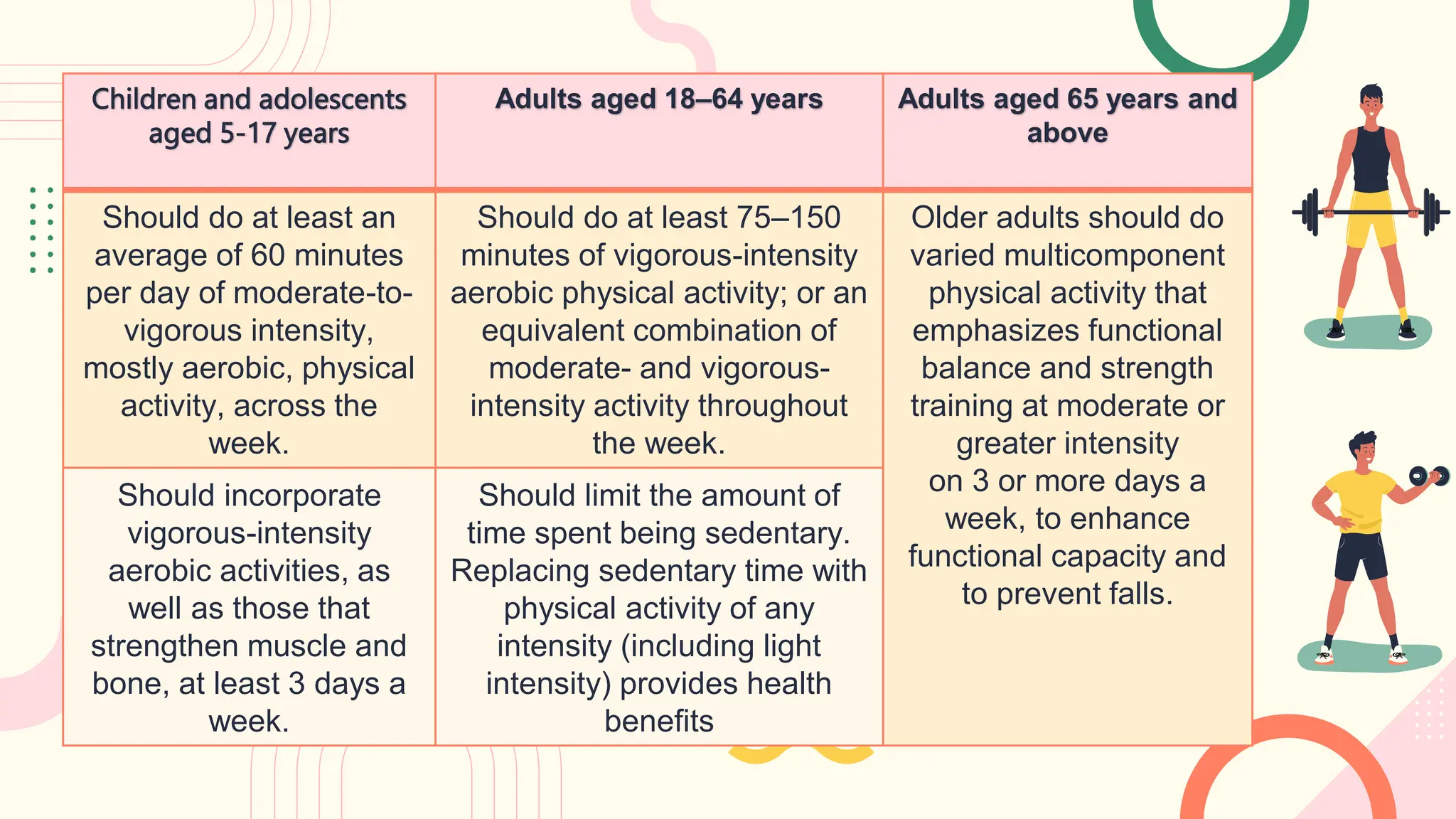
Children and adolescents
aged 5-17 years
Adults aged 18–64 years Adults aged 65 years and
above
Should do at least an
average of 60 minutes
per day of moderate-to-
vigorous intensity,
mostly aerobic, physical
activity, across the
week.
Should do at least 75–150
minutes of vigorous-intensity
aerobic physical activity; or an
equivalent combination of
moderate- and vigorous-
intensity activity throughout
the week.
Older adults should do
varied multicomponent
physical activity that
emphasizes functional
balance and strength
training at moderate or
greater intensity
on 3 or more days a
week, to enhance
functional capacity and
to prevent falls.
Should incorporate
vigorous-intensity
aerobic activities, as
well as those that
strengthen muscle and
bone, at least 3 days a
week.
Should limit the amount of
time spent being sedentary.
Replacing sedentary time with
physical activity of any
intensity (including light
intensity) provides health
benefits
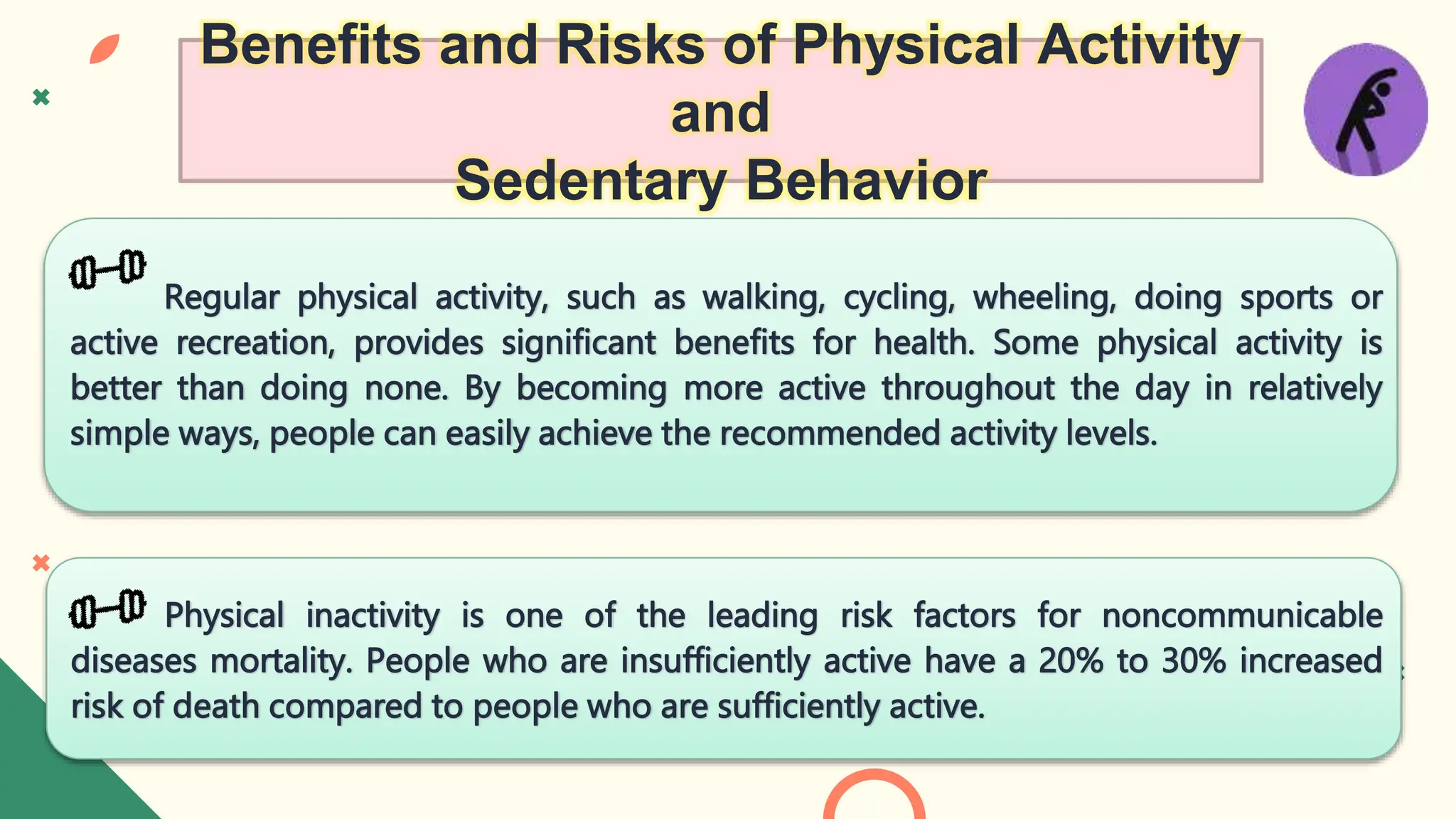
Benefits and Risks of Physical Activity
and
Sedentary Behavior
Regular physical activity, such as walking, cycling, wheeling, doing sports or
active recreation, provides significant benefits for health. Some physical activity is
better than doing none. By becoming more active throughout the day in relatively
simple ways, people can easily achieve the recommended activity levels.
Physical inactivity is one of the leading risk factors for noncommunicable
diseases mortality. People who are insufficiently active have a 20% to 30% increased
risk of death compared to people who are sufficiently active.
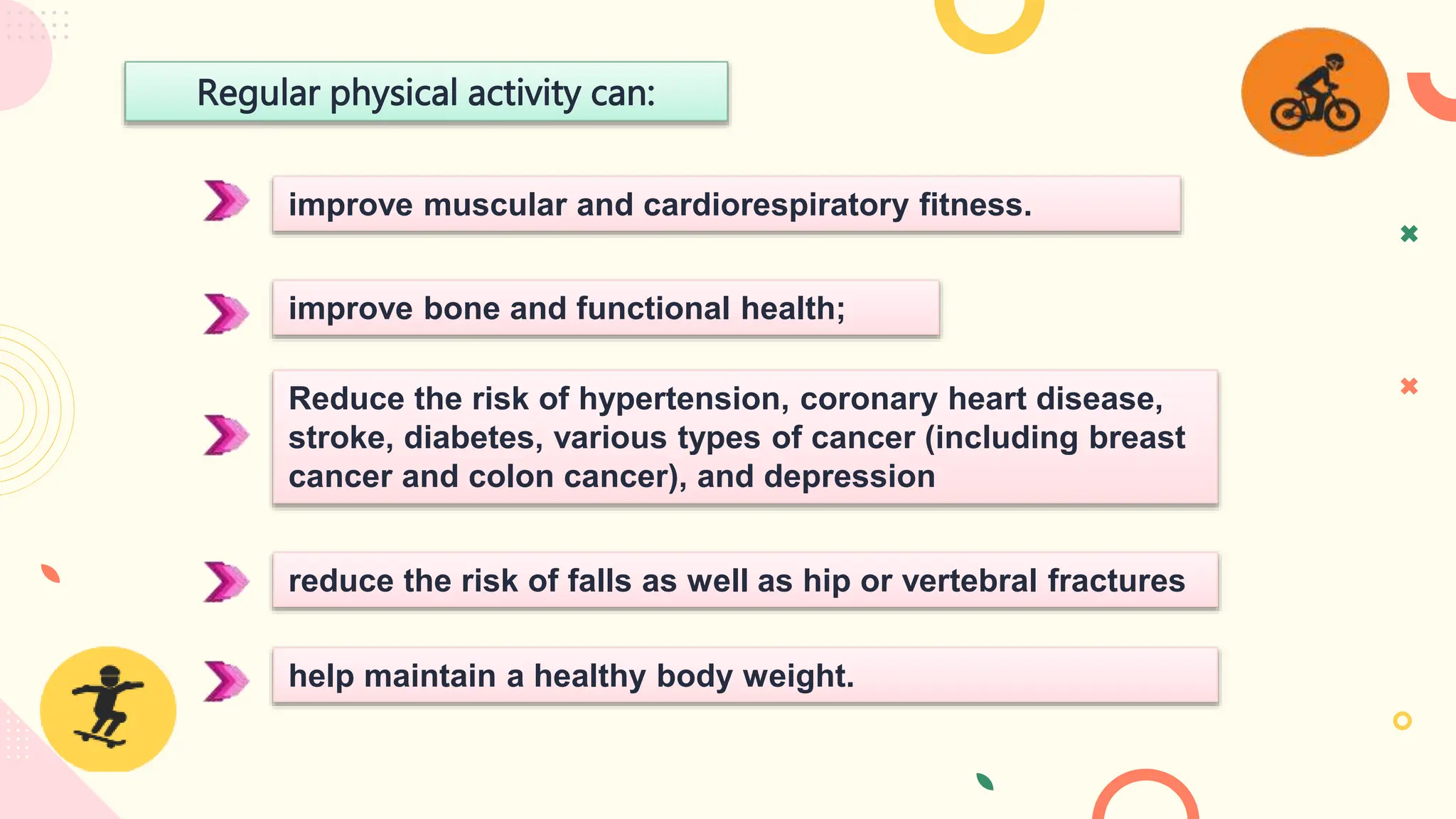
Regular physical activity can:
improve muscular and cardiorespiratory fitness.
improve bone and functional health;
Reduce the risk of hypertension, coronary heart disease,
stroke, diabetes, various types of cancer (including breast
cancer and colon cancer), and depression
reduce the risk of falls as well as hip or vertebral fractures
help maintain a healthy body weight.
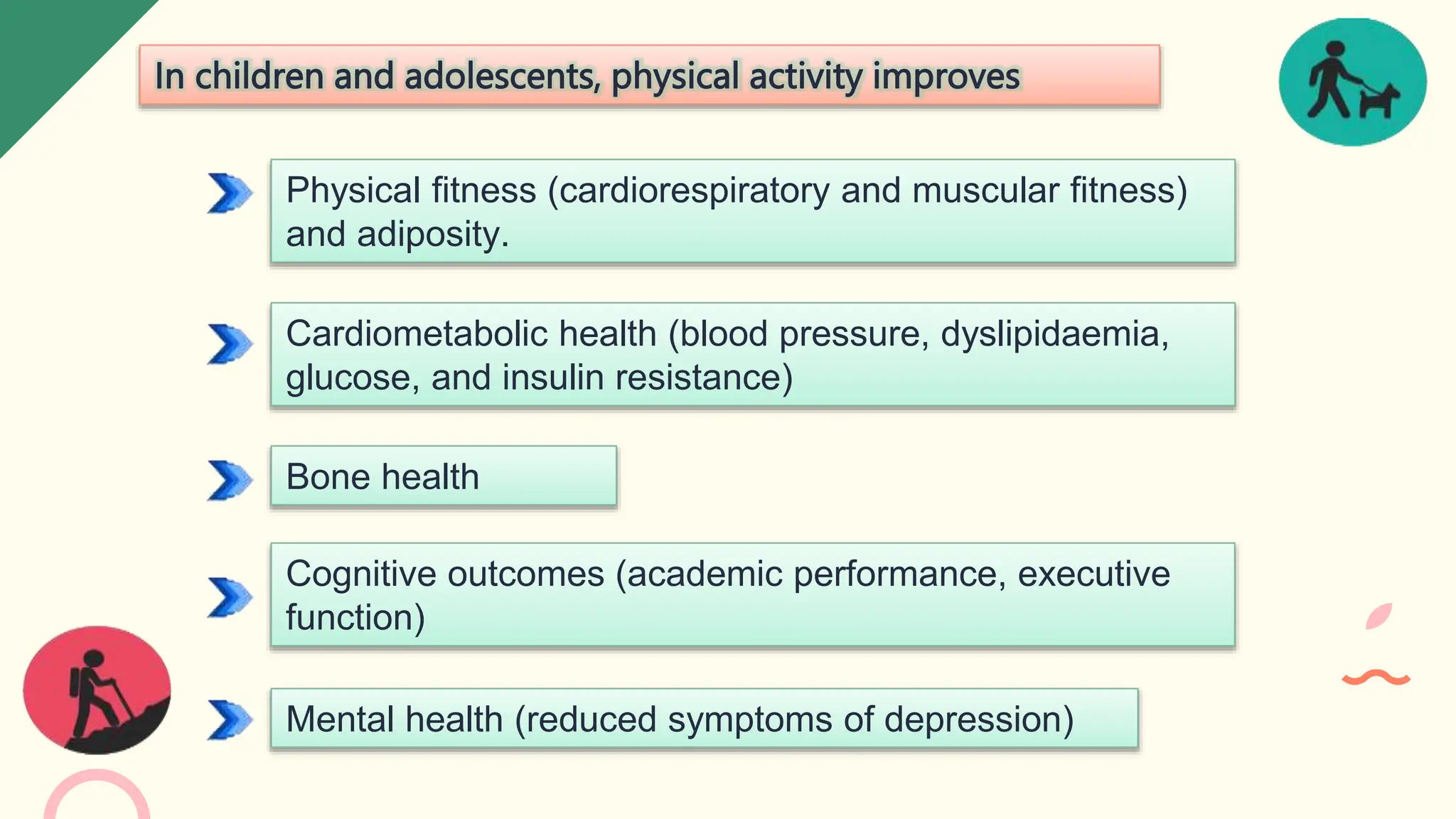
In children and adolescents, physical activity improves
Physical fitness (cardiorespiratory and muscular fitness)
and adiposity.
Cardiometabolic health (blood pressure, dyslipidaemia,
glucose, and insulin resistance)
Bone health
Cognitive outcomes (academic performance, executive
function)
Mental health (reduced symptoms of depression)
In adults and older adults, higher levels of physical activity improves:
risk of all-cause mortality and risk of cardiovascular disease
mortality.
Incident type-2 diabetes.
Prevents of falls.
Mental health and cognitive health (reduced symptoms of
anxiety and depression)
Sleep and measures of adiposity may also improve.
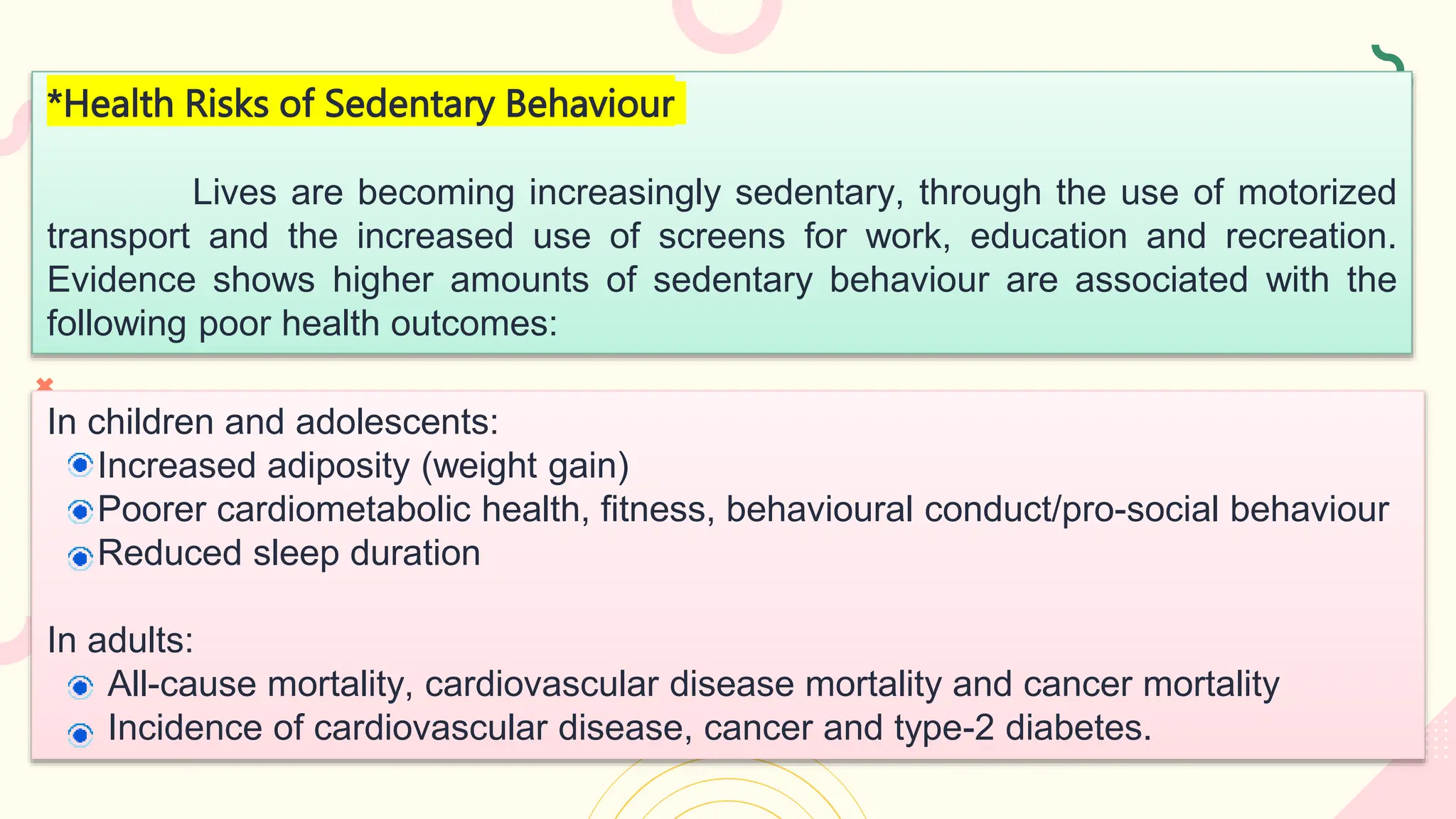
*Health Risks of Sedentary Behaviour
Lives are becoming increasingly sedentary, through the use of motorized
transport and the increased use of screens for work, education and recreation.
Evidence shows higher amounts of sedentary behaviour are associated with the
following poor health outcomes:
In children and adolescents:
Increased adiposity (weight gain)
Poorer cardiometabolic health, fitness, behavioural conduct/pro-social behaviour
Reduced sleep duration
In adults:
All-cause mortality, cardiovascular disease mortality and cancer mortality
Incidence of cardiovascular disease, cancer and type-2 diabetes.
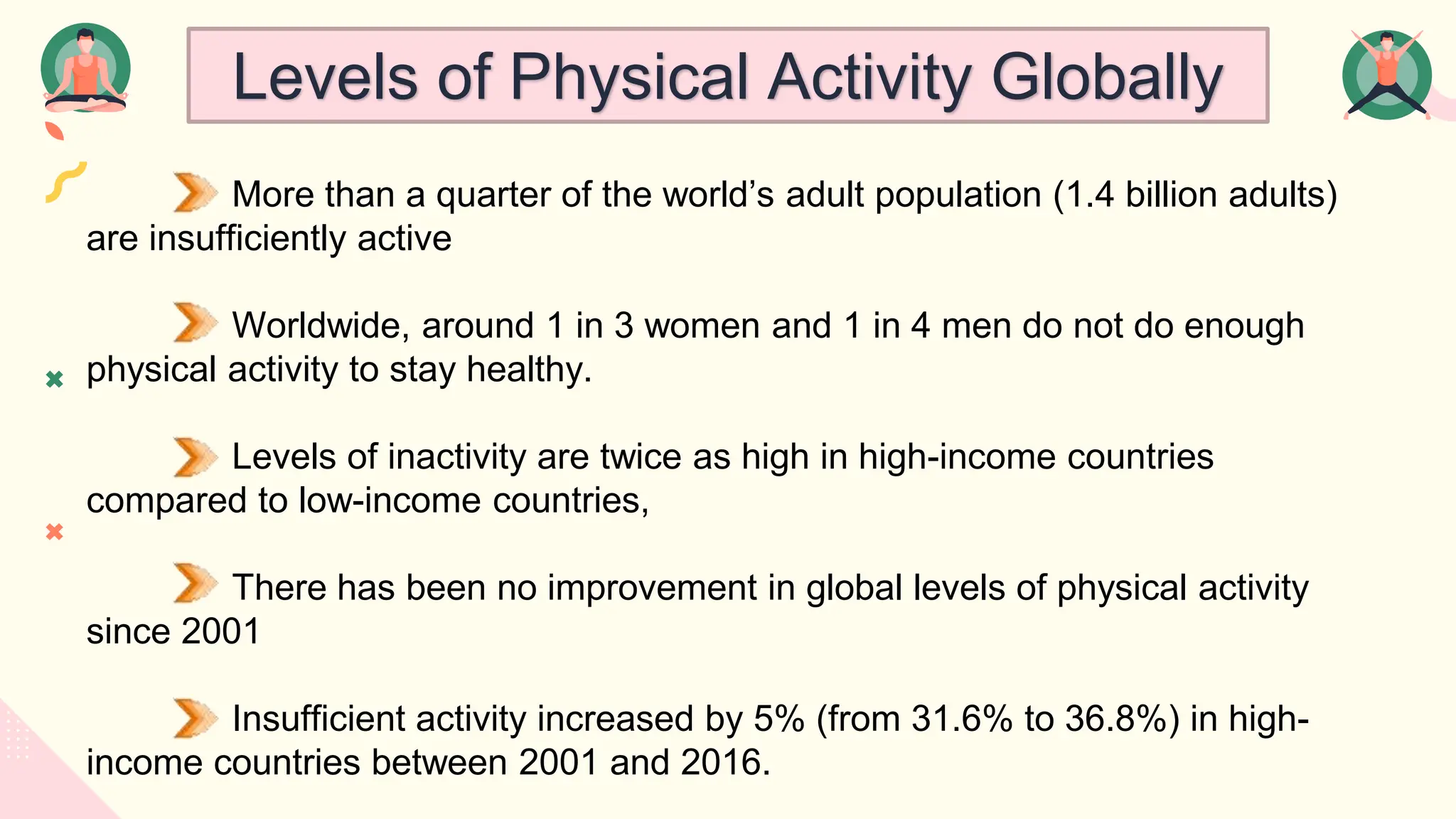
Levels of Physical Activity Globally
More than a quarter of the world’s adult population (1.4 billion adults)
are insufficiently active
Worldwide, around 1 in 3 women and 1 in 4 men do not do enough
physical activity to stay healthy.
Levels of inactivity are twice as high in high-income countries
compared to low-income countries,
There has been no improvement in global levels of physical activity
since 2001
Insufficient activity increased by 5% (from 31.6% to 36.8%) in high-
income countries between 2001 and 2016.
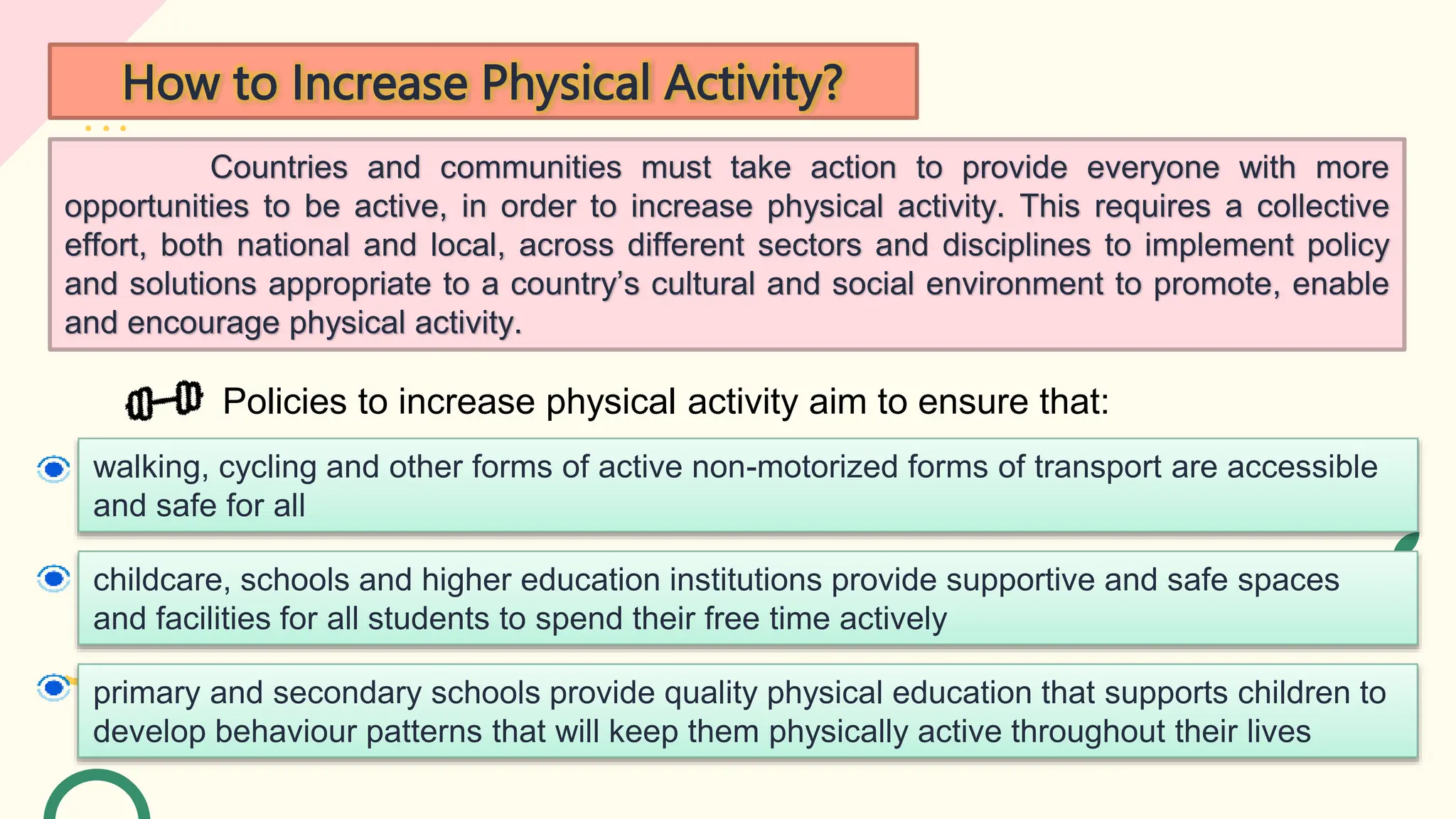
How to Increase Physical Activity?
Countries and communities must take action to provide everyone with more
opportunities to be active, in order to increase physical activity. This requires a collective
effort, both national and local, across different sectors and disciplines to implement policy
and solutions appropriate to a country’s cultural and social environment to promote, enable
and encourage physical activity.
Policies to increase physical activity aim to ensure that:
walking, cycling and other forms of active non-motorized forms of transport are accessible
and safe for all
childcare, schools and higher education institutions provide supportive and safe spaces
and facilities for all students to spend their free time actively
primary and secondary schools provide quality physical education that supports children to
develop behaviour patterns that will keep them physically active throughout their lives
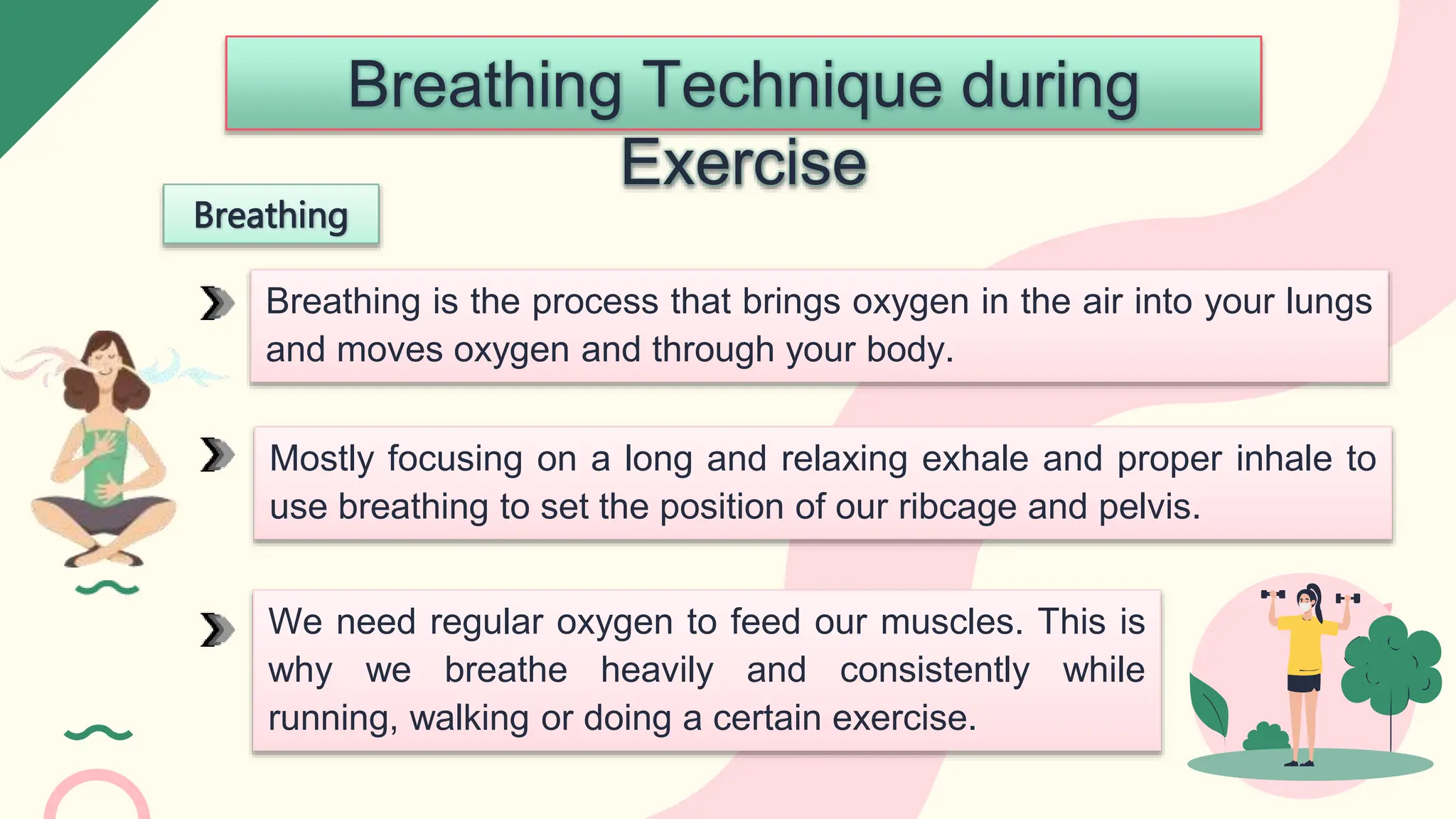
Breathing Technique during
Exercise
Breathing is the process that brings oxygen in the air into your lungs
and moves oxygen and through your body.
Breathing
Mostly focusing on a long and relaxing exhale and proper inhale to
use breathing to set the position of our ribcage and pelvis.
We need regular oxygen to feed our muscles. This is
why we breathe heavily and consistently while
running, walking or doing a certain exercise.
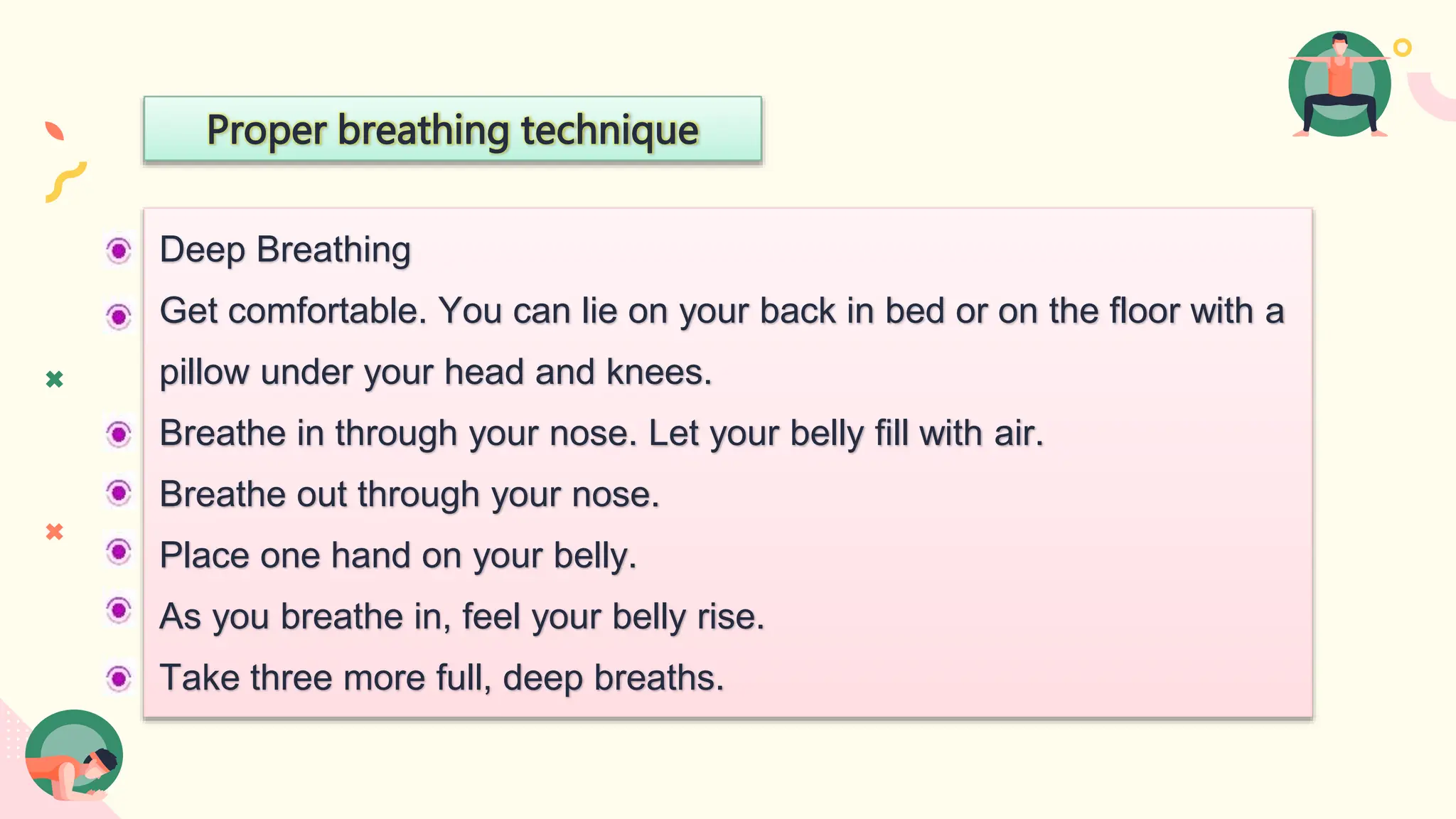
Proper breathing technique
Deep Breathing
Get comfortable. You can lie on your back in bed or on the floor with a
pillow under your head and knees.
Breathe in through your nose. Let your belly fill with air.
Breathe out through your nose.
Place one hand on your belly.
As you breathe in, feel your belly rise.
Take three more full, deep breaths.
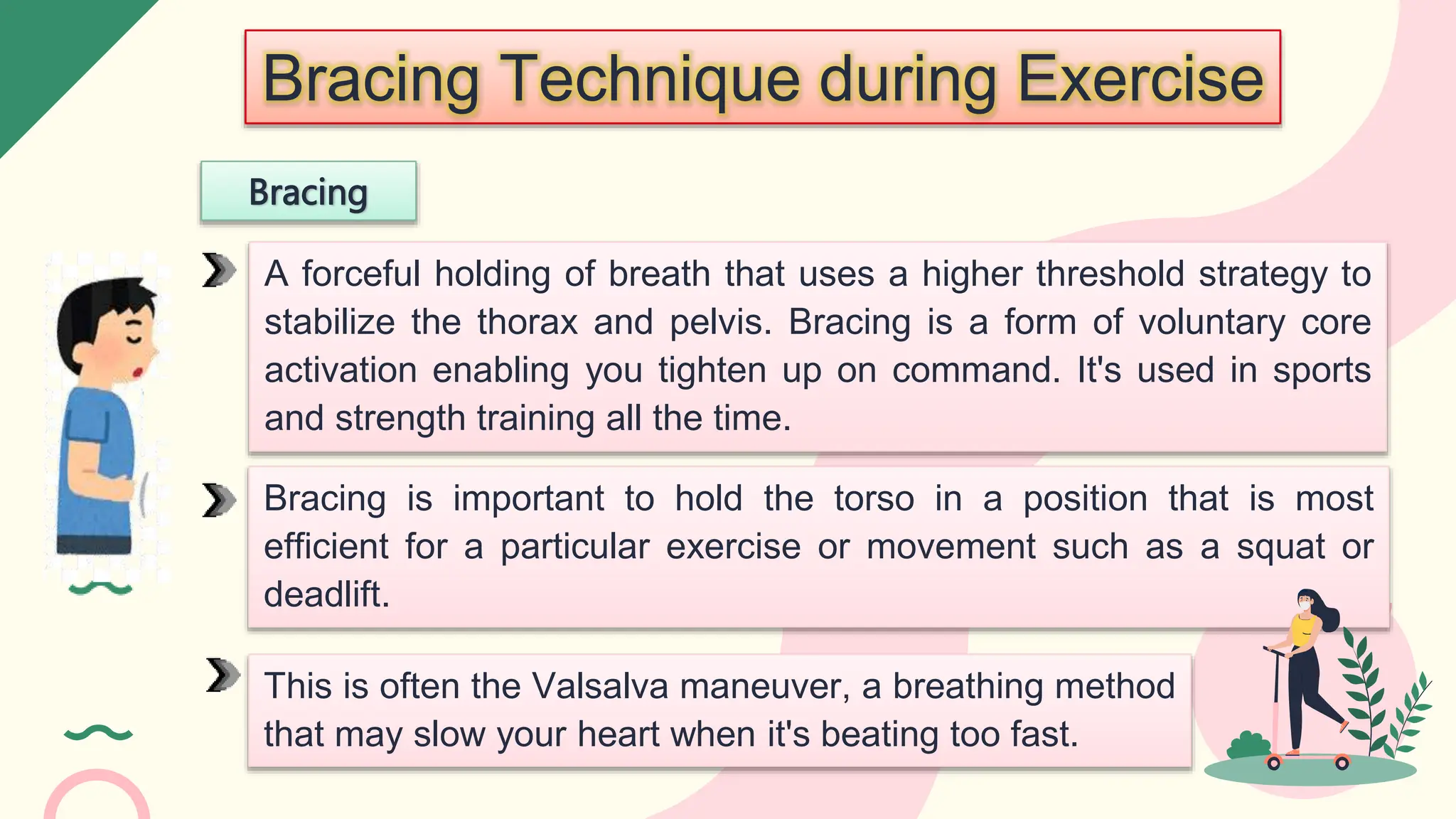
A forceful holding of breath that uses a higher threshold strategy to
stabilize the thorax and pelvis. Bracing is a form of voluntary core
activation enabling you tighten up on command. It's used in sports
and strength training all the time.
Bracing
Bracing is important to hold the torso in a position that is most
efficient for a particular exercise or movement such as a squat or
deadlift.
This is often the Valsalva maneuver, a breathing method
that may slow your heart when it's beating too fast.
Bracing Technique during Exercise
Bracing technique
In bracing, we tighten all the muscles surrounding the abdomen. As we
contract the abdominal muscles, the erector spinae muscles immediately go
into joint action and support the back from the rear.
In other words, we create a natural belt or girdle that stabilizes and
protects the spine with muscle co-contraction.
During a heavy squat, it is important to brace before you lower yourself
and maintain this the entire movement.
This will keep you in a strong and safe position where you can generate
more force due to the tension built within your abdominal cavity. This is the
same for deadlifting, and you brace at the bottom of the lift.
Bracing Simulation
How to brace?
Before trying it during exercise, try it laying down on your back.
What you’ll want to do:
1. Lay on your back, legs extended
2. Take a deep breath and fill your stomach with air.
3. Slightly bring your ribs down to your pelvis
4. Squeeze your stomach as if you’re preparing to be punched while also
tensing your lower back.
a. You should feel the space between the floor and your lower back
decrease.
Bracing Simulation
During Exercise
Before performing an exercise where bracing is beneficial to safety and
performance you should follow the same steps as you would if you were laying
down. A few easy ques to remember:
1. Take a breath and fill your stomach with air.
2. Bring your ribs slightly to your pelvis.
3. Tense your stomach and lower back.
This kind of core activation should be used in many exercises, even without
weight, such as shoulder taps, side planks, squats, deadlifts, lunges, and push-
ups. You do not necessarily have to take a deep breath, but the concept of
bracing the entire core, not just the abdominal muscles will increase the benefits
of these exercises, while providing an opportunity to practice engaging your core
so that you can brace efficiently when it comes to lifting weight.
Self Fitness
Test
Fitness tests are a great way to check your
fitness level when beginning a new workout
routine. It can also help you track your progress,
making it easier to determine where you may need
to make changes in your exercise plan in order to
keep advancing.
Use a fitness test to see what your current
fitness level and abilities are before you start a
new fitness program. You'll need a few items to
perform each of these fitness tests.
Before beginning or increasing physical activity to make
sure it's safe for you. You can identify and track your fitness
level by performing a few simple tests at home.
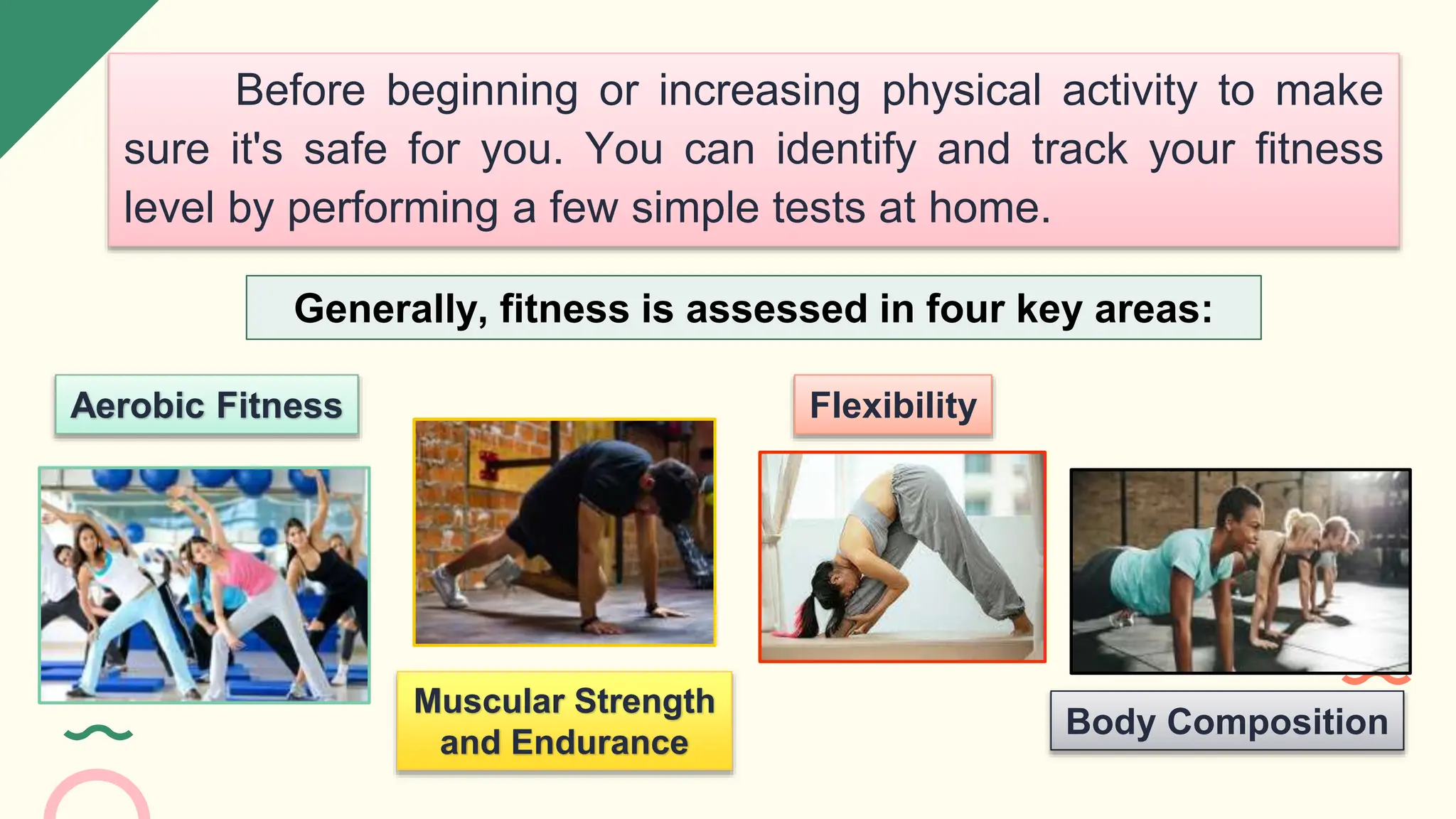
Generally, fitness is assessed in four key areas:
Aerobic Fitness
Muscular Strength
and Endurance
Flexibility
Body Composition
Aerobic fitness: Heart rate at Rest
Your heart rate at rest is a measure of heart health and
fitness. For most adults, a healthy heart rate is 60 to
100 beats a minute.
How to check you Resting Heart Rate?
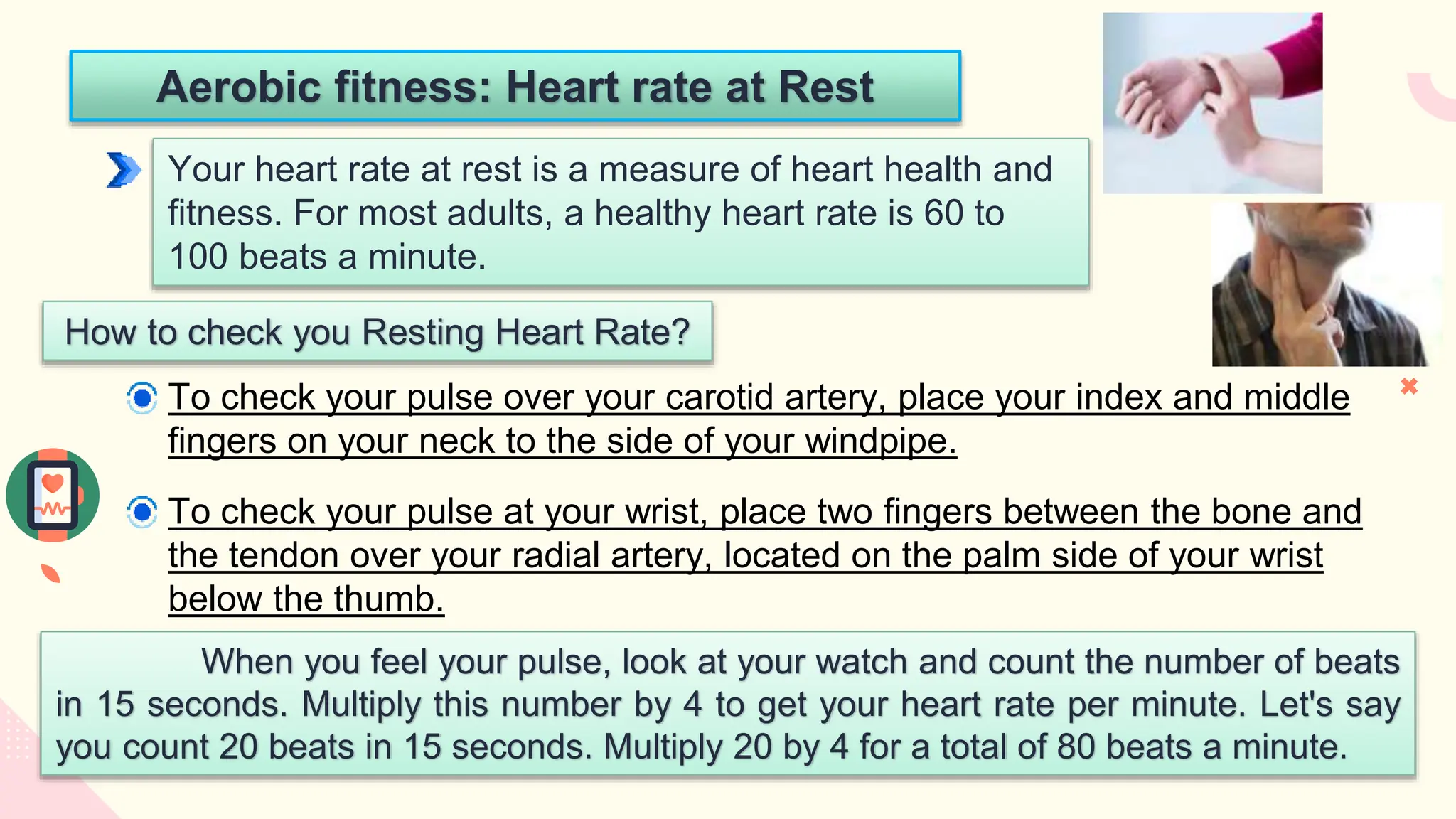
To check your pulse over your carotid artery, place your index and middle
fingers on your neck to the side of your windpipe.
To check your pulse at your wrist, place two fingers between the bone and
the tendon over your radial artery, located on the palm side of your wrist
below the thumb.
When you feel your pulse, look at your watch and count the number of beats
in 15 seconds. Multiply this number by 4 to get your heart rate per minute. Let's say
you count 20 beats in 15 seconds. Multiply 20 by 4 for a total of 80 beats a minute.
Aerobic fitness: Target heart rate zone
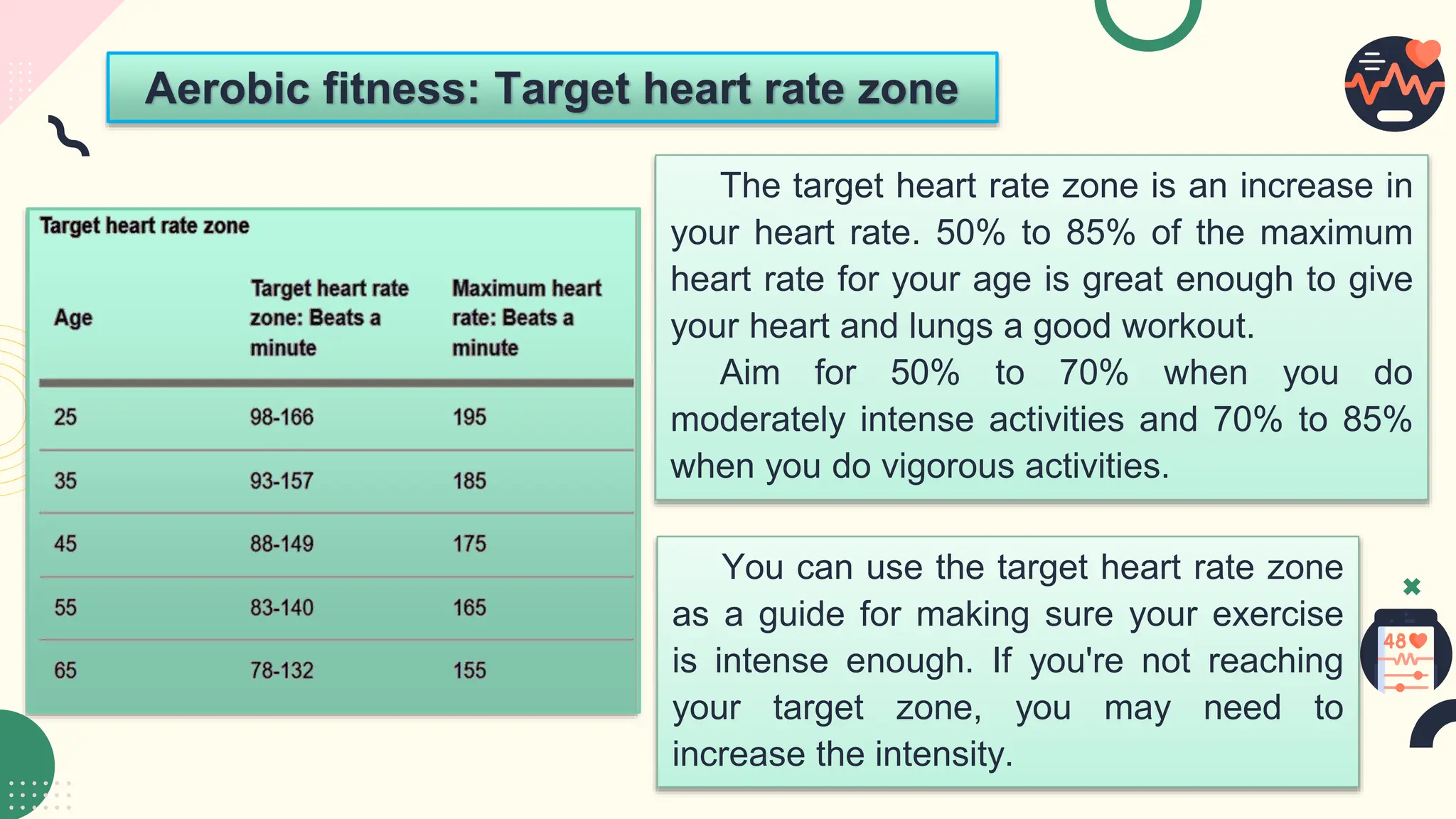
The target heart rate zone is an increase in
your heart rate. 50% to 85% of the maximum
heart rate for your age is great enough to give
your heart and lungs a good workout.
Aim for 50% to 70% when you do
moderately intense activities and 70% to 85%
when you do vigorous activities.
You can use the target heart rate zone
as a guide for making sure your exercise
is intense enough. If you're not reaching
your target zone, you may need to
increase the intensity.
Muscular Strength and Endurance: Pushup test
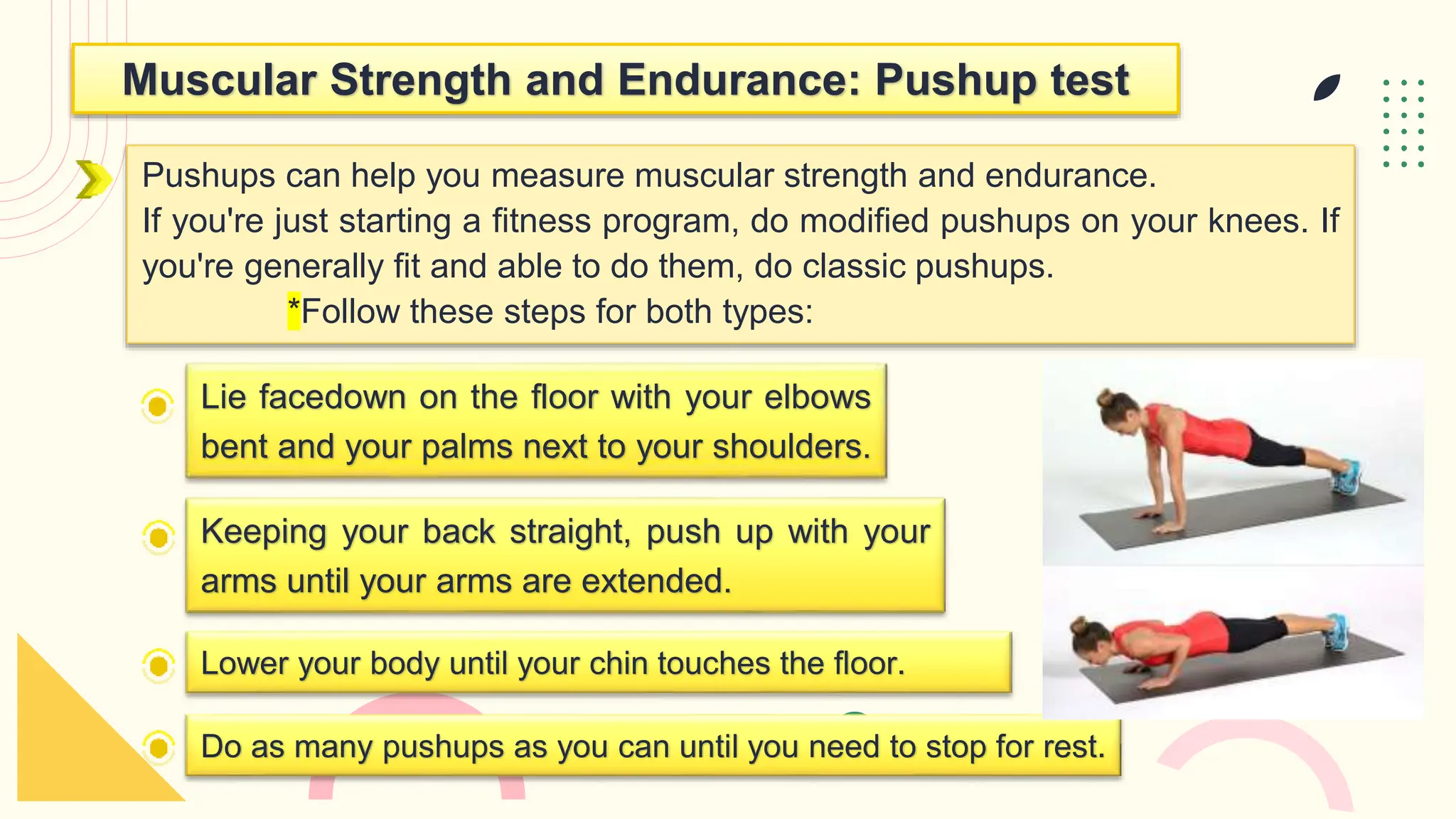
Pushups can help you measure muscular strength and endurance.
If you're just starting a fitness program, do modified pushups on your knees. If
you're generally fit and able to do them, do classic pushups.
*Follow these steps for both types:
Lie facedown on the floor with your elbows
bent and your palms next to your shoulders.
Keeping your back straight, push up with your
arms until your arms are extended.
Lower your body until your chin touches the floor.
Do as many pushups as you can until you need to stop for rest.
*The following counts are generally considered indicators of a good fitness
level based on age and sex.
*If your pushup count is below the target number, the target can serve as a
goal to work toward. Counts above the targets indicate better fitness.
Muscular strength and endurance: Sit-up Test
The sit-up test measures the strength and endurance of your abdominal muscles.
Here's how to do the test:
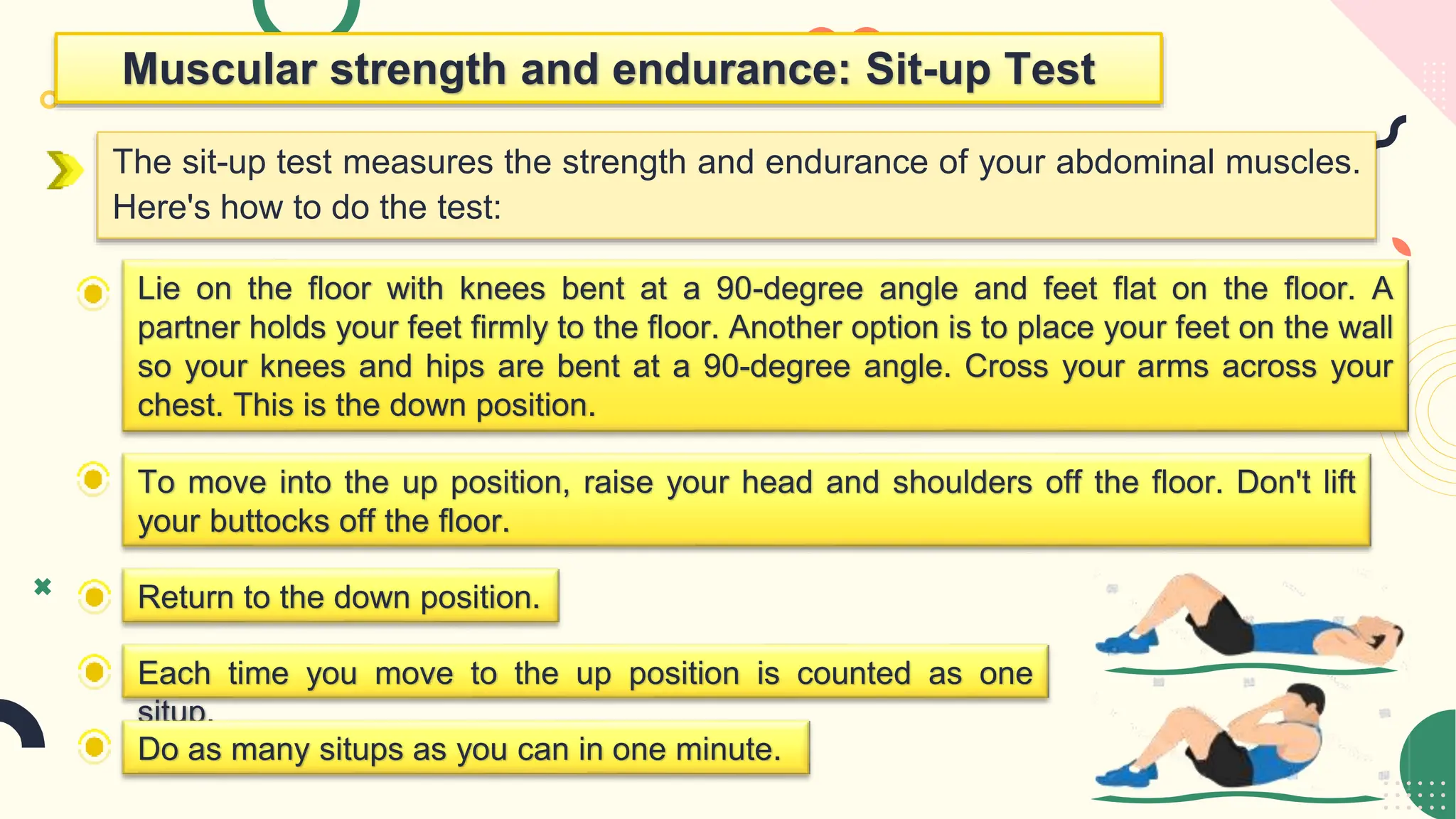
Lie on the floor with knees bent at a 90-degree angle and feet flat on the floor. A
partner holds your feet firmly to the floor. Another option is to place your feet on the wall
so your knees and hips are bent at a 90-degree angle. Cross your arms across your
chest. This is the down position.
To move into the up position, raise your head and shoulders off the floor. Don't lift
your buttocks off the floor.
Return to the down position.
Each time you move to the up position is counted as one
situp.
Do as many situps as you can in one minute.
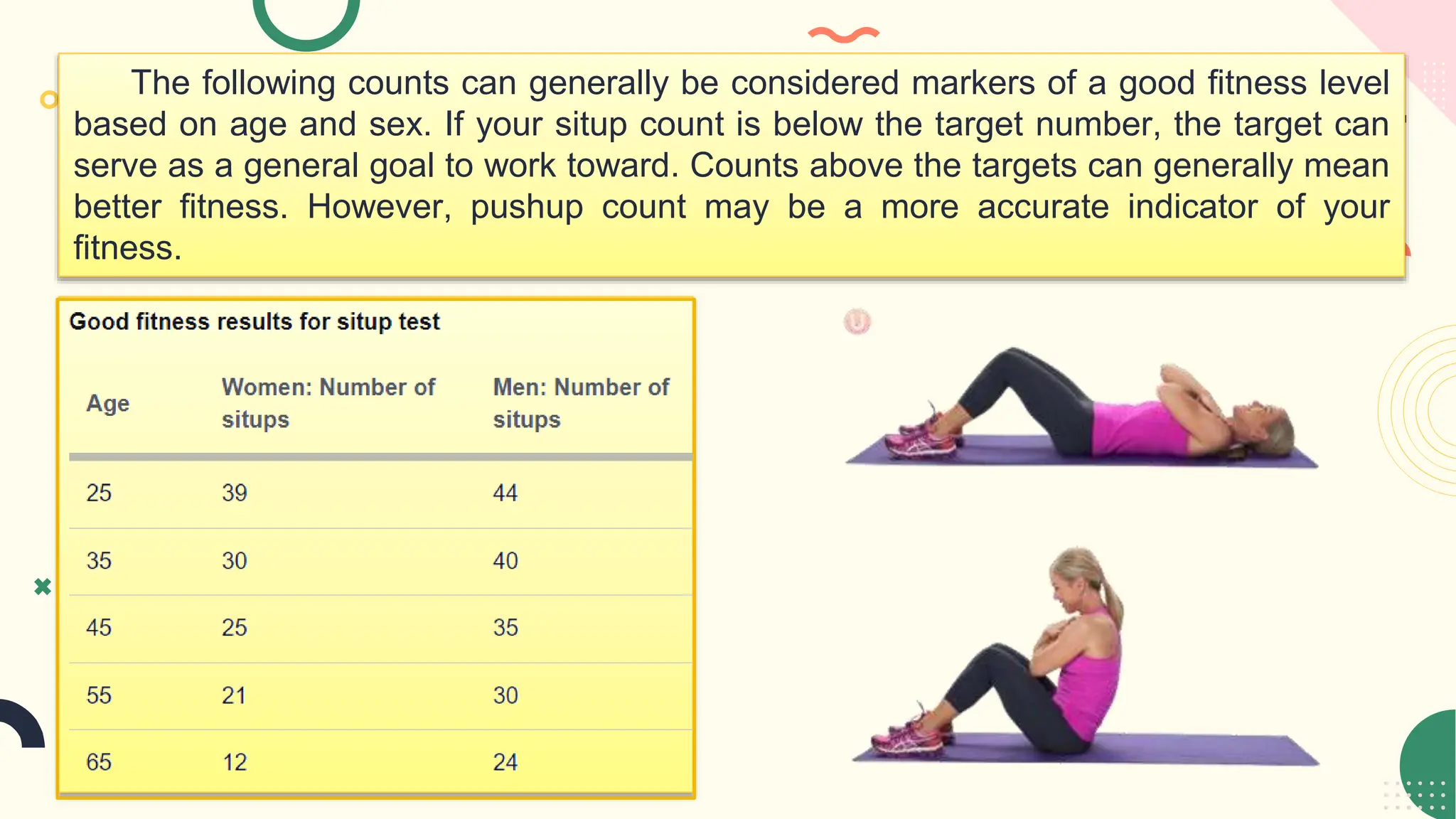
The following counts can generally be considered markers of a good fitness level
based on age and sex. If your situp count is below the target number, the target can
serve as a general goal to work toward. Counts above the targets can generally mean
better fitness. However, pushup count may be a more accurate indicator of your
fitness.
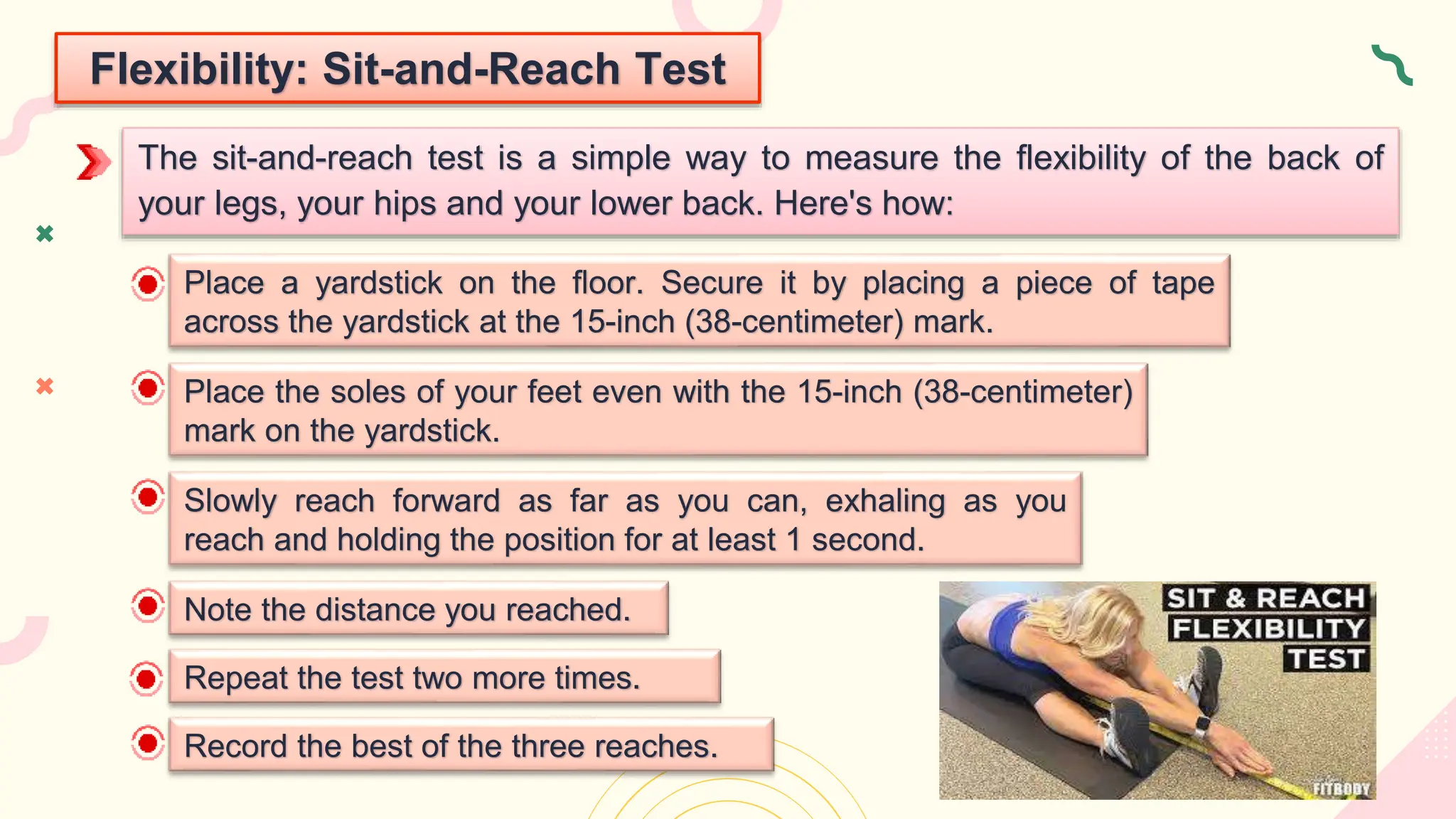
Flexibility: Sit-and-Reach Test
The sit-and-reach test is a simple way to measure the flexibility of the back of
your legs, your hips and your lower back. Here's how:
Place a yardstick on the floor. Secure it by placing a piece of tape
across the yardstick at the 15-inch (38-centimeter) mark.
Place the soles of your feet even with the 15-inch (38-centimeter)
mark on the yardstick.
Slowly reach forward as far as you can, exhaling as you
reach and holding the position for at least 1 second.
Note the distance you reached.
Repeat the test two more times.
Record the best of the three reaches.
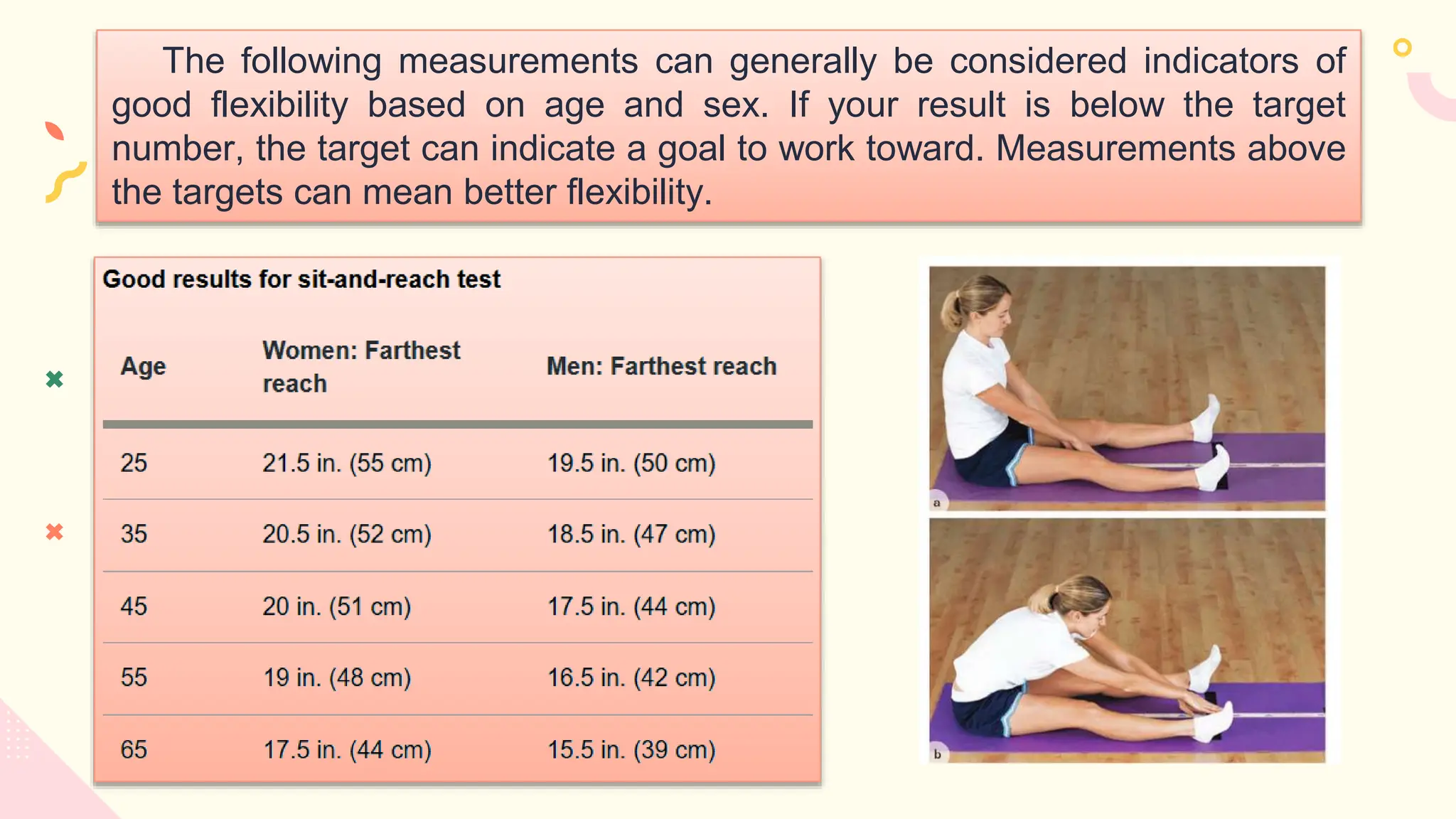
The following measurements can generally be considered indicators of
good flexibility based on age and sex. If your result is below the target
number, the target can indicate a goal to work toward. Measurements above
the targets can mean better flexibility.
Body composition: Waist circumference
If your waist circumference is greater than your hips then you carry more
weight above the hips and you have an increased risk of heart disease
and type 2 diabetes.
The risk is even greater for women
with waist circumferences of 35
inches (89 centimeters) or more and
for men with waist circumferences
of 40 inches (102 centimeters) or
more.
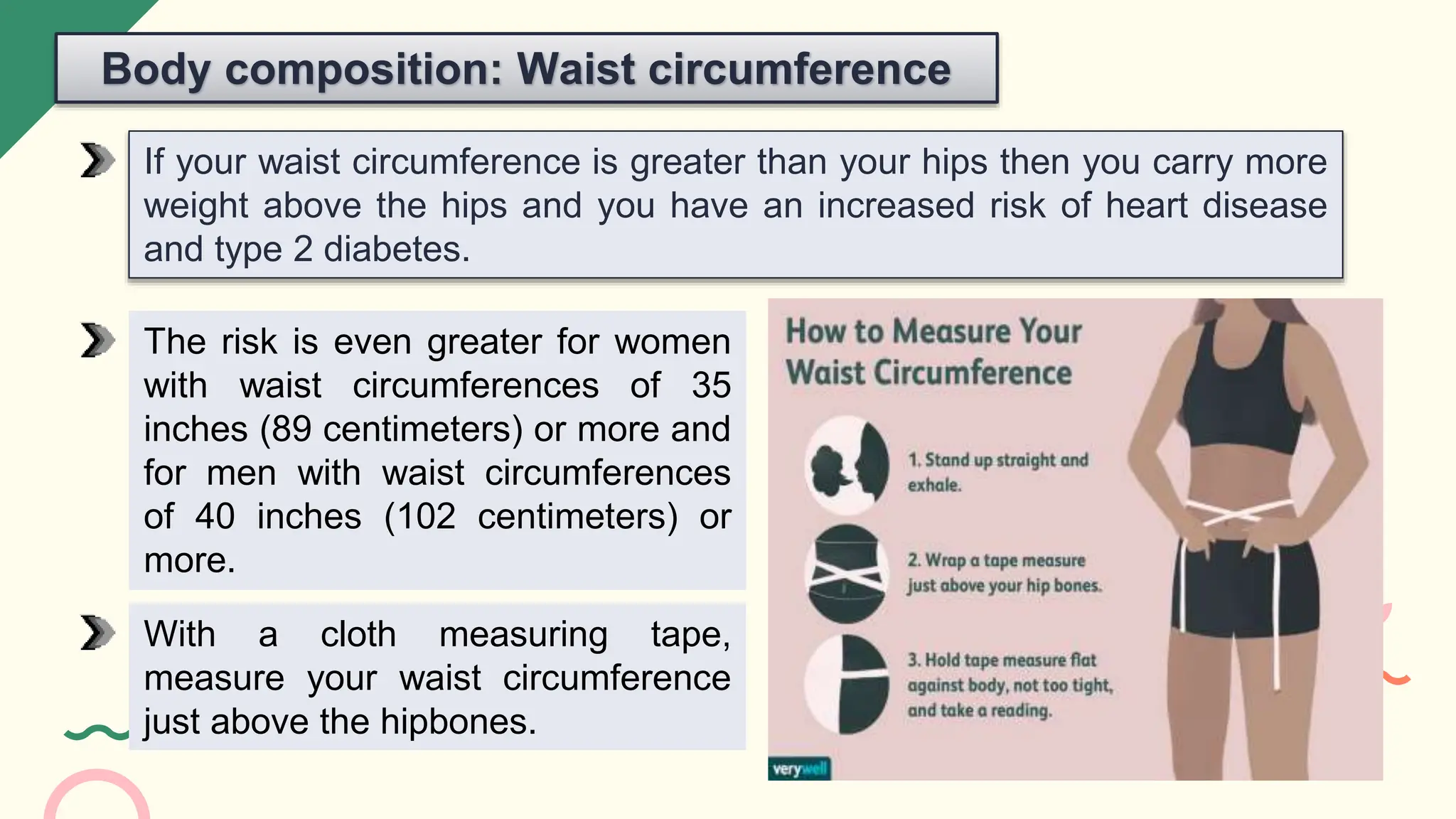
With a cloth measuring tape,
measure your waist circumference
just above the hipbones.
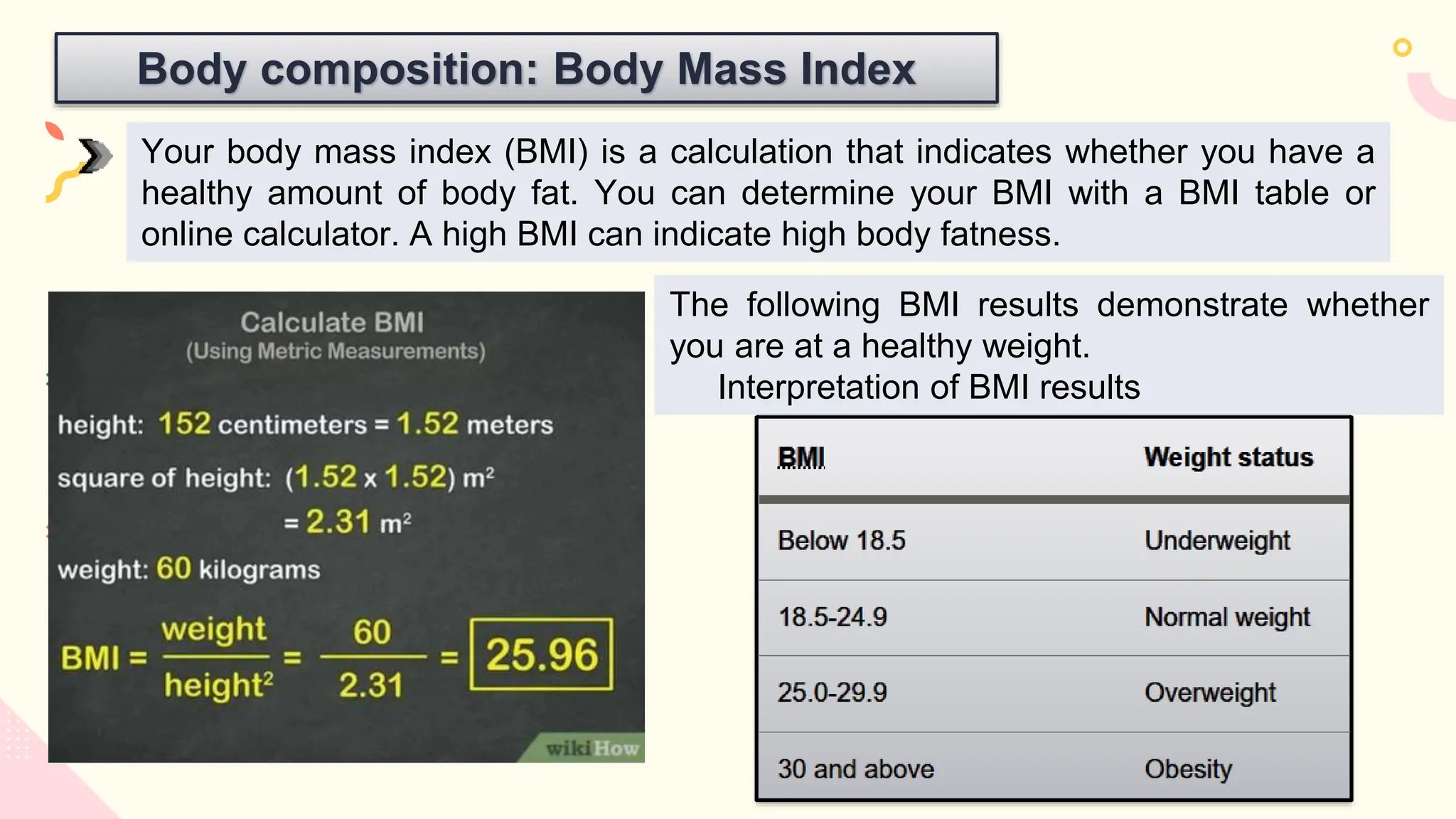
Body composition: Body Mass Index
Your body mass index (BMI) is a calculation that indicates whether you have a
healthy amount of body fat. You can determine your BMI with a BMI table or
online calculator. A high BMI can indicate high body fatness.
The following BMI results demonstrate whether
you are at a healthy weight.
Interpretation of BMI results
PATHFit-2-REPORT Exercised-based fitness activities

PATHFit-2-REPORT Exercised-based fitness activities

  • 1.
    Reporters: Group 1 Members: Abarca,Aguilar, Almeda, Apole, Armenion, Bernales, Canceller and Daluz
  • 2.
    Contents/ Topics: Global PhysicalActivity Breathing and Bracing Technique Self Fitness Testing Bracing Simulation
  • 3.
    Global Physical Activity Whatis Physical Activity? Physical activity as any bodily movement produced by skeletal muscles that requires energy expenditure(WHO) It refers to all movement including during leisure time, for transport to get to and from places, or as part of a person’s work. Both moderate- and vigorous-intensity physical activity improve health. It include walking, cycling, wheeling, sports, active recreation and play, and can be done at any level of skill and for enjoyment by everybody.
  • 4.
    How much ofPhysical Activity is recommended? Below is a table with the guidelines and recommendations on how much physical activity is needed for different age groups and specific population groups. (WHO) In a 24-hour day, infants (less than 1 year) should: In a 24-hour day, children 1-2 years of age should: In a 24-hour day, children 3-4 years of age should: Not be restrained for more than 1 hour at a time (e.g., prams/strollers, high chairs, or strapped on a caregiver’s back); For 1 year olds, sedentary screen time (such as watching TV or videos, playing computer games) is not recommended. Not be restrained for more than 1 hour at a time (e.g., prams/strollers) or sit for extended periods of time. When sedentary, engaging in reading and storytelling with a caregiver is encouraged Spend at least 180 minutes in a variety of types of physical activities at any intensity]. Sedentary screen time should be no more than 1 hour; less is better. WHO recommends: For children under 5 years of age
  • 5.
    Be physically active severaltimes a day in a variety of ways, particularly through interactive floor- based play; this includes at least 30 minutes in prone position (tummy time) spread throughout the day while awake. Not be restrained for more than 1 hour at a time (e.g., prams/strollers, high chairs, or strapped on a caregiver’s back) or sit for extended periods of time. Spend at least 180 minutes in a variety of types of physical activities at any intensity, of which at least 60 minutes is moderate- to vigorous-intensity physical activity, spread throughout the day Have 14-17h (0-3 months of age) or 12-16h (4-11 months of age) of good quality sleep, including naps. When sedentary, engaging in reading and storytelling with a caregiver is encouraged Have 10-13h of good quality sleep, which may include a nap, with regular sleep and wake-up times.
  • 6.
    Children and adolescents aged5-17 years Adults aged 18–64 years Adults aged 65 years and above Should do at least an average of 60 minutes per day of moderate-to- vigorous intensity, mostly aerobic, physical activity, across the week. Should do at least 75–150 minutes of vigorous-intensity aerobic physical activity; or an equivalent combination of moderate- and vigorous- intensity activity throughout the week. Older adults should do varied multicomponent physical activity that emphasizes functional balance and strength training at moderate or greater intensity on 3 or more days a week, to enhance functional capacity and to prevent falls. Should incorporate vigorous-intensity aerobic activities, as well as those that strengthen muscle and bone, at least 3 days a week. Should limit the amount of time spent being sedentary. Replacing sedentary time with physical activity of any intensity (including light intensity) provides health benefits
  • 7.
    Benefits and Risksof Physical Activity and Sedentary Behavior Regular physical activity, such as walking, cycling, wheeling, doing sports or active recreation, provides significant benefits for health. Some physical activity is better than doing none. By becoming more active throughout the day in relatively simple ways, people can easily achieve the recommended activity levels. Physical inactivity is one of the leading risk factors for noncommunicable diseases mortality. People who are insufficiently active have a 20% to 30% increased risk of death compared to people who are sufficiently active.
  • 8.
    Regular physical activitycan: improve muscular and cardiorespiratory fitness. improve bone and functional health; Reduce the risk of hypertension, coronary heart disease, stroke, diabetes, various types of cancer (including breast cancer and colon cancer), and depression reduce the risk of falls as well as hip or vertebral fractures help maintain a healthy body weight.
  • 9.
    In children andadolescents, physical activity improves Physical fitness (cardiorespiratory and muscular fitness) and adiposity. Cardiometabolic health (blood pressure, dyslipidaemia, glucose, and insulin resistance) Bone health Cognitive outcomes (academic performance, executive function) Mental health (reduced symptoms of depression)
  • 10.
    In adults andolder adults, higher levels of physical activity improves: risk of all-cause mortality and risk of cardiovascular disease mortality. Incident type-2 diabetes. Prevents of falls. Mental health and cognitive health (reduced symptoms of anxiety and depression) Sleep and measures of adiposity may also improve.
  • 11.
    *Health Risks ofSedentary Behaviour Lives are becoming increasingly sedentary, through the use of motorized transport and the increased use of screens for work, education and recreation. Evidence shows higher amounts of sedentary behaviour are associated with the following poor health outcomes: In children and adolescents: Increased adiposity (weight gain) Poorer cardiometabolic health, fitness, behavioural conduct/pro-social behaviour Reduced sleep duration In adults: All-cause mortality, cardiovascular disease mortality and cancer mortality Incidence of cardiovascular disease, cancer and type-2 diabetes.
  • 12.
    Levels of PhysicalActivity Globally More than a quarter of the world’s adult population (1.4 billion adults) are insufficiently active Worldwide, around 1 in 3 women and 1 in 4 men do not do enough physical activity to stay healthy. Levels of inactivity are twice as high in high-income countries compared to low-income countries, There has been no improvement in global levels of physical activity since 2001 Insufficient activity increased by 5% (from 31.6% to 36.8%) in high- income countries between 2001 and 2016.
  • 13.
    How to IncreasePhysical Activity? Countries and communities must take action to provide everyone with more opportunities to be active, in order to increase physical activity. This requires a collective effort, both national and local, across different sectors and disciplines to implement policy and solutions appropriate to a country’s cultural and social environment to promote, enable and encourage physical activity. Policies to increase physical activity aim to ensure that: walking, cycling and other forms of active non-motorized forms of transport are accessible and safe for all childcare, schools and higher education institutions provide supportive and safe spaces and facilities for all students to spend their free time actively primary and secondary schools provide quality physical education that supports children to develop behaviour patterns that will keep them physically active throughout their lives
  • 14.
    Breathing Technique during Exercise Breathingis the process that brings oxygen in the air into your lungs and moves oxygen and through your body. Breathing Mostly focusing on a long and relaxing exhale and proper inhale to use breathing to set the position of our ribcage and pelvis. We need regular oxygen to feed our muscles. This is why we breathe heavily and consistently while running, walking or doing a certain exercise.
  • 15.
    Proper breathing technique DeepBreathing Get comfortable. You can lie on your back in bed or on the floor with a pillow under your head and knees. Breathe in through your nose. Let your belly fill with air. Breathe out through your nose. Place one hand on your belly. As you breathe in, feel your belly rise. Take three more full, deep breaths.
  • 16.
    A forceful holdingof breath that uses a higher threshold strategy to stabilize the thorax and pelvis. Bracing is a form of voluntary core activation enabling you tighten up on command. It's used in sports and strength training all the time. Bracing Bracing is important to hold the torso in a position that is most efficient for a particular exercise or movement such as a squat or deadlift. This is often the Valsalva maneuver, a breathing method that may slow your heart when it's beating too fast. Bracing Technique during Exercise
  • 17.
    Bracing technique In bracing,we tighten all the muscles surrounding the abdomen. As we contract the abdominal muscles, the erector spinae muscles immediately go into joint action and support the back from the rear. In other words, we create a natural belt or girdle that stabilizes and protects the spine with muscle co-contraction. During a heavy squat, it is important to brace before you lower yourself and maintain this the entire movement. This will keep you in a strong and safe position where you can generate more force due to the tension built within your abdominal cavity. This is the same for deadlifting, and you brace at the bottom of the lift.
  • 18.
    Bracing Simulation How tobrace? Before trying it during exercise, try it laying down on your back. What you’ll want to do: 1. Lay on your back, legs extended 2. Take a deep breath and fill your stomach with air. 3. Slightly bring your ribs down to your pelvis 4. Squeeze your stomach as if you’re preparing to be punched while also tensing your lower back. a. You should feel the space between the floor and your lower back decrease.
  • 19.
    Bracing Simulation During Exercise Beforeperforming an exercise where bracing is beneficial to safety and performance you should follow the same steps as you would if you were laying down. A few easy ques to remember: 1. Take a breath and fill your stomach with air. 2. Bring your ribs slightly to your pelvis. 3. Tense your stomach and lower back. This kind of core activation should be used in many exercises, even without weight, such as shoulder taps, side planks, squats, deadlifts, lunges, and push- ups. You do not necessarily have to take a deep breath, but the concept of bracing the entire core, not just the abdominal muscles will increase the benefits of these exercises, while providing an opportunity to practice engaging your core so that you can brace efficiently when it comes to lifting weight.
  • 20.
  • 21.
    Fitness tests area great way to check your fitness level when beginning a new workout routine. It can also help you track your progress, making it easier to determine where you may need to make changes in your exercise plan in order to keep advancing. Use a fitness test to see what your current fitness level and abilities are before you start a new fitness program. You'll need a few items to perform each of these fitness tests.
  • 22.
    Before beginning orincreasing physical activity to make sure it's safe for you. You can identify and track your fitness level by performing a few simple tests at home. Generally, fitness is assessed in four key areas: Aerobic Fitness Muscular Strength and Endurance Flexibility Body Composition
  • 23.
    Aerobic fitness: Heartrate at Rest Your heart rate at rest is a measure of heart health and fitness. For most adults, a healthy heart rate is 60 to 100 beats a minute. How to check you Resting Heart Rate? To check your pulse over your carotid artery, place your index and middle fingers on your neck to the side of your windpipe. To check your pulse at your wrist, place two fingers between the bone and the tendon over your radial artery, located on the palm side of your wrist below the thumb. When you feel your pulse, look at your watch and count the number of beats in 15 seconds. Multiply this number by 4 to get your heart rate per minute. Let's say you count 20 beats in 15 seconds. Multiply 20 by 4 for a total of 80 beats a minute.
  • 24.
    Aerobic fitness: Targetheart rate zone The target heart rate zone is an increase in your heart rate. 50% to 85% of the maximum heart rate for your age is great enough to give your heart and lungs a good workout. Aim for 50% to 70% when you do moderately intense activities and 70% to 85% when you do vigorous activities. You can use the target heart rate zone as a guide for making sure your exercise is intense enough. If you're not reaching your target zone, you may need to increase the intensity.
  • 25.
    Muscular Strength andEndurance: Pushup test Pushups can help you measure muscular strength and endurance. If you're just starting a fitness program, do modified pushups on your knees. If you're generally fit and able to do them, do classic pushups. *Follow these steps for both types: Lie facedown on the floor with your elbows bent and your palms next to your shoulders. Keeping your back straight, push up with your arms until your arms are extended. Lower your body until your chin touches the floor. Do as many pushups as you can until you need to stop for rest.
  • 26.
    *The following countsare generally considered indicators of a good fitness level based on age and sex. *If your pushup count is below the target number, the target can serve as a goal to work toward. Counts above the targets indicate better fitness.
  • 27.
    Muscular strength andendurance: Sit-up Test The sit-up test measures the strength and endurance of your abdominal muscles. Here's how to do the test: Lie on the floor with knees bent at a 90-degree angle and feet flat on the floor. A partner holds your feet firmly to the floor. Another option is to place your feet on the wall so your knees and hips are bent at a 90-degree angle. Cross your arms across your chest. This is the down position. To move into the up position, raise your head and shoulders off the floor. Don't lift your buttocks off the floor. Return to the down position. Each time you move to the up position is counted as one situp. Do as many situps as you can in one minute.
  • 28.
    The following countscan generally be considered markers of a good fitness level based on age and sex. If your situp count is below the target number, the target can serve as a general goal to work toward. Counts above the targets can generally mean better fitness. However, pushup count may be a more accurate indicator of your fitness.
  • 29.
    Flexibility: Sit-and-Reach Test Thesit-and-reach test is a simple way to measure the flexibility of the back of your legs, your hips and your lower back. Here's how: Place a yardstick on the floor. Secure it by placing a piece of tape across the yardstick at the 15-inch (38-centimeter) mark. Place the soles of your feet even with the 15-inch (38-centimeter) mark on the yardstick. Slowly reach forward as far as you can, exhaling as you reach and holding the position for at least 1 second. Note the distance you reached. Repeat the test two more times. Record the best of the three reaches.
  • 30.
    The following measurementscan generally be considered indicators of good flexibility based on age and sex. If your result is below the target number, the target can indicate a goal to work toward. Measurements above the targets can mean better flexibility.
  • 31.
    Body composition: Waistcircumference If your waist circumference is greater than your hips then you carry more weight above the hips and you have an increased risk of heart disease and type 2 diabetes. The risk is even greater for women with waist circumferences of 35 inches (89 centimeters) or more and for men with waist circumferences of 40 inches (102 centimeters) or more. With a cloth measuring tape, measure your waist circumference just above the hipbones.
  • 32.
    Body composition: BodyMass Index Your body mass index (BMI) is a calculation that indicates whether you have a healthy amount of body fat. You can determine your BMI with a BMI table or online calculator. A high BMI can indicate high body fatness. The following BMI results demonstrate whether you are at a healthy weight. Interpretation of BMI results