PHYSICAL FITNESS
FITNESS
"The ability to carry out daily tasks
with vigor and alertness, without
undue fatigue, and with ample
energy to enjoy leisure-time
pursuits and meet unforeseen
emergencies"
(Physical Activity Guidelines Advisory
Committee, 2008)
FITNESS
“A set of attributes or
characteristics that people have or
achieve that relates to the ability to
perform physical activity”
(Centers for Disease Control and
Prevention, 1985)
FITNESS
1
2 Skill-related Fitness Components
Health-related Fitness Components
Are those that are designated as improving health,
wellness, and one’s quality of life. Improvements in
these components can enhance physical performance
These components are essential to athletic
performance and the ability to perform activities of
daily living.
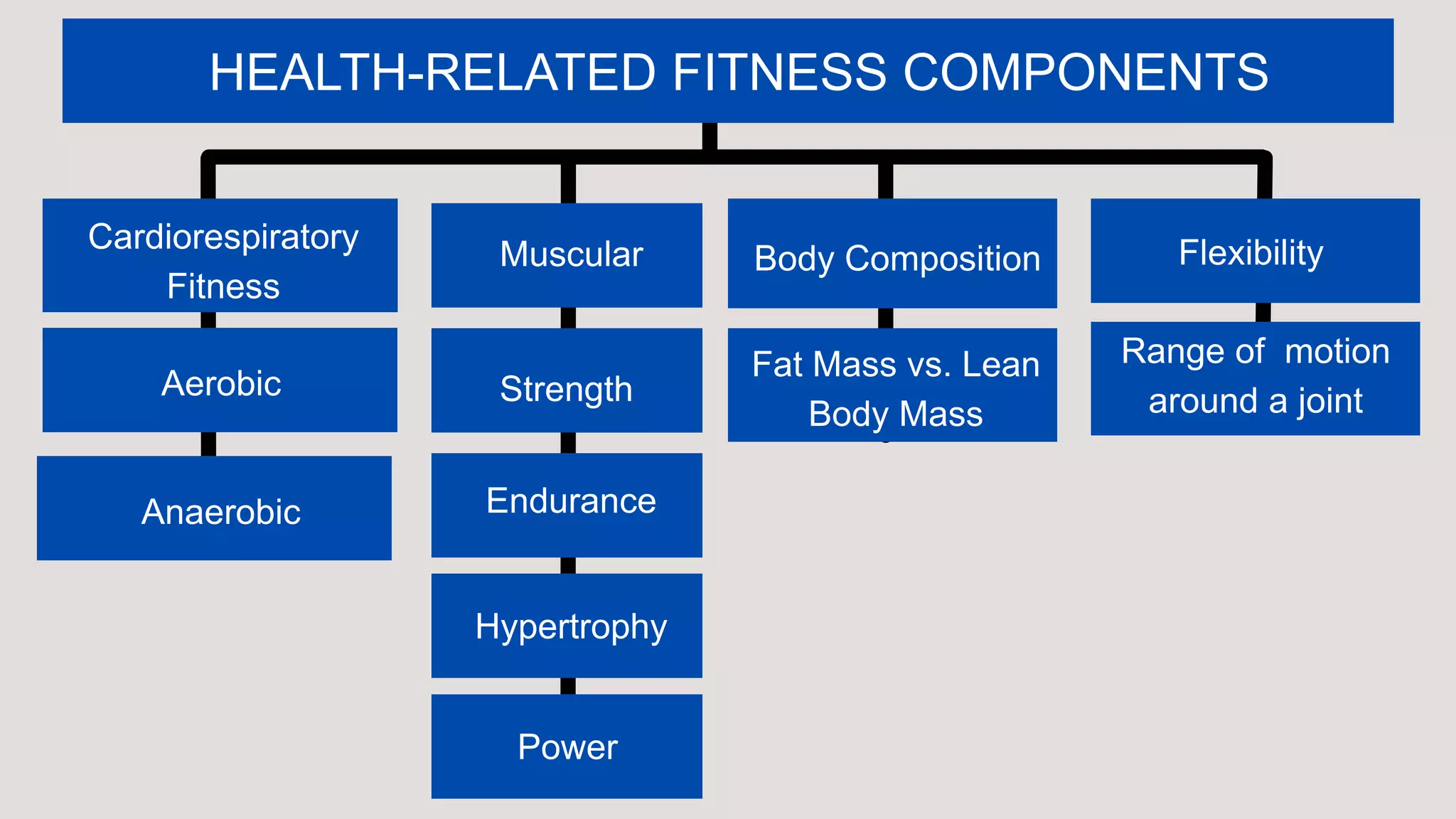
HEALTH-RELATED FITNESS COMPONENTS
Cardiorespiratory
Fitness
Muscular Body Composition Flexibility
Aerobic
Anaerobic
Fat Mass vs. Lean
Body Mass
Range of motion
around a joint
Strength
Endurance
Power
Hypertrophy
SKILL-RELATED FITNESS COMPONENTS
Agility Coordination Speed Power Reaction Time Balance
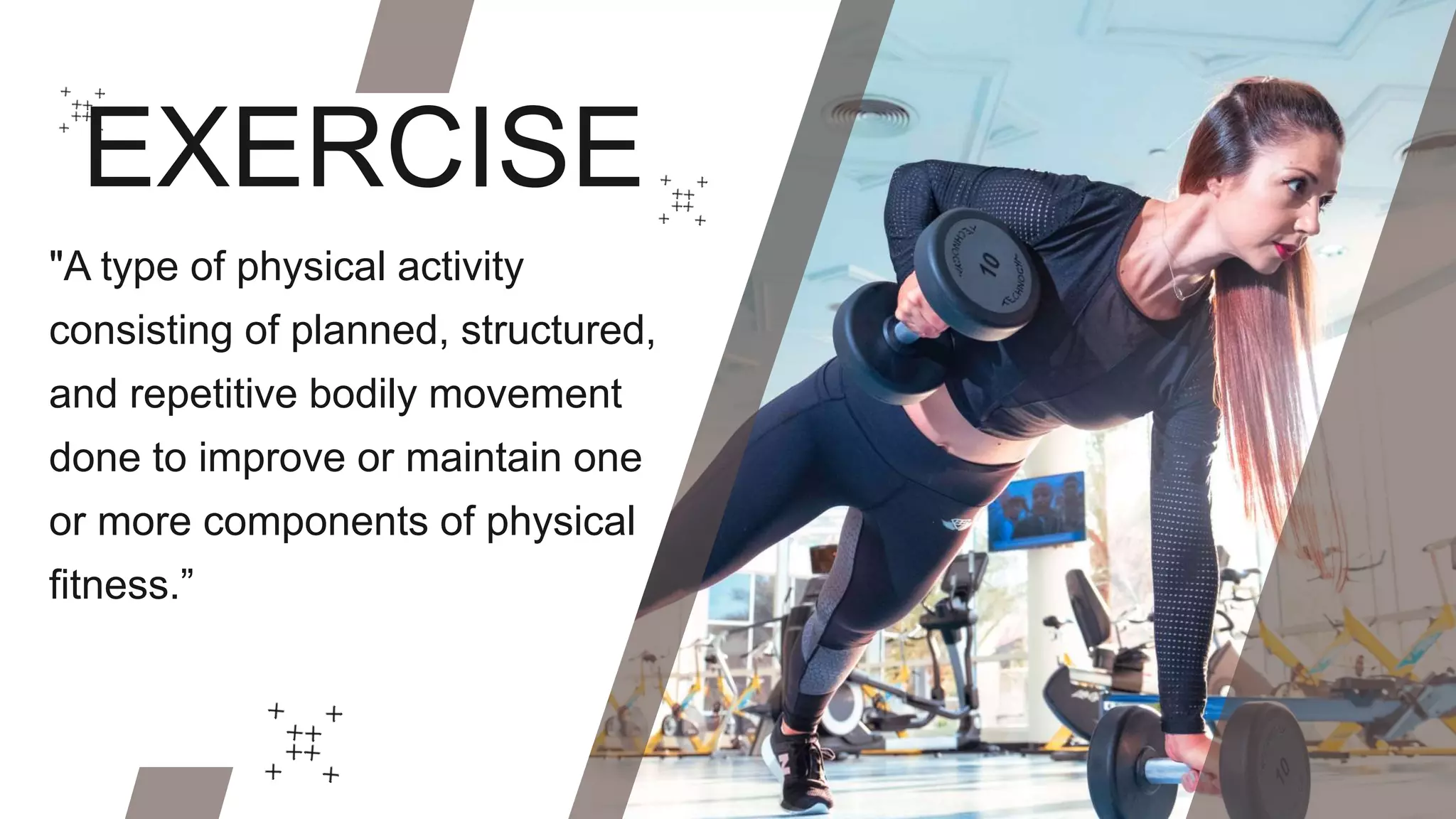
EXERCISE
"A type of physical activity
consisting of planned, structured,
and repetitive bodily movement
done to improve or maintain one
or more components of physical
fitness.”
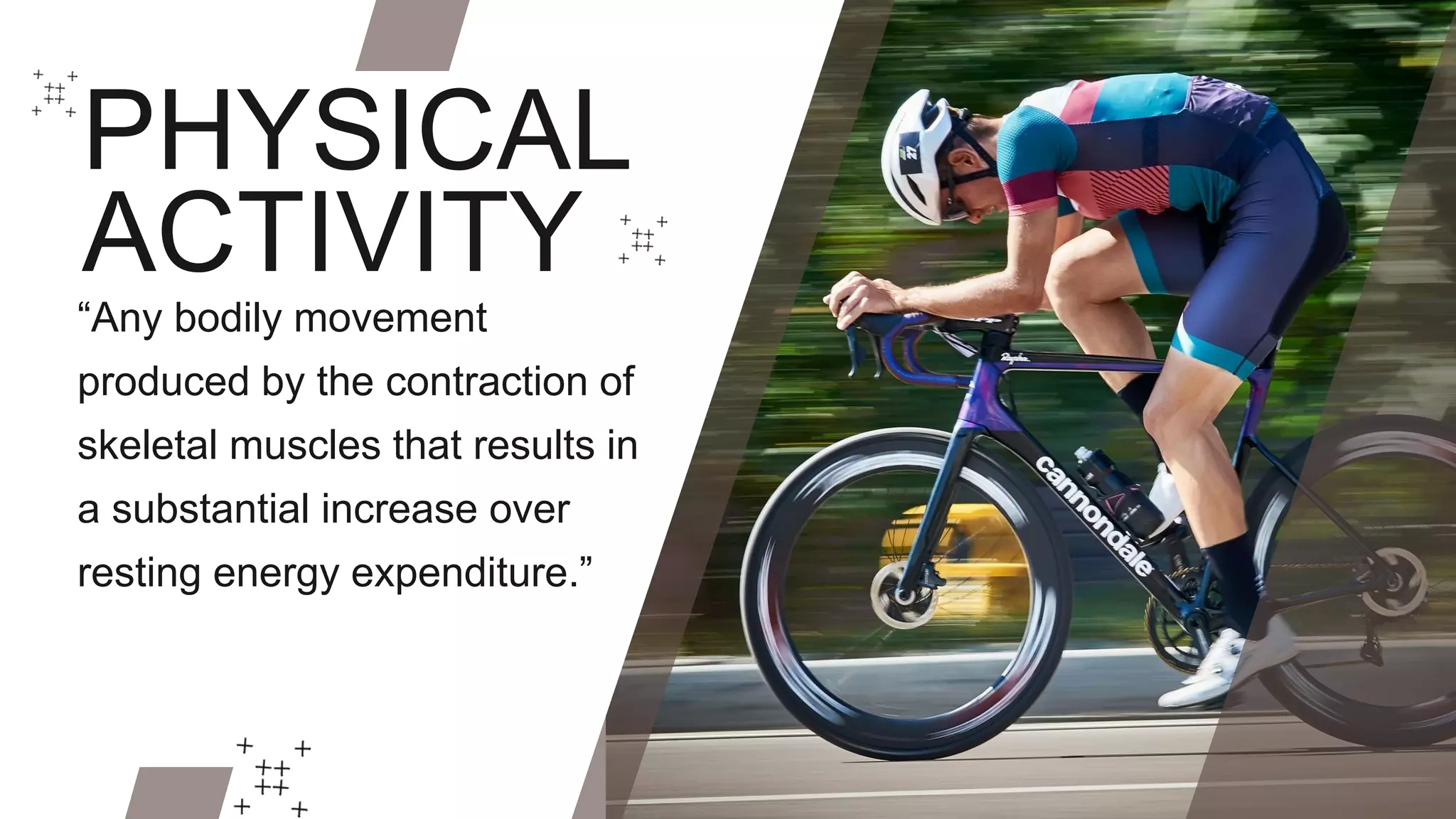
PHYSICAL
ACTIVITY
“Any bodily movement
produced by the contraction of
skeletal muscles that results in
a substantial increase over
resting energy expenditure.”
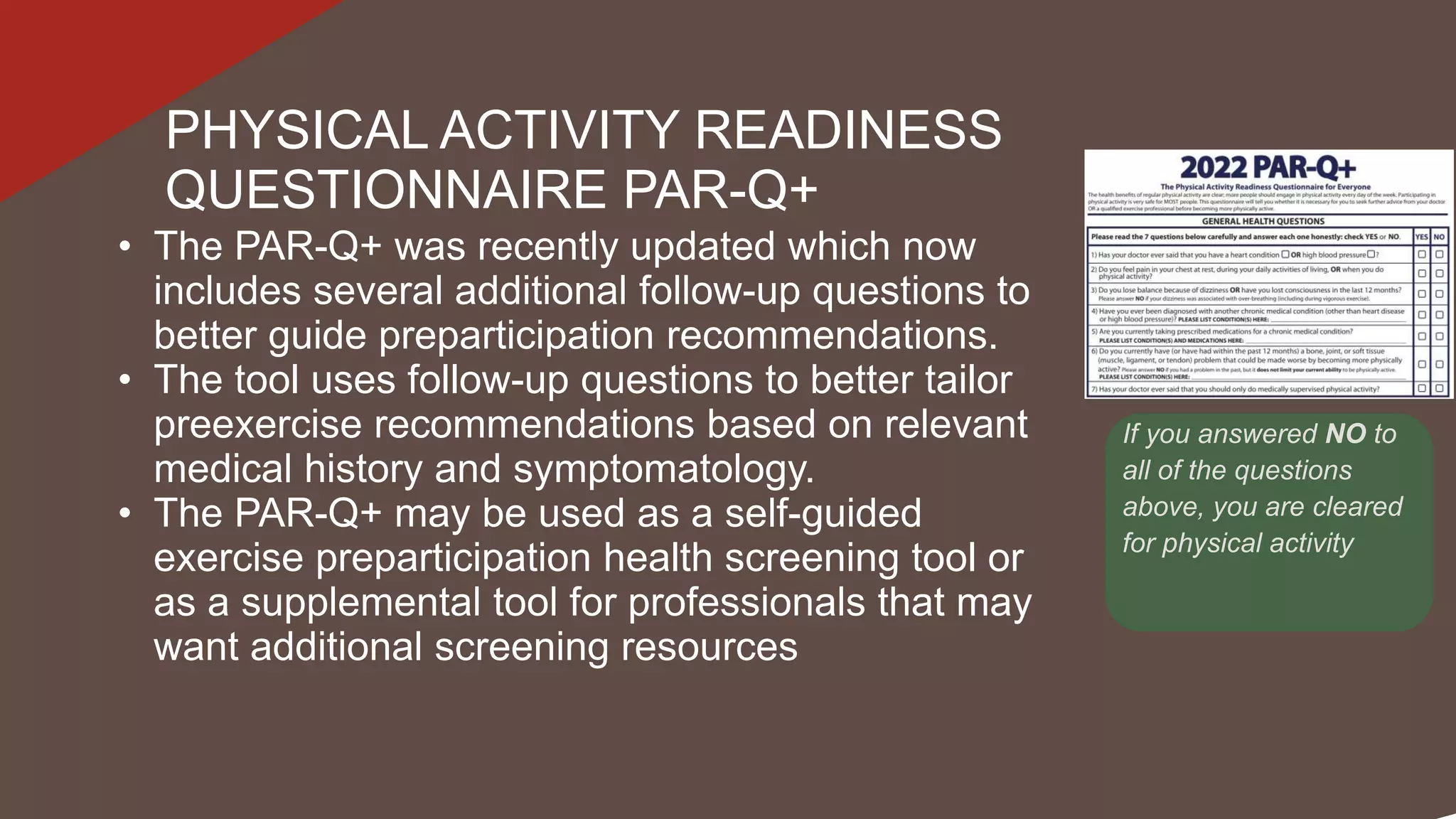
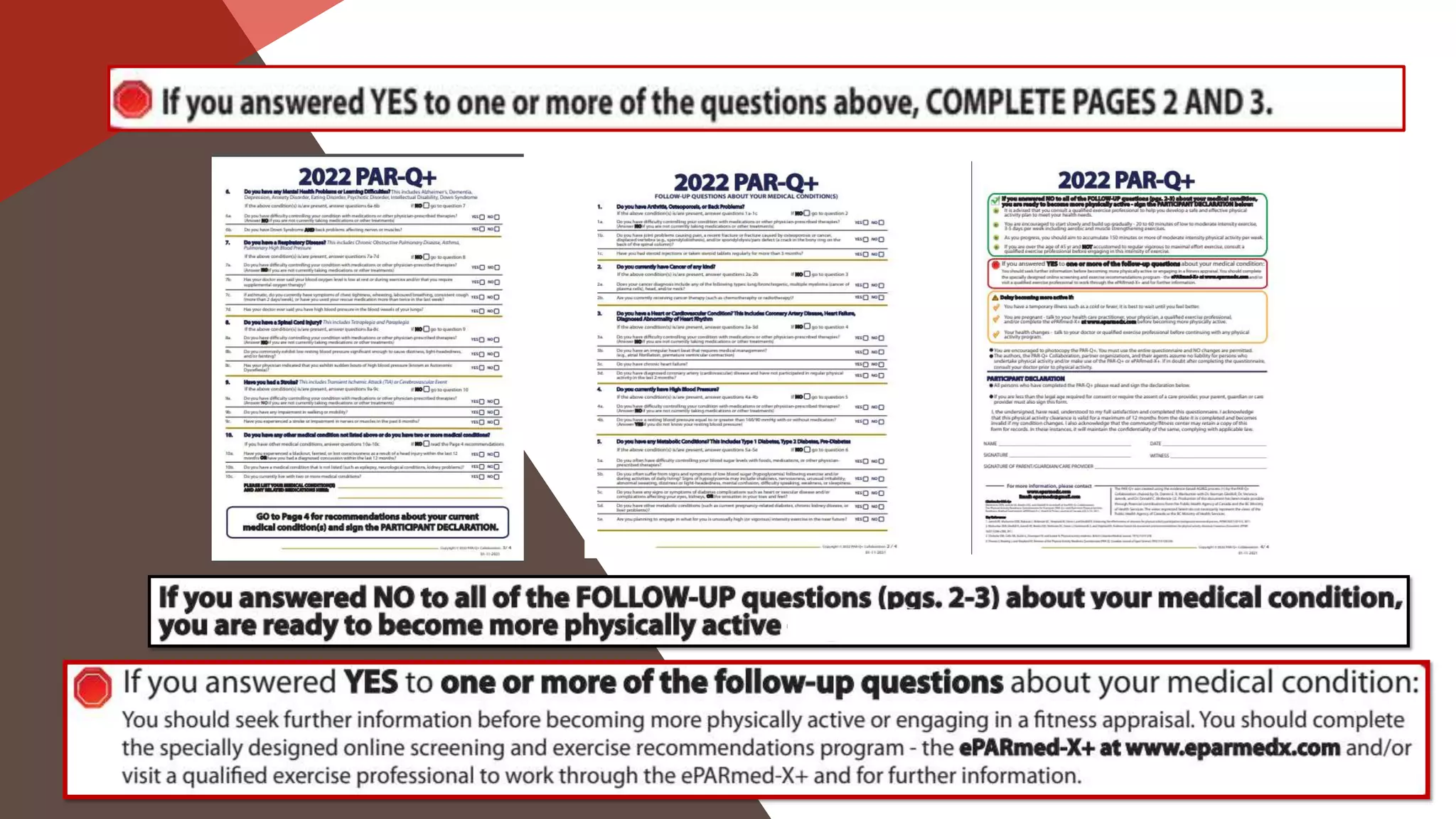
• The PAR-Q+ was recently updated which now
includes several additional follow-up questions to
better guide preparticipation recommendations.
• The tool uses follow-up questions to better tailor
preexercise recommendations based on relevant
medical history and symptomatology.
• The PAR-Q+ may be used as a self-guided
exercise preparticipation health screening tool or
as a supplemental tool for professionals that may
want additional screening resources
PHYSICAL ACTIVITY READINESS
QUESTIONNAIRE PAR-Q+
If you answered NO to
all of the questions
above, you are cleared
for physical activity
INTERNATIONAL PHYSICAL ACTIVITY
QUESTIONNAIRE (IPAQ)
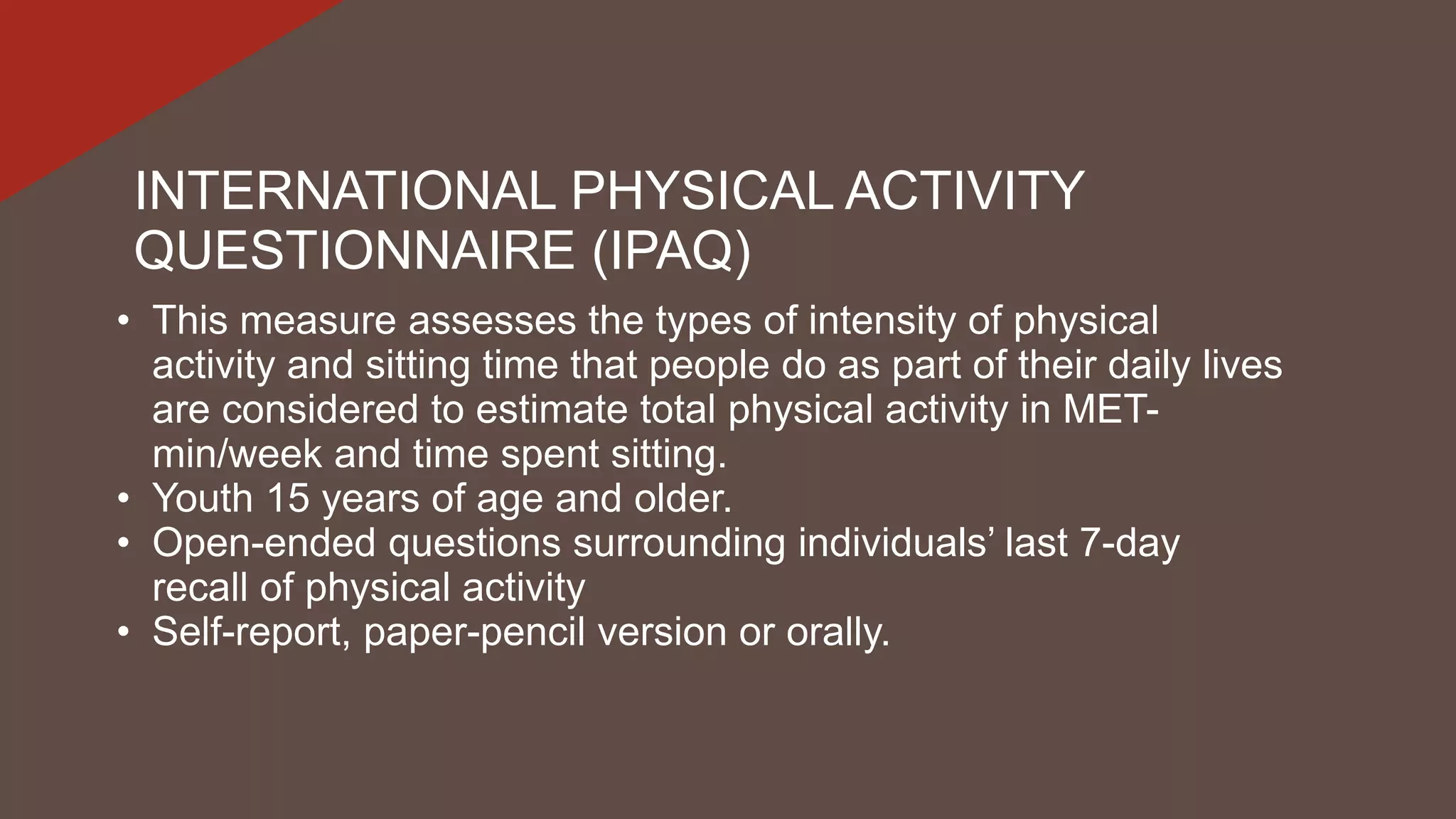
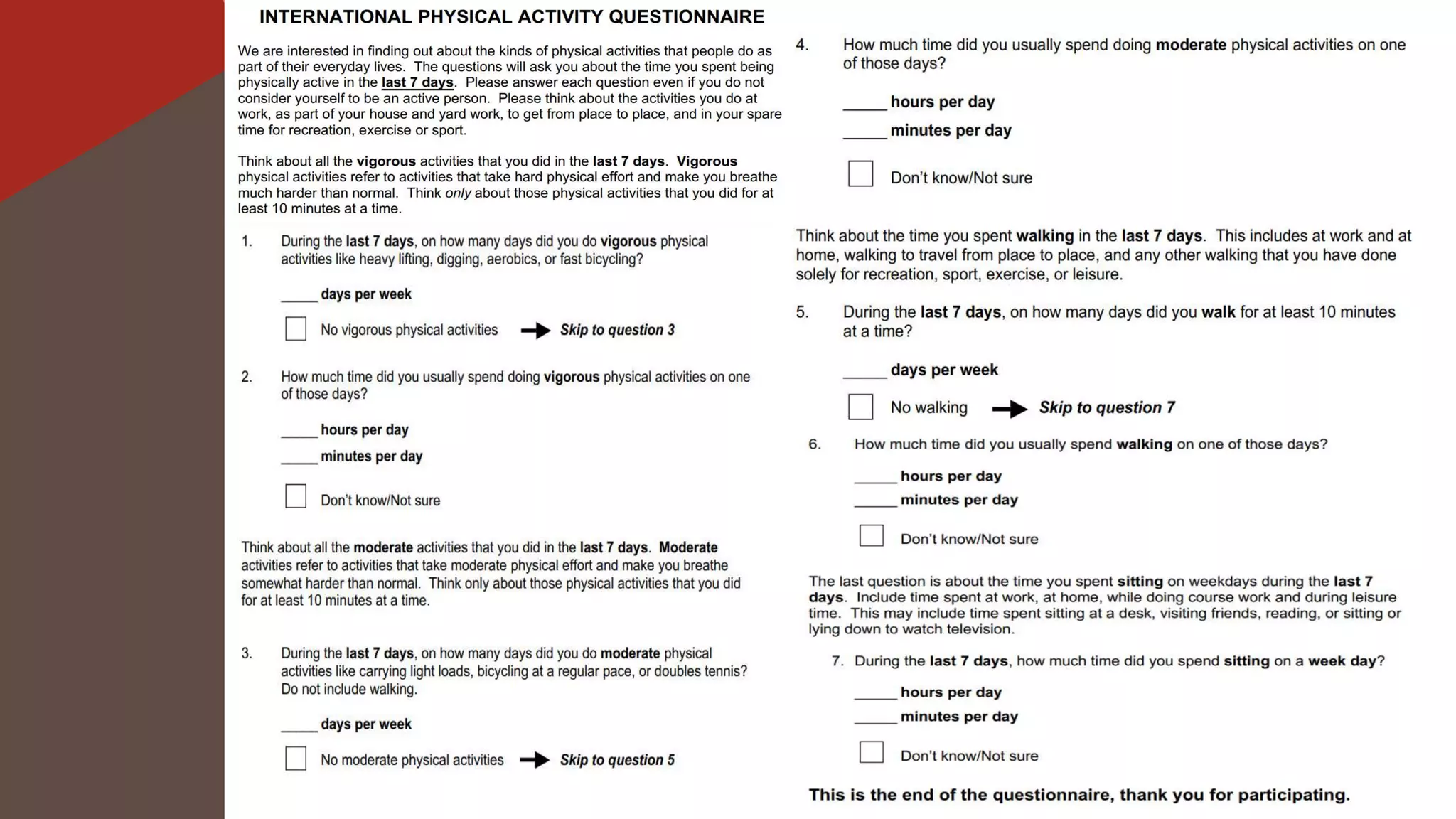
• This measure assesses the types of intensity of physical
activity and sitting time that people do as part of their daily lives
are considered to estimate total physical activity in MET-
min/week and time spent sitting.
• Youth 15 years of age and older.
• Open-ended questions surrounding individuals’ last 7-day
recall of physical activity
• Self-report, paper-pencil version or orally.
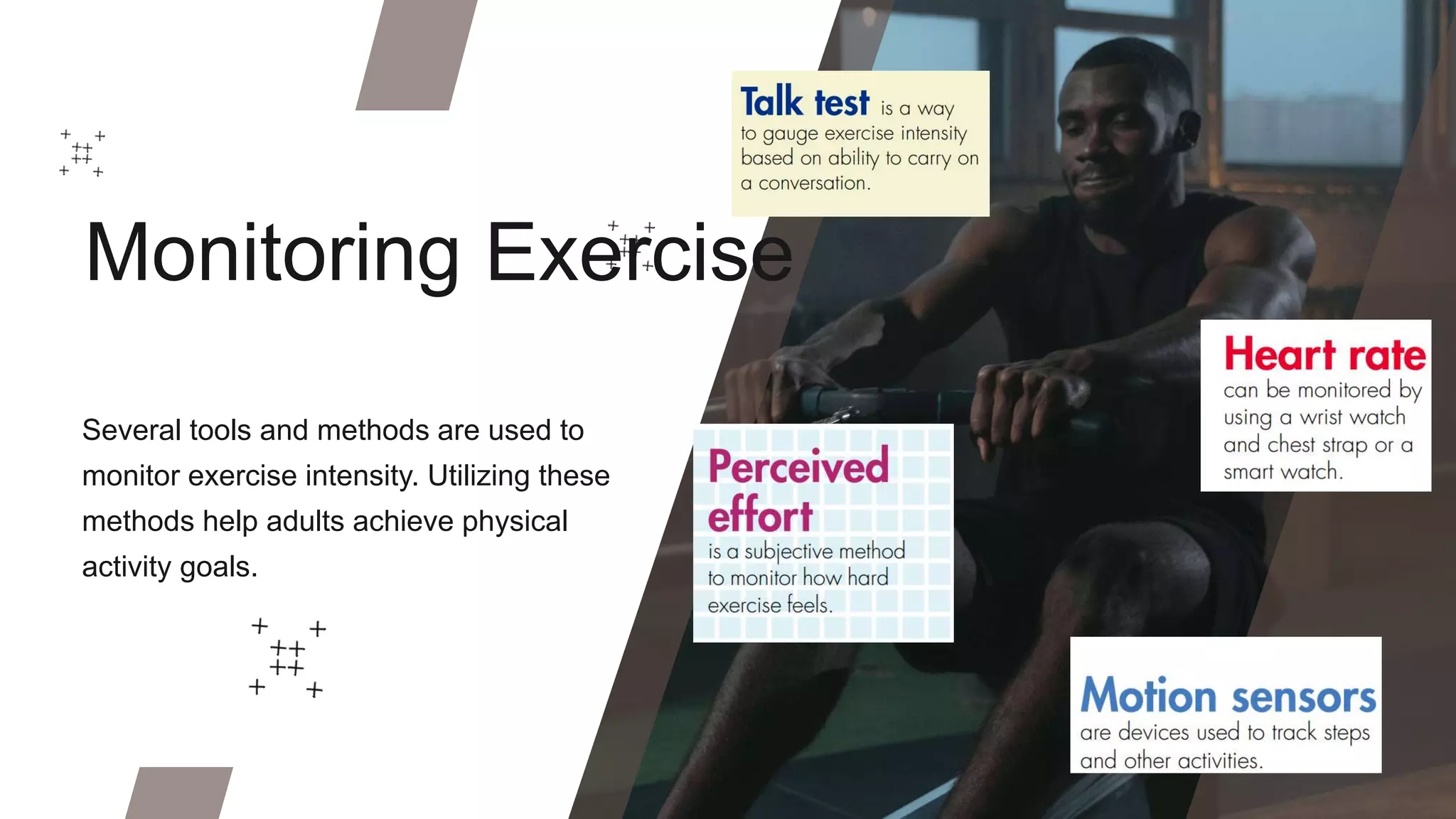
Monitoring Exercise
Several tools and methods are used to
monitor exercise intensity. Utilizing these
methods help adults achieve physical
activity goals.
Talk test
method
Heart Rate Meth
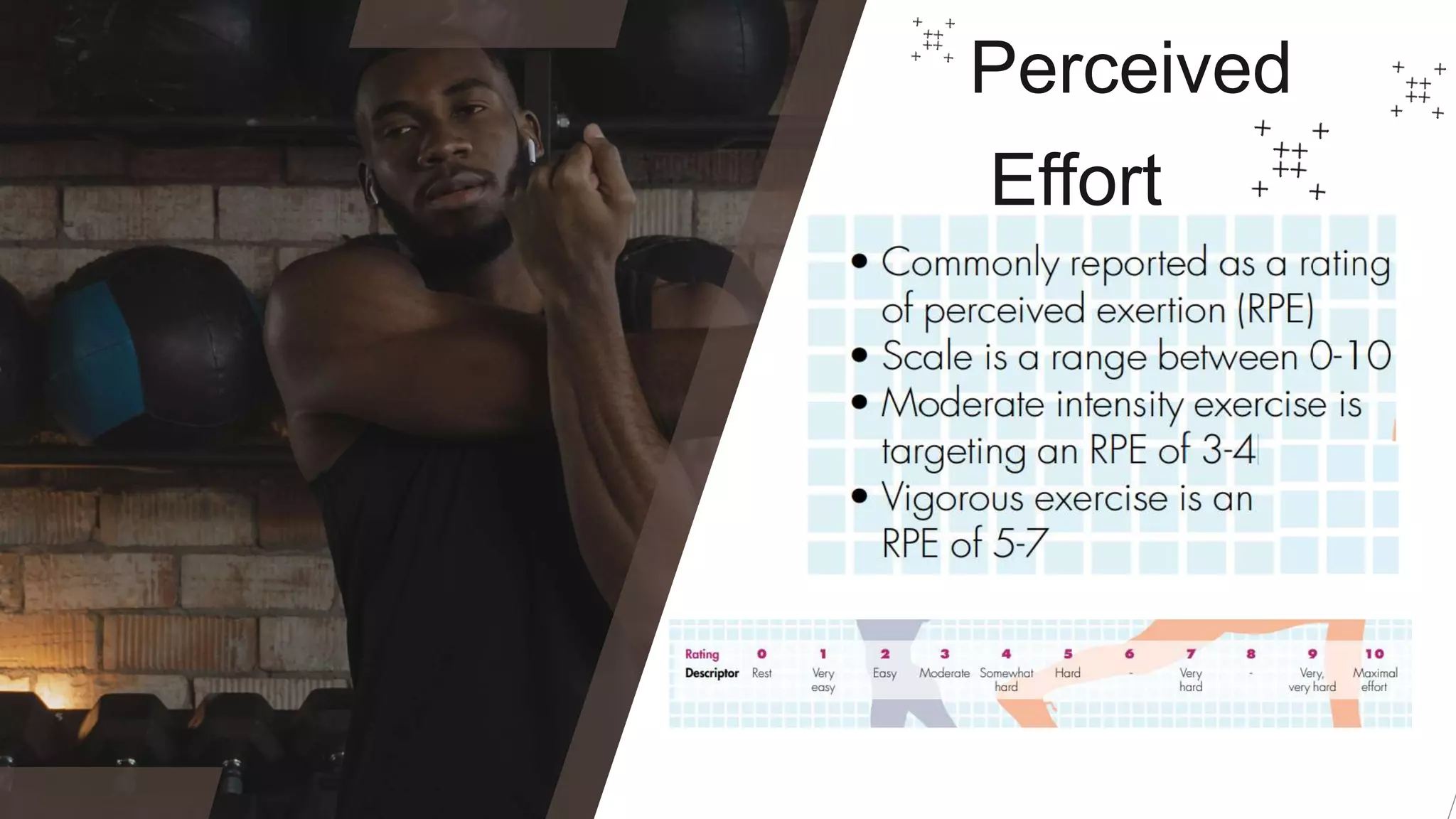
Perceived
Effort
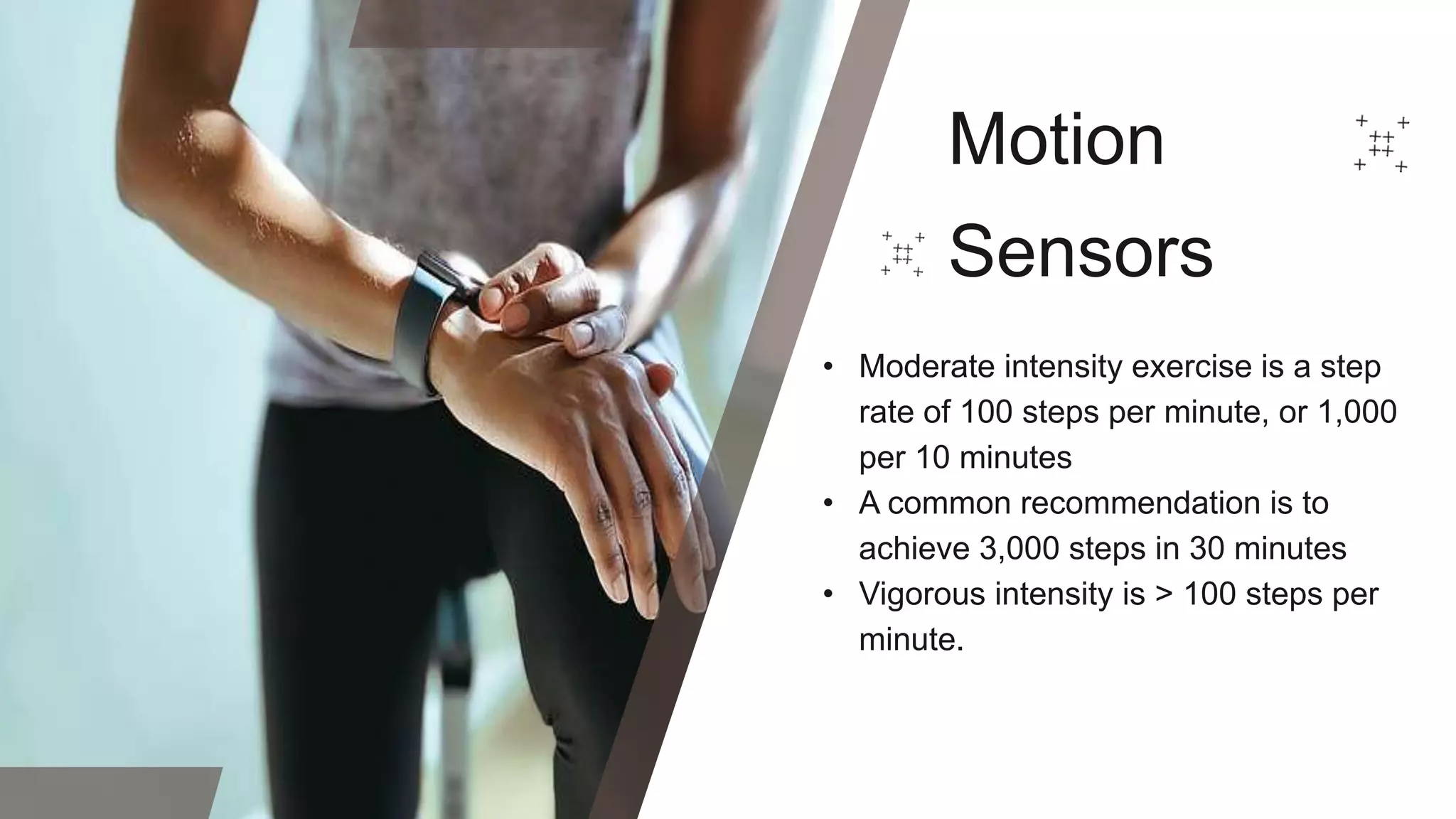
Motion
Sensors
• Moderate intensity exercise is a step
rate of 100 steps per minute, or 1,000
per 10 minutes
• A common recommendation is to
achieve 3,000 steps in 30 minutes
• Vigorous intensity is > 100 steps per
minute.
Thank You!
JARMI DIANE M. MANDANE
Bicol University – IPESR
PATHFIT1: Movement Competency Training

PATHFIT 1

  • 1.
  • 2.
    FITNESS "The ability tocarry out daily tasks with vigor and alertness, without undue fatigue, and with ample energy to enjoy leisure-time pursuits and meet unforeseen emergencies" (Physical Activity Guidelines Advisory Committee, 2008)
  • 3.
    FITNESS “A set ofattributes or characteristics that people have or achieve that relates to the ability to perform physical activity” (Centers for Disease Control and Prevention, 1985)
  • 4.
    FITNESS 1 2 Skill-related FitnessComponents Health-related Fitness Components Are those that are designated as improving health, wellness, and one’s quality of life. Improvements in these components can enhance physical performance These components are essential to athletic performance and the ability to perform activities of daily living.
  • 5.
    HEALTH-RELATED FITNESS COMPONENTS Cardiorespiratory Fitness MuscularBody Composition Flexibility Aerobic Anaerobic Fat Mass vs. Lean Body Mass Range of motion around a joint Strength Endurance Power Hypertrophy
  • 6.
    SKILL-RELATED FITNESS COMPONENTS AgilityCoordination Speed Power Reaction Time Balance
  • 7.
    EXERCISE "A type ofphysical activity consisting of planned, structured, and repetitive bodily movement done to improve or maintain one or more components of physical fitness.”
  • 8.
    PHYSICAL ACTIVITY “Any bodily movement producedby the contraction of skeletal muscles that results in a substantial increase over resting energy expenditure.”
  • 10.
    • The PAR-Q+was recently updated which now includes several additional follow-up questions to better guide preparticipation recommendations. • The tool uses follow-up questions to better tailor preexercise recommendations based on relevant medical history and symptomatology. • The PAR-Q+ may be used as a self-guided exercise preparticipation health screening tool or as a supplemental tool for professionals that may want additional screening resources PHYSICAL ACTIVITY READINESS QUESTIONNAIRE PAR-Q+ If you answered NO to all of the questions above, you are cleared for physical activity
  • 13.
    INTERNATIONAL PHYSICAL ACTIVITY QUESTIONNAIRE(IPAQ) • This measure assesses the types of intensity of physical activity and sitting time that people do as part of their daily lives are considered to estimate total physical activity in MET- min/week and time spent sitting. • Youth 15 years of age and older. • Open-ended questions surrounding individuals’ last 7-day recall of physical activity • Self-report, paper-pencil version or orally.
  • 15.
    Monitoring Exercise Several toolsand methods are used to monitor exercise intensity. Utilizing these methods help adults achieve physical activity goals.
  • 16.
  • 17.
  • 18.
  • 19.
    Motion Sensors • Moderate intensityexercise is a step rate of 100 steps per minute, or 1,000 per 10 minutes • A common recommendation is to achieve 3,000 steps in 30 minutes • Vigorous intensity is > 100 steps per minute.
  • 21.
    Thank You! JARMI DIANEM. MANDANE Bicol University – IPESR PATHFIT1: Movement Competency Training

Editor's Notes