Past Indefinite  Tense back menu next
Глаголы в английском языке бывают правильные – regular   и неправильные - irregular Правильные глаголы образуют прошедшее время с помощью окончания  “ed”, ( V + ed ), которое читается как: [ d ]  – после гласных и звонких согласных play- play ed , open-open ed , close –clos ed [ t ]  – после глухих и шипящих согласных wash- wash ed , stop- stopp ed , ask - ask ed  [ id ] - после глаголов, оканчивающихся на  [ d ]  и  [ t ]. want –want ed , plant- plant ed , translate – translat ed , need - need ed back menu next
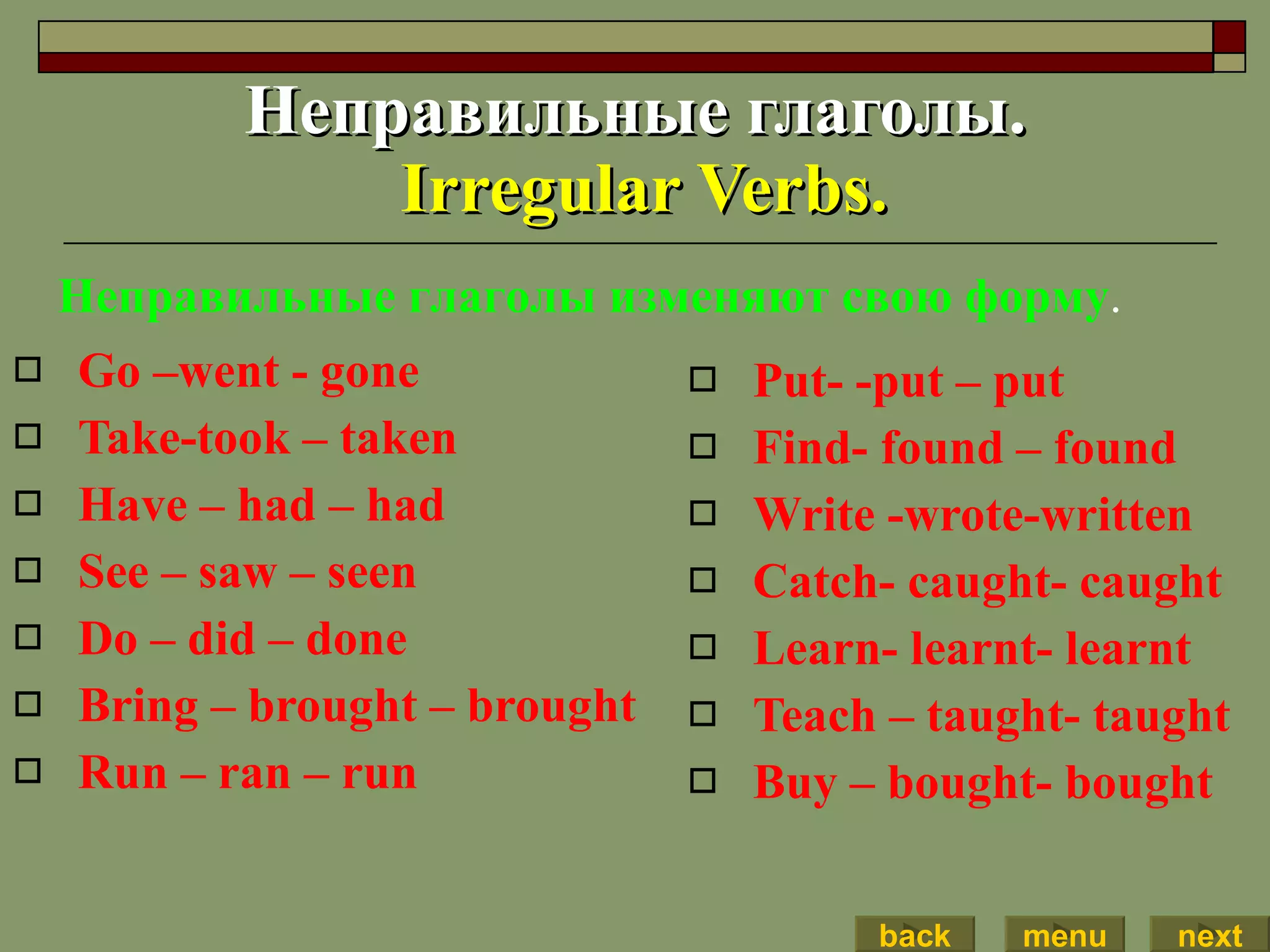
Неправильные глаголы.   Irregular Verbs. Go –went - gone Take-took – taken Have – had – had See – saw – seen Do – did – done Bring – brought – brought Run – ran – run Put- -put – put Find- found – found Write -wrote-written Catch- caught- caught Learn- learnt- learnt  Teach – taught- taught Buy – bought- bought Неправильные глаголы изменяют свою форму . back menu next
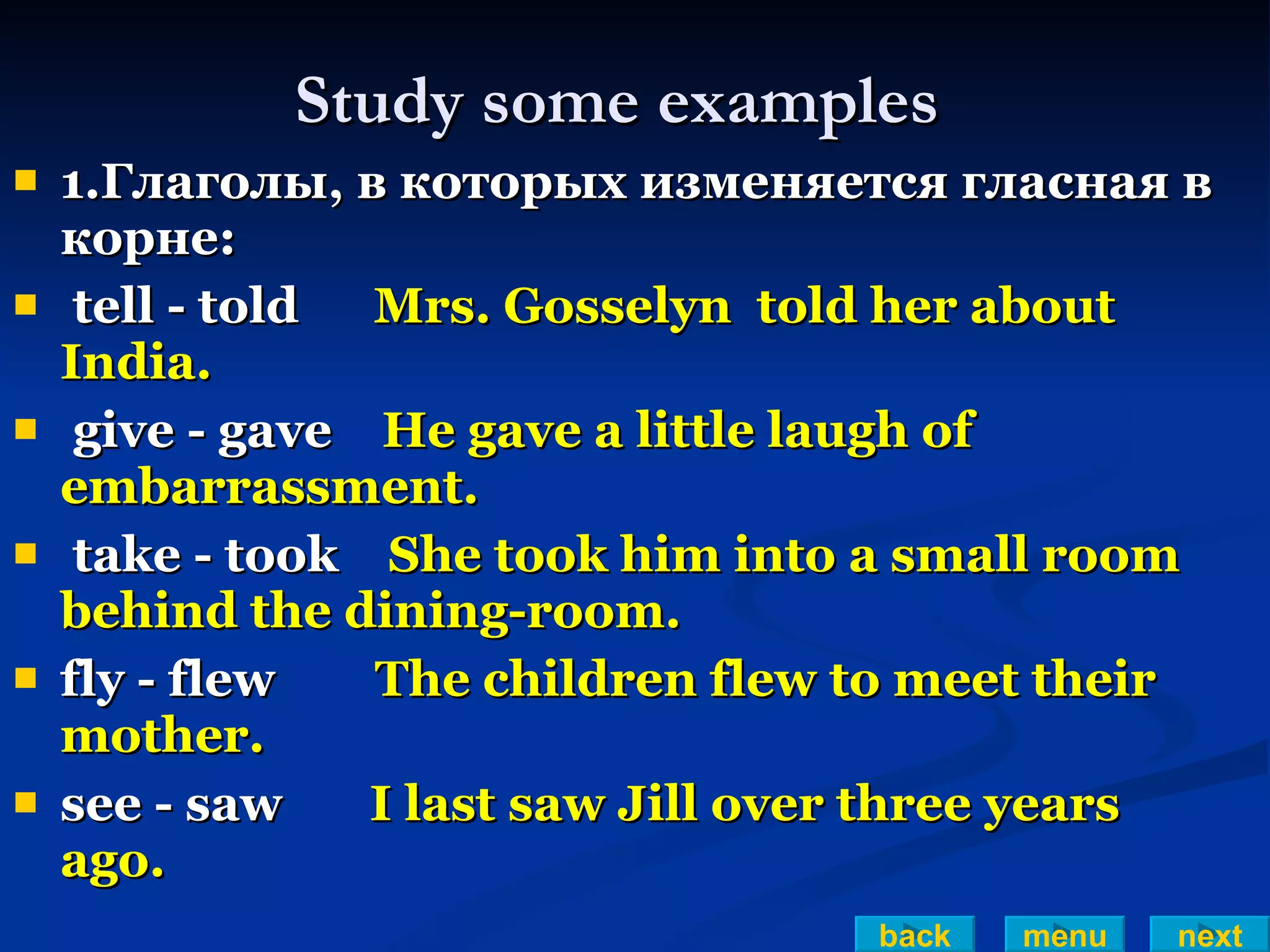
Study some examples 1.Глаголы, в которых изменяется гласная в корне: tell - told  Mrs. Gosselyn  told her about India. give - gave  He gave a little laugh of  embarrassment. take - took  She took him into a small room behind the dining-room. fly - flew  The children flew to meet their mother. see - saw  I last saw Jill over three years ago. back menu next
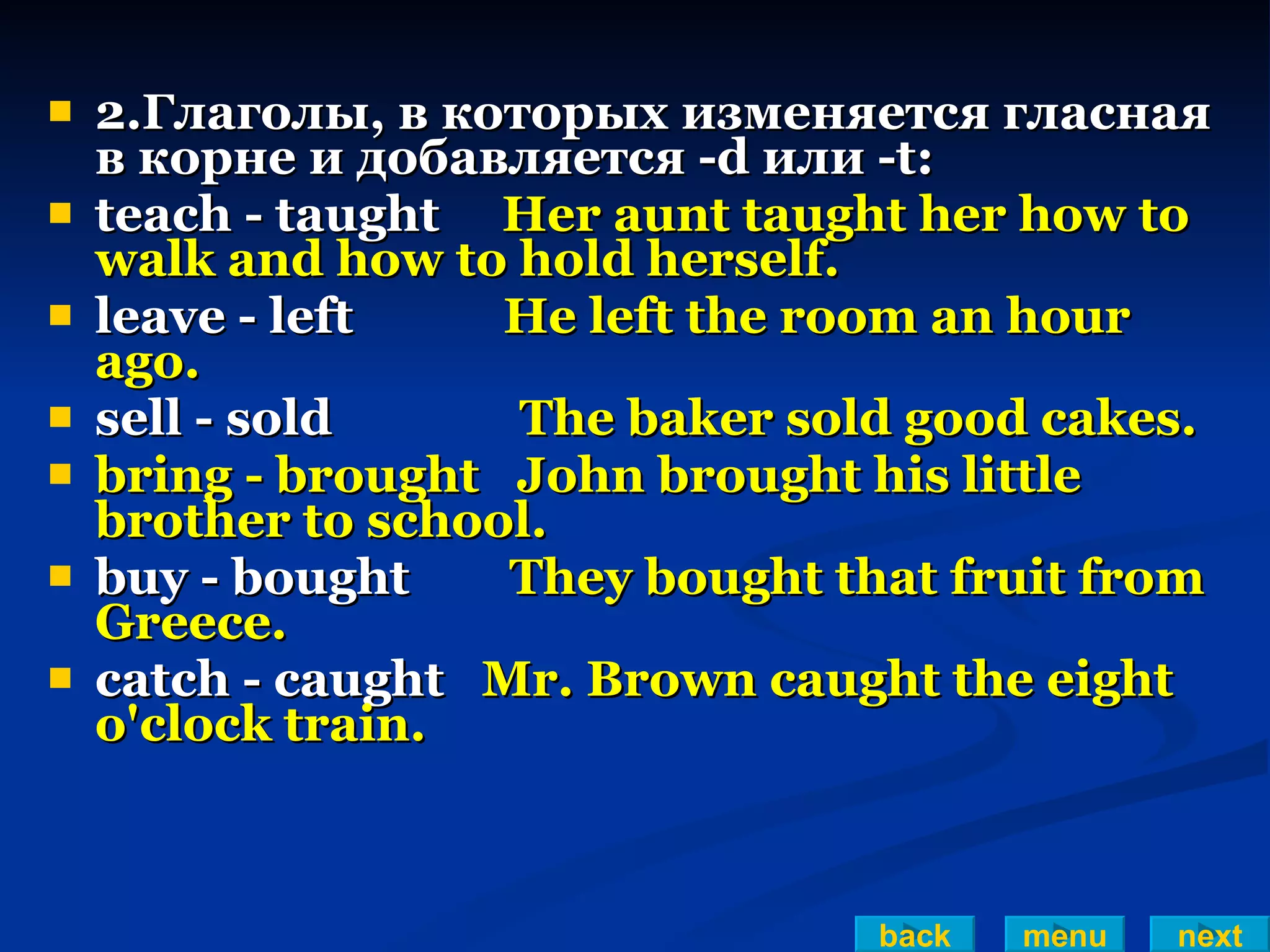
2.Глаголы, в которых изменяется гласная в корне и добавляется -d или -t: teach - taught  Her aunt taught her how to walk and how to hold herself. leave - left  He left the room an hour ago. sell - sold  The baker sold good cakes. bring - brought  John brought his little brother to school. buy - bought  They bought that fruit from Greece. catch - caught  Mr. Brown caught the eight o'clock train. back menu next
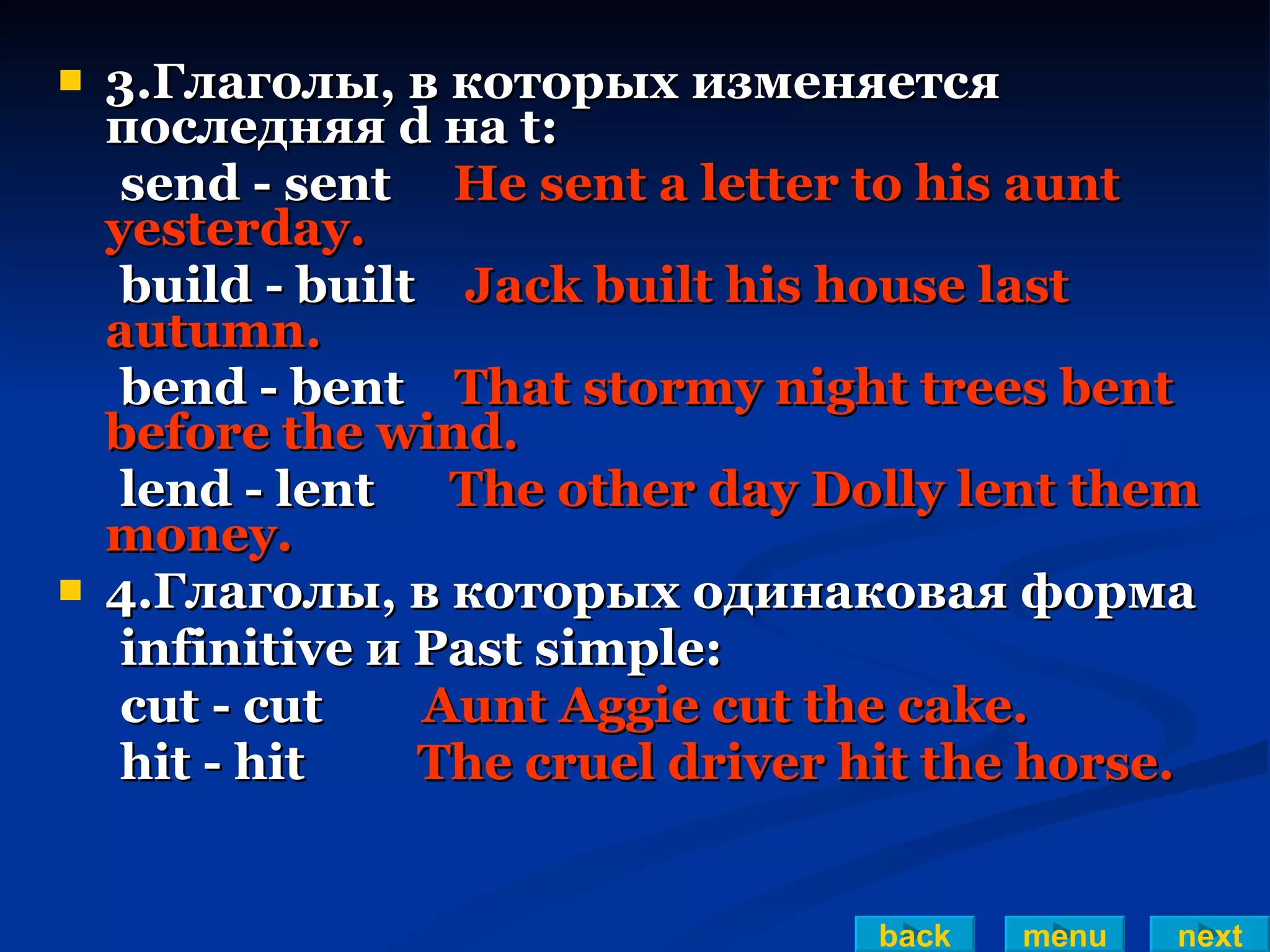
3.Глаголы, в которых изменяется последняя d на t: send - sent  He sent a letter to his aunt yesterday. build - built  Jack built his house last autumn. bend - bent  That stormy night trees bent before the wind. lend - lent  The other day Dolly lent them money. 4.Глаголы, в которых одинаковая форма infinitive и Past simple: cut - cut  Aunt Aggie cut the cake. hit - hit  The cruel driver hit the horse. back menu next
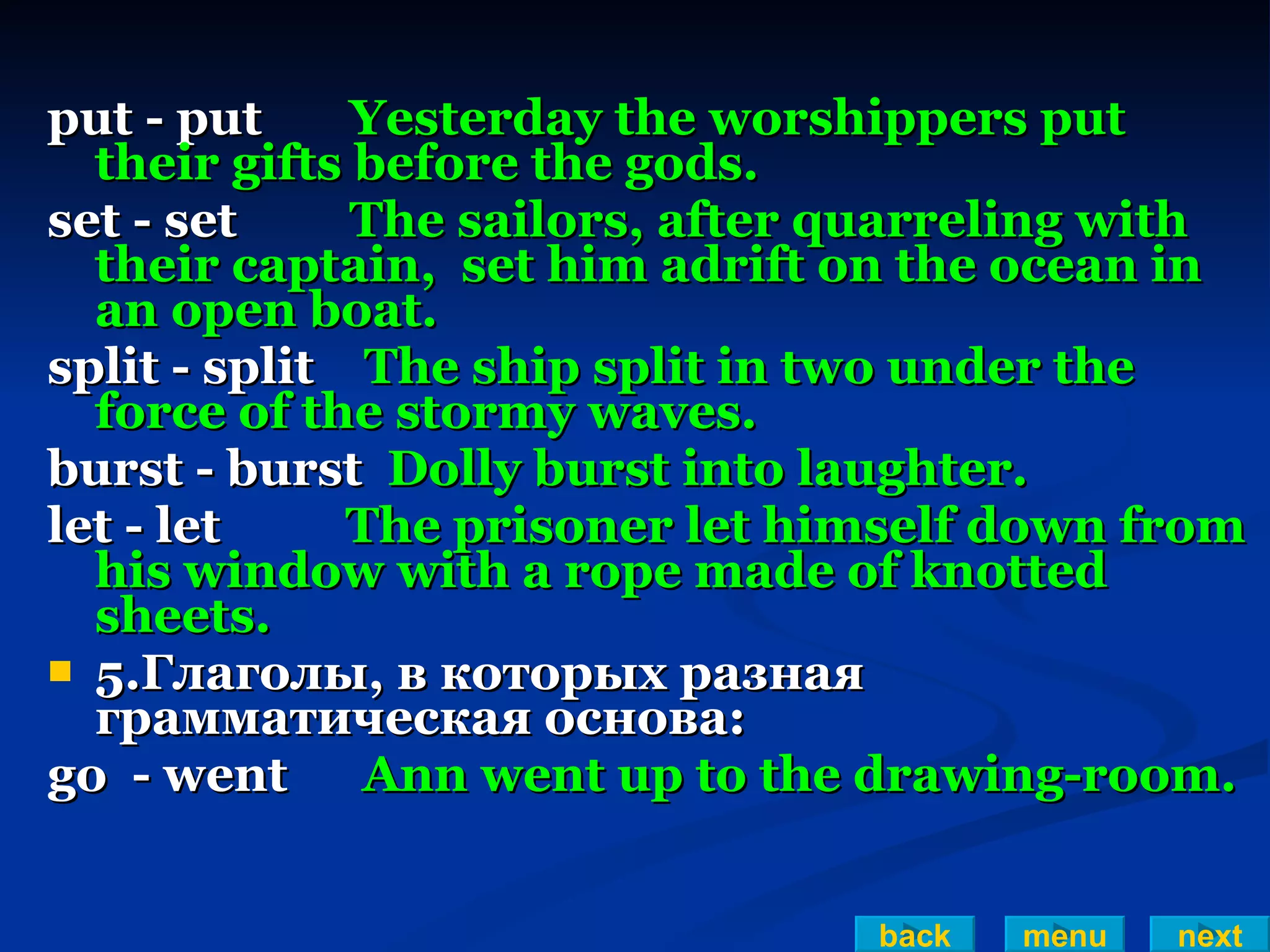
put - put  Yesterday the worshippers put their gifts before the gods. set - set  The sailors, after quarreling with their captain,  set him adrift on the ocean in an open boat. split - split  The ship split in two under the force of the stormy waves. burst - burst  Dolly burst into laughter. let - let  The prisoner let himself down from his window with a rope made of knotted sheets. 5.Глаголы, в которых разная грамматическая основа: go  - went  Ann went up to the drawing-room. back menu next
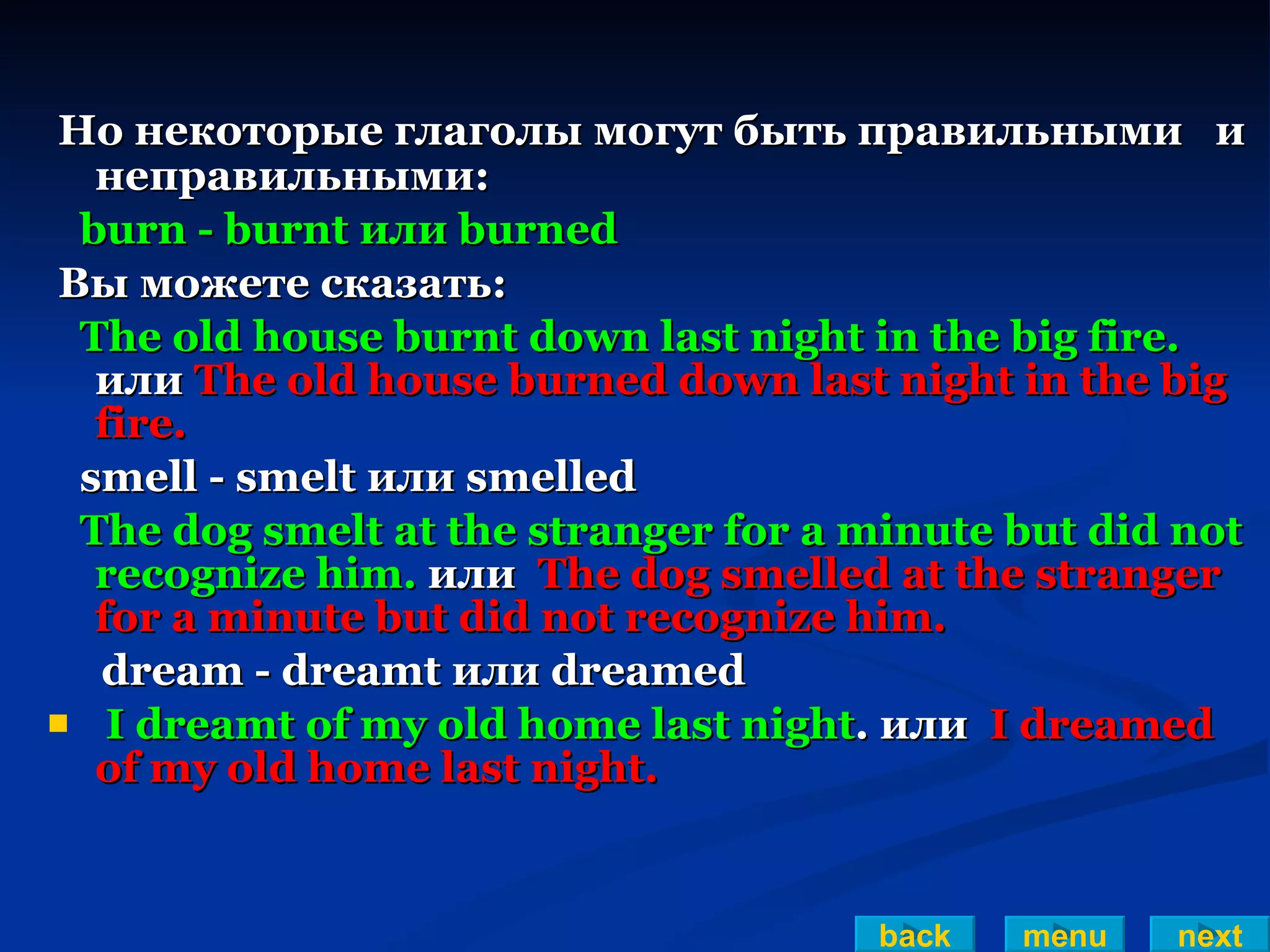
Но некоторые глаголы могут быть правильными  и неправильными: burn - burnt или burned Вы можете сказать: The old house burnt down last night in the big fire.   или  The old house burned down last night in the big fire.  smell - smelt или smelled The dog smelt at the stranger for a minute but did not recognize him.  или  The dog smelled at the stranger for   a minute but did not recognize him.   dream - dreamt или dreamed I dreamt of my old home last night . или  I dreamed of my old home last night. back menu next
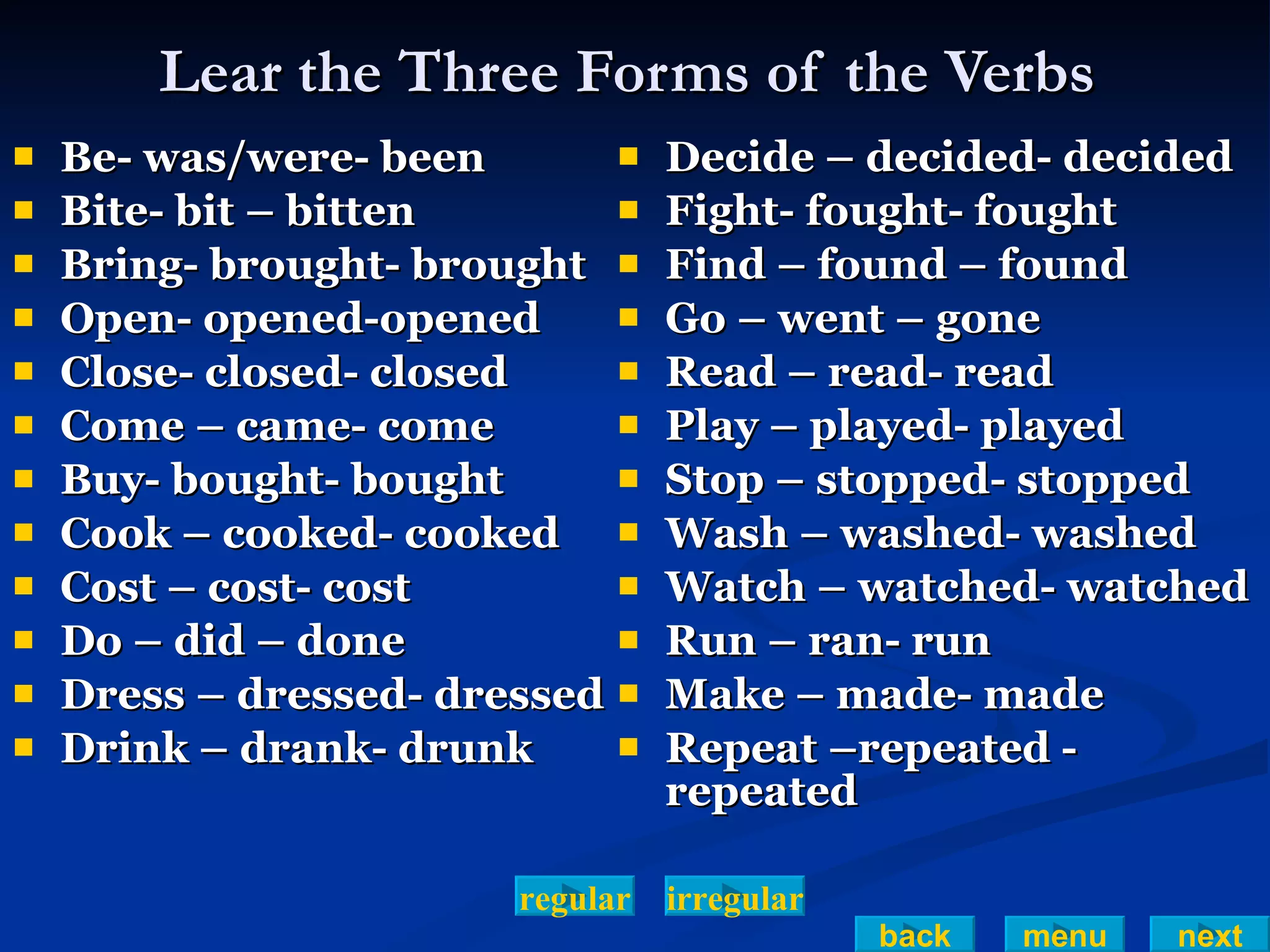
Lear the Three Forms of the Verbs  Be- was/were- been Bite- bit – bitten Bring- brought- brought  Open- opened-opened Close- closed- closed Come – came- come Buy- bought- bought Cook – cooked- cooked Cost – cost- cost Do – did – done Dress – dressed- dressed Drink – drank- drunk  Decide – decided- decided Fight- fought- fought  Find – found – found Go – went – gone Read – read- read Play – played- played Stop – stopped- stopped Wash – washed- washed Watch – watched- watched Run – ran- run Make – made- made Repeat –repeated - repeated irregular regular back menu next
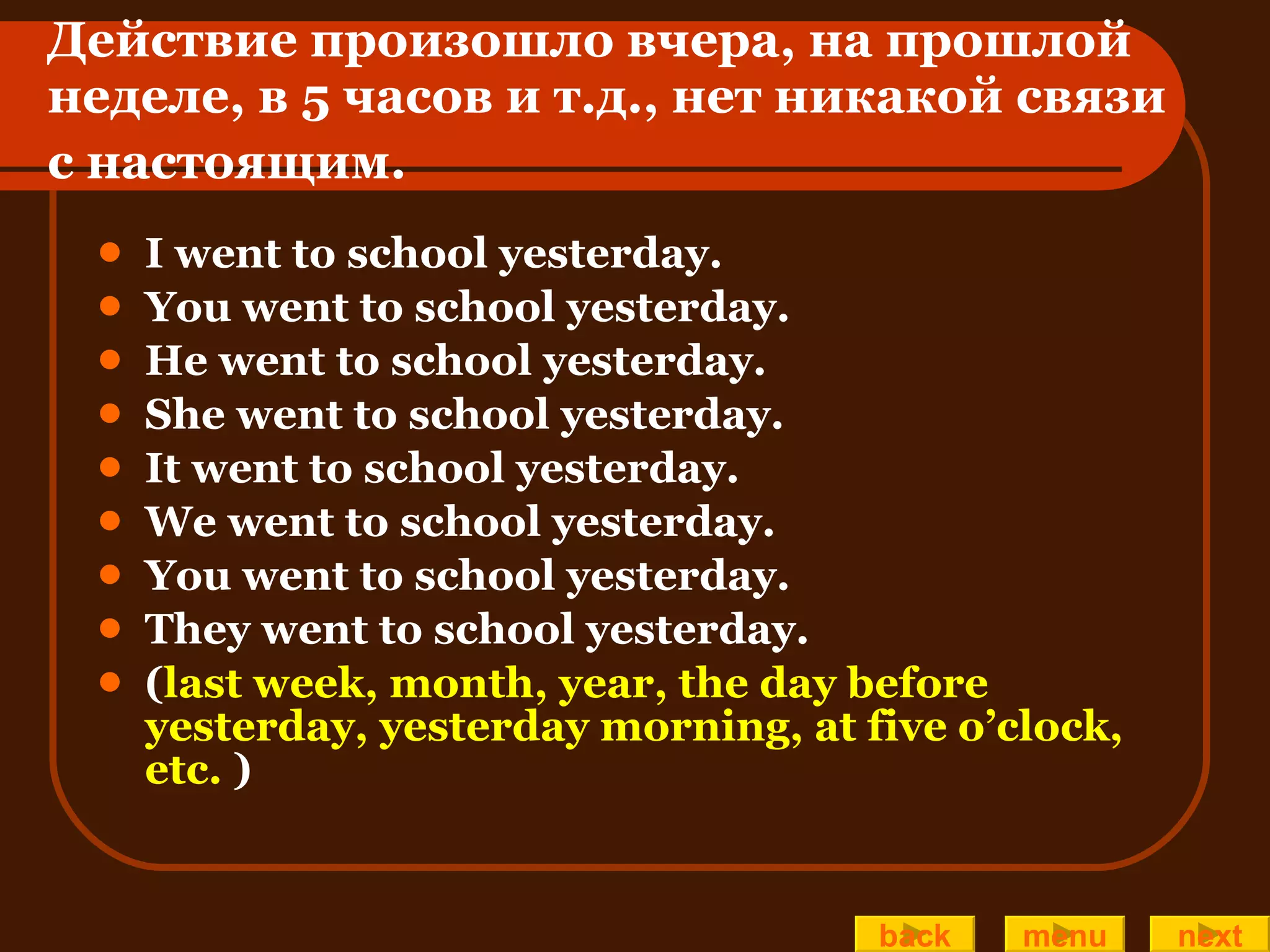
Действие произошло вчера, на прошлой неделе, в 5 часов и т.д., нет никакой связи  с настоящим.   I went to school yesterday. You went to school yesterday. He went to school yesterday. She went to school yesterday. It went to school yesterday. We went to school yesterday. You went to school yesterday. They went to school yesterday. ( last week, month, year, the day before yesterday, yesterday morning, at five o’clock, etc.   ) back menu next
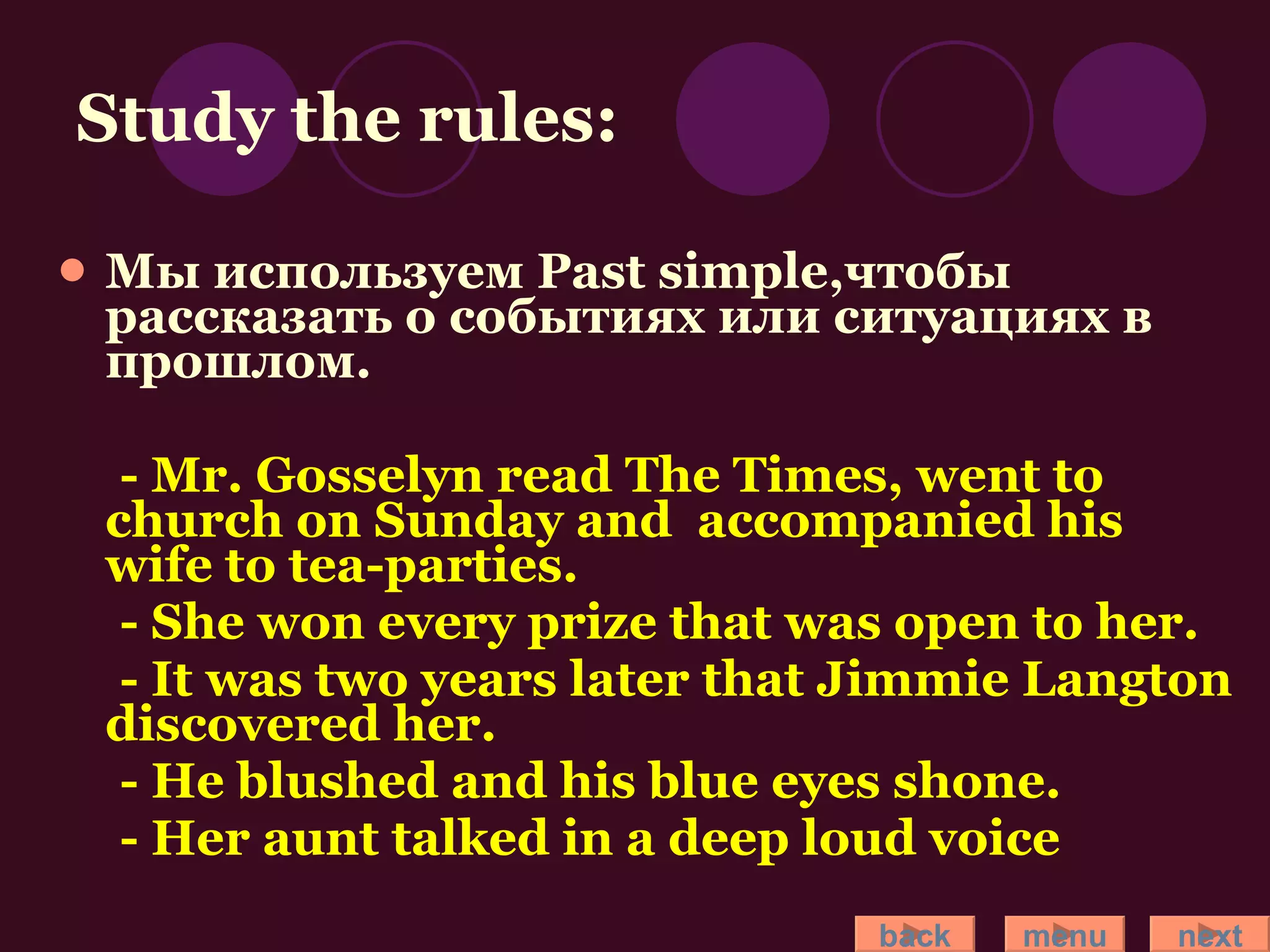
Study the rules: Мы используем Past simple,чтобы рассказать о событиях или ситуациях в прошлом. - Mr. Gosselyn read The Times, went to church on Sunday and  accompanied his wife to tea-parties. - She won every prize that was open to her. - It was two years later that Jimmie Langton discovered her. - He blushed and his blue eyes shone. - Her aunt talked in a deep loud voice back menu next
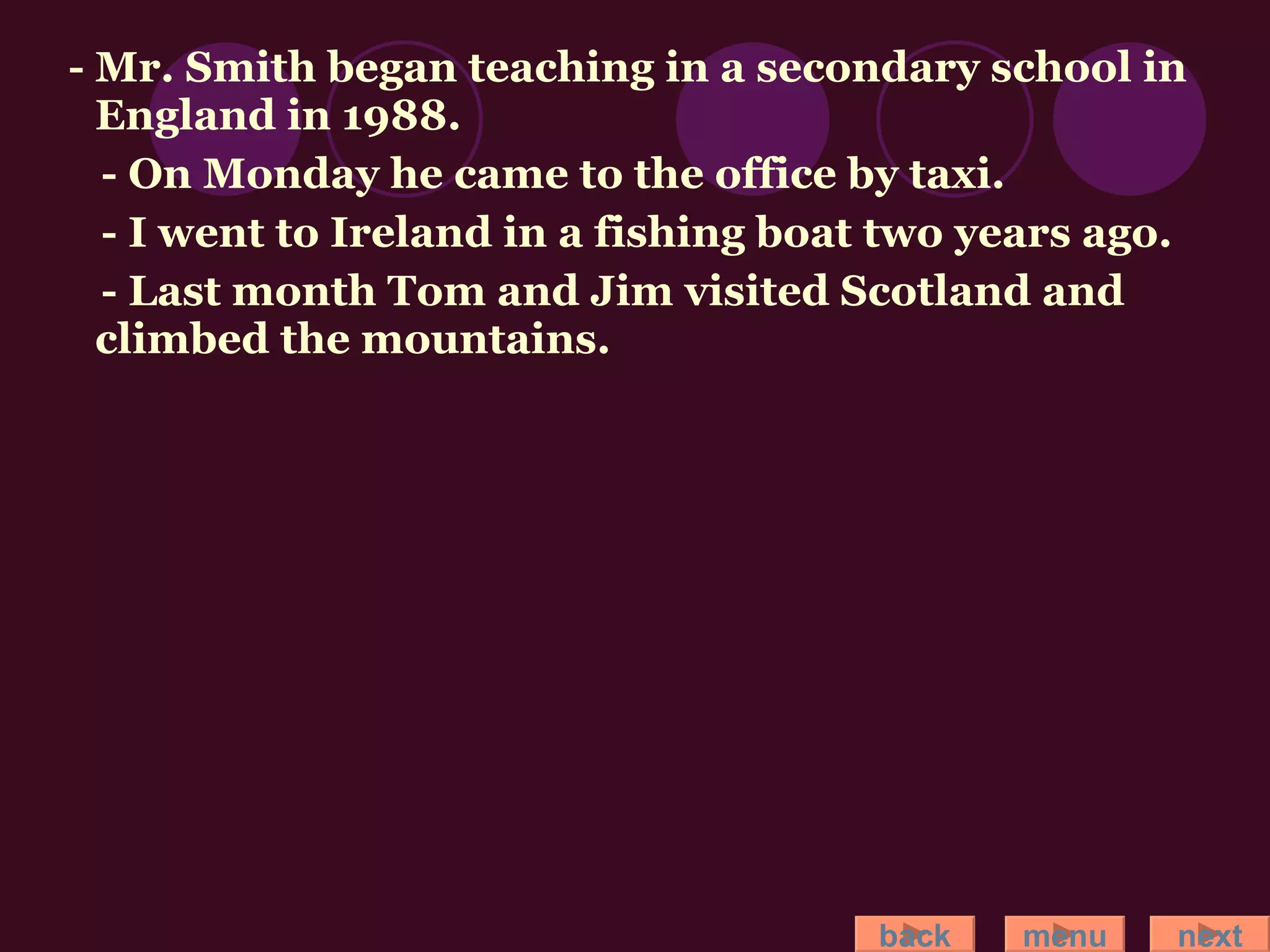
- Mr. Smith began teaching in a secondary school in England in 1988. - On Monday he came to the office by taxi. - I went to Ireland in a fishing boat two years ago. - Last month Tom and Jim visited Scotland and climbed the mountains. back menu next
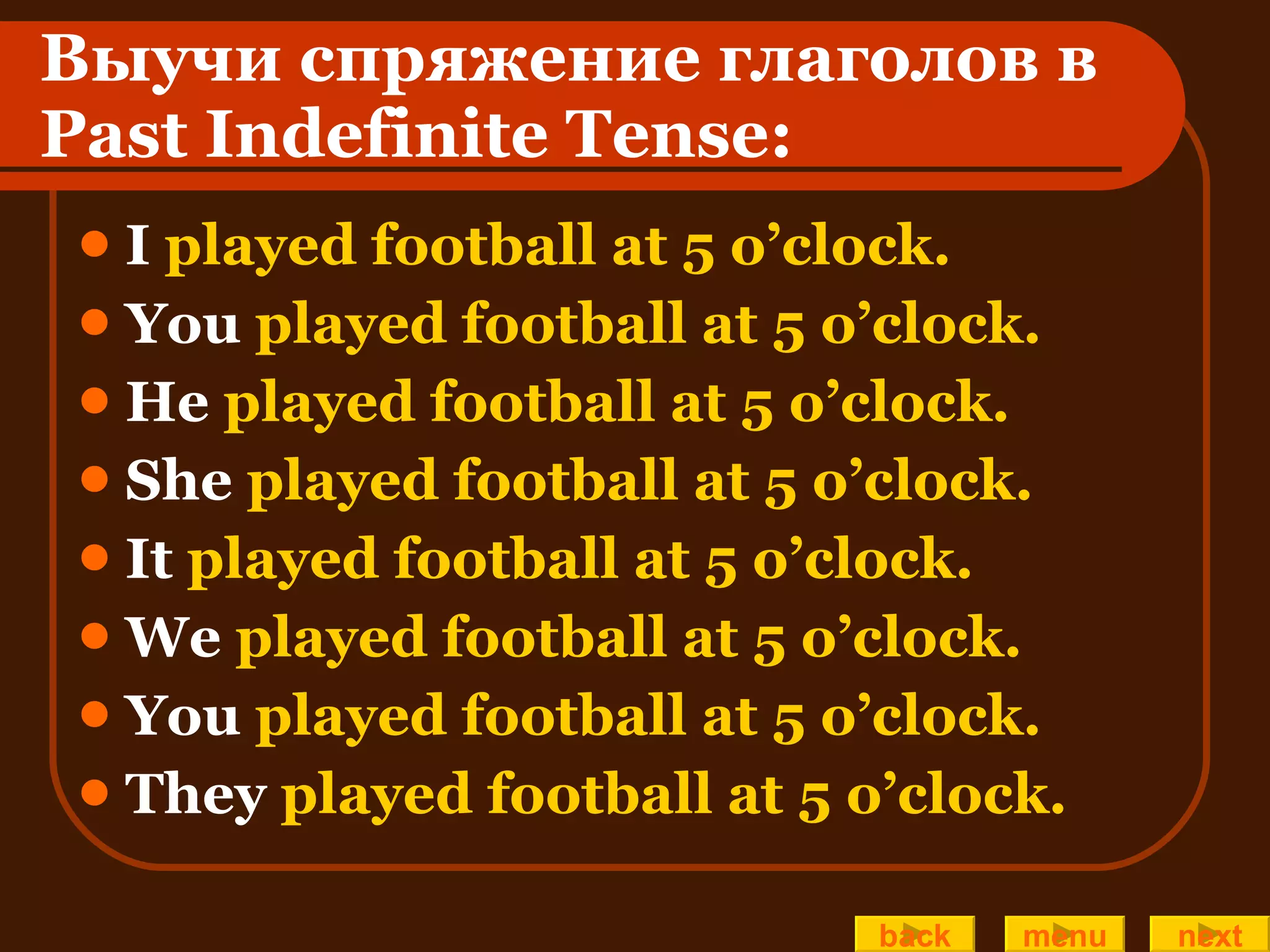
Выучи спряжение глаголов в  Past Indefinite Tense: I  played football at 5 o’clock. You  played football at 5 o’clock.  He  played football at 5 o’clock. She  played football at 5 o’clock. It  played football at 5 o’clock. We  played football at 5 o’clock. You  played football at 5 o’clock.  They  played football at 5 o’clock. back menu next
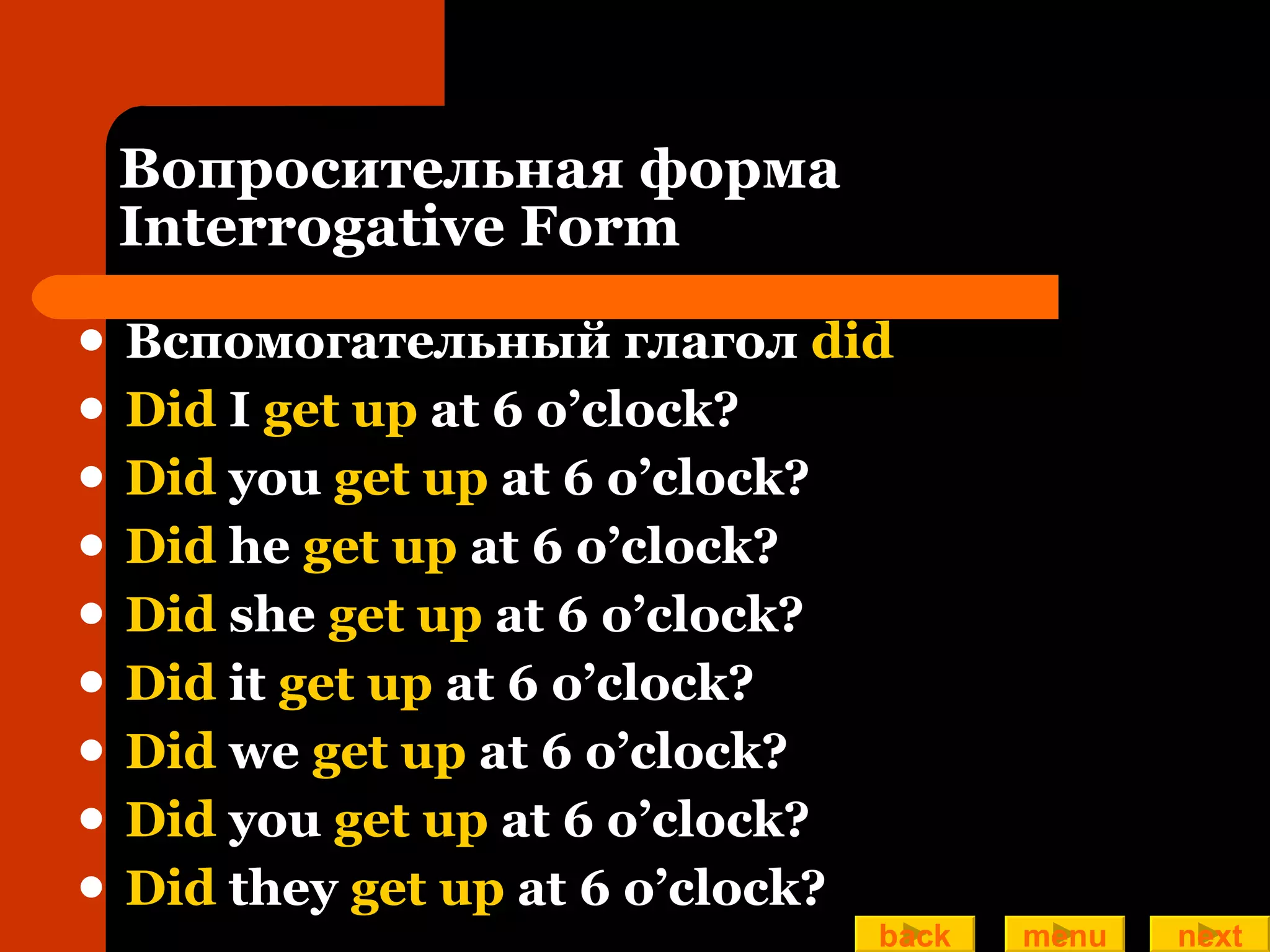
Вопросительная форма Interrogative Form Вспомогательный глагол  did Did  I  get up  at 6 o’clock?  Did  you  get up  at 6 o’clock? Did  he  get up  at 6 o’clock? Did  she  get up  at 6 o’clock? Did  it  get up  at 6 o’clock? Did  we  get up  at 6 o’clock? Did  you  get up  at 6 o’clock? Did  they  get up  at 6 o’clock? back menu next
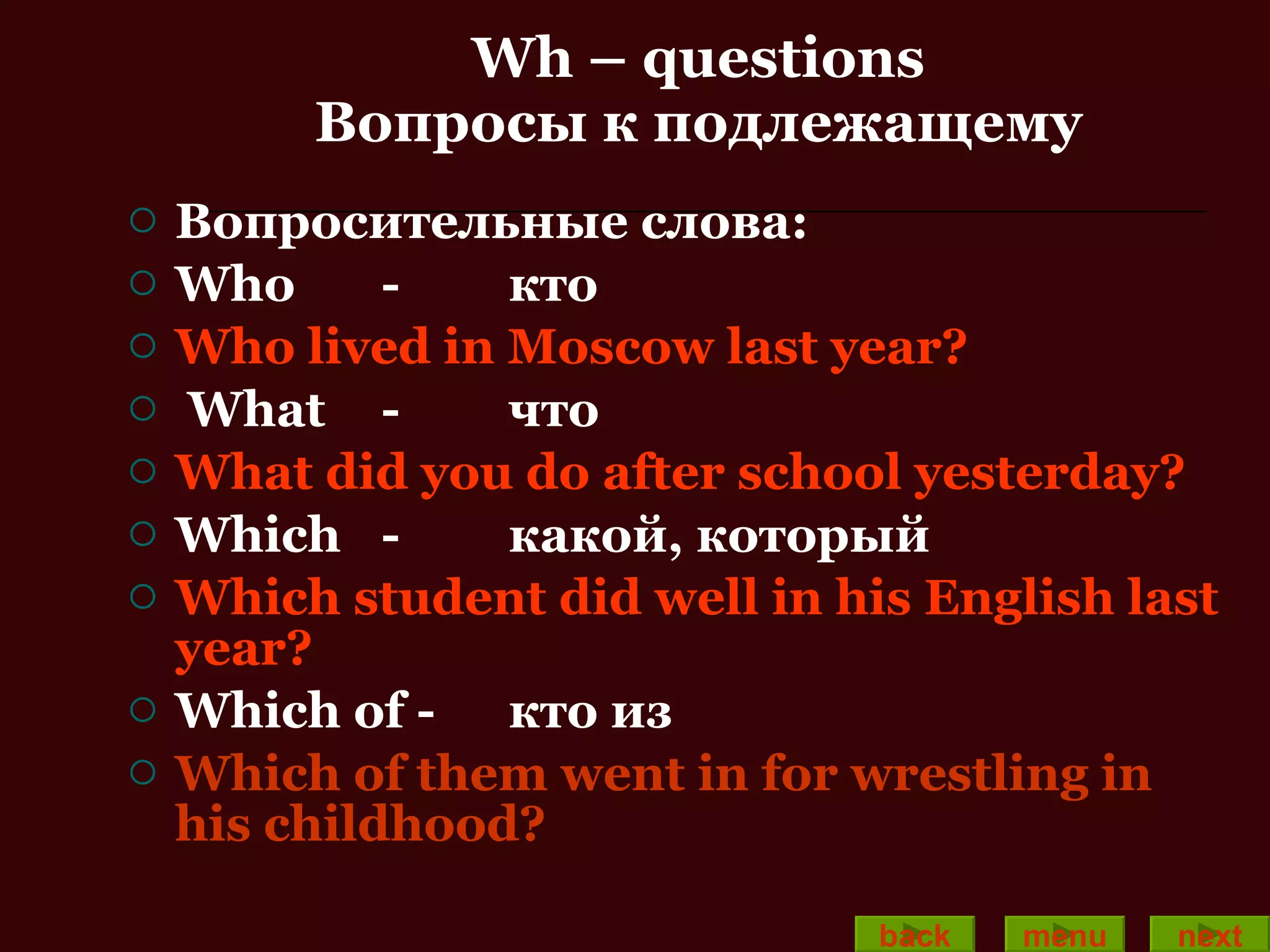
Wh – questions Вопросы к подлежащему Вопросительные слова: Who - кто Who lived in Moscow last year? What - что   What did you do after school yesterday? Which - какой, который Which student did well in his English last year? Which of  -  кто из Which of them went in for wrestling in his childhood? back menu next
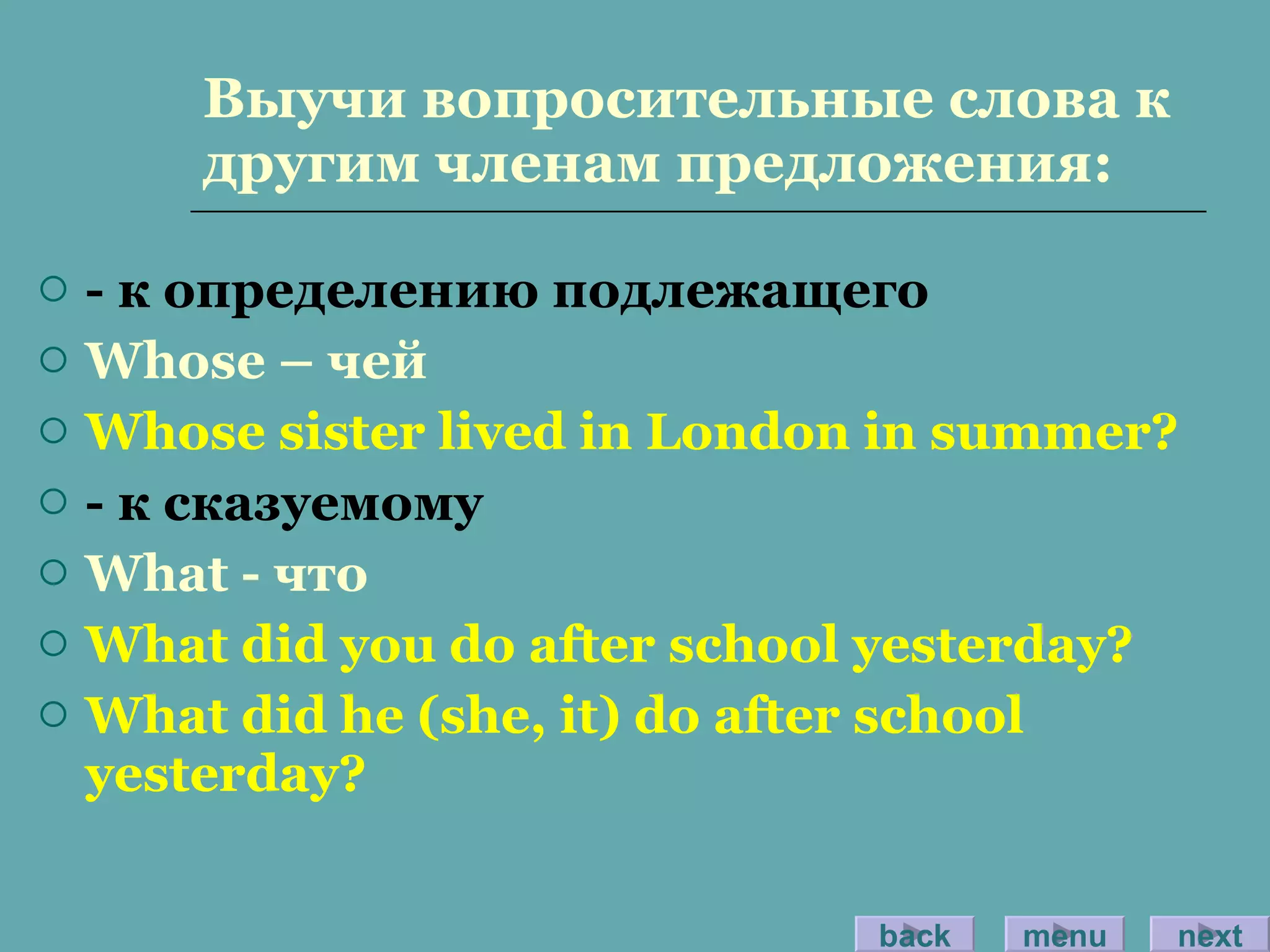
Выучи вопросительные слова к другим членам предложения: - к определению подлежащего Whose –  чей Whose sister lived in London in summer? -  к сказуемому What -  что What did you do after school yesterday? What did he (she, it) do after school yesterday? back menu next
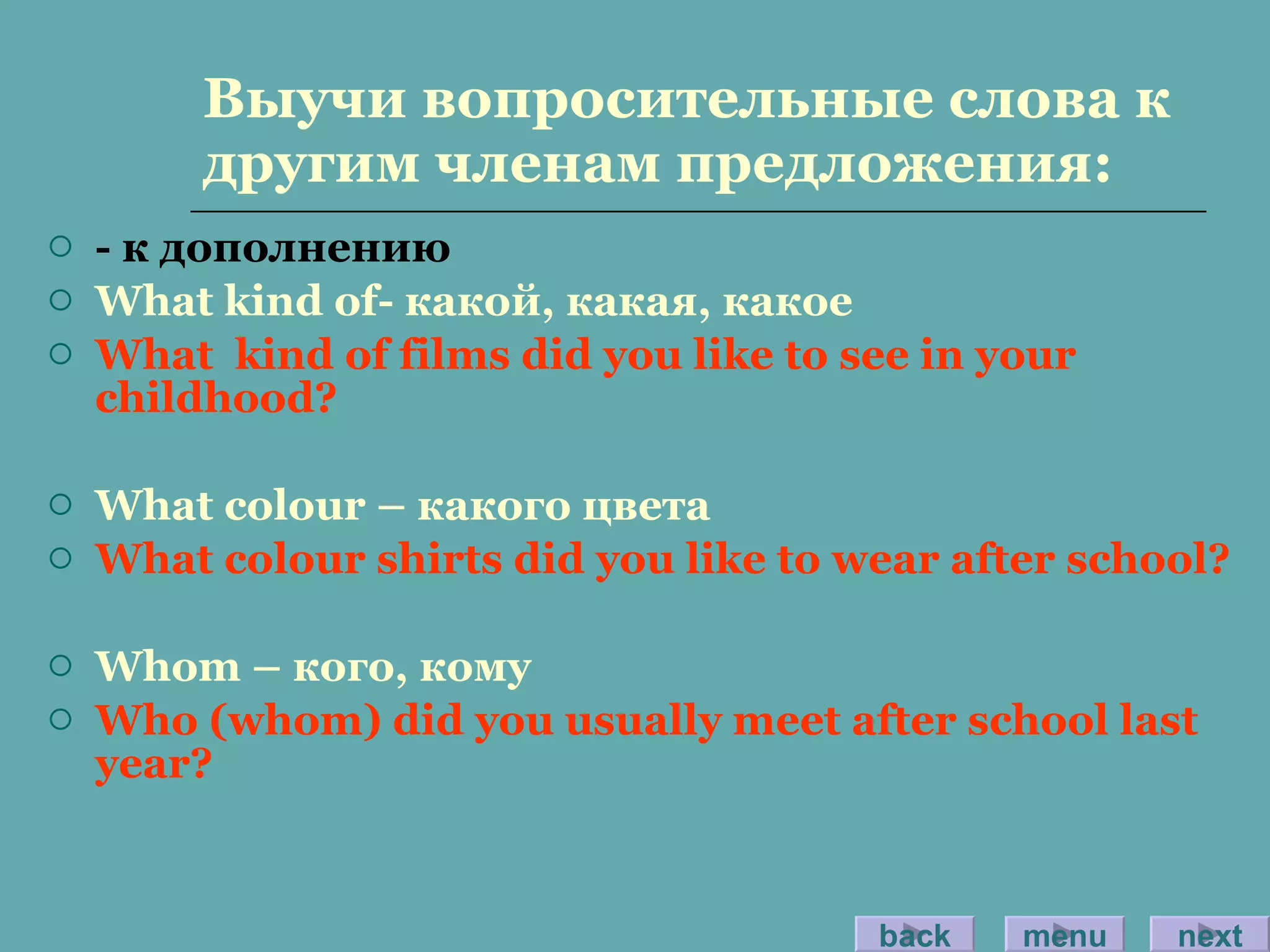
Выучи вопросительные слова к другим членам предложения: - к дополнению What kind of - какой, какая, какое What  kind of films did you like to see in your childhood? What colour –  какого цвета What colour shirts did you like to wear after school? Whom –  кого ,  кому Who (whom) did you usually meet after school last year? back menu next
Выучи вопросительные слова к другим членам предложения: -  к обстоятельству образа действия How –  как How did you get to school when you were little? How well –  хорошо How well did she speak English at school? -  к обстоятельству причины Why –  почему Why did you want to go to see the doctor? back menu next
Выучи вопросительные слова к другим членам предложения: -  к обстоятельству места: Where –  где, куда Where did you live in France? Where did he go after school yesterday? -  к обстоятельству времени: When –  когда When did you usually get up during holidays? When did she usually play the piano when she was at home? back menu next
Отрицательная форма Negative Form did not/ didn’t I  didn’t   go  to school You  didn’t   go  to school He  didn’t   go  to school She  didn’t   go  to school It  didn’t   go  to school We  didn’t   go  to school You  didn’t   go  to school They  didn’t   go  to school back menu next
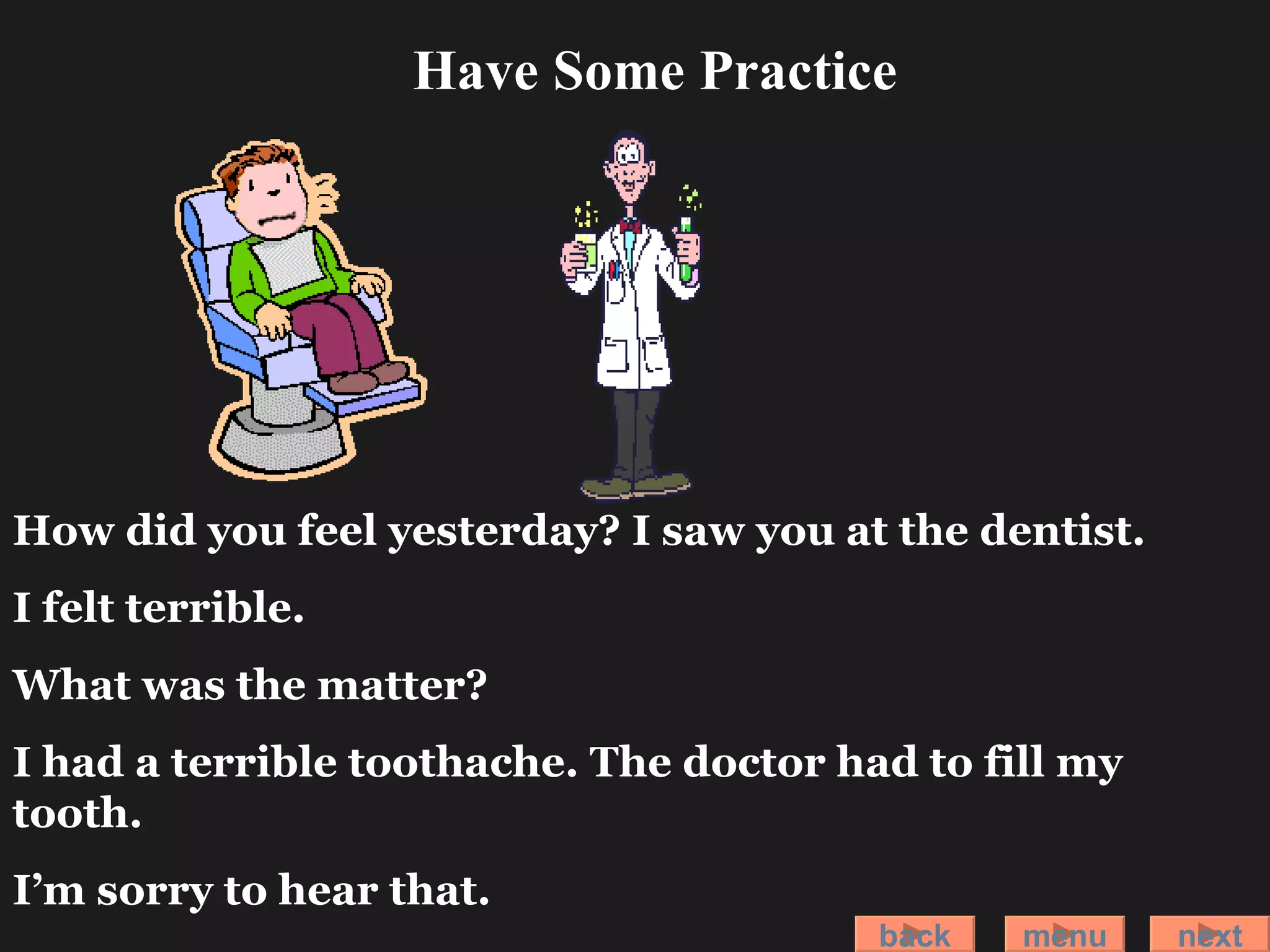
How did you feel yesterday? I saw you at the dentist. I felt terrible. What was the matter? I had a terrible toothache. The doctor had to fill my tooth.  I’m sorry to hear that. back menu next Have Some Practice
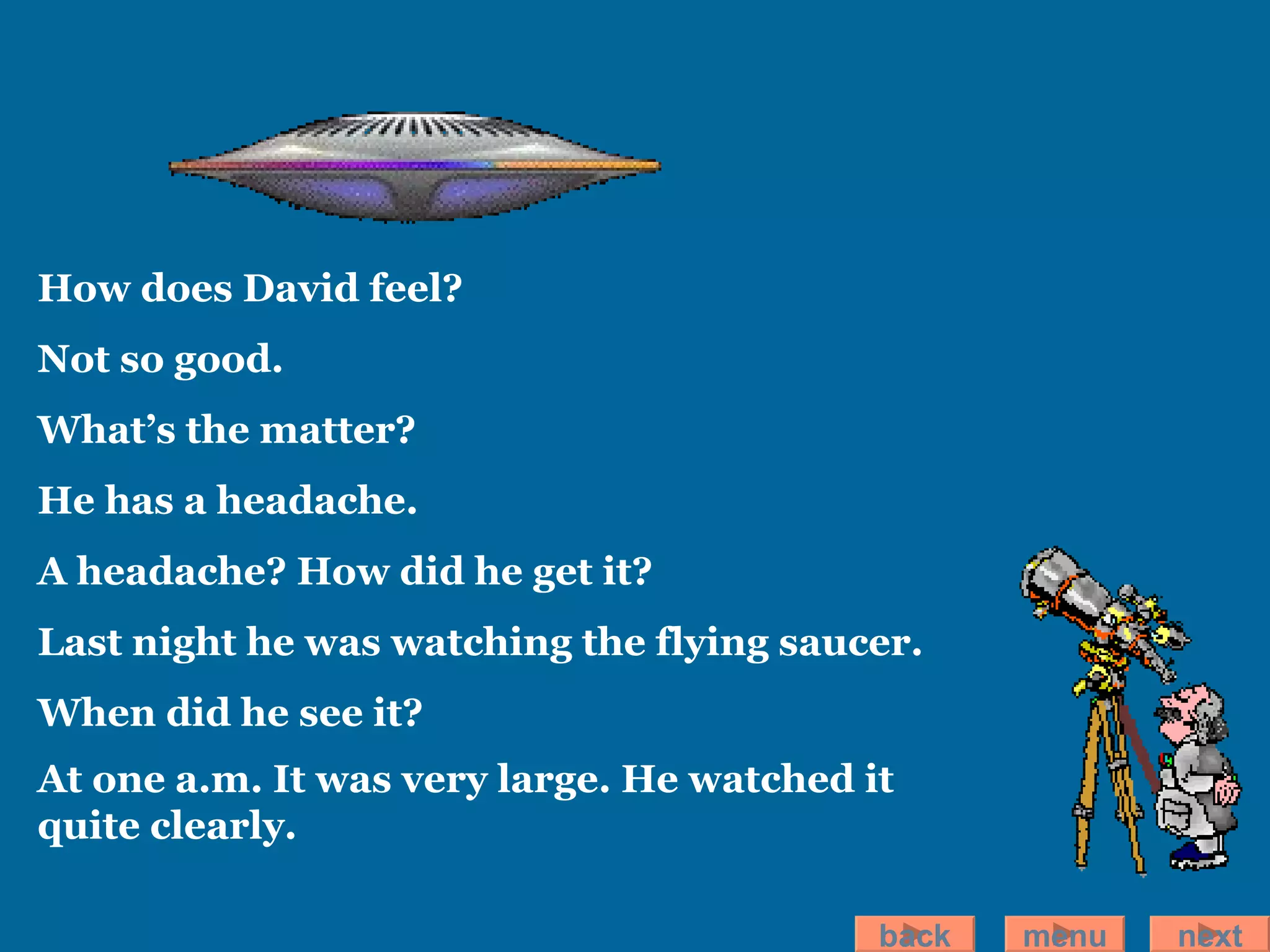
How does David feel? Not so good. What’s the matter? He has a headache . A headache? How did he get it? Last night he was watching the flying saucer. When did he see it? At one a.m.   It was very large. He watched it quite clearly.   back menu next
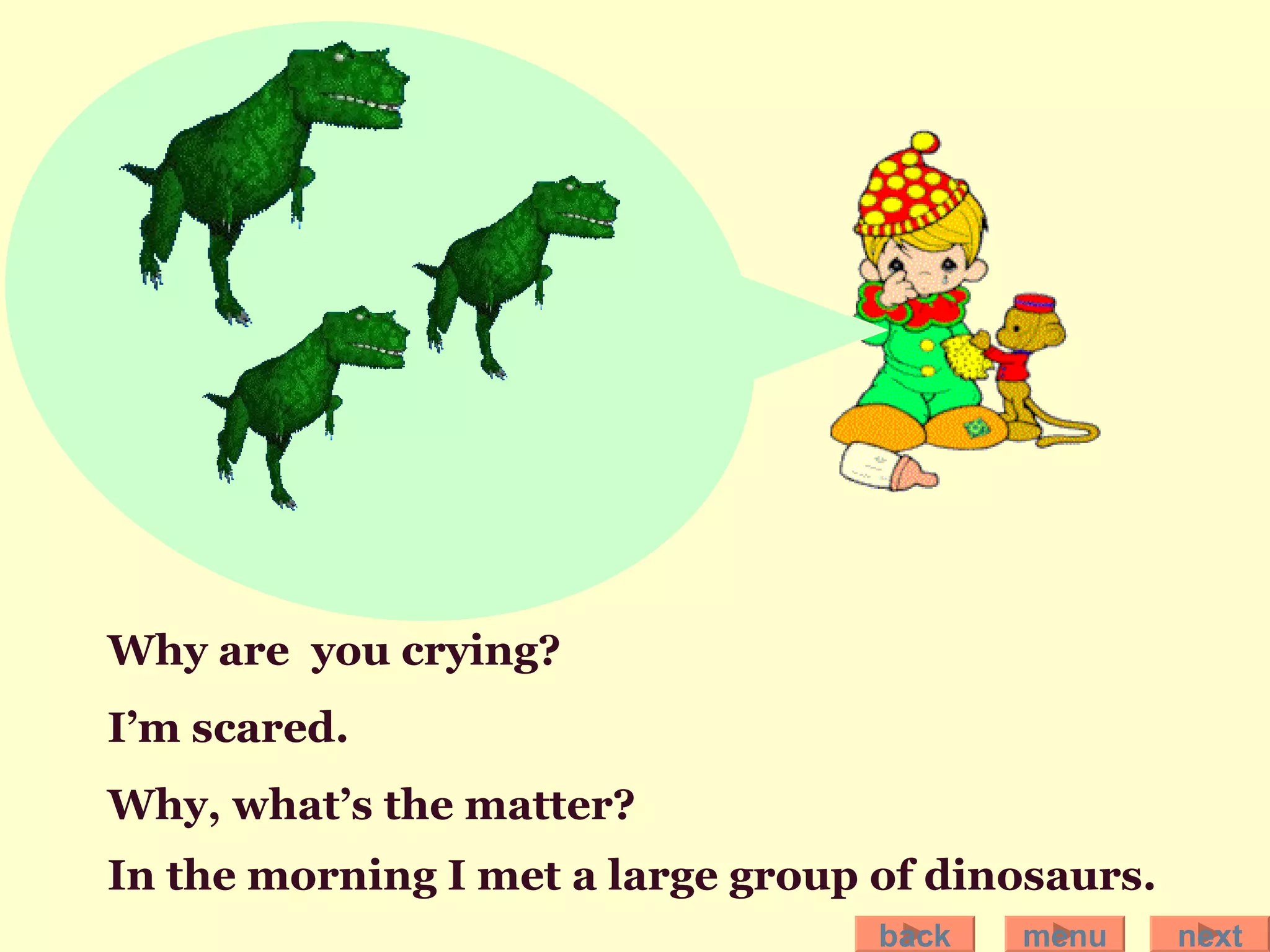
Why are  you crying? I’m scared. Why, what’s the matter? In the morning I met a large group of dinosaurs.   back menu next
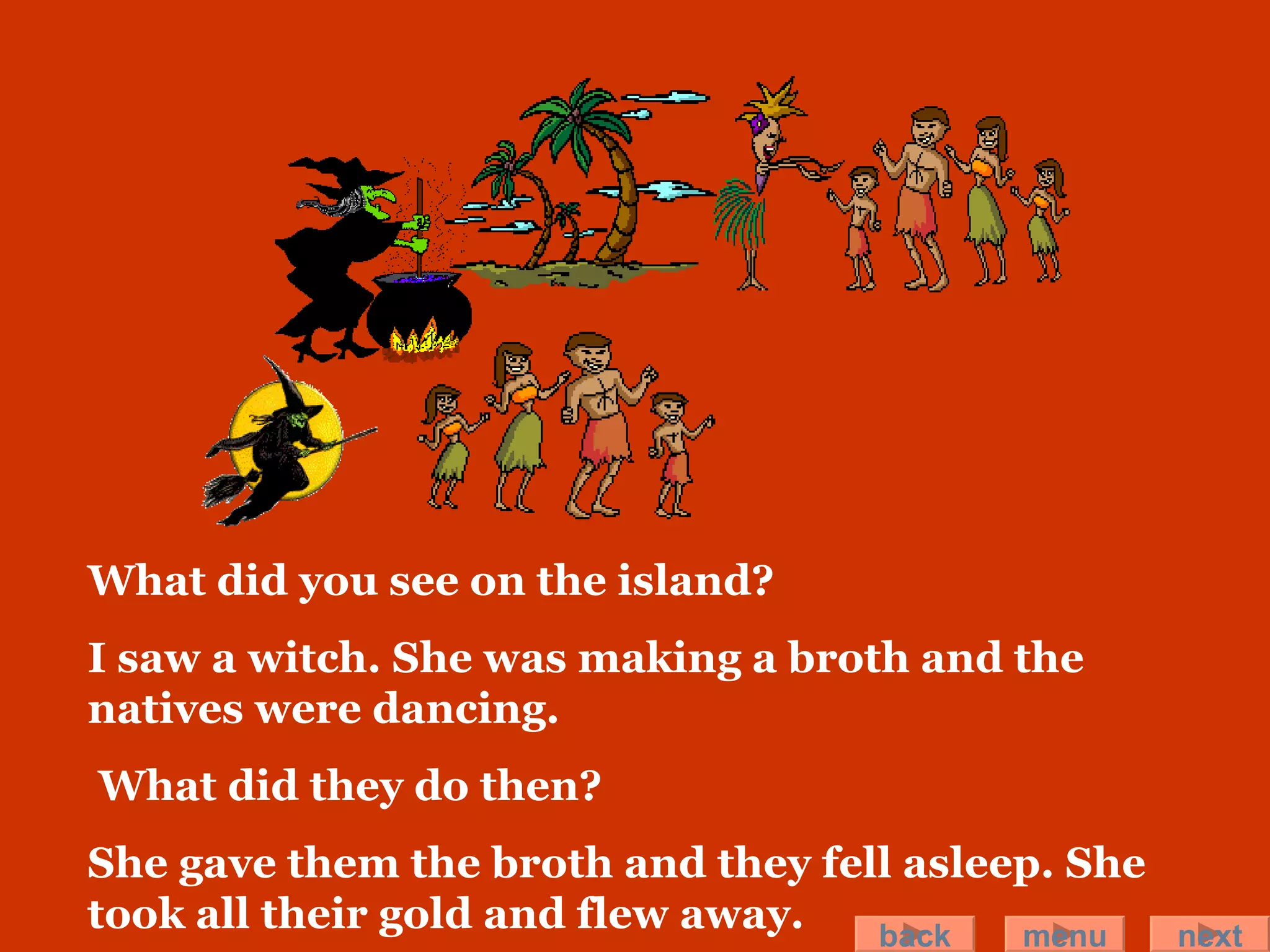
What did you see on the island? I saw a witch. She was making a broth and the natives were dancing. What did they do then? She gave them the broth and they fell asleep. She took all their gold and flew away.  back menu next
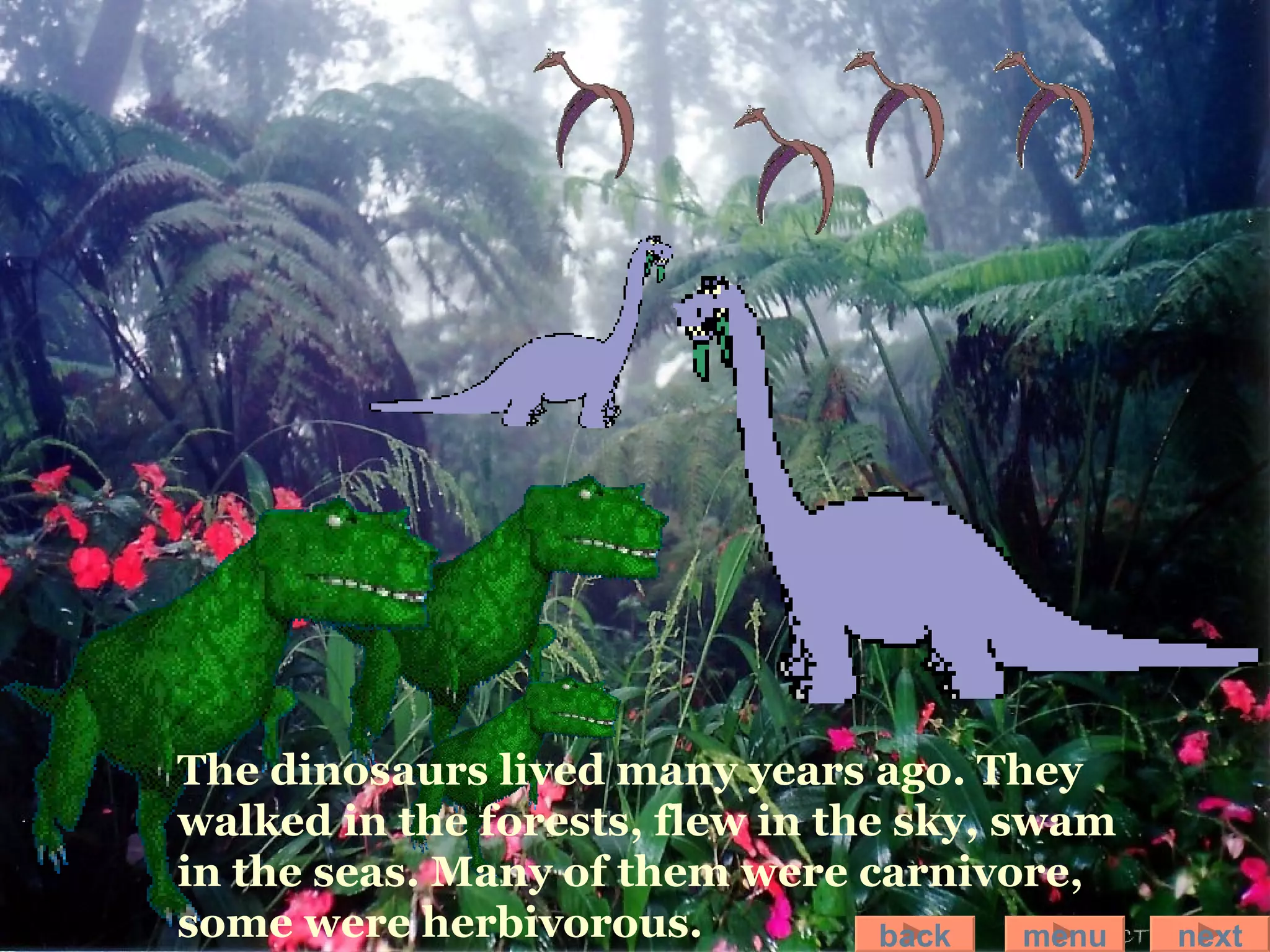
The dinosaurs lived many years ago. They walked in the forests, flew in the sky, swam in the seas. Many of them were carnivore, some were herbivorous. back menu next
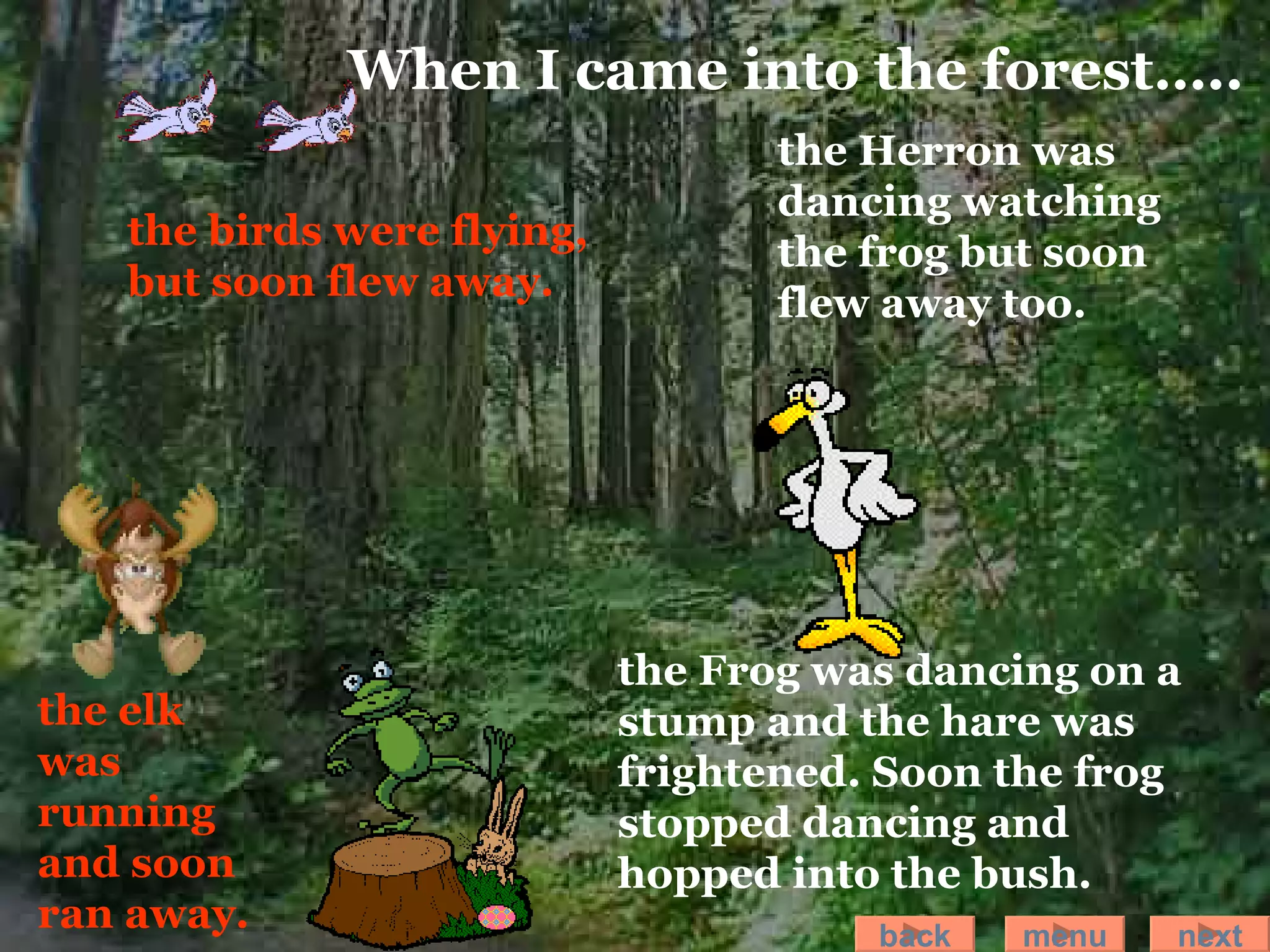
the birds were flying, but soon flew away.   the elk was running and soon ran away. the Frog was dancing on a stump and the hare was frightened. Soon the frog stopped dancing and hopped into the bush. the Herron was dancing watching the frog but soon flew away too. When I came into the forest….. back menu next

Past Indefinite Tense

  • 1.
    Past Indefinite Tense back menu next
  • 2.
    Глаголы в английскомязыке бывают правильные – regular и неправильные - irregular Правильные глаголы образуют прошедшее время с помощью окончания “ed”, ( V + ed ), которое читается как: [ d ] – после гласных и звонких согласных play- play ed , open-open ed , close –clos ed [ t ] – после глухих и шипящих согласных wash- wash ed , stop- stopp ed , ask - ask ed [ id ] - после глаголов, оканчивающихся на [ d ] и [ t ]. want –want ed , plant- plant ed , translate – translat ed , need - need ed back menu next
  • 3.
    Неправильные глаголы. Irregular Verbs. Go –went - gone Take-took – taken Have – had – had See – saw – seen Do – did – done Bring – brought – brought Run – ran – run Put- -put – put Find- found – found Write -wrote-written Catch- caught- caught Learn- learnt- learnt Teach – taught- taught Buy – bought- bought Неправильные глаголы изменяют свою форму . back menu next
  • 4.
    Study some examples1.Глаголы, в которых изменяется гласная в корне: tell - told Mrs. Gosselyn told her about India. give - gave He gave a little laugh of embarrassment. take - took She took him into a small room behind the dining-room. fly - flew The children flew to meet their mother. see - saw I last saw Jill over three years ago. back menu next
  • 5.
    2.Глаголы, в которыхизменяется гласная в корне и добавляется -d или -t: teach - taught Her aunt taught her how to walk and how to hold herself. leave - left He left the room an hour ago. sell - sold The baker sold good cakes. bring - brought John brought his little brother to school. buy - bought They bought that fruit from Greece. catch - caught Mr. Brown caught the eight o'clock train. back menu next
  • 6.
    3.Глаголы, в которыхизменяется последняя d на t: send - sent He sent a letter to his aunt yesterday. build - built Jack built his house last autumn. bend - bent That stormy night trees bent before the wind. lend - lent The other day Dolly lent them money. 4.Глаголы, в которых одинаковая форма infinitive и Past simple: cut - cut Aunt Aggie cut the cake. hit - hit The cruel driver hit the horse. back menu next
  • 7.
    put - put Yesterday the worshippers put their gifts before the gods. set - set The sailors, after quarreling with their captain, set him adrift on the ocean in an open boat. split - split The ship split in two under the force of the stormy waves. burst - burst Dolly burst into laughter. let - let The prisoner let himself down from his window with a rope made of knotted sheets. 5.Глаголы, в которых разная грамматическая основа: go - went Ann went up to the drawing-room. back menu next
  • 8.
    Но некоторые глаголымогут быть правильными и неправильными: burn - burnt или burned Вы можете сказать: The old house burnt down last night in the big fire. или The old house burned down last night in the big fire. smell - smelt или smelled The dog smelt at the stranger for a minute but did not recognize him. или The dog smelled at the stranger for a minute but did not recognize him. dream - dreamt или dreamed I dreamt of my old home last night . или I dreamed of my old home last night. back menu next
  • 9.
    Lear the ThreeForms of the Verbs Be- was/were- been Bite- bit – bitten Bring- brought- brought Open- opened-opened Close- closed- closed Come – came- come Buy- bought- bought Cook – cooked- cooked Cost – cost- cost Do – did – done Dress – dressed- dressed Drink – drank- drunk Decide – decided- decided Fight- fought- fought Find – found – found Go – went – gone Read – read- read Play – played- played Stop – stopped- stopped Wash – washed- washed Watch – watched- watched Run – ran- run Make – made- made Repeat –repeated - repeated irregular regular back menu next
  • 10.
    Действие произошло вчера,на прошлой неделе, в 5 часов и т.д., нет никакой связи с настоящим. I went to school yesterday. You went to school yesterday. He went to school yesterday. She went to school yesterday. It went to school yesterday. We went to school yesterday. You went to school yesterday. They went to school yesterday. ( last week, month, year, the day before yesterday, yesterday morning, at five o’clock, etc. ) back menu next
  • 11.
    Study the rules:Мы используем Past simple,чтобы рассказать о событиях или ситуациях в прошлом. - Mr. Gosselyn read The Times, went to church on Sunday and accompanied his wife to tea-parties. - She won every prize that was open to her. - It was two years later that Jimmie Langton discovered her. - He blushed and his blue eyes shone. - Her aunt talked in a deep loud voice back menu next
  • 12.
    - Mr. Smithbegan teaching in a secondary school in England in 1988. - On Monday he came to the office by taxi. - I went to Ireland in a fishing boat two years ago. - Last month Tom and Jim visited Scotland and climbed the mountains. back menu next
  • 13.
    Выучи спряжение глаголовв Past Indefinite Tense: I played football at 5 o’clock. You played football at 5 o’clock. He played football at 5 o’clock. She played football at 5 o’clock. It played football at 5 o’clock. We played football at 5 o’clock. You played football at 5 o’clock. They played football at 5 o’clock. back menu next
  • 14.
    Вопросительная форма InterrogativeForm Вспомогательный глагол did Did I get up at 6 o’clock? Did you get up at 6 o’clock? Did he get up at 6 o’clock? Did she get up at 6 o’clock? Did it get up at 6 o’clock? Did we get up at 6 o’clock? Did you get up at 6 o’clock? Did they get up at 6 o’clock? back menu next
  • 15.
    Wh – questionsВопросы к подлежащему Вопросительные слова: Who - кто Who lived in Moscow last year? What - что What did you do after school yesterday? Which - какой, который Which student did well in his English last year? Which of - кто из Which of them went in for wrestling in his childhood? back menu next
  • 16.
    Выучи вопросительные словак другим членам предложения: - к определению подлежащего Whose – чей Whose sister lived in London in summer? - к сказуемому What - что What did you do after school yesterday? What did he (she, it) do after school yesterday? back menu next
  • 17.
    Выучи вопросительные словак другим членам предложения: - к дополнению What kind of - какой, какая, какое What kind of films did you like to see in your childhood? What colour – какого цвета What colour shirts did you like to wear after school? Whom – кого , кому Who (whom) did you usually meet after school last year? back menu next
  • 18.
    Выучи вопросительные словак другим членам предложения: - к обстоятельству образа действия How – как How did you get to school when you were little? How well – хорошо How well did she speak English at school? - к обстоятельству причины Why – почему Why did you want to go to see the doctor? back menu next
  • 19.
    Выучи вопросительные словак другим членам предложения: - к обстоятельству места: Where – где, куда Where did you live in France? Where did he go after school yesterday? - к обстоятельству времени: When – когда When did you usually get up during holidays? When did she usually play the piano when she was at home? back menu next
  • 20.
    Отрицательная форма NegativeForm did not/ didn’t I didn’t go to school You didn’t go to school He didn’t go to school She didn’t go to school It didn’t go to school We didn’t go to school You didn’t go to school They didn’t go to school back menu next
  • 21.
    How did youfeel yesterday? I saw you at the dentist. I felt terrible. What was the matter? I had a terrible toothache. The doctor had to fill my tooth. I’m sorry to hear that. back menu next Have Some Practice
  • 22.
    How does Davidfeel? Not so good. What’s the matter? He has a headache . A headache? How did he get it? Last night he was watching the flying saucer. When did he see it? At one a.m. It was very large. He watched it quite clearly. back menu next
  • 23.
    Why are you crying? I’m scared. Why, what’s the matter? In the morning I met a large group of dinosaurs. back menu next
  • 24.
    What did yousee on the island? I saw a witch. She was making a broth and the natives were dancing. What did they do then? She gave them the broth and they fell asleep. She took all their gold and flew away. back menu next
  • 25.
    The dinosaurs livedmany years ago. They walked in the forests, flew in the sky, swam in the seas. Many of them were carnivore, some were herbivorous. back menu next
  • 26.
    the birds wereflying, but soon flew away. the elk was running and soon ran away. the Frog was dancing on a stump and the hare was frightened. Soon the frog stopped dancing and hopped into the bush. the Herron was dancing watching the frog but soon flew away too. When I came into the forest….. back menu next