The Issue 
About 80 per cent of the world’s energy is supplied through the combustion of fossil fuels, which releases carbon dioxide and other pollutants into the atmosphere. At the same time, energy demand is growing along with expanding global wealth, a world population expected to reach 9 billion by 2050, and efforts to provide electricity to the 1.3 billion people now living without it. A shift toward renewable sources of energy such as solar, wind and geothermal — along with greater energy efficiency in appliances, buildings, lighting and vehicles — is essential to use the world’s resources sustainably, diversify economies and successfully address the challenge of climate changes. Sustainable Energy for All, an initiative led by the United Nations and World Bank, has set 2030 as a goal for doubling the global rate of energy efficiency improvement, doubling renewable energy’s share in the global energy mix, and ensuring universal access to modern energy services. 
Action Plan 
Governments, private business and civil society organizations are working to expand, strengthen and unify the numerous initiatives meant to boost action in the energy sector. Energy 
Approximately one-quarter of all greenhouse gas emissions come 
from land-use 
Action Area: ENERGY 
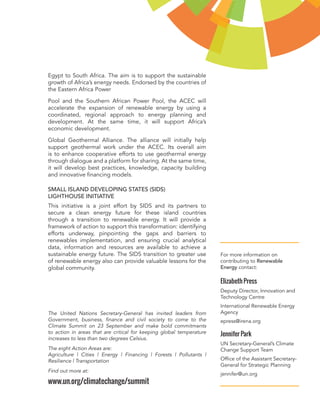
Solar panels in Naqoura, Lebanon – UN Photo/Pasqual Gorriz
efficiency initiatives underway include partnerships on efficient lighting, performance standards for appliances, building efficiency standards, vehicle fuel efficiency and reducing the emission of black carbon from freight and private vehicles. Renewable energy initiatives include a renewable energy corridor uniting Eastern and Southern African power pools and an action framework to move the Small Island Developing States (SIDS) toward a greater use of renewables. Both initiatives aim to use regional and global partnerships to meet growing energy demand. 
Deliverables 
Energy Efficiency 
ENERGY EFFICIENCY ACCELERATOR PLATFORM 
This platform serves as an umbrella for action by cities, regions and national governments, along with businesses and civil society organizations, to commit to adopt their own ambitious targets and action plans. The aim is to double the global rate of improvement in energy efficiency and commitments can be made through various energy efficiency accelerators. These frameworks aim to accelerate the use of energy efficient products, buildings and establish energy efficient policies. 
• 
Global Fuel Economy Initiative 
• 
Lighting Efficiency Accelerator 
• 
Appliances Efficiency Accelerator 
• 
Buildings Efficiency Accelerator 
• 
District Efficiency Accelerator 
• 
Renewable Energy 
• 
The Africa Clean Energy Corridor (ACEC) 
Renewable Energy 
THE AFRICA CLEAN ENERGY CORRIDOR (ACEC) 
The corridor is a regional initiative to transform Africa’s energy mix through the development of renewable resources and the creation of a clean 5,000-mile electricity transmission grid from 
For more information on contributing to Energy Efficiency contact: 
Minoru Takada 
Representative and Director 
Sustainable Energy for All initiative, New York office 
Executive Office of the UN Secretary-General 
takada@un.org 
Mark Radka 
Chief, Energy Branch 
Division of Technology, Industry and Economics 
United Nations Environment Programme 
Mark.Radka@unep.org 
Mark Didden 
UN Secretary-General’s Climate Change Support Team 
Office of the Assistant Secretary- General for Strategic Planning 
didden@un.org
Egypt to South Africa. The aim is to support the sustainable growth of Africa’s energy needs. Endorsed by the countries of the Eastern Africa Power 
Pool and the Southern African Power Pool, the ACEC will accelerate the expansion of renewable energy by using a coordinated, regional approach to energy planning and development. At the same time, it will support Africa’s economic development. 
Global Geothermal Alliance. The alliance will initially help support geothermal work under the ACEC. Its overall aim is to enhance cooperative efforts to use geothermal energy through dialogue and a platform for sharing. At the same time, it will develop best practices, knowledge, capacity building and innovative financing models. 
SMALL ISLAND DEVELOPING STATES (SIDS) 
LIGHTHOUSE INITIATIVE 
This initiative is a joint effort by SIDS and its partners to secure a clean energy future for these island countries through a transition to renewable energy. It will provide a framework of action to support this transformation: identifying efforts underway, pinpointing the gaps and barriers to renewables implementation, and ensuring crucial analytical data, information and resources are available to achieve a sustainable energy future. The SIDS transition to greater use of renewable energy also can provide valuable lessons for the global community. 
For more information on contributing to Renewable Energy contact: 
Elizabeth Press 
Deputy Director, Innovation and Technology Centre 
International Renewable Energy Agency 
epress@irena.org 
Jennifer Park 
UN Secretary-General’s Climate Change Support Team 
Office of the Assistant Secretary- General for Strategic Planning 
jennifer@un.org 
The United Nations Secretary-General has invited leaders from Government, business, finance and civil society to come to the Climate Summit on 23 September and make bold commitments to action in areas that are critical for keeping global temperature increases to less than two degrees Celsius. 
The eight Action Areas are: 
Agriculture | Cities | Energy | Financing | Forests | Pollutants | Resilience | Transportation 
Find out more at: 
www.un.org/climatechange/summit

Climate Summit Action Areas Energy

  • 1.
    The Issue About80 per cent of the world’s energy is supplied through the combustion of fossil fuels, which releases carbon dioxide and other pollutants into the atmosphere. At the same time, energy demand is growing along with expanding global wealth, a world population expected to reach 9 billion by 2050, and efforts to provide electricity to the 1.3 billion people now living without it. A shift toward renewable sources of energy such as solar, wind and geothermal — along with greater energy efficiency in appliances, buildings, lighting and vehicles — is essential to use the world’s resources sustainably, diversify economies and successfully address the challenge of climate changes. Sustainable Energy for All, an initiative led by the United Nations and World Bank, has set 2030 as a goal for doubling the global rate of energy efficiency improvement, doubling renewable energy’s share in the global energy mix, and ensuring universal access to modern energy services. Action Plan Governments, private business and civil society organizations are working to expand, strengthen and unify the numerous initiatives meant to boost action in the energy sector. Energy Approximately one-quarter of all greenhouse gas emissions come from land-use Action Area: ENERGY Solar panels in Naqoura, Lebanon – UN Photo/Pasqual Gorriz
  • 2.
    efficiency initiatives underwayinclude partnerships on efficient lighting, performance standards for appliances, building efficiency standards, vehicle fuel efficiency and reducing the emission of black carbon from freight and private vehicles. Renewable energy initiatives include a renewable energy corridor uniting Eastern and Southern African power pools and an action framework to move the Small Island Developing States (SIDS) toward a greater use of renewables. Both initiatives aim to use regional and global partnerships to meet growing energy demand. Deliverables Energy Efficiency ENERGY EFFICIENCY ACCELERATOR PLATFORM This platform serves as an umbrella for action by cities, regions and national governments, along with businesses and civil society organizations, to commit to adopt their own ambitious targets and action plans. The aim is to double the global rate of improvement in energy efficiency and commitments can be made through various energy efficiency accelerators. These frameworks aim to accelerate the use of energy efficient products, buildings and establish energy efficient policies. • Global Fuel Economy Initiative • Lighting Efficiency Accelerator • Appliances Efficiency Accelerator • Buildings Efficiency Accelerator • District Efficiency Accelerator • Renewable Energy • The Africa Clean Energy Corridor (ACEC) Renewable Energy THE AFRICA CLEAN ENERGY CORRIDOR (ACEC) The corridor is a regional initiative to transform Africa’s energy mix through the development of renewable resources and the creation of a clean 5,000-mile electricity transmission grid from For more information on contributing to Energy Efficiency contact: Minoru Takada Representative and Director Sustainable Energy for All initiative, New York office Executive Office of the UN Secretary-General takada@un.org Mark Radka Chief, Energy Branch Division of Technology, Industry and Economics United Nations Environment Programme Mark.Radka@unep.org Mark Didden UN Secretary-General’s Climate Change Support Team Office of the Assistant Secretary- General for Strategic Planning didden@un.org
  • 3.
    Egypt to SouthAfrica. The aim is to support the sustainable growth of Africa’s energy needs. Endorsed by the countries of the Eastern Africa Power Pool and the Southern African Power Pool, the ACEC will accelerate the expansion of renewable energy by using a coordinated, regional approach to energy planning and development. At the same time, it will support Africa’s economic development. Global Geothermal Alliance. The alliance will initially help support geothermal work under the ACEC. Its overall aim is to enhance cooperative efforts to use geothermal energy through dialogue and a platform for sharing. At the same time, it will develop best practices, knowledge, capacity building and innovative financing models. SMALL ISLAND DEVELOPING STATES (SIDS) LIGHTHOUSE INITIATIVE This initiative is a joint effort by SIDS and its partners to secure a clean energy future for these island countries through a transition to renewable energy. It will provide a framework of action to support this transformation: identifying efforts underway, pinpointing the gaps and barriers to renewables implementation, and ensuring crucial analytical data, information and resources are available to achieve a sustainable energy future. The SIDS transition to greater use of renewable energy also can provide valuable lessons for the global community. For more information on contributing to Renewable Energy contact: Elizabeth Press Deputy Director, Innovation and Technology Centre International Renewable Energy Agency epress@irena.org Jennifer Park UN Secretary-General’s Climate Change Support Team Office of the Assistant Secretary- General for Strategic Planning jennifer@un.org The United Nations Secretary-General has invited leaders from Government, business, finance and civil society to come to the Climate Summit on 23 September and make bold commitments to action in areas that are critical for keeping global temperature increases to less than two degrees Celsius. The eight Action Areas are: Agriculture | Cities | Energy | Financing | Forests | Pollutants | Resilience | Transportation Find out more at: www.un.org/climatechange/summit