CEAL, Sao Paulo
October 15, 2010
ENERGY PROBLEMS AND PERSPECTIVES
FOR THE 21ST CENTURY
Thomas B Johansson
Professor, International Insitute for Industrial Environmental Economics,
Lund University, Lund, Sweden,
Co-Chair, Global Energy Assessement, IIASA, Austria
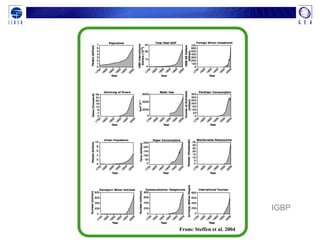
From: Steffen et al. 2004
IGBP
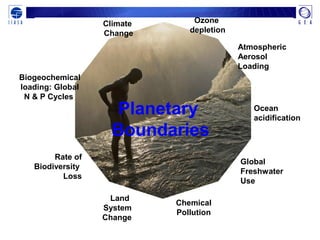
Climate
Change
Ocean
acidification
Ozone
depletion
Global
Freshwater
Use
Rate of
Biodiversity
Loss
Biogeochemical
loading: Global
N & P Cycles
Atmospheric
Aerosol
Loading
Land
System
Change
Chemical
Pollution
Planetary
Boundaries
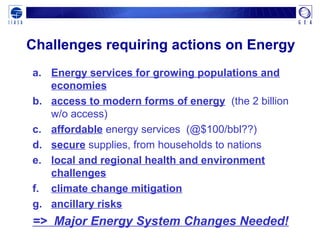
Challenges requiring actions on Energy
a. Energy services for growing populations and
economies
b. access to modern forms of energy (the 2 billion
w/o access)
c. affordable energy services (@$100/bbl??)
d. secure supplies, from households to nations
e. local and regional health and environment
challenges
f. climate change mitigation
g. ancillary risks
=> Major Energy System Changes Needed!
adequately
timely
simultaneously
These challenges must be addressed
Assessement
Process leading to a Report and much more
25 Knowledge Modules, ~200 authors, geographically and
gender diversified
Stakeholder consultations
External peer review
Extensive dissemination
Informing Rio +20 and other international, regional, naitonal
and corporate on energy and/or linked to energy issues
Supporting the GEA:Supporting the GEA:
International OrganizationsInternational Organizations
UNDESAUNDESA
UNDPUNDP
UNEPUNEP
UNIDOUNIDO
World BankWorld Bank
IIASAIIASA
Country Governments/AgenciesCountry Governments/Agencies
AustriaAustria
BrazilBrazil
European UnionEuropean Union
GermanyGermany
ItalyItaly
SwedenSweden
USAUSA
CorporationsCorporations
PetrobrasPetrobras
TEPCOTEPCO
First SolarFirst Solar
Industry groupsIndustry groups
WECWEC
WBCSDWBCSD
FoundationsFoundations
UN FoundationUN Foundation
Climate WorksClimate Works
Four Clusters of Knowledge modules:
1.The Challenges, nature and magnitude of
change required
2.Resources and technology options
3.Pathways to sustainability, urbanisation,
rural energy, and land use
4.Policies, energy end use and supply
sectors, access, innovation, capacity
developoment
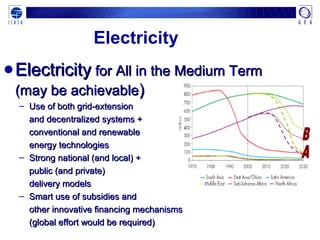
Electricity
●ElectricityElectricity for All in the Medium Termfor All in the Medium Term
(may be achievable(may be achievable))
– Use of both grid-extensionUse of both grid-extension
and decentralized systems +and decentralized systems +
conventional and renewableconventional and renewable
energy technologiesenergy technologies
– Strong national (and local) +Strong national (and local) +
public (and private)public (and private)
delivery modelsdelivery models
– Smart use of subsidies andSmart use of subsidies and
other innovative financing mechanismsother innovative financing mechanisms
(global effort would be required)(global effort would be required)
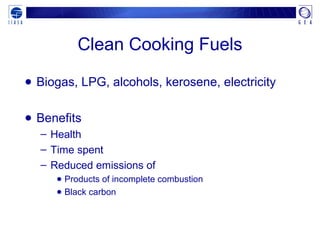
Clean Cooking Fuels
● Biogas, LPG, alcohols, kerosene, electricity
● Benefits
– Health
– Time spent
– Reduced emissions of
● Products of incomplete combustion
● Black carbon
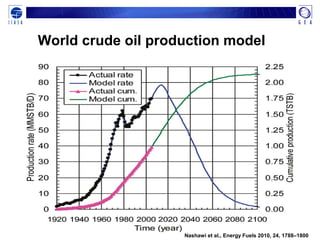
World crude oil production model
Nashawi et al., Energy Fuels 2010, 24, 1788–1800
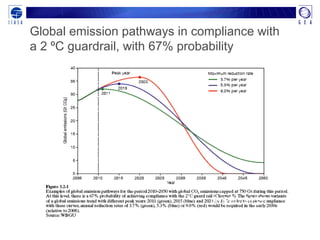
Global emission pathways in compliance with
a 2 ºC guardrail, with 67% probability
(WBGU 2009)
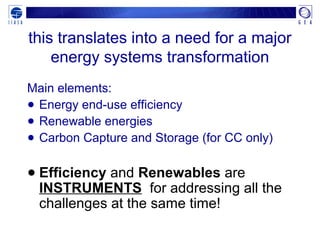
this translates into a need for a major
energy systems transformation
Main elements:
● Energy end-use efficiency
● Renewable energies
● Carbon Capture and Storage (for CC only)
● Efficiency and Renewables are
INSTRUMENTS for addressing all the
challenges at the same time!
“PassivHaus”
Source: Jan Barta, Center for Passive Buildings, www.pasivnidomy.cz
0
50
100
150
200
250
Stávající zástavba Pasivní dům
celkováenergie[kWh/m2
a]
Domácí spotřebiče
Vzduchotechnika
OhřevTUV
Vytápění
- 90%
- 75%
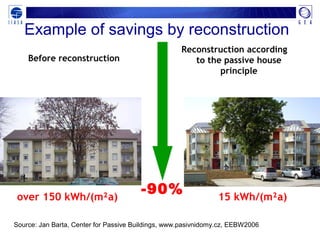
Example of savings by reconstruction
Reconstruction according
to the passive house
principle
-90% 15 kWh/(m²a)over 150 kWh/(m²a)
Before reconstruction
Source: Jan Barta, Center for Passive Buildings, www.pasivnidomy.cz, EEBW2006
21
0
2,000
4,000
6,000
8,000
10,000
12,000
TWh
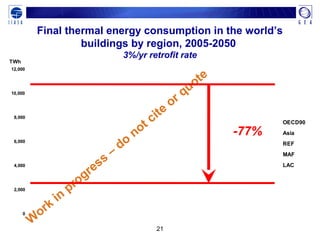
Space heating and cooling final energy consumption
Summation, 1.4% Retrofit, exemplary buildings
OECD90
Asia
REF
MAF
LAC
W
ork
in
progress
–
do
not cite
or quote
-77%
Final thermal energy consumption in the world’s
buildings by region, 2005-2050
3%/yr retrofit rate
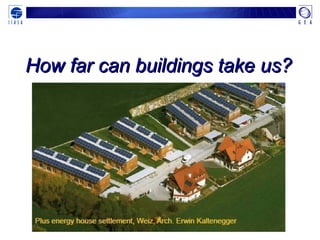
How far can buildings take us?How far can buildings take us?
Letter Horse Hay Agriculture Sunlight
Telegraph
Steam
Locomotive
Coal Coal mine Coal fields
Interntet,
Mobile
Phone
ICE
Automobile
Gasoline Oil refinery Crude oil
Convergence Energy, Mobility
Information
Hydrogen
Natural gas /
fossils
SMR,
decarbonization
Electrolysis
Sunlight
Wind
Uranium
1770s
1870s
1970s
2070s
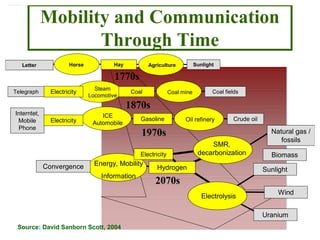
Mobility and Communication
Through Time
Biomass
Electricity
Electricity
Electricity
Source: David Sanborn Scott, 2004
23
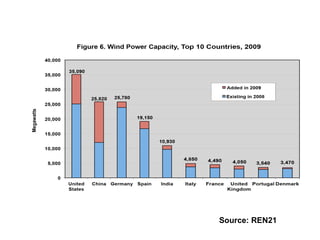
Source: REN21
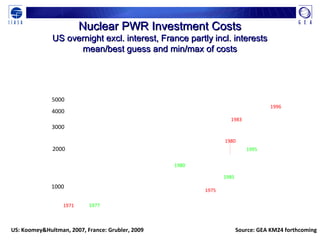
Nuclear PWR Investment CostsNuclear PWR Investment Costs
US overnight excl. interest, France partly incl. interestsUS overnight excl. interest, France partly incl. interests
mean/best guess and min/max of costsmean/best guess and min/max of costs
US: Koomey&Hultman, 2007, France: Grubler, 2009 Source: GEA KM24 forthcoming
Nuclear PWR Investment Costs
(US overnight excl. interest, France partly incl. interests)
1980
1977
1985
1971
1975
1980
1983
1996
1995
5000
2000
3000
4000
1000
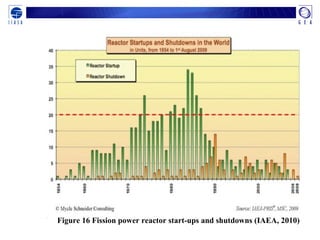
Figure 16 Fission power reactor start-ups and shutdowns (IAEA, 2010)
GlobalTrends
inSustainable
Energy
Investment
2010
Excl. large hydro
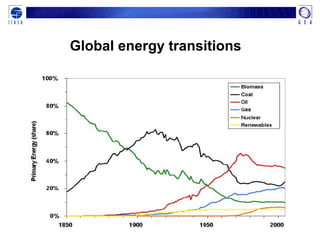
Global energy transitions
Biomass
Oil
Gas
Renewable
NuclearMicrochip
Steam
motor
Gasoline
tube
Commercial Nuclear
Television
engine
engine
Electric
Vacuum
energy
Coal
aviation
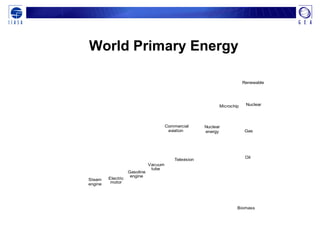
World Primary Energy
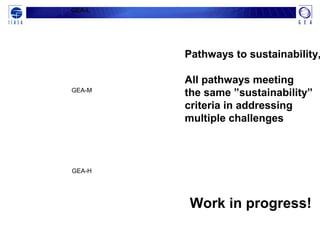
GEA-L
GEA-M
GEA-H
Pathways to sustainability,
All pathways meeting
the same ”sustainability”
criteria in addressing
multiple challenges
Work in progress!
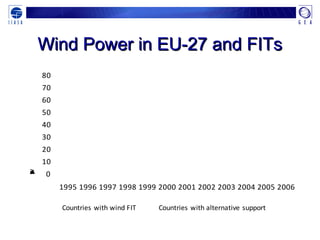
Wind Power in EU-27 and FITsWind Power in EU-27 and FITs
0
10
20
30
40
50
60
70
80
1995 1996 1997 1998 1999 2000 2001 2002 2003 2004 2005 2006
ElectricityGeneration(TWh)
Countries with wind FIT Countries with alternative support
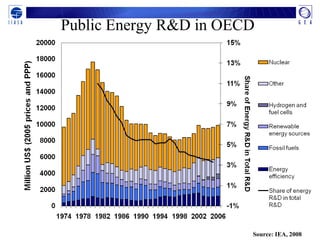
Public Energy R&D in OECD
Source: IEA, 2008
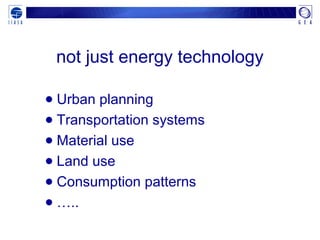
not just energy technology
● Urban planning
● Transportation systems
● Material use
● Land use
● Consumption patterns
● …..
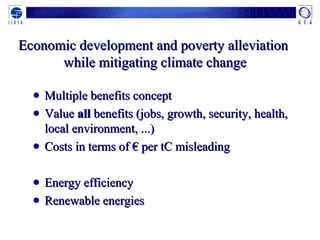
Economic development and poverty alleviationEconomic development and poverty alleviation
while mitigating climate changewhile mitigating climate change
● Multiple benefits conceptMultiple benefits concept
● ValueValue allall benefits (jobs, growth, security, health,benefits (jobs, growth, security, health,
local environment, ...)local environment, ...)
● Costs in terms of € per tC misleadingCosts in terms of € per tC misleading
● Energy efficiencyEnergy efficiency
● Renewable energiesRenewable energies
Major findings and conclusionsMajor findings and conclusions
● Rapidly changing worldRapidly changing world
● Transformative changes needed on energyTransformative changes needed on energy
● Window of opportunity existsWindow of opportunity exists
● Resources and technologies existResources and technologies exist
● Rapidly growing role for renewable energiesRapidly growing role for renewable energies
● Electricity growing importanceElectricity growing importance
● Policies and institutions criticalPolicies and institutions critical
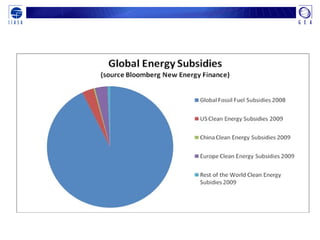
● Energy subsidies and R&D misallocatedEnergy subsidies and R&D misallocated
● Capacity development worldwideCapacity development worldwide
Thank you!Thank you!
www.globalenergyassessment.orgwww.globalenergyassessment.org
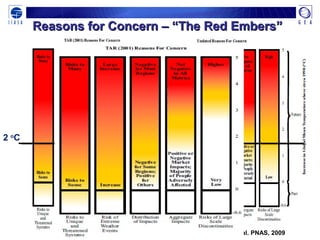
Reasons for Concern – “The Red Embers”Reasons for Concern – “The Red Embers”
2 o
C
Source: Smith et al. PNAS, 2009
05

05

  • 1.
    CEAL, Sao Paulo October15, 2010 ENERGY PROBLEMS AND PERSPECTIVES FOR THE 21ST CENTURY Thomas B Johansson Professor, International Insitute for Industrial Environmental Economics, Lund University, Lund, Sweden, Co-Chair, Global Energy Assessement, IIASA, Austria
  • 2.
    From: Steffen etal. 2004 IGBP
  • 3.
    Climate Change Ocean acidification Ozone depletion Global Freshwater Use Rate of Biodiversity Loss Biogeochemical loading: Global N& P Cycles Atmospheric Aerosol Loading Land System Change Chemical Pollution Planetary Boundaries
  • 7.
    Challenges requiring actionson Energy a. Energy services for growing populations and economies b. access to modern forms of energy (the 2 billion w/o access) c. affordable energy services (@$100/bbl??) d. secure supplies, from households to nations e. local and regional health and environment challenges f. climate change mitigation g. ancillary risks => Major Energy System Changes Needed!
  • 8.
  • 9.
    Assessement Process leading toa Report and much more 25 Knowledge Modules, ~200 authors, geographically and gender diversified Stakeholder consultations External peer review Extensive dissemination Informing Rio +20 and other international, regional, naitonal and corporate on energy and/or linked to energy issues
  • 10.
    Supporting the GEA:Supportingthe GEA: International OrganizationsInternational Organizations UNDESAUNDESA UNDPUNDP UNEPUNEP UNIDOUNIDO World BankWorld Bank IIASAIIASA Country Governments/AgenciesCountry Governments/Agencies AustriaAustria BrazilBrazil European UnionEuropean Union GermanyGermany ItalyItaly SwedenSweden USAUSA CorporationsCorporations PetrobrasPetrobras TEPCOTEPCO First SolarFirst Solar Industry groupsIndustry groups WECWEC WBCSDWBCSD FoundationsFoundations UN FoundationUN Foundation Climate WorksClimate Works
  • 11.
    Four Clusters ofKnowledge modules: 1.The Challenges, nature and magnitude of change required 2.Resources and technology options 3.Pathways to sustainability, urbanisation, rural energy, and land use 4.Policies, energy end use and supply sectors, access, innovation, capacity developoment
  • 12.
    Electricity ●ElectricityElectricity for Allin the Medium Termfor All in the Medium Term (may be achievable(may be achievable)) – Use of both grid-extensionUse of both grid-extension and decentralized systems +and decentralized systems + conventional and renewableconventional and renewable energy technologiesenergy technologies – Strong national (and local) +Strong national (and local) + public (and private)public (and private) delivery modelsdelivery models – Smart use of subsidies andSmart use of subsidies and other innovative financing mechanismsother innovative financing mechanisms (global effort would be required)(global effort would be required)
  • 13.
    Clean Cooking Fuels ●Biogas, LPG, alcohols, kerosene, electricity ● Benefits – Health – Time spent – Reduced emissions of ● Products of incomplete combustion ● Black carbon
  • 15.
    World crude oilproduction model Nashawi et al., Energy Fuels 2010, 24, 1788–1800
  • 17.
    Global emission pathwaysin compliance with a 2 ºC guardrail, with 67% probability (WBGU 2009)
  • 18.
    this translates intoa need for a major energy systems transformation Main elements: ● Energy end-use efficiency ● Renewable energies ● Carbon Capture and Storage (for CC only) ● Efficiency and Renewables are INSTRUMENTS for addressing all the challenges at the same time!
  • 19.
    “PassivHaus” Source: Jan Barta,Center for Passive Buildings, www.pasivnidomy.cz 0 50 100 150 200 250 Stávající zástavba Pasivní dům celkováenergie[kWh/m2 a] Domácí spotřebiče Vzduchotechnika OhřevTUV Vytápění - 90% - 75%
  • 20.
    Example of savingsby reconstruction Reconstruction according to the passive house principle -90% 15 kWh/(m²a)over 150 kWh/(m²a) Before reconstruction Source: Jan Barta, Center for Passive Buildings, www.pasivnidomy.cz, EEBW2006
  • 21.
    21 0 2,000 4,000 6,000 8,000 10,000 12,000 TWh Space heating andcooling final energy consumption Summation, 1.4% Retrofit, exemplary buildings OECD90 Asia REF MAF LAC W ork in progress – do not cite or quote -77% Final thermal energy consumption in the world’s buildings by region, 2005-2050 3%/yr retrofit rate
  • 22.
    How far canbuildings take us?How far can buildings take us?
  • 23.
    Letter Horse HayAgriculture Sunlight Telegraph Steam Locomotive Coal Coal mine Coal fields Interntet, Mobile Phone ICE Automobile Gasoline Oil refinery Crude oil Convergence Energy, Mobility Information Hydrogen Natural gas / fossils SMR, decarbonization Electrolysis Sunlight Wind Uranium 1770s 1870s 1970s 2070s Mobility and Communication Through Time Biomass Electricity Electricity Electricity Source: David Sanborn Scott, 2004 23
  • 24.
  • 26.
    Nuclear PWR InvestmentCostsNuclear PWR Investment Costs US overnight excl. interest, France partly incl. interestsUS overnight excl. interest, France partly incl. interests mean/best guess and min/max of costsmean/best guess and min/max of costs US: Koomey&Hultman, 2007, France: Grubler, 2009 Source: GEA KM24 forthcoming Nuclear PWR Investment Costs (US overnight excl. interest, France partly incl. interests) 1980 1977 1985 1971 1975 1980 1983 1996 1995 5000 2000 3000 4000 1000
  • 27.
    Figure 16 Fissionpower reactor start-ups and shutdowns (IAEA, 2010)
  • 29.
  • 31.
  • 32.
  • 33.
    GEA-L GEA-M GEA-H Pathways to sustainability, Allpathways meeting the same ”sustainability” criteria in addressing multiple challenges Work in progress!
  • 34.
    Wind Power inEU-27 and FITsWind Power in EU-27 and FITs 0 10 20 30 40 50 60 70 80 1995 1996 1997 1998 1999 2000 2001 2002 2003 2004 2005 2006 ElectricityGeneration(TWh) Countries with wind FIT Countries with alternative support
  • 35.
    Public Energy R&Din OECD Source: IEA, 2008
  • 37.
    not just energytechnology ● Urban planning ● Transportation systems ● Material use ● Land use ● Consumption patterns ● …..
  • 38.
    Economic development andpoverty alleviationEconomic development and poverty alleviation while mitigating climate changewhile mitigating climate change ● Multiple benefits conceptMultiple benefits concept ● ValueValue allall benefits (jobs, growth, security, health,benefits (jobs, growth, security, health, local environment, ...)local environment, ...) ● Costs in terms of € per tC misleadingCosts in terms of € per tC misleading ● Energy efficiencyEnergy efficiency ● Renewable energiesRenewable energies
  • 39.
    Major findings andconclusionsMajor findings and conclusions ● Rapidly changing worldRapidly changing world ● Transformative changes needed on energyTransformative changes needed on energy ● Window of opportunity existsWindow of opportunity exists ● Resources and technologies existResources and technologies exist ● Rapidly growing role for renewable energiesRapidly growing role for renewable energies ● Electricity growing importanceElectricity growing importance ● Policies and institutions criticalPolicies and institutions critical ● Energy subsidies and R&D misallocatedEnergy subsidies and R&D misallocated ● Capacity development worldwideCapacity development worldwide
  • 40.
  • 41.
    Reasons for Concern– “The Red Embers”Reasons for Concern – “The Red Embers” 2 o C Source: Smith et al. PNAS, 2009