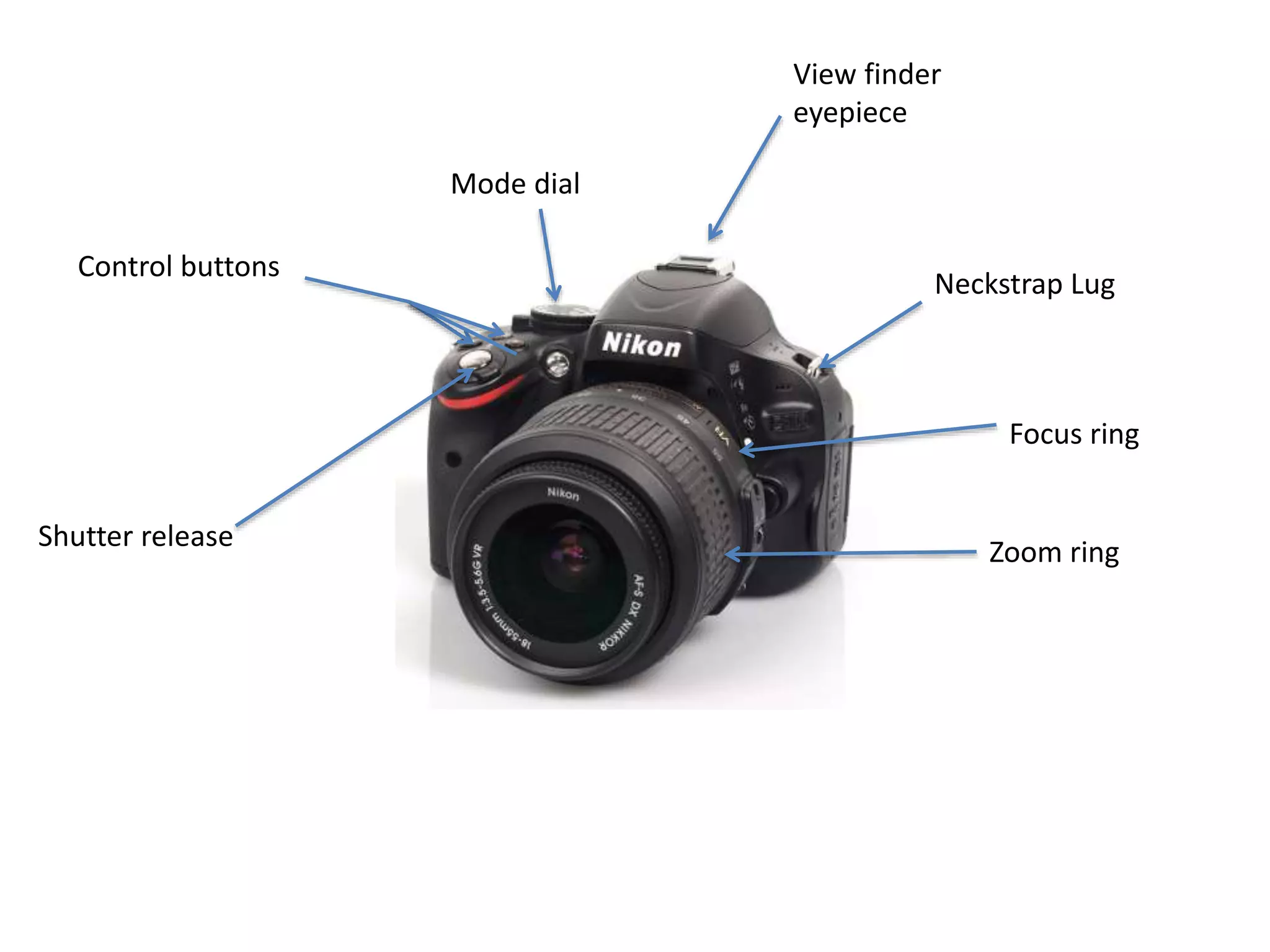
Mode dial
Neckstrap Lug
Focus ring
Zoom ring
Shutter release
Control buttons
View finder
eyepiece
Shutter Speed.
The time for which a shutter is open at a given
setting. This is the speed the shutter opens and
closes on a camera.
ISO
ISO is the number of sensitivity of the light on
your camera. A ISO number is lower the less
sensitive it is to the light and the higher the ISO
the higher the sensitivity.
Aperture and Depth of field
The depth of field refers to the range of distance
that appears sharp and crisp, print size can be a big
influence on this. Also the camera type, aperture
and focusing distance can influence our perception
of this.
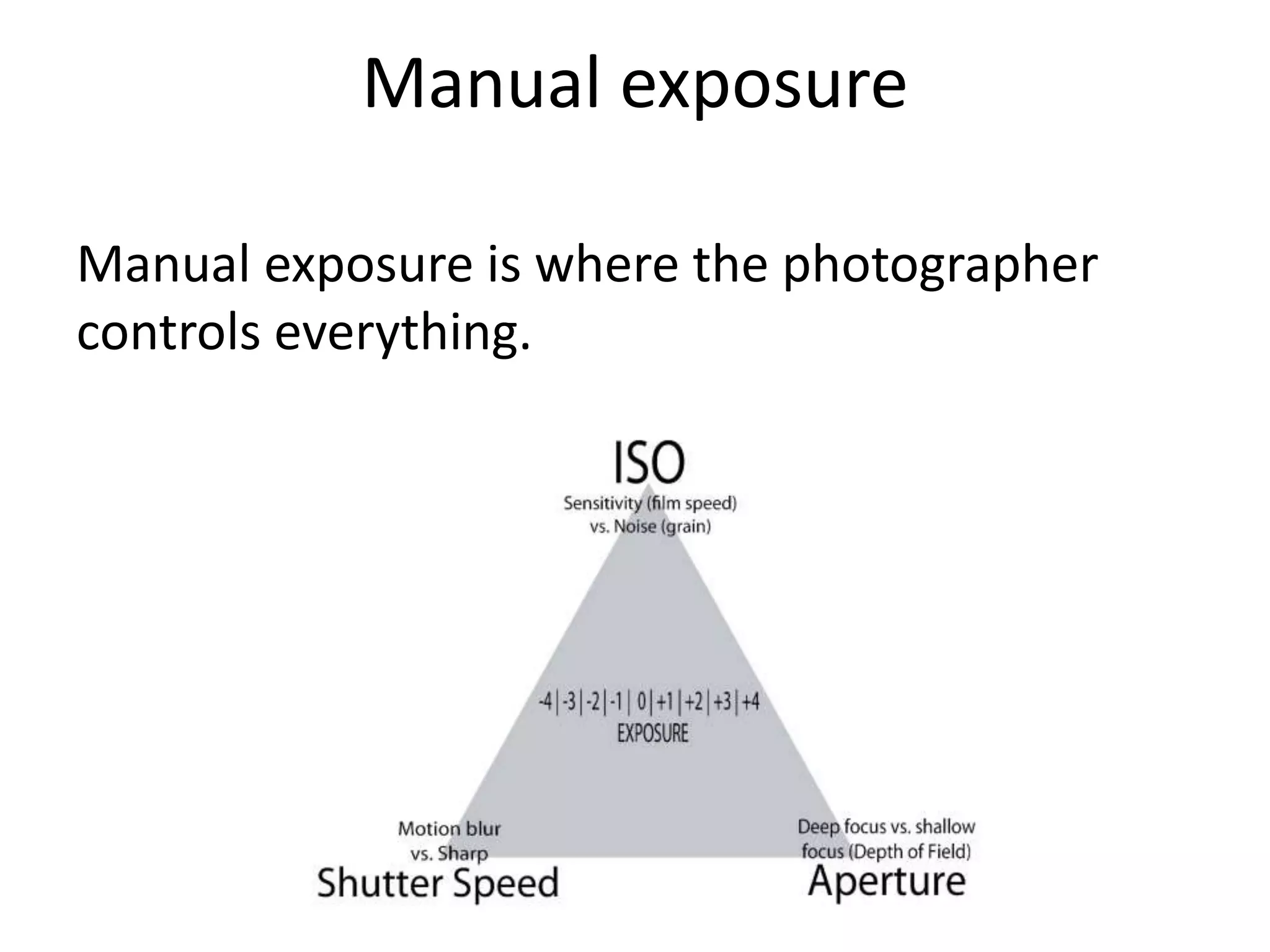
Manual exposure
Manual exposure is where the photographer
controls everything.
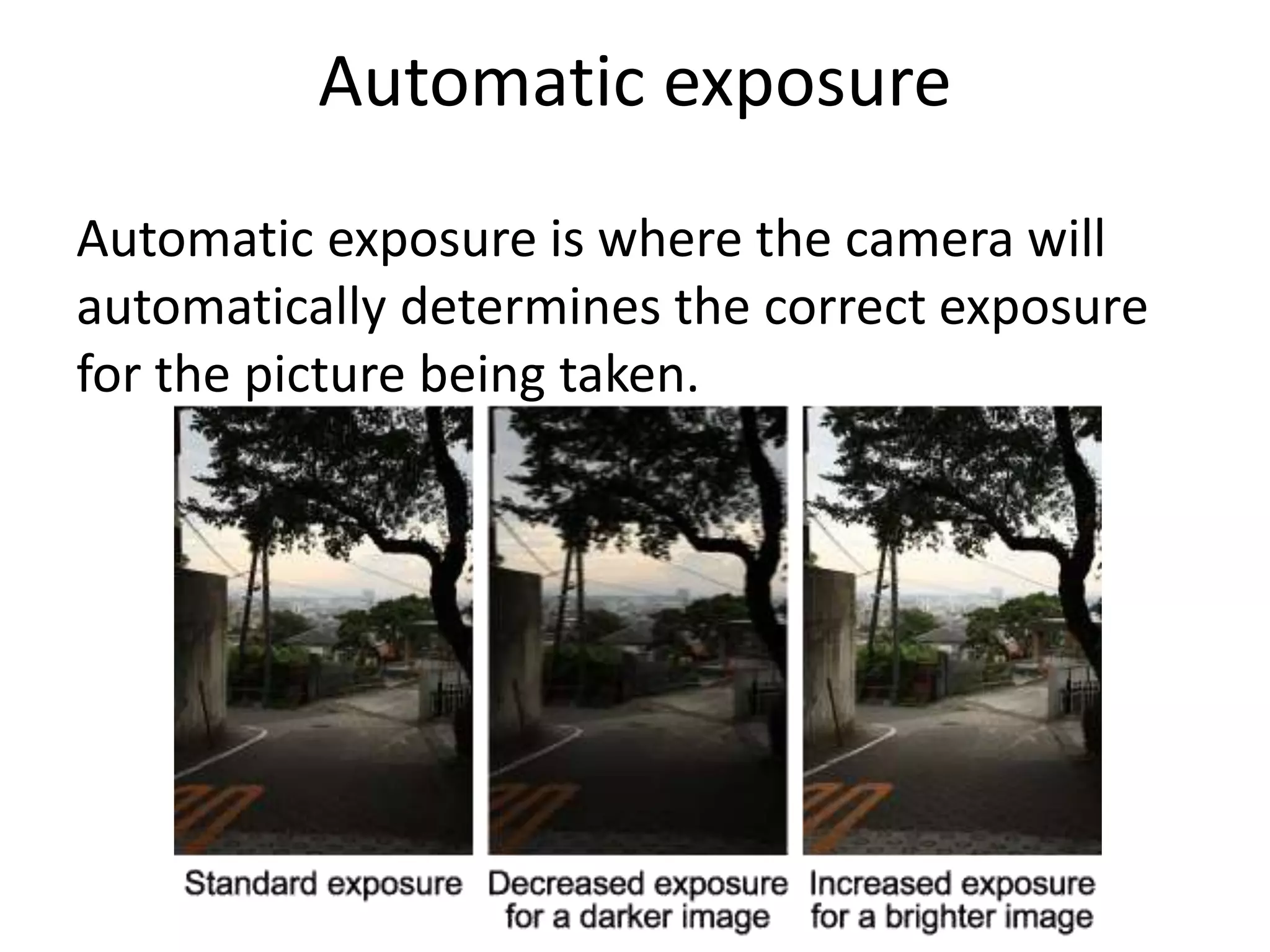
Automatic exposure
Automatic exposure is where the camera will
automatically determines the correct exposure
for the picture being taken.
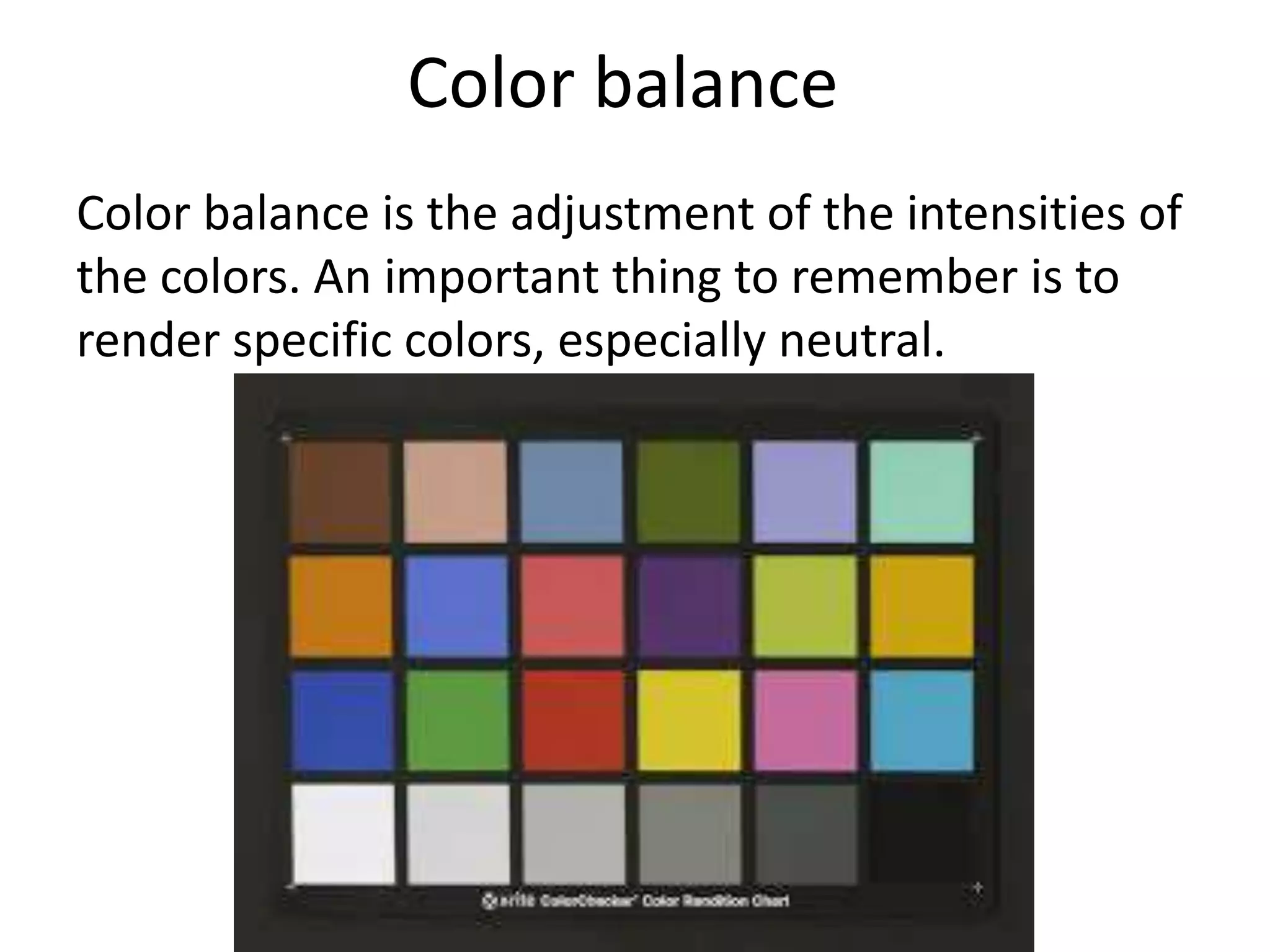
Color balance
Color balance is the adjustment of the intensities of
the colors. An important thing to remember is to
render specific colors, especially neutral.
White balance
White balance is the process of removing
unrealistic colors, therefore meaning objects
which appear white in person will be rendered
white in your photo.
Composition
Composition is the placement of visual elements
in a piece of art.
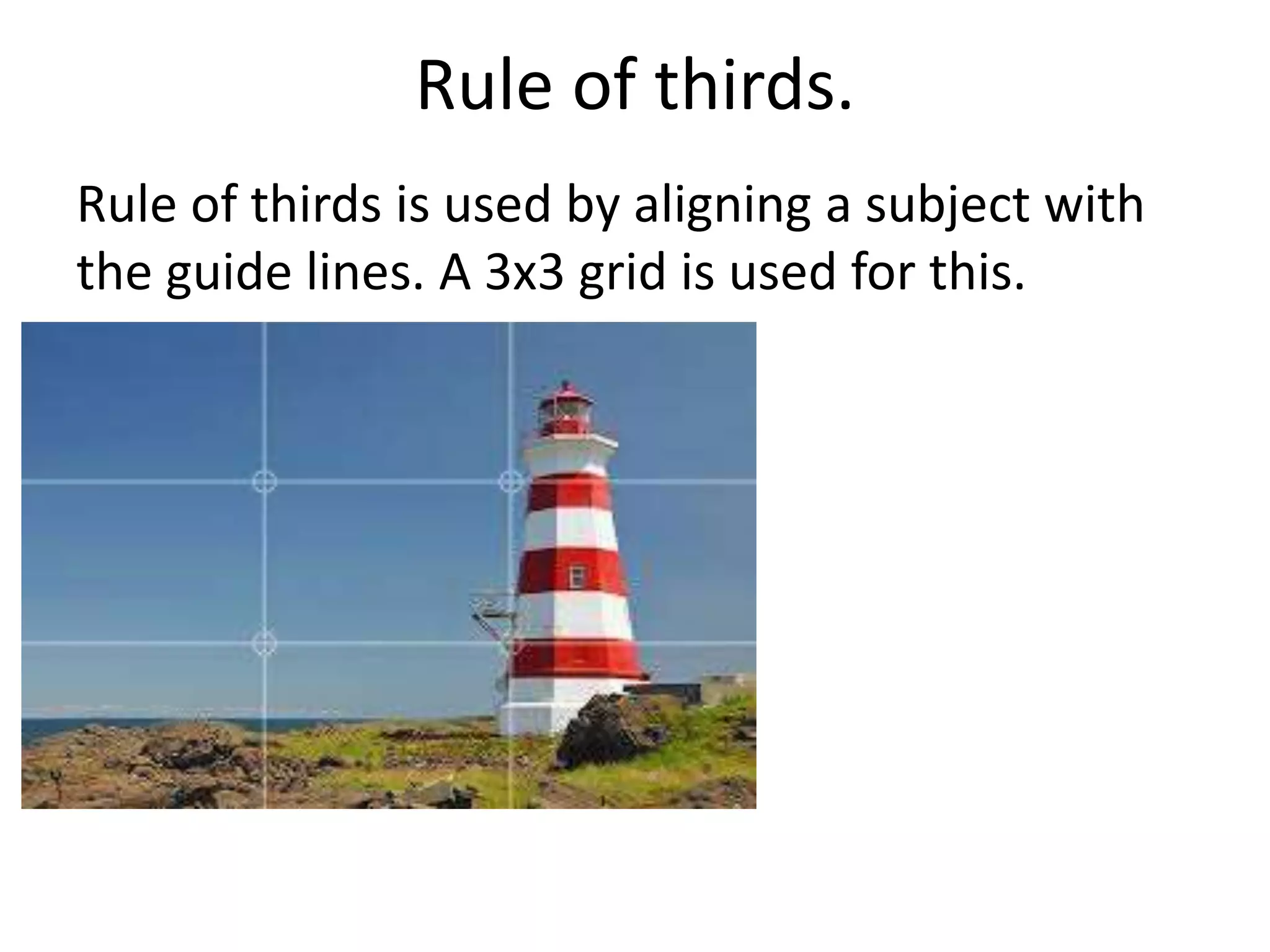
Rule of thirds.
Rule of thirds is used by aligning a subject with
the guide lines. A 3x3 grid is used for this.
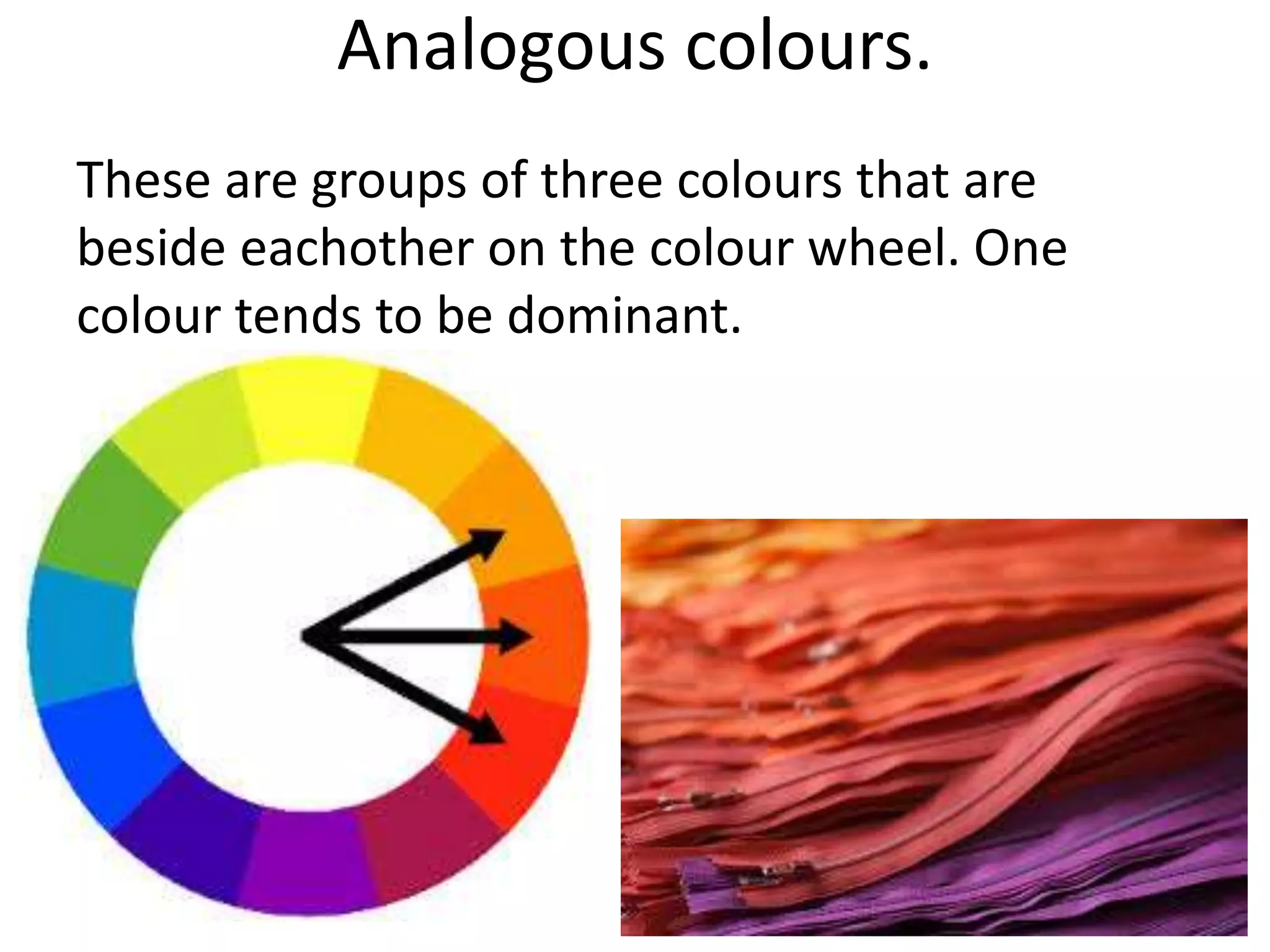
Analogous colours.
These are groups of three colours that are
beside eachother on the colour wheel. One
colour tends to be dominant.
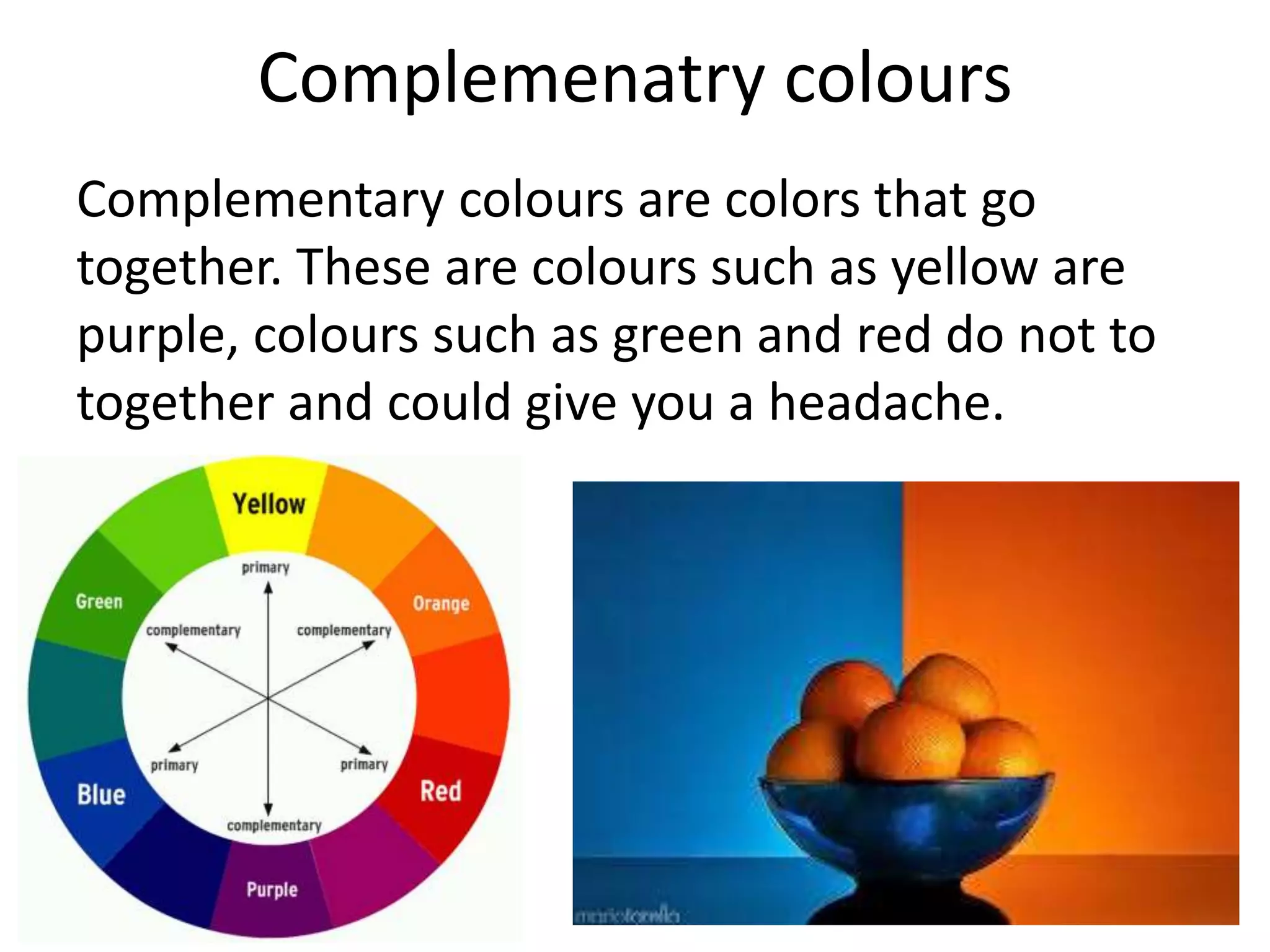
Complemenatry colours
Complementary colours are colors that go
together. These are colours such as yellow are
purple, colours such as green and red do not to
together and could give you a headache.
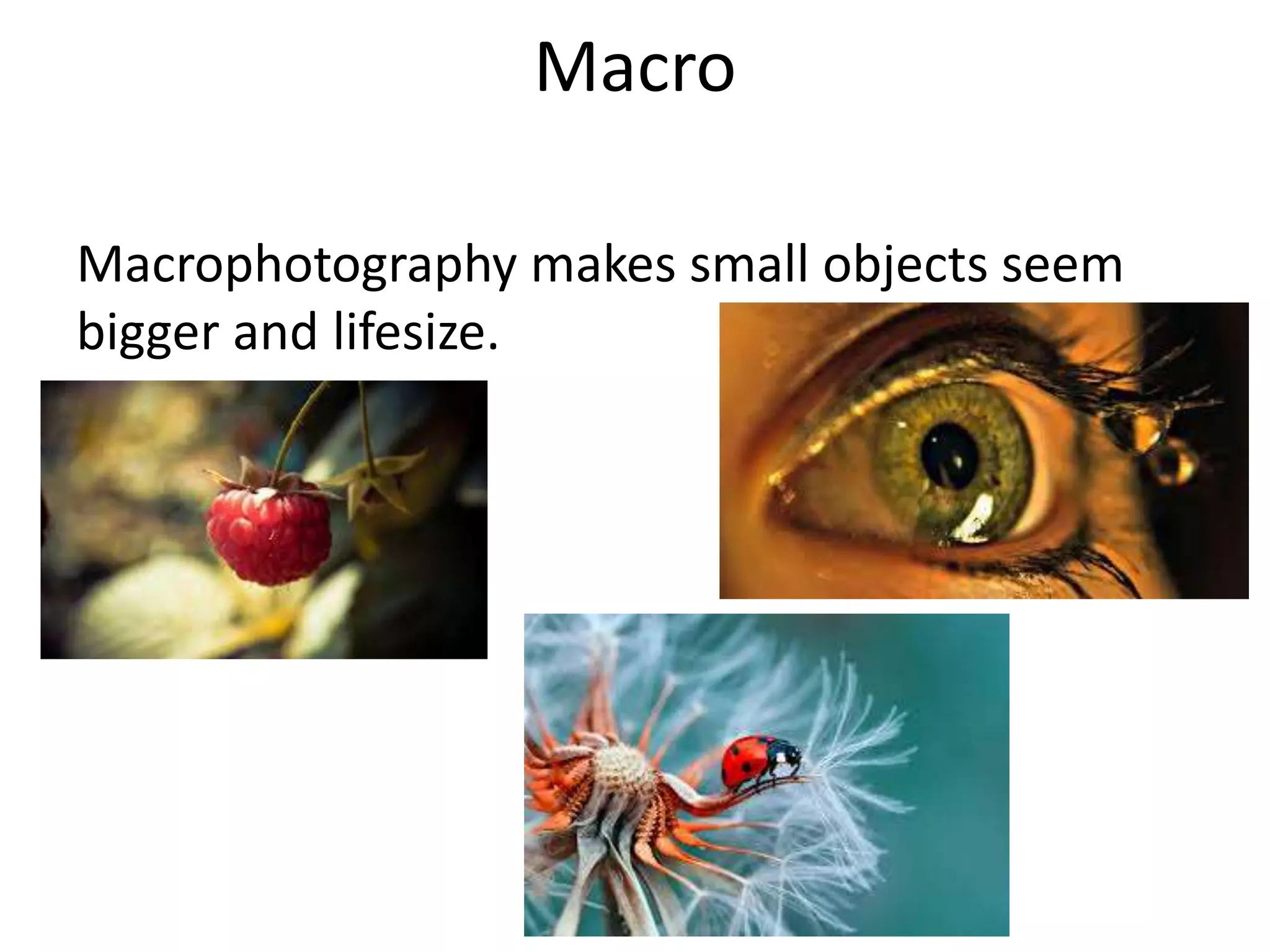
Macro
Macrophotography makes small objects seem
bigger and lifesize.
Parts of a camera

Parts of a camera

  • 1.
    Mode dial Neckstrap Lug Focusring Zoom ring Shutter release Control buttons View finder eyepiece
  • 2.
    Shutter Speed. The timefor which a shutter is open at a given setting. This is the speed the shutter opens and closes on a camera.
  • 3.
    ISO ISO is thenumber of sensitivity of the light on your camera. A ISO number is lower the less sensitive it is to the light and the higher the ISO the higher the sensitivity.
  • 4.
    Aperture and Depthof field The depth of field refers to the range of distance that appears sharp and crisp, print size can be a big influence on this. Also the camera type, aperture and focusing distance can influence our perception of this.
  • 5.
    Manual exposure Manual exposureis where the photographer controls everything.
  • 6.
    Automatic exposure Automatic exposureis where the camera will automatically determines the correct exposure for the picture being taken.
  • 7.
    Color balance Color balanceis the adjustment of the intensities of the colors. An important thing to remember is to render specific colors, especially neutral.
  • 8.
    White balance White balanceis the process of removing unrealistic colors, therefore meaning objects which appear white in person will be rendered white in your photo.
  • 9.
    Composition Composition is theplacement of visual elements in a piece of art.
  • 10.
    Rule of thirds. Ruleof thirds is used by aligning a subject with the guide lines. A 3x3 grid is used for this.
  • 11.
    Analogous colours. These aregroups of three colours that are beside eachother on the colour wheel. One colour tends to be dominant.
  • 12.
    Complemenatry colours Complementary coloursare colors that go together. These are colours such as yellow are purple, colours such as green and red do not to together and could give you a headache.
  • 13.
    Macro Macrophotography makes smallobjects seem bigger and lifesize.