PARTHENOCARPY IN VEGETABLE CROPS
PARTHENOCARPY:
• Null-1902-coined parthenocarpy
• Parthenos-VIRGIN, karpos -FRUIT
• Natural or artificial induction of fruit development without
pollination and fertilization is called parthenocarpy.
Causes for absence of pollination:
• Male sterility
• Self incompatibility.
• Adverse environmental condition.
• Absence of pollinator and pollinizer
• Dioecious
Mechanism of parthenocarpy:
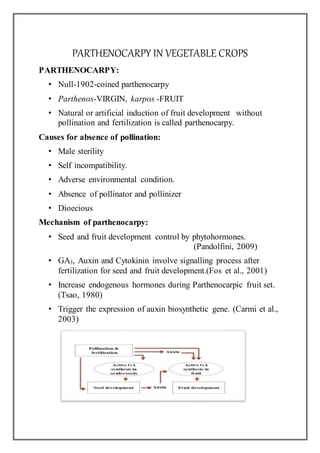
• Seed and fruit development control by phytohormones.
(Pandolfini, 2009)
• GA3, Auxin and Cytokinin involve signalling process after
fertilization for seed and fruit development.(Fos et al., 2001)
• Increase endogenous hormones during Parthenocarpic fruit set.
(Tsao, 1980)
• Trigger the expression of auxin biosynthetic gene. (Carmi et al.,
2003)
Importance of Parthenocarpy:
• Increased production under adverse environment
• Seedless fruits
• Improved quality
• Off season production
• Protected cultivation
• Reduced cost of cultivation
Types of Parthenocarpy:
1)Genetic /natural parthenocarpy
• Obligatory : unable to produce viable seeds either in the
presence or absence of fertile pollen.
Eg : Banana, pineapple and ivy gourd
• Facultative: pollination is prevented by adverse conditions.
Eg : Tomato, brinjal and cucumber
2)Artificially induced parthenocarpy
• Irradiated pollen
• Synthetic auxin
• Gibberellins
Methods to induce Parthenocarpy:
• Breeding approaches
 Conventional : Inter specific hybridization
Intra specific hybridization
 Mutation
 Polyploidy
• External application of PGR
• Transgenic approach
Conventional method:
It comprises two steps:
I. Generating a breeding population that is segregating for the
parthenocarpy trait of one parental genotype.
II. Selecting individual progeny from the segregating population
that combine parthenocarpy with desirable traits of the non-
parthenocarpic parent.
• Interspecific hybridization:
Solanum esculentum X solanum peruvianum
S.habrochaites X S.lycopersicum- IVT-LINE 1.
• Intraspecific hybridization:
In tomato;
 Severenien
 Oregon T5-4
 Oregon cherry
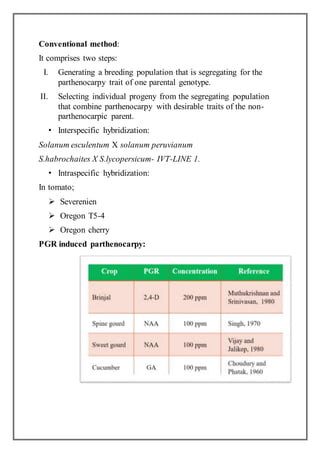
PGR induced parthenocarpy:
Transgenic approach
DefH9- iaaM chimeric gene:
• DefH9-iaaM gene construct, composed of DefH9 gene from
snapdragon and the iaaM coding region from Pseudomonas
syringae pv savastanoi.
• The placenta/ovule-specific expression of the DefH9-iaaM
gene confers parthenocarpic fruit development to eggplant and
tomato.
TOMATO
Three sources - facultative parthenocarpy
• Montfavet-191 (Pat-1)
• Severianin (Pat-2)
• RP75/59 (Pat-3/Pat-4)
Pat-1
• Montfavet-191
• Abnormal stamens
• Higher ovary and pericarp growth
• Female sterility
• Defective pollen tube- placenta interaction
• Low seed set
Pat-2
• Single recessive gene
• Genetic background of the recurrent parent is very important for
vigour.(Philouze et al.,1988)
• Parthenocarpic plants have determinate growth habit.
Pat-3/4
• RP75/59 progeny of Atom x Budjekosoko
• Seeded fruits suppress the size of seedless fruits
• Digenic inheritance.
CUCUMBER
Genetics of parthenocarpy:
 Inheritance of parthenocarpy by an Incomplete dominant gene
P.
 PP(homozygous) produces parthenocarpic fruits early(1st fruit at
fifth node).
 Pp(heterozygous) produce parthenocarpic fruits later than
homozygous plants
 pp(recessive) produces no parthenocarpic fruits.
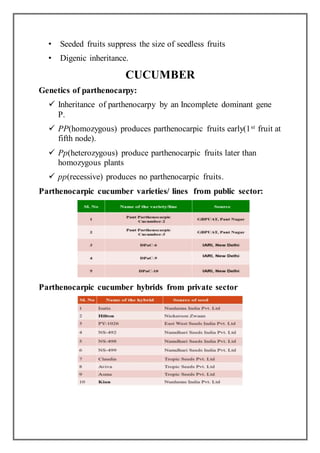
Parthenocarpic cucumber varieties/ lines from public sector:
Parthenocarpic cucumber hybrids from private sector
Maintenance of parthenocarpic Gynoecious lines:
 Silver nitrate (AgNO3) - Male flowers in gynoecious cucumbers
 AgNO3 at 400 and 500 ppm
 Two –three true leaf stage
 Two or three times spray - Effective
CAPSICUM:
 High commercial loss- BER
 Parthenocarpy – a solution to reduce yield flushing and to
minimize BER.
 High percentage of parthenocarpy observed when plants grown
under low night temperature(8-10⁰ C)-Cochran.
 Low temperature may impair pollen fertility causing hampered
seed set and leading to the production of seedless fruits.
 Parthenocarpic fruit obtained- GRs or low temp-deformed fruit
shape and reduced fruit size.
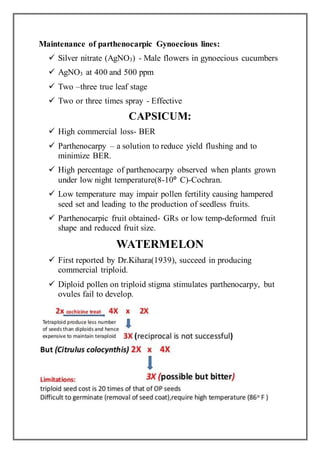
WATERMELON
 First reported by Dr.Kihara(1939), succeed in producing
commercial triploid.
 Diploid pollen on triploid stigma stimulates parthenocarpy, but
ovules fail to develop.
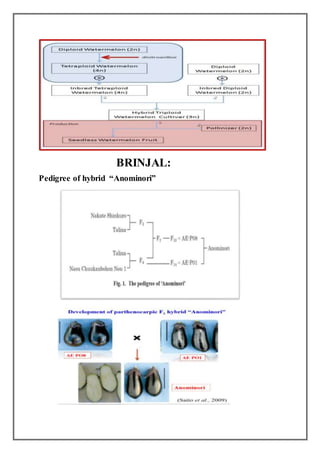
BRINJAL:
Pedigree of hybrid “Anominori”

Parthenocarpy word

  • 1.
    PARTHENOCARPY IN VEGETABLECROPS PARTHENOCARPY: • Null-1902-coined parthenocarpy • Parthenos-VIRGIN, karpos -FRUIT • Natural or artificial induction of fruit development without pollination and fertilization is called parthenocarpy. Causes for absence of pollination: • Male sterility • Self incompatibility. • Adverse environmental condition. • Absence of pollinator and pollinizer • Dioecious Mechanism of parthenocarpy: • Seed and fruit development control by phytohormones. (Pandolfini, 2009) • GA3, Auxin and Cytokinin involve signalling process after fertilization for seed and fruit development.(Fos et al., 2001) • Increase endogenous hormones during Parthenocarpic fruit set. (Tsao, 1980) • Trigger the expression of auxin biosynthetic gene. (Carmi et al., 2003)
  • 2.
    Importance of Parthenocarpy: •Increased production under adverse environment • Seedless fruits • Improved quality • Off season production • Protected cultivation • Reduced cost of cultivation Types of Parthenocarpy: 1)Genetic /natural parthenocarpy • Obligatory : unable to produce viable seeds either in the presence or absence of fertile pollen. Eg : Banana, pineapple and ivy gourd • Facultative: pollination is prevented by adverse conditions. Eg : Tomato, brinjal and cucumber 2)Artificially induced parthenocarpy • Irradiated pollen • Synthetic auxin • Gibberellins Methods to induce Parthenocarpy: • Breeding approaches  Conventional : Inter specific hybridization Intra specific hybridization  Mutation  Polyploidy • External application of PGR • Transgenic approach
  • 3.
    Conventional method: It comprisestwo steps: I. Generating a breeding population that is segregating for the parthenocarpy trait of one parental genotype. II. Selecting individual progeny from the segregating population that combine parthenocarpy with desirable traits of the non- parthenocarpic parent. • Interspecific hybridization: Solanum esculentum X solanum peruvianum S.habrochaites X S.lycopersicum- IVT-LINE 1. • Intraspecific hybridization: In tomato;  Severenien  Oregon T5-4  Oregon cherry PGR induced parthenocarpy:
  • 4.
    Transgenic approach DefH9- iaaMchimeric gene: • DefH9-iaaM gene construct, composed of DefH9 gene from snapdragon and the iaaM coding region from Pseudomonas syringae pv savastanoi. • The placenta/ovule-specific expression of the DefH9-iaaM gene confers parthenocarpic fruit development to eggplant and tomato. TOMATO Three sources - facultative parthenocarpy • Montfavet-191 (Pat-1) • Severianin (Pat-2) • RP75/59 (Pat-3/Pat-4) Pat-1 • Montfavet-191 • Abnormal stamens • Higher ovary and pericarp growth • Female sterility • Defective pollen tube- placenta interaction • Low seed set Pat-2 • Single recessive gene • Genetic background of the recurrent parent is very important for vigour.(Philouze et al.,1988) • Parthenocarpic plants have determinate growth habit. Pat-3/4 • RP75/59 progeny of Atom x Budjekosoko
  • 5.
    • Seeded fruitssuppress the size of seedless fruits • Digenic inheritance. CUCUMBER Genetics of parthenocarpy:  Inheritance of parthenocarpy by an Incomplete dominant gene P.  PP(homozygous) produces parthenocarpic fruits early(1st fruit at fifth node).  Pp(heterozygous) produce parthenocarpic fruits later than homozygous plants  pp(recessive) produces no parthenocarpic fruits. Parthenocarpic cucumber varieties/ lines from public sector: Parthenocarpic cucumber hybrids from private sector
  • 6.
    Maintenance of parthenocarpicGynoecious lines:  Silver nitrate (AgNO3) - Male flowers in gynoecious cucumbers  AgNO3 at 400 and 500 ppm  Two –three true leaf stage  Two or three times spray - Effective CAPSICUM:  High commercial loss- BER  Parthenocarpy – a solution to reduce yield flushing and to minimize BER.  High percentage of parthenocarpy observed when plants grown under low night temperature(8-10⁰ C)-Cochran.  Low temperature may impair pollen fertility causing hampered seed set and leading to the production of seedless fruits.  Parthenocarpic fruit obtained- GRs or low temp-deformed fruit shape and reduced fruit size. WATERMELON  First reported by Dr.Kihara(1939), succeed in producing commercial triploid.  Diploid pollen on triploid stigma stimulates parthenocarpy, but ovules fail to develop.
  • 7.