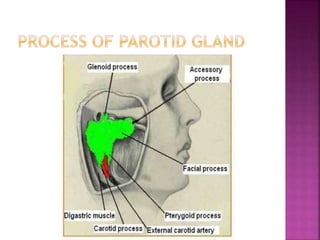
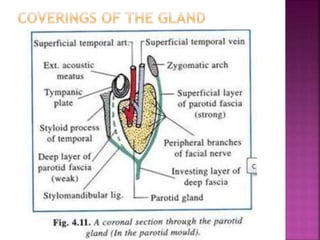
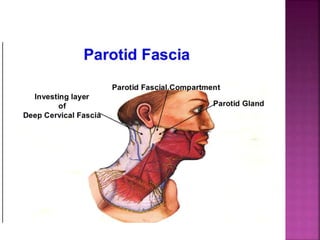
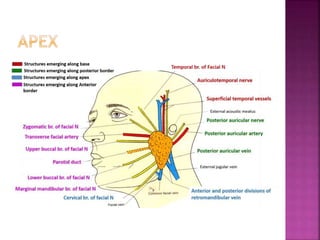
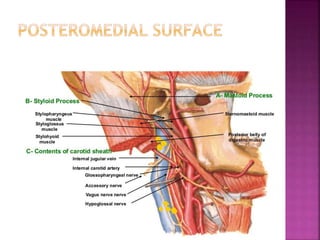
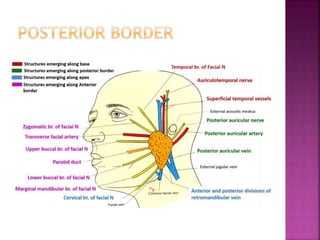
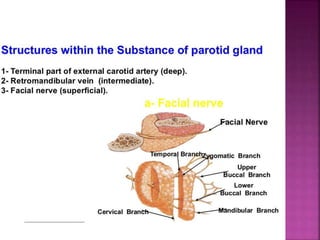
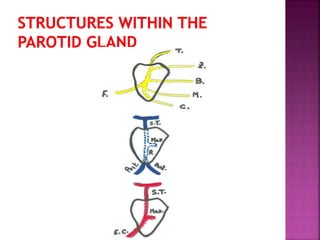
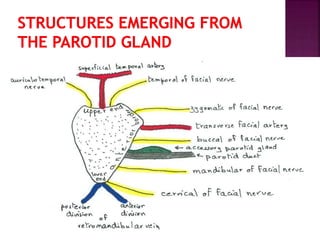
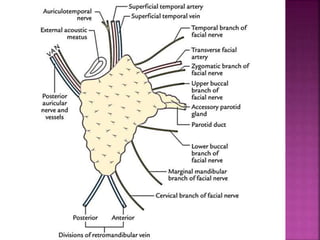
 Apex
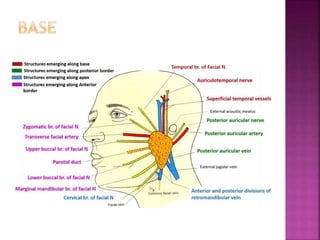
 Base
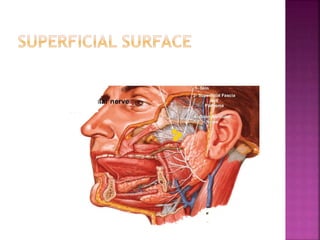
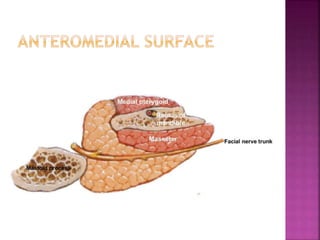
 Three surfaces
 Three borders
THE PAROTID DUCT/ STENSEN’S DUCT
• Stensen’s duct is 5 cm long.
•open opposite the second upper
molar tooth
 Inflammatory swelling of the parotid gland is
painful due to the unyielding nature of the
fascial capsule
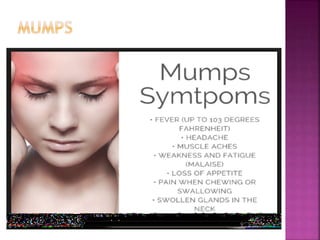
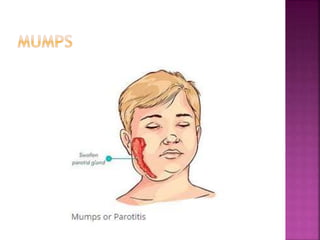
 Mumps- viral infection of the salivary gland
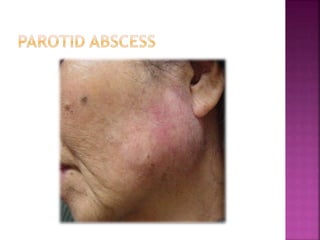
 Parotid abscess- drained by hiltons method
 Mixed parotid tumour
• This occurs in 3-6 years of age and the
symptoms last for 3-7 days accompanied
with fever and malaise.
• Diagnosis is made by HX and sialography
showing a characteristic snowstorm
appearance.
• Treatment: -antibiotics
-prophylactic antibiotics
-parotidectomy.
A- papillary obstruction:
It less common than in submandibular gland.
Most commonly due to trauma
Presentation
Treatment is papillotomy.
B- stone formation:
As mentioned before it is 80% in submandibular
but only 20 % in parotid
Investigations:
Position.
Treatment is surgical.
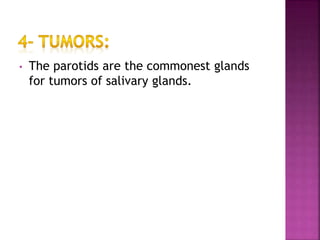
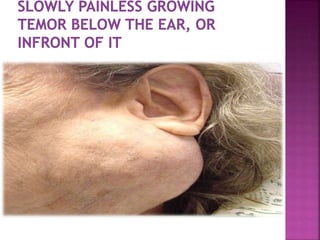
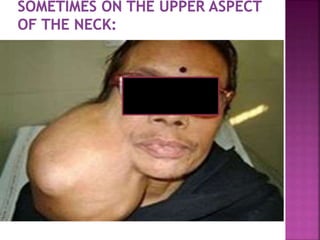
• The parotids are the commonest glands
for tumors of salivary glands.
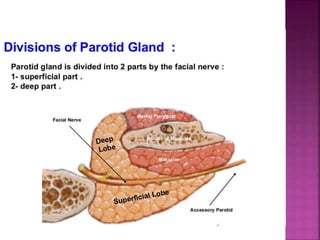
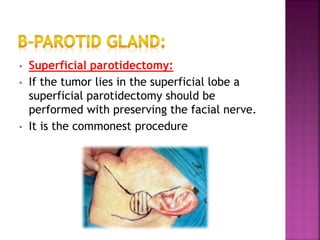
• Superficial parotidectomy:
• If the tumor lies in the superficial lobe a
superficial parotidectomy should be
performed with preserving the facial nerve.
• It is the commonest procedure

Parotid Gland.pptx

  • 8.
     Apex  Base Three surfaces  Three borders
  • 21.
    THE PAROTID DUCT/STENSEN’S DUCT • Stensen’s duct is 5 cm long. •open opposite the second upper molar tooth
  • 25.
     Inflammatory swellingof the parotid gland is painful due to the unyielding nature of the fascial capsule  Mumps- viral infection of the salivary gland  Parotid abscess- drained by hiltons method  Mixed parotid tumour
  • 29.
    • This occursin 3-6 years of age and the symptoms last for 3-7 days accompanied with fever and malaise. • Diagnosis is made by HX and sialography showing a characteristic snowstorm appearance. • Treatment: -antibiotics -prophylactic antibiotics -parotidectomy.
  • 30.
    A- papillary obstruction: Itless common than in submandibular gland. Most commonly due to trauma Presentation Treatment is papillotomy.
  • 31.
    B- stone formation: Asmentioned before it is 80% in submandibular but only 20 % in parotid Investigations: Position. Treatment is surgical.
  • 32.
    • The parotidsare the commonest glands for tumors of salivary glands.
  • 35.
    • Superficial parotidectomy: •If the tumor lies in the superficial lobe a superficial parotidectomy should be performed with preserving the facial nerve. • It is the commonest procedure