Download as PDF, PPTX


![Canwegetthatsnowballrolling?
Paul Barter www.reinventingparking.org
By Kamyar Adl (Flickr) [CC BY 2.0] via Wikimedia Commons https://commons.wikimedia.org/wiki/File%3AGiant_snowball_Oxford.jpg](https://image.slidesharecdn.com/barter2forpie2017-170315044958/85/Parking-Management-Opens-Wider-Opportunities-46-320.jpg)

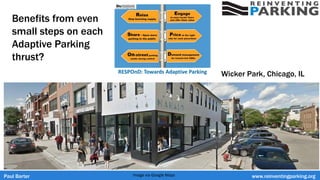
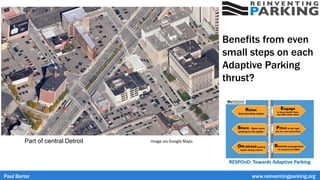
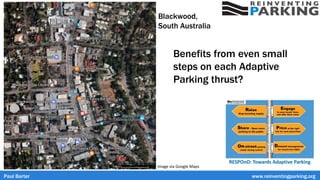
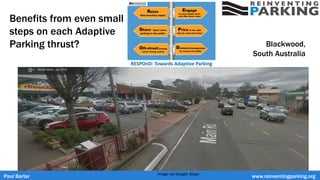

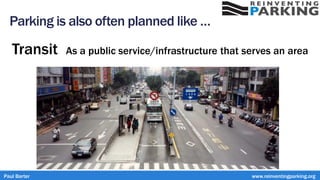
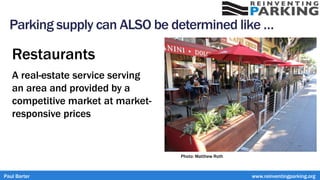
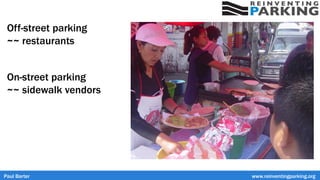
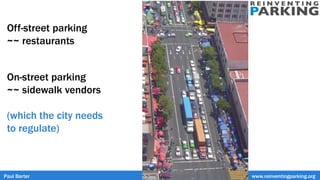
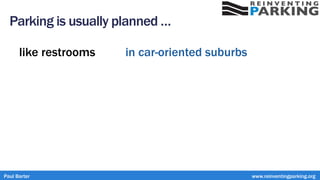
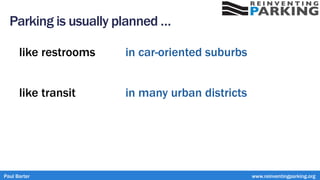
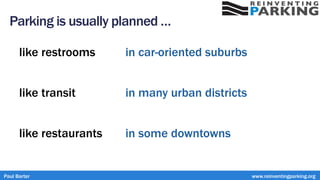
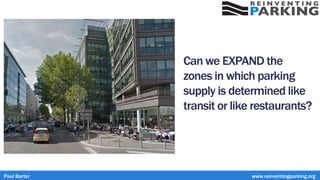
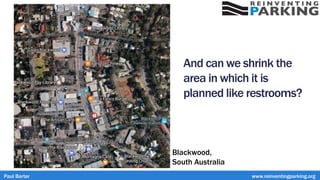
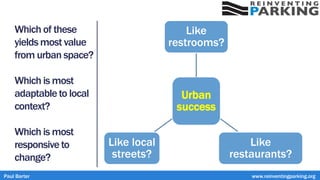
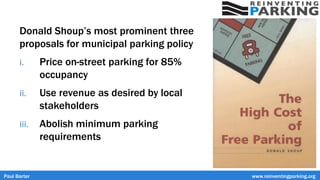
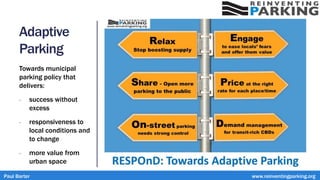
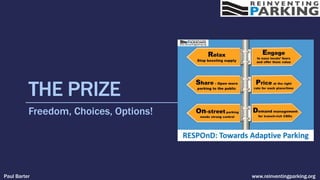
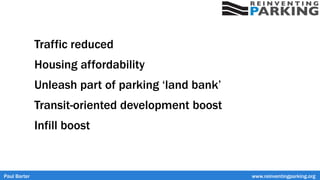
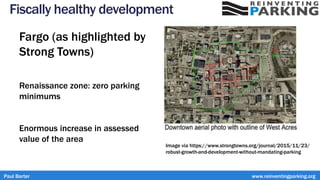
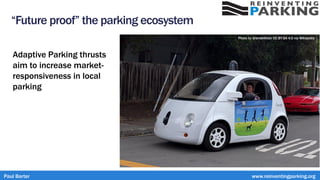
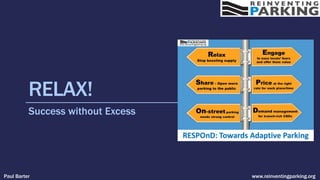
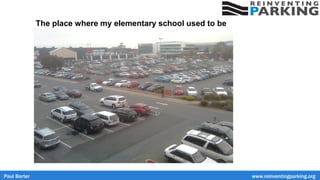
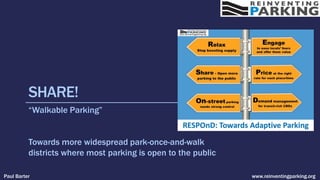
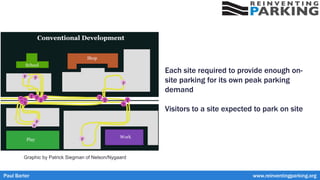
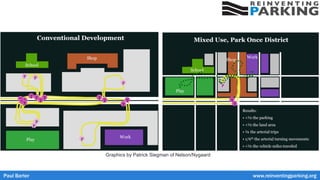
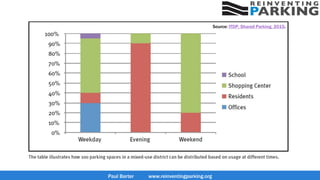
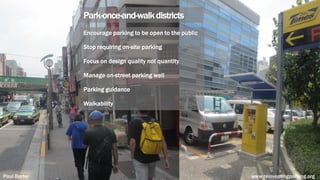
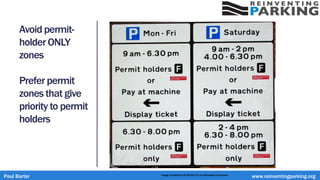
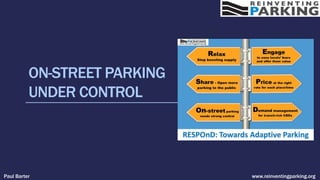
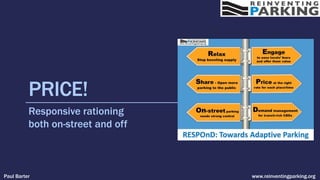
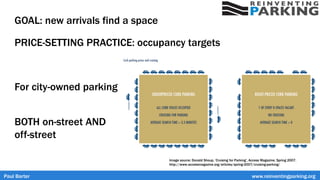
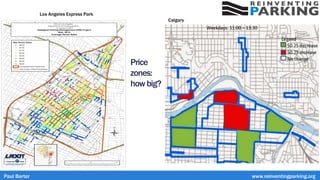
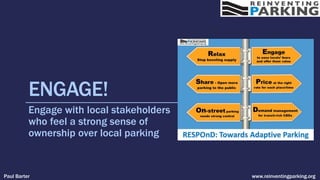
Parking is traditionally planned like restrooms, with each development expected to provide enough parking to meet its own demand. However, parking could also be planned like transit or restaurants, with parking supply determined at an area level by the market. The document advocates an "adaptive parking" approach that expands areas where parking is planned like transit or restaurants through strategies like abolishing minimum parking requirements, improving on-street parking management through measures like occupancy-based pricing, encouraging shared parking through park-once-and-walk districts, and engaging local stakeholders. This could lead to benefits like reduced traffic, more housing affordability, and unleashing underused urban space.


