
PARIS 2012
A Method for Predicting Defects in
System Testing for V-Model
(Paper ID: 37)

Muhammad Dhiauddin bin Mohamed Suffian
Faculty of Computer Science & Information System
mdhiauddin2@live.utm.my
AP Dr. Suhaimi bin Ibrahim
Advanced Informatics School
suhaimiibrahim@utm.my
Presentation Outline
•
•
•
•
•

Introduction
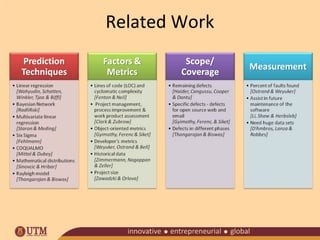
Related Work
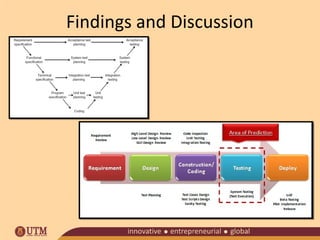
Findings and Discussion
Case Study
Conclusion and Recommendation
Introduction
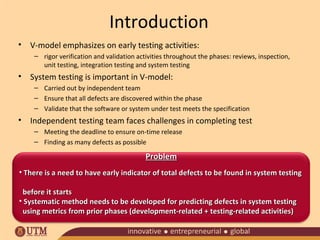
• V-model emphasizes on early testing activities:
– rigor verification and validation activities throughout the phases: reviews, inspection,
unit testing, integration testing and system testing

• System testing is important in V-model:
– Carried out by independent team
– Ensure that all defects are discovered within the phase
– Validate that the software or system under test meets the specification

• Independent testing team faces challenges in completing test
– Meeting the deadline to ensure on-time release
– Finding as many defects as possible

Problem
• There is a need to have early indicator of total defects to be found in system testing
before it starts
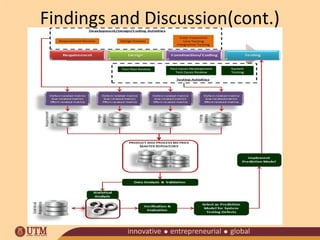
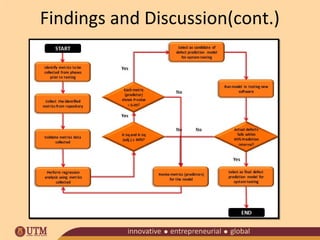
• Systematic method needs to be developed for predicting defects in system testing
using metrics from prior phases (development-related + testing-related activities)
Introduction (cont.)
•

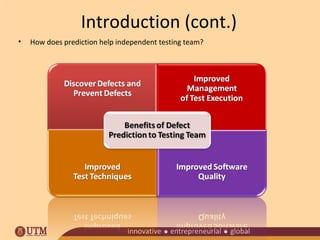
How does prediction help independent testing team?
Related Work
Findings and Discussion
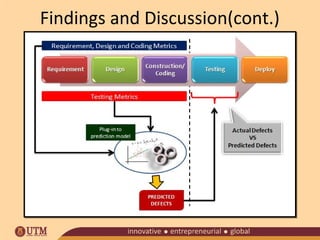
Findings and Discussion(cont.)
Case Study
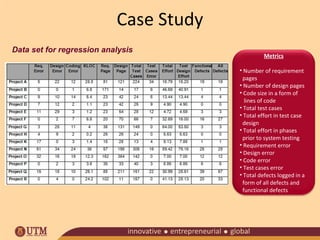
Data set for regression analysis

Metrics
• Number of requirement
pages
• Number of design pages
• Code size in a form of
lines of code
• Total test cases
• Total effort in test case
design
• Total effort in phases
prior to system testing
• Requirement error
• Design error
• Code error
• Test cases error
• Total defects logged in a
form of all defects and
functional defects
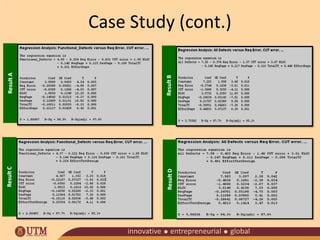
Case Study (cont.)
Case Study (cont.)
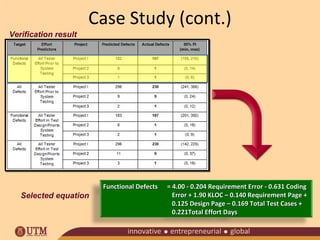
Verification result

Selected equation

Functional Defects

= 4.00 - 0.204 Requirement Error - 0.631 Coding
Error + 1.90 KLOC – 0.140 Requirement Page +
0.125 Design Page – 0.169 Total Test Cases +
0.221Total Effort Days
Conclusion and Recommendation
•

Achievement:
– The proposed method provides systematic way towards predicting defects for
system testing in V-model by using prior phases’ metrics.
– Statistical analysis used serves as the powerful tool to measure how good the
method is in determining the accuracy of the prediction
– Having maximum and minimum range for predicting defects allows
independent testing team to have a control plan on what to do should the
prediction does not fall within the specified range

•

Future works:
– More metrics are taken into consideration to construct the prediction,
particularly product-related metrics.
– Future prediction could also forecast non-functional defects as well as defects
based on severity.
– Having specific prediction for different types of software which makes it more
practical and useful.
THANK YOU

A Method for Predicting Defects in System Testing for V-Model

  • 1.
    PARIS 2012 A Methodfor Predicting Defects in System Testing for V-Model (Paper ID: 37) Muhammad Dhiauddin bin Mohamed Suffian Faculty of Computer Science & Information System mdhiauddin2@live.utm.my AP Dr. Suhaimi bin Ibrahim Advanced Informatics School suhaimiibrahim@utm.my
  • 2.
    Presentation Outline • • • • • Introduction Related Work Findingsand Discussion Case Study Conclusion and Recommendation
  • 3.
    Introduction • V-model emphasizeson early testing activities: – rigor verification and validation activities throughout the phases: reviews, inspection, unit testing, integration testing and system testing • System testing is important in V-model: – Carried out by independent team – Ensure that all defects are discovered within the phase – Validate that the software or system under test meets the specification • Independent testing team faces challenges in completing test – Meeting the deadline to ensure on-time release – Finding as many defects as possible Problem • There is a need to have early indicator of total defects to be found in system testing before it starts • Systematic method needs to be developed for predicting defects in system testing using metrics from prior phases (development-related + testing-related activities)
  • 4.
    Introduction (cont.) • How doesprediction help independent testing team?
  • 5.
  • 6.
  • 7.
  • 8.
  • 9.
  • 10.
    Case Study Data setfor regression analysis Metrics • Number of requirement pages • Number of design pages • Code size in a form of lines of code • Total test cases • Total effort in test case design • Total effort in phases prior to system testing • Requirement error • Design error • Code error • Test cases error • Total defects logged in a form of all defects and functional defects
  • 11.
  • 12.
    Case Study (cont.) Verificationresult Selected equation Functional Defects = 4.00 - 0.204 Requirement Error - 0.631 Coding Error + 1.90 KLOC – 0.140 Requirement Page + 0.125 Design Page – 0.169 Total Test Cases + 0.221Total Effort Days
  • 13.
    Conclusion and Recommendation • Achievement: –The proposed method provides systematic way towards predicting defects for system testing in V-model by using prior phases’ metrics. – Statistical analysis used serves as the powerful tool to measure how good the method is in determining the accuracy of the prediction – Having maximum and minimum range for predicting defects allows independent testing team to have a control plan on what to do should the prediction does not fall within the specified range • Future works: – More metrics are taken into consideration to construct the prediction, particularly product-related metrics. – Future prediction could also forecast non-functional defects as well as defects based on severity. – Having specific prediction for different types of software which makes it more practical and useful.
  • 14.