Welcome, Kindergarten Parents!
Parent Literacy Orientation
Wednesday, September 18, 2013
Classroom Teachers:
Kristie Reinsmoen
Krista Plank
Zehra Hafeez
Nat Ayling
Joanne Chang
ESL Support: Ms. Anissa Eglington
CMC: Ms. Pat Hallinan
Literacy TA: Carol Rosario
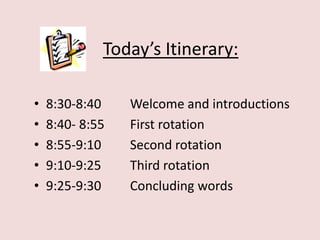
Today’s Itinerary:
• 8:30-8:40 Welcome and introductions
• 8:40- 8:55 First rotation
• 8:55-9:10 Second rotation
• 9:10-9:25 Third rotation
• 9:25-9:30 Concluding words
“We absolutely must not attempt to teach our children
formally before they start school. For parents to teach
their own preschool children is the last straw. Teaching
is the flip side of what works. Teaching before school
kills the fun. Preschool children like their parents to be
parents, not teachers. The roles are quite different, and
it’s precisely the laid-back, hang-loose let’s-have-fun,
relaxed-and-comfortable role of a parent that is so
powerful in helping children first to love reading and
then be able to read themselves.”
Mem Fox, Reading Magic
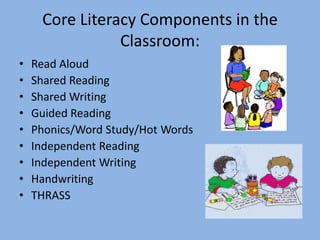
Core Literacy Components in the
Classroom:
• Read Aloud
• Shared Reading
• Shared Writing
• Guided Reading
• Phonics/Word Study/Hot Words
• Independent Reading
• Independent Writing
• Handwriting
• THRASS
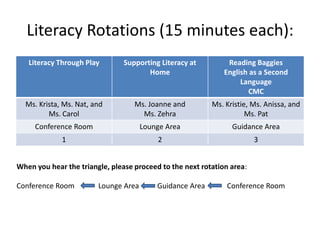
Literacy Rotations (15 minutes each):
Literacy Through Play Supporting Literacy at
Home
Reading Baggies
English as a Second
Language
CMC
Ms. Krista, Ms. Nat, and
Ms. Carol
Ms. Joanne and
Ms. Zehra
Ms. Kristie, Ms. Anissa, and
Ms. Pat
Conference Room Lounge Area Guidance Area
1 2 3
When you hear the triangle, please proceed to the next rotation area:
Conference Room Lounge Area Guidance Area Conference Room
Parent Literacy Orientation:
How to Support Your Child’s Literacy at Home
Presented by Joanne Chang and Zehra Hafeez
September 18, 2013
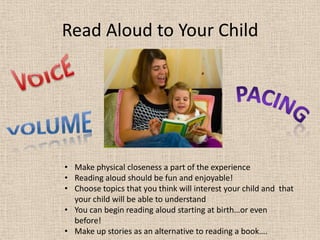
Read Aloud to Your Child
• Make physical closeness a part of the experience
• Reading aloud should be fun and enjoyable!
• Choose topics that you think will interest your child and that
your child will be able to understand
• You can begin reading aloud starting at birth…or even
before!
• Make up stories as an alternative to reading a book….
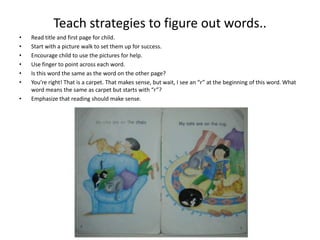
Teach strategies to figure out words..
• Read title and first page for child.
• Start with a picture walk to set them up for success.
• Encourage child to use the pictures for help.
• Use finger to point across each word.
• Is this word the same as the word on the other page?
• You’re right! That is a carpet. That makes sense, but wait, I see an “r” at the beginning of this word. What
word means the same as carpet but starts with “r”?
• Emphasize that reading should make sense.
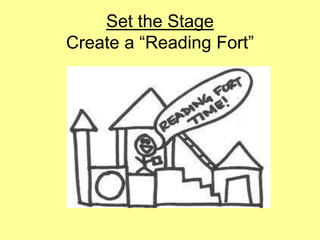
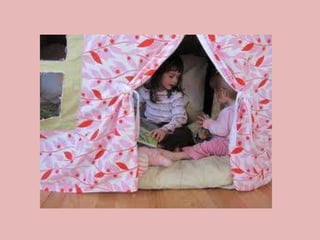
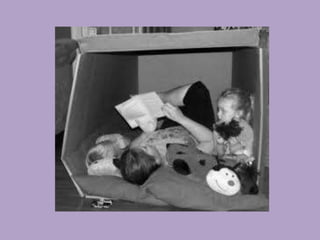
Set the Stage
Create a “Reading Fort”
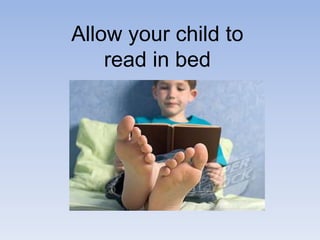
Allow your child to
read in bed
Get your child a book light or
flashlight to read under the covers
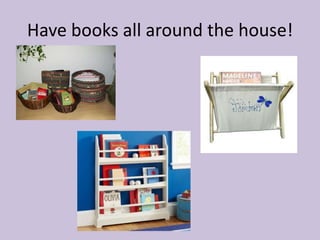
Have books all around the house!
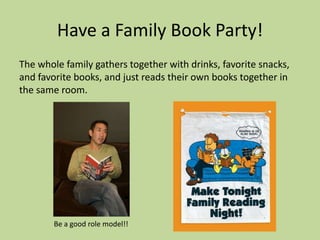
Have a Family Book Party!
The whole family gathers together with drinks, favorite snacks,
and favorite books, and just reads their own books together in
the same room.
Be a good role model!!
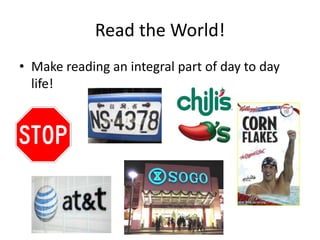
Read the World!
• Make reading an integral part of day to day
life!
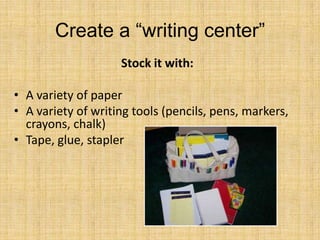
Create a “writing center”
Stock it with:
• A variety of paper
• A variety of writing tools (pencils, pens, markers,
crayons, chalk)
• Tape, glue, stapler
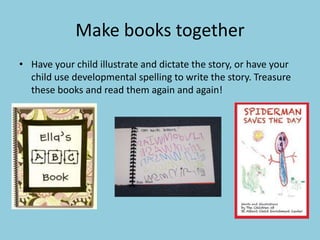
Make books together
• Have your child illustrate and dictate the story, or have your
child use developmental spelling to write the story. Treasure
these books and read them again and again!
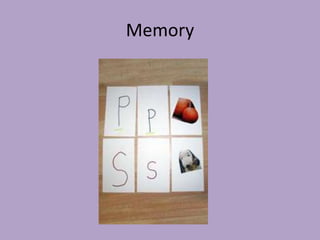
Memory
Phonics Fun
BINGO
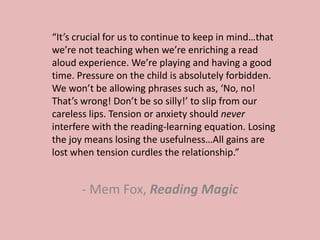
- Mem Fox, Reading Magic
“It’s crucial for us to continue to keep in mind…that
we’re not teaching when we’re enriching a read
aloud experience. We’re playing and having a good
time. Pressure on the child is absolutely forbidden.
We won’t be allowing phrases such as, ‘No, no!
That’s wrong! Don’t be so silly!’ to slip from our
careless lips. Tension or anxiety should never
interfere with the reading-learning equation. Losing
the joy means losing the usefulness…All gains are
lost when tension curdles the relationship.”

Parent literacy orientation 2013 14

  • 1.
    Welcome, Kindergarten Parents! ParentLiteracy Orientation Wednesday, September 18, 2013 Classroom Teachers: Kristie Reinsmoen Krista Plank Zehra Hafeez Nat Ayling Joanne Chang ESL Support: Ms. Anissa Eglington CMC: Ms. Pat Hallinan Literacy TA: Carol Rosario
  • 2.
    Today’s Itinerary: • 8:30-8:40Welcome and introductions • 8:40- 8:55 First rotation • 8:55-9:10 Second rotation • 9:10-9:25 Third rotation • 9:25-9:30 Concluding words
  • 3.
    “We absolutely mustnot attempt to teach our children formally before they start school. For parents to teach their own preschool children is the last straw. Teaching is the flip side of what works. Teaching before school kills the fun. Preschool children like their parents to be parents, not teachers. The roles are quite different, and it’s precisely the laid-back, hang-loose let’s-have-fun, relaxed-and-comfortable role of a parent that is so powerful in helping children first to love reading and then be able to read themselves.” Mem Fox, Reading Magic
  • 4.
    Core Literacy Componentsin the Classroom: • Read Aloud • Shared Reading • Shared Writing • Guided Reading • Phonics/Word Study/Hot Words • Independent Reading • Independent Writing • Handwriting • THRASS
  • 5.
    Literacy Rotations (15minutes each): Literacy Through Play Supporting Literacy at Home Reading Baggies English as a Second Language CMC Ms. Krista, Ms. Nat, and Ms. Carol Ms. Joanne and Ms. Zehra Ms. Kristie, Ms. Anissa, and Ms. Pat Conference Room Lounge Area Guidance Area 1 2 3 When you hear the triangle, please proceed to the next rotation area: Conference Room Lounge Area Guidance Area Conference Room
  • 6.
    Parent Literacy Orientation: Howto Support Your Child’s Literacy at Home Presented by Joanne Chang and Zehra Hafeez September 18, 2013
  • 7.
    Read Aloud toYour Child • Make physical closeness a part of the experience • Reading aloud should be fun and enjoyable! • Choose topics that you think will interest your child and that your child will be able to understand • You can begin reading aloud starting at birth…or even before! • Make up stories as an alternative to reading a book….
  • 8.
    Teach strategies tofigure out words.. • Read title and first page for child. • Start with a picture walk to set them up for success. • Encourage child to use the pictures for help. • Use finger to point across each word. • Is this word the same as the word on the other page? • You’re right! That is a carpet. That makes sense, but wait, I see an “r” at the beginning of this word. What word means the same as carpet but starts with “r”? • Emphasize that reading should make sense.
  • 9.
    Set the Stage Createa “Reading Fort”
  • 12.
    Allow your childto read in bed
  • 13.
    Get your childa book light or flashlight to read under the covers
  • 14.
    Have books allaround the house!
  • 15.
    Have a FamilyBook Party! The whole family gathers together with drinks, favorite snacks, and favorite books, and just reads their own books together in the same room. Be a good role model!!
  • 16.
    Read the World! •Make reading an integral part of day to day life!
  • 17.
    Create a “writingcenter” Stock it with: • A variety of paper • A variety of writing tools (pencils, pens, markers, crayons, chalk) • Tape, glue, stapler
  • 18.
    Make books together •Have your child illustrate and dictate the story, or have your child use developmental spelling to write the story. Treasure these books and read them again and again!
  • 21.
  • 22.
  • 23.
    - Mem Fox,Reading Magic “It’s crucial for us to continue to keep in mind…that we’re not teaching when we’re enriching a read aloud experience. We’re playing and having a good time. Pressure on the child is absolutely forbidden. We won’t be allowing phrases such as, ‘No, no! That’s wrong! Don’t be so silly!’ to slip from our careless lips. Tension or anxiety should never interfere with the reading-learning equation. Losing the joy means losing the usefulness…All gains are lost when tension curdles the relationship.”

Editor's Notes

  • #4 Literacy taught at home should be different from literacy taught at school. It should be fun and relaxed and should feel good for both parent and child. This philosophy can also apply to older children who have started school. Depending on the child, more formal teaching methods can be applied at home as well, but only if it is enjoyable for the child, and only as a supplement to the more informal “teaching” that occurs. We want our children to see that literacy is an integral part of their world and does not only exist in the pages of a workbook.