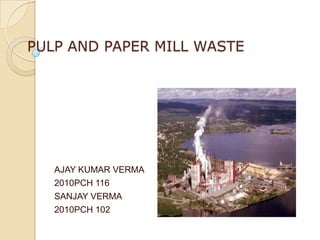
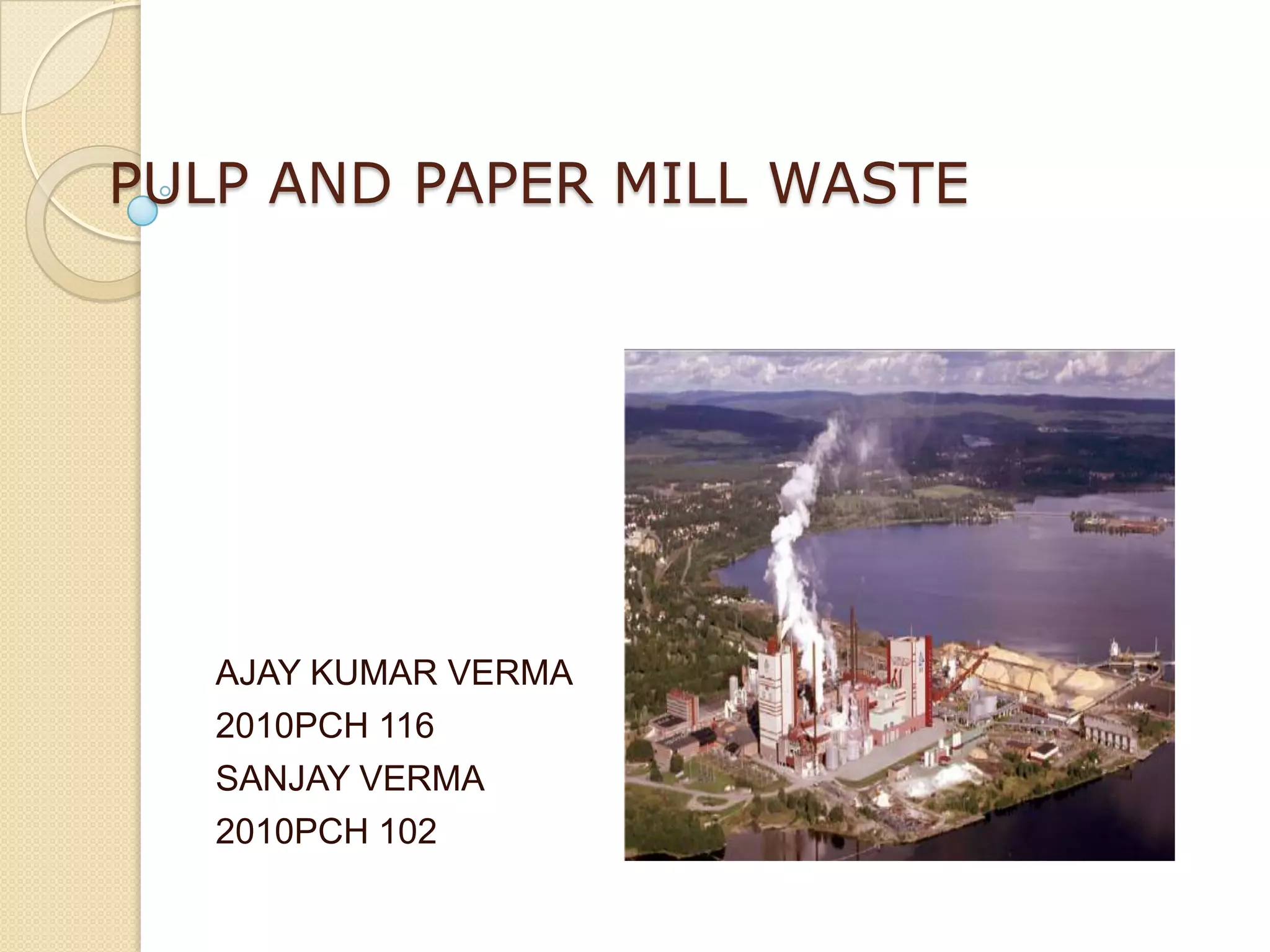

PULP AND PAPER MILL WASTE


   AJAY KUMAR VERMA
   2010PCH 116
   SANJAY VERMA
   2010PCH 102
INTRODUCTION

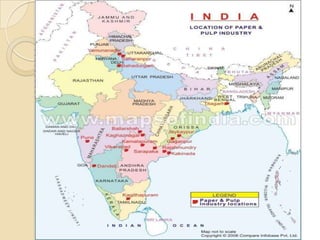
    Paper industry in India is the 15th largest paper industry in the world. It
    provides employment to nearly 1.5 million people and contributes Rs 25
    billion to the government's kitty. The government regards the paper
    industry as one of the 35 high priority industries of the country.

   The annual global paper and paperboard production was approximately
    382.0 million tones in 2006. It is expected to increase to 402.0 million
    tones by 2010 and 490.0 million tones by 2020


    In India pulp and paper Industry is the sixth largest consumer in the
    industrial sector

    Main consumer of natural resources:
    1 -Wood (as raw material)
    2 -Fossil-fuel, electricity (as energy)
    3 -Water
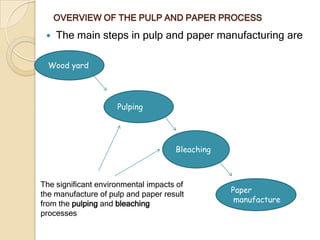
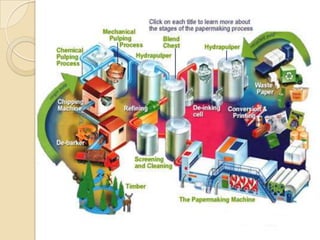
OVERVIEW OF THE PULP AND PAPER PROCESS

    The main steps in pulp and paper manufacturing are

  Wood yard


                     Pulping


                                     Bleaching


The significant environmental impacts of
the manufacture of pulp and paper result         Paper
                                                  manufacture
from the pulping and bleaching
processes
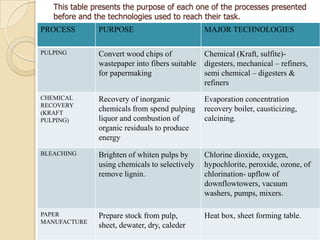
This table presents the purpose of each one of the processes presented
   before and the technologies used to reach their task.
PROCESS        PURPOSE                           MAJOR TECHNOLOGIES

PULPING        Convert wood chips of             Chemical (Kraft, sulfite)-
               wastepaper into fibers suitable   digesters, mechanical – refiners,
               for papermaking                   semi chemical – digesters &
                                                 refiners
CHEMICAL       Recovery of inorganic             Evaporation concentration
RECOVERY
(KRAFT
               chemicals from spend pulping      recovery boiler, causticizing,
PULPING)       liquor and combustion of          calcining.
               organic residuals to produce
               energy
BLEACHING      Brighten of whiten pulps by       Chlorine dioxide, oxygen,
               using chemicals to selectively    hypochlorite, peroxide, ozone, of
               remove lignin.                    chlorination- upflow of
                                                 downflowtowers, vacuum
                                                 washers, pumps, mixers.

PAPER          Prepare stock from pulp,          Heat box, sheet forming table.
MANUFACTURE
               sheet, dewater, dry, caleder
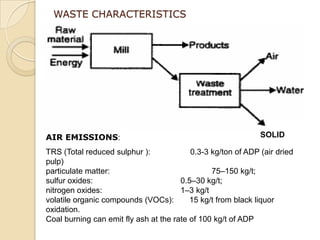
WASTE CHARACTERISTICS


AIR EMISSIONS:                                                SOLID

TRS (Total reduced sulphur ):             0.3-3 kg/ton of ADP (air dried
pulp)
particulate matter:                             75–150 kg/t;
sulfur oxides:                         0.5–30 kg/t;
nitrogen oxides:                       1–3 kg/t
volatile organic compounds (VOCs):        15 kg/t from black liquor
oxidation.
Coal burning can emit fly ash at the rate of 100 kg/t of ADP
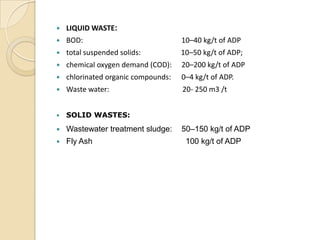
   LIQUID WASTE:
   BOD:                             10–40 kg/t of ADP
   total suspended solids:          10–50 kg/t of ADP;
   chemical oxygen demand (COD):    20–200 kg/t of ADP
   chlorinated organic compounds:   0–4 kg/t of ADP.
   Waste water:                     20- 250 m3 /t


   SOLID WASTES:
   Wastewater treatment sludge:     50–150 kg/t of ADP
   Fly Ash                           100 kg/t of ADP
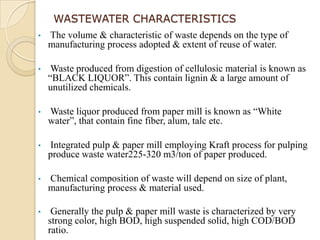
WASTEWATER CHARACTERISTICS
•   The volume & characteristic of waste depends on the type of
    manufacturing process adopted & extent of reuse of water.

•    Waste produced from digestion of cellulosic material is known as
    “BLACK LIQUOR”. This contain lignin & a large amount of
    unutilized chemicals.

•   Waste liquor produced from paper mill is known as “White
    water”, that contain fine fiber, alum, talc etc.

•   Integrated pulp & paper mill employing Kraft process for pulping
    produce waste water225-320 m3/ton of paper produced.

•   Chemical composition of waste will depend on size of plant,
    manufacturing process & material used.

•    Generally the pulp & paper mill waste is characterized by very
    strong color, high BOD, high suspended solid, high COD/BOD
    ratio.
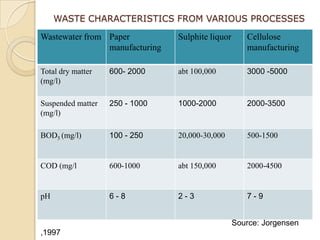
WASTE CHARACTERISTICS FROM VARIOUS PROCESSES

Wastewater from Paper           Sulphite liquor      Cellulose
                manufacturing                        manufacturing

Total dry matter   600- 2000    abt 100,000          3000 -5000
(mg/l)

Suspended matter   250 - 1000   1000-2000            2000-3500
(mg/l)

BOD5 (mg/l)        100 - 250    20,000-30,000        500-1500


COD (mg/l          600-1000     abt 150,000          2000-4500


pH                 6-8          2-3                  7-9


                                                  Source: Jorgensen
,1997
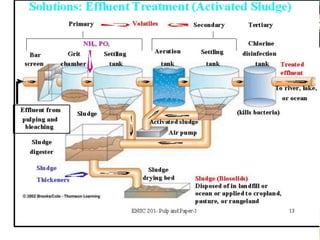
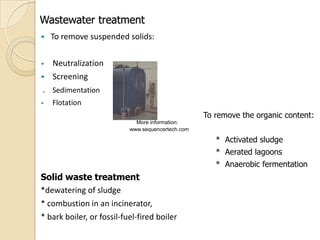
Wastewater treatment
   To remove suspended solids:

•   Neutralization
   Screening
. Sedimentation
•   Flotation
                                                   To remove the organic content:
                             More information:
                           www.sequencertech.com

                                                      * Activated sludge
                                                      * Aerated lagoons
                                                      * Anaerobic fermentation
Solid waste treatment
*dewatering of sludge
* combustion in an incinerator,
* bark boiler, or fossil-fuel-fired boiler
ALTERNATIVE TECHNOLOGY TO SLUDGE DISPOSAL


   Combustion technology
   Fluidized bed
   Circulating fluid bed
   Supercritical water oxidation
   Destructive distillation
   Microbial degradation(biodegradation)
references

   Pratima Bajpai and Pramod K. Bajpai, 1994. Biological colour
    removal of pulp and paper mill wastewaters. Journal of
    Biotechnology, 33 (211-220).
   Thompsona G., Swainb J., Kayb M.and Forster C. F, 2001.
    The treatment of pulp and paper mill effluent: a review.
    Bioresource Technology 77 (275-286).
   http://www.paperindustry.com/paper-making-process.asp
   http://www.paperonweb.com/pmake.htm
   Industrial wastewater managrment- S.E.Jorgensen,


   “Pollution Prevention and Abatement: Pulp and Paper Mills.”
    Draft Technical Background Document. Environment
    Department,Washington, D.C.
Thank you…..

Pulp and paper mill waste

  • 1.
    PULP AND PAPERMILL WASTE AJAY KUMAR VERMA 2010PCH 116 SANJAY VERMA 2010PCH 102
  • 2.
    INTRODUCTION  Paper industry in India is the 15th largest paper industry in the world. It provides employment to nearly 1.5 million people and contributes Rs 25 billion to the government's kitty. The government regards the paper industry as one of the 35 high priority industries of the country.  The annual global paper and paperboard production was approximately 382.0 million tones in 2006. It is expected to increase to 402.0 million tones by 2010 and 490.0 million tones by 2020 In India pulp and paper Industry is the sixth largest consumer in the industrial sector Main consumer of natural resources: 1 -Wood (as raw material) 2 -Fossil-fuel, electricity (as energy) 3 -Water
  • 4.
    OVERVIEW OF THEPULP AND PAPER PROCESS  The main steps in pulp and paper manufacturing are Wood yard Pulping Bleaching The significant environmental impacts of the manufacture of pulp and paper result Paper manufacture from the pulping and bleaching processes
  • 5.
    This table presentsthe purpose of each one of the processes presented before and the technologies used to reach their task. PROCESS PURPOSE MAJOR TECHNOLOGIES PULPING Convert wood chips of Chemical (Kraft, sulfite)- wastepaper into fibers suitable digesters, mechanical – refiners, for papermaking semi chemical – digesters & refiners CHEMICAL Recovery of inorganic Evaporation concentration RECOVERY (KRAFT chemicals from spend pulping recovery boiler, causticizing, PULPING) liquor and combustion of calcining. organic residuals to produce energy BLEACHING Brighten of whiten pulps by Chlorine dioxide, oxygen, using chemicals to selectively hypochlorite, peroxide, ozone, of remove lignin. chlorination- upflow of downflowtowers, vacuum washers, pumps, mixers. PAPER Prepare stock from pulp, Heat box, sheet forming table. MANUFACTURE sheet, dewater, dry, caleder
  • 7.
    WASTE CHARACTERISTICS AIR EMISSIONS: SOLID TRS (Total reduced sulphur ): 0.3-3 kg/ton of ADP (air dried pulp) particulate matter: 75–150 kg/t; sulfur oxides: 0.5–30 kg/t; nitrogen oxides: 1–3 kg/t volatile organic compounds (VOCs): 15 kg/t from black liquor oxidation. Coal burning can emit fly ash at the rate of 100 kg/t of ADP
  • 8.
    LIQUID WASTE:  BOD: 10–40 kg/t of ADP  total suspended solids: 10–50 kg/t of ADP;  chemical oxygen demand (COD): 20–200 kg/t of ADP  chlorinated organic compounds: 0–4 kg/t of ADP.  Waste water: 20- 250 m3 /t  SOLID WASTES:  Wastewater treatment sludge: 50–150 kg/t of ADP  Fly Ash 100 kg/t of ADP
  • 9.
    WASTEWATER CHARACTERISTICS • The volume & characteristic of waste depends on the type of manufacturing process adopted & extent of reuse of water. • Waste produced from digestion of cellulosic material is known as “BLACK LIQUOR”. This contain lignin & a large amount of unutilized chemicals. • Waste liquor produced from paper mill is known as “White water”, that contain fine fiber, alum, talc etc. • Integrated pulp & paper mill employing Kraft process for pulping produce waste water225-320 m3/ton of paper produced. • Chemical composition of waste will depend on size of plant, manufacturing process & material used. • Generally the pulp & paper mill waste is characterized by very strong color, high BOD, high suspended solid, high COD/BOD ratio.
  • 10.
    WASTE CHARACTERISTICS FROMVARIOUS PROCESSES Wastewater from Paper Sulphite liquor Cellulose manufacturing manufacturing Total dry matter 600- 2000 abt 100,000 3000 -5000 (mg/l) Suspended matter 250 - 1000 1000-2000 2000-3500 (mg/l) BOD5 (mg/l) 100 - 250 20,000-30,000 500-1500 COD (mg/l 600-1000 abt 150,000 2000-4500 pH 6-8 2-3 7-9 Source: Jorgensen ,1997
  • 12.
    Wastewater treatment  To remove suspended solids: • Neutralization  Screening . Sedimentation • Flotation To remove the organic content: More information: www.sequencertech.com * Activated sludge * Aerated lagoons * Anaerobic fermentation Solid waste treatment *dewatering of sludge * combustion in an incinerator, * bark boiler, or fossil-fuel-fired boiler
  • 13.
    ALTERNATIVE TECHNOLOGY TOSLUDGE DISPOSAL  Combustion technology  Fluidized bed  Circulating fluid bed  Supercritical water oxidation  Destructive distillation  Microbial degradation(biodegradation)
  • 14.
    references  Pratima Bajpai and Pramod K. Bajpai, 1994. Biological colour removal of pulp and paper mill wastewaters. Journal of Biotechnology, 33 (211-220).  Thompsona G., Swainb J., Kayb M.and Forster C. F, 2001. The treatment of pulp and paper mill effluent: a review. Bioresource Technology 77 (275-286).  http://www.paperindustry.com/paper-making-process.asp  http://www.paperonweb.com/pmake.htm  Industrial wastewater managrment- S.E.Jorgensen,  “Pollution Prevention and Abatement: Pulp and Paper Mills.” Draft Technical Background Document. Environment Department,Washington, D.C.
  • 15.