PAKISTANI ENGLISH VS.
BRITISH ENGLISH
BY MANZOOR PANHWER
Assigned by
Prof. Farida Nisar
IELL-Univeristy of Sindh, Jamshoro
SECTIONS OF PRESENTATION
ļ‚¢Background
ļ‚¢English in Pakistan
ļ‚¢Phonological Differences
ļ‚¢Semantic Differences
ļ‚¢Lexical Features
BACKGROUND
ļ‚¢ The term World Englishes emerges localization or
indigenization of English language in the world.
(Sanaullah, 2016)
ļ‚¢ The study of World Englishes shows the
identification of varieties of English used in different
sociolinguistic contexts in the world and analyzing
the function and influence of other languages on
English globally.
ļ‚¢ Since 1978 issue of World Englishes emerged and
to deal with it a conference was held by TESOL in
1998 for study of World Englishes. (David Crystal,
2007)
ENGLISH IN PAKISTAN
ļ‚¢ In subcontinet English was introduced by British
merchant in 1600 A.D.
ļ‚¢ It was diffused in three phases: the missionary
phase (1614 – 1765); the phase of local demand
(1765 – 1835); and governmental policy (Rehman,
2004, 2002).
ļ‚¢ Rahman (1990) argues that PE is an interference
variety of English created by the use of the features
of Urdu, Punjabi, Pashto, Sindhi and other
Pakistani languages in English.
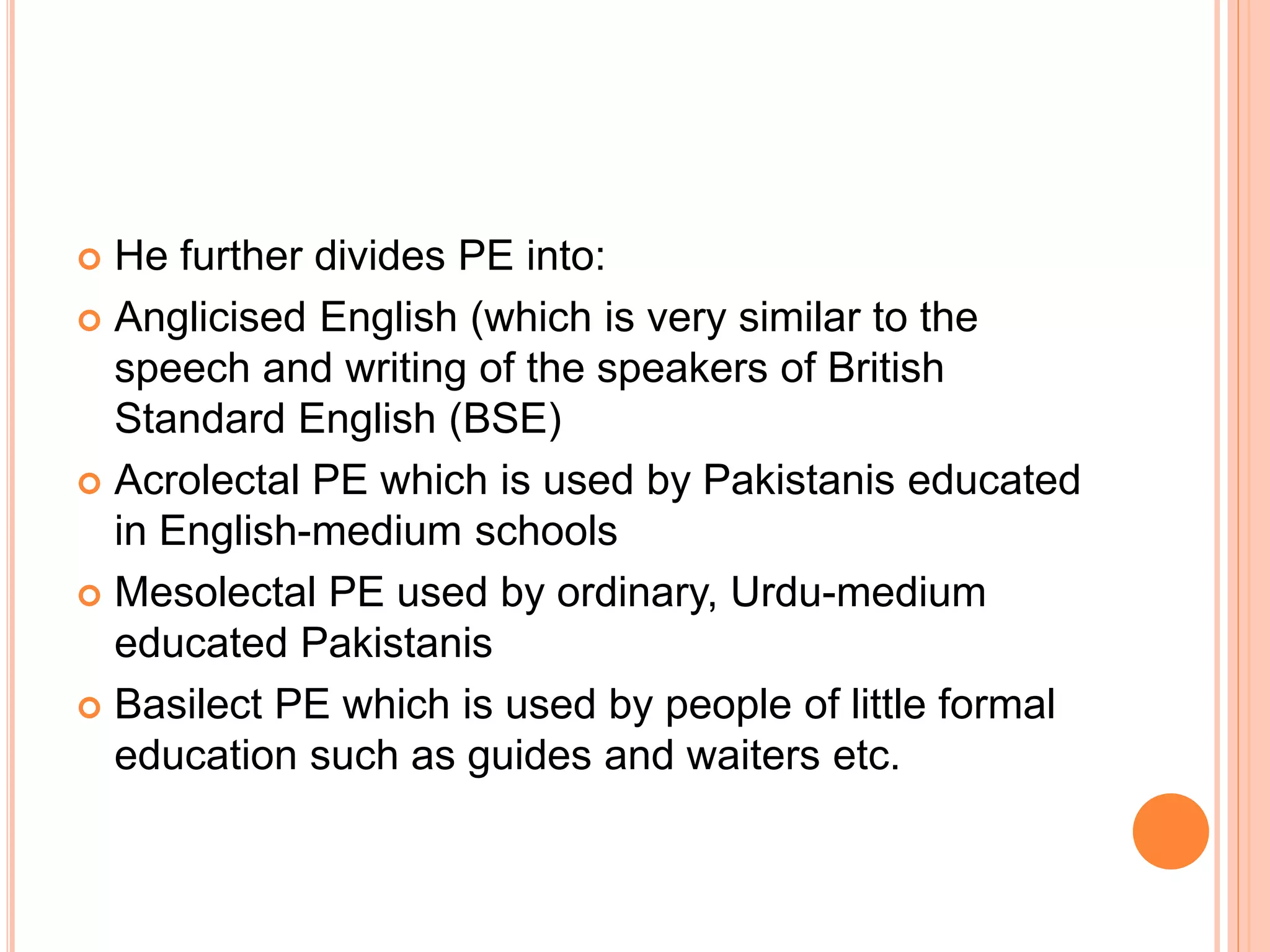
ļ‚¢ He further divides PE into:
ļ‚¢ Anglicised English (which is very similar to the
speech and writing of the speakers of British
Standard English (BSE)
ļ‚¢ Acrolectal PE which is used by Pakistanis educated
in English-medium schools
ļ‚¢ Mesolectal PE used by ordinary, Urdu-medium
educated Pakistanis
ļ‚¢ Basilect PE which is used by people of little formal
education such as guides and waiters etc.
PHONOLOGICAL DIFFERENCES
(ANSARI, 2016)
BE PE
ā€œHeartā€ /ˈhɑːt/ /hɜ:rt/
ā€œWhenā€: /wen/ /ven/
ā€œSchoolā€: /skh uːl/ /iskh uːl/
ā€œPizzaā€: /ˈpiːtsə / /pi:za:/
ā€œMatchesā€: /ˈmƦtʃɪz/ /ma:tʃi:s/
ā€œFingerā€: /ˈfɪŋɔə/ /fingər/
ā€œWonā€: /wʌn/ /wɔːn/
ā€œHourā€: /ˈaŹŠÉ™/ /haŹŠÉ™r/
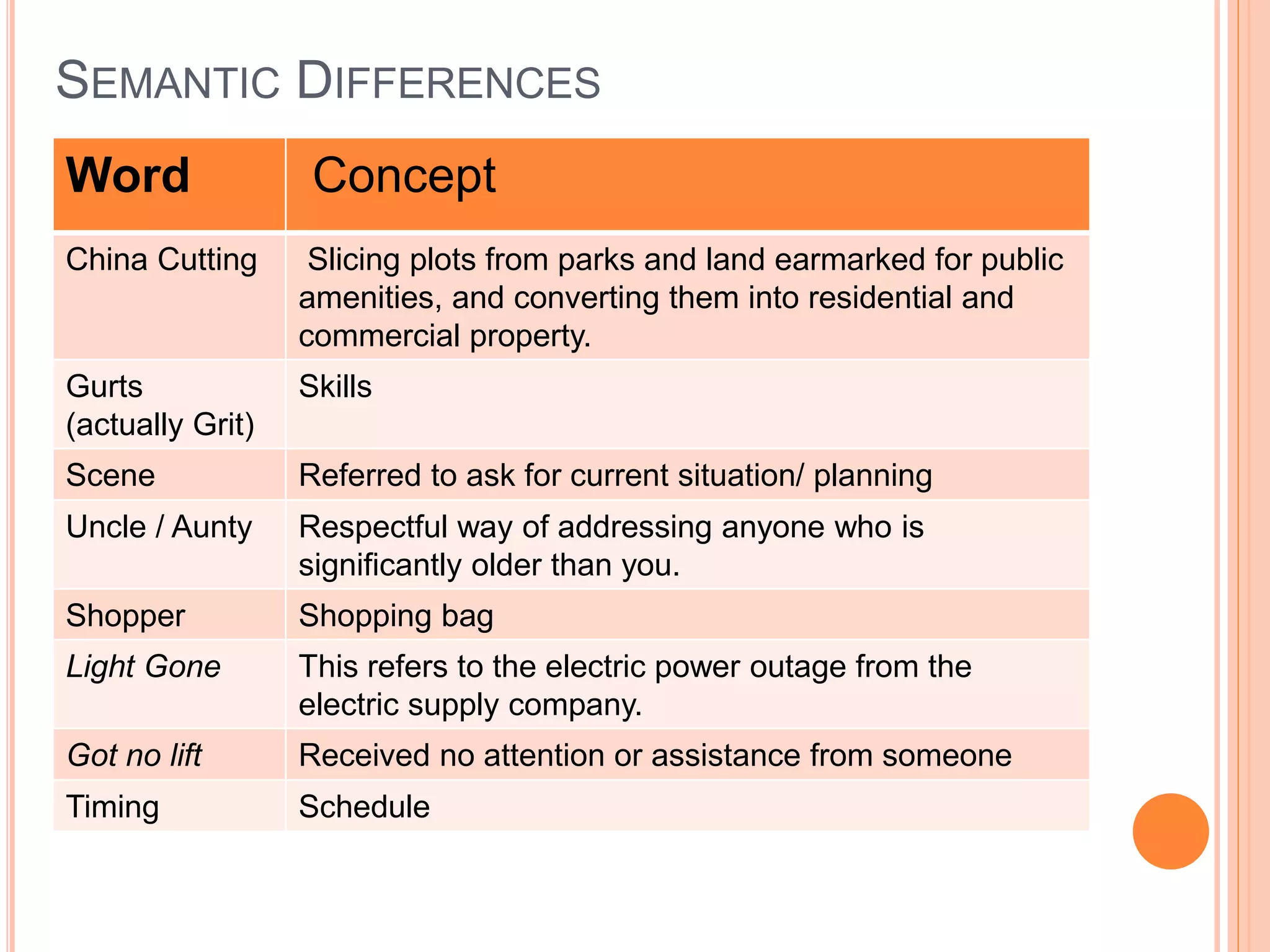
SEMANTIC DIFFERENCES
Word Concept
China Cutting Slicing plots from parks and land earmarked for public
amenities, and converting them into residential and
commercial property.
Gurts
(actually Grit)
Skills
Scene Referred to ask for current situation/ planning
Uncle / Aunty Respectful way of addressing anyone who is
significantly older than you.
Shopper Shopping bag
Light Gone This refers to the electric power outage from the
electric supply company.
Got no lift Received no attention or assistance from someone
Timing Schedule
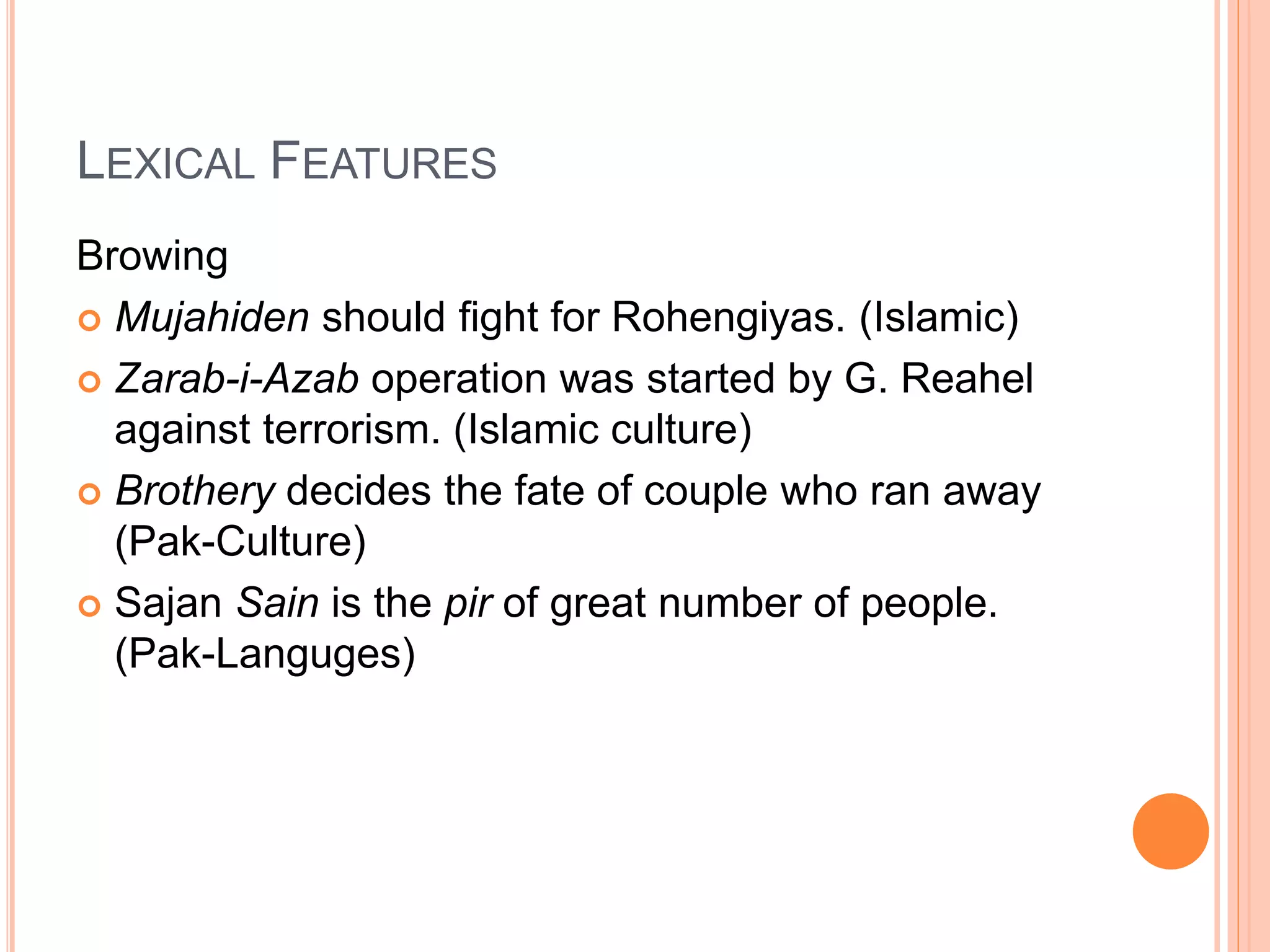
LEXICAL FEATURES
Browing
ļ‚¢ Mujahiden should fight for Rohengiyas. (Islamic)
ļ‚¢ Zarab-i-Azab operation was started by G. Reahel
against terrorism. (Islamic culture)
ļ‚¢ Brothery decides the fate of couple who ran away
(Pak-Culture)
ļ‚¢ Sajan Sain is the pir of great number of people.
(Pak-Languges)
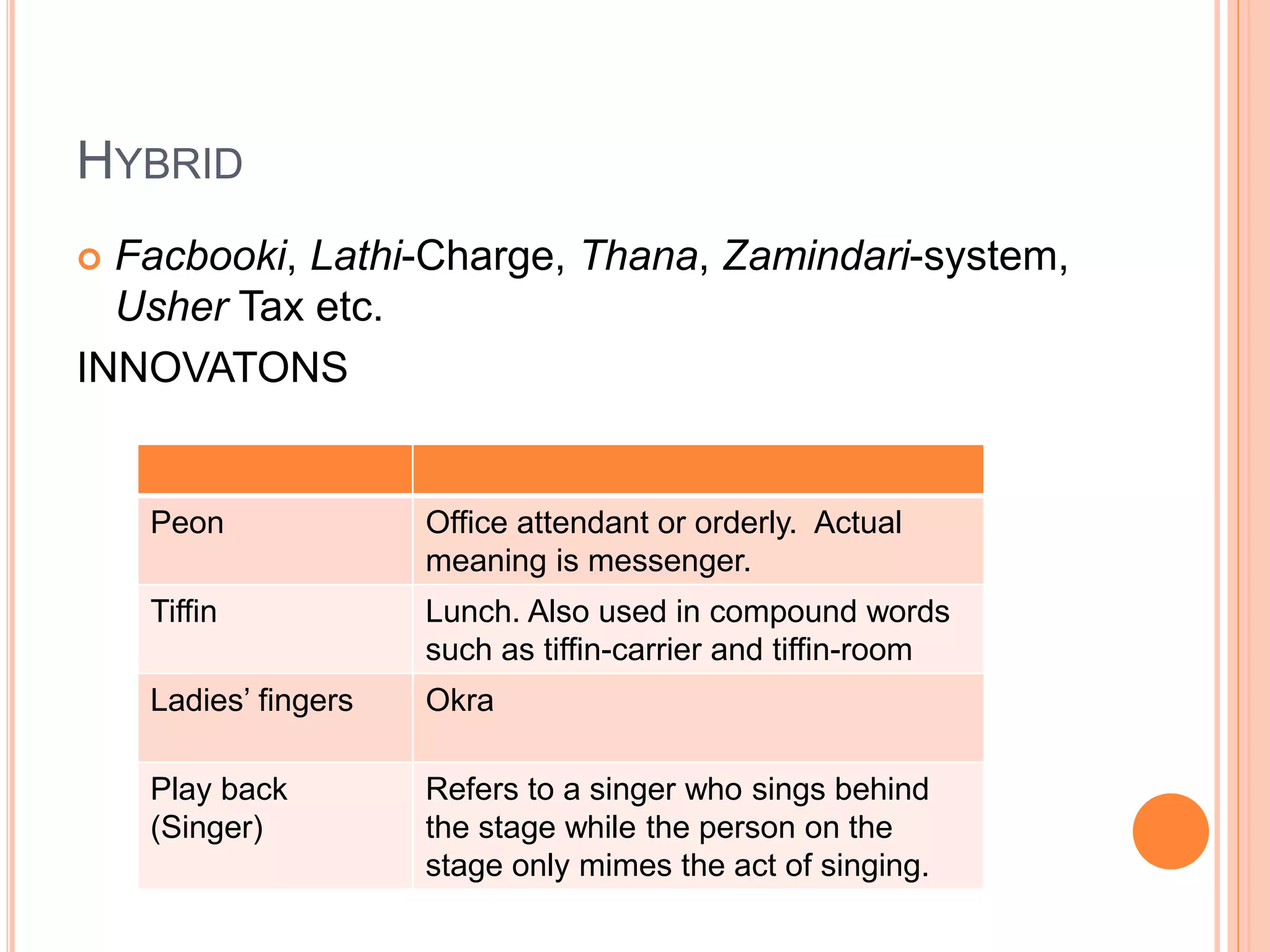
HYBRID
ļ‚¢ Facbooki, Lathi-Charge, Thana, Zamindari-system,
Usher Tax etc.
INNOVATONS
Peon Office attendant or orderly. Actual
meaning is messenger.
Tiffin Lunch. Also used in compound words
such as tiffin-carrier and tiffin-room
Ladies’ fingers Okra
Play back
(Singer)
Refers to a singer who sings behind
the stage while the person on the
stage only mimes the act of singing.
THANK YOU!

Pakistani English Vs. British English

  • 1.
    PAKISTANI ENGLISH VS. BRITISHENGLISH BY MANZOOR PANHWER Assigned by Prof. Farida Nisar IELL-Univeristy of Sindh, Jamshoro
  • 2.
    SECTIONS OF PRESENTATION ļ‚¢Background ļ‚¢Englishin Pakistan ļ‚¢Phonological Differences ļ‚¢Semantic Differences ļ‚¢Lexical Features
  • 3.
    BACKGROUND ļ‚¢ The termWorld Englishes emerges localization or indigenization of English language in the world. (Sanaullah, 2016) ļ‚¢ The study of World Englishes shows the identification of varieties of English used in different sociolinguistic contexts in the world and analyzing the function and influence of other languages on English globally. ļ‚¢ Since 1978 issue of World Englishes emerged and to deal with it a conference was held by TESOL in 1998 for study of World Englishes. (David Crystal, 2007)
  • 4.
    ENGLISH IN PAKISTAN ļ‚¢In subcontinet English was introduced by British merchant in 1600 A.D. ļ‚¢ It was diffused in three phases: the missionary phase (1614 – 1765); the phase of local demand (1765 – 1835); and governmental policy (Rehman, 2004, 2002). ļ‚¢ Rahman (1990) argues that PE is an interference variety of English created by the use of the features of Urdu, Punjabi, Pashto, Sindhi and other Pakistani languages in English.
  • 5.
    ļ‚¢ He furtherdivides PE into: ļ‚¢ Anglicised English (which is very similar to the speech and writing of the speakers of British Standard English (BSE) ļ‚¢ Acrolectal PE which is used by Pakistanis educated in English-medium schools ļ‚¢ Mesolectal PE used by ordinary, Urdu-medium educated Pakistanis ļ‚¢ Basilect PE which is used by people of little formal education such as guides and waiters etc.
  • 6.
    PHONOLOGICAL DIFFERENCES (ANSARI, 2016) BEPE ā€œHeartā€ /ˈhɑːt/ /hɜ:rt/ ā€œWhenā€: /wen/ /ven/ ā€œSchoolā€: /skh uːl/ /iskh uːl/ ā€œPizzaā€: /ˈpiːtsə / /pi:za:/ ā€œMatchesā€: /ˈmƦtʃɪz/ /ma:tʃi:s/ ā€œFingerā€: /ˈfɪŋɔə/ /fingər/ ā€œWonā€: /wʌn/ /wɔːn/ ā€œHourā€: /ˈaŹŠÉ™/ /haŹŠÉ™r/
  • 7.
    SEMANTIC DIFFERENCES Word Concept ChinaCutting Slicing plots from parks and land earmarked for public amenities, and converting them into residential and commercial property. Gurts (actually Grit) Skills Scene Referred to ask for current situation/ planning Uncle / Aunty Respectful way of addressing anyone who is significantly older than you. Shopper Shopping bag Light Gone This refers to the electric power outage from the electric supply company. Got no lift Received no attention or assistance from someone Timing Schedule
  • 8.
    LEXICAL FEATURES Browing ļ‚¢ Mujahidenshould fight for Rohengiyas. (Islamic) ļ‚¢ Zarab-i-Azab operation was started by G. Reahel against terrorism. (Islamic culture) ļ‚¢ Brothery decides the fate of couple who ran away (Pak-Culture) ļ‚¢ Sajan Sain is the pir of great number of people. (Pak-Languges)
  • 9.
    HYBRID ļ‚¢ Facbooki, Lathi-Charge,Thana, Zamindari-system, Usher Tax etc. INNOVATONS Peon Office attendant or orderly. Actual meaning is messenger. Tiffin Lunch. Also used in compound words such as tiffin-carrier and tiffin-room Ladies’ fingers Okra Play back (Singer) Refers to a singer who sings behind the stage while the person on the stage only mimes the act of singing.
  • 10.