MATERIAL TESTING AND EVALUTION
TOPIC
PAINT
PREPARED
BY
ER.SANJEEV SINGH
SNJV43@GMAIL.COM
PART-VII
Content
 Introduction of paints
 Types of paint and uses
Paints
 Paints are mixture of pigments and binders generally
available in liquid state.
 Paints form a solid film when applied on a surface. This film
protects the surface from many dangers like corrosion,
weathering, chemical attacks etc. Timber or metal structures
can extend their life by coating them with paints.
 Not only protection paints also provides aesthetic
appearances to the surfaces. So, paints play a major role in
construction works and projects.
Different Types of Paints
 Aluminum paints
 Asbestos paints
 Anti-corrosive paints
 Bituminous paints
 Cement based paints
 Synthetic rubber paints
 Silicate paints
 Graphite paints
 Plastic paints
 Casein paints
 Cellulose Paints
 Enamel Paints
 Colloidal Paints
Aluminum Paints
 Aluminum paints are made by mixing finely ground
aluminum with spirit or oil varnishes. Spirit varnish makes
the drying period shorter and oil varnish imparts slow drying
facility. So, varnish cane be used according to the
requirement.
 This type of paint is used for painting wood works, metallic
surface etc. The layer of paint is hardened by evaporation of
spirit or oil.
 Aluminum paint has many advantages such as, it is
waterproof, resistance against electricity, corrosion,
weathering, it can be visible in dark and provides good
appearance.
Asbestos Paints
 Asbestos paint is a special purpose paint which is made of
fibrous asbestos. It is used for covering leakage in metal roofs,
for patch works, for protecting surfaces from acid gases and
steam.
 Rusting of pouts, flashings, gutters etc. can also be prevented
using asbestos paint coating.
Anti-Corrosive Paints
 Anti-corrosive paints are used to resist corrosion. So, this type
of paint is widely used for metal surfaces like pipe, external
structures which may allowed to corrosive nature etc.
 Linseed oil is generally used as vehicle and along with it a
strong drier is used to make anti corrosive paint. It is very
cheap and lasts longer.
Bituminous Paints
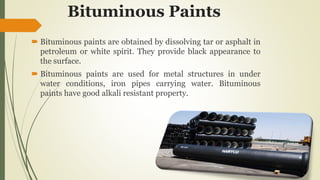
 Bituminous paints are obtained by dissolving tar or asphalt in
petroleum or white spirit. They provide black appearance to
the surface.
 Bituminous paints are used for metal structures in under
water conditions, iron pipes carrying water. Bituminous
paints have good alkali resistant property.
Cement Based Paints
 Cement based paints contains cement as the base material.
These paints contain cement, accelerator, pigment and other
additives. They are available in powder form. By mixing water
to this powder and stirred to the required consistency the
paint is obtained.
 Cement based paint is water proof and can be applied in
internal or external surfaces.
Synthetic Rubber Paints
 Synthetic rubber paints are made by dissolving synthetic
resins in the suitable solvents. By adding suitable pigments to
this mixer, the color can vary.
 This type of paint is widely used on cement concrete surfaces
like concrete walls etc.
 This paint is less affected by rain, sunlight etc. It has good
resistant properties against acids, alkalis and moisture
conditions. It dries very quickly and maintains uniform color
throughout the surface.
Silicate Paints
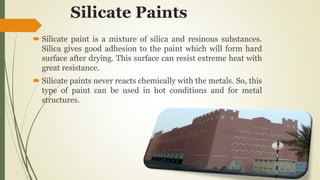
 Silicate paint is a mixture of silica and resinous substances.
Silica gives good adhesion to the paint which will form hard
surface after drying. This surface can resist extreme heat with
great resistance.
 Silicate paints never reacts chemically with the metals. So, this
type of paint can be used in hot conditions and for metal
structures.
Graphite Paints
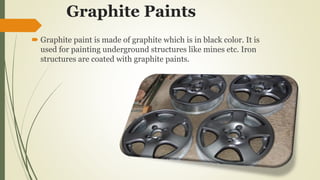
 Graphite paint is made of graphite which is in black color. It is
used for painting underground structures like mines etc. Iron
structures are coated with graphite paints.
Plastic Paints
 Plastic paints contain plastic as the base. Plastic paints dry
very quickly, provides better appearance and have high
covering power. They are used for coating walls, slabs, decks
etc.
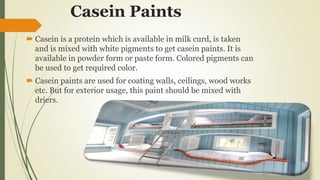
Casein Paints
 Casein is a protein which is available in milk curd, is taken
and is mixed with white pigments to get casein paints. It is
available in powder form or paste form. Colored pigments can
be used to get required color.
 Casein paints are used for coating walls, ceilings, wood works
etc. But for exterior usage, this paint should be mixed with
driers.
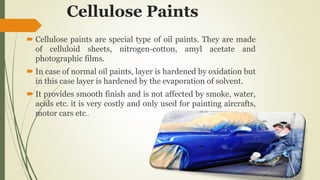
Cellulose Paints
 Cellulose paints are special type of oil paints. They are made
of celluloid sheets, nitrogen-cotton, amyl acetate and
photographic films.
 In case of normal oil paints, layer is hardened by oxidation but
in this case layer is hardened by the evaporation of solvent.
 It provides smooth finish and is not affected by smoke, water,
acids etc. it is very costly and only used for painting aircrafts,
motor cars etc..
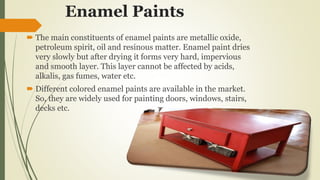
Enamel Paints
 The main constituents of enamel paints are metallic oxide,
petroleum spirit, oil and resinous matter. Enamel paint dries
very slowly but after drying it forms very hard, impervious
and smooth layer. This layer cannot be affected by acids,
alkalis, gas fumes, water etc.
 Different colored enamel paints are available in the market.
So, they are widely used for painting doors, windows, stairs,
decks etc.
Colloidal Paints
 Colloidal paints do not contain any type of inert materials. It
takes long period to settle due to its colloidal properties.
When it is applied on the surface, it settles and penetrates
through the body of surface.
PAINT

PAINT

  • 1.
    MATERIAL TESTING ANDEVALUTION TOPIC PAINT PREPARED BY ER.SANJEEV SINGH SNJV43@GMAIL.COM PART-VII
  • 2.
    Content  Introduction ofpaints  Types of paint and uses
  • 3.
    Paints  Paints aremixture of pigments and binders generally available in liquid state.  Paints form a solid film when applied on a surface. This film protects the surface from many dangers like corrosion, weathering, chemical attacks etc. Timber or metal structures can extend their life by coating them with paints.  Not only protection paints also provides aesthetic appearances to the surfaces. So, paints play a major role in construction works and projects.
  • 4.
    Different Types ofPaints  Aluminum paints  Asbestos paints  Anti-corrosive paints  Bituminous paints  Cement based paints  Synthetic rubber paints  Silicate paints  Graphite paints  Plastic paints  Casein paints  Cellulose Paints  Enamel Paints  Colloidal Paints
  • 5.
    Aluminum Paints  Aluminumpaints are made by mixing finely ground aluminum with spirit or oil varnishes. Spirit varnish makes the drying period shorter and oil varnish imparts slow drying facility. So, varnish cane be used according to the requirement.  This type of paint is used for painting wood works, metallic surface etc. The layer of paint is hardened by evaporation of spirit or oil.  Aluminum paint has many advantages such as, it is waterproof, resistance against electricity, corrosion, weathering, it can be visible in dark and provides good appearance.
  • 6.
    Asbestos Paints  Asbestospaint is a special purpose paint which is made of fibrous asbestos. It is used for covering leakage in metal roofs, for patch works, for protecting surfaces from acid gases and steam.  Rusting of pouts, flashings, gutters etc. can also be prevented using asbestos paint coating.
  • 7.
    Anti-Corrosive Paints  Anti-corrosivepaints are used to resist corrosion. So, this type of paint is widely used for metal surfaces like pipe, external structures which may allowed to corrosive nature etc.  Linseed oil is generally used as vehicle and along with it a strong drier is used to make anti corrosive paint. It is very cheap and lasts longer.
  • 8.
    Bituminous Paints  Bituminouspaints are obtained by dissolving tar or asphalt in petroleum or white spirit. They provide black appearance to the surface.  Bituminous paints are used for metal structures in under water conditions, iron pipes carrying water. Bituminous paints have good alkali resistant property.
  • 9.
    Cement Based Paints Cement based paints contains cement as the base material. These paints contain cement, accelerator, pigment and other additives. They are available in powder form. By mixing water to this powder and stirred to the required consistency the paint is obtained.  Cement based paint is water proof and can be applied in internal or external surfaces.
  • 10.
    Synthetic Rubber Paints Synthetic rubber paints are made by dissolving synthetic resins in the suitable solvents. By adding suitable pigments to this mixer, the color can vary.  This type of paint is widely used on cement concrete surfaces like concrete walls etc.  This paint is less affected by rain, sunlight etc. It has good resistant properties against acids, alkalis and moisture conditions. It dries very quickly and maintains uniform color throughout the surface.
  • 11.
    Silicate Paints  Silicatepaint is a mixture of silica and resinous substances. Silica gives good adhesion to the paint which will form hard surface after drying. This surface can resist extreme heat with great resistance.  Silicate paints never reacts chemically with the metals. So, this type of paint can be used in hot conditions and for metal structures.
  • 12.
    Graphite Paints  Graphitepaint is made of graphite which is in black color. It is used for painting underground structures like mines etc. Iron structures are coated with graphite paints.
  • 13.
    Plastic Paints  Plasticpaints contain plastic as the base. Plastic paints dry very quickly, provides better appearance and have high covering power. They are used for coating walls, slabs, decks etc.
  • 14.
    Casein Paints  Caseinis a protein which is available in milk curd, is taken and is mixed with white pigments to get casein paints. It is available in powder form or paste form. Colored pigments can be used to get required color.  Casein paints are used for coating walls, ceilings, wood works etc. But for exterior usage, this paint should be mixed with driers.
  • 15.
    Cellulose Paints  Cellulosepaints are special type of oil paints. They are made of celluloid sheets, nitrogen-cotton, amyl acetate and photographic films.  In case of normal oil paints, layer is hardened by oxidation but in this case layer is hardened by the evaporation of solvent.  It provides smooth finish and is not affected by smoke, water, acids etc. it is very costly and only used for painting aircrafts, motor cars etc..
  • 16.
    Enamel Paints  Themain constituents of enamel paints are metallic oxide, petroleum spirit, oil and resinous matter. Enamel paint dries very slowly but after drying it forms very hard, impervious and smooth layer. This layer cannot be affected by acids, alkalis, gas fumes, water etc.  Different colored enamel paints are available in the market. So, they are widely used for painting doors, windows, stairs, decks etc.
  • 17.
    Colloidal Paints  Colloidalpaints do not contain any type of inert materials. It takes long period to settle due to its colloidal properties. When it is applied on the surface, it settles and penetrates through the body of surface.