Session-2017-18
FPT
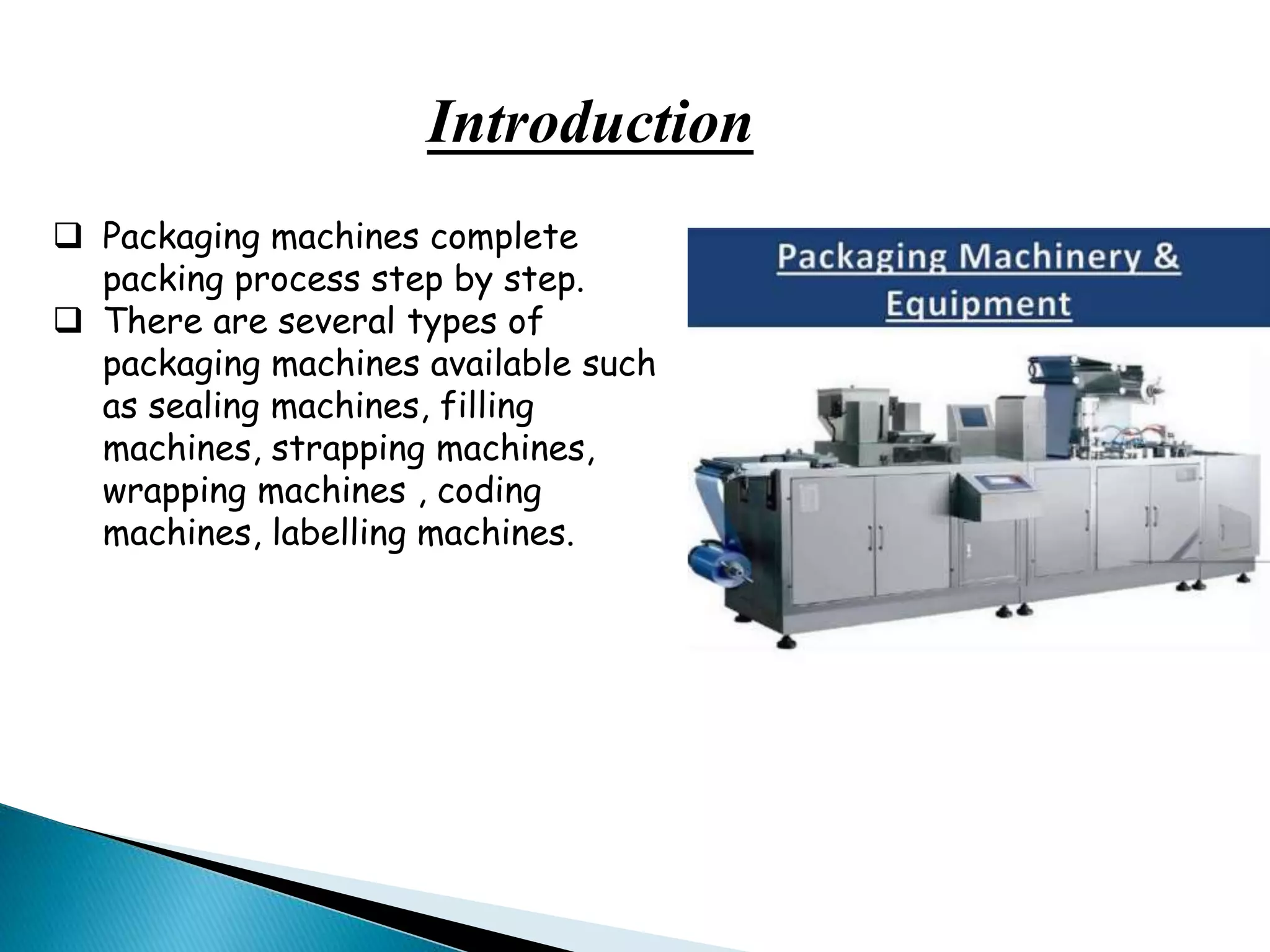
 Packaging machines complete
packing process step by step.
 There are several types of
packaging machines available such
as sealing machines, filling
machines, strapping machines,
wrapping machines , coding
machines, labelling machines.
Introduction
Packaging Process
Filling Section
Sealing Section
Labelling
End of the Section
Filling machines used to fill bottles or a pouch depending on the
product.
General types of filling machines –
a. Agitator Filling Machines
b. Flow filling machines
c. Tablet fillers.
Filling Section and Equipments
a. Agitator Filling Machines
Designed to fill dry mixes ,
such as milk powder, sugar,
flour etc.
Fillers have a hopper
shaped like a cone that
holds the mix and puts it in
a pouch using an auger
screw that is controlled by
the agitator.
Designed for liquids. Oils
and thin food products.
These fillers are designed
when they fill a bottle or
tub that enters the
machine, the ejects the
open bottle back onto
another conveyor for
sealing.
b. Flow Filling Machines
Designed for products that is
counted by pieces instead of
weight.
These are designed for small
bottles, but the hopper of the
fillers is setup to permit
scan counting of tablets.
c. Tablet Fillers
 Machines used to securely close and/or fasten the product usually after
the filling section.
 Some types of sealing equipments-
a. Food packaging machines.
b. Vacuum packaging machines.
c. Blister packaging machines.
d. Skin Pack packaging machines.
Sealing Section and Equipments
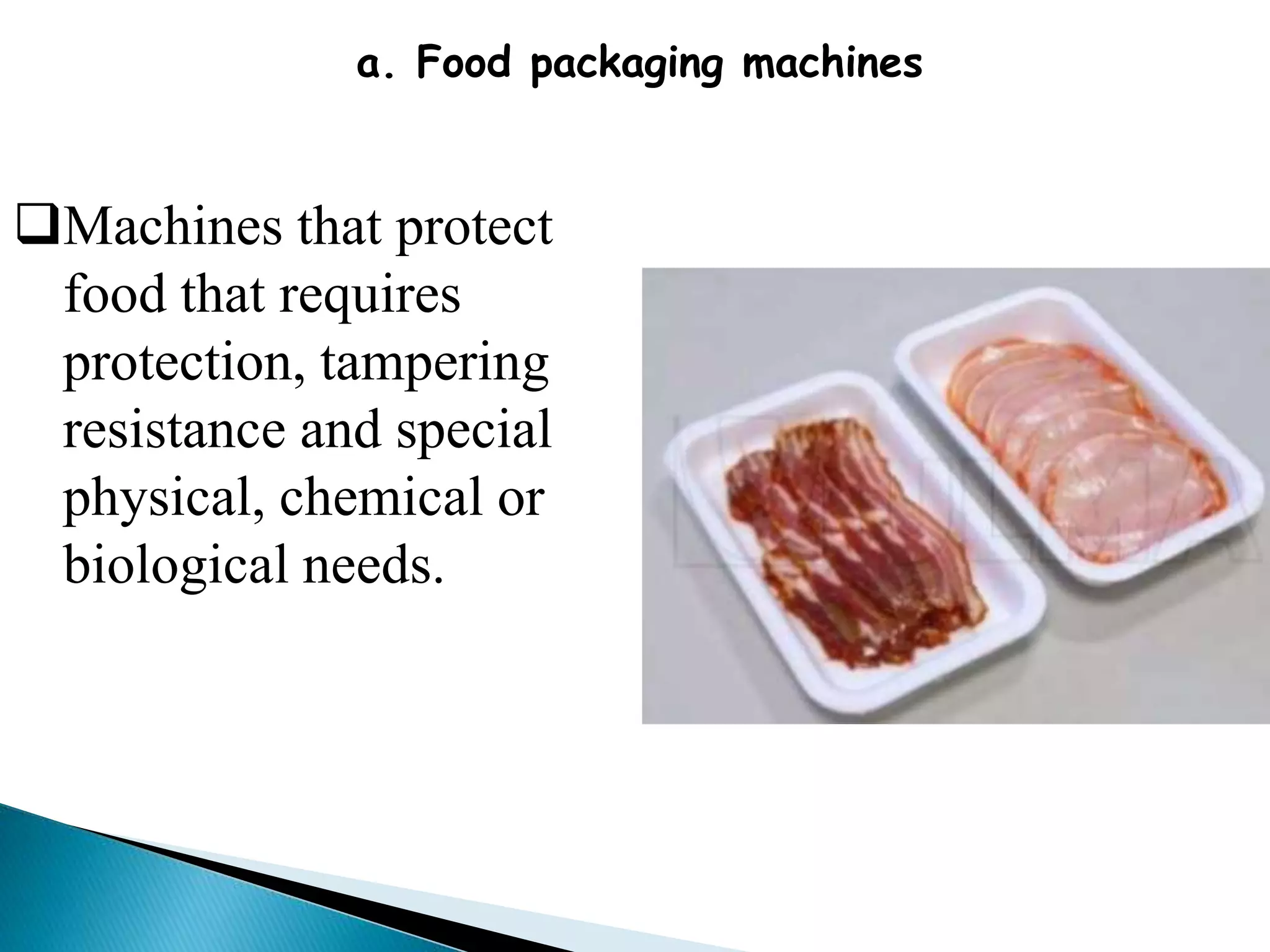
Machines that protect
food that requires
protection, tampering
resistance and special
physical, chemical or
biological needs.
a. Food packaging machines
Method of packaging that
remove air from package.
Long-term storage of dry
foods.
b. Vacuum packaging machines
Blister pack is a cavity or
pocket made from a
“formable” web , usually
a thermoformed plastic.
This usually has a
backing of paperboard or
a “lidding seal” of
aluminium foil or plastic.
c. Blister pack machines
Product is placed on a piece
of paperboard , and a thin
sheet of transparent plastic
is placed over the product
and paperboard.
d. Skin pack machines
 Any written , electronic, or graphic communications on the packaging or
on a separate associated label .
 Some types of Labeling equipments-
a. Flat class labeling machines.
b. Round bottle labeling machines.
c. Side of the class labeling machines.
Labeling Section and Equipments
To achieve cylindrical,
conical circumferential
surface of the product
label or film, such as
glass bottle , plastic
bottles.
a. Round bottle labeling machines
To achieve the workpiece
side of the plane , side arc
label or film , such as
cosmetic bottle flat ,
square box, can complete
a round bottle cover
standard equipment ,
while achieving a round
bottle labelling.
b. Side of the class labeling machines
 After individual packages have been made the next step is getting the
products ready for shipment.
 Types of machines used-
a. Case/Box sealers.
b. Sleeve wrappers and Bundlers.
c. Case erectors and Box forming Machines.
d. Case Packers.
e. Palletizing Equipments.
End of the Line Section and
Equipments
Case sealers are used in
production environments
where a run of the same
sized cases is made , then
changed over for the next
sized box.
 Uniform Case Sealing.
 Random Case Sealing .
a. Case/Box sealers
An alternative to case
packing where the
product is bundled
together for shipment.
b. Sleeve wrappers and Bundlers
Machines which form a
carton board blank into a
carton filled with a
product into single
carton, after the filling ,
the machines engages its
slots to apply adhesive
and close both the ends of
carton completely sealing
the carton.
c. Case erectors and Box forming Machines
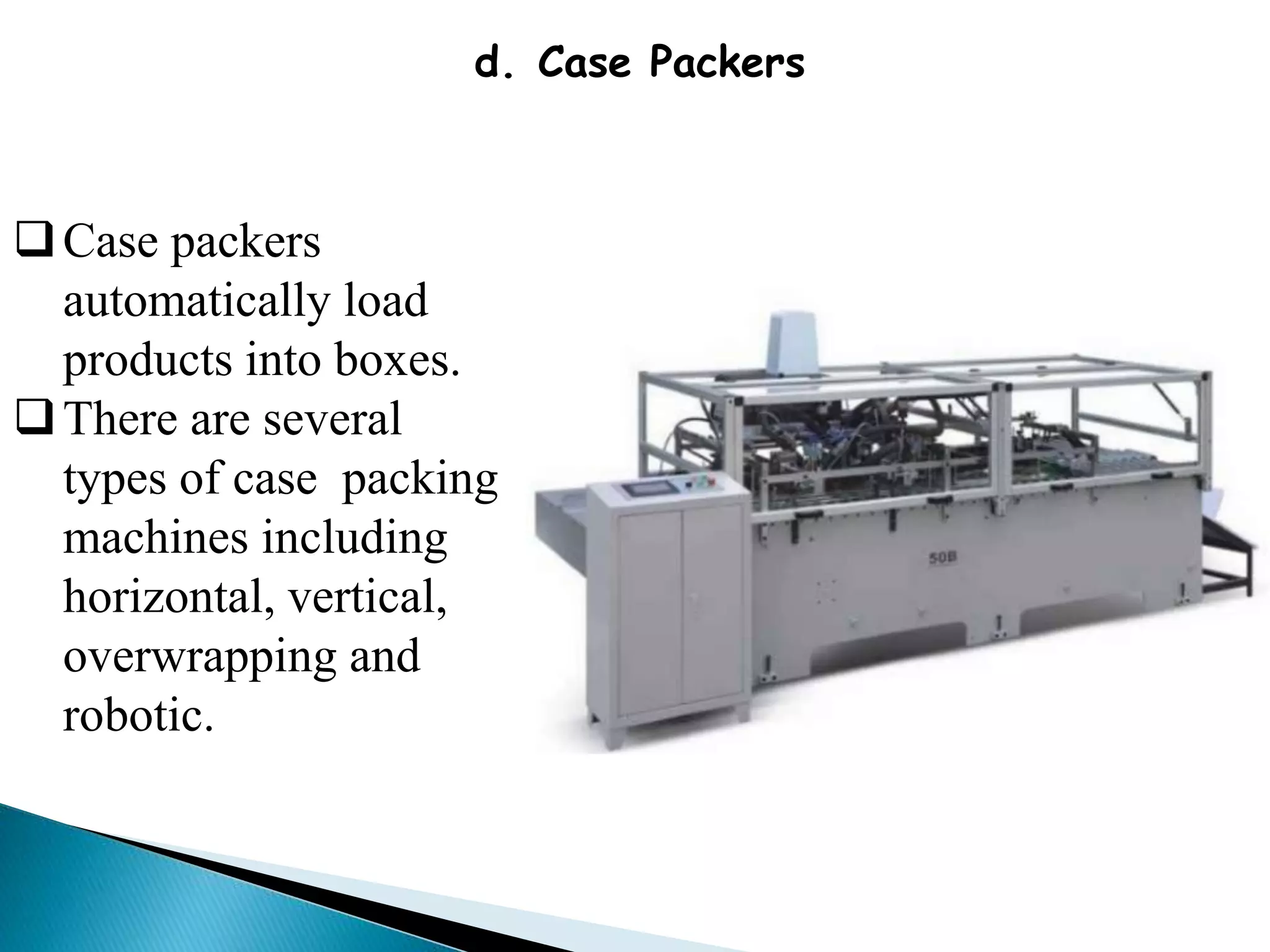
Case packers
automatically load
products into boxes.
There are several
types of case packing
machines including
horizontal, vertical,
overwrapping and
robotic.
d. Case Packers
Automatic palletizers
arrange boxes and bags
on pallet.
e. Palletizing Equipment

Packaging machinery and equipment

  • 1.
  • 2.
     Packaging machinescomplete packing process step by step.  There are several types of packaging machines available such as sealing machines, filling machines, strapping machines, wrapping machines , coding machines, labelling machines. Introduction
  • 3.
    Packaging Process Filling Section SealingSection Labelling End of the Section
  • 4.
    Filling machines usedto fill bottles or a pouch depending on the product. General types of filling machines – a. Agitator Filling Machines b. Flow filling machines c. Tablet fillers. Filling Section and Equipments
  • 5.
    a. Agitator FillingMachines Designed to fill dry mixes , such as milk powder, sugar, flour etc. Fillers have a hopper shaped like a cone that holds the mix and puts it in a pouch using an auger screw that is controlled by the agitator.
  • 6.
    Designed for liquids.Oils and thin food products. These fillers are designed when they fill a bottle or tub that enters the machine, the ejects the open bottle back onto another conveyor for sealing. b. Flow Filling Machines
  • 7.
    Designed for productsthat is counted by pieces instead of weight. These are designed for small bottles, but the hopper of the fillers is setup to permit scan counting of tablets. c. Tablet Fillers
  • 8.
     Machines usedto securely close and/or fasten the product usually after the filling section.  Some types of sealing equipments- a. Food packaging machines. b. Vacuum packaging machines. c. Blister packaging machines. d. Skin Pack packaging machines. Sealing Section and Equipments
  • 9.
    Machines that protect foodthat requires protection, tampering resistance and special physical, chemical or biological needs. a. Food packaging machines
  • 10.
    Method of packagingthat remove air from package. Long-term storage of dry foods. b. Vacuum packaging machines
  • 11.
    Blister pack isa cavity or pocket made from a “formable” web , usually a thermoformed plastic. This usually has a backing of paperboard or a “lidding seal” of aluminium foil or plastic. c. Blister pack machines
  • 12.
    Product is placedon a piece of paperboard , and a thin sheet of transparent plastic is placed over the product and paperboard. d. Skin pack machines
  • 13.
     Any written, electronic, or graphic communications on the packaging or on a separate associated label .  Some types of Labeling equipments- a. Flat class labeling machines. b. Round bottle labeling machines. c. Side of the class labeling machines. Labeling Section and Equipments
  • 14.
    To achieve cylindrical, conicalcircumferential surface of the product label or film, such as glass bottle , plastic bottles. a. Round bottle labeling machines
  • 15.
    To achieve theworkpiece side of the plane , side arc label or film , such as cosmetic bottle flat , square box, can complete a round bottle cover standard equipment , while achieving a round bottle labelling. b. Side of the class labeling machines
  • 16.
     After individualpackages have been made the next step is getting the products ready for shipment.  Types of machines used- a. Case/Box sealers. b. Sleeve wrappers and Bundlers. c. Case erectors and Box forming Machines. d. Case Packers. e. Palletizing Equipments. End of the Line Section and Equipments
  • 17.
    Case sealers areused in production environments where a run of the same sized cases is made , then changed over for the next sized box.  Uniform Case Sealing.  Random Case Sealing . a. Case/Box sealers
  • 18.
    An alternative tocase packing where the product is bundled together for shipment. b. Sleeve wrappers and Bundlers
  • 19.
    Machines which forma carton board blank into a carton filled with a product into single carton, after the filling , the machines engages its slots to apply adhesive and close both the ends of carton completely sealing the carton. c. Case erectors and Box forming Machines
  • 20.
    Case packers automatically load productsinto boxes. There are several types of case packing machines including horizontal, vertical, overwrapping and robotic. d. Case Packers
  • 21.
    Automatic palletizers arrange boxesand bags on pallet. e. Palletizing Equipment