Alliance for
Forgotten Australians
“Has knowledge brought justice”?
A survivor’s perspective.
Caroline Carroll OAM
© Alliance for Forgotten Australians
Introduction
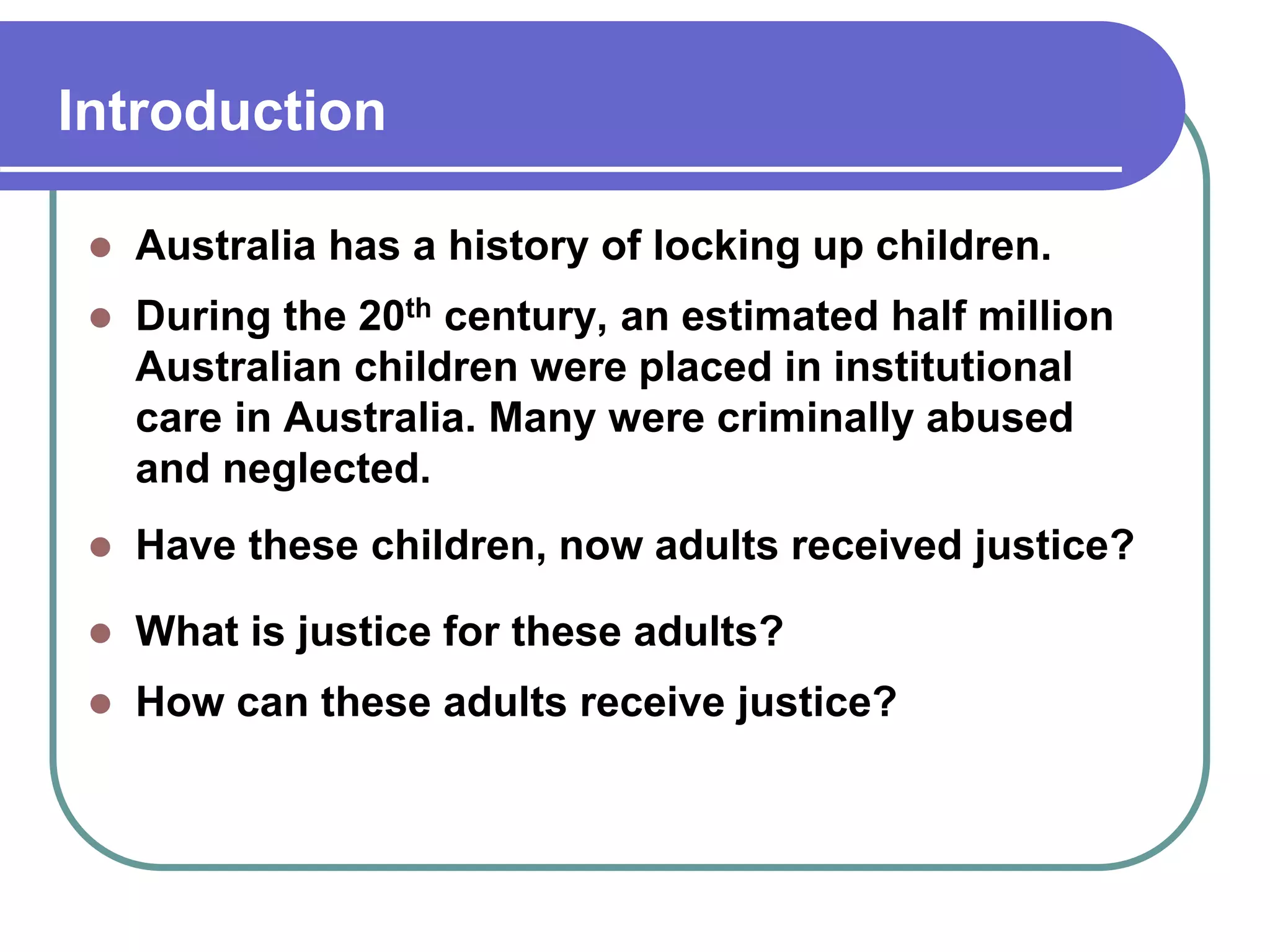
 Australia has a history of locking up children.
 During the 20th century, an estimated half million
Australian children were placed in institutional
care in Australia. Many were criminally abused
and neglected.
 Have these children, now adults received justice?
 What is justice for these adults?
 How can these adults receive justice?
Current context
 DVD (https://www.youtube.com/watch?v=fzCQKq7ttTg#t=18 )
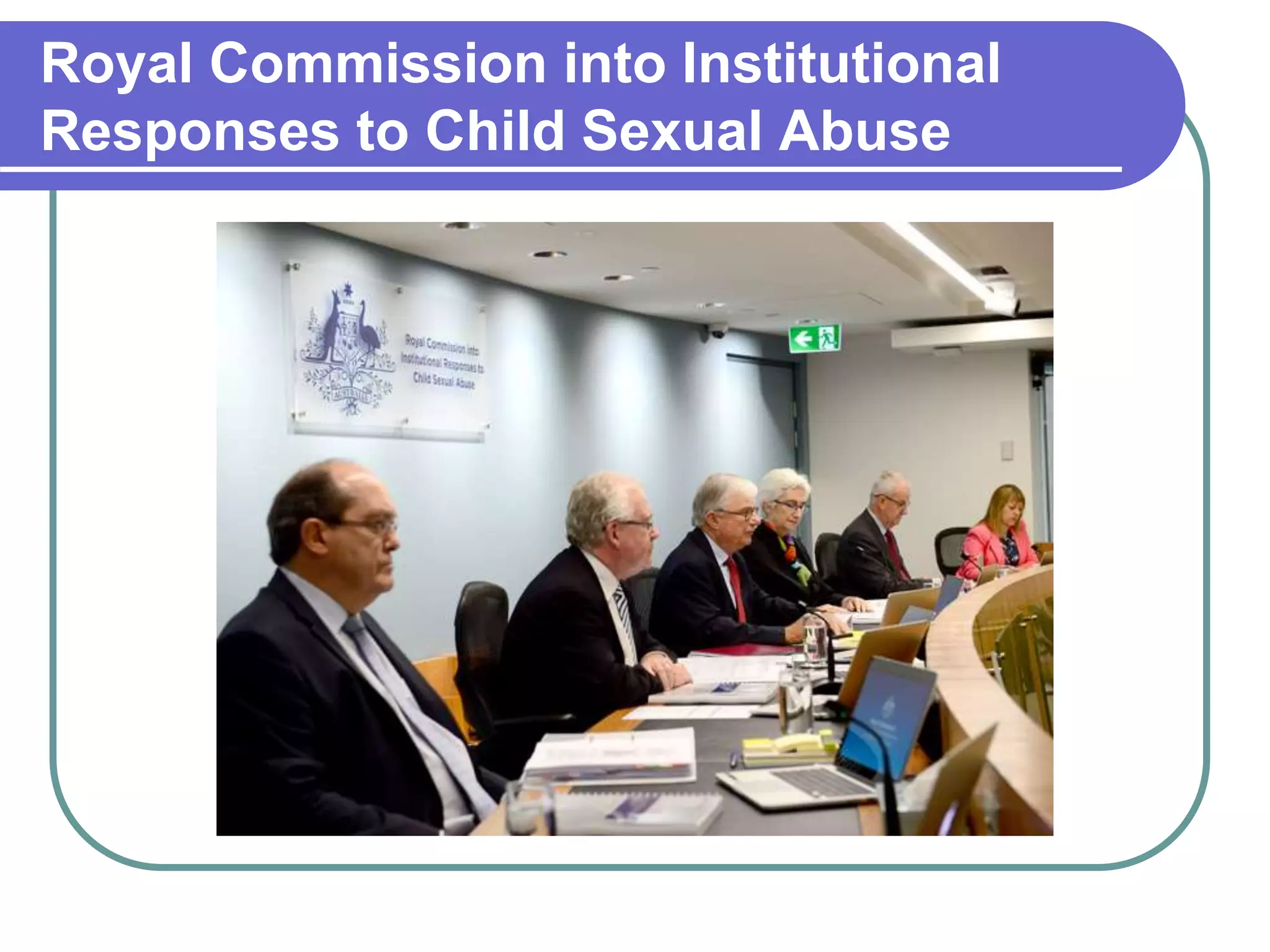
 Royal Commission, Australian Senate and
State Government inquiries.
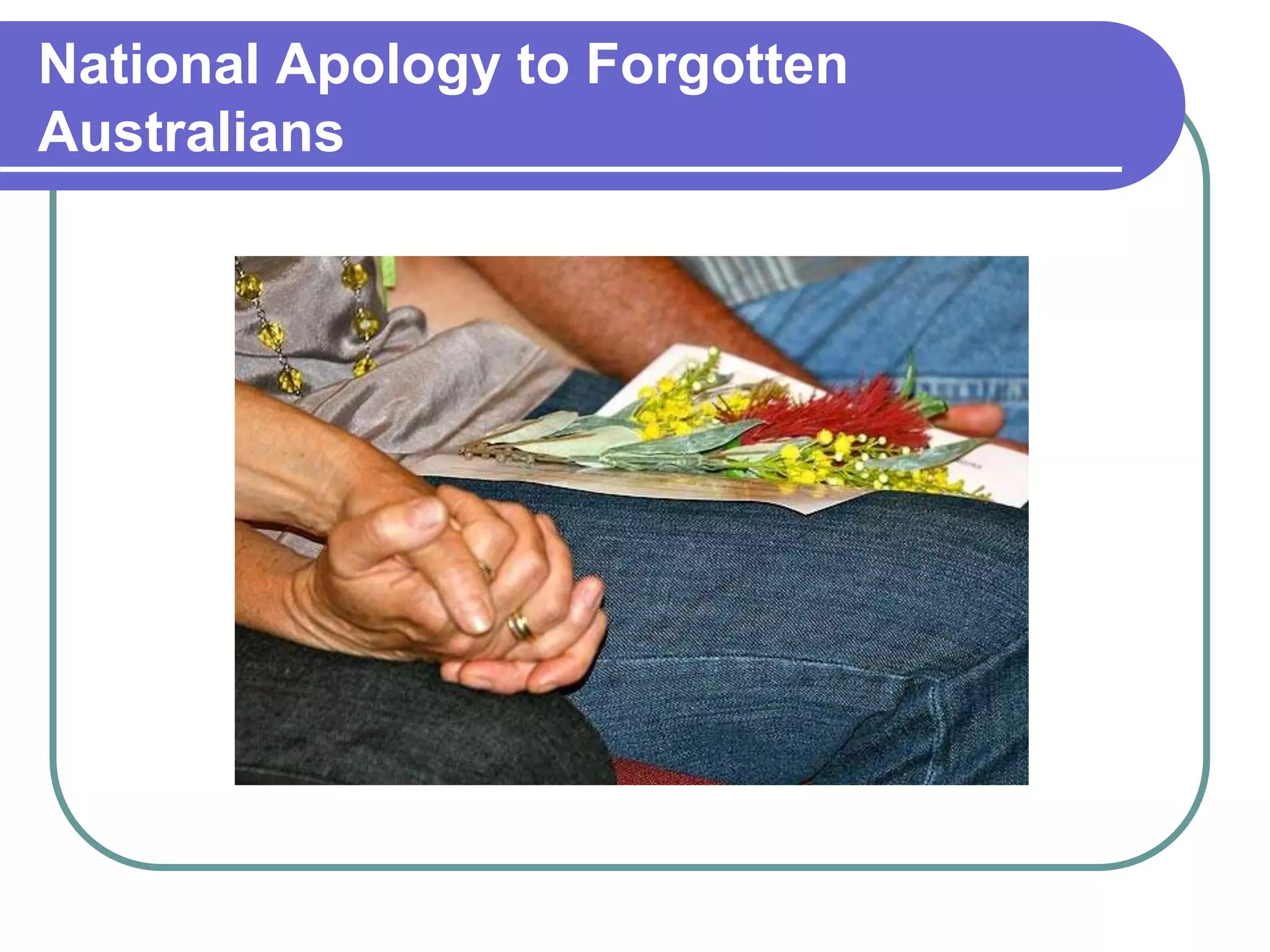
 National and state apologies.
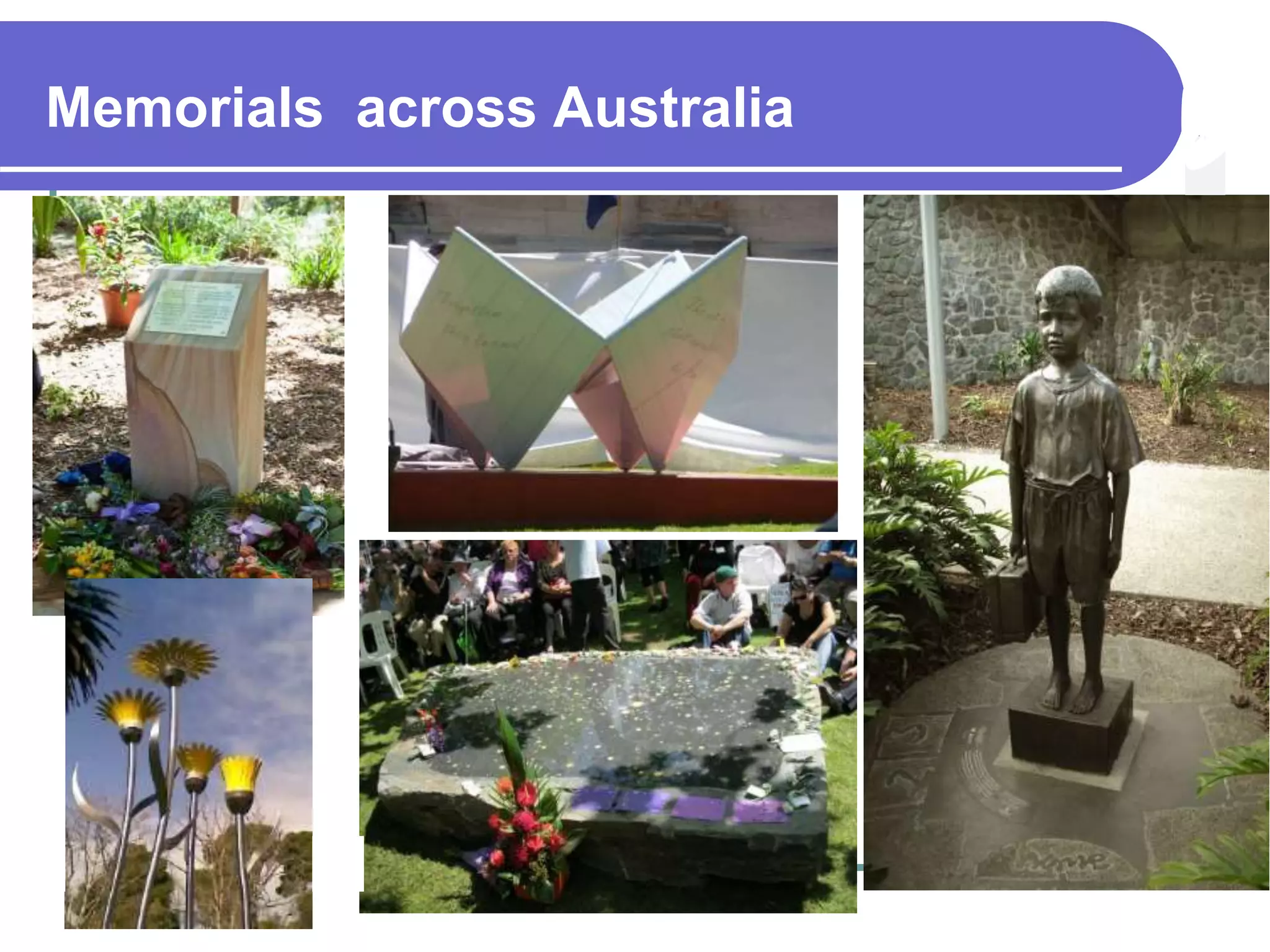
 Memorials.
 Specialist support services.
Impact of past ‘care’ experiences
 Loss of identity
 Low self esteem
 Poor access to schooling
 Reduced employment options
 Difficulties with personal relationships
 Poor health and wellbeing
 Mental illness
 Harmful use of drugs
 High risk of homelessness
Royal Commission into Institutional
Responses to Child Sexual Abuse
Memorials across Australia
National Apology to Forgotten
Australians
What is needed?
 National Redress Scheme
 Data collection
 ‘Special needs’ recognition, identity
card (health, housing & community
services)
 Recognition of early onset ageing
 Professional education
We are still waiting!
 Why has justice not been delivered?
 How do we explain the gulf between
knowledge and justice?
 Why has knowledge failed to deliver
justice?
 Three examples from the media.
The Alliance for Forgotten Australians
Chair: Caroline Carroll
www.forgottenaustralians.org.au
Phone: +61 438460184
E: ccarroll@openplace.org.au
Contacts

"Has knowledge brought justice"? A survivor's perspective.

  • 1.
    Alliance for Forgotten Australians “Hasknowledge brought justice”? A survivor’s perspective. Caroline Carroll OAM © Alliance for Forgotten Australians
  • 2.
    Introduction  Australia hasa history of locking up children.  During the 20th century, an estimated half million Australian children were placed in institutional care in Australia. Many were criminally abused and neglected.  Have these children, now adults received justice?  What is justice for these adults?  How can these adults receive justice?
  • 3.
    Current context  DVD(https://www.youtube.com/watch?v=fzCQKq7ttTg#t=18 )  Royal Commission, Australian Senate and State Government inquiries.  National and state apologies.  Memorials.  Specialist support services.
  • 4.
    Impact of past‘care’ experiences  Loss of identity  Low self esteem  Poor access to schooling  Reduced employment options  Difficulties with personal relationships  Poor health and wellbeing  Mental illness  Harmful use of drugs  High risk of homelessness
  • 5.
    Royal Commission intoInstitutional Responses to Child Sexual Abuse
  • 6.
  • 7.
    National Apology toForgotten Australians
  • 8.
    What is needed? National Redress Scheme  Data collection  ‘Special needs’ recognition, identity card (health, housing & community services)  Recognition of early onset ageing  Professional education
  • 9.
    We are stillwaiting!  Why has justice not been delivered?  How do we explain the gulf between knowledge and justice?  Why has knowledge failed to deliver justice?  Three examples from the media.
  • 10.
    The Alliance forForgotten Australians Chair: Caroline Carroll www.forgottenaustralians.org.au Phone: +61 438460184 E: ccarroll@openplace.org.au Contacts