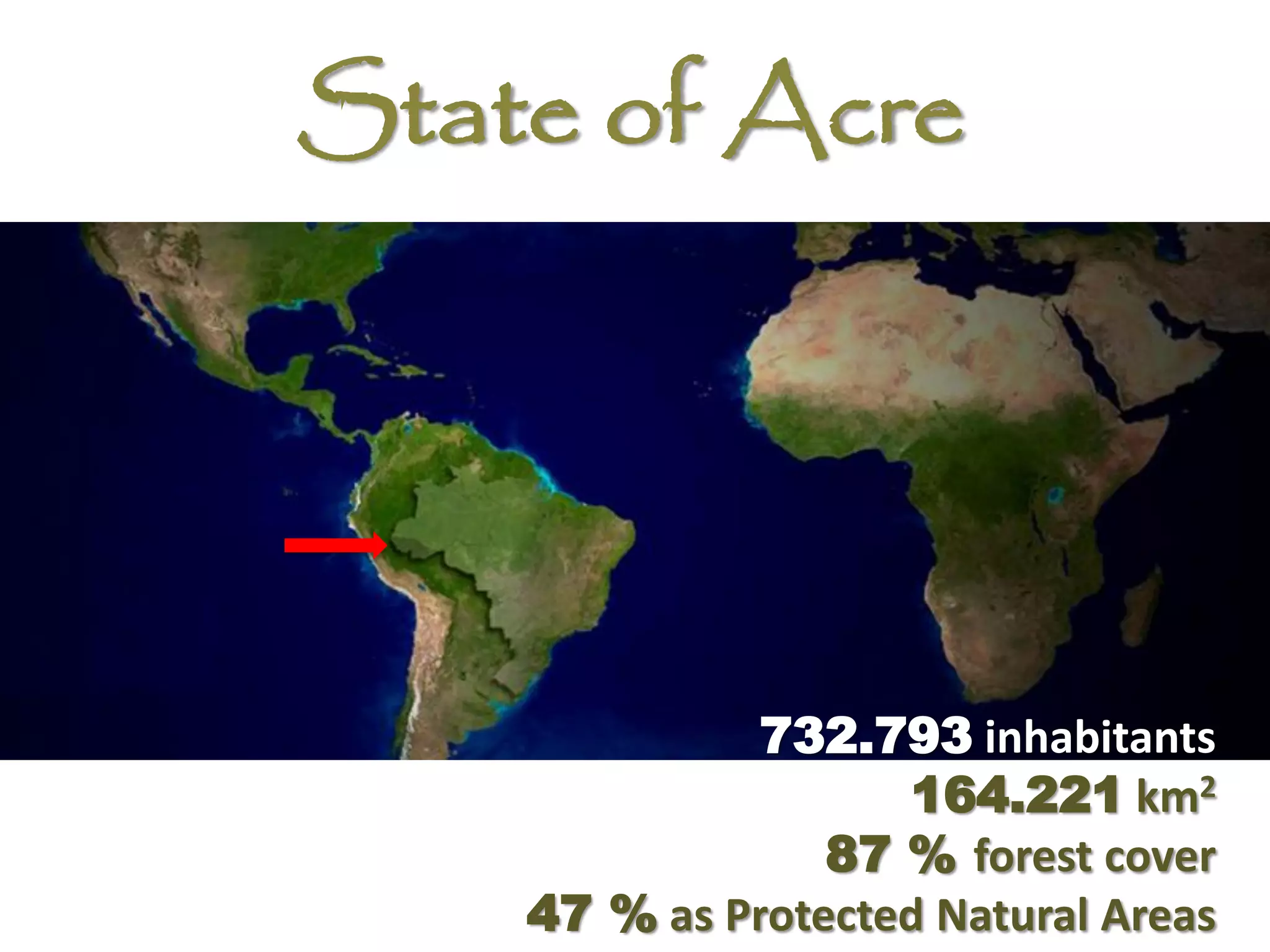
732.793 inhabitants
164.221 km2
87 % forest cover
47 % as Protected Natural Areas
State of Acre
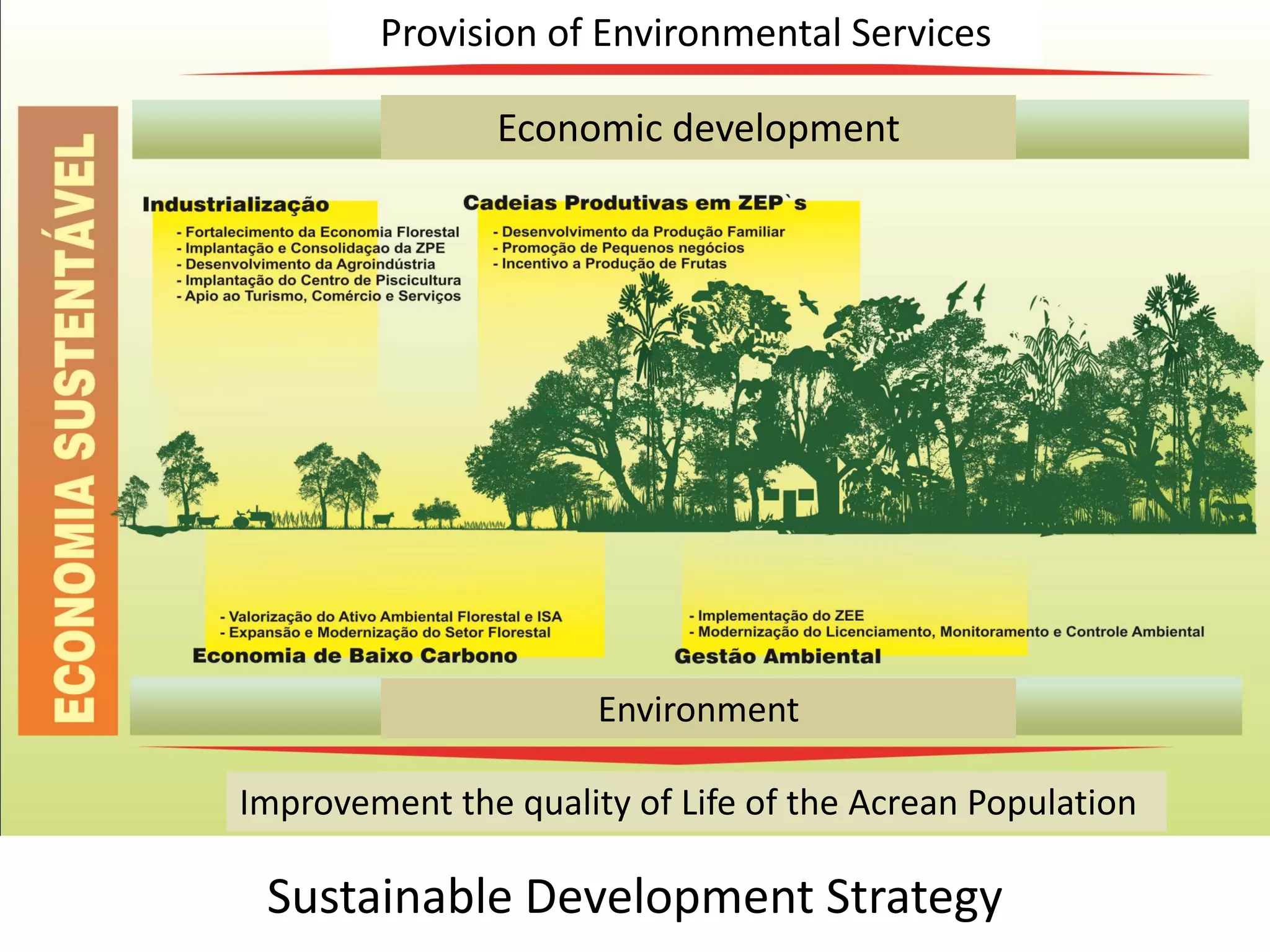
Sustainable Development Strategy
Provision of Environmental Services
Economic development
Environment
Improvement the quality of Life of the Acrean Population
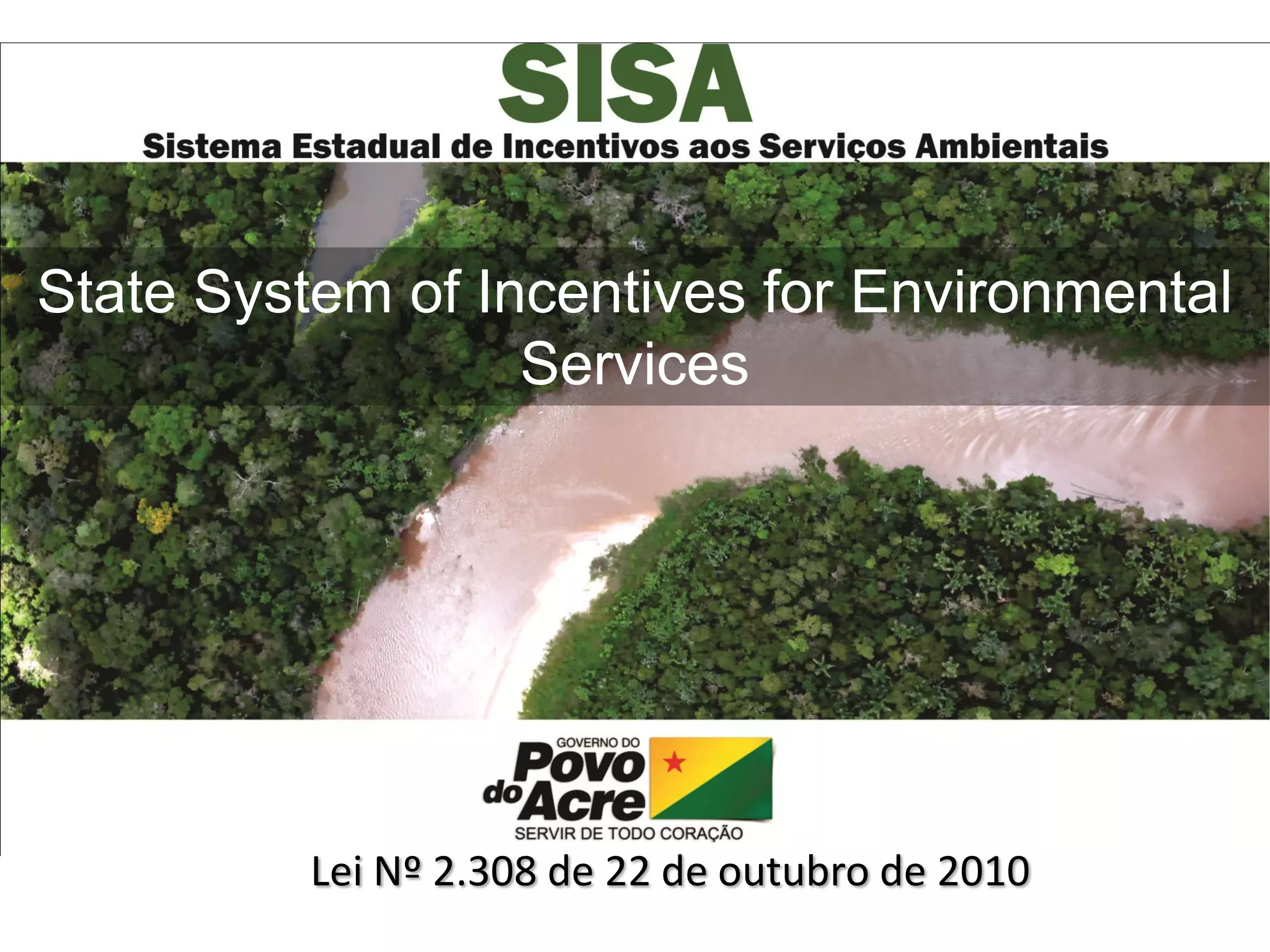
Lei Nº 2.308 de 22 de outubro de 2010
State System of Incentives for Environmental
Services
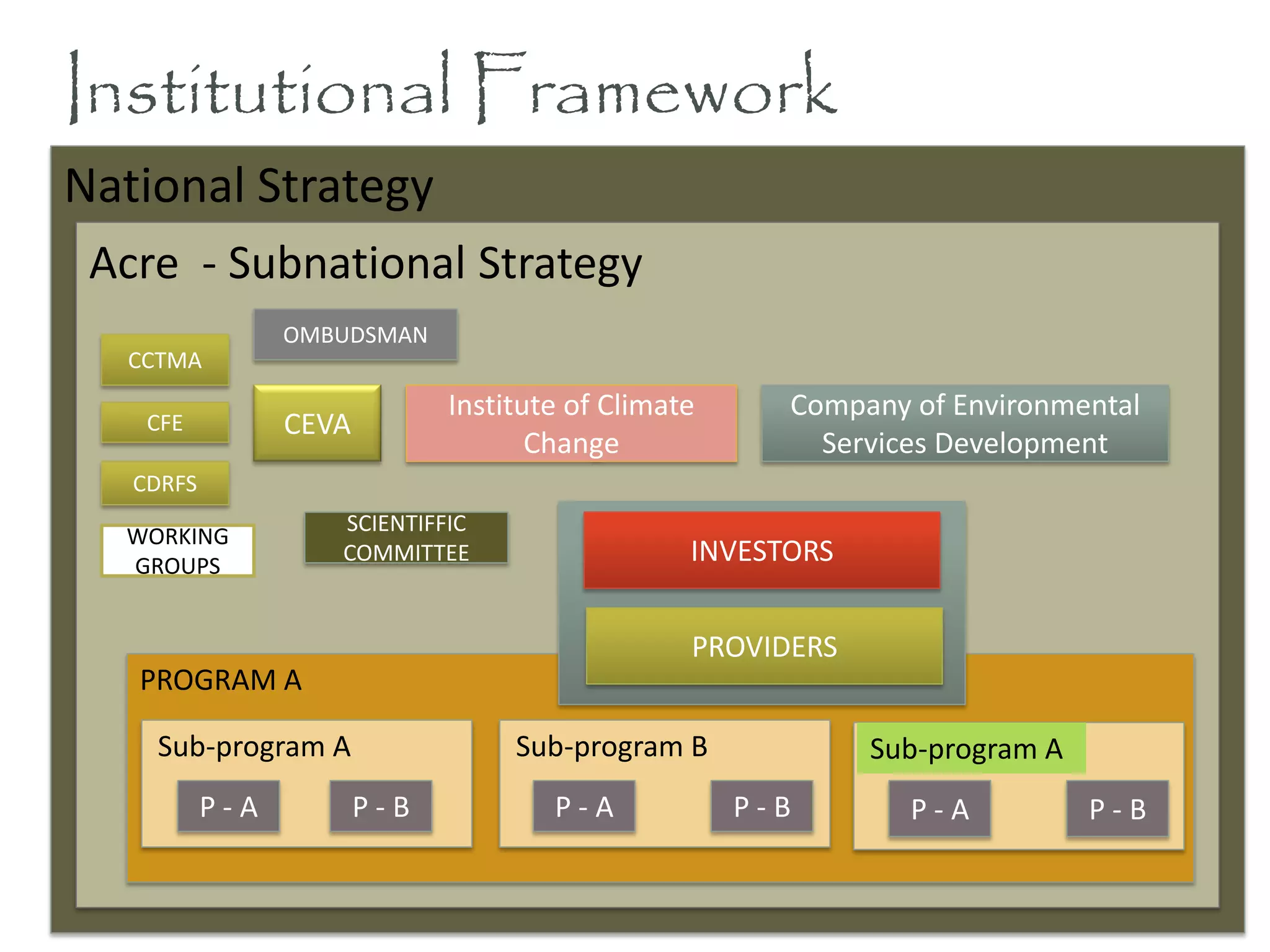
National Strategy
Acre - Subnational Strategy
Institute of Climate
Change
Company of Environmental
Services Development
CCTMA
CFE
CDRFS
CEVA
OMBUDSMAN
SCIENTIFFIC
COMMITTEE
WORKING
GROUPS
PROGRAM A
Sub-program A Sub-program B Sub-program A
INVESTORS
PROVIDERS
P - A P - B P - BP - A P - BP - A
Institutional Framework
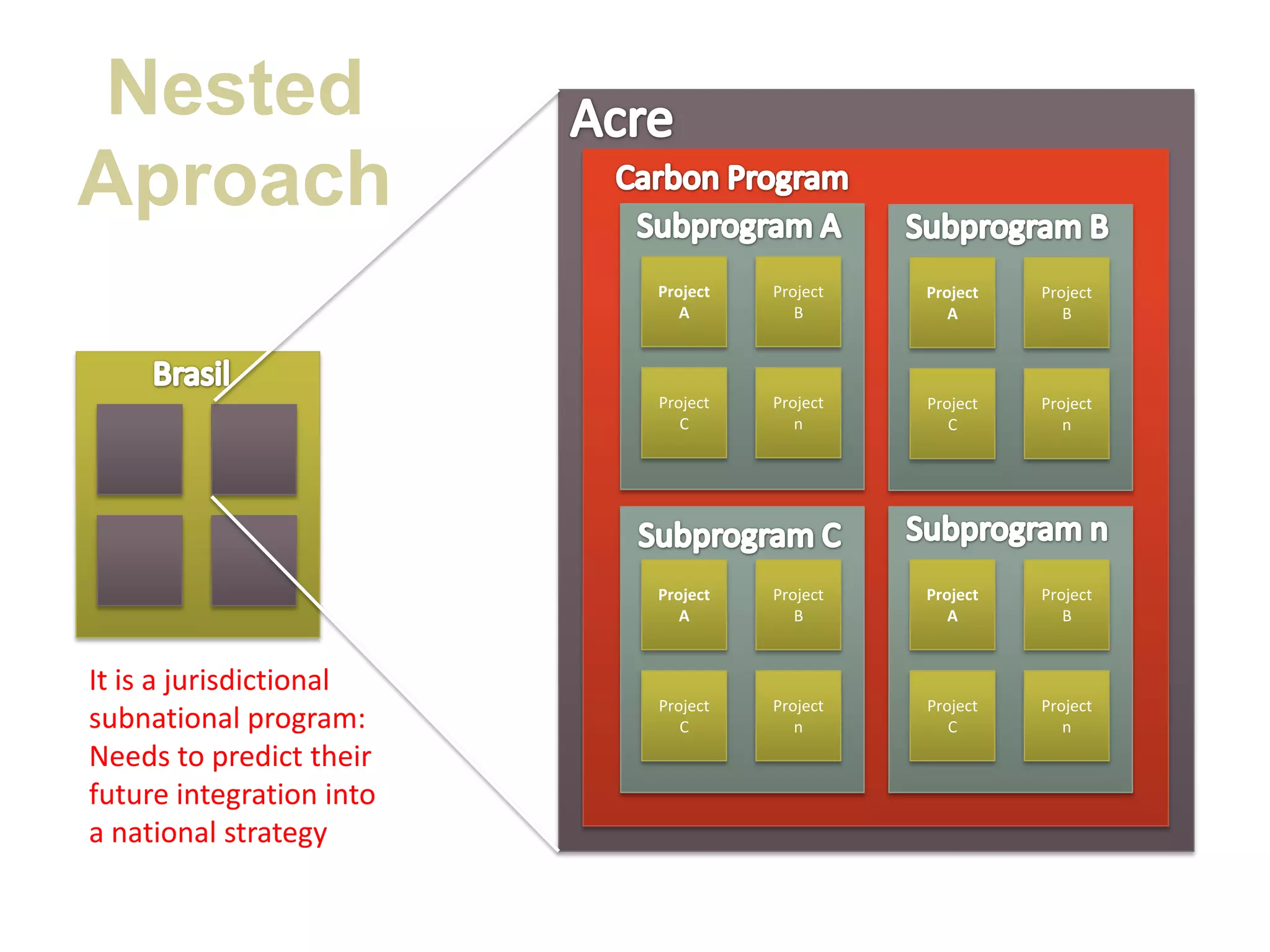
Nested
Aproach
Project
A
Project
B
Project
C
Project
n
Project
A
Project
B
Project
C
Project
n
Project
A
Project
B
Project
C
Project
n
Project
A
Project
B
Project
C
Project
n
It is a jurisdictional
subnational program:
Needs to predict their
future integration into
a national strategy
Assumptions to define the Baseline
1. The objective: to reduce emissions from deforestation,
forest degradation and sustainable management of natural
resources;
2. Jurisdictional program ≠ large scale project,
3. It is subnacional: needs to be integrated in the national
strategy
4. Knowledge: historic of deforestation, national and state
biomass stimative, forest degradation and removals are not
available (yet);
5. Drive of deforestation = demand for agriculture and cattle,
while of forest degradation = demand for wood: we can use
two baselines for each activity;
6. We can implement the program in phases;
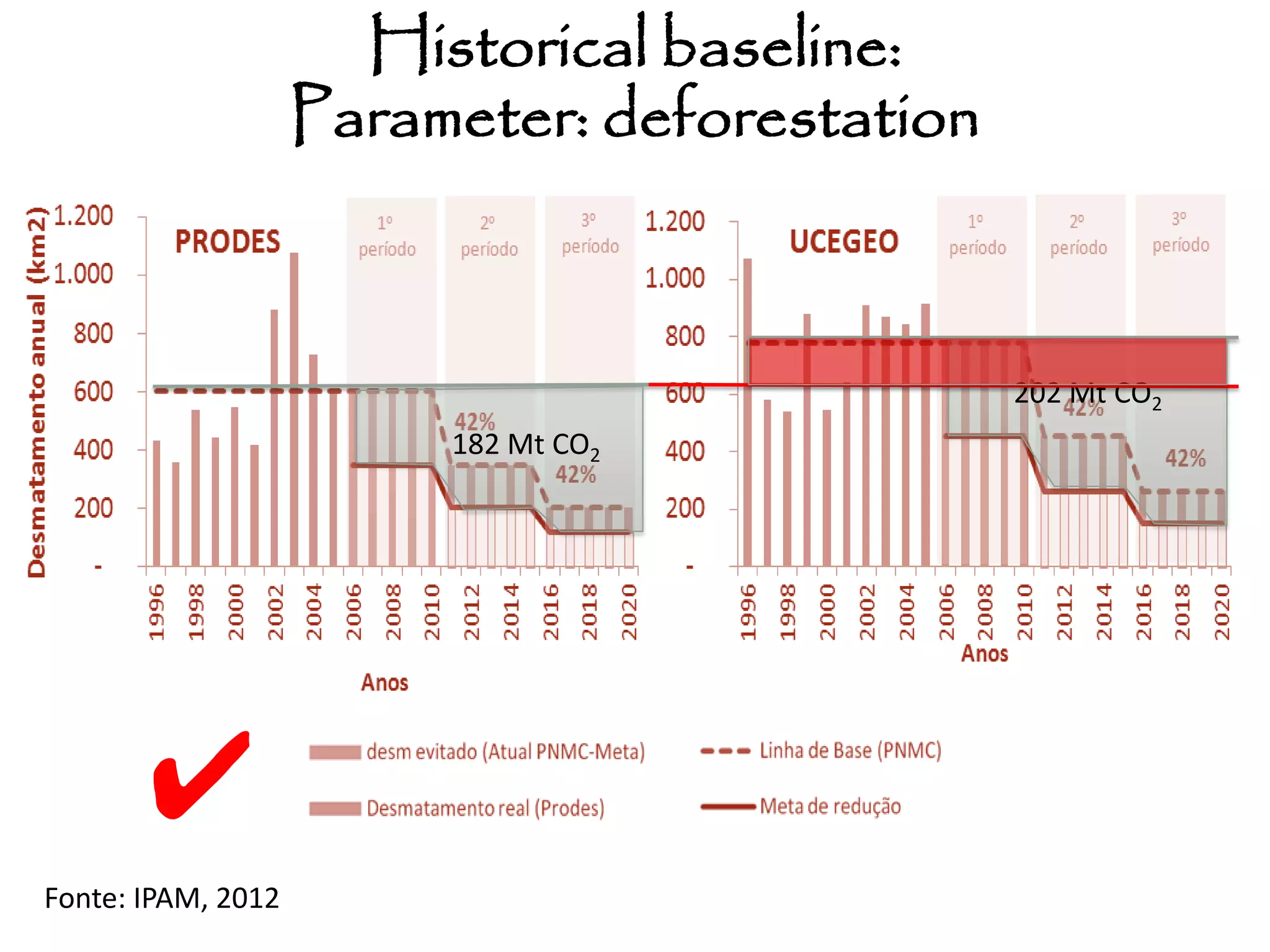
Historical baseline:
Parameter: deforestation
Fonte: IPAM, 2012
182 Mt CO2
202 Mt CO2
✔
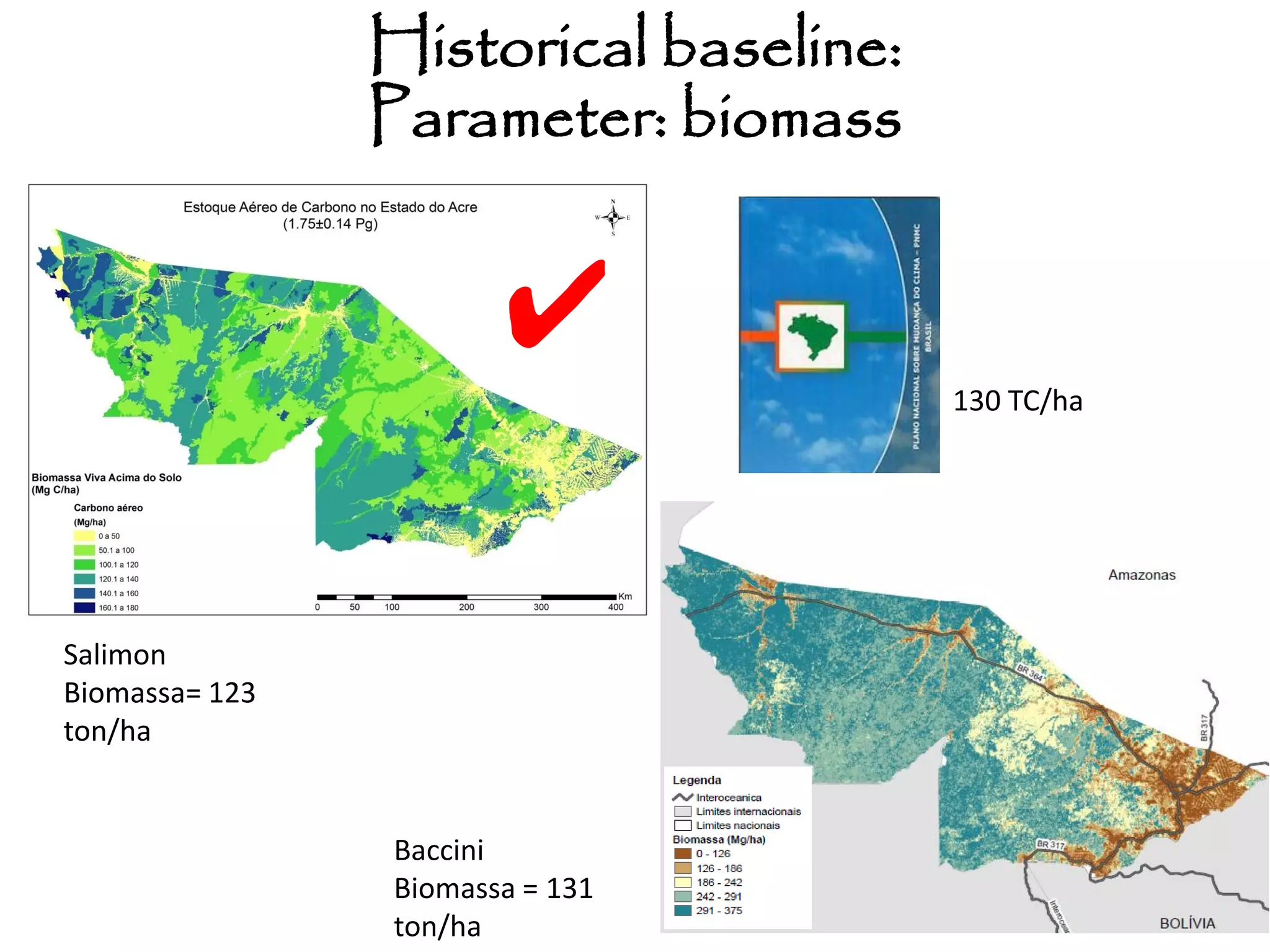
Salimon
Biomassa= 123
ton/ha
Baccini
Biomassa = 131
ton/ha
130 TC/ha
✔
Historical baseline:
Parameter: biomass
0
200
400
600
800
1000
1200
1400 1995
1996
1997
1998
1999
2000
2001
2002
2003
2004
2005
2006
2007
2008
2009
2010
2011
2012
2013
2014
2015
2016
2017
2018
2019
2020
Desmtamento(km2)
Desmatamento (km2)
Desmatamento (km2)
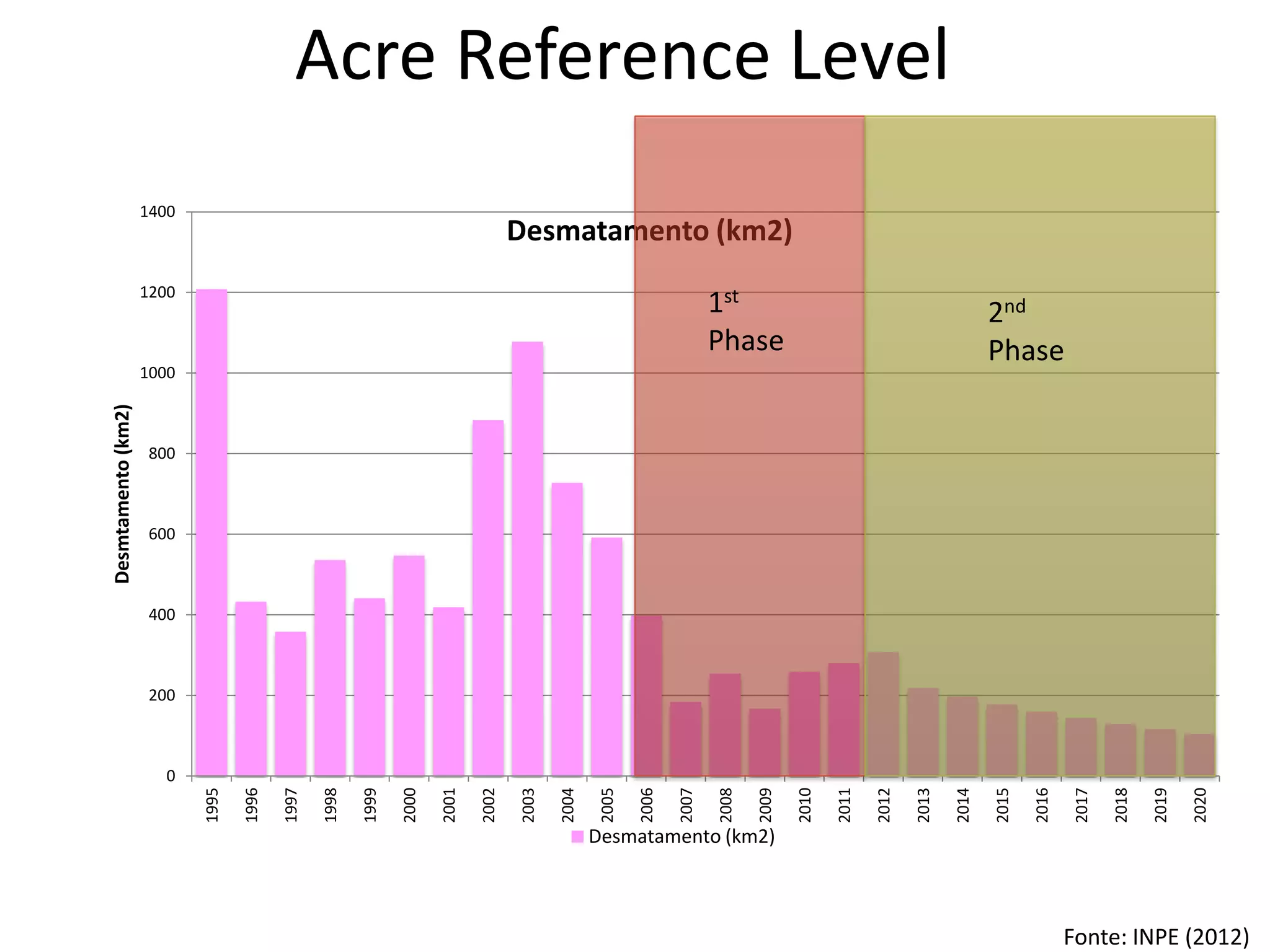
Acre Reference Level
Fonte: INPE (2012)
1st
Phase
2nd
Phase
0
200
400
600
800
1000
1200
1400
1995
1996
1997
1998
1999
2000
2001
2002
2003
2004
2005
2006
2007
2008
2009
2010
2011
2012
2013
2014
2015
2016
2017
2018
2019
2020
Desmtamento(km2)
Desmatamento (km2) Desmatamento reduzido (km2)
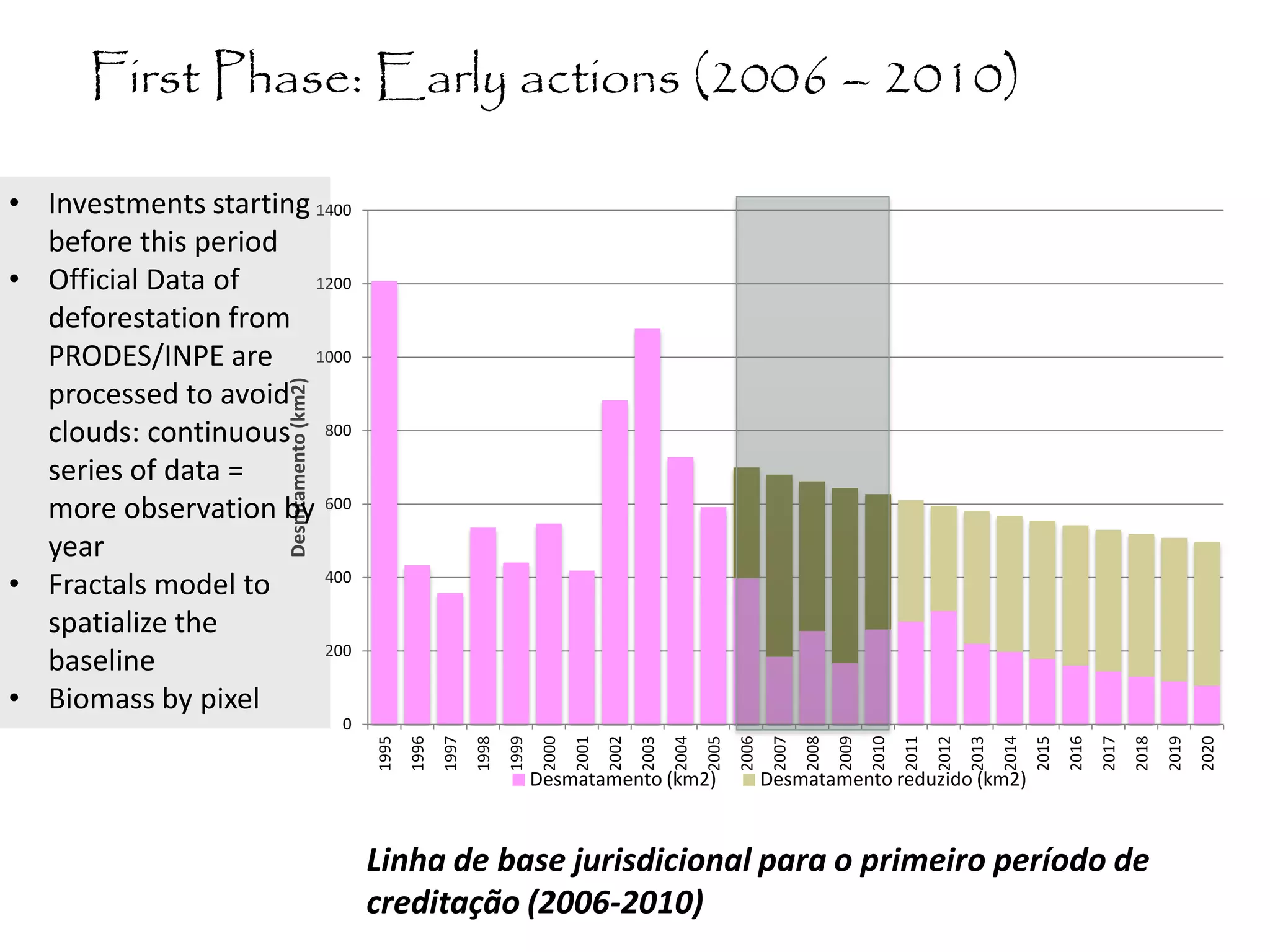
Linha de base jurisdicional para o primeiro período de
creditação (2006-2010)
First Phase: Early actions (2006 – 2010)
• Investments starting
before this period
• Official Data of
deforestation from
PRODES/INPE are
processed to avoid
clouds: continuous
series of data =
more observation by
year
• Fractals model to
spatialize the
baseline
• Biomass by pixel
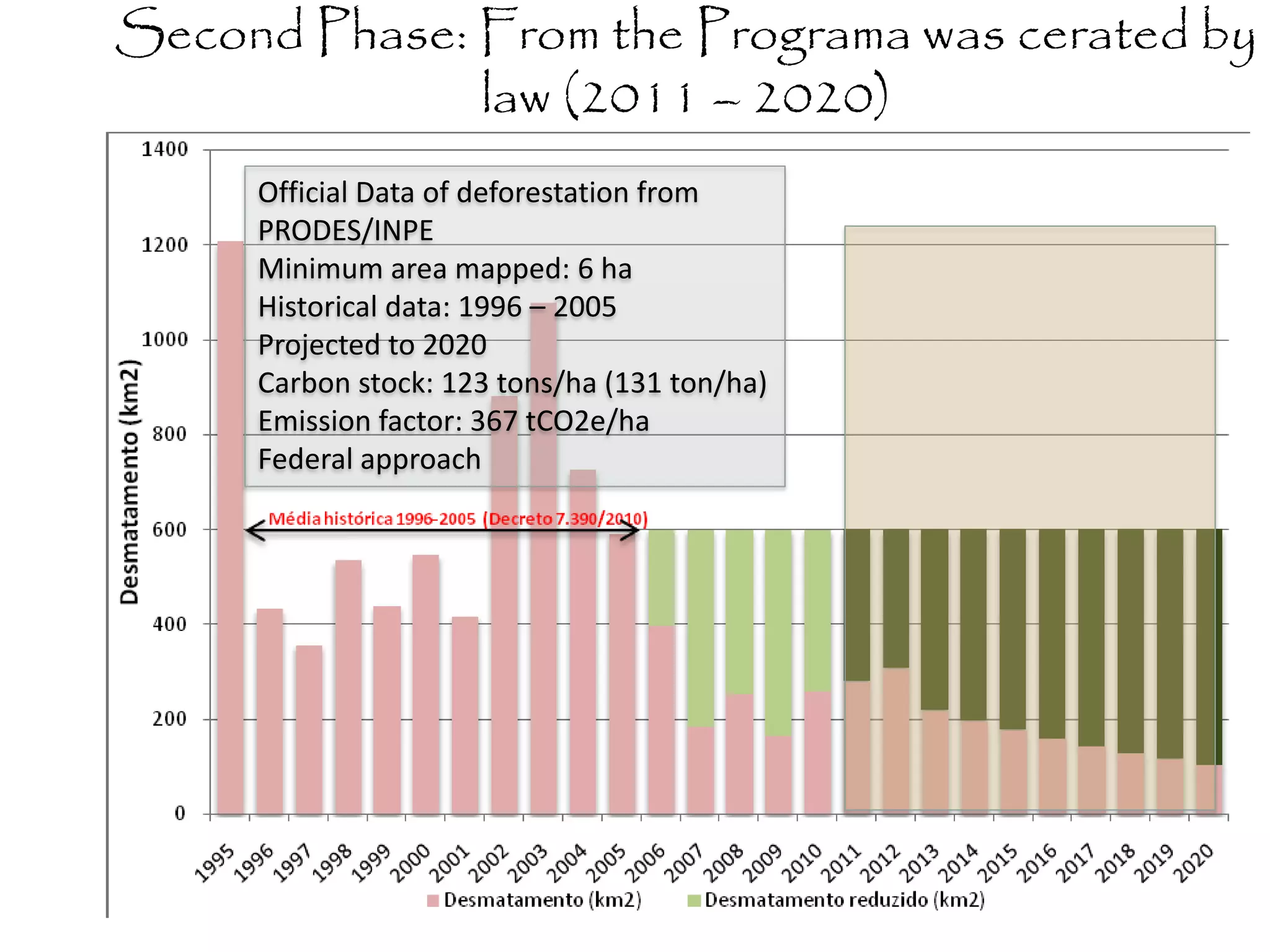
Second Phase: From the Programa was cerated by
law (2011 – 2020)
Official Data of deforestation from
PRODES/INPE
Minimum area mapped: 6 ha
Historical data: 1996 – 2005
Projected to 2020
Carbon stock: 123 tons/ha (131 ton/ha)
Emission factor: 367 tCO2e/ha
Federal approach
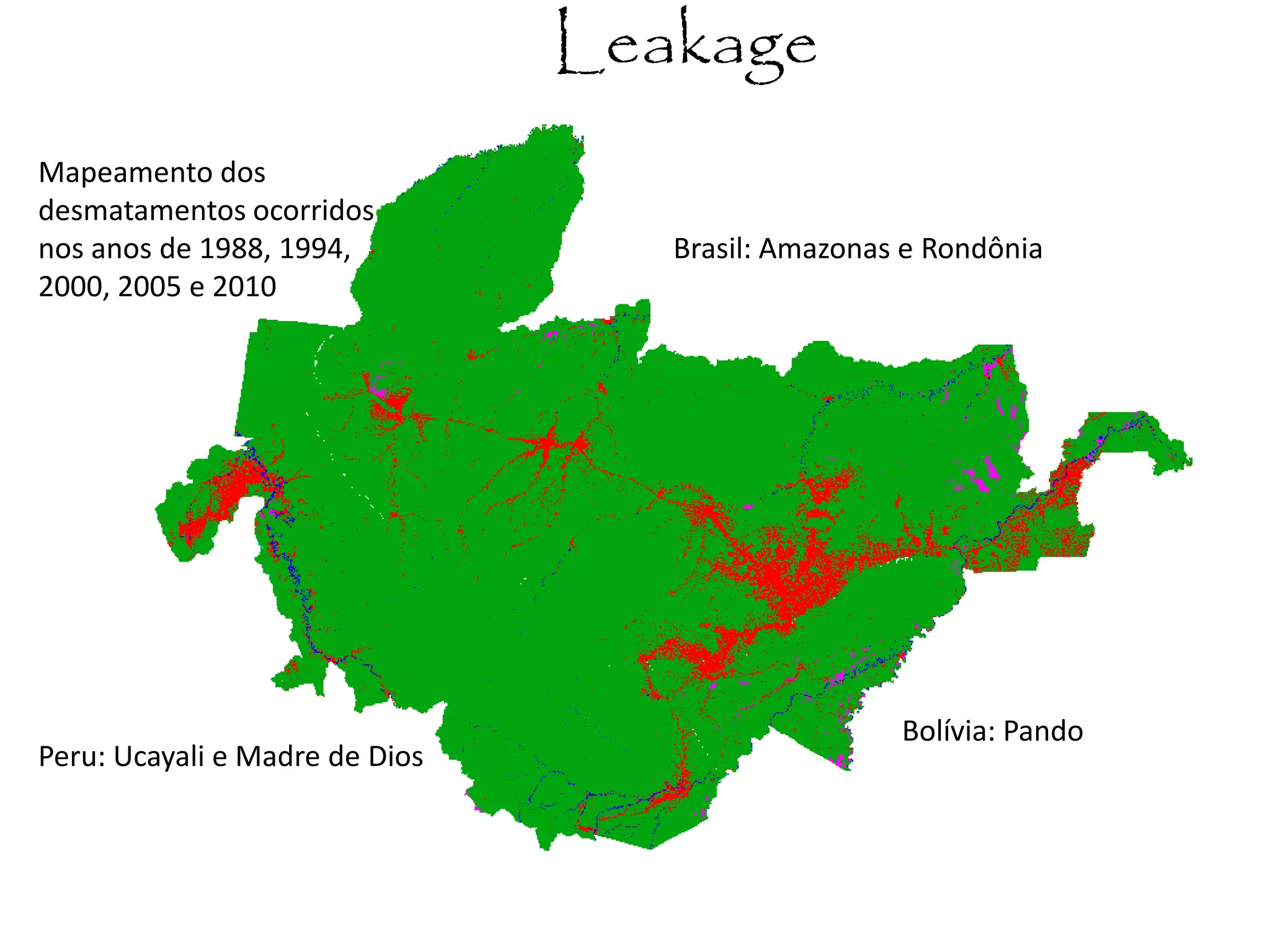
Leakage
Brasil: Amazonas e Rondônia
Peru: Ucayali e Madre de Dios
Bolívia: Pando
Mapeamento dos
desmatamentos ocorridos
nos anos de 1988, 1994,
2000, 2005 e 2010
THINKING beyond the canopy
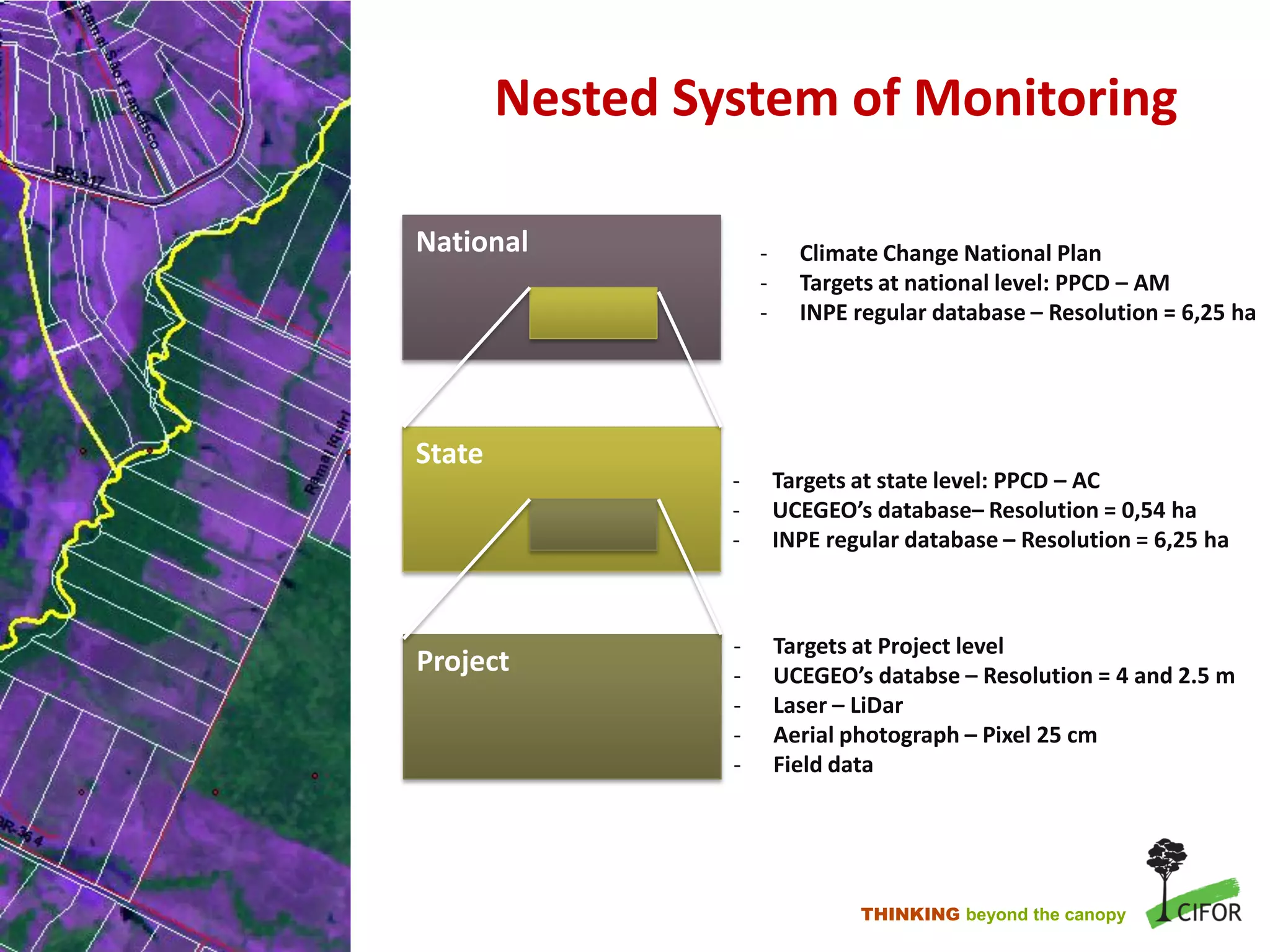
Nested System of Monitoring
Foto:DiegoGurgel
National
State
Project
- Climate Change National Plan
- Targets at national level: PPCD – AM
- INPE regular database – Resolution = 6,25 ha
- Targets at state level: PPCD – AC
- UCEGEO’s database– Resolution = 0,54 ha
- INPE regular database – Resolution = 6,25 ha
- Targets at Project level
- UCEGEO’s databse – Resolution = 4 and 2.5 m
- Laser – LiDar
- Aerial photograph – Pixel 25 cm
- Field data
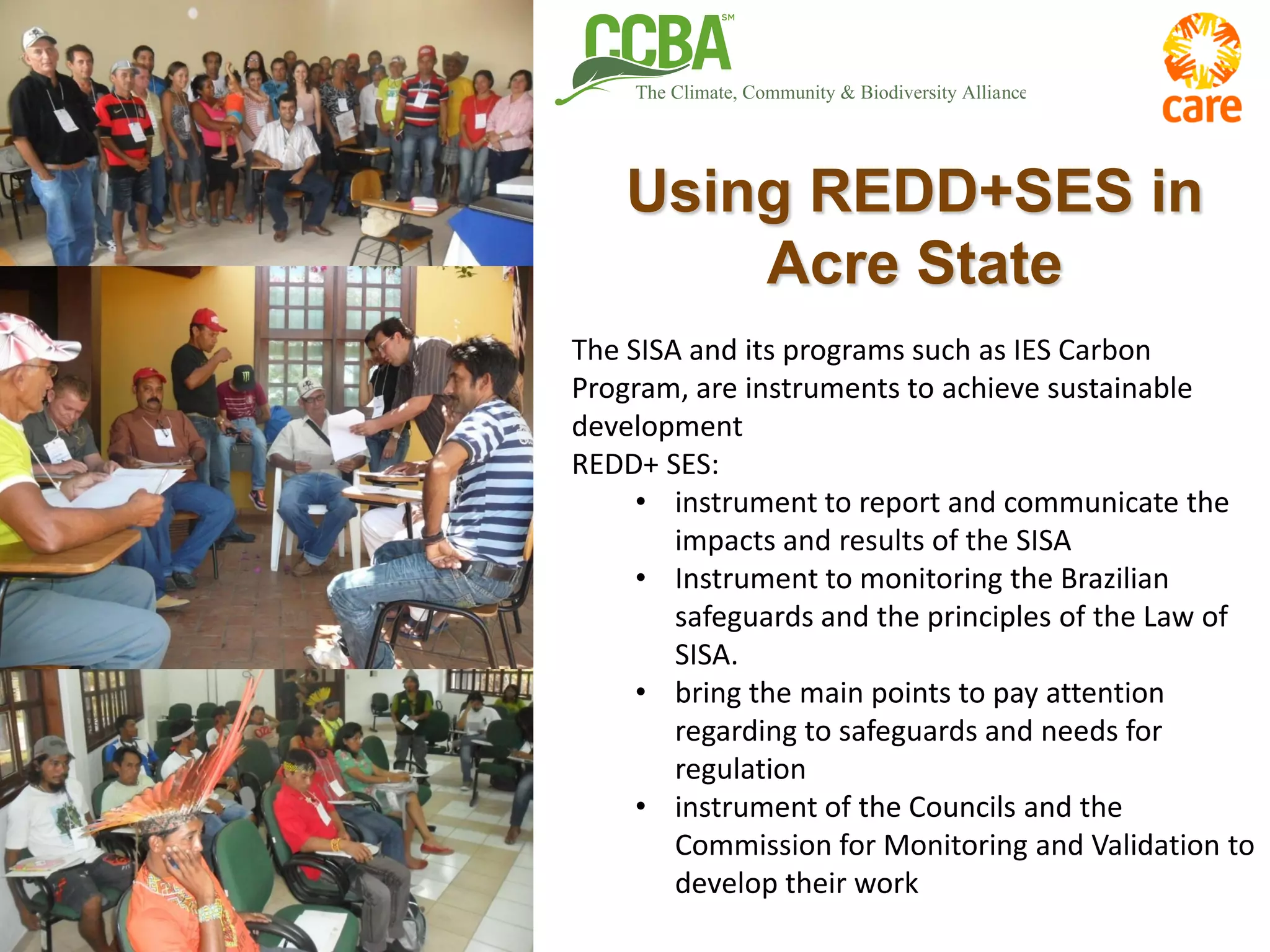
Using REDD+SES in
Acre State
The SISA and its programs such as IES Carbon
Program, are instruments to achieve sustainable
development
REDD+ SES:
• instrument to report and communicate the
impacts and results of the SISA
• Instrument to monitoring the Brazilian
safeguards and the principles of the Law of
SISA.
• bring the main points to pay attention
regarding to safeguards and needs for
regulation
• instrument of the Councils and the
Commission for Monitoring and Validation to
develop their work
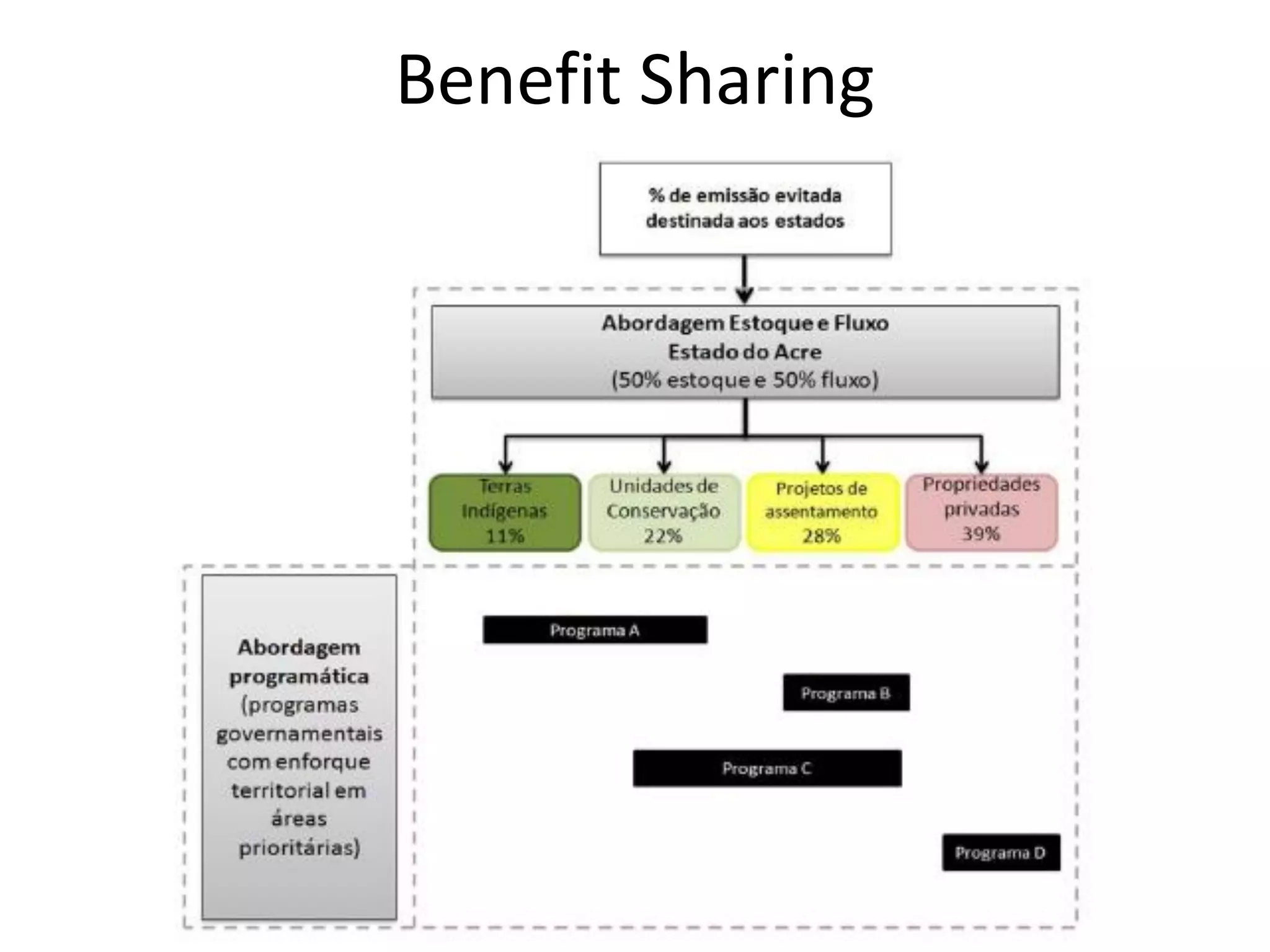
Benefit Sharing
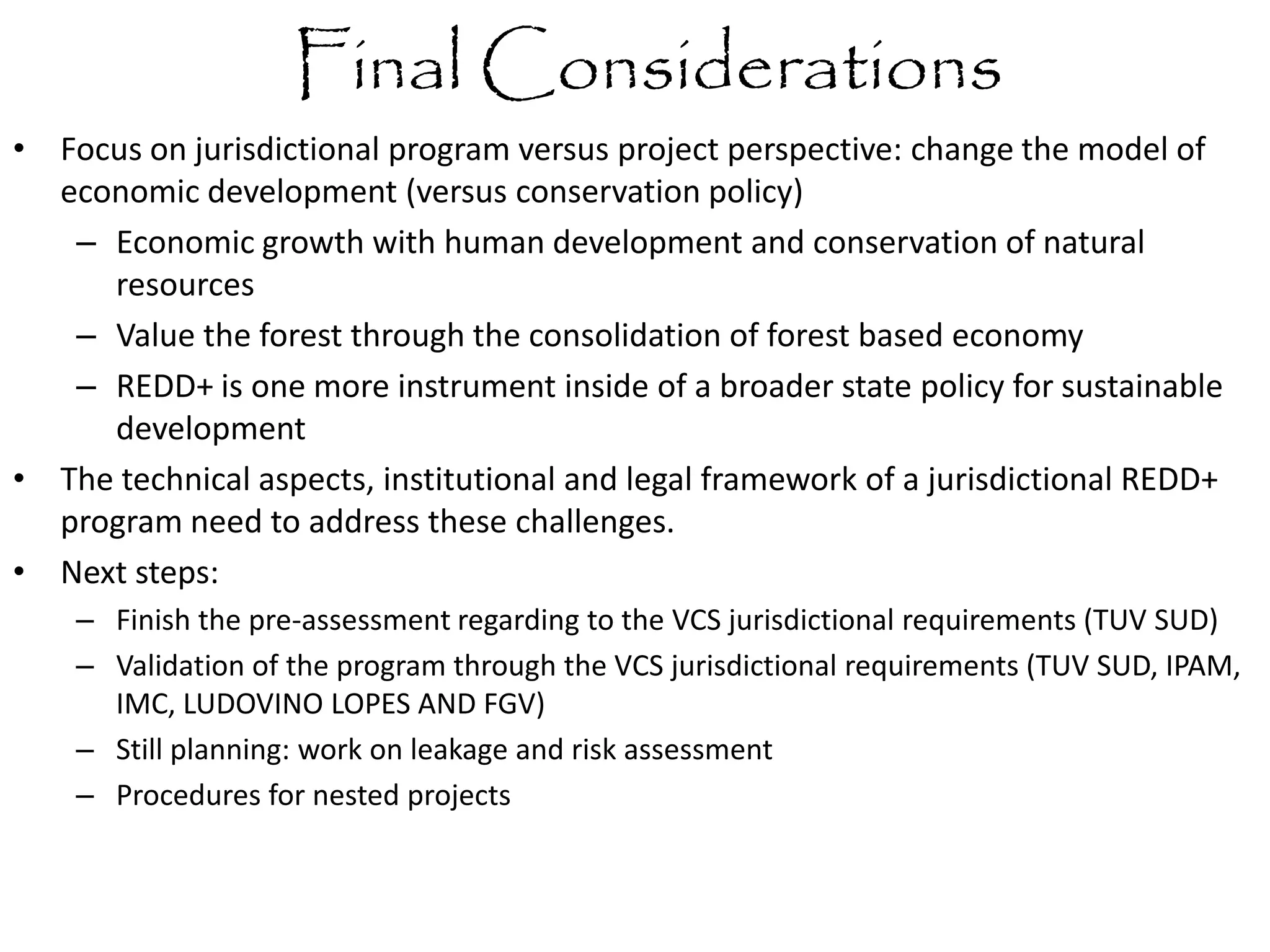
Final Considerations
• Focus on jurisdictional program versus project perspective: change the model of
economic development (versus conservation policy)
– Economic growth with human development and conservation of natural
resources
– Value the forest through the consolidation of forest based economy
– REDD+ is one more instrument inside of a broader state policy for sustainable
development
• The technical aspects, institutional and legal framework of a jurisdictional REDD+
program need to address these challenges.
• Next steps:
– Finish the pre-assessment regarding to the VCS jurisdictional requirements (TUV SUD)
– Validation of the program through the VCS jurisdictional requirements (TUV SUD, IPAM,
IMC, LUDOVINO LOPES AND FGV)
– Still planning: work on leakage and risk assessment
– Procedures for nested projects
Alianzas…
Solutions for environment and development
Soluciones para el ambiente y desarrollo
P carbono acre-vcs workshop_12_jun13

P carbono acre-vcs workshop_12_jun13

  • 2.
    732.793 inhabitants 164.221 km2 87% forest cover 47 % as Protected Natural Areas State of Acre
  • 4.
    Sustainable Development Strategy Provisionof Environmental Services Economic development Environment Improvement the quality of Life of the Acrean Population
  • 5.
    Lei Nº 2.308de 22 de outubro de 2010 State System of Incentives for Environmental Services
  • 6.
    National Strategy Acre -Subnational Strategy Institute of Climate Change Company of Environmental Services Development CCTMA CFE CDRFS CEVA OMBUDSMAN SCIENTIFFIC COMMITTEE WORKING GROUPS PROGRAM A Sub-program A Sub-program B Sub-program A INVESTORS PROVIDERS P - A P - B P - BP - A P - BP - A Institutional Framework
  • 7.
  • 8.
    Assumptions to definethe Baseline 1. The objective: to reduce emissions from deforestation, forest degradation and sustainable management of natural resources; 2. Jurisdictional program ≠ large scale project, 3. It is subnacional: needs to be integrated in the national strategy 4. Knowledge: historic of deforestation, national and state biomass stimative, forest degradation and removals are not available (yet); 5. Drive of deforestation = demand for agriculture and cattle, while of forest degradation = demand for wood: we can use two baselines for each activity; 6. We can implement the program in phases;
  • 9.
    Historical baseline: Parameter: deforestation Fonte:IPAM, 2012 182 Mt CO2 202 Mt CO2 ✔
  • 10.
    Salimon Biomassa= 123 ton/ha Baccini Biomassa =131 ton/ha 130 TC/ha ✔ Historical baseline: Parameter: biomass
  • 11.
  • 12.
    0 200 400 600 800 1000 1200 1400 1995 1996 1997 1998 1999 2000 2001 2002 2003 2004 2005 2006 2007 2008 2009 2010 2011 2012 2013 2014 2015 2016 2017 2018 2019 2020 Desmtamento(km2) Desmatamento (km2) Desmatamentoreduzido (km2) Linha de base jurisdicional para o primeiro período de creditação (2006-2010) First Phase: Early actions (2006 – 2010) • Investments starting before this period • Official Data of deforestation from PRODES/INPE are processed to avoid clouds: continuous series of data = more observation by year • Fractals model to spatialize the baseline • Biomass by pixel
  • 13.
    Second Phase: Fromthe Programa was cerated by law (2011 – 2020) Official Data of deforestation from PRODES/INPE Minimum area mapped: 6 ha Historical data: 1996 – 2005 Projected to 2020 Carbon stock: 123 tons/ha (131 ton/ha) Emission factor: 367 tCO2e/ha Federal approach
  • 14.
    Leakage Brasil: Amazonas eRondônia Peru: Ucayali e Madre de Dios Bolívia: Pando Mapeamento dos desmatamentos ocorridos nos anos de 1988, 1994, 2000, 2005 e 2010
  • 15.
    THINKING beyond thecanopy Nested System of Monitoring Foto:DiegoGurgel National State Project - Climate Change National Plan - Targets at national level: PPCD – AM - INPE regular database – Resolution = 6,25 ha - Targets at state level: PPCD – AC - UCEGEO’s database– Resolution = 0,54 ha - INPE regular database – Resolution = 6,25 ha - Targets at Project level - UCEGEO’s databse – Resolution = 4 and 2.5 m - Laser – LiDar - Aerial photograph – Pixel 25 cm - Field data
  • 16.
    Using REDD+SES in AcreState The SISA and its programs such as IES Carbon Program, are instruments to achieve sustainable development REDD+ SES: • instrument to report and communicate the impacts and results of the SISA • Instrument to monitoring the Brazilian safeguards and the principles of the Law of SISA. • bring the main points to pay attention regarding to safeguards and needs for regulation • instrument of the Councils and the Commission for Monitoring and Validation to develop their work
  • 17.
  • 18.
    Final Considerations • Focuson jurisdictional program versus project perspective: change the model of economic development (versus conservation policy) – Economic growth with human development and conservation of natural resources – Value the forest through the consolidation of forest based economy – REDD+ is one more instrument inside of a broader state policy for sustainable development • The technical aspects, institutional and legal framework of a jurisdictional REDD+ program need to address these challenges. • Next steps: – Finish the pre-assessment regarding to the VCS jurisdictional requirements (TUV SUD) – Validation of the program through the VCS jurisdictional requirements (TUV SUD, IPAM, IMC, LUDOVINO LOPES AND FGV) – Still planning: work on leakage and risk assessment – Procedures for nested projects
  • 19.
    Alianzas… Solutions for environmentand development Soluciones para el ambiente y desarrollo