REDD+
CLIMATE CHANGE
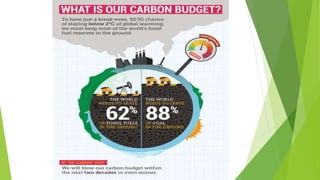
Carbon Sequestration
Global Action For People And Planet
Green Economy
About REDD+
 Reducing Emissions from Deforestation and Forest Degradation (REDD) is an
effort to create a financial value for the carbon stored in forests.
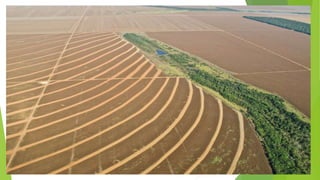
 Deforestation and forest degradation, through agricultural expansion,
conversion to pastureland, infrastructure development, destructive logging, fires
etc., account for nearly 20% of global greenhouse gas emissions, more than the
entire global transportation sector and second only to the energy sector.
 "REDD+" goes beyond deforestation and forest degradation, and includes the role
of conservation, sustainable management of forests and enhancement of
forest carbon stocks.
About UN-REDD Programme
 The United Nations Programme on Reducing Emissions from Deforestation and Forest
Degradation (or UN-REDD Programme) is a collaborative initiative of:
FAO - Food and Agriculture Organization of the UN.
UNDP - United Nations Development Programme.
UNEP - United Nations Environment Programme.
It was created in responses to:
UNFCCC - United Nations Framework Convention on Climate Change.
COP - Conference of Parties.
 The UN-REDD Programme assists developing countries in preparing and implementing
national REDD+ strategies and mechanisms.
 The Programme has now developed a new 2016-2020 Strategic Framework.
Fighting Global Warming
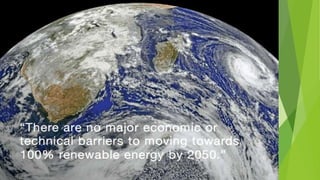
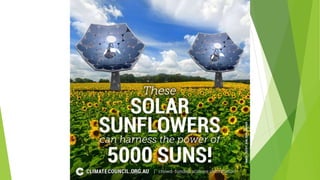
 It’s time to stop the destruction. It’s time for an energy [r]evolution.
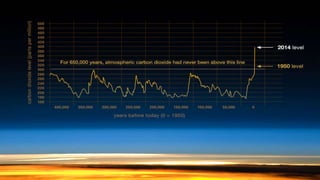
 Fossil fuels—coal, oil and natural gas—are major contributors to climate change,
accounting for the vast majority of greenhouse gas emissions.
 They’re also one of the main culprits polluting our air, water and soil.
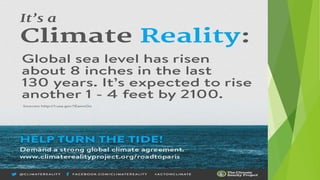
 As global temperatures increase, sea level rise and extreme weather become even bigger
threats to communities at home and around the world.
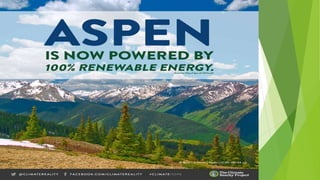
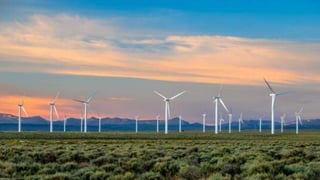
 We see a different future—one built on clean, renewable energy.
Other Multilateral REDD+ Initiatives
 Forest Carbon Partnership Facility (FCPF) and the Forest Investment Program (FIP),
hosted by The World Bank. Key strategic partners for the UN-REDD Programme.
 The Programme also continues to explore closer collaboration with the UNFCCC such as
supporting the implementation of its decisions, providing information and lessons
learned, preparation of technical papers as well as working jointly on capacity
development projects.
 The UN-REDD Programme is also partnering with the Global Environment Facility (GEF)
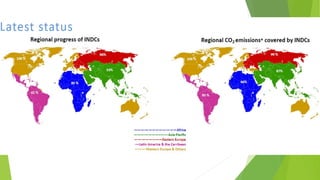
New universal climate change
agreement which will be reached
at the UN climate conference in
Paris, in December 2015.
Global Goals for Sustainable
Development
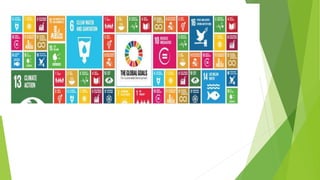
 On 26th Sept’2015, 193 world leaders met in New York City at the UN
Sustainable Development Summit. There, they committed to 17
sustainable development goals that by 2030 will eliminate extreme
poverty, improve lives, and protect the planet.
 “Humanity continues to consume far more natural resources than the
planet can sustainably provide,” Secretary-General Ban Ki-moon said
in this year’s message for the Day, observed annually on 5 June. “It is
time for us to change.”
Bonn, 2 October 2015 – The Republic of India submitted its new climate action plan on October 1 to
the UN Framework Convention on Climate Change (UNFCCC).
This Intended Nationally Determined Contribution (INDC) comes well in advance of a new universal
climate change agreement which will be reached at the UN climate conference in Paris, in December
this year.
GOALS
 POVERTY
 HUNGER AND FOOD SECURITY
 HEALTH
 EDUCATION
 GENDER EQUALITY AND WOMEN’S EMPOWERMENT
 WATER AND SANITATION
 ENERGY
 ECONOMIC GROWTH
 INFRASTRUCTURE, INDUSTRIALIZATION
 INEQUALITY
 CITIES
 SUSTAINABLE CONSUMPTION AND PRODUCTION
 CLIMATE CHANGE
 OCEANS
 BIODIVERSITY, FORESTS, DESERTIFICATION
 PEACE AND JUSTICE
 PARTNERSHIPS
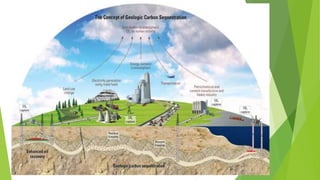
Carbon Sequestration
 Carbon sequestration describes long-term storage of
carbon dioxide or other forms of carbon to either mitigate
or defer global warming and avoid dangerous climate
change. It has been proposed as a way to slow the
atmospheric and marine accumulation of greenhouse
gases, which are released by burning fossil fuels.
Facts & Figures
Forests
 •Around 1.6 billion people depend on forests for their livelihood. This includes some
70 million indigenous people
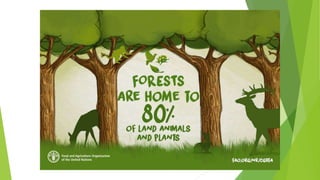
 •Forests are home to more than 80 per cent of all terrestrial species of animals,
plants and insects
Desertification
 •2.6 billion people depend directly on agriculture, but 52 per cent of the land used
for agriculture is moderately or severely affected by soil degradation
 •As of 2008, land degradation affected 1.5 billion people globally
 •Arable land loss is estimated at 30 to 35 times the historical rate
 •Due to drought and desertification each year 12 million hectares are lost (23
hectares per minute), where 20 million tons of grain could have been grown
 •74 per cent of the poor are directly affected by land degradation globally
Goals (cont.)
Biodiversity
 •Of the 8,300 animal breeds known, 8 per cent are extinct and 22 per cent are at risk of
extinction
 •Of the over 80,000 tree species, less than 1 per cent have been studied for potential use
 •Fish provide 20 per cent of animal protein to about 3 billion people. Only ten species
provide about 30 per cent of marine capture fisheries and ten species provide about 50 per
cent of aquaculture production
 •Over 80 per cent of the human diet is provided by plants. Only three cereal crops – rice,
maize and wheat – provide 60 per cent of energy intake
 •As many as 80 per cent of people living in rural areas in developing countries rely on
traditional plant-‐based medicines for basic
 healthcare
 •Micro-organisms and invertebrates are key to ecosystem services, but their contributions
are still poorly known and rarely acknowledged
REDD+ and the UN-REDD Programme
 REDD+ is a climate change mitigation solution that many initiatives, including the
UN-REDD Programme, are currently developing and supporting. Other multilateral
REDD+ initiatives include the Forest Carbon Partnership Facility (FCPF) and Forest
Investment Program (FIP), hosted by The World Bank.
 REDD+ readiness relates to the efforts a country is undertaking, with the support of
multilateral or bilateral initiatives, to build its capacity to be ready for a REDD+
mechanism.
What is the role of forests in the
developing world?
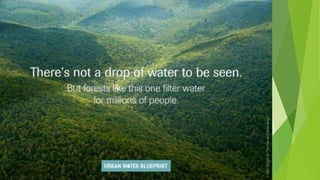
 More than three quarters of the worlds accessible freshwater comes from forested
catchments. Water quality declines with decreases in forest condition and cover, and
natural hazards such as floods, landslides, and soil erosion have larger impacts (MEA,
2005).
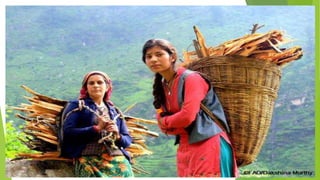
 Forests annually provide over 3.3 billion cubic meters of wood (including 1.8 billion cubic
meters of fuelwood and charcoal), as well as numerous non-wood forest products that
play a significant role in the economic life of hundreds of millions of people. The
combined economic value of ‘‘nonmarket’’ (social and ecological) forest services may
exceed the recorded market value of timber, but these values are rarely taken into
account in forest management decisions (MEA, 2005).
 The 60 million indigenous people who live in forest areas are especially dependent on
forest resources and the health of forest ecosystems (MEA, 2005).
Assessing and "proving" how much
carbon is stored forests?
 By implementing Measuring and Monitoring Systems compliant with the Measuring,
Reporting and Verification (MRV) concept agreed upon by the Conference of the Parties
of the United Nations Framework Convention on Climate Change, countries will be able
to assess the amount of carbon stored in their forests as well as other benefits from
REDD. The UN-REDD Programme is supporting countries to develop cost-effective,
robust and compatible systems for MRV. These systems are designed to use field
inventory data combined with satellite data and available technology to produce
greenhouse gases inventories and establish reference emission levels. The Programme is
liaising with international experts such as NASA, Brazil’s National Institute for Space
Research (INPE) and the US Geological Survey to provide partner countries with planning
tools and advice to help strengthen their technical and institutional capacity for
effective national MRV systems.
REDD - REDD+
 REDD: Reducing Emissions from Deforestation and Forest Degradation
(REDD) is an effort to create a financial value for the carbon stored in
forests, offering incentives for developing countries to reduce
emissions from forested lands and invest in low-carbon paths to
sustainable development.
 REDD+ : "REDD+" goes beyond deforestation and forest degradation,
and includes the role of conservation, sustainable management of
forests and enhancement of forest carbon stocks.
"REDD+ readiness“ & Implementation
Phases
 REDD+ readiness relates to the efforts a country is undertaking, with
the support of multilateral or bilateral initiatives, to build its capacity
to be ready for a REDD+ mechanism.
Implementation :
 Phase 1: Developing a REDD+ strategy supported by grants
 Phase 2: Implementing a REDD+ strategy, supported by (a) grants or
other financial support for capability building, and enabling policies
and measures and (b) payments for emission reductions measured by
proxies.
 Phase 3: Continued implementation of REDD+ strategy in the context
of low-carbon development, payments for verified emission
reductions and removals.
Making money versus Conserving the
planet
 REDD+ is seen as one of the most cost-effective ways of stabilizing the atmospheric
concentration of greenhouse gas (GHG) emissions to avoid a temperature rise of
two degrees Celsius. But standing forests also conserve carbon. while supporting
the livelihoods of a large number of ‘Indigenous Peoples’ and forest-dependent
communities as well providing essential ecosystem services such as habitat for
biodiversity and provisioning clean water supplies.
 Further, it’s about making the private sector part of the solution by providing the
kinds of market signals, mechanisms and incentives to encourage investments that
manage and conserve the world’s nature-based resources rather than mining them.
 Indeed it is predicted that financial flows from North to South for GHG reductions
from REDD could reach up to US$30 billion a year—funds that can be invested in
renewable energy projects to assist the two billion people without access to
electricity or hospitals or new schools.
Benefits for developing countries and local
communities by reducing deforestation etc.
 In addition to their carbon storage role, forests provide many other ecosystem services
to society. The nature of these services varies from place to place, and includes water
regulation, soil protection, non-timber forest products including food and fibre, climate
regulation and biodiversity. As most tropical forests deliver a wide range of these
essential services, there are many ways in which REDD+ can provide ecosystem and
social benefits to countries and forest communities. The UN-REDD Programme continues
to work in this area, examining and understanding the likely multiple benefits and risks
associated with REDD+ initiatives before they are implemented.
 The implementation of REDD+ must co-exist with significant emission reductions in both
developed and developing countries if we hope to curb climate change.
Addition to receiving carbon offsets
through a REDD+ mechanism
 The UN-REDD Programme continues to work in this area, examining and
understanding the likely multiple benefits and risks associated with REDD+ initiatives
before they are implemented.
 In addition to their carbon storage role, forests provide many other ecosystem
services to society. The nature of these services varies from place to place, and
includes water regulation, soil protection, non-timber forest products including food
and fibre, climate regulation and biodiversity. As most tropical forests deliver a wide
range of these essential services, there are many ways in which REDD+ can provide
ecosystem and social benefits to countries and forest communities.
Can this “carbon” value in standing trees
really change deforestation trends?
 Payments under a REDD+ mechanism can translate into incentives for changes in land
use and better stewardship of forest resources. This, however, can only be achieved if
the socio-economic drivers of deforestation and forest degradation are addressed and
current forest resource users have sufficient confidence in the REDD+ mechanism to
change the way they use forest resources.
 When the rights of forest dependent communities are violated or communities are
marginalized, investors, weary of insecure business environments and unpredictable
emission reductions, are deterred.
Strategies to identify and deal with the
drivers of deforestation?
 To identify drivers of deforestation, studies that take into account socioeconomic factors
are key. These feasibility studies can assess a wide range of drivers including: population
growth; whether or not fuel wood is used; the kinds of policies and tenure systems in
place; pressure from small scale agriculture expansion; pressure from larger agricultural
activities like soya and palm oil production; government concessions; corruption; levels of
settlements and infrastructure development.
 To deal with these drivers of deforestation, governments can help provide and/or develop
options to the population, such as Payment for Environmental Services (PES), clear
legislation and policy enforcement and proper, robust tenure rights.
Targets Set At Global Summit At UN
 1. By 2020, ensure the conservation, restoration and sustainable use of terrestrial and
inland freshwater ecosystems and their services, in particular forests, wetlands,
mountains and drylands, in line with obligations under international agreements
 2. By 2020, promote the implementation of sustainable management of all types of
forests, halt deforestation, restore degraded forests and substantially increase
afforestation and reforestation globally
 3. By 2030, combat desertification, restore degraded land and soil, including land affected
by desertification, drought and floods, and strive to achieve a land degradation-neutral
world
 4. By 2030, ensure the conservation of mountain ecosystems, including their biodiversity,
in order to enhance their capacity to provide benefits that are essential for sustainable
development
Target Set At Global Summit UN
 5. Take urgent and significant action to reduce the degradation of natural habitats, halt the loss
of biodiversity and, by 2020, protect and prevent the extinction of threatened species
 6. Promote fair and equitable sharing of the benefits arising from the utilization of genetic
resources and promote appropriate access to such resources, as internationally agreed
 7.Take urgent action to end poaching and trafficking of protected species of flora and fauna and
address both demand and supply of illegal wildlife products
 8. By 2020, introduce measures to prevent the introduction and significantly reduce the impact
of invasive alien species on land and water ecosystems and control or eradicate the priority
species
 9.By 2020, integrate ecosystem and biodiversity values into national and local planning,
development processes, poverty reduction strategies and accounts
Targets Set At Global Summit UN
 10. Mobilize and significantly increase financial resources from all sources to conserve
and sustainably use biodiversity and ecosystems
 11. Mobilize significant resources from all sources and at all levels to finance
sustainable forest management and provide adequate incentives to developing
countries to advance such management, including for conservation and reforestation
 12. Enhance global support for efforts to combat poaching and trafficking of protected
species, including by increasing the capacity of local communities to pursue sustainable
livelihood opportunities
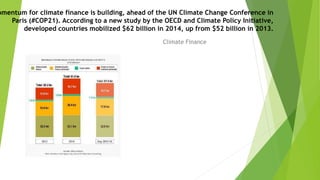
omentum for climate finance is building, ahead of the UN Climate Change Conference in
Paris (#COP21). According to a new study by the OECD and Climate Policy Initiative,
developed countries mobilized $62 billion in 2014, up from $52 billion in 2013.
Climate Finance
Agencies Working For REDD+
 FAO – Forestry
 The New York Declaration on Forests
 UN-REDD
 United Nations Convention to Combat Desertification
 International Maritime Organization
 UNFCCC: UN Framework Convention on Climate Change
REDD+ Indian Context
 National REDD+ Authority proposed – MoEFCC
 As per the policy, a National REDD+ Authority will be established in MoEF under a national
steering committee on REDD+. The authority will prepare a national inventory of carbon
sequestration in forests, an action plan indicating the national reference level for emissions and
a national monitoring and reporting system. It will also support creation of sub-national level
REDD+ architecture/institutional framework with relevant stakeholders and initiating REDD+
pilot projects for learning. A newly created REDD+ cell and the government, semi-government
and non-government technical and scientific institutions such as Forest Survey of India, Indian
Council of Forestry Research and Education, Indian Institute of Forest Management, Indian
Institute of Science and Wildlife Institute of India will assist the national REDD+ authority.
 The policy also aims at developing a mechanism for the fund flow to the communities and to put
in placer safeguards against the leakages of funds and for protecting rights and livelihoods of
communities. It aims to achieve the REDD+ readiness in next three years. The ministry has
invited suggestions and comments from the stakeholders on the draft policy.
REDD+ West Bengal Context
 Excerpts from West Bengal State Action Plan on Climate Change
Chapter 7 on Forests and Biodiversity (The strategies and actions there in are listed in Table 6 in Annexure
1. (Pages 258-265))
Based on the concerns in West Bengal about, a set of 9 strategies have been devised which are also in line
with the Green India Mission and the perspectives of the planning commission in managing the environment
and ecology. The strategies thus proposed are:
1. Spring recharge and enhancing ground water recharge in forest areas.
2. Enhancing quality of moderately dense forest, open forests, and degraded forests.
3. . Linking Protected areas.
4. Mitigating impacts of landslides, storm surges and fast river run off.
5. Enhanced fire prevention and fire management.
6. Preventing man animal conflict.
7. Understanding long term impacts of climate change on forests and monitor health of forests and its C
sequestration potential.
8. Faster penetration of renewable energy technologies for energy.
9. Protecting livelihoods dependent on forest products.
References
 http://www.un.org/sustainabledevelopment/
 www.un-redd.org/aboutredd
 http://envfor.nic.in/sites/default/files/Draft%20National%20Policy%20&%20Strategy%20on
%20REDD.pdf
 https://www.iisd.org/climate/land_use/redd/about.aspx
 http://www.downtoearth.org.in/news/india-readies-to-implement-uns-redd-programme-
44218
 International REDD+ architecture and its relevance in India
Ridima Sud, Jitndra Vir Sharma & Arun Kumar Bansal
MoeFCC & Terri
Excerpts from WBSAPCC Chapter 7 on Forests and Biodiversity

REDD+

  • 1.
    REDD+ CLIMATE CHANGE Carbon Sequestration GlobalAction For People And Planet Green Economy
  • 2.
    About REDD+  ReducingEmissions from Deforestation and Forest Degradation (REDD) is an effort to create a financial value for the carbon stored in forests.  Deforestation and forest degradation, through agricultural expansion, conversion to pastureland, infrastructure development, destructive logging, fires etc., account for nearly 20% of global greenhouse gas emissions, more than the entire global transportation sector and second only to the energy sector.  "REDD+" goes beyond deforestation and forest degradation, and includes the role of conservation, sustainable management of forests and enhancement of forest carbon stocks.
  • 3.
    About UN-REDD Programme The United Nations Programme on Reducing Emissions from Deforestation and Forest Degradation (or UN-REDD Programme) is a collaborative initiative of: FAO - Food and Agriculture Organization of the UN. UNDP - United Nations Development Programme. UNEP - United Nations Environment Programme. It was created in responses to: UNFCCC - United Nations Framework Convention on Climate Change. COP - Conference of Parties.  The UN-REDD Programme assists developing countries in preparing and implementing national REDD+ strategies and mechanisms.  The Programme has now developed a new 2016-2020 Strategic Framework.
  • 7.
    Fighting Global Warming It’s time to stop the destruction. It’s time for an energy [r]evolution.  Fossil fuels—coal, oil and natural gas—are major contributors to climate change, accounting for the vast majority of greenhouse gas emissions.  They’re also one of the main culprits polluting our air, water and soil.  As global temperatures increase, sea level rise and extreme weather become even bigger threats to communities at home and around the world.  We see a different future—one built on clean, renewable energy.
  • 8.
    Other Multilateral REDD+Initiatives  Forest Carbon Partnership Facility (FCPF) and the Forest Investment Program (FIP), hosted by The World Bank. Key strategic partners for the UN-REDD Programme.  The Programme also continues to explore closer collaboration with the UNFCCC such as supporting the implementation of its decisions, providing information and lessons learned, preparation of technical papers as well as working jointly on capacity development projects.  The UN-REDD Programme is also partnering with the Global Environment Facility (GEF)
  • 10.
    New universal climatechange agreement which will be reached at the UN climate conference in Paris, in December 2015.
  • 17.
    Global Goals forSustainable Development  On 26th Sept’2015, 193 world leaders met in New York City at the UN Sustainable Development Summit. There, they committed to 17 sustainable development goals that by 2030 will eliminate extreme poverty, improve lives, and protect the planet.  “Humanity continues to consume far more natural resources than the planet can sustainably provide,” Secretary-General Ban Ki-moon said in this year’s message for the Day, observed annually on 5 June. “It is time for us to change.”
  • 20.
    Bonn, 2 October2015 – The Republic of India submitted its new climate action plan on October 1 to the UN Framework Convention on Climate Change (UNFCCC). This Intended Nationally Determined Contribution (INDC) comes well in advance of a new universal climate change agreement which will be reached at the UN climate conference in Paris, in December this year.
  • 21.
    GOALS  POVERTY  HUNGERAND FOOD SECURITY  HEALTH  EDUCATION  GENDER EQUALITY AND WOMEN’S EMPOWERMENT  WATER AND SANITATION  ENERGY  ECONOMIC GROWTH  INFRASTRUCTURE, INDUSTRIALIZATION  INEQUALITY  CITIES  SUSTAINABLE CONSUMPTION AND PRODUCTION  CLIMATE CHANGE  OCEANS  BIODIVERSITY, FORESTS, DESERTIFICATION  PEACE AND JUSTICE  PARTNERSHIPS
  • 27.
    Carbon Sequestration  Carbonsequestration describes long-term storage of carbon dioxide or other forms of carbon to either mitigate or defer global warming and avoid dangerous climate change. It has been proposed as a way to slow the atmospheric and marine accumulation of greenhouse gases, which are released by burning fossil fuels.
  • 29.
    Facts & Figures Forests •Around 1.6 billion people depend on forests for their livelihood. This includes some 70 million indigenous people  •Forests are home to more than 80 per cent of all terrestrial species of animals, plants and insects Desertification  •2.6 billion people depend directly on agriculture, but 52 per cent of the land used for agriculture is moderately or severely affected by soil degradation  •As of 2008, land degradation affected 1.5 billion people globally  •Arable land loss is estimated at 30 to 35 times the historical rate  •Due to drought and desertification each year 12 million hectares are lost (23 hectares per minute), where 20 million tons of grain could have been grown  •74 per cent of the poor are directly affected by land degradation globally
  • 30.
    Goals (cont.) Biodiversity  •Ofthe 8,300 animal breeds known, 8 per cent are extinct and 22 per cent are at risk of extinction  •Of the over 80,000 tree species, less than 1 per cent have been studied for potential use  •Fish provide 20 per cent of animal protein to about 3 billion people. Only ten species provide about 30 per cent of marine capture fisheries and ten species provide about 50 per cent of aquaculture production  •Over 80 per cent of the human diet is provided by plants. Only three cereal crops – rice, maize and wheat – provide 60 per cent of energy intake  •As many as 80 per cent of people living in rural areas in developing countries rely on traditional plant-‐based medicines for basic  healthcare  •Micro-organisms and invertebrates are key to ecosystem services, but their contributions are still poorly known and rarely acknowledged
  • 31.
    REDD+ and theUN-REDD Programme  REDD+ is a climate change mitigation solution that many initiatives, including the UN-REDD Programme, are currently developing and supporting. Other multilateral REDD+ initiatives include the Forest Carbon Partnership Facility (FCPF) and Forest Investment Program (FIP), hosted by The World Bank.  REDD+ readiness relates to the efforts a country is undertaking, with the support of multilateral or bilateral initiatives, to build its capacity to be ready for a REDD+ mechanism.
  • 32.
    What is therole of forests in the developing world?  More than three quarters of the worlds accessible freshwater comes from forested catchments. Water quality declines with decreases in forest condition and cover, and natural hazards such as floods, landslides, and soil erosion have larger impacts (MEA, 2005).  Forests annually provide over 3.3 billion cubic meters of wood (including 1.8 billion cubic meters of fuelwood and charcoal), as well as numerous non-wood forest products that play a significant role in the economic life of hundreds of millions of people. The combined economic value of ‘‘nonmarket’’ (social and ecological) forest services may exceed the recorded market value of timber, but these values are rarely taken into account in forest management decisions (MEA, 2005).  The 60 million indigenous people who live in forest areas are especially dependent on forest resources and the health of forest ecosystems (MEA, 2005).
  • 33.
    Assessing and "proving"how much carbon is stored forests?  By implementing Measuring and Monitoring Systems compliant with the Measuring, Reporting and Verification (MRV) concept agreed upon by the Conference of the Parties of the United Nations Framework Convention on Climate Change, countries will be able to assess the amount of carbon stored in their forests as well as other benefits from REDD. The UN-REDD Programme is supporting countries to develop cost-effective, robust and compatible systems for MRV. These systems are designed to use field inventory data combined with satellite data and available technology to produce greenhouse gases inventories and establish reference emission levels. The Programme is liaising with international experts such as NASA, Brazil’s National Institute for Space Research (INPE) and the US Geological Survey to provide partner countries with planning tools and advice to help strengthen their technical and institutional capacity for effective national MRV systems.
  • 35.
    REDD - REDD+ REDD: Reducing Emissions from Deforestation and Forest Degradation (REDD) is an effort to create a financial value for the carbon stored in forests, offering incentives for developing countries to reduce emissions from forested lands and invest in low-carbon paths to sustainable development.  REDD+ : "REDD+" goes beyond deforestation and forest degradation, and includes the role of conservation, sustainable management of forests and enhancement of forest carbon stocks.
  • 37.
    "REDD+ readiness“ &Implementation Phases  REDD+ readiness relates to the efforts a country is undertaking, with the support of multilateral or bilateral initiatives, to build its capacity to be ready for a REDD+ mechanism. Implementation :  Phase 1: Developing a REDD+ strategy supported by grants  Phase 2: Implementing a REDD+ strategy, supported by (a) grants or other financial support for capability building, and enabling policies and measures and (b) payments for emission reductions measured by proxies.  Phase 3: Continued implementation of REDD+ strategy in the context of low-carbon development, payments for verified emission reductions and removals.
  • 38.
    Making money versusConserving the planet  REDD+ is seen as one of the most cost-effective ways of stabilizing the atmospheric concentration of greenhouse gas (GHG) emissions to avoid a temperature rise of two degrees Celsius. But standing forests also conserve carbon. while supporting the livelihoods of a large number of ‘Indigenous Peoples’ and forest-dependent communities as well providing essential ecosystem services such as habitat for biodiversity and provisioning clean water supplies.  Further, it’s about making the private sector part of the solution by providing the kinds of market signals, mechanisms and incentives to encourage investments that manage and conserve the world’s nature-based resources rather than mining them.  Indeed it is predicted that financial flows from North to South for GHG reductions from REDD could reach up to US$30 billion a year—funds that can be invested in renewable energy projects to assist the two billion people without access to electricity or hospitals or new schools.
  • 39.
    Benefits for developingcountries and local communities by reducing deforestation etc.  In addition to their carbon storage role, forests provide many other ecosystem services to society. The nature of these services varies from place to place, and includes water regulation, soil protection, non-timber forest products including food and fibre, climate regulation and biodiversity. As most tropical forests deliver a wide range of these essential services, there are many ways in which REDD+ can provide ecosystem and social benefits to countries and forest communities. The UN-REDD Programme continues to work in this area, examining and understanding the likely multiple benefits and risks associated with REDD+ initiatives before they are implemented.  The implementation of REDD+ must co-exist with significant emission reductions in both developed and developing countries if we hope to curb climate change.
  • 40.
    Addition to receivingcarbon offsets through a REDD+ mechanism  The UN-REDD Programme continues to work in this area, examining and understanding the likely multiple benefits and risks associated with REDD+ initiatives before they are implemented.  In addition to their carbon storage role, forests provide many other ecosystem services to society. The nature of these services varies from place to place, and includes water regulation, soil protection, non-timber forest products including food and fibre, climate regulation and biodiversity. As most tropical forests deliver a wide range of these essential services, there are many ways in which REDD+ can provide ecosystem and social benefits to countries and forest communities.
  • 41.
    Can this “carbon”value in standing trees really change deforestation trends?  Payments under a REDD+ mechanism can translate into incentives for changes in land use and better stewardship of forest resources. This, however, can only be achieved if the socio-economic drivers of deforestation and forest degradation are addressed and current forest resource users have sufficient confidence in the REDD+ mechanism to change the way they use forest resources.  When the rights of forest dependent communities are violated or communities are marginalized, investors, weary of insecure business environments and unpredictable emission reductions, are deterred.
  • 43.
    Strategies to identifyand deal with the drivers of deforestation?  To identify drivers of deforestation, studies that take into account socioeconomic factors are key. These feasibility studies can assess a wide range of drivers including: population growth; whether or not fuel wood is used; the kinds of policies and tenure systems in place; pressure from small scale agriculture expansion; pressure from larger agricultural activities like soya and palm oil production; government concessions; corruption; levels of settlements and infrastructure development.  To deal with these drivers of deforestation, governments can help provide and/or develop options to the population, such as Payment for Environmental Services (PES), clear legislation and policy enforcement and proper, robust tenure rights.
  • 44.
    Targets Set AtGlobal Summit At UN  1. By 2020, ensure the conservation, restoration and sustainable use of terrestrial and inland freshwater ecosystems and their services, in particular forests, wetlands, mountains and drylands, in line with obligations under international agreements  2. By 2020, promote the implementation of sustainable management of all types of forests, halt deforestation, restore degraded forests and substantially increase afforestation and reforestation globally  3. By 2030, combat desertification, restore degraded land and soil, including land affected by desertification, drought and floods, and strive to achieve a land degradation-neutral world  4. By 2030, ensure the conservation of mountain ecosystems, including their biodiversity, in order to enhance their capacity to provide benefits that are essential for sustainable development
  • 45.
    Target Set AtGlobal Summit UN  5. Take urgent and significant action to reduce the degradation of natural habitats, halt the loss of biodiversity and, by 2020, protect and prevent the extinction of threatened species  6. Promote fair and equitable sharing of the benefits arising from the utilization of genetic resources and promote appropriate access to such resources, as internationally agreed  7.Take urgent action to end poaching and trafficking of protected species of flora and fauna and address both demand and supply of illegal wildlife products  8. By 2020, introduce measures to prevent the introduction and significantly reduce the impact of invasive alien species on land and water ecosystems and control or eradicate the priority species  9.By 2020, integrate ecosystem and biodiversity values into national and local planning, development processes, poverty reduction strategies and accounts
  • 46.
    Targets Set AtGlobal Summit UN  10. Mobilize and significantly increase financial resources from all sources to conserve and sustainably use biodiversity and ecosystems  11. Mobilize significant resources from all sources and at all levels to finance sustainable forest management and provide adequate incentives to developing countries to advance such management, including for conservation and reforestation  12. Enhance global support for efforts to combat poaching and trafficking of protected species, including by increasing the capacity of local communities to pursue sustainable livelihood opportunities
  • 58.
    omentum for climatefinance is building, ahead of the UN Climate Change Conference in Paris (#COP21). According to a new study by the OECD and Climate Policy Initiative, developed countries mobilized $62 billion in 2014, up from $52 billion in 2013. Climate Finance
  • 59.
    Agencies Working ForREDD+  FAO – Forestry  The New York Declaration on Forests  UN-REDD  United Nations Convention to Combat Desertification  International Maritime Organization  UNFCCC: UN Framework Convention on Climate Change
  • 60.
    REDD+ Indian Context National REDD+ Authority proposed – MoEFCC  As per the policy, a National REDD+ Authority will be established in MoEF under a national steering committee on REDD+. The authority will prepare a national inventory of carbon sequestration in forests, an action plan indicating the national reference level for emissions and a national monitoring and reporting system. It will also support creation of sub-national level REDD+ architecture/institutional framework with relevant stakeholders and initiating REDD+ pilot projects for learning. A newly created REDD+ cell and the government, semi-government and non-government technical and scientific institutions such as Forest Survey of India, Indian Council of Forestry Research and Education, Indian Institute of Forest Management, Indian Institute of Science and Wildlife Institute of India will assist the national REDD+ authority.  The policy also aims at developing a mechanism for the fund flow to the communities and to put in placer safeguards against the leakages of funds and for protecting rights and livelihoods of communities. It aims to achieve the REDD+ readiness in next three years. The ministry has invited suggestions and comments from the stakeholders on the draft policy.
  • 61.
    REDD+ West BengalContext  Excerpts from West Bengal State Action Plan on Climate Change Chapter 7 on Forests and Biodiversity (The strategies and actions there in are listed in Table 6 in Annexure 1. (Pages 258-265)) Based on the concerns in West Bengal about, a set of 9 strategies have been devised which are also in line with the Green India Mission and the perspectives of the planning commission in managing the environment and ecology. The strategies thus proposed are: 1. Spring recharge and enhancing ground water recharge in forest areas. 2. Enhancing quality of moderately dense forest, open forests, and degraded forests. 3. . Linking Protected areas. 4. Mitigating impacts of landslides, storm surges and fast river run off. 5. Enhanced fire prevention and fire management. 6. Preventing man animal conflict. 7. Understanding long term impacts of climate change on forests and monitor health of forests and its C sequestration potential. 8. Faster penetration of renewable energy technologies for energy. 9. Protecting livelihoods dependent on forest products.
  • 62.
    References  http://www.un.org/sustainabledevelopment/  www.un-redd.org/aboutredd http://envfor.nic.in/sites/default/files/Draft%20National%20Policy%20&%20Strategy%20on %20REDD.pdf  https://www.iisd.org/climate/land_use/redd/about.aspx  http://www.downtoearth.org.in/news/india-readies-to-implement-uns-redd-programme- 44218  International REDD+ architecture and its relevance in India Ridima Sud, Jitndra Vir Sharma & Arun Kumar Bansal MoeFCC & Terri Excerpts from WBSAPCC Chapter 7 on Forests and Biodiversity