Reducing Emissions and Conserving Biodiversity by Avoiding Deforestation David Huberman IUCN – Economics & Environment APFW  Hanoi, April 24th, 2008
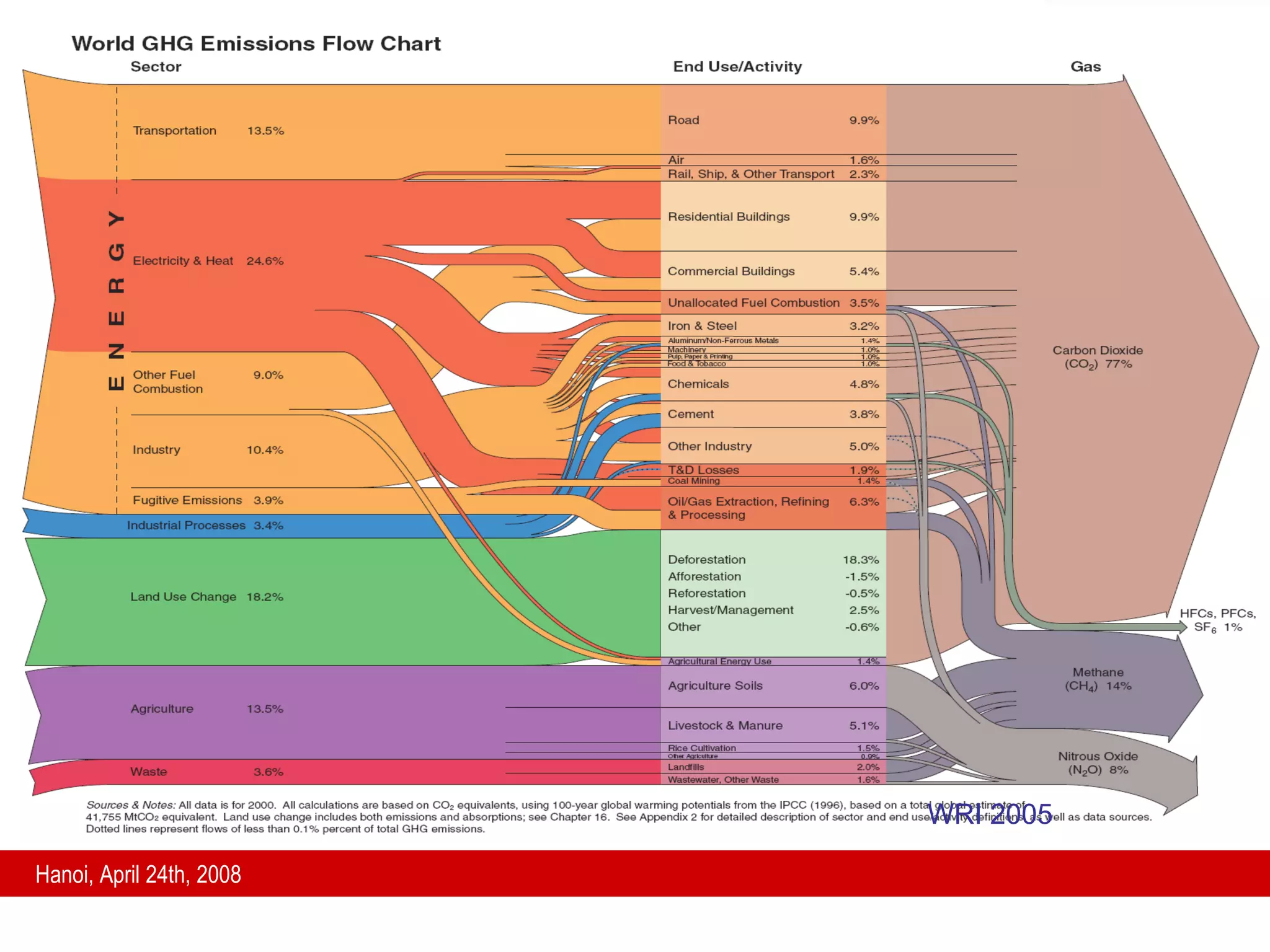
Global Emissions (40 Gt CO 2  e   yr -1 ) WRI 2005
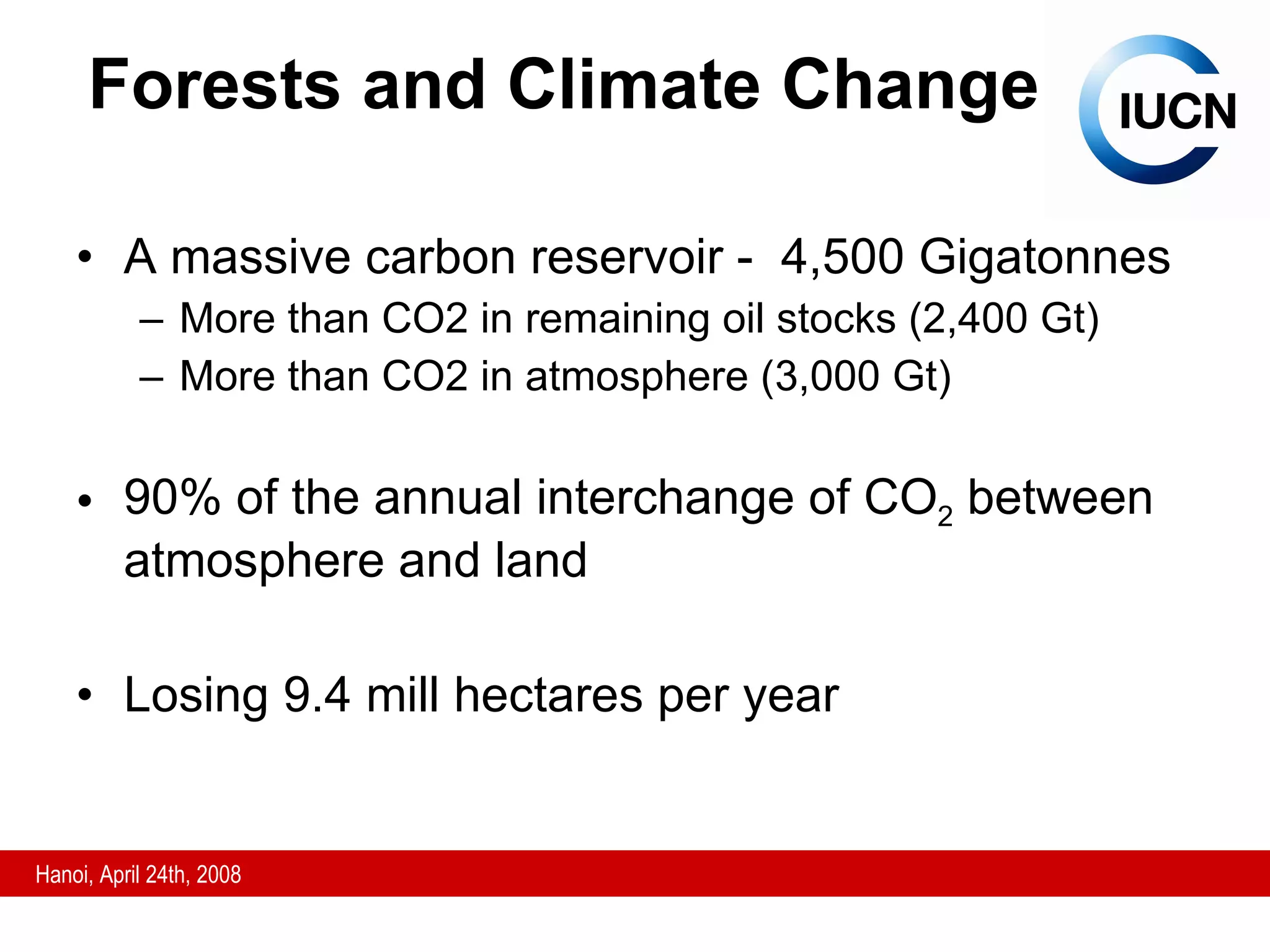
Forests and Climate Change A massive carbon reservoir -  4,500 Gigatonnes More than CO2 in remaining oil stocks (2,400 Gt) More than CO2 in atmosphere (3,000 Gt) 90% of the annual interchange of CO 2  between atmosphere and land  Losing 9.4 mill hectares per year
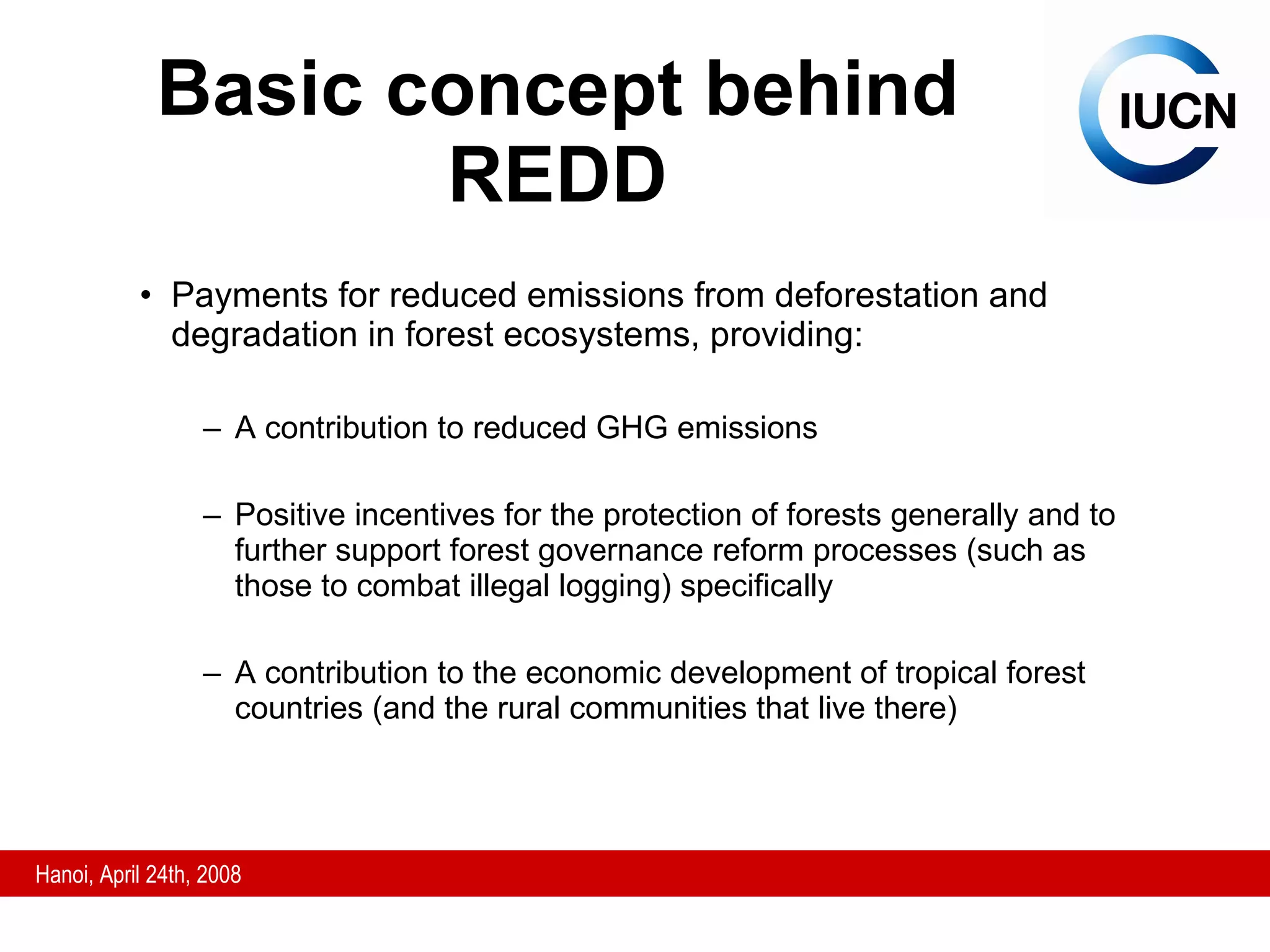
Basic concept behind REDD Payments for reduced emissions from deforestation and degradation in forest ecosystems, providing: A contribution to reduced GHG emissions  P ositive incentives for the protection of forests generally and to further support forest governance reform processes (such as those to combat illegal logging) specifically A contribution to the economic development of tropical forest countries (and the rural communities that live there)
The rationale for REDD Deforestation and land degradation account for up to 25% of GHG emissions But REDD is currently ineligible for crediting under the Clean Development Mechanism (total US$ 5.3 Billion in 2006) Reducing Emissions from Deforestation in Developing Countries (REDD) seems to be a cost-effective climate mitigation option REDD could offer significant co-benefits (biodiversity, ecosystem services, rural livelihoods)
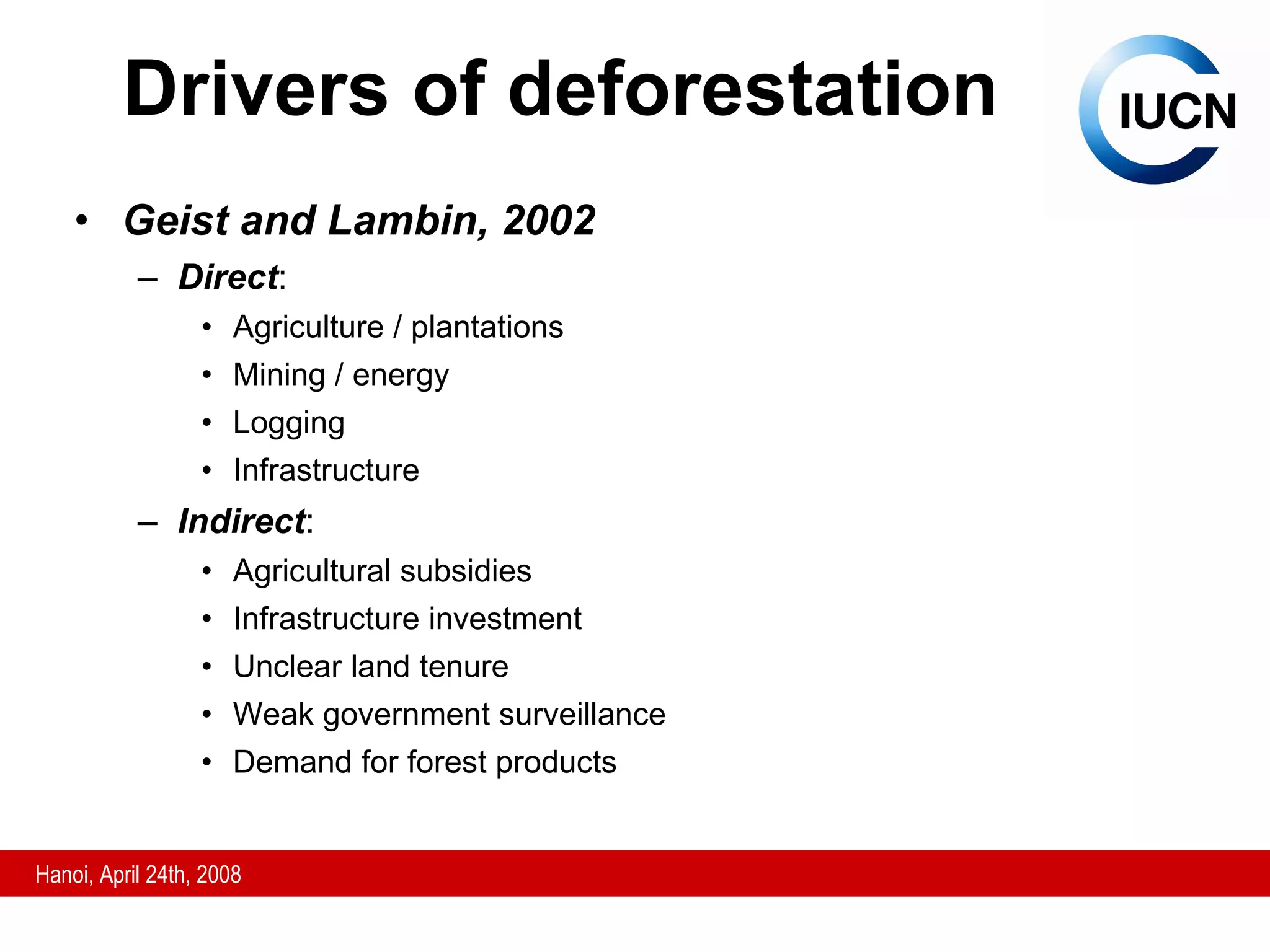
FAO 2005 A global snapshot: Countries with large net changes in forest area 2000 - 2005
Drivers of deforestation Geist and Lambin, 2002 Direct : Agriculture / plantations Mining / energy Logging Infrastructure Indirect : Agricultural subsidies Infrastructure investment Unclear land tenure Weak government surveillance Demand for forest products
What are REDD activities? Adapted from Chomitz et al., 2007: paying communities directly for reduced deforestation, based on the model of existing Payments for Ecosystem Services  strengthening forest fire prevention programs  improving land tenure security for forest-dwelling peoples increased efforts to reduce illegal logging  higher taxes on large-scale land clearance  promotion of industry and other off-farm employment agricultural intensification in favorable areas to relieve pressure on remaining forest lands strategic planning of road improvements to avoid unplanned logging or agricultural expansion supporting community forestry
Financing REDD Payments for Ecosystem Services (PES) Voluntary Conditional Provider – beneficiary relationship Integrating PES and REDD: A bundled demand to meet a bundled supply?
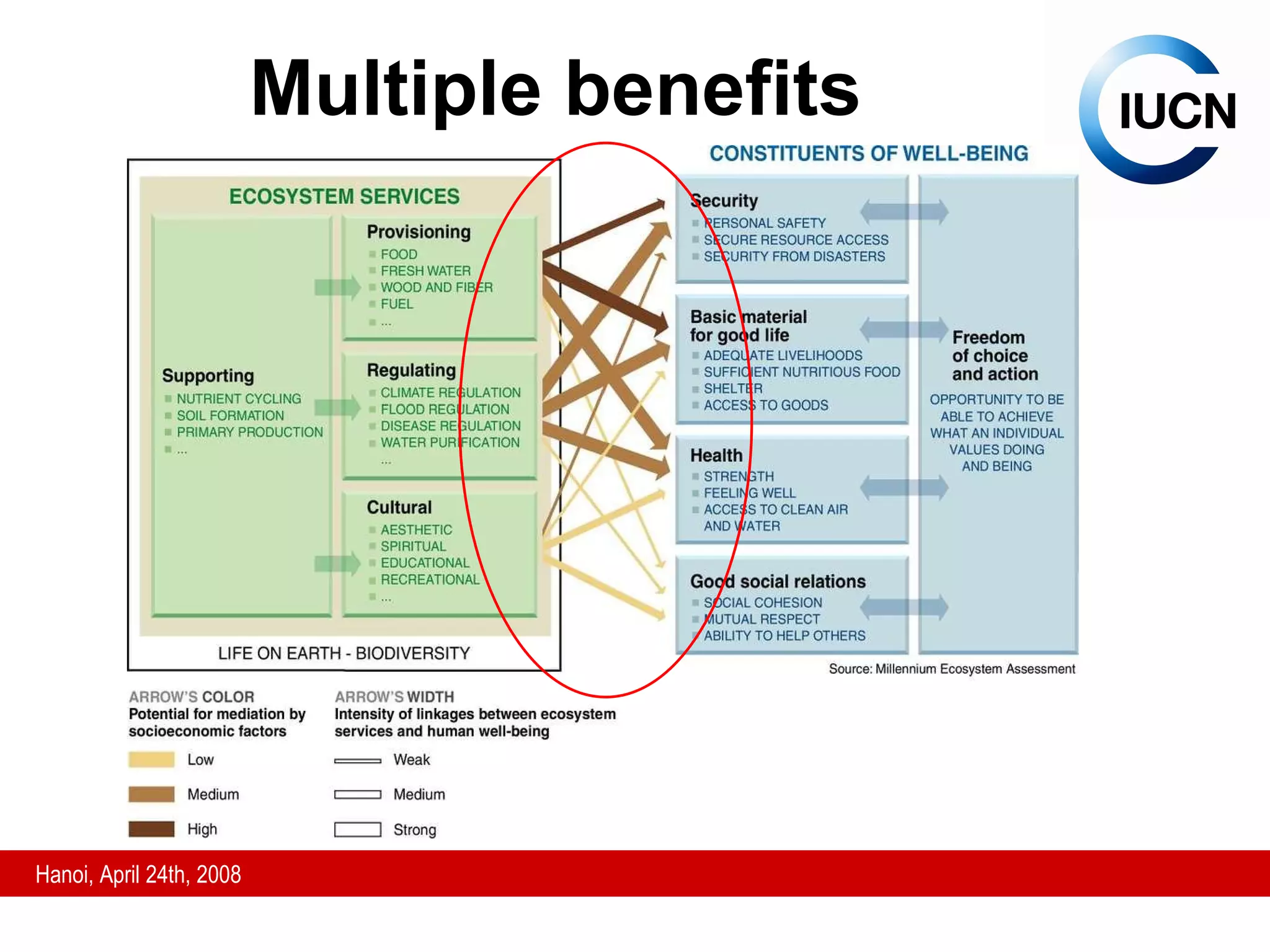
Multiple benefits
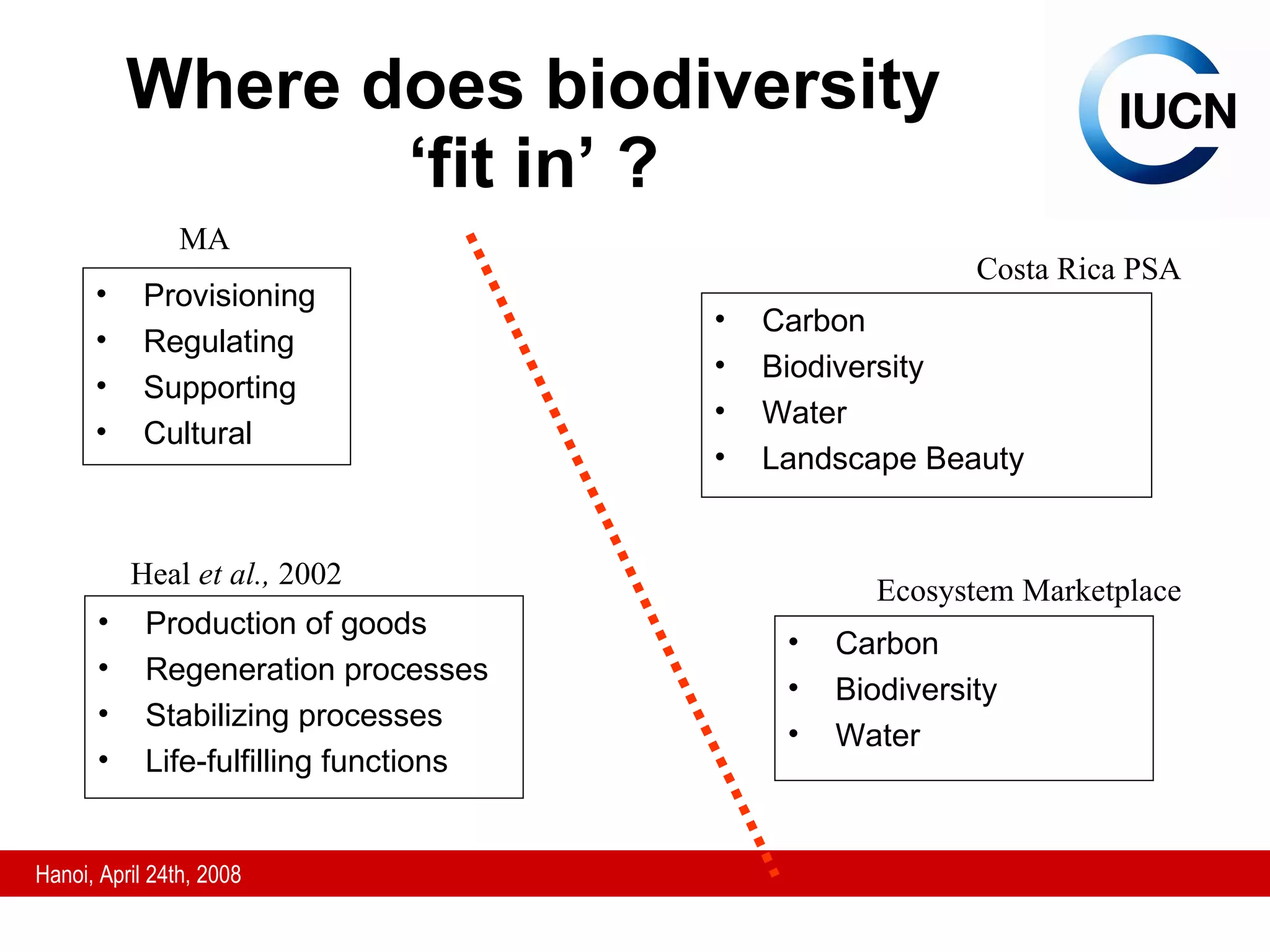
Where does biodiversity ‘fit in’ ? Provisioning Regulating Supporting Cultural Carbon Biodiversity Water Landscape Beauty Production of goods Regeneration processes Stabilizing processes Life-fulfilling functions MA Heal  et al.,  2002 Costa Rica PSA Carbon Biodiversity Water Ecosystem Marketplace
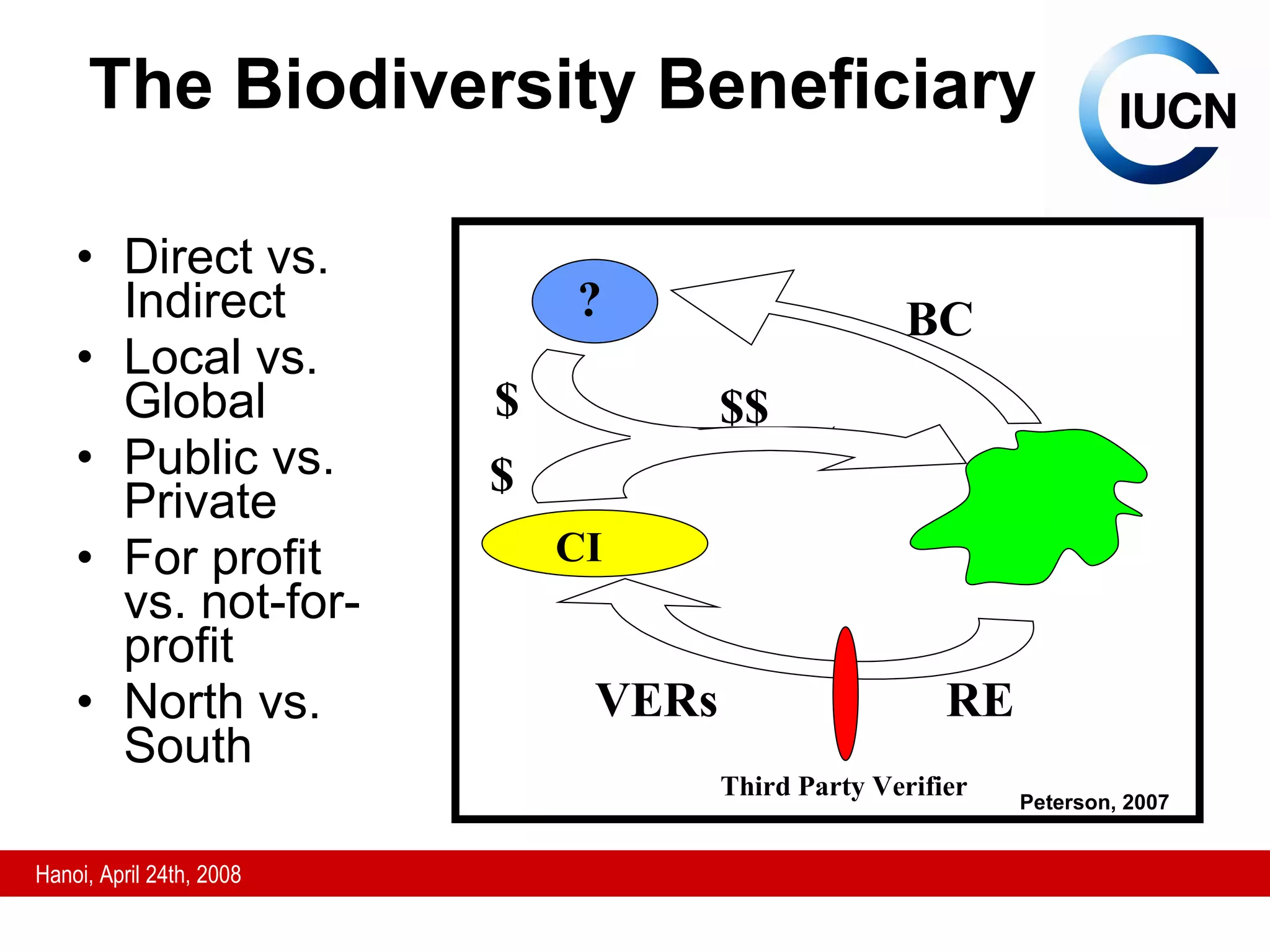
The Biodiversity Beneficiary Direct vs. Indirect Local vs. Global Public vs. Private For profit vs. not-for-profit North vs. South Third Party Verifier CI BC RE VERs $ $ $$ ? Peterson, 2007
Forest Carbon Projects approved in: China, Panama, and Indonesia Projects currently being audited in: Tanzania, India, UK, Nicaragua, and Brazil
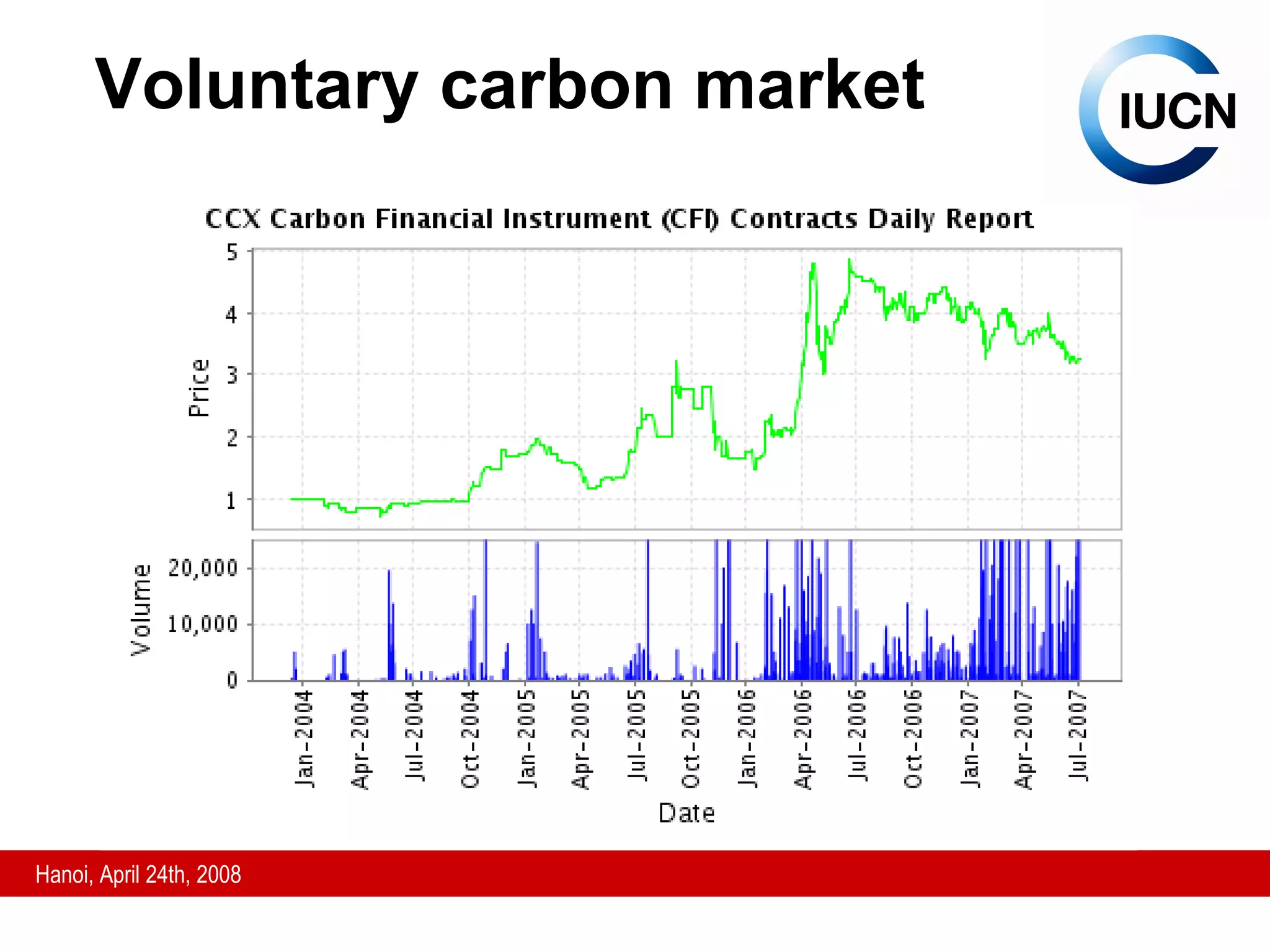
Voluntary carbon market
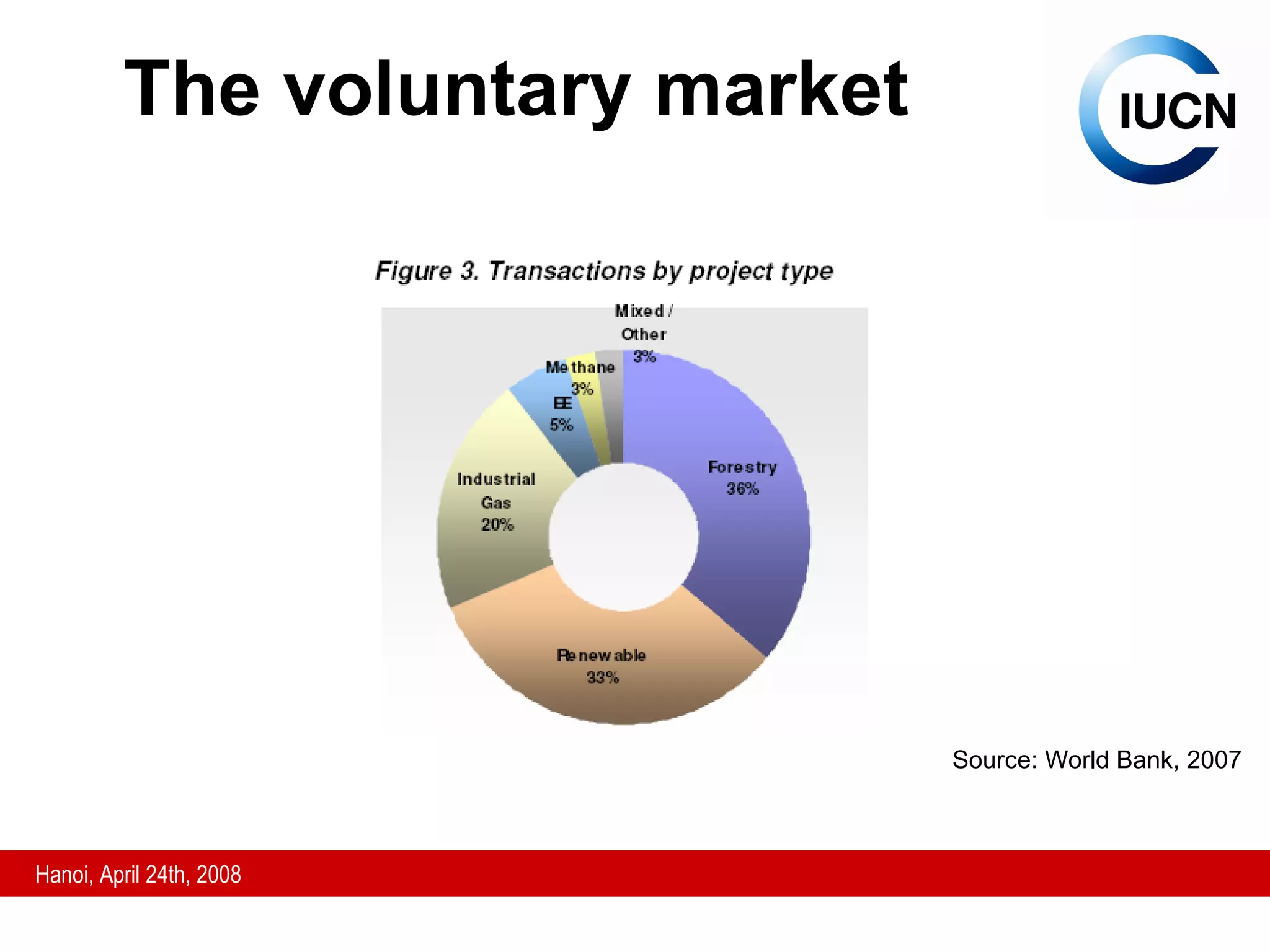
The voluntary market Source: World Bank, 2007
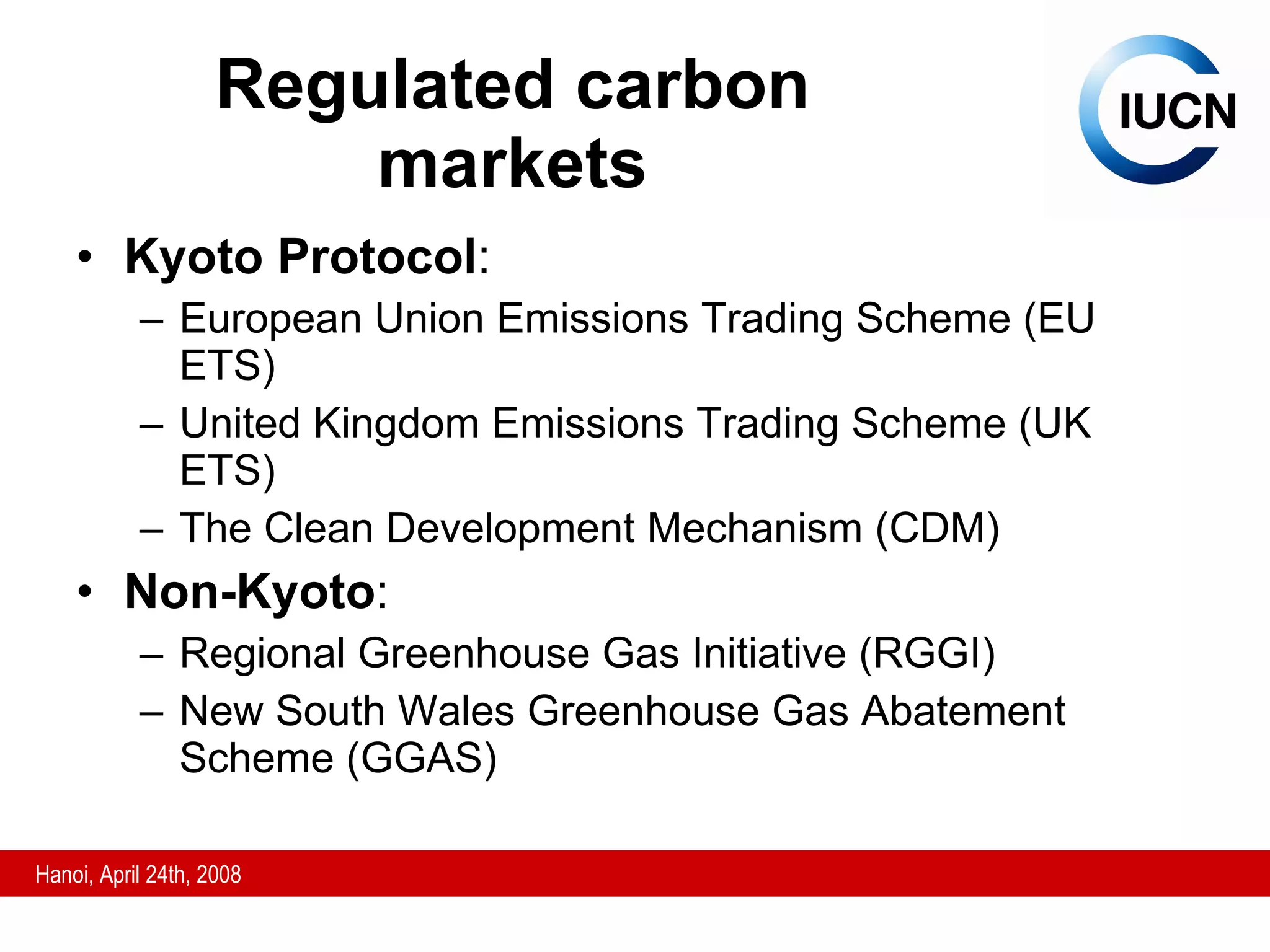
Regulated carbon markets Kyoto Protocol : European Union Emissions Trading Scheme (EU ETS) United Kingdom Emissions Trading Scheme (UK ETS) The Clean Development Mechanism (CDM) Non-Kyoto : Regional Greenhouse Gas Initiative (RGGI) New South Wales Greenhouse Gas Abatement Scheme (GGAS)
LULUCF Afforestation, reforestation, avoided deforestation LULUCF projects growing fast, but:  Ambiguous products Ambiguous verification/certification procedures no clear sense of direction Budding standards CDM Gold Standard (no forestry projects certified) Voluntary Carbon Standard  CCBA Standard
Main outstanding issues Leakage: risk of simply displacing deforestation pressure to other areas? Additionality: how imminent is the threat? Would some forests be conserved anyway? Why reward inaction? What is the appropriate baseline for assessing REDD? Are REDD credits secure (e.g. from fire, disease)? National, programmatic or project-level REDD? Tradable credits or publicly-funded REDD? Integrate into the existing carbon market or create a new and separate REDD market? What potential impacts on the rural poor?
These include: Excuse for  "business as usual“ emissions from fossil fuels Driven solely as a technological fix (baselines, monitoring, markets) to what is ostensibly a political problem (governance, rights and tenure, etc)  Which in turn: Undermine the rights and livelihoods, or otherwise, disenfranchise poor rural communities And thus: Compromises the ability of REDD to deliver promised emissions reduction benefits (permanence, leakage) REDD risks
Key Messages REDD should be included as post 2012 mitigation option. REDD has to be more than a simple offset option – rather it needs to be integrated as a companion mechanism to deep cuts in fossil fuel emissions.  Degradation is the precursor to deforestation and needs to be accounted for. If REDD is to work it needs to be firmly rooted in sustainable forest management (don’t under-estimate this challenge!) The real window of opportunity to deploy REDD is over the next few of years!
Elements for post-2012 negotiations (1) A national (or for very large countries perhaps a provincial) framework is essential Degradation has to be included! Resources allocated ahead of time for in-country capacity building Sufficient flexibility to address national circumstances Support early pilot action that allows full participation on a voluntary basis
Elements for post 2012 negotiations (2) Alignment with ongoing forest governance processes.  Build in-country capacity for basic governance & sustainable forest management  Complement forest sector reform processes such as those to combat illegal logging Participation of forest dependent communities and benefit sharing for poverty reduction
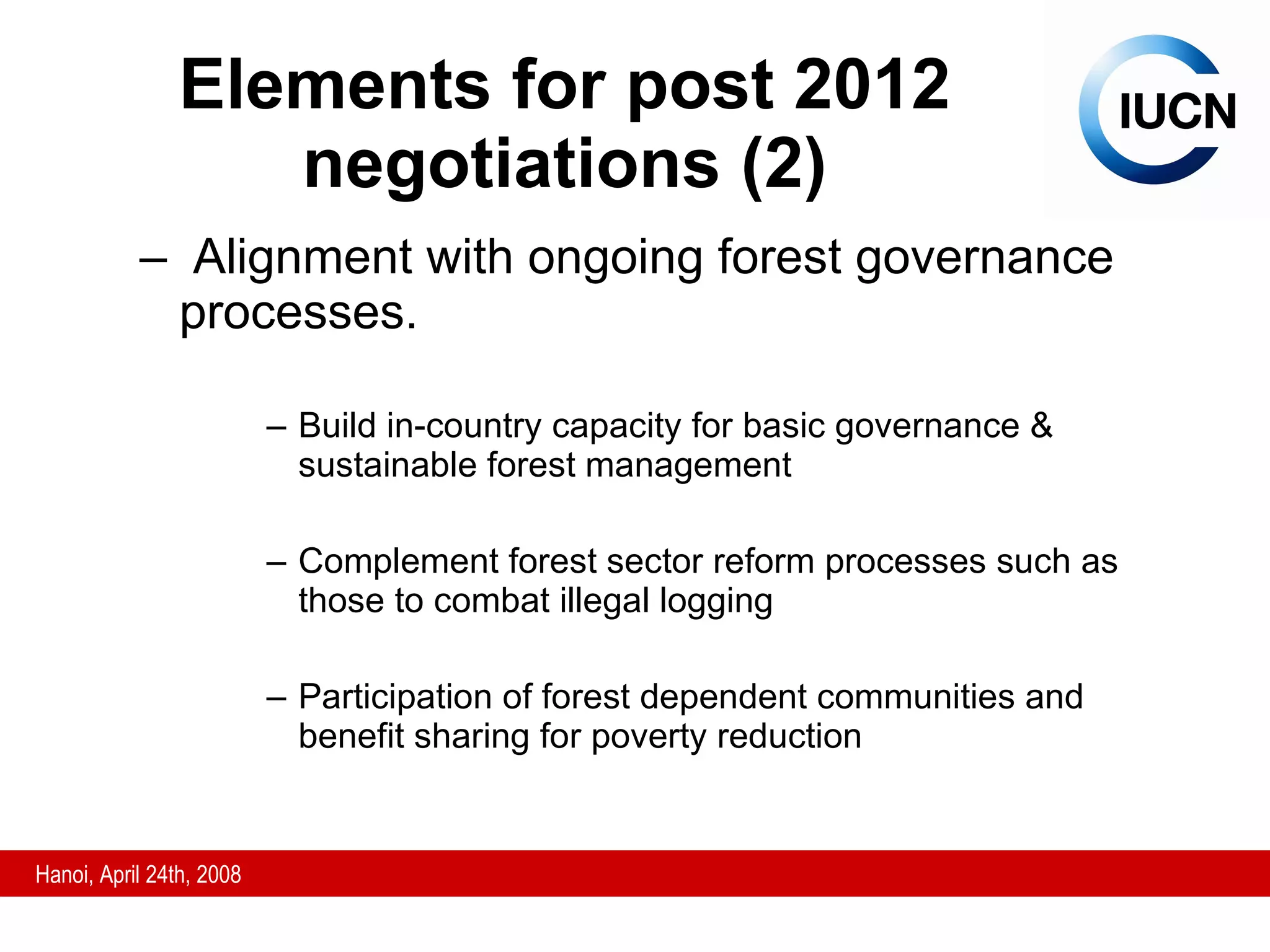
Keep the eye on the prize Sustainable development Deforestation avoided Livelihood opportunites maintained or enhanced No one made worse off
Thank you!

Climate change & REDD

  • 1.
    Reducing Emissions andConserving Biodiversity by Avoiding Deforestation David Huberman IUCN – Economics & Environment APFW Hanoi, April 24th, 2008
  • 2.
    Global Emissions (40Gt CO 2 e yr -1 ) WRI 2005
  • 3.
    Forests and ClimateChange A massive carbon reservoir - 4,500 Gigatonnes More than CO2 in remaining oil stocks (2,400 Gt) More than CO2 in atmosphere (3,000 Gt) 90% of the annual interchange of CO 2 between atmosphere and land Losing 9.4 mill hectares per year
  • 4.
    Basic concept behindREDD Payments for reduced emissions from deforestation and degradation in forest ecosystems, providing: A contribution to reduced GHG emissions P ositive incentives for the protection of forests generally and to further support forest governance reform processes (such as those to combat illegal logging) specifically A contribution to the economic development of tropical forest countries (and the rural communities that live there)
  • 5.
    The rationale forREDD Deforestation and land degradation account for up to 25% of GHG emissions But REDD is currently ineligible for crediting under the Clean Development Mechanism (total US$ 5.3 Billion in 2006) Reducing Emissions from Deforestation in Developing Countries (REDD) seems to be a cost-effective climate mitigation option REDD could offer significant co-benefits (biodiversity, ecosystem services, rural livelihoods)
  • 6.
    FAO 2005 Aglobal snapshot: Countries with large net changes in forest area 2000 - 2005
  • 7.
    Drivers of deforestationGeist and Lambin, 2002 Direct : Agriculture / plantations Mining / energy Logging Infrastructure Indirect : Agricultural subsidies Infrastructure investment Unclear land tenure Weak government surveillance Demand for forest products
  • 8.
    What are REDDactivities? Adapted from Chomitz et al., 2007: paying communities directly for reduced deforestation, based on the model of existing Payments for Ecosystem Services strengthening forest fire prevention programs improving land tenure security for forest-dwelling peoples increased efforts to reduce illegal logging higher taxes on large-scale land clearance promotion of industry and other off-farm employment agricultural intensification in favorable areas to relieve pressure on remaining forest lands strategic planning of road improvements to avoid unplanned logging or agricultural expansion supporting community forestry
  • 9.
    Financing REDD Paymentsfor Ecosystem Services (PES) Voluntary Conditional Provider – beneficiary relationship Integrating PES and REDD: A bundled demand to meet a bundled supply?
  • 10.
  • 11.
    Where does biodiversity‘fit in’ ? Provisioning Regulating Supporting Cultural Carbon Biodiversity Water Landscape Beauty Production of goods Regeneration processes Stabilizing processes Life-fulfilling functions MA Heal et al., 2002 Costa Rica PSA Carbon Biodiversity Water Ecosystem Marketplace
  • 12.
    The Biodiversity BeneficiaryDirect vs. Indirect Local vs. Global Public vs. Private For profit vs. not-for-profit North vs. South Third Party Verifier CI BC RE VERs $ $ $$ ? Peterson, 2007
  • 13.
    Forest Carbon Projectsapproved in: China, Panama, and Indonesia Projects currently being audited in: Tanzania, India, UK, Nicaragua, and Brazil
  • 14.
  • 15.
    The voluntary marketSource: World Bank, 2007
  • 16.
    Regulated carbon marketsKyoto Protocol : European Union Emissions Trading Scheme (EU ETS) United Kingdom Emissions Trading Scheme (UK ETS) The Clean Development Mechanism (CDM) Non-Kyoto : Regional Greenhouse Gas Initiative (RGGI) New South Wales Greenhouse Gas Abatement Scheme (GGAS)
  • 17.
    LULUCF Afforestation, reforestation,avoided deforestation LULUCF projects growing fast, but: Ambiguous products Ambiguous verification/certification procedures no clear sense of direction Budding standards CDM Gold Standard (no forestry projects certified) Voluntary Carbon Standard CCBA Standard
  • 18.
    Main outstanding issuesLeakage: risk of simply displacing deforestation pressure to other areas? Additionality: how imminent is the threat? Would some forests be conserved anyway? Why reward inaction? What is the appropriate baseline for assessing REDD? Are REDD credits secure (e.g. from fire, disease)? National, programmatic or project-level REDD? Tradable credits or publicly-funded REDD? Integrate into the existing carbon market or create a new and separate REDD market? What potential impacts on the rural poor?
  • 19.
    These include: Excusefor "business as usual“ emissions from fossil fuels Driven solely as a technological fix (baselines, monitoring, markets) to what is ostensibly a political problem (governance, rights and tenure, etc) Which in turn: Undermine the rights and livelihoods, or otherwise, disenfranchise poor rural communities And thus: Compromises the ability of REDD to deliver promised emissions reduction benefits (permanence, leakage) REDD risks
  • 20.
    Key Messages REDDshould be included as post 2012 mitigation option. REDD has to be more than a simple offset option – rather it needs to be integrated as a companion mechanism to deep cuts in fossil fuel emissions. Degradation is the precursor to deforestation and needs to be accounted for. If REDD is to work it needs to be firmly rooted in sustainable forest management (don’t under-estimate this challenge!) The real window of opportunity to deploy REDD is over the next few of years!
  • 21.
    Elements for post-2012negotiations (1) A national (or for very large countries perhaps a provincial) framework is essential Degradation has to be included! Resources allocated ahead of time for in-country capacity building Sufficient flexibility to address national circumstances Support early pilot action that allows full participation on a voluntary basis
  • 22.
    Elements for post2012 negotiations (2) Alignment with ongoing forest governance processes. Build in-country capacity for basic governance & sustainable forest management Complement forest sector reform processes such as those to combat illegal logging Participation of forest dependent communities and benefit sharing for poverty reduction
  • 23.
    Keep the eyeon the prize Sustainable development Deforestation avoided Livelihood opportunites maintained or enhanced No one made worse off
  • 24.

Editor's Notes

  • #7 GROSS EMISSIONS OF 8.2 Gigatonnes CO2e/yr of which: Asia 45% Africa 23% Latin America 32% F5orest carbon stocks Carbon in above ground biomass in tonnes C per hectare: World average: 71.5 Europe: 43.7 South America: 110.1 Brazil: 103 SE Asia: 89.8 Indonesia: 67 Malaysia: 168 Central Africa: 157.3 Congo: 231
  • #11 Popularity of REDD within conservation community is easily understandable: Back to the MA – a healthy ecosystem (preserved rainforest) makes MANY contributions to human well-being. A whole BUNDLE of services!
  • #12 The trouble with biodiversity – doesn’t really ‘fit’ anywhere
  • #13 There are many biodiversity beneficiaries – it is not a united stakeholder group. Maybe talk about the 3 main values of Biodiversity (insurance, knowledge, and productivity).
  • #14 Purely voluntary for now. Only one CDM project involving A/R – Small-scale reforestation for landscape restoration in China. Another one in the pipeline.
  • #15 Price: $/metric ton Volume: metric tons of CO2 Overall, the voluntary carbon market has grown 1000% in two years, now $100 million and expected to double again this year.
  • #17 Certified Emissions Reductions (CERs) are the currency used
  • #18 Predicted to match amount of trading taking place under CDM by 2010.
  • #24 It’s NOT just about avoiding deforestation. It’s about sustainable development and enhancing ecosystem services for human well-being.