BY
RAJA SHEEBA.R
III Yr,ECE
 Introduction
 Limitations of present memory technology
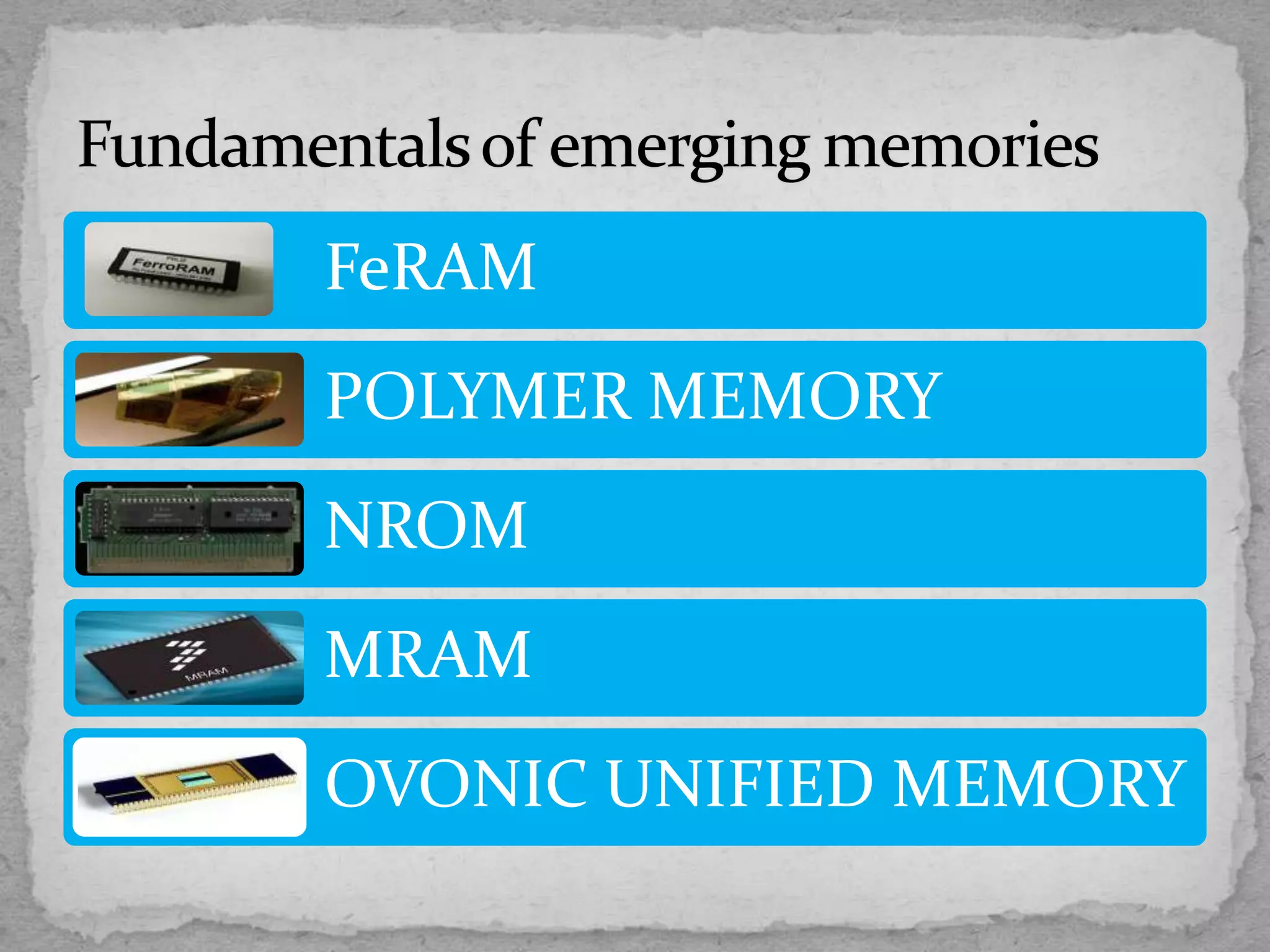
 Fundamentals of emerging memories
 Ovonic unified memory
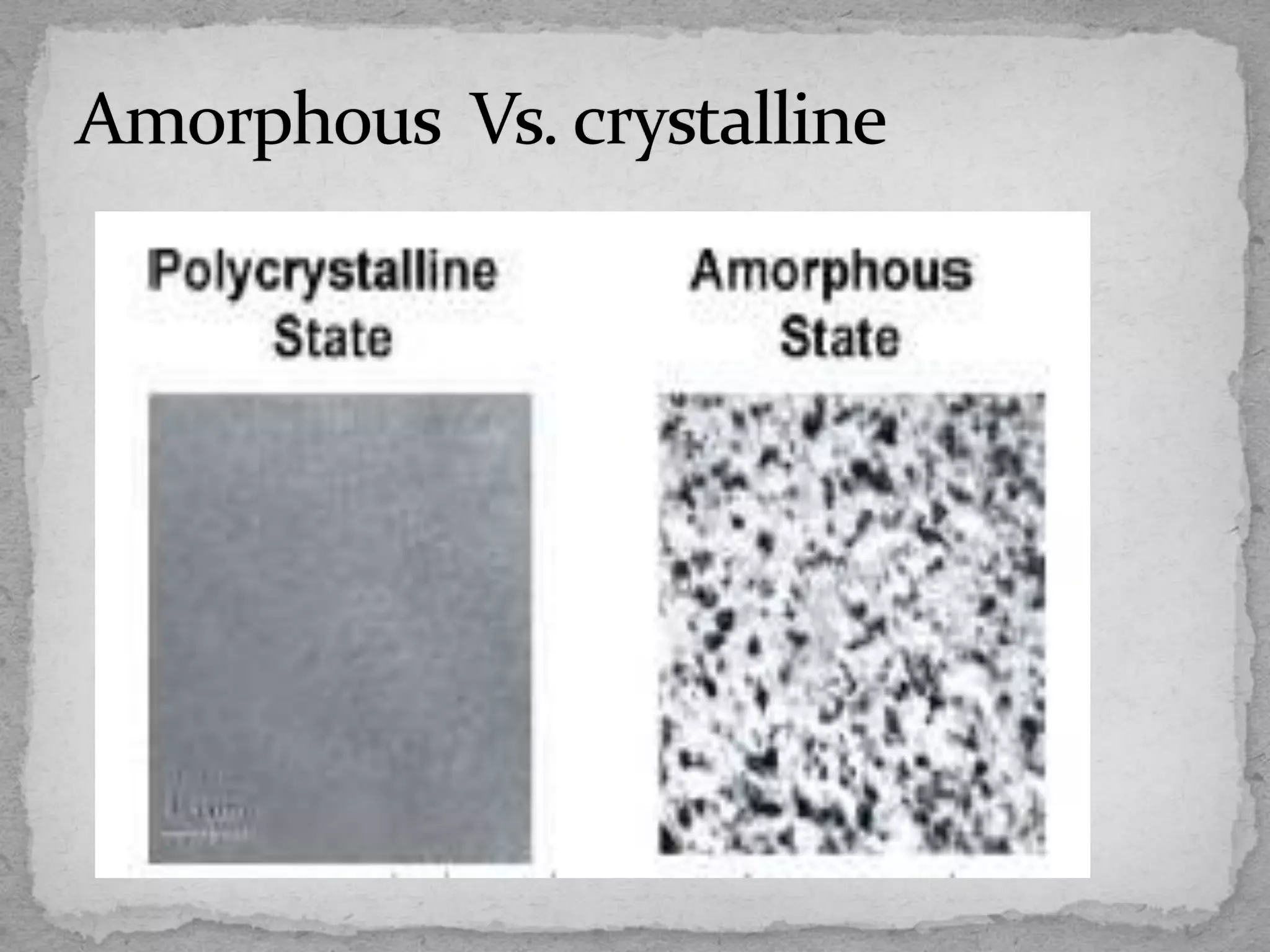
 Amorphous vs. crystalline
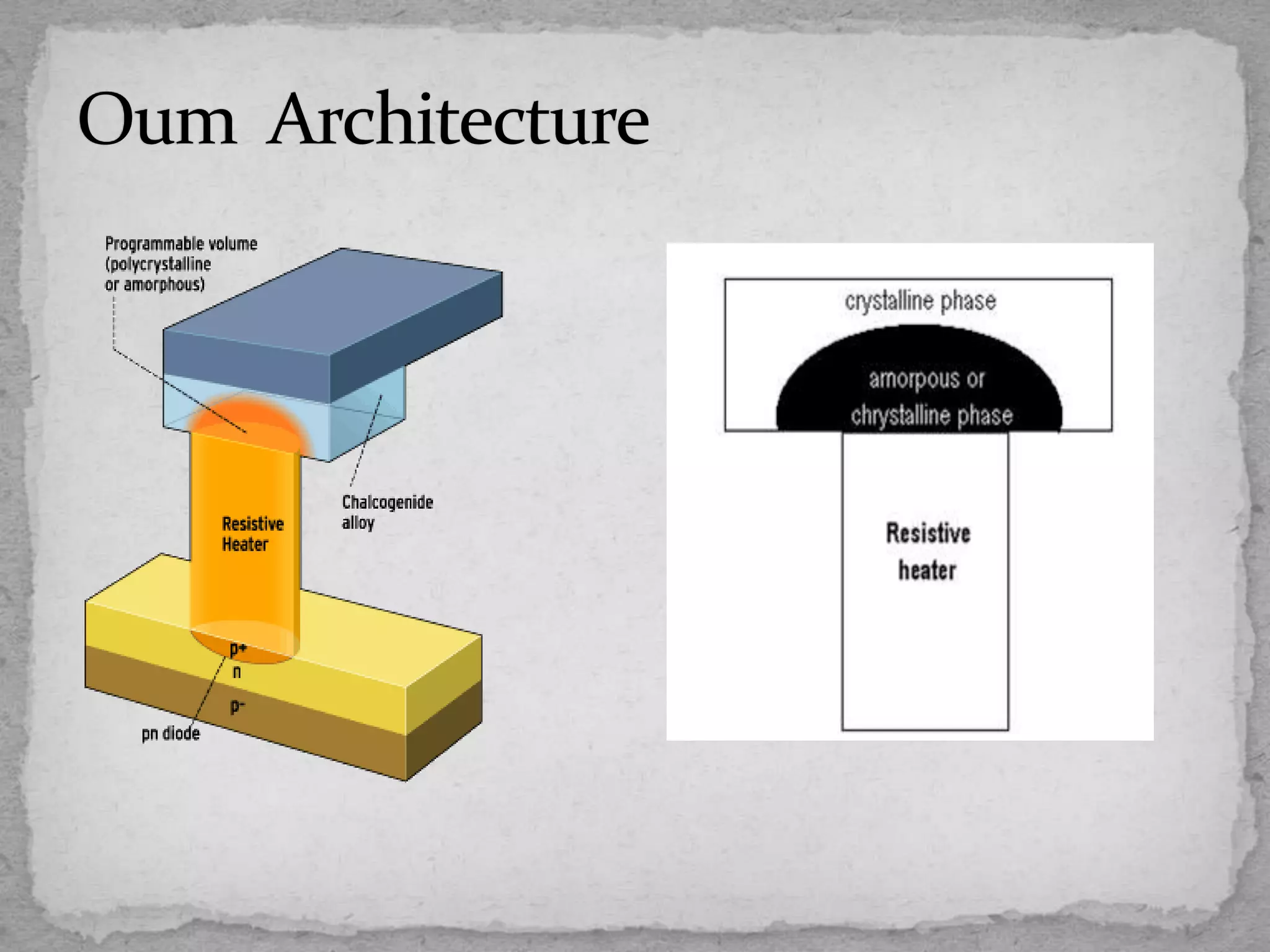
 OUM architecture
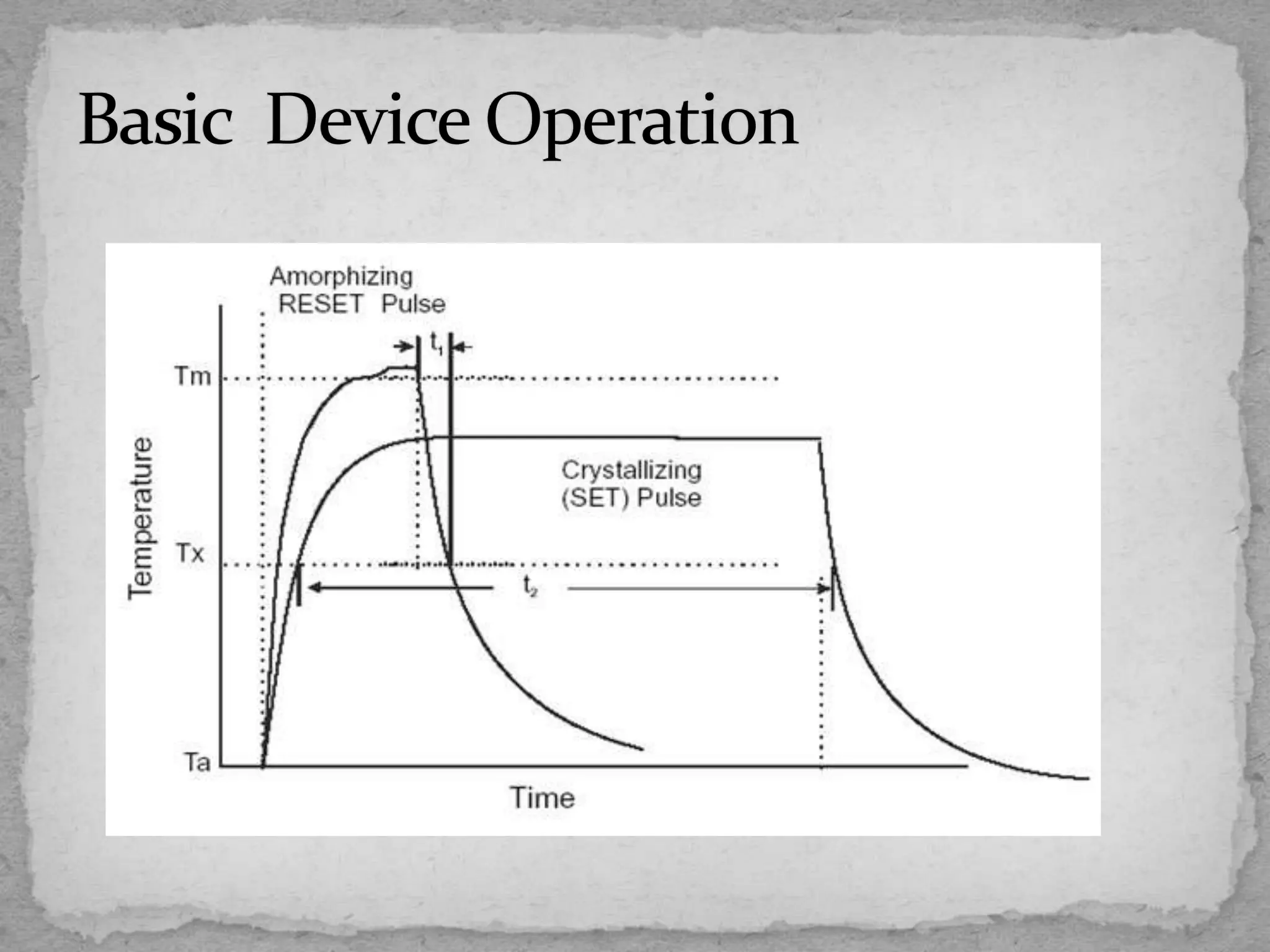
 Basic device operation
 Features of OUM
 Advantages of OUM
 Conclusion
 References
† Semiconductors form the fundamental building
blocks of the modern electronic world providing
the brains and the memory of products all around
us from washing machines to super computers
† Current memory technologies have a lot of
limitations
† Material limited scaling - era
 DRAM – volatile & difficult to integrate
 RAM – high cost & volatile
 FLASH – slower writes
- less number of write/erase cycles
 Expansion in 2D space
FeRAM
POLYMER MEMORY
NROM
MRAM
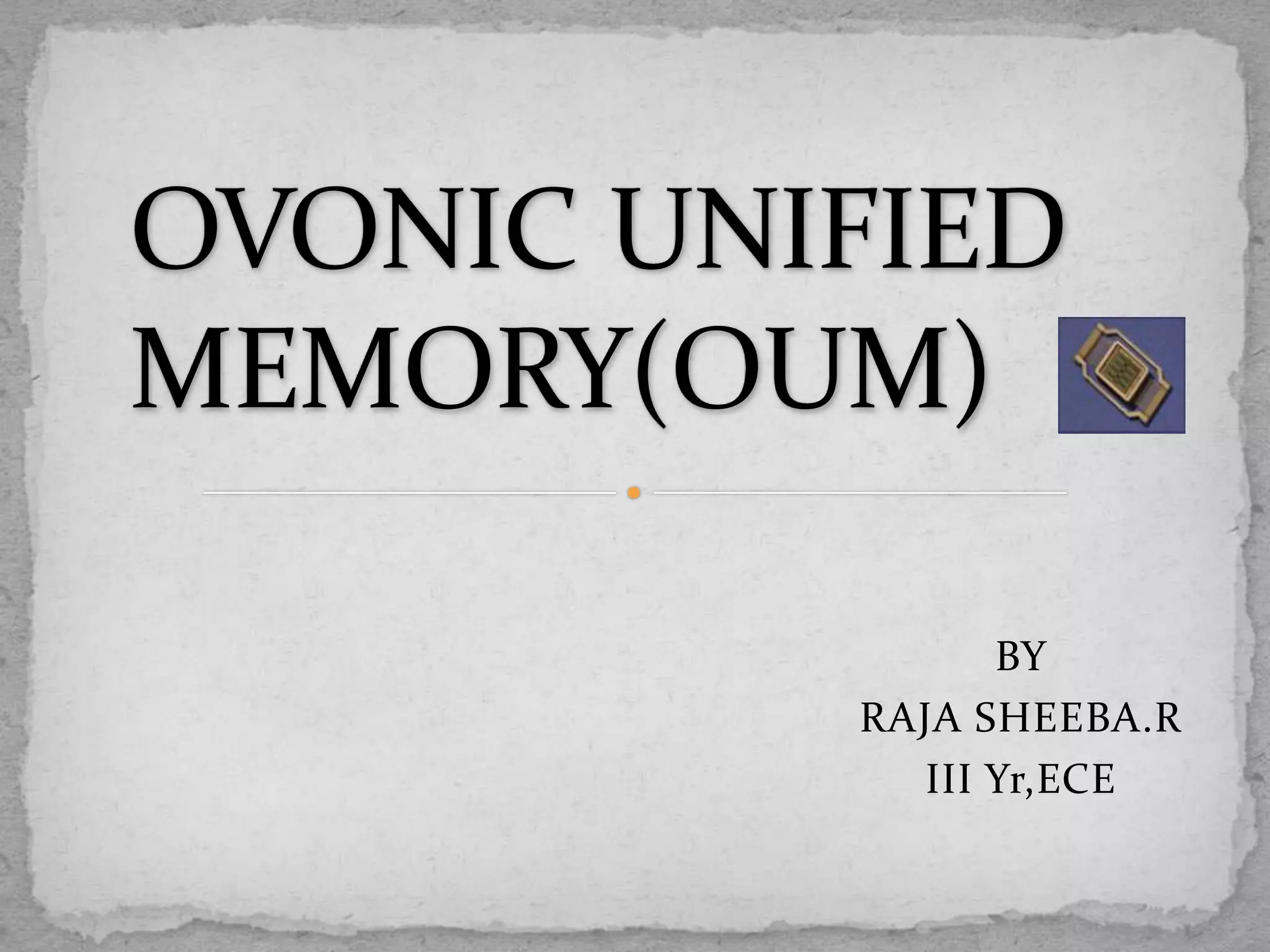
OVONIC UNIFIED MEMORY
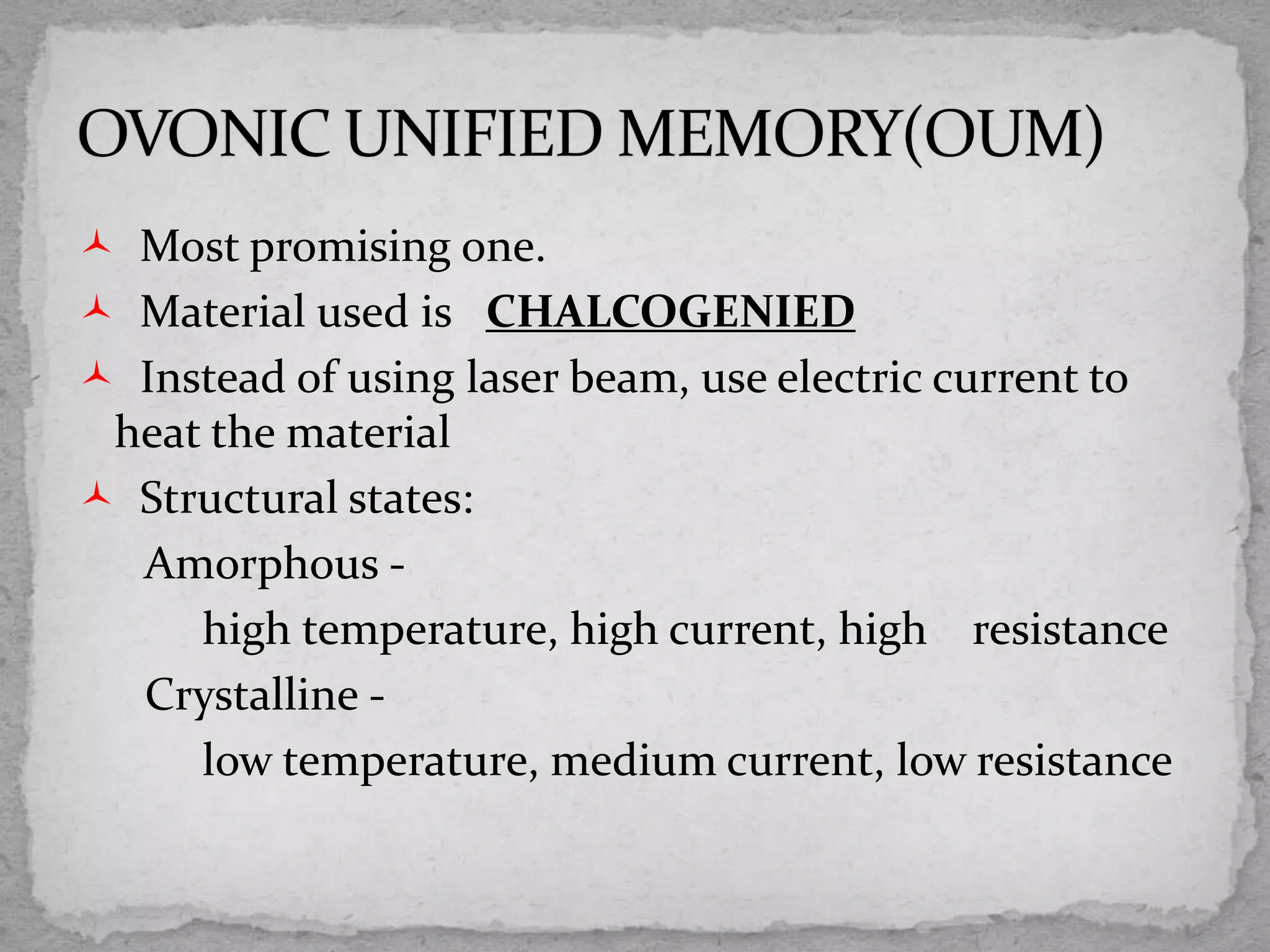
 Most promising one.
 Material used is CHALCOGENIED
 Instead of using laser beam, use electric current to
heat the material
 Structural states:
Amorphous -
high temperature, high current, high resistance
Crystalline -
low temperature, medium current, low resistance
† Non volatile
† High density
† Non destructive read
† Highly scalable
† Low cost
 Reversible structural phase change
 Small active storage medium
 Low voltage single supply
 High temperature resistance
 Simple planar device structure
 Simple manufacturing process
 Reduced assembly and test costs
† Optimized OUM
† All mechanic dependency
† Oum offers low power operation and radiation
tolerance
 www.intel.com
 www.ovonyx.com
 www.baesystems.com
 www.aero.org
Ovonic unified memory(oum)

Ovonic unified memory(oum)

  • 1.
  • 2.
     Introduction  Limitationsof present memory technology  Fundamentals of emerging memories  Ovonic unified memory  Amorphous vs. crystalline  OUM architecture  Basic device operation  Features of OUM  Advantages of OUM  Conclusion  References
  • 3.
    † Semiconductors formthe fundamental building blocks of the modern electronic world providing the brains and the memory of products all around us from washing machines to super computers † Current memory technologies have a lot of limitations † Material limited scaling - era
  • 4.
     DRAM –volatile & difficult to integrate  RAM – high cost & volatile  FLASH – slower writes - less number of write/erase cycles  Expansion in 2D space
  • 5.
  • 6.
     Most promisingone.  Material used is CHALCOGENIED  Instead of using laser beam, use electric current to heat the material  Structural states: Amorphous - high temperature, high current, high resistance Crystalline - low temperature, medium current, low resistance
  • 10.
    † Non volatile †High density † Non destructive read † Highly scalable † Low cost
  • 11.
     Reversible structuralphase change  Small active storage medium  Low voltage single supply  High temperature resistance  Simple planar device structure  Simple manufacturing process  Reduced assembly and test costs
  • 12.
    † Optimized OUM †All mechanic dependency † Oum offers low power operation and radiation tolerance
  • 13.
     www.intel.com  www.ovonyx.com www.baesystems.com  www.aero.org