Downloaded 140 times


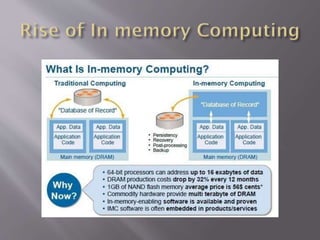
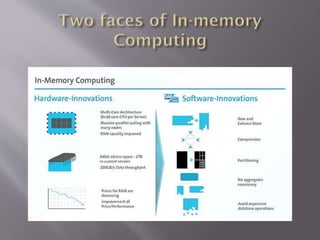
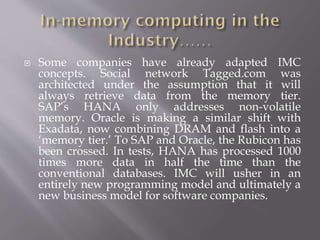
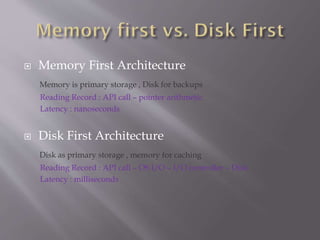


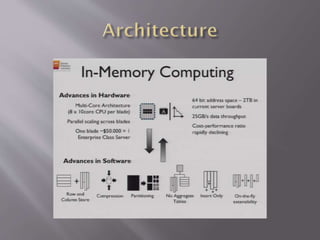

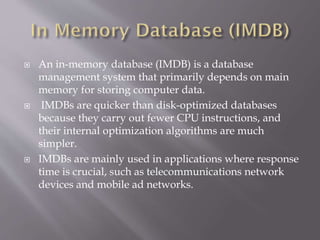


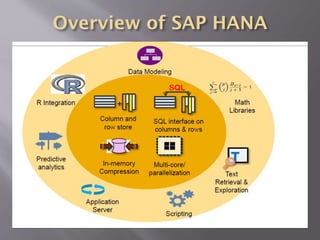


In-memory computing stores information in RAM rather than on disk drives for faster access. It allows companies to analyze large amounts of data quickly and perform operations more efficiently. As memory prices drop, in-memory computing is becoming more widespread. Some companies like SAP and Oracle have adapted in-memory concepts, processing data 1000 times faster. In-memory databases provide advantages like faster transactions and high stability for applications requiring quick response times.


